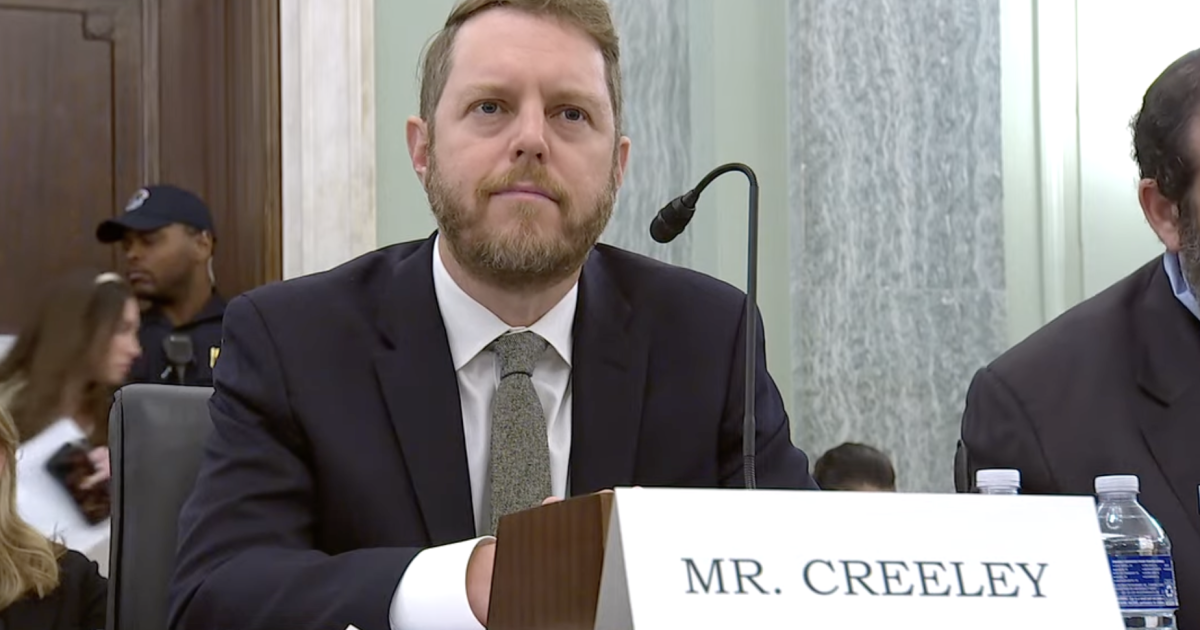
Senators Bernie Sanders (I-Vt.), Edward Markey (D-Mass.), Jeff Merkley (D-Ore.), Chris Murphy (D-Conn.), Tina Smith (D-Minn.), Elizabeth Warren (D-Mass.), Peter Welch (D-Vt.) and Chris Van Hollen (D-Md.) will hold a press conference to “discuss the Trump administration’s refusal to use a $5 billion emergency Supplemental Nutrition Assistance Program (SNAP) fund.”
What can academic writers do to have a digital presence that shares their writing and helps them connect with people online? Dr. Katy Peplin interviews The Social Academic podcast host, Jennifer van Alstyne in honor of Academic Writing Month (AcWriMo) in November.
Timestamps
0:00 Academic Writing Month (AcWriMo) with Dr. Katy Peplin and Jennifer van Alstyne 2:28 Your online presence is more than just social media 5:02 Cultivating authentic connections online for graduate students and faculty 10:18 Overcoming imposter syndrome and the lasting impact of sharing your story 14:56 Safety and community building online for academics and researchers 22:39 Jennifer van Alstyne’s tips for your personal academic website or research lab website 31:20 Did your university offer you a website? Yay. Keep this in mind 36:44 Aligning your online presence with your personal and professional goals 39:52 Your impact, your writing, your academic life matters 45:17 Build confidence by being intentional about how you show up online 49:09 Increase your impact with strategic approaches to your online presence
Academic Writing Month (AcWriMo)
Jennifer van Alstyne: Yay. I am so excited to talk about academic writing today because this is honestly a love of mine and I don’t do it anymore, but I help academic writers all the time with their online presence. I’m really focused on the digital side. Today I have Dr. Katy Peplin from Thrive PhD, and she’s going to ask me questions for academic writers because next month is academic writing month. Well, before we get to the questions, tell us a little bit about amo.
Katy Peplin, PhD: Okay, so I’m so excited here, but AcWriMo, which is so much more fun to write than it is to say, but is a National Novel Writing Month, which is a sort of longstanding decades old internet tradition at this point where people sign up and try and write 10,000 words of a novel draft in the month of November. There had long been sort of a community around novel writing in that way. Starting the origins of it now are sort of lost to the miss of internet time, but academics have been jumping onto it. I’ve been doing programming for this since 2018, which is quite a few years ago now. But I am really excited because the kind of way that we do it in the Thrive PhD universe, and now I have this great collaborator, Dr. Kate Henry, but we really believe in sort of building a writing practice.
Not necessarily belting yourself to your chair until you write that journal article or that chapter, but thinking about this as a month to intentionally touch in with your writing, touch in with your projects, experiment with things, and build some awareness around that writing practice. Let’s face it, November is the time where the end of the year looms closer and closer. All of these things that felt really far away in September or July when you’re like, “Sure, I’ll have that done by the end of the year,” suddenly become very real at the same time that semesters end and holiday stuff ramps up. Human things are so complicated. And, at least where I am in the northern hemisphere, the daylight goes away very suddenly. There’s just a lot of things that make writing in November even more challenging. I find that it’s been really fun and helpful to provide as much support as we possibly can for free that whole month.
Jennifer: I love it. This is one of the things that we’re creating to be a free resource for people. If you’re watching this and you are an academic writer, you’re friends with or supervise an academic writer, please share it with them. We’re going to be sharing tips, advice, and really the struggles that people sometimes go through when it comes to sharing their writing. So this video is for you. It really is.
Katy: Yes. I’m so excited to be asking you some questions because you’re such a leader and expert in this space.
I would love to just for the academics among us, how do you define an online presence? Because I know that’s one of those things that can feel bigger than it is, but also smaller than it is. What do you include under that umbrella?
Jennifer: I’m so glad you asked this question because I feel like people have a really limited view of what it is to the things that we create about ourselves. “If I don’t have a website, if I don’t have a social media, then I don’t have an online presence.” But that’s not true.
Your online presence is anything that people can find about you online, whether it’s intentionally created by you or not. So that’s Google Search results. Maybe if people ChatGPT get to learn a little bit more about you, what comes up? There’s a lot of ways that we can find what our online presence is, but there’s also a lot of ways that we can be intentional in creating and shaping how people find our story online.
Katy: That’s such a generous way to look at it because I know so many people who are like, I don’t want to be on LinkedIn or I don’t want to be on this platform. I don’t want to be here. I don’t want to be there. All of that makes sense to me. But it also can be what you want it to be. The kind of point is to be intentional about it.
Jennifer: When we think it’s only social media, or only websites, or sometimes even only faculty profile, the thing that we’re often missing is your academic bio. Your bio is ending up on conference websites for journals, for events, programming, maybe fellowships or associations that you’re involved with. There’s so many places where your bio can show up online that it really ends up becoming a massive part of your online presence. People don’t expect that.
Katy: As somebody who has to regularly produce bios about myself and almost always feels some tension about it. Yes. That it’s such a good point that it’s more information about us circulates beyond where we put it on purpose. Right, exactly. Okay.
Cultivating authentic connections online for graduate students and faculty
Katy: What are the benefits that you see of for academics or people in the scholarly space that really do take that step to be intentional and thoughtful about the way that they show up online? What are the benefits that people can see from that?
Jennifer: I think the benefits that people maybe assume that they’re going to see is a lot of reach or maybe a ton of reads on their writing. And that kind of myth is, I mean, it’s not inaccurate. If you share more, people will find you more.
But the truth is that the benefits are really about the more individual connections, the reader who reads your writing and not only understands it and relates to it, but is citing it and helping share it with a larger goal in mind of being part of the research community. When I think about the connections that people are sometimes hoping for online, it doesn’t always equate to the meaningful deep relationships that they really enjoy that have come out of it. So whether that’s research, collaborations, new friends in your field, learning about a new conference or association that maybe you hadn’t heard of before, there’s so many opportunities for connection that we miss because maybe we just don’t think there’s agency in doing that, especially if networking feels uncomfortable to you.
Katy: Yeah, absolutely. I love the sort of way that you’re framing that because I think that for so many of us who reads us or even our H-index or these kind of really concrete data things are the easiest to measure. So we measure them first. But often they not separate from, but not necessarily as meaningful as we might want them to be in terms of the results we’re actually looking for.
Jennifer: To give you an example, so to be honest, I don’t share my academic writing much. I haven’t done academic writing since grad school. When I think about my own academic writing and my experience of sharing it, it’s been very surprising. I shared I’m in medievalist literature, and so when I shared an article that I had published, I was very surprised by the people who were responding to me: people who were not in my field, people who were not academics, people who cared about the literature, but I didn’t know that they did because they weren’t in the kind of environment that I was used to having these discussions in. Even my own experience, even though it’s relatively old now, I think that it was so meaningful for me to see the kind of invitation that my post ended up being that I didn’t expect.
I wasn’t like, “Oh my gosh, eight people are going to go read this article now that I’ve posted it on my personal Facebook.” But that’s what happened. Not only did that happen, but someone was like, “Oh, after I read this article, I brought it back to the grad school class where we’re talking about this book.” So then everyone ended up reading it, and I really thought that I was just posting to brag to be like, “Hey, I got this article out.” Like, you did it. This is great. As a grad student, I was very proud of myself and I wanted to share that feeling with people. While sharing your article can be the intention of your post, it’s also okay if you know what you’re sharing is more like me, like a feeling or the kind of warmth that we feel about our article and about our writing. It’s okay to be open about that even if you think that the people aren’t going to read it.
Katy: I love that so much, and I think that it’s such a brave and kind of generous thing to share because so much of the academic discourse is like I have officially done this important thing and I talk about it with important people and in important stoic ways. And sometimes you really are just like, listen folks, I passed my exams. There’s something so important about sharing authentically. I think that that’s something that academics can miss because in a lot of spaces we have that authenticity gently guided out of us or sometimes with a lot more force than that.
Jennifer: That’s true. Sometimes when my faculty clients we’re working together on social media. It’s pretty rare, but sometimes we’re actually focused on sharing their book or a specific publication or report that they’ve written. When that happens, they think that I’m going to tell them what to do. They think that I’m going to give them: here’s the specific template, we’re going to do all the things. Instead oftentimes we’re just having a conversation. I’m taking notes while we’re talking.
The things that you think already? The things that you want to share about your book already? Are good enough. They don’t need someone else to come in and tell you how to do it. Or what to do or what to say. It’s just that sometimes there’s things that we can add, or tweak, or enhance, because the thing that comes right out of our mouth, sometimes it needs a little bit of revision to help more people understand it.
Overcoming imposter syndrome and the lasting impact of sharing your story
Katy: That leads so beautifully into this question that I have because I tend to work with a lot of early career scholars, so grad students, post-docs, people who are just getting their feet wet. There is this real anxiety about who am I to be sharing about this thing? To your mind, what counts as expertise? What makes this important enough to share? Or do you measure it with something else altogether?
Jennifer: That’s a good question. I don’t think that I measure it, which is maybe the most interesting part of that. I’ll give an example. I had Meg Mindlin, who is an amazing graduate student, here on The Social Academic podcast. She has a very large platform on social media. She shares video. She shares octopus art. She is so cool. And, she has that same kind of feeling like, is this good enough to share? It doesn’t matter how large your platform is. You can still have that imposter syndrome. And frankly, it doesn’t matter where in your career you are. Meg is feeling that as a recent master’s student graduate.
And my clients who are mid-career and senior faculty? Many of them also still feel that way. I would encourage you to recognize that feeling. But maybe still practice it anyway because it might not go away. But you know what always makes it go away?
When my clients and I are doing this live on a call, we have a post, we’re ready to post it, we put it up and they get engagement sometimes while we’re still live. They’re like, “Oh, that’s a relief.” That’s a relief because I was scared about posting it. I did it. I was on the call with you, but now it’s out there and people are seeing it. The act of actually doing it, even if it’s just once or twice for this, even if you feel uncomfortable, it’s good practice. And I would say it’s okay to sit with that discomfort a little bit if you’re talking about something sensitive.
If you’re attracting negative reactions, I think that’s a different consideration. But for the vast majority of the things that you post, there are ways to talk about it that are not necessarily going to invite that kind of negative reaction. I just want people to feel a little bit more open to exploring it.
If you draft a post, hit publish, if it’s about your publication. Hit publish even if you’re not sure. So many of the people that I chat with are like, “Oh yeah, I drafted it, but it didn’t end up published.” Yeah, my hope for you is that it ends up published.
Katy: Oh, what a generous hope. It really reminds me of some of my favorite pieces of writing advice, which almost all boiled down to doing the thing is doing the thing. Writing isn’t necessarily thinking about writing, learning about writing, strategizing about your writing, drafting your writing, writing is writing. I think what you’re saying is sharing and building your presence is about sharing and building your presence. That there’s so much benefit in practice and doing it and learning that way as opposed to trying to perfect it up here first.
Jennifer: The results are long-term. Especially if we’re thinking about, I guess to be specific like a social media platform like LinkedIn, your post goes out today, maybe tomorrow, but that post has potential to reach people next week, next month, next year.
I literally went into my LinkedIn analytics yesterday and was like, wow, some of these posts are from over a year ago and they’re still reaching people this week. It’s surprising, but I think that potential was missed on old Twitter. You could reach a lot of people fast, but when the relevant people missed it the first time, they’re not going to see it later. That potential is possible on a profile like LinkedIn. It means that maybe it’s okay, you put a little bit of energy into your LinkedIn profile, even if you’re not job searching, you’re not doing any of the things like I get it, but LinkedIn can still help you reach all those people when you have something you want to say. It doesn’t have to be all the time.
Katy: As somebody who’s trying to uplevel on LinkedIn at this exact moment, I’m really resonating with what you say because it is this kind of vulnerable. They make it so easy to measure things like likes and metrics and shares, and you’re chasing that dopamine hit. You forget that the post lives beyond that initial kind of chemical brain reaction. It’s helpful to know good or bad that there’s a long tail.
Safety and community building online for academics and researchers
Katy: So I now have as from where you’re sitting, say I’m a graduate student, I’m an early faculty member, I’m even a late faculty member. Goodness knows, we’re all busy. I only have a certain amount of time.
What’s your best pitch for investing some of my precious energy into building this presence when it might not necessarily be something that’s directly measured by my advisor, my chair, my tenure committee, my colleagues? Why do it?
Jennifer: That’s a good question. I think that the advice that I had even a year ago probably would have been different, but I’ve had a lot of graduate students reach out this year because they want a stronger online presence. They don’t have the time, especially mid-career people with family or folks that are in a transition of fields. If you don’t have the time, but you still want an online presence, there’s ways to have that happen. You don’t have to work with me, but just know that there’s people that can help you and that you don’t have to do it yourself. Or, you can do it with a friend. There’s different ways to take back or make better use of some of that time if doing it yourself is not ideal. When you are planning to stay in academia, when you’re planning to have the research thinking projects that you’re working on now, be something that people can engage with long-term.
It’s always a good investment of your time to create your online presence. I would never suggest someone not create an online presence unless personal safety was really at not just the forefront of their minds but could affect their mental health. I’m saying that as someone who has been there before, I’m a survivor of domestic violence. When I left my physically abusive ex-husband, I deleted all my socials. I didn’t have anything. I didn’t want to be found online by anyone. So I’ve been there. But I also know the power of taking that space back and being really intentional about what people find there. Do I literally still worry that my ex-husband is going to email my clients and harass them? Yes, I’m not going to lie. Honestly, that is possible. And so when I think about how I show up online, I am very intentional about who is going to see this, how they can engage with it, and what the potential ramifications are if something goes wrong.
I think about that also right now in terms of protecting my clients when things in America are politically quite volatile for freedom of speech. There’s a lot of things that we can take into consideration in terms of time and energy that are beyond just us, that are a part of the larger world. But when it’s your own time, it doesn’t all have to happen at once. Any small change that you can make for your online presence.
Whether you’re in grad school or early career researcher, or much later on in your academic career, that time and energy makes a difference. Maybe you’re only updating a sentence or two in your bio. Maybe you’re spending a day focusing on creating that LinkedIn profile that you really did not feel like you needed in the past.
There are things that you can do and you have agency in doing, but it doesn’t all have to happen at once. And, it doesn’t have to happen at all if it’s not a goal for you. But for most writers that I talk to, it is a goal at least sharing their writing, sharing their research is a goal. I encourage you to have that online presence, even if it’s not the personal online presence that maybe you see friends or colleagues having too.
Katy: That is such generous advice. I’m so happy to hear you talk about the sort of risk of this because I know that I personally am working with a lot of clients who are afraid not just for their own sort of reputation online, but for the funding of their labs, for the ability to get doxed if they’re studying a thing that somebody finds. I think what you said earlier in kind of our conversation that you have an online presence, whether you work on it or not, that being able to shape things like how I appear on my department website, how I appear in my bios in places that people can access and could potentially freedom of information actor get access to.
All of that information exists online for most of us through these old conference programs, through all of these other things that more and more are being ingested or searchable in maybe ways that weren’t even two years ago. It’s going to happen whether you are intentionally engaging with it or not. This is maybe a moment for people to say, okay, how can I think about these presences and show up in them in a way that accurately represents my research. But also takes into account that “I need to stay safe, my colleagues need to stay safe, my students need to stay safe, and if they’re going to write it, I might as well write it.”
Jennifer: There’s power when we show up online. There is also an invitation for folks who maybe look like us, or think like us, or worry about the same things as us, or care about the same things. There is potential for those people to see the space that you’ve taken online and feel that they can claim some of that too, that they can also create more storytelling, more openness, more connection through what they’re able to share online.
Katy: I think about that with sort of my own presence all of the time because I am pretty open about my mental health struggles on my blog. I am incredibly privileged to do that in a lot of ways because I’m my own boss, so nobody’s going to fire me if I say something. If I can be the one to take on some of that risk and say, “Hey, I had a really crappy mental health day, and here are six ways that I reset,” and knowing that I’m putting that information out for people to encounter it when they need it to? If I can take that risk, then that lets other people take some of that burden off. That’s one of the ways that communities can function really generously is to say, okay, I have this space to take some of this on. Why don’t I host the meeting point for this idea so that you can benefit from it and maybe not have to take that on yourself.
Jennifer: Yeah, I really like that. And for graduate students who are teaching, early career researchers who teaching, is not just a focus for you, but something that you care about your online presence can really help your students. I have a whole article on The Social Academic blog. I feel like there’s so many people who maybe they’re not going to make an online presence for themselves. They’re not going to make an online presence for their writing, even if they want more people to read it. But they will make an online presence if they understand ways in which it helps more people, especially the people they’re teaching or helping mentor. I encourage you, even if you’re not thinking about this for yourself, it’s okay to think about it for other people too. Because sometimes you’re doing it for other people, and it ends up helping all of you. I think that’s really beautiful.
Katy: Yes, please do link that for me and for everybody. I think that’s one of the important ways to sort of think about this is that this nourishes all the way down. Just to give a practical example, I work with a lot of people who are looking for labs to join, looking for advisors, or they’re looking for even job searches and they’re trying to figure out fit. There’s so much information intentionally there and not sometimes that lets people know this is a good fit for me. I would be safe to research here. If you think about it like that, these are secret love letters to help you find the grad students who would be really aligned for you, the collaborations that would be really helpful. Then that can give an incentive where you should make a LinkedIn so that you can have a LinkedIn might not have that same hit.
Jennifer van Alstyne’s tips for your personal academic website or research lab website
Jennifer: Could I give an example of that?
Katy: Yes, please do.
Jennifer: I was working with a PI. We were working on the content for her website pages for the teaching section, and she was kind of wondering, “Should I make this more for the students? Should it be more for people who are evaluating me? I’m not sure who the audience of this page was.” I was like, first of all, let’s make it for the students because I think that’s what’s going to be most helpful. But second, if we can provide a little bit more information for them about your lab, about what it’s like to work with you, it will help them in their future careers.
She had this light bulb moment, which was, “Oh, last time I was looking through applications for people who wanted to join my lab. I noticed that one of the candidates had a specific lab that I had no idea what it was listed in their resume.” And she was like, “I couldn’t find information about it online other than a quick mention on a university website. So I had no idea how the research from this lab related to mine, and I almost passed the graduate student up.” When they met, they actually talked about the lab and had opportunity to see the connection more clearly, but that hesitation that almost stopped her from reaching out to the student to schedule that interview. When I think about the potential that is missed because PIs haven’t taken the chance to have a little bit of a stronger online presence, it can harm your students. I don’t want that to happen. If you have the capacity, if you have the space to think about how you’re showing up online. Or, if you’re a student in that lab that doesn’t have an online presence, can you add a description of it to your LinkedIn profile so people can learn more about it? You have agency, whether that’s inviting or letting your PI know that you would love for them to have a stronger online presence, or trying to find ways to create space for that yourself. You have options.
Katy: Yeah. That makes me sort of lead into this next question, which is writing for an online audience is such a specific skill. Are there ways that you can suggest that people can? Because I know that personally, if somebody said, “Hey, make a website to describe your lab,” I might be like, “I don’t know how to do that,” and sort of push it off because it’s so much harder. What are your top tips for helping people build that skill of writing for this specific context?
Jennifer: Before we can write for the specific contents, we kind of have to know what we want to write. The best resources that I have for folks who are like, “I want to create a website and I’m not sure what goes on it” is: I have one for personal academic websites and one for research lab websites. So there’s an answer for both of you, but it is a long list, a descriptive list of page ideas for your website. There’s so much content that you could add. And, there’s only a handful of that content that probably is most relevant to you. Before you start writing, think about what’s most important for me to share? I will link those articles below as well because they are great resources for anyone who is creating a website, updating a website. If you’re an academic who has that kind of permanent space online, check out these resources because that’s definitely the first place that I would recommend going.
A lot of people get stuck in the writing process. It’s a reason the services that I create really take most of that away, off of the plate of the faculty who I’m working with. So, I end up doing a lot of writing for folks. Sometimes that’s bio writing, which is its own project. Oftentimes, it’s condensing the things that we talk about in interviews and the materials that they’ve sent to me into written website content. But I want you to know that if you are like, “I can design my own website and I don’t really want to do my own writing,” there are still people who can help you with that. So reach out to me and I’ll help connect you with someone who may be able to support you in that process if you’re not wanting to do it yourself.
You can be a very strong academic writer. You can be a very good public speaker. You can be very good at all of these things and still feel like your web writing isn’t where you want it to be. This is not an insult to you. This is not a lack of knowledge or skills or capacity. Oftentimes, it’s much harder to write about ourselves than it is to write about other things. Especially things where, yes, you’re in research, you’re getting all of these inputs, data, places that you can cite and source and organize and reorganize. You are used to spending a lot of time on that. And when you think about spending that same amount of time on writing about yourself? It probably doesn’t feel the same way as you feel about your research. That’s okay. One: it’s okay to seek help.
Two: it’s okay to do it in steps. You could do a one page website first and grow it over time. Three: it’s okay to just publish it. If you’re not sure about your web writing and you maybe want to improve it, but you still want your website up, please, please publish it. Writing can always change over time and your website will 100% change over time. There is almost no one that I’ve ever met that is like, “I made this website once and haven’t touched it since then.” Oftentimes, it’s not going to happen every year, but every once in a while you’re going to notice, “This doesn’t quite feel like me anymore.” Those are things that you can address and change because it’s your space, because it’s your website.
Katy: There’s so much good advice and strategy in there. One of the things that I’m really hearing that is one of the common phrases out of my mouth too is that as academics, we are sort of taught that “writing is forever.” Once it gets published, it’s a thing and it exists and it’s citable. The reality is both about anything that’s kind of online and also in a lot of ways your academic writing, there’s snapshots of your thinking and time. If time changes and your thinking changes, then you get a new snapshot.
Did your university offer you a website? Yay. Keep this in mind
Katy: So many of us carry this kind of really resistance to being like, “I’m not sure that this accurately captures everything.” I can’t tell you: I changed my website five, six times a month because I’m always catching typos or things that didn’t flow or things I want to change or things I want to tweak.
Those things are so much more visible to me than they are to anybody else. I have built a thriving web presence with zero capital letters and many typos everywhere all of the time. That’s just sort of the brain that I have and the way that I show up. I move a little bit faster and break more stuff and have to kind of redo it. There’s something to be said for learning to do a skill and building it in public. A lot of us as academics are really used to learning in private building, in private researching in private and then presenting publicly and having it be really big stakes. I’m so much better of an academic writer because I started publicly writing those skills feed each other in a way that I didn’t expect.
Jennifer: Now, one thing that I want to mention about that is a free tool, especially for graduate students, early career researchers. Owlstown is a free academic website builder. If you are wanting a website and you’re like, “I don’t have website skills, I don’t really want to develop them,” Owlstown can set up your website in like 15-30 minutes. You can have a website today for free that’s easy to update and keep with you and kind of personalize a little bit even over time. I just want you to know that that is an option for you. If you’re wanting a website, you’re not wanting to do it yourself or work with an academic website designer like me, that’s okay. There’s options for you to still have that space online.
Katy: Also to have another sort of low cost plug, I know that my first academic website was hosted through my library at my university. Oftentimes there is somebody in the kind of beautiful war in of resources in libraries that if they don’t know where to do it for free on campus, they can absolutely help you with almost all of those parts.
Jennifer: This is definitely true, but I am hesitant to recommend it to folks. That’s because I have met so many people whose websites just disappeared when their universities decided to stop offering that service.
Katy: Oh, wow, okay.
Jennifer: Sometimes there’s notice, but sometimes there’s not. And so, I just want to be a friend. If you are creating a space on a site that is internal, that’s hosted by your university, yay, I’m so excited for you. Save a copy of all of your text. Save a copy of all your photos just in case. Just in case something goes wrong, I want you to have that so it’s movable to another space if you ever need it.
Katy: Yes. Speaking from people who lose access to their emails all the time, there is real wisdom in being use the university if they’ve got it. But keep a copy for you.
Jennifer: Oh, I feel like when I was in grad student, so much of the advice that was given to me was always use your university email address. This is how people are going to know that you’re legit. But the truth is, I lost access to all of those emails. I have no idea of any of the conversations that were shared, and I did not save them in time in order to keep them. When I think about that loss, that loss of what feels like archive to me, it makes me sad. So when I think about the writing that you do, yes, academic writing is important, public writing is important, anything that you create is important, but so are the emails and conversations that you have if they’re meaningful for you to keep. Yeah, this is kind of all areas of your life. If it’s meaningful for you, try and find a way of saving it.
Katy: Wow. That’s such good writing and information. This is what I find with so many of my conversations with really brilliant people in the academic spaces that we all find the places where everything all connects. One of them is that it just is really important to keep hold of what’s yours, whether that is your data, your information, and if there are ways to keep it personally, then it almost always behooves you to do it because as much as we would like to trust that the Higher Ed institutions are eternal and that our web space and storage will always be there. Goodness knows that things really can shift.
Jennifer: They really can shift. I was actually just hosting for ContentEd Live. It was a 48-hour Higher Education conference. What I found was that there’s so many people who are making very large decisions about things like website, things like technology infrastructure. They’re coming from a top down approach of making decisions that help and improve things for the entire community. Oftentimes they’re making decisions that affect faculty without recognizing some of the loss that can happen when this kind of decision happens. One example (this is not from the conference), but last year I had a client who came to me because his faculty profile. All of a sudden they’d removed all the email addresses from faculty profiles. So the place that was the home for his online presence no longer helped connect media, journalists, or research collaborators with how to actually get in touch with him.
All of a sudden there was this new need for an online presence that allowed for those things. Sometimes when those decisions come down from the top, they really do help everyone. This university got 30+ million SPAM and phishing emails each month. I understand why decisions are sometimes made. But when we don’t have control over them, it means that we need to be aware of what our options are for taking up space outside of those structures. We’re all working towards helping students, helping research, helping facilitate the meaning of Higher Education in the world and how it impacts the real lives of the people who are in it. But if we’re losing access to the things that matter most to us, then sometimes we have to recreate those spaces ourselves.
Katy: Absolutely. There’s something so important as we think about this whole umbrella of an online presence is thinking through what are the most important things for you in this presence? If one of them is “I want outside collaborators to find me, I want to be available for media, I want to be public facing,” then probably where you’re going to spend your time and energy is completely different than “I’m a PI. I want a steady stream of people in my lab who are values aligned and project aligned. They might spend their two or three hours a month completely differently than somebody who has these other kind of options.
Aligning your online presence with your personal and professional goals
Katy: One of the things that I’m sure that you see as well as I do is that people kind of get the advice. You have to have a website, you have to have this, you have to have that. And they don’t really think through, okay, what do I want this project? Because it is a project to do for me. And the more clarity you can have about that, the easier it is to make that project fit the need as opposed to trying to collage seven or eight things because somebody told you they were important.
Jennifer: 100%. Oftentimes I found that actually it may be seven or eight things that are important to you, but there’s a hierarchy for what those things are in terms of your energy, your capacity, what actually fits into your life. Sometimes we’re designing a website that is going to be attractive for media, for podcast invitations, even if that’s not something you’re actively reaching out to. But, the vast majority of our energy is going into explaining the lab and inviting people to explore the projects that you’re doing. I want to encourage people to create intentional time for yourself to think about the people you want to come to your website or to come to visit your online presence. Maybe it’s a LinkedIn profile. Who do you want to come there? How do you hope that they can engage with you? I had one person be like, I just want a repository.
I don’t actually want to engage with people, but I want them to find my writing.” That’s okay too. We just published her website. It is out there and it’s going to be with her for, frankly, a lifetime. Websites can be there with you for your lifetime. They can grow and adapt with you as your goals and needs change. Maybe media, podcasting, is not a goal for you now. But when you’re running a lab in three years, actually it would be great to have your research on a research podcast in your field. How cool would that be to reach only people who are really into the thing that you’re talking about?
Katy: Exciting. That’s pretty cool too. Yeah, I think it just is. So with so many things, the intentionality is key. And a little bit of effort in the front to be like, what am I doing with this? And, why do I want it? Can just pay dividends.
Jennifer: If you don’t want to work through that on your own, reach out. I’m happy to help you with that process. Or, to design your website for you. Whatever feels supportive.
Your impact, your writing, your academic life matters
Katy: Awesome. Are there any other things? I guess my last final question is if you were to kind of sum up the very best thing about working with academics specifically on their online presences (as opposed to micro influencers or content house kids or, I taught digital media, so I’m always like, Ooh, the handlers of famous internet cats). What’s sort of so special about this group that keeps you coming back to this incredibly specific but pretty diverse niche?
Jennifer: I’m really glad you asked about this. This is a question I’ve been thinking of a lot this year. This is the first year in my business where people from outside Higher Education are really like, what are you doing in there? What are you doing? It seems like your industry is imploding. You should consider coming and working over here, go work over there. I’ve had referrals for very large projects that are outside of academia and I don’t want any of them. The people who refer them, they love that about me to be honest, but they keep trying. And when I think about that, it’s really because the researchers, academics, graduate students that I work with, they are each creating meaning in the world. They’re each creating really interesting thinking, writing, teaching. The things that they do are also really varied. So my brain that really likes to be creative in different ways gets to work with people in a lot of different fields.
I get to learn so much from the people that I work with. I get to hear their stories and experiences and I relate to them. Even though I’m not in academia, I only work with academics. I mostly work with individuals. I’m not part of the academic world entirely, but I am supportive of this world entirely. Actually, at the conference yesterday, someone said, “We’re all across universities all around the world. We’re all working towards this hope.” And I thought, oh my goodness. I’m not a Chief Marketing Officer at a university, but I am someone who’s working on the same problem, who’s working towards this same future where research, and education, and teaching, and mentoring, and the service work, and all the things that faculty do for their society, it’s meaningful. And it makes a difference. And it doesn’t have to stay hidden.
I help people make connections that make more meaning and matter in the world for the things that they care about. And yes, I could go do that for a big company. I could go do that for, I don’t know, celebrities if I wanted to. I remember the first time that I actually, I pitched a musician on bio writing and he said yes. And I was like, “Oh wait. I dunno.” I didn’t end up doing that project, but I remember feeling like I can do a lot more. And also I don’t want to explore that, because I love who I work with. I’ve had to build some things into that flexibility to reschedule things. And that does change how I work with people. But it also means that I get to work with exactly who I care about supporting and I love it.
Katy: I got choked up when you talked about the hope because I think that I know. I was on parental leave for about 18 months and I kind of came back to a completely different online landscape. But also a pretty different higher education landscape too. I work with people and I think that appeals to a lot of people who are like, listen, I wouldn’t do this work if I didn’t believe so strongly that someone needed it somewhere.
There’s something so important to me about being a tiny bit of the support that holds up the people who are doing that work. There’s so much. I think about it a lot. I am not the rock that goes in the pond that has the ripples that we can’t even track, but if I can help hold that hand up just long enough so that they can drop it, they did all of the work. But if I could be on the side of the pond cheering and be like, it’s okay to drop it, I love it. I think that that really goes because there’s such a misperception about what academics are or what we’re doing or what we spend our time on. The majority of people are deeply invested in their research because they believe it has the power to change something for someone oftentimes for the better. The more that we can do this important work of being like, this is what happens in this lab, this is why it’s important that we put shrimp on treadmills, and this is why it’s important that I go through these archives and I look at all of these things. The more visibility, I think the more options that we have to change that narrative that we’re all just spending money and brainwashing kids because that’s not it.
Build confidence by being intentional about how you show up online
Jennifer: I think that the hope that I am feeling that I’m working towards, I really felt it yesterday because, so I was hosting (moderating) four keynotes, seven breakout sessions, two Welcome to the Americas. It was two days back-to-back of being host and moderator and I loved it. But I realized at the very last session, the speaker who was so amazing, he was like, “I had recognized you from tv.” And I’m like, “Oh! TV. Am I on TV?” Have I been on TV? I was like, “Wait, ooooh, you mean the conference lobby screen.” And all of the sessions I introduced and led Q&A for. I literally forgot that I was on camera. Many people met me and got to know me over the last two days, even though I didn’t really get to know them as well because they were webinar attendees.
But I’m so proud of my online presence. I’m so proud of what I know they’ll find if they want to connect with me further. That feeling of relief for networking, for sharing something, for putting myself out there in some way is huge. As an introverted person, I dunno, that surprises some people, but I’m very introverted. I spend most of my time at home working from my office here in San Diego. I connect with people online. But part of that connection, I would not feel as comfortable with it if I didn’t feel confident in what people found about me. So if you’re feeling like networking, or sharing your writing, or just being more open about who you are is uncomfortable? Sometimes doing this work upfront is the key to making it feel [sigh of relief].
Katy: Yeah, I absolutely do know. I send out a newsletter every Thursday and I had published a pretty vulnerable one this week about how I had gotten this advice to write every day as a early PhD student, and I pretty much destroyed myself trying to follow it and all of the work that it’s taken me to be like, you know what? I’m an okay writer even though I’ve never had an unbroken writing streak and I’m an okay writer even though I’ve never done 30 days of writing. I woke up, my emails are scheduled to send out at 5:56 AM Eastern time, and I woke up out of a dead sleep at 5:45 and was like, “I should cancel that email. That feels vulnerable, that feels tender. I’m not going to do it.” And I was like: Go back to sleep. The baby is asleep. You should be sleeping.
Then sort of went about my morning and kind of forgot that I had put this thing out there and to thousands of people. When I came back from drop off and breakfast, there were three emails in there that were like, “Thank you for saying this.” This is something I didn’t know. I just remembered how I am never going to be the person who will say that to a stranger on a bus. I probably wouldn’t even have said it live to my students, but if I can take the time to craft it, if I can revise it, if I can think about it, if I can be intentional about it and send it out in this way, I can also connect, I can share, and it doesn’t have to be gate kept. I can do it. This is my email list. People can unsubscribe if they choose not to be interested in this kind of vulnerable share. I wish them well in that particular way. But there’s a power that I didn’t always feel as an academic trying to publish or go to conferences or be in those places that when I control the flow, I can show up in ways that are so much more intentional.
Increase your impact with strategic approaches to your online presence
Jennifer: One of the things you said really brought up something I want to be sure to add to this call, which is that there are so many people who feel like a social media post should be a 10 minute project or less. The truth is that if we’re talking about even your university, even your college, your department, if they have someone who’s in charge of this, they are probably putting a lot more effort, a lot more time into social media posts than you think. This is true for the vast majority of creators on the internet. If you’re seeing something, it’s possible 30 hours went into that one minute short video, like a short vertical video. So I just really want people to consider, yes, your time is precious. Yes, your time is limited. But your words are meaningful. It’s okay to give yourself more time for that social media posts, or revision time for that social media posts, if it’s something that you feel like will help you. You can take more time. You can take as much time as you want. But just don’t let it be so much time that you’re never hitting publish at all.
Katy: Yes. Well, and not to sing the praises of LinkedIn because it’s not really my particular jam, but there is something really beautiful about some of these other, X was so fast and things were so ephemeral. And now there have been sort of algorithm shifts in a lot of different places. But for better or for worse, LinkedIn is one of the places where you don’t necessarily get punished for publishing once every six months, once a year. Definitely not. They do kind of maintain this beautiful archive for you. If you are a person who likes to think about things and likes to be really deliberate and really intentional it, you don’t need to necessarily opt out of all of these things. You can find a project, a place in the sort of online umbrella that meets the tempo that makes you feel safe enough to do it
Jennifer: And meeting the tempo, it makes you feel safe. That’s a really good point. There are people who push themselves to be on social media platforms they think they should be on, but it really doesn’t work for their personalities. And it really doesn’t work for their lifestyle. And sometimes it makes them angry, and frustrated, and even guilty at not having done more of this. When people come to me and they’re feeling like that, I say, “Get rid of it. It’s okay. Stop.” It’s okay to stop. It’s okay to not do it. If you are going to have a platform that I still recommend you have a profile on but you’re not posting it, that’s not what you want to do. LinkedIn is that place. I have a free LinkedIn Profile course that’s great for grad students, researchers, faculty. I have lots of links to drop in the chat after this, but I want you to know that this LinkedIn Profile course exists. It will walk you through step-by-step making that profile because that profile is one of my favorite ways to have an online presence. If you are a graduate student, if you are an early career researcher, this will really help you get connected with people who can inform your career, who can help guide the decision making that you have, especially if you’re open to chatting with them.
Katy: Yeah. Well thank you. This has filled me up top to bottom, just this…
Jennifer: …Has been so good! This is the first time I’ve done this kind of Q&A. love it.
Katy: Okay, good. We’ll keep going. You’re a star at it. Just appreciate star in the making. Thank you so much for having me on and for being willing to spread a little bit of the word about AcWriMo out. If you’re looking for someplace where you want intention around your writing and not necessarily belt yourself to the chair and get it done, Dr. Kate Henry and I we’re your people
Jennifer: Thank you so much. Everyone. Be sure to like subscribe. Hit the notification bell if you want to let get an email next time we go live. Thank you everyone.
Dr. Katy Peplin is the founder of Thrive PhD, a business born out of her own journey through the PhD, and the joys and challenges of being a grad student and a human at the same time. She earned her doctorate at the University of Michigan, with a dissertation centered on animals on film and media. Throughout her degree, she also worked as a teaching consultant at the Center for Research on Learning and Teaching, practiced yoga regularly, and lived with chronic illness and anxiety. These days, she’s super into knitting, colorful water bottles, and helping graduate students around the world treat graduate school like part of their career and life, and not just the holding period before the real stuff begins.
When I ask apprentices to reflect on their learning in professional discussions, I often hear a similar story:
It wasn’t just about what I knew – it was how I connected it all. That’s when it clicked.
That’s the value of dialogic assessment. It surfaces hidden knowledge, creates space for reflection, and validates professional judgement in ways that traditional essays often cannot.
Dialogic assessment shifts the emphasis from static products – the essay, the exam – to dynamic, real-time engagement. These assessments include structured discussions, viva-style conversations, or portfolio presentations. What unites them is their reliance on interaction, reflection, and responsiveness in the moment.
Unlike “oral exams” of old, these conversations require learners to explain reasoning, apply knowledge, and reflect on lived experience. They capture the complex but authentic process of thinking – not just the polished outcome.
In Australia, “interactive orals” have been adopted at scale to promote integrity and authentic learning, with positive feedback from staff and students. Several UK universities have piloted viva-style alternatives to traditional coursework with similar results. What apprenticeships have long taken for granted is now being recognised more widely: dialogue is a powerful form of assessment.
Lessons from apprenticeships
In apprenticeships and work-based learning, dialogic assessment is not an add-on – it’s essential. Apprentices regularly take part in professional discussions (PDs) and portfolio presentations as part of both formative and end-point assessment.
What makes them so powerful? They are inclusive, as they allow different strengths to emerge. Written tasks may favour those fluent in academic conventions, while discussions reveal applied judgement and reflective thinking. They are authentic, in that they mirror real workplace activities such as interviews, stakeholder reviews, and project pitches. And they can be transformative – apprentices often describe PDs as moments when fragmented knowledge comes together through dialogue.
One apprentice told me:
It wasn’t until I talked it through that I realised I knew more than I thought – I just couldn’t get it down on paper.
For international students, dialogic assessment can also level the playing field by valuing applied reasoning over written fluency, reducing the barriers posed by rigid academic writing norms.
My doctoral research has shown that PDs not only assess knowledge but also co-create it. They push learners to prepare more deeply, reflect more critically, and engage more authentically. Tutors report richer opportunities for feedback in the process itself, while employers highlight their relevance to workplace practice.
And AI fits into this picture too. When ChatGPT and similar tools emerged in late 2022, many feared the end of traditional written assessment. Universities scrambled for answers – detection software, bans, or a return to the three-hour exam. The risk has been a slide towards high-surveillance, low-trust assessment cultures.
But dialogic assessment offers another path. Its strength is precisely that it asks students to do what AI cannot:
authentic reflection, as learners connect insights to their own lived experience.
real-time reasoning – learners respond to questions, defend ideas, and adapt on the spot.
professional identity, where the kind of reflective judgement expected in real workplaces is practised.
Assessment futures
Scaling dialogic assessment isn’t without hurdles. Large cohorts and workload pressures can make universities hesitant. Online viva formats also raise equity issues for students without stable internet or quiet environments.
But these challenges can be mitigated: clear rubrics, tutor training, and reliable digital platforms make it possible to mainstream dialogic formats without compromising rigour or inclusivity. Apprenticeships show it can be done at scale – thousands of students sit PDs every year.
Crucially, dialogic assessment also aligns neatly with regulatory frameworks. The Office for Students requires that assessments be valid, reliable, and representative of authentic learning. The QAA Quality Code emphasises inclusivity and support for learning. Dialogic formats tick all these boxes.
The AI panic has created a rare opportunity. Universities can either double down on outdated methods – or embrace formats that are more authentic, equitable, and future-oriented.
This doesn’t mean abandoning essays or projects altogether. But it could mean ensuring every programme includes at least one dialogic assessment – whether a viva, professional discussion, or reflective dialogue.
Apprenticeships have demonstrated that dialogic assessments are effective. They are rigorous, scalable, and trusted. Now is the time for the wider higher education sector to recognise their value – not as a niche alternative, but as a core element of assessment in the AI era.
I think it’s fair for students to assume that if they end up leaving home to go to university, they’ll be able to rent somewhere to live that is demonstrably safe, reasonably suitable for their needs, affordable, and of a reasonable distance from campus.
I think it’s fair for students to assume that when they are accepted to study away from home at a university, that the university that recruits them will have had at least an eye on whether accommodation that is safe, suitable, affordable and nearby will actually be available.
I also think it’s fair to say that endless surveys, research studies, polls and stories suggest that as the sector has expanded, the reality of the student experience feels like it’s been getting further and further away from that expectation.
In fact the closest that the last government got to policy on student housing was when 2019’s universities minister Chris Skidmore called a roundtable on the issue, following construction delays that led to hundreds of first year students in temporary accommodation that year:
Poor accommodation, high living costs and a lack of information can seriously affect student welfare and mental health, so providers must be held to account. With the number of students expected to rise sharply due to demographic changes in the 2020s, now is the time to prepare and think ahead about how we deliver and regulate student accommodation for the future. Accommodation is a central issue of the student experience and it is the duty of accommodation providers, HE institutions and Government to think carefully about what needs to happen in the future.
Pro-European Skidmore was relieved of his position by the PM after the general election that followed.
So it was pleasing to find that two of the four factors pick up a mention in the Post-16 Education and Skills white paper:
Accommodation costs have increased significantly. Average student rents across England are now close to the level of the maximum student loan and in London they are above it. There has also been an acute lack of available accommodation in some places. This is more likely to impact on people from low-income backgrounds, influencing their choice of provider or preventing them accessing or completing higher education all together.
Of price and availability, only price gets a data source – the 2024 London iteration of Unipol’s Accommodation Costs Survey 2024, which actually found that in the capital, a student in receipt of the average maintenance loan will need to find an extra £2,890 just to cover the average rent for Purpose-Built Student Accommodation (PBSA).
There’s long been a debate about the extent to which many of the problems are caused by a failure to stimulate supply, or a failure to to control demand – although if Glasgow’s problems in 2022 are anything to go by, it’s tended to be a debate more about buck-passing and blame-pinning than one focussed on generating a solution.
The white paper’s solution concerns itself with the relationship between the two:
We will work with the sector and others so that the supply of student accommodation meets demand, including increasing the supply of affordable accommodation where that is needed. We will work with the sector, drafting a statement of expectations on accommodation which will call upon providers to work strategically with their local authorities to ensure there is adequate accommodation for the individuals they recruit.
Policies requiring work between universities and their “area” don’t have a great history in England – partly because the government and its silos can never make their mind up over who to place duties on, and how to hold them accountable.
Hence in the Higher Education and Research Act 2017, it was universities, via the Office for Students (OfS), that were told to cooperate with one or more electoral registration officers in England to enable the electoral registration of students – only for a 2021 Cabinet Office evaluation of that condition to show that nearly half of all providers (47 per cent) reported that they had had no communications with any local authorities over the issue at all.
As such, on this one the government seems to be pinning its hopes on two policy levers. The first looks like it will be a version of guidance already published by Universities UK in 2011 – a set of “reflective questions” and “case studies” to support university leaders in considering their long-term approach to student accommodation.
The second is the statutory planning framework, which requires that the size, type and tenure of housing needed for different groups in the community should be assessed and reflected in planning policies, with students specifically listed as one of the groups that must be considered.
It got an update in December 2024, removing student accommodation from exceptions to affordable housing policy requirements – part of the government’s broader push to increase affordable housing delivery and ensure that all types of residential development contribute to meeting housing needs.
The question is whether those levers will work – and in an attempt to work that out, I’ve been down a dispiriting rabbit hole of departmental silos, shaky data, poor relationships, and a fundamental failure to get close to matching supply with demand.
Growing demand
Let’s first look at demand. The closest we get to “official” figures on the type of student housing that students are in is the TTACCOM field in the HESA student record. It is to be collected once a year, and differentiates between “provider maintained property”, “parental/guardian home,” “other.” “not known,” “not in attendance at the provider,” “own residence,” “other rented accommodation” and “private-sector halls.”
It is a dataset widely believed to be plagued with quality issues. The once-per-year collection of the thing seems to be carried out at different times – although most seem to do it during September enrolment, when housing may still be in flux. There is also widely believed to be significant confusion amongst students as to which of the boxes to tick, and timing issues may miss postgraduate students depending on their start date.
Nevertheless, other than a census whose data was collected in 2020, and council tax exemption data compiled from Local Authorities, it’s pretty much all we have – and appears in all sorts of reports in the housing sector to justify invitations to invest in “get rich quick” PBSA schemes around the country.
What we don’t know when the sector is expanding is how many students will need a bedspace rather than remain at home, but we can bet that international students will – and we know that the post-2019 changes to the immigration system saw a sharp increase in international students, with international PGT student enrolments in England rising from 265,755 in 2019/20 to 408,240 in 2023/24.
At least for a part of that period, that figure is a major under-estimation, because that circa 150k doesn’t include dependents – most of whom have now been barred from coming. For England it also doesn’t factor in universities in the rest of the UK (mainly Scotland) with campuses in England. And it misses altogether any impacts from the graduate route visa, switching from it to being skilled in the city, or any desire that home students might have to stay in the area and contribute to economic growth.
It doesn’t tell us how many students couldn’t find somewhere safe, affordable, close or suitable in 2019, it doesn’t factor in any reduction of demand for bedspaces from changes to home student habits, and it doesn’t tell us anything about the distribution or concentration of the net increase in demand.
But if we use that 150k figure as a rule of thumb, that’s the equivalent of 63,000 extra “homes” that needed to be built to accommodate the increase – a responsibility that the government places on local authorities at a ratio of 2.4 bedspaces = a home.
2point4 students
Say what? Local authorities have to free up land approve planning requests to hit central government targets on housebuilding, and it turns out that in the Housing Delivery Test measurement rule book, the number of net homes delivered is the the net additional dwellings over a rolling 3 year period, with an adjustment for PBSA calculated by dividing the total number of students living in student only households by the total number of student only households in England.
The current ratio is 2.4 – with source data from the Census 2021, prepared by the Office for National Statistics. The problem is that if the ratio is too high, local authorities receive insufficient credit for student accommodation, discouraging PBSA development and potentially forcing students back into the private rental sector, constraining family housing supply.
Conversely, if the ratio is too low, authorities can meet housing targets by over delivering PBSA relative to general needs housing, creating a loophole that masks underperformance in delivering homes for non-student populations.
The risks are then compounded by two potential flaws – first, the 2.4 figure derives from Census 2021 data collected during pandemic lockdowns when student living arrangements were highly atypical (although ONS assures us that all is fine), and second, applying a single national average ignores substantial geographic variation – students in high-cost cities like London share accommodation at far higher rates than those in cities with abundant PBSA supply.
The other problem is how housing needs are calculated in the first place. Until last December, local authorities calculated housing needs using household projections from 2014 demographic data – a figure that served as both the target for their Local Plans and the benchmark against which actual delivery was measured in the Housing Delivery Test.
The method started with projected household growth over ten years (where students were only implicitly captured as part of demographic trends in household formation, but with no explicit student adjustment), applied an affordability adjustment, and capped increases at 40 per cent for authorities with adopted plans, while adding a controversial 35 per cent “urban uplift” to the 20 largest cities.
That all created a perverse “doom loop” – areas that had historically underdelivered housing saw suppressed household formation in their projections (people couldn’t form independent households and instead shared or stayed in parental homes), which in turn produced lower calculated need figures, perpetuating the cycle of undersupply – meaning councils were both planning for inadequate housing and being measured against those same inadequate targets.
To be fair, to get their Local Plan approved, authorities were required to assess student accommodation needs through direct liaison with universities and could set specific student housing policies.
But when delivery is subsequently measured in the Housing Delivery Test, the denominator is either the adopted plan requirement (which might include explicit student provision) or the minimum standard method figure (where students remained invisible except through household projections) – with the only explicit student adjustment appearing on the delivery side through the 2.4 ratio used to convert completed PBSA bedrooms into dwelling-equivalents. That means councils have to consciously plan for student housing growth but are often measured against targets that fail to capture it.
If anything, the new method is worse. Post-December 2024, it calculates annual need as 0.8 per cent of existing housing stock, adjusted for affordability based on house prices versus workplace earnings. But that excludes students in PBSA, as these don’t count as dwelling stock, and ignores rental affordability pressures specific to students. Since it focuses on homeownership affordability, student housing crises may go undetected unless they influence broader house price trends. And unlike the previous method, it doesn’t account for changes in household formation or rapid student population growth.
Supplying new homes
Nevertheless, whether we’re talking about James Brokenshire or Robert Jenrik’s collective English target of 300,000 new homes a year, or the current government’s revised target of 370,000 homes a year (a target that looks set to be missed), the method for doing so works like this.
Councils are given targets, and duties to consider in their local plans. If the way that students are factored into both need and delivery is faulty, that has the potential to cause real problems in cities – undersupply pushes rents up, and oversupply of PBSA doesn’t help because families can’t flow into buildings designed for students.
When they put together their local plans, councils are told that encouraging more dedicated student accommodation “may provide low cost housing” that “takes pressure off the private rented sector” and “increases the overall housing stock”. In other words, the clear steer is that where there is student numbers growth, it should really all be soaked up by PBSA – and where there isn’t, that PBSA will see students move out of HMOs and flats and into halls.
Is that what has happened? Not quite. Notwithstanding the data quality issues in the HESA stats I reference above, if I just look at those renting (ie those saying they’re in PBSA, university halls or “other rented”) in 2019/20 and 2023/24 (ignoring what we used to call “alternative” providers), we see an increase of 22,915 in private PBSA, a decrease of 5,030 in university halls, and an increase in “other rented” of 93,110.
But not all local authority areas are equal. Again, the fact that this is a bodge tells its own story, but if we were to map each university simplistically to its local authority area, ignore London because of its complexity and do some more bodging where multiple LAs get a joint housing target, the figures look like this:
Here you can use the drop down to toggle between years, as well as see the overall increase over the five years. Note London is excluded, and all students that HESA shows have been allocated to a single local authority area with a housebuilding target that is nearest to that university’s principal address.
Again that data quality issue and its coverage may be an issue – just because HESA shows a student enrolled with a provider at, say, Teesside University doesn’t mean they’re all living in Middlesbrough given that it has a campus at the Queen Elizabeth Olympic Park in Stratford.
If anything, the above shows how poor the data is – if 150k more international students were knocking around by 2023/24, but the totals outside London only show 50k, either the rest all poured into London, the rest all poured into alternative providers, 100k home students are now not renting, or the “others” and “not knowns” in the HESA data are hiding where students have actually lived.
We can also see the above increases by housing type:
This time you can use the drop down to toggle between increase over the period by type. As before, note London is excluded, and all students that HESA shows have been allocated to a single local authority area with a housebuilding target that is nearest to that university’s principal address.
Notwithstanding the data issues, the tables make lots of sense. We know about sharp increases in rent in places like Exeter and Bristol, and we’ve heard about oversupply of PBSA issues in places like Coventry and Portsmouth.
What this then allows us to do is look at the relationship between the targets that local authorities were subject to on housebuilding, and the extent to which student numbers increases ate into those targets.
First, here’s local authorities and the impact of students in off-street housing (assuming, as per earlier, that every home = 2.4 students):
This time you can use the drop down to toggle between that areas’s housebuilding target under the last government, the increase that HESA shows in students renting off-street housing expressed as “homes”, and then the proportion of the target that eats into. As before, note London is excluded, and all students that HESA shows have been allocated to a single local authority area with a housebuilding target that is nearest to that university’s principal address.
Explaining that table becomes a game in itself. Is the Middlesbrough figure something to do with London? Is Hatfield all about students living in Luton or up the M1? But generally we can see where new students in off-street housing have made it even harder for those local authorities to hit their targets.
Now here’s local authorities and the impact of students in both sorts of PBSA (assuming, as per earlier, that every home = 2.4 students):
Finally, you can use the drop down to toggle between that areas’s housebuilding target under the last government, the increase that HESA shows in students renting university or private PBSA expressed as “homes”, and then the proportion of the target that eats into. As before, note London is excluded, and all students that HESA shows have been allocated to a single local authority area with a housebuilding target that is nearest to that university’s principal address.
In some ways, the LAs above the line represent some good news – PBSA has done some soaking up. The ones to worry about are the ones below the line – because there, the LA will have been counting new beds towards its targets, but once cities right at the bottom tip into over-supply, that stock can’t be redistributed to families.
Add it all up, and it pretty much guarantees a perpetual mismatch between student housing supply and demand, with universities recruiting students faster than the planning system can recognise the need for accommodation, some local authorities green lighting projects only for demand to collapse, and local authorities generally blamed for failures that are baked into the measurement framework itself.
And nowhere is the problem more vivid than the city where I was a student in the 1990s – Bristol.
Time for a cool sharp harp
Back in 1995 when I became a student, I was lucky enough to find an HMO, operated by a retired couple, literally opposite the St Matthias campus of UWE in Fishponds. It had an actual living room, decent sized desks in each room, and rent that was affordable if I indulged in a little part-time work.
On graduation, we moved a bit – first to another property in Fishponds, and then to a flat on Park Street, the hill that runs from the city centre up the University of Bristol where I was based as NUS’ regional officer. I thought I knew the city.
Thirty years on, things are unrecognisable. St Matthias has been closed, most landlords have turned living rooms into extra bedrooms, and a glance at the going rent prices for both PBSA and HMOs suggests I’d have been priced out of university altogether. So acute has the accommodation crisis been in Bristol that, in recent years, both universities have ended up meeting their guarantee of accommodation to new students by housing them in Newport. In Wales.
That has all contributed to a growing sense of crisis in the city – and an eye-watering 9 per cent increase in already sky-high rents in the city between 2021/22 and 2023/24. But to get a sense of what went wrong, and why it will almost certainly continue to go wrong, we need to know what the city has been doing over planning.
The last actual Local Plan for the city is a decade old, notwithstanding some policy bits and bobs since – and a major review has been underway. So as part of the contribution to the intel on local housing need – required to get the new plan passed – in April 2024, council officials drafted a document called “Managing the Development of Purpose-Built Student Accommodation topic paper” with the aim of enabling the delivery of sufficient PBSA to match (all) future growth in student numbers.
The paper suggests some stilted relationships. The council had “requested” future student number projections and accommodation needs from UWE and UoB, with UWE responding in March 2023 and UoB in August 2023. UWE indicated flat growth to 2030 and could not provide reliable figures beyond that, rejecting projections of significant growth, leading the council to assume no additional bedspace need for UWE.
UoB, on the other hand, provided historic and projected student numbers from 2020 to 2039, identifying consistently 85 per cent of its student headcount as needing accommodation. The increase in students needing accommodation from 2023 to 2039 was therefore calculated at 8,834, rounded to 8,800 bed spaces, forming the total projected need.
Whether there’s a real relationship between UoB’s growth projections and a) its financial projection returns to OfS, b) its access and participation plan, or c) reality is almost moot – but if nothing else it shows the ambition to grow in this particular Russell Group provider.
Scrutiny on the Thekla
When they got the draft plan, the planning inspectors were worried about lots of the assumptions – in the main they queried why UWE demand had been excluded. The council said UWE’s expected growth was largely apprenticeships, short courses and online learning centred on Frenchay in South Gloucestershire, so extra Bristol bedspaces were “unlikely to be significant”.
They also asked about HMOs. The council was using a “sandwiching” rule – the idea that letting a home be boxed in by HMOs on both sides makes local problems worse. Was that the right approach? They asked why “too many HMOs” had been set at ten per cent of nearby homes. And they were confused about where Article 4 Directions – restricting approval for conversation of a house to an HMO – would apply.
The council’s answer was that “sandwiching” ramps up noise, parking and rubbish even when HMO numbers are low. Ten per cent was the point where those harms jumped above the norm. There are seven Article 4 areas across the city – and its map showed where they were.
The University of Bristol also wasn’t thrilled. It argued that the 8,800-bed “need” was unsound because it ignored existing undersupply and growth from UWE and others, and it misaligned base dates so permissions since March 2019 reduced area caps without counting as need. Hard caps on expansion were, they said, too low, inflexible and at odds with the policy’s promise to match student growth with PBSA, and the way those caps were derived – applying an average city-centre density to campuses and growth areas – was methodologically wrong.
It also backed the idea that new-build PBSA beds should be affordable “in principle”, but rejected a blanket affordable-student requirement and the implied role of the university in nominating and managing those beds. The net effect, they warned, was that tighter PBSA supply would push students into the general housing stock, drive rents higher and harm both Bristol’s attractiveness and UoB’s competitiveness.
The proposed affordability rules deserve scrutiny. For the 2024 paper, the council pulled together two things – what students paid, and the money they had. On rents, it looked at 2021 price lists for UoB and UWE halls, big private PBSA providers, and shared houses via Bristol SU Lettings, plus national surveys showing Bristol near the top for student rents in 2021 and 2023.
But on incomes, let’s ignore for a minute that the council doesn’t mention international students at all in the paper (!). It ended up using DfE’s 2021/22 student income survey and the government’s maintenance loan levels, assuming the full maintenance loan was a reasonable minimum income most students can rely on. It then defined an “affordable” student rent as no more than half of that full maintenance loan for the year, noting students don’t pay council tax and PBSA rents usually include bills.
Then to estimate how many would need help, it used Student Loans Company data on the share of students getting the full maintenance loan (household income £25,000 or less) – roughly 23–29 per cent at UoB and 41–51 per cent at UWE in the mid-2010s – and took a punt on a mid-point for Bristol overall – such that Policy H7 would ask for “at least” 35 per cent of beds in new PBSA to be affordable on that definition, with those affordable beds allocated through the relevant university where it runs the building or holds a nominations agreement.
UoB was uneasy about being required to nominate and manage affordable beds – it risked making the university a “de-facto market gatekeeper” – although how anyone else was supposed to make sure cheaper rooms went to poorer students is anyone’s guess.
More fundamentally, UoB’s England-undergraduate “full loan” share fell from 28.3 per cent in 2014/15 to 22.5 per cent in 2017/18, and UWE’s from 51.4 per cent to 40.7 per cent over the same years, with the combined “all students” measure dropping from 26.0 to 18.8 per cent – a slide driven by the frozen £25,000 means-test, not by falling need.
Yet the policy sets no ratchet, no uprating with inflation, no room-type or contract-length nuance, and treats a domestic loan as a universal yardstick. Add that the rent evidence leans on 2021 price lists in a market that has moved quickly, and you end up with a single city-wide floor chosen because it models as “viable,” not because it cleanly maps need. If the proxy undercounts and the benchmark can’t move, that looks less like an affordability regime and more like an administrative comfort zone to get past the inspectors.
Getting in and getting on
This all ought to be an access and participation issue. In its Equality of Opportunity Risk Register (EORR), OfS Risk 11 says that increasing student numbers may limit a student’s access to key elements of their expected higher education experience, disproportionately affecting those without the financial resources or wider support to react appropriately.
Tellingly, even that framing assumes that the “capacity issues” would be caused by more students rather than reduced capacity for a flat number of students – if Bristol hits its targets without commensurate bed space build, UWE would be hit – and both could be hit by Renter’s Rights Act-related HMO reduction. As I’ve noted here before, one of the signature faults of APP regulation is assuming a stable external environment.
OfS warns that those from a low household income, disabled students, mature students, care experienced students and estranged could all be impacted by capacity issues – and in their approved APPs, both Bristol and UWE have targets for students from low household incomes and for disabled students, Bristol has a mature-student target, and while neither set numeric targets for care-experienced or estranged students, the plans still emphasise support schemes.
So you’d assume that OfS – whose own staff must know how expensive renting is in Bristol given most of them are based there – has made sure that both universities have robust Risk 11 intervention strategies over accommodation supply in their plans. You’d assume wrong.
UWE names “suitable accommodation” under OfS Risk 11 but responds via its financial support intervention. And Bristol only mentions Risk 11 in its progression analysis for students declaring a mental health condition, highlighting capacity constraints around access to work experience.
What a mess
Taken together, we have a system that appears to be structurally incapable of delivering what students need. In any city, it feels like there’s little coordination between universities expanding their recruitment and local authorities planning for accommodation, little cooperation between the departments counting students and the ones building homes, and no ability to plan when the data is collected once a year, at different times, and when nobody trusts it anyway.
There’s no ability to forecast when universities won’t (or can’t) share reliable growth projections, when international student numbers can surge by 50 per cent in four years, and when the only response is to assume it away or round it to zero. And there’s no ability to control where demand goes when one institution can decide to grow by 8,800 students while another flatlines, when students can be bussed to Newport to meet a “guarantee,” and when affordability definitions are frozen in time while rents spiral upward.
The frameworks that exist – the planning consultations, the policy requirements, the emerging statements of expectation – are designed for a world where growth (and contraction) is gradual, relationships are strong, and data is reliable. Fundamentally, they’re designed for a world where immigration policy is stable, and student numbers are rationed. That world does not exist.
There’s a lot here that I’ve not touched. The Renters’ Rights Bill will reshape the private rented sector – greater security but potentially fewer landlords willing to let to students at all, particularly in HMO-dense areas where profit margins are already squeezed and local authorities are tightening regulation. For PBSA developers, uncertainty is the enemy of investment. Planning policies that cap bed numbers, impose affordability requirements that shift depending on which inspector is reading the plan, and change the rules mid-pipeline make returns unpredictable. When coupled with volatile international student numbers, the surprise isn’t that some cities see construction slow to a crawl, it’s that anyone builds anything at all.
What does get built increasingly takes the form of gated communities – secure, managed, all-inclusive – that separate students from the cities they study in. The convenience is real, but so is the cost to integration, to understanding how cities work, to building relationships with permanent residents.
That market is itself becoming a mechanism for delayed wealth transfer. Student accommodation has become an infrastructure asset class, with pension funds and institutional investors lending billions against projected rental income streams. Students borrow from government to pay rent to pension funds, while the equity their parents might once have used to help them onto the property ladder is siphoned into maintaining returns for retirees (quite possibly their own parents and grandparents). It’s a social mobility circuit breaker dressed up as an investment opportunity.
And all of this breeds resentment. Locals resent undersupply when it prices them out of rental markets in their own cities, when students with loans can outbid working families for the diminishing stock of affordable homes. They resent oversupply when gleaming PBSA towers stand half-empty, monuments to a growth forecast that didn’t materialise, dark windows looming over neighborhoods crying out for family housing.
Universities that chase international growth find themselves villainised in both scenarios – blamed for swamping local housing markets and for attracting investment that benefits nobody local at all. It shows up in local polling, in council elections, in the fraying of town-gown relationships that were never robust to begin with.
But fundamentally, strip away the policy complications and the investment structures and the local politics, and we’re back to supply and demand. In its latest Student Accommodation Annual Report, property firm Cushman and Wakefield says the quiet part out loud – investors should be “targeting markets with structural undersupply”, because only markets in equilibrium, or temporary undersupply, can sustain meaningful rental growth – and when new beds flood the market, the pendulum quickly swings in the other direction:
Conversely, in cities where PBSA development has subsequently slowed or been constrained, the market has demonstrated its ability to recover. Here, previously delivered stock is gradually absorbed – often through rent rebasing – and pricing power shifts back toward operators. As occupancy strengthens and availability tightens, upward pressure on rents re-emerges.
Another student housing market is possible
Housing shortages are, of course, a major issue across European economies. But it’s notable that most countries, even if they no longer have housing subsidies for students, now have a proper plan. Their student numbers tend to be more stable too – a product partly of funding, partly of regulation, and partly of a dominance of two-year Master’s provision.
See also lower construction costs, less restrictive planning policy, better support for university investment from the European Central Bank and more willingness to contemplate viewing student accommodation as social infrastructure rather than an asset class. You think vice chancellors are paid well? Take a look at the bosses of the big PBSA firms.
The truth is that it simply isn’t possible to switch on and switch off thousands of bedspaces in most UK towns and cities on an annual basis – but without changes to the system, it’s what is somehow expected. Yet more broadly, if that wafer-thin promise in the white paper is to mean anything, it demands a strategy that, like students and their universities, causes the housing they live in to be less expensive. But that feels impossible.
To achieve it, we would need a fundamentally different model of institutional coordination. Universities would need a statutory duty to provide demand forecasts (they do, after all, already do student number forecasts to the Office for Students) – not vague aspirations but binding three-year rolling projections broken down by level, mode and domicile, with meaningful penalties for institutions that blow past their estimates without warning.
Planning authorities would need those forecasts embedded in their development plans as live documents, not static snapshots, with the legal powers and resources to respond when forecasts shift. The Department for Education (DfE) would need to talk to the Ministry of Housing, Communities and Local Government, which would need to talk to the Home Office.
HESA would need to find a way to collect accommodation data that someone actually believes (if the data was used nationally the quality would improve), collected in real-time or at least termly, with standardised definitions and mandatory reporting that can’t be gamed. We’d probably, if we’re honest, need a return of student number controls. At the very least, we’d need a plan more than we need a volatile “market”.
We would need a system that builds for need rather than return. That means genuinely affordable housing – not 50 per cent of a loan that’s already insufficient, but rents tied to evidence of what students from low-income backgrounds can actually pay, with occupancy guarantees or public subsidy filling the gap where the numbers don’t work commercially. We’d need rent controls – like there are in social housing, and like there are in tuition fees.
It means planning policy that mandates additionality – that new PBSA doesn’t just displace students from private renting but actually increases the total stock available, and that it’s built where students will study, not where land is cheap. It means transparency on ownership, on rent-setting, on occupancy rates, so that when gleaming towers stand half-empty we can see who made the decision to build them and on what basis. It means taking solutions like shipping containers – increasingly able to respond to demand peaks and throughs across Europe – much more seriously.
And we would need universities to stop treating accommodation as someone else’s problem. That means ending the guarantees that paper over the cracks by bussing students to Newport or putting them in hotels, and instead treating accommodation availability as a genuine constraint on recruitment – if you can’t house them, you can’t recruit them.
It means universities working with local authorities not because a white paper suggests they should, but because they’re legally required to, with formal accommodation strategies that are consulted on, scrutinised, and published. It means being honest about growth ambitions and their consequences, rather than announcing expansion plans at the same time as telling the planning inspector that future demand will be “unlikely to be significant.”
But we’re not going to get any of that. The political economy is all wrong. Departments protect their silos because coordination means accountability. Universities protect their autonomy because regulation means constraint. Developers build where returns are highest because that’s what their investors demand. Immigration policy lurches from liberalisation to restriction with no thought for the infrastructure consequences because housing eighteen-year-olds (or PGTs from abroad) doesn’t win elections.
Local authorities write policies that look plausible on paper but can’t adapt to reality because the planning system moves at geological pace and nobody wants to be the council that blocked growth or the council that allowed it. And students, who have no vote in the places they study and limited power in the places they’re from, bear the costs of a system that sorts them last.
The white paper’s “statement of expectations” will arrive in due course. It will doubtless “encourage,” “invite,” and “call upon” as these things always do. And in cities where relationships are already strong and growth is gradual, it might even help at the margins. But it won’t fix Bristol, where the forecasts were challenged and the inspector waved them through anyway. It won’t fix the next city to see international recruitment jump 50 per cent in eighteen months.
Until we’re willing to make universities genuinely accountable for the accommodation consequences of their recruitment (see this simple proposal here), to fund the infrastructure that expansion requires, to regulate the market so it delivers need not just return, and to plan properly rather than assume the market will sort it out – students will keep finding that the accommodation that’s available isn’t safe enough, suitable enough, affordable enough, or close enough. And the gap between the promise and the reality will keep on widening.
Too many students studying full-time honours degrees at university are causing higher education to be ‘over-consumed’.
A Call for Radical Reform: Higher Education for a Sustainable Economy by Professor Tim Blackman argues that full-time honours degrees were created when universities were small and elite institutions. They were rolled over into the modern mass system of higher education we have today, with little thought about the appropriateness and affordability of providing such a large volume of learning straight after school, with the educational content expected to last a lifetime.
Instead, Professor Tim Blackman says more people need to be studying shorter courses, spreading the cost over time while encouraging lifelong updating of skills and knowledge.
This audio is auto-generated. Please let us know if you have feedback.
Dive Brief:
Ed tech specialist Chegg is slashing 388 jobs, or about 45% of its workforce, in a massive restructuring effort expected to save up to $110 million next fiscal year, the public company said this week.
The news comes as Chegg announced it will remain a standalone company following an exploration of strategic options that could have involved selling the company to new ownership or going private.
The company also reshuffled its leadership. Executive Chairman Dan Rosensweig resumed the CEO role on Monday. He replaced Nathan Schultz, who had taken on the chief role from Rosenzweig in June 2024 and is remaining as an executive adviser.
Dive Insight:
Chegg pegged its mass layoffs to a change in how it operates its academic learning products, which include online homework and study help, textbook rental and proofreading services, among others. The company also highlighted its investment in artificial intelligence, which it has integrated into products such as its language-learning tools.
As it restructures, Chegg plans to refocus around its business-to-business skills courses in professional language-learning, workplace readiness and A, which executives expect to collectively generate $70 million in revenue for fiscal 2025 and to grow in double digits next year. This new focus will set up Chegg for sustainable revenue and earnings growth, the company said.
For now, the company is racing to cut costs as it bleeds subscribers and money. In the second quarter, Chegg’s revenue plummeted by more than a third, to $105.1 million, which came on top of similar declines in Q1.
Chegg has named Google as the source of many of its woes — specifically the search giant’s artificial intelligence summaries, which led to a sharp decrease in Chegg’s traffic.
In February, Schultz announced that Chegg filed an antitrust lawsuit against Google and that it was exploring its strategic alternatives to remaining a standalone publicly traded company.
“These two actions are connected, as we would not need to review strategic alternatives if Google hadn’t launched AI Overviews,” Schultz said then. “Unfortunately, traffic is being blocked from ever coming to Chegg because of Google’s AIO and their use of Chegg’s content to keep visitors on their own platform.”
In its complaint against Google, Chegg said it gains most of its subscribers through students searching for answers to their study questions on Google. “Chegg thus depends on referrals from Google’s monopoly search engine for a large portion of the revenue that it devotes to producing original online content,” it said.
Chegg alleged that Google has leveraged its massive market share in internet searches to “coerce online publishers like Chegg to supply content that Google republishes without permission in AI-generated answers that unfairly compete for the attention of users.”
Google has moved to dismiss the case. The tech giant argued that it has tailored its AI Overview to best serve consumers and learners, and that Chegg’s revenue struggles are its own.
“Instead of competing more effectively, it seeks to blame Google for its business decline,” Google responded in a May court filing. “Chegg’s grab bag of obscure legal theories in support of this effort not only are not cognizable under the antitrust laws, but run directly afoul of those laws.”
While Chegg looked at possible financial alternatives to going it alone, it ended the process as it began: as a standalone company, for now.
“After thoughtful consideration of multiple proposals, the Board unanimously determined that remaining an independent public company offers the best opportunity to maximize long-term shareholder value,” the company said Monday.
Higher Ed Unions, Student Unions, and For-Profit College Borrowers Unite Against Trump’s “Higher Education Compact”
Several higher education unions, student unions, and former students of for-profit colleges are organizing in opposition to the Trump administration’s proposed “higher education compact”—a plan heavily shaped and promoted by private-equity billionaire Marc Rowan.
Rowan, the CEO of Apollo Global Management, has played a central role in advancing this proposal. Apollo owns several predatory for-profit institutions, including the University of Phoenix, one of the most notorious offenders in the industry.
In a recentNew York Times op-ed, Rowan took public credit for the compact, writing:
“The evidence is overwhelming: outrageous costs and prolonged indebtedness for students; poor outcomes, with too many students left unable to find meaningful work after graduating…”
Yet, under Rowan’s leadership, the University of Phoenix has become the largest source of Borrower Defense claims of any for-profit school, with more than 100,000 pending applications as of July 2025. Borrower Defense is a federal protection that allows students to seek loan forgiveness if their school misled them or violated state or federal law.
The University of Phoenix has faced multiple law enforcement investigations for deceptive recruiting tactics that targeted veterans, service members, and working adults nationwide. The school’s misconduct led to a $191 million settlement with the Federal Trade Commission for falsely claiming partnerships with major employers. More recently, the university attempted to portray itself as a public institution while seeking to sell to two states—both of which ultimately rejected the deal after public backlash.
While Rowan’s personal fortune exceeds $7 billion, borrowers continue to shoulder crushing debt from degrees that delivered little to no value. His leadership has fueled a system that profits from student harm—and now, through this compact, he is setting his sights on reshaping major public universities.
We refuse to stay silent. Borrowers, students, and educators are standing together to demand accountability and defend higher education from predatory perpetrators.
Competition for students has never been tougher. With rising parent expectations and limited budgets, school marketing ideas need to do more than get attention. They have to inspire trust and drive enrolment.
At its core, school marketing includes every effort your institution makes to strengthen brand visibility and attract families. Today’s parents research online, compare schools carefully, and look for authenticity at every touchpoint.
That’s why the most successful private schools are shifting toward creative, data-driven marketing strategies that meet families where they are. The goal isn’t just to promote your programs; it’s to tell your story in a way that highlights your school’s true value, whether that’s academic excellence, a close-knit community, or innovative extracurriculars.
So how can your school stand out? Through inbound marketing, strategies that pull families in rather than push messages out. Inbound marketing builds trust by being genuinely helpful: answering parents’ questions, showcasing real student stories, and creating an online experience that feels personal and sincere.
Even with modest resources, schools that use inbound methods see stronger engagement and higher enrolment.
In this guide, we’ll break down 10 proven school marketing ideas to help boost private school enrolment, from optimizing your website and social channels to using testimonials, events, and storytelling that connect on an emotional level.
Struggling with enrollment?
Our expert digital marketing services can help you attract and enroll more students!
1. Create a High-Quality, SEO-Optimized Website
Your school’s website is your digital front door, the first real impression most families will have of your community. It’s where curiosity turns into consideration, so design and usability matter. A great school website should feel both professional and personal: clean visuals, simple navigation, and all the essentials easy to find, such as tuition, programs, admissions steps, and contact details.
But here’s where many schools fall short: visibility. Even the most beautiful site won’t help if parents can’t find it on Google. That’s where search engine optimization (SEO) comes in. Most families begin their search online, typing things like “best private schools near me” or “bilingual schools in Toronto.” To show up for those queries, your site needs relevant keywords, descriptive titles and meta tags, and fast load times.
Localization also helps. If your school attracts families across regions, tailor content by geography. And don’t stop at information. Your website should engage visitors visually and emotionally. Use dynamic photos and videos of real students, candid campus moments, and parent or alumni testimonials to bring your story to life. Clear calls to action: Book a Tour,Request Info,Apply Now, guide families naturally toward the next step.
Example: Connections Academy (K–12 Online Public Schools): This online school network uses a geo-targeted approach on its site to connect families with their nearest program. A “Find Your School” tool routes visitors to state-specific pages based on ZIP code, ensuring that parents quickly find relevant information like curricula and enrolment steps for their locality. By organizing content by region and using local keywords (e.g., Georgia Connections Academy), the school boosts its presence in local search results.
Finally, make sure it’s mobile-first. Parents are browsing between meetings or from the car. A responsive, regularly updated website signals not only professionalism but also vitality, proof that your school is active, thriving, and ready to welcome new families.
2. Develop Valuable Blog Content and Resources
If your website is the front door, your blog is the conversation that happens once families walk in. It’s your chance to build trust, show expertise, and let your school’s personality shine.
Content marketing works because it educates while it engages. Blog posts, news stories, or downloadable guides can position your school as a thought leader on topics parents actually care about. From how to choose the right private school to how your teachers nurture student confidence. Every post is also an SEO opportunity: each new article gives Google another reason to show your site to searching parents.
Example: Great Lakes College of Toronto (Private High School, ON): GLCT’s blog targets the needs of international students and parents. The school regularly publishes practical articles, from “5 Essential Tips for ESL Students to Succeed in a Canadian Private School” to guides on university admissions. Each post provides valuable advice (e.g., study strategies, application how-tos) while naturally highlighting GLCT’s supportive programs. By answering real questions (like how to improve English or navigate applications) in its content, GLCT attracts the right audience via SEO and builds trust.
Here’s the key: write content that answers parents’ real questions and reflects your school’s strengths. End each post with a next step: Book a Tour,Download Our Admissions Guide, or Join Our Mailing List.
The result? A blog that informs while also converting curiosity into connection.
3. Leverage Social Media to Build Community
In 2025, a strong social media presence is essential. Parents (especially millennials) and students spend hours every day scrolling through platforms like Facebook, Instagram, YouTube, and TikTok. The majority of students say they use social media when researching schools. For K–12 families, these platforms are often their first window into your community, and leveraging them effectively is one of the most effective school marketing ideas.
Here’s the thing: social media is where your school’s story comes alive. Share moments that reflect your culture: a championship win, a robotics project, a candid classroom laugh. Posts with real photos and videos consistently outperform text-only updates, and they help families visualize what life at your school feels like.
Example: Temple University (Higher Ed, PA): Temple’s social media team has achieved award-winning success by sharing vibrant, authentic content that resonates with students and parents alike. One viral example was a TikTok video of a service dog at graduation, which garnered 3.2 million views and helped Temple achieve a top TikTok engagement rank. More importantly, Temple treats social media as a storytelling and outreach platform: posts across TikTok, Instagram, Facebook, and YouTube showcase campus life and student achievements in ways that help prospective students “see themselves” at Temple.
Consistency and tone matter just as much as creativity. Keep your voice genuine and community-driven, never overly promotional. Use a content calendar to maintain regular posting and highlight diverse voices from your community. Finally, don’t overlook targeted ads. Platforms like Meta and TikTok let you reach local parents by age, location, or interests, which makes them perfect for promoting open houses or admissions deadlines.
But above all, remember this: social media isn’t just about reach, it’s about connection. When families see a living, breathing community on your feeds, they’re provided the opportunity to imagine being part of it.
4. Implement Email Marketing & Lead Nurturing Campaigns
How do you market a private school? By combining digital strategies like SEO, email nurturing, and social media with in-person tactics like open houses and community events. Tailor messaging to families’ needs, use authentic storytelling, and provide clear calls-to-action to drive inquiries and enrolment.
When a prospective family fills out an inquiry form, downloads a guide, or subscribes to your newsletter, they’ve taken the first step, but they’re not ready to apply yet. That’s where email marketing and lead nurturing come in.
Most families need five or more touchpoints before they decide to apply or enrol. The key is staying in touch consistently, offering value each time, not just reminders to “apply now.”
Start by segmenting your email list. Group families by grade level, interests, or where they are in the admissions process, from first inquiry to scheduled tour. This allows you to send messages that actually matter. A parent curious about scholarships will appreciate updates about financial aid or payment plans. Another, interested in athletics, will engage more with stories about your latest championship or coaching philosophy. Modern CRM tools make this kind of personalization simple.
Effective lead nurturing happens through a drip campaign, a planned series of emails spaced over several weeks. The sequence might look like this:
A thank-you email and link to your virtual tour.
A week later, a student or parent testimonial.
Then, an update about upcoming events or key deadlines.
Track metrics like open and click-through rates to see what resonates. If engagement dips, tweak your subject lines or timing.
Example:Peddie School (Boarding High School, NJ): Peddie personalizes its follow-up emails based on each family’s interests. When inquiries come in, the admissions CRM captures details like academic or athletic interests. The school then connects prospects with relevant community members (coaches, teachers) and sends tailored content. For instance, a family noting interest in basketball might receive an email invite to a game and a note about Peddie’s sports facilities. This segmented approach (made clear on Peddie’s inquiry form, which promises to “connect you with coaches and teachers who match your interests”) makes families feel understood and keeps them engaged. A series of drip emails: thank-yous, student stories, deadline reminders, then nurtures each lead from initial inquiry to campus visit to application.
Finally, make your emails two-way. Encourage replies, invite questions, and link to live chats or calls. When families feel heard and guided rather than “marketed to,” they’re far more likely to see your school as their future community.
5. Use Video Marketing to Showcase Your School’s Culture
If a picture is worth a thousand words, a video can tell the whole story. Video marketing gives prospective families an inside look at your school, its energy, community, and heart, in a way that text simply can’t. A great video captures what it feels like to be on campus, walking through halls, meeting teachers, or cheering at a game. It builds an emotional bridge between your school and the viewer, and harnessing it properly is another of the more impressive marketing ideas for schools.
Video doesn’t have to be flashy to work. Start small. Create short, story-driven clips: student testimonials, “day in the life” vlogs, quick faculty interviews, or highlight reels from school events. Keep them engaging and under three minutes when possible. Post across platforms: your website, YouTube, Instagram, even TikTok. Videos with strong storytelling and emotional authenticity consistently build trust and drive inquiries.
Example: Westminster Christian Academy (Day School, MO): Westminster created a cinematic short film called “The Wonders of Westminster” to encapsulate its school spirit. Premiered at an open house event to 550+ attendees, this nine-minute video weaves together stunning visuals of campus life with heartfelt student and teacher narratives. Beyond this feature film, Westminster produces numerous short clips: alumni testimonials, “day in the life” vlogs, and event highlight reels, all shared on YouTube and social media. These videos let viewers virtually walk the halls and imagine themselves as part of the community.
Authenticity is what matters. Even a smartphone-shot interview can outperform a high-budget ad if it’s real, relatable, and human. Use live streams, student-led content, and candid storytelling to show your school’s true culture, and let families see themselves as part of it.
6. Optimize Your Local Presence (Google Profile & Reviews)
When parents search “private schools near me,” your school should be one of the first names they see, complete with photos, reviews, and all the right details. That’s where your Google Business Profile (formerly Google My Business) comes in. Think of it as your school’s digital front door.
Here’s what to do: claim your profile, verify it, and fill out every field: address, phone number, website, hours, and category. Upload high-quality photos of your campus, classrooms, and events. An optimized Google profile gives prospects “an easily digestible snapshot of your institution and makes it much easier for your target audience to find you” online. Schools that post regularly and add fresh visuals tend to appear more prominently in local search results and get more clicks.
Next, turn your attention to reviews. Parents trust other parents. Encourage satisfied families to share their experiences on Google, and respond to every review (good or bad) with professionalism and gratitude. It shows transparency and genuine care.
Example: Great Lakes College of Toronto (ON): GLCT leverages its happy families to boost local and global reputation. On its site, GLCT prominently links to external review platforms and showcases testimonials from international graduates. In fact, GLCT encourages parents to share their experiences on Google and Facebook, knowing that “parents trust other parents.” The school provides step-by-step instructions (via a dedicated page) on writing a Google review for GLCT, making it easy for busy parents to post feedback. By managing its online presence through accurate info on Google, active responses to every review, and abundant testimonials, GLCT ensures that when families search “best international high school Toronto,” they not only find GLCT but also see proof of its quality through peer reviews.
In short, managing your local presence is one of the simplest, most powerful enrolment tools you have. When families see accurate information, warm reviews, and vibrant imagery, your school instantly feels credible and worth exploring.
7. Host Open Houses and Community Events (Virtual & In-Person)
There’s nothing quite like seeing a school in action. Open houses, school tours, and community events let families feel what your school is really about. The energy in classrooms, the warmth of the community, the values that guide every interaction. That experience often does more to drive enrolment than any ad campaign ever could.
Today, the most effective schools blend in-person and virtual options. A well-run virtual open house allows busy or distant parents to attend from anywhere, while in-person events create the emotional connection that seals decisions. The key is to make every visit interactive, structured, and personal.
Start with a short welcome presentation from your head of school, followed by Q&A panels with teachers and students. Offer guided tours — physical or via livestream — and create themed “stations” where families can explore specific programs like arts, athletics, or STEM. Virtual attendees? Use breakout rooms or session links so they can choose what interests them most.
Example:Queen Anne’s School (Boarding, UK): Queen Anne’s offers a wide range of visit opportunities to fit every family’s needs. They host large Open Morning events each term (e.g., a Friday or Saturday with campus tours, student panels, and the Head’s welcome) and personal “bespoke” tours by appointment. For students, Queen Anne’s runs Taster Days: full school days where prospective girls join real classes, meet future classmates, and even try boarding for a night. This flexibility ensures that whether a family is local or overseas, busy weekdays or only free on weekends, they can experience the school. The Queen Anne’s website makes it easy to book tours or taster days online, and even features a 360° Virtual Tour so families can explore facilities remotely.
Finally, don’t limit yourself to admissions events. Sponsor local fairs, host workshops, or open performances to the community. Every event is a brand moment. Capture contact info, follow up with thank-you messages and next steps, and keep the conversation going.
When families walk away feeling welcomed and informed, they’re already picturing themselves and their children as part of your school’s story.
8. Invest in Targeted Online Advertising (Including Retargeting)
Organic marketing builds awareness over time, but sometimes you need an extra push to reach the right families fast. That’s where targeted digital advertising comes in. Platforms like Google Ads, Facebook, and Instagram let you put your school in front of parents who are actively researching options, not just scrolling aimlessly.
Think of it this way: when someone searches “private schools in [Your City]” or browses parenting and education pages on Facebook, you can show them a perfectly timed ad for your next open house. These platforms let you narrow by location, age of children, and interests, ensuring your message hits families most likely to engage. Even a few hundred dollars can make a measurable impact when ads are well-targeted and optimized.
How much should a school spend on marketing? Most schools allocate 1–10% of their overall budget to marketing, depending on goals and enrolment needs. Competitive schools aiming to grow or reach new markets may invest more, especially in digital advertising, content, and lead-nurturing systems.
Make every ad count. Use inviting visuals, happy students, engaging classrooms, welcoming teachers, paired with clear headlines (“Discover [School Name]”) and direct CTAs (“Schedule a Tour,” “Join Our Open House”). Test two or three variations at once to see which version gets more clicks, then double down on the winner.
Example: Stenberg College (Private College): Stenberg partnered with HEM to elevate its Google Ads campaigns for student enrolment, ensuring the ads attracted more and higher-quality student leads. With HEM’s support in restructuring and managing these paid search campaigns, Stenberg’s marketing saw “record-breaking enrolments and lead flow” beyond previous levels. The refined advertising strategy also achieved a 28% reduction in cost per lead, demonstrating the efficiency of targeted online ads.
Beyond new audiences, retargeting helps you reconnect with families who already visited your site or clicked on an earlier ad but didn’t inquire. Maybe they browsed your tuition page or watched your virtual tour. A gentle reminder later that week (“Still exploring schools? Visit us this fall!”) can bring them back.
Pro tip: segment retargeting by behavior. Parents who downloaded your admissions guide might see an ad about financial aid, while those who viewed athletics pages could get one about campus life. The more relevant your messaging, the better your conversion rates.
According to Google, every $1 spent on search advertising can generate up to $8 in value. For schools, that often means more inquiries, more tours, and more applications, without overspending. In short: targeted ads aren’t about throwing money at the problem; they’re about placing your story in front of the right families, right when they’re ready to listen.
9. Create Downloadable Guides and Lead Magnets
Want a steady stream of new inquiries from your website? Offer something valuable first. Downloadable resources like e-books, checklists, or planning guides give parents useful information and give your admissions team qualified leads to nurture.
Here’s how it works: you create a helpful resource (“5 Things to Consider When Choosing a Private School,” for example), place it behind a short form asking for a name and email, and voilà, you’ve started a conversation. It’s a win-win: parents get expert advice, and you get insight into who’s exploring your school.
Example:Fairfield Prep (High School, CT): Fairfield Prep entices prospective families with a free e-book called the “High School Decision Guide.” On its admissions page, a prompt acknowledges that “choosing a high school is a life-changing decision” and invites visitors to download the guide to help them weigh their options. To get the guide, parents simply fill out a short form (name, email, child’s grade), providing Prep with a valuable lead. The guide itself, “5 Things to Consider When Choosing a High School,” offers general tips on factors like academics, community, and fit – not a pure advertisement, but a genuinely useful resource for any 8th-grade parent.
The best lead magnets solve real questions: a “School Visit Checklist,” a “Private vs. Public Comparison Chart,” or a “Financial Aid Planning Worksheet.” Even quizzes like “What’s Your Child’s Learning Style?” can engage parents while introducing your school’s philosophy.
Design matters too. Make your guide visually appealing, branded, and easy to read. Include a final call-to-action inviting families to take the next step, like booking a tour or contacting admissions.
Finally, promote your downloads across your website, blog posts, and pop-ups. Each new subscriber is a potential applicant, and your content positions your school as the trusted expert helping them get there.
10. Encourage Reviews, Testimonials, and Word-of-Mouth
At the end of the day, no marketing tool is more powerful than a happy parent or student sharing their story. Families trust real voices over polished ads. It’s why word-of-mouth remains one of the strongest enrolment drivers for private schools.
Start by collecting testimonials from your most satisfied families, students, and alumni. These can take many forms: written quotes, short videos, or casual social posts. Display them prominently. Sprinkle parent quotes across your website, include testimonial snippets in your newsletters, or dedicate a full webpage or YouTube playlist to success stories. The goal is to help prospects think, “That could be us.”
Example:Tessa International School (Preschool & Elementary, NJ): Tessa turns its parent community into its best ambassadors. The school’s website features a dedicated Testimonials page with dozens of short parent videos and quotes. Each testimonial is labeled with the family’s name and program (e.g., “Etienne’s Dad – Elementary”, “Zoe & Sophia’s Mom – Preschool & Elementary”), adding a warm personal touch. Tessa promotes these stories on social media as well, regularly sharing “Thank you” posts to parents who give shout-outs on Facebook. Additionally, the school links to external reviews on Niche.com and invites new parents to talk to veteran parents. This open celebration of parent voice not only builds trust with prospects (they see real satisfaction) but also fuels a virtuous cycle: Tessa’s parents feel valued and are even more likely to spread the word.
Encourage satisfied families to leave Google and Facebook reviews after positive milestones such as a great report card or a successful event. Monitor those reviews and respond thoughtfully. An active, appreciative reply tells others that your school listens and cares.
Don’t stop there. Turn your current community into ambassadors. Offer small referral incentives or create shareable moments, photo days, spirit challenges, and alumni shoutouts that naturally spark pride and conversation.
The result? A thriving network of advocates. When people talk about your school with genuine enthusiasm, it builds credibility and attracts families who already believe in what you stand for.
Partner with HEM to Build Momentum That Lasts
Attracting new families is about consistency, connection, and authenticity. Every piece of your marketing matters: a clear website that tells your story, social media posts that capture daily life, thoughtful emails that guide parents, and real voices from your community that build trust. When all of these elements work together, they create something powerful: a lasting impression.
Schools that commit to steady, strategic communication see results that compound over time. Keep testing, refining, and listening to what families respond to. When your marketing reflects the real experience, your students and parents love, it shows, and it resonates.
If you’re ready to take your private school marketing to the next level, Higher Education Marketing (HEM) can help. We specialize in crafting digital strategies that combine creativity, data, and storytelling to boost visibility, engagement, and enrolment.
From SEO and content creation to paid ads and automation, we’ll help you connect with families who are searching for exactly what your school offers. Because when your marketing feels genuine, families don’t just notice, they believe. And that’s what turns interest into enrolment.
Struggling with enrollment?
Our expert digital marketing services can help you attract and enroll more students!
Frequently Asked Questions
Question: What is school marketing?
Answer: At its core, school marketing includes every effort your institution makes to strengthen brand visibility and attract families. It involves branding, outreach, and communications across channels like websites, ads, email, social media, and events to connect with prospective families.
Question: How do you market a private school?
Answer: By combining digital strategies like SEO, email nurturing, and social media with in-person tactics like open houses and community events. Tailor messaging to families’ needs, use authentic storytelling, and provide clear calls-to-action to drive inquiries and enrolment.
Question: How much should a school spend on marketing?
Answer: Most schools allocate 1–10% of their overall budget to marketing, depending on goals and enrolment needs. Competitive schools aiming to grow or reach new markets may invest more, especially in digital advertising, content, and lead-nurturing systems.
I spent 16 years as an enrollment leader and another 10-plus years working with enrollment leaders. As a result, I’ve witnessed firsthand how the standard lead-generation model for building enrollment is failing institutions.
The promise is enticing: Your marketing agency delivers a list of thousands of names of prospective students, your enrollment team works the list, and students materialize. But this approach creates a vicious cycle that undermines everything mission-driven institutions stand for. It’s like the effects of taking steroids to enhance your athletic performance — you see short-term gains that appear to be unstoppable, but they ultimately take your money, identity, and health.
Here’s what I’ve learned about shifting from a lead-chasing mindset to a long-term perspective focused on building enrollment foundations that actually last.
Finding mission-aligned students requires more than asking your institution’s marketing agency to generate leads. The traditional model — buy bulk leads, work leads, generate students — seems efficient on paper. In practice, however, it produces low conversion rates, disengaged enrollment staff, escalating acquisition costs, and devastating attrition rates.
The math alone should give you reason to pause. When you generate more leads, you need more enrollment personnel to work them. Now you have two major problems: low-converting prospects and mounting personnel costs. Your enrollment counselors spend their days chasing people who don’t understand your mission, don’t fit your institutional culture, and, if they do enroll, often disappear after a term or two (often because they become a lead for another institution).
This isn’t just inefficient. It’s likely counterproductive to establishing your institution’s identity. Students recruited through generic lead generation don’t know anything about your institution or what it represents. They can’t articulate why your institution matters, which turns it into a commodity in their eyes. Students can simply ask “How long will it take?” and “How much will it cost?” and not fully realize that the college experience is about so much more than that.
Look Inward, Not Outward: The Moneyball Principle for Enrollment
There’s a powerful scene in the movie “Moneyball” in which Billy Beane, the general manager of the Oakland A’s baseball team, tells his scouts: “If we think like the Yankees in here, we will lose to the Yankees out there.” The same principle applies to your enrollment strategy, particularly for online and adult learners.
If you think like Grand Canyon University, Western Governors University, or Southern New Hampshire University when designing your enrollment strategies, you likely won’t win the enrollment game, and you’ll waste an extraordinary amount of money and time in the process.
Those institutions have built their models based on scale, national reach, and high-volume lead generation. They have the infrastructure, capital, and brand recognition to make that work. Your institution probably doesn’t, and it shouldn’t try to.
Just as consumers often turn to unique restaurants and up-and-coming artists once the chain establishments and pop stars start to feel too ubiquitous and impersonal, prospective students are increasingly drawn to institutions that offer something distinctive and local. Niche markets can be extraordinarily powerful when you serve them authentically. They generate raving fans. They create word-of-mouth referrals. And they build communities that sustain themselves.
Your competitive advantage isn’t going to come from outspending the national players. It can only come from your institution being exactly what it is, something that no other institution can be. It’s about attracting students who are attracted to your mission and vision.
Understanding the Complete New Student Journey
Creating a mission-centric marketing strategy begins with understanding every aspect of how prospective students experience your institution: from the design of your logo the first time they see it through the response to their first communication, the cadence of subsequent touches, and the tone of every interaction.
One of my greatest frustrations in how higher education operates is the request-for-information (RFI) process. We ask students to provide their information and then tell them to wait for someone to contact them.
Almost no other industry operates this way anymore. Imagine filling out a form on Amazon and receiving a message that says, “Thank you for your interest. Someone will call you within 48 hours to help you complete your purchase.” It’s absurd. Try it out for yourself. Request information from your institution and see what happens.
My advice is to move away from the “Thank you, someone will be in touch” message immediately. Create an instant post-RFI experience that welcomes students and allows them to explore right then and there. Give them immediate access to program information, faculty insights, student stories, and next steps. Let them self-serve while your enrollment team prepares for meaningful, high-value conversations with them.
When students arrive at those conversations already informed and engaged, conversion rates improve dramatically and the students who enroll actually fit the university’s mission. Let’s also not forget that passionate graduates have historically led to alumni giving down the road.
Using Faculty as Your Most Credible Marketers
Building a mission-centric enrollment strategy requires faculty involvement. In the age of large language models and content generated by artificial intelligence (AI), credible human voices matter more than ever. Prospective students can spot generic marketing copy instantly. What can’t be replicated is the authentic passion of a faculty member explaining why their discipline matters and how your institution approaches it differently.
Your faculty are your best marketers, especially right now. They bring subject matter expertise, institutional knowledge, and genuine enthusiasm to your messaging. They can articulate your mission in ways that marketing agencies never will. When faculty are engaged in creating content, participating in virtual information sessions, and connecting with prospective students during the exploration phase, the return on investment is extraordinary.
Embracing Cybernetics: Governance That Learns and Adapts
If you haven’t read Robert Birnbaum’s “How Colleges Work,” I strongly recommend it. Birnbaum outlines four organizational models in higher education, and I can typically identify which model an institution operates under after just one interaction. I can definitely confirm it if I look at their historical enrollment data.
For enrollment management specifically, I advocate for what Birnbaum calls the cybernetics model. Cybernetic systems are self-correcting. Teams gather feedback, learn from outcomes, and adjust their strategies accordingly. This stands in stark contrast to the way the political, bureaucratic, and collegial organizational models that often dominate campus decision-making operate.
A cybernetic approach to enrollment planning means:
Creating governance structures in which teams have genuine authority to act
Establishing clear feedback loops among marketing, admissions, student success, and academic affairs
Using data to inform decisions rather than defend territories
Building accountability that’s linked to shared outcomes rather than departmental metrics
Adapting strategies based on what actually works, not what teams wish would work
A cybernetic approach requires institutional leaders, particularly presidents and provosts, to take ownership of the enrollment vision and build governance bodies that align departmental goals with shared institutional goals. Cross-functional committees need decision-making power, not just advisory status. And planning must extend beyond annual cycles to capture multiyear trends and institutional transformation.
Reallocating Budgets for Mission-Aligned Impact
Shifting to a mission-driven enrollment strategy requires budget reallocation. You must move dollars away from lead volume activities and toward initiatives that create lasting impact, such as:
Faculty-driven enrollment strategies that showcase your distinctive strengths
Mission-driven search engine optimization (SEO) and generative engine optimization (GEO) strategies that capitalize on these distinctive strengths
Content creation that tells your institutional story authentically
Relationship-building programs that deepen community connections
Course scheduling systems that ensure students can access the right courses at the right terms
These investments usually don’t generate immediate returns in the same way that purchasing 10,000 leads might. But they compound over time. They build an institution’s reputation. They create the conditions for sustainable enrollment growth rather than the enrollment roller coaster that exhausts everyone involved.
Key Takeaways
Lead-chasing produces shallow growth that fades quickly and corrodes an institution’s culture. The alternative isn’t to abandon growth. It’s to anchor growth in the institution’s actual identity and what it genuinely offers.
Mission-aligned enrollment requires a commitment to optimizing the entire new student journey, from first awareness through graduation and beyond. It demands faculty involvement, genuine differentiation, and governance structures capable of learning and adapting.
Gone are the days when institutions could buy leads, work the leads, and generate students. That approach leads to poor outcomes for everyone: low conversion rates, disengaged employees, escalating costs, and high attrition.
The institutions that thrive in the coming decade won’t be those that outspend their competitors on lead generation. They’ll be the ones that know exactly who they are, communicate it with clarity and conviction, and build enrollment systems worthy of their mission.
Stop thinking like the Yankees. Start building on the foundation you already have.
Let Archer Help You With Enrollment Planning
In my years of experience, I’ve helped many institutions establish a strong enrollment strategy. And I’m far from alone in my expertise at Archer Education. Our full-service team partners with colleges and universities of all kinds to help them build and scale their capacities.
Is your institution ready to work with a collaborative partner who takes the time to get to know you, then makes custom recommendations based on their decades of experience? Reach out to us today!
This prepared statement was delivered before the U.S. Senate Committee on Commerce, Science, and Transportation on Oct. 29, 2025.
Chairman Cruz, Ranking Member Cantwell, and honorable members of the Committee,
Good morning, and thank you for the opportunity to testify today. My name is Will Creeley, and I am the legal director of FIRE — the Foundation for Individual Rights and Expression, a nonpartisan nonprofit dedicated to defending the rights of all Americans to free speech and free thought, the essential qualities of liberty.
I’ve spent nearly 20 years defending the First Amendment rights of speakers from every point on the ideological spectrum. At FIRE, we have one rule: If speech is protected, we’ll defend it.
Typically, the censorship we fight is straightforward: The government punishes a speaker for saying things the government doesn’t like. That’s a classic First Amendment violation, a fastball down the middle. Unfortunately, that kind of textbook censorship isn’t the only way government actors silence disfavored or dissenting speech.
Far too often, government officials from both sides of the partisan divide engage in “jawboning” — that is, they abuse the actual or perceived power of their office to threaten, bully, or coerce others into censoring speech. This indirect censorship violates the First Amendment just as surely as direct suppression.
What is jawboning? And does it violate the First Amendment?
Indirect government censorship is still government censorship — and it must be stopped.
This isn’t new law. The First Amendment’s prohibition against coerced censorship dates back decades, to the Supreme Court’s 1963 ruling in Bantam Books v. Sullivan. In that case, the Court confronted a Rhode Island state commission that sent threatening letters, “phrased virtually as orders,” to booksellers distributing “objectionable” titles — with follow-up visits from police, to ensure the message had been received.
The Court held the commission’s “operation was in fact a scheme of state censorship effectuated by extra-legal sanctions; they acted as an agency not to advise but to suppress.” And in the decades since, courts have consistently heeded Bantam Books’ call to “look through forms to the substance” of censorship, and to remain vigilant against both formal and informal schemes to silence speech.
But government officials regularly abuse their power to silence others, so the lesson of Bantam Books bears repeating. And in deciding National Rifle Association of America v. Vullo last year, the Supreme Court unanimously and emphatically reaffirmed it.
In Vullo, New York State officials punished the NRA for its views on gun rights by threatening regulatory enforcement against insurance companies that did business with the group and offering leniency to those who stopped. New York’s backdoor censorship was successful — and unlawful.
This regulatory carrot-and-stick approach was designed to chill speech, and the Court reiterated that “a government official cannot do indirectly what she is barred from doing directly: A government official cannot coerce a private party to punish or suppress disfavored speech on her behalf.”
A government official cannot do indirectly what she is barred from doing directly.
To be sure, the government may speak for itself, and the public has an interest in hearing from it. But it may not wield that power to censor. As Judge Richard Posner put it: The government is “entitled to what it wants to say — but only within limits.” Under no circumstances may our public servants “employ threats to squelch the free speech of private citizens.”
So the law is clear: Government actors cannot silence a speaker by threatening “we can do this the easy way or we can do this the hard way,” as the chairman of the Federal Communications Commission did last month. Nevertheless, recent examples of jawboning abound: against private broadcasters, private universities, private social media platforms, and more. The First Amendment does not abide mob tactics.
Despite the clarity of the law, fighting back against jawboning is difficult. Targeted speakers can’t sue federal officials for monetary damages for First Amendment violations, removing a powerful deterrent. And as a practical matter, informal censorship is often invisible to those silenced.
That’s particularly true in the context of social media platforms, as demonstrated by another recent Supreme Court case, Murthy v. Missouri.
Jawboning betrays our national commitment to freedom of expression.
Murthy involved coercive demands by Biden administration officials to social media platforms about posts related to Covid-19, vaccines, elections, and other subjects, resulting in the suppression of speech the administration opposed. But the Court held the plaintiffs lacked standing to sue, because the causal link between their deleted posts and the administration’s pressure wasn’t sufficiently clear.
Murthy illustrates a severe information disparity: Users whose speech is suppressed have no way to know if government actors put their thumb on the scale. Only the government and the platforms have that knowledge, and usually neither want to share it.
That’s why FIRE authored model legislation that would require the government to disclose communications between federal agencies and social media companies regarding content published on its platform, with limited exceptions. But transparency is not enough. Federal officials must be meaningfully deterred from jawboning, and held accountable when they do.
Jawboning betrays our national commitment to freedom of expression. Congress should take action to stop it.
Thank you for your time. I welcome your questions.