A controversial conference at a prestigious American university where AI will author and review academic research papers has faced worldwide backlash as Australian academics join the debate about the event.
Please login below to view content or subscribe now.
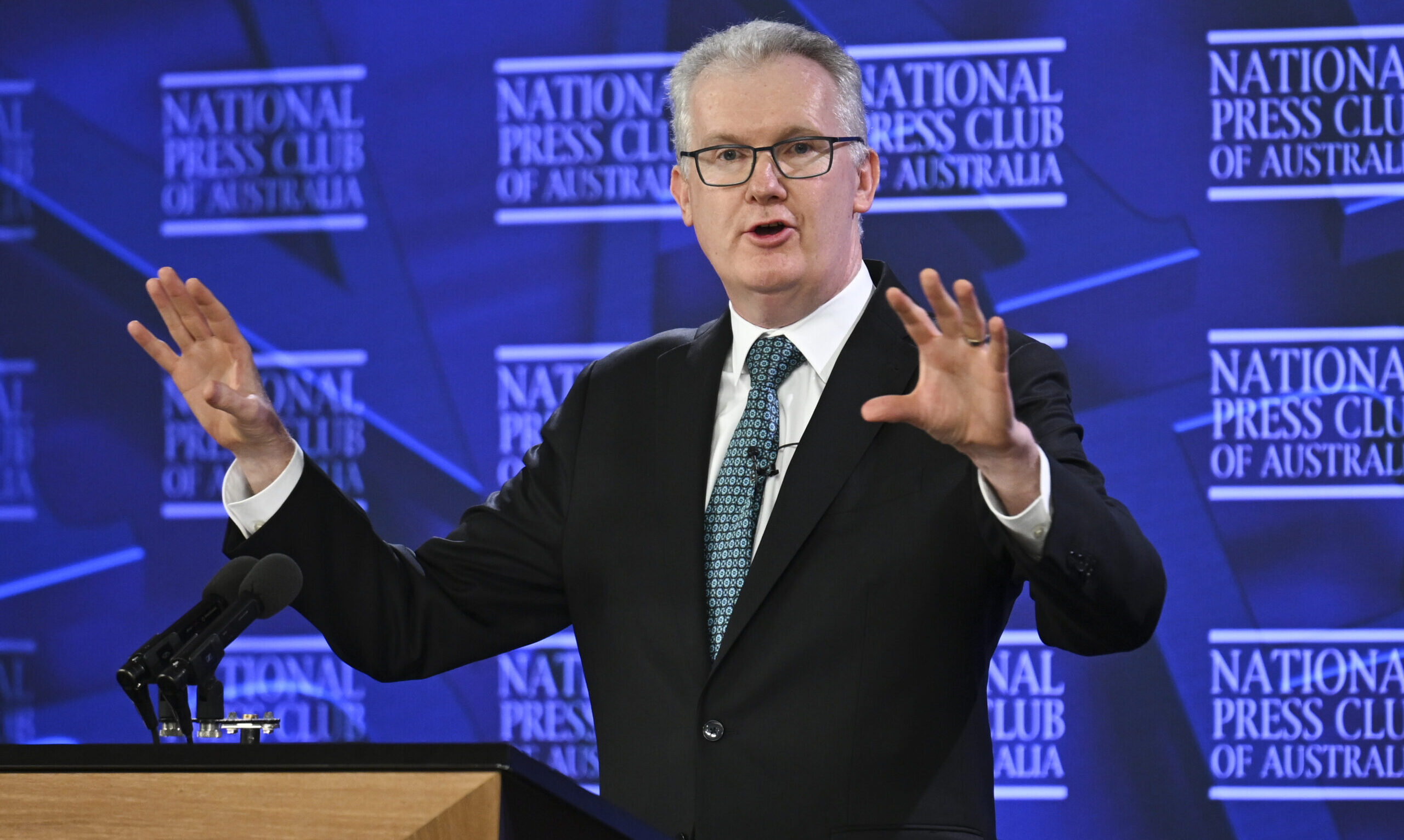
Minister Burke addressed the National Press Club on Thursday. Picture: Martin Ollman
The federal government will crack down on actors using international students that come to Australia as a means to fund child exploitation, human trafficking and drug trade efforts.
Please login below to view content or subscribe now.
Professor Paul Mazerolle has been appointed vice-chancellor of the University of Southern Queensland. Picture: Newswire
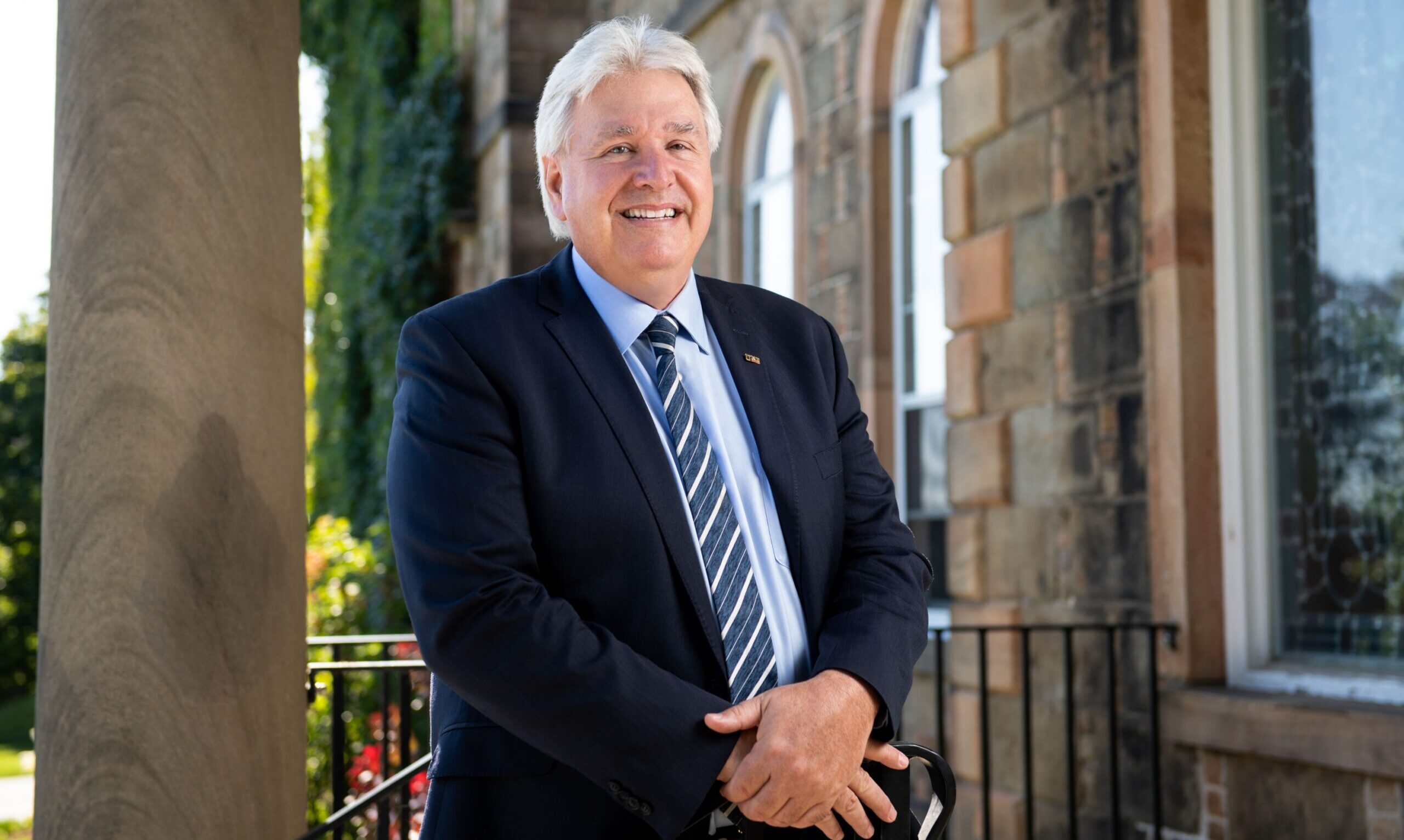
International crime expert Professor Paul Mazerolle has been appointed to lead the University of Southern Queensland (UniSQ), replacing acting vice-chancellor Karen Nelson.
Please login below to view content or subscribe now.
After months of anticipation, the post-16 education and skills white paper has finally landed.
For many across the sector, the wait has been worth it. There are bold commitments on funding, skills pathways and structural reform. But for those of us focused on widening participation there are the green shoots of ideas but very little detail and the group of students who are at most risk to lack of equality of access – care experienced and estranged students – are barely even mentioned. The paper feels more like a promising prologue than a full chapter.
There are areas of positive progress. The previously trailed increase in maintenance support, which will help students better manage rising living costs – a critical issue for those without family safety nets.
Plus the report commits to “provide extra support for care leavers, some of the most vulnerable in our society, who will automatically become eligible to receive the maximum rate of loan.” We would want to see these extended to estranged students as well as care experienced young people as we know many report financial hardship without the support of parents to top up income. Data from the Student Academic Experience Survey showed us that both care experienced and estranged students work a statistically significantly higher number of hours per week – 11.3 and 11.1 hours respectively – than 8.8 hours non-care experienced students at 8.8 hours.
But we must await further detail to see whether this makes any material difference for care leavers (and hopefully estranged students) – given that they’re currently already eligible for the maximum maintenance loan, and this maximum doesn’t cover anywhere near enough to support their living expenses, as recent work on minimum income standards has shown.
A richer picture
The promise of better information for applicants, combining UCAS data with graduate outcomes and completion rates, is an important move toward transparency and fairer choice. The work that UUK, Sutton Trust and UCAS have already started in this space is welcome but ensuring consistency will be key. This is especially important to consider when we know from UCAS research that 60 per cent of surveyed applicants said “they did not receive guidance at school around applying to higher education, specific to their status as a care-experienced student.”
We’re also encouraged by the focus on regional disparities and disadvantage cold-spots, especially in coastal and low-participation areas. These are often the places where care experienced and estranged students are most at risk of being left behind.
But while these commitments signal progress, there’s still much to be drawn out around widening participation. Care experienced and estranged students remain largely invisible in mainstream policy design. They’re not always captured in data. They’re rarely the headline. But they matter (which is why we welcomed HESA’s planned exploration of the issues involved in publishing data on this group of students more regularly). These students face some of the steepest barriers to access, retention and success.
There are pockets of excellent practice and growing awareness of this group of students that is driving change in some areas. The commitment by Russell Group universities to develop a consistent offer of support is welcomed as is seeing more FE and HE institutions achieving the NNECL Quality Mark. These examples demonstrate that progress is achievable when there is institutional will and leadership – but there is still such little evidence about what works.
At the Unite Foundation, we were pleased to see recognition that accommodation is a key issue. For care experienced and estranged students, having somewhere safe and stable to live is not just a nice-to-have – it’s a fundamental prerequisite for participation in education. If we’re serious about widening participation, then addressing the barrier of housing insecurity must be central to the conversation. And yet, the white paper is light on detail about how government will support access to accommodation. This is a missed opportunity.
The Unite Foundation’s own scholarship programme remains the only intervention to meet OfS Level 2 standards for impact on retention, progression, and completion for this group. It’s a powerful testament to what targeted, sustained support can achieve – but it also highlights how little evidence we have about what works.
The journey continues
So while the white paper offers a welcome direction of travel, it’s not the final destination. I’m pleased to be joining the national access and participation task and finish group, chaired by access and participation champion Kathryn Mitchell, to work within government to ensure that we’re embedding care experienced and estranged students at the heart of this work as the detail starts to emerge.
If we’re serious about change we need more than just warm words. We need system-wide commitments that embed equity in funding, housing, student support and success metrics. We need to listen to students and design policy that reflects their lived realities.
The wrapping paper is off. Now it’s time to see what’s inside – and to make sure care experienced and estranged students aren’t left out of the picture.
This audio is auto-generated. Please let us know if you have feedback.
The number of education degrees awarded in the U.S. steadily decreased in the nearly two decades between 2003-04 and 2022-23, according to a new analysis of federal data by the American Association of Colleges for Teacher Education.
Bachelor’s degrees in education dipped from 109,622 annually to 90,710 while master’s degrees declined from 162,632 to 143,669 in that time span, AACTE said in its report on data from the U.S. Department of Education.
On Thursday, AACTE released a data dashboard based on these findings as well as two related reports. One covers the degrees and certificates conferred in education and the other highlights teacher preparation program trends.
As the Trump administration seeks to dismantle the Education Department and limit funding for federal education research, Jacqueline King, a co-author of the reports and an AACTE consultant, called for the agency to continue publishing research on teacher preparation programs.
“These reports provide a valuable check-up on the supply of new educators, and it is exciting that this year we can offer readers the opportunity to customize how they view the data through our new data dashboards,” King said in a Thursday statement. “It is essential that the federal government continue to provide the field — and the broader public — with this important information.”
Here are some standout figures on AACTE’s findings on the state of teacher preparation programs nationwide.
By the numbers
-3%
The one-year decline in bachelor’s degrees awarded in education from 2021-22 to 2022-23, the most recent year with available data.
-5%
The one-year decline in master’s degrees awarded in education from 2021-22 to 2022-23.
407,556.
The number of students enrolled in a teacher preparation program at a comprehensive higher education institution during the 2022-23 academic year.
611,296
The number of students enrolled in a teacher preparation program at a comprehensive higher education institution during the 2012-13 academic year.
124,428
The number of students enrolled in a teacher preparation program at an alternative teacher preparation program — ones not based at colleges — during the 2022-23 academic year. In the 2012-13 academic year, that number was just 43,099
112,913
The number of students who completed a teacher preparation program at a comprehensive college or university in the 2022-23 academic year. During the 2012-13 academic year, that number stood at 163,851.
16,899
The number of students who completed an alternative teacher preparation program not based at a college during the 2022-23 academic year. In 2012-13, that number was 15,550.
+9%
The growth in students completing alternative teacher preparation programs not based at higher education institutions between 2012-13 and 2022-23.
+44%
The growth in students who completed alternative teacher preparation programs based at colleges between 2012-13 and 2022-23.
29%
The share of education bachelor’s degrees awarded to non-White graduates in 2022-23, up from 23% in 2016-17.
33%
The percentage of education master’s degrees that went to non-Whites in 2022-23, up from 28% in 2016-17.
42%
The portion of education doctoral degrees earned by non-Whites in 2022-23, up from 37% in 2016-17.
Correction: A previous version of this article stated the wrong number of students enrolled in a teacher preparation program at a comprehensive higher education institution during the 2022-23 academic year. The correct enrollment figure is 407,556 students.
In August, FIRE sued Secretary of State Marco Rubio for violating the First Amendment.
Since March, Rubio and the Trump administration had been detaining and attempting to deport legally present noncitizens for protected speech — including writing op-eds and attending protests — because they disliked that speech.
To do it, they invoked two provisions of the Immigration and Nationality Act: one that allows the secretary of state to initiate deportation proceedings against any noncitizen for protected speech if the secretary “personally determines” the speech “compromises a compelling foreign policy interest,” and another that enables the secretary of state to revoke the visa of any noncitizen “at any time” for any reason.
This, as FIRE has argued, is unconstitutional. Noncitizens in the United States have First Amendment rights, and Rubio’s use of these provisions not only violates those rights, but also showcases why the two provisions are unconstitutional and must be struck down to the extent they allow adverse immigration action based on protected speech.
Of course, the government sees it differently. They have leveled several arguments for why their conduct is defensible, necessary, and constitutional. However, a brief filed on October 20 by FIRE explains why the government’s arguments don’t withstand scrutiny.
Here’s a breakdown of the government’s claims and why the law points in the other direction.
The government says it isn’t targeting protected speech — despite all evidence to the contrary
The government’s attorneys in this case insist that the claims of FIRE’s plaintiffs — TheStanford Daily, which employs the writing of noncitizen journalists and covers the impact of the war in Gaza on campus, and Jane and John Doe, who engage in pro-Palestinian advocacy — should be dismissed because the government, the attorneys argue, “do[es] not pursue visa revocations and removal proceedings purely based on political speech.”
Unfortunately, everything government officials have said and done proves otherwise.
President Trump, for instance, has vowed to deport “any student that protests” and revoke visas of “antisemitic” students. Rubio has stated publicly that “people that are supportive of movements” he determines “run counter to the foreign policy of the United States” are subject to visa revocation and deportation.
Officials tasked with carrying out these promises have also testified that a wide variety of pro-Palestinian speech, including chanting “from the river to the sea, Palestine will be free,” calling Israel “an apartheid state,” and “criticizing Israel’s actions in Gaza,” are sufficient to justify action under the revocation and deportation provisions. These are all forms of political expression protected by the First Amendment, proving in both word and deed that the government is in fact targeting noncitizens for their free speech.
“Secretaries Noem and Rubio are engaging in a mode of enforcement leading to detaining, deporting, and revoking noncitizens’ visas solely on the basis of political speech,” U.S. District Judge William Young wrote in a 161-page assessment of the Trump administration’s behavior, “and with the intent of chilling such speech and that of others similarly situated.”
And that chilling effect is another important aspect of this case.
The government’s actions are a chill on protected speech
When combined, the two provisions of the Immigration and Nationality Act grant the secretary of state nearly unlimited authority to target noncitizens whose protected speech they dislike, to revoke the visas of those noncitizens, and to initiate deportation proceedings.
If you’re a visa or green card holder in the United States, that’s going to make you think twice about speaking your mind — and that’s the point.
FIRE’s plaintiffs John and Jane Doe have engaged in and planned to engage in speech about American foreign policy and Israel — including accusing Israel of committing “genocide” and using the slogan “from the river to the sea, Palestine will be free.” All of this speech is protected by the First Amendment, but because the provisions of the Immigration and Nationality Act enable the secretary of state to revoke a visa and render noncitizens deportable based on this exact type of speech, that speech is being chilled. Jane Doe is choosing not to speak out anymore, and John Doe is continuing to speak but fears enforcement action.
FIRE’s other plaintiff, TheStanford Daily, is experiencing a similar chilling effect. As a newspaper committed to “to cover[ing] all relevant campus activities in an unbiased fashion and provide an outlet for Stanford community members to publish opinions,” the newspaper has a keen interest in covering the voices of students on campus — which necessarily includes noncitizens with pro-Palestinian views.
However, due to the provisions of the Immigration and Nationality Act, as well as the actions Rubio and the Trump administration have already taken to target disfavored speech, noncitizen journalists have refused assignments and even quit the newspaper out of fear. One need only to look at the case of Rümeysa Öztürk, a Tufts student who was detained for writing an op-ed critical of Israel, for ample reason behind The Stanford Daily’s concerns.
The implications here should be obvious. If there is a credible threat of the government revoking your visa and engaging in deportation proceedings for speech you publish in your school newspaper, you’re unlikely to take the risk. This not only violates the First Amendment rights of these noncitizens, it also harms the ability of all citizens to read and hear perspectives about matters of public importance that the current administration doesn’t like.
The provisions of the Immigration and Nationality Act are unconstitutional and must be struck down
The First Amendment prohibits Congress from enacting — and the executive branch from enforcing — laws penalizing speakers because of their opinions, no matter their immigration status.
It’s as simple as that.
The idea, from our nation’s founding, is to protect the “inalienable” right to free expression. Our Founders did not believe that free speech was a privilege granted to us by our government, but rather a right inherent to us all, which required protection from government. And there is no historical merit to the idea, forwarded by some, that these rights were only ever intended for American citizens. In fact, many of the most prominent and controversial voices during our nation’s founding were noncitizens.
This is why the Supreme Court has repeatedly recognized that the First Amendment’s protection for free speech applies to noncitizens, noting in cases such as Kwong Hai Chew v. Colding that:
Once an alien lawfully enters and resides in this country he becomes invested with the rights guaranteed by the Constitution to all people within our borders. Such rights include those protected by the First and the Fifth Amendments … They extend their inalienable privileges to all ‘persons’ and guard against any encroachment on those rights by federal or state authority.
For all of these reasons, the revocation and deportation provisions of the Immigration and Nationality Act — which the government itself has publicly acknowledged allows it to revoke noncitizens’ visas and render them deportable for protected expression — are an unconstitutional violation of the First Amendment.
The government argues that, because its actions involve immigration and foreign policy in this case, its “authority is at its zenith” and its arguments are “entitled to the most deference from the courts.” However, it is basic high school civics, and noted in the 1803 case Marbury v. Madison, that “it is emphatically the province and duty of the judicial department to say what the law is.”
The Supreme Court has also explained, as it did in Holder v. Humanitarian L. Project, that “[o]ur precedents, old and new, make clear that concerns of national security and foreign relations do not warrant abdication of the judicial role. We do not defer to the Government’s reading of the First Amendment, even when such interests are at stake.”
And as the Ninth Circuit court noted in Washington v. Trump, “the Supreme Court has repeatedly and explicitly rejected the notion that the political branches have unreviewable authority over immigration or are not subject to the Constitution when policymaking in that context.”
The Constitution does not disappear when important issues are at stake. The point of a written constitution is to prevent the political branches from declaring the limits of their own power. The provisions of the Immigration and Nationality Act are a clear violation of these principles. Both constitute viewpoint and content discrimination because they permit the government to impose adverse immigration consequences on lawfully present noncitizens simply because the secretary of state dislikes their political speech.
No person should hold such power under our system of government. For these reasons, FIRE is seeking a landmark ruling that these provisions are unconstitutional to the extent they allow the secretary of state to revoke visas or initiate deportation proceedings based on protected speech.
America is different, and that’s a good thing
Regardless of your opinions on the political speech in question, if you value the First Amendment, this case should matter to you. This doesn’t just implicate the expression of lawfully present noncitizens. It also implicates your ability to hear speech that the government finds unfavorable to its interests — and that is a critical freedom that sets America apart.
As FIRE’s brief notes:
America is different. Over the centuries, as the world’s nations jailed, censored, and exiled unpopular speakers in the name of some pressing interest, we charted a different course. In our country, Thomas Jefferson explained, “the rights of thinking, and publishing our thoughts by speaking or writing” are inalienable rights belonging to the individual and never surrendered to a government’s control. To protect those inalienable rights, the Founders crafted the First Amendment, ensuring that “Congress shall make no law” abridging the right of individuals to think and speak for themselves. The Bill of Rights’ opening command, forged when noncitizen Europeans were some of the most prolific and controversial commentators of the day, makes “no distinction between citizens and resident aliens.”
For a more detailed and granular assessment of the arguments forwarded in this case, we encourage you to read the brief in full.
CHEQ is trusted by more than 15,000 companies — from the Fortune 50 to emerging disruptors — to enable and protect each critical touchpoint in the evolving, human-AI customer journey. Powered by the only integrated Traffic, Threat, and Identity Intelligence Engine, CHEQ distinguishes legitimate users from bad actors — human, AI agent, or bot — and, in real-time, delivers granular, context-specific insights to marketing, commerce, and security platforms. With a best-in-class
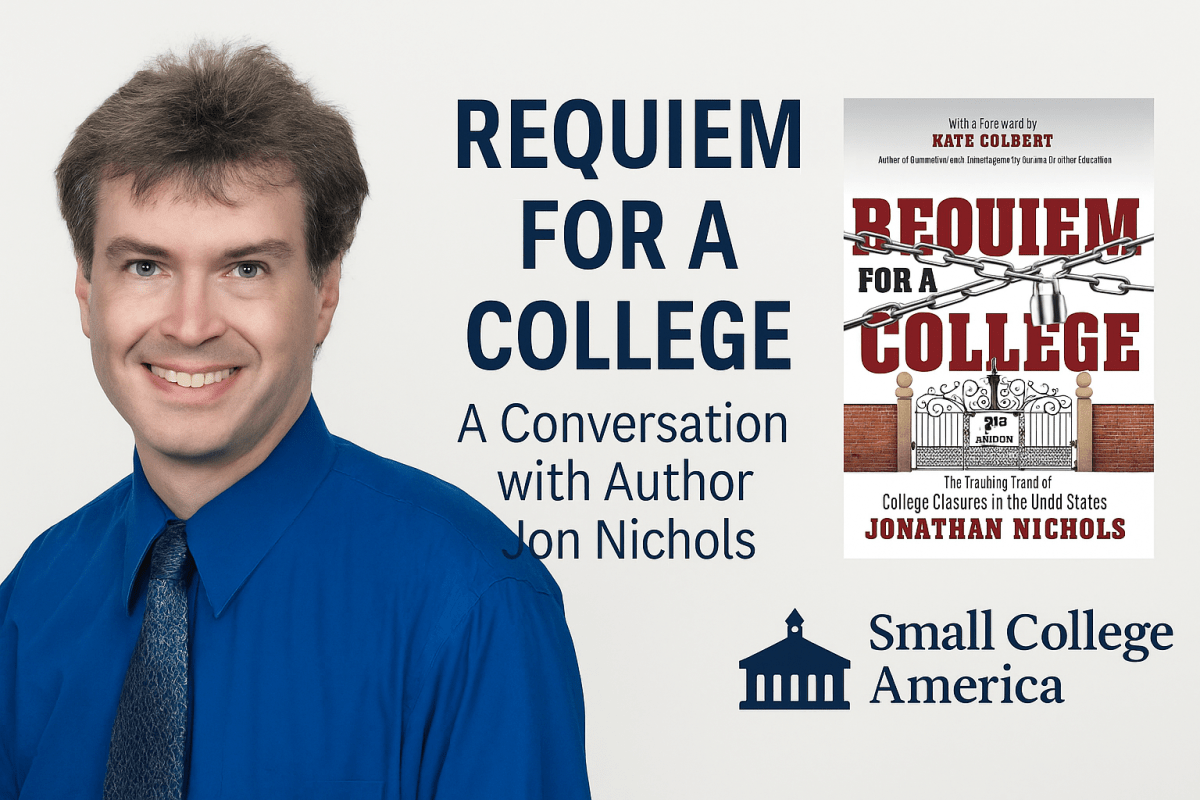
In the newest episode of Small College America, my co-host Kent Barnds and I speak with Jon Nichols, author of Requiem for a College: The Troubling Trend of College Closures in the United States. Nichols’ book offers a deeply personal and reflective look at the 2017 closure of Saint Joseph’s College, an institution intertwined with his family for three generations—his father, Dr. John Nichols, taught there for five decades, and his brother Michael continues to teach at Purdue University.
The Story of Saint Joseph’s College
Founded in 1889 by the Missionaries of the Precious Blood, Saint Joseph’s College in Rensselaer, Indiana, was a small Catholic liberal arts institution known for its close-knit community, rigorous Core Curriculum, and dedication to service. For more than a century, it served as both an educational and cultural anchor for Rensselaer and surrounding Jasper County, educating generations of teachers, business leaders, and clergy. At its peak in the 1970s, the college enrolled more than 1,500 students and earned national recognition for its innovative Core Program, which blended history, philosophy, and theology in an interdisciplinary approach to learning.
Despite its enduring mission and loyal alumni base, Saint Joseph’s faced mounting financial pressures and declining enrollment, leading to the suspension of operations in 2017. By that year, the college’s enrollment had declined to about 900 students, a sharp drop from its earlier decades of strength. The closure reverberated throughout the region, symbolizing a growing crisis among small, tuition-dependent private colleges across the United States.
About Jon Nichols
Jon Nichols is an author, educator, and observer of the changing higher education landscape. A graduate of Saint Joseph’s College and longtime member of its academic community, Nichols witnessed firsthand the personal and institutional struggles that informed Requiem for a College: The Troubling Trend of College Closures in the United States. His work combines narrative storytelling with research and reflection, capturing both the emotional and systemic dimensions of college closures. Today, Nichols teaches English at Waubonsee Community College in Illinois, where he continues to write and speak about the sustainability challenges facing small colleges and the communities they serve.
Nichols captures the profound emotional and social toll of a college closure—on faculty, students, alumni, and the surrounding town. His narrative reminds readers that when a college closes, it is not just an institution that disappears, but a community, a sense of purpose, and a shared legacy.
Our conversation explores a range of topics, including the warning signs that should have been taken more seriously—both at Saint Joseph’s and across higher education—and how his book captures not only institutional failure but also human loss: the erasure of identity, community, and legacy. Nichols also reflects on what sustainable models of higher education might look like in the years ahead and what long-term effects the closure has had on former students, faculty, and the Rensselaer community.
Small College America is a podcast series that shines a spotlight on the powerful impact of small colleges across the nation. Hosted by Dean Hoke and Kent Barnds, the podcast brings listeners inside the world of small colleges through candid conversations with higher education leaders, policy experts, and innovators. Each episode explores how these institutions are adapting, thriving, and continuing to deliver a personal, high-quality education.
In SRHE News and Blog a series of posts is chronicling, decade by decade, the progress of SRHE since its foundation 60 years ago in 1965. As always, our memories are supported by some music of the times.
So here we are, with many people taking stock of where HE had got to in 2005 – suddenly I see. Evan Schofer (Minnesota) and John W Meyer (Stanford) looked at the worldwide expansion of HE in the twentieth century in the American Sociological Review, noting that: “An older vision of education as contributing to a more closed society and occupational system—with associated fears of “over-education”—was replaced by an open-system picture of education as useful “human capital” for unlimited progress. … currently about one-fifth of the world cohort is now enrolled in higher education.”
Mark Olssen (Surrey) and Michael A Peters (Surrey) wrote about “a fundamental shift in the way universities and other institutions of higher education have defined and justified their institutional existence” as different governments sought to apply some pressure. Their 2005 article in the Journal of Educational Policy traced“… the links between neoliberalism and globalization on the one hand, and neoliberalism and the knowledge economy on the other. … Universities are seen as a key driver in the knowledge economy and as a consequence higher education institutions have been encouraged to develop links with industry and business in a series of new venture partnerships.”
Åse Gornitzka (Oslo), Maurice Kogan (Brunel) and Alberto Amaral (Porto) edited Reform and Change in Higher Education: Analysing Policy Implementation, also taking a long view of events since the publication 40 years earlier of Great Expectations and Mixed Performance: The Implementation of Higher Education Reforms in Europe by Ladislav Cerych and Paul Sabatier. The 2005 book provided a review and critical appraisal of current empirical policy research in higher education with Kogan on his home territory writing the first chapter, ‘The Implementation Game’. At the same time another giant of HE research, SRHE Fellow Michael Shattock, was equally at home editing a special issue of Higher Education Management and Policyon the theme of ‘Entrepreneurialism and the Knowledge Society’. That journal had first seen the light of day in 1977, being a creation of the OECD programme on Institutional Management in Higher Education, a major supporter of and outlet for research into HE in those earlier decades. The special issue included articles by SRHE Fellows Ron Barnett and Gareth Williams, and by Steve Fuller (Warwick), who would be a keynote speaker at the SRHE Research Conference in 2006. The journal’s Editorial Advisory Group was a beautiful parade of leading researchers into HE, including among others Elaine El-Khawas, (George Washington University, Chair), Philip Altbach (Boston College, US), Chris Duke (RMIT University, Australia), Leo Goedegebuure (Twente), Ellen Hazelkorn (Dublin Institute of Technology), Lynn Meek (University of New England, Australia), Robin Middlehurst (Surrey), Christine Musselin (Centre de Sociologie des Organisations (CNRS), France), Sheila Slaughter (Arizona) and Ulrich Teichler (Gesamthochschule Kassel, Germany).
I’ve got another confession to make – Shattock had been writing about entrepreneurialism as ‘an idea for its time’ for more than 15 years, paying due homage to Burton Clark. The ‘entrepreneurial university’ was indeed a term “susceptible to processes of semantic appropriation to suit particular agendas”, as Gerlinde Mautner (Vienna) wrote in Critical Discourse Studies. It was a concept that seemed to break through to the mainstream in 2005 – witness, a survey by The Economist, ‘The Brains Business’ which said: “America’s system of higher education is the best in the world. That is because there is no system … Europe hopes to become the world’s pre-eminent knowledge-based economy. Not likely … For students, higher education is becoming a borderless world … Universities have become much more businesslike, but they are still doing the same old things … A more market-oriented system of higher education can do much better than the state-dominated model”. You could have it so much better, said The Economist.
An article by Simon Marginson (then Melbourne, now Oxford via UCL), ‘Higher Education in the Global Economy’, noted that “… a new wave of Asian science powers is emerging in China (including Hong Kong and Taiwan), Singapore and Korea. In China, between 1995 and 2005 the number of scientific papers produced each year multiplied by 4.6 times. In South Korea … 3.6 times, in Singapore 3.2. … Between 1998 and 2005 the total number of graduates from tertiary education in China increased from 830,000 to 3,068,000 ….” (and Coldplay sang China all lit up). Ka Ho Mok (then Hang Seng University, Hong Kong) wrote about how Hong Kong institutional strategies aimed to foster entrepreneurship. Private education was booming, as Philip Altbach (Boston College) and Daniel C Levy (New York, Albany) showed in their edited collection, Private Higher Education: a Global Revolution. Diane Reay (Cambridge), Miriam E David and Stephen J Ball (both IoE/UCL) reminded us that disadvantage was always with us, as we now had different sorts of higher educations, offering Degrees of choice: class, race, gender and higher education.
The 2005 Oxford Review of Educationarticle by SRHE Fellow Rosemary Deem (Royal Holloway) and Kevin J Brehony (Surrey) ‘Management as ideology: the case of ‘new managerialism’ in higher education’ was cited by almost every subsequent writer on managerialism in HE. 2005 was not quite the year in which journal articles appeared first online; like many others in 2005 that article appeared online only two years later in 2007, as publishers digitised their back catalogues. However by 2005 IT had become a dominant force in institutional management. Libraries were reimagined as library and information services, student administration was done in virtual learning environments, teaching was under the influence of learning management systems.
The 2005 book edited by Paul Ashwin (Lancaster), Changing higher education: the development of learning and teaching, reviewed changes in higher education and ways of thinking about teaching and learning over the previous 30 years. Doyenne of e-learning Diana Laurillard (UCL) said: “Those of us working to improve student learning, and seeking to exploit elearning to do so, have to ride each new wave of technological innovation in an attempt to divert it from its more natural course of techno-hype, and drive it towards the quality agenda.” Singh, O’Donoghue and Worton (all Wolverhampton) provided an overview of the effects of eLearning on HE andin an article in the Journal of University Teaching Learning Practice.
UK HE in 2005
Higher education in the UK kept on growing. HESA recorded 2,287,540 students in the UK in 2004-2005, of whom 60% were full-time or sandwich students. Universities UK reported a 43% increase in student numbers in the previous ten years, with the fastest rise being in postgraduate numbers, and there were more than 150,000 academic staff in universities.
Government oversight of HE went from the Department for Education (DfE) to the Department for Education and Employment (DfEE), then in 2001 the Department for Education and Skills (DfES), which itself would only last until 2007. Gillian Shepherd was the last Conservative Secretary of State for Education before the new Labour government in 1997 installed David Blunkett until 2001, when Estelle Morris, Charles Clarke and Ruth Kelly served in more rapid succession. No party would dare to tangle with HE funding in 1997, so a cross-party pact set up the Dearing Review, which reported after the election. Dearing pleaded for its proposals to be treated as a package but government picked the bits it liked, notably the introduction of an undergraduate fee of £1000, introduced in 1998. Perhaps Kelly Clarkson got it right: You had your chance, you blew it.
The decade after 1995 featured 12 separate pieces of legislation. The Conservative government’s 1996 Education (Student Loans) Act empowered the Secretary of State to subsidise private sector student loans. Under the 1996 Education (Scotland) Act the Scottish Qualifications Authority replaced the Scottish Examination Board and the Scottish Vocational Education Council. There was a major consolidation of previous legislation from the 1944 Education Act onwards in the 1996 Education Act, and the 1997 Education Act replaced the National Council for Vocational Qualifications and the School Curriculum and Assessment Authority with the Qualifications and Curriculum Authority.
The new Labour government started by abolishing assisted places in private schools with the 1997 Education (Schools) Act (an immediate reward for party stalwarts, echoed 20 years later when the new Labour government started by abolishing VAT relief for private schools). The 1998 Education (Student Loans) Act allowed public sector student loans to be transferred to the private sector, which would prompt much subsequent comment and criticism when tranches of student debt were sold, causing unnecessary trouble. The 1998 Teaching and Higher Education Act established General Teaching Councils for England and Wales, made new arrangements for the registration and training of teachers, changed HE student financial support arrangements and allowed fees to rise to £3000, passing narrowly after much Parliamentary debate. The 1998 School Standards and Framework Act followed, before the 2000 Learning and Skills Act abolished the Further Education Funding Councils and set up the Learning and Skills Council for England, the National Council for Education and Training for Wales, and the Adult Learning Inspectorate. The 2001 Special Educational Needs and Disability Act extended provision against discrimination on grounds of disability in schools, further and higher education.
The 2004 Higher Education Act established the Arts and Humanities Research Council, created a Director of Fair Access to Higher Education, made arrangements for dealing with students’ complaints and made provisions relating to grants and loans to students in higher and further education. In 2005 in the Journal of Education PolicyRobert Jones (Edinburgh) and Liz Thomas (HE Academy) identified three strands – academic, utilitarian and transformative – in policy on access and widening participation in the 2003 White Paper which preceded the 2004 Act. They concluded that “… within a more differentiated higher education sector different aspects of the access discourse will become dominant in different types of institutions.” Which it did, but perhaps not quite in the way they might have anticipated.
John Taylor (then Southampton) looked much further back, at the long-term implications of the devastating 1981 funding cuts, citing Maurice Kogan and Stephen Hanney (both Brunel) “Before then, there was very little government policy for higher education. After 1981, the Government took a policy decision to take policy decisions, and other points such as access and efficiency moves then followed.”.
SRHE and research into higher education in 2005
With long experience of engaging with HE finance policy, Nick Barr and Iain Crawford (both LSE) boldly titled their 2005 book Financing Higher Education: Answers From the UK. But policies were not necessarily joined up, and often pointed in different directions, as SRHE Fellow Paul Trowler (Lancaster), Joelle Fanghanel (City University, London) and Terry Wareham (Lancaster) noted in their analysis, in Studies in Higher Education, of initiatives to enhance teaching and learning: “… these interventions have been based on contrasting underlying theories of change and development. One hegemonic theory relates to the notion of the reflective practitioner, which addresses itself to the micro (individual) level of analysis. It sees reflective practitioners as potential change agents. Another relates to the theory of the learning organization, which addresses the macro level … and sees change as stemming from alterations in organizational routines, values and practices. A third is based on a theory of epistemological determinism … sees the discipline as the salient level of analysis for change. … other higher education policies exist … not overtly connected to the enhancement of teaching and learning but impinging upon it in very significant ways in a bundle of disjointed strategies and tacit theories.”
SRHE Fellow Ulrich Teichler (Kassel) might have been channelling The Killers as he looked on the bright side about the growth of research on higher education in Europe in the European Journal of Education: “Research on higher education often does not have a solid institutional base and it both benefits and suffers from the fact that it is a theme-base area of research, drawing from different disciplines, and that the borderline is fuzzy between researchers and other experts on higher education. But a growth and quality improvement of research on higher education can be observed in recent years …”
European research into HE had reached the point where Katrien Struyven, Filip Dochy and Steven Janssens (all Leuven) could review evaluation and assessment from the student’s point of view in Evaluation and Assessment in Higher Education:“… students’ perceptions about assessment significantly influence their approaches to learning and studying. Conversely, students’ approaches to study influence the ways in which they perceive evaluation and assessment.” Lin Norton (Liverpool Hope) and four co-authors surveyed teachers’ beliefs and intentions about teaching in a much-cited article in Higher Education: “… teachers’ intentions were more orientated towards knowledge transmission than were their beliefs, and problem solving was associated with beliefs based on learning facilitation but with intentions based on knowledge transmission.” Time for both students and teachers to realise it was not all about you.
SRHE had more than its share of dislocations and financial difficulties in the decade to 2005. After its office move to Devonshire Street in London in 1995 the Society’s financial position declined steadily, to the point where survival was seriously in doubt. Little more than a decade later we would have no worries, but until then the Society’s chairs having more than one bad day were Leslie Wagner (1994-1995), Oliver Fulton (1996-1997), Diana Green (1998-1999), Jennifer Bone (2000-2001), Rob Cuthbert (2002-2003) and Ron Barnett (2004-2005). The crisis was worst in 2002, when SRHE’s tenancy in Devonshire Street ended. At the same time the chairs of SRHE’s three committees stepped down and SRHE’s funds and prospective income reached their lowest point, sending a shiver down the spine of the governing Council. The international committee was disbanded but the two new incoming committee chairs for Research (Maria Slowey, Dublin City University) and Publications (Rosemary Deem, Royal Holloway) began immediately to restore the Society’s academic and financial health. SRHE Director Heather Eggins arranged a tenancy at the Institute of Physics in 76 Portland Place, conveniently near the previous office. From 2005 the new Director, Helen Perkins, would build on the income stream created by Rosemary Deem’s skilful negotiations with publishers to transform the Society’s finances and raise SRHE up. The annual Research Conference would go from strength to strength, find a long-term home in Celtic Manor, and see SRHE’s resident impresario François Smit persuade everyone that they looked good on the dancefloor. But that will have to wait until we get to SRHE in 2015.
Rob Cuthbert is editor of SRHE News and the SRHE Blog, Emeritus Professor of Higher Education Management, University of the West of England and Joint Managing Partner, Practical Academics. Email [email protected]. Twitter/X @RobCuthbert. Bluesky @robcuthbert22.bsky.social.
Last week, authorities in England banned fans of Israeli soccer team Maccabi Tel Aviv from attending the team’s November 6 match against Aston Villa in Birmingham, calling the event “high risk.”
The ban comes on the heels of a terror attack on Jews attending Yom Kippur services about 90 miles north in Manchester. Birmingham police cited security concerns for their decision, ostensibly anticipating a repeat of last year’s violence between Maccabi fans, Ajax Amsterdam fans, and protestors before a match in Holland. British Prime Minister Keir Starmer said the recommendation was “the wrong decision” — and local authorities should listen.
Security concerns must never become a cudgel for viewpoint discrimination. By excluding only Maccabi fans, Birmingham authorities effectively granted critics of the team, or its home nation, a heckler’s veto. But police should focus on those who cause violence, not their intended victims. Banning a group only hands intimidators exactly what they want.
Moving forward, we can expect colleges and universities to place even greater emphasis on security ahead of controversial speakers arriving on campus. But administrators must not pass security costs along to speakers or use security concerns as pretext to cancel a speaker’s appearance. They have a moral and legal obligation to redouble their efforts to protect free speech. Rewarding threats of violence by taxing speech or silencing speakers will only invite more threats and more violence.
The UK may not have a First Amendment, but it does risk violating the European Convention on Human Rights, a post-World War II pact designed to prevent exactly this kind of overreach. Article 5 of the ECHR protects “liberty and security,” while Articles 10 and 11 of the ECHR protect freedom of speech, assembly, and association. Generally, when security risks threaten these rights, police must take the “least restrictive means” to ensure safety (Faber v. Hungary, 2012).
In the soccer context, the ECHR allows “drastic” steps only where there’s a “pressing social need.” (Les Authentiks & Supras Auteuil 91 v. France, 2016). In other words, European courts expect targeted responses to violent threats: police should “only detain those … identified as a risk to public safety.” (S., V. & A. v. Denmark, 2018). Similar to the United States’ Brandenburg standard, British police cannot use “premature and indiscriminate” measures against an entire group’s right to associate when a breach of the peace is not imminent. (Laporte v. Chief Constable of Gloucestershire, 2006).
These decisions support highly individualized action when soccer fans threaten violence at matches. If the means chosen is instead to empty the entire away end, that looks less like security and more like collective punishment, which chills speech and association.
The imperative of freedom demands precision when it comes to threats and violence.
This is about more than a single soccer match. Last month, for example, police arrested comedian Graham Linehan at Heathrow Airport for posts on social media about transgender issues (London’s Metropolitan Police has since announced it will stop investigating “non-crime hate incidents,” and no charges followed Linehan’s arrest). And as FIRE senior fellow Jacob Mchangama wrote, “more than 30 people a day were being arrested for various online offenses” in England last April.
Across the UK, police continue to crack down on pro-Palestinian protests in recent months. Police have arrested over 2,000 protesters demonstrating against the ban on the pro-Palestine organizing group Palestine Action, while police unlawfully detained a woman in Kent for posting a “free Gaza” sign. The London Metropolitan Police even restricted pro-Palestine protests amid “public safety” concerns — the same rationale Birmingham authorities cite here. These examples make it clear that government imprecision in response to threatened violence knows no ideological bounds.
Just as the UK government should not shut down pro-Palestinian protests, the answer here cannot be to sideline Israeli fans from public life. Keeping people safe from violence is a core role of government. But the imperative of freedom demands precision when it comes to threats and violence. The Birmingham police should reverse this decision and protect supporters and protestors alike when Maccabi Tel Aviv takes to the pitch in Birmingham on November 6.




![Protecting Every Marketing Dollar: How Collegis Helped Block $2.2M in Ad Waste with CHEQ [CASE STUDY]](https://blog.college-counseling.com/wp-content/uploads/2025/10/Protecting-Every-Marketing-Dollar-How-Collegis-Helped-Block-22M-in.png)