Blog

  • Program stops early-career researchers quitting – Campus Review

    Program stops early-career researchers quitting – Campus Review

    Universities need workers with comprehensive analytical and strategic skills, but funding cuts and progression barriers have caused retention issues, leading to early-career researchers leaving universities in droves.

    Please login below to view content or subscribe now.

    Membership Login

    Source link

  • Monash stops tutorials in Law subjects – Campus Review

    Monash stops tutorials in Law subjects – Campus Review

    Monash University’s new dean of law has announced senior law students will stop tutorials and suggested students should do no more than ten hours of paid work a week alongside their studies.

    Please login below to view content or subscribe now.

    Membership Login

    Source link

  • New College of Florida says it will ‘happily be the first’ to sign Trump’s higher ed compact

    New College of Florida says it will ‘happily be the first’ to sign Trump’s higher ed compact

    This audio is auto-generated. Please let us know if you have feedback.

    Dive Brief:

    • New College of Florida has publicly volunteered to be the first institution to adopt the Trump administration’s higher education compact. 
    • The institution — which has undergone a right-wing transformation since 2023 at the direction of Republican Gov. Ron DeSantis — said in a news release Monday that it would “happily be the first” to formally embrace President Donald Trump’s vision for higher education.
    • Most universities directly offered the compact have rejected the sweeping proposal, which promises priority for federal grants in return for implementing far-reaching policies favored by the administration.

    Dive Insight:

    At the beginning of October, Trump administration officials outlined a potential deal that it first brought to nine major research universities. 

    In return for special consideration in research and other federal funding, the universities were asked to implement a wide-ranging slate of policies. Those included a five-year tuition freeze, a standardized test requirement for applicants, an institutional position of neutrality on political and social events, and a commitment to potentially dissolve units deemed anti-conservative.

    Seven of the universities rejected the compact outright. Two others, Vanderbilt University and the University of Texas at Austin, have yet to formally accept or reject the deal. In October, Trump appeared to open the compact up to all colleges via a social post. At least three other institutions have declined the compact since.

    Many of the rejecting institutions cited concerns about academic freedom and independence. But NCF said Monday that it has already implemented policies reflecting many of the principles in the compact. The college has nixed diversity, equity and inclusion efforts, dismantled its gender studies department, and eliminated “discrimination in admissions.”

    Before 2023, NCF had a reputation as a LGBTQ+ friendly campus and one of the most progressive institutions in the state. But that year, DeSantis appointed a new slate of trustees at the liberal arts college, kicking off a turbulent transformation into a conservative model of public education. 

    The governor publicly advocated for a vision for NCF as a “Hillsdale of the South,” referring to Hillsdale College in Michigan, a conservative Christian institution.  

    The American Association of University Professors’ governing council voted unanimously in 2024 to sanction NCF over noncompliance with the faculty group’s standards for shared governance. 

    The AAUP called NCF’s changes an “unprecedented politically motivated takeover” citing findings from its 2023 report on political interference in higher ed in Florida. At NCF that included course changes, tenure decisions and faculty dismissals following DeSantis remaking of NCF’s board, according to the report. 

    The board of trustees and administration thoroughly restructured the college’s academic offerings without meaningful faculty involvement and denied academic due process to multiple faculty members during their tenure applications and renewals,” the AAUP said in announcing the censure.

    More recently, Republican state lawmakers and DeSantis have reportedly eyed an expansion of NCF, which could include diverting other public institutions’ resources to NCF’s control. 

    For its part, the college said Monday that it has reformed around principles such as merit and free thought. 

    We have no affirmative action or DEI, and we have been building a campus where open dialogue and the marketplace of ideas are at the forefront of everything we do,” said NCF President Richard Corcoran, formerly the Republican speaker for the Florida House and the education commissioner under DeSantis

    Initially, the Trump administration offered the compact to research powerhouses that take on large numbers of federal contracts, such as the Massachusetts Institute of Technology, University of Southern California and UT-Austin. 

    The smaller NCF only reported $381,509 in federal grants in fiscal 2024.

    Source link

  • Deadly Lincoln University mass shooting: Vigil held on campus; investigation continues (Fox 29 Philadelphia)

    Deadly Lincoln University mass shooting: Vigil held on campus; investigation continues (Fox 29 Philadelphia)


    Detectives believe multiple shooters were involved in a mass shooting that occurred during Lincoln University’s homecoming that left a 20-year-old Wilmington, Delaware man dead and six others injured.

    Source link

  • Top Hat Unveils AI-Powered Content Enhancer to Fuel Title II Accessibility Compliance

    Top Hat Unveils AI-Powered Content Enhancer to Fuel Title II Accessibility Compliance

    New capabilities in Top Hat Ace enable educators to quickly and easily transform static course materials into accessible, interactive content.

    TORONTO – October 28, 2025 – Top Hat, the leader in student engagement solutions for higher education, today announced the launch of a powerful new accessibility tool in its AI-powered assistant, Ace. Ace Content Enhancer gives faculty the ability to upload existing course materials into Top Hat and receive actionable guidance to meet WCAG 2.1 AA accessibility standards with minimal effort.

    Following the U.S. Department of Justice’s 2024 Title II ruling, public colleges and universities must ensure all digital content meets WCAG 2.1 AA standards as early as April 2026, depending on institution size. But for most professors, the path to compliance is anything but clear. The rules are highly technical, and without dedicated time or training, it can be challenging to ensure materials are fully compliant. Ace Content Enhancer removes this burden by scanning materials in Top Hat in seconds, identifying issues, and providing recommendations to help content meet the standards for accessibility outlined under Title II.

    “We’re helping educators meet this moment by simplifying compliance and making it easier to create learning experiences that serve all students,” said Maggie Leen, CEO of Top Hat. “More than meeting a mandate, this is an opportunity to create content that’s more engaging, and ultimately more effective in supporting student success.”

    A faster, simpler path to compliant courseware

    With Ace’s AI-powered Content Enhancer, faculty can:

    • Scan materials for accessibility issues instantly. Uploaded or existing content in Top Hat is analyzed in seconds, with specific accessibility concerns in text and images flagged for quick review.
    • Remediate with ease. Recommendations and features like auto-generated alt-text remove guesswork and save time.
    • Improve clarity for all learners. Suggested tone helps make content easier to understand and more effective.
    • Make content more relevant. Use Ace to generate real-world examples tailored to students’ interests, academic goals, or backgrounds to boost engagement.
    • Reinforce learning through practice. Ace will suggest interactive, low-stakes questions to deepen understanding and support active learning.

    “Educators retain full control of their content, while Ace eliminates the guesswork, making accessibility improvements fast, intuitive, and aligned with instructional goals,” said Hong Bui, Chief Product Officer at Top Hat. “We’re providing a guided path forward so that accessibility doesn’t come at the expense of interactivity, creativity, or sound pedagogy.”

    The launch of Ace Content Enhancer reflects Top Hat’s broader commitment to accessibility. It builds on existing capabilities—like automatic transcription of slide content—and reinforces the company’s focus on ensuring all student-facing tools and experiences, across web and mobile, meet WCAG 2.1 AA standards, including readings, assessments, and interactive content.

    About Top Hat

    As the leader in student engagement solutions for higher education, Top Hat enables educators to employ evidence-based teaching practices through interactive content, tools, and activities in in-person, online and hybrid classroom environments. Thousands of faculty at more than 1,500 North American colleges and universities use Top Hat to create personalized, engaging and accessible learning experiences for students before, during, and after class. To learn more, please visit tophat.com.

    Source link

  • Can you get better medical advice online than from a doctor?

    Can you get better medical advice online than from a doctor?

    PCOS is a metabolic and reproductive condition. Although it’s the most common hormonal disorder in women of reproductive age, up to 70% of women affected by it never get diagnosed. Dr. Jamie Benham, an endocrinologist and principal investigatorat the EMBRACE Women’s Health Research Lab at the University of Calgary, said that because patients with PCOS can have a variety of experiences and symptoms, it can be challenging for doctors to diagnose. 

    For Joslin, it wasn’t until she began to struggle with infertility that she finally received a proper diagnosis. “When I saw the infertility doctor … he looks at me [and the] first thing he said to me was, ‘You are textbook PCOS’,” she said.

    Joslin said that if it weren’t for the online community, PCOS wouldn’t have been on her radar at all. Through treatments from her fertility doctor and naturopath, she was able to start a family.

    Taking symptoms seriously

    Jade Broughton, a member of the PCOS Patient Advisory Council at the University of Calgary, said she initially downplayed her own symptoms for years. She assumed they were stress-related from her shift work as a nurse and she was told her symptoms were normal.

    “I started noticing, quite a few years ago, my hair started falling [out] in clumps,” Broughton said. “I was just gaining weight so rapidly, I started having facial hair, all that stuff. I went to my doctor, and she was like, ‘You just turned 30, that’s just normal’ … So, I felt like I was just being gaslit for years and years.”

    Through internet searches and the PCOS Reddit page, she was finally able to understand what her symptoms might mean. After about seven years of advocating for herself, she finally received a diagnosis from her family doctor.

    “I feel like women’s health is still not taken seriously when it should be,” Broughton said. “Just stand up for yourself and trust your gut if you know something’s wrong.”

    Lisa Minaker, a legal assistant student in Winnipeg, Canada said that her irregular periods were concerning to her family physician, who referred her to an endocrinologist. Through blood work, her endocrinologist diagnosed PCOS. Although she received a diagnosis relatively quickly, Minaker said she felt that her doctors were not always “overly helpful” when it came to managing her symptoms. She thinks that doctors lack sufficient training in women’s health.

    “Not that it’s their fault,” she said. “Finding out how women don’t metabolize things like men, and how it’s dependant on where you are in your cycle … we’re still treated as basically a smaller version of men.”

    Why expertise matters

    Due to the complexity of PCOS and its diverse range of symptoms, a team of healthcare practitioners can be helpful. Joslin and Minaker both say that including other healthcare professionals, such as a naturopathic doctor and acupuncturist, helped with symptom management.

    “The [naturopathic doctor] was that complement to the medical world,” Joslin said. “My fertility doctor would prescribe me medication, and the naturopath would talk to me about my blood work [and supplements] … It was the hand holding and just someone talking you through [your results] to make sure you know what’s going on.”

    “I 100% credit the fact that I’m a mom to my naturopath,” Joslin said. “I would not be a mom without her.”

    Minaker said that in her own health journey she learned more from social media than from any doctor. “The girls in the [Facebook] group are pretty helpful,” she said. “I had to do my own research because I wasn’t really given a choice.”

    Although social media has played a big role in educating women about PCOS and other health problems, it can sometimes provide misinformation. A common misconception Broughton hears from patients is that they’re afraid to exercise, believing it’s bad for their health because of internet claims that it will raise cortisol levels — a hormone released in response to physical or emotional stress.

    “This is not consistent with what we know about the condition and exercise is recommended for all people with PCOS,” said Benham. “Unfortunately, we’re limited in that PCOS is not well studied. It’s not well understood. It hasn’t been funded from a women’s health research perspective. So there’s a lot of people that are profiting off nutrition plans or exercise plans or giving different advice around supplements.”

    Combatting misinformation

    Minaker said she found it difficult in the beginning to distinguish which resources were helpful and which were targeted marketing scams.

    “I wasn’t always that intuitive to be able to tell who was truthful,” Minaker said. “[I was] trying to find as many answers as possible.”

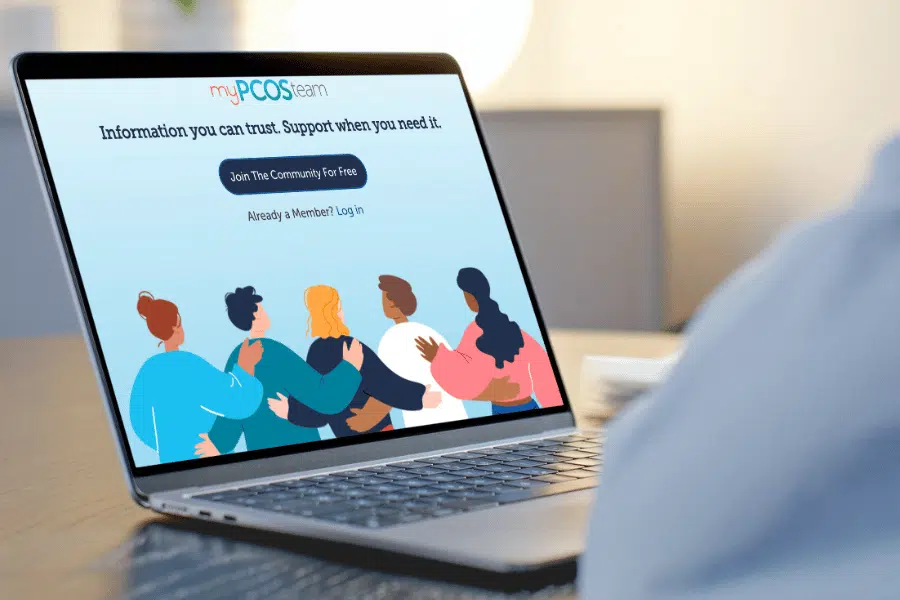
    In some Facebook groups, women share their symptoms, medications and diagnostic test results. Chats in these groups often involve consultations, advice and, sometimes, bullying.

    Joslin said that instead of lifting others up, some members of fertility groups for women with PCOS create guilt, embarrassment and shame around a vital aspect of life that PCOS can affect — being able to start a family.

    “In some groups, like the PCOS groups that focus specifically on trying to get pregnant, I had to leave right away,” Joslin said. “It was very toxic … where, truthfully, in this journey you need support. I’ve found much more success with smaller localized groups.”

    Information from medical organizations

    To combat misinformation, some medical organizations have created their online forums and portals. Broughton pointed to Monash University in Australia, which released new PCOS guidelines and launched a phone application called Ask PCOS.

    “They actually have an app that has tons of resources on weight management, food, insulin resistance, all of that stuff,” Broughton said. “And they’re actually one of the big players that’s trying to have it renamed as well.”

    Since PCOS affects more than ovaries, a new name would reflect that and might make it less confusing for women with symptoms to get the help they need.

    Other institutions are bringing women together in person to share experiences face-to-face.

    The EMBRACE Lab at the University of Calgary, for example, formed a PCOS Patient Advisory Council to conduct patient-oriented research earlier this year. The council, which meets monthly, is a space for community.

    “It’s such an amazing experience to sit in the room with all these women,” Joslin said. “Knowing all the struggles I’ve had … and sitting with people who are newly diagnosed or on their fertility journey … I’m able to share my advice and say, ‘You’re not alone.’”

    Community, whether found online or through research, has been an important part of the journey for these patients.

    Benham said that PCOS is a lifelong condition, whose symptoms can be managed although it cannot be cured. Joslin adds that it’s important to bring awareness to the condition. “Because there’s so many of us that have it, let’s make this more known.”


    Questions to consider:

    1. Why might someone trust a random person on an online forum over a doctor for medical advice?

    2. How can medical information you find online leave you more confused?

    3. If you felt unwell where would you turn for information about your condition?



    Source link

  • Why busy educators need AI with guardrails

    Why busy educators need AI with guardrails

    Key points:

    In the growing conversation around AI in education, speed and efficiency often take center stage, but that focus can tempt busy educators to use what’s fast rather than what’s best. To truly serve teachers–and above all, students–AI must be built with intention and clear constraints that prioritize instructional quality, ensuring efficiency never comes at the expense of what learners need most.

    AI doesn’t inherently understand fairness, instructional nuance, or educational standards. It mirrors its training and guidance, usually as a capable generalist rather than a specialist. Without deliberate design, AI can produce content that’s misaligned or confusing. In education, fairness means an assessment measures only the intended skill and does so comparably for students from different backgrounds, languages, and abilities–without hidden barriers unrelated to what’s being assessed. Effective AI systems in schools need embedded controls to avoid construct‑irrelevant content: elements that distract from what’s actually being measured.

    For example, a math question shouldn’t hinge on dense prose, niche sports knowledge, or culturally-specific idioms unless those are part of the goal; visuals shouldn’t rely on low-contrast colors that are hard to see; audio shouldn’t assume a single accent; and timing shouldn’t penalize students if speed isn’t the construct.

    To improve fairness and accuracy in assessments:

    • Avoid construct-irrelevant content: Ensure test questions focus only on the skills and knowledge being assessed.
    • Use AI tools with built-in fairness controls: Generic AI models may not inherently understand fairness; choose tools designed specifically for educational contexts.
    • Train AI on expert-authored content: AI is only as fair and accurate as the data and expertise it’s trained on. Use models built with input from experienced educators and psychometricians.

    These subtleties matter. General-purpose AI tools, left untuned, often miss them.

    The risk of relying on convenience

    Educators face immense time pressures. It’s tempting to use AI to quickly generate assessments or learning materials. But speed can obscure deeper issues. A question might look fine on the surface but fail to meet cognitive complexity standards or align with curriculum goals. These aren’t always easy problems to spot, but they can impact student learning.

    To choose the right AI tools:

    • Select domain-specific AI over general models: Tools tailored for education are more likely to produce pedagogically-sound and standards-aligned content that empowers students to succeed. In a 2024 University of Pennsylvania study, students using a customized AI tutor scored 127 percent higher on practice problems than those without.
    • Be cautious with out-of-the-box AI: Without expertise, educators may struggle to critique or validate AI-generated content, risking poor-quality assessments.
    • Understand the limitations of general AI: While capable of generating content, general models may lack depth in educational theory and assessment design.

    General AI tools can get you 60 percent of the way there. But that last 40 percent is the part that ensures quality, fairness, and educational value. This requires expertise to get right. That’s where structured, guided AI becomes essential.

    Building AI that thinks like an educator

    Developing AI for education requires close collaboration with psychometricians and subject matter experts to shape how the system behaves. This helps ensure it produces content that’s not just technically correct, but pedagogically sound.

    To ensure quality in AI-generated content:

    • Involve experts in the development process: Psychometricians and educators should review AI outputs to ensure alignment with learning goals and standards.
    • Use manual review cycles: Unlike benchmark-driven models, educational AI requires human evaluation to validate quality and relevance.
    • Focus on cognitive complexity: Design assessments with varied difficulty levels and ensure they measure intended constructs.

    This process is iterative and manual. It’s grounded in real-world educational standards, not just benchmark scores.

    Personalization needs structure

    AI’s ability to personalize learning is promising. But without structure, personalization can lead students off track. AI might guide learners toward content that’s irrelevant or misaligned with their goals. That’s why personalization must be paired with oversight and intentional design.

    To harness personalization responsibly:

    • Let experts set goals and guardrails: Define standards, scope and sequence, and success criteria; AI adapts within those boundaries.
    • Use AI for diagnostics and drafting, not decisions: Have it flag gaps, suggest resources, and generate practice, while educators curate and approve.
    • Preserve curricular coherence: Keep prerequisites, spacing, and transfer in view so learners don’t drift into content that’s engaging but misaligned.
    • Support educator literacy in AI: Professional development is key to helping teachers use AI effectively and responsibly.

    It’s not enough to adapt–the adaptation must be meaningful and educationally coherent.

    AI can accelerate content creation and internal workflows. But speed alone isn’t a virtue. Without scrutiny, fast outputs can compromise quality.

    To maintain efficiency and innovation:

    • Use AI to streamline internal processes: Beyond student-facing tools, AI can help educators and institutions build resources faster and more efficiently.
    • Maintain high standards despite automation: Even as AI accelerates content creation, human oversight is essential to uphold educational quality.

    Responsible use of AI requires processes that ensure every AI-generated item is part of a system designed to uphold educational integrity.

    An effective approach to AI in education is driven by concern–not fear, but responsibility. Educators are doing their best under challenging conditions, and the goal should be building AI tools that support their work.

    When frameworks and safeguards are built-in, what reaches students is more likely to be accurate, fair, and aligned with learning goals.

    In education, trust is foundational. And trust in AI starts with thoughtful design, expert oversight, and a deep respect for the work educators do every day.

    Latest posts by eSchool Media Contributors (see all)

    Source link

  • Feds launch site for employers to pay controversial H-1B fee, clarify exemptions

    Feds launch site for employers to pay controversial H-1B fee, clarify exemptions

    Dive Brief:

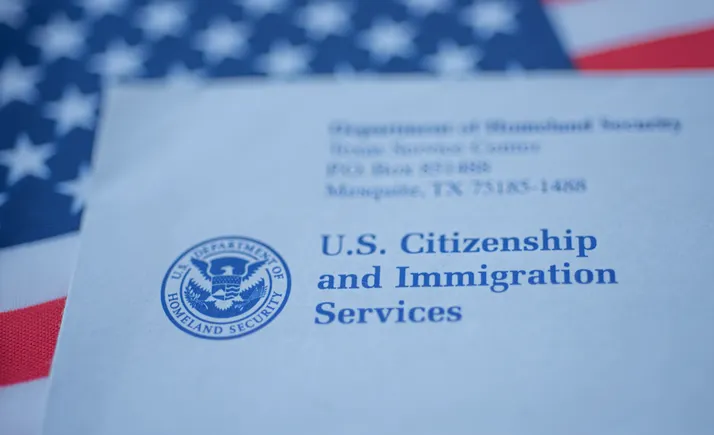
    • The U.S. Treasury Department launched an online payment website for employers to pay President Donald Trump’s $100,000 fee on new H-1B visa petitions, according to an update last week from the U.S. Citizenship and Immigration Services.
    • USCIS said the fee applies to new H-1B petitions filed on or after Sept. 21 on behalf of beneficiaries who are outside the U.S. and do not have a valid H-1B visa, or whose petitions request consular notification, port of entry notification or pre-flight inspection. Payment must be made prior to filing a petition with USCIS, per the agency.
    • Separately, USCIS’ update clarified that the fee requirement does not apply to petitions requesting an amendment, change of status or extension of stay for noncitizens who are inside the U.S., if that request is granted by USCIS. If it is not granted, then the fee applies.

    Dive Insight:

    Trump’s proclamation announcing the H-1B fee left employers with plenty of unanswered questions. While Monday’s update provides some clarity, the policy’s future is still uncertain in part because business groups, employers, unions, lawmakers and other stakeholders oppose it.

    At least two lawsuits have been filed seeking to enjoin the fee proclamation — one by the U.S. Chamber of Commerce in Washington, D.C., and another by a group of plaintiffs in California. Both similarly alleged that the H-1B fee violates the constitutional separation of powers as well as the Administrative Procedure Act. The complaints also warned of negative effects on U.S. employers that depend on the H-1B program to attract skilled foreign workers.

    In a letter to Trump and Secretary of Commerce Howard Lutnick, a bipartisan group of congressional lawmakers agreed to the need for reform of the H-1B program while expressing concerns about the potential effects of the fee on U.S. employers’ ability to compete with their global counterparts for talent.

    “The recently announced H-1B visa changes will undermine the efforts of the very catalysts of our innovation economy — startups and small technology firms — that cannot absorb costs at the same level as larger firms,” the lawmakers wrote.

    Trump and the White House have said the fee is necessary to combat “systemic abuse” of the H-1B program by employers that seek to artificially suppress wages at the cost of reduced job opportunities for U.S. citizens. In addition to the fee imposed on new visa petitions, the administration issued a proposed rule to change its selection process for H-1B visas to be weighted in favor of higher-paying offers.

    USCIS’ guidance noted that the Secretary of Homeland Security may grant other exceptions to the H-1B fee in “extraordinarily rare” circumstances where:

    • A beneficiary’s presence is in the national interest.
    • No American worker is available to fill the role.
    • The beneficiary does not pose a threat to U.S. security or welfare.
    • Requiring payment from the employer would significantly undermine U.S. interests.

    The agency provided an email address to which employers could send requests for fee exemption along with supporting evidence.

    Employers planning to file for new H-1B visas should plan to pay the fee unless litigation results in some kind of change, Akshat Divatia, attorney at law firm Harris Sliwoski, wrote in an article Tuesday. Divatia noted that some of the criteria for exemptions outlined by USCIS may conflict with congressional design of the H-1B program, and that employers “should watch closely how the courts respond” to such arguments.

    Source link

  • Misogyny and “Hoeflation” at the Nat’l Assoc. of Scholars

    Misogyny and “Hoeflation” at the Nat’l Assoc. of Scholars

    In an essay for Minding the Campus titled, “College Students in a Romance Recession, Boys Blame ‘Hoeflation,’” Jared Gould blames women for these imagined problems on campus, part of “a broad feminization of our institutions, which, to say the least, is not a good thing.”

    Gould uses the term “hoeflation” in his title to explain the problem of women being more selective than men on dating apps: “This imbalance has led young men to coin the term ‘hoeflation,’ the grind of chasing women they might barely fancy, but will date just to escape loneliness.” Oh, the poor lonely men, forced to work so hard to get laid by women they don’t like and call a “ho.” Why do all of these women—sorry, “hoes”—reject these obviously wonderful and respectful men?

    But ultimately the real problem, Gould says, is “leftist professors, who, bent on fueling radicalization, are largely to blame for the chasm between the sexes.” Those feminist faculty, Gould says, must be eliminated from universities to allow beautiful romances to blossom between the real men and their “hoes.”

    Why is Minding the Campus publishing this misogynist nonsense? Minding the Campus is a leading conservative voice about academia, owned by the National Association of Scholars, with Peter Wood as its executive editor.

    For a moment, I wondered if perhaps the NAS had been fooled by a left-wing hoax, publishing a work of such gross misogyny that had been planted to humiliate them. But no, Gould is not some random idiot. This idiot is the managing editor of Minding the Campus, following positions as a research fellow at Speech First and a senior editor at Campus Reform. He’s an influential voice and editor within the conservative movement.

    Beyond his open embrace of misogyny, Gould suffers from a lack of fact-checking skills.

    Gould wrote, “This August, a University of Tennessee professor canceled class to celebrate Taylor Swift’s engagement. Rather than using the moment to critique Swift’s portrayal of marriage as the ultimate career capstone, his canceling class quietly reinforced the idea that dating and partnership are secondary to education, career, and financial goals.”

    In reality, Tennessee communications professor Matthew Pittman was teaching his social media class and recorded a skit with his students pretending to cancel class despite the “biochem midterm” (in August!) he claimed was planned that day. It was a test of how misinformation spreads online and persists even after the truth is revealed, and Gould failed the test miserably.

    Gould got fooled multiple times by the hoax after being informed that it was a hoax, initially writing in August that the cancellation of class was “staged” but still somehow thinking it was real, both in his own article and another essay by Samuel Abrams at Minding the Campus. Just two months later, Gould is still repeating the fake story.

    Of course, even if a professor had canceled class to celebrate Swift’s upcoming marriage, that would be precisely the opposite of showing how “dating and partnership are secondary” to other goals. Gould managed to repeatedly fall for a hoax and still draw all the wrong conclusions from the fake news.

    But let’s not allow Gould’s misogyny and incompetence to distract us from how incredibly stupid his essay truly is. Gould began his article with a remarkably broad generalization based on one strange anecdote: “Love seems to be over for college students. That’s at least what I gathered from a recent conversation with a student in Texas.” Gould reported that this man is “not scoring dates” even though he took a dance class, which, it turned out was “a giant sausage fest” full of men seeking to find that most elusive creature, the single woman on a college campus. Assuming that this student is real, it’s still difficult to connect Gould’s bizarre conclusions from this pointless story with a data set of precisely one dude.

    According to Gould, “College girls have stopped looking for dates, and the men—well, they’ve learned to keep their eyes glued to the ground, lest they star in a viral TikTok captioned, ‘Guy looked at me—send help.’” Ah, yes, the poor men, unable to even look at anyone on campus because the feminazis will call 911 if they can see a man’s eyes. No wonder men are so rare on college campuses, when even their eyes are oppressed and they must pay the terrible price of “hoeflation.”

    Although it may be tempting to laugh at Gould’s embarrassing attempt at cultural analysis, his solution is ominous: “reforming higher education. We should dismantle the careerist catechism that emanates from it and shutter its sex fairs that peddle pleasure as a proxy for partnership.”

    Beyond banning “sex fairs,” Gould wants massive repression to “de-trench institutions of leftist professors.” We’ve seen a lot of awful excuses on the right for silencing speech on campus, from pretending to care about antisemitism to defending white people from the crime of diversity. But helping men get dates and sparing them the costs of “hoeflation” may be the worst reasons yet offered by conservatives for their campaign of campus censorship.

    John K. Wilson was a 2019–20 fellow with the University of California National Center for Free Speech and Civic Engagement and is the author of eight books, including Patriotic Correctness: Academic Freedom and Its Enemies (Routledge, 2008), and his forthcoming book The Attack on Academia. He can be reached at [email protected], or letters to the editor can be sent to [email protected].

    Source link

  • IU Alumni Pull Donations Over Student Newspaper Censorship

    IU Alumni Pull Donations Over Student Newspaper Censorship

    Indiana University’s decision to suspend the print publication of its student newspaper is costing the institution: Alumni are pulling donations in protest. The university ended the Indiana Daily Student’s print edition after firing the paper’s adviser, who refused to comply with administrators’ request to remove news coverage from a homecoming edition of the paper.

    University leaders insist they’re not censoring the student paper but moving it to a digital platform in line with a business plan adopted last year to address the paper’s deficits. But alumni aren’t buying it, IndyStar reported. Some are asking what came of donations they made to a fund dedicated to the student publication after the newspaper reported students faced hurdles to spending the money. Other alumni are pulling their donations altogether.

    Former journalism student Patricia Esgate canceled $1.5 million in bequests she planned to leave to the university. Alum Ryan Gunterman, executive director of the Indiana High School Press Association and the faculty adviser of Franklin College’s student newspaper, posted on Facebook that he and his wife were ceasing all future donations after giving money to the university and newsroom for over two decades. Toby Cole, a fourth-generation alum of the institution, told IndyStar in an email that his family was ending its monthly contributions and a $300,000 planned gift for scholarships.

    “If IU can pay our [football] coach almost $100mm we can fund our IDS,” Cole said in the email. “Problem is ‘they’ don’t want an independent free speaking print newspaper because students actually wield power with it.”

    Source link