The 2026 rankings overall show that “East Asian nations, led by China, continue to thrive,” said THE’s chief global affairs officer, Phil Baty.
Photo illustration by Justin Morrison/Inside Higher Ed | bingdian, cbarnesphotography and DNY59/iStock/Getty Images
Even before U.S. universities lost billions of dollars in federal research funding and international students struggled to obtain visas, America’s dominance in research impact and global reputation was waning. According to the latest rankings from Times Higher Education, the U.S. has continued to cede influence to universities in Asia.
For several years, the rankings from Inside Higher Ed’s parent company have documented a steady decline in the U.S.’s leadership in global higher education. The 2026 World University Rankings reflect that ongoing trend: Just 102 universities from the United States cracked the top 500—the lowest figure on record, down from a high of 125 in 2018. (The rankings started in 2004.)
The downward trend is less apparent in the overall top 10, where seven U.S. institutions appear. The Massachusetts Institute of Technology is the highest-ranking American institution, coming in at No. 2, just behind the top-ranked University of Oxford. According to THE, Princeton University recorded an institutional best score to tie for third.
But institutions farther down the list have slipped. Twenty-five colleges logged their worst-ever scores while 62 dropped in the rankings, which uses 18 measures to judge institutions on five areas including teaching, research quality and international outlook.
The 2026 rankings of more than 2,100 institutions are based on data collected from 2022 and 2023 and don’t reflect the Trump administration’s push to reshape American higher education. They don’t show what impact cuts to research funding and the crackdown on international students might have on U.S. institutions’ position on the global stage. Those changes could lead to a further decline for U.S. institutions in the rankings, though Ellie Bothwell, THE rankings editor, said what future rankings might show is hard to predict.
“Any country that cuts research funding, that limits internationalization of higher education, would be in danger of declining in the ranking,” she said. “Those are key things that we measure. Those are important things that universities do. There’s always going to be a risk if you cut those. There’ll be a decline, but it’s all relative, so it does also depend what goes on elsewhere.”
Looking at the overall 2026 rankings, Bothwell called the decline for the U.S. “striking,” adding that the drop reflects increased global competition. American institutions on average received lower scores on measures related to research, such as citation impact, as well as research strength and reputation.
Meanwhile, Asian universities continue to climb the rankings. Five universities from China are now in the top 40, and 18 achieved their highest ranks ever, according to THE.
THE’s chief global affairs officer, Phil Baty, said in a statement that the latest data suggests higher ed is moving toward a new world order with an Eastern center of gravity.
“This year’s rankings highlight a dramatic and accelerating trend—the shift in the balance of power in research and higher education excellence from the long-established, dominant institutions of the West to rising stars of the East,” Baty said.
He predicted that U.S. institutions and those in Western Europe would continue to lose ground to their East Asian counterparts in the rankings. “This clear trend is set to persist as research funding and international talent attraction continue to be stymied in the West,” he added.
Doctors predicted Wayne Frederick, the president of Howard University, wouldn’t live past 8. Now he’s 54. Frederick came to the U.S. from Trinidad and Tobago with a dream of finding a cure for his disease, sickle cell anemia, but detoured into higher ed administration.
At an event hosted by the American Council on Education at Howard University this week, Frederick said CRISPR gene editing, a technology developed in academia, made his dream a reality. Finding cures to debilitating diseases is one of “the intangible things that higher ed does to change lives,” he said.
Higher ed has changed lives in thousands of other ways; institutions are the largest employers in 10 states; colleges have helped regenerate many of America’s Rust Belt centers. Higher education is undeniably a public good. But as concerns grow about the affordability of college, do Americans care?
In the ACE event’s discussion about the economic impact of higher ed, Alex Ricci, president of the National Council on Higher Education Resources, pointed out that despite college’s role in local and regional economies, the debate about the value of higher ed comes down to whether one thinks the benefit to the individual is greater than to society as a whole. “Many colleges and universities see themselves as a benefit shared broadly by society. Most Americans—especially those carrying thousands of dollars in student loan debt—see it as a transaction where the individual is the primary beneficiary or victim, depending on the student’s long-term outcomes,” he said.
Regardless of whether you think higher ed is a public or private good, institutions are losing the value debate. In recorded remarks for the discussion, Representative Burgess Owens, a Utah Republican, chairman of the House subcommittee on higher education and workforce development, said, “Higher education should be about value, not just prestige.” He also presided over the “No More Surprises: Reforming College Pricing for Students and Families” hearing last month where lawmakers examined ways to make college costs more transparent.
The lack of transparency on the cost of college can be life-altering for students and poses existential risks for colleges. Inside Higher Ed’s 2025 student survey found that three-fourths of the 5,000 respondents encountered some surprises in the cost of their education. These surprises can derail education journeys. One in five students said that an unexpected expense of $500 to $1,000 would threaten their ability to persist. Bad surprises also harm colleges: Students say that the lack of affordability is the biggest driver of declining public trust in higher education.
College cost transparency has been a government priority since the Obama administration, but never has public trust in higher ed been so low or institutions so vulnerable to government overreach. Republican lawmakers have seized on the problem of college affordability and cost transparency and are looking for bipartisan solutions. In May, Senator Chuck Grassley, a Republican from Iowa, introduced the Understanding the True Cost of College Act 2025, which calls for standardization of financial aid offers so students understand in simple terms what the direct costs, indirect costs and net price of college will be. Last month the Senate Committee on Health, Education, Labor and Pensions formally requested information from the sector on ways to improve transparency, lower costs and ensure a college degree is valuable to students.
Some colleges sense the urgency of the moment and are taking action on affordability. More are offering free tuition to households earning as much as $200,000 a year. Last month Whitworth University made a radical decision to stop tuition discounting and decrease its annual sticker price from $54,000 to $26,900. At the same time, a recent study found that tuition discounting is on the rise among public four-year institutions. But tuition discounts create more confusion around the true cost of college.
A reasonable question to ask is: Why are only 730 colleges members of the College Cost Transparency Initiative? If higher ed stakeholders wanted to win the value debate, they would listen to lawmakers—and students and their families—and act on affordability and cost transparency. Otherwise, policymakers will do it for them. By demonstrating their impact for individual students, colleges can make a compelling case for their broader societal value.
In a recent Forbes column, Lumina Foundation president Jamie Merisotis reminded us that degrees must do more than certify coursework—they must create real value for students and employers. In Indiana, where Sagamore Institute’s 2040 workforce economy study and the Indiana Commission for Higher Education warn of falling college-going rates, this challenge is especially urgent.
The Founder’s College model confronts a growing national conversation: does the U.S. need more pathways beyond the traditional four-year degree? Institutions across the country are piloting three-year bachelor’s options and embedded two-year credentials to align faster, more affordable education with urgent labor market shortages while maximizing current infrastructure to meet needs.
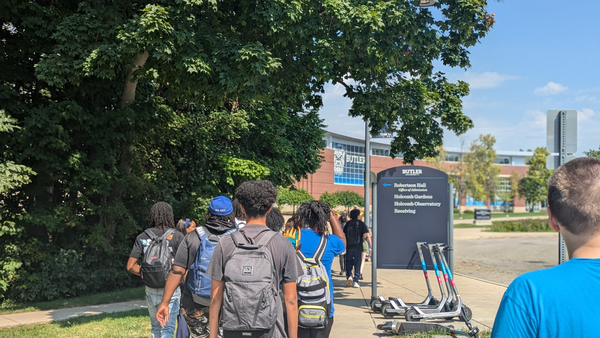
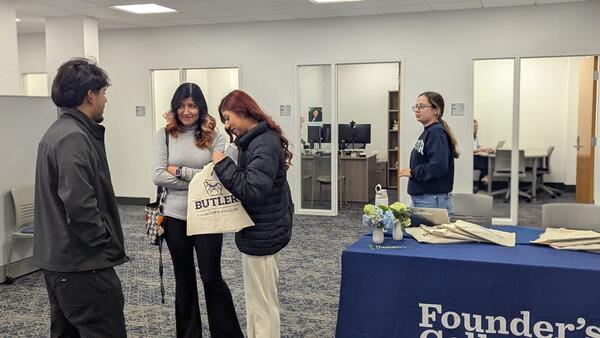
Butler University has placed itself in this conversation with uncommon clarity. At Founder’s College, students complete a two-year associate degree in six structured semesters, front-loading the critical skills usually acquired in a student’s junior and senior years—career motivation, professional identity and workforce readiness. This compressed pathway is not cut-rate—it is deliberately sequenced with degree programs tied to Classification of Instructional Programs codes and O*NET occupational standards synced to NACE competencies, ensuring that every credential reflects real career demand in Indiana and beyond.
A Workforce-Aligned, Equity-Driven Blueprint
The Indianapolis labor market, seeing a 3.1 percent GDP growth, underscores the need for this approach (Indiana University News, 2004). The monetary value of all that is produced in the state is outpacing state and national averages. At the same time, in-demand industries—especially health care, professional services, technology and advanced manufacturing—are confronting skill mismatches. Employers are offering jobs, yet Indiana’s college-going rate has slipped to historic lows, leaving pipelines partially empty (Indiana Business Research Center, 2024). The Indiana Department of Workforce Development reports wages are rising, up 4.1 percent in the metro area in 2025 according to InContext Indiana.
Institutions like Butler University are not blind to the demographic challenges either. A declining birth rate, an aging workforce, admissions redesigns and disruptive technologies such as AI intensify the demand for midlevel, adaptable credentials to reskill workers quickly.
Here is where Founder’s College shifts the ground. It builds wraparound supports—career coaching, social workers, family inclusion and embedded apprenticeships—into the core of its structure rather than leaving them at the margins. By lowering tuition costs to nearly debt-free levels for students and building in work-integrated experiences, Founder’s College creates a system where opportunity is the design, not the exception.
Global Research, Local Application
Butler’s experiment does not arise in a vacuum. It mirrors and operationalizes the findings of major policy reports:
A 2024 Organisation for Economic Co-operation and Development report recommends expanded investment in skills and high-quality education to combat slowing productivity growth coupled by aging, digitalization and climate changes. It stresses repeatedly that the U.S. is falling behind peer nations in connecting academic programs to workplace readiness, particularly in apprenticeships and microcredentials. The Founder’s College requirement that every student engage in structured, mentored, for-credit work experience directly addresses that gap.
The America AI Action Plan 2025 highlights the accelerating impact of artificial intelligence on the skills profile of jobs. Handshake reports increase in generative AI usage too. While OECD 2025 reminds us that there is a changing landscape requiring adaptability, complex interdisciplinary problem-solving and liberal arts and professional academic digital fluency are no longer optional. At Founder’s College, technical writing studios, digital credentialing, industry certification and technology integration prepare students to thrive in an AI-mediated workplace.
FutureEd research from 2023 emphasizes transparency in skills attainment and the use of short-term, stackable credentials as levers of equity. By awarding credentials midjourney and maximizing learning mobility, a call from the LEARN Commission—not just at degree completion—Founder’s College signals value to students, employers and families at every step.
Taken together, these frameworks make Founder’s College not just a local response to Indiana’s challenges, but a globally informed model tuned to the future of work.
Founder’s College directly widens the workforce pipeline—by lowering the cost barrier, embedding workforce credentials and signaling to families that college is not just accessible, but immediately useful.
A Case Study and a Challenge
Across the United States, demographic and migration patterns are reshaping where and how higher education demand will grow. The U.S. South, with its younger, more racially and ethnically diverse populations and steady in-migration, stands poised to lead the nation in enrollment growth through 2035. In contrast, much of the Midwest faces different headwinds: smaller cohorts of college-age students, declining K–12 enrollments and out-migration of young families.
Rather than a simple story of winners and losers, this shift underscores the divergent opportunities that regions face. In the South, higher education systems will need to expand capacity, affordability and culturally responsive pathways that meet the aspirations of new, more diverse learners. In the Midwest, the challenge is not only to stabilize enrollment but to re-engage adults with some college, no credential and to strengthen the link between education and regional economic renewal.
Nationally, forecasts for the next decade suggest that the future of higher education will depend on how well institutions adapt to a shrinking pool of traditional-age learners while expanding access for new groups, including working adults and first-generation students. Recruitment, funding models and program design will need to evolve accordingly.
Using the 2020 U.S. Census as a baseline, when 43 percent of Americans identified as people of color and more than half of minors identified as nonwhite, it’s clear that the next generation of university-bound students will be more multiracial and more globally connected than ever before. Their appetite for education will be shaped by digital fluency, early exposure to STEM and environmental learning, and a social consciousness steeped in sustainability, mental health and civic responsibility.
For Indiana, where college-going rates are at historic lows, this is more than institutional innovation. Founder’s College is therefore both a case study and a challenge.
To other universities: Reimagine the traditional degree in ways that speak to today’s students and employers.
To states: Invest in models that don’t just get more students in the door, but get them to good jobs, faster.
And to students themselves: Butler is showing you that higher education is within reach, aligned with your life and positions you for thriving success.
As Merisotis wrote, the future belongs to institutions that make degrees more valuable. Indiana may have just found its vanguard.
Most students expect to see one professor at the front of the classroom throughout the semester. But for those attending Harvey Mudd College, a STEM-focused institution in California, it’s not unusual to have four or more faculty members teaching one course.
At Harvey Mudd, team teaching has been a distinguishing facet of the student experience for decades; most general education STEM courses for incoming students are taught by two or more professors.
“It’s the water we swim in,” said Kathy Van Heuvelen, associate dean of faculty. “It’s so embedded in our culture.”
Implementing team teaching as standard practice has helped the college train early-career faculty, establish more holistic courses and ensure students are aware of the various resources and experts available to them on campus.
What is team teaching? Also called collaborative teaching or co-teaching, team teaching involves multiple instructors leading a course, each with their own responsibilities.
Often, team teaching involves faculty of different disciplines covering a topic or issue from multiple perspectives. At Harvey Mudd, for example, a group of faculty taught a course on California wildfires, and the content included the history of forestry, atmospheric chemistry and air pollution, as well as the social implications of fires. Sometimes that means two professors teaching side by side, but often faculty split up lessons and take turns delivering content to students.
Team teaching is less common than solo teaching, in part because it requires more time to implement. Faculty sometimes face logistical barriers, such as aligning schedules and co-creating materials, as well as personal differences in assessment or classroom management. But when done well, the format can equip students with greater critical thinking skills and a richer understanding of content.
Prepped for success: To help professors navigate team teaching, Harvey Mudd offers them a variety of resources. New instructors participate in a weekly lunch led by college administrators where they gather, eat and engage in professional development, Van Heuvelen said. “Our sessions have included team-teaching strategies for communicating with your team and navigating this mode of teaching.”
Van Heuvelen also provides a team-teaching checklist for faculty each semester to help them prepare for the upcoming term, which includes items such as communication, timeline for developing materials, classroom management and other course policies.
“It has a list of questions for the team to discuss ahead of time to try to help teams get out In front of any challenges and establish their team norms,” she said.
The college is part of the Claremont Consortium—a group of seven higher education institutions in Claremont, Calif.—which has a Consortium Center for Teaching and Learning and provides workshops on team teaching, as well.
Most team-taught courses are designed to feature a junior and senior faculty member, allowing the early-career professional to learn from a more experienced instructor, Van Heuvelen said.
“For an early-career hire who maybe does not have extensive teaching experience, it is like attending a master class,” Van Heuvelen said. “There is tremendous mentoring that can go on there.”
Newer instructors also bring fresh perspectives and ideas to the classroom, which ensures content does not get stale over time.
Supporting student success: One of the benefits of the model is that students have a group of instructors to engage with and call on if they need academic support, Van Heuvelen said.
“For example, when we have a team that’s teaching, we all hold common office hours, so students can go to any office hours,” Van Heuvelen said.
Past research shows that students are often unaware of the full range of supports available to them on campus, but engaging with many professors can get students more plugged in to institutional services, or at least provide more touch points, Van Heuvelen said.
Fourteen of the new MacArthur fellows announced Wednesday are associated with universities.
ilbusca/DigitalVision Vectors/Getty Images
Numerous academics are part of the 2025 class of MacArthur Foundation fellows announced Wednesday. This year, the foundation selected a slate of 22 “extraordinarily creative individuals” to receive the “genius award.” Each recipient will get $800,000—no-strings attached—over the next five years to “foster and enable innovative, imaginative, and ground-breaking ideas, thinking, and strategies.”
Since the fellowship launched in 1981, fellows have included writers, scientists, artists, social scientists, humanists, teachers and entrepreneurs. While no institutional affiliation is required, the award went to the following 2025 fellows with ties to a college or university:
Atmospheric scientist Ángel F. Adames Corraliza, an associate professor in the Atmospheric and Oceanic Sciences Department at the University of Wisconsin at Madison, for investigating the mechanisms underlying tropical weather patterns.
Epidemiologist Nabarun Dasgupta, director of the Opioid Data Lab at the University of North Carolina’s Injury Prevention Research Center, for advocating for harm reduction and creating practical programs to mitigate harms from drug use, particularly opioid overdose deaths.
Archaeologist Kristina Douglass, associate professor of climate at Columbia University, for investigating how human societies and environments co-evolved and adapted to climate variability.
Astrophysicist Kareem El-Badry, assistant professor of astronomy at the California Institute of Technology, for leveraging astronomical data sets and theoretical modeling to investigate binary star systems, black holes, neutron stars and other stellar bodies.
Political scientist Hahrie Han, the Stavros Niarchos Foundation Professor in the political science department at Johns Hopkins University, for employing a range of ethnographic, sociological, experimental and quantitative methods to examine organizational structures and tactics that encourage individuals to interact across lines of difference and work together for change in the public sphere.
Cultural anthropologist Ieva Jusionyte, the Watson Family University Professor of International Security and Anthropology at Brown University, for exploring the political and moral ambiguities of border regions, where state policies regulate historically shifting distinctions between legal and illegal practices.
Evolutionary biologist Toby Kiers, research chair and professor in the Ecology and Evolution Department at Vrije Universiteit in Amsterdam, for illuminating the evolutionary mechanisms underlying cooperation between species and the role of plant-microbe mutualisms in ecosystem health.
Structural biologist Jason McLellan, professor and Robert A. Welch Chair in Chemistry in the Department of Molecular Biosciences at the University of Texas at Austin, for investigating virus fusion proteins and developing new interventions to prevent infectious diseases.
Fiction writer Tommy Orange, faculty mentor in the creative writing program at the Institute of American Indian Arts, for capturing a diverse range of Native American experiences and lives in novels that traverse time, space and narrative perspectives.
Nuclear security specialist Sébastien Philippe, assistant professor in the Nuclear Engineering and Engineering Physics Department at the University of Wisconsin at Madison, for exposing past harms and potential future risks from building, testing and storing launch-ready nuclear weapons.
Interdisciplinary artist Gala Porras-Kim, visiting critic in sculpture at the Yale School of Art, for proposing new ways to make visible the layered meanings and functions of cultural artifacts held in museums and institutional collections.
Neurobiologist and optometrist Teresa Puthussery, associate professor in the Herbert Wertheim School of Optometry and Vision Science at the University of California, Berkeley, for exploring how neural circuits of the retina encode visual information for the primate brain.
Chemical engineer William Tarpeh, assistant professor in the Department of Chemical Engineering at Stanford University, for developing sustainable and practical methods to recover valuable chemical resources from wastewater.
Mathematician Lauren K. Williams, the Dwight Parker Robinson Professor of Mathematics at Harvard University, for elucidating unexpected connections between algebraic combinatorics and concepts in other areas of math and physics.
This guest blog was kindly authored by Dr Tabetha Newman, CEO and Senior Researcher at Timmus Research and Elizabeth Newall, Senior Sector Specialist at Jisc.
Transnational education (TNE) is the delivery of UK higher education qualifications in countries other than the UK, allowing students to study for a UK degree without relocating to the UK. It can take various forms, including distance learning, overseas branch campuses, joint degrees, and partnerships with local institutions.
In July, we asked a simple but pressing question in a HEPI blog: Who’s listening to the TNE student experience? With rising UK TNE student numbers and an increasingly competitive global education landscape, the quality of the TNE experience is central to the success of UK higher education abroad.
Over the past three years, Jisc has been listening. Our research has focused on better understanding the digital experience of both international students (those travelling to the UK to study), and TNE students (those who study for a UK Higher Education award overseas), along with the staff who teach them. What we’ve found challenges assumptions and highlights the complexity of delivering equitable learning experiences across digital borders.
The known challenges
In July, Jisc published its first TNE report, drawing on HESA’s most recent international and TNE student data, and describing four digital challenges to global education delivery that UK providers and sector leaders already recognise:
Connectivity and access to devices and technology.
Access to digital resources such as online platforms, software, e-books and e-journals.
Cultural differences in how digital is used to support teaching and learning.
The digital skills of students and staff.
These challenges are not new, but what’s been missing is a deeper understanding of how they present in real life, across different countries, contexts, and modes of delivery.
Listening to lived experience
This month Jisc launches its second TNE report, based on the feedback gathered in partnership with 19 UK higher education providers of over 5,000 students and staff in 51 instances of TNE in over 30 countries. Insights were gathered from all forms of teaching delivery, from fully online to classroom-based.
The report provides the sector with vital detail on lived experiences of students and staff in relation to the four known digital challenges listed above. They reveal not just the presence of digital challenges, but the nuances of how they’re experienced, and how they shape access and engagement. The feedback also identified:
Differences in connectivity and access by country and global region.
How digital is used to support teaching and learning in different learning course contexts.
Digital challenges as identified by fly-in, remote and host country staff, and what additional support and training is required
Feedback in relation to themes such as internationalising and localising curricula, assessment, and use of GenAI.
Rethinking Delivery
These insights prompt a difficult but necessary question: are global learners accessing UK TNE as intended?
The answer in many cases is no. UK qualifications retain global recognition, yet Jisc’s findings challenge us to rethink delivery: high-quality education loses impact if TNE students and staff are unable to access or engage with it as planned.
Key issues identified include:
Connectivity and availability of equipment: TNE students’ ability to study online is shaped, not just by when they want to learn, but when they can connect. Access to a reliable electricity supply; availability of free Wi-Fi; small versus large screen device use; and reliance on cellular data (at personal cost) varies significantly between countries and global areas.
Access to digital resources and learning materials: Global digital resource access is heavily influenced by publisher and software licensing restrictions, national regulations and infrastructure gaps which vary from country to country. Students frequently cite difficulties using online resources, and express frustration with time-limited access and high data costs.
Cultural differences in digital educational practice: Teaching practice differs between countries and cultures, notably in relation to expectations of independent study, feedback and collaboration. Students’ prior experience and expectations related to digital learning can vary as a result.
Digital skills and capabilities: Confidence in digital skills varies by learning mode, with online or distance learners receiving the least guidance. Unclear or conflicting guidance around the use of digital tools such as AI is identified as a concern for both students and staff.
What needs to change?
The report doesn’t just give voice to lived experiences, it provides practical recommendations for HE providers and policymakers. These are broken into topics including:
Digital resource planning with global access in mind.
Curriculum design and delivery for diverse learning contexts.
Communicating clearly with TNE students.
Staff training and support.
Digital capabilities development across all modes of delivery.
Importantly, the report responds to recent calls for greater transparency in TNE student experience data by providing a publicly accessible source of student voice – inviting the sector to engage, reflect, and act.
Sector voices
The response from sector leaders has been enthusiastic and deeply thoughtful.
Griff Ryan, Head of TNE at Universities UK International, welcomed the report, commenting:
Recent years have seen significant progress in understanding the experiences of TNE students, and this report continues that trend… With findings broken down by global region and mode of delivery, the report offers valuable guidance for universities and policymakers alike… This report is a timely and practical resource for institutions looking to strengthen their TNE offer. I’d like to thank Jisc and the 19 contributing universities for their work, and I look forward to the conversations and actions it will help to shape.
Professor Dibyesh Anand, Deputy Vice-Chancellor (Global Engagement and Employability), University of Westminster reminds us that:
Transnational education is meant to spread the benefits and cultures of internationalised education, and to an extent, ‘democratise’ it, around the world. Yet, this important report is a sobering reminder that inequities prevent a uniform experience with TNE. Therefore, universities need to be mindful about having understanding, resources, and processes to challenge inequities, provide consistency while accepting healthy differences, and encourage an inclusive education.
Professor David Carter, Dean of Teaching and Leaning at the University of Reading, and author of the November 2024 HEPI report The student experience of transnational education, highlights the importance of challenging our assumptions:
This is one of the largest and most comprehensive pieces of research into the student experience of UK transnational education. Behind the responses and the insights lies a huge variety of student and staff experience. The report brings several issues into much sharper focus. For UK providers, often the biggest challenge comes with our own assumptions. Things that we take for granted in the UK can be points of difference when it comes to TNE students. This includes everything, from how students access higher education to their attitudes to learning. A core skill for academic and professional staff who work in transnational education, therefore, is adaptability combined with respect for cultural differences. The recommendations in this report provide a useful toolkit for providers to use as they seek to expand TNE provision. It shows that there are clear gains to be made if UK providers work together to address common challenges.
What’s next?
Jisc’s TNE digital experience research is ongoing. We’ll continue working with providers to support more equitable digital learning and teaching, and we invite you to be part of that journey.
in recognition of the explosion in demand for higher education in India – with 70 million places needed by 2035, which has created a huge opportunity for UK universities seeking new funding streams.
The last couple of years have seen a loosening of restrictions on overseas campuses in India and a corresponding piling in from universities in the UK, US, Australia and elsewhere, in particular within the new Edu City development in Navi Mumbai. On the UK side, Southampton, Surrey, York, Aberdeen, Bristol and Liverpool have either opened a new campus or received the go-ahead from India’s University Grants Commission to move forward with plans for one, whether in the new education hub area or elsewhere.
The government seems keen to trumpet UK higher education’s growing overseas presence as an economic win for the country and the institutions involved. It has also shrewdly observed that some UK universities are indeed “seeking new funding streams.” The future looks bright for TNE then – right?
Overdue refreshments
There’s a school of thought which says the government’s long-delayed international education strategy refresh will lean into transnational education, although exactly what this would entail is unclear – probably more trade delegations and better intertwining of the sector’s efforts with wider diplomatic work, rather than anything as flashy as a student number target.
If we look, for example, at the value of transnational education, where UK universities have sites in or relationships with other countries, we see a growing sector, and these are all areas that we will want to look at in the international education strategy.
This way of thinking is perhaps stimulated by the unlikelihood of Labour’s vision for the strategy being particularly bullish in any other area. A new international student number target is surely off the cards, and while there may be aspirations around overall education export totals, such a large slice of this comes from international students’ fees and living expenses that it’s tricky to be realistic about increases if numbers don’t return to growth.
About the only thing we do know at this point about the new strategy is that it will be co-led by the Foreign Office as well as DfE and the Department for Business and Trade (the Home Office still doesn’t seem to be closely involved with the strategy – history suggests that it will suddenly have thoughts at a later date).
And while the UK trade strategy, launched just before the summer, made only passing reference to education, more recently the business department has continued funding for the QAA to address “regulatory barriers to the growth of UK higher education in priority nations.”
Doing things leanly
The future regulatory environment has begun to look more promising too, with new Office for Students chair Edward Peck telling the education committee back in March that increased scrutiny of TNE would not be a priority:
I think there may be ways of doing things more leanly, which is why I want to explore the legal framework, as I noted. There may be some things that at the moment just are not a priority. The one that has been raised with me by the sector is the interest in more regulatory activity around transnational education. I would want to explore with the OfS why that was thought to be a priority at this moment, given everything else that is going on.
The regulator’s draft free speech guidance had left the territorial extent of the new requirements somewhat vague, leading to some pointed consultation responses from sector representatives as to why they should very much not apply elsewhere in the world. But the finalised guidance in June 2025 put it bluntly:
HERA does not require providers or constituent institutions to take steps to secure freedom of speech in respect of their activities outside England.
Plus earlier this year OfS (and Medr) announced that providers would not be required to submit individualised TNE learner data to the HESA student record “until further notice”, backtracking on earlier plans intended to provide a better understanding of the quality and standards of TNE provision and thus assist the regulator to “more effectively protect the interests of these students.” The regulatory outlook for TNE looks light-touch for the foreseeable future.
The Industry and Regulators Committee inquiry into OfS was told that the regulator’s falling-out with the QAA was putting at risk future transnational education partnerships involving English providers. But the recent glut of new campuses and programmes seems to bely these fears.
Sovereign glut
To pick out a few recent examples, the last year or so has seen new overseas campuses (opening or announced) involving Exeter in Egypt, Lancaster in Indonesia, Keele and York in Greece, and all the ones in India mentioned above. There is plenty more action besides – and plenty of TNE which doesn’t follow the more eye-catching branch campus model.
Around 20 per cent of UG and PGT students registered for a higher education award are now based overseas in one form or another of TNE. We’re rapidly approaching the inflection point where there are more TNE students in UK higher education than there are international students travelling over here (in fact we may have already passed this important moment, we just don’t have timely enough data to tell us).
Despite the occasional fears that there are reputational skeletons lurking in the overseas activities of UK universities, the media spotlight is rarely turned their way. We get the occasional scare story when the Telegraph is told the student numbers involved, or occasional deeper digging when an overseas partner becomes too involved in geopolitics – but these are relatively few and far between, as opposed to the incessant drumbeat of negative coverage for many other higher education issues.
At the risk of breaking the unwritten Wonkhe rule of not writing up imagined HE futures for the second time in a week, you can see a world 20 years hence in which transnational higher education has gone from strength to strength, with UK universities having continued to grow their overseas offer, and the proportion of higher education students whose awards come from institutions outside their country of study ticking ever upwards.
The UK can benefit from its huge pool of expertise in getting programmes off the ground – and plenty of experience in what can go wrong, if it’s able to learn from it. If the government leans in, the regulators stay largely unengaged, and the press generally continues to ignore the detail of what happens elsewhere in the world – it feels plausible.
Rescue me
But there are clearly challenges. Jisc’s new survey of staff and student digital experiences in TNE is a rare window into actual teaching and learning environments at a decent scale (more than 5,000 responses from a wide variety of countries and provision types).
Staff and students alike reported fairly widespread problems logging into university systems, accessing e-books, journals and software, and restrictions to certain apps or websites. One-third of teaching staff said that unreliable wifi negatively affects student learning – a “significant proportion” of TNE students were found to be paying cellular data costs to access learning resources via smartphones. Of the teaching staff surveyed, only 32 per cent said that most or all students had an understanding of acceptable use of generative AI.
It’s not all directly about tech either. Students highlighted unclear marking criteria, especially for those learning online, and some mentioned a lack of feedback. The report has two examples (both in China) of students being placed in “potential danger” from the government due to political content of their past or present assignments. There’s an example of synchronous content from the UK being packaged up as an asynchronous programme for learners abroad in a way that hardly screams high quality.
Some of the issues that emerge are simply around the challenges of delivering university study which is ever more designed around access to tech in places which suffer from moderate to high digital poverty. But others – and it’s these you’d be interested in if prognosticating about future trends in TNE – revolve more around the extent to which the world is becoming more or less technologically, and intellectually, open. You wouldn’t want to bet the farm on models of learning which suppose that internet access internationally is going to become more open, or that the same countries’ companies will continue to enjoy the same access to developing markets that they have over the last decade or so.
The problems aren’t all insurmountable – the Jisc report emphasises the opportunities of transnational licensing agreements and the importance of the sector setting up publisher agreements in a way that doesn’t forget that it has thousands of students in different domiciles.
If regulators began to take a closer interest in TNE student experience (and other topics such as assessment and feedback, or academic freedom), the report spells out some areas where there would be a greater impetus for action. Though many of these issues have not really been effectively tackled for UK-based students either.
Travelling long haul
Practicalities of staff and student experiences aside, there are plenty of sensible reasons why TNE isn’t a policy solution to the UK higher education sector’s wider funding challenges, a claim the government seems to be flirting with in its trade deal boosterism.
The chance to relitigate the question of how much it costs to deliver higher education, and at what fee, to students studying in their home country is an enticing one, given how the various UK governments have boxed universities in from doing so here. There may be more margin available in some instances – but there are certainly plenty of examples of institutions losing more than they put in, even if they are not public-spirited enough to fess up and enhance everyone else’s understanding of what not to do.
The long-term stability of programmes is unclear too. The risk of big geopolitical upheaval changing the landscape in one fell swoop is fairly well-trodden ground at this point (even if it still gets ignored in planning) but smaller policy changes – take Malaysia’s recently instituted tax on international students as but one example – can also make the difference between viability and non-viability. Another clear direction of travel in global TNE is competition: countries who have typically been hosts pivoting into setting up their own initiatives. Transnational education might be ubiquitous in global HE in 2050, but this doesn’t translate to UK institutions necessarily enjoying an ever-upward trajectory.
The other point that gets largely overlooked is what this hypothetical boom in TNE looks like across the sector – it’s surely unrealistic to see all, or even most, universities with mature transnational offers a couple of decades hence, in the same way that other export industries don’t have a plethora of successful UK actors on the world stage. A more compelling prediction would be a relatively modest number of institutions getting TNE “right” for the longer-term, leaving the others to focus on all that stuff the government wants but doesn’t fund: more civic and local focus, the (re)building of links to local economies and businesses, an ever more ambitious role in enabling opportunity in the UK on a shoestring.
So TNE might well be an enormous part of UK higher education’s future – but you’d have to predict that for many individual universities it will certainly not be, however much the government might want to trumpet its potential role as a new funding stream. This complicates any efforts to use it as a policy plug for a sector taking on water.
This audio is auto-generated. Please let us know if you have feedback.
Faculty groups and employee unions are urging universities to reject a proposed compact from the Trump administration that would trade control over their policies for preferential access to federal research funding.
Of the nine colleges that received the offer, at least two faculty senates — the University of Virginia and the University of Arizona — voted to oppose the deal and pushed their institution’s leadership to reject it. Other instructors and employee groups have also decried the compact.
Leaders at the colleges have thus far issued mostly noncommittal responses, with none publicly announcing they would decline the deal as of Wednesday afternoon.
Along with UVA and the University of Arizona, the Trump administration sent the compact to Brown University, Dartmouth College, the Massachusetts Institute of Technology, the University of Texas at Austin, the University of Pennsylvania, the University of Southern California and Vanderbilt University.It gave the institutions until Oct. 20 to respond with feedback and up to Nov. 21 to sign.
Faculty groups weigh in
At a Monday meeting, the University of Arizona’s faculty senate approved a resolution opposing the compact in a 40-8 vote, with one member abstaining.
The resolution called the compact a danger to “the independence, excellence, and integrity” of the institution and the constitutional rights of the campus community.
“Others wiser than I have called it recently a trap, a poisoned apple,” Faculty Chair Leila Hudson said before the vote. “Federal funds are not a drug that we need a quick fix of to be forever extortable.”
Hundreds of miles east, faculty at the University of Virginia similarly rebuked the Trump administration’s proposal.
The UVA faculty senate on Friday, in a 60-2 vote with 4 abstentions, approved a resolution whose preamble called the compact a danger to the university that runs antithetical to its mission and traditions. It also said the deal “likely violates state and federal law.”
At least one law firm, Ropes & Gray, has said the compact raises legal questions, adding that it “does not explain the statutory or other basis that authorizes the Administration to give preferential access to federal programs.”
The law firm also said the compact used vague and broad language and doesn’t explain key elements of the proposal. For instance, it threatens to strip federal funding from institutions that sign and then violate its terms — but it doesn’t explain which dollars could be revoked.
“Would all federal benefits — research dollars and beyond — be affected by an instance of non-compliance, or would only those additional or new federal benefits that have accrued as a result of the institution having signed onto this Compact (the scope of which is unclear as well) be affected?” it posited in a Wednesday analysis.
A second round of deals?
Two of the institutions that received the offer — Penn and Brown — have previously struck deals with the Trump administration.
Penn President J. Larry Jameson said Sunday that he would seek input on the compact from the campus community, including Penn’s trustees and faculty senate.
“The long-standing partnership with the federal government in both education and research has yielded tremendous benefits for our nation. Penn seeks no special consideration,” he said in a statement.
Jameson added that he would keep five factors front of mind: “freedom of inquiry and thought, free expression, non-discrimination, adherence to American laws and the Constitution of the United States, and our own governance.”
In March, the Trump administration suspended $175 million of Penn’s research funding over its prior policy permitting transgender women to compete in women’s sports.The U.S. Department of Education formally alleged in April that the university’s policies had violated Title IX, a law banning sex-based discrimination at federally funded institutions.
In July, Penn struck a deal with the Trump administration. The university agreed to follow the administration’s new interpretation of Title IX, revoke swimming titles and awards that had previously been won by transgender women, and write personalized apology letters to impacted cisgender athletes who were on the women’s swimming team.
Among other things, agreeing to this compact would restrict university employees from speaking out on political issues, limit the enrollment of foreign students, and once again require the university to essentially deny the existence of transgender students.
Steven Brown
Executive Director, American Civil Liberties Union of Rhode Island
Following Jameson’s response this week, a petition opposing the compact organized by two Penn employee unions garnered some 1,300 signatures as of Wednesday afternoon. The university’s American Association of University Professors chapter is also promoting an Oct. 17 campus rally to protest the compact.
Brown has thus far not issued a public statement on the proposed deal and did not respond to a request for comment Wednesday. But the American Civil Liberties Union of Rhode Island urged Brown President Christine Paxson to stand against the Trump administration.
“Among other things, agreeing to this compact would restrict university employees from speaking out on political issues, limit the enrollment of foreign students, and once again require the university to essentially deny the existence of transgender students,” Steven Brown, executive director of the group,said in an Oct. 3 letter. “The compact makes no serious attempt to hide its real intent.”
The civil rights organization drew parallels between the Trump administration’s latest proposal and Brown University’s settlement with the federal government in July. The university agreed to pay $50 million to state workforce development organizations and give the White House oversight of its admissionsin exchange for a restoration of federal funding frozen over claims related to antisemitism and other civil rights violations.
“We believe that your university’s previous capitulation has simply empowered and emboldened the Trump administration to demand more,” it said. “It is only by sending a clear, strong, and visible message that these attacks on the mission of higher education will not be tolerated that one can ever hope to stop them.”
‘A devil’s bargain’
Dartmouth President Sian Beilock issued a short statement about the compact on Oct. 3.
“I am deeply committed to Dartmouth’s academic mission and values and will always defend our fierce independence,” she said. “You have often heard me say that higher education is not perfect and that we can do better. At the same time, we will never compromise our academic freedom and our ability to govern ourselves.”
In a joint op-ed, two faculty members from Dartmouth and Vanderbilt called the compact “a devil’s bargain.”
“Any institution that yields to these broad and intrusive demands would give up its legal rights and would forever be subservient to the whims of the government,” wrote Vanderbilt professor Lisa Fazio and Dartmouth professor Brendan Nyhan. “If the Justice Department decides that a signatory violated the vague terms of the agreement, that university would be forced to return all federal money it received in that year — along with any private donations at donor request.”
Vanderbilt has not commented on the compact publicly, but President Daniel Diermeier told the student newspaper that the university is reviewing the offer.Diermeier has also previously aligned with some of the Trump administration’s higher education positions, such as supporting institutional neutrality.
An anti-compact petition organized by Vanderbilt Graduate Workers United had over 920 signatures, including from students, active and former employees, alumni and community members, as of Wednesday afternoon.
“This compact represents nothing other than a fascist takeover of higher education in the United States,” the petition said. “And we will not allow it to happen.”
The graduate workers union said it intends to deliver the petition in-person to the administration.
When pediatricians diagnose preschoolers with attention deficit hyperactivity disorder, there are clear steps they are supposed to take.
Families should first be referred to behavior therapy, which teaches caregivers how to better support their children and manage challenging behaviors that may be related to ADHD. If therapy isn’t making a significant difference, the American Academy of Pediatrics advises, pediatricians can then consider medication.
Nationwide, this process — behavior therapy, then medication if needed — isn’t being followed as often as it should, according to a study recently released by Stanford Medicine and published in JAMA Network Open. Instead, more than 42 percent of 3- to 5-year-olds with ADHD were prescribed medication within a month of their diagnosis.
Missing out on behavior therapy has worrisome implications for children and families, said Dr. Yair Bannett, assistant professor of pediatrics at Stanford Medicine and lead author of the study. Behavioral management training for parents over the course of several months has been found to reduce children’s ADHD symptoms and behavioral problems, and improve parent skills and their relationships with their children.
Without that support, families may be left facing additional challenges. Behavioral training “reduces the chaos in the house and can improve the quality of life for the parents and the child,” Bannett said.
There are several reasons families may be missing this intervention. Some pediatricians aren’t familiar with the purpose of behavior therapy, Bannett added, which is specifically aimed at the adults who support children with ADHD, not the children. “It’s really more of an advanced type of parenting course,” he said. Families also may have trouble finding affordable local therapists.
Bannett said parents should use three key practices to support young children with ADHD. (These strategies also work well for teachers, he added.)
Focus on building a strong, positive relationship: Having a strong attachment between the child and parent or teacher is an important first step to managing behavior, Bannett said. That means spending quality one-on-one time with the child. “That’s the child’s motivation, they want to please you,” he added. “Without that first piece, none of this will work.”
Use positive reinforcement: Rather than punishing a child’s negative behavior, Bannett said, parents and teachers will see more success if they praise good behaviors and develop reward systems to encourage them.
Adjust the child’s environment: Children with ADHD may thrive with simple environmental changes, such as “visual schedules” — charts that use pictures to show a child daily activities or tasks — and a consistent, structured routine.
Parents who can’t find in-person therapists can substitute online therapy, Bannett said. The training is also useful for families even after their children are prescribed medication.
To make sure more families have access to helpful strategies, Bannett would like to see more education for doctors and clinicians on these best practices.
“The pediatricians could also counsel families in the office about these techniques,” Bannett said. “Some written materials and resources could be enough” to at least introduce these practices, he added. “That’s what I’m hoping could make a change.”
Reading list
This story about children with ADHD was produced by The Hechinger Report, a nonprofit, independent news organization focused on inequality and innovation in education. Sign up for the Hechinger newsletter.
The Hechinger Report provides in-depth, fact-based, unbiased reporting on education that is free to all readers. But that doesn’t mean it’s free to produce. Our work keeps educators and the public informed about pressing issues at schools and on campuses throughout the country. We tell the whole story, even when the details are inconvenient. Help us keep doing that.
Marketing can make or break a private school’s success. Because even the best programs won’t fill classrooms if families don’t know what your school has to offer.
Private and independent schools that once relied on word-of-mouth or legacy reputation now compete in a vastly different environment. Families have more options, higher expectations, and greater access to information than ever before. The result? Schools must communicate not just what they offer, but why it matters.
The pandemic underscored this shift. While many private schools saw enrollment rise as families sought flexibility and a sense of community, sustaining that growth now depends on something deeper: a clear, consistent brand story and a modern marketing strategy that builds trust through every interaction.
This guide shows you how.
Drawing on 15+ years of HEM’s work with schools and colleges, we’ll clarify what private educational marketing means and why it’s now mission-critical for admissions and retention. Then we’ll move from strategy to execution, how to define your school’s positioning, understand the motivations of parents and students, and turn that insight into high-performing digital and word-of-mouth campaigns.
What you’ll learn:
How to differentiate your school with a compelling value proposition and proof points
The channels that actively move inquiries (website/SEO, social, email, paid)
Content and community tactics that convert interest into visits and applications
A step-by-step plan to build (or refresh) a coherent marketing strategy
We’ll weave in real examples, both client work and standout schools, to keep it practical and immediately usable.
Struggling with enrollment?
Our expert digital marketing services can help you attract and enroll more students!
What Is Marketing in Education?
Put simply, marketing in education is about connection. It’s understanding what families value and communicating how your school meets those needs with clarity and authenticity. It’s a strategic process of shaping perception, building relationships, and inspiring trust in your institution’s promise.
In practice, this means identifying what makes your school distinct, whether it’s academic excellence, small class sizes, or a values-driven community, and ensuring those strengths are reflected across every touchpoint: your website, social media, campus events, and everyday communication.
But here’s the key difference from corporate marketing: in education, the “product” is transformative. You’re not selling a service; you’re demonstrating outcomes like student growth, alumni success, and lifelong belonging.
That’s why leading independent schools now view marketing as a strategic discipline, not an afterthought. Many have dedicated teams managing branding, digital presence, and admissions communications, because in today’s landscape, great education needs great storytelling to thrive.
What Is the Role of Marketing in Schools?
Essentially, marketing in schools is about alignment; connecting what a school offers with what families seek. A strong marketing function doesn’t just fill seats; it sustains a mission. It ensures enrollment remains healthy, relationships stay strong, and the school continues to thrive long term. Here are a few key roles that marketing plays in a private or independent school:
Driving Enrollment and Retention: Effective private education marketing attracts new families and nurtures existing ones. From open house campaigns to parent newsletters that celebrate student success, it reassures families they’ve made the right choice, turning satisfaction into advocacy.
Building Brand and Reputation: Every message, photo, and interaction shapes how a school is perceived. Strong marketing clarifies the school’s value and ensures consistency across channels, building recognition and trust.
Fostering Community Engagement: Marketing also connects the internal community (students, parents, and alumni), transforming them into ambassadors whose stories amplify the school’s credibility and reach.
In essence, marketing is the strategic engine that sustains both mission and momentum.
How to Market Private Schools: Key Strategies
Marketing independent schools successfully starts with one word: focus. The most effective strategies combine digital innovation with human connection, reflecting both the school’s personality and the priorities of modern families. In this section, we explore key strategies and best practices for private education marketing. These will answer the big question: “How do we market our private or independent school to boost enrollment and stand out?”
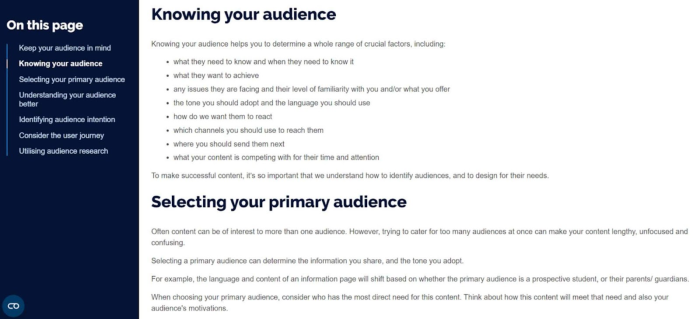
1. Understand Your Target Audience and Their Needs
Everything begins with insight. Parents and guardians are the primary decision-makers for K–12 education, so understanding what they value, whether it’s academic rigor, faith-based values, or community belonging, is essential. Avoid broad messaging that speaks to “everyone.” Instead, analyze your current families: Where do they live? What motivated their choice? What concerns drive their decision-making?
Many schools formalize this through personas, fictional yet data-driven profiles like “Concerned Parent Carol,” representing key audience segments. Surveys, interviews, and CRM data can help refine these personas to reveal motivations and needs.
Example: Newcastle University (UK). The university’s marketing team uses data and research to deeply understand prospective students. Newcastle’s internal content guide emphasizes identifying audience needs through methods like analytics, social media listening, surveys, and focus groups. This research informs content planning, ensuring communications solve audience problems and use the right tone and channels.
Once you know your audience, tailor your outreach accordingly. Working parents may prefer evening emails; international families may value multilingual content highlighting boarding life. Each message should reflect your school’s unique strengths and speak directly to what families care about most.
In short, marketing begins with knowing your families deeply and crafting messages that make them feel seen, understood, and inspired to choose your school.
2. Define and Promote Your School’s Unique Value Proposition
Once you know your audience, the next step is to define what truly makes your school stand out. In a competitive education landscape, clarity is power, and your Unique Value Proposition (UVP) is what helps families instantly understand why your school is the right choice.
Start by asking: “What do we offer that others don’t?” Your differentiators might be tangible (like an IB-accredited curriculum, advanced STEM facilities, or bilingual instruction) or emotional (a nurturing environment, strong moral foundation, or inclusive community). The key is to highlight the qualities that align with your audience’s values and can’t easily be replicated by competitors.
Look at what nearby schools emphasize, then find the white space. Finally, weave your UVP consistently through your website, tagline, visuals, and social media tone. A clear, authentic value proposition creates confidence and shows families not just what you offer, but why it matters.
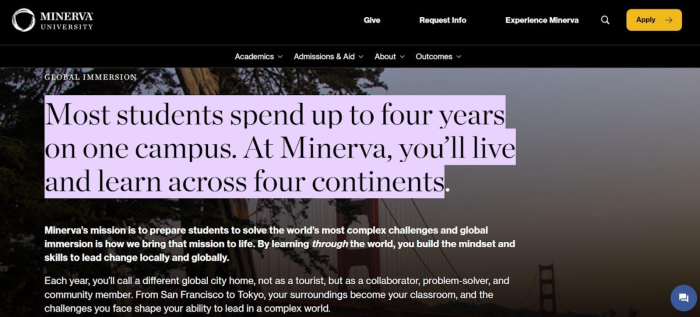
Example: Minerva University (USA). Minerva differentiates itself with a global immersion undergraduate program and an active learning model. The university clearly promotes this UVP: students live and study in seven cities on four continents over four years, rather than staying on one campus. Minerva’s website emphasizes that this global rotation and its innovative, seminar-based curriculum prepare students to solve complex global challenges. Each year in a new international city is not a travel experience but an integral part of academics, which Minerva markets as a unique offering in higher education.
3. Build a Robust Online Presence (Website, SEO, and Content)
Your school’s online presence is its digital front door, often the first impression prospective families have. A strong online foundation combines a polished website, smart SEO, and valuable content that informs, inspires, and converts.
Website Design & User Experience (UX) Your website should feel like a guided tour: beautiful, intuitive, and informative. Parents should quickly find essentials like admissions details, tuition, programs, and contact info. Use clean navigation, mobile-first design, and fast loading speeds to keep users engaged. High-quality visuals, such as campus photos, testimonial videos, or 360° virtual tours, bring your school to life. Consistent colors, logos, and tone across every page reinforce trust and ensure brand cohesion.
Search Engine Optimization (SEO) Even the best website can’t help if no one finds it. Use relevant keywords (e.g., “private school in Toronto,” “Catholic high school with IB program”) naturally in titles, headings, and meta descriptions. Create dedicated pages for programs and locations, optimize image alt text, and claim your Google Business profile to strengthen local SEO visibility.
Content Marketing Keep your site dynamic through regular updates via blog posts, student stories, and event recaps. Highlighting achievements and thought-leadership topics (like “How to Choose the Right Private School”) builds credibility and draws organic traffic.
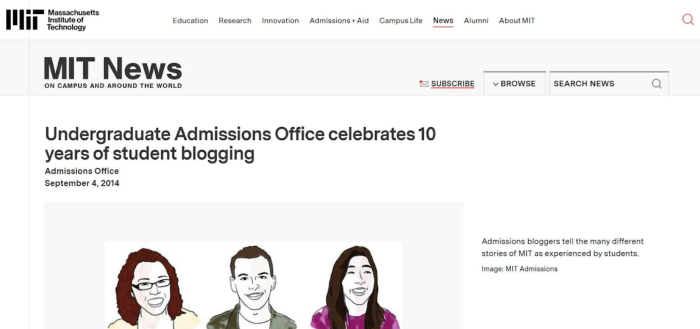
Example: Massachusetts Institute of Technology – MIT (USA): MIT’s Admissions Office hosts a famous student-written Admissions Blog that has become a pillar of its online presence. For over a decade, current MIT students have blogged candidly about campus life and academics, amassing thousands of posts read by prospective students worldwide. This blog strategy – focusing on transparency and real student voices – has paid off: the content generated millions of views, a robust engagement, and is often cited by applicants as influential in their college choice. MIT even curates a “Best of the Blogs” booklet and frequently analyzes blog traffic and feedback, using those insights to continually refine content and keep its website highly relevant to what prospective students want to know.
A well-designed, search-optimized, content-rich website isn’t just marketing; it’s proof of excellence.
4. Leverage Social Media and Digital Engagement
Social media is no longer optional. For private schools, it’s often the first place parents and students experience your community. Done right, it doesn’t just showcase your school; it builds lasting emotional connections.
Choose the Right Platforms Focus on where your audience spends time. For most schools, Facebook and Instagram are the anchors.
Facebook for community updates, parent groups, and event highlights.
Instagram for vibrant visuals and stories from daily campus life.
Schools serving older students or alumni can also explore TikTok, YouTube, or LinkedIn to reach new audiences.
Be Consistent and Purposeful Post regularly, at least a few times weekly, and plan around the school calendar. Use photos, short videos, or student/teacher takeovers to bring authenticity. Feature achievements, classroom moments, and cultural highlights to help families visualize their child’s experience.
Engage and Respond Social media is a dialogue, not a monologue. Reply promptly to comments, use polls or Q&As, and encourage user-generated content. Paid campaigns on Facebook and Instagram can further boost awareness, driving families to your website or open house events.
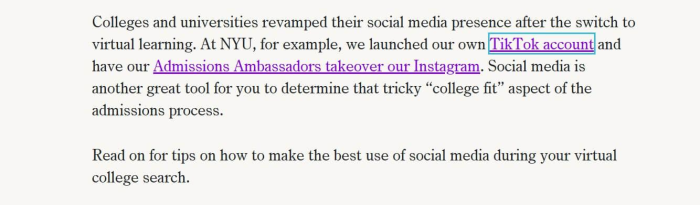
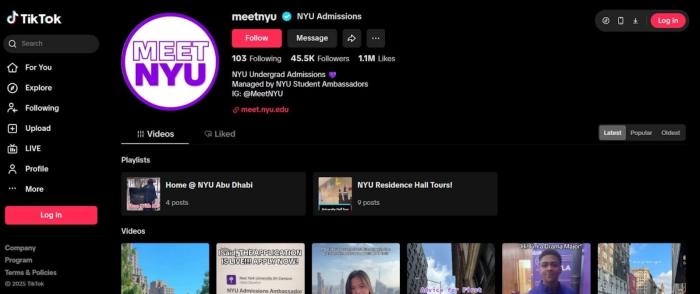
Example: New York University (USA). NYU’s admissions team expanded its digital reach by launching an official TikTok account and running student-led Instagram takeovers to showcase campus life. Current NYU students (Admissions Ambassadors) frequently create Instagram Stories and TikToks about dorm life, classes, and NYC activities, allowing prospects to see authentic student experiences. NYU actively encourages prospective students to engage – liking, commenting, or DMing questions – and monitors that feedback. This social strategy not only entertains (e.g., seniors doing TikTok dances) but also provides valuable peer-to-peer insights about “fit,” helping applicants feel more connected to the university culture.
A strong social presence humanizes your brand and turns followers into advocates.
5. Utilize Both Digital and Traditional Advertising Wisely
A balanced mix of digital and traditional advertising ensures your school reaches families online and in the local community. Each channel serves a distinct purpose.
Digital Advertising: Platforms like Google Ads and Facebook/Instagram Ads allow precise targeting by location, interests, and demographics. Search ads capture families actively looking for private schools (“private school near me”), while display and remarketing ads keep your brand visible even after visitors leave your site. For best results, pair strong ad copy with well-optimized landing pages. Email marketing is also a cost-effective channel for nurturing inquiries through newsletters and event updates.
Traditional Advertising: Local print ads, outdoor banners, and community events remain powerful for visibility. Direct mail campaigns and education fairs can connect you with parents in person, adding a personal touch that digital may lack. Track every campaign’s ROI and adjust accordingly.
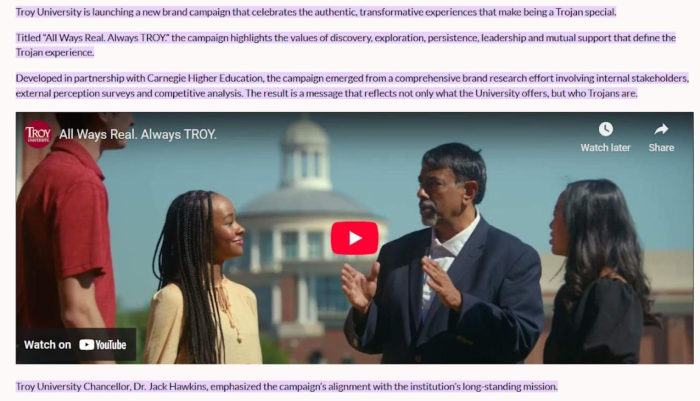
Example: In 2025, Troy University rolled out “All Ways Real. Always TROY,” a new brand campaign across a mix of traditional and digital channels. The integrated campaign includes a dynamic video commercial, print ads in publications, targeted online ads, extensive social media content, billboards in key markets, and even on-campus signage reinforcing the message. By deploying a cohesive theme on multiple platforms, Troy ensures its story of “authentic, career-focused” education reaches people wherever they are – whether scrolling online or driving past a billboard. (The campaign was informed by research and campus stakeholder input, and its multi-channel approach builds broad awareness while maintaining consistent branding.)
6. Emphasize Personal Connections: Tours, Open Houses, and Word-of-Mouth
Even in the digital age, enrollment decisions are deeply personal. Families may start online, but the final decision often comes down to how a school feels, its people, warmth, and community spirit. That’s why in-person experiences and authentic connections remain at the heart of private school marketing.
Tours and Open Houses: These events are your strongest conversion tools. Host open houses that showcase your facilities, programs, and culture. Include presentations, guided tours, and student or parent ambassadors to share authentic perspectives. Personal tours should be tailored to family interests, show relevant classrooms, introduce teachers, and follow up promptly afterward.
Word-of-Mouth and Community Engagement: Encourage satisfied parents, alumni, and students to share their experiences online and offline. Create ambassador programs or host informal meet-ups. Families trust real stories from peers more than polished ads, its important to nurture that organic advocacy.
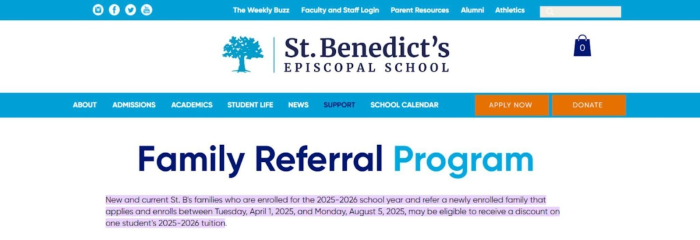
Example:St. Benedict’s Episcopal School (USA). This private school in Georgia leverages parent word-of-mouth through an organized Parent Ambassador Program. Enthusiastic current parents serve as school ambassadors – they attend open houses (in person or virtual) to welcome and mentor new families, display yard signs in their neighborhoods, bumper stickers on cars, and share school posts on their personal social media to spread the word. To further encourage referrals, St. Benedict’s even offers a Family Referral Program: current families receive a tuition discount (10–15% off one child’s tuition) if they refer a new family who enrolls. These personal recommendations and community events create a warm, trust-based marketing channel that no paid advertisement can replace.
7. Monitor, Measure, and Refine Your Marketing Efforts
Marketing is an evolving process of observation, analysis, and improvement. The best-performing private schools treat marketing as a cycle: plan, execute, measure, and refine.
Track and Analyze Performance: Use tools like Google Analytics, Meta Ads Manager, or your CRM to monitor how families engage with your campaigns and website. Track metrics such as page visits, inquiries, conversion rates, and the most effective traffic sources. For example, if your admissions page gets plenty of views but few form completions, it may need stronger calls to action or a simpler layout.
Define and Review KPIs: Set measurable goals, like inquiry volume, open house attendance, or enrollment yield, and review them monthly or quarterly. Data-driven insights allow you to invest more in what works and cut what doesn’t.
Iterate and Adapt: Marketing trends shift quickly. Regularly test your messaging, visuals, and targeting strategies. Even small A/B tests on ads or email subject lines can lead to significant improvements over time.
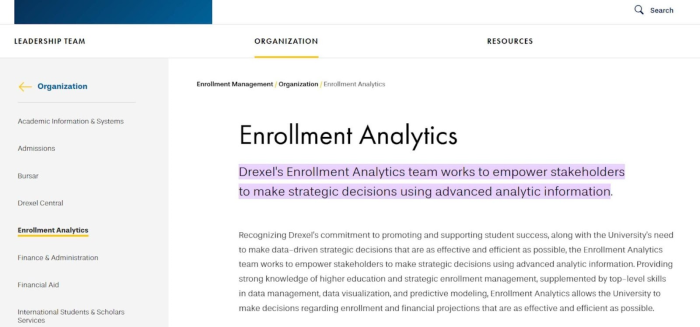
Example:Drexel University (USA). Drexel invests heavily in data analytics to continually refine its marketing and enrollment strategies. The university established an Enrollment Analytics team dedicated to measuring what’s working and advising adjustments. This team analyzes prospect and applicant data, builds dashboards and predictive models, and shares actionable insights with admissions and marketing units. By using data visualization and machine-learning models (for example, predicting which inquiries are most likely to apply), Drexel’s marketers can focus resources on high-yield activities and tweak messaging or outreach frequency based on evidence. The goal is to enable fully data-driven decisions – Drexel explicitly ties this analytic approach to improving efficiency and effectiveness in hitting enrollment goals.
How to Create a Marketing Strategy for a School (Step-by-Step)
We’ve explored what effective school marketing entails. Now let’s unpack how to build a plan that actually works.
How to create a marketing strategy for a school? To create a marketing strategy for a school, set clear goals, analyze your audience and competitors, define your unique value proposition, choose effective marketing channels, implement campaigns consistently, measure performance using data and feedback, and refine tactics regularly for continuous improvement and enrollment growth.
Whether you’re starting from scratch or optimizing an existing strategy, a clear, step-by-step framework helps you move from ideas to measurable impact.
Step 1: Determine Your Goals
Start by defining what success looks like for your school. Without clear goals, marketing becomes guesswork. Use the SMART framework: Specific, Measurable, Achievable, Relevant, and Time-bound, to make goals actionable.
For instance:
Increase Grade 9 applications by 15% for the next school year
Boost awareness in new neighborhoods to attract 10 students from that area
Enhance perception of our arts program through digital storytelling campaigns
Each goal should have a metric. If you aim to “increase inquiries,” specify how many, by when, and through which channels. Concrete targets create accountability and make it possible to assess ROI later.
Step 2: Conduct a Situation Analysis
Before planning tactics, understand your current position. Conduct a SWOT analysis (Strengths, Weaknesses, Opportunities, Threats) to evaluate both internal and external factors.
Internal Assessment:
What is your brand reputation in the community?
Are your social media channels active and engaging?
Does your website effectively communicate your strengths?
External Assessment:
Is the local school-age population growing or declining?
Who are your competitors, and what are they emphasizing?
What economic, demographic, or policy shifts could impact enrollment?
For example, a strength could be high university placement rates; a weakness might be outdated branding; an opportunity could be a new housing development nearby; a threat might be a competing school opening next year.
Review past marketing data, too. Which campaigns generated the most inquiries? Did your open house attendance meet expectations? Insights from past efforts shape a more effective plan moving forward.
Step 3: Define Your Value Proposition and Key Messages
Your Unique Value Proposition (UVP) is the heart of your marketing strategy. It defines what makes your school distinct and why families should choose you.
Once identified, craft three to five key supporting messages. Example:
UVP: “We provide a holistic education that develops intellect and character.”
Key Messages:
Dual-curriculum integrating academics and character education.
Small class sizes for individualized attention.
Safe, inclusive community environment.
Commitment to innovation and creativity.
Decades-long legacy of academic excellence.
These pillars should guide every piece of communication, from your homepage copy to your social media captions. Make sure they align with your audience’s priorities. Involving key stakeholders, teachers, admissions staff, parents, and alumni ensures authenticity and internal alignment.
Step 4: Select Your Marketing Channels and Tactics
With messaging established, identify how you’ll deliver it. The best school marketing strategies blend digital and traditional approaches, tailored to your budget and bandwidth.
Digital Channels:
Revamp and optimize your website for clarity, SEO, and mobile responsiveness.
Create a content calendar for blogs, newsletters, and video storytelling.
Maintain consistent posting on key social platforms (e.g., Instagram, Facebook, YouTube).
Run targeted Google Ads and Facebook campaigns for open house registrations.
Traditional Channels:
Host community events, sponsor local activities, or participate in school expos.
Distribute branded print materials like brochures and banners.
Leverage alumni and parent networks for referral-based outreach.
Outline timelines and assign responsibilities. For instance, if the admissions team handles social posts while a vendor manages SEO, document it clearly. Prioritize what’s realistic, for example, executing three channels effectively beats juggling six poorly.
Tip: Always make sure your digital foundation (especially your website) is strong before investing in high-cost advertising. A great ad can’t compensate for a poor landing page.
Step 5: Launch and Implement the Campaign
This is where planning meets execution. Roll out initiatives systematically and track everything from day one.
Develop a month-by-month marketing calendar tied to admissions milestones. For example:
August: Update website content, design new visuals, and optimize SEO.
September: Launch “Back-to-School” awareness campaign and host the first open house.
October–November: Run paid social ads and distribute direct mailers.
January: Promote application deadlines through retargeting and email follow-ups.
To maintain consistency, use automation tools (like HubSpot or Hootsuite) to schedule posts, emails, and reminders. However, ensure automation still feels human; personalized responses matter.
Coordinate closely with admissions and faculty teams so inquiries are promptly followed up on. A well-executed campaign can fail if responses are delayed. Always be ready to scale operationally when interest spikes.
Step 6: Evaluate and Refine
Once campaigns have run for a few months or after a full admissions cycle, analyze outcomes against your original goals.
Ask:
Did applications or inquiries increase as projected?
Which channels drove the most qualified leads?
Were conversion rates consistent across the funnel (inquiry → visit → enrollment)?
Review quantitative data (Google Analytics, CRM reports, ad dashboards) and qualitative feedback (from parent surveys, open house attendees, or declined applicants).
Then refine your strategy accordingly. Maybe your direct mail campaign underperformed while Instagram ads overdelivered. Next year, you’ll reallocate the budget. Or perhaps your messaging around “academic rigor” resonated more than “extracurricular excellence,” lean into what’s connecting emotionally.
Treat underperforming tactics not as failures but as opportunities to learn and adapt. The most successful schools are agile; they evolve messaging, visuals, and targeting as they collect new insights.
Step 7: Maintain and Innovate (Ongoing)
Marketing is cyclical. Each year, repeat the process of reassessing goals, refreshing creative assets, and incorporating new ideas.
Innovation keeps your brand vibrant. Test emerging platforms (like TikTok or Threads), experiment with storytelling formats (student podcasts, short documentaries), or integrate automation and AI for efficiency. Ensure each new initiative aligns with your mission and audience preferences.
Document everything in a concise marketing strategy brief: a one-page summary outlining:
Goals and KPIs
Target audience profiles
Key messages
Marketing channels and timeline
Budget and resource plan
Sharing this internally keeps admissions, communications, and leadership aligned.
Creating a marketing strategy for your school is about clarity, structure, and alignment. By defining goals, analyzing your position, articulating your value, choosing the right channels, and refining based on results, your school can build a sustainable and measurable marketing system.
At HEM, we’ve experienced how following this structured approach outperforms those relying on ad-hoc efforts. The difference? A strategy built on data, storytelling, and intentionality, turning marketing from a task into a powerful growth engine for your institution.
Wrapping Up
Marketing a private or independent school is both an art and a science. It blends the emotional connection of storytelling with the precision of data-driven strategy. The most successful schools understand their audiences deeply, communicate their value clearly, and use modern tools to bring those stories to life.
In today’s evolving landscape of private education marketing, technology has created new opportunities, from SEO and social media to virtual tours and AI chatbots, yet the heart of school marketing remains the same: authentic human connection. A well-placed digital ad may spark interest, but it’s the warmth of a personal tour or a parent’s heartfelt testimonial that inspires trust and enrollment.
If you’re just beginning, focus on the fundamentals: know your audience, tell your school’s story authentically, and ensure every touchpoint, online and offline, reflects your values. With consistent, strategic communication, your school can build visibility, strengthen relationships, and attract the right families.
And remember, you don’t have to do it alone. Partnering with education marketing experts like Higher Education Marketing can help transform your strategy into measurable enrollment success.
Do you need help developing a results-driven private education marketing plan for your institution?
Struggling with enrollment?
Our expert digital marketing services can help you attract and enroll more students!
Frequently Asked Questions
Question: What is the role of marketing in schools?
Answer: Essentially, marketing in schools is about alignment; connecting what a school offers with what families seek. A strong marketing function doesn’t just fill seats; it sustains a mission. It ensures enrollment remains healthy, relationships stay strong, and the school continues to thrive long term.
Question: How to create a marketing strategy for a school?
Answer: To create a marketing strategy for a school, set clear goals, analyze your audience and competitors, define your unique value proposition, choose effective marketing channels, implement campaigns consistently, measure performance using data and feedback, and refine tactics regularly for continuous improvement and enrollment growth.
Question: What is marketing in education?
Answer: Put simply, marketing in education is about connection. It’s understanding what families value and communicating how your school meets those needs with clarity and authenticity. It’s a strategic process of shaping perception, building relationships, and inspiring trust in your institution’s promise.