This audio is auto-generated. Please let us know if you have feedback.
How well did you keep up with this week’s developments in K-12 education? To find out, take our five-question quiz below. Then, share your score by tagging us on social media with #K12DivePopQuiz.
This audio is auto-generated. Please let us know if you have feedback.
This fall, North Carolina is one of the latest states rolling out a direct admission program that offers high school seniors acceptance to a range of public and private colleges.
Through direct admissions, colleges proactively admit students based on high school academic performance metrics such as GPA, SAT scores, or the amount of credits they received.
Around the start of the school year, more than 62,000 public high school seniors in North Carolina were offered direct admission to select colleges through the NC College Connect Program. Eleven of the University of North Carolina System’s 16 colleges, 29 private colleges and all 58 of the state’s community colleges are participating.
The UNC System first piloted NC College Connect last year in partnership with state agencies, the governor’s office and North Carolina’s community college system. The system launched the program to increase access to higher education in the state, Shun Robertson, UNC’s senior vice president for strategy and policy, said in an email.
For many high school seniors, “the process of applying to college, transferring between institutions, and navigating the maze of financial aid feels like an insurmountable series of hurdles,” said Robertson. “Eliminating these barriers has been a high priority.”
Over the past decade, direct admissions policies have increased the likelihood that in-state students both apply to college and apply to more colleges, said John Lane, vice president for academic affairs at the State Higher Education Executive Officers Association, in an email. In turn, that shift has effectively increased college enrollment, he said.
“Direct admissions policies and programs are impactful because they eliminate the complications and uncertainties of longstanding college application processes,” said Lane. “Instead, students are proactively admitted.”
UNC’s program
The UNC System piloted its direct admissions initiative last fall and notified over 70,000 high school seniors with GPAs of 2.8 or higher of their eligibility for the program, Robertson said.
Those seniors could apply to six UNC institutions and all 58 state community colleges for the 2025-26 academic year by sharing on an online portal their email address, their potential major, and when they’d like to start college, he said.
UNC System officials haven’t been able to review outcome data yet for the pilot program, a spokesperson said. But over 5,000 students responded to the letter during the pilot, the spokesperson said.
The system simplified the program this fall. Students won’t have to formally apply to get into one of the colleges on their list, rather they are provided direct admission to institutions based on their GPA and whether they meet the program’s requirements, Robertson said. Then they just need to submit a program form to accept their admission, he said.
Students accepting admission to community colleges must still fill out applications, but they will already be admitted, according to the initiative’s website.
The program also expanded to include private colleges in the state and added more UNC institutions, said Robertson. The University of North Carolina Chapel Hill, the system’s highly selective flagship, remains excluded from the program.
Some of the private institutions in the program have additional direct admission qualification requirements, such as foreign language course requirements.
UNC System officials hope direct admissions will help the state’s institutions enrollment numbers long term by tapping into a growing college-aged student population.
Like most of the country, North Carolina is expected to see a decline in high school graduates between 2025 and 2030, according to a report last year from the Western Interstate Commission for Higher Education. However, that pool of students is expected to grow again in North Carolina after that year.
WICHE predicts that North Carolina will be one of 12 states, along with the District of Columbia, to have growing numbers of high school students between 2023 and 2041. Overall, North Carolina should see a 6% increase in high school graduates over that period, per WICHE projections.
“As more students and families choose to live in North Carolina, the UNC System is making sure that we serve as a gateway to opportunity for postsecondary education for them and building an educated workforce for our state,” said Robertson.
Research from 2022 on Idaho’s direct admissions program found a 4% to 8% increase in first-time undergraduate enrollment per campus. Those enrollments were driven by an increase in attendance at two-year institutions, the research found.
Direct admissions programs have also been attributed to increases in applications among Black, Latinx, multiracial, first-generation and low-income students, according to a 2023 study by researchers at the University of Illinois Urbana-Champaign and the University of Wisconsin-Madison.
That study also found that students offered direct admissions were more likely to apply to a college or university and twice as likely to apply to an institution that offered them guaranteed acceptance.
Studying in the UK is an exciting and life-changing experience. You are meeting new people, learning new things and building a future for yourself. Unfortunately, it also makes you a potential target for scammers who see international students as vulnerable. Being aware of how scams work, and where you can go for help, is the best way to stay safe.
What is a scam and why are students targeted?
A scam is when someone deliberately tricks you into giving away money, information, or access to your accounts. Scammers may pretend to be someone they are not, use fear to pressure you into acting quickly, or create fake opportunities that seem too good to miss.
International students are often targeted because they may not yet be familiar with UK systems, official procedures, or everyday scams. You might also feel extra pressure around visas, police registration or financial security, and fraudsters know how to exploit those worries.
Common scams to watch out for
Sadly, scammers are becoming more inventive and there are new types of scams developing all of the time. However, here are some of the main scams affecting international students at the moment:
Impersonation scams
These are some of the most common types of fraud. Criminals pretend to be police officers, immigration officials, bank staff, or even university employees. They may call you directly, using false caller IDs, or send official-looking emails and letters. The scam usually involves creating fear: for example, saying your visa is invalid, or your bank account has been compromised, and demanding an immediate payment or fine. Remember, genuine officials in the UK will never ask you to transfer money quickly over the phone. There have also been cases of people impersonating family members, so it is always best to hang up and call yourself to make sure they are legitimate.
Cyber-kidnapping scams
These scams are especially frightening. A student is manipulated into isolating themselves — for example, by being told they are under investigation and must hide from contact. At the same time, the fraudsters contact the student’s family, often overseas, with staged photos or videos to make it appear as if the student has been kidnapped. The family is then pressured to pay a ransom. Cases like this have already been reported among international student communities.
Deepfake identity scams
Advances in artificial intelligence (AI) have created new risks. Fraudsters now use AI-generated video or audio to impersonate people during online interviews or to trick institutions into approving fake applications. Students can also be targeted with convincing “video calls” from supposed officials. It’s important to be aware that technology can be used to make scams look more realistic than ever before. Remember, nobody from your university, bank or other official body in the UK would ask you to transfer money or for your details urgently.
Advance-fee scams
This type of scam often starts with a tempting offer: a job that pays well, cheap accommodation, or “help” with visa extensions. But to secure the opportunity, you are asked to pay an upfront fee. Once you pay, the offer disappears — and so does your money. Housing scams, in particular, are common in university towns, with fake adverts posted on social media or unofficial websites.
Romance and investment scams
Also known as “pig butchering” scams, these involve criminals building a personal relationship with you, often online. Over time, they gain your trust before persuading you to send money or invest in fake schemes. The amounts lost can be very large, and victims may also feel embarrassed, which stops them from seeking help. It’s important to remember: if someone you’ve only met online starts asking for money, it’s a warning sign.
Real examples: Recently, Chinese students in London were targeted by fake officials demanding “legal fees” to avoid deportation. Universities have also reported deepfake applicants during admissions interviews. In Australia, students lost millions of pounds in just a few months to scams linked to fake authorities.
How to protect yourself
The most important thing is to stay cautious and trust your instincts. Keep these golden rules in mind:
Be sceptical of unexpected calls, texts or emails — especially if they demand urgent action.
Check official channels. UK police, immigration services, and universities will never pressure you to transfer money immediately.
Protect your personal details. Don’t share passport numbers, bank accounts, or one-time passcodes with strangers.
Pause before acting. If something feels rushed or threatening, it’s usually a red flag. You can ask to call them back; any official person would be happy to accommodate this.
Ask for help. INTO staff can help you check whether something is genuine.
What to do if you have been targeted
If you believe you may already have been caught in a scam:
Stop contact immediately and don’t send any more money.
Save all evidence, such as emails, screenshots or payment details.
Report it to INTO Student Services — we can guide you, provide translation if needed, and help you contact the police or Action Fraud.
Seek emotional support. Being scammed can feel overwhelming, but our wellbeing team is here to help.
How INTO supports you
At INTO, your safety and wellbeing are our top priorities. We:
Share updates and alerts to help you recognise scams.
Work closely with partner universities and local police.
Provide online training to help you recognise common scams and what to do.
Offer multilingual support to explain issues in your own language, and provide wellbeing services if you’ve been affected.
If you are ever unsure about a message, phone call, or email, please come to us. It’s always better to check first.
Scams can happen to anyone, but awareness is your strongest defence. By recognising the warning signs and speaking up when something doesn’t feel right, you can protect yourself and your family. Remember: if in doubt, talk to INTO staff. We’re here to keep you safe so you can focus on what really matters — your studies and your future.
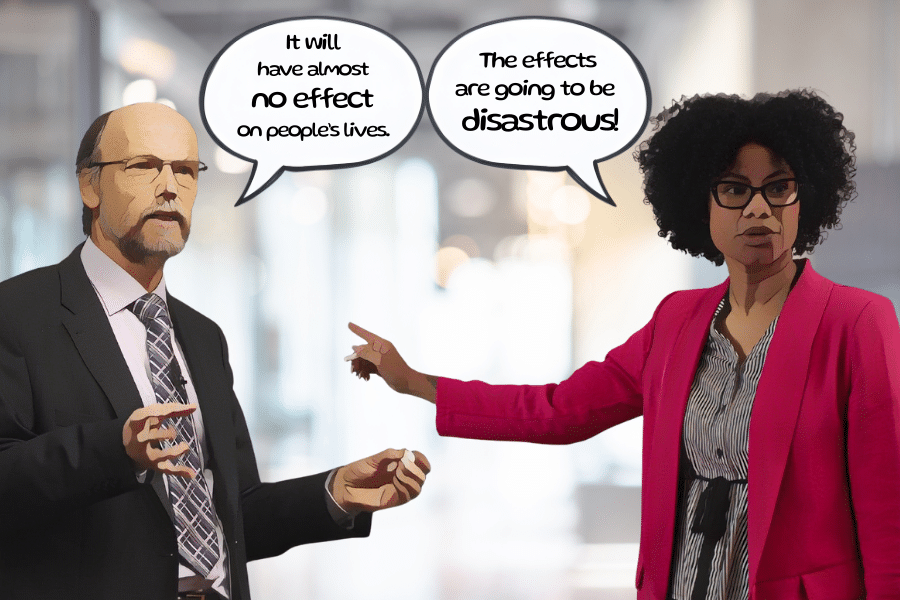
Journalists are often told to be objective and to tell both sides of a story. They are taught to seek multiple perspectives. This means that when reporters interview an expert about any given topic, they are encouraged to find another source with a different opinion to make it “fair” and “balanced”.
Journalists also know that conflict makes a story more interesting and that gets more eyeballs or ears which allows their news organizations to sell more ads and subscriptions.
But research any topic and you will find disagreements among scientists, ecologists, business leaders, politicians and everyday people. In other words you can just about always find conflict.
Be careful of this. In homing in on conflict you could create a false balance. That’s when you make two sides seem more equal than they are.
The classic example is climate change. One of the reasons why it took so long for governments to recognize the danger of climate change is that for years journalists would balance the many, many scientists warning about carbon levels with the very few scientists who said the problem was overblown.
So how can you report multiple perspectives without creating a false sense of balance?
A few suggestions
Focus on facts, not opinions. And know the difference.
A fact can be verified through data and anecdotes of things that happened and that can also be verified.
When sources give you information, ask them: “How do you know that?” and “Do you have evidence to back that up?”
Even when they have evidence to back up what they say, question why they take the stand they take, or why they came to the conclusions that they did. It is almost as easy to find evidence to support a position as it is to find conflict in a story. I found myself almost believing that the earth is indeed flat when an advocate of that theory seemed to offer up a pile of convincing evidence.
To get the public to not worry about the dangers of tobacco, people from the tobacco industry offered up all kinds of evidence for years. People from the fossil fuels industry can offer up all kinds of evidence that human behavior (like driving petrol-powered cars) doesn’t cause climate change.
So it is important when you publish information someone has given you, to explain to your audience how that person benefits or is hurt by the issue.
Not all experts are equal.
When seeking opinions or assessments, do so from people with actual expertise. That’s not the same as a level of education or a fancy title. Don’t be afraid to ask people: “How do you know this?” Someone without a university degree might have lived experience with a problem, while someone with a doctorate might never have experienced what you are reporting on. Politicians are fond of talking about the problems of poor people even though many of them came from privileged backgrounds.
Don’t be afraid to challenge people’s statements. Let them know when you find contradictory information. When you challenge people it is not a sign of disrespect. It is a sign that you have carefully listened to what they said, have thought about it and are now questioning it. Disrespect is to take something someone says without really listening or thinking about it.
Question data people cite or that you find. A census conducted in 2010 in Nabon, a rural area in Ecuador, found that almost 90% of the population was “poor”. That’s an astounding figure, and if used as data in the media, paints a very particular picture. However, a different study in 2013, conducted by the University of Quenca with the Nabon municipal government at the time, found a significantly different figure — that about 75% of the population reported to be highly satisfied with their lives when assessing “subjective wellbeing”.
The difference in figures is due to the indicators used to measure satisfaction. The “subjective wellbeing” survey by the University of Quenca measured people’s control over their lives, satisfaction with their occupation, financial situation, their environmental surroundings, family life, leisure time, spiritual life and food security. The census from 2010, however, looked at housing, access to health and education and monetary income.
So the language used for measuring life satisfaction was important and that the context of the data — how and why it was collected — can change the meaning of the information. To make sure you don’t misreport data, try to avoid overly relying on just one source of numbers or statistics. Instead, check what other data is out there.
Report the reality.
Your job as a journalist is to present the information in such a way that your audience can recognise what is actually happening and why it’s important.
Does what the experts say or what people say about their personal experience go against what you have seen out there yourself? People often exaggerate without even realizing that they are doing so. Our memories are often faulty; we might think we know things that we really don’t.
Taking all this into account, it is ultimately up to you, as a journalist, to decide how much balance to give to the multiple perspectives you have gathered. If the experiences and evidence and your observations and common sense all point to a reality, then you will mislead your audience if you balance that out equally with people who offer up what seems to be a different reality.
That doesn’t mean that you should silence them or keep them out of the story altogether. Understanding and exploring opposing viewpoints is important so that ultimately people can reach an understanding.
Without that understanding, consensus isn’t possible. And it is difficult to make progress in a society without consensus.
A federal judge rejected an effort to overturn the gainful-employment rule, which was put in place during the Biden administration.
In an opinion issued Thursday, Judge Reed O’Connor from the Northern District of Texas sided with the Education Department on every point. One of the plaintiffs, a trade association representing cosmetology schools, had argued in its lawsuit that the regulations jeopardized the “very existence” of cosmetology schools and used flawed measures to determine whether graduates of career education programs are gainfully employed.
Under the rules, for-profit and nondegree programs have to prove that their graduates can afford their loan payments and earn more than a high school graduate. Those that fail the tests in two consecutive years could lose access to federal financial aid. The regulations also included new reporting requirements for all colleges under the financial value transparency framework.
The lawsuit started under the Biden administration, and Trump officials opted to defend the regulations in court and urged the judge to keep the rules in place.
Similar gainful-employment rules survived a legal challenge in 2014 but were ultimately scrapped by the first Trump administration. However, in recent years, lawmakers on both sides of the aisle have become more interested in finding ways to hold colleges accountable for their students’ career outcomes. Under legislation that Congress passed this summer, most college programs will have to pass a similar earnings test. How the Education Department carries out that test will be subject to a rule-making process set to kick off later this year.
Jason Altmire, president and chief executive officer of Career Education Colleges and Universities, which represents the for-profit sector and opposed the Biden rule, said in a statement that he looks forward to revisiting the issue during the rule-making process.
“We are confident the Biden Gainful Employment Rule will be revised to incorporate a fairer accountability measure that will apply equally to all schools, ensuring all students can benefit,” he said. “We look forward to a full consideration of these issues during the months ahead.”
Dan Zibel, vice president of the legal advocacy group Student Defense, applauded the court ruling in a statement.
“Higher education is supposed to offer students a path to a better life, not a debt-filled dead end,” he said. “The 2023 Gainful Employment Rule reflects a common-sense policy to ensure that students are not wasting time and money on career programs that provide little value.”
Mike Gavin, the founder of Education for All, a grassroots group of community college administrators fighting legislative attacks on diversity, equity and inclusion, will step down as president of Delta College in January. He has been in the post since 2021.
Gavin informed the Delta College Board of Trustees last week that he would resign to lead a national coalition focused on defending equity in higher ed.
“My whole career has been focused on equity and how higher ed is situated in the democratic experiment, so when I was asked to do the next thing, I felt compelled to do it,” Gavin told Inside Higher Ed.
“I was not looking for a job. Delta has been amazing. The faculty and staff are some of the most insightful and student-centered I’ve ever seen,” he said.
More information about the coalition, including its priorities and funding model, will be released soon, he added.
Since the early days of the second Trump administration, Gavin has been a leading voice in defending DEI work in higher ed, especially at community colleges. Participation in Education for All surged at the beginning of the year as college leaders sought advice on protecting programs and navigating compliance with Trump administration mandates.
“My scholarship rests on the great thinkers of our past, from Benjamin Franklin to James Baldwin. It is also grounded in the belief that our country depends on a higher education sector that must be free from partisan interference, in order to democratize higher education for all,” Gavin wrote in a letter to the Delta College community.
Delta College trustees said they will begin the process of appointing Gavin’s successor in the coming weeks.
Faculty may include a preferred name policy on their syllabi, but they are advised against mentioning pronouns, the FAQ said.
Photo illustration by Justin Morrison/Inside Higher Ed | menonsstocks/E+/Getty Images | snorkulencija/iStock/Getty Images
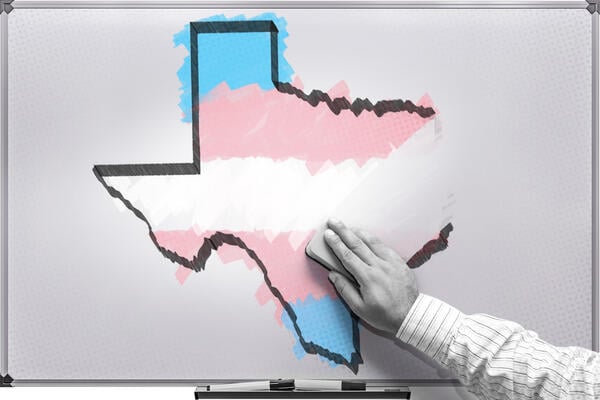
After a confusing week, Texas Tech University officials offered the first written clarification on new university policies that prohibit faculty members from speaking or teaching about transgender identity. On Sunday, the provost’s office posted a lengthy frequently asked questions page that, among other things, addressed the definition of “noncompliant language,” explained how the new policies impact research and answered whether faculty can write on their syllabi that they are an ally to transgender people.
But after three days, the FAQ was taken down. Faculty have not been told why the information was removed, and health-care instructors are concerned students will not be trained in care for transgender patients, as required by certification exams.
A university spokesperson did not respond to Inside Higher Ed’s questions on the matter. Some faculty suspect that Brandon Creighton, who was officially named the Texas Tech system’s next chancellor on Tuesday, may have orchestrated the removal of the FAQ. Creighton was the lead author of the Texas Senate’s sweeping ban on diversity, equity and inclusion in 2023, and of the recent bill giving control of faculty senates to university presidents and boards. He will assume the chancellor role on Nov. 19.
While it was the first and most comprehensive written guidance Texas Tech has posted on its anti-trans policies, the FAQ left a lot of questions unanswered. The word “transgender” wasn’t included in any of the written answers. In one answer, officials wrote that noncompliant language “refers specifically to outdated or inaccurate syllabus content (i.e., COVID-era statements or statements referring to offices or units that no longer exist at Texas Tech.),” but said nothing about gender identity.
In response to a question about academic freedom, officials wrote, “Faculty may include course content that is relevant to a student’s program of study and post-graduation opportunities, including workforce and additional education. Faculty are encouraged to be thoughtful about including content that is described in the Chancellor’s memo.”
The new directives do not impact research, the FAQ clarified. Officials advised against including a “personal statement of student support” or a statement professing LGBTQ allyship, writing that “such a statement could attract unwanted attention.” They also wrote that faculty could include a preferred name policy on their syllabi, but that “until further clarification is available, it is advisable to omit personal pronoun language.” When relevant, instructors are permitted to facilitate classroom discussions in which students examine the state’s position on gender alongside other views, but the instructor may not advocate for any particular view.
In a later question about government censorship and faculty retention, officials wrote, “We recognize that faculty recruitment and retention may be affected. At present, the issued guidance applies only to instructional activities, not a faculty member’s independent research.”
The Texas conference of the American Association of University Professors has pushed back on the anti-trans policies at Texas Tech and other public universities in the state.
“Colleges and universities have an obligation to develop campus policies that protect the constitutional rights of their faculty to teach and research the subjects in their areas of expertise without intimidation or censorship,” said Brian Evans, president of the Texas conference of the AAUP. “By ensuring that teachers can speak freely, campus administrators should enable students to explore and learn the widest set of topics for civil engagement and successful careers. Campus policies related to academic freedom and free speech should be devised with the full participation of faculty in the spirit of a shared commitment to excellence.”
The FAQ—as short-lived as it was—only applied to Texas Tech’s flagship campus. The four other campuses in the public system, including Angelo State University, where faculty have received a profusion of conflicting verbal information, were not included.
A faculty member at the Texas Tech University Health Sciences Center who asked to remain anonymous for fear of retribution confirmed to Inside Higher Ed that faculty at their campus have been told not to use certain terms in their course content, including “transgender”; “gender-affirming care”; “diversity, equity and inclusion”; and “affirmative action.” Health Sciences Center faculty have not received any written guidance, and the deans don’t have clarifying information, either, the faculty member said. It is an especially troubling policy to enforce for health-care students, because care for transgender patients is included in some certification exams students must pass to be licensed, they said.
“There are certainly many things that our government has [outlawed] … but I can’t think of another thing that we’ve been told we can’t talk about,” the faculty member said. “Sex trafficking is illegal, but we can talk about how to care for people who have been victims of sex trafficking. Drunk driving—there’s about a million examples.”
It is unclear how much information students have about these new policies, according to the faculty member. Some students are bringing up transgender care in classroom discussions, and instructors are unsure how to respond.
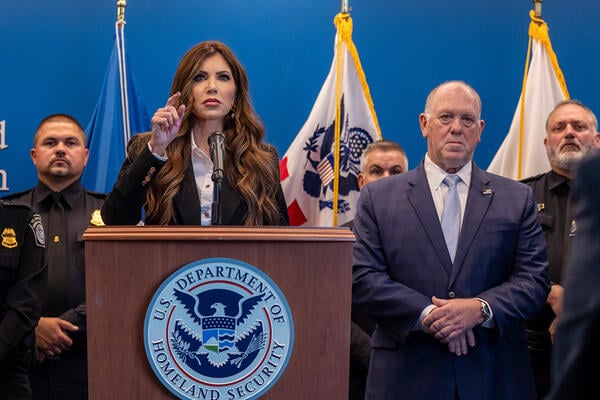
The measure would alter the long-standing policy known as duration of status, which allows international students to stay in the U.S. until their course of study is complete. Among other concerns, commenters argued that the rule would unnecessarily restrict international students, who are already closely monitored by the government and their institutions of study. Many commenters also drew attention to the potential consequences for the health-care system and employers.
The proposed rule would instead cap the amount of time students could stay in the U.S. to just four years, though they would be able to request an extension from U.S. Citizenship and Immigration Services. It would also prevent international students from changing their majors or transferring between U.S. institutions.
According to DHS, the proposal aims to lessen the number of students who overstay their F and J visas. However, NAFSA, the international education association, argued that research has shown that DHS overestimates overstay rates. The organization, along with other commenters, also noted that the Student Exchange and Visitor Information System—the online system that monitors international students—already alerts Immigration and Customs Enforcement if a student overstays their visa.
The comment period closed on Sept. 29. DHS will now have to review and respond to more than 15,700 comments before deciding whether to move forward with the elimination of duration of status.
More Than 4 Years
Numerous commenters noted that a significant number of students take more than four years to complete their undergraduate degree—and it’s incredibly rare to complete a Ph.D. in that length of time. That means a significant number of students will be at risk of being unable to complete their programs if they are unable to secure extensions.
Commenters noted a range of reasons they, their peers or their students have struggled to finish a degree in under four years, including medical and family emergencies, the death or departure of a faculty mentor, completing cooperative internships, and more.
Others pointed out that some programs are even intended to take longer than four years. Jessica Goswick, an architect and a lecturer, wrote that a B.Arch., a professional bachelor’s degree in architecture, is intended to be completed in five years. The University of Illinois system—one of several dozen institutions that opposed the rule in written comments—said that its main Urbana-Champaign campus has over 30 undergraduate programs requiring more than 120 credit hours.
“Limiting initial entry to four years would require students in these programs to take more than 15 credits every semester for four years, which would reduce performance and graduation rates,” the system’s comment reads. “Undergraduate students should be encouraged to take course loads appropriate for success rather than rush toward an arbitrary completion date determined by their date of entry to the United States.”
Several researchers and current Ph.D. students also stressed that graduate students frequently need more time to complete their research.
“Reducing this time for foreign student scientists would make it impossible for them to earn a Ph.D. in many fields, including my own field of neuroscience. Science takes years to build, develop, execute, and compile in order [to] share the information with the world and enrich the scientific community,” wrote Grace Swaim, a postdoctoral researcher at Yale University.
Although students would have the option to get their visas extended beyond the four-year cap, experts warned that doing so is costly, time-consuming and uncertain, and it would add to USCIS’s already-lengthy processing time—about 6.5 months—for such extensions, according to NAFSA. The University of Illinois system also emphasized that the rule would force the system to hire 13 new full-time and one part-time employee and spend over $2 million in the first year alone to apply for these extensions.
These added barriers could ultimately lead fewer students to want to study in the United States, commenters warned, which many faculty said would be a loss for their labs, their larger institutions and the country as a whole.
“These students not only make crucial contributions to the fundamental research in our department, but often end up filling important roles in industry, academia and national labs in the U.S. Others contribute to the international efforts unraveling the nature of matter and developing novel technologies even after returning to their home country,” wrote Sebastian Kuhn, chair of the physics department at Old Dominion University. “International graduate students are an indispensable contribution to the success of the U.S. research enterprise and the international standing of our country.”
Beyond the Campus
Other commenters shared that the rule could have an impact outside of the classroom and the lab. Physicians and hospital administrators said the roughly 17,000 J-1 visa holders currently working in hospitals as part of their medical training would be affected and detailed in comments how the change could ultimately disrupt Americans’ access to health care.
“It is important to recognize that the 17,000 J-1 physicians training in the U.S. do not displace domestic medical graduates; rather, they fill residency slots that would otherwise remain unfilled each year,” wrote the American Hospital Association in a comment. “These physicians disproportionately train in high-need specialties that continue to be in substantial shortage, such as internal medicine, pediatrics and family medicine. They also frequently work in rural and underserved communities, and many who train in those settings continue to work in them when their training is complete. J-1 physicians not only help sustain the physician workforce pipeline but also help expand patient access to essential care.”
Numerous commenters who identified themselves as leaders in industries from financial services to pharmaceuticals also explained how their companies and industries at large rely on the contributions of international students.
“The maximum stay restrictions are especially problematic for Ph.D. students and those conducting long-term clinical trials, which often span five to seven years,” wrote an anonymous commenter who identified themself as a senior executive in a global pharmaceutical company. “Reducing this flexibility would disrupt important research in drug efficacy and public health. Students engaged in such long-term research projects would be forced to abandon their work prematurely, leading to a waste of time, resources, and intellectual capital that the U.S. cannot afford to lose.”
A seemingly small number of comments were in favor of the change, with many of the supportive comments claiming international students are taking jobs and spots at colleges away from Americans.
One higher education association—the Council for Christian Colleges and Universities—did not outright oppose the measure, but rather encouraged DHS to limit it just to colleges with admission rates under 30 percent. The council’s president, David A. Hoag, argued that those are the institutions at which the administration is concerned about “foreign students potentially displacing American students.”
“This approach directly addresses the administration’s stated concern by focusing on the subset of institutions where foreign student enrollment is most likely to impact domestic applicants,” he wrote. “By limiting the rule’s scope in this way, DHS can more effectively target its regulatory efforts while minimizing unnecessary restrictions on less selective schools where this displacement issue is less pronounced.”
The directors felt they were fired as part of the administration’s crackdown on diversity, equity and inclusion and for political reasons.
Wesley Lapointe/The Washington Post via Getty Images
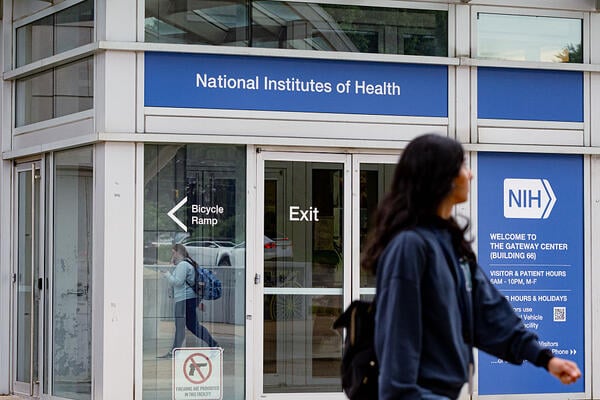
Four directors at the National Institutes of Health who were placed on administrative leave earlier this year have now been fired, Sciencereported.
The ousted leaders led the National Institute of Allergy and Infectious Diseases, the National Institute of Child Health and Human Development, the National Institute on Minority Health and Health Disparities, and the National Institute of Nursing Research. Tara Schwetz, the deputy director for program coordination, planning and strategic initiatives, was also fired. The directors were put on leave in the spring around the same time that the administration laid off thousands at the Department of Health and Human Services.
Science reported that the directors felt they were targeted as part of the administration’s crackdown on diversity, equity and inclusion and for political reasons. Jeanne Marrazzo, the former NIAID director, took over for Anthony Fauci, a frequent target for Republicans who took issue with his approach to the COVID-19 pandemic. Marrazzo filed a whistleblower complaint in early September that in part accused NIH leadership of downplaying the value of vaccines, The New York Timesreported.
“It’s not surprising, but it’s still incredibly disappointing,” Marrazzo told Science. “I would have been quite happy to serve under the new administration as long as we were allowed to do our jobs.”
(Program note: In order to reduce the competition for attention, this column’s Monday and Thursday schedule has been changed to Monday and Friday.)
Monday’s post outlined The Girl’s many academic strengths and mourned some changes in the field that make pursuing her preferred career a high-risk enterprise. She’s a wildly talented reader and writer—insightful, distinctive and often funny—who would make a great English professor if the world still offered jobs like those in any meaningful number. She’s looking closely at an information science option. I asked my wise and worldly readers if they had any thoughts on advice I could offer her.
Luckily, I have the best readers ever. Folks responded thoughtfully and graciously. Some highlights and patterns:
Readers within the library world responded with variations on “We love our jobs, but they’re getting scarcer, too.”
Even there, though, hope could be found. A few pointed out that having a master’s degree in a discipline can be a selling point with academic libraries. They often suggested getting a foot in the door at a university library, then using the free tuition offered to staff to get the master’s in English. I have to admit that free tuition is a nifty benefit.
They also pointed out that working full-time in a college or university library doesn’t preclude teaching the occasional English course on the side. Adjuncting for a living is brutal, but a course on the side—when the basic needs are met elsewhere—can be gratifying.
One wise and worldly reader took issue with the assumption that graduate programs are about getting jobs. As he put it,
“I tell students that, so long as you are going to grad school in a funded program, if no job in academia results, then you’ve had the privilege of spending fiveish years doing something that few people get to ever do. And then, in terms of career prospects, you’re right back where you were when you finished your B.A. Being in a funded grad program will allow you to tread water, financially speaking. So yes, you will be behind your friends from undergrad who went straight into careers and began building up equity in their homes and their 401(k)s, but that is the sacrifice one makes to get to spend time in grad school.”
Concur in part and dissent in part. (That’s language from the Supreme Court, from back when they used to explain their decisions.) It’s certainly true that the kind of extended reading of academic texts that grad students do is rare outside of the academy. And on good days, there can be real intellectual excitement. But I also remember a lot of posturing, preening, bluffing and one-upmanship that seemed as petty as would be found anywhere else. And while it’s true that a fellowship is a rare privilege, it’s also true that the opportunity cost of subsistence-level living for five or more years is shockingly high. So yes, it can be intellectually rewarding, but I suspect there are other ways to get that without being quite so broke.
Another reader reframed the issue, putting the field of study at the center:
“If I really believe in the importance of transmitting human culture across generations, then should I maintain that it’s worth doing only when it’s economically expedient? Would I have any real credibility with my students if I seemed to tell them, out of one side of my mouth, that reading Walden and Moby-Dick is a valuable use of their time and a potential source of future wisdom and happiness, and then also tell them, out of the other side of my mouth, that they should make career choices that are at odds with what they’re gleaning from these books—and also, by the way, not be bothered if those books disappear from their children’s and grandchildren’s civilization?”
It struck me as a variation on the much older idea of a calling. I’m sympathetic to that at some level—when I don’t write for a while, I feel out of tune—but I’ve seen the idea of a calling used to justify appalling levels of exploitation. While TG is wildly talented, she’s also pragmatic; her politics, like mine, are about rejecting poverty across the board, rather than romanticizing it. I consider her clear-sightedness a real strength. She wants to make an adult living, and I don’t blame her one bit.
On the opposite end, one reader suggested that she pick up some training in automotive repair, start working in a shop, and use her communication skills to move up over time. It’s an interesting theoretical point, and it brought back fond memories of Car Talk, but I don’t see her doing that. (She confirmed my hunch.)
High school teaching also showed up as a frequent option. Even as professor gigs seemingly vanish into the ether, many states have teacher shortages. As dual enrollment gains ground, opportunities for teaching at least introductory college-level courses may become easier to find. High school is a very different environment, but the option exists.
Several readers’ stories (or their children’s stories) started with traditional academic pathways and veered into institutional research (the in-house research office on campuses) or instructional design. Both fields draw on a general knowledge of the ways that higher ed works, and a rapport with faculty is helpful in both. The job market for instructional designers appears to be much healthier than the market for either librarians or humanities faculty. That may be because instructional design can lead to corporate training jobs, as well as jobs in the academy. A wider scope of potential options is not a bad thing.
Others made the point in various ways that career paths aren’t linear. One mentioned a daughter with a Ph.D. in physics who went on to become a successful patent attorney. Another started trying to be a librarian, switched to the tech world, got a Ph.D. in philosophy and now helps engineers with their people skills.
I had to smile at this argument, because I know it’s true. If you had told me, in the midst of my doctoral program, that I’d spend much of my career in community college administration, I would have looked at you quizzically. Yet here we are. Degrees matter most at the early stage; by a decade or two into a career, it’s not unusual for the job title to be pretty distant from the degree. But TG is at the early stage, so it still matters.
Thanks to everyone who wrote! I was gratified by the generosity of spirit that everyone showed. Best. Readers. Ever.