Blog

  • X’s Altmetric Hegemony Ceding to Bluesky

    X’s Altmetric Hegemony Ceding to Bluesky

    The end of the “hegemony” of X as the most used social media platform by researchers has been strongly shaped by political and geographic factors, as well as Elon Musk’s intervention into U.S. politics, according to a new study.

    Since Musk rebranded Twitter to X, many within higher education—including some universities themselves—have decided to leave the platform, particularly since the billionaire threw his support behind Donald Trump in the 2024 U.S. election.

    Researchers from Arizona State University and the University of Granada examined almost 15,000 publications from multidisciplinary and Library and Information Science journals between January 2024 and March 2025.

    Across the whole period, Bluesky had a much smaller presence compared with X in terms of engaged users—those who comment on papers.

    However, the paper found a “notable increase” in Bluesky accounts mentioning papers published in multidisciplinary journals in November 2024, which the paper said was likely influenced by political and platform change.

    “We observe a clear surge in mentions beginning in September 2024 and continuing into early 2025, particularly around the United States presidential election and subsequent political events.”

    The shift in users and increasing diversification between the two platforms, particularly from late 2024 onward, coincided with “major U.S. political events in which Elon Musk has actively intervened.”

    After successfully helping Trump win the battle for the White House, Musk was appointed head of the Department of Government Efficiency—an organization that slashed federal contracts and found few friends within the scientific community.

    The study says the results reveal a scholarly landscape where conversations are no longer concentrated on a single platform, but are now “genuinely distributed between X and Bluesky.”

    “This reflects that the response to platform changes is not only field-dependent, but also strongly shaped by political-geographical factors.”

    The study comes after a recent analysis by Andy Tattersall, an information specialist at the Sheffield Centre of Health and Related Research, found a third of U.K. universities have now quit X. While the number of active accounts on Bluesky has risen, however, many institutions are still not posting regularly.

    Altmetric, which collates mentions of publications from news sources, blogs and social media, has been tracking Bluesky, which was originally created by Twitter founder Jack Dorsey, since October 2024.

    A previous study revealed that Bluesky hosted more posts linked to work published in 2025 for the first time in March—declaring, “The days of X’s dominance are over.”

    The new paper reached a similar conclusion, adding, “What is clear is that the Altmetric hegemony of X may have come to an end, as for the first time there is a clear alternative in Bluesky, which even matches user engagement in ways that would have seemed unthinkable until recently.

    “Only time will tell how effective and lasting this platform shift truly is.”

    It says further research was needed to learn why Bluesky has succeeded where other alternatives—such as Threads or Mastodon—did not.

    Source link

  • DHS Offers to “Simplify” Harvard Lawsuit

    DHS Offers to “Simplify” Harvard Lawsuit

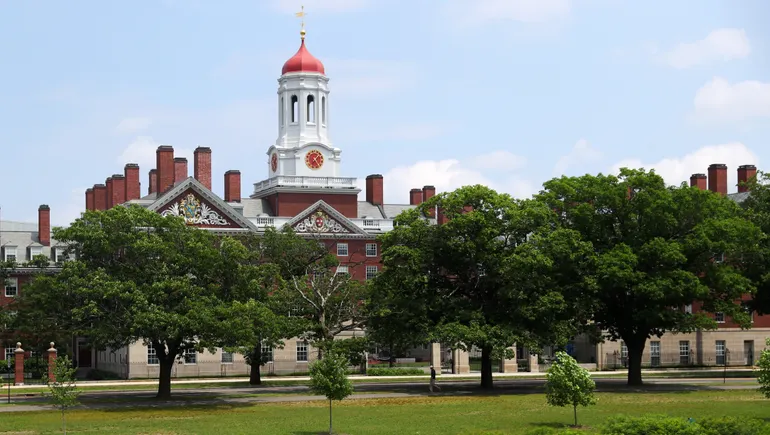
    The Trump administration has extended an offer to Harvard University to “simplify” an ongoing legal battle by pulling back on threats made in a May 22 letter from U.S. Department of Homeland Security secretary Kristi Noem to revoke the institution’s ability to host international students.

    At the time, Noem wrote in a letter to Harvard officials that DHS was stripping its Student Exchange and Visitor Program certification due to an alleged “failure to adhere to the law.” Harvard responded with a lawsuit, and a judge quickly granted a temporary restraining order to block the federal government from stripping Harvard’s SEVP certification, which would have likely resulted in a loss of international students and dealt the university a severe financial blow. (Harvard also sued the Trump administration over frozen federal research funding in April.)

    Harvard argued in its May lawsuit that the revocation was “a blatant violation of the First Amendment” and due process and a retaliatory move by the federal government after the university rejected demands to control its governance, curriculum and the “ideology” of faculty and students. The move, according to the lawsuit, could potentially “erase a quarter of Harvard’s student body” and would harm students who had already been admitted to the university.

    Now, in a Wednesday court filing, government attorneys have agreed “that the May 22 letter will not be used to revoke Harvard’s SEVP certification or Exchange Visitor Program designation.” They called the proposal “an attempt to jointly simplify the case.”

    DHS officials wrote in the filing that they are “open to counterproposals and a meet and confer.” However, they wrote that Harvard “did not accept.”

    Harvard declined to comment and DHS did not respond to an inquiry from Inside Higher Ed.

    As Harvard and the federal government battle over international students in court, the Trump administration has found other ways to ratchet up pressure on the nation’s wealthiest university. Last month the U.S. Department of State announced it was opening an investigation into Harvard’s eligibility to participate in the Exchange Visitor program, which is overseen by the State Department and grants J-1 visas for visiting scholars, researchers and postdocs. Secretary of State Marco Rubio wrote that the probe will ensure programs don’t “run contrary to our nation’s interests.”

    There have been recent reports—and denials—that Harvard is nearing a settlement with the Trump administration, which, in addition to attempting to cut off its flow of international students, has leveled a litany of claims against the university, including vague allegations of unlawful action and accusations of antisemitism. The Trump administration has demanded sweeping changes at Harvard, which the university has largely rebuffed thus far.

    Congressional Democrats have threatened to investigate if Harvard agrees to a settlement.

    If Harvard settles, it would be the third Ivy League university to strike a deal with the federal government since mid-July. Columbia University was the first, agreeing to a seemingly unprecedented settlement, which closed investigations into allegations of antisemitism and restored some frozen research funding in exchange for changes to admissions, academic programs and other concessions that will be overseen by a third-party resolution monitor. Columbia agreed to pay $221 million as part of the settlement.

    Brown University also reached an agreement in late July to settle investigations into alleged antisemitism and restore about $510 million in frozen federal research funds. Brown agreed to spend $50 million on state workforce development efforts, provide admissions data to the federal government and bar transgender athletes from competing, among other stipulations.

    Outside the Ivy League, the University of California system announced earlier this week that it intends to negotiate with the federal government over $584 million in suspended federal funding amid Department of Justice investigations into alleged antisemitism. UC officials said the system is seeking a “voluntary resolution agreement” with the Trump administration to restore funding.

    Source link

  • Madison College, Brandeis, Murray State

    Madison College, Brandeis, Murray State

    Susan A. Andrzejewski left her role as dean of California State University Channel Islands’ Martin V. Smith School of Business and Economics to be interim president on Aug. 4. 

    Jennifer Berne assumed the role of president at Madison College in Wisconsin on July 1. Previously, Berne was provost at Oakland Community College in Michigan. 

    Jim Burkee has been selected to lead Saint Leo University in Florida. He is stepping down as the president of Avila University in Missouri and will start in his new position on Sept. 1. 

    Frederick Bonato was named the 22nd president of Manhattan University on July 16 after serving as interim since September 2024. 

    Selena Grace is the new president and CEO of the Northwest Commission on Colleges and Universities. She previously served as executive vice president of NWCCU. 

    Andy Jett, currently the executive vice president and chief innovation officer at Avila University, will take up the post of interim president at the Kansas City, Mo., institution on Sept. 1. 

    Arthur Levine was named president of Brandeis University on July 21 after serving as interim president for nine months. Levine previously served as president of the Woodrow Wilson National Fellowship Foundation and as president of Teachers College at Columbia University.

    Ron K. Patterson, the previous president of Chadron State College in Nebraska, assumed the role of president of Murray State University in Kentucky on July 1. 

    Christina Royal was named interim president of Connecticut State Community College. She previously served as president of Holyoke Community College and was selected as a 2024–2025 Judith Block McLaughlin President-in-Residence in the Harvard Graduate School of Education. Her term started on Aug. 1 and will end on June 30, 2026. 

    Alan Smith became Gadsden State Community College’s permanent president on Aug. 1 after serving as interim for two months. Smith has held various positions at the Alabama college, including adjunct instructor, dean of workforce development and most recently vice president of capital projects, community relations and workforce development.

    Susan D. Stuebner began her duties as interim president of Simpson College in Iowa on July 28. Stuebner most recently served as president and professor of business and social sciences at Colby-Sawyer College in New London, N.H., for eight years.

    Sinda K. Vanderpool has been named the 10th president of the University of St. Thomas–Houston. She is also the first female president in the institution’s 77-year history. Most recently, Vanderpool served as president and vice chancellor of St. Mary’s University in Alberta, Canada.

    Source link

  • Reducing Transfer Admissions Time to Decision

    Reducing Transfer Admissions Time to Decision

    In an era when learners move fluidly across institutions, credentials, work-based learning and military education, the path to a degree is rarely linear. One area of the transfer process where improvement is both possible and measurable is the time it takes to render an admissions decision.

    Timely decisions support learners’ ability to register, engage in advising and complete financial aid processes. Faster admissions decisions can help institutions better align with the needs and expectations of today’s mobile learners.

    This is the opportunity the American Association of Collegiate Registrars and Admissions Officers, in collaboration with the National Association of Higher Education Systems, is advancing with its new National Learning Mobility Challenge: Improving Transfer Time to Decision.

    A Call to Action

    While institutions have made significant progress in modernizing admissions operations and technology over the past decade, continued refinement is needed to align those improvements with learner-centered goals.

    AACRAO’s recent report, “A Blueprint Toward a Learner-Centered Credit Mobility Ecosystem,” notes that “the core challenges for credit mobility are not primarily a lack of technology but rather structural and operational issues.” Manual processes persist even when electronic systems are available. Institutional fragmentation, policy complexity and data gaps create barriers that disproportionately affect mobile learners.

    One improvement institutions can pursue today is tracking and improving the time it takes to render an admissions decision for transfer applicants. The assumption that they’ll wait belies the urgent, real-world demands faced by transfer students, many of whom are older, working, supporting families or juggling multiple institutions and life transitions. Delays in admission cut off timely access to advising, registration and financial aid packaging.

    These are not administrative delays; they are missed opportunities for learner-centered service delivery.

    The Challenge is not a competition. Instead, it is a national call for action, experimentation and transparency. Participants commit to measuring their own time to decision, identifying internal or systemic friction points and piloting solutions to reduce them. AACRAO will provide visibility, collaborate with NASH for technical support and showcase progress at the Assembly, its newly reimagined national convening on learning mobility.

    Why Admissions Decision Speed Matters

    In many cases, transfer students apply with urgency. They may be returning after a stop-out, seeking a more affordable or supportive environment, or adapting to major life changes. These students are often older, working, supporting families or managing housing and food insecurity. For them, extended decision timelines may limit access to advising, course registration and timely financial planning. Without an offer of admission, students cannot register, access advising, complete financial aid steps or make informed decisions about their futures.

    Measuring and improving time-to-decision is one way institutions can demonstrate responsiveness. Institutions that prioritize transparency and timeliness in their transfer admissions process send a clear signal to the transfer community: you are welcome and we are ready.

    Building on the Work of Learning Mobility

    This Challenge builds on years of work by AACRAO to advance learning mobility—a learner-centered framework that recognizes the full range of educational experiences.

    In a previous “Beyond Transfer” article, we emphasized that many failures of reform are failures of implementation. Too often, institutions adopt promising ideas—articulation agreements, credit frameworks, technology platforms—without addressing the operational bottlenecks that slow them down or dilute their impact. The admissions decision for transfer learners is one area where aligning process improvement with institutional values can yield measurable progress.

    As the stewards of institutional systems, AACRAO members sit at the intersection of policy, technology, compliance and student support. They know how long decisions take. They know where the bottlenecks are. And they are well positioned to lead the change.

    A Challenge Worth Taking Up

    Addressing transfer admissions timelines is not a silver bullet. But it is a concrete, measurable starting point—one that institutions can act on today. And it may be one of the fastest ways to demonstrate that higher education is not only listening to learners but responding with urgency and care.

    Learn more and express interest in joining the Challenge here.

    Source link

  • Equity Gaps in Academic Advising

    Equity Gaps in Academic Advising

    Recently published research has found equity gaps in the impact of academic advising support on various student groups. While students from racial minorities are more likely to meet with an adviser compared to their white peers, they’re less likely to see improvements in their GPA or graduate on time.

    The research points to a need for improved advising processes, not just in increasing access to and knowledge of academic advising, but in developing holistic student support programs, said lead author Hua-Yu Sebastian Cherng, vice dean for research and equity at New York University’s Steinhardt School of Culture, Education and Human Development.

    The background: Academic advising is a critical part of student retention and progression, but not every student receives the support. A 2023 survey by Tyton Partners found one-third of student respondents were not aware of academic advising on campus, despite 98 percent of college employees saying the resource was available to their students.

    Similarly, a spring 2023 survey by Inside Higher Ed and College Pulse found, when asked what types of assistance students had received during academic advising, 8 percent of students said they had received no assistance since starting college. Additionally, 5 percent of respondents said they had never met with an academic adviser. Twenty-three percent of respondents said they have to set up meetings with an academic adviser if they’d like to meet, and 10 percent of all respondents said it was difficult to get an appointment with their academic adviser.

    The study: Hua-Yu’s study evaluated data from a large public research institution (total enrollment of 80,000) between 2017 and 2021, considering students’ grades, graduation rates, demographics and the number of appointments made with advisers.

    To ensure relevant comparisons, researchers matched students in the same school or academic program because advising requirements and processes varied by school, Hua-Yu said.

    Across the university, nonwhite and international student groups met with advisers more frequently than white domestic students, disrupting commonly held notions about who is aware of and using services on college campuses, Hua-Yu said.

    But the impact of advising was not affected by the frequency of appointments. Rather, despite meeting with advisers less frequently than minoritized students, white students were more likely to have higher GPAs compared to their white peers who didn’t meet with an adviser. White students’ frequency of meeting with an adviser also correlated with their graduation rates, the only racial or ethnic group that saw benefits in this way.

    “This is really damning evidence that advising is not doing what it’s supposed to be doing,” Hua-Yu said.

    Even among students with undeclared majors, where this institution felt it had a gold standard of advising supports and resources, data showed similar patterns: White students had better outcomes after meeting with advisers, despite their nonwhite peers having more meetings.

    Continuing-generation students were more likely to see benefits from advising appointments, compared to their first-generation peers, and low-income students who met with an adviser had slightly higher graduation rates compared to their higher-income classmates.

    The why: Hua-Yu theorizes that institutional messaging encouraging students to take advantage of advising could have been effective, resulting in more students having appointments with their advisers. But if marginalized students have complex concerns or are looking for advice on which path to choose, they are more likely to walk away from appointments without all the information they need or feeling like they don’t belong.

    A 2024 Student Voice survey by Inside Higher Ed and Generation Lab found 75 percent of students said they had at least some trust in academic advisers on campus; 20 percent said they didn’t have much trust in them.

    First-generation students were 7 percent less likely to meet with an adviser and less likely to graduate, compared to their continuing generation peers, the IHE survey found.

    According to Hua-Yu, continuing-generation students are less likely to seek advice on changing their major when talking to staff, compared to their first-generation peers, because they have other support systems that can offer that insight. Instead, they’re using advising appointments to address logistical and bureaucratic impediments to reaching their goals, he noted.

    Building better: The findings, Hua-Yu emphasized, do not fault advisers but rather underline concerns with academic advising structures and staffing issues at colleges and universities across the country. A 2024 report by Tyton Partners found high caseloads and adviser burnout and turnover are some of the top challenges for the field.

    Advisers have caseloads as high as 400 students, which can limit their ability to engage with students intentionally and address their concerns at a deeper level, Hua-Yu said. Instead, leaders at institutions should recognize that quality advising can make a substantial difference in student outcomes and, in turn, advocate for resources and support to improve advising experiences.

    Hua-Yu called for more training for advisers on how to work with students in a specific program of study, as well as with a variety of student identities. Academic advisers cannot become social workers or mental health professionals, but improving how advisers are onboarded and supported can make substantial differences, Hua-Yu said.

    Advisers can also be given a set of questions to encourage more meaningful relationships with students during advising appointments, such as asking about students’ lives, their goals and their support systems.

    What’s next: Using the same data set, Hua-Yu and his team plan to investigate the use of flags or kudos within the advising system to see how early intervention could affect student success.

    The researchers are also exploring the role of gender on advising supports; initial results show white male students are less likely to engage in advising compared to other student groups.

    Incidentally, the data set covers a period of remote instruction during the COVID-19 pandemic, so Hua-Yu and his team are exploring shocks to advising processes and supports after spring 2020. So far, researchers noted there were more advising meetings taking place, just remotely, and these advising appointment levels remained higher than pre-pandemic.

    Seeking stories from campus leaders, faculty members and staff for our Student Success focus. Share here.

    Source link

  • Teaching About Class in a Post-DEI Era (opinion)

    Teaching About Class in a Post-DEI Era (opinion)

    When I taught about social class in my Intimacy, Marriages and Families course this past semester, I began with reflection and a sticky note, not with a lecture or statistics.

    This wasn’t the first time I used sticky-note prompts in class. Earlier in the semester, I introduced a similar activity during our unit on race, ethnicity and immigration. That experience inspired me: It showed how a simple sentence starter could help students unpack the emotional weight of identity, belonging and difference. It also helped me refine how to frame and facilitate the conversation in a more impactful way.

    So when we arrived at the unit on families and social class, I returned to the sticky notes—this time with more complexity of prompts. And what followed was one of the most meaningful moments of the semester.

    The Sticky Note Activity: A Gentle Way Into a Hard Topic

    I gave students a set of sentence starters and asked them to complete them anonymously on a sticky note. After writing, they placed their notes on the walls, windows, doors and whiteboard—spreading them out wide enough so everyone could read at the same time. Then students walked silently around the room, taking in what their classmates had shared. After the walk, I invited each student to share one or two statements that resonated with them.

    Here are some of the prompts:

    • “I didn’t realize how class shaped me until …”
    • “One thing my family couldn’t afford growing up was …”
    • “I noticed others had more when …”
    • “I felt lucky to have _______ when others didn’t.”
    • “At school, I learned to stay quiet about …”
    • “An opportunity I almost missed because of money was …”
    • “I was taught to always …”

    These prompts are simple but emotionally rich. They allow students to enter the topic from their own lived experience—before theory, before data, before the academic discourse.

    The range of responses students shared was both personal and eye-opening. To the prompt “I didn’t realize how class shaped me until …,” one student reflected on “seeing how much my mother worked just to provide a roof over our heads.” In response to “An opportunity I almost missed because of money was …,” students listed things such as education, rent, bills, Air Jordan shoes, going to college and even a football trip—while one noted simply, “Nothing,” suggesting a contrasting perspective. When asked “I was taught to always …,” many shared values shaped by scarcity and resilience: “be grateful and humble,” “earn money for life by myself after high school” or “bite my tongue to maintain peace.” Responses to “One thing my family couldn’t afford growing up was …” included extracurricular activities, having their own rooms, brand-new items, frequent family time and vacations.

    Furthermore, students noticed class differences with reflections such as “I had to wait for things my friends got in a blink of an eye.” Others shared the silence they learned to carry, responding to “At school, I learned to stay quiet about …” with reflections on their home situations, financial aid or how much their parents made. Some added the inverse: “I learned to stay quiet about other kids’ struggles.”

    A prompt asking students for one moment that made them aware of inequality yielded responses such as “having to work in high school while others went out,” “facing racial discrimination at a young age” and “realizing some classmates couldn’t afford meals.” Finally, to the prompt “I realized not everyone had _______ like I did,” students shared privileges they had come to recognize: “the options to choose,” “the ability to study abroad” or “having parents, food, shelter and protection.” Together, these reflections painted a vivid and humanizing picture of the many ways class difference shapes lived experience—often invisibly.

    After the gallery walk, the room felt palpably different—softer, more thoughtful. While the reflections I’m about to share were originally expressed during a similar activity in our earlier unit on race, ethnicity and immigration, I chose to include them here because they speak to the same core theme. Several students had shared that the activity helped them “see how diverse people in the class are—the values, backgrounds” and one added, “It helped humanize people.”

    This activity then helped me transition smoothly to my key take-home message for students. After the sticky note reflections and class discussion, I prompted them to pause and consider this:

    “Not everyone grows up with the same set of tools. Some of us had parents who could advocate for us, who knew how to navigate systems—others had to figure it all out on their own. Some kids are encouraged to raise their voices; others are expected to stay in line. We’re often told that success is about effort—but what if the race isn’t the same for everyone?”

    I then connected some of the sticky-note reflections back to this statement—helping students draw the line between their lived experiences and structural patterns.

    Why It Matters More Than Ever

    In a political climate in which diversity, equity and inclusion efforts are being rolled back, educators may hesitate to bring up inequality in their classrooms. But this is precisely when it matters most.

    Class disparities are getting wider. Students are balancing coursework while managing food insecurity, housing challenges or caregiving responsibilities. Others arrive with generational wealth, college prep resources and family support networks. If we don’t name these disparities, we risk reinforcing them through silence.

    Teaching about social class isn’t about shame or blame—it’s about giving students the tools to understand their place in the world and the systems that shape it.

    Tips for Teaching Social Class

    There are several strategies educators can use to teach social class in a way that is welcoming and engaging. First, start with stories, not stats—students already live within systems of inequality, so grounding the conversation in their lived experiences builds emotional buy-in before introducing abstract concepts. One effective way to do this is to use low-stakes writing prompts, such as the sticky-note activity, which encourages honest reflection while creating a safe, low-pressure environment.

    It’s also important to create space for silent voices; not all students are comfortable speaking aloud, so alternatives like gallery walks or anonymous digital boards help everyone to feel comfortable participating. After reflection, connect students’ lived experiences with research by introducing concepts such as cultural capital and texts like Unequal Childhoods (University of California Press, second edition, 2011) by Annette Lareau, which explores how social class influences parenting styles and shapes children’s life chances.

    Closing the Loop

    At the end of the unit, I asked students, what can we do?

    I introduced them to the concept of social capital, after earlier discussions on cultural and human capital. I introduced the article “What the Privileged Poor Can Teach Us” by Anthony Abraham Jack, which shows how first-generation and low-income students can build academic support networks—particularly by building relationships with professors.

    Before that, I shared Rita Pierson’s TED Talk “Every Kid Needs a Champion,” a moving reminder that in education, relationships can change lives. Her story exemplifies how connection itself becomes a form of capital, especially for those who grow up without material advantage.

    This pairing helped students see how they could move from understanding class inequality to navigating it—and even challenging it—with critical thinking, empathy and advocacy.

    Teaching about inequality is not partisan—it’s fundamental to education. If we want to graduate students who are not only career-ready but human-ready—who understand structural inequality and social responsibility—then we must create space for conversations about class.

    Sothy Eng is an associate professor of human development and family science at the University of Hawai‘i at Mānoa. He received the 2024 Board of Regents Medal for Excellence in Teaching and is currently contributing to Psychology Today (previously to HuffPost). His work focuses on social capital, family dynamics, parenting and relationship-based education.

    Source link

  • With Reform UK on the rise, what impact would their higher education policy have?

    With Reform UK on the rise, what impact would their higher education policy have?

    This HEPI guest blog was kindly authored by Fred Jacques, a Year 12 student who recently completed a week of work experience at HEPI.

    (Have you completed the HEPI survey? If not, time is running out! It will only take a few minutes and will help inform our future output. You can access the survey here.)

    With Reform UK gaining significant ground in recent elections and opinion polls, the prospect of a future Reform government is now plausible. The party discusses education very little, instead focusing on their big, vote-winning issues such as opposing immigration and net zero. But what are Reform’s plans for higher education and what impact would these have? Their 2024 manifesto is lacking in detail, but it outlines a handful of proposals that suggest the direction a Reform government might take. They promised to:

    • bar international student dependents
    • make universities provide two-year undergraduate courses
    • cut funding for universities that undermine free speech; and
    • scrap interest on student loans.

    Scrapping tuition fees for STEM degrees

    Additionally, in an interview with ITV following the release of the manifesto, Nigel Farage stated that he would abolish tuition fees for STEM (science, technology, engineering and mathematics) degrees while maintaining them for all other courses. Although this policy was not included in the 2024 manifesto, it did appear in Farage’s 2015 UKIP manifesto, suggesting it is a long-standing idea of his and therefore one that could be implemented if Reform were to win power.

    While this proposal is intended to attract more students into these fields, it may not be effective. In his HEPI report, Peter Mandler argues that the current increase in the uptake of STEM degrees (the ‘swing to science’) is due to numerous factors: demographic and cultural changes, perceptions of future job prospects and subject choice at A level primarily. Government policy is less influential than these factors. Therefore, given that the swing to science is happening of its own accord because of high student demand, this policy is not even necessary, especially considering the enormous cost. If Reform do want to accelerate this trend, though, then removing the barrier of poor A level results by improving attainment in secondary schools may be more effective than targeting STEM at degree level.

    Despite its possible shortcomings in attracting more students to STEM courses, the policy could still accelerate the decline in the popularity of arts and humanities degrees. While those with arts or humanities A levels are unlikely (and probably unable) to switch to a completely different field purely for financial reasons, the disparity in fee structure may discourage them from pursuing a university degree altogether. This appears to be Farage’s intention: he suggests that arts and humanities degrees are not worthwhile and ’[students would] have been better off learning trades and skills’. If this aspect of the policy is successful, then it would negatively impact students, institutions and the country. Humanities degrees are incredibly valuable: they help students develop transferable skills like communication and critical thinking that are needed in any workplace and they are a pathway into careers in law, business, or media. And without humanities degrees, who will teach Reform’s ‘patriotic’ curriculum in primary and secondary schools? The arts, meanwhile, are also valuable to the economy and positively impact culture and society.

    Overall, while efforts to increase the number of students pursuing STEM degrees are commendable, this should not come at the expense of arts and humanities students. Higher education institutions should work with Reform to ensure that the contributions of these subjects are properly recognised and supported by the party, should they win power.

    Two-year undergraduate courses

    Reform’s policy of expanding two-year undergraduate courses to all universities across the UK would be beneficial to higher education, provided they do not replace the typical three-year degrees. These accelerated degrees are already offered by universities like Buckingham and Northumbria and have many benefits, such as allowing students to enter into work sooner and reducing the amount of debt they incur. Furthermore, students on accelerated courses are generally more focused and motivated and the more intensive nature of the courses prepares students for the workplace. These degrees are well suited to subjects like law or business and could therefore act as an alternative to some arts and humanities students who feel discouraged by Reform’s tuition fee policy.

    But although these courses are a good idea in theory, there is little evidence to suggest that there is a high demand for them. Slightly older students entering higher education for the first time and wanting to progress into the workplace faster may find these courses appealing, but most typical 18-year-old undergraduates prefer the more flexible three or four-year courses. Perhaps this is due to a lack of awareness, which Reform could work to correct, but as it stands, it is unrealistic for them to expect all universities to provide these accelerated programmes, given the low demand.

    Conclusion

    This blog has not covered the entirety of Reform’s higher education policy, and some proposals, such as cutting funding for universities that undermine free speech, raise challenges of their own. Nonetheless, the policies discussed here do show some promise: expanding the availability of two-year undergraduate courses and encouraging more people into STEM degrees could be beneficial to the country. However, the apparent lack of regard for arts and humanities degrees is concerning and the effectiveness of the tuition fee policy is debatable, as is the achievability of the accelerated degree policy.

    Perhaps the greatest flaw with Reform’s education policy, and wider policy platform, is the achievability. The party’s plans to scrap tuition fees on STEM degrees and encourage all universities to provide two-year undergraduate programmes will all come at a massive cost to the government and institutions. Reform’s policy of barring international student dependents (presumably beyond current restrictions) will also worsen the issue, as this could lead to lower numbers of international students, meaning that universities’ incomes are significantly reduced. Reform need a way to fund their policies, but according to the Institute for Fiscal Studies, Reform’s proposed savings did not add up in 2024, and they remain vague today.

    With this unrealistic funding, it is debatable whether these policies would be implemented, even if Reform do win power. And with the unpredictability of modern politics, who knows if they will even get to that stage. Regardless, universities have the opportunity to work with this emerging party to challenge and shape their policy proposals to produce the best outcomes for students and the nation as a whole.

    Source link

  • UK unis could take £620m hit from international student levy

    UK unis could take £620m hit from international student levy

    Based on the latest HEPI data, the Institute estimates the levy could “hamper universities’ ability to compete with institutions in other countries,” said independent researcher Mark Fothergill, who compiled the data. 

    The proposed 6% levy on international students’ tuition fees was first introduced in the government’s highly anticipated immigration white paper, coming as a surprise to many in the sector.  

    HEPI has warned that the policy will hit both large internationally engaged universities and smaller specialist institutions. According to the analysis, the largest financial losses are expected to hit big metropolitan universities with high proportions of international students.  

    Namely, University College London (UCL), which derives 79% of its fee income from non-UK students, could be faced with financial losses of £42m. 

    Meanwhile, Manchester University and King’s College London (KCL) could also be hit with heavy losses of £27m and £22m respectively, with 19 institutions paying at least £10m. 

    Stakeholders have pointed out that while the levy is intended to raise money for the “higher education and skills system”, it is unclear if all the money will come back out of the treasury, and how it will be spent if it does. 

    “International students are the backbone of our higher education system, contributing over £10 billion in fees to English universities – around £4.50 of every £10 of fee income,” Fothergill said. 

    “No wonder the 6% levy is seen as a tax on one of the country’s best-performing sectors,” he added.  

    With more details expected in the autumn budget, universities are left with two options: pass the cost onto students and become less competitive or absorb the costs and leave less funding for teaching and research, HEPI suggested.  

    While universities haven’t announced to what extent they would try to absorb the extra costs, a reduction in international student numbers – whose fees subsidise university research – would also hamper sector finances.  

    Speaking at a conference last month, the UK skills minister Jacqui Smith maintained the government was “not levying international students directly”, suggesting it would help show students’ economic contribution to local communities.  

    The levy is a shadow looming large over universities as they prepare for the next academic year

    Nick Hillman, HEPI

    “Threatening an expensive new tax on one of the country’s most successful sectors with only a rough idea of how the money will be used seems far from ideal,” said HEPI director Nick Hillman.  

    “Currently, the levy is a shadow looming large over universities as they prepare for the next academic year,” he added.  

    Amid policy volatility in other markets, the UK has increasingly been cited by students as the most stable of the ‘big four’ study destinations, with stakeholders keen to preserve this reputation.

    “There are good reasons why Australia opted not to implement a levy when it was proposed there a couple of years ago,” warned Fothergil.  

    With the UK higher education sector already facing severe financial headwinds, Hillman said university leaders were worried the levy will be “yet another weight dragging them down in the struggle to remain globally competitive”. 

    According to OfS data, 72% of providers could be in deficit by 2025/26, with a sector-wide deficit totalling £1.6bn.  

    Alongside the levy, the government’s white paper proposed shortening the graduate route visa from two years to 18 months, and tougher Basic Compliance Assessments (BCA), with the latter set to be introduced in September.  

    Source link

  • Promoting and Sustaining a Growth Mindset in Online Classrooms – Faculty Focus

    Promoting and Sustaining a Growth Mindset in Online Classrooms – Faculty Focus

    Source link

  • Promoting and Sustaining a Growth Mindset in Online Classrooms – Faculty Focus

    Promoting and Sustaining a Growth Mindset in Online Classrooms – Faculty Focus

    Source link