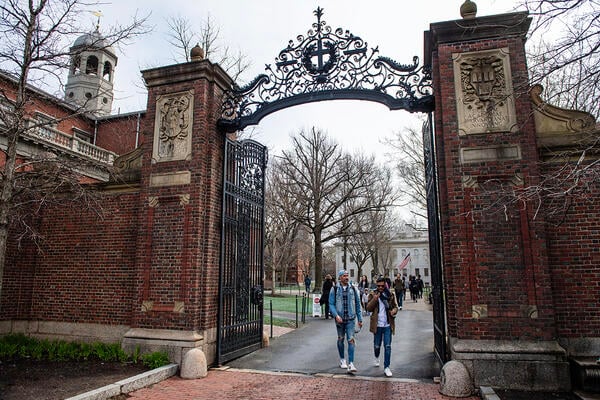
Speak to young university students today and a picture emerges of deep concern for justice, hunger for real-world connection, and an urgent desire to belong to something bigger than themselves.
Please login below to view content or subscribe now.
Most higher education institutions awarded gold for the student experience element of their 2023 Teaching Excellence Framework (TEF) submissions mentioned peer review of teaching (PRT).
But a closer look at what they said will leave the reader with the strong impression that peer review schemes consume lots of time and effort for no discernible impact on teaching quality and student experience.
What TEF showed us
Forty out of sixty providers awarded gold for student experience mention PRT, and almost all of these (37) called it “observation.” This alone should give pause for thought: the first calls to move beyond observation towards a comprehensive process of peer review appeared in 2005 and received fresh impetus during the pandemic (see Mark Campbell’s timely Wonkhe comment from March 2021). But the TEF evidence is clear: the term and the concept not only persist, but appear to flourish.
It gets worse: only six institutions (that’s barely one in ten of the sector’s strongest submissions) said they measure engagement with PRT or its impact, and four of those six are further education (FE) colleges providing degree-level qualifications. Three submissions (one is FE) showed evidence of using PRT to address ongoing challenges (take a bow, Hartpury and Plymouth Marjon universities), and only five institutions (two are FE) showed any kind of working relationship between PRT and their quality assurance processes.
Scholarship shows that thoughtfully implemented peer review of teaching can benefit both the reviewer and the reviewed but that it needs regular evaluation and must adapt to changing contexts to stay relevant. Sadly, only eleven TEF submissions reported that their respective PRT schemes have adapted to changing contexts via steps such as incorporating the student voice (London Met), developing new criteria based on emerging best practice in areas such as inclusion (Hartpury again), or a wholesale revision of their scheme (St Mary’s Twickenham).
The conclusion must be that providers spend a great deal of time and effort (and therefore money) on PRT without being able to explain why they do it, show what value they get from it, or even ponder its ongoing relevance. And when we consider that many universities have PRT schemes but didn’t mention them, the scale of expenditure on this activity will be larger than represented by the TEF, and the situation will be much worse than we think.
Why does this matter?
This isn’t just about getting a better return on time and effort; it’s about why providers do peer review of teaching at all, because no-one is actually required to do it. The OfS conditions of registration require higher education institutions to “provide evidence that all staff have opportunities to engage in reflection and evaluation of their learning, teaching, and assessment practice”.
Different activities can meet the OfS stipulation, such as team teaching, formal observations for AdvanceHE Fellowship, teaching network discussions, microteaching within professional development settings. Though not always formally categorised within institutional documentation, these nevertheless form part of the ecosystem under which people seek or engage with review from peers and represent forms of peer-review adjacent practice which many TEF submissions discussed at greater length and with more confidence than PRT itself.
So higher education institutions invest time and effort in PRT but fail to explain the benefits of their reasoning, and appear to derive greater value from alternative activities that satisfy the OfS. Yet PRT persists. Why?
What brought us to this point?
Many providers will find that their PRT schemes were started or incorporated into their institutional policies around the millennium. Research from Crutchley and colleagues identified Brenda Smith’s HEFCE-funded project at Nottingham Trent in the late 1990s as a pioneering moment in establishing PRT as part of the UK landscape, following earlier developments in Australia and the US. Research into PRT gathered pace in the early 2000s and reached a (modest) peak in around 2005, and then tailed off.
PRT is the Bovril of the education cupboard. We’re pretty sure it does some good, though no one is quite sure how, and we don’t have time to look it up. We use it maybe once a year and are comforted by its presence, even though its best before date predates the first smartphones, and its nutritional value is now less than the label that bears its name. The prospect of throwing it out induces an existential angst – “am I a proper cook without it?” – and yes of course we’d like to try new recipes but who has the time to do that?
Australia shows what is possible
There is much to be learnt from looking outside our own borders, on how peer review has evolved in other countries. In Australia, the 2024 Universities Accord offered 47 recommendations as part of a federally funded vision for tertiary education reform for 2050. The Accord was reviewed on Wonkhe in March 2024.
One of its recommendations advocates for the “increased, systematised use of peer review of teaching” to improve teaching quality, insisting this “should be underpinned by evidence of effective and efficient methodologies which focus on providing actionable feedback to teaching staff.” The Accord even suggested these processes could be used to validate existing national student satisfaction surveys.
Some higher education institutions, such as The University of Sydney, had already anticipated this direction, having revised their peer review processes with sector developments firmly in mind a few years ahead of the Accord’s formal recommendations. A Teaching@Sydney blog post from March 2023 describes how the process uses a pool of centrally trained and accredited expert reviewers, standardised documentation aligned with contemporary, evidence-based teaching principles, and cross-disciplinary matching processes that minimise conflicts of interest, while intentionally integrating directly with continuing professional development pathways and fellowship programs. This creates a sustainable ecosystem of teaching enhancement rather than isolated activities, meaning the Bovril is always in use rather than mouldering behind Christmas’s leftover jar of cranberry sauce.
Lessons for the UK
Comparing Australia and the UK draws out two important points. First, Australia has taken the simple but important step of saying PRT has a role in realising an ambitious vision for HE. This has not happened in the UK. In 2017 an AdvanceHE report said that “the introduction and focus of the Teaching Excellence Framework may see a renewed focus on PRT” but clearly this has not come to pass.
In fact, the opposite is true, because the majority of TEF Summary Statements were silent on the matter of PRT, and there seemed to be some inconsistency in judgments in those instances where the reviewers did say something. In the absence of any explanation it is hard to understand why they might commend the University of York’s use of peer observation on a PG Cert for new staff, but judge that the University of West London meeting their self-imposed target of 100 per cent completion of teaching observations every two years for all academic permanent staff members was “insufficient evidence of high-quality practice.”
Australia’s example sounds rather top-down, but it’s sobering to realise that they are probably achieving more impact for the cost of less time and effort than their UK colleagues, if the TEF submissions are anything to go by.
And Australia is clear-sighted about how PRT needs to be implemented for it to work effectively, and how it can be joined up with measures such as student satisfaction surveys that have emerged since PRT first appeared over thirty years ago. Higher education institutions such as Sydney have been making deliberate choices about how to do PRT and how to integrate it with other management, development and recognition processes – an approach that has informed and been validated by the Universities Accord’s subsequent recommendations.
Where now for PRT?
UK providers can follow Sydney’s example by integrating their PRT schemes with existing professional development pathways and criteria, and a few have already taken that step. The FE sector affords many examples of using different peer review methods, such as learning walks and coaching in combination. University College London’s recent light refresh of its PRT scheme shows that management and staff alike welcome choice.
A greater ambition than introducing variety would be to improve reporting of program design and develop validated tools to assess outcomes. This would require significant work and sponsorship from a body such as AdvanceHE, but would yield stronger evidence about PRT’s value for supporting teaching development, and underpin meaningful evaluation of practice.
This piece is based on collaborative work between University College London and the University of Sydney examining peer review of teaching processes across both institutions. It was contributed by Nick Grindle, Samantha Clarke, Jessica Frawley, and Eszter Kalman.
After almost 20 years in business, Milestones Preschool in Inglewood closed its doors this month.
It was a decision that preschool director Milena Bice had been putting off for years. She’d turned her family home into a small business, transforming the house on a quiet tree-lined street into a playground of childish delights, complete with a sand pit, fruit trees and even a brood of chicks waddling around a small pen.
Bice loved her preschool. She loved the way it allowed her to care for her own kids when they were little, and how she could continue to apply therapeutic approaches to her work long after they’d outgrown preschool. Over the years, she developed a reputation for her care for children with neurological differences.
But child care is no easy business. Margins were about as slim as can be. When parents couldn’t afford to pay full tuition, Bice felt it was her duty to keep caring for their kids anyway. The question of closing loomed over her as her business survived the ups and downs of the global economy: first, the 2008 recession, and the COVID-19 pandemic more than a decade later.
But this month, Bice finally called it quits. She was sick of charging families high fees and still struggling to pay herself at the end of the month. And for the first time this year, she said her preschool didn’t have anyone on her waitlist. One reason is universal transitional kindergarten — or TK — no-cost public kindergarten that becomes an option for all California 4-year-olds this fall.
“ I can’t compete with free,” she told LAist in a recent interview. “And in this economy, I think a lot of families are hurting.”
Bice’s predicament mirrors a statewide challenge. As families sign their 4-year-olds up for TK, some childcare and preschool providers say they’re losing enrollment and it’s threatening their businesses. While teachers struggle to adjust, childcare remains an unaffordable and unmet need for many families across California, especially with very young children.
Child care is still a major need for CA families
Even as transitional kindergarten expands, there’s no shortage of need for child care. The California Budget & Policy Center estimates that just 19% of infants, toddlers and preschool-aged children who are eligible for state subsidized care are enrolled. The need is especially great for children age 2 or younger — the most expensive age group to care for.
A recent report from the Center for the Study of Child Care Employment found that most early education programs will need to pivot to younger kids to meet the need and stay in business, and that centers and home-based childcares are hurting from declined enrollment since the pandemic.
Anna Powell, the lead author of that report, said early educators struggling to adapt to the changing landscape of their industry are a byproduct of the state’s massive investment in universal TK, but lack of similar investment in others.
“ If one area, for example TK, receives a lot of resources to scale up to reach demand, in theory, that is positive,” she said. “What happens when you don’t invest in all the quadrants at the same time is that there can be these unintended consequences.”
Transitioning to younger kids is a challenge
Powell said that caring for younger kids requires a number of shifts in how child care programs operate. Teaching expertise is different for younger children, and staffing ratios are smaller. The time a provider might expect to have a child enrolled is also shorter, since kids are heading to the public school system earlier. This means early educators could face more turnover.
There’s also the matter of teaching preferences. Caring for a 3- or 4-year-old is very different from taking care of a 1-year-old. In a survey of nearly 1,000 early educators, just 20% said they’d be interested in teaching infants and toddlers.
David Frank, who runs a preschool in Culver City, told LAist in April that he’s also closing his doors this year. He said that 4-year-olds used to make up a third of the school’s students, and his enrollment was down from 34 to 13. His preschool already took 2 -year-olds, but he didn’t want to go any younger. One reason is it would require him to reconfigure the school to create a separate space for the youngest children.
Frank said he’s not against TK, but he couldn’t keep making it work.
“ I’m happy that children will have good, free education,” he said. “But as a person trying to run a business … it’s just no longer a viable plan to stay open anymore.”
Advocates say even more investment is needed
California’s transitional kindergarten is a plan years in the making, and, despite kinks, it has achieved a big goal: offering a free option for every family with a 4-year-old in the state.
That program runs through the public school system, but child care and early education offerings for the state’s youngest children continue to be a patchwork of different types of care with no similar central system. The state funds a public preschool program for 2- to 5-year-olds for low-income families, which has received more money in recent years. Many private programs receive state subsidies for serving low-income families, and the state has increased the number of seats it funds in recent years.
It also bumped up reimbursement rates for 3-year-olds to entice more providers to take younger kids.
Gov. Gavin Newsom’s office pointed to these changes, telling LAist that it has invested heavily in a universal Pre-K program that extends beyond transitional kindergarten.
Some advocates and childcare providers say still more game-changing investment is needed. The state has promised the childcare providers that receive its subsidies to overhaul its payment system to reflect the “true cost” of care, but this year deferred offering them pay bumps. The union representing those workers is currently bargaining with the state, saying providers can’t wait for a raise.
Patricia Lozano, the executive director of advocacy organization Early Edge California, said TK’s ripple effect on early education programs shows that the state needs to do more to provide for its youngest children.
“ TK was one of the key things we’ve been advocating since it was passed,” she said. “But that’s just one piece. I think the whole system itself is problematic. It’s underfunded.”
Lozano pointed to New Mexico as a potential model for California. The state has boosted teacher pay and expanded eligibility for free care by directing gas and oil revenue to state childcare programs. She said this type of consistent source of money is especially important amid threats to federal funding and state budget cuts.
“The bottom line is we need to have that source of funding protected,” she said.
In the meantime, Milena Bice’s preschool in Inglewood is closed. She’s not sure exactly what happens next. She can’t go work at a public school. Despite decades in the business, she doesn’t have a bachelor’s degree or teaching credential.
While she debates the future, Bice is holding onto her childcare license. Who knows? Maybe she’ll want to reopen someday.
When then-16-year old Mariam Kaba won $1 million through the Transform Rhode Island scholarship three years ago, she saw it as her opportunity to create the change she wanted to see in her nearly 45,000-person community of Woonsocket.
“I don’t see much positive representation from our community all the time,” Kaba said. “I was thinking ‘my scholarship won’t get picked.’ But it did … and I was able to bring something so big to my community, a community that already doesn’t have the most funding in the world.”
Kaba’s investments resulted in a number of youth-centered spaces and opportunities popping up across the city, including 120 calm corners in elementary classrooms to support students’ sensory functions, new physical education equipment for all Woonsocket elementary schools, job fairs, hundreds of donated books, and field trips to local colleges & universities, among others.
Kaba, who is now a rising sophomore at Northeastern University, describes the experience of winning the scholarship as surreal.
“It didn’t occur to me that I was the last person standing and I won $1 million,” Kaba said. “But when I won, the first thing I thought was, ‘OK, let’s get to work. I’m given this opportunity to help improve my community. What steps can I take? And when does the groundwork start happening?’”
When a teen leads, adults follow
Bringing Kaba’s vision to life meant working alongside adults with experience in project management and community engagement while keeping up with her student life at Woonsocket High School.
“In high school, I managed both classwork and extracurriculars like student council, being a peer mentor and participating in Future Business Leaders of America,” Kaba said. “Balancing those things with my work with the scholarship came easy to me.”
Kaba partnered with community organizations across the state like nonprofit Leadership Rhode Island. This collaboration helped lay out a roadmap for Kaba’s proposal, manage the scholarship funds and coordinate meetings with community leaders.
The winning student also sits on the board of the Papitto Opportunity Connection Foundation for a year. This provides an opportunity for them to build their network and connect with leaders in Rhode Island.
High schoolers can make a difference through spaces and support like this, Kaba said, and also advises teens interested in engaging with their community to “not be afraid to start off small.”
This “small” gesture, Kaba added, can be as simple as gathering a group of friends to organize a community cleanup or starting a school club or Instagram to advocate for something they’re passionate about.
“Starting off small is going to give you those steps to leading these big impactful projects,” Kaba said.
The feedback Kaba received on her community investments, primarily from peers, community members and teachers in Woonsocket, was overwhelmingly positive.
“People told me, ‘I was able to go to this job fair and I got connected to this job,’ or, ‘I’m going to the Harbour Youth Center to get items from the food pantry you created and it’s been helping my family a lot,’” Kaba said. “Community organizations reached out to me to let me know they would love to find a way to work together and do their part to take action too.”
Students don’t have the same incentives to talk to their professors — or even their classmates — anymore. Chatbots like ChatGPT, Gemini and Claude have given them a new path to self-sufficiency. Instead of asking a professor for help on a paper topic, students can go to a chatbot. Instead of forming a study group, students can ask AI for help. These chatbots give them quick responses, on their own timeline.
For students juggling school, work and family responsibilities, that ease can seem like a lifesaver. And maybe turning to a chatbot for homework help here and there isn’t such a big deal in isolation. But every time a student decides to ask a question of a chatbot instead of a professor or peer or tutor, that’s one fewer opportunity to build or strengthen a relationship, and the human connections students make on campus are among the most important benefits of college.
Julia Freeland-Fisher studies how technology can help or hinder student success at the Clayton Christensen Institute. She said the consequences of turning to chatbots for help can compound.
“Over time, that means students have fewer and fewer people in their corner who can help them in other moments of struggle, who can help them in ways a bot might not be capable of,” she said.
As colleges further embed ChatGPT and other chatbots into campus life, Freeland-Fisher warns lost relationships may become a devastating unintended consequence.
Asking for help
Christian Alba said he has never turned in an AI-written assignment. Alba, 20, attends College of the Canyons, a large community college north of Los Angeles, where he is studying business and history. And while he hasn’t asked ChatGPT to write any papers for him, he has turned to the technology when a blank page and a blinking cursor seemed overwhelming. He has asked for an outline. He has asked for ideas to get him started on an introduction. He has asked for advice about what to prioritize first.
“It’s kind of hard to just start something fresh off your mind,” Alba said. “I won’t lie. It’s a helpful tool.” Alba has wondered, though, whether turning to ChatGPT with these sorts of questions represents an overreliance on AI. But Alba, like many others in higher education, worries primarily about AI use as it relates to academic integrity, not social capital. And that’s a problem.
Jean Rhodes, a psychology professor at the University of Massachusetts Boston, has spent decades studying the way college students seek help on campus and how the relationships formed during those interactions end up benefitting the students long-term. Rhodes doesn’t begrudge students integrating chatbots into their workflows, as many of their professors have, but she worries that students will get inferior answers to even simple-sounding questions, like, “how do I change my major?”
A chatbot might point a student to the registrar’s office, Rhodes said, but had a student asked the question of an advisor, that person may have asked important follow-up questions — why the student wants the change, for example, which could lead to a deeper conversation about a student’s goals and roadblocks.
“We understand the broader context of students’ lives,” Rhodes said. “They’re smart but they’re not wise, these tools.”
Rhodes and one of her former doctoral students, Sarah Schwartz, created a program called Connected Scholars to help students understand why it’s valuable to talk to professors and have mentors. The program helped them hone their networking skills and understand what people get out of their networks over the course of their lives — namely, social capital.
Connected Scholars is offered as a semester-long course at U Mass Boston, and a forthcoming paper examines outcomes over the last decade, finding students who take the course are three times more likely to graduate. Over time, Rhodes and her colleagues discovered that the key to the program’s success is getting students past an aversion to asking others for help.
Students will make a plethora of excuses to avoid asking for help, Rhodes said, ticking off a list of them: “‘I don’t want to stand out,’ ‘I don’t want people to realize I don’t fit in here,’ ‘My culture values independence,’ ‘I shouldn’t reach out,’ ‘I’ll get anxious,’ ‘This person won’t respond.’ If you can get past that and get them to recognize the value of reaching out, it’s pretty amazing what happens.”
Connections are key
Seeking human help doesn’t only leave students with the resolution to a single problem, it gives them a connection to another person. And that person, down the line could become a friend, a mentor or a business partner — a “strong tie,” as social scientists describe their centrality to a person’s network. They could also become a “weak tie” who a student may not see often, but could, importantly, still offer a job lead or crucial social support one day.
Daniel Chambliss, a retired sociologist from Hamilton College, emphasized the value of relationships in his 2014 book, “How College Works,” co-authored with Christopher Takacs. Over the course of their research, the pair found that the key to a successful college experience boiled down to relationships, specifically two or three close friends and one or two trusted adults. Hamilton College goes out of its way to make sure students can form those relationships, structuring work-study to get students into campus offices and around faculty and staff, making room for students of varying athletic abilities on sports teams, and more.
Chambliss worries that AI-driven chatbots make it too easy to avoid interactions that can lead to important relationships. “We’re suffering epidemic levels of loneliness in America,” he said. “It’s a really major problem, historically speaking. It’s very unusual, and it’s profoundly bad for people.”
As students increasingly turn to artificial intelligence for help and even casual conversation, Chambliss predicted it will make people even more isolated: “It’s one more place where they won’t have a personal relationship.”
In fact, a recent study by researchers at the MIT Media Lab and OpenAI found that the most frequent users of ChatGPT — power users — were more likely to be lonely and isolated from human interaction.
“What scares me about that is that Big Tech would like all of us to be power users,” said Freeland-Fisher. “That’s in the fabric of the business model of a technology company.”
Yesenia Pacheco is preparing to re-enroll in Long Beach City College for her final semester after more than a year off. Last time she was on campus, ChatGPT existed, but it wasn’t widely used. Now she knows she’s returning to a college where ChatGPT is deeply embedded in students’ as well as faculty and staff’s lives, but Pacheco expects she’ll go back to her old habits — going to her professors’ office hours and sticking around after class to ask them questions. She sees the value.
She understands why others might not. Today’s high schoolers, she has noticed, are not used to talking to adults or building mentor-style relationships. At 24, she knows why they matter.
“A chatbot,” she said, “isn’t going to give you a letter of recommendation.”
“Guiding Through Change: How Small Colleges Are Responding to New Realities”: A Live Conversation with Three Small College Presidents
August 2, 2025, by Dean Hoke: Over the past several months, higher education has experienced an unprecedented wave of transformation. The elimination or curtailment of Diversity, Equity, and Inclusion (DEI) initiatives, shifting federal financial aid policies, declining enrollment in traditional undergraduate programs, and heightened visa scrutiny and geopolitical tensions pose potential risks to international student enrollment, an area of growing importance for many small colleges.
Dr. Chet Haskell, in a recent piece for the Edu Alliance Journal, captured the mood succinctly: “The headlines are full of uncertainty for American higher education. ‘Crisis’ is a common descriptor. Federal investigations of major institutions are underway. Severe cuts to university research funding have been announced. The elimination of the Department of Education is moving ahead. Revisions to accreditation processes are being floated. Reductions in student support for educational grants and loans are now law. International students are being restricted.These uncertainties and pressures affect all higher education, not just targeted elite institutions. In particular, they are likely to exacerbate the fragility of smaller, independent non-profit institutions already under enormous stress.”
Small colleges—often mission-driven, community-centered, and tuition-dependent—are feeling these disruptions acutely.
As we enter the third season of Small College America, a podcast series that spotlights the powerful impact of small colleges across the nation, my co-host Kent Barnds and I wanted to mark the moment with something special. Rather than recording a typical podcast episode, we’re hosting a live webinar to engage in a timely and candid discussion with three dynamic presidents of small colleges.
Join us for a special Small College America webinar:
“Guiding Through Change: How Small Colleges Are Responding to New Realities”
Wednesday, August 27, 1:00 PM – 2:00 PM Eastern
Our panelists bring deep experience, insight, and a strong commitment to the mission of small colleges:
Dr. Andrea Talentino is the president of Augustana College in Rock Island, Illinois. She previously served as provost at Nazareth College in Rochester, N.Y., and Dean of the College of Liberal Arts at Norwich University in Northfield, Vermont. In her administrative work, she has focused on building strong teams and developing a positive organizational culture.
Dr. Tarek Sobh is the President of Lawrence Technological University. A distinguished academic leader, he previously served as Provost at LTU and as Executive VP at the University of Bridgeport. An expert in robotics, AI, and STEM education, Dr. Sobh has published extensively and presented internationally. He is passionate about aligning academic programs with workforce needs.
Dr. Anita Gustafson, President of Presbyterian College, is a historian and long-time faculty leader who assumed the presidency in 2023. She has been a strong advocate for the value of the liberal arts and the importance of community engagement. Dr. Gustafson returned to PC after seven years as the dean of the College of Liberal Arts and Sciences and a professor of history at Mercer University in Macon, Ga.
This one-hour webinar will explore how small private colleges are navigating today’s evolving environment and planning strategically for the future.
School (in)Security is our biweekly briefing on the latest school safety news, vetted by Mark Keierleber. Subscribe here.
In a battle over undocumented students’ access to public schooling — and, frankly, their futures — the Trump administration agreed this week to pause new federal rules designed to bar immigrants from Head Start and other education programs.
My colleague Jo Napolitano reports the reprieve, through Sept. 3, applies in 20 states and Washington, D.C., after state attorneys general sued to stop new rules designed to give undocumented preschoolers and other immigrant students the boot.
Health and Human Services Secretary Robert. F. Kennedy Jr. visits a Head Start program on May 21 to promote healthy eating. On July 10, he issued a directive barring undocumented students from the federally funded early education program. (Facebook/HeadStart.gov)
Those regulations could end up restricting educational opportunities for the youngest learners. But as Jo explains in her newest analysis, it’s just one part of a multifaceted approach to bar undocumented students from learning from cradle to career.
Read Jo’s full analysis — and learn how the changes could undercut the chance immigrant youth get for a better life.
In the news
More on Trump’s immigration crackdown: In Arizona, unaccompanied minors are facing immigration judges alone — without help from lawyers — after the administration cut off access to funding for their defense. A court order has restored the money temporarily through September. | Arizona Republic
The Trump administration instructed federal agents to give detained migrant teenagers the option of voluntarily returning to their home countries instead of being confined in government-overseen shelters. | CBS News
Attorneys for immigrant children say youth and families are being detained in “prison-like” facilities even as the administration seeks to terminate rules that mandate basic safety and sanitary conditions for children. | CBS News
The Denver school district says fear of federal immigration enforcement led to a surge in student absences. A review of attendance data by The Denver Gazette suggests a more nuanced picture. | The Denver Gazette
Undocumented students who attended K-12 schools in the U.S. last year before getting deported share their stories. | USA Today
Sign-up for the School (in)Security newsletter.
Get the most critical news and information about students’ rights, safety and well-being delivered straight to your inbox.
Penny Schwinn, who was in line to be the Education Department’s second in command, has dropped out of consideration following critiques of her conservative bona fides, including for past support of campus equity initiatives. | The 74
‘Trampling upon women’s rights’: The Oregon Department of Education is the latest agency to come under federal investigation over allegations the state allows transgender students to compete in women’s sports. | Oregon Public Broadcasting
New Education Department guidance encourages the use of federal money to expand artificial intelligence in classrooms, which the agency said has “the potential to revolutionize” schools. | Education Week
The Trump administration’s “AI Action Plan” comes after the Senate failed to pass rules in the “big, beautiful” tax-and-spending bill designed to prevent states from regulating AI. Instead, Trump’s guidance directs the Federal Communications Commission to evaluate state regulations and block any “AI-related federal funding” to any states with rules deemed “burdensome.” | The White House
How a 45-second TikTok video portraying a campus shooting — created by middle school cheerleaders — led to criminal charges. | ProPublica
A phishing campaign has taken advantage of mass layoffs at the Education Department by mimicking a portal maintained by the agency to manage grants and federal education funding. | DarkReading
Drones are being pitched as the next big thing to thwart school shootings — but district leaders are balking at the million-dollar price tag. | WCTV
‘Critical gaps’: An inspector general report in Washington, D.C., uncovered flaws in the city school system’s gun violence prevention efforts, including a backlog on repairs to security equipment. | The Washington Post
Wisconsin schools are installing controversial license plate readers that have been used by law enforcement to track down undocumented immigrants. | Milwaukee Journal Sentinel
This HEPI guest blog was kindly authored by John Goddard OBE, Emeritus Professor of Regional Development Studies at Newcastle University.
In a HEPI note prompted by a Centre for Skills, Knowledge and Organisational Performance (SKOPE) conference, Nick Hillman asked: Should the seminal Robbins report inform the forthcoming post-16 strategy? He referenced the point made by Professor Robson of SKOPE about the need ‘to encourage place-based approaches … and replace competition with coordination.’ As Nick points out, the challenge of place and coordination are not new, but as I will argue, these are not being confronted by policymakers right now.
The Robbins’ report led to new universities being established. But these were in county towns and as we observe in our volume on The University and the City, overlook the growing urban crisis of that period. The Education Reform Act of 1988 severed the link between polytechnics and local government. The Further and Higher Education Act 1992, which allowed polytechnics to apply for university status, had the Government’s desired impact of reducing the unit cost of higher education and moving the UK instantly up the OECD rankings in terms of participation in higher education. But it also signalled a further disconnection with cities. The creation of new universities in the 1970s to meet a 50% participation rate was also unplanned in geographical terms. So, unlike many countries, the UK has not had a plan for the geography of higher let alone further education.
Indeed, UK higher education policy and practice has ignored the lessons of history as well as being geographically blind. It has not been sensitive to the different local contexts where universities operate and the evolution of these institutions and places through time.
It is important to remember that locally endowed proto-universities like Newcastle, Sheffield and Birmingham supported late 19th-century urban industrialisation and the health of the workforce. They also played a role in building local soft infrastructure, including facilitating discourse around the role of science and the arts in business and society. This was also a time in which new municipal government structures were being formed. In short, universities helped build the local state and create what the British Academy now calls social and cultural infrastructure, in which universities play a key role
These founding principles became embedded in the DNA of some institutions. For example, in 1943, the Earl Grey Memorial lecturer in King’s College Newcastle noted,
Ideal Universities… should be an organic part of regional existence in its public aspects, and a pervading influence in its private life. …Universities to be thus integrated in the community, must be sensitive to what is going on in the realm of business and industry, of practical local affairs, of social adaptation and development, as well as in the realm of speculative thought and abstract research.
In the later 20th century, most so-called redbrick universities turned their back on place as the central state took on direct funding of higher education and research and did not prioritise the local role of universities. But this was challenged by the Royal Commission on the Future of Higher Education in 1997, chaired by Lord Dearing. He noted that: ‘As part of the compact we envisage between HE and society, each institution should be clear about its mission in relation to local communities and regions.’ For him, this ‘compact’ was wide-ranging, had a strong local dimension and was one where the university’s contribution to ‘the economy’ could not be separated from the wider society in which it was embedded.
Many of Dearing’s ideas were subsequently incorporated into the work of Regional Development Agencies (RDAs) that were established in 1989 to promote economic development and regeneration, improve business competitiveness, and reduce regional disparities. This included investment, (matched by European regional funds ) into university-related research and cultural facilities. These capital and recurrent investments contributed to ‘place making’ and university links with business and the arts. For example, the former Newcastle brewery site was purchased by Newcastle University, Newcastle City Council and RDA, which they named ‘Science Central’. The partnership was incorporated as Newcastle Science City Ltd., a company limited by guarantee with its own CEO and independent board. The organisation’s portfolio included:
Support for business, facilitating the creation of new enterprises drawing on the scientific capabilities of the region’s universities and work with local schools and communities, particularly focussed on promoting science education in deprived areas.
The initiatives recognised the role that universities could play in their places by building ‘quadruple helix partnerships’ between universities, business, local and central government and the community and voluntary sectors.
But from 2008, with the onset of public austerity, a focus on national competitiveness and a rolling back of the boundaries of the state, we saw the abolition of the RDAs in 2012, the creation of Local Enterprise Partnerships with more limited powers and resources and a cutting back on non-statutory local government activities, notably for economic development. My 2009 NESTA provocation Reinventing the Civic University was a reminder that universities had to go back to their roots and challenge broader geo-political trends, including globalisation and the creation of university research excellence hierarchies that mirrored city hierarchies.
Marketisation was subsequently embedded into law in the 2017 Higher Education Act. This abolished the Higher Education Funding Council for England and its network of regional consultants working with formal university associations. The act unleashed competition regulated via the Office for Students (OfS) and supported by an enhanced discipline-based research excellence funding scheme. Both were place blind. Some of us raised the possibility of the financial collapse of universities in less prosperous places where they were so-called ‘anchor institutions’
It was a recognition of this place blindness that contributed to the case for the establishment of the Civic University Commission, chaired by the late Lord Kerslake. The Commission argued that the public – nationally and locally – needed to understand better the specific benefits that universities can bring in response to the question: ‘We have a university here, but what is it doing for us? Institutions that were ultimately publicly funded needed to be locally accountable given our place-based system of governance – parliamentary constituencies and local authorities.
For the Commission, accountability meant something different from a top-down compliance regime. Rather, sensitive and voluntary commitments made between a diverse set of actors to one another, whose collective powers and resources could impact local economic and social deficiencies
The Commission therefore proposed that universities wishing to play a civic role should prepare Civic University Agreements, co-created and signed by other key partners and embracing local accountability. Strategic analysis to shape agreements should lead to a financial plan that brings together locally the many top-down and geographically blind funding streams that universities receive from across Whitehall – for quality research, for health and wellbeing, for business support, for higher-level skills and for culture.
Some of these national funds now need to be ring-fenced to help universities work with partners to meet local needs and opportunities, including building capacity for collaborative working within an area. As the Secretary of State for Education has suggested in her letter to VCs, this might include a slice of core formulaic Quality Research (QR) funding. Such processes would be preferable to the ad-hoc interventions that have hitherto failed to establish long-term trust between universities and the community. At the same time, a place dimension could be included in the regulation of the domestic student marketplace. This could all form part of a compact or contract between universities and the state which enshrined a responsibility to serve the local public good.
Going forward, I would argue that the coincidence of multiple crises across the world has far-reaching implications that universities cannot ignore. Indeed, if they do not step up to the plate and assert their civic role as anchor institutions in their places, their very existence may be at stake. The issues are well set out in this Learning Planet Institute Manifesto for the Planetary Mission of the University.
Reading this Manifesto should help policy makers and institutional leaders in the UK recognise that the current financial crisis facing universities is an outward and visible sign of deeper threats, not least those arising from popularism and being fanned by Donald Trump. And popularism has its roots in the experience of people in left behind places.
Therefore, Government support for the role of universities in their communities is not only beneficial to them but also to society at large. To respect institutional autonomy, this requires the right incentives (sticks and carrots). For example, universities throughout England could be required to support the Government’s plans for devolution as part of the compact I suggest. Questions to be answered by the Departments for Education; for Housing, Communities and Local Government and for Science, Innovation and Technology working TOGETHER could include:
What structures need to be put in place inside and outside of universities to facilitate joint working between universities and Mayoral Combined Authorities (MCAs)?
How should universities be included in upcoming Devolution Deals?
How might these differ between MCAs at different stages of development and different levels of prosperity?
How should universities link their work with business, with the community and the priorities of MCAs for inclusive growth and with the Industrial Strategy White paper?
How should Combined Authorities work with different universities and colleges in their area to meet skills gaps?
How can areas without MCAs work with universities to deliver equivalent outcomes?
In summary, universities must recognise that they are part of the problem identified by populism, but can contribute to solutions through purposive local actions supported by the government.