A new report from the Center for American Progress and the Thurgood Marshall College Fund shows that historically Black colleges and universities receive a disproportionately low percentage of federal research and development funding.
While HBCUs make up roughly 3 percent of all four-year higher ed institutions, they’ve received less than 3 percent of R&D funding since at least 2010, according to the report. In recent years, between 2018 and 2023, they were awarded less than 1 percent of R&D expenditures.
Some agencies have given HBCUs a relatively high proportion of R&D funding, including the Department of Education, the Small Business Administration and the Department of Agriculture, which has required allotments for land-grant HBCUs. But the two federal agencies that award the most R&D funding annually, the Department of Health and Human Services and the Department of Defense, have doled out especially low shares of those funds to HBCUs; in 2023, they awarded 0.54 percent and 0.40 percent, respectively. Meanwhile, 17 of the 43 federal agencies that supply research funding didn’t give HBCUs any R&D funds at all that year.
Sara Partridge, associate director of higher education policy at CAP and co-author of the report, said both Republicans and Democrats have sought to address inequities in R&D funding, but their efforts have been insufficient.
“In order to support these key drivers of scientific achievement and upward mobility, we need federal policymakers to commit to measurable benchmarks for the share of funds awarded to these institutions,” she said in a press release.
Eight in 10 students rate the quality of education they’re getting as good or excellent, according to the first round of results from Inside Higher Ed’s main annual Student Voice survey of more than 5,000 two- and four-year undergraduates with Generation Lab. That’s up from closer to seven in 10 students in last year’s main Student Voice survey, results that are affirming for higher education at a turbulent economic, technological and political moment.
Still, students point to room for improvement when it comes to their classroom experience—and flag outside issues that are impacting their academic success. Case in point: 42 percent of all students, and 50 percent of first-generation students, cite financial constraints as a top barrier to their success. This can include tuition but also living and other indirect expenses. Balancing outside work with coursework and mental health issues are other commonly cited challenges. Taken as a whole, the findings underscore the need for comprehensive wraparound supports and a focus on high-touch approaches in an ever more high-tech world.
About the Survey
Student Voice is an ongoing survey and reporting series that seeks to elevate the student perspective in institutional student success efforts and in broader conversations about college.
Look out for future reporting on the main annual survey of our 2025–26 Student cycle, Student Voice: Amplified. Future reports will cover cost of attendance, health and wellness, college involvement, career readiness, and the relationship of all those to students’ sense of success. And check out what students have already said about trust—including its relationship to affordability—and about how artificial intelligence is reshaping the college experience.
Some 5,065 students from 260 two- and four-year institutions, public and private nonprofit, responded to this main annual survey about student success, conducted in August. Explore the data from the academic life portion of the survey, captured by our survey partner Generation Lab, here. The margin of error is plus or minus 1 percentage point.
Here’s more on what respondents to our main annual Student Voice survey had to say about academic success.
Students across institution types rate their educational experience highly.
Some 80 percent of students rate the quality of their college education thus far as good (50 percent) or excellent (30 percent), compared to last year’s 73 percent of students who rated it good (46 percent) or excellent (27 percent). This is relatively consistent across student characteristics and institution types—though, like last year, private nonprofit institutions have a slight edge over public ones, especially in terms of perceived excellence: In 2025, 47 percent of private nonprofit students rate their education excellent versus 27 percent of public institution students. This can’t be explained by two-year institutions being included in the public category, as community college students are slightly more likely than four-year students to describe their education as excellent (32 percent versus 29 percent, respectively). On community college excellence, one recent analysis by the Burning Glass Institute found that two-year institutions have dramatically improved their completion rates in recent years due in part to a concerted student success effort.
What about four-year college excellence? The Student Voice survey didn’t define quality specifically, but existing data (including prior Student Voice data) shows that students value connections with faculty. And with private nonprofit institutions having lower average faculty-to-student ratios than publics, one possible explanation is that students at private nonprofits may have extra opportunities to connect with their professors. But as other recent analyses demonstrate, private nonprofit institutions, even highly selective ones, do not have a monopoly on delivering life-changing educational experiences for students. Nearly 500 institutions—including community colleges, public universities, religious colleges and specialized colleges—this year achieved a new “opportunity” designation from the Carnegie Classification of Institutions of Higher Education, for example, signifying both high levels of access and strong economic outcomes for students.
2.Students want fewer high-stakes exams and more relevant course content, indicating this would boost their academic success.
Like last year’s survey, the top classroom-based action that students say would boost their academic success is faculty members limiting high-stakes exams, such as those counting for 40 percent or more of a course grade: 45 percent of students say this would help. Also like last year, the No. 2 action from a longer list of options is professors better connecting what they teach in class to issues outside of class and/or students’ career interests (40 percent). In Inside Higher Ed’s 2025 Survey of College and University Chief Academic Officers, just 20 percent of provosts said their institution has encouraged faulty members to limit high-stakes exams. But artificial intelligence is forcing a broader campus-assessment reckoning—and how to engage students and authentically assess their learning are questions central to those ongoing conversations. Relatedly, 10 percent of Student Voice respondents say promoting AI literacy would most boost their academic success.
3.Most students know how and when to use AI for coursework, but there are knowledge gaps between groups.
Upward of eight in 10 students indicate they know how, when and whether to use generative AI for help with coursework. In 2024’s survey, the plurality of students said this was because their professors had addressed the issue in class. This year, the plurality (41 percent) attributes this knowledge to professors including policies in their syllabi (up from 29 percent last year).
Like last year, relatively few students credit a college- or universitywide policy or other information or training from the broader institution. Across higher education, many institutions have held off on adopting broad AI use policies, instead deferring to faculty autonomy and expertise: Just 14 percent of provosts in Inside Higher Ed’s survey said their institution has adopted comprehensive AI governance policies and/or an AI strategy—though more said it has adopted specific policies for academic integrity, teaching and/or research (45 percent).
While classroom-based approaches are clearly evolving, two-year Student Voice respondents report being unclear on how, when and whether to use AI for coursework at double the rate of four-year peers (20 percent versus 10 percent). Perhaps relatedly, community college provosts were most likely to report significant faculty resistance to AI on their campuses, by institution type, at 49 percent versus 38 percent over all. Another difference: 23 percent of adult learners (25 and older) report being unclear, compared to just 10 percent of 18- to 24-year-olds. Both of these gaps merit further research.
4.Students say their institution’s course delivery methods and scheduling fit their needs—with some caveats.
Asked to what extent their institution offers course delivery methods/modalities that meet their learning needs and schedules, about four in 10 students each say very well or somewhat well. Adult learners (50 percent), community college students (49 percent) and students working 30 or more hours per week (45 percent) are especially likely to say their college is meeting their needs here very well—evidence that many nontraditional learners are finding the flexibility they need to balance college with busy lives.
However, students who say they’ve seriously considered stopping out of college at some point are especially unlikely to say their college is serving them very well here (33 percent). Risk factors for stopping out are varied and complex. But this may be one more reason for institutions to prioritize flexible course options. On the other hand, 48 percent of students who have stopped out for a semester or more but then re-enrolled say they’re being very well served by their current institution in this way.
5.Students’ biggest reported barriers to academic success aren’t academic.
From a long list of possible challenges, students are most likely to say that financial constraints (such as tuition and living expenses), needing to work while attending college, and mental health issues are impeding their academic success. None of these is explicitly academic, underscoring the need for holistic supports in student success efforts. Adult learners (51 percent), students working 30 hours or more per week (52 percent), first-generation students (50 percent) and students who have previously stopped out of college (55 percent) all report financial constraints at elevated rates. Racial differences emerge, as well: Black (46 percent) and Hispanic (49 percent) students are more likely to flag financial constraints as a barrier to academic success than their white (38 percent) and Asian American and Pacific Islander (37 percent) peers.
On mental health, women (37 percent) and nonbinary students (64 percent, n=209) flag this as a barrier at higher rates than men (26 percent). Same for students who have seriously considered stopping out of college relative to those who have not: 41 percent versus 30 percent, respectively.
Some of these issues are interconnected, as well: Other research has found a relationship between basic needs insecurity and mental health challenges that is pronounced among specific student populations, including first-generation and LGBTQIA+ students. Another recent study by the National College Attainment Network found that a majority of two- and four-year colleges cost more than the average student can pay, sometimes by as much as $8,000 a year. And prior Student Voice surveys have found that students link affordability to both their academic performance and to trust in higher education.
6. Colleges are meeting students’ expectations for responding to changing needs and circumstances—with some exceptions.
With so many different factors influencing students’ academic success, how are colleges doing when it comes to responding to students’ needs and changing circumstances, such as with deadline extensions, crisis support and work or family accommodations? Seven in 10 students say their college or university is meeting (57 percent) or exceeding (12 percent) their expectations. Most of the remainder say their institution is falling slightly short of expectations. This is relatively consistent across student groups and institution types—though students who have seriously considered stopping out of college are more likely than those who haven’t to say their institution is falling at least slightly short of their expectations (33 percent versus 19 percent, respectively). This again underscores the importance of comprehensive student support systems.
The Connection Factor
While it’s clear that AI and other outside variables are reshaping the academic experience, one mitigating influence may be human connection.
Jack Baretz, a senior studying math and data science at the University of North Dakota, is currently working with peers to develop an AI-powered tool called Kned that can answer students’ and advisers’ basic academic advising questions (think course sequencing, availability and prerequisites). The idea isn’t to replace advisers but rather counteract high adviser caseloads and turnover and—most importantly—maximize students’ time with their adviser so it’s a meaningful interaction.
“There’s a lot of anxiety kids have at this point in their life, where it’s like, ‘I don’t know what I’m going to do next. What would be a good major to make sure I get a job? I don’t want to be jobless.’ Just those conversations—I think that’s where advisers are most effective and probably most content, helping people,” Baretz said.
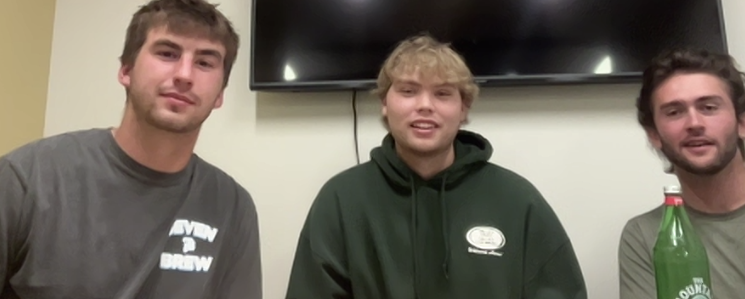
From left: University of North Dakota students and advising chatbot collaborators Michael Gross, Owen Reilly and Jack Baretz.
Zoom
A prior Student Voice survey found that nearly half of students lack key academic guidance. In this year’s survey, 19 percent of students say channeling more resources to academic advising so they can get more help from their adviser would most boost their academic success. Some 28 percent say the same of new and/or clearer program maps and pathways.
This ethos extends to what Kned collaborator Michael Gross, a junior majoring in finance, said keeps him academically engaged: connection. His most motivating online classes, for example, have had breakout rooms for peer-to-peer discussions. Why? “When you have more than one person working on something, you’re way more likely to contribute and do your best work on it, because there’s other people’s grades at stake, too,” he said. “It’s not just yours.”
Gross added, “One thing I would say is for institutions to encourage discussion on college campuses. The main thing that we’re kind of losing, especially with all this technology, is people are becoming so separated from each other. College is meant to be a place where you can engage your social skills and just learn about other people—because this is one of the last times you can be surrounded by so many people your age, and so many people from different walks of life with so many different ideas, too.”
To this point, 19 percent of Student Voice respondents cite social isolation or lack of belonging as a top barrier to their academic success. Tyton Partners’ 2025 “Time for Class” report also found a jump in both instructor and student preference for face-to-classes, “showing renewed demand for classroom connection.” In the same report, nearly half of instructors cited academic anxiety as a top concern among students, and students themselves reported low motivation and weak study habits as persistent barriers to learning.
Terry McGlynn, professor of biology at California State University, Dominguez Hills, and author The Chicago Guide to College Science Teaching, agreed that “learning is inherently a social endeavor.” And educators have for the past five years noticed “it’s a lot harder to get students to interact with one another and to show some vulnerability when experiencing intellectual growth.”
Many have attributed this to the effects of the pandemic, McGlynn said. But if higher education is now “heading into this era of AI in the classroom without reintegrating quality social interactions, I’m worried for us.”
He added, “I hope we develop approaches that bring people together rather than providing expectations that we work in isolation from one another.”
This independent editorial project is produced with the Generation Lab and supported by the Gates Foundation.
The U.K. government has been urged to remove barriers in the visa process for researchers in order to capitalize on new U.S. restrictions imposed by Donald Trump.
The U.S. president last weekend announced a $100,000 fee for applicants to the H-1B visa program, making a vital visa route used by skilled foreign workers in the U.S. inaccessible to many.
The U.K. is reportedly considering removing fees for its global talent visa in response. The Campaign for Science and Engineering (CaSE) warned that high visa costs are already a significant barrier but said it is not the only change that needs to be made.
In a new report, CaSE highlights the obstacles presented by the current system, including concerns raised by professionals who handle visa and immigration issues at U.K. research institutions.
It warns that information about who is eligible for the visa route is often ambiguous and hard to navigate. According to the Wellcome Sanger Institute, which contributed to the report, the language around “exceptional talent” can be intimidating for talented applicants, although many institutions also receive a large number of low-quality applications.
“These examples point to a wider issue of confusion and unclear messaging about who is eligible, resulting in missed opportunities and cost inefficiencies,” says the report.
Visa policy is also increasingly complex and can put a significant strain on organizations, according to CaSE.
The Sainsbury Laboratory (TSL), a research organization that specializes in molecular plant-microbe interactions, said visa support now demands a full-time employee in human resources as well as external support costing more than $21,000 per year in legal fees.
“The U.K. visa system is becoming increasingly complex, unclear and time-consuming—especially for research institutes like TSL that depend on international talent.
“Policy changes are poorly communicated, portals outdated and guidance inconsistent, requiring our HR to spend extensive time interpreting information.”
TSL said that without a fair and functional visa system, the U.K. risks reaching a “breaking point in our ability to attract global talent and sustain world-leading research.”
Alicia Greated, executive director of CaSE, said U.K. research faces “major challenges” under the current system. She wants to see the government take action that will improve things for skilled workers and those that employ them.
Greated welcomed reports that the Labour administration was considering reducing visa fees for highly skilled researchers, adding, “If these changes happen, they will put the U.K. in a strong position to compete on the global skills market, especially given the changes in the opposite direction in the U.S.”
However, she said that the removal of indefinite leave to remain, or permanent residency, from individuals already settled in the U.K.—as Reform UK is advocating—would be extremely damaging to U.K. R&D and the wider economy, as well as individuals and their families.
“Policy proposals like this also have a negative impact on the attractiveness of the U.K. as a destination for the world’s brightest and best researchers because people may worry their right to be in the country could be taken away.”
Serving approximately 100,000 students each year, Maricopa County Community College District is one of the nation’s largest community college districts. Many bachelor’s-granting institutions seek to recruit Maricopa students, but these institutions often fall short in serving them effectively by not applying previously earned coursework, overlooking their specific needs or failing to accept credit for prior learning in transfer. After years of requesting changes from transfer partners without seeing adequate response, Maricopa Community Colleges determined it was time to take action by establishing clear criteria and an evaluation process.
A Legacy of Transfer
Since its establishment, university transfer has remained a central pillar of the mission of the MCCCD. Transfer preparation is a chief reason students enroll across the district’s 10 colleges. In fact, 38 percent of students districtwide indicate upon admission that their goal is to transfer to a university.
A significant portion of these students transition to Arizona’s three public universities under the framework of the Arizona Transfer System. Beyond that, Maricopa maintains formal articulation agreements with over 35 colleges and universities, both in state and across the nation, including private and public institutions.
Developing Strategic Transfer Partnerships
Each university partnership is formalized through a memorandum of understanding that outlines the roles, expectations and mutual responsibilities of Maricopa and the partner institution. Recognizing the need for a more strategic and data-informed approach, MCCCD developed a model years ago to ensure that both potential and existing transfer partnerships align with the district’s evolving strategic priorities. The model provides a structured framework for assessing new and continuing partnerships based on institutional relevance, resource capacity and student need.
A Point of Evolution
In 2022, the district overhauled its partnership model to better meet the needs of today’s learners, who increasingly seek flexible pathways to a degree. Many students now arrive with a mix of traditional coursework, transfer credit and prior learning assessment, including military service, industry certifications and on-the-job training, creating greater demand for clear, consistent and student-centered transfer pathways. The updated model ensures partner institutions complement, rather than counter, MCCCD’s efforts, particularly in recognizing learning that occurs outside the traditional classroom.
The new model sets out the following criteria as minimum requirements:
Accepts and applies credits earned through prior learning assessment: The integration of PLA and alternative credit was a central focus of the redesign, recognizing the unique advantages these offer transfer students. Many students move between institutions, accumulate credits in segments and work toward credential completion. While some follow the traditional route from a two-year college to a four-year university, others take different paths, transferring from one two-year institution to another, or returning from a four-year institution to a two-year college through reverse-transfer agreements. These varied journeys highlight the need to embed PLA fully into the transfer agenda so that all learning, regardless of where or how it was acquired, is recognized and applied toward students’ goals. By making PLA a built-in component of the revamped model, MCCCD and its university partners can better meet learners where they are in their educational journey.
Provides annual enrollment and achievement data: To support this renewed focus, MCCCD asked all university partners to update their MOUs through a new university partnership application. This process gathered key institutional data and ensured alignment with updated partnership criteria and made it mandatory.
Accredited with no adverse actions or existing sanctions against the institution: Partner institutions must hold accreditation in good standing, accept both nationally and regionally accredited coursework, and recognize Maricopa-awarded PLA credit.
Aims to accept and apply a minimum of 60 credits: They are expected to apply at least 60 applicable Maricopa credits, academic and occupational, and accept Maricopa’s general education core.
Has a minimum of 50 students who have transferred at least 12 Maricopa earned credits in the last three years: This requirement is intended to demonstrate need and gauge student interest.
Surveys Maricopa transfer students annually: Partners must commit to administering annual transfer surveys and tracking student outcomes using jointly defined metrics.
Institutions that do not meet this standard are not advanced in the partnership process but are welcome to reapply once they meet the baseline criteria. As a result, more partners are actively engaging and strengthening their policies and processes to gain or maintain eligibility.
Key Findings
Several themes emerged from the first year of implementation:
Since the revamp, MCCCD is seeing promising results. Current and prospective partners have demonstrated strong commitment to the revised partnership model by elevating transfer and PLA practices, expanding pathways that accept 75 to 90 credits and participating in on-campus student support initiatives through goal-oriented action plans. They are using the model to facilitate conversations within their institutions to further advance internal policies and practices.
Post-COVID, demand for online learning and support services remains strong, particularly among working students and those needing flexible schedules, as reflected in survey results. While participation in past transfer experience surveys was low, the district has made this requirement mandatory and introduced multiple survey options to better capture the student voice and experience. These insights enable MCCCD to collaborate with partners on targeted improvement plans.
New criteria MCCCD is considering, several of which some partners have already implemented, include reserving course seats for Maricopa transfer students, creating Maricopa-specific scholarships, offering internships and other work opportunities and waiving application fees.
MCCCD is currently assessing the impact of its revamped partnership model to measure the success of these efforts. Preliminary findings from the three-year review indicate that most, if not all, partner institutions are meeting or exceeding established metrics. These early results reflect a strong commitment to the agreements and reaffirm the value of the updated criteria in fostering more meaningful and impactful partnerships.
A Model for Intentional Partnerships
The Maricopa Community College District’s revamped university transfer partnership model is a strategic effort to keep partnerships active, student-centered and aligned with key institutional priorities. Through intentional collaboration, transparent policies and practices and shared responsibility, Maricopa and its university partners are building more effective, forward-thinking transfer pathways.
Public perceptions of college have been declining over the past decade, but the role of postsecondary education as a training ground for the workforce remains clear, according to employer surveys.
Recently published data from the U.S. Chamber of Commerce and College Board found that a majority of hiring managers say high school students are not prepared to enter the workforce (84 percent) and that they are less prepared for work than previous generations (80 percent).
Similarly, a survey from DeVry University found that 69 percent of employers say their workers lack the skills they need to be successful over the next five years.
The trend line highlights where higher education can be responsive to industry needs: providing vital skills education.
Methodology
DeVry’s survey, fielded in summer 2025, includes 1,511 American adults between the ages of 21 and 60 who are working or expect to work in the next 12 months, and 533 hiring managers from a variety of industries.
The Chamber of Commerce report was fielded between May 20 and June 9 and includes responses from 500 hiring managers at companies of all sizes.
Cengage’s State of Employability includes responses from 865 full-time hiring managers, 698 postsecondary instructors and 971 recent college graduates. The study collected data in June and July.
Investing in education: Nine in 10 respondents to the Chamber of Commerce’s survey indicated that trade school graduates and four-year college graduates with industry-recognized credentials were prepared to enter the workforce. About three-quarters said college graduates without industry-recognized credentials were prepared for the workforce.
According to Devry’s data, three-fourths of hiring managers believe postsecondary education will continue to be valuable as the workplace evolves over the next five to 10 years.
A 2025 report from Cengage Group found that 71 percent of employers require a two- or four-year degree for entry-level positions, up 16 percentage points from the year prior. However, only 67 percent of employers said a degree holds value for an entry-level worker—down from 79 percent last year—and fewer indicated that a college degree remains relevant over the span of a career.
The Chamber of Commerce’s survey underscored the role of work-based learning in establishing a skilled workforce; just under half of employers said internships are the top way for students to gain early-career skills, followed by trade schools (40 percent) and four-year colleges (37 percent). This echoes a student survey by Strada Education Foundation, in which a majority of respondents indicated paid internships had made them a stronger candidate for their desired role.
However, fewer than two in five hiring managers said it’s easy to find candidates with the skills (38 percent) or experience (37 percent) they need. In DeVry’s survey, hiring managers identified a lack of skilled workers as a threat to productivity at their company (52 percent), with one in 10 saying they would have to close their business without skilled talent.
Looking to the future, 80 percent of the hiring managers DeVry surveyed said investing time and money in education is worthwhile in today’s economy; a similar number said education would advance a worker’s professional career as well.
Needed skills: Nearly all hiring managers said they’re more likely to hire an entry-level employee who demonstrates critical thinking or problem-solving abilities, compared to a candidate without those skills. Ninety percent consider effective communication skills a top quality in an applicant.
DeVry’s survey showed that skills have impact beyond early career opportunities; 70 percent of employers said durable skills are a deciding factor in promotions, with critical thinking (61 percent), self-leading (50 percent) and interpersonal communication (50 percent) as the top skills needed for the future.
A majority of educators polled by Cengage said postsecondary institutions should be responsible for teaching industry-specific skills, with 60 percent placing the onus on instructors and 10 percent on campus advisory services or programs. Employer respondents said they expect recent graduates to bring job-specific technical, communication and digital skills to the table when hired.
The Chamber of Commerce survey underscored a need for early education, with 97 percent of respondents saying high school courses should teach professional career skills. Even so, 87 percent of respondents still believe work experience is more valuable than formal education.
Do you have a career-focused intervention that might help others promote student success? Tell us about it.
For decades now, professors have been complaining about the futility of asking students to write term papers, otherwise known as a research paper. In theory, research papers teach students how to gather a large body of information, weigh conflicting interpretations and come up with their own ideas about the subject, all while honing their writing skills.
But the reality is very different. The prose is usually terrible and the ideas a bad rehash of class lectures. Grading these essays is pure torture. Anecdotally, I’ve heard many say that evaluating papers is the worst part of teaching. If Dante had known about grading, he would have added a new circle of hell where the damned have to grade one bad paper after another for all eternity.
And now we have AI, or “artificial intelligence,” in the form of ChatGPT, Grok, Gemini and a host of other platforms. Submit a prompt, and these programs spit out an essay that, aside from the occasional hallucination, is actually pretty good. Grammatical mistakes are rare; there’s a thesis, evidence and organization.
Even worse, using AI for schoolwork is rampant in both K–12 and higher ed. As James D. Walsh puts it in his now-infamous New York magazine article, “Everyone Is Cheating Their Way Through College.” And it’s nearly impossible to catch cheaters, especially now that the airless, robotic prose that’s often a marker of an AI-written essay can be masked by programs that promise to “unlock truly human-like AI text.”
What to do? If you have a large class, interviewing students about their essays to ensure they didn’t use AI is impractical, and randomly choosing students to interview could lead to charges of bias. Besides, suspecting everyone of plagiarism destroys the class atmosphere.
My solution has been to replace the final research paper with a creative project.
Instead of a detailed prompt or instructions, I give my students very wide latitude to do, as the phrase goes, whatever floats their boat. Nonetheless, I still set a few parameters. They have to tell me several weeks in advance what they have in mind. They can’t take a piece of paper, draw a line across it and say, “Behold: my interpretation of Hamlet.”
I have only two hard rules: The project must reflect a good-faith effort to interpret something we’ve read in class, and they have to hand in a brief description of what they tried to accomplish. For those willing (most are), the students present their projects to the class during the period allotted for the final exam. Other than that, they do what they want—and I’ve gotten amazing results.
When I was teaching the literature of terrorism, one student happened to be going to New York for spring break, so she went to the Sept. 11 memorial and interviewed people. Another student composed a rock opera based on Thomas Kyd’s Elizabethan play The Spanish Tragedy. A group put together a postapocalyptic performance of King Lear on the heath, using the university’s loading docks for their stage. I’ve gotten raps, short stories, children’s books, parodies performed and written, musical compositions, and paintings.
For example, a student produced this project for my last Shakespeare class (reproduced with the student’s permission):
Created by Teresa Cousillas Lema
This pencil drawing represents the student’s response to Al Pacino’s delivery of Shylock’s “Hath not a Jew” speech in Michael Radford’s 2004 film, The Merchant of Venice. The three images represent the different emotions Shylock displayed over the course of his speech: rage, sadness, determination.
For the background, this student wrote out Shylock’s speech, thereby committing it (she told me) to memory. But this project represents more than a pretty picture: It demonstrates a profound response to Shakespeare’s words and Pacino’s delivery of them.
This project accomplished nearly the same goals a term paper is supposed to accomplish: reflecting on the material and responding to the play both emotionally and intellectually. As a final payoff, while most students forget about their term papers seconds after they submit them, I’m guessing this student will remember this one and carry forward a deep appreciation of Shakespeare.
Granted, switching to creative projects does not entirely eliminate the possibility of using AI to cheat. Students could still resort to AI if they want to produce anything that involves writing (e.g., a screenplay or a short story), or, for visual projects, they could use an AI art generator. But the opportunity to create something they’re invested in, as opposed to responding to the professor’s essay topics, reduces the incentive to not do the work. The project is something the student wants to do rather than something they have to do.
Yet there is something lost. When the creative project replaces the research paper, students will not have the experience of sorting through multiple and contradictory interpretations. They won’t learn about literary theory and different approaches to literature. And they won’t learn how to write critical prose.
In short, in my discipline, replacing the research paper with a creative project means moving away from teaching English majors how to be literary critics, and that’s not small. It means reorienting the undergraduate English major away from preparing our best students for graduate school and more toward historically informed response.
Nonetheless, it makes no sense to continue with an evaluation method that just about everybody agrees has long since lost its value. So I suggest abandoning the essay for another method that not only accomplishes nearly the same aims but, in the end, brings joy to both student and teacher.
Peter C. Herman is a professor of English literature at San Diego State University.
When translating international research on strangulation during sex specifically, an estimated 1.2-1.6 million students across UK higher education institutions will have had this experience.
Content warning: strangulation, choking, sexual violence, suicide, homicide
Strangulation is not widely discussed in UK university settings, but it should be, and universities can be very well-placed to respond to this topic across many different contexts.
With a new academic year beginning, particularly in the context of the Office for Students’ harassment and sexual misconduct new regulation and prevalence data, now is the time to consider the best approach to strangulation for new and existing cohorts of students.
What is strangulation?
Strangulation – or “choking” as it is sometimes called in the context of sex – is the application of external pressure to the neck, which results in the restriction of air and/or blood flow, through obstruction of the windpipe and/or major blood vessels.
Whilst ‘choking’ is sometimes a term that is sometimes used interchangeably, this term is more technically applied to an internal obstruction in the throat which restricts breathing (e.g. choking on a piece of food).
The Institute for Addressing Strangulation (IFAS) was established in October 2022, following the introduction of new legislation, presenting strangulation as a stand-alone offence in England and Wales.
There is not yet research specifically on the prevalence of strangulation during violence and abuse in universities in the UK. This in itself is a risk to an effective response. However, from research we do have available, we can see how students could be affected by strangulation.
In the context of sexual violence, research from a Sexual Assault Referral Centre in England showed that around a fifth of victim/survivors of sexual assault and rape by a current or ex-partner had been strangled at the time of the assault. A higher proportion of victim/survivors who were strangled were “In education”, compared to those who weren’t strangled (12 per cent compared with 9 per cent).
For those in domestic abuse relationships, there is an increased risk to the victim/survivor once they have been strangled. Research has shown that there is a seven-fold increased risk of the victim being killed by the perpetrator when non-fatal strangulation is in the abuse history.
From April 2022 – March 2023, the Vulnerability Knowledge and Practice Programme (VKPP) showed that 10 per cent of suspected victim suicides following domestic abuse (SVSDA) related to victims aged 16-24. Of all the SVSDA cases in the same year, the VKPP reported that non-fatal strangulation was noted in the abuse histories of 20 per cent of cases.
The risks of an act of strangulation on its own can include loss of consciousness (possibly indicating acquired brain injury), stroke, seizures, motor and speech disorders, and death.
If universities have an awareness of the abuse and violence their students are subjected to, is the knowledge around strangulation a missing piece of a bigger puzzle?
Strangulation during sex
Strangulation or “choking” during sex is disproportionately prevalent amongst younger age groups.
A survey conducted by us at IFAS late last year showed that 35 per cent of respondents aged 16-34 had been strangled during sex by a partner at least once. This was sex they had entered into willingly, but the strangulation was not always with prior agreement from all parties.
Of the respondents who had previously been strangled during sex, only 50 per cent reported to us that this strangulation was always agreed in advance.
When looking at university populations internationally, the prevalence of engaging in strangulation during sex appears to be higher than in the general population sample referenced above. In the United States, it has been reported that 42 per cent of undergraduates have been strangled during sex and 37 per cent have reported strangling someone else – in Australia, 56 per cent of students had an experience of having been strangled and 51% had done this to a partner.
Researchers in the United States have also looked specifically at the risks of strangulation during sex. They found that individuals who had frequent experience of partnered strangulation had heightened levels of a blood biomarker that indicates inflammation within the brain and cell death.
Even when used during sex, research consistently shows that there is no safe way to strangle. This is beginning to be better recognised, including with action by the government to criminalise the depiction of strangulation in pornography.
What should higher education institutions be doing
Strangulation may be missing in universities’ broader responses to sexual misconduct, domestic abuse, and sex and relationships education. Whilst not applicable to all institutions, the principles outlined in the swiftly upcoming Office for Students Condition of Registration (E6) may serve as a useful framework in which to integrate this topic.
Non-judgemental engagement around strangulation is vital. Students who are thinking about or who are engaging in strangulation during sex should feel able to discuss this with trusted staff who can provide helpful and objective information.
Students who have been strangled in other settings – for instance, in domestic abuse or sexual violence – also require opportunities to disclose and seek specialist support. Integrating responses to strangulation under the appropriate support requirements of E6 could be suitable, particularly when disclosed as part of abuse or misconduct.
It is necessary that questions are asked of students in relevant contexts such as sexual misconduct support services, given that spontaneous disclosure may be rare. It is important to remember the range of terminology that could be used to describe the same act, particularly across different contexts.
Staff should be confident they are talking with students in a way all parties can understand and from which appropriate action can be taken.
As would be the common practice for other disclosures such as domestic abuse, limits to confidentiality and escalation procedures should also be appropriately discussed and understood by all.
In E6, the Office for Students notes the importance of capturing data on behaviours in order to inform both prevention and response initiatives. Including strangulation as a specific variable to consider within this data capture process would be valuable for universities. The more staff know about strangulation in different contexts, the better and more specialist the response can be. If questions are not asked about strangulation, and opportunities for disclosure are limited, prevalence data are unknown.
The higher education sector has long been an advocate for evidence-based practice, and sexual misconduct has been a recent example of where understanding the issue has led to more concerted efforts to address these unacceptable behaviours (see e.g. the Office for Students’ pilot sexual misconduct survey).
Staff should collate data on strangulation disclosures and reports (for example, through disciplinary proceedings), and be able to monitor and report on these data independently and in the context of other behaviours such as sexual misconduct. Where possible, it would be beneficial to consider how strangulation is captured on disclosure tools, reporting forms, risk assessment templates, and case management systems. Staff should consider how their university’s strangulation data form part of reporting through existing governance structures.
Strangulation is still an emerging – and can be taboo – topic of conversation which means relatively little is known and shared. Myths and misconceptions thrive in these environments which can lead to victim blaming and poor outcomes for those involved. Education for whole institutions on what is known objectively about this behaviour in different contexts is needed.
This education can come in the form of, for example, training for staff and students around sexual misconduct and other forms of abuse and harassment – particularly when discussing consent and the requirement for prior and informed consent for all sexual behaviours. As universities have been reviewing their training provision to align with, and hopefully go beyond, the requirements of E6, this seems like a suitable framework for the appropriate inclusion of this topic.
Individual conversations with students and staff seeking support are also good opportunities to share information and resources for further support. Staff in specialist roles such as student support workers, and disciplinary investigators and panel members may benefit from more specialist training interventions in order to feel confident and competent to support the education of others.
The topic of strangulation is a nuanced one, not least because of the varied contexts in which it may be occurring. It therefore requires a careful approach by universities, but this is not an insurmountable task. We would encourage institutions to follow the trajectories they should already be taking to address harassment and sexual misconduct and apply appropriate learning to this important topic.
Please visit the IFAS website for more information.
This blog was kindly authored by Lee Marney, a recent graduate of the University of Manchester.
Introduction
Megan Bowler’s recent HEPI report lays bare the problems that language educators are experiencing in the face of declining uptake of modern foreign languages (MFL) at both post-14 and post-16 levels since the removal of compulsory foreign language Key Stage 3 in 2004.
The report is a fascinating insight into how language learning is indeed more vital than ever in the face of artificial intelligence, and the skills acquired are beneficial not only to individuals who learn MFL, but also to local communities and the economy.
MFL and pupils for lower socioeconomic backgrounds
The report recommends various measures to promote language educational uptake. However, more ought to be done to target groups of students who have disproportionately low participation in MFL to address the current language learning crisis, particularly through the form of:
offering alternative qualification pathways; and
reforming curriculum through utilising heritage languages (A heritage language is a minority language, migrant or indigenous, learned at home during childhood) to move away from a Eurocentric model of MFL across all Key Stages.
While policy can be a useful top-down tool to encourage MFL uptake, Megan Fowlers report rightfully points out that it must be accompanied by an ethos that reformulates the way in which we view the skills accrued by MFL learning. However, one must also be able to acknowledge that policy is a vital tool in encouraging that ethos growth by uplifting the linguistic diversity of this country’s working class. By reforming qualifications and allowing curriculum content to reflect the linguistic diversity of the UK and beyond, policymakers can ensure MFL are a tool for social mobility.
Schools that train hairstylists, dental assistants and health aides will be able to keep getting federal student loan dollars even if the professionals they turn out don’t end up earning any more than a high school graduate.
That’s because programs like those, which don’t end in a college degree, were granted an exemption from new accountability measures under President Donald Trump’s ”big, beautiful bill.”
A Hechinger Report analysis of federal data found at least 1,280 such certificate programs could have been at risk of their students losing access to federal student loans — but a successful lobbying effort excluded them from the accountability measures.
Related: Become a lifelong learner. Subscribe to our free weekly newsletter featuring the most important stories in education.
Under the new law, most graduates of associate, bachelor’s and graduate degree programs must earn at least as much as someone who has only a high school diploma. If programs fail to hit that benchmark for two out of three years, their students will no longer be eligible for federal student loans. (And the schools must warn students of this possibility if they miss the mark for just one year). Without that borrowing power, many students could not afford to attend. And without those students, some of the schools might not survive.
Using the table below, see which certificate programs might have been flagged under the Trump law if not for the exemption. If graduates of a particular program ended up earning less than adults with only a high school diploma, that program could have faced losing eligibility for federal student loans under the Trump law.
Methodology
What exactly does the “big, beautiful bill” call for?
The legislation requires the Department of Education to compare earnings of working adults who have only a high school diploma to the earnings of adults four years after they complete a degree program or graduate certificate. If a postsecondary program’s graduates fail to outearn adults with only high school degrees for two out of three years, students can no longer obtain federal student loans to attend that program.
The law also sets up an appeals process and a way for programs to apply to regain eligibility for federal student loans.
What data was analyzed?
The law directs the education secretary to use census data to calculate median earnings for working adults with only a high school degree in the state where a program is located. The Department of Education will release regulations that spell out exactly how to do that math. For example, the law does not spell out whether it will look at census data averaged out over 12 months or a longer period of time.
For earnings data for high school graduates, The Hechinger Report relied on calculations from the Department of Education, which were derived from the 2022 American Community Survey 5-Year Estimates Public Use Microdata Sample from the U.S. Census Bureau.
To calculate median earnings for graduates, the law directs the Education Department to put together earnings data for a cohort of at least 30 graduates who received federal student aid for postsecondary education — which typically includes grants, loans or work-study. Graduates are excluded if they’re currently enrolled in another higher education program. If there are fewer than 30 students in a cohort, the Education Department can lump together several years of data to get to 30 students.
To get earnings data for graduates of certificate programs, Hechinger used a federal database known as College Scorecard. We downloaded field of study data for the 2022-23 school year. From this data, The Hechinger Report extracted information about certificate programs, at their main campuses, and included only programs that had median earnings data. The federal database suppresses earnings data for small programs. That left 4,431 currently operating certificate programs.
How was a program determined to be at possible risk of failing the accountability measure?
For each program, The Hechinger Report compared median graduate earnings to the high school graduate earnings data of the state where the program was located. If the graduates earned less, the program was considered to be at risk.
Under the law, postsecondary programs that don’t meet the earnings benchmark for one year have to inform all current students that they are at risk of losing their eligibility for federal student loans.
Are there any limitations to the data?
The “big, beautiful bill” takes online programs into account by considering whether students live in the same state where their academic program is based. Under the law, student earnings are compared with national data rather than state data when fewer than half of enrolled students live in the state where the school is located, which may be the case for online programs.
The Hechinger Report’s analysis instead compares every program with state earnings. That’s because the College Scorecard field of study data set is limited and only includes information about graduates employed within the same state as the institution, not whether enrolled students live in the same state as the program. In addition, College Scorecard data provides earnings data for all graduates without a breakdown for whether they receive federal aid.
Also, the Hechinger database looks at the available median earnings of all students four years after graduation for the school year 2022-23, regardless of the number of graduates. Though College Scorecard suppresses data on smaller programs, median earnings data is available for programs with 16 or more working graduates. The “big, beautiful bill” directs the Department of Education to instead lump together years of data to create cohorts of at least 30 students.
The Hechinger Report provides in-depth, fact-based, unbiased reporting on education that is free to all readers. But that doesn’t mean it’s free to produce. Our work keeps educators and the public informed about pressing issues at schools and on campuses throughout the country. We tell the whole story, even when the details are inconvenient. Help us keep doing that.
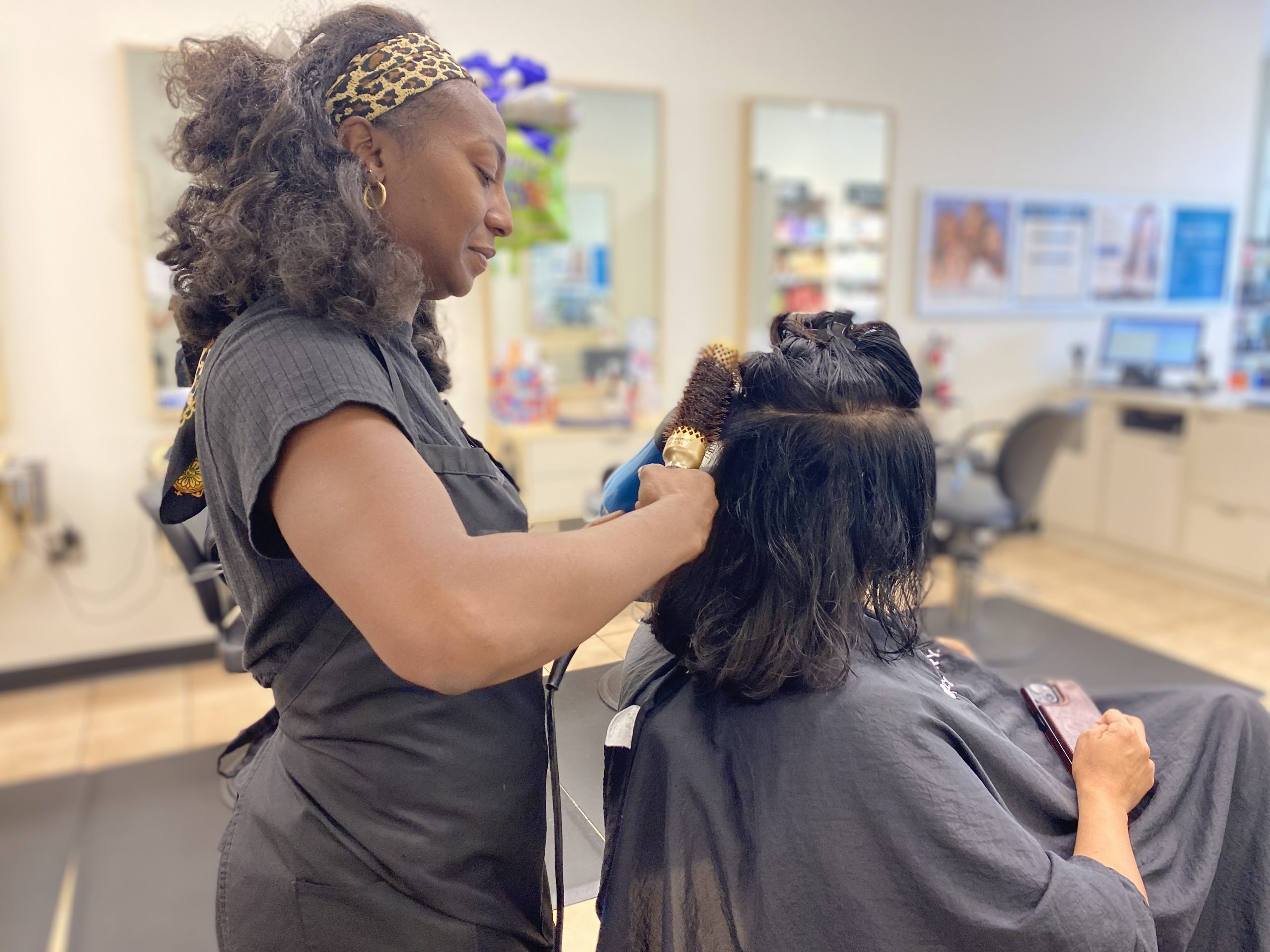
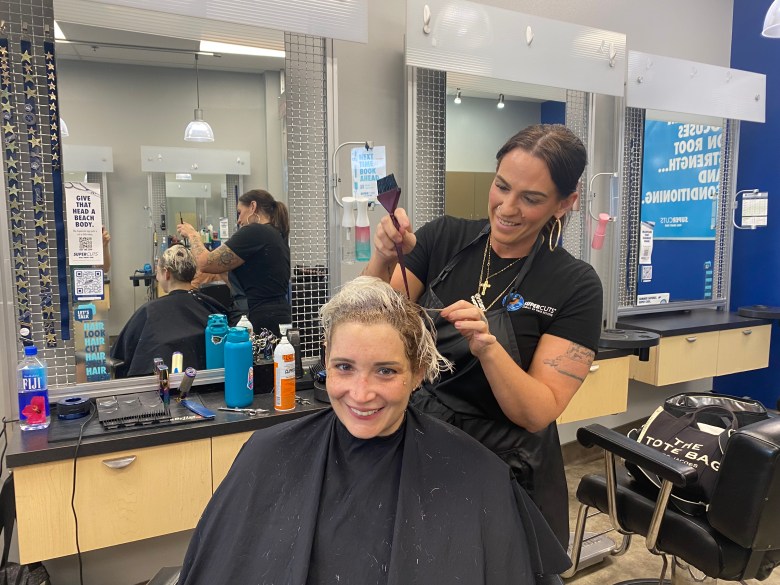
Remiah Ward’s shift at the SmartStyle salon inside Walmart was almost over, and she’d barely made $30 in tips from the haircuts she’d done that day. It wasn’t unusual — a year after her graduation from beauty school, tips plus minimum wage weren’t enough to cover her rent.
She scarcely had time to eat and sleep before she had to drive back to the same Walmart in central Florida to stock shelves on the night shift. That job paid $14 an hour, but it meant she sometimes spent 18 hours a day in the same building. She worked six days a week but still struggled to catch up on bills and sleep.
The admissions officer at the American Institute of Beauty, where she enrolled straight out of high school, had sold her on a different dream. She would easily earn enough to pay back the $10,000 she borrowed to attend, she said she was told. Ward had no way of knowing that stylists from her school earn $20,200 a year, on average, four years after graduating. Seven years later, her debt, plus interest, is still unpaid.
In July, Republicans in Congress pushed through policies aimed at ensuring that what happened to Ward wouldn’t happen to other Americans on the government’s dime; colleges whose graduates don’t earn at least as much as someone with a high school diploma will now risk losing access to federal student loans. But one group managed to slip through the cracks — thousands of schools like the American Institute of Beauty were exempt.
Remiah Ward worked two jobs while trying to make it as a hair stylist but never made enough to pay her all her bills and has had to put her dream career on hold. Credit: Courtesy Remiah Ward
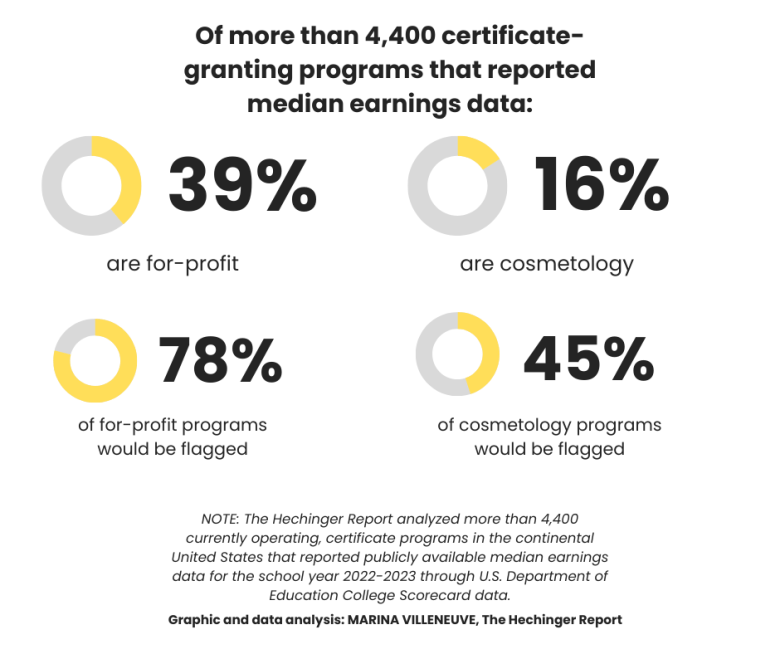
Certificate schools succeeded in getting a carve-out. The industry breathed a collective sigh of relief, and with good reason. At least 1,280 certificate-granting programs, which enrolled more than 220,000 students, would have been at risk of losing federal student loan funding if they had been included in the bill, according to a Hechinger Report analysis of federal data. [See table.] About 80% of those are for-profit programs, and 45 percent are cosmetology schools.
“There is this very strange donut hole in accountability where workforce programs are held accountable, two-year degree programs are held accountable, but everything in between gets off without any accountability,” said Preston Cooper, a senior fellow at the conservative think tank American Enterprise Institute.
The schools spared are known as certificate programs and, with their promise of an affordable and relatively quick path to economic security, are the fastest growing part of higher education. They usually take about a year to complete and train people to be hair-stylists, welders, medical assistants and cooks, among other jobs.
As with traditional colleges, there are big differences in quality among certificate programs. Some hair stylists can make a middle-class living if they work in a busy salon. But for people who have to pay back hefty student loans, the low wages for stylists in the early years can be an insurmountable obstacle.
Ward found herself facing that dilemma. When she could no longer sustain the lack of sleep from her double shifts at Walmart, she pressed pause on her styling career and took a job with Amazon, loading and unloading planes. She wasn’t ready to give up her dream career, though, so in addition to her 10-hour days moving boxes, she took part-time gigs at local hair salons. She didn’t have family to help pay rent, not to mention loan payments, so she couldn’t afford to work fulltime at a salon, which is essential to build up a regular clientele — and bigger tips. Without that, she couldn’t get much beyond minimum wage.
A representative from the American Institute of Beauty denied that Ward was told she would easily repay her loan.
“No admissions representative, not at AIB or elsewhere, would ever make such a statement,” Denise Herman, general counsel and assistant vice president of AIB, said in an email.
The high cost of many for-profit cosmetology schools — tuition can be upward of $20,000, usually for a one-year program — can leave former students mired in debt. In May, the government released data showing 850 colleges where at least a third of borrowers haven’t made a loan payment for 90 days or more, putting them on track to default. About 42 percent of those were for-profit cosmetology and barbering schools (including AIB).
Brittany Mcnew says she loves working as a stylist but that her income takes a hit when traffic is slow in her salon in Bethlehem, Pennsylvania. Credit: Meredith Kolodner/The Hechinger Report
Herman blamed the Biden administration policy that after the pandemic let borrowers forgo payments without any penalty.
“Debtors became ‘comfortable’ not making payments,” said Herman. “AIB provides the graduate with the information graduates need to make their payments. What that graduate decides to pay, or not pay, is not influenced by AIB.”
Under the “big beautiful bill” passed in July, two- and four-year colleges must ensure that, after four years, graduates on average make at least as much as someone in their state who has only a high school diploma. The colleges must inform students if they fail that test, and if it happens for two out of three years, the college will be ineligible to receive federal loan funds.
Some for-profit certificate schools lobbied hard for an exemption. The American Association of Career Schools, which represents proprietary cosmetology schools, spent $120,000 lobbying the Education Department and Congress, including on the “big beautiful bill,” in the first six months of this year. At the group’s major lobbying event in April, Sen. Bill Cassidy, chairman of the Senate Health, Education, Labor and Pensions Committee, was the keynote speaker.
Cassidy declined to answer questions about why certificate programs were excluded, but a fact sheet from his committee noted that they are already covered by something else, the gainful employment rule, which is also being challenged by the for-profit cosmetology industry.
That federal gainful employment regulation, updated in 2023, requires in essence that graduates from career-oriented schools earn enough to be able to pay back their loans and earn more than a high school graduate. It also requires that consumers, like Ward, be given more information about how graduates from all colleges fare in the workplace.
The rule posed an existential threat to a huge swath of cosmetology schools.
In 2023, the American Association of Career Schools sued to block the gainful employment rule.
“AACS supports fair and reasonable accountability measures,” Cecil Kidd, the AACS’s executive director, said in an email. “However, we strongly object to arbitrary or discriminatory policies such as the US Department of Education’s Gainful Employment rule, which unfairly targets career schools while exempting many public and private non-profit institutions that fail to meet comparable outcomes.”
He pointed to public comments in which AACS has argued that the rule imposes an unfair burden on cosmetology schools since stylists are predominantly women, who are more likely to have “personal commitments” that affect their earnings, and who rely on tips that are often pocketed as unreported income.
Cameron Vandenboom is a successful hair stylist but says the high cost of her private beauty school wasn’t worth thousands of dollars in student debt: “I absolutely should have gone to community college.” Credit: Courtesy Shanna Kaye Photo
In a twist that surprised advocates on both sides, the Education Department in May asked the court to effectively dismiss AACS’ lawsuit.
If the court rules in favor of the cosmetology schools, certificate programs will be free of all accountability requirements on their graduates’ earning levels, because they got the carveout in July.
Even if the court rules against cosmetology schools, advocates are pessimistic that the Trump administration will implement the gainful rules. The first Trump administration got rid of the original rules back in 2019 and Nicholas Kent, now the U.S. undersecretary of education, was previously the chief policy officer for Career Education Colleges and Universities, or CECU, the trade group that represents for-profit colleges, including certificate programs. He is a well-known critic of the rule.
“I would be very surprised, if the unlikely scenario plays out that the Biden rule is upheld, that this Department of Education would just say, OK, the court has spoken,” said Jason Altmire, CECU’s executive director. “We are not opposed to accountability for certificate programs, so long as it’s fair to everybody and we have a voice in how you’re measuring programs.”
Altmire said CECU didn’t lobby for certificate programs to be carved out of Congress’ bill, but did argue against the earnings formula that Congress landed on. Altmire said it doesn’t take into account part-time work and the gender gap in wages.
One objection from AACS, raised by CECU as well, is that the earnings measured don’t include tips, which are crucial to hair stylists’ income. Analyzed without including tips, 576 of 724 cosmetology schools in the Hechinger Report analysis would fail Congress’ earnings test. But even if tips were included and raised stylists’ income by 20 percent, 526 cosmetology schools would still fail.
Earlier this year, Remiah Ward made the difficult decision to leave Florida and move to Kentucky, where the cost of living was more forgiving. She’s working from 7 p.m. to 7 a.m. at an aluminum factory for $19.50 an hour.
One day, she might go back to styling after her debt is paid off. Like many former beauty school students, she wishes she’d had more information when she decided to enroll.
“They really sugar-coated it. I was 18 years old, and I needed a trade that I was already pretty good at,” said Ward, who is now 26. “Everybody thinks they’re going to make a high return, and it’s just not the reality.”
Marina Villeneuve contributed data analysis to this story.
The Hechinger Report provides in-depth, fact-based, unbiased reporting on education that is free to all readers. But that doesn’t mean it’s free to produce. Our work keeps educators and the public informed about pressing issues at schools and on campuses throughout the country. We tell the whole story, even when the details are inconvenient. Help us keep doing that.