Blog

  • How teachers and administrators can overcome resistance to NGSS

    How teachers and administrators can overcome resistance to NGSS

    Key points:

    Although the Next Generation Science Standards (NGSS) were released more than a decade ago, adoption of them varies widely in California. I have been to districts that have taken the standards and run with them, but others have been slow to get off the ground with NGSS–even 12 years after their release. In some cases, this is due to a lack of funding, a lack of staffing, or even administrators’ lack of understanding of the active, student-driven pedagogies championed by the NGSS.

    Another potential challenge to implementing NGSS with fidelity comes from teachers’ and administrators’ epistemological beliefs–simply put, their beliefs about how people learn. Teachers bring so much of themselves to the classroom, and that means teaching in a way they think is going to help their students learn. So, it’s understandable that teachers who have found success with traditional lecture-based methods may be reluctant to embrace an inquiry-based approach. It also makes sense that administrators who are former teachers will expect classrooms to look the same as when they were teaching, which may mean students sitting in rows, facing the front, writing down notes.

    Based on my experience as both a science educator and an administrator, here are some strategies for encouraging both teachers and administrators to embrace the NGSS.

    For teachers: Shift expectations and embrace ‘organized chaos’

    A helpful first step is to approach the NGSS not as a set of standards, but rather a set of performance expectations. Those expectations include all three dimensions of science learning: disciplinary core ideas (DCIs), science and engineering practices (SEPs), and cross-cutting concepts (CCCs). The DCIs reflect the things that students know, the SEPs reflect what students are doing, and the CCCs reflect how students think. This three-dimensional approach sets the stage for a more active, engaged learning environment where students construct their own understanding of science content knowledge.

    To meet expectations laid out in the NGSS, teachers can start by modifying existing “recipe labs” to a more inquiry-based model that emphasizes student construction of knowledge. Resources like the NGSS-aligned digital curriculum from Kognity can simplify classroom implementation by providing a digital curriculum that empowers teachers with options for personalized instruction. Additionally, the Wonder of Science can help teachers integrate real-life phenomena into their NGSS-aligned labs to help provide students with real-life contexts to help build an understanding of scientific concepts related to. Lastly, Inquiry Hub offers open-source full-year curricula that can also aid teachers with refining their labs, classroom activities, and assessments.  

    For these updated labs to serve their purpose, teachers will need to reframe classroom management expectations to focus on student engagement and discussion. This may mean embracing what I call “organized chaos.” Over time, teachers will build a sense of efficacy through small successes, whether that’s spotting a studentconstructing their own knowledge or documenting an increased depth of knowledge in an entire class. The objective is to build on student understanding across the entire classroom, which teachers can do with much more confidence if they know that their administrators support them.

    For administrators: Rethink evaluations and offer support

    A recent survey found that 59 percent of administrators in California, where I work, understood how to support teachers with implementing the NGSS. Despite this, some administrators may need to recalibrate their expectations of what they’ll see when they observe classrooms. What they might see is organized chaos happening: students out of their seats, students talking, students engaged in all different sorts of activities. This is what NGSS-aligned learning looks like. 

    To provide a clear focus on student-centered learning indicators, they can revise observation rubrics to align with NGSS, or make their lives easier and use this one. As administrators track their teachers’ NGSS implementation, it helps to monitor their confidence levels. There will always be early implementers who take something new and run with it, and these educators can be inspiring models for those who are less eager to change.

    The overall goal for administrators is to make classrooms safe spaces for experimentation and growth. The more administrators understand about the NGSS, the better they can support teachers in implementing it. They may not know all the details of the DCIs, SEPs, and CCCs, but they must accept that the NGSS require students to be more active, with the teacher acting as more of a facilitator and guide, rather than the keeper of all the knowledge.

    Based on my experience in both teaching and administration roles, I can say that constructivist science classrooms may look and sound different–with more student talk, more questioning, and more chaos. By understanding these differences and supporting teachers through this transition, administrators ensure that all California students develop the deeper scientific thinking that NGSS was designed to foster.

    Latest posts by eSchool Media Contributors (see all)

    Source link

  • For World Space Week it’s time to look up

    For World Space Week it’s time to look up

    This week marks World Space Week, an international celebration of humankind’s last frontier launched by the United Nations in 1999. In more than 80 countries, people are celebrating through thousands of events.

    One of the goals of space week is to let people know how many of the products we depend on down on earth came out of space exploration programs: Life support systems for miners, memory foam mattresses, scratch-resistant lenses, nutritional supplements, cordless tools and freeze-dried food.

    Learning about outer space and space exploration excites young people and attracts them to science, technology, engineering and math fields.

    But for News Decoder, it is the international cooperation we see in space exploration programs that excites us. When we look to the moon, our galaxy and beyond, we see the possibility for peace and cooperation here on Earth.

    To celebrate World Space Week, check out some of the stories we’ve published about outer space and the people exploring it.


    Source link

  • Richey confirmed to lead Education Department’s Office for Civil Rights

    Richey confirmed to lead Education Department’s Office for Civil Rights

    This audio is auto-generated. Please let us know if you have feedback.

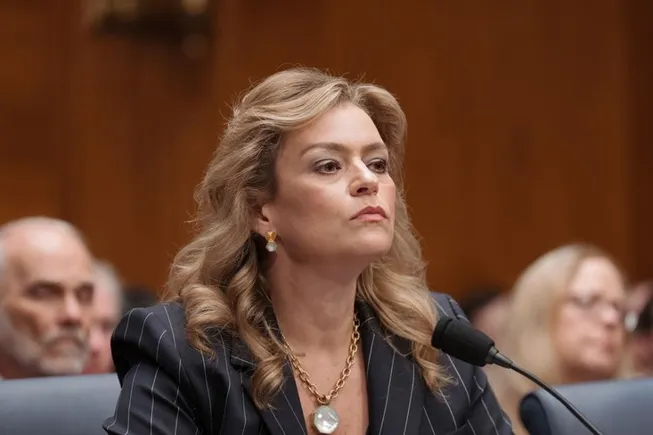
    The Senate confirmed Kimberly Richey as the next assistant secretary for civil rights at the U.S. Department of Education in a 51-47 vote along party lines late Tuesday afternoon. The approval came as part of a resolution allowing senators to consider for confirmation Richey and over 100 other federal nominees at once. 

    Richey served as acting assistant secretary at the Education Department under the first Trump administration — first for the Office of Special Education and Rehabilitative Services and then for the Office for Civil Rights — and also worked at OCR under the George W. Bush administration. 

    Her approval had been nothing short of expected, considering the slight Republican majority in the Senate and President Donald Trump’s nomination in February to head the Education Department’s civil rights arm.

    As assistant secretary of OCR, Richey will be responsible for overseeing investigations into alleged civil rights complaints, protecting all students’ civil rights, and drafting and implementing civil rights regulations, including but not limited to Title IX, Title VI and Section 504. 

    She was confirmed to steer a ship that is functioning at half of its previous capacity, with OCR down to five out of 12 of its offices. She faces a backlog of over 12,000 open investigations and more than 25,000 complaints, and a pared down staff as a result of Trump and U.S. Education Secretary Linda McMahon’s efforts to wind down the department. 

    She’s also entering the office as the Education Department is embroiled in a lawsuit that, until recently, required OCR be restored to its previous capacity by returning laid off workers to their jobs. Just as the Education Department began returning OCR staffers back to the job in waves, the federal district court order requiring its restoration was overturned in September by the 1st U.S. Circuit Court of Appeals.

    The Education Department, most of whose staff is furloughed as part of the government shutdown, has not responded to K-12 Dive’s requests about what that means for the over 80 staffers who had already returned to their old posts.

    Before the Senate’s Health, Education Labor and Pensions Committee confirmed Richey’s nomination in June, Sen. Patty Murray, D-Wash., shared that attorneys at OCR are juggling on average 115 cases, more than double the previously reported caseload of 42 cases per person. 

    Richey said she would “always advocate for OCR to have the resources to do its job.” However, she dodged questions about whether OCR, under Trump’s first administration, had enough resources to do its job.  

    “I’m going to have to be really strategic if I’m confirmed, stepping into this role, helping come up with a plan where we can address these challenges,” she said about OCR’s reduced resources under the current administration. 

    Among her first steps, Richey said, would be to evaluate the current caseload and determine where complaints stand in their investigative timelines. She would also examine the staff distribution and organizational structure of OCR, she said. 

    Richey said that rather than put certain investigations on pause, as has been the case under the second Trump administration, she would prioritize all complaints that fall at OCR’s footsteps.

    After the mass layoffs at the agency that left OCR gutted along with other department offices, the Education Department told K-12 Dive in March that OCR was undergoing organizational changes and said it would deliver on its statutory responsibilities. 

    Source link

  • Understanding and writing the Literature Review in Mba Projects

    Understanding and writing the Literature Review in Mba Projects

    Understanding the Topic: Even before starting to write a student should be having a full clarity about the research title, the objective of the study and the research problems.

    Searching for Relevant Literature: Students should search the academic libraries like Google Scholars, Research Gate, JSTOR or Scopus.

    Evaluating Sources: Once relevant sources are collected students should analyze, evaluate the objective, findings and limitation of those studies.

    Grouping of Literature: Collected literature should be grouped as per the subheading of the required studies.

    Write Critically: Literature review should be written critically and analytically relevant to the study .

    Identify the Research Gap: Students should analyze and find the research gap and specify where his study will add value to those gaps.

    Cite & Reference: Students should use formats like APA (7th edition) or Havard Referencing style while using in text citing.

    Source link

  • Coppin State’s Tuition Program Led to Enrollment Boom

    Coppin State’s Tuition Program Led to Enrollment Boom

    A historically Black university in Maryland says efforts to boost enrollment and up its name recognition are paying dividends, allowing it to more than quadruple out-of-state student enrollment over the past two years.

    Coppin State University in Baltimore announced in 2023 that it would begin offering in-state tuition to any student who lived in one of the 41 U.S. states and territories without an HBCU—as well as the District of Columbia, which has two HBCUs—through a program called Expand Eagle Nation. In 2024, the first year of the program, the institution more than doubled the number of students from qualifying states to 195—up from 81 the previous fall. (Coppin’s in-state annual cost of attendance is $27,410, versus $34,474 for out-of-state students.)

    This fall, the numbers increased even more dramatically: 416 of Coppin’s incoming class of 1,000—its largest freshman class in 25 years—come from the qualifying states. Overall, Coppin’s enrollment is up 26 percent this year, including growth on the in-state side, as well. In fact, James Stewart, associate vice president for student development and achievement, said the attention Coppin has received for its Expand Eagle Nation program has raised the university’s profile among local students.

    Still, it’s been a major shift for the institution, which used to attract students primarily from within a 50-mile radius.

    “I think our students enjoy the diversity of thought from so many different regions,” said Jinawa McNeil, the university’s director of admissions. “This is really giving opportunity to students, but it’s [also] making Coppin a different environment, where you traditionally were with students that you might have went to high school with, or maybe a high school not far from you, but now you’re talking to students who are literally from states that you’ve never been to.”

    Coppin’s growth comes at a time when many institutions across the country are working to attract new populations of students ahead of the impending demographic cliff—the decline in high school graduates that is expected to begin next year. (The Maryland Higher Education Commission projected earlier this year, however, that Maryland will be one of the few states to buck the trend, projecting an 11 percent increase in high school graduates from 2024 to 2031.)

    Coppin isn’t the only institution looking to out-of-state students to boost enrollment; in an interview earlier this fall, University of Connecticut officials attributed their growth in head count to more out-of-state name recognition due to the institution’s academic programs and popular sports teams, for example.

    “Given the declining number of students in their own state, [colleges] have to chase them elsewhere,” said Gregory Price, a professor of economics at the University of New Orleans who studies the economics of HBCUs. “It’s sort of like an arms race.”

    Coppin is also capitalizing on the current popularity of HBCUs, which saw significant increases in applications and enrollments following the Supreme Court’s 2023 ban on affirmative action in admissions.

    “Everything that’s been going on politically, from affirmative action to DEI, sends a message to Black students that they don’t belong,” Henry Williams, president of the Thurgood Marshall College Fund, a nonprofit that advocates for public HBCUs, told Inside Higher Ed regarding the trend last year. “At an HBCU, you’re never going to have that question, and all of the support, resources and scholarship money being taken away elsewhere are already built into the structure [at HBCUs] … there’s value in a sense of belonging.”

    Price noted that HBCUs are also often cheaper than other institutions—as is the case at Coppin, which says it’s the least expensive institution in Maryland. That’s because historically, HBCUs haven’t had large research enterprises, which saves the institutions many costs, he said; they can also attract faculty without paying salaries above market rate.

    “To the extent HBCUs have a distinct value proposition for Black students, that could be good because there aren’t many HBCUs … and that value proposition is high returns in the labor market relative to the cost of attendance,” he said. “If you can reduce the costs, you could probably stay ahead of that demographic cliff longer than other colleges can.”

    Bolstering Recruitment

    Along with offering in-state tuition to out-of-state students, Coppin officials took a slew of steps to increase their presence in the states from which they hoped to attract students. That included visiting high schools—and plastering advertisements on buses and billboards in those cities ahead of their visits, so students would hopefully already recognize the Coppin brand by the time they met an admissions official.

    The university formed transfer partnerships with community college systems in Colorado and California, and the admissions team reached out to regional organizations that help students in the college search process to ensure their staffs were aware of Coppin.

    Increasing the university’s name recognition was an important goal of the Expand Eagle Nation program, McNeil said.

    “It [used to be] a much harder recruitment sale, for lack of a better term,” she said. “We were beginning with who were as an institution, rather than saying, ‘Oh, you’ve heard about us, so let’s help you learn more.’”

    Stewart also noted that the university was prepared for the enrollment boost, having met with academic affairs staff over the past year to ensure there would be enough courses and faculty to meet the needs of all students. To house the influx, Coppin is currently constructing a new dorm, slated to open next fall; it also has six off-campus apartment facilities that Stewart said include resident assistants, just like on-campus housing, and regular shuttle access to campus.

    “We’re going to end up with a good mix where we increase our housing on campus, especially, to meet our new students, but we have options for our [upperclassmen] off campus that give them this blending of what real-life living in an urban environment is,” he said.

    One unexpected challenge that has come with implementing Expand Eagle Nation? Convincing prospective students that the offer is real.

    “They [don’t] believe it,” McNeil said. “Like, ‘What’s the trick, what’s the catch?’ They just don’t believe an institution was willing to invest that deeply, because students understand, and definitely parents of students, specifically parents that have been to college and might have some college debt. They just did not believe that this was an opportunity, because they don’t see too many opportunities like this.”

    Source link

  • Texas Systems Review Course Descriptions, Syllabi

    Texas Systems Review Course Descriptions, Syllabi

    As conservative Texas politicians identify and target faculty who teach about gender identity, officials at six Texas public university systems have ordered reviews of curriculum, syllabi and course descriptions.

    The impetus is clear: Texas A&M University fired a professor, demoted two administrators and pushed out its president after conservative politicians lambasted the institution for a lesson on gender identity in a children’s literature class. Their criticism hinged on the fact that the topic was not reflected in the brief course catalog description for the class. Before he resigned, Texas A&M president Mark Welsh ordered an audit of all courses at the flagship campus, which the system Board of Regents quickly extended to all Texas A&M institutions.

    “The Board has called for immediate and decisive steps to ensure that what happened this week will not be repeated,” the regents wrote in a statement posted on X. “To that end, the Regents have asked the Chancellor to audit every course and ensure full compliance with applicable laws.”

    Other systems soon followed. On Sept. 29, University of North Texas system chancellor Michael Williams instructed the president of each institution to “conduct an expedited review of their academic courses and programs—including a complete syllabus review to ensure compliance with all current applicable state and federal laws, executive orders, and court orders,” he wrote in a letter. The review is due Jan. 1.

    The University of Texas system is reviewing all courses on gender identity to “ensure compliance and alignment with applicable law and state and federal guidance, and to make sure any courses that are taught on a U.T. campus are aligned with the direction and priorities of the Board of Regents,” according to a statement from the system. The review will be discussed at the Board of Regents meeting in November.

    System leaders at several public institutions have cited Texas House Bill 229, President Donald Trump’s Jan. 20 executive order and a Jan. 30 letter from Gov. Greg Abbott that said, “All Texas agencies must ensure that agency rules, internal policies, employment practices, and other actions comply with the law and the biological reality that there are only two sexes—male and female.” Yet no current federal or state laws prohibit public university professors from teaching about transgender identity.

    A University of Houston system spokesperson told The Texas Tribune that it is completing a review of general education courses in compliance with Texas Senate Bill 37, which took effect this fall. The law requires public universities to complete a curriculum review every five years, but the first reviews aren’t due until 2027. Texas Woman’s University is also conducting a review of all academic courses and programs, the Tribune reported.

    Texas Tech University ordered its faculty to ensure that course content complies with Texas and U.S. law, as well as the federal and gubernatorial executive orders that declare the existence of only two genders—male and female. The resulting oral policies—which officials are purposely not writing down—severely limit what faculty can teach about gender identity and effectively erase transgender people and topics from the curriculum.

    It’s unclear how each of the six university systems will respond after their reviews are complete, and whether courses will be censored or entirely removed from the catalog.

    “Faculty are highly trained experts in their fields of study. It harms education for faculty to be told what to teach by politicians,” Brian Evans, President of the Texas Conference of the American Association of University Professors, told Inside Higher Ed by email. “For example, it is impossible to teach about gender without recognizing that there are countless gender identities and gender expressions across the world, the ideology that there are only two genders being only one of those.”

    The conservative politicians who have gone after institutions and faculty for teaching about gender identity have found professors through syllabi and course information posted online. As the risk of doxing grows, faculty are working to keep their information private, but new technology and Texas law are adding complications.

    Hundreds of American colleges and universities are now requiring their faculty to upload syllabi to Simple Syllabus, a third-party platform that offers uniform syllabus templates and easy editing; it also allows faculty to embed syllabi into campus learning management systems. According to the company’s website, more than 500 colleges and universities currently use the platform. Institutions may limit who can view the syllabi—for example, Clemson University requires users to log in with university credentials.

    But other institutions—including the University of Houston, Texas A&M University and the University of Texas at Austin—allow the general public to view their Simple Syllabus pages. This may be in part due to Texas House Bill 2504, a 15-year-old law that requires public institutions to provide publicly accessible syllabi that include major assignments and exams, required or recommended readings, and a general description of lecture or discussion topics.

    Andrew Joseph Pegoda, a lecturer in the Women’s, Gender and Sexuality Studies Department at the University of Houston, experienced the risks of this public access firsthand. In August, a conservative news site published a piece targeting Pegoda for teaching two courses that include queer theory in the curriculum and that, according to the news site, exemplify “indoctrination in women’s and gender studies departments.”

    “I realized that they got their information from Simple Syllabus,” Pegoda said. The platform allows users to search posted syllabi at an institution using keywords—for example, searching the word “queer” on the Simple Syllabus page for one Texas university returned four different syllabi that included the term.

    The spotlight on Pegoda came and passed quickly, largely because his name wasn’t included in the article’s headline. “I’m glad it wasn’t worse than it was. It could have been more direct or more vicious,” he said.

    Simple Syllabus spokesperson Matthew Compton-Clark said the company has not received any reports of targeting via the platform. “We take data privacy extremely seriously, and are a faculty-first organization,” he wrote in a statement to Inside Higher Ed. “We provide multiple privacy features, giving faculty the ability to set not just their entire syllabus private, but individual components as well. This same feature also exists for the institution, allowing the school to set the visibility of the entire syllabus, or individual parts of the document based on their state-specific legislation.”

    The Texas law does not require the public syllabi to include class meeting times or locations, though many professors don’t amend the public versions of their materials to exclude that information. Pegoda said he’s been advised to “put minimum detail in the public Simple Syllabus and then to provide a more regular syllabus to students,” he said.

    But, in the wake of the incident at Texas A&M, that may not work, he said. “Now professors are being encouraged to very specifically detail everything in the syllabus so as to not potentially get fired or have student complaints.”

    Source link

  • U.S. Continues Decline in THE World University Rankings

    U.S. Continues Decline in THE World University Rankings

    Photo illustration by Justin Morrison/Inside Higher Ed | bingdian, cbarnesphotography and DNY59/iStock/Getty Images

    Even before U.S. universities lost billions of dollars in federal research funding and international students struggled to obtain visas, America’s dominance in research impact and global reputation was waning. According to the latest rankings from Times Higher Education, the U.S. has continued to cede influence to universities in Asia.

    For several years, the rankings from Inside Higher Ed’s parent company have documented a steady decline in the U.S.’s leadership in global higher education. The 2026 World University Rankings reflect that ongoing trend: Just 102 universities from the United States cracked the top 500—the lowest figure on record, down from a high of 125 in 2018. (The rankings started in 2004.)

    The downward trend is less apparent in the overall top 10, where seven U.S. institutions appear. The Massachusetts Institute of Technology is the highest-ranking American institution, coming in at No. 2, just behind the top-ranked University of Oxford. According to THE, Princeton University recorded an institutional best score to tie for third.

    But institutions farther down the list have slipped. Twenty-five colleges logged their worst-ever scores while 62 dropped in the rankings, which uses 18 measures to judge institutions on five areas including teaching, research quality and international outlook.

    The 2026 rankings of more than 2,100 institutions are based on data collected from 2022 and 2023 and don’t reflect the Trump administration’s push to reshape American higher education. They don’t show what impact cuts to research funding and the crackdown on international students might have on U.S. institutions’ position on the global stage. Those changes could lead to a further decline for U.S. institutions in the rankings, though Ellie Bothwell, THE rankings editor, said what future rankings might show is hard to predict.

    “Any country that cuts research funding, that limits internationalization of higher education, would be in danger of declining in the ranking,” she said. “Those are key things that we measure. Those are important things that universities do. There’s always going to be a risk if you cut those. There’ll be a decline, but it’s all relative, so it does also depend what goes on elsewhere.”

    Looking at the overall 2026 rankings, Bothwell called the decline for the U.S. “striking,” adding that the drop reflects increased global competition. American institutions on average received lower scores on measures related to research, such as citation impact, as well as research strength and reputation.

    Meanwhile, Asian universities continue to climb the rankings. Five universities from China are now in the top 40, and 18 achieved their highest ranks ever, according to THE.

    THE’s chief global affairs officer, Phil Baty, said in a statement that the latest data suggests higher ed is moving toward a new world order with an Eastern center of gravity.

    “This year’s rankings highlight a dramatic and accelerating trend—the shift in the balance of power in research and higher education excellence from the long-established, dominant institutions of the West to rising stars of the East,” Baty said.

    He predicted that U.S. institutions and those in Western Europe would continue to lose ground to their East Asian counterparts in the rankings. “This clear trend is set to persist as research funding and international talent attraction continue to be stymied in the West,” he added.

    Source link

  • Transparency Now or Regulation Later

    Transparency Now or Regulation Later

    Doctors predicted Wayne Frederick, the president of Howard University, wouldn’t live past 8. Now he’s 54. Frederick came to the U.S. from Trinidad and Tobago with a dream of finding a cure for his disease, sickle cell anemia, but detoured into higher ed administration.

    At an event hosted by the American Council on Education at Howard University this week, Frederick said CRISPR gene editing, a technology developed in academia, made his dream a reality. Finding cures to debilitating diseases is one of “the intangible things that higher ed does to change lives,” he said.

    Higher ed has changed lives in thousands of other ways; institutions are the largest employers in 10 states; colleges have helped regenerate many of America’s Rust Belt centers. Higher education is undeniably a public good. But as concerns grow about the affordability of college, do Americans care?

    In the ACE event’s discussion about the economic impact of higher ed, Alex Ricci, president of the National Council on Higher Education Resources, pointed out that despite college’s role in local and regional economies, the debate about the value of higher ed comes down to whether one thinks the benefit to the individual is greater than to society as a whole. “Many colleges and universities see themselves as a benefit shared broadly by society. Most Americans—especially those carrying thousands of dollars in student loan debt—see it as a transaction where the individual is the primary beneficiary or victim, depending on the student’s long-term outcomes,” he said.

    Regardless of whether you think higher ed is a public or private good, institutions are losing the value debate. In recorded remarks for the discussion, Representative Burgess Owens, a Utah Republican, chairman of the House subcommittee on higher education and workforce development, said, “Higher education should be about value, not just prestige.” He also presided over the “No More Surprises: Reforming College Pricing for Students and Families” hearing last month where lawmakers examined ways to make college costs more transparent.

    The lack of transparency on the cost of college can be life-altering for students and poses existential risks for colleges. Inside Higher Ed’s 2025 student survey found that three-fourths of the 5,000 respondents encountered some surprises in the cost of their education. These surprises can derail education journeys. One in five students said that an unexpected expense of $500 to $1,000 would threaten their ability to persist. Bad surprises also harm colleges: Students say that the lack of affordability is the biggest driver of declining public trust in higher education.

    College cost transparency has been a government priority since the Obama administration, but never has public trust in higher ed been so low or institutions so vulnerable to government overreach. Republican lawmakers have seized on the problem of college affordability and cost transparency and are looking for bipartisan solutions. In May, Senator Chuck Grassley, a Republican from Iowa, introduced the Understanding the True Cost of College Act 2025, which calls for standardization of financial aid offers so students understand in simple terms what the direct costs, indirect costs and net price of college will be. Last month the Senate Committee on Health, Education, Labor and Pensions formally requested information from the sector on ways to improve transparency, lower costs and ensure a college degree is valuable to students.

    Some colleges sense the urgency of the moment and are taking action on affordability. More are offering free tuition to households earning as much as $200,000 a year. Last month Whitworth University made a radical decision to stop tuition discounting and decrease its annual sticker price from $54,000 to $26,900. At the same time, a recent study found that tuition discounting is on the rise among public four-year institutions. But tuition discounts create more confusion around the true cost of college.

    A reasonable question to ask is: Why are only 730 colleges members of the College Cost Transparency Initiative? If higher ed stakeholders wanted to win the value debate, they would listen to lawmakers—and students and their families—and act on affordability and cost transparency. Otherwise, policymakers will do it for them. By demonstrating their impact for individual students, colleges can make a compelling case for their broader societal value.

    Source link

  • Why Founder’s College Is the Answer to Declining College-Going

    Why Founder’s College Is the Answer to Declining College-Going

    In a recent Forbes column, Lumina Foundation president Jamie Merisotis reminded us that degrees must do more than certify coursework—they must create real value for students and employers. In Indiana, where Sagamore Institute’s 2040 workforce economy study and the Indiana Commission for Higher Education warn of falling college-going rates, this challenge is especially urgent.

    That is the backdrop for Butler University’s boldest experiment yet: Founder’s College, launched August 2025.

    Compressing Time, Expanding Values

    The Founder’s College model confronts a growing national conversation: does the U.S. need more pathways beyond the traditional four-year degree? Institutions across the country are piloting three-year bachelor’s options and embedded two-year credentials to align faster, more affordable education with urgent labor market shortages while maximizing current infrastructure to meet needs.

    Butler University has placed itself in this conversation with uncommon clarity. At Founder’s College, students complete a two-year associate degree in six structured semesters, front-loading the critical skills usually acquired in a student’s junior and senior years—career motivation, professional identity and workforce readiness. This compressed pathway is not cut-rate—it is deliberately sequenced with degree programs tied to Classification of Instructional Programs codes and O*NET occupational standards synced to NACE competencies, ensuring that every credential reflects real career demand in Indiana and beyond.

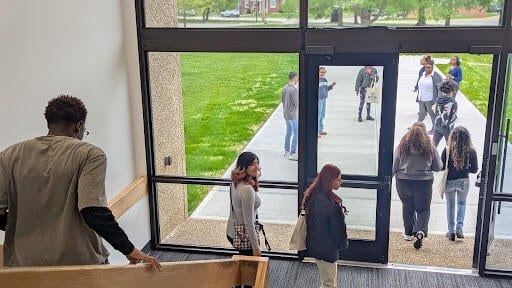
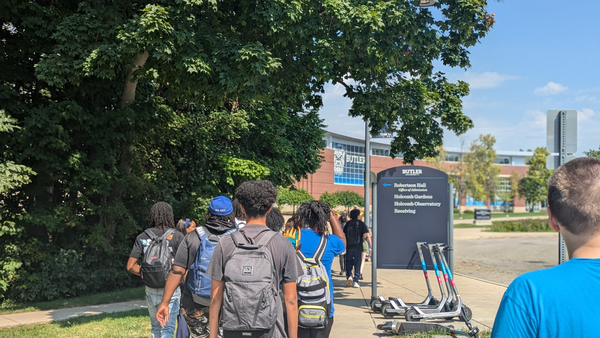
    Founder’s students walking down steps

    A Workforce-Aligned, Equity-Driven Blueprint

    The Indianapolis labor market, seeing a 3.1 percent GDP growth, underscores the need for this approach (Indiana University News, 2004). The monetary value of all that is produced in the state is outpacing state and national averages. At the same time, in-demand industries—especially health care, professional services, technology and advanced manufacturing—are confronting skill mismatches. Employers are offering jobs, yet Indiana’s college-going rate has slipped to historic lows, leaving pipelines partially empty (Indiana Business Research Center, 2024). The Indiana Department of Workforce Development reports wages are rising, up 4.1 percent in the metro area in 2025 according to InContext Indiana.

    Institutions like Butler University are not blind to the demographic challenges either. A declining birth rate, an aging workforce, admissions redesigns and disruptive technologies such as AI intensify the demand for midlevel, adaptable credentials to reskill workers quickly.

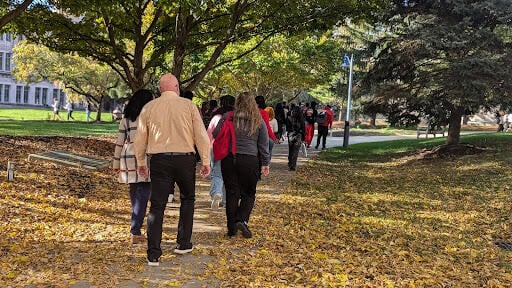
    Founder’s students walking a path on campus

    Here is where Founder’s College shifts the ground. It builds wraparound supports—career coaching, social workers, family inclusion and embedded apprenticeships—into the core of its structure rather than leaving them at the margins. By lowering tuition costs to nearly debt-free levels for students and building in work-integrated experiences, Founder’s College creates a system where opportunity is the design, not the exception.

    Global Research, Local Application

    Butler’s experiment does not arise in a vacuum. It mirrors and operationalizes the findings of major policy reports:

    A 2024 Organisation for Economic Co-operation and Development report recommends expanded investment in skills and high-quality education to combat slowing productivity growth coupled by aging, digitalization and climate changes. It stresses repeatedly that the U.S. is falling behind peer nations in connecting academic programs to workplace readiness, particularly in apprenticeships and microcredentials. The Founder’s College requirement that every student engage in structured, mentored, for-credit work experience directly addresses that gap.

    The America AI Action Plan 2025 highlights the accelerating impact of artificial intelligence on the skills profile of jobs. Handshake reports increase in generative AI usage too. While OECD 2025 reminds us that there is a changing landscape requiring adaptability, complex interdisciplinary problem-solving and liberal arts and professional academic digital fluency are no longer optional. At Founder’s College, technical writing studios, digital credentialing, industry certification and technology integration prepare students to thrive in an AI-mediated workplace.

    FutureEd research from 2023 emphasizes transparency in skills attainment and the use of short-term, stackable credentials as levers of equity. By awarding credentials midjourney and maximizing learning mobility, a call from the LEARN Commission—not just at degree completion—Founder’s College signals value to students, employers and families at every step.

    Taken together, these frameworks make Founder’s College not just a local response to Indiana’s challenges, but a globally informed model tuned to the future of work.

    Founder’s College directly widens the workforce pipeline—by lowering the cost barrier, embedding workforce credentials and signaling to families that college is not just accessible, but immediately useful.

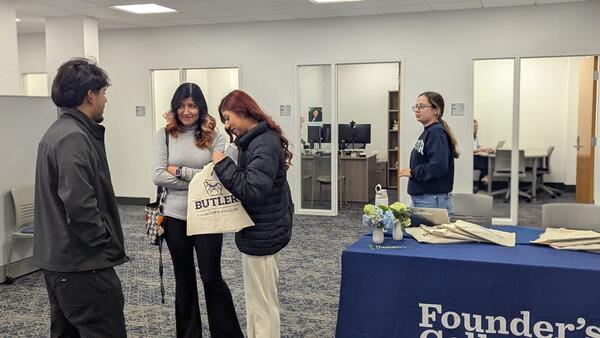
    Founder’s students in student center

    A Case Study and a Challenge

    Across the United States, demographic and migration patterns are reshaping where and how higher education demand will grow. The U.S. South, with its younger, more racially and ethnically diverse populations and steady in-migration, stands poised to lead the nation in enrollment growth through 2035. In contrast, much of the Midwest faces different headwinds: smaller cohorts of college-age students, declining K–12 enrollments and out-migration of young families.

    Rather than a simple story of winners and losers, this shift underscores the divergent opportunities that regions face. In the South, higher education systems will need to expand capacity, affordability and culturally responsive pathways that meet the aspirations of new, more diverse learners. In the Midwest, the challenge is not only to stabilize enrollment but to re-engage adults with some college, no credential and to strengthen the link between education and regional economic renewal.

    Nationally, forecasts for the next decade suggest that the future of higher education will depend on how well institutions adapt to a shrinking pool of traditional-age learners while expanding access for new groups, including working adults and first-generation students. Recruitment, funding models and program design will need to evolve accordingly.

    Using the 2020 U.S. Census as a baseline, when 43 percent of Americans identified as people of color and more than half of minors identified as nonwhite, it’s clear that the next generation of university-bound students will be more multiracial and more globally connected than ever before. Their appetite for education will be shaped by digital fluency, early exposure to STEM and environmental learning, and a social consciousness steeped in sustainability, mental health and civic responsibility.

    For Indiana, where college-going rates are at historic lows, this is more than institutional innovation. Founder’s College is therefore both a case study and a challenge.

    • To other universities: Reimagine the traditional degree in ways that speak to today’s students and employers.
    • To states: Invest in models that don’t just get more students in the door, but get them to good jobs, faster.
    • And to students themselves: Butler is showing you that higher education is within reach, aligned with your life and positions you for thriving success.

    As Merisotis wrote, the future belongs to institutions that make degrees more valuable. Indiana may have just found its vanguard.

    Source link

  • Team Teaching Benefits Faculty and Students

    Team Teaching Benefits Faculty and Students

    Most students expect to see one professor at the front of the classroom throughout the semester. But for those attending Harvey Mudd College, a STEM-focused institution in California, it’s not unusual to have four or more faculty members teaching one course.

    At Harvey Mudd, team teaching has been a distinguishing facet of the student experience for decades; most general education STEM courses for incoming students are taught by two or more professors.

    “It’s the water we swim in,” said Kathy Van Heuvelen, associate dean of faculty. “It’s so embedded in our culture.”

    Implementing team teaching as standard practice has helped the college train early-career faculty, establish more holistic courses and ensure students are aware of the various resources and experts available to them on campus.

    What is team teaching? Also called collaborative teaching or co-teaching, team teaching involves multiple instructors leading a course, each with their own responsibilities.

    Often, team teaching involves faculty of different disciplines covering a topic or issue from multiple perspectives. At Harvey Mudd, for example, a group of faculty taught a course on California wildfires, and the content included the history of forestry, atmospheric chemistry and air pollution, as well as the social implications of fires. Sometimes that means two professors teaching side by side, but often faculty split up lessons and take turns delivering content to students.

    Team teaching is less common than solo teaching, in part because it requires more time to implement. Faculty sometimes face logistical barriers, such as aligning schedules and co-creating materials, as well as personal differences in assessment or classroom management. But when done well, the format can equip students with greater critical thinking skills and a richer understanding of content.

    Prepped for success: To help professors navigate team teaching, Harvey Mudd offers them a variety of resources. New instructors participate in a weekly lunch led by college administrators where they gather, eat and engage in professional development, Van Heuvelen said. “Our sessions have included team-teaching strategies for communicating with your team and navigating this mode of teaching.”

    Van Heuvelen also provides a team-teaching checklist for faculty each semester to help them prepare for the upcoming term, which includes items such as communication, timeline for developing materials, classroom management and other course policies.

    “It has a list of questions for the team to discuss ahead of time to try to help teams get out In front of any challenges and establish their team norms,” she said.

    The college is part of the Claremont Consortium—a group of seven higher education institutions in Claremont, Calif.—which has a Consortium Center for Teaching and Learning and provides workshops on team teaching, as well.

    Most team-taught courses are designed to feature a junior and senior faculty member, allowing the early-career professional to learn from a more experienced instructor, Van Heuvelen said.

    “For an early-career hire who maybe does not have extensive teaching experience, it is like attending a master class,” Van Heuvelen said. “There is tremendous mentoring that can go on there.”

    Newer instructors also bring fresh perspectives and ideas to the classroom, which ensures content does not get stale over time.

    Supporting student success: One of the benefits of the model is that students have a group of instructors to engage with and call on if they need academic support, Van Heuvelen said.

    “For example, when we have a team that’s teaching, we all hold common office hours, so students can go to any office hours,” Van Heuvelen said.

    Past research shows that students are often unaware of the full range of supports available to them on campus, but engaging with many professors can get students more plugged in to institutional services, or at least provide more touch points, Van Heuvelen said.

    Source link