For the last 15 years, I have used my knowledge as a barrister and former university lecturer to advise students on their academic appeals and misconduct cases.
In that time, I have seen the best and worst of student behaviour. I have dealt with students who paid others to write their entire PhDs and who recruited stand-ins to attend clinical placements.
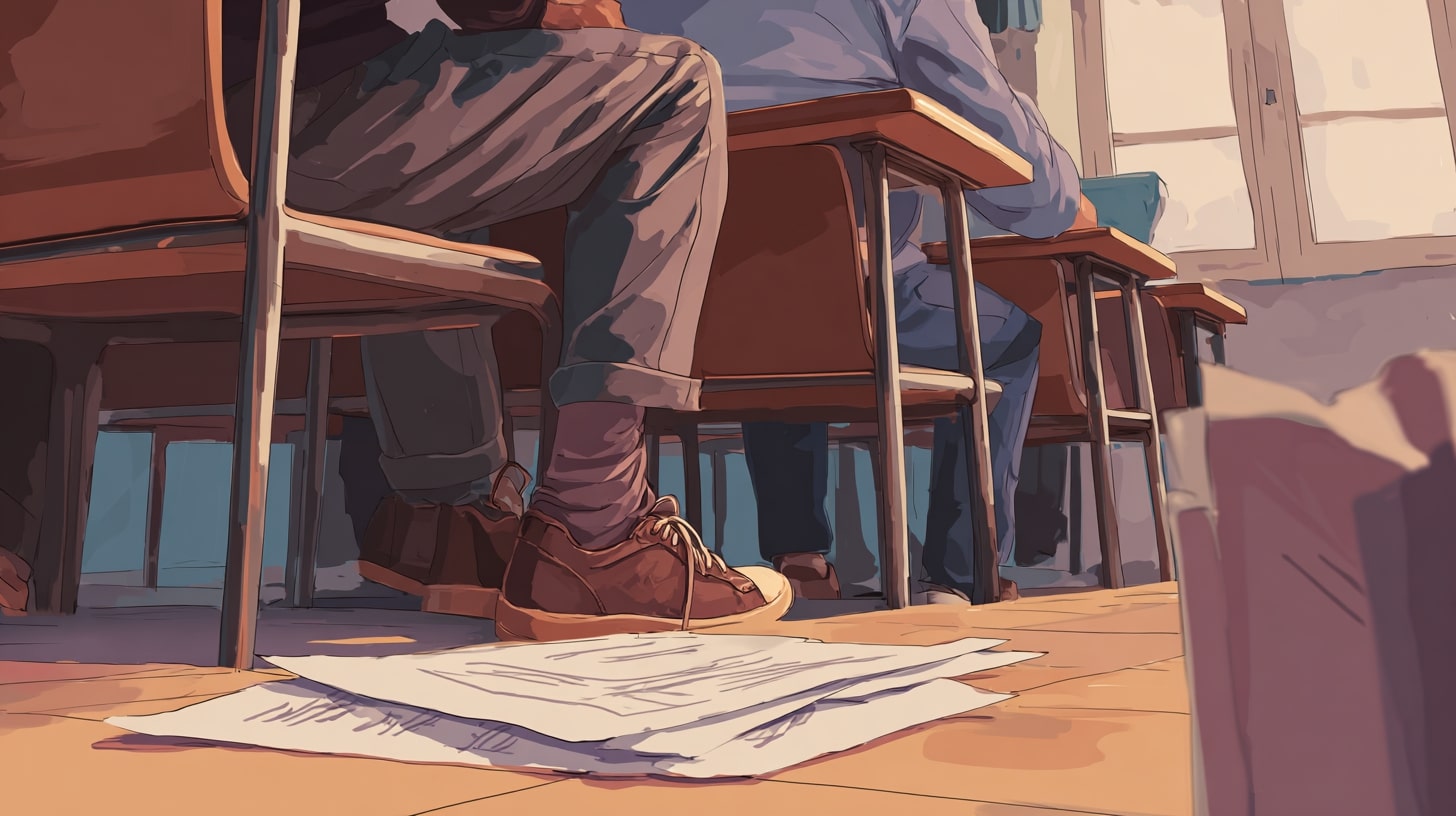
I have encountered countless methods of cheating, from tiny notes hidden in pockets, to phones concealed in toilets, to modified ear protectors.
Only recently, a law student told me she had seen classmates slip earphones beneath their hijab during exams, whispering questions and receiving answers from a distant accomplice.
The ethics of representation
Occasionally, students ask me to act unethically on their behalf. I recall one student who had failed a resit exam and been withdrawn from his course.
In a moment of panic, he told the university that his parents had been killed in a terrible accident shortly before his exam. He begged me to repeat the lie in my formal appeal statement to the university. I refused.
As barristers, we will fight tooth and nail for our clients, whatever they have done, but only within the confines of the truth.
I remember one Russian client who had paid someone to write every single essay and eventually been caught. I explained that the evidence against him was strong, that the prospects of success were slim, and that I could not advise him to lie to the university.
He shook his head in disgust:
What is wrong with this country? In Russia, we pay the professor and everything is okay!
Recently, I had a conversation with a person – a non-lawyer – who had set up a university appeals business abroad. Like me, he had seen the underside of higher education.
He told me that students regularly cheat in the English language proficiency tests required by universities as a condition of entry. These tests ensure that students have sufficient command of English to cope with academic study.
According to him, cheating on these tests is widespread, with some companies approaching him directly with answers to the language tests.
He explained that there were several “university appeal services” in his home country offering forged medical certificates. They also provide fabricated “essay notes” for students wishing to convince their universities they had worked on an assignment.
With a plausible medical note or a set of backdated essay drafts, a dishonest student can present a convincing case for leniency or mitigation.
Despite many years in the business, I was horrified by these revelations. I searched online and quickly found websites that sell fake tests. Thus, Legit Certify states:
We help you legally obtain an official, verifiable TOEFL certificate without taking the test…The certificate is identical to one earned through exams, fully accepted by universities…
…fake/replica sick notes in the United Kingdom and Australia.
Are universities aware of this? Do they know that some of their international students gain admission, or overturn decisions, on the basis of falsified or manipulated documents? What checks do they make to ensure the authenticity of medical and other documentary evidence?
Conflicts of interest
With 40 per cent of English universities in financial deficit, there is also the uncomfortable question of money. The revenue from international students is so significant that many institutions may struggle to survive without it.
This financial dependence creates a conflict of interest. If a university uncovers widespread cheating in English language tests, or if it learns that students gained entry or remained on a course with false credentials, how should it react? If it investigates properly, the findings may threaten the much-needed flow of income.
Handling the growing number of cases of misconduct and appeals is itself resource-intensive and costly. A professor friend of mine, who examines PhDs, told me that he never fails a PhD student because, in his words, “it’s not worth the hassle of an inevitable appeal”.
A university that turns a blind eye may preserve the balance sheet but corrodes academic standards.
Some universities take the issue seriously. They invest in resources to detect cheating, run hundreds of misconduct panel hearings, and occasionally expel students. However, I doubt all institutions appreciate the scale of the problem or the sophistication of the cheating industry.
There is an international trade in dishonesty that exploits the pressure on students to succeed and the reluctance of universities to jeopardise their financial health and reputation.
If universities are not already alive to this reality, they need to wake up. Every forged medical letter that passes unchecked, every essay or thesis written by a ghostwriter, every fraudulent placement report that slips through the net, undermines the credibility of the institution and the degree it awards.
Paying the price
The harm is not limited to universities themselves. Employers, patients, clients and the public at large may pay the price if unqualified or dishonest graduates enter professional roles. Who wants to hire a lawyer or engineer who cheated in their exams, or be treated by a doctor who paid someone to attend clinical placements for them?
The purpose of higher education is not simply to hand out degrees in exchange for fees but to cultivate knowledge and skill, to educate. If universities fail to address the growing industry of deception, they risk betraying that purpose.
The question is not whether students cheat – they plainly do and probably more than ever before with the advent of generative AI – but whether universities have the courage to confront it, even at the cost of short-term financial loss and reputational damage.
During this reign the memorable preacher Wyclif collected together a curious set of men known as the Lollards or Dullards, because they insisted on walking about with their tongues hanging out and because they were so stupid that they could not do the Bible in Latin and demanded that everyone should be allowed to use an English translation. They were thus heretics and were accordingly unpopular with the top men in the Church who were very good at Latin and who liked to see some Dullards burnt before every meal.
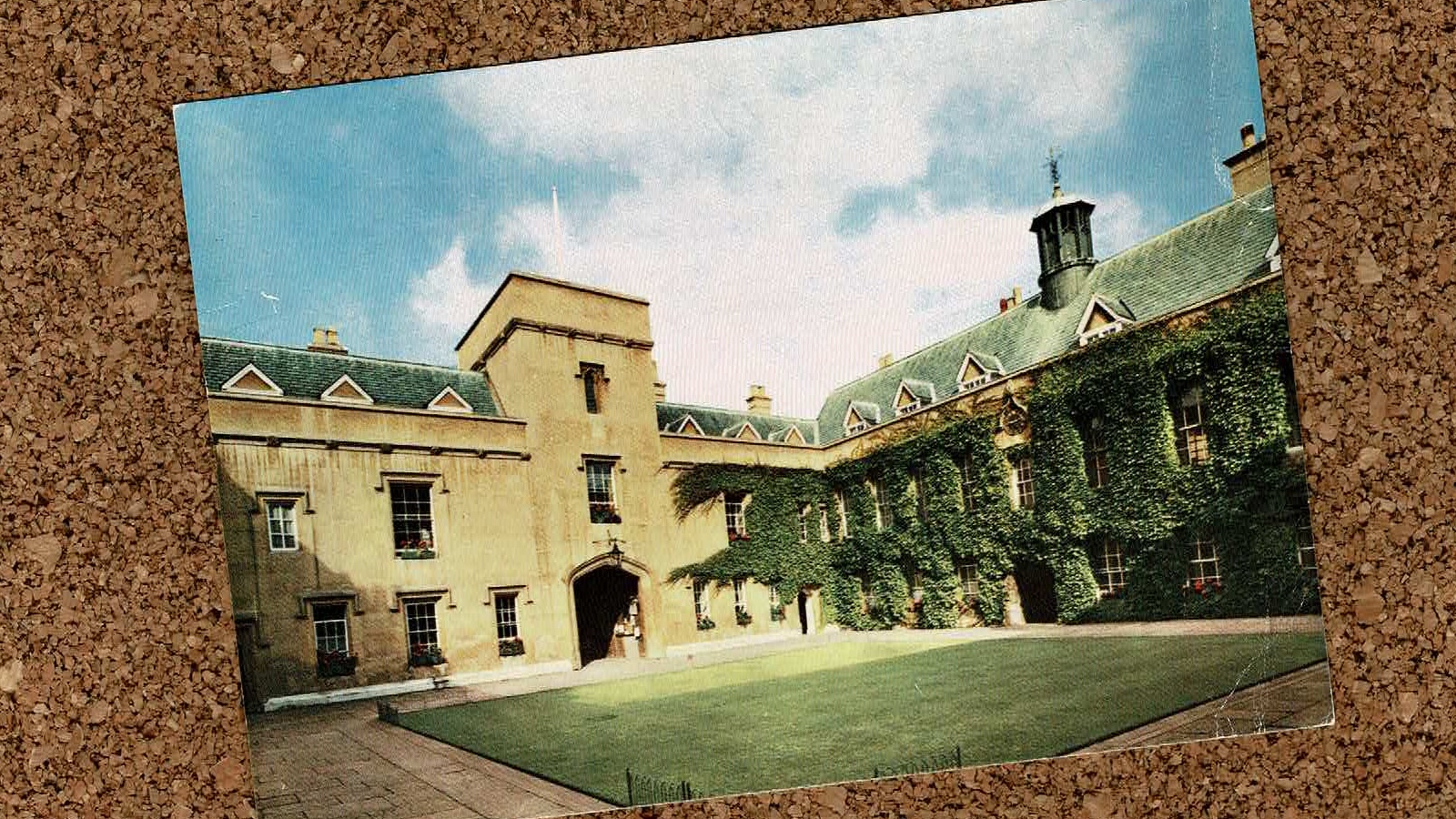
Anyway, Lollardy was considered a problem by the church, and in 1427 Richard Fleming, Bishop of Lincoln, founded a college in Oxford as, apparently, “a little college of true students of theology who would defend the mysteries of Scripture against those ignorant laymen who profaned with swinish snouts its most holy pearls.”
Benefactions in 1436 and 1437 enabled the nascent college to establish a physical base in Oxford, with a chapel, a library, a hall, a kitchen, rooms and, in 1465, rooms for the college’s master. In 1478, a second Royal Charter was granted, at the prompting of Thomas Rotherham, Bishop of Lincoln and later Lord Chancellor and Archbishop of York, who was the college’s visitor. (We’ll cover the role of the visitor another time, when I have the right postcard!)
By this stage we’ve got in place the necessities of a college, and a few more elements – leasing the Mitre Inn, gaining a coat of arms – followed in the next hundred years. And the college continued to add buildings and the like, in the way that medieval Oxford colleges did. The interesting parts of our story now are people.
Let’s fast forward to 1726, when John Wesley was elected a fellow of Lincoln. Discussions within the college set the scene for the establishment of Methodism. Having started as a college to counter heretical beliefs, the college had now enabled a significant branch of non-conformist Christianity to be born.
In 1882 the first Jewish fellow of an Oxford college was elected at Lincoln. This followed the Universities Tests Act, passed in 1871, which removed religious barriers to participation in university life at Oxford, Cambridge and Durham. The fellow in question was Samuel Alexander, who later became a professor at Owens College, Manchester, and whose work focused, as best as I can tell, on questions of the nature of space and time. He’d have answered Zeno’s paradox, I suspect, by denying the reality of incrementally smaller units of time. But I may be wrong!
In 1925 Theodor Seuss Geisel enrolled as a graduate student at Lincoln, having completed undergraduate studies at Dartmouth College, USA. We know him better as Dr Seuss. He didn’t, it seems, complete his postgraduate work. Maybe he’d have been a better writer if he had, maybe not – who knows?
In 1952 another notable writer began his studies at Lincoln. This was David Cornwall, who is similarly better known by his pen-name: John le Carré. Cornwall graduated in 1956; it is thought that he was working for MI5 while at the college, and he certainly became an intelligence agent afterwards, continuing until 1964, when the fall-out from Kim Philby’s spectacular betrayal of many British agents means that he left the secret service. Fortunately for him, his writing enabled him to make an alternative living.
Other notable Lincoln names include Rishi Sunak, former PM; Edward Thomas, WW1 poet; and physician John Radcliffe, after whom many Oxford buildings, including the hospital, the camera and the observatory, were named.
Women were admitted to Lincoln for the first time in 1979.
Lincoln College’s full name – reserved for Sunday best – is the College of the Blessed Mary and All Saints, Lincoln. It’s only called that by the monarch and by the university when it has been naughty, I imagine. The college has a very good page on its history – including some shot films – here. There’s more than I could reference in this piece.
The card itself was unposted but has a message written on the back.
Dear Mr Smithies, Great pleasure to talk to you – thanks for your kind offer of support.
The Racketeer Influenced and Corrupt Organizations Act — better known as RICO — was passed in 1970 to help prosecutors take down the mafia. Since then, it’s been used against terrorist organizations, drug cartels, fraud schemes, and other organized crime.
Now new targets are in sight.
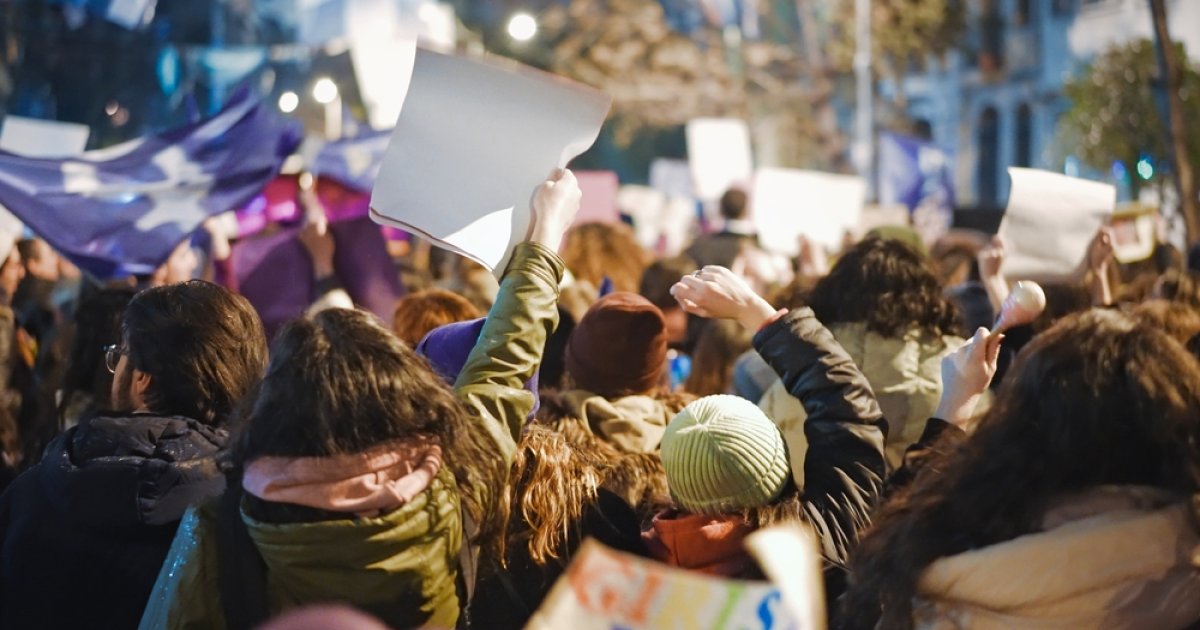
Last week, protesters confronted President Trump at a D.C. restaurant. On Monday, Trump said he asked Attorney General Pam Bondi to look into bringing RICO charges against one of the protesters because she was a “paid agitator.” Then Tuesday night on CNN, Deputy Attorney General Todd Blanche told Kaitlan Collins that RICO investigations could occur.
“So is it, again, sheer happenstance that individuals show up at a restaurant where the president is trying to enjoy dinner in Washington, DC, and accost him with vile words and vile anger?” Blanche said. “And meanwhile, he’s simply trying to have dinner. Does it mean it’s just completely random that they showed up? Maybe. But to the extent that it’s part of an organized effort to inflict harm and terror and damage to the United States, there’s potential, potential investigations there.”
That’s extraordinary and deeply chilling. The deputy attorney general of the United States believes yelling at an elected official, the most powerful man in the world, inflicted “harm and terror” on him as well as the United States government and could be prosecuted as a crime. Thankfully, the First Amendment does not permit the government to punish individuals for protected speech, even if it is styled as a RICO claim.
Here’s why.
What RICO does — and doesn’t do
The federal RICO statute allows prosecutors (and even private citizens through civil lawsuits) to criminally charge or sue people who engage in a “pattern of racketeering activity” as part of an ongoing enterprise. The law lists crimes like bribery, extortion, and money laundering as “racketeering acts.” There are also similar laws at the state level. It’s a serious tool, with serious consequences: long prison terms, massive fines, and asset forfeiture.
But here’s the key: speech is not a crime. RICO does not — and cannot — turn unpopular or provocative expression into racketeering. If there is no underlying crime, then there is no RICO case, and the First Amendment sets strict boundaries for when pure speech is a criminal act.
Even if a protester independently commits a crime, such as trespass or destruction of property, that does not mean his or her organization can be sued under a RICO theory. The same is true even if more than one protestor commits a crime. Without more, the organization simply cannot be liable under RICO. Protestors should not commit crimes, and government officials should not manipulate RICO to chill clearly protected speech.
The First Amendment guarantees that most forms of pure speech are not criminal
The Supreme Court has made clear that the government cannot punish speech just because it’s radical, unpopular, or even advocates for breaking the law in the abstract. In Brandenburg v. Ohio, the Court ruled in 1969 that only speech “directed to inciting or producing imminent lawless action” can be punished.
Similarly, in NAACP v. Claiborne Hardware Co., 458 U.S. 886 (1982), the Court found that the First Amendment protected civil rights organizers from being held liable for unlawful acts committed by some participants in a broader, lawful protest movement.
Justice Souter, concurring in National Organization for Women, Inc. v. Scheidlerraised the possibility that RICO defendants could raise the First Amendment as a defense in particular cases, cautioning “courts applying RICO to bear in mind the First Amendment interests that could be at stake.”
These cases underscore the same principle: advocacy and association are protected, except in very limited circumstances, and RICO does not trump the First Amendment.
The improper use of RICO chills speech
Even the threat of RICO liability is enough to silence people.
Imagine being an activist who wants to call for bold change, but fears that a prosecutor could try to label your group a “criminal enterprise” just for its rhetoric. The risk of crippling lawsuits or prison sentences would drive many people to keep quiet.
FIRE is keenly aware of the chilling impact of RICO lawsuits. We’re currently defending historian James Gregory against a civil RICO claim brought by Pennsylvania politician Douglas Mastriano based on Gregory’s good-faith criticism of Mastriano’s academic research. Luckily, FIRE is working to vindicate Gregory’s First Amendment rights free of charge, but other targets of baseless RICO claims must expend thousands in legal fees to defend against such claims.
That chilling effect is exactly what the First Amendment is designed to prevent. A healthy democracy requires room for dissent, even if it upsets the status quo.
The bottom line
RICO was built to fight organized crime, not to criminalize protest. When officials try to wield it against activists or advocacy groups, they’re wrong on the law, and they undermine free expression for everyone.
The Constitution doesn’t protect violence, true threats, or genuine criminal conspiracies. But it does protect organizing, advocacy, and association. Any attempt to twist RICO into a weapon against speech isn’t just unconstitutional. It’s dangerous to the free and open debate that keeps democracy alive.
These days, we see a hyper-focus on news literacy (or news media literacy), which is the aspect of media literacy that centers on analyzing journalism. While muckraking in politics and other such biased and editorial takes on the news are not new, the 24/7 firehose of content to be consumed across all media platforms is. And the good and the bad of it all is that anyone can be a content creator these days, but content or “news” is not necessarily unbiased, objective, or based on research.
What is news literacy?
News literacy is an aspect of media literacy that aims to teach news consumers to be thoughtful about the content they are seeking out, digesting, internalizing, and sharing, whether from online or more traditional media. Examples of news literacy can be woven across the curriculum, as news literacy consists of the critical thinking skills that help us determine fact from fiction, bias from fairness, and opinion from news.
“Media literacy is critical to the survival and perpetuation of a healthy democracy.”
Why is news literacy important for students to learn?
The evaluation skills core of news literacy helps readers determine the credibility, validity, and reliability of news sources and newer sources of information. Google research scientist Daniel Russell hypothesizes that students today can access a million times more content via the internet than earlier generations could at a university library. Thus, today’s readers need a much more dynamic and sophisticated set of reading skills when they are consuming and analyzing traditional and online media. In our 21st century digital landscape, students must learn to navigate raw information from countless sources. Examples of news literacy should be reinforced daily. These digital citizenship skills are foundational to maintaining a positive school culture. News media literacy skills are a crucial part of learning to read and write for today’s and tomorrow’s society.
There are many ways to weave examples of news literacy into daily instruction in the classroom, especially when you take a cross-curricular approach. Seek out high quality resources that build foundational literacy skills, yet do so in a current and engaging way. Flocabulary leverages storytelling and emotional connections via hip-hop to make learning memorable. Flocabulary’s interdisciplinary lessons and activities challenge students to think creatively and critically when it comes to comprehension and vocabulary acquisition across K-12 subjects.
New to Flocabulary? Teachers can sign up for a trial to access our lesson videos and assessment activities. Administrators can get in touch with us to learn more about unlocking the full power of Flocabulary through Flocabulary Plus.
Teaching news literacy: 10 media literacy examples in action
1. Understand the key terms
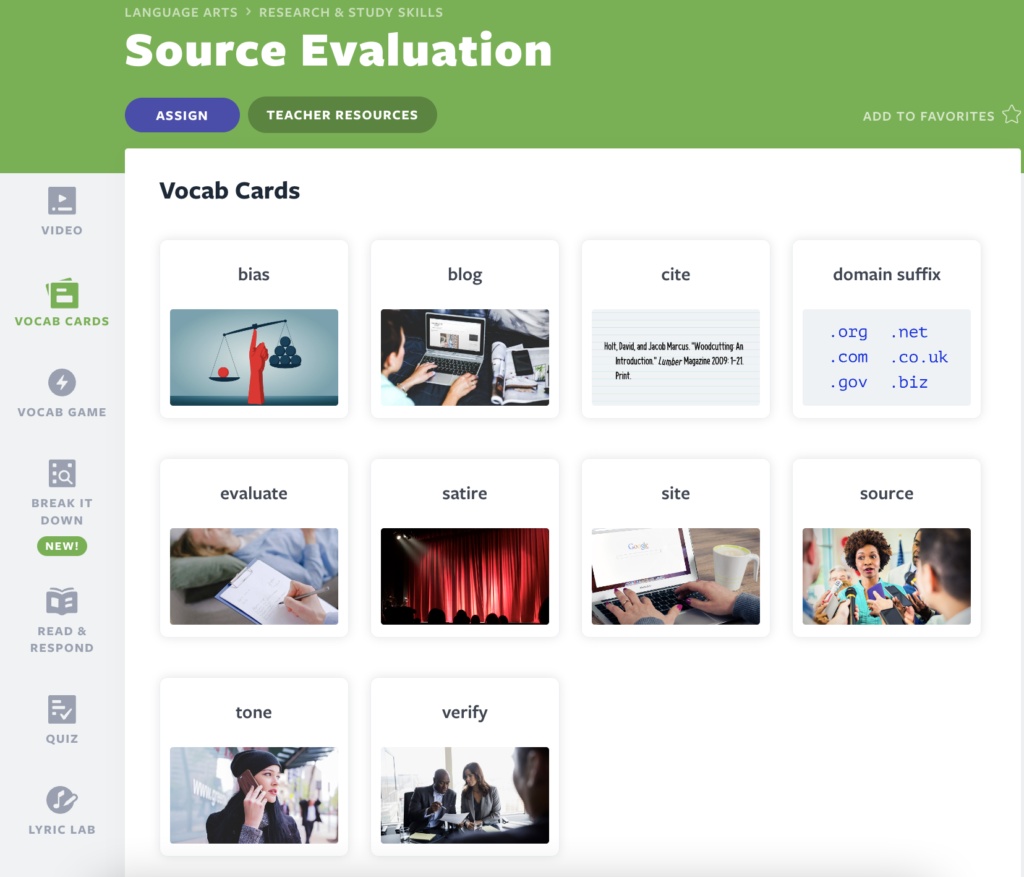
It’s best to begin news literacy instruction by having students understand that news content and sources should be valid, credible, and reliable. But what do those key terms mean?
Valid: having a sound base in fact or logic
Credible: trustworthy and believable
Reliable: reputable and verifiable
Author Michael A. Caulfield of Web Literacy for Student Fact-Checkers advises that when it comes to determining if a news source represents fair and accurate coverage, you need to consider the following: (1) machinery of care, (2) transparency, (3) expertise, and (4) agenda.
2. Seek out age-appropriate content
While the copy in The New York Times ranks at a 10th-grade reading level, that doesn’t mean the content is appropriate or written for a 10th-grader. Making sure that kids and teens have access to developmentally appropriate content will quite simply help them understand what they are reading.
Find recommended news sources for students of all ages from familiar sources like Time, The New York Times, Huffington Post, and Scholastic on Common Sense’sBest News Sources for Kids.
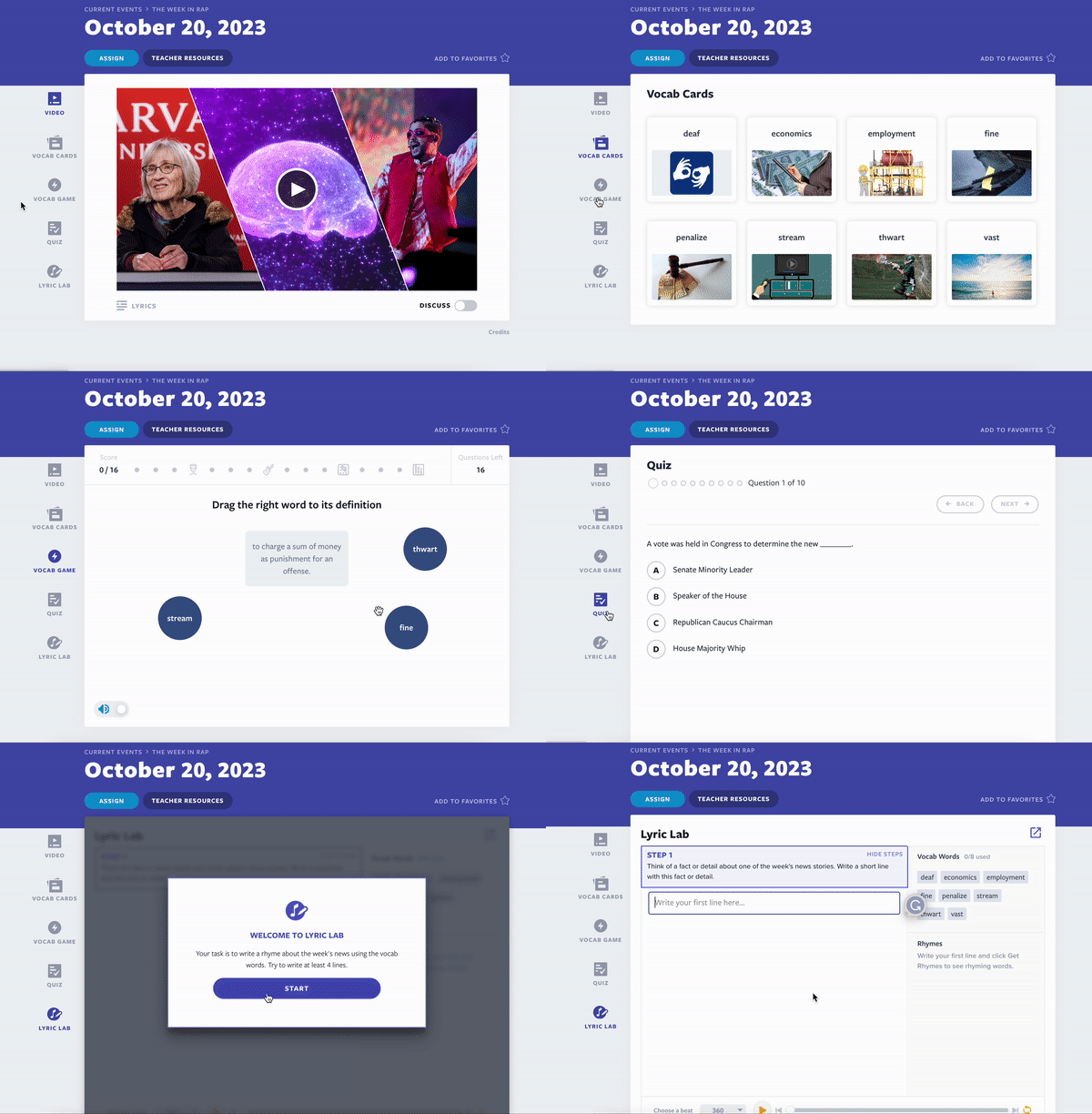
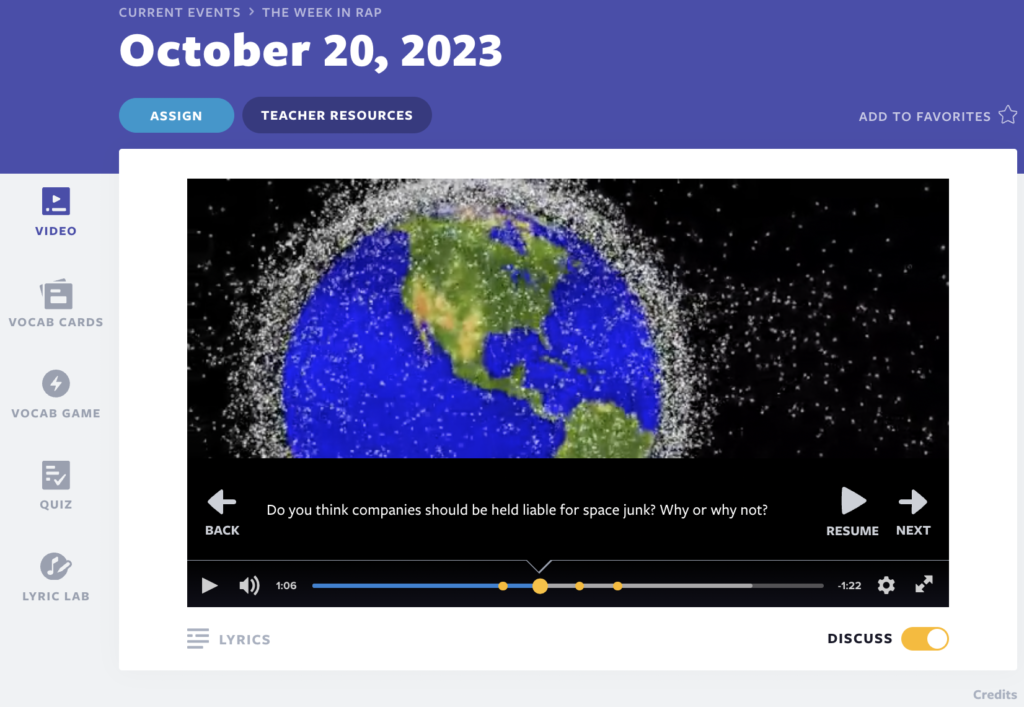
Flocabulary’s Week in Rap is a robust and age-appropriate educational tool for instructing students about current events. This weekly video-based lesson provides a rapped summary of significant and relevant news stories of the week. Released every Friday, it keeps students informed about the latest happenings and offers teachers a platform to initiate discussions on crucial current events. The Week in Rap is for grades 6-12, and the Week in Rap Junior is for grades 3-5. These weekly videos are a student (and teacher) favorite!
The Flocabulary team starts crafting these videos from scratch on Monday and completes them – including songs, videos, and associated lesson materials – by Friday morning for educators to access on Flocabulary.com. Learn more about how the Week in Rap is made.
3. Cross-examine the news content
Current events – whether political, regional, or pop – need to be vetted with a critical lens to equip students with the ability to participate in civic society in meaningful ways. Students need to be detectives of sorts, and they need to be equipped with news-literate strategies to decode what they are reading, from news to advertisements to propaganda. Misinformation or fake news can be insidious and lead to misunderstandings and unyielding perspectives. Media literate students understand that every source has a point of view, and media literacy examples need to be inquiry-based and should lead to constructive discourse.
According to Project Look Sharp, all readers should ask themselves the following six questions. Use these questions to have your students cross-examine news content:
Who made this?
Who is the target audience?
Who paid for this? Or who gets paid if you click on this?
Who might benefit or be harmed by this message?
What is left out of this media message that might be important?
Is this credible information (and what makes you think that)?
4. Address clickbait headlines and misinformation
The six questions above will help students better uncover the intention of said content. Too often, the content is designed to be a fabrication that is sticky and sensationalized to grab eyeballs and pique interest. Such clickbait helps content go viral, and we inadvertently become super-spreaders of misinformation, especially on social media, which can help earn advertiser dollars. However, this content can lead to confirmation bias, bolstered by details that are deceptive or even downright inaccurate.
We all need to keep asking questions to push past our own preconceived notions and broaden our understanding and perspectives around the topic at hand. Make it a habit for students to consider those six questions when reading and analyzing traditional or online media, whether they are digesting morning news or diving deeper into researching a current or historical event.
5. Teach how to evaluate website credibility and bias
There are certain signs or signals that all consumers of information should look for when evaluating online news sources. There are hallmark indicators that a site may not be as valid, credible, or reliable as we’d assume. We all should check if the site comes from reputable and accessible creators, the site itself is professional and polished, and the content is framed objectively and unbiased.
Teach students how to take a quick inventory of a site’s homepage in order to evaluate the quality of content, from the top to the bottom:
Begin with the URL – is it secure (HTTPS)? Is it a .org, .edu, or .gov URL?
Who owns the domain?
Scroll down to the About Us page and judge how robust it is or isn’t.
Can you find the source’s contact information easily enough?
Analyze the layout and design.
Are there source links and citations?
Are there typos or grammatical errors?
Analyze the language used: How inflammatory is the language?
What is the tone of the headline? How is information framed?
All these signs can help determine if the content shared has a bias, whether implicit or overt. As an educator, you can use sites like FactCheck.org and Snopes.com to fact-check the details of any questionable content. Then, teach students to similarly cross-reference information to make sure that they are getting the full picture.
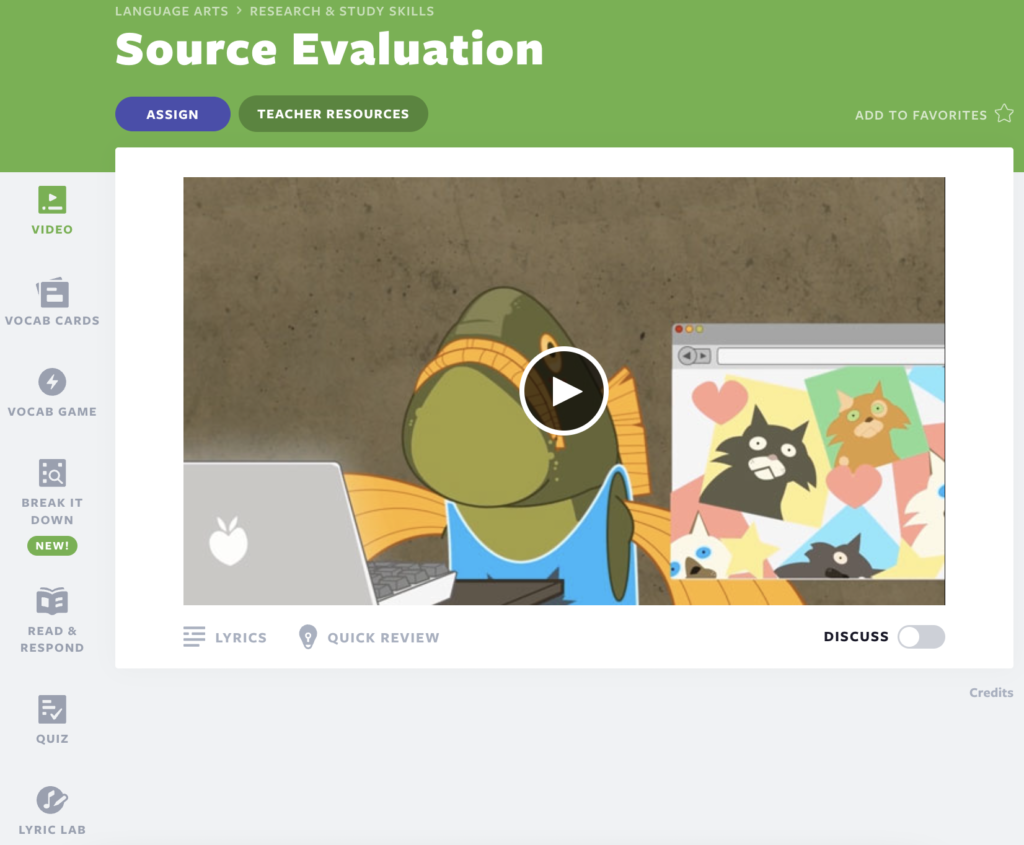
Flocabulary’s Source Evaluation video-based lesson provides students with tips on how to assess website credibility and bias, incorporating important vocabulary words that enhance their understanding. It aligns with today’s digital age and empowers students to make informed decisions in a technology-driven society, making it a valuable resource when teaching students about media literacy evaluation skills and information literacy.
6. Teach smart searching strategies
A core digital literacy skill to teach students that is fundamental to news literacy is smart searching. There are tried-and-true search strategies to help serve up content beyond what is targeted toward you, the reader, or tracked from your past searches. Emphasize to students that when searching for what you need, you often have to filter out what you don’t need. Teach them how to use quotation marks to search for exact phrases, use Boolean operators (“and”/”or”) to combine terms, and narrow the time frame as well as the type of sources. Highlight that when you get the page of search results, you should look for the results that are not sponsored, those that come from sources you recognize, or those that are well-vetted and reviewed. Challenge your students to work backward to find the original source.
7. Try lateral reading
Lateral reading – championed by Sam Wineburg and the Stanford History Education Group (SHEG) – is when you approach fact-checking by reading more broadly about a subject versus more deeply on a subject. By searching for other articles on the same topic, you can help confirm or negate an author’s credibility as well as his/her intent and biases. Those who engage in lateral reading often have multiple tabs open, creating a network of fact-checking across various websites before going back to the original article or page to read more thoroughly.
By teaching your students the concept of lateral reading, they will become more adept at cross-checking information from a variety of sources versus relying on just one. They will become more robust researchers and informed critical thinkers as they continue to dive into newsworthy events.
“Lateral reading helps the reader understand both the perspective from which the site’s analyses come and if the site has an editorial process or expert reputation that would allow one to accept the truth of a site’s facts.”
As with any muscle, it is important for students (and readers of all ages) to exercise how they read the news stories around current events and practice their detective decoding skills. Weave current events into your teaching to help students develop a real-world perspective on issues and better understand how their studies apply to life outside the school’s walls. Illustrate how news can report differently on the same topic. Use All Sides’ Media Bias Chart to show how a narrative can be skewed by who is reporting and why.
Use the Week in Rap lesson videos every Friday to have students stay on top of current events. Assign students the lesson so they can go through each activity and assessment accompanied by the video. While watching the video, turn on the Discuss Mode to prompt discussion questions for the class.
9. Talk about fake news often
Realizing how prevalent fake news is is half the battle. As with most literacy skills, repetition is key! Share key messages over and over in the classroom so that these healthy habits of mind become a given when students seek out reliable news. Frame lessons around spotting fake news or misinformation in articles. Send home resources that engage the whole family, from information videos to quizzes, so they all can help one another not become super-spreaders of misinformation or fake news online.
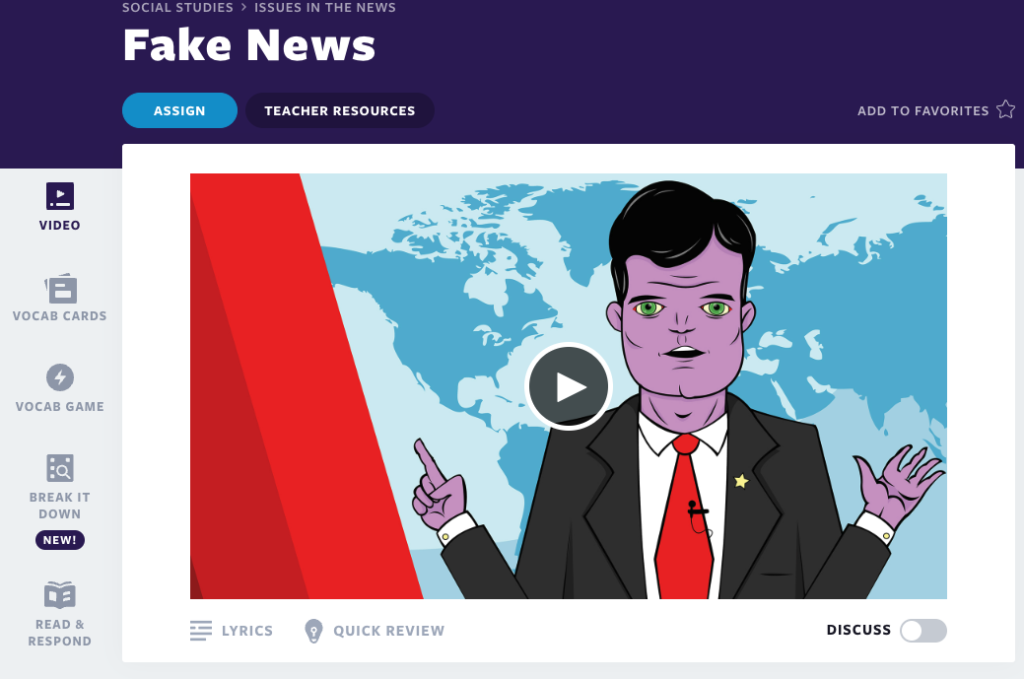
Flocabulary’s Fake News video-based lesson helps teach students about the pressing issue of fake news. This lesson explores what fake news is, how it spreads, and how to discern its accuracy. It equips students with practical skills for identifying fake news, encourages critical thinking about personal biases, and fosters media literacy.
Here are some additional resources teachers can use or share:
10. Continue to teach these skills year-round with reliable educational resources
Celebrate U.S. Media Literacy Week (October 23-27, 2023) and News Literacy Week (end of January each year) not as a one-and-done annual event but as a way to emphasize just how critical these skills are. Underscore the growing need around the importance of media literacy education, especially during times of political races, global strife, and national emergencies. Play devil’s advocate in your questioning to encourage readers to consider all sides and all perspectives as they gather facts. When students become skilled in this, they can critically evaluate information, which is essential for keeping society as well-informed as possible
Lean on trustworthy organizations that produce educational resources around news media literacy examples for students, families, and educators. With an ever-changing tech landscape, it is crucial that we all be diligent students to learn how to dissect and digest the latest and greatest information shared in our dynamic, always-on multimedia world.
Here are some more resources:
Start teaching about news literacy with Flocabulary
As readers and as good digital citizens, the burden falls on each of us 24/7 to use our critical thinking skills when digesting media information. Whether you teach elementary, middle, or high school, educators can help teach students these mindsets to employ on their own when browsing social media, paging through newspapers, or watching nightly reports. Similarly, they can use the same critical lens when receiving articles or news sites from others or when planning to send out information to others. By honing these skills, students develop the confidence and ability to participate in important conversations and decisions that impact their communities.
New to Flocabulary? Teachers can sign up for a trial to access our lesson videos and assessment activities. Administrators can get in touch with us to learn more about unlocking the full power of Flocabulary through Flocabulary Plus.
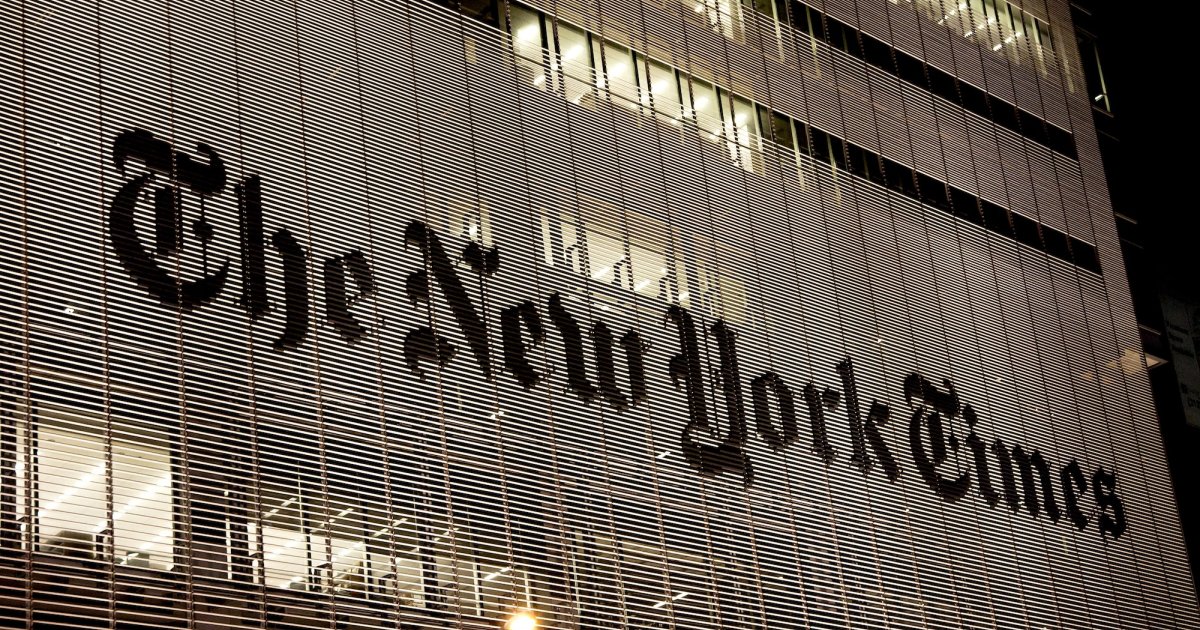
The lawsuit refers to the Times’ historic reputation as the “newspaper of record,” and that’s important for understanding the stakes of the case. The moniker speaks to the Times’ massive readership and prestige but also to an authoritative role — often setting the standards in terms of fact-checking, objectivity and independence that produce a definitive accounting of events for the record books. They’re the standards to which other newspapers are held.
In light of that role, and Trump’s continued successful shakedowns of media outlets of lesser prestige, a capitulation would be devastating. Instead, the Times has an opportunity, and an obligation, to rise to its historic role by categorically rejecting the lawsuit — and putting a stop to a particularly insidious legal idea that provides support for Trump’s media war.
The complaint, which First Amendment law professor Don Herzog calls “a press release masquerading as a lawsuit,” is a massive document that leaves ample room to hit familiar Trump beats, finding time to pick at the Times’ “deranged” endorsement of Kamala Harris and to hail Trump’s 2024 win as the “greatest personal and political achievement in American history.”
Why everything Pam Bondi said about ‘hate speech’ is wrong
The nation’s top law enforcement officer doesn’t understand there is no hate-speech exception to the First Amendment — and that’s scary.
The alleged damages center on reporting published in the pages of the Times and in the book “Lucky Loser: How Donald Trump Squandered His Father’s Fortune and Created the Illusion of Success,” written by Times reporters Susanne Craig and Russ Buettner, that suggested Trump’s multimillion-dollar inheritance from his father was largely a product of fraudulent tax evasion schemes and that Trump owes his later fortune to producer Mark Burnett’s “discovery” of him as a host for “The Apprentice.” But Trump alleges that he was already famous and thathis success with “The Apprentice” was “thanks solely to President Trump’s sui generis charisma and unique business acumen.”
Through what Trump alleges are false statements and negligent fact-finding, the lawsuit claims this reporting sought to illegally “damage President Trump’s hard-earned and world-renowned reputation for business success” and “sabotage his 2024 candidacy for President of the United States.”
The lawsuit has been met with universal dismissal by First Amendment scholars. “The complaint is full of bluster,” said Katie Fallow, deputy litigation director at Columbia University’s Knight First Amendment Institute, but “short on any allegations of specific false statements of fact that would meet the rigorous standards for defamation claims brought by public figures.”
One part of the complaint has been a particular focus of criticism, specifically where it states that the defendants had a “desire for President Trump to fail politically and financially. Each feels actual malice towards President Trump in the colloquial sense.”
As Fallow alluded, to prove defamation Trump must show “actual malice” on the part of the Times — and that’s a tough hill to climb, even assuming that the reporting is proven to be false.
As laid out in the landmark case New York Times Co. v. Sullivan, actual malice requires Trump to prove that the defendants actuallyknew their statements were false — or at least entertained actual, serious doubts about their truth. So resting this lawsuit on the idea that the defendants just really, really dislike Trump was met with predictable disbelief by legal experts.
But this section and the broader lawsuit belie something more sinister than a blustery failure to establish its claims’ basic elements. Trump believes it is — or would like it to be — legally actionable to harm his political ambitions when you really, really dislike him. In his view, reporters should be liable for statements that make people not wish to support him.
Beyond being a threat to the media, this idea is a threat to the very speech that makes up the core of our democratic process. No politician is entitled to support or votes, and to commodify them in this way is a perversion of democratic self-governance and a threat to core political speech.
And we’ve already seen Trump advance this idea in his other lawsuits against the media.
The lawsuit has been met with universal dismissal by First Amendment scholars.
When he targeted CBS News last October, he alleged billions of dollars in damages from the impact of what he claimed was “deceptive editing” of a “60 Minutes” interview with Vice President Harris on campaign fundraising and “support values.” Later that year, he targeted pollster J. Ann Selzer and The Des Moines Register, claiming her polling miss was “election interference” that required him to “expend … campaign expenditures.” With legal help from my organization, the Foundation for Individual Rights and Expression, Selzer is fighting these bogus claims.
The New York Times must similarly take this lawsuit as an opportunity to reject this idea, full stop. Its unique role in the media industry warrants a strong and defiant message in defense of the First Amendment and the Fourth Estate that depends on it.
Anything less risks a future in which Trump’s lawfare barrels through smaller outlets that don’t have the same resources.
A negotiation and a settlement between Columbia and the Trump administration have led the administration to triumphantly charge at less resourced universities, such as George Mason University and George Washington University. As FIRE counsel Tyler Coward warned, “We said from the beginning it was going to take a big institution like Harvard or Columbia to stand up for its rights, and if they failed to do so — if they capitulated to unlawful demands from the administration — there was little hope for smaller institutions down the line.”
The New York Times, the Harvard of newspapers, should understand its role here accordingly.
Over 60,000 students have benefited from the math program built on how the brain naturally learns
A new analysis shows that students using ST Math at Phillips 66-funded schools are achieving more than twice the annual growth in math performance compared to their peers. A recent analysis by MIND Research Institute, which included 3,240 students in grades 3-5 across 23 schools, found that this accelerated growth gave these schools a 12.4 percentile point advantage in spring 2024 state math rankings.
These significant outcomes are the result of a more than 10-year partnership between Phillips 66 and MIND Research Institute. This collaboration has brought ST Math, created by MIND Education, the only PreK–8 supplemental math program built on the science of how the brain learns, fully funded to 126 schools, 23 districts, and more than 60,000 students nationwide. ST Math empowers students to explore, make sense of, and build lasting confidence in math through visual problem-solving.
“Our elementary students love JiJi and ST Math! Students are building perseverance and a deep conceptual understanding of math while having fun,” said Kim Anthony, Executive Director of Elementary Education, Billings Public Schools. “By working through engaging puzzles, students are not only fostering a growth mindset and resilience in problem-solving, they’re learning critical math concepts.”
The initiative began in 2014 as Phillips 66 sought a STEM education partner that could deliver measurable outcomes at scale. Since then, the relationship has grown steadily, and now, Phillips 66 funds 100% of the ST Math program in communities near its facilities in California, Washington, Montana, Oklahoma, Texas, Illinois, and New Jersey. Once involved, schools rarely leave the program.
To complement the in-class use of ST Math, Phillips 66 and MIND introduced Family Math Nights. These events, hosted at local schools, bring students, families, and Phillips 66 employee volunteers together for engaging, hands-on activities. The goal is to build math confidence in a fun, interactive setting and to equip parents with a deeper understanding of the ST Math program and new tools to support their child’s learning at home.
“At Phillips 66, we believe in building lasting relationships with the communities we serve,” said Courtney Meadows, Manager of Social Impact at Phillips 66. “This partnership is more than a program. It’s a decade of consistent, community-rooted support to build the next generation of thinkers and improve lives through enriching educational experiences.”
ST Math has been used by millions of students across the country and has a proven track record of delivering a fundamentally different approach to learning math. Through visual and interactive puzzles, the program breaks down math’s abstract language barriers to benefit all learners, including English Learners, Special Education students, and Gifted and Talented students.
“ST Math offers a learning experience that’s natural, intuitive, and empowering—while driving measurable gains in math proficiency,” said Brett Woudenberg, CEO of MIND Education. “At MIND, we believe math is a gateway to brighter futures. We’re proud to partner with Phillips 66 in expanding access to high-quality math learning for thousands of students in their communities.”
About MIND Education MIND Education engages, motivates and challenges students towards mathematical success through its mission to mathematically equip all students to solve the world’s most challenging problems. MIND is the creator of ST Math, a pre-K–8 visual instructional program that leverages the brain’s innate spatial-temporal reasoning ability to solve mathematical problems; and InsightMath, a neuroscience-based K-6 curriculum that transforms student learning by teaching math the way every brain learns so all students are equipped to succeed. Since its inception in 1998, MIND Education and ST Math has served millions and millions of students across the country. Visit MINDEducation.org.
About Phillips 66 Phillips 66 (NYSE: PSX) is a leading integrated downstream energy provider that manufactures, transports and markets products that drive the global economy. The company’s portfolio includes Midstream, Chemicals, Refining, Marketing and Specialties, and Renewable Fuels businesses. Headquartered in Houston, Phillips 66 has employees around the globe who are committed to safely and reliably providing energy and improving lives while pursuing a lower-carbon future. For more information, visit phillips66.com or follow @Phillips66Co on LinkedIn.
eSchool Media staff cover education technology in all its aspects–from legislation and litigation, to best practices, to lessons learned and new products. First published in March of 1998 as a monthly print and digital newspaper, eSchool Media provides the news and information necessary to help K-20 decision-makers successfully use technology and innovation to transform schools and colleges and achieve their educational goals.
FCC Chairman Brendan Carr is once again abusing his position to try to assert government control over public discourse, spuriously invoking the “public interest” standard to selectively target speech the government dislikes.
President Trump has recently called for the FCC to revoke ABC’s broadcast license because he does not like the way the network — and Jimmy Kimmel in particular — speaks about him. Just yesterday, Trump suggested to a reporter that Attorney General Pam Bondi’s statement about prosecuting “hate speech” might mean she will “go after” ABC “because you treat me so unfairly. It’s hate.”
Now, Carr is threatening ABC for comments about Charlie Kirk’s shooter that Kimmel made during his opening monologue on Monday, insinuating that the shooter was part of “the MAGA gang.”
The FCC has no authority to control what a late night TV host can say, and the First Amendment protects Americans’ right to speculate on current events even if those speculations later turn out to be incorrect. Subjecting broadcasters to regulatory liability when anyone on their network gets something wrong would turn the FCC into an arbiter of truth and cast an intolerable chill over the airwaves.
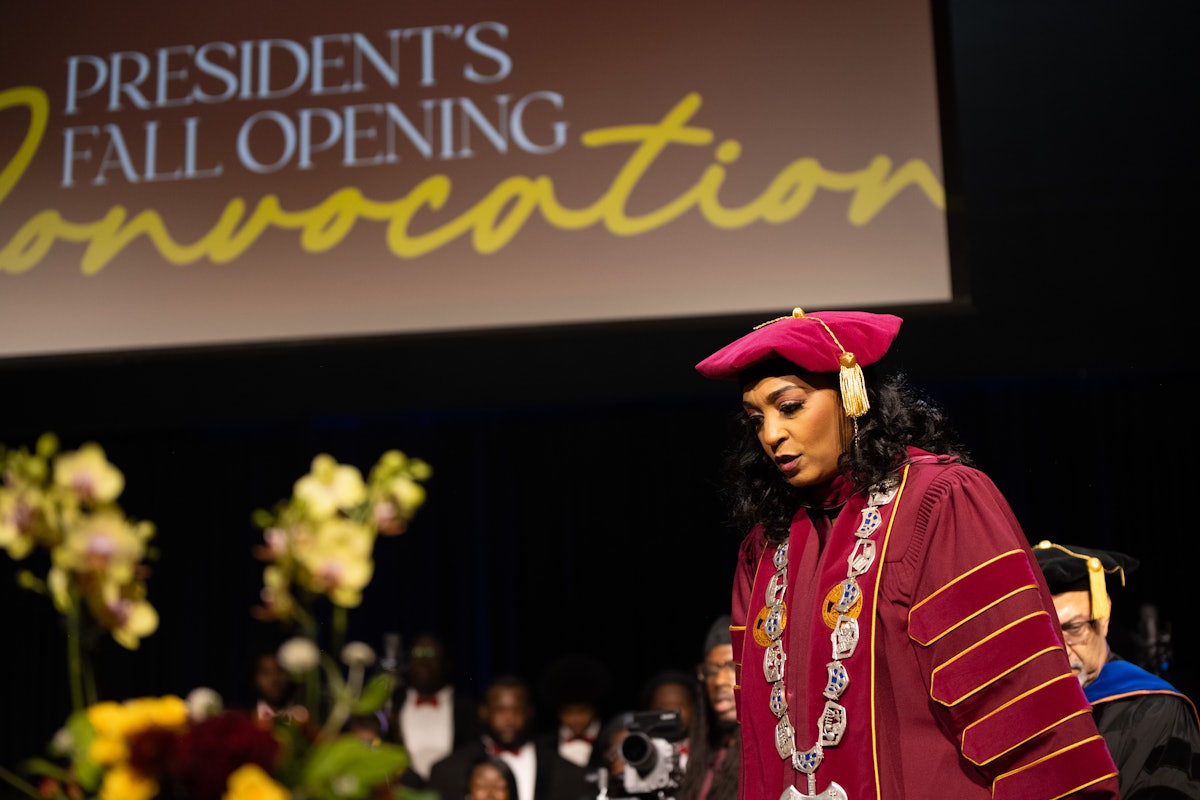
Dr. Melva K. Wallacecourtsey of Huston-Tillotson UniversityHuston-Tillotson University announced it has received a transformative $150 million donation from the Moody Foundation, marking the largest single donation ever made to a Historically Black College or University in the United States.
The historic gift was revealed during the university’s annual President’s Fall Opening Convocation, signaling a new chapter for Austin’s first institution of higher education as it approaches its 150th anniversary.
“This gift is a testament to faith, prayer, and the genuine belief in the goodness of others,” said Dr. Melva K. Wallace, President and CEO of Huston-Tillotson University. “Their donation will completely transform Huston-Tillotson, as well as the city of Austin, and set us up for success for another 150 years.”
The donation will fund comprehensive improvements to student living spaces, academic facilities, and innovative scholarship programs. Additionally, the gift includes support for professional development of the university’s strategy, culture, marketing, and development infrastructure.
Ross Moody, trustee of the Moody Foundation, emphasized the student-centered focus of the contribution.
“We hope this gift, focused on the students, can become a catalyst, a spark, the beginning of something transformative for students, this city, and the future of Huston-Tillotson,” he said.
The Galveston-based Moody Foundation has maintained a relationship with Huston-Tillotson spanning more than five decades, contributing over $1.3 million to the university since 1968. This latest gift represents part of the Foundation’s broader $1 billion commitment to transform Texas education by 2035.
Founded in 1875, Huston-Tillotson is an independent, church-related liberal arts institution situated on a 23-acre campus in East Austin. The university offers associate, bachelor’s, and master’s degrees across more than 19 areas of study and is accredited by the Southern Association of Colleges and Schools Commission on Colleges.
Rev. Dr. Vanessa Monroe, Board Chair, called the donation “an inflection point in our history and a powerful statement about the value of Huston-Tillotson in shaping the future of students and their families for generations to come.”
The gift positions Huston-Tillotson to accelerate implementation of its strategic plan and master vision, reinforcing its role as a national leader among HBCUs and as a cornerstone institution in Austin’s educational landscape.
This morning we woke to the news that the ABC television network in the United States had suspended late night talk show host Jimmy Kimmel indefinitely over a statement he made about the accused assassin of right-wing political activist Charlie Kirk. In July, the CBS network announced that it would end The Late Show with Stephen Colbert in May. Colbert has for years mocked and criticized Donald Trump. These two announcements got us thinking about all the different ways governments and those in power try to silence speech.
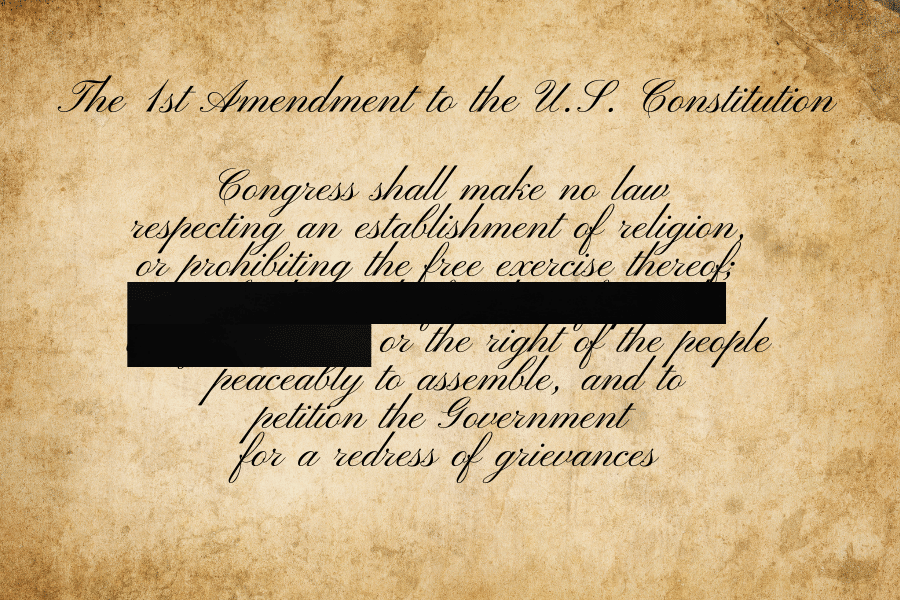
The very first amendment to the U.S. Constitution begins with this phrase:
Congress shall make no law respecting an establishment of religion, or prohibiting the free exercise thereof; or abridging the freedom of speech, or of the press …
Because of that amendment, the world has long considered the United States the model for free speech — few countries live up to the standard that the United States has historically set. But across the world now, free speech seems to be endangered. So to put into perspective the many ways censorship can occur and in the many places we see this happening, we decided to offer up an assortment of News Decoder stories on this topic by both our professional correspondents and student authors.
Back in late 2023, a little known libertarian by the name of Javier Milei was elected President of Argentina with a strong mandate to conquer that country’s hyperinflation. His strategy for doing so was pretty straightforward — freeze public spending, which would mean a big loss in real terms until inflation came down, and then let the free market do the rest.
That was easier said than done. Milei lacked a majority in Congress and all of the legacy parties had some reason to try and preserve the status quo, but more or less, Milei got his way and the public sector, including public universities, have had to shrink enormously as a result. Falling budgets, cratering salaries, the lot.
But now the opposition is starting to gain strength. Over the northern summer, Congress passed a bill meant to roughly double state spending on public higher education. Last week, predictably Milei vetoed the law. We can probably expect a season of protests and strikes to ensue.
Returning to the show today to discuss all this is Marcelo Rabossi of the Universidad Torcuato Di Tella in Buenos Aires. He joined the podcast 18 months ago at the outset of Milei’s term to discuss what the President’s agenda was likely to have in store for the higher education sector. Today he’s with us to talk about how the system is surviving what amounts to a massive cut in real pesos, and what the next few months look like as tensions mount between the President and the opposition.
Of particular interest, I think, is where we talk about how, despite Milei’s affinity to the US hard right, he’s avoided Trumpian tactics, like targeted cutbacks through research rescissions and outright institutional extortion.
The World of Higher Education Podcast Episode 4.3 | Crisis or Reform? Higher Education in Milei’s Argentina with Marcelo Rabossi
Transcript
Alex Usher (AU): Marcelo, when we last spoke in January 2024, Javier Milei was newly elected president at the head of La Libertad Avanza. He didn’t have a majority in Congress—still doesn’t. He was elected on a mandate to stop hyperinflation, but his appeal wasn’t just about tighter money. He was a libertarian who wanted to shrink the size of government enormously, which is, in some ways, quite a revolutionary idea in Argentina. Generally speaking, how has his first year and a half in office gone? Is inflation down? Has the size of the government shrunk?
Marcelo Rabossi (MR): From the very beginning, even during his campaign, Milei promised radical changes to literally crash hyperinflation. He aimed to do this by reducing government spending and opening the economy. Inflation has dropped substantially. For example, in December 2023, monthly inflation peaked at 25% and now it’s around 2% for three consecutive months. This is largely due to Milei’s aggressive austerity measures and a very tight monetary policy. He significantly cut federal spending and restored market dynamics.
It’s also true that poverty has declined, from 54% in early 2024 to about 32% in early 2025. On the other hand, economic activity has stagnated, and retirees have lost much of the purchasing power of their pensions. That’s the dark side of Milei’s economic plan.
AU: How has he been able to achieve his agenda without a majority in Congress? What’s the dynamic there? Does he strike deals with conservative parties, or does the presidency give him some ability to rule by decree? How do you get things done when you’re a minority president?
MR: That’s a great question, because I think this is the first party in power with a minority in both chambers of Congress. Milei has relied on emergency executive decrees to bypass legislative opposition or blockages and to implement deep reforms.
Early on, he also struck strategic deals with conservative parties, particularly PRO—the party of former President Macri—and the Radical Civic Union. These strategies helped him pass the “Ley de Bases” in 2024, which was a foundational reform to deregulate the economy.
However, this approach had its limits. He’s now facing growing resistance, even from former allies. Internal divisions and shifting loyalties have made these alliances fragile.
By mid-2025, even some conservative legislators began distancing themselves from Milei’s more extreme measures and aggressive behavior. So I’d say he has governed through a mix of executive power, tactical alliances, and public pressure—but he’s losing that advantage.
AU: My understanding is that Milei’s approach to reducing expenditure and inflation has been simply to freeze spending on government departments. Inflation is lower now than it was two years ago, but it’s still reasonably high, so inflation just erodes the value of that spending.
How has this affected higher education? How big has the cut been to higher education in real terms—that is, after inflation? And is higher education different from other social sectors? Presumably you’d see the same dynamics with hospitals and other services. Is higher education being targeted for bigger reductions, or no?
MR: You’re absolutely right. Spending freezes across all public areas—education, health, infrastructure—have been his primary tool to fight inflation. But as you noted, when inflation remains high, even if it’s slowing, frozen budgets imply reductions in real terms.
Regarding higher education, let me give you some numbers. In 2024, funding for Argentina’s public universities fell by around 30% in real terms and by 2025, the projected university budget is about 35–36% lower than in 2023. According to my analysis, around 80% of higher education spending in Argentina goes to salaries, and those dropped by about 30–35%. Capital expenditures for infrastructure have also collapsed.
But it’s not only university funding. Overall, education has suffered a real decrease of more than 30% between 2023 and 2025. For example, teacher training and technology programs are down 40%, and early childhood education infrastructure is down 60%. Scholarships for low-income students have also decreased by about 40%. I should add that schools are funded at the provincial level, so national cuts didn’t have as large an impact there. But universities, which are funded nationally, were hit hard. Overall, higher education has been one of the hardest-hit sectors.
So, this “freeze strategy,” as I call it, has helped Milei achieve fiscal surpluses and reduce inflation—but it has come at the cost of shrinking real investment in the country’s future.
AU: The president is sometimes seen as Argentina’s Trump—that’s sort of his international reputation. He certainly has admirers on the U.S. far right. Elon Musk even copied him with the chainsaw routine, attacking public finances.
I don’t get the sense that Milei is a friend of higher education. He rants about “woke intellectuals” and that kind of thing, which lines up with the American right. But I don’t get the sense he’s copied Trump in terms of silencing particular lines of research or picking fights with individual universities.
So apart from the financial cuts, which can maybe be defended purely on anti-inflationary grounds, what has the relationship been between Milei and the higher education sector?
MR: Unlike Trump, Milei hasn’t gone after specific research areas or individual institutions. He hasn’t interfered with academic freedom—there have been no restrictions on curricula, no attacks on gender studies or climate research, and no attempt to control university governance.
His approach has been more structural than targeted at specific institutions. That said, the University of Buenos Aires—the largest and most important in the system—has been his main target, simply because it’s the most visible.
I should add that some of his early ideas, like replacing direct public funding of universities with vouchers, have remained more like theoretical provocations than serious proposals. They have no real support and no chance of being implemented.
So while Milei’s stance toward higher education is hostile, it’s not close to institutional repression. His obsession is with the economy and controlling inflation.
AU: A moment ago, you talked about roughly a 30% decline in real terms for university support—maybe a bit higher if you compare the end of 2025 to the end of 2023. How does a university deal with a cut of 33%? What kinds of decisions do they have to make to keep the doors open in conditions of austerity like that? And what have been the consequences of those decisions?
MR: First, universities reacted in order to survive. I would say they are operating in survival mode. In this scenario, universities have had to freeze salaries, delay infrastructure repairs, and cut back on research funding. They’ve also shortened semesters, reduced course offerings, and postponed new programs. Some campuses, like the University of Buenos Aires, have even merged departments or cut non-essential services.
To give you an idea of why these fiscal restrictions have hit so hard: between 80% and 90% of universities’ total income comes from national government funds. Remember, undergraduate education in Argentina is tuition-free, and undergraduates represent more than 90% of a total student body of over 2 million enrolled in national institutions. On the other hand, historically Argentina’s public universities haven’t had a strong tradition of fundraising. Some institutions are beginning to move in that direction, collecting money from private donors, but it’s still very limited.
AU: Surely those kinds of cutbacks would make private universities in Argentina more attractive, right? Argentina doesn’t have a huge private sector—it’s not like Chile or Brazil. I think about 80% of students are in the public system. But have private universities seen an opportunity here? Are they taking advantage of these cuts to tout the benefits of paying tuition and offering something more complete than the public sector?
MR: As I always say, in Argentina the private sector is more tolerated than stimulated, unlike in Brazil or Chile. There are about 60 private universities in the country with around 400,000 undergraduates. Historically, they’ve largely avoided political confrontations and remained neutral. Politics tends to play out in the public sector, so unlike national institutions, private universities haven’t been cast as ideological enemies or targets. This has allowed them to operate with less social and political confrontation.
On the financial side, the private sector largely depends on tuition fees—on average, 90% of their income comes from that source. So decreases in public funding haven’t been an issue for them, since they don’t rely on public subsidies or loans. Recently, however, there have been rumors about public scholarships for students at private universities.
Financially speaking, they’re in reasonably good shape. They’ve been able to maintain operations, salaries, and infrastructure. In a way, they look relatively resilient. And you’re right—while public universities are cutting programs, freezing salaries, and facing potential strikes, private universities now appear more stable and predictable for students and families. For those who can afford tuition, private institutions may seem like a real option.
AU: The public universities have obviously been fighting back over the past year and a half. I’ve lost count of the number of strikes, protests, and demonstrations of public opposition.
What’s interesting is that just in the past few months—during the Northern Hemisphere summer, your winter—Congress considered a bill to stabilize university finances. If I understand correctly, they mandated a funding floor tied to a certain percentage of GDP. That law passed about a month ago. What was this bill, and how did it pass? Because it seems to get back to the question of the president losing allies, since some of his conservative partners voted for it.
MR: Right. The goal of this law was to increase Argentina’s university budget from around 0.4% of GDP to 1.5% in the next five years. That’s a big jump. Beginning in 2026, funding will rise to 1% of GDP.
Historically, public spending on universities has been around 0.6% of GDP, peaking at 1% but usually closer to 0.8%. So this proposal represents a significant increase. It’s intended to replace the funding law passed by the government in 2024.
The bill was introduced in Congress by the rectors of Argentina’s 56 national universities, with support from unions and student organizations. It also proposes updating budget allocations for accumulated inflation in 2023–2024 and reinforcing faculty salaries starting in December 2023, with monthly updates tied to the consumer price index.
AU: Let’s talk about what happens politically here. Both houses of Congress passed the law, and Milei vetoed it on September 10th, I think. How does this get resolved at this point? What happens politically to the bill from here on in?
MR: You’re right about the veto—it’s his main political tool, given that he has no majority in either chamber. University unions, students, and education advocates have already staged protests and strikes, and more demonstrations are expected, especially around Congress.
The veto will escalate tensions between Milei and the education sector, and it’s becoming a rallying point for the opposition. In my view, the next few weeks will be critical. If Congress can’t override the veto, universities will remain under severe financial strain, and political pressure on Milei will intensify.
Either way, this is more than a budget fight. The opposition says it’s a battle over the future of public education in Argentina.
AU: President Milei has another two years and three months left in his mandate. What’s your best guess about higher education? How is it going to fare between now and then? What does the Argentinian system look like at the end of 2027?
MR: Yes, you’re right—we have two years ahead. It’s difficult to predict the future in Argentina, although some would say: expect a new crisis and you’ll probably be right.
As we’ve said, despite lacking a congressional majority, Milei has pushed through major reforms via executive decrees. That’s been his political tool. His confrontational style has kept him in the spotlight but also sparked resistance from traditional parties, the far left, conservatives, and even moderate liberals.
Whether this initial economic stabilization translates into long-term growth—and consequently, political support—remains the big question. If he wins in the next legislative elections this October, he will likely maintain his firm stance, continue vetoing, and I don’t see major changes. If the economy grows, there may be some money to calm the situation, but not enough to achieve what the vetoed law proposed: doubling university funding in relative terms in the short or medium term. That’s a kind of utopia, even if the country emerges from its depression.
But if Milei loses by a wide margin, the pressure will be enormous, creating a vicious circle that prevents Argentina from escaping economic stagnation. Keep in mind: the only way for universities to receive more funding is for the country to grow. If conflict increases, investors will postpone decisions, and in such a scenario, there are no winners.
Again, public universities in Argentina are more than just educational institutions—they are symbols of social mobility and national pride. Milei’s veto of the bill to increase university funding and staff salaries will likely trigger widespread outrage, uniting students, faculty, unions, and the political opposition. In fact, new public demonstrations are already underway and may continue for weeks, months, or even the next two years until his mandate ends.
AU: Lots to keep an eye on. Marcelo Rabossi, thank you so much for being with us today.
MR: It’s my pleasure. Thank you so much.
AU: And it just remains for me to thank our excellent producers, Sam Pufek and Tiffany MacLennan, and you—our listeners and readers—for joining us once again. If you have any questions or comments about today’s episode, or suggestions for future ones, please don’t hesitate to write to us at [email protected].
Join us next week when our guest will be Yale University’s Zach Bleemer, professor of economics, who has just co-written a fascinating new paper, Changes in the College Mobility Pipeline since 1900. We’ll be talking about some of that report’s surprising findings. Bye for now.
*This podcast transcript was generated using an AI transcription service with limited editing. Please forgive any errors made through this service.Please note, the views and opinions expressed in each episode are those of the individual contributors, and do not necessarily reflect those of the podcast host and team, or our sponsors.