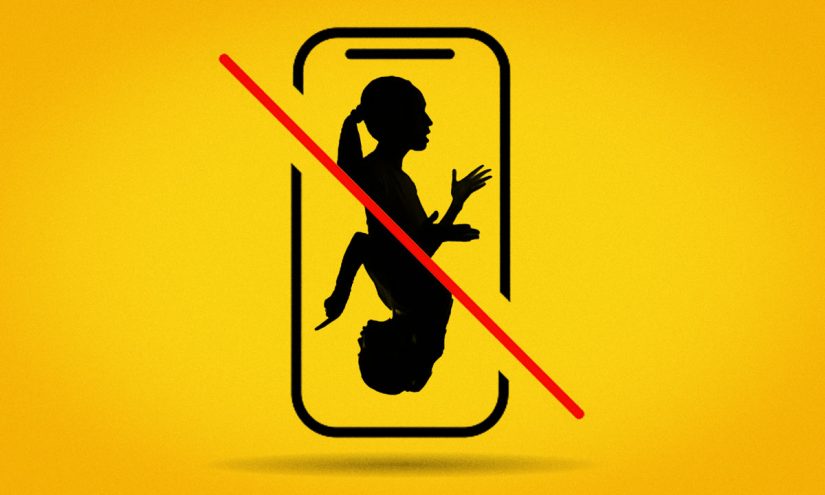
One year after I reported on New York City parents’ reactions to a proposed ban on cellphones in the classroom, students and teachers have returned to schools with that ban in place.
When I asked families on my 4,000-plus-member NYC School Secrets mailing list how they felt about the new restriction, I received answers ranging from enthusiasm to concern.
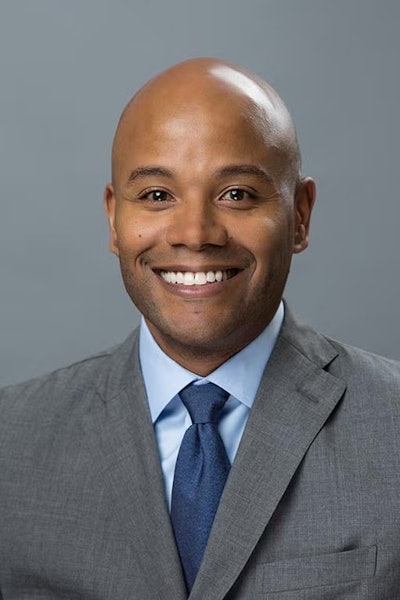
“Phones and smartwatches in classrooms and school hallways are more than just a distraction — they’re a barrier to learning, focus and social development,” according to Manhattan’s Arwynn H.J.
“Bring on the ban,” cheered Bronx parent and teacher Jackie Marashlian. “My high school students were ready to air-scroll me toward the ceiling with their fingers, so bored with whatever it was I was trying to impart to them. One day we had a WiFi glitch and I saw my students’ beautiful eyes for the very first time. Bring kids back to face-to-face interaction and socializing during lunch breaks.”
“As a middle school teacher in the Bronx and parent of an eighth grader, I think the cellphone ban is fantastic,” agreed Debra. “While my son is ‘devastated’ he can’t have his phone, it scares me that he’s said he doesn’t know what to do at lunch/recess without a phone. Kids have become so reliant on technology, even when they are with their peers, that often they are not really WITH their peers; they are all just staring at their phones. I hope the cellphone ban leads more students to be both physically and mentally present.”
For mom Elaine Daly, the phone ban affects her more than her special-needs daughter. “My child is 11 and knows she is not to use the phone in school. My parental controls blocks, locks and limits access. But I need her phone to be on so I can also track her, since the NYCSchools bus app always says: Driver offline.”
Jen C., who reported the ban has been going well with her child in elementary school, sees a bigger issue for her high school-age son. “He has homework online and likes to get started during his free periods. However, he’s not allowed to use his laptop, and there are not enough school issued laptops. I feel that teachers should give off-line work, or the school needs to give access to laptops.”
Parents of older students were the ones most likely to be against the blanket edict.
“You can’t have the same policy for kids 6 years old and for 17 years old,” mom Pilar Ruiz Cobo raged. “This policy is crazy for seniors. Yesterday, my daughter had her first college adviser class, and only five kids could work because the rest didn’t remember their passwords to Naviance and the Common App. The verification code was sent only to their phones. Children who don’t study, don’t study with and without phones, now the children who actually work have to work double at home.”
A Queens mom pinpointed another problem. “Many high school students leave the premises for lunch, and my son’s school is one of those. He said they’re not allowed to take their phones. Children need to use phones outside of school for various reasons; to use phone pay, to contact their parents for lunch money or any updates, etc…”
The policy varies from school to school. At some, students are allowed to request their phones back when temporarily leaving the premises. However, the larger the school, the less likely it is to have enough staff to handle such exchanges.
“An interesting aspect of this policy is that although it was presented as a smartphone ban, it’s actually much more expansive, including tablets and laptops,” pointed out dad Adam C. “This presents a challenge for high school students who rely on laptops for receiving, completing and submitting assignments through Google Classroom.”
“They say parents have to provide their own laptop pouch (there are none similar to Yonder), and they can’t store laptops in backpacks,” confirmed Queens mom Y.N. “My son has afterschool sports activities and likes to do his homework on his laptop in between. I think he’ll have to take it with him and hope they don’t confiscate.”
“While I’m not opposed to keeping students off platforms like Snapchat during school hours,” Adam continued, “They should be able to connect a laptop to a school-managed Wi-Fi network for school-related purposes, and the current policy doesn’t provide the schools with much leeway around this.”
But Y.N. doesn’t believe that’s accurate. “I already voiced my concern to the Student Leadership Team (SLT). At the Panel for Education Policy, they said these rules are fluid. Because the regulations came after the SLTs were done for the year, the chancellor said they should be able to change them. She said a plan had to be made before Day One, but it doesn’t mean that adjustments can’t be made at the school level. ‘Tinkering’ was the word they kept using.”
If that’s the case, perhaps NYC can pull back from its traditional one-size-fits-all approach and allow individual schools to “tinker” and set limitations based on the needs and feedback of their community, adjusting policy based on grade level, academic requirements and a multitude of other factors.
The passing of Dr. Earl S. Richardson is not only a moment for reflection. It is a call to responsibility. For scholars of higher education and leaders at historically Black colleges and universities, his legacy must not be confined to warm memories or ceremonial praise. His life’s work demands more than tribute. It demands action. It demands accountability. It demands that we ask ourselves, urgently and honestly, whether we are doing enough to build upon the foundation he laid.
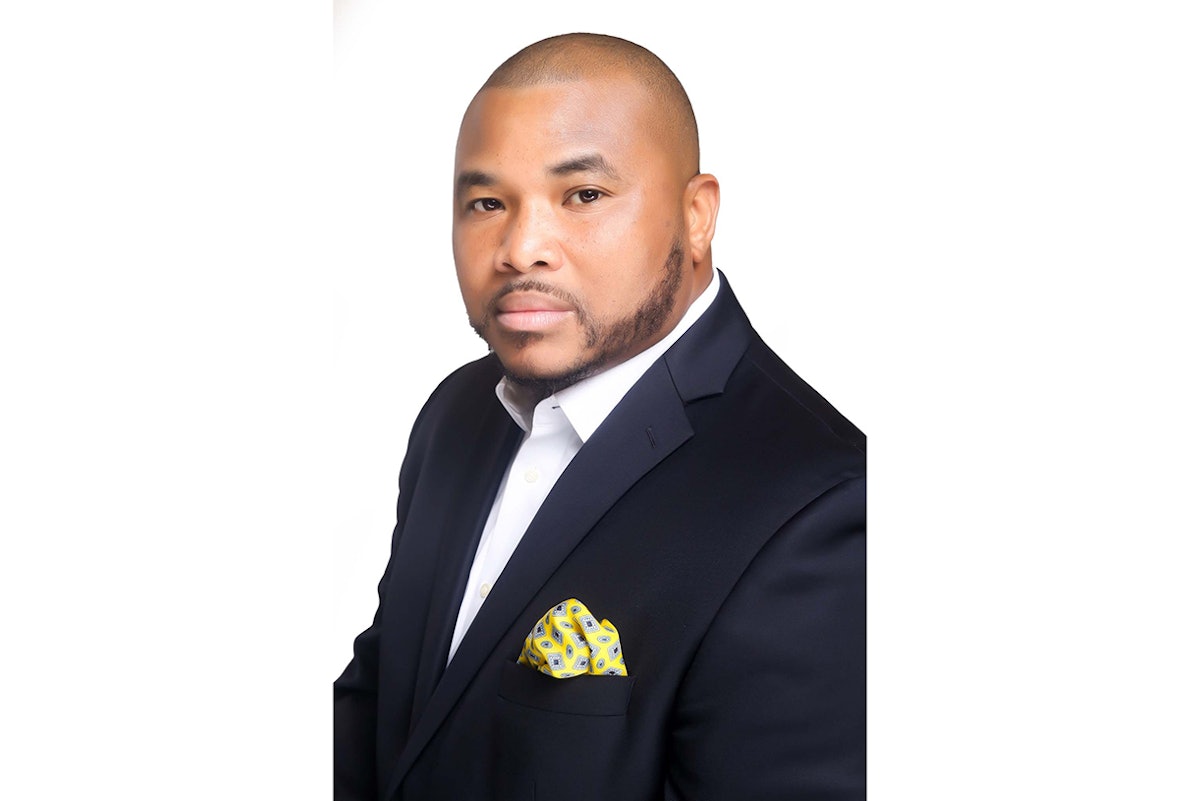
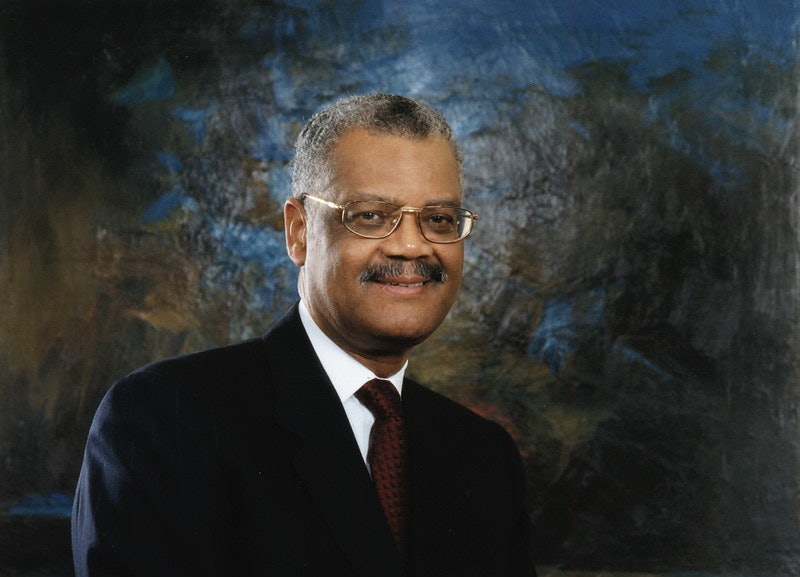
Dr. Adriel A. HiltonDr. Richardson served as the ninth president of Morgan State University from 1984 to 2010. Under his leadership, Morgan did not simply grow. It transformed. It rose to become a national leader in graduating African American students in science, technology, engineering and mathematics. It expanded its infrastructure, enhanced its academic reputation and centered student success in every strategic decision. Dr. Richardson did not wait for others to validate his vision. He led with clarity, conviction and courage.
He was a master builder in every sense of the term. He saw potential where others saw limits. He saw the value of HBCUs not as a second option but as essential to the American higher education ecosystem. His leadership challenged a state system that had long underfunded and undervalued Black institutions. His efforts helped bring national attention to Maryland’s long-standing inequities in higher education funding and set in motion the legal battles and policy changes that continue to shape the landscape today.
What made Dr. Richardson different was that he understood the stakes. For him, education was not abstract. It was urgent. It was necessary. It was justice. He never forgot the students who came from under-resourced communities. He never stopped believing in the transformative power of institutions that were built by and for Black people. He knew that when HBCUs thrive, entire communities thrive. And he gave everything he had to make sure that happened.
Years ago, I was invited by Chancellor James T. Minor to introduce Dr. Richardson at a gathering of HBCU leaders in Atlanta. It was a moment I will never forget. After the formalities, he pulled me aside, embraced me and spoke just three words: “Hilton, continue on.” I have carried those words with me ever since. They were not just encouragement. They were instruction. And now, in the wake of his passing, they are challenge and charge.
To those of us who study higher education, we must be more than chroniclers of injustice. We must be architects of equity. It is not enough to publish about access. We must dismantle the structures that deny it. It is not enough to measure disparities. We must eradicate them. Dr. Richardson did not write about transformation. He led it. His career reminds us that research must inform action and that theory must be in service to the students whose lives hang in the balance.
To leaders of our HBCUs, I say this as a researcher and as someone who deeply respects the weight of your responsibility. Dr. Richardson raised the standard. It is ours to meet and exceed. If we claim to honor his legacy, then we cannot be satisfied with survival. We must pursue excellence with purpose and with boldness. We must ask difficult questions. Are we growing in ways that reflect our mission? Are we advocating with full voice for the resources our institutions deserve? Are we leading with vision or simply managing with caution?
Our students do not need caretakers of tradition. They need disruptors of inequality. They need leaders who will challenge broken systems, fight for full funding, and refuse to accept a future that mirrors the past. They need us to be as courageous as Dr. Richardson was and as committed as he remained throughout his life.
Dr. Richardson believed in leading with love. Love for students. Love for community. Love for institutions that have long stood as beacons of opportunity against overwhelming odds. But love, as he modeled it, was not passive. It was active. It was strategic. It was unapologetic. It was the kind of love that demands more, not less. That refuses to compromise when the stakes are too high. That knows the fight for educational equity is not about charity but about justice.
Let us be clear. Dr. Richardson’s story is not one of ease. It is one of struggle, persistence and vision. He faced resistance. He faced doubt. But he pressed on. And in doing so, he created new possibilities for generations of students who might otherwise have been left behind.
If we are to honor him now, we must take up his mantle with urgency. We must refuse to be complicit in systems that marginalize Black institutions. We must lead in ways that are bold, strategic and student centered. We must act with the same clarity and commitment that defined his presidency.
Dr. Richardson did not just leave a legacy. He left a blueprint. The question is whether we will follow it.
We thank you, Dr. Richardson. We mourn your passing, but more than that, we commit ourselves to your example. We will remember your words. We will continue on.
And we will do so with purpose.
________
Dr. Adriel A. Hilton (a proud graduate of three Historically Black Colleges and Universities (HBCUs), is a passionate advocate for the power and promise of HBCUs. Now a resident of Chicago, Illinois, he brings his deep commitment to educational excellence to his new role as Vice President of Institutional Strategy and Chief of Staff at Columbia College Chicago.
For decades, U.S. universities have served as the finishing school for China’s elite. Children of Communist Party officials, wealthy businesspeople, and top scientists have often ended up at Harvard, Yale, Stanford, or the Ivy League, polishing their English and acquiring the cultural capital necessary for global finance, diplomacy, and technology. At the same time, thousands of middle-class Chinese families have made enormous financial sacrifices to send their children abroad, betting on an American degree as a ticket to upward mobility.
But the question today is whether China still needs U.S. universities to educate its elite.
Shifting Global Power Dynamics
The rise of China’s own research universities has complicated the old narrative. Institutions such as Tsinghua University and Peking University now rank among the top in the world in science, engineering, and AI research. China produces more STEM graduates annually than any other country, and its funding for science and technology rivals that of the U.S. While U.S. universities still command prestige, their monopoly on global academic excellence has weakened.
Politics and National Security
Relations between Washington and Beijing have soured, and U.S. policymakers increasingly view Chinese students as potential security risks. Visa restrictions on STEM fields, FBI investigations into Chinese scholars, and rhetoric about intellectual property theft have chilled the academic exchange. For Chinese elites, the risks of having children in the U.S. — politically and reputationally — are higher than in the 1990s or 2000s.
Yet at the same time, political figures like Donald Trump have openly courted the financial benefits of Chinese enrollment. Trump has said that China can send 600,000 students to the United States — a number that would far exceed current levels — underscoring the contradiction between security anxieties and the revenue-driven priorities of American higher education.
Meanwhile, China has invested heavily in partnerships with Europe, Singapore, and even African nations to build alternative networks of elite education. For some families, sending a child to Oxford or ETH Zurich carries less geopolitical baggage than Harvard or MIT.
The Prestige Factor
Yet prestige is not easily replicated. An Ivy League degree still carries enormous weight, especially in global finance, law, and diplomacy. American universities remain unmatched in their ability to offer “soft power” — connections, cultural fluency, and credibility in international markets. For Chinese elites with ambitions beyond national borders, U.S. universities still provide networking opportunities that cannot be fully duplicated in Beijing, Shanghai, or Shenzhen.
China’s Billionaires Build Private Universities to Challenge Stanford
In recent years, a number of China’s wealthiest business leaders have begun pouring billions into the creation of new private universities. Their ambitions are not modest: to build research institutions that can compete directly with the world’s most elite schools—Stanford, MIT, Oxford, and Harvard.
At first glance, such aspirations sound quixotic. Building a university brand that rivals Stanford typically takes a century of reputation, research, and networking. Yet, in China, examples already exist to show that rapid ascent is possible.
Westlake and Geely as Proof-of-Concept
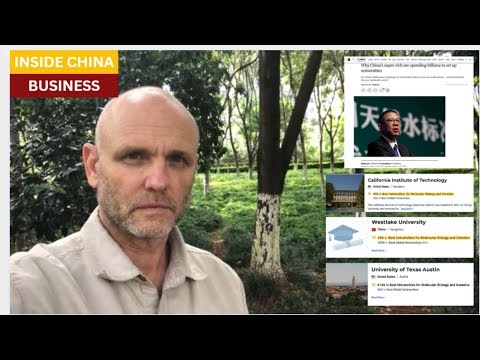
Westlake University, founded in Hangzhou just seven years ago by leading biologists, is already outperforming global top 100 schools in specific fields, including the University of Sydney and the University of North Carolina. Its model—deep pockets, aggressive recruitment of top scientists, and a narrow focus on high-impact fields—demonstrates that prestige can be manufactured in years rather than generations.
Geely Automotive Group, meanwhile, established its own university to train engineers, feeding talent directly into one of the world’s largest car manufacturers. Today, Geely ranks among the ten biggest automakers worldwide, with its university playing a central role in workforce development.
A Stanford Model with Chinese Characteristics
The parallel to Stanford is intentional. Stanford thrived not only because of academic excellence but because it was embedded in Silicon Valley, benefiting from venture capital, defense contracts, and a culture of entrepreneurship. China’s industrialists are attempting something similar: building universities adjacent to industrial clusters and pairing them with massive R&D investments.
For billionaires, these institutions serve dual purposes: they act as innovation engines and as political insurance policies. In an era when Beijing has cracked down on tech moguls and capital excesses, aligning one’s fortune with education and national advancement offers a form of protection.
Political Constraints and Academic Freedom
The long-term question is whether these billionaire-founded institutions can sustain the openness and intellectual risk-taking that has characterized Stanford and MIT. While China’s system excels in applied sciences and technology, political controls may limit innovation in social sciences and fields that thrive on dissent, debate, and unconventional thinking.
Still, if the aim is dominance in biotech, engineering, AI, and materials science, the model may succeed. In fact, Westlake’s rapid climb already suggests mid-tier Western universities could soon find themselves leapfrogged by Chinese institutions less than a decade old.
A Changing Balance
So, does China need U.S. universities for its elite? The answer is complicated.
Yes, for families who want global reach, especially in finance, technology entrepreneurship, and diplomacy. The cultural capital of an American education still matters.
No, for families satisfied with domestic prestige and security. China’s own universities — both traditional public institutions and billionaire-backed ventures — increasingly provide sufficient training for leadership roles.
What is clear is that U.S. universities can no longer assume a steady flow of Chinese elite students. The market has shifted, the politics have hardened, and the prestige gap has narrowed. For American higher education, already struggling with enrollment cliffs and financial strain, this shift could have serious consequences.
Sources:
Institute of International Education, Open Doors Report
Center for Security and Emerging Technology (CSET), “Chinese STEM Students in the U.S.”
Times Higher Education World University Rankings
South China Morning Post, Why China’s super-rich are spending billions to set up universities
Guangming Daily, Hello, Westlake University
CGTN, Westlake University established in Hangzhou
Geely Automotive Group, Overview
KE Press Global, China’s Billionaires Are Building Universities to Drive Innovation and Stay Politically Favorable
More Ohio students are being homeschooled now than during the COVID-19 pandemic.
The number of Ohio students being homeschooled was trending upward pre-pandemic, spiked to about 51,500 students during the COVID-19 pandemic and dipped back down slightly.
But homeschooling recently saw another surge with about 53,000 homeschooled students during the 2023-24 school year, according to data from the Ohio Department of Education and Workforce.
The number of homeschooled students in Ohio, according to the Ohio Department of Education and Workforce:
2023-24: 53,051 students
2022-23: 47,468 students
2021-22: 47,491 students
2020-21: 51,502 students
2019-20: 33,328 students
2018-19: 32,887 students
2017-18: 30,923 students
There were about 3.1 million homeschooled students nationwide in 2021-22 — quite the jump from 2.5 million in spring 2019, according to the National Home Education Research Institute.
“Homeschooling was already on a slightly slower upward trajectory, and had been for a number of years,” said Douglas J. Pietersma, research associate at National Home Education Research Institute. “What COVID did, from our perspective, is just infused it.”
He expects the number of homeschooled students to keep growing.
“It’s not going to put public schools out of business or anything like that, but it’s going to be a slow growth that is certainly going to be measurable over time,” Pietersma said.
Remote learning during the pandemic made parents become more aware of what was being taught in schools, said Melanie Elsey, Christian Home Educators of Ohio’s legislative liaison.
“I don’t think that it was a mass exodus from the public or private schools into homeschooling, but for parents who felt like they could accomplish more with one-on-one attention to learning … You can tailor the education to meet the needs of their children,” she said.
Not everyone who switched to homeschooling stayed after the pandemic, Elsey said.
“Some of them put their children back in because it was too much of a commitment,” she said. “So I think it was sort of a time period that parents felt comfortable trying something different to see if they could help their children learn more.”
The modern home education movement sprung out of the 1970s and “skyrocketed” in the 1980s, Pietersma said.
“People were either upset with the quality of education in general,” he said. “Then another group of people, it was more about the content of education.”
Today there are many reasons why a family might opt for homeschooling.
“Obviously, the quality of education is still one of the big issues,” Pietersma said. “Safety issues are a huge thing. People who have had their children in schools where they’ve been bullied or assaulted or had exposure to drugs … given the size of school, it may be not impossible to prevent some of those things.”
The reason for homeschooling varies and it is not always because a family is not satisfied with their local school district, Elsey said.
She homeschooled her children, but did not originally think it was for her family. However, she changed her mind after she enjoyed being home with her children through their preschool years.
“We prayed about it and really felt like it was something that was worthwhile,” Elsey said.
Jeannine Ramer has homeschooled her four children — two are now in college and two (ages 17 and 13) are currently being homeschooled.
“Homeschooling has really strengthened our family relationships, my kids are very, very close and supportive of one another, and I think that’s all of the hours spent at home and just really learning together,” said Ramer, who lives in Alliance.
They were not initially planning on homeschooling their children, but Ramer’s sister-in-law homeschooled her children and encouraged them to think about it as their oldest approached preschool age.
They decided to try it for a year or two, but found it worked well for their family.
“We loved it,” Ramer said. “We’ve had the ability to tailor each child’s education to that child.”
A parent does not need to be a licensed teacher in order to homeschool their children, Elsey said.
“It’s amazing how well families do because they have access to resources, really, all over the world, when you can get curriculum from anywhere that meets the needs of your students to learn to pursue their interests,” she said.
Families who decide to homeschool their children enjoy the flexibility, Pietersma said.
“They can tailor the education that they’re providing to their child in so many ways that an institutional school can’t just because of sheer numbers,” he said. “One teacher in a classroom with 30 students can’t take the lesson plan and tailor it to each of the 30 students.”
Ramer’s oldest child was interested in printing and design work as a teenager, so they were able to craft his high school education to those areas. Now he is studying industrial and innovative design in college.
“It just allowed us the ability to foster that,” she said. “There was much more flexibility.”
Ohio Capital Journal is part of States Newsroom, a nonprofit news network supported by grants and a coalition of donors as a 501c(3) public charity. Ohio Capital Journal maintains editorial independence. Contact Editor David Dewitt for questions: [email protected].
The Association for the Study of African American Life and History (ASALH) will convene its annual conference in Atlanta from September 24-28, 2025, bringing together Black leaders, academics, educators, and community members during what organizers describe as a “critical hour” for Black history and education.
TDr. Stephanie Y. Evanshe conference, themed “African Americans and Labor,” comes as educational institutions nationwide face mounting pressure over diversity, equity, and inclusion initiatives, and as several states have enacted legislation restricting how race and racism can be discussed in classrooms.
The conference will feature several prominent voices in African American studies and social justice, including Pulitzer Prize-winning historian Dr. Edda Fields-Black and scholar-activist Dr. Ibram X. Kendi. Labor organizer Chris Smalls, who led the successful effort to form the first independent union at an Amazon warehouse in the United States through the Amazon Labor Union, will headline the Friday John Blassingame Luncheon.
Other featured speakers include historians Drs. Peniel Joseph, Maurice Hobson, Stephanie Evans, and Joe Trotter Jr., along with civil rights leaders Ambassador Andrew and Andrea Young and Rev. Jamal Bryant.
A key component of the conference programming will address current challenges facing educators and institutions seeking to teach Black history. Specialized sessions will provide guidance to librarians, teachers, and community organizers on establishing Freedom Schools and teaching Black history “in the current challenged national environment.”
Dr. Peniel JosephThe Wednesday plenary session, “The Fire Now!,” will specifically examine how budgets and policies are “Undermining Preservation of the African American Experience,” featuring experts from the National Parks Conservation Association, Trust for Public Land, and the U.S. Department of the Interior.
“Our goal is to make as many of the activities free and accessible to the public as possible,” organizers announced, with Wednesday sessions, plenaries, film festival screenings, poster sessions, and vendor exhibits offered at no charge.
Thursday’s plenary, “Towards a Theory of Liberation: The State of Black Radicalism Today,” will feature scholars Drs. Charisse Burden-Stelly, Gerald Horne, Akinyele Umoja, Joy James, and Ashley Howard examining contemporary Black liberation movements.
Friday’s session will honor the scholarship of historian Dr. Joe William Trotter Jr., a leading expert on African American labor history and urban studies.
A Saturday luncheon titled “An Unusual Emphasis on Scholarship: Carter G. Woodson, Omega Psi Phi, and the Power of Black History” will explore the legacy of ASALH’s founder and the role of Black Greek letter organizations in preserving African American history.
Registration for the ASALH Conference is open, with both free and ticketed events available. The annual gathering represents one of the premier venues for African American historical scholarship and community engagement in the United States.
Dr. Earl S. Richardson, the visionary leader who transformed Morgan State University during a remarkable 25-year presidency and spearheaded a groundbreaking legal victory that secured hundreds of millions in funding for historically Black colleges and universities, died Saturday. He was 81.
Dr. Earl S. RichardsonRichardson’s death was announced by Morgan State University, where he served as the institution’s ninth president from 1984 to 2010. Under his stewardship, the Baltimore university experienced what became known as “Morgan’s Renaissance”—a period of unprecedented growth that saw enrollment double, the campus expand with new buildings, and the institution elevated to doctoral research university status.
But Richardson’s most enduring legacy may be his role as the architect of a historic 15-year legal battle that resulted in one of the largest settlements ever secured for HBCUs. The lawsuit, filed in 2006 and settled in 2021, compelled the state of Maryland to provide $577 million in supplemental funding over 10 years to four historically Black institutions, addressing decades of systematic underfunding.
The case drew comparisons to Brown v. Board of Education for its challenge to educational disparities, though it focused on higher education rather than K-12 schools. During the trial, state attorneys even attempted to have Richardson removed from the courtroom, though he remained as an expert witness, providing crucial historical testimony.
Richardson’s leadership style combined the tactical wisdom of a seasoned administrator with the moral clarity of a civil rights activist. In 1990, when students occupied Morgan’s administration building for six days to protest deteriorating facilities—leaking roofs, outdated science labs, and dilapidated dorms—Richardson subtly guided their anger toward the real source of the problem: insufficient state funding.
When Richardson arrived at Morgan State in November 1984, he found a struggling institution with 3,000 students housed in aging buildings. By the time he stepped down in 2010, enrollment had grown to more than 7,000 students, and the university had received approximately $500 million for new construction and renovations.
Major projects completed during his tenure included a $54 million school of architecture, a $40 million fine arts building, new engineering facilities, a student union, and stadium expansions. Richardson also oversaw the addition of new academic schools, including programs in architecture and social work, while elevating Morgan’s research profile.
“Our vision has been to transform Morgan from a liberal arts institution to a doctoral research university,” Richardson told Diverse in 2009. “We lead the state in graduating African-Americans.”
His impact extended far beyond physical infrastructure. Richardson strengthened faculty excellence, raised admission standards, and championed the unique mission of HBCUs in educating both the most talented Black students and those who might not otherwise consider higher education accessible.
Richardson’s advocacy extended beyond Morgan State to become a national voice for historically Black colleges and universities. In a 2008 testimony before the U.S. House of Representatives, he articulated the dual mission of HBCUs: serving high-achieving students while also reaching those who faced barriers to higher education access.
“We can make them the scientists and the engineers and the teachers and the professors—all of those things,” he told lawmakers. “But only if we can have our institutions develop to a level of comparability and parity so that we are as competitive as other institutions.”
His legal victory in Maryland put a national spotlight on funding disparities that have long plagued HBCUs, which are more likely than other institutions to rely on government funding and receive smaller portions of their revenue from private donations and grants.
An Air Force veteran, Richardson brought military discipline and strategic thinking to his educational leadership. He often spoke of participating in civil rights demonstrations during his own student years, experiences that shaped his understanding of both the power of organized protest and the importance of strategic action in pursuing justice.
Current Morgan State President Dr. David K. Wilson, who followed Richardson in the presidency, credited his predecessor with building the foundation for continued success.
“The foundation he built allowed us to continue Morgan’s upward trajectory, and much of what we have achieved in recent years is possible because of the strong platform he left behind,” Wilson said in announcing Richardson’s death.
Higher education in the United States has become its own high-stakes game, where students—particularly those from working-class backgrounds—risk their futures on degrees that may never deliver the promised payoff. Like Las Vegas, the system thrives on speculation, scams, and extraction, creating a casino economy in which the house almost always wins.
The dynamics at play in universities mirror those of Las Vegas. Tuition fees have tripled over the last two decades, and in 2025, outstanding student loan debt in the U.S. exceeds $1.9 trillion, carried by over 45 million borrowers. For many graduates, the return on investment is uncertain: nearly 40% of college-educated workers report being in jobs they do not enjoy or that do not require a degree.
Las Vegas itself provides a cautionary tale. The city’s economy depends on high-risk speculation, from manipulated gaming odds to predatory pricing and real estate bubbles. Hospitality and gaming workers are trapped in precarious jobs, and tourists are increasingly voicing dissatisfaction with hidden fees and scams. The parallels with higher education are striking: both systems rely on extracting value from participants while minimizing risk for those in control.
Labor unrest in both arenas highlights the human cost. University adjuncts, graduate assistants, and service staff face low pay, unpredictable schedules, and limited benefits—even as administrators and shareholders reap the gains. Similarly, culinary and hospitality workers in Vegas struggle under similar dynamics, a reminder that exploitation scales across sectors.
Casino capitalism—the U.S. default—demonstrates that short-term profits often trump long-term stability. In higher education, the consequences include credential inflation, student debt crises, and a growing divide between those who can gamble successfully and those for whom the system is rigged. Just as Vegas may eventually face a tourist backlash, higher education risks a reckoning if working-class students continue to shoulder the losses of a speculative system.
In this economy, whether the stakes are on the strip or in the classroom, the house may always win—but only until the players refuse to play.
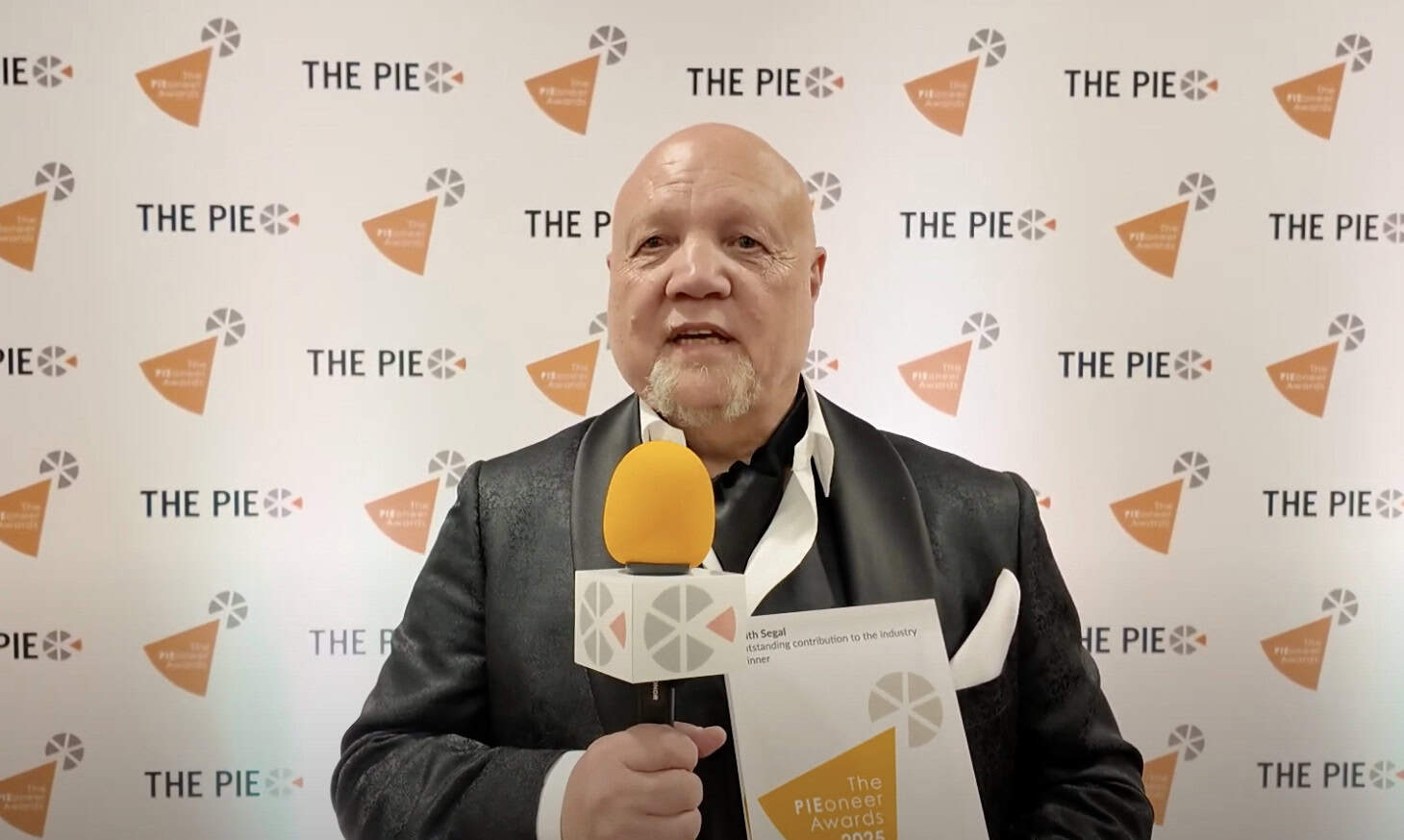
Awarded the outstanding contribution to the industry award 2025, Keith Segal reflects on the challenges and successes of the past 30 years in international education, and pays tribute to the dedicated staff who have stood alongside him on this journey.
This HEPI blog was kindly authored by Dr Steve Briggs, Director of Learning, Teaching and Libraries, University of Bedfordshire
In the context of UK higher education, the terms ‘traditional’ and ‘non-traditional’ are widely used when describing students – as apparent in recent blog posts published by HEPI. In this blog, I consider why the continued use of such terminology may become increasingly problematic and what might be a viable alternative.
Who are ‘traditional’ students?
The Cambridge dictionary defines ‘traditional’ as:
Following or belonging to the customs of ways of behaving that have continued in a group of people of society for a long time without changing.
As such, one can infer that the criterion for traditional students is that they will share established characteristics that have been fixed for a significant period.
The stereotypical traditional student
In the 1970s and 1980s, university students were generally young adults who left home and moved to a new city or town to study. They would routinely live with other students on or near to campus. Many would be able to undertake studies without needing to work and would have significant time available to spend on campus and engage in clubs, societies, sports teams and other social activities. In 2025, many commentators will cite this profile as being synonymous with a traditional student.
The rise of the non-traditional student
In the context of the UK, the term ‘non-traditional student’ has been widely used to differentiate learners who do not adhere to the aforementioned traditional student convention. Examples of characteristics seen to make a student non-traditional include:
Commuting to university, rather than living on campus
Being over the age of 21
Having parental and/or caring responsibilities
Hailing from a lower socio-economic background
Being the first-in-family to study at university
Having had experience of the care system
Such individuals are often time-poor but commitment-rich and in turn have very limited availability to spend on campus outside of scheduled sessions. The use of the non-traditional label has been used increasingly since the advent of widening participation in the 1990s.
Perceptions of traditional are not fixed
The concept of a traditional student is time-bound. For example, pre-1900, there was a small number of ancient universities in the UK and relatively very low numbers of students. Increased numbers of universities opening during the 1900s meant that more individuals were able to study at university, many of whom would be labelled as non-traditional relative to those pre-1900. However, the same group has since then been re-defined as traditional relative to those who studied in the 1990s.
Over the last twenty-five years non-traditional characteristics have become increasingly common amongst the student population. For example, in 2025, HESA reported that over half of students were from IMD quintiles 1 and 2, and the vast majority of students are now over the age of 20. Following previous trends, there will come a point, potentially in the not-too-distant future, whereby the current generation of non-traditional students will become viewed as traditional. The cyclical process will then likely start again with a new conceptualisation of what is non-traditional.
More nuanced classification options
Given the time-bound nature of both traditional and non-traditional characteristics I suggest that higher education commentators should consider the use of more exact terminology when discussing student cohorts. I suggest two options:
By decade: Student groups could be framed in terms of decades, for example the demographic and characteristics of students of the 1990s, 2000s, 2010s and 2020s, etc. Such an approach could work well if there was stability over a decade however, the impact of social or global events (such as a recession, government policy or pandemic) may mean within a decade those studying within higher education could change markedly. For example, the significant impact of governmental immigration policy changes on the recruitment of international students studying in the UK during the mid-2020s.
Create generational names: Since 1950, there have been five main birth generations: Baby Boomers, Generation X, Millennials, Generation Z and Generation Alpha. Each generation has shared characteristics synonymous with being born during that period. Analogously, specific generations could be defined in terms of university students. Each generation would have a distinctive name and characteristics common amongst most members studying at university during that specific window of time. The use of student generational names would offer flexibility to account for periods of stability that lasted longer than ten years and could also accommodate sudden changes to the profile of student cohorts.
I personally favour the use of generational names given the greater flexibility. I see this as necessary given the turbulence and change experienced within the higher education sector over the last decade. For instance, I propose that the pandemic was a catalyst for the emergence of a new generation of students, a defining characteristic of which being greater experience in remote communicating and learning online.
Putting into practice
As a starter for ten, I suggest seven generations of English students over the last 150 years. A caricature for each is provided – these are intended to be illustrative of generational difference rather than exhaustive:
Ancient Generation (pre-1900): A student would study at one of the ancient universities in the UK. Students were mainly from the upper social class, and a fraction of the population attended university. Those attending university would be financially supported by personal networks.
Redbrick Generation (circa 1900-1945): Most students studied at an ancient or redbrick university. Students continued to be mainly from the upper social class, and in turn a small percentage of the population attended university.
Post-World War Two Generation (circa 1946-1989): As the number of universities progressively expanded, students had greater geographic access to higher education. Students could access maintenance grants to cover the cost of living whilst studying. This allowed students to readily engage in activities alongside their studies.
Widening Participation Generation (circa 1990 – 1997): The number of universities significantly increased following the integration of polytechnics. Concentrated efforts were made to expand access to higher education and the percentage of students from previously underrepresented groups increased. In addition to maintenance grants, students were able to access low-cost student loans.
Tuition Fee Generation (circa 1998 – 2014): The widening participation imperative remained but students now paid a tuition fee to study. Choice of where to study remained limited by student number caps. Maintenance grants were abolished and replaced with student loans. As fees progressively increased more students found they needed to undertake work whilst studying.
Free Market Generation (circa 2015 – 2019): Widening participation remained a priority. The student number cap is removed, and many universities actively expand the availability of places. Students have unprecedented choice in terms of where to study at university. Tuition fees and living costs remain a challenge for many students and numbers working whilst studying remains very high.
Pandemic Generation (circa 2020 – current): The pandemic results in a sudden and seismic shift to online education across schools, colleges and universities. This results in students have new experiences and expectations related to online and blended learning. Cost of living increases following the pandemic resulted in more student facing financial hardships in turn resulting in many spending less time on campus. Demand for mental health and well-being support increases.
Analogous to birth generations, I would see that other interpretations of higher education student generation names could emerge through research outputs, thought pieces or social events as opposed to being determined by a single group or professional body. Influential think tanks like HEPI could play a key role in providing platforms for such discussion.
I foresee there potentially being variations in proposed student generational definitions (as is the case with birth generations) but if all are clearly defined, these would all be invaluable for higher education commentators when discussing longitudinal changes in cohorts over time.
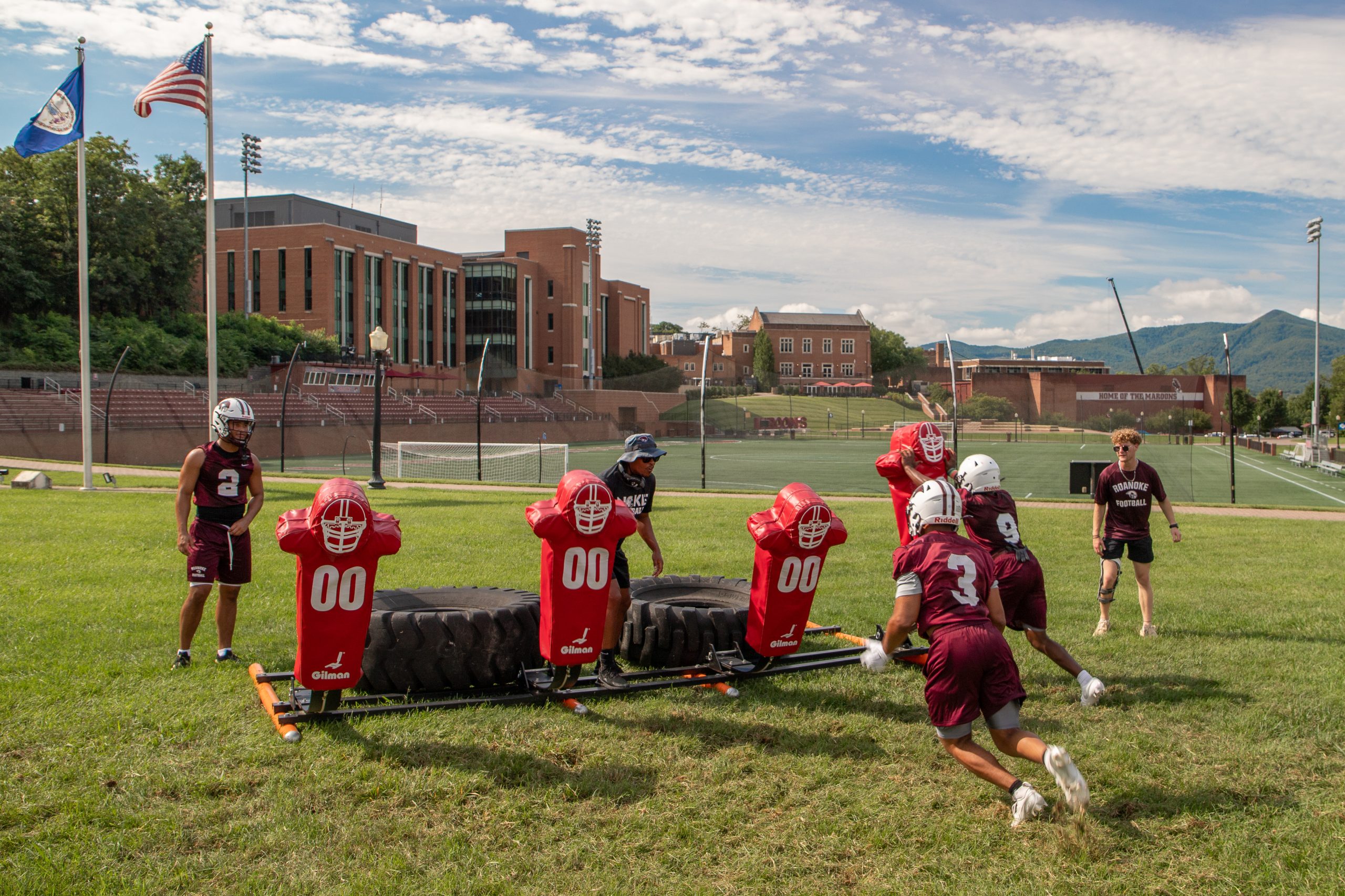
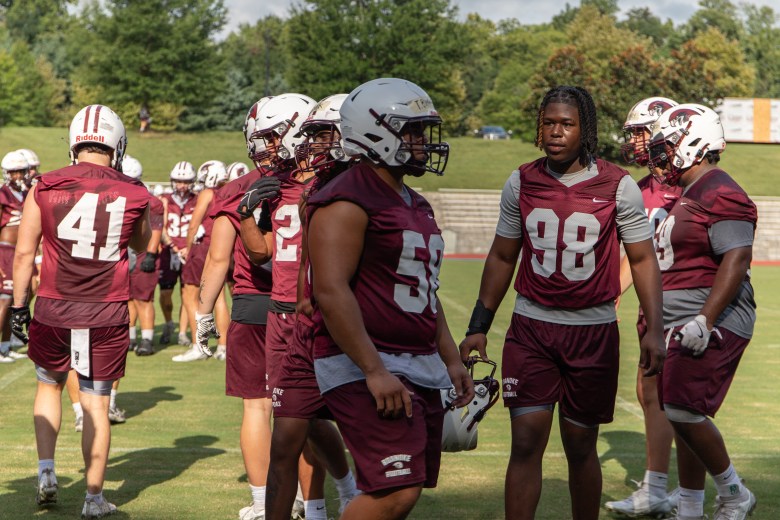
SALEM, Va. — On a hot and humid August morning in this southwestern Virginia town, football training camp is in full swing at Roanoke College. Players cheer as a receiver makes a leaping one-handed catch, and linemen sweat through blocking drills. Practice hums along like a well-oiled machine — yet this is the first day this team has practiced, ever.
In fact, it’s the first day of practice for a Roanoke College varsity football team since 1942, when the college dropped football in the midst of World War II.
Roanoke is one of about a dozen schools that have added football programs in the last two years, with several more set to do so in 2026. They hope that having a team will increase enrollment, especially of men, whose ranks in college have been falling. Yet research consistently finds that while enrollment may spike initially, adding football does not produce long-term enrollment gains, or if it does, it is only for a few years.
Roanoke’s president, Frank Shushok Jr., nonetheless believes that bringing back football – and the various spirit-raising activities that go with it — will attract more students, especially men. The small liberal arts college lost nearly 300 students between 2019 and 2022, and things were likely to get worse; the country’s population of 18-year-olds is about to decline and colleges everywhere are competing for students from a smaller pool.
“Do I think adding sports strategically is helping the college maintain its enrollment base? It absolutely has for us,” said Shushok. “And it has in a time when men in particular aren’t going to college.”
Women outnumber men by about 60 percent to 40 percent at four-year colleges nationwide. Roanoke is a part of this trend. In 2019, the college had 1,125 women students and 817 men.
This fall, Roanoke will have 1,738 students altogether, about half men and half women. But the incoming freshman class is more than 55 percent male.
Sophomore linebacker Ethan Mapstone (26) jogs to the sideline at the end of a drill. Mapstone said he hadn’t planned to play college football until Roanoke head coach Bryan Stinespring recruited him. Credit: Miles MacClure for The Hechinger Report
“The goal was that football would, in a couple of years, bring in at least an additional hundred students to the college,” said Curtis Campbell, Roanoke’s athletic director, as he observed the first day of practice. “We’ve got 97 kids out there on the field. So we’re already at the goal.”
That number was 91 players as the season began, on Sept. 6 — and the Maroons won their first game, 23-7, over Virginia University of Lynchburg, on what Shushok called “a brilliant day full of community spirit and pride.”
“Our students were out in force, side by side with community members spanning the generations,” he said via email. “In a time when we all need more to celebrate and opportunities to gather, it is easy to say our first football game since 1942 was both historic and invigorating.”
Related: Interested in more news about colleges and universities? Subscribe to our free biweekly higher education newsletter.
In the NCAA’s Division III, where Roanoke teams compete, athletic scholarships are not permitted. Athletes pay tuition or receive financial aid in the same way as other students, so adding football players will add revenue. For a small college, this can be significant.
Shushok said it’s not just about enrollment, though: He wants a livelier campus with more school spirit. Along with football, he started a marching band and a competitive cheerleading team.
“It plays to something that’s really important to 18- to 22-year-olds right now, which is a sense of belonging and spirit and excitement,” said Shushok, who came to Roanoke after being vice president of student affairs at Virginia Tech. Its Division I football team plays in a 65,000-seat stadium where fans jump up and down in unison to Metallica’s “Enter Sandman” as the players take the field.
The Maroons play in the local high school stadium — it seats 7,157 — and pay the city of Salem $2,850 per game in rent. The college raised $1.3 million from alumni and corporate sponsors to get the team up and running.
Roanoke College players gather on the sidelines during practice. Credit: Miles MacClure for The Hechinger Report
Despite the research showing limited enrollment gains from adding football, colleges keep doing it. About a dozen have added or relaunched football programs in the last two years, including New England College in New Hampshire and the University of Texas Rio Grande Valley. Several more plan to add football in 2026, including Chicago State University and Azusa Pacific University in California.
Calvin University in Michigan recently added football even though the student body was already half men, half women. The school wanted to broaden its overall appeal, Calvin Provost Noah Toly said, citing “school spirit, tradition, leadership development,” as well as the increased enrollment and “strengthened pipelines with feeder schools.”
“What you see is basically a one-year spike in male enrollment around guys who come to that school to help be part of starting up a team, but then that effect fades out over the next couple of years,” said Welch Suggs, an associate professor there and the lead author of that study. It found early modest enrollment spikes at colleges that added football compared to peers that didn’t and “statistically indistinguishable” differences after the first two years.
”What happens is that you have a substitution effect going on,” Suggs said. “There’s a population of students that really want to go to a football school; the football culture and everything with it really attracts some students. And there are others who really do not care one way or the other. And so I think what happens is that you are simply recruiting from different pools.”
Today, college leaders value any pool that includes men. Most prefer the campus population to be balanced between the sexes, and, considering the low number of male high school graduates going to college at all (39 percent in the last Pew survey), many worry about too few men being prepared for the future workforce.
“ I don’t know that we have done a good job of articulating the value, and of programming to the particular needs that some of our young men are bringing in this moment,” Shushok said. “I think it’s pretty obvious, if you read the literature out there, that a lot of men are feeling undervalued and perhaps unseen in our culture.”
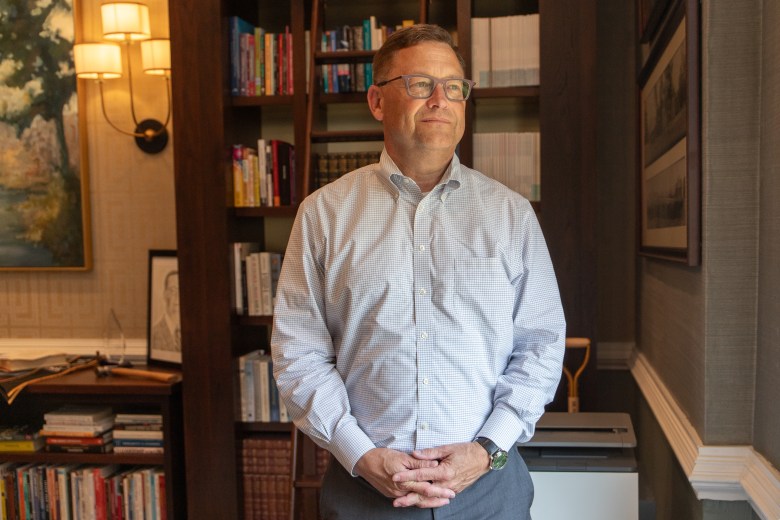
Roanoke College President Frank Shushok Jr. in his office. Shushok said he brought football back to Roanoke to boost enrollment and create a livelier campus. Credit: Miles MacClure for The Hechinger Report
Shushok said that Roanoke’s enrollment-building strategy was not centered on athletics. The college has also forged partnerships with local community colleges, guaranteeing students admission after they complete their associate degree, and has added nine new majors in 2024, including cannabis studies. Shushok pointed out that while freshman enrollment is down slightly this year, the community college program has produced a big increase in transfer students, from 65 in fall of 2024 to 91 this fall.
About 55 percent of Roanoke’s students come from Virginia, but 75 of the football team’s 91 players are Virginians. The head coach, Bryan Stinespring, a 61-year-old Virginia native, knows that recruiting territory, having worked on the coaching staffs at several Virginia universities in his career.
When Stinespring took over as head coach in 2023, hoping to inspire existing students and potential applicants to join his new team, there was no locker room, no shoulder pads or tackling dummies, no uniforms.
“The first set of recruits that came on campus, we ran down to Dick’s, got a football, went to the bookstore, got a sweatshirt,” said Stinespring, referring to a local Dick’s Sporting Goods store. “These kids came on campus and they had to believe in the vision that we had.”
Students bought into that vision; 61 of them joined a club team last fall, which played four exhibition games in preparation for this year. The community bought in, too; 9,200 fans showed up to the first club game, about 2,000 of them perched on a grassy hill overlooking the end zone.
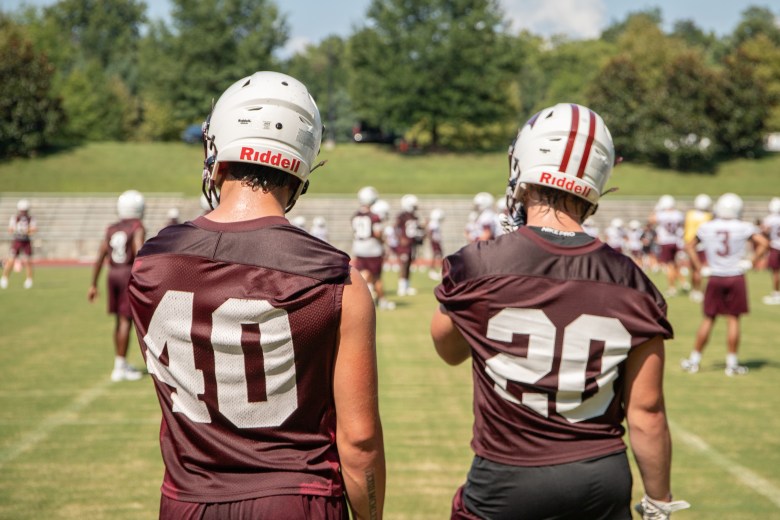
Linebackers Connor Cox (40) and Austin Fisher (20) look on from the sidelines. Credit: Miles MacClure for The Hechinger Report
Before Ethan Mapstone, a sophomore, committed to Roanoke, he was on the verge of giving up football, having sustained several injuries in high school. Then Stinespring called.
“I could hear by the tone of his voice how serious he meant everything he was saying,” said Mapstone, a 6-foot-1-inch linebacker from Virginia Beach. “I was on a visit a week later, committed two weeks later.”
To him, the football leaders at Roanoke seemed to be “a bunch of people on a mission ready to make something happen, and I think that’s what drove me in.”
KJ Bratton, a junior wide receiver and transfer student from the University of Virginia, said he was drawn to Roanoke not because of football but because of the focus on individual attention in small classes. “You definitely get that one-on-one attention with your teacher, that definitely helps you in the long run,” said Bratton.
Jaden Davis, a sophomore wide receiver who was an honor roll student in high school, said, “ The staff, they care about all the students. They’ll pull you aside, they know you personally, they’ll send you emails, invite you to office hours, and they just work with you to do the best you can.”
Not everyone was on board with football returning to the college when the plan was first announced. Some faculty and administrators were concerned football would change the campus culture, said Campbell, the athletic director.
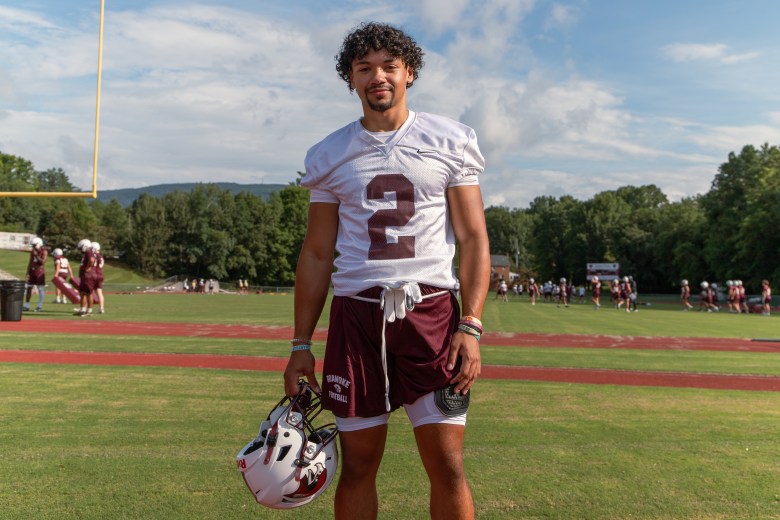
Sophomore wide receiver Jaden Davis poses for a photograph before the first practice of the season. Davis said the individual attention he could get from professors is what attracted him to Roanoke. Credit: Miles MacClure for The Hechinger Report
“There were just stereotypes about football players,” he said. “You know, they’re not smart, they’re troublemakers. They’re gonna do this and they’re gonna do that, be disruptive.”
But the stereotypes turned out to be unwarranted,he said.When the club team started, he said, “I got so many compliments last year from faculty and staff and campus security about how respectful and polite and nice our students were, how they behaved in the classroom, sitting in the front row and just being role models.”
Payton Rigney, a junior who helps out with the football team, concurred. “All the professors like them because they say ‘yes, sir’ and ‘no, ma’am,’” she said.
Like most Division III athletes, the Roanoke players know that they have little chance of making football a professional career. Mapstone said there are other reasons to embrace the sport.
“It’s a great blessing to be able to do what we do,” he said. “There’s many people that I speak to who are older and, and they reminisce about the times that they had to play football, and it’s very limited time.
“And even though there’s not a future for it, I love it. It’s a Thursday, my only problem in the world is that there’s dew on my shoes.”
Contact editor Lawrie Mifflin at (212) 678-4078 or [email protected].
The Hechinger Report provides in-depth, fact-based, unbiased reporting on education that is free to all readers. But that doesn’t mean it’s free to produce. Our work keeps educators and the public informed about pressing issues at schools and on campuses throughout the country. We tell the whole story, even when the details are inconvenient. Help us keep doing that.