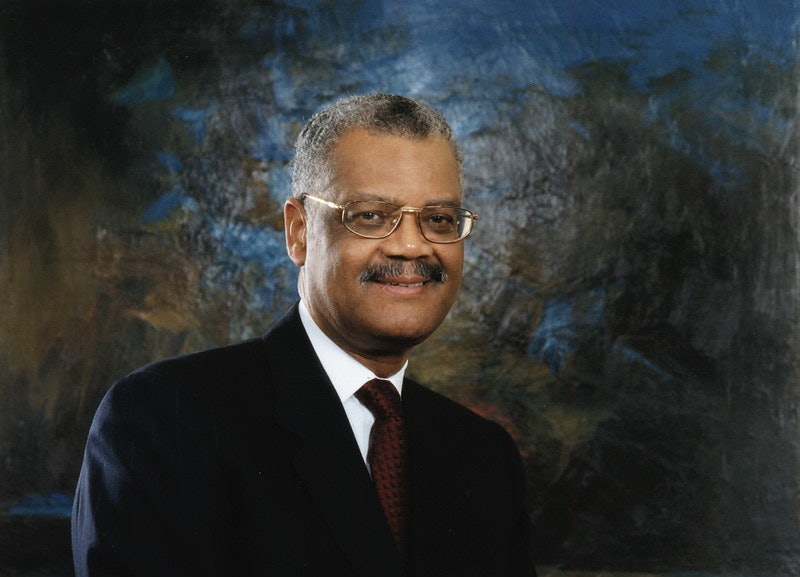
Dr. Earl S. Richardson, the visionary leader who transformed Morgan State University during a remarkable 25-year presidency and spearheaded a groundbreaking legal victory that secured hundreds of millions in funding for historically Black colleges and universities, died Saturday. He was 81.
Dr. Earl S. RichardsonRichardson’s death was announced by Morgan State University, where he served as the institution’s ninth president from 1984 to 2010. Under his stewardship, the Baltimore university experienced what became known as “Morgan’s Renaissance”—a period of unprecedented growth that saw enrollment double, the campus expand with new buildings, and the institution elevated to doctoral research university status.
But Richardson’s most enduring legacy may be his role as the architect of a historic 15-year legal battle that resulted in one of the largest settlements ever secured for HBCUs. The lawsuit, filed in 2006 and settled in 2021, compelled the state of Maryland to provide $577 million in supplemental funding over 10 years to four historically Black institutions, addressing decades of systematic underfunding.
The case drew comparisons to Brown v. Board of Education for its challenge to educational disparities, though it focused on higher education rather than K-12 schools. During the trial, state attorneys even attempted to have Richardson removed from the courtroom, though he remained as an expert witness, providing crucial historical testimony.
Richardson’s leadership style combined the tactical wisdom of a seasoned administrator with the moral clarity of a civil rights activist. In 1990, when students occupied Morgan’s administration building for six days to protest deteriorating facilities—leaking roofs, outdated science labs, and dilapidated dorms—Richardson subtly guided their anger toward the real source of the problem: insufficient state funding.
When Richardson arrived at Morgan State in November 1984, he found a struggling institution with 3,000 students housed in aging buildings. By the time he stepped down in 2010, enrollment had grown to more than 7,000 students, and the university had received approximately $500 million for new construction and renovations.
Major projects completed during his tenure included a $54 million school of architecture, a $40 million fine arts building, new engineering facilities, a student union, and stadium expansions. Richardson also oversaw the addition of new academic schools, including programs in architecture and social work, while elevating Morgan’s research profile.
“Our vision has been to transform Morgan from a liberal arts institution to a doctoral research university,” Richardson told Diverse in 2009. “We lead the state in graduating African-Americans.”
His impact extended far beyond physical infrastructure. Richardson strengthened faculty excellence, raised admission standards, and championed the unique mission of HBCUs in educating both the most talented Black students and those who might not otherwise consider higher education accessible.
Richardson’s advocacy extended beyond Morgan State to become a national voice for historically Black colleges and universities. In a 2008 testimony before the U.S. House of Representatives, he articulated the dual mission of HBCUs: serving high-achieving students while also reaching those who faced barriers to higher education access.
“We can make them the scientists and the engineers and the teachers and the professors—all of those things,” he told lawmakers. “But only if we can have our institutions develop to a level of comparability and parity so that we are as competitive as other institutions.”
His legal victory in Maryland put a national spotlight on funding disparities that have long plagued HBCUs, which are more likely than other institutions to rely on government funding and receive smaller portions of their revenue from private donations and grants.
An Air Force veteran, Richardson brought military discipline and strategic thinking to his educational leadership. He often spoke of participating in civil rights demonstrations during his own student years, experiences that shaped his understanding of both the power of organized protest and the importance of strategic action in pursuing justice.
Current Morgan State President Dr. David K. Wilson, who followed Richardson in the presidency, credited his predecessor with building the foundation for continued success.
“The foundation he built allowed us to continue Morgan’s upward trajectory, and much of what we have achieved in recent years is possible because of the strong platform he left behind,” Wilson said in announcing Richardson’s death.
Higher education in the United States has become its own high-stakes game, where students—particularly those from working-class backgrounds—risk their futures on degrees that may never deliver the promised payoff. Like Las Vegas, the system thrives on speculation, scams, and extraction, creating a casino economy in which the house almost always wins.
The dynamics at play in universities mirror those of Las Vegas. Tuition fees have tripled over the last two decades, and in 2025, outstanding student loan debt in the U.S. exceeds $1.9 trillion, carried by over 45 million borrowers. For many graduates, the return on investment is uncertain: nearly 40% of college-educated workers report being in jobs they do not enjoy or that do not require a degree.
Las Vegas itself provides a cautionary tale. The city’s economy depends on high-risk speculation, from manipulated gaming odds to predatory pricing and real estate bubbles. Hospitality and gaming workers are trapped in precarious jobs, and tourists are increasingly voicing dissatisfaction with hidden fees and scams. The parallels with higher education are striking: both systems rely on extracting value from participants while minimizing risk for those in control.
Labor unrest in both arenas highlights the human cost. University adjuncts, graduate assistants, and service staff face low pay, unpredictable schedules, and limited benefits—even as administrators and shareholders reap the gains. Similarly, culinary and hospitality workers in Vegas struggle under similar dynamics, a reminder that exploitation scales across sectors.
Casino capitalism—the U.S. default—demonstrates that short-term profits often trump long-term stability. In higher education, the consequences include credential inflation, student debt crises, and a growing divide between those who can gamble successfully and those for whom the system is rigged. Just as Vegas may eventually face a tourist backlash, higher education risks a reckoning if working-class students continue to shoulder the losses of a speculative system.
In this economy, whether the stakes are on the strip or in the classroom, the house may always win—but only until the players refuse to play.
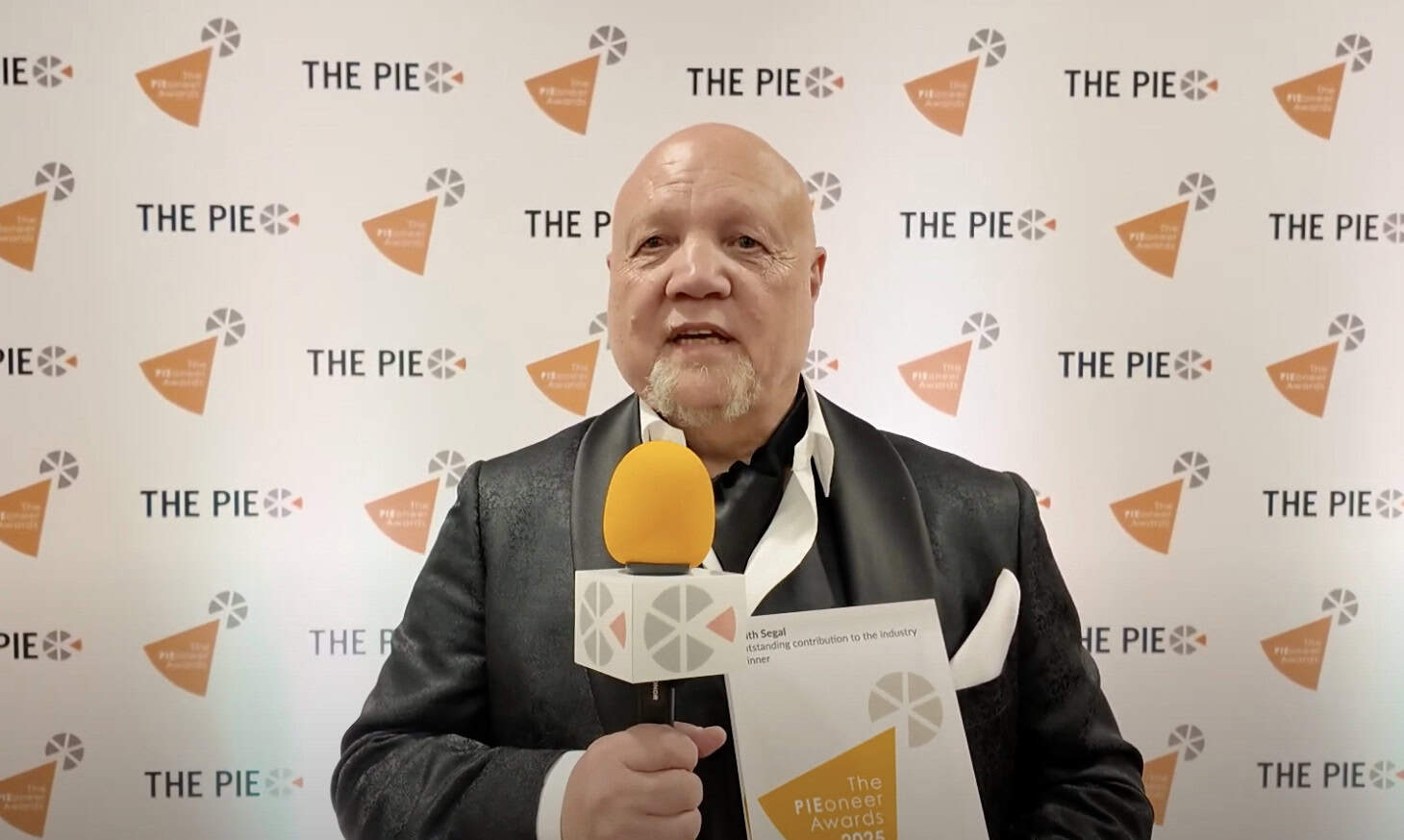
Awarded the outstanding contribution to the industry award 2025, Keith Segal reflects on the challenges and successes of the past 30 years in international education, and pays tribute to the dedicated staff who have stood alongside him on this journey.
This HEPI blog was kindly authored by Dr Steve Briggs, Director of Learning, Teaching and Libraries, University of Bedfordshire
In the context of UK higher education, the terms ‘traditional’ and ‘non-traditional’ are widely used when describing students – as apparent in recent blog posts published by HEPI. In this blog, I consider why the continued use of such terminology may become increasingly problematic and what might be a viable alternative.
Who are ‘traditional’ students?
The Cambridge dictionary defines ‘traditional’ as:
Following or belonging to the customs of ways of behaving that have continued in a group of people of society for a long time without changing.
As such, one can infer that the criterion for traditional students is that they will share established characteristics that have been fixed for a significant period.
The stereotypical traditional student
In the 1970s and 1980s, university students were generally young adults who left home and moved to a new city or town to study. They would routinely live with other students on or near to campus. Many would be able to undertake studies without needing to work and would have significant time available to spend on campus and engage in clubs, societies, sports teams and other social activities. In 2025, many commentators will cite this profile as being synonymous with a traditional student.
The rise of the non-traditional student
In the context of the UK, the term ‘non-traditional student’ has been widely used to differentiate learners who do not adhere to the aforementioned traditional student convention. Examples of characteristics seen to make a student non-traditional include:
Commuting to university, rather than living on campus
Being over the age of 21
Having parental and/or caring responsibilities
Hailing from a lower socio-economic background
Being the first-in-family to study at university
Having had experience of the care system
Such individuals are often time-poor but commitment-rich and in turn have very limited availability to spend on campus outside of scheduled sessions. The use of the non-traditional label has been used increasingly since the advent of widening participation in the 1990s.
Perceptions of traditional are not fixed
The concept of a traditional student is time-bound. For example, pre-1900, there was a small number of ancient universities in the UK and relatively very low numbers of students. Increased numbers of universities opening during the 1900s meant that more individuals were able to study at university, many of whom would be labelled as non-traditional relative to those pre-1900. However, the same group has since then been re-defined as traditional relative to those who studied in the 1990s.
Over the last twenty-five years non-traditional characteristics have become increasingly common amongst the student population. For example, in 2025, HESA reported that over half of students were from IMD quintiles 1 and 2, and the vast majority of students are now over the age of 20. Following previous trends, there will come a point, potentially in the not-too-distant future, whereby the current generation of non-traditional students will become viewed as traditional. The cyclical process will then likely start again with a new conceptualisation of what is non-traditional.
More nuanced classification options
Given the time-bound nature of both traditional and non-traditional characteristics I suggest that higher education commentators should consider the use of more exact terminology when discussing student cohorts. I suggest two options:
By decade: Student groups could be framed in terms of decades, for example the demographic and characteristics of students of the 1990s, 2000s, 2010s and 2020s, etc. Such an approach could work well if there was stability over a decade however, the impact of social or global events (such as a recession, government policy or pandemic) may mean within a decade those studying within higher education could change markedly. For example, the significant impact of governmental immigration policy changes on the recruitment of international students studying in the UK during the mid-2020s.
Create generational names: Since 1950, there have been five main birth generations: Baby Boomers, Generation X, Millennials, Generation Z and Generation Alpha. Each generation has shared characteristics synonymous with being born during that period. Analogously, specific generations could be defined in terms of university students. Each generation would have a distinctive name and characteristics common amongst most members studying at university during that specific window of time. The use of student generational names would offer flexibility to account for periods of stability that lasted longer than ten years and could also accommodate sudden changes to the profile of student cohorts.
I personally favour the use of generational names given the greater flexibility. I see this as necessary given the turbulence and change experienced within the higher education sector over the last decade. For instance, I propose that the pandemic was a catalyst for the emergence of a new generation of students, a defining characteristic of which being greater experience in remote communicating and learning online.
Putting into practice
As a starter for ten, I suggest seven generations of English students over the last 150 years. A caricature for each is provided – these are intended to be illustrative of generational difference rather than exhaustive:
Ancient Generation (pre-1900): A student would study at one of the ancient universities in the UK. Students were mainly from the upper social class, and a fraction of the population attended university. Those attending university would be financially supported by personal networks.
Redbrick Generation (circa 1900-1945): Most students studied at an ancient or redbrick university. Students continued to be mainly from the upper social class, and in turn a small percentage of the population attended university.
Post-World War Two Generation (circa 1946-1989): As the number of universities progressively expanded, students had greater geographic access to higher education. Students could access maintenance grants to cover the cost of living whilst studying. This allowed students to readily engage in activities alongside their studies.
Widening Participation Generation (circa 1990 – 1997): The number of universities significantly increased following the integration of polytechnics. Concentrated efforts were made to expand access to higher education and the percentage of students from previously underrepresented groups increased. In addition to maintenance grants, students were able to access low-cost student loans.
Tuition Fee Generation (circa 1998 – 2014): The widening participation imperative remained but students now paid a tuition fee to study. Choice of where to study remained limited by student number caps. Maintenance grants were abolished and replaced with student loans. As fees progressively increased more students found they needed to undertake work whilst studying.
Free Market Generation (circa 2015 – 2019): Widening participation remained a priority. The student number cap is removed, and many universities actively expand the availability of places. Students have unprecedented choice in terms of where to study at university. Tuition fees and living costs remain a challenge for many students and numbers working whilst studying remains very high.
Pandemic Generation (circa 2020 – current): The pandemic results in a sudden and seismic shift to online education across schools, colleges and universities. This results in students have new experiences and expectations related to online and blended learning. Cost of living increases following the pandemic resulted in more student facing financial hardships in turn resulting in many spending less time on campus. Demand for mental health and well-being support increases.
Analogous to birth generations, I would see that other interpretations of higher education student generation names could emerge through research outputs, thought pieces or social events as opposed to being determined by a single group or professional body. Influential think tanks like HEPI could play a key role in providing platforms for such discussion.
I foresee there potentially being variations in proposed student generational definitions (as is the case with birth generations) but if all are clearly defined, these would all be invaluable for higher education commentators when discussing longitudinal changes in cohorts over time.
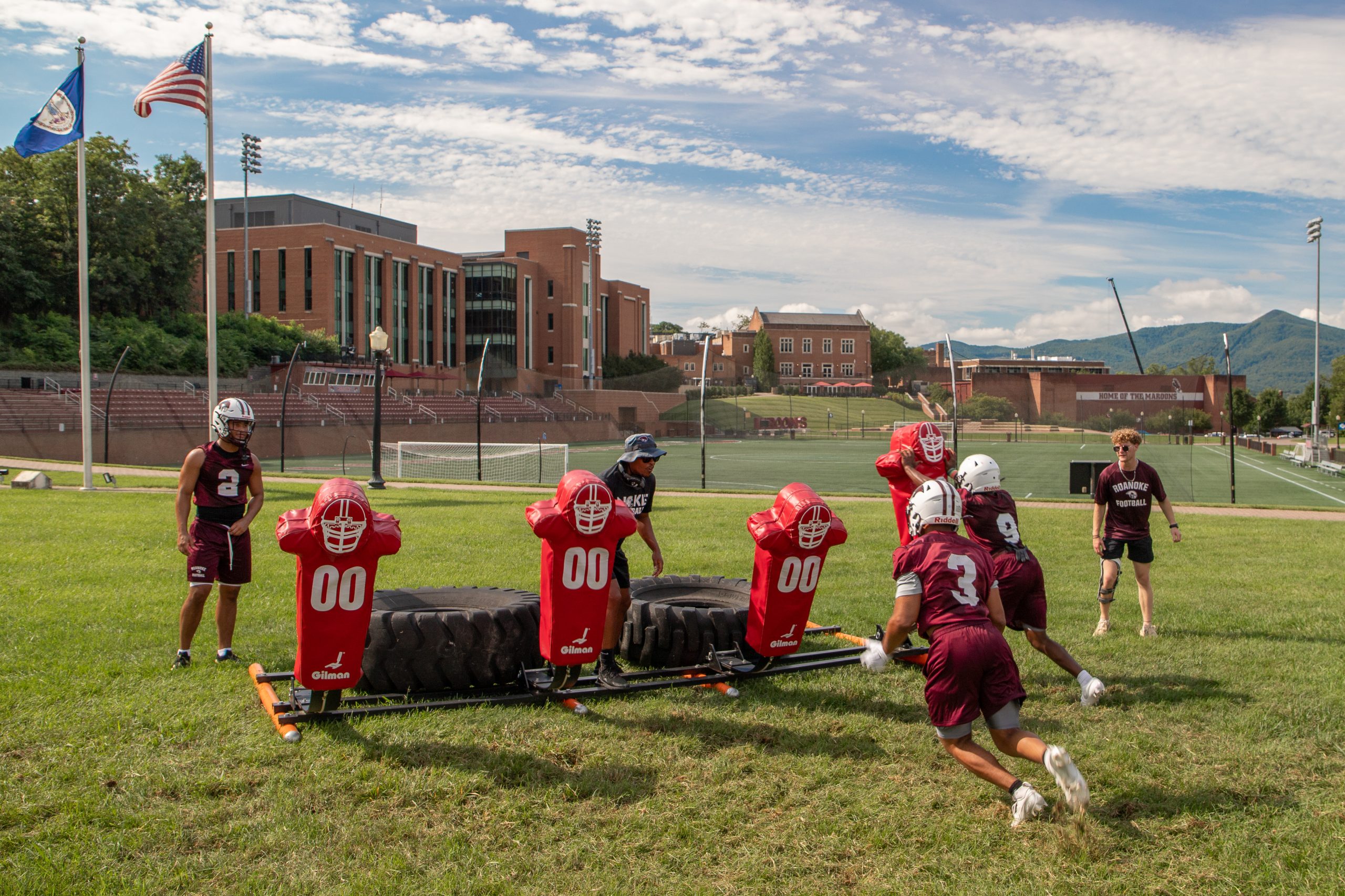
SALEM, Va. — On a hot and humid August morning in this southwestern Virginia town, football training camp is in full swing at Roanoke College. Players cheer as a receiver makes a leaping one-handed catch, and linemen sweat through blocking drills. Practice hums along like a well-oiled machine — yet this is the first day this team has practiced, ever.
In fact, it’s the first day of practice for a Roanoke College varsity football team since 1942, when the college dropped football in the midst of World War II.
Roanoke is one of about a dozen schools that have added football programs in the last two years, with several more set to do so in 2026. They hope that having a team will increase enrollment, especially of men, whose ranks in college have been falling. Yet research consistently finds that while enrollment may spike initially, adding football does not produce long-term enrollment gains, or if it does, it is only for a few years.
Roanoke’s president, Frank Shushok Jr., nonetheless believes that bringing back football – and the various spirit-raising activities that go with it — will attract more students, especially men. The small liberal arts college lost nearly 300 students between 2019 and 2022, and things were likely to get worse; the country’s population of 18-year-olds is about to decline and colleges everywhere are competing for students from a smaller pool.
“Do I think adding sports strategically is helping the college maintain its enrollment base? It absolutely has for us,” said Shushok. “And it has in a time when men in particular aren’t going to college.”
Women outnumber men by about 60 percent to 40 percent at four-year colleges nationwide. Roanoke is a part of this trend. In 2019, the college had 1,125 women students and 817 men.
This fall, Roanoke will have 1,738 students altogether, about half men and half women. But the incoming freshman class is more than 55 percent male.
Sophomore linebacker Ethan Mapstone (26) jogs to the sideline at the end of a drill. Mapstone said he hadn’t planned to play college football until Roanoke head coach Bryan Stinespring recruited him. Credit: Miles MacClure for The Hechinger Report
“The goal was that football would, in a couple of years, bring in at least an additional hundred students to the college,” said Curtis Campbell, Roanoke’s athletic director, as he observed the first day of practice. “We’ve got 97 kids out there on the field. So we’re already at the goal.”
That number was 91 players as the season began, on Sept. 6 — and the Maroons won their first game, 23-7, over Virginia University of Lynchburg, on what Shushok called “a brilliant day full of community spirit and pride.”
“Our students were out in force, side by side with community members spanning the generations,” he said via email. “In a time when we all need more to celebrate and opportunities to gather, it is easy to say our first football game since 1942 was both historic and invigorating.”
Related: Interested in more news about colleges and universities? Subscribe to our free biweekly higher education newsletter.
In the NCAA’s Division III, where Roanoke teams compete, athletic scholarships are not permitted. Athletes pay tuition or receive financial aid in the same way as other students, so adding football players will add revenue. For a small college, this can be significant.
Shushok said it’s not just about enrollment, though: He wants a livelier campus with more school spirit. Along with football, he started a marching band and a competitive cheerleading team.
“It plays to something that’s really important to 18- to 22-year-olds right now, which is a sense of belonging and spirit and excitement,” said Shushok, who came to Roanoke after being vice president of student affairs at Virginia Tech. Its Division I football team plays in a 65,000-seat stadium where fans jump up and down in unison to Metallica’s “Enter Sandman” as the players take the field.
The Maroons play in the local high school stadium — it seats 7,157 — and pay the city of Salem $2,850 per game in rent. The college raised $1.3 million from alumni and corporate sponsors to get the team up and running.
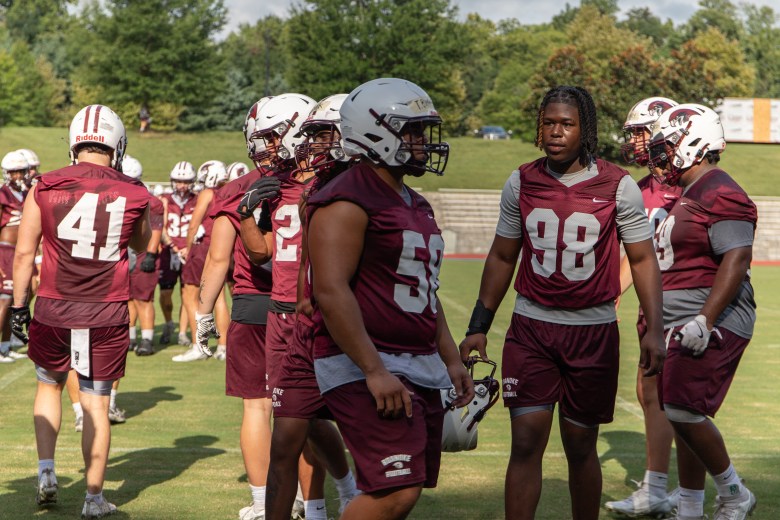
Roanoke College players gather on the sidelines during practice. Credit: Miles MacClure for The Hechinger Report
Despite the research showing limited enrollment gains from adding football, colleges keep doing it. About a dozen have added or relaunched football programs in the last two years, including New England College in New Hampshire and the University of Texas Rio Grande Valley. Several more plan to add football in 2026, including Chicago State University and Azusa Pacific University in California.
Calvin University in Michigan recently added football even though the student body was already half men, half women. The school wanted to broaden its overall appeal, Calvin Provost Noah Toly said, citing “school spirit, tradition, leadership development,” as well as the increased enrollment and “strengthened pipelines with feeder schools.”
“What you see is basically a one-year spike in male enrollment around guys who come to that school to help be part of starting up a team, but then that effect fades out over the next couple of years,” said Welch Suggs, an associate professor there and the lead author of that study. It found early modest enrollment spikes at colleges that added football compared to peers that didn’t and “statistically indistinguishable” differences after the first two years.
”What happens is that you have a substitution effect going on,” Suggs said. “There’s a population of students that really want to go to a football school; the football culture and everything with it really attracts some students. And there are others who really do not care one way or the other. And so I think what happens is that you are simply recruiting from different pools.”
Today, college leaders value any pool that includes men. Most prefer the campus population to be balanced between the sexes, and, considering the low number of male high school graduates going to college at all (39 percent in the last Pew survey), many worry about too few men being prepared for the future workforce.
“ I don’t know that we have done a good job of articulating the value, and of programming to the particular needs that some of our young men are bringing in this moment,” Shushok said. “I think it’s pretty obvious, if you read the literature out there, that a lot of men are feeling undervalued and perhaps unseen in our culture.”
Roanoke College President Frank Shushok Jr. in his office. Shushok said he brought football back to Roanoke to boost enrollment and create a livelier campus. Credit: Miles MacClure for The Hechinger Report
Shushok said that Roanoke’s enrollment-building strategy was not centered on athletics. The college has also forged partnerships with local community colleges, guaranteeing students admission after they complete their associate degree, and has added nine new majors in 2024, including cannabis studies. Shushok pointed out that while freshman enrollment is down slightly this year, the community college program has produced a big increase in transfer students, from 65 in fall of 2024 to 91 this fall.
About 55 percent of Roanoke’s students come from Virginia, but 75 of the football team’s 91 players are Virginians. The head coach, Bryan Stinespring, a 61-year-old Virginia native, knows that recruiting territory, having worked on the coaching staffs at several Virginia universities in his career.
When Stinespring took over as head coach in 2023, hoping to inspire existing students and potential applicants to join his new team, there was no locker room, no shoulder pads or tackling dummies, no uniforms.
“The first set of recruits that came on campus, we ran down to Dick’s, got a football, went to the bookstore, got a sweatshirt,” said Stinespring, referring to a local Dick’s Sporting Goods store. “These kids came on campus and they had to believe in the vision that we had.”
Students bought into that vision; 61 of them joined a club team last fall, which played four exhibition games in preparation for this year. The community bought in, too; 9,200 fans showed up to the first club game, about 2,000 of them perched on a grassy hill overlooking the end zone.
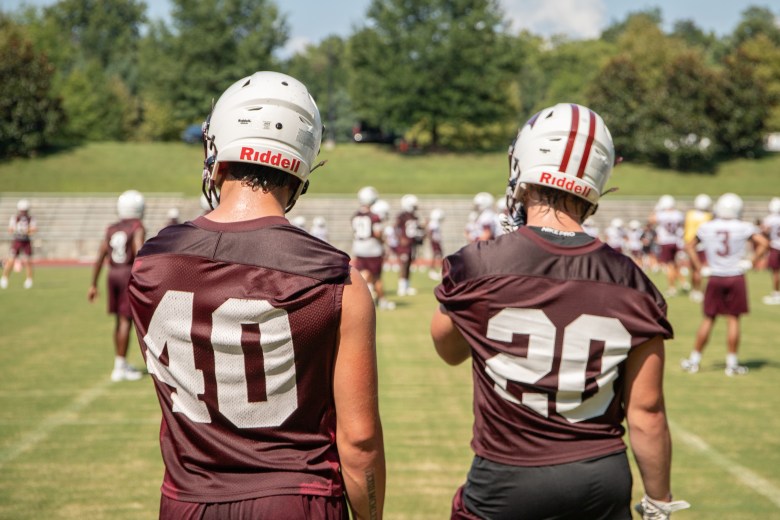
Linebackers Connor Cox (40) and Austin Fisher (20) look on from the sidelines. Credit: Miles MacClure for The Hechinger Report
Before Ethan Mapstone, a sophomore, committed to Roanoke, he was on the verge of giving up football, having sustained several injuries in high school. Then Stinespring called.
“I could hear by the tone of his voice how serious he meant everything he was saying,” said Mapstone, a 6-foot-1-inch linebacker from Virginia Beach. “I was on a visit a week later, committed two weeks later.”
To him, the football leaders at Roanoke seemed to be “a bunch of people on a mission ready to make something happen, and I think that’s what drove me in.”
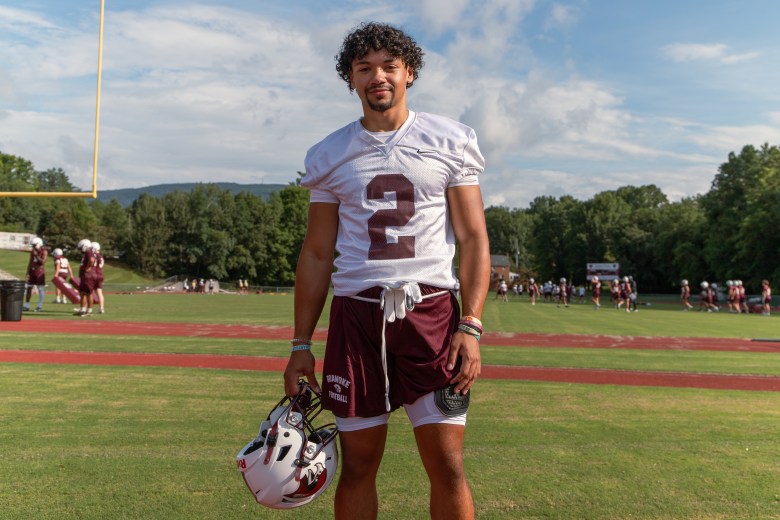
KJ Bratton, a junior wide receiver and transfer student from the University of Virginia, said he was drawn to Roanoke not because of football but because of the focus on individual attention in small classes. “You definitely get that one-on-one attention with your teacher, that definitely helps you in the long run,” said Bratton.
Jaden Davis, a sophomore wide receiver who was an honor roll student in high school, said, “ The staff, they care about all the students. They’ll pull you aside, they know you personally, they’ll send you emails, invite you to office hours, and they just work with you to do the best you can.”
Not everyone was on board with football returning to the college when the plan was first announced. Some faculty and administrators were concerned football would change the campus culture, said Campbell, the athletic director.
Sophomore wide receiver Jaden Davis poses for a photograph before the first practice of the season. Davis said the individual attention he could get from professors is what attracted him to Roanoke. Credit: Miles MacClure for The Hechinger Report
“There were just stereotypes about football players,” he said. “You know, they’re not smart, they’re troublemakers. They’re gonna do this and they’re gonna do that, be disruptive.”
But the stereotypes turned out to be unwarranted,he said.When the club team started, he said, “I got so many compliments last year from faculty and staff and campus security about how respectful and polite and nice our students were, how they behaved in the classroom, sitting in the front row and just being role models.”
Payton Rigney, a junior who helps out with the football team, concurred. “All the professors like them because they say ‘yes, sir’ and ‘no, ma’am,’” she said.
Like most Division III athletes, the Roanoke players know that they have little chance of making football a professional career. Mapstone said there are other reasons to embrace the sport.
“It’s a great blessing to be able to do what we do,” he said. “There’s many people that I speak to who are older and, and they reminisce about the times that they had to play football, and it’s very limited time.
“And even though there’s not a future for it, I love it. It’s a Thursday, my only problem in the world is that there’s dew on my shoes.”
Contact editor Lawrie Mifflin at (212) 678-4078 or [email protected].
The Hechinger Report provides in-depth, fact-based, unbiased reporting on education that is free to all readers. But that doesn’t mean it’s free to produce. Our work keeps educators and the public informed about pressing issues at schools and on campuses throughout the country. We tell the whole story, even when the details are inconvenient. Help us keep doing that.
For almost a decade, the Higher Education Inquirer investigated right wing influencer Charlie Kirk and his Turning Point Empire. Kirk was groomed by Bill Montgomery (a surrogate for Richard Nixon in Florida for Nixon’s Reelection Campaign) and Steve Bannon when Bannon was at Breitbart. Kirk quickly learned the dirty tricks of the Nixon-Reagan era and the dog whistles of white supremacy and misogyny. He also quickly gained funding from right wing billionaire Foster Freiss.
In mid-2016, we communicated our concerns with Michael Vasquez at Politico, who later moved on to the Chronicle of Higher Education (CHE). CHE later reported that Kirk created a plan to win student elections using outside (illegal) money. We also contacted the Southern Poverty Law Center and the Anti-Defamation League who both listed TPUSA as a hate group.
The U.S. Department of Energy canceled plans to issue a rule that would have removed a regulatory requirement for colleges and schools receiving funding from the agency. The requirement in question is meant to level the playing field between women and men in athletics.
The Energy Department’s rule would have no longer required colleges and schools receiving Energy Department funding to provide women or girls a chance to try out for contactless men’s or boys’ sports teams in cases where no equivalent sports team exists for them.
Under current requirements, for example, girls must be allowed to try out for spots on the boys’ baseball team if there is no girls’ softball team.
In May, the Trump administration quietly proposed rescinding this requirement, along with a handful of other regulatory changes, by issuing a “direct final rule.” That process is usually reserved for uncontroversial regulations that are not expected to receive pushback, allowing an agency to issue new policies without incorporating changes based on public feedback.
On Sept. 10, however, the Energy Department said it was withdrawing the proposed change entirely after it received over 21,000 comments — many of them opposing the changes. The rescission came after the administration initially delayed the rule’s July 14 effective date until Sept. 12 amid significant pushback.
The withdrawal was celebrated by Title IX civil rights advocates, who worried the rule would reverse progress for girls and women in sports.
However, a handful of other changes remain — albeit delayed — on the Energy Department’s docket that would impact colleges and schools receiving the agency’s grants.
For example, the agency still plans to move forward with a rule that would no longer require colleges and schools to prevent systemic racial discrimination that may result from seemingly neutral policies.The Energy Department has twice delayed that proposal’s effective date as a result of pushback, most recently to Dec. 9.
“Withdrawing the athletics rule shows that public pressure works, but continuing forward with the other rules shows this administration is still determined to chip away at opportunities for women, girls, and communities of color,” said Shiwali Patel, senior director of safe and inclusive schools at the National Women’s Law Center, in a Sept. 9 statement. “Rescinding these other rules will deepen inequities in education and beyond.”
Patel and other education civil rights experts have expressed concern over the rules being issued through an expedited process.
The Energy Department did not comment in time for publication. However, it said in its notice of the proposal’s withdrawal that it is allowed to propose a rule in the future “that may be substantially identical or similar to those previously proposed.”
The administration’s decision to release the proposed rules through the Energy Department and attempt to push them through quickly marks a shift from typical K-12 policymaking, which is usually left to the U.S. Department of Education, some education experts said in July.
It could have been a trial run: Had the Energy Department’s proposals gone uncontested, it’s possible other agencies would have also tried setting education policy this way, they said.
“This is a paradigm shift on the part of how the federal government articulates and connects some of these tools to their education priorities,” Kenneth Wong, an education policy professor at Brown University, said in July, when the rules were originally set to take effect. “Basically every single school, in practically every single school district, has some grants from one of the many agencies in the federal government.”
Normally, back-to-school season means that the staff who lead federally funded programs for low-income and first-generation college students are kicking into high gear. But this month, the Trump administration has frozen hundreds of millions of dollars in TRIO grants, creating uncertainty for thousands of programs. Some have been forced to grind to a halt, advocates say.
Colleges and nonprofits that had already been approved for the award expected to hear by the end of August that their federal funding was on its way. But rather than an award notice, program leaders received what’s known as a “no cost extension,” explaining that while programs could continue to operate until the end of the month, they would not be receiving the award money.
Over all, the Council for Opportunity in Education, a nonprofit advocacy group that focuses on supporting TRIO programs, estimates that the Trump administration has withheld about $660 million worth of aid for more than 2,000 TRIO programs. (Congress allocated $1.19 billion to TRIO for the current fiscal year.)
As a result of the freeze, COE explained, many colleges and nonprofit organizations had to temporarily pivot to online services or shutter their programs and furlough staff. Roughly 650,000 college students and high school seniors will lack vital access to academic advising, financial guidance and assistance with college applications if the freeze persists, they say.
“For many students, these first few weeks of the year are going to set the trajectory for their whole semester, especially if you’re an incoming freshman,” said COE president Kimberly Jones. “This is when you’re making critical choices about your coursework, trying to navigate the campus and just trying to acclimate to this new world. If you’re first-gen, you need the guidance of a program to help you navigate that.”
Jones said that Education Department officials said this week that the pause is temporary. However, the Department of Education did not immediately respond to Inside Higher Ed’s request for comment Friday.
TRIO Under Threat
Originally established in the 1960s, TRIO now consists of seven different programs, each designed to support various individuals from disadvantaged backgrounds and help them overcome barriers of access to higher education.
Not all the TRIO programs have had funding withheld. Roughly 1,300awards for certain programs—such as Upward Bound Math-Science, Student Support Services and any general Upward Bound projects with a June 1 start date—were disbursed on time, Jones said. But that’s only 40 percent of the more than 3,000 TRIO programs.
Other programs, including Upward Bound projects with a Sept. 1 start date, Veterans Upward Bound, Educational Opportunity Centers and Talent Search, are still waiting for checks to land in their accounts.
Policy experts added that funding for the McNair Postbaccalaureate Achievement program, a TRIO service focused on graduate students, also has yet to be distributed. But unlike most of the programs, funding for McNair is not due until Sept. 30. Still, Jones and others said they are highly concerned those funds will also be frozen.
Given the unpredictability of everything this year around education, we can’t make any assumptions. Until we get those grants in the hands of our constituents, we have to assume the worst.”
—COE president Kimberly Jones
President Donald Trump proposed cutting all funding for TRIO in May, saying that the executive branch lacks the ability to audit the program and make sure it isn’t wasting taxpayer dollars. But so far, House and Senate appropriators have pushed back, keeping the funding intact.
When confronted by Sen. Susan Collins, a Maine Republican and longtime TRIO advocate, at a budget hearing in June,McMahon acknowledged that “Congress does control the purse strings,” but went on to say that she would “sincerely hope” to work with lawmakers and “renegotiate” the program’s terms.
And while advocates hope that funds will eventually be reinstated, most experts interviewed remain skeptical. With 18 days left until the end of the fiscal year, any unallocated TRIO funds will likely be sent back to the Department of Treasury, never to reach the organizations they were intended for.
The Trump administration has tried to freeze or end othereducation-relatedgrant programs—including a few TRIO programs that were cut off in June—which officials said “conflict with the Department’s policy of prioritizing merit, fairness, and excellence in education; undermine the well-being of the students these programs are intended to help; or constitute an inappropriate use of federal funds.”
And while some of the funding freezes have been successfully challenged in court, the judicial process needed to win back federal aid is slow. Most colleges don’t have that kind of time, the advocates say.
“Given the unpredictability of everything this year around education, we can’t make any assumptions,” Jones said. “Until we get those grants in the hands of our constituents, we have to assume the worst.”
‘Crippling’ Effects
For Summer Bryant, director of the Talent Search program at Morehead State University in Kentucky, the funding freeze has been “crippling.”
Talent Search is a TRIO program focused on supporting middle and high school students with college preparation. And while the loss of about $1 million hasn’t forced Bryant to shut down her program quite yet, it has significantly limited her capacity to serve students.
After paying the program’s 10 staff members for the month of September, Bryant has just over $1,000 left—and that’s between both of the grants she received last year.
“It may sound like a lot, but when you take into account that we’re providing services to eight counties and 27 target schools, coupled with the fact that driving costs about 50 cents a mile and some of our schools one-way are almost 120 miles away, that’s not a lot of money,” she said. “So instead, I had to make a Facebook post notifying our students and their guardians that we would be pausing all in-person services until we receive our grant awards.”
Even then, Morehead TRIO programs are based in a rural part of Appalachia, so broadband access and choppy connections are also a concern.
“Doing things over the phone or over a Zoom is just not as effective as doing it face-to-face—information is lost,” Bryant said. And because this freeze is happening during the most intensive season for college applications, “even a one month delay could lead to a make-or-break moment for a lot of our seniors,” she added.
It’s not just Bryant facing these challenges. Of Morehead’s nine preapproved TRIO grants, only four have been awarded. The same scenario is playing out at campuses across the country.
Democratic senators Jeff Merkley of Oregon and Raphael Warnock of Georgia, along with 32 other lawmakers from both sides of the aisle, demanded in a letter sent Wednesday that the administration release the funds. Collectively, they warned that failure to do so “will result in irreversible damage to our students, families, and communities, as many rely on the vital programs and services provided by TRIO programs.”
They wrote that TRIO has produced over six million college graduates since its inception in 1964, promoting a greater level of civic engagement and spurring local economies.
“The data proves that TRIO works,“ the senators stressed. “Students’ futures will be less successful if they do not receive their appropriated funds immediately.”
Rep. Gwen Moore, a Wisconsin Democrat and TRIO alumna, and 53 fellow House members sent a similar letter the same day.
The freeze is hitting community colleges particularly hard; they receive half of all TRIO grants, said David Baime, senior vice president for government relations at the American Association of Community Colleges.
Baime said he has “no idea” why the department is withholding funds and added that while he is hopeful the federal dollars will be restored, there is an “unusual degree of uncertainty.”
Between a handful of TRIO grants that were terminated with little to no explanation earlier in the year and the recent decision to cancel all grant funding for minority-serving institutions, worries among TRIO programs are high, Jones from COE and others said.
Still, Baime is holding out hope.
“The department has gone on record saying that fiscal year 2025 TRIO funds would be allocated,” he said. “So despite the very concerning delays, we remain optimistic.”
Right-wing X accounts are pushing for universities to dismiss any employees that have disparaged Kirk in the days following his death.
Photo illustration by Inside Higher Ed | LeoPatrizi/E+/Getty Images
At least five faculty and staff members have been fired so far for comments they made in response to the death of Turning Point USA founder and conservative firebrand Charlie Kirk, who was shot and killed Wednesday during an event at Utah Valley University.
Investigators announced Friday they arrested a suspect, 22-year-old Tyler Robinson, who is now being held in a Utah jail without bail. Utah governor Spencer Cox said during a press conference Friday that a family friend turned Robinson in to authorities after the suspect suggested to a relative that he’d killed Kirk. Robinson was not a student at Utah Valley.
The Utah Board of Higher Education said in a statement that Robinson is a third-year student in the electrical apprenticeship program at Dixie Technical College and that he attended Utah State University for one semester in 2021.
Among the latest college employees terminated for their responses to Kirk’s killing, Lisa Greenlee was removed as a part-time instructor from Guilford Technical Community College in Jamestown, N.C., on Thursday after she made comments criticizing Kirk to students during an online class, saying, “I’ll praise the shooter; he had good aim.” A video of her remarks made the rounds on X, where right-wing accounts encouraged the college to fire her.
“We deeply regret that students, employees, and the community were impacted by her comments. Greenlee’s behavior is not consistent with the college’s values and mission to serve Guilford County. Her statement regarding the assassination of Charlie Kirk does not support the open and respectful learning and working environment that GTCC provides every day,” GTCC president Anthony Clarke said in a statement. “We want to reiterate that supporting violence is reprehensible and will not be tolerated at the college.” Greenlee did not respond to Inside Higher Ed’s request for comment.
Two employees at Cumberland University in Lebanon, Tenn., were dismissed Thursday for making “inappropriate comments on the internet related to the tragic shooting of Charlie Kirk,” university president Paul Stumb wrote in a statement posted on X. He identified the employees as Michael Rex, an English and creative writing professor, and Max Woods, an assistant esports coach, but he did not share what they said. Like Greenlee, both had been the subject of online campaigns advocating for their firing.
“This decision was not made lightly,” Stumb wrote. “We understand the importance and the impact of this action, and we want to emphasize that we conducted a comprehensive investigation prior to making our decision.”
Before Stumb’s statement was publicized, Rex posted an apology on his Facebook page. “No one deserves to be murdered,” he wrote. “I did not think about the pain and anger that my words would create. My comments were not meant to celebrate nor to foster political violence and for any traums [sic] my words caused, I am truly sorry.” Rex and Wood did not respond to Inside Higher Ed’s request for comment.
The recent firings follow the dismissals of Laura Sosh-Lightsy, a student affairs administrator at Middle Tennessee State University, and an unnamed staff member at the University of Mississippi.
A Clemson university professor is also subject to an ongoing push by X users to have him fired for statements on Kirk’s death. On Friday afternoon, the university posted a statement that alluded to the situation. “We stand firmly on the principles of the U.S. Constitution, including the protection of free speech. However, that right does not extend to speech that incites harm or undermines the dignity of others. We will take appropriate action for speech that constitutes a genuine threat which is not protected by the Constitution.”
This audio is auto-generated. Please let us know if you have feedback.
The U.S. Department of Energy canceled plans to issue a rule that would have removed a regulatory requirement for schools receiving funding from the agency. The requirement in question is meant to level the playing field between boys and girls in athletics.
The Energy Department’s rule would have no longer required schools receiving Energy Department funding to provide girls a chance to try out for contactless boys’ sports teams in cases where no equivalent sports team exists for them. Under current requirements, for example, girls must be allowed to try out for spots on the boys’ baseball team if there is no girls’ softball team.
In May, the Trump administration quietly proposed rescinding this requirement, along with a handful of other regulatory changes, by issuing a “direct final rule.” That process is usually reserved for uncontroversial regulations that are not expected to receive pushback, allowing an agency to issue new policies without incorporating changes based on public feedback.
On Sept. 10, however, the Energy Department said it was withdrawing the proposed change entirely after it received over 21,000 comments — many of them opposing the changes. The rescission came after the administration initially delayed the rule’s July 14 effective date until Sept. 12 amid significant pushback.
The withdrawal was celebrated by Title IX civil rights advocates, who worried the rule would reverse progress for girls and women in sports.
However, a handful of other changes remain — albeit delayed — on the Energy Department’s docket that would impact schools receiving the agency’s grants.
For example, the agency still plans to move forward with a rule that would no longer require schools to prevent systemic racial discrimination that may result from seemingly neutral policies.The Energy Department has twice delayed that proposal’s effective date as a result of pushback, most recently to Dec. 9.
“Withdrawing the athletics rule shows that public pressure works, but continuing forward with the other rules shows this administration is still determined to chip away at opportunities for women, girls, and communities of color,” said Shiwali Patel, senior director of safe and inclusive schools at the National Women’s Law Center, in a Sept. 9 statement. “Rescinding these other rules will deepen inequities in education and beyond.”
Patel and other education civil rights experts have expressed concern over the rules being issued through an expedited process.
The Energy Department did not comment in time for publication. However, it said in its notice of the proposal’s withdrawal that it is allowed to propose a rule in the future “that may be substantially identical or similar to those previously proposed.”
The administration’s decision to release the proposed rules through the Energy Department and attempt to push them through quickly marks a shift from typical K-12 policymaking, which is usually left to the U.S. Department of Education, some education experts said in July.
It could have been a trial run: Had the Energy Department’s proposals gone uncontested, it’s possible other agencies would have also tried setting education policy this way, they said.
“This is a paradigm shift on the part of how the federal government articulates and connects some of these tools to their education priorities,” Kenneth Wong, an education policy professor at Brown University, said in July, when the rules were originally set to take effect. “Basically every single school, in practically every single school district, has some grants from one of the many agencies in the federal government.”