How to design reliable, valid and fair assessment in an AI-infused world is one of those challenges that feels intractable.
The scale and extent of the task, it seems, outstrips the available resource to deal with it. In these circumstances it is always worth stepping back to re-frame, perhaps reconceptualise, what the problem is, exactly. Is our framing too narrow? Have we succeeded (yet) in perceiving the most salient aspects of it?
As an educational development professional, seeking to support institutional policy and learning and teaching practices, I’ve been part of numerous discussions within and beyond my institution. At first, we framed the problem as a threat to the integrity of universities’ power to reliably and fairly award degrees and to certify levels of competence. How do we safeguard this authority and credibly certify learning when the evidence we collect of the learning having taken place can be mimicked so easily? And the act is so undetectable to boot?
Seen this way the challenge is insurmountable.
But this framing positions students as devoid of ethical intent, love of learning for its own sake, or capacity for disciplined “digital professionalism”. It also absolves us of the responsibility of providing an education which results in these outcomes. What if we frame the problem instead as a challenge of AI to higher education practices as a whole and not just to assessment? We know the use of AI in HE ranges widely, but we are only just beginning to comprehend the extent to which it redraws the basis of our educative relationship with students.
Rooted in subject knowledge
I’m finding that some very old ideas about what constitutes teaching expertise and how students learn are illuminating: the very questions that expert teachers have always asked themselves are in fact newly pertinent as we (re)design education in an AI world. This challenge of AI is not as novel as it first appeared.
Fundamentally, we are responsible for curriculum design which builds students’ ethical, intellectual and creative development over the course of a whole programme in ways that are relevant to society and future employment. Academic subject content knowledge is at the core of this endeavour and it is this which is the most unnerving part of the challenge presented by AI. I have lost count of the number of times colleagues have said, “I am an expert in [insert relevant subject area], I did not train for this” – where “this” is AI.
The most resource-intensive need that we have is for an expansion of subject content knowledge: every academic who teaches now needs a subject content knowledge which encompasses a consideration of the interplay between their field of expertise and AI, and specifically the use of AI in learning and professional practice in their field.
It is only on the basis of this enhanced subject content knowledge that we can then go on to ask: what preconceptions are my students bringing to this subject matter? What prior experience and views do they have about AI use? What precisely will be my educational purpose? How will students engage with this through a newly adjusted repertoire of curriculum and teaching strategies? The task of HE remains a matter of comprehending a new reality and then designing for the comprehension of others. Perhaps the difference now is that the journey of comprehension is even more collaborative and even less finite that it once would have seemed.
Beyond futile gestures
All this is not to say that the specific challenge of ensuring that assessment is valid disappears. A universal need for all learners is to develop a capacity for qualitative judgement and to learn to seek, interpret and critically respond to feedback about their own work. AI may well assist in some of these processes, but developing students’ agency, competence and ethical use of it is arguably a prerequisite. In response to this conundrum, some colleagues suggest a return to the in-person examination – even as a baseline to establish in a valid way levels of students’ understanding.
Let’s leave aside for a moment the argument about the extent to which in-person exams were ever a valid way of assessing much of what we claimed. Rather than focusing on how we can verify students’ learning, let’s emphasise more strongly the need for students themselves to be in touch with the extent and depth of their own understanding, independently of AI.
What if we reimagined the in-person high stakes summative examination as a low-stakes diagnostic event in which students test and re-test their understanding, capacity to articulate new concepts or design novel solutions? What if such events became periodic collaborative learning reviews? And yes, also a baseline, which assists us all – including students, who after all also have a vested interest – in ensuring that our assessments are valid.
Treating the challenge of AI as though assessment stands alone from the rest of higher education is too narrow a frame – one that consigns us to a kind of futile authoritarianism which renders assessment practices performative and irrelevant to our and our students’ reality.
There is much work to do in expanding subject content knowledge and in reimagining our curricula and reconfiguring assessment design at programme level such that it redraws our educative relationship with students. Assessment more than ever has to become a common endeavour rather than something we “provide” to students. A focus on how we conceptualise the trajectory of students’ intellectual, ethical and creative development is inescapable if we are serious about tackling this challenge in meaningful way.
Wednesday saw a moment without precedent in recent history: A college speaker shot to death on a campus during an event. That fact alone would’ve escalated growing concerns about the future of free speech and civil discourse at colleges and universities.
But this speaker was Charlie Kirk, a prominent ally of a U.S. president who was already crusading against higher ed. Kirk, a national political figure in his own right, was one of the foremost conservative critics of intolerance for right-wing views in higher ed and the founder and leader of Turning Point USA, a nationwide organization of conservative campus groups that aided the president’s re-election. Kirk even spoke at Trump’s January inauguration.
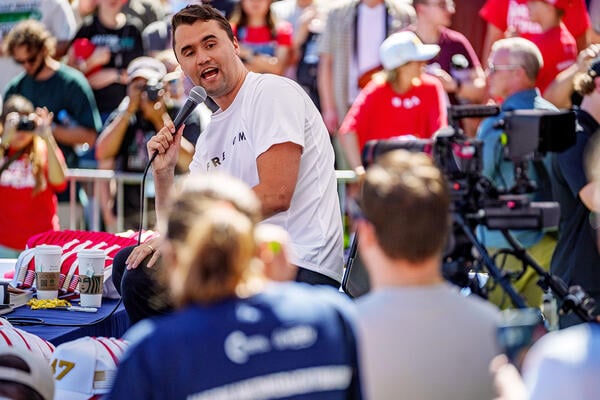
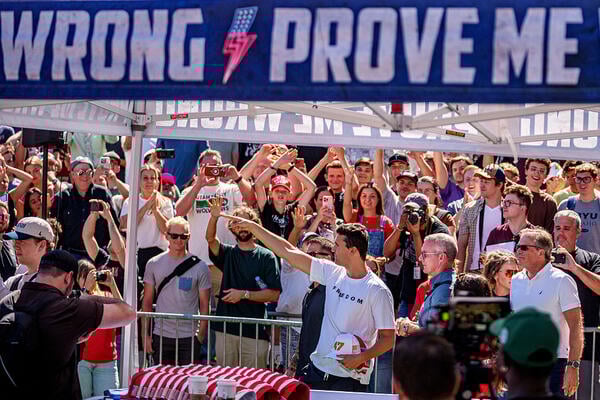
He was known for goading students on campuses to “prove me wrong,” posting the resulting clips online, appearing in conservative media to denounce higher ed, spreading his views further on his own podcast and using his organization’s online presence and on-the-ground staff to target left-leaning faculty.
“College is a scam,” Kirk, who dropped out of Harper College in Illinois, wrote in a 2022 Fox News op-ed, in which he urged most students not to go.
“Universities are indoctrination zones where free speech is crushed,” he wrote. “Radical students and faculty coerce and persecute their nonconforming peers through ‘cancel culture’ and threats … I firmly believe that most—if not all—the destructive ideas that are now eating away at the foundation of American society originated on college campuses.”
His death at Utah Valley University could put more pressure on higher ed at a time when colleges and universities have already been excoriated and targeted by the right. Faculty and those who criticize higher ed as being insufficiently open to civil debate between different viewpoints are worried that free expression will further erode.
“This is an epic moment for the future of higher ed,” said John Tomasi, president of Heterodox Academy. “For the issue of free speech, there’s been nothing quite like this ever before.”
Tomasi, whose organization promotes “viewpoint diversity” and “constructive disagreement” on campuses, noted both Kirk’s national stature and his association with campus free expression. He was the kind of person that conservatives had long argued wasn’t welcome on campuses.
“This is an attack on a magnitude that we have not previously seen,” he said. He said national attention on campus cultures intensified when Congress in late 2023 started calling university presidents into televised hearings regarding alleged campus antisemitism. Now, that “white-hot spotlight” is even hotter.
“This is a killing of a person who exemplifies the struggles of viewpoint diversity on college campuses … in the act of speaking on a college campus,” Tomasi said.
Multiple college presidents have issued statements condemning the shooting. Michael Roth of Wesleyan University, a vocal critic of Trump’s targeting of higher ed, wrote that “those who choose violence destroy the possibility of learning and meaning. Mr. Kirk’s murder on a college campus is an assault on all of us in education.” University of California system president James B. Milliken wrote, “This wasn’t just an attack on an individual; it was an attack on the very freedoms we as a nation hold dear.”
Some universities have also acted swiftly to punish employees who appeared to celebrate or make light of Kirk’s death in online comments.
I think it marks a breakdown of the culture of free speech.”
—Lindsie Rank, director of campus rights advocacy at FIRE
The killer has yet to be apprehended, their motive is unknown and the FBI is offering up to $100,000 for information. But in a video from the Oval Office Wednesday evening, President Trump called Kirk’s killing a “heinous assassination” of a “martyr for truth and freedom” and a “dark moment for America.” He said, “There’s never been anyone who was so respected by youth,” whom Kirk brought into the political process “better than anybody ever.”
“Charlie was a patriot, who devoted his life to the cause of open debate and the country that he loved so much,” Trump said, adding that Kirk “traveled the nation, joyfully engaging with everyone interested in good-faith debate.”
Kirk in the Oval Office
Andrew Harnik/Getty Images
But the president—who has demanded an undefined viewpoint diversity from universities while threatening them with sweeping federal funding cuts—didn’t go on to defend all free speech, which includes even hate speech. He denounced the “radical left,” saying that “violence and murder are the tragic consequence of demonizing those with whom you disagree day after day, year after year.”
“Those on the radical left have compared wonderful Americans like Charlie to Nazis and the world’s worst mass murderers and criminals,” Trump said. “This kind of rhetoric is directly responsible for the terrorism that we’re seeing in our country today, and it must stop right now.” (His speech didn’t mention the 2022 attack on former House speaker Nancy Pelosi’s husband, Paul, or the killings earlier this year of Democratic former Minnesota House speaker Melissa Hortman and her husband, Mark.)
Trump isn’t the only person calling it an assassination. Free speech advocates have called past shoutdowns of campus speakers the “heckler’s veto.” Lindsie Rank, director of campus rights advocacy at the Foundation for Individual Rights and Expression, called this an “assassin’s veto.”
“Regardless of how one feels about Charlie Kirk’s viewpoints, his tactics, his background, assassination cannot be a response to disagreement in a civilized society,” Rank said. “That’s the whole purpose of free speech: that we have a better way to engage in discourse across differences to settle disagreements.”
“I think there’s a lot of faculty thinking, ‘Is it going to be me, and maybe instead of a video, it’s a rifle?’”
—Isaac Kamola, director of the AAUP Center for the Defense of Academic Freedom
Rank said free speech allows people “to exchange words instead of bullets.” She said what happens on campus is never isolated to campus and raised concern about a feedback loop.
“Our society has started to accept violence as an appropriate response to viewpoints that folks disagree with,” Rank said. “I think it marks a breakdown of the culture of free speech.”
Isaac Kamola, director of the American Association of University Professors’ Center for the Defense of Academic Freedom and an associate political science professor at Trinity College in Connecticut, is among the fierce critics of Kirk’s tactics. While Trump called the “radical left’s” rhetoric dangerous, Kamola said Kirk’s was.
“He literally wrote the book titled Campus Battlefield,” Kamola noted. “He built a career out of treating higher education as a war zone … and treating professors and students that he disagreed with as enemies that posed an existential threat to America … That being said, when actual violence—physical violence and murder—come to college campuses, that ratchets things up to an even more dangerous degree.”
Kamola added that, “without knowing who the gunman is,” Trump is already saying “he’s going to use this as an opportunity to punish the left, and I think that’s really scary.” (Kirk’s final post on X to his over 5.4 million followers said it was “100% necessary to politicize the senseless murder” of a Ukrainian woman in Charlotte, N.C., last month.)
Kamola pointed to Turning Point USA’s own Professor Watchlist and Texas A&M University’s firing of a professor earlier this week after a student filmed herself challenging the legality of teaching about gender identity in a children’s literature class. He said the killing could now leave faculty to think, “Is there going to be retaliation for this assassination?”
“I think there’s a lot of faculty thinking, ‘Is it going to be me, and maybe instead of a video, it’s a rifle?’” he said.
Another Turning Point
Trump redefined conservatism, attracting new adherents. Kirk appeared to do the same for conservative students across the nation, adding them to the MAGA movement.
Amy Binder, SNF Agora Professor of Sociology at Johns Hopkins University, said she’s studied conservative campus activism for decades. She said Kirk “kind of burst on the scene right around the time” Trump won his first term in office.
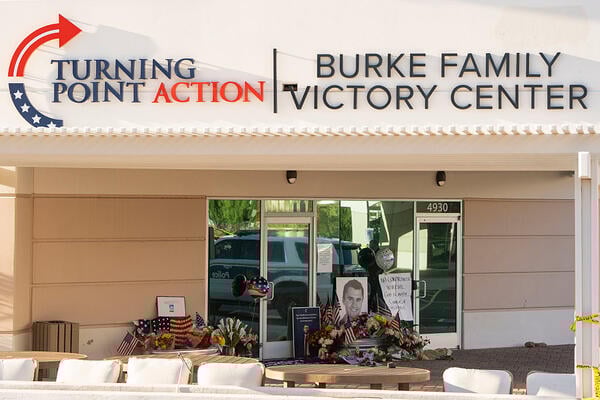
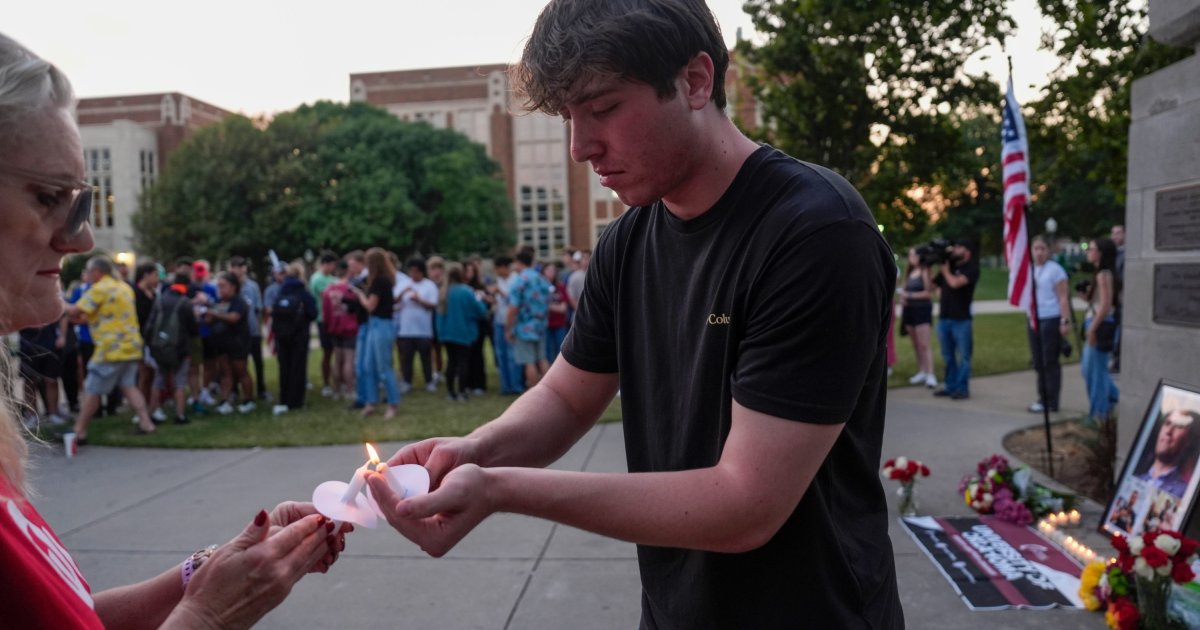
Vigils to remember Kirk have popped up at college campuses and at the Turning Point USA headquarters in Arizona.
Rebecca Noble/Getty Images
Binder, co-author of Becoming Right: How Campuses Shape Young Conservatives and The Channels of Student Activism, said Kirk’s Turning Point group attracted students who initially weren’t sure they were Republicans and weren’t attracted to the College Republicans chapters that traditionally mobilized students.
“Their complaint about College Republicans was that it was too establishment, it was kind of fusty, stale, too focused on getting people elected,” Binder said of these students. She said Turning Point told them that “you are part of a liberal, left campus and you are mistreated here and you need to come out of the closet and declare that you’re conservative in a big, broad way—and we’ll help you do that with really splashy events and really splashy speakers.”
“All of the incentive structure there was to go big, go confrontational,” she said. Kirk exemplified that in his sparring matches with left-leaning students on campuses.
Binder said, “Kirk was really excellent at cross-branding,” frequently appearing on Fox News, recording videos for the conservative education video website PragerU and more.
“Over time, Kirk was really involved with the Trump family, and with MAGA under Trump,” Binder said. “And he really became an ambassador for that—not only to young people, but to others as well … He was really crossing over into other age brackets and he just kind of became a face—or the face—of energized, youthful conservatism.”
Turning Point sought to elect conservatives to student governments by providing funding. It broadcast online the names of faculty it considered too left-leaning or intolerant of conservative views and marshaled voters for Trump during his re-election campaigns.
“He became the face of young Republicans and probably helped Trump win Arizona, maybe Wisconsin, maybe Michigan, with his get-out-the-vote” in 2024, Binder said. She said he “might have been predicted to have a political career in the future. He’s charismatic, he’s good-looking, he has a perfect family, he’s obviously had success.”
Charlie Kirk was speaking at Utah Valley University on Sept. 10 to kick off his American Comeback Tour when he was shot and killed.
Trent Nelson/The Salt Lake Tribune/Getty Images
But now, Kirk is dead. While Binder said there will continue to be a “very robust right ecosystem of organizations that seek mobilized students on campus,” it’s unclear what Turning Point’s future will be.
“Is there a power vacuum, is there a succession plan, what does that look like? I certainly don’t know,” she said. Turning Point didn’t respond to Inside Higher Ed’s request for an interview Thursday.
As for how his death could impact campus free expression, Binder said, “It’s really, really horrible on just all of the fronts, and in the wrong hands, something like this could shut down speech.”
Rank, from FIRE, said that while the shooter’s motive is unknown, the effect that violence can have on free expression isn’t. She said it can not only create a chilling effect within people, but it also can cause higher ed institutions to clamp down on speech to prevent violence.
“If an administration comes in and prevents controversial speaking engagements, then you’re creating a situation where the violence wins and that just causes free speech to deteriorate even further,” Rank said. She said that would not only be wrong, but “it would be a strange way to honor his legacy.”
The Office for National Statistics (ONS) has published new estimates of suicides among higher education students, linking mortality records with student data between 2016 and 2023.
The findings are stark – 1,108 student deaths by suicide over seven years – an average of 160 each year, or more than three every week.
The headline takeaway, however, is that the suicide rate among students is lower than that of the general population of similar age. While technically correct, this framing is misleading and risks creating a false sense of reassurance.
The ONS emphasises that these are “statistics in development.” They are the product of recent advances in linking mortality and student record data, improving on older estimates. In that sense, this is important progress.
But the way the figures have been presented follows a familiar pattern: the headline is built around a simple comparison with the general population. It is neat, digestible, and apparently positive – yet it obscures more than it reveals.
This matters because the way numbers are framed shapes public understanding, institutional behaviour, and government response. If the story is “lower than average,” the implicit message is that the sector is performing relatively well. That is not the story these figures should be telling.
University students are not the “general population.” They are a distinct, filtered group. To reach higher education, young people must cross academic, financial, and often social thresholds. Many with the most acute or destabilising mental health challenges never make it to university, or leave when unwell.
The student body is also not demographically representative. Despite widening participation efforts, it remains disproportionately white and relatively affluent. Comparing suicide rates across groups with such different profiles is not comparing “like with like.”
In this context, a lower suicide rate is exactly what one would expect. The fact that the rate is not dramatically lower should be a cause for concern, not comfort.
The dangers of statistical manipulation
It is easy to play with denominators. For example, students are in teaching and assessment for around 30 weeks of the year, not 52. If suicide risk were confined to term time, the weekly rate among students would exceed that of their peers.
But this recalculation is no better than the ONS comparison. Not all student deaths occur in term, and not all risks align neatly with the academic calendar.
You could take the logic further still. We already know there are peak moments in the academic cycle when deaths are disproportionately high – the start of the year, exam and assessment periods, and end-of-year transitions or progressions. If you recalculated suicide rates just for those concentrated stress points, the apparent risk would rise dramatically.
And that is the problem – once you start adjusting denominators in this way, you can make the statistics say almost anything. Both framings – “lower overall” and “higher in term” – shift attention away from the fundamental issue. Are students adequately protected in higher education?
Universities are not average society. They are meant to be semi-protected environments, with pastoral care, residential support, student services, and staff trained to spot risks. Institutions advertise themselves as supportive communities. Parents and students reasonably expect that studying at university will be safer than life outside it.
On that measure, the reality of more than three suicides a week is sobering. Whatever the relative rate, this is not “safe enough.”
Averages conceal inequalities
Aggregate rates also obscure critical differences within the student body. The ONS data show that:
Male students die by suicide at more than twice the rate of female students.
First-year undergraduates face significantly higher risk than later-year students.
Part-time students have higher rates than full-time peers.
Among 17–20 year-olds, nearly one in five suicides were students.
Headline averages conceal these inequalities. A “lower than average” message smooths over the very groups that most need targeted intervention.
Another striking feature is the absence of sector data. Universities do not systematically track student suicides. Instead, families must rely on official statisticians retrospectively linking death certificates with student records, often years later.
If the sector truly regarded these figures as reassuring, one might expect institutions to record and publish them. The reluctance to do so instead signals avoidance. Without routine monitoring, lessons cannot be learned in real time and accountability is diluted.
7. The missing legal duty
These challenges sit within a wider context – universities have no statutory duty of care towards their students. Families bereaved by suicide encounter unclear lines of accountability. Institutions operate on voluntary frameworks, policies, and codes of practice which are not always followed.
In that vacuum, numbers take on disproportionate weight. If statistics suggest the sector is “doing better than average,” the pressure for reform weakens. Yet the reality is that more than 1,100 students have died in seven years in what is supposed to be a protective environment.
Other countries offer a different perspective. In Australia, student wellbeing is embedded in national higher education policy frameworks. In the United States, campus suicide rates are monitored more systematically, and institutions are under clearer obligations to respond. The UK’s fragmented, voluntary approach looks increasingly out of step.
The new ONS dataset is valuable, but its framing risks repeating old mistakes. If we want real progress, three changes are needed:
Better data – universities must keep their own records, enabling faster learning and transparency.
Sharper framing – comparisons should focus on whether students are safe enough in higher education, not whether they are marginally “better than average.”
Clearer accountability – a statutory duty of care would ensure that institutions cannot hide behind averages and voluntary codes.
The ONS release should not be read as reassurance. Both the official comparison with the general population and alternative recalculations that exaggerate term-time risk are statistical manipulations. They distract from the central point – 160 students a year, more than three every week, are dying by suicide in higher education.
Universities are meant to be safer than average society. The reality shows otherwise. Until higher education is bound by a legal duty of care and institutions commit to transparency and accountability, statistical debates will continue to obscure systemic failures – while friends and families will continue to bear the consequences.
It’s that time of year again. A level results have been and gone, the initial buzz of clearing has passed, and new students are about to turn up. It can only mean enrolment. Or, at some universities, this strange thing called matriculation.
One internet definition of matriculation has it as “the process of matriculating”. Helpful.
To get to the bottom of it, we need to remember that universities were medieval European creations, and medieval Europe was all about the corporation. A universitas was a single body of people, chartered by a king or a pope, or sometimes by both, and you had to become a member of the universitas to benefit from its protection and patronage.
And the terminology stays with us – a degree refers to your class of membership of the universitas. A master had a license to teach at a universitas, and being a master at one would often (but not always) give you license to teach at another.
Matriculation was the process whereby you became a student member of the university. At some universities (here’s Oxford, for example) it is a formal ceremony, dressing up and parading, and the whole works. At other universities it can be more administrative – in my own case, I got a letter from the University of London University Entrance Requirements office telling me that I’d matriculated. But I still had to queue up a long winding staircase at LSE to enrol, get my student ID and a grant cheque.
Yes, I am that old.
Enrolment is really the same as matriculation, but without the razzamatazz. It’s the moment when the contract between the student and the university becomes made by both sides; calling it enrolment not matriculation is a badge of the ongoing transition by universities from being medieval to being modern. Which I guess we should probably support. Before we need to transition to being postmodern.
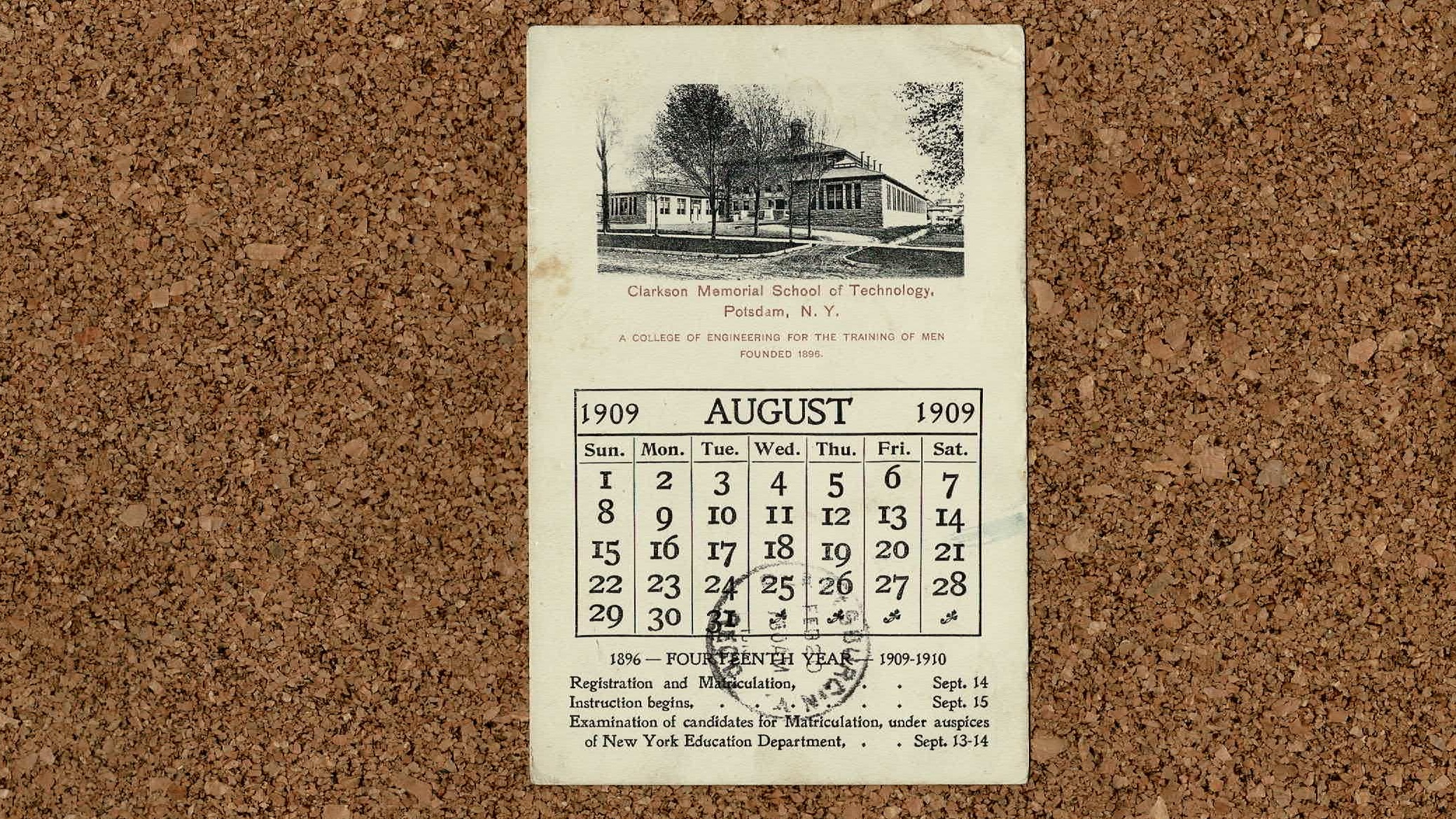
The card itself was issued by Clarkson School of Technology, in the USA. It’s actually a marketing card. Come to Clarkson, it says. There’s still time to matriculate and register, and start to learn. Note that the sequence is: exam for matriculation, matriculation, instruction begins. And note that the exam to matriculate isn’t the university’s, but is the New York Education Department’s. An external verification that standards had been met before enrolment could happen.
The Thomas S. Clarkson Memorial School of Technology was founded in 1896. Thomas S Clarkson was a businessman, with multiple interests including a quarry. In August 1894 we are told that a worker at the quarry was in danger of being crushed by a derrick pump. Clarkson pushed the worker out of the way, being crushed himself instead. He died five days later of his injuries. His three sisters and his niece established the technical school in his name.
In 1912 the State University of New York required the registration of all higher educational establishments, and it became the Thomas S. Clarkson Memorial College of Technology, commonly known as the Clarkson College of Technology. It became a university in 1984. The university has a more thorough account of its history on its webpages.
The card itself was sent on 19 February 1910.
Good morning, Leon:- Haven’t heard from you this week. Neither have we heard from Mayme. Had letter from Mabel R, her vacation began last Monday and lasts ‘til April 1st ….
Here’s the actual message if you can decipher more than I have, please share in the comments!
This audio is auto-generated. Please let us know if you have feedback.
Dive Brief:
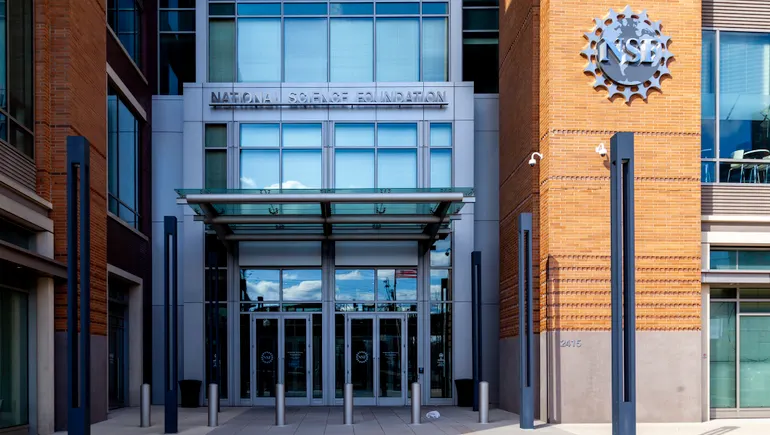
A federal judge on Wednesday declined to restore more than $1 billion in research grants cut by the National Science Foundation over research related to diversity, equity and inclusion while a lawsuit against the agency goes forward.
In the ruling, U.S. District Judge Jia Cobb concluded that the court didn’t have the jurisdiction to temporarily restore the grants and that plaintiffs failed to show they would experience “irreparable harm” from the agency’s new anti-DEI policies while the case proceeds.
Cobb cited in part a recent U.S. Supreme Court ruling that universities and researchers facing mass federal agency cuts must pursue their monetary claims in a separate federal court that handles economic and contractual disputes with the U.S. government.
Dive Insight:
In April, NSF issued a new statement of priorities asserting that grant awards “should not preference some groups at the expense of others, or directly/indirectly exclude individuals or groups.”
“Research projects with more narrow impact limited to subgroups of people based on protected class or characteristics do not effectuate NSF priorities,” the agency added. NSF also noted grants related to environmental justice and the study of disinformation would also fall short of the agency’s objectives under the Trump administration.
Mass cancellations of previously awarded grants followed. In June, a group of unions and higher education associations — including the American Association of Colleges and Universities and the American Association of University Professors — sued NSF.
They counted 1,600 canceled grants amounting to over $1 billion funding, including many that aimed at broadening participation of women, underrepresented groups and those with disabilities in scientific and technical fields.Commonly appearing typos and boilerplate language in many of the termination notices to researchers showed the mass, automatic nature of the cancellations.
“NSF afforded recipients of terminated grants no advance notice, and indeed no process whatsoever, before the terminations,” the complaint stated.
Plaintiffs argued that NSF’s anti-DEI directive and cancellations violated the law as well as the constitutional principles of separation of powers and due process. Among other things, plaintiffs said the grants carried out NSF’s “statutory directive to support an increase in the participation of underrepresented populations in STEM fields, including women, minorities, and people with disabilities.”
In her ruling Wednesday, Cobb, a Biden appointee, wrote that her court likely had jurisdiction to decide if NSF’s anti-DEI policies could be applied to future grants. But retroactively restoring the grants that had been canceled, as the plaintiffs had requested, would likely need to be handled by the U.S. Court of Federal Claims.
Among other precedents, she cited last month’s Supreme Court ruling in a case against the National Institutes of Health over similar DEI-related grant cancellations at that agency. While the top court declined to block a district court’s order that struck down the NIH’s anti-DEI guidance, it said the plaintiffs must seek relief for the canceled grants in federal claims court.
Critics of the decision — including justices in the liberal minority — said that the ruling would add new complications and delays while research projects and laboratories suffer.
Cobb further concluded that plaintiffs’ argument that their constitutional rights were violated was unlikely to succeed, finding that their claims were instead statutory in nature. There again Cobb cited a recent case against the Trump administration, this one brought by the Global Health Council over mass cuts at the U.S. Agency for International Development.
Democracy Forward, a nonprofit legal organization representing plaintiffs in the lawsuit, called Cobb’s decision not to block NSF’s terminations disappointing and “a loss for American innovation and excellence.”
“This case is not over and we are eager to defend the important role the NSF plays in the daily lives of Americans,” the group said in a statement.
This audio is auto-generated. Please let us know if you have feedback.
Several historically Black colleges and universities locked down and canceled classes Thursday after receiving threats to campus safety, according to notices from campus officials and media reports.
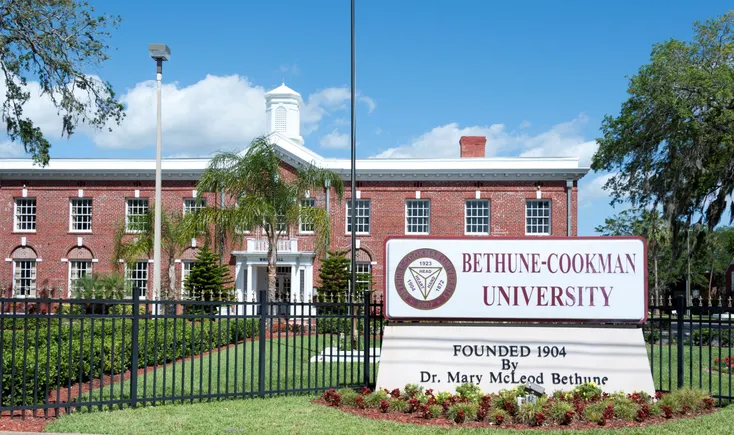
The affected institutions include Alabama State, Bethune-Cookman, Clark Atlanta, Hampton, Southern and Virginia State universities.
Alabama State canceled all campus activities Thursday after receiving a “terroristic threat,” according to media reports. Although university and law enforcement officials issued an all-clear notice in the afternoon, the institution said it remained closed to the public and asked on-campus students to keep sheltering in place.
At least four of Georgia’s HBCUs likewise locked down after Clark Atlanta University received a threat, according to The Atlanta Journal-Constitution. Each institution — which included Spelman and Morehouse colleges — lifted their lockdown orders by early afternoon.
In Virginia, at least two institutions also received threats.
Hampton said it would halt all nonessential activities through Friday after getting “notice of a potential threat,” according to a social media post from the institution.
Virginia State likewise went into lockdown as law enforcement investigated “the credibility of the threat” it received Thursday, the university said on social media.Later that day, Virginia State President Makola Abdullah said the lockdown had been lifted.
“To those who seek to silence or scare us: we will not be intimidated,” Abdullah said. “For over a century, Virginia State University and other HBCUs have stood as a beacon of knowledge, excellence, and resilience. Today’s events only reaffirm our commitment to providing a safe and empowering environment for our students, faculty, and staff.”
Southern University, in Louisiana, Thursday afternoon lifted the lockdown order imposed following a “campus safety threat,” it said in a social media post. However, the university canceled all classes and campus activities through the weekend.
In Florida, Bethune-Cookman officials canceled classes due to a “potential threat to campus safety,” it said in a social media post. The university ordered employees on campus to head home and others to work remotely. It also advised students to shelter in place in their dorms.
On the other side of the state, Florida A&M University had not received a threat but was monitoring the situation, it said in a social media post. “We stand in solidarity with institutions currently under lockdown or threat and extend our support during this time,” it added.
In early 2022, HBCUs received waves of bomb threats that forced them to lock down their campuses and cancel classes. Later that year, the U.S. Department of Justice said it identified a juvenile it believed to be behind what it called racially motivated threats.
Thursday’s threats came just one day after conservative activist Charlie Kirk was fatally shot in the neck on Utah Valley University’s campus during an event that drew some 3,000 attendees.
The U.S. Department of Educationis ending funding to several grant programs for minority-serving institutions, calling them racially discriminatorybecause colleges must enroll certain shares of underrepresented students to qualify for the awards.
In fiscal 2025, the department had been expected to award $350 million in grants to benefit institutions serving large shares of Alaska Native, Asian American,Black, Hispanic, Native American, Native Hawaiian and Pacific Islander students.The agency said on Wednesday it will redirect the funding to other programs “that advance Administration priorities.”
The announcement quickly drew criticism from college leaders, lawmakers and higher education organizations, who argued that cutting the grants would harm students and damage colleges that rely on the funding.
Dive Insight:
The cut grants have supported myriad initiatives at MSIs, such as purchasing laboratory equipment, improving buildings and classrooms, supporting student services like tutoring, and establishing endowment funds.
Eliminating the funding will irreparably harm students, Mildred García, chancellor of the California State University system, said in a Wednesday statement. She panned the move, noting that all but one of the CSU system’s 22 universities are Hispanic-serving institutions.
“Without this funding, students will lose the critical support they need to succeed in the classroom, complete their degrees on time, and achieve social mobility for themselves and their families,” García said.
Higher education leaders also said the funds benefit all students.
“The funds granted to HSIs have never supported only Latino students,” David Mendez, interim CEO of the Hispanic Association of Colleges and Universities, said in a statement on Wednesday. “These funds strengthen entire campuses, creating opportunities and resources that benefit all students, especially those pursuing STEM fields, as well as enhancing the communities where these colleges and universities are located.”
University of Hawaiʻi President Wendy Hensel voiced concernsspecifically about the impact the move would have across the public 10-campus system.
“It will affect all of our students, the programs that support them and the dedicated staff who carry out this work,” Hensel said in a Wednesday statement.
However, the Education Department took issue with the eligibility requirements for colleges to receive grants.
For instance, to be eligible for grants for the Developing Hispanic-Serving Institutions program, colleges must have student bodies where at least 25% of learners are Hispanic. For grants under the Minority Science and Engineering Improvement program, which is meant to encourage underrepresented students to enter STEM fields, colleges must have student bodies where 50% of learners belong to underrepresented racial or ethnic minority groups.
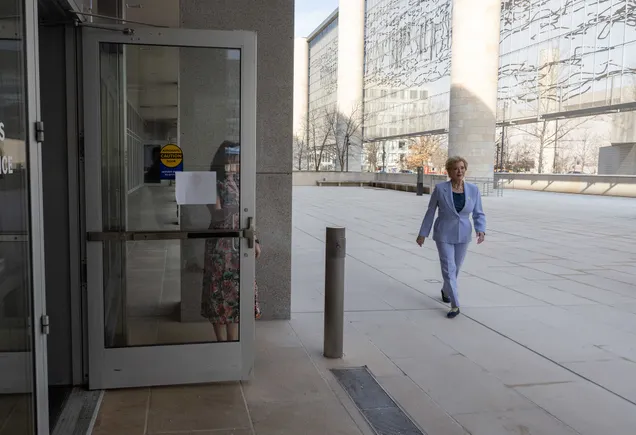
“To further our commitment to ending discrimination in all forms across federally supported programs, the Department will no longer award Minority-Serving Institution grants that discriminate by restricting eligibility to institutions that meet government-mandated racial quotas,” U.S. Education Secretary Linda McMahon said in a statement on Wednesday.
McMahon said the department wants to work with Congress to “reenvision these programs to support institutions that serve underprepared or under-resourced students without relying on race quotas.”
The Education Department’s decision Wednesday targets some of the very grants over which it is currently being sued by the state of Tennessee and Students for Fair Admissions, the anti-affirmative action group that successfully sued to end race-conscious admissions at colleges.In a lawsuit filed in June, the plaintiffs argued that grants for HSIs are discriminatory due to their eligibility requirements.
In a July memo, the U.S. Department of Justice said it would not defend the grant programs. Solicitor General D. John Sauer said the agency determined that they violated the constitutional right to equal protection under the law.
The Education Department said it will still disburse roughly $132 million in grant funding for fiscal year 2025 that Congress has mandated to be spent for MSIs. “The Department continues to consider the underlying legal issues associated with the mandatory funding mechanism in these programs,” the agency added.
The Education Department did not answer Higher Ed Dive’s questions Thursday but cited a Wednesday article from online news publication RealClearPolitics.
A senior administration official told RealClearPolitics that the changes would not impact historically Black colleges and universities.The federal designation of HBCU does not include any enrollment criteria. Instead, a college must have been established prior to 1964 and have a principal mission that “was, and is, the education of Black Americans,” according to federal statute.
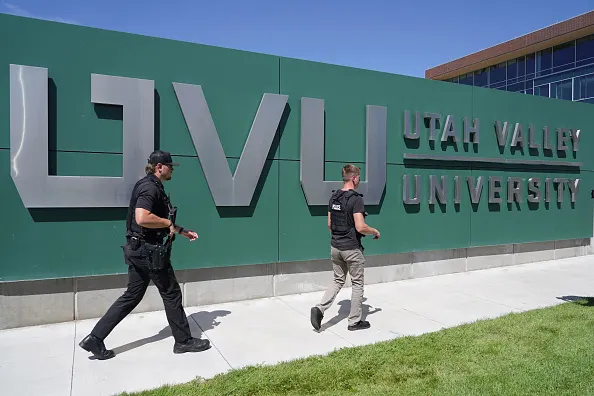
The shooter who killed Turning Point USA founder Charlie Kirk Wednesday on the Utah Valley University campus appeared to fire from the roof of a university building that houses administrative offices and student advisement services.
The Losee Center for Student Success is a 90,000-square-foot building with a mix of campus offices and student services that underwent a $4.5 million renovation in 2009. The building is fewer than 200 yards from the outdoor amphitheater where Kirk was speaking. A video taken by an attendee captures images of what appears to be the shooter standing on the roof of the building after the shooting and running away.
“The rooftop to the Losee building is pretty easy to access,” a CNN reporter said in a video analysis of the shooting. “It’s connected to another building by an elevated walkway, which … is only separated from the roof by a railing.”
Because of the distance and accuracy of the shot, it was likely fired from a large-caliber rifle, Jim Cavanaugh, a former officer of the U.S. Bureau of Alcohol, Tobacco, Firearms and Explosives, said on MSNBC show The Beat with Ari Melber. “It does appear to be a large rifle round,” Cavanaugh said. “I would call it a .308 or a .30-06, like a deer rifle. One shot. That’s all.”
Cavanaugh explained that “Snipers use that attack method for two reasons. One, they can’t get close … and secondly, because you want to get away. That gives you the distance to get away. You can fire the round and then egress from the scene.”
“Two hundred yards is not a difficult rifle shot,” Christopher O’Leary, former director of hostage recovery for the federal government, told Melber. “Most people have optics on their weapon. … With a true optic on it, 200 yards is very easy to do.”
The university, in Orem, Utah, prohibits guns on campus to the extent allowed by state law. Utah’s Concealed Weapons Law allows people with a state concealed carry permit to be on campus with a concealed firearm, according to the campus police website.
An estimated 3,000 people were attending the Kirk event, the first of a series of campus talks the conservative activist was scheduled to hold around the country. Kirk was shot while answering a question about mass shootings. “Do you know how many mass shootings in America there have been over the last 10 years?” an attendee asked, the CNN video analysis shows. “Counting or not counting gang violence?” Kirk responded before he was hit.
Local police and half a dozen campus police officers provided security at the event, but there was no screening, the CNN analysis said.
“Let’s be realistic,” O’Leary said on The Beat. “We’re not going to lock down a college campus for every speaker outdoors. Maybe you want to take it indoors. I think that’s all going to be assessed moving forward.”
Phil Lyman, a former Utah state legislator who was at the event, said on The Beat that he saw what he believed were “a lot of undercover police officers running around” after the shooting, which surprised him. “I would not have thought that [those were officers].”
The campus is closed for the week while law enforcement officials conduct their forensic work.
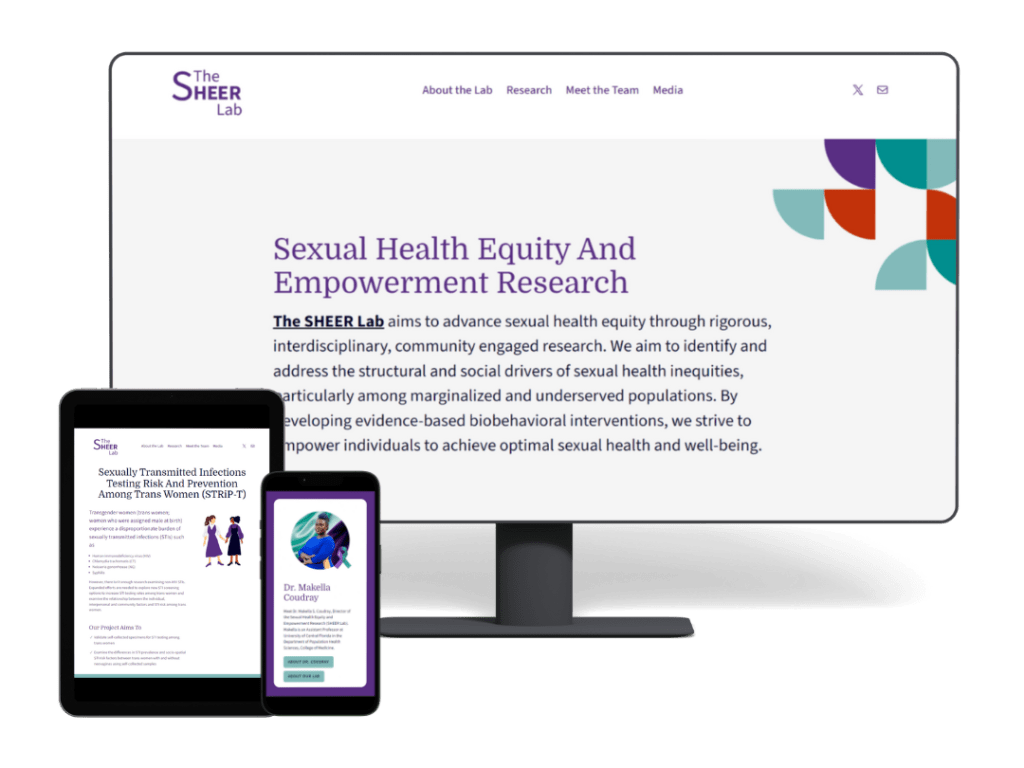
Dr. Makella Coudray cares about how her research shows up online. She knows that when your science is visually engaging, it can reach more people. We worked together on a number of elements that make up her visual online presence for the Sexual Health, Equity, and Empowerment Research Lab (SHEER Lab).
In this conversation, we talk about branding for your research. Specifically, her logos, social media, and what it’s like to share her online presence with people. We also chat about what prompted her to create a personal academic website and her research lab website.
A full text transcript will be added to this blog in the coming week, along with English captions for the YouTube live. Thank you!
Mentioned in this episode:
Bio
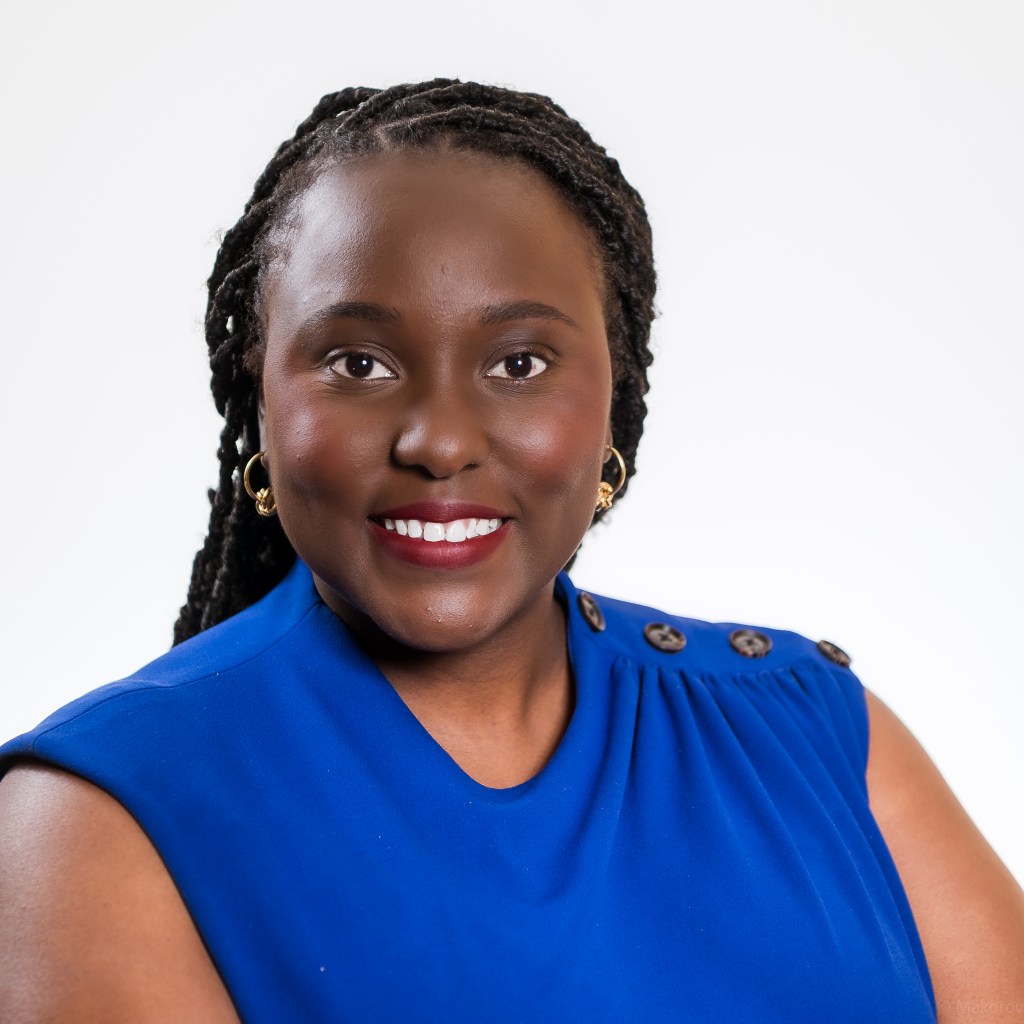
Makella Coudray, PhD, MPH, CPH is an Assistant Professor of Medicine in the Department of Population Health Sciences at the University of Central Florida (UCF). She is the Director and Principal Investigator of the Sexual Health, Equity, and Empowerment Research (SHEER) Lab.
She is an epidemiologist and implementation scientist whose work focuses on improving sexual and reproductive health outcomes for communities historically underserved by healthcare systems. Her research prioritizes STI prevention and access to care, especially in populations facing barriers to care. Through the SHEER Lab, she leads efforts to design practical, evidence-informed solutions. Her STRiP project explores innovative testing approaches to reduce STI burden and improve access. Dr. Makella Coudray has a PhD in Public Health (Epidemiology) from Florida International University. She has a CPH (Certified in Public Health) credential from the National Board of Public Health Examiners (NBPHE). She got her Masters in Public Health (MPH) and Bachelor of Science (BSc) in Biology from St. George’s University in Grenada. She was born and raised in Trinidad and Tobago. Visit her website MakellaSCoudray.com
We are horrified by yesterday’s assassination of Charlie Kirk on the campus of Utah Valley University. We are horrified first and foremost because two children lost their father and a wife lost her husband. And we are further horrified because all of us at FIRE have dedicated ourselves to the defense of free speech and open debate on college campuses.
At their best, America’s colleges and universities provide a unique venue to discover truth, talk across lines of difference, and develop a deeper and fuller understanding of the world. Over the years, students and student groups have invited Kirk to speak at hundreds, if not thousands, of campuses. At these events, he would share his opinions and invite others to do the same. America must be an open society where this sort of debate can take place, where we feel safe to share our ideas in the public square, not just from behind bulletproof glass and bulletproof vests.
WATCH VIDEO: FIRE Executive Vice President Nico Perrino on CNN to discuss free speech on college campuses in the aftermath of the Charlie Kirk shooting at Utah Valley University.
Sigmund Freud once said civilization started the day man first cast a word instead of a stone. He was right. Words are not violence. Words are what we use instead of violence to resolve our differences. We must not lose sight of this civilization-defining distinction.
Unfortunately, since 2021, we’ve seen a steady rise in support for violence in response to speech on campus. Earlier this week, we released our finding that one in three students express some support for the use of violence to stop a campus speech. That’s up from 20 percent only three years ago. While we do not know the identity of the gunman, what happened yesterday is indicative of a broader cancer in our body politic that we must address.
Rewarding threats of violence by taxing speech or silencing speakers will only invite more threats and more violence.
But it must not be addressed with censorship.
For more than 25 years, FIRE has challenged colleges that use speculative and amorphous security rationales to justify censoring controversial speakers. Through public records requests and other means, we’ve often found these rationales serve as a pretext to shut down debate and capitulate to demands for censorship. Indeed, according to our Deplatforming Database, Kirk was the subject of at least 14 attempts to stop him from speaking on campuses since 2021. Over the years, FIRE has repeatedly written to colleges that sought to silence Kirk’s organization and supporters.
Moving forward, we can expect colleges and universities to place even greater emphasis on security ahead of controversial speakers arriving on campus. But administrators must not pass security costs along to speakers or use security concerns as pretext to cancel a speaker’s appearance. They have a moral and legal obligation to redouble their efforts to protect free speech. Rewarding threats of violence by taxing speech or silencing speakers will only invite more threats and more violence.
Yesterday, an assassin’s veto silenced Charlie Kirk, just as it silenced the journalists and cartoonists at Charlie Hebdo a decade ago, and just as it attempted to silence Salman Rushdie in 2022. But we cannot let the censors win. We cannot let violence prevail. We can and must come together in defense of our rights to be who we are and to speak our minds.