Blog

  • EAB Report Finds Confluence of Pressures on Higher Ed

    EAB Report Finds Confluence of Pressures on Higher Ed

    Roberto Schmidt/AFP via Getty Images

    The higher education sector is increasingly squeezed by economic and political pressures affecting even the nation’s wealthiest institutions, according to a new report from consulting giant EAB.

    The report, out today, argues that higher education is in “a new era of scrutiny and conditional legitimacy.” EAB finds the sector battered by social, political and market headwinds as it simultaneously navigates a more adversarial relationship with the federal government, a bifurcated enrollment picture, public doubts about return on investment, a rapidly changing athletics landscape and the effects of artificial intelligence on job prospects for recent graduates.

    Here’s a look at some takeaways from EAB’s Higher Ed State of the Sector report.

    A Changing Social Contract

    The report notes that scrutiny on the sector is sharpening, which is driven by both the Trump administration and state lawmakers who have ratcheted up pressure on institutional autonomy by pressing universities to restrict certain speech and halt diversity, equity and inclusion efforts.

    The authors argue that autonomy is no longer assumed and colleges must justify to the public their need for independence.

    “In the past, it was largely assumed we were given autonomy. It was assumed that we were going to deliver value, do good for the public,” Brooke Thayer, EAB’s senior director of research, told Inside Higher Ed. “Now it’s increasingly conditional and tied to—can you actually prove it? Can you show me the ROI? Can you show me the impact and economic value and alignment with the priorities of federal policymakers, state policymakers and the broader public as well?”

    Thayer and her co-authors note that in President Donald Trump’s second term, many historical assumptions about higher education no longer ring true. They point to restrictions on speech and DEI, loan caps, an increased focus on ROI, an expansion of the endowment tax, and cuts to research as evidence that higher education’s social contract has been rewritten in just the first year of Trump 2.0.

    “There’s one word that stuck out over this last year and it’s ‘Trump,’” said Colin Koproske, managing director in EAB’s research division. But, he added, the federal government’s shifting priorities are compounded by demographic pressures and the AI effect on job placement. Altogether, those headwinds amount to a powerful gale.

    ‘Synchronized Compression’

    While the report notes that the business model of higher education has been under strain for decades, authors argue, “Today’s challenges are substantively different.” They find “every major revenue stream and expense category is under pressure at the same time” across the sector.

    Institutions are facing what EAB calls “synchronized compression,” which means leaders have “fewer cushions to absorb shocks” due to simultaneous pressure on revenues and expenses.

    The report notes a high and largely fixed cost structure, heavy on labor costs, weighed down by deferred maintenance needs and subject to political headwinds, particularly for public institutions, where lawmakers may be keen to cut education to balance state budgets.

    “I think most schools are gonna have to make bigger changes than we have in the past and move a lot faster,” Thayer said. “A lot of that comes down to the reality that we have to manage our cost base, which is highly fixed and labor intensive. It’s tough to make a real change in the model and is going to require some of those bigger discussions and restructuring conversations around—do we have the right people, processes, investments in place and are there ways we actually can more sustainably build a model for the future with more cost flexibility in it?”

    But the report notes that even deep-pocketed institutions are subject to budget constraints, pointing out that wealthy universities also cut jobs and programs amid recent fiscal pressures.

    Need to Rethink Curricula

    The EAB report argues that higher education must confront concerns about market relevance as artificial intelligence reshapes the student body, the labor market and society at a broad level.

    The first factor is generational. The report argues that students arrive on campus less prepared “academically, socially and professionally.” But new graduates are also facing a contracting labor market, with entry-level jobs harder to obtain. Finally, EAB argues that artificial intelligence is “rewriting the foundations of work itself” as corporations make major bets on the technology.

    Thayer and Koproske argue that the effect of AI on early career outcomes—where many companies are tapping the technology to do the work of junior employees—means universities will have to rethink what they teach and how they teach it, with more of an emphasis on experiential learning. They also call on colleges to build more partnerships with employers to help students land internships and co-op placements in order to get a leg up on their careers.

    “There’s a bridge from a traditional four-year undergraduate education to the workforce that has to be built up to a much greater degree,” Koproske said.

    A ‘Winning Platform’

    Despite the concerns raised in the report, it isn’t all doom and gloom. EAB does offer a “winning platform” for institutions despite the many challenges confronting the higher education sector.

    The report highlights three areas where colleges should focus to improve public support.

    First up is “power jobs,” or the notion, as described in the report, that colleges provide “the fastest, most reliable route to jobs that sustain families and keep America competitive.” Second, the report highlights the importance of fostering civic pluralism, or making campuses a national model for debate and civic literacy in a time of polarization. Finally, colleges should focus on advancing national resilience, by taking center stage in areas such as defense, health and infrastructure by focusing research on areas of public interest and minting partnerships, according to the report.

    “Underlying all of those is this theme of transparency and making sure we’re measuring, we’re proving the outcomes, we’re being clear about the impact that we’re having. But those are three activities that cut across the party lines and are valuable in the eyes of the public,” Thayer said.

    A webinar discussing the findings in the report is scheduled for Wednesday at 3 p.m. Eastern.

    Source link

  • The Tyranny of Disciplines

    The Tyranny of Disciplines

    RST: Good morning, my dear hard-boiled egg. Did you have a good trip to Austin, upholding the patriarchy and extolling the manly virtues of the Western canon?

    EGG: You are so irritating. Old white men need to have a little space in the lexicon of human endeavors. I stand for all of them. So there!!

    RST: 🤮 There’s been a theme in the responses I’m hearing from people about this column, and it has to do with bodily functions and fluids. People have said they’ve snorted coffee out of their noses and nearly peed their pants while reading our text exchanges. We’re going to have to up our game to get them to actually pee. Higher ed needs more fun, Gordon.

    EGG: Rachel, I can tell you that I am having so much fun because you make it so. And the biggest gift you’ve given me is the gift of your friendship. That may be the last nice thing I say to you.

    RST: Liar, liar, pants on fire. You can’t help yourself. Nice things pour out of every text you send me. Plus, people are telling me, “I didn’t know Gordon Gee was so funny!” Apparently, you hid it well.

    EGG: I think having a thick skin and a sense of humor is the antidote to all of the whining and complaining common in universities. Besides, there are so many damn funny things that occur on a campus, why not laugh?

    RST: Now, let’s get into majors and the siloification of knowledge. I think we can agree expertise matters and U.S. higher ed is the expert factory. We need to keep cranking out Ph.D.s with specific knowledge about things like science, medicine, history and the global and pluralistic world—all the stuff we all teach. This matters more now because we have a government that offers dangerous “advice.” Welcome back, measles! I mean, plenty of people in your beloved state of West Virginia thought COVID wasn’t real and/or ate horse dewormer. I felt sorry for all those poor equines whose poop was wriggling with bot larvae.

    EGG: I must admit that some of your analogies are clearly made to irritate me. It is hard to believe that you are a Yale graduate. (Actually, it is not that hard to believe.) Certainly some of the advice that is coming out of the government is dangerous, particularly regarding public health. But they are also asking legitimate questions that should not be dismissed. I hope you are not a member of AA.

    RST: Alcoholics Anonymous? WTF, Gordon?

    EGG: Academic Antifa.

    RST: Oy. Anyway. I think we agree that we must protect and sustain disciplinary knowledge, and we need to maintain research and scholarship to keep our country healthy and our democracy alive. But many faculty members, no matter where they teach, including at small private colleges and regional publics, act as if they are still training mini-mes and are preparing students for nothing but graduate school.

    EGG: That is because universities are organized around departments and colleges rather than ideas. I think that we need to reorganize universities around centers, institutes and working groups, allowing both undergraduate and graduate programs to be very fluid and making disciplines not be the organizing principle but part of the creative process. Knowledge is doubling every few hours, so we need to evolve ideas and creative efforts at the same speed. Universities are elephants and need to become ballerinas and not just elephants with a tutu.

    RST: So we agree: Majors are dumb. I am at odds with some faculty because I don’t think we’re serving students for the world as it exists today. And when students come to us from community colleges and choose to major in creative writing (to my dismay, and I realize I may be writing myself out of a job), they can’t take courses that will round them out intellectually without jeopardizing their financial aid, because everything has to count toward degree completion. Given the way my university and many others are set up, I can’t even team teach with a professor in history or engineering.

    EGG: Rachel, I would say that you are not at odds with faculty, but rather your colleagues are at odds with academic reality. So many times I have seen people hang on to the way things are, even to the point that it is a death spiral. As a president, I would ask the question “Why are we doing this?” and the answer would be “This is the way we have always done things.” There is this belief among many that there are certain sacred issues that cannot be challenged. In my view, sacred cows make the best hamburgers.

    RST: Well, there’s a lovely image. When you were slashing and burning at WVU and destroying all that was good and holy—

    EGG: You know how to be really irritating. I suspect you would have been out in front of my office with a bullhorn—

    RST: Being irritating is one of my few superpowers. But, no, I’d be pelting you with stale bow-tie cookies or writing nasty op-eds. Did you try to reimagine how to fundamentally change things? Was there ever real conversation about inquiry-based learning? Could WVU have built a “university within a university”—a pilot college centered around problems, not majors, that attracts those faculty who want to try something different to serve today’s students? Have you heard about places (other than UATX—again, leaving that for later) that are doing cool things to get away from the tyranny of disciplines? I have.

    EGG: There was no slashing and burning. It was a necessary process to start to transform the university, a process that is now playing out across many institutions. The tyranny of disciplines and colleges has made it almost impossible to create new and more thoughtful ways to organize universities. The guild mentality requires loyalty to the discipline rather than the university—

    RST: You do know I wrote about this in the fall, right? I like to interrupt you. (Little Jewish girl from New York disrupts polite Mormon’s manners. Hell yeah!)

    EGG: —means it is difficult to start fresh and interesting programs within the body of the university. That is the reason, for example, that civic institutes are being created by legislators, due to the fact that the universities have refused to think of new and creative ways to teach and to organize themselves.

    RST: Oh, sure, the innovation of civics requirements some states are mandating, like the way your little patriarchal friends at UATX are trying to turn back the clock on a half century of social awareness?

    EGG: Well, part of this is due to the strong belief among many in the political community that institutions are rampant with wokeness. A premise I reject (although there is a good deal of “wokeness” in parts of many universities).

    RST: I have no idea what “wokeness” means, and surely you’re not dismissing the real and structural inequalities built into the legal foundations of our society. Really, Gordon, you were the dean of a law school (centuries ago). A couple of presidents, when I said that higher ed had barely changed in the last century and half, pointed out that if that were true, I wouldn’t be here. Is coeducation wokeness? Is looking at our sometimes ugly history with a critical eye wokeness? But if you’re saying that we could have done a better job of teaching why diversity (of all kinds), equity and inclusion matter, I agree. Everyone got real shouty, which resulted in a whole bunch of people feeling condescended to and left out.

    EGG: If university faculty had been more attuned to the changing nature of the world in which our universities are operating, they would have found ways to nurture new and different structures within the university that would allow multiple roads to academic conversations and salvation.

    RST: But we tend to stay within our little silos. And we’re also just swinging the pendulum of “cancellation” back and forth. I wonder if part of the problem with majors and departments is the way we’ve traditionally rewarded faculty, which is to say, we all act like we’re at mini R-1s.

    EGG: Now let’s really get into it. My question to you is, when are you going to give up tenure?

    RST: As soon as you find me another gig with even better benefits. Oops. Doesn’t exist because being a full professor is the most luxurious job in the nation. And you can keep your elephants in tutus. I’m obsessed with a baby pygmy hippo named Mars who lives in Wichita.

    Rachel Toor is a contributing editor at Inside Higher Ed and the co-founder of The Sandbox. She is also a professor of creative writing. E. Gordon Gee has served as a university president for 45 years at five different universities—two of them twice. He retired from the presidency July 15, 2025.

    Source link

  • How to: recruit non executives who genuinely strengthen your institution

    How to: recruit non executives who genuinely strengthen your institution

    Author:
    Julia Roberts

    Published:

    This blog was kindly authored by Julia Roberts, Founder and Principal Consultant at Julia Roberts Advisory.

    It is the second blog in our four-part ‘How To’ series that focuses on recruitment in higher education leadership roles. The first blog, on working with executive search, can be found here.

    Universities need Boards that can think clearly, challenge constructively and anticipate the pressures shaping the sector. That requires more than simply strong CVs: it requires a deliberately balanced mix of perspectives, experiences and capabilities that collectively enhance institutional judgement.

    Non executive recruitment is not about avoiding risk; it is about equipping your institution to navigate it.

    Be precise about the skills you actually need

    Boards rarely struggle to list the strengths they already possess. The real work lies in identifying the capabilities they do not yet have and being honest about where decisions feel harder than they should.

    A strong Board will typically benefit from three broad sources of insight:

    Higher education experience, which is invaluable for understanding regulatory context, governance expectations, stakeholder dynamics and policy pressures. This perspective accelerates the Board’s ability to read risk and spot implications early.

    Commercial experience, particularly where large-scale financial stewardship, technological change, market volatility or customer-driven transformation have shaped organisational strategy.

    Public sector experience, which brings deep expertise in accountability, stewardship, complex partnership working and operating within high scrutiny environments.

    Be explicit about expectations

    NED roles in universities are far from light touch. Policy shifts, regulatory intervention, financial constraints and public scrutiny mean that governance requires real commitment.

    Be ambitious, especially in areas where capability gaps are growing

    The demand for Board level literacy in AI, cyber security and digital resilience has become strategically essential. A Board does not need technical specialists in every seat. But it does need members who can recognise the strategic implications of AI adoption, interrogate cyber risk plans with confidence and understand what good looks like in digital maturity.

    A final thought

    Non executive recruitment is one of the few levers that genuinely shifts institutional capability. When you make the right appointments, you broaden the institution’s strategic horizon and strengthen its resilience.

    Be clear about the skills you need, be clear about the expectations of the role, and be ambitious in building a Board with a balanced mix of higher education, commercial, public sector and digital expertise including AI and cyber insight.

    Source link

  • As enrollment falls, getting into college is getting easier

    As enrollment falls, getting into college is getting easier

    Think getting into college is all but impossible?

    Think again.

    Sure, the most selective institutions still take only a tiny fraction of the people who apply to them. But at almost all the rest, the odds of getting in are good — and getting better.

    That’s because enrollment in higher education is already down by more than 1.5 million since 2010. Now the number of 18-year-old prospective college students is projected to begin a long decline. And federal data show that today’s high school graduates are less likely to go straight to college than their predecessors were.

    All of this means colleges and universities are having to admit larger proportions of their applicants, on average. Some are accepting high school seniors who haven’t even applied. They’re waiving application fees, helping admitted applicants nail down financial aid and sign up for classes and offering financial aid to students just for showing up for campus tours.

    Related: A trend colleges might not want applicants to notice: It’s becoming easier to get in

    Only 33 institutions in the country accept 10 percent or fewer of the people who apply to them, according to the National Association for College Admission Counseling, or NACAC.

    Almost all the rest took half or more of their applicants in 2022, the most recent year reported.

    Seven in 10 applicants to private colleges get in, says NACAC — and nearly eight in 10 applicants to public universities.

    Those numbers have been climbing. The median acceptance rate to bachelor’s degree-granting universities and colleges was 7.6 percentage points higher in 2022 than it was in 2012, an analysis by the American Enterprise Institute found. (Those federal admission figures, too, are the most recent available, and don’t include schools with open admission, which take 100 percent of applicants.)

    Related: Interested in innovations in higher education? Subscribe to our free biweekly higher education newsletter.

    Colleges have long encouraged the perception that applicants are lucky to even be considered for admission. And it’s seemed to work. A sizable number of anxious young people seem not to realize the odds are actually in their favor.

    Forty-five percent of 18- to 29-year-olds think it’s harder to get into college than it was for their parents’ generation, according to a survey by the Pew Research Center — when, on average, it’s easier. More than half say it’s more stressful than anything else they’ve done during their time in elementary, middle or high school, a separate NACAC survey shows.

    In some states, however, students are being accepted without even having to apply — often to their own surprise.

    Related: Colleges ease the dreaded admissions process as the supply of applicants declines

    Public universities or systems in Alabama, Arizona, Connecticut, Georgia, Hawai’i, Idaho, Indiana, Minnesota, New York, North Carolina, Tennessee, Texas, Utah, Washington and Wisconsin now offer various forms of what’s called direct admission, accepting students automatically if they meet certain high school benchmarks.

    The California State University system has begun to automatically take any student who earns at least a C in a list of required high school courses.

    Illinois has launched a one-click process that lets high school students send their transcripts instantly to 10 of the state’s 12 four-year public universities and all of its community colleges and — if their grades are above a certain cutoff — get back a guaranteed offer of admission.

    A growing list of private colleges now do this, too, in collaboration with independent companies and the nonprofit Common Application.

    As for standardized tests, more than 2,000 universities and colleges now make submitting the results of SAT and ACT scores optional. 

    Related: College admissions offices take on a new role: Coaxing accepted students to show up 

    NACAC is now also rolling out a program under which once-unapproachable admissions counselors help accepted students navigate the process of enrolling — figuring out financial aid, finding housing, registering for courses — which is almost as complex as applying.

    “Everyone is on board to make it less complicated,” said Erwin Hesse, director of NACAC’s Center for Innovation in College Admission, “and to remove as many barriers as possible.” 

    Contact writer Jon Marcus at 212-678-7556, [email protected] or jpm.82 on Signal.

    This story about college admissions getting easier was produced by The Hechinger Report, a nonprofit, independent news organization focused on inequality and innovation in education. Sign up for our higher education newsletter. Listen to our higher education podcast.

    Since you made it to the bottom of this article, we have a small favor to ask. 

    If you believe stories like the one you just finished matter, please consider pitching in what you can. This effort helps ensure our reporting and resources stay free and accessible to everyone—teachers, parents, policymakers—invested in the future of education.

    Thank you. 
    Liz Willen
    Editor in chief

    Source link

  • Without school vaccine mandates, many kids may never see a doctor

    Without school vaccine mandates, many kids may never see a doctor

    by Sarah Carr, The Hechinger Report
    February 11, 2026

    Every December brings an end-of-year crush to Washington, D.C.’s pediatric clinics. In addition to the usual culprits — colds, the flu, RSV — that’s also the time when the city school district issues notices reminding parents of children who are behind on required vaccinations to get caught up by December 8, or risk being turned away from school.

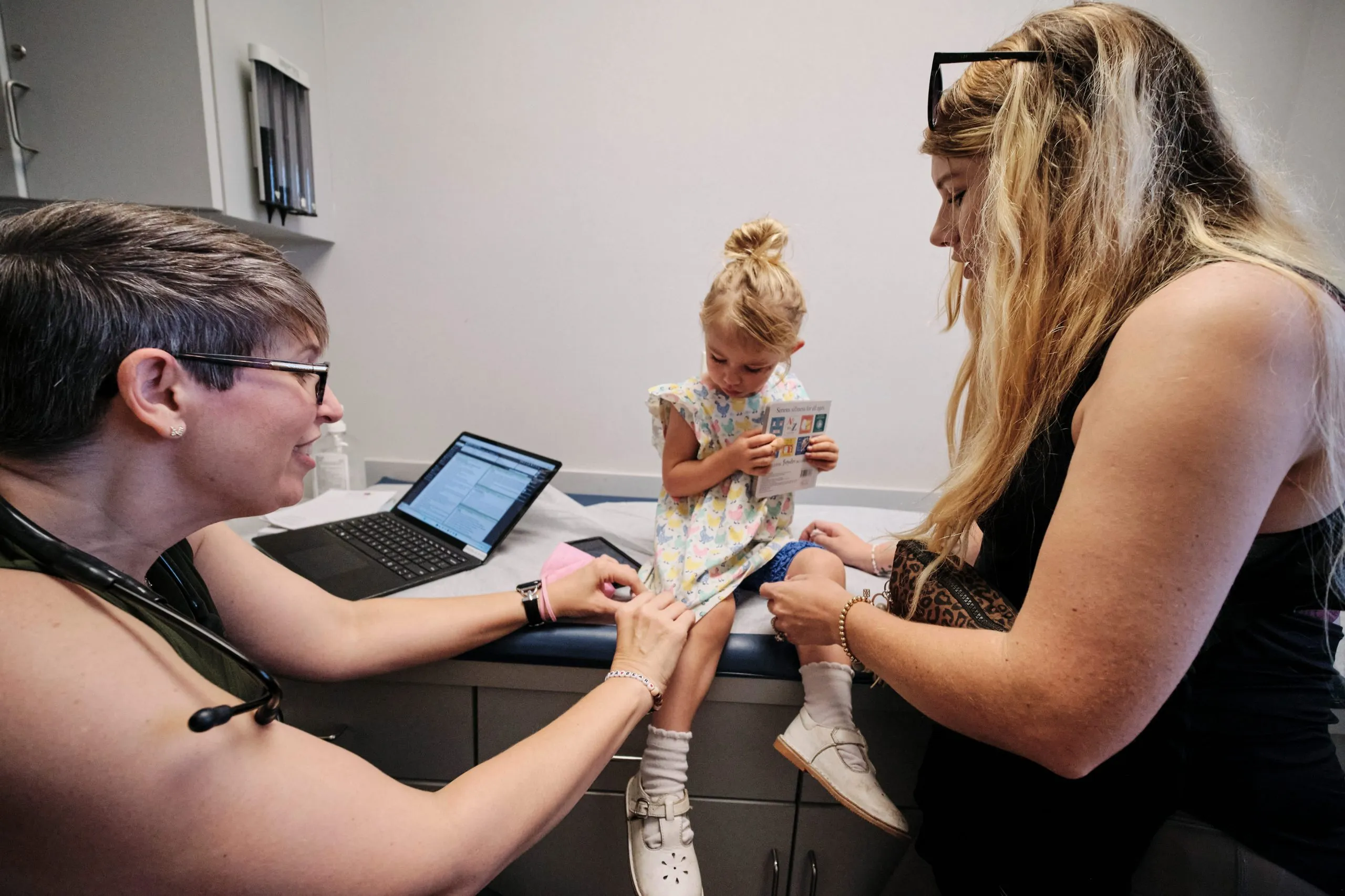
    For Dr. Megan Prior, a pediatrician in the district, the vaccine rush brings an opportunity to catch families up on more than shots. This past December, Prior said, a 12-year-old overdue for her meningitis, tetanus and other vaccines also presented with severe prediabetes that was on the verge of becoming full-blown disease.  

    For years, the girl’s mother, busy with full-time work and two other children, hadn’t prioritized bringing her to the doctor for regular checkups — until she got the notice about the overdue vaccines.

    “Having vaccine mandates reminds parents to engage in their kids’ health,” Prior said.

    Like the federally recommended childhood vaccination schedule, those state-level mandates are under steady attack. Last year, at least 10 states made it easier for families to opt out of vaccines required by schools. For example, Iowa now requires school districts to disclose information on the vaccine exemption process on their websites and in school registration materials. Idaho prohibits day cares, schools and employers from mandating “medical interventions” of any kind — most pointedly, vaccines.

    More than a dozen similar bills have already been introduced in 2026, with lawmakers in Indiana and New Jersey, for instance, proposing that those states develop reporting systems for documenting “adverse events” related to childhood vaccines. A South Carolina bill would prohibit any vaccines from being mandated for children under the age of two. 

    Research has long shown that strong school and child care vaccine mandates lead to higher immunization rates. “School requirements make a massive, massive difference,” said Prior, citing her own experience watching HPV vaccination rates surge in Virginia, where she used to work, after the state added it to the list of required shots for middle school entry in 2008. In communities that have faced recent measles outbreaks, like Spartanburg, South Carolina, vaccination rates are almost uniformly low. 

    But doctors say there is another, less understood public health risk of the shift away from vaccine mandates: Fewer children will end up getting routine medical checkups of any kind. Untold numbers of children come in for physicals and wellness checks only when their school forms are due, like Prior’s 12-year-old patient. That can be true for families who are neutral, or even somewhat positive, about vaccines, physicians say. For young children, those checkups can be crucial not only to ensure they stay healthy, but also to provide them with early diagnosis of any disabilities or developmental delays.  

    Meanwhile, for the growing number of parents with skeptical or negative feelings about vaccines, the distrust over inoculations can rupture families’ connection with doctors and the care they provide. Many private clinics across the country do not serve unvaccinated children. And families who mistrust shots sometimes also mistrust the doctors who administer them, prompting them to seek medical care outside the established system, perhaps from chiropractors or naturopaths, if they seek it at all.

    Related: How the science of vaccination is taught (or not) in US schools

    Pediatricians across the country have watched the number of vaccine refusers in their clinics and hospitals rise steadily in recent years — a result, they say, of misinformation distributed on social media, widespread distrust of vaccines that grew out of the Covid pandemic, and, most recently, the steady assault on vaccines by Health and Human Services Secretary Robert F. Kennedy Jr. In early January, federal officials removed six vaccines from the Centers for Disease Control and Prevention’s recommended list for all children. In December, the CDC also rescinded its recommendation that all newborns get a hepatitis B shot. 

    Yet the states hold critical cards in determining whether children actually need shots to attend child care or school, meaning the cascade of new legislation at the state and local level could have a large effect on vaccination rates. By the time children start kindergarten, all states have historically required them to show proof of vaccination against diphtheria, tetanus and pertussis; chicken pox; measles, mumps and rubella; and polio. Some of these illnesses can spread quickly in schools, where young children still learning basic hygiene sit, eat and play in close proximity.

    Vaccine mandates can also serve as the only formal connective tissue between families and physicians. Most states do not require regular screenings for health issues that can impede young children’s learning, like uncontrolled asthma or hearing problems. Slightly less than half of states mandate any kind of comprehensive health exam for children, according to a 2018 study. That means some children might go to the doctor only for their vaccinations. Any rollback in child care and school entry requirements has the greatest impact on children from birth to age 6, the years that most of the shots come due. 

    Idaho has gone the furthest of all states in upending school vaccine mandates. A law enacted last spring bans employers, schools and child care centers from requiring anyone to get a vaccine. But even before the new state law took effect, scoring an exemption had become as easy as signing “a scrap of paper” citing an objection of some kind, said Dr. Tom Patterson, the president of the Idaho chapter of the American Academy of Pediatrics, who has practiced in the state since 1998.

    Over several years in the early 2000s, two Republican leaders in the deeply red state had actually made strides at tightening school entry requirements. Former Idaho first lady Patricia Kempthorne and state Sen. Dean Cameron both championed the issue, and for several years starting in 2011, Patterson said, families who wanted to opt out of school vaccine mandates had to request each shot exemption separately; they also had to sign a form that repeatedly mentioned “death” as a possible consequence of declining the vaccines.

    But those stricter policies began to erode by the late 2010s, Patterson added. And with looser requirements, and the arrival of the pandemic, childhood vaccination rates plummeted. In 2018, nearly 90 percent of kindergarteners in the state had most of their shots, for diseases including measles, mumps and polio, according to CDC data; by 2024, the number getting shots for almost all reported diseases had dipped below 80 percent. For more contagious diseases like measles, studies show, an approximately 95 percent immunization rate is necessary to reach herd immunity, so that unvaccinated children are protected by their vaccinated classmates. 

    Ron DeSantis, the Republican governor of Florida, and his state surgeon general have been trying to eliminate vaccination requirements for school entry, though the legislature is moving forward with a proposal that weakens those requirements but falls short of a ban. 

    Related: Vaccine mandates could make it harder to find child care workers

    Rather than eliminating school mandates entirely, it is far more common for states — including New Hampshire, Texas and West Virginia — to try to make it easier for families to receive vaccine exemptions for their children. New Hampshire, for instance, recently codified a Parental Bill of Rights that guarantees families can choose not to vaccinate because of religious beliefs

    “The easier it is to claim exemptions, the lower the vaccination rates,” said Dr. David Higgins, an assistant professor of pediatrics and public health at the University of Colorado and a practicing pediatrician in Denver. One 2012 study found that when states allowed parents to exempt their children from mandatory vaccines on philosophical grounds — and not just religious or medical ones — exemption rates more than doubled.

    In Maine, one of a handful of states that allow only medical exemptions, longtime school nurse Patricia Endsley said the strict policies help maintain a statewide vaccination rate of about 97 percent.

    “I don’t think some people have a chance to be hesitant” to get vaccinations for their children, she said. “They have to have it or homeschool.” (Endsley did, however,  mention hearing about families “purchasing” medical exemptions for about $500 through an out-of-state company called Frontline Health Advocates.) Endsley, who retired from her position as a school nurse last year and is now president-elect of the National Association of School Nurses, administered some of the shots herself with parent permission for families who lacked a primary care provider.

    For years, West Virginia, which like Maine only allowed medical exemptions, has also been a case study in the power of strict school entry requirements. The state has historically posted lower early childhood vaccination rates in the country for newborns to 2-year-olds, but has risen close to the top of the pack for kindergarteners — a clear result of the school mandate, researchers and physicians say.

    “It’s very common to see parents waiting until their children are school age,” said Dr. Youmna Mousattat, a pediatrician in Charleston, West Virginia. Mousattat works out of a hospital, and in recent years she’s watched the number of families declining their first vaccination, hepatitis B, rise from an almost startlingly rare event to a routine occurrence.  

    Yet now, West Virginia’s 90-year-old law is in jeopardy, with an executive order from Governor Patrick Morrisey last year calling for the state to grant religious exemptions. Although the order has been paused and the state’s Supreme Court is considering related legal challenges, health officials had already started to grant hundreds of religious exemptions in the early months of 2025.

    West Virginia physicians, like their colleagues in other states, are beginning to see a rise in deadly diseases, some of which had almost entirely disappeared in the U.S.

    Dr. Andrea Lauffer, a physician who treats many young children in the hospital where she works in South Charleston, West Virginia, said she diagnosed a young elementary-school-age student over the summer with hepatitis B for the first time in her career. In the fall, an unvaccinated child who had traveled out of state came in with a rash that looked like measles and had to be quarantined. And the last quarter of 2025 brought sharply rising numbers of whooping cough cases across the state. 

    “When I was in training, we really didn’t have to worry about these diseases,” she said. “My concern is that we’re going to keep seeing diseases that we thought we would never have to see again.”

    Related: Young children have unique needs, and providing the right care can be a challenge. Our free early childhood education newsletter tracks the issues.  

    In the case of the Washington, D.C., child with prediabetes, the timely diagnosis possibly prevented her from developing common complications of untreated diabetes: kidney problems, loss of blood flow to hands and feet, even blindness. “There do need to be dramatic lifestyle changes and, if they can’t make those, patients need to start medication right away,” Prior said.

    Many families don’t make it to the pediatrician until the school deadline hits, agreed Higgins. Instead, they visit regularly for the first year or two of their child’s life, then disappear until their kids reach school age. “I can’t tell you how many times it’s the summer right before the start of kindergarten, and parents come in and say, ‘We’re here because we got a letter from school,’” he said. 

    Those appointments often include far more than shots. Pediatricians assess growth, nutrition and blood pressure and screen for lead poisoning, chronic diseases, developmental delays and much more.  

    Higgins points out that, nationwide, a significant majority of parents are still choosing to vaccinate their children. But he’s also concerned about more states following the lead of Idaho and Florida and attempting to totally upend school vaccine mandates. “That will ultimately result in more preventable harm and illness in children,” he said, both from diseases that vaccines can forestall and “from other diseases that aren’t being caught and treated because families are disconnected from health care.”

    In addition to her fear of relaxed school requirements, Prior said, she spends so much time these days answering patients’ questions about vaccines that it can crowd out crucial discussion of other topics. “I used to spend time talking about how to optimize sleep, how to address picky eating and a range of other topics related to children’s health,” she said. Now, she added, much of that time is devoted to explaining and, sometimes, defending vaccines.

    Related: Tracking Trump: How he’s dismantling the Education Department and more

    In Idaho, Patterson sees not only reluctance but also, occasionally, hostility from parents when he asks them if he can talk about vaccines. These days, that’s usually during his monthly week at the hospital, where he tries to make sure as many newborns as possible leave with a hepatitis B shot, as well as an injection of vitamin K, which can prevent uncontrolled bleeding. At the start of that conversation, “one father said recently, ‘How can we trust anyone in medicine?’” Patterson recalled.  

    The physician no longer feels comfortable displaying his hospital ID and stethoscope outside of the hospital or clinic. He noted that the hospital used to experience a “Code Gray,” when a patient assaults a physician or staff person, once every couple of months. Now there are often three or four each day.

    The end of school vaccine mandates in Idaho are just the final nail in the coffin in a state where families have been bombarded with “misinformation” about vaccines for years. 

    Indeed, the divide over shots has contributed to what some fear could be a lasting breach between many families and modern medical care — with lasting implications for public health.

    Although hard numbers don’t exist, several pediatricians report seeing a rise in the number of private clinics that won’t accept unvaccinated patients, often citing the need to protect medically fragile patients and family members in waiting rooms. In Florida, first lady Casey DeSantis recently held a roundtable for mothers frustrated that they couldn’t find a pediatrician after refusing vaccines.

    While Higgins said he understands the rationale for declining to treat unvaccinated children, he thinks clinics should give vaccine-skeptical caregivers some flexibility — and time to change their minds — before refusing care. “If a parent feels dismissed right from the start, you’ve closed that door to build rapport and a relationship,” he said.

    In Idaho, where the share of kindergarteners vaccinated against measles is nearly 20 percentage points below what’s required for herd immunity, Patterson is still trying whenever possible to build up that rapport — and he still has successes. But some days the response can be discouraging, and he has thought about shifting entirely to a clinic focused on autism and developmental pediatrics. 

    While it used to be the vaccine refusers who sometimes felt pressured to withdraw their children from public school, it can now be those most committed to vaccines, including physicians, who feel that urge. Patterson’s children are no longer school age, but if they were, he said, “I wouldn’t send them to public school.” 

    This story about school vaccines was produced by The Hechinger Report, a nonprofit, independent news organization focused on inequality and innovation in education. Sign up for the Hechinger newsletter.

    This <a target=”_blank” href=”https://hechingerreport.org/without-school-vaccine-mandates-many-kids-may-never-see-a-doctor/”>article</a> first appeared on <a target=”_blank” href=”https://hechingerreport.org”>The Hechinger Report</a> and is republished here under a <a target=”_blank” href=”https://creativecommons.org/licenses/by-nc-nd/4.0/”>Creative Commons Attribution-NonCommercial-NoDerivatives 4.0 International License</a>.<img src=”https://i0.wp.com/hechingerreport.org/wp-content/uploads/2018/06/cropped-favicon.jpg?fit=150%2C150&amp;ssl=1″ style=”width:1em;height:1em;margin-left:10px;”>

    <img id=”republication-tracker-tool-source” src=”https://hechingerreport.org/?republication-pixel=true&post=114757&amp;ga4=G-03KPHXDF3H” style=”width:1px;height:1px;”><script> PARSELY = { autotrack: false, onload: function() { PARSELY.beacon.trackPageView({ url: “https://hechingerreport.org/without-school-vaccine-mandates-many-kids-may-never-see-a-doctor/”, urlref: window.location.href }); } } </script> <script id=”parsely-cfg” src=”//cdn.parsely.com/keys/hechingerreport.org/p.js”></script>


    Source link

  • AI Belongs in Every Classroom: Why We Need Cross-Disciplinary AI Literacy – Faculty Focus

    AI Belongs in Every Classroom: Why We Need Cross-Disciplinary AI Literacy – Faculty Focus

    Source link

  • Cutting management apprenticeships would set young people up to fail at work

    Cutting management apprenticeships would set young people up to fail at work

    There is a growing sense, shared quietly by employers, universities and apprentices themselves, that something valuable is starting to slip through the cracks of the skills system.

    Amid much speculation, it would seem that the direction of travel is becoming harder to ignore. As Vice Chancellor of Manchester Metropolitan University and CEO of the Chartered Management Institute, we are deeply concerned that management and leadership apprenticeships are under threat as funding tightens and priorities narrow.

    There is much talk about simplification, streamlining standards and shorter, more flexible provision. In a recent interview, the former Labour Cabinet minister Alan Milburn, who is leading a review into the rise in young people who are not in education, employment or training (NEET), argued that the apprenticeship system has “drifted off course”. He described it as “crazy” that a significant number of apprenticeships are now taken up by people over the age of 40.

    Worried that – as one business leader in Staffordshire described it – talk of “streamlining” very quickly starts to sound a lot like “rationing”, employers, apprentices and higher education institutions have responded.

    They are backing a petition that warns against reforms that would sever the vital pipeline that trains the UK’s future managers.

    With more than 4,500 signatures from across the UK economy, voices from household names such as the Co-op Group, Capita, Ocado and TSB have joined hundreds of public sector and NHS workers, small business owners and charity leaders in calling for this route to be preserved.

    The move into work

    At its heart, this is not about who gets to do an apprenticeship. It is about what happens if management apprenticeships are “streamlined” out of existence. Who is then trained to support those unemployed young people as they take those first tentative steps into employment?

    Many NEETs face complex health and social challenges, and moving them off benefits and into work will not be simply a matter of handing them a job and telling them to show up each day.

    Keeping them there, keeping them motivated and helping them to see a future career path will all take skills – management skills. One third of workers have left a job because of a bad manager, and that’s without the myriad complexities faced by today’s NEET cohort.

    Ella Gladwin shows what that difference looks like in practice. A chartered manager degree apprentice at Manchester Metropolitan University, she chose not to follow a traditional degree and did not want to learn leadership in the abstract. Through her management apprenticeship, she has taken on real responsibility in the HVAC sector, contributed to business strategy, and built the confidence to lead in a male-dominated industry. She now mentors other young women entering the sector – not as a future leader, but as one already.

    Her story reflects something bigger. Chartered Management Institute (CMI) research found that 71 per cent of management apprentices come from families where neither parent went to university, and 59 per cent are women. Additionally, data shows that a significant number of management apprentices are under 25 – in 2024–25 this age group accounted for 38 per cent of new starters in the business administration and law sector alone.

    These are not elite qualifications for already-advantaged professionals. They are one of the few remaining routes that allow people to progress into leadership through work, often later in life, without taking on debt. Universities like Manchester Metropolitan have built programmes that are tightly aligned to employer need, rooted in real jobs, and open to learners who traditional routes have consistently failed to reach.

    Taking the productivity problem seriously

    Management apprenticeships account for only around eight per cent of all apprenticeship starts in England – despite the fact that almost a quarter of the UK workforce has management responsibility. They account for less than six per cent of the apprenticeship budget.

    Consider in that context that most UK managers receive no formal training at all – CMI data shows that 82 per cent get promoted having had no management training – creating a nation of “accidental managers”. Most of us will recognise the pattern, people promoted because they were good at their job, not because they were trained to lead others.

    This is reflected in the UK economy’s bottom line – our productivity problem is not just about technology or capital. For two decades, research by economists like Nicholas Bloom and John Van Reenen at the LSE has shown that management capability is the missing ingredient. Studying thousands of firms across 35 countries, they consistently find that better-managed organisations deliver higher output, stronger profitability and faster growth, regardless of sector or technology. John Van Reenen, who until recently chaired the Chancellor Rachel Reeves’ board of economic advisers, has seen first-hand how central management quality is to sustainable growth.

    None of this is an argument against supporting young people. We strongly support the Youth Guarantee and the urgent need to reduce inactivity. But those ambitions depend on skilled line managers who can recruit, retain and develop young people once they arrive. Entry routes matter, but progression and management matter too.

    As reforms to the apprenticeship system continue, ministers including Pat McFadden face a choice about the kind of skills system the UK truly needs. One that prizes speed over substance – the very problem that the levy on employers to fund apprenticeships was meant to solve. Or one that is rooted in what employers need – and that wisely recognises that opportunity does not end at the age of 24.

    Source link

  • Helping students articulate what they’ve learned

    Helping students articulate what they’ve learned

    The means to improve graduates’ employability during and following higher education remains a persistent topic of debate at both national and provider policy level.

    As both the cost of studying at university and graduate competition increases, the stakes are even higher for universities to achieve positive graduate destinations – for students and for regulatory purposes alike.

    The solutions that will achieve what are often complex, individual developments in students are far from easy, where committees debate the best approach while students themselves are increasingly keen for opportunities that will secure that dream career.

    It’s in this context that we’ve written The student’s guide to career planning and employability – a handbook for both students and lecturers on structuring accessible advice for the students of today.

    Skills are back on the menu

    Government nationally faces the same issues as our universities, where universities are increasingly asked to provide the medium and higher skills workforce to support economic development.

    In the last decade, this has seen agendas focused upon enterprise, regional skills reports, and new degree awarding powers to address how and where students are developed to be the graduates of the future.

    The Labour Party returned to government in 2024, and with it has returned a national focus on skills – including the publication of the UK standard skills classification released in November 2024.

    For many this is a return to a Labour priority of 1997–2010, where a focus on ensuring core skills are part of the curriculum was a major priority of the National Skills Taskforce, which outlined the need for a genuine link between university study and progression into industry, and such innovations as the foundation degree.

    Many universities responded with activities such as personal development planning and increased resources in careers services to develop these skills in the students of the 2000s, measured by the Destinations of higher education leavers survey.

    14 years on

    Whether you refer to skills as “hard skills”, “soft skills”, “transferable skills”, or “personal skills”, the challenge for educators and careers advisors hasn’t changed in the skills agenda.

    For students, finding the right means or opportunities not only to develop such skills is easier said than done at scale, but also to ensure students have awareness of such skills and can articulate them in processes such as job interviews. The context has considerably changed since, though, with technology, Covid-19, tuition fees, and job market changes seeing the skills agenda of today being very different to the last.

    The stakes are also far higher than just the league tables of the 2000s – Graduate Outcomes has been given three sets of very strong teeth for universities to answer to, notably:

    • Condition B3
    • The Teaching Excellence Framework (TEF)
    • Access and participation plans

    Into the curriculum

    To ensure students’ engagement with skills development activities, increasing numbers of course teams are turning towards embedding employability in the curriculum. This sees curriculum going beyond traditional disciplinary content, taking steps to overtly engage students in skills development through access to experiences such as live briefs and work-related activities.

    Ensuring engagement through the hard line of summative assessment to assess such experiences, courses have innovated in assessment practice far beyond the essay, exam, and presentation – toward an array of authentic work-related assessment.

    The handbook

    To create a resource that engages, guides, and supports students’ development and awareness of skills, we were delighted to launch our new handbook for students at the start of the year. The student’s guide to career planning and employability is for students of all disciplines, and aims to provide an accessible source of advice and resources to kick-start their career planning.

    The book can also be used as core reading for employability modules, or as a resource for staff designing in-class materials – and there are even self-audit and reflective activities for students to complete.

    The handbook begins with students’ current position, where our initial chapters ask students to explore themselves, introduce skills, and understand the flexibility of degrees to different working contexts. The initial chapters highlight the vast opportunities available during university study to develop new skills and experiences through:

    • Work experience
    • Extra-curricular activities
    • Networking

    Beyond making the most of opportunities during university, the second half of the book focuses on graduate jobs to postgraduate study, including advice on job applications, interviews, and assessment centres.

    Order your inspection copy as an educator now, or see purchase options.

    Source link

  • Indigenous leader Tim Goodwin – Campus Review

    Indigenous leader Tim Goodwin – Campus Review

    Yuin man and barrister Tim Goodwin has been appointed chair of the Aurora Education Foundation board.

    Please login below to view content or subscribe now.

    Membership Login

    Source link

  • FAMU Says Censoring the Word “Black” Was a Mistake

    FAMU Says Censoring the Word “Black” Was a Mistake

    Photo illustration by Justin Morrison/Inside Higher Ed | Jemal Countess/Getty Images for NOBCO | JHVEPhoto/iStock/Getty Images

    Florida Agricultural and Mechanical University, a historically Black institution, said it mistakenly objected to its Black Law Students Association using the word “Black” in Black History Month fliers.

    Law student Aaliyah Steward told Orlando’s News 6 she heard “we couldn’t use the word ‘Black’ in Black History Month; we needed to abbreviate it.” The news broadcast then showed a flier that conformed to this, abbreviating it as “BHM.”

    After News 6 broke the story Friday, it reported that the artist SZA and others denounced the censorship on social media. This week, FAMU College of Law interim dean Cecil Howard emailed the college’s community that “the word ‘Black’ is not prohibited” and no such restriction “has been directed by university leadership,” according to a copy of the message that FAMU sent Inside Higher Ed.

    Howard wrote that the university “quickly engaged a Florida higher education law expert,” who confirmed the word doesn’t violate Florida’s Senate Bill 266. That 2023 law banned public colleges and universities from spending state or federal money on activities that “advocate for diversity, equity and inclusion, or promote or engage in political or social activism.”

    “What occurred was a staff-level error—an overly cautious interpretation that went beyond what the law requires,” Howard wrote.

    University president and law professor Marva Johnson—who has long-standing ties to Republican governor Ron DeSantis, an anti-DEI crusader—also released a statement saying FAMU “unequivocally confirms that the use of the word ‘Black,’ or the phrase ‘Black History Month,’ does not violate the letter, spirit, or intent of Florida Senate Bill 266, Board of Governors Regulation 9.016 [titled ‘Prohibited Expenditures’], or any relevant federal guidance.”

    Source link