Blog

  • Jessica Berger | Diverse: Issues In Higher Education

    Jessica Berger | Diverse: Issues In Higher Education

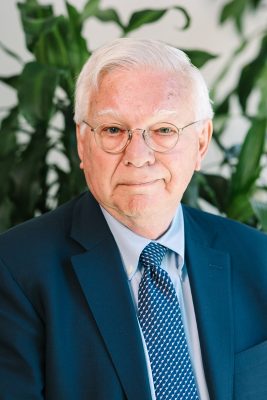
    Jessica BergerJessica Berger has been appointed Executive Vice President and Chief Advancement Officer at Chapman University.

    Berger brings nearly two decades of advancement and fundraising leadership experience across multiple institutions. Most recently, she served as vice president for university advancement and executive director of the foundation at California State University, San Marcos (CSUSM), where she led a team of nearly 50 professionals across fundraising, alumni and donor relations, marketing and communications, events and government relations.

    Prior to CSUSM, Berger spent seven years at Harvey Mudd College, rising to the role of assistant vice president for development. Earlier in her career, Berger contributed to fundraising efforts at Polytechnic School in Pasadena during a $93 million campaign, raised private support for a children’s home in Kenya and served in the U.S. House of Representatives as a congressional staff member focused on constituent advocacy.

    Berger earned a Master of Social Work from Cleveland State University and a Bachelor of Arts in Psychology from Wittenberg University, both with honors.


    Source link

  • Editorial: The Society for Research into Higher Education in 1985

    Editorial: The Society for Research into Higher Education in 1985

    by Rob Cuthbert

    In SRHE News and Blog a series of posts is chronicling, decade by decade, the progress of SRHE since its foundation 60 years ago in 1965. As always, our memories are supported by some music of the times (which had improved somewhat after the nadir of 1975).

    In 1985 Ronald Reagan became the US President, which seemed improbable at the time, but post-Trump now appears positively conventional – that joke isn’t funny any more. Reaganomics fuelled the present US multi-$trillion national debt; it was the era of supply-side economics. President Reagan was of course popular with UK Prime Minister Margaret Thatcher. She was by then at her peak after the 1982 Falklands War restored her own popularity, helping her in 1985 to bring an end to the miners’ strike and to ride out riots in Handsworth in Birmingham and Broadwater Farm in London.

    Vodafone enabled the first commercial mobile phone call in the UK; the BBC micro was the computer of choice for schools. Beverley Hills Cop was one of the top movies in 1985, with Eddie Murphy featured by the Pointer Sisters as they sang “I don’t wanna take it any more”, a 1980s theme song for some in universities. Globalism was in vogue; everybody wants to rule the world. International pop stars came together to sing We are the world in January and then perform at the Live Aid concert at Wembley in July with Queen’s legendary showstopping performance. Nintendo prepared to conquer the world with the launch of Super Mario, but global multinationals took a hit with one of the biggest marketing blunders ever, as Coca-Cola changed its formula, released New Coke in April, then went back to the original less than three months later.

    Higher education in 1985

    Global HE had its own marketing and governance issues after what Guy Neave (then UCL, now Twente) described as a period of consolidation from 1975 to 1985:

    “ … it was during this decade … that these systems assumed the level of dealing with mass higher education … By the late 1980s or 1990s … there are certain countries which anticipate participation rates in higher education of over 30% (Neave, 1984a). Highest amongst them are Denmark and Finland with 40% of the appropriate age group, the Federal Republic with 35% and France with 33%. … In effect, transition to mass higher education gave rise to additional bodies to control, monitor and hold accountable a sector of increasing significance in government social expenditure. Such intermediary agencies stand as a response to the advent of mass higher education, not an anticipation of it.”

    This was prescient: who’s gonna tell you things aren’t so great? Later Paul Windolf (Heidelberg) would take a very long view in his comparative analysis of Cycles of expansion in higher education 1870-1985 in Higher Education (1992:23, 3-19): “For most countries the data confirm the theory of ‘status competition’ (perverse effects): universities expand particularly fast during times of an economic recession … The human capital theory is not confirmed by this longitudinal analysis.” However human capital theory dominated policy thinking in many parts of the world, especially the UK, as Adam Matthews (Birmingham) argued in his blog for Wonkhe on 12 June 2024:

    “Despite so much adversarial and ideologically polarised politics in the 1980s domestically and internationally, we do find consensus around higher education and universities. Growth was still on the agenda. As the country found itself economically struggling, teaching and research was seen as the solution rather than the problem, particularly around research findings being applied to real world issues.”

    UK HE in 1985: a ferment of planning

    In that decade of consolidation after 1975, in the UK no new universities were created until the 1980s. By 1985 there were just two: the University of Buckingham and the University of Ulster. Expansion of UK HE in the 1980s was driven by the polytechnics, especially after the UGC’s unevenly distributed and dramatic financial cuts of 1981. The universities and UGC had tried and failed to protect the so-called ‘unit of resource’, the level of funding per full-time equivalent (FTE) undergraduate student, and the UGC’s established pattern of quinquennial funding had been reluctantly abandoned. Neave noted that:

    “Strictly speaking, university finance in the United Kingdom did not involve change to the basic unit of resource, an issue raised only under dire economic pressure in the period following the 1981 reductions in university budgets. Nor was the abandonment of quinquennial funding a response to mass higher education per se, so much as to the country’s parlous economic status.”

    The UK economy and HE were in Dire Straits: there was no money for nothing. The rapid expansion of the polytechnics, driving down costs, was the dominant influence on policy. A National Advisory Body for Local Authority Higher Education (NAB) had been set up on 1 February 1982 to advise the Secretary of State for Education and Science on matters relating to academic provision and the approval of advanced courses, reconstituted as the National Advisory Body for Public Sector Higher Education (PSHE) from 1 February 1985. In 1985 there were 503,000 students in PSHE in Great Britain, of whom 214,000 were part-time. Universities had 291,000 full-time and 114,000 part-time students. PSHE in England included 29 polytechnics, 30 major colleges, 21 voluntary colleges, and 300 others. In Wales there was one polytechnic, 7 major colleges and 16 others. The Further Education Act 1985 gave more powers to local authorities, who still governed the whole of PSHE, to supply goods and services, especially teaching and  research, through educational institutions.

    Clive Booth, principal private secretary to the Secretary of State for Education and Science since 1975, later to become Director of Oxford Polytechnic, foretold government policy in 1987, reviewing HE planning since 1965 in Higher Education Quarterly:

    “The development of a planning body for public sector higher education in England has created the potentiality for an integrated planning approach to university and non-university higher education.”

    Booth had been involved in the production of a series of significant DES papers: the 1978 Report of the Working Group on the Management of Higher Education in the Maintained Sector (the Oakes Report); in 1981 Higher Education in England outside the Universities: Policy, Funding and Management, a consultative document; and finally the 1985 Green Paper The Development of Higher Education into the 1990s. We saw the present, he saw the whole of the Moon.

    The Green Paper followed the notorious Jarratt Report of 1985, which sent shock waves through the university sector. Paul Greatrix (Nottingham), a long-serving Registrar and Secretary, wrote on his Wonderful (and Frightening) World of HE blogmuch later that:

    “Looking back from 2015, some of these observations and recommendations do seem quite tentative. But in 1985 they were dynamite. After the extraordinary and unprecedented cuts of 1981 and Keith Joseph’s unsuccessful approach to introduce fees in 1984 this seemed like another attack on universities.”

    The widespread view in UK HE at the time was, in the words of the Style Council, “You don’t have to take this crap”, but the policy walls did not come tumbling down. Greatrix cited Geoffrey Alderman’s acerbic review of Malcolm Tight’s 2009 book Higher education in the United Kingdom since 1945 for Times Higher Education:

    “… to my mind one of the most damaging inquiries into higher education over the last half-century was the Jarratt report … a mischievous and malevolent investigation (which, inter alia, popularised if it did not invent the notion that students are “customers”, which foisted on the sector the delusion that factory-floor “performance indicators” are entirely suited to a higher-education setting, and which led to the abolition of academic tenure and the concomitant triumph of managerialism in the academy) … Jarratt was self-inflicted. The inquiry was not a government creation. It was established by the Committee of Vice-Chancellors and Principals. … Jarratt was betrayal from within.”

    For Greatrix:

    “Looking back these do not look like the proposals filled with malevolence or mischief. Many of these changes were inevitable, most were long overdue, a lot would have happened in any case. … From today’s viewpoint it looks more like that what Jarratt offered were some pointers and directions in this strange new terrain.”

    With the benefit of hindsight it can be argued that in 1985 UK universities were unduly concerned, perhaps even obsessed, with what might have been lost from a supposed ‘golden age’ of autonomy. But nothing is so good it lasts eternally. The wreckage of the Titanic was finally located in 1985, another lost cause once assumed unsinkable. Universities were, like Bonnie Tyler, holding out for a hero, but Tina Turner was right, after the 1981 cuts: “Out of the ruins, out from the wreckage, can’t make the same mistake this time”.

    The Green Paper, still Green and not White, announced by Secretary of State Keith Joseph in May 1985, came as the preliminary conclusion to this ferment of planning. He said in Parliament that “… it is vital for our higher education to contribute more effectively to the improvement of the performance of the economy. This is not because the Government place a low value on the general cultural benefits of education and research or on study of the humanities.” But HE mostly heard only the first sentence, and thought we were on the road to nowhere, rather than seeing the opportunities. The Thatcher White Paper Higher Education: Meeting the Challenge would not appear until 1987, and NAB and the UGC would  survive only until 1988. REO Speedwagon captured the mood: Can’t fight this feeling any more.

    SRHE and research into higher education in 1985

    The chairs of SRHE from 1975-1985 included some great names: Lewis Elton (Surrey) 1977-78, Gareth Williams (Lancaster, later London Institute of Education) 1978-80 (and 1986-88), Donald Bligh (Exeter) 1980-82, David Warren-Piper (London Institute of Education) 1982-84, and Michael Shattock (Warwick, later London Institute of Education/UCL) 1984-86. The outstanding highlight of the decade was a major review into higher education organised by the Society. As Gareth Williams wrote:

    “With the help of a substantial grant from the Leverhulme Trust, the Society for Research into Higher Education set up a comprehensive programme of study into the future of higher education which I directed. The aim of the programme was not to undertake new research but rather to focus recent research findings and the views of informed people on the major strategic options likely to be available to higher education institutions and policy making bodies in the 1980s and 1990s.”

    The programme ran from 1980 to 1983 and led to nine themed reports, an overall review and a final report. SRHE had, in Michael Shattock’s words:

    “… established itself as an important voice in policy. It was addressed by higher education Ministers (William Waldegrave 1982, Peter Brooke 1983), at an SRHE/THES Conference on the Green Paper by Sir Keith Joseph the Secretary of State, in 1985. Most unusually it received a visit from the former Prime Minister, Edward Heath, in February 1983 who wished to seek the Society’s advice about higher education.”

    SRHE might have hoped like Madonna to be Into the Groove policywise, but the Prime Minister had a list of questions which were more about living in a material world:

    • To what extent (if any) has the balance between disciplines been inappropriate for Britain’s economic needs?
    • How far should the labour market determine the shape of higher education?
    • Are research and teaching indivisible in higher education if standards are to be maintained?
    • Is it better to have a few research institutions or many, given financial constraints?
    • Is the binary line appropriate?
    • Are the links between HE and industry poor by comparison with other major countries?
    • What are the merits of shorter courses – two years liberal arts followed by two years vocational?”

    Shattock observed:

    “The interest of these questions is both the extent to which the issues were addressed and answered in the Leverhulme Programme and the fact that their underlying assumptions formed the basis of the 1985 Green Paper. It was clear that the Society was at the sharp end of discussions about the future policy.”

    The Leverhulme findings were perhaps just too balanced for the times – can’t get there from here. Shattock as SRHE chair initiated an Enquiry on ‘Questions of Quality’ which became the theme of SRHE’s 1985 annual conference, and one of SRHE’s founders, Graeme Moodie (York), edited a 1986 bookStandards and Criteria in Higher Education. Shattock also established the influential SRHE Policy Forum, a seminar involving leading academics, civil servants and HE managers which met five times a year under the alternate chairmanship of Michael Shattock and Gareth Williams. 

    Nevertheless it was not long after 1985 that a special meeting of SRHE’s Council at the FE Staff College received a report, probably from its administrator Rowland Eustace, saying: “general knowledge and understanding of the Society remains relatively low in higher education despite attempts over recent years to give the Society a higher profile”. Perhaps still a little out of touch, hoping for glory days, still running up that hill, hoping or even believing that things can only get better.

    Rob Cuthbert is editor of SRHE News and the SRHE Blog, Emeritus Professor of Higher Education Management, University of the West of England and Joint Managing Partner, Practical Academics. Email [email protected]. Twitter/X @RobCuthbert.

    Author: SRHE News Blog

    An international learned society, concerned with supporting research and researchers into Higher Education

    Source link

  • Decoder Replay: Let’s celebrate Mandela Day

    Decoder Replay: Let’s celebrate Mandela Day

    February 11, 1990 was truly a turning point in the history of South Africa.

    For decades the nation at the southern tip of the continent had been pilloried by much of the rest of the world. This was because of its apartheid racial segregation laws that hugely favoured the white population over the far larger and mostly black majority.

    Apartheid means “separateness” in Afrikaans, the language rooted in Dutch that evolved when the country was a colony.

    By 1989 — itself a remarkable year for the wave of revolutions in communist East Europe — South Africa had made significant steps in its effort to end its pariah status. International sanctions were costing it dearly economically, culturally and in sporting terms.

    As a taste of events to come, the government freed senior figures in the African National Congress (ANC), the exiled organisation waging a low-level guerrilla campaign against apartheid.

    The fight against apartheid

    A favourite weapon of the ANC was small mines. One of them exploded in a shopping mall in the commercial capital Johannesburg just as I had finished shopping there and was safely in the mall’s car park.

    But there was no word when ANC leader Nelson Mandela — who ultimately spent 27 years incarcerated, much of it in an island prison — would be freed.

    Lawyer Mandela entered the world stage with a famous speech at his 1963 trial for sabotage acts against the state in which he stated that freedom and equality were “an ideal for which I am prepared to die.”

    Releasing Mandela from prison was a key card that South Africa could play to regain respectability, and the government would play it “soon,” Anton Lubowski, an anti-apartheid activist and human rights advocate, told me.

    Lubowski did not live to see his forecast fulfilled. In September 1989, gunmen pumped AK-47 rifle rounds into him, with the coup de grace a pistol bullet. He was the latest in a long list of opposition figures in southern Africa to fall victim to unnamed assassins.

    Freedom as news

    Knowing that Mandela was expected to be released — his freedom would be a huge news story — but not knowing how or when it would happen was particularly frustrating for a news agency reporter like me.

    Reuters and its rivals compete tooth and nail to get stories first, and to get them right. Being just one minute behind another news agency on a major story rates as a failure.

    What I dreaded most was that Mandela would be released from prison unannounced, just as his ANC colleagues had been. This possibility made it necessary for me and my colleagues to be constantly alert, straining to catch the first authentic information.

    The problem was that, then as now, the pressure to get hard information was compounded by a fog of fake news and hoaxes, saying that the release of Mandela was imminent or indeed had actually happened.

    These claims were typically relayed on pagers, the messaging devices of the pre-smartphone age. Such messages, no matter how bogus-sounding, had to be checked. This took time and energy and shredded nerves.

    Recognizing a hero

    It was one such scare that prompted reporters to flock to an exclusive clinic outside Cape Town where Mandela was known to be undergoing treatment.

    It was then that another problem surfaced: Nobody among us knew what Mandela looked like after his marathon spell in prison. There had been no pictures of him. Would we even recognise him if he walked out of the clinic?

    The hilarious result was that every black man leaving the clinic — whether porter, delivery man, cleaner or whatever — came under intense scrutiny from the ranks of the world’s press assembled outside.

    But on the timing of the release, I had a lucky break. A local journalist friend introduced me to a senior member of a secretive police unit who was willing to share with me whatever information he had on when Mandela would be a free man.

    The police official’s name was Vic — I did not then know his full name. But he was no fake policeman. He introduced me to his staff in his offices, which were in a shopping arcade concealed behind what looked like a plain mirror but was in fact also a door.

    Verifying fake claims.

    All cloak-and-dagger stuff. With enormous lack of originality, my Reuters colleagues and I referred to Vic as our “Deep Throat,” the pseudonym of the informant who provided Washington Post reporters Bob Woodward and Carl Bernstein with information about the 1972 Watergate scandal.

    Some time in the latter half of 1989, Vic told me in the less than cloak-and-dagger setting of a Holiday Inn coffee shop that Mandela was likely to be released in January or February of 1990.

    This was not precise information, but at least it was better than anything that I had, or apparently anybody else in the news business.

    In later meetings, Vic refined the information without disclosing the exact day of the release, which apparently was known to just four people in the South African government.

    One of the ways Vic was valuable to us was that whenever a fake claim about Mandela’s whereabouts surfaced, I could call him, day or night, to check. And it was Vic who told me on February 10 that “it looked like” Mandela would be a free man the next day.

    And so it proved.

    Mandela instantly became universally recognisable, South Africa disbanded apartheid, elections were held in which all races voted, the ANC won, and Mandela became South Africa’s first fully democratically elected president.

    February 11, 1990 is indeed a day to remember.


    Three Questions to Consider

    1. Why did apartheid last so long?

    2. What was the reaction of South African whites to Mandela’s release?

    3. Can you think of someone today who is trying to fight against an system of oppression?


    Source link

  • Labor Department to take on day-to-day management of CTE programs

    Labor Department to take on day-to-day management of CTE programs

    This audio is auto-generated. Please let us know if you have feedback.

    Dive Brief:

    • Management of key federal workforce development programs will begin shifting from the U.S. Department of Education to the U.S. Department of Labor under an interagency agreement signed in May, according to a joint announcement by the agencies Tuesday.
    • Adult education and family literacy programs under Title II of the Workforce Innovation and Opportunity Act and career and technical education programs under the Carl D. Perkins Career and Technical Education Act will be managed by the Labor Department alongside Education Department staff, according to the agencies.
    • Tuesday’s announcement comes just one day after the U.S. Supreme Court stayed an injunction in McMahon v. New York, granting the Education Department the ability to move forward with a sweeping reduction in force. That decision meant the workforce development interagency agreement with the Labor Department could go forward.

    Dive Insight:

    Under the May 21 interagency agreement behind the workforce development partnership, the Labor Department will take on daily administration of the programs. The Education Department will continue statutory responsibilities, policy authority and program oversight.

    While the interagency agreement was stalled in court, leading organizations for CTE directors and professionals raised concerns over the contract. Advance CTE and the Association for Career and Technical Education predicted “far-reaching negative impacts on CTE programs and learners across the country” in a June 11 joint statement, adding that the agreement “directly circumvents existing statutory requirements” under the Perkins Act.

    These programs, the organizations said, “are not merely job training programs; these programs are comprehensive educational and career preparation programs that prepare secondary and postsecondary learners for lifelong success by connecting academic and technical learning with the real world skills that learners need to thrive.”

    The agreement, however, is in line with President Donald Trump’s April executive order, “Preparing Americans for High-Paying Skilled Trade Jobs of the Future. That order called, in part, for the secretaries of labor, commerce and education to find opportunities to integrate systems and realign resources to address critical workforce needs and in-demand skills in emerging industries, identify ineffective federal workforce development and education programs, and streamline information collection.

    “The current structure with various federal agencies each managing pieces of the federal workforce portfolio is inefficient and duplicative. Support from the Department of Labor in administering the Department of Education’s workforce programs is a commonsense step in streamlining these programs to better serve students, families, and educators,” said U.S. Education Secretary Linda McMahon in a Tuesday statement.

    Source link

  • University of Southern California signals layoffs amid $200M budget gap

    University of Southern California signals layoffs amid $200M budget gap

    This audio is auto-generated. Please let us know if you have feedback.

    Dive Brief: 

    • The University of Southern California plans to use layoffs and other budget austerity measures to tackle a $200 million operating deficit and gird against a massive blow to federal funding, Interim President Beong-Soo Kim said in a community message on Monday
    • On top of USC’s growing budget shortfall, which ballooned from $158 million in fiscal year 2024, officials are now grappling with federal headwinds affecting the outlook for research support, student financial aid and international enrollment, Kim said.
    • Lower federal research funding could cost the highly selective private university $300 million — or more — each year, Kim said. “To deal decisively with our financial challenges, we need to transform our operating model, and that will require layoffs,” he said. 

    Dive Insight: 

    Kim pointed out that USC isn’t alone in making painful budget decisions — but said that didn’t make the news any easier to hear. Indeed, many other well-known research universities have also been tightening their budgets and signaling layoffs amid the Trump administration’s widespread federal grant terminations. 

    That includes Stanford University, a fellow California college, and Brown University, in Rhode Island, which have both signaled potential staff reductions as they contend with federal funding shifts. Boston University, another private nonprofit, recently cut 120 employees and eliminated an equal number of vacant positions to deal with those challenges. 

    Kim did not disclose how many employees the university plans to lay off, and a USC spokesperson did not provide more details in response to questions Tuesday. But Kim said in his message to faculty and staff that USC has also taken other measures to shore up its budget. 

    The university will forego merit raises for the 2026 fiscal year, has ended certain services from third parties, and tightened discretionary and travel spending. It’s also planning to sell unused properties, streamline operations and adjust pay for the most highly compensated employees. 

    Kim, however, said it wasn’t feasible to bank on increased tuition revenue, drawing down more on the university’s endowment or taking out additional debt. 

    “Each of these ‘solutions’ would simply shift our problem onto the backs of future generations of Trojans,” Kim said, referring to the university’s mascot and student body nickname. 

    He also noted that the university could not likely count on federal funding returning to prior norms. “While we will continue to advocate for the vital importance of research and our academic mission, we cannot rely on the hope that federal support will revert to historical levels,” he said. 

    Kim’s message comes just two weeks into his tenure as the college’s interim leader, making it one of his first acts. 

    USC depends heavily on federal research funding. In fiscal 2024, the university received $569 million for federally funded research, according to a recent FAQ posted to its website. Overall, the university brought in nearly $7.5 billion in operating revenue that year and had $7.6 billion in operating expenses.

    Source link

  • Confidence in higher education increases for the first time in a decade

    Confidence in higher education increases for the first time in a decade

    This audio is auto-generated. Please let us know if you have feedback.

    Dive Brief:

    • Americans’ confidence in higher education has increased for the first time in a decade, according to research released Wednesday by Gallup and the Lumina Foundation.
    • Among those surveyed, 42% of adults expressed “a great deal” or “quite a lot” of confidence in the sector, compared with 36% in 2023 and 2024. The percentage of respondents with little to no confidence declined from 32% last year to 23% in 2025.
    • However, the share of adults with high confidence in higher education is still well below 57%, the share who held those views when Gallup first posed the question in 2015.

    Dive Insight:

    Along with breaking a decadelong trend, Wednesday’s findings are noteworthy because they come amid increasing conservative attacks on the sector and continued questioning of the value of college.

    Researchers polled just over 1,400 adults via phone from June 2 to 26.

    When asked to explain their responses, 30% of participants confident in higher education pointed to the value of being educated. And 24% said colleges provide good training, with some respondents citing learning to think for oneself and others citing the ability to appreciate different viewpoints.

    Other reasons were named more frequently than they were in previous years. Last year, 5% of surveyed adults cited the innovations higher education fosters as inspiring confidence. This year, that share jumped to 15%. And 14% said U.S. colleges are some of the best in the world, up from 7% last year.

    In contrast, the share of respondents who pointed to the strength of college instructors and administrators declined from 7% last year to 4% in 2025. And just 1% of adults said college is available to anyone who wants to further their education, down from 2% the previous year.

    More than a third of respondents who said they lacked confidence in higher ed, 38%, cited concerns about political agendas, up from 28% in 2024. Those who had little confidence in the sector also expressed concerns about the cost of college and institutions not focusing on and teaching the “right things,” though mentions of both reasons declined from 2024 to 2025.

    When researchers asked all participants what would increase their confidence in higher education, they said colleges could focus more on practical job skills, lower their costs, and remove politics from the classroom.

    Confidence increased among respondents across the political spectrum, researchers found. But Republicans — who drove much of the decline in confidence in the sector over the past decade — continue to hold more negative views of higher education.

    Among Democrats, 61% expressed confidence in higher ed, up from 56% last year. By comparison, 26% of Republicans said the same, an increase from 20% in 2024. 

    About 2 in 5 respondents who identified as politically independent, 41%, expressed confidence in higher ed. That’s up from 35% last year. 

    Republicans are more likely to express confidence in two-year colleges than four-year colleges, the research found. Almost half of surveyed adults in the party, 48%, expressed confidence in two-year institutions, while just over a quarter, 26%, said the same of four-year colleges.

    A majority of surveyed Democrats had high confidence in both institutional types.

    Source link

  • This New Jersey district tackled chronic absenteeism despite COVID

    This New Jersey district tackled chronic absenteeism despite COVID

    This audio is auto-generated. Please let us know if you have feedback.

    SEATTLE — For almost a decade, Hamilton Township Public Schools in New Jersey has seen major gains in chronic absenteeism — despite the bumps that came with the COVID-19 pandemic.

    During the 2016-17 school year, 21 of the district’s 23 schools exceeded the state’s average chronic absenteeism rates, said Mary Beth Currie, coordinator of special projects at the New Jersey Principals and Supervisors Association. 

    With the help of a grant-funded initiative at the association’s Foundation for Educational Administration, Hamilton Township Public Schools eventually changed course. As of June 2025, only two of its 23 schools surpass the statewide average for chronic absenteeism, Currie said.

    Currie and Kisthardt Elementary School Principal Diana Vasil shared how the FEA’s partnership with Hamilton Township Public Schools contributed to a long-term drop in chronic absenteeism rates during a Friday session at UNITED, the National Conference on School Leadership in Seattle. 

    A team-based approach to boosting attendance

    In 2018, FEA received a $10,000 grant from the Princeton Area Community Foundation to create a plan to combat chronic absenteeism in the district, Currie said. Later on that year, FEA received an additional five-year $30,000 grant from the foundation to carry out the plan across all 23 schools at Hamilton Township. 

    FEA hired coaches to meet monthly with every school to help address their chronic absenteeism rates, Currie said. FEA trained the coaches beforehand on best practices in English language arts and math, legal knowledge on attendance, climate and culture, and data analysis, she added. 

    Then, FEA helped each school identify members for their own “Be There Team,” a group focused on school climate and attendance. The teams often included school leaders, nurses, counselors and teachers, Currie said. The FEA coaches met with these teams to identify student target groups and develop action plans based on Attendance Works’ tiered approach for combatting chronic absenteeism.

    During the first school year of the program’s implementation in 2018-19, Currie said, attendance soared while chronic absenteeism fell significantly. That trend continued into the first semester of the 2019-20 school year until the COVID-19 pandemic began in March 2020. Once the pandemic hit, FEA modified its plan and shifted all of its meetings to be virtual gatherings with coaches and central office administrators.

    When students returned to in-person classes in 2021-22, attendance dropped in line with national trends, Currie said. But as the in-person coaching and team meetings picked back up, attendance began to rebound again in 2023-24 as did the district’s climate and culture, she added.

    In fact the district’s chronic absenteeism rate fell by 3.9% between the 2021-22 and 2023-24 school years — a decline from 18.4% to 15.2%, said Vasil. RAND Corp. and the Center on Reinventing Public Education estimated that 19% of students were chronically absent nationwide during the 2023-24 school year. 

    One elementary school’s approach

    Vasil, who was principal at Sayen Elementary School from 2019 to 2025, said her previous school’s Be There Team was already established before she was hired into the role. 

    As Vasil’s team explored how to address the school’s chronic absenteeism rates, she said, it was important to remember that fixing attendance isn’t just about getting students in the door. “It’s getting them to want to come tomorrow.”

    To better understand the root of the school’s attendance problem, Vasil’s team did a deep dive scoring their school’s climate using a rubric and found there was a lot of work needed to improve school culture. In 2019-20, the team identified three areas they needed to address: the school’s mission statement, its social-emotional learning programs and professional norms for staff, she said. 

    Vasil said that the team was able to meet their goals during the pandemic by revisiting and tightening the school’s mission statement, consolidating the school’s many scattered SEL programs, and establishing a set of professional norms for staff meetings to ensure everyone has a voice. 

    Source link

  • Free Photo Library Captures Authenticity of Higher Ed

    Free Photo Library Captures Authenticity of Higher Ed

    Photo illustration by Justin Morrison/Inside Higher Ed | Allison Shelley/Complete College Photo Library

    Towering, Hogwarts-style academic buildings. Carefree young students posing with generic textbooks in their dorm rooms or throwing a Frisbee on the lawn. Racially balanced study groups composed of stunningly attractive students who may not actually be students at all.

    Those are the types of stock images that news organizations, policymakers, education and research groups, and institutions often use to visually represent what higher education looks like.

    “They have a very specific look and feel,” said Brandon Protas, interim vice president of alliance and engagement, research and innovation at the higher education advocacy group Complete College America. “Students are often posed, looking directly into the camera, and the racial makeup is very intentional.”

    While they may provide organizations with quick options to accompany stories, reports, presentations and campaigns, such photos don’t always represent what college life actually looks like on a particular campus. Portas said they can also reinforce misconceptions about higher education, including the widespread notion that it’s only an option for recent high school graduates who can afford to attend a pricey, residential, four-year institution.

    Although attending college isn’t without cost, many institutions—especially those rarely pictured in the stock photos that run alongside education-related media—are more affordable than the general public may believe. According to a recent survey from Strada, 77 percent of respondents said college is unaffordable, and the majority significantly overestimated how much it costs.

    “When people are saying college is too expensive, they’re probably not thinking about community colleges or states that offer free tuition programs. They’re thinking of really expensive, elite colleges, which aren’t the types of colleges most students are attending,” Protas said. “We want to change how people are seeing and understanding higher education.”

    That’s why CCA created the new Complete College Photo Library, which launched Wednesday. The searchable photo library includes nearly 1,000 photographs of college students at a mix of institution types, including historically Black colleges and universities, Hispanic-serving institutions, community colleges, tribal colleges, and technical schools. The photos are licensed under Creative Commons and are free for media outlets, researchers and education organizations to use for noncommercial purposes.

    “We took authentic photos of students, faculty and staff on-site to show the reality of students’ lived experiences,” Protas said. “If we can make this the go-to source that people look at first, then that can slowly influence the ecosystem.”

    The library, which is an ongoing project that will be updated with additional images, features photos from seven different campuses across the country, including Bergen Community College, the College of Northern New Mexico, the College of Southern Nevada, Salish Kootenai College, Pasadena City College, Tougaloo College and the University of Indianapolis. At each one, photographer Allison Shelley captured images of actual college students as they balanced their coursework with social lives, jobs and family responsibilities.

    Those artistic choices were meant to reflect the reality that for many college students, school is just one part of life. An estimated 20 percent of students are caregivers or parents, while learners over the age of 25 make up about one-third of all postsecondary students.

    The collection includes shots of students sitting in traditional lecture halls, meeting with their advisers, playing chess, walking to class, reading to their children and getting hands-on training in a variety of different technical fields.

    CCA’s selection of those institutions was designed to reflect a cross-section of geographic locations and institution types.

    And the types of institutions students attend also varies: More than 40 percent attend community colleges, which enroll higher numbers of Black and Hispanic students compared to other institutions. Moreover, HBCUs enroll 10 percent of all Black students in the United States, while HSIs enroll more than 65 percent of all Hispanic undergraduates.

    In addition to widening representation of institution types and student experiences, CCA’s project could also provide a model for how the higher education sector should portray itself during a moment of political and public scrutiny, said Nathan Willers, director of internal communications at the University of Denver, whose research has focused on authenticity in higher education marketing.

    “For a lot of institutions that have limited creative resources, they may be going to something like Shutterstock because they don’t have a lot of other options,” he said. A model like CCA’s library, however, shows how colleges can prioritize using photos that “look like real students in a real classroom with levels of diversity that are appropriate to the institution.”

    Over the past decade, colleges have made a dramatic swing from clamoring to portray themselves as bastions of racial and ethnic diversity—some have even been caught doctoring photos to create such an illusions—to dismantling their diversity, equity and inclusion efforts to comply with President Trump’s recent orders to root out any mention of DEI in education.

    When it comes to promoting a commitment to diversity and inclusion nowadays, “we really have to show and not tell, for better or worse,” Willers said. “This kind of a project helps inform institutions on how to show that effectively.”

    Source link

  • 3 More Campus Leaders Face Congress

    3 More Campus Leaders Face Congress

    For the fifth time since late 2023, congressional Republicans on Tuesday interrogated a group of university leaders about campus antisemitism. But unlike previous hearings, this one was short on fireworks and viral moments, even as the three leaders—Georgetown University interim president Robert Groves; University of California, Berkeley, chancellor Rich Lyons; and City University of New York chancellor Félix V. Matos Rodríguez—faced a grilling over faculty remarks, foreign funding and alleged failures to protect Jewish students from discrimination and harassment.

    While the first hearing, in December 2023, contributed to the ouster of the presidents of Harvard University and the University of Pennsylvania, who equivocated on a hypothetical question about calls for the genocide of Jewish students, subsequent sessions have not had the same impact.

    Conducted by the Republican-led Committee on Education and the Workforce, Tuesday’s hearing—titled “Antisemitism in Higher Education: Examining the Role of Faculty, Funding and Ideology”—spanned more than three hours and was interrupted several times by pro-Palestinian protesters, who were quickly removed. In sometimes-heated questioning, lawmakers focused on controversial social media posts by college employees and hypothetical situations, such as whether a faculty union might demand a boycott of Israel in collective bargaining agreements.

    But the campus leaders largely avoided gaffes and appeared to emerge mostly unscathed.

    Here are highlights from Tuesday’s hearing.

    Social Media in the Spotlight

    While past hearings often centered on what happened on campus—particularly at institutions that had pro-Palestinian encampments—at Tuesday’s hearing lawmakers focused more on social media, questioning and condemning posts by professors that were critical of Israel. Some posts also seemed to show support for Hamas’s terrorist attack on Israel on Oct. 7, 2023.

    Rep. Glenn Thompson, a Pennsylvania Republican, specifically highlighted a social media post from Georgetown employee Mobashra Tazamal, associate director of a multiyear research project on Islamophobia who allegedly reposted a statement that said, “Israel has been recreating Auschwitz in Gaza for two years.” Thompson asked interim president Robert Groves if he thought it was “appropriate for a Georgetown-affiliated scholar to publicly endorse a statement comparing Israel actions in Gaza to the evil of Auschwitz.”

    Groves made it clear that he rejected the statement and apologized to anyone harmed by it. But he also defended Georgetown officials for not disciplining Tazamal for the post.

    “That’s behavior covered under the First Amendment on social media that we don’t intervene on,” Groves told Thompson in response. “What we do intervene on quickly is behavior that affects our students in the classroom and research-related activities that involve students.”

    Republican lawmakers also asked about posts by Ussama Makdisi at UC Berkeley, zeroing in on one that read, “I could have been one of those who broke through the siege on October 7,” the title of an article sympathetic to the Palestinian plight that praised the “determination and courage” of the attackers.

    Several Republicans pressed Berkeley chancellor Rich Lyons on how he perceived that post and why Makdisi, a Palestinian American scholar who teaches history, was hired in the first place. Lyons, who became chancellor last July, acknowledged his concerns about the post.

    “I believe it was a celebration of the terrorist attack on Oct. 7,” he told lawmakers.

    Despite that acknowledgement, Lyons twice defended Makdisi as “a fine scholar” and said he was hired as the inaugural chair of a new Palestinian and Arab Studies program based on his qualifications. His defense prompted a sharp rebuke from Lisa McClain, a Michigan Republican.

    “I’m sure there’s a lot of murderers in prison that are fine people, too, fine scholars, but they do some pretty nefarious and heinous acts,” McClain responded to Lyons.

    Protest Interruptions

    Pro-Palestinian protesters interrupted Tuesday’s proceedings at least four times. Authorities quickly shut down and removed protesters, who were not visible and only faintly audible via live stream.

    The protesters seemed to be targeting City University of New York chancellor Félix V. Matos Rodríguez, given that the interruptions occurred when he was speaking or being questioned by Congress. Partial phrases audible over the live stream included “blood on your hands” and “genocidal warmonger.”

    Florida Republican Randy Fine fired back after one such interruption.

    “Shut up and get out of here,” he bellowed at a protester, calling them a “loser” before blaming campus leaders for the disruption. “I hold you all responsible for this. It is the attitude that you have allowed on your college campuses that make people think that this is OK.”

    Stefanik Targets Legal Clinic

    New York Republican Elise Stefanik made headlines in prior hearings when she asked the hypothetical genocide question that tripped up the presidents of Harvard, Penn and the Massachusetts Institute of Technology. But for the first time in five antisemitism hearings, she did not ask that question. Instead she focused on a legal clinic at the CUNY School of Law

    She expressed concern that the legal clinic, CUNY CLEAR, is representing Mahmoud Khalil, the Columbia University graduate who was arrested without charge and incarcerated for three months for his role in organizing pro-Palestinian campus protests.

    Khalil, who was freed last month, has not been accused of a crime and has subsequently sued the Trump administration, alleging he was falsely imprisoned and smeared by the federal government for First Amendment–protected activism.

    “Does it concern you that New York taxpayers are paying the salary for the legal defense fund of Mahmoud Khalil?” Stefanik asked Rodriguez. ”And I’ll remind you who Mahmoud Khalil is: This is the chief pro-Hamas agitator that led to the antisemitic encampments at Columbia, the rioting and violent takeover of Hamilton Hall, the harassment and physical assault of Jewish students.”

    The CUNY chancellor told Stefanik he was not aware CUNY CLEAR was representing Khalil, but that such decisions are “made in the clinics” and at the individual campus level.

    Dems Needle the GOP

    Democratic lawmakers focused less on the presidents on the stand than on the hearing itself. Several cast antisemitism concerns as pretext for the Trump administration’s crackdown on higher education. They also criticized the administration for slashing staff at the Office for Civil Rights, the enforcement arm of the Department of Education tasked with investigating antisemitism and other complaints.

    Suzanne Bonamici, an Oregon Democrat, argued that Republicans are “weaponizing the real problems of the Jewish community” to attack higher education. She also noted that Republicans have been largely silent about President Donald Trump’s own antisemitic remarks recently.

    Bobby Scott, a Virginia Democrat and ranking member of the Education and Workforce Committee, argued that the Trump administration is not approaching concerns about antisemitism in good faith but rather as a way to exert control.

    “The Trump administration is destabilizing higher education itself, eroding trust, silencing dissent and undermining universities’ ability to promote diversity and critical inquiry, while at the same time sabotaging the Office [for] Civil Rights,” he said in closing remarks. “Who suffers most from this strategy? It’s the students, Jewish and non-Jewish, marginalized and unrepresented. They’re the ones who will be left vulnerable and voiceless. This should not be a partisan debate. It should be about ensuring that our schools are safe, inclusive and intellectually vibrant.”

    However, House Education and Workforce chairman Tim Walberg, a Michigan Republican, made it clear that despite criticism from Democrats, such hearings will continue to be held.

    “We need to continue to highlight bad actors in our higher education institutions,” Walberg said.

    Source link

  • Mixed Findings on Community Colleges’ Shared Governance

    Mixed Findings on Community Colleges’ Shared Governance

    A new report, released by the American Association of University Professors Tuesday, found mixed results when it comes to community colleges’ shared governance practices.

    The report used data from the AAUP’s inaugural survey of community colleges, conducted in partnership with the Center for the Study of Community Colleges. In the first survey of its kind, faculty leaders at 507 community colleges were asked to assess their institutions’ shared governance practices in 26 different decision-making areas; faculty senate chairs and governance officials responded at 59 colleges.

    The institutions excelled in some areas and proved lackluster in others. For example, at most institutions surveyed, especially those with tenure systems, faculty had an AAUP-recommended level of authority over decisions about curricula, salary policies, teaching assignments, faculty searches and evaluations, and tenure and promotion standards. But when it came to other decision-making areas—like budgets, provost selection, buildings and strategic planning—faculty were given little say, according to the report.

    Community college professors also participated less than faculty at four-year institutions in most academic and personnel-related decisions, though they played more of a role in decisions about salary policies. The report speculated that the prevalence of community college faculty unions may account for the difference. At higher ed institutions where faculty engage in collective bargaining, faculty tend to have more authority in salary policies and teaching loads. At community colleges, unionized faculty are also more engaged in decisions about full-time, non-tenure-track faculty promotion.

    “Community college–based faculty members and administrators can use the tools described in this report to assess governance practices at their institu­tions and compare those practices with national trends to identify areas where levels of faculty authority might be strengthened,” the report says. “Given the current political climate, economic uncertainty, demographic changes, and chronic underfunding of US higher education, now is the time for community colleges to identify and correct weaknesses in their own shared governance practices.”

    Source link