Blog

  • Parents Sued LAUSD Over Remote Learning. How the Settlement Will Benefit Students – The 74

    Parents Sued LAUSD Over Remote Learning. How the Settlement Will Benefit Students – The 74


    Get stories like this delivered straight to your inbox. Sign up for The 74 Newsletter

    This story was originally published by CalMatters. Sign up for their newsletters.

    More than 250,000 students in Los Angeles Unified will be eligible for extra tutoring, summer school and other academic help after the district settled a class-action lawsuit alleging that its remote learning practices during the pandemic were discriminatory.

    The settlement, filed in Los Angeles County Superior Court, was announced Wednesday by the law firm representing families who said their children fell disastrously behind during the Covid-related school shutdown in 2020-21.

    “After five years of tireless advocacy on behalf of LAUSD students and families, we are proud to have secured a historic settlement that ensures students receive the resources they need to thrive,” said Edward Hillenbrand, a partner at the law firm Kirkland & Ellis. “This critical support will help pave the way for lasting educational equity.”

    Los Angeles Unified had no comment on the case because the settlement has yet to be approved by the court. A hearing is set for December, although the settlement goes into effect immediately.

    During the COVID-19 pandemic, Los Angeles and nearly every other school district in California closed for in-person learning from March 2020 through fall 2021. Students attended classes virtually, and most fell behind academically. Test scores statewide plummeted after schools reopened. Chronic absenteeism soared.

    In fall 2020, a group of families whose children were languishing during remote learning sued Los Angeles Unified, saying the district wasn’t doing enough to ensure students were receiving an adequate education.

    One parent, Akela Wroten Jr., said that his second-grade daughter was behind before the pandemic and became even more lost during remote learning. She struggled with reading and never got the extra attention she needed because teachers weren’t assessing her progress.

    Another parent, Vicenta Martinez, said her daughter didn’t get any instruction in spring 2020, in part because she never received logon information for remote instruction and the school never followed up. When she finally did access remote classes, the lessons were short and teachers offered little feedback.

    “LAUSD’s remote learning plan fails to provide students with even a basic education and is not preparing them to succeed,” the lawsuit alleged.

    The suit singled out an agreement between the district and its teachers union that said teachers would only be required to work four hours a day, wouldn’t have to give tests and weren’t required to deliver live lessons — their lessons could be asynchronous, or recorded beforehand. In addition, the agreement said the district wouldn’t evaluate or monitor teachers during that time.

    United Teachers Los Angeles supports the settlement, saying it provides more assistance for students while leaving teachers’ “hard-won contractual rights” intact and avoiding “unwarranted judicial interference” in the district.

    The union also noted that student test scores have recovered significantly since the pandemic..

    The plaintiffs argued that the district’s policies discriminated against low-income, Black, Latino, disabled and English learner students, because those were the students least likely to have adequate support to succeed in remote learning. Those student groups also comprise the vast majority of students in the district, the nation’s second-largest.

    The settlement requires the district to offer a host of academic support, including summer school and after-school tutoring, to the 250,000 students who were enrolled in L.A. Unified during the pandemic and are still with the district. Among those students, 100,000 who are performing below grade level will be eligible for 45 hours of one-on-one tutoring every year through 2028.

    This article was originally published on CalMatters and was republished under the Creative Commons Attribution-NonCommercial-NoDerivatives license.


    Get stories like these delivered straight to your inbox. Sign up for The 74 Newsletter
    Source link

  • What’s Next for Concussion and CTE Research?

    What’s Next for Concussion and CTE Research?

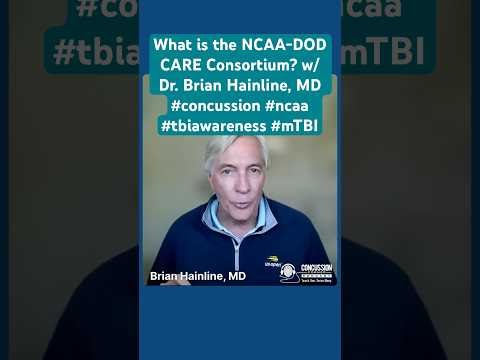
    The Higher Education Inquirer is calling on both the National Collegiate Athletic Association (NCAA) and the U.S. Department of Defense (DoD) to explain the suspension of the Concussion Assessment, Research and Education (CARE) Consortium, the largest concussion study in U.S. history. Since 2014, CARE has sought to illuminate the effects of concussion and repetitive head impact exposure (HIE) on student-athletes and military service members.

    A Decade of Groundbreaking Work

    Funded through an initial $30 million “Grand Alliance,” CARE enrolled more than 53,000 athletes and cadets and tracked over 5,500 diagnosed concussions across more than two dozen universities and four service academies. Its successive phases—CARE 1.0 (acute effects), CARE 2.0 (cumulative impacts), and CARE-SALTOS Integrated (long-term outcomes)—provided unprecedented insights into how concussions affect recovery, cognition, mood, sleep, and overall well-being.

    The CARE study generated more than 90 peer-reviewed publications, influencing safety protocols, athletic training practices, and public health debates in both NCAA settings and the U.S. military.

    CTE and the Need for Decades-Long Research

    The suspension comes at a critical moment. Concerns about chronic traumatic encephalopathy (CTE)—a degenerative brain disease linked to repetitive head trauma—are rising. Because CTE’s symptoms often surface decades after injuries, researchers emphasize that only long-term, continuous studies can reveal who develops CTE and why.

    Pausing or dismantling CARE risks losing continuity in precisely the kind of data needed to connect the dots between adolescent or collegiate injuries and late-life neurodegenerative conditions.

    Collateral Damage: Workers Left Behind

    The disruption of CARE has already produced casualties beyond lost data. At the University of Michigan, one of the leading CARE sites, about two dozen research workers were abruptly laid off. Without union protections, they had little recourse. This underscores how fragile large research consortia can be—dependent not only on grants and institutional goodwill, but also on a workforce often treated as disposable.

    These layoffs raise troubling questions: If the workers who made CARE possible are discarded without warning, what does that say about the broader commitment to athlete and cadet safety?

    Outstanding Questions for NCAA and DoD

    The Higher Education Inquirer is pressing for answers:

    • Why was CARE suspended? Was this due to funding shortfalls, shifting priorities, or political pressure?

    • Will existing data remain accessible? The CARE Consortium has been a vital contributor to the Federal Interagency Traumatic Brain Injury Research (FITBIR) database.

    • What about the workforce? Why were employees terminated without protections, and what obligations do the NCAA, DoD, and participating universities have to them?

    • What is the long-term plan for concussion research? Without decades-long studies, the risks of CTE and other late-life conditions will remain poorly understood.

    Big Loss for Athletes

    If CARE is permanently suspended, the consequences will extend far beyond academia. Athletes and cadets will lose a vital source of protection, science will lose irreplaceable data, and workers will continue to bear the costs of institutional indifference.

    The Higher Education Inquirer urges the NCAA and DoD to clarify CARE’s future and recommit to the kind of decades-long research that brain science demands. Anything less is a betrayal—to athletes, to service members, and to the very workers who made this research possible.


    Sources

    • NCAA. NCAA-DOD Grand Alliance: CARE Consortium. ncaa.org

    • CARE Consortium. About the Consortium. careconsortium.net

    • NCAA. NCAA and Department of Defense expand concussion study with $22.5 million. (October 31, 2018). ncaa.org

    • U.S. Army Medical Research and Development Command. Research Supporting a Lifetime of Brain Injury. mrdc.health.mil

    • NIH. Concussion Assessment, Research, and Education Consortium (CARE) Study Data. ncbi.nlm.nih.gov

    Source link

  • Kamehameha Schools’ Admission Policies May Face Legal Challenge – The 74

    Kamehameha Schools’ Admission Policies May Face Legal Challenge – The 74


    Get stories like this delivered straight to your inbox. Sign up for The 74 Newsletter

    A conservative mainland group whose lawsuit against Harvard University ended affirmative action in college admissions is now building support in Hawaiʻi to take on Kamehameha Schools’ policies that give preference to Native Hawaiian students.

    Students for Fair Admissions, based in Virginia, recently launched the website KamehamehaNotFair.org. It says that the admission preference “is so strong that it is essentially impossible for a non-Native Hawaiian student to be admitted to Kamehameha.”

    “We believe that focus on ancestry, rather than merit or need, is neither fair nor legal, and we are committed to ending Kamehameha’s unlawful admissions policies in court,” the website says.

    Kamehameha’s Board of Trustees and CEO Jack Wong said in a written statement that the school expected the policy would be challenged. The institution — a private school established through the estate of Princess Bernice Pauahi Bishop to educate Hawaiians — successfully defended its admission policy in a series of lawsuits in the early 2000s. The trustees and Wong promised to do so again.

    “We are confident that our policy aligns with established law, and we will prevail,” the statement said.

    The campaign also drew criticism from the Office of Hawaiian Affairs, established in the late 1970s for the betterment of Native Hawaiians. OHA’s Board of Trustees called it an “attack on the right of Native Hawaiians to care for our own, on our own terms.”

    “These attacks are not new — but they are escalating,” the trustees said in a written statement. “They aim to dismantle the hard-won protections that enable our people to heal, rise, and chart our future.”

    Several groups have tried and failed in the past to overturn Kamehameha’s admissions policy. Federal courts, siding with Kamehameha, have ruled that giving preference to Native Hawaiians helps alleviate historical injustices they faced after the overthrow of the Hawaiian Kingdom in 1893.

    In the 2006 decision upholding Kamehameha Schools’ admissions policy, a 9th Circuit Court of Appeals panel pointed to longstanding challenges Native Hawaiian students have faced in schools. 

    “It is clear that a manifest imbalance exists in the K-12 educational arena in the state of Hawaiʻi, with Native Hawaiians falling at the bottom of the spectrum in almost all areas of educational progress and success,” Judge Susan Graber wrote in the majority opinion. 

    These disparities persist. Just over a third of Native Hawaiian students in public schools were proficient in reading in 2024, compared to 52% of students statewide. Less than a quarter of Native Hawaiian students were proficient in math.

    The state education department has also fallen short of providing families with adequate access to Hawaiian language immersion programs, according to two lawsuits filed against the department this summer. The Hawaiian immersion programs are open to all students, not just those of Hawaiian ancestry.  

    Moses Haia III, a lawyer and former director of the Native Hawaiian Legal Corp., said that improving outcomes for Hawaiian students is Kamehameha’s primary reason for existing. He said this new challenge appears to be based on ignorance of Hawaiʻi’s history.

    “Ultimately, what I see is these people being uneducated,” Haia said of the mainland group. “Not knowing the history of Hawaiʻi, not knowing the reasons for Kamehameha’s existence, and just once again trying to push Hawaiians into this box… and wanting to be on top.”

    Past Challenges 

    The U.S. Supreme Court ruled in 1976 that private schools can’t discriminate based on race in a case called Runyon v. McCrary, which involved Black school students trying to gain admission to private schools that had yet to integrate non-white students.

    An anonymous student sued Kamehameha in 2003, invoking the 1976 ruling and alleging that the school’s policy of giving preference to Hawaiian children was discriminatory. The case eventually landed in the 9th U.S. Circuit Court of Appeals.

    A majority of the appeals court judges sided with Kamehameha. They used a part of the Civil Rights Act that prohibits discrimination in the workplace as a legal framework for looking at the admissions policy.

    Judge Graber wrote that a preference for Native Hawaiian students “serves a legitimate remedial purpose by addressing the socioeconomic and educational disadvantages facing Native Hawaiians, producing Native Hawaiian leadership for community involvement, and revitalizing Native Hawaiian culture, thereby remedying current manifest imbalances resulting from the influx of western civilization.”

    But it was a narrow victory for Kamehameha, an 8-to-7 vote. Dissenting judges wrote that admitting mostly Hawaiian students didn’t create a diverse student body; others said that the policy was clearly discriminatory.

    The anonymous student appealed to the U.S. Supreme Court. But Kamehameha entered a $7 million settlement with the student and their mother before the court decided whether to take up the case.

    While the settlement safeguarded the admission policy from a ruling by the nation’s highest court it also meant lawyers punted the issue.

    Another group of anonymous students challenged the admissions policy a few years later and again took that case to the Supreme Court. But the court declined to take up that case in 2011.

    Students for Fair Admissions previously brought two landmark cases against Harvard and the University of North Carolina, arguing that the two schools’ race-conscious admissions policies discriminated against Asian American and white applicants. The Supreme Court ruled in 2023 that colleges cannot use race as a factor in their admissions, although the decision didn’t specify what this could mean for K-12 schools.

    Last fall, the number of Black students enrolled at both universities fell, although some researchers cautioned that colleges might not see the full impact of the Supreme Court ruling until a few admissions cycles have passed. 

    The challenge to Kamehameha Schools’ admissions policies comes amid national pushback on efforts to promote diversity in schools. In February, the U.S. Department of Education said any colleges and K-12 schools using race-based practices in hiring and admissions could lose federal funding, although a court subsequently prevented the department from enforcing those requirements. 

    Kamehameha receives no funding from the federal government, according to its tax filings. The school, which is the state’s largest private landowner, has assets valued at about $15 billion.

    This story was originally published on Honolulu Civil Beat.


    Get stories like these delivered straight to your inbox. Sign up for The 74 Newsletter

    Source link

  • Higher Education on the Frontlines of a Failing State

    Higher Education on the Frontlines of a Failing State

    Universities have long been bastions of freedom, democracy, and truth. Today, they find themselves operating in a nation where these ideals are increasingly under siege—not by foreign adversaries, but by policies emanating from the highest levels of government.

    The Department of War: A Symbolic Shift with Real Consequences

    On September 5, 2025, President Donald Trump signed an executive order rebranding the U.S. Department of Defense as the “Department of War,” aiming to restore the title used prior to 1949. This move, while symbolic, reflects a broader ideological shift towards an aggressive, militaristic stance. Defense Secretary Pete Hegseth, appointed in January 2025, has been a vocal proponent of this change, asserting that the new name conveys a stronger message of readiness and resolve. 

    Critics argue that this rebranding prioritizes optics over substance, with concerns over potential high costs and effectiveness. Pentagon officials acknowledged the financial burden but have yet to release precise cost estimates. 

    Economic Instability and Global Alienation

    Domestically, the administration’s economic policies have led to rising unemployment, inflation, and slowing job growth. A recent weak jobs report showing a gain of only 22,000 jobs prompted Democrats to criticize President Trump’s handling of the economy, linking these issues to his tariffs and other controversial actions. 

    Internationally, Trump’s policies have strained relationships with key allies. Countries like Japan, South Korea, and several European nations have expressed concerns over U.S. trade practices and foreign policy decisions, leading to a reevaluation of longstanding alliances. 

    Authoritarian Alliances and Human Rights Concerns

    The administration’s foreign policy has also seen a shift towards aligning with authoritarian leaders. Leaked draft reports indicate plans to eliminate or downplay accounts of prisoner abuse, corruption, and LGBTQ+ discrimination in countries like El Salvador, Israel, and Russia, raising concerns about the U.S.’s commitment to human rights. 

    Immigration Policies and Humanitarian Impact

    On the domestic front, the administration’s immigration policies have led to the deportation of hundreds of thousands of individuals, including those with Temporary Protected Status. Critics argue that these actions undermine the nation’s moral authority and have a devastating impact on affected families. 

    The Role of Higher Education

    In this turbulent landscape, higher education institutions find themselves at a crossroads. Universities are traditionally places where freedom, democracy, and truth are upheld and taught. However, as the nation drifts away from these principles, universities are increasingly tasked with defending them.

    Faculty and students are stepping into roles as defenders of civic values, ethical scholarship, and truth-telling. But without robust support from government and society, universities alone cannot sustain the principles of freedom and democracy that once underpinned the nation.

    The current moment is a test: Can American higher education continue to serve as a bastion of truth and civic responsibility in an era where the country’s own policies increasingly contradict those ideals? Or will universities be compelled to adapt to a world where freedom, democracy, and truth are optional, not foundational?

    The stakes could not be higher.


    Sources:

    Source link

  • Weekend Reading: Provoking changes in higher education, some reflections on governance 

    Weekend Reading: Provoking changes in higher education, some reflections on governance 

    • This HEPI guest blog was kindly authored by Professor Nigel Savage. Nigel was awarded his PhD in 1980 for research into corporate governance and held several chief executive and non-executive posts in the public and private sectors, including Board membership of HEFCE and non-executive director of Fletchers solicitors.
    • On Tuesday, HEPI and Cambridge University Press & Assessment will be hosting the UK launch of the OECD’s Education at a Glance. On Wednesday, we will be hosting a webinar on students’ cost of living with TechnologyOne – for more information on booking a free place, see here. 

    Universities are facing the ‘perfect storm’ of challenges from several areas, not least financial and strategic sustainability, at a time when the government has many more competing priorities for scarce public resources. The situation is going to get much worse in the medium term as financial pressures rightly stimulate calls for greater accountability and a consequent erosion of the sector’s perceived and much-prized autonomy. The only way forward in the short term must therefore be for the sector itself to provoke change by Boards and non-executive directors (NEDs), assuming a more active role in challenging orthodoxy in much the same way as NEDs in the private sector. 

    The new Chair of the OfS, Edward Peck, has an unenviable in-tray. What the sector needs, alongside his appointment, is a greater degree of external insight to shake up the balance of power within the traditional governance model. I’ve worked for most of my life in higher education and the legal sector and have often been struck by the similarities in terms of management and governance issues. The legal services market has moved on somewhat from when it displayed an inherent resistance to change, a tendency to look to each other for solutions rather than externally and a blind faith that only lawyers operating within the partnership model could manage the business. Universities are still in a time warp typified by the fact that most of the organisations that purport to contribute to change by offering ‘partnerships’, guidance, consultancy or codes of practice are funded from within the sector and unlikely to recommend radical change or depart from sector orthodoxy.  

    Another lesson that could be learned from the legal services market is the greater use of external know-how and resources. Some thirty years ago, the Practical Law Company achieved considerable success by working with the best lawyers from a range of successful firms to create high-quality authored legal resources and software tools which were licensed to firms. Hitherto, that would have been regarded by the profession as relinquishing control over their crown jewels, eroding professional integrity, not to mention autonomy. The result was that lawyers were able to work more efficiently with enhanced productivity and greater confidence, focusing on providing solutions to clients’ complex problems. There is no reason why that model shouldn’t deliver similar outcomes within the higher education sector. Collaborative know-how would produce research outputs that inform teaching and learning with the added advantage that they are based on practice rather than recycled material from another academic in the form of a textbook. There are now over one hundred law schools in the UK each developing their own teaching and learning materials at a considerable cost and with varying degrees of quality. I see no reason why such a model could not deliver significant cost savings across disciplines and free staff time to focus on the delivery of teaching and learning innovation. 

    At one level there is no incentive to change, especially given the prevailing veil of protection provided by current interpretations of academic autonomy. I cannot speak for other disciplines, but given the stagnation in leadership of legal education, the legal services market is currently better served by employers than higher education. In part the issue is one of culture typified by the sector’s attitude to AI, as one commentator recently remarked, ‘universities are more concerned about AI, rather than with it …’. There is more debate about students using it as a vehicle for cheating or copyright issues than as a vehicle to enhance teaching and learning and create a seamless transition into the workplace. In general, technology in higher education is not embraced transformatively but defensively. 

    I was one of the few independent Board members of HEFCE (2002-08) and chaired the Audit and Risk Committee. As part of our engagement, we instigated a series of case study seminars for chairs and members of institutional audit committees with no members of their executive team present. The programme was much appreciated but we were surprised by the relatively low level of awareness of key risks, issues around internal audit and accountability and lack of engagement in terms of quality assurance. It’s interesting that many of the issues on the risk register then are a variation of the same issues that confront universities today. The impact of technology, an increasingly competitive environment, funding especially over-reliance on overseas income, changes in public policy, globalisation and students as consumers of higher education services.  

    Most of the above are issues that every global business model, regardless of ownership structure, sector, or location, has had to confront over the same timescale, without the level of resources available to higher education. Indeed, some universities have confronted them very well. So why is it that a growing number of universities are manifestly failing to address these issues when they should have been painfully aware of them for years? We are already seeing the likely next generation of entirely predictable risks in the growing number of institutions rushing to set up campuses in London and, worse still, in India and the Middle East at a time when they are barely sustainable. Will such initiatives deliver medium-term revenue growth, or are they merely off-balance-sheet Vice Chancellor vanity projects? And why are they not more aggressively challenged by NEDs? 

    Governance – culture change  

    There needs to be something of a culture change in the balance of power as between executive and non-executive roles. It is governance that dictates the rules of the game, especially in the relationship between the CEO (in most cases the Vice-Chancellor or Principal) and Chair. Government and the regulator need to be more prescriptive rather than rely on consultative services provided by those bodies that are part of a self-regulatory model. Anyone who doubts the need for change should read the Scottish Funding Council’s investigative report on Dundee University, which represents a massive failure of management and governance. Cultural issues were not the primary cause of the financial collapse at Dundee, but as observed in the report, ‘aspects of the culture of the institution … , may however have facilitated or been associated with a lack of transparency and of the limited challenge to the prevailing discourse on financial matters’ 

    Action in the following areas would assist in generating such a culture change: 

    1. There is significant evidence that smaller boards outperform larger ones. A study by Bain (some years ago) suggests the ideal size of a board should be seven and each additional member beyond that results in a decline in effectiveness. I am not sure where that leaves the higher education sector since most large university boards are approaching the early twenties and can have less to do with governance and become more a matter of crowd control. This issue must also be viewed in the context of the structure below the Board in terms of Senate and Academic Board which has substantial staff and student representation. Large boards are more expensive to service and absorb a greater degree of resource and complexity to manage. Size also creates the impression that the body is consultative rather than at the pinnacle of decision-making. In recent years, changes in management structures may have exacerbated the position with the trend towards the appointment of Presidents, Provosts and COOs with a wide range of reporting lines, all of whom aspire to a seat on the board. This trend has the capacity to blur the lines between the executive and non-executive functions and, worse still, further increase the size of the board. The Vice Chancellor should be the only formal member of the executive on the Board as opposed to attending as an observer. The Dundee review recognised that a University Secretary may have dual reporting lines to the Chair and Vice Chancellor, which can create conflicts of interest, ‘care should be taken to ensure the primary responsibility is always to the Chair’. 
    1. Reducing the size of Boards would also mean that resources could be released to remunerate NEDs. Some institutions already embrace this policy in respect of Board chairs and committees. The whole process, including appointments, should be professionalised to ensure that appointees have proven experience as a senior executive or non-executive. It’s not surprising that universities are failing to hold Vice Chancellors to account if membership of the Board is based, at least in part, on the criterion that ‘no previous experience is required’. In recent months it seems to be votes of no confidence from the staff rather than governing bodies which decide the fate of an incompetent Vice Chancellor. The larger institutions now have turnovers of over £1.5 billion plus. Membership of such a Board is not a role for the inexperienced using an appointment as ‘net practice’ to build a NED portfolio or an elder statesperson looking to top off their career with a gong. Should all else fail there is always the standard ultimate requirement to deter cross sector appointments ‘ideally we are looking for a candidate with a background in or closely related to higher education…’.  
    1. The increasing use of head-hunters may also be a factor. The appointment of NEDs, particularly a new chair, should be a matter entirely for the Nominations Committee. The Vice Chancellor should be consulted within the process but not be directly involved and the head-hunters should be accountable to the Nominations Committee. One of the fundamental roles of a NED is to contribute to holding the executives ‘feet to the fire’ when necessary. A distinguished Yale commentator observed some years ago ‘I’m always amazed at how common groupthink is in corporate boardrooms. Directors are, almost without exception … comfortable with power. But if you put them into a group that discourages dissent, they nearly always start to conform.’ This is particularly so if they have been recruited under the criteria that they are ‘team players’ which is normally code for they will not ‘rock the boat’ 
    1. Overseeing internal audit (IA) is a vital part of maintaining the integrity of a seamless governance model. The head of IA must be free from interference in determining the scope, process and communication of outputs. It is still the case that in some universities the head of internal audit reports directly to either the CFO or COO with a notional reporting line to the chair of the audit committee. This represents a classic case of marking your own homework and should no longer be tolerated. There is a real danger of undue influence when IA reports into the finance function, not the chair of audit committee. Unlike the external audit where there is a specified remit, internal audit can look at any area which is felt appropriate as directed by the board, including the prevailing culture and effectiveness of risk management. If the external auditor is satisfied that the IA is appropriately funded, competent and sufficiently objective and quality assured, they can rely on it.  I suspect however that this is another area clouded by the mists of institutional autonomy and external auditors will seldom feel sufficiently confident to place reliance on IA data. There would however be an additional cost placed on such reliance attached to the audit fee. 

    Conclusion  

    Although the Office for Students (OfS) is beginning to engage more directly with providers given the emerging financial environment, they are theoretically hide-bound by the statutory institutional autonomy that universities enjoy. They ‘will not provide advice to providers on how they should run their organisation. Providers should look to other sources, for example to sector bodies, for such advice and support.’ Surely in such circumstances a regulator should be suggesting that they seek advice from their own Board or externally rather than organisations that are not independent and consist largely of retired senior executives from the sector. I can imagine the outcry if such a model was replicated in the private sector if a board were asleep at the wheel. 

    Institutions are required to have ‘adequate and effective management and governance arrangements.’ Therein lies the problem. In a culture based on the presumption of autonomy, it’s very difficult to provoke change based on a standard so low as ‘adequacy’ and advice from the sector. There are many interpretations of autonomy, but the concept is too often used as a defensive comfort blanket to resist change or, worse still, justify the executives’ vanity projects.  

    The current regulatory regime, based in part on a self-regulatory model, is somewhat naïve and reminiscent of that which prevailed many years ago in respect of company regulation in the private sector and contributed to the debate on the ‘unacceptable face of capitalism’. For example, the Committee of University Chairs (CUC) code declares that the code ‘is not compulsory, governing bodies can determine based on the advice of the executive which parts of the code apply to them …’ There is no longer a need for an annual Head of Internal Audit Report and the OfS no longer require submission of the Annual Report of an institution’s Audit Committee. Indeed, there is nothing in the guidance any more compelling registered providers to have an Audit Committee. 

    Within this benign regulatory environment, the sector has received substantial funding on a headcount basis at a time when they should have been preparing for wholly predictable changes. Boards should be looking much more clearly on value for money issues. They continue to create massive Super Faculties which are unmanageable, stifle innovation and leave staff isolated. Decision-making processes are attenuated, and there is hostility to learning from external sources that are well ahead in confronting and managing change. There has been a proliferation of roles and reporting lines at the top with very little focus on efficient delivery at the coal face but fragmentation in terms of leadership. 

    Sadly, the position is even worse in Scotland where legislative changes in 2016 made the appointment process and composition of Boards even larger and more cumbersome and much less effective decision makers, hence the Dundee fiasco. 

    The current governance culture encouraged by the legislation and embraced by the sector and the regulators creates the impression that the sector should be treated differently from any other sector. In my experience, the fundamental role of NEDs is the same irrespective of the corporate status: to appoint and monitor the performance of the executive and to sign off on the strategy and rigorously monitor performance, delivery structures, risk and compliance. Legal status will shape strategy in terms of charitable status or shareholder value in the private sector but that’s no justification to deter NEDs from carrying out the primary role of holding the CEO’s feet to the fire and continuously monitoring and measuring executive performance. The way forward may be to engage them more directly within the structures of the institution, taking care that they don’t cross the line into the executive function.  

    I operated as a CEO in the sector for twenty years and a NED on both side of the fence. In my NED roles I have always operated by asking questions and seeking clarity on issues that I wouldn’t want raised if I were the CEO!  

    Nigel Savage    

    I am grateful to James Aston (BDO) the leading independent authority on HE governance, for a couple of stimulating conversations on some of the issues. 

    Source link

  • LAVC Media Arts Faculty Stripped of Administrative Roles Amid Fraud Scandal (LACCD Whistleblower)

    LAVC Media Arts Faculty Stripped of Administrative Roles Amid Fraud Scandal (LACCD Whistleblower)

    Faculty members in the Los Angeles Valley College (LAVC) Media Arts Department implicated in decades of fraud and misconduct have been removed from administrative positions, though they remain in teaching roles.

    Over the summer, longtime department head Eric Swelstad, who had led Media Arts since 2008, was replaced as chair by Chad Sustin, a full-time professor of Cinema and Media Arts. The change followed a notification from the LACCD Whistleblower Movement to new Chancellor Alberto J. Roman, alleging that Swelstad falsely claimed membership in the Writers Guild of America – West for more than 20 years and used this misrepresentation in official LACCD promotional materials.

    Sustin, a tenured faculty member since 2016 and a former Technicolor post-producer, now leads the department.

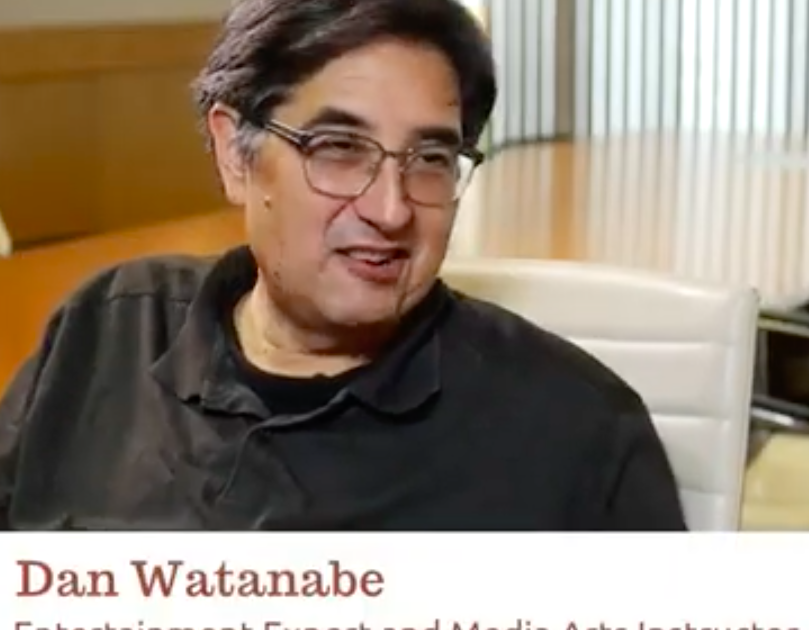
    The reshuffling comes amid years of internal turmoil. In 2022, full-time cinema professor Arantxa Rodriguez resigned and was replaced by Jonathan Burnett as assistant professor. Rodriguez had previously been implicated in department infighting and, alongside Swelstad, was named as a co-defendant in a 2008 case alleging failure to provide advertised technical training and education. Burnett’s hiring bypassed longtime adjunct and former grant director Dan Watanabe.

    Watanabe previously administered several Media Arts training grants, the last of which—ICT & Digital Media, LA RDSN—was reported as fraudulent in 2016. The 2013 grant proposal promised courses such as The Business of EntertainmentAdvanced Digital Editing, Photoshop, and After Effects. Yet once funding was approved, The Business of Entertainment and Advanced Digital Editing were archived by LAVC’s Academic Curriculum Committee and Senate. Photoshop and After Effects were offered only minimally, with After Effects disappearing after 2015 and Photoshop shifting to online-only by 2017.

    Students reported the suspected fraud to the State of California in 2016, prompting a review of the grant. Renewal applications submitted by Watanabe in 2018 and 2021 were both denied.

    Grant Record (Denied Renewal, 2018):

    • Project Title: ICT & Digital Media – LA RDSN (Renewal)

    • Funding Agency: CCCCO EWD

    • Grant Amount: $165,000

    • Funding Period: Oct. 1, 2018 – June 30, 2019

    • Project Director: Dan Watanabe

    • Description: Proposed renewal of the Deputy Sector Navigator grant under the California Community Colleges Chancellor’s Office, focused on curriculum development and alignment with universities and K–12 schools.

    https://services.laccd.edu/districtsite/Accreditation/lavc/Standard%20IVA/IVA1-02_Grants_History.pdf

    Despite this, Watanabe (who was also passed over for a full-time position at Los Angeles Pierce College) remains an adjunct faculty member slated to teach Cinema 111, Developing Movies – a field he reportedly last worked in twenty years ago. Arantxa Rodriguez and Eric Swelstad have both been scheduled to teach Fall 2025. Despite falsifying his credentials as a member of the Writer’s Guild of America – West, and implying he was a Primetime Emmy Winner (he in fact was the director of a movie that received a local Los Angeles Emmy in the 1990s), he is slated to teach Cinema 101 and screenwriting core class Media Arts 129. Rodriguez will a remote History of Film Class. 

    Reportedly the new full-time faculty in the department have started working to reverse the damage. Fall 2025 schedule includes Media Arts 112, Creative Sound Design Workshop. 

    Source link

  • FCC proposal would disconnect school bus Wi-Fi, hotspots from E-rate coverage

    FCC proposal would disconnect school bus Wi-Fi, hotspots from E-rate coverage

    This audio is auto-generated. Please let us know if you have feedback.

    Dive Brief:

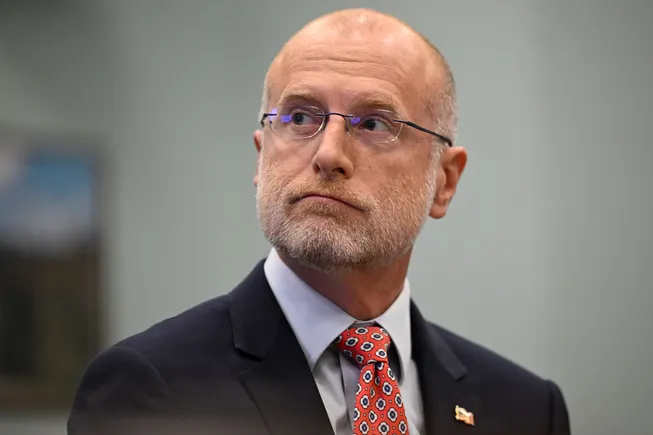
    • An E-rate expansion that allowed schools to use the program’s funds for school bus Wi-Fi and hotspots for students could soon be reversed, pending a vote called for by Federal Communications Commission Chairman Brendan Carr on Wednesday.
    • The vote on the proposal to reverse the Biden-era expansions is currently “on circulation” as of Friday, according to an FCC spokesperson. That means commissioners can vote on the matter outside of their open monthly meetings at their discretion. 
    • With a Republican majority among the three commissioners, it’s possible the E-rate expansion could be reversed.  

    Dive Insight:

    Carr’s proposal comes at a time of high demand among school districts to expand students’ internet access through school bus Wi-Fi and hotspots.

    Schools and districts have requested a total of $15.3 million in E-rate funds to pay for school bus Wi-Fi and $50.2 million for hotspots so far in fiscal year 2025, according to federal data. 

    E-rate, also known as the schools and libraries universal service support program, helps connect schools to affordable broadband. The federal program is administered by the nonprofit private corporation Universal Service Administrative Co., or USAC, under the FCC’s authority.

    If Carr’s proposal is approved, the FCC will direct USAC to deny the pending FY 25 requests to use E-rate funds for hotspots and school bus Wi-Fi services. 

    Millions of students and older adults rely on the expanded E-rate services for homework and telehealth services, said FCC Commissioner Anna Gomez, a Democrat, in a Wednesday statement. 

    “Now the FCC is moving to strip that connectivity away while doing nothing to make broadband more affordable,” Gomez said. “Their latest proposals will only widen the gap between those with access to modern-day tools and those left behind.”

    The commission approved the school bus Wi-Fi addition in 2023 and then voted to include hotspots the following year. Carr, a commissioner at the time, voted against both E-rate expansion measures.

    School bus Wi-Fi access is especially beneficial for students in rural areas with long commutes to school, said Andrew Jay Schwartzman, senior counselor at the Benton Institute for Broadband & Society, in a Wednesday statement. Carr’s push to reverse the use of E-rate funds for those services will “lock rural kids into dead zones,” he added.

    “Chairman Carr’s moves today are very unfortunate, as they further signal that the Commission is no longer prioritizing closing the digital divide,” Schwartzman said. 

    The Consortium for School Networking also released a statement Friday denouncing Carr’s plan. The expansion of the E-rate program has been “critical to closing the digital divide and ensuring every student can learn, both in school and where they live and learn.”

    In his announcement, Carr said the FCC violated Congress’ authority when it decided to broaden E-rate under the Biden administration. 

    “During COVID-19, Congress passed a law that expressly authorized the FCC to fund Wi-Fi hotpots for use outside of schools and libraries. When that program ended, so did the FCC’s authority to fund those initiatives,” Carr said. “Nonetheless, the Biden-era FCC chose to expand its E-Rate program to fund those initiatives long after the COVID-19 emergency ended.”

    Carr also praised Sen. Ted Cruz, R-Texas, for leading a Senate vote in May approving a repeal of the FCC’s decision to cover hotspots under E-rate. The bill is still awaiting action from the House.

    Source link

  • Education Department wants to streamline process for pulling federal funds from colleges

    Education Department wants to streamline process for pulling federal funds from colleges

    This audio is auto-generated. Please let us know if you have feedback.

    Dive Brief:

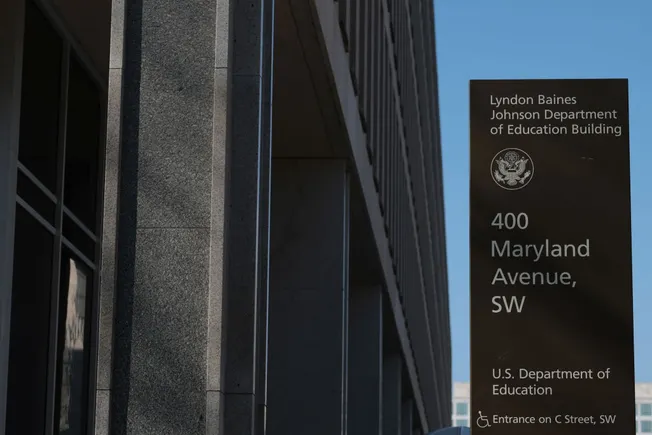
    • The U.S. Department of Education plans to propose regulations for “streamlining” the process for pulling federal funding from the colleges it determines have violated civil rights law. 
    • The notice of the forthcoming proposal was published in the Trump administration’s Spring 2025 Unified Agenda, which provides a glimpse of the federal government’s regulatory priorities and schedule for releasing new rules. 
    • The new proposal — which could be released this month — is intended to simplify the process for the Education Department’s Office for Civil Rights to seek “termination of Federal financial assistance to institutions that intentionally violate Federal civil rights laws and refuse to voluntarily come into compliance,” the notice says. 

    Dive Insight: 

    Under the Trump administration, the Education Department and other agencies have opened a flurry of civil rights investigations into colleges and K-12 schools. Some have targeted their diversity efforts and policies that allow transgender students to play on teams and use bathrooms aligning with their gender identities. Others have accused colleges of failing to address antisemitism. 

    Amid these investigations, the Trump administration has pressured colleges to strike deals with the federal government by freezing or pulling vast sums of federal research funding. 

    The University of Pennsylvania, for instance, resolved an Education Department investigation in July by agreeing to bar transgender women from competing on women’s sports teams. Penn also agreed to give Division I titles and records to cisgender women who had lost against Lia Thomas, a transgender woman who last competed on the university’s swim team in 2022.

    The deal came after the Trump administration had pulled $175 million in federal contracts from Penn. Similarly, Columbia University and Brown University — which were both accused of failing to address campus antisemitism — have paid lofty sums to settle the administration’s allegations after the federal government froze hundreds of millions of dollars of their research grants.

    The notice in the Unified Agenda says the Education Department plans to align civil rights enforcement procedures better with statutory requirements. The agency’s new regulations would pertain to enforcement of Title IX and Title VI. Title IX bars discrimination based on sex, while Title VI prohibits discrimination based on race, color or national origin. 

    The department did not immediately respond to a request for comment Friday. 

    Not every college targeted by the administration has been pressured into striking a deal. 

    The Trump administration froze $2.2 billion from Harvard University after the Ivy League institution refused to yield to demands to make sweeping changes to its admissions, hiring and campus policies. Harvard took the administration to court over the frozen funds, with a federal judge ruling in the university’s favor this week

    The Trump administration had said it was pulling the funding because the university had not done enough to address antisemitism on campus. Yet the judge overseeing the case said the evidence does not “reflect that fighting antisemitism was Defendants’ true aim in acting against Harvard.” 

    The Unified Agenda also provides a look at the agency’s other regulatory priorities, with changes coming down the pike for rules governing accreditation, the Public Service Loan Forgiveness program, and colleges’ reporting requirements for foreign gifts and contracts. 

    The Education Department recently kicked off the process to craft regulations to implement the sweeping changes mandated by the massive domestic policy bill passed by Republicans this summer. 

    The legislation will phase out Grad PLUS loans, which allow graduate and professional students to borrow up to the cost of attendance. It also creates lifetime federal loan limits, with a cap of $100,000 for most graduate students and $200,000 for professional students. And it will consolidate a handful of federal loan repayment options into just two — one income-based repayment plan and one standard plan with fixed payments. 

    Additionally, the policy package threatens to cut off federal student loan eligibility to college programs that can’t prove they provide an earnings boost. Undergraduate programs, for example, must show that at least half of their graduates earn more than a typical high school student in their state.

    The American Council on Education and over 40 other higher education groups have urged the Education Department to work with Congress to delay implementing these changes until July 1, 2027

    The Education Department is currently on track to issue the rules no earlier than March 2026 — and likely later than that given the complexity of the law, according to the letter. As a result, the regulations would “impose major changes to financial aid and student loan repayment for millions of students and borrowers only months before they take effect,” the organizations said.

    Source link

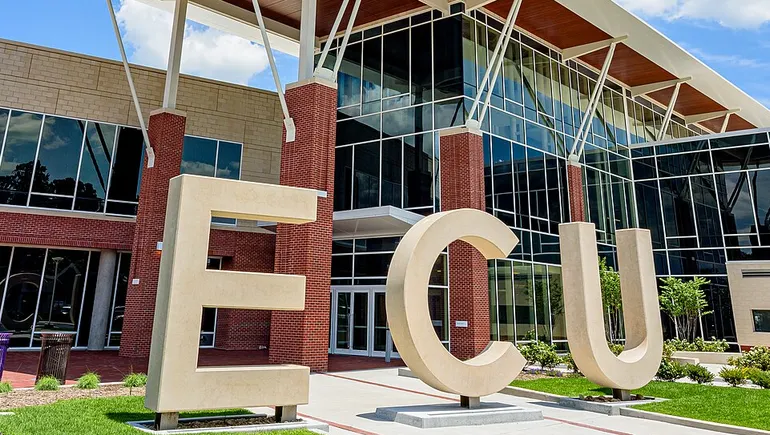
  • East Carolina University eyes $25M in cuts

    East Carolina University eyes $25M in cuts

    This audio is auto-generated. Please let us know if you have feedback.

    Dive Brief:

    • East Carolina University is looking to cut $25 million from its budget over the next three years as it wrestles with declining enrollment and a changing higher education landscape. 
    • The cuts represent about 2% of the North Carolina university’s budget. It’s aiming for $5 million in savings for the 2025-26 academic year, of which administrators have identified $4.2 million, the university said Thursday in a news release. 
    • The public institution plans to reach its three-year savings goal “through permanent reductions, academic program optimization, and organizational adjustments,” it said.

    Dive Insight:

    Over just three years between 2020 and 2023, ECU’s fall head count declined 7% to 26,785 students. 

    Many colleges have faced such enrollment woes, and the university invoked that common experience, noting “shifting demographics, including fewer graduating high school students in the years ahead.”

    However, in North Carolina, as in much of the South, the population of high school graduates is actually expected to grow. In its latest estimates, the Western Interstate Commission for Higher Education forecast a 6% increase in high school graduates in the state from 2023 to 2041.

    That said, ECU’s experience tracks with another national trend: regional public universities struggling while state flagships grow. University of North Carolina at Chapel Hill, for example, added about as many students — roughly 2,000 — as ECU lost between 2020 and 2023. 

    With growth in expenses outpacing tuition and fee revenue, the university’s operating loss in fiscal 2024 expanded by 43.2% year over year to $415.5 million.

    As it adapts, the university is looking to reallocate its resources to high-demand programs. ECU pointed to its nursing college, where it says it has a competitive pool of prospective students.

    “We have an opportunity to fuel an expansion through reinvesting resources,” the university said of its nursing programs. It’s also looking to grow its online programs. 

    Enrollment trends at ECU determine not just tuition revenue but also state funds. In its release, the institution noted that North Carolina’s state funding formula bases appropriations on the number of credit hours state residents take at a public college. 

    “Simply put, ECU could grow in total student population but see a reduction in appropriated funds because out-of-state students are not calculated in the funding model for credit hours,” the university said. 

    As ECU grapples with its budget, working groups at the university are reviewing the university’s academic programs as part of a fiscal health initiative. Provost Christopher Buddo is meeting with deans and department chairs to “discuss next steps for programs with low productivity,” ECU said in the release.

    The university is also trying to draw savings from operational and organizational restructuring. For instance, it plans to merge two libraries into one, and it is making changes to its information technology and employee-related units, including human resources.

    Source link