Blog

  • California Schools Brace for Fallout from SCOTUS Decision on Religious Rights – The 74

    California Schools Brace for Fallout from SCOTUS Decision on Religious Rights – The 74

    Two months after the U.S. Supreme Court granted public school parents the right to withdraw their children from materials and discussions on LGBTQ+ issues and other subjects that conflict with their “sincerely held religious beliefs,” conservative leaders in California are predicting schools will be swamped with opt-out demands. 

    That hasn’t happened yet, but attorneys agree that this latest escalation of the culture wars will likely cause turmoil, confusion, and years of litigation, largely because the court offered no guidance on how opt-out requests should be handled, how religious belief claims can or should be verified, and how schools should handle potential logistical issues.

    “There is a lot of trepidation about how to handle this issue in a way that is legally compliant and doesn’t trigger a backlash from one side of the issue or the other,” Troy Flint, a spokesperson for the California School Boards Association, told EdSource via email Saturday night.

    “Superintendents have concerns about how to make a fact-specific determination regarding parent requests, and we have heard of districts getting threats of litigation from both sides,” he said.

    LGBTQ+ advocates and defenders of the state’s progressive school standards are threatening discrimination lawsuits if opt-outs are granted, Flint said. Parents are threatening to sue if they aren’t granted immediately.

    In most districts, he added, leaders “are hesitant to address this publicly for fear of attracting more scrutiny and making the issue even more difficult to manage.”

    A leading academic on education law said that while the Supreme Court decision was based on parental objections to LGBTQ+ books and lessons, the religious opt-outs are likely to have a broader reach.

    “It is deeply misguided for people to believe that this case is only about LGBTQ+ and equality,” Yale Law School professor Justin Driver told EdSource. The decision “sweeps, given the prevalence of deeply felt religious objections, to lots of material,” he said.

    It could “affect everything from reading to science, to literature to history. It’s difficult to overstate the significance of the decision,” Driver said. “Some people think Bert and Ernie are gay. Is ‘Sesame Street’ now suspect?”

    California, for instance, requires students to learn the history of gay people fighting for civil rights and the story of the country’s first openly gay elected official, Harvey Milk. The San Francisco supervisor was assassinated in 1978 and posthumously awarded the Presidential Medal of Freedom by former President Barack Obama.

    Flint said that parents “in at least one district have hinted at trying to expand the opt-out requests to other types of instructional materials.” He did not identify those materials.

    Meanwhile, as school administrators ponder their next steps, firebrand social conservatives are seizing the moment that the nation’s highest court created.

    “There should be opt-outs. There are things that go against what God laid down,” pastor Angelo Frazier, of Bakersfield’s RiverLakes Community Church, said of what’s taught in California schools. 

    “It’s not education. It’s ‘You can touch me here.’ It’s very suggestive and inappropriate.” He said the ruling was a relief to frustrated parents in his congregation. “It gives them breathing room.”

    The leader of a Fresno-based Christian group, long involved in parental rights advocacy, said the state is no longer in charge of what children learn in school.

    The ruling shows that “parents are the ultimate determination of whose values get taught to the child,” said Greg Burt of the California Family Council. “We’re now in charge of deciding what we think is good and what we think is not good.”

    But as opt-outs begin to play out across California’s more than 10,000 public schools as the 2025-26 academic year opens, the only certainty from the case, Mahmoud v. Taylor, is that uncertainties abound — and may for years.

    They include:

    • Can or should parents file blanket opt-out requests stating they want their child removed from any and all instruction about LGBTQ+ topics, and leave school personnel to sort it out? Or should schools ask parents to review reading lists — often available online — and let parents flag those items to which they object? 
    • What do school leaders do with students whose parents opt them out of a class? Their class time still needs to be used for instruction. Where do they go?
    • Who watches or instructs the youngest of removed students, who can’t be left unsupervised? Some of the books cited in the Supreme Court case, including ones about a child’s favorite uncle marrying a man and a puppy getting lost at a Pride parade, are used in kindergarten and even transitional kindergarten classes.
    • Will school districts need to budget money to defend lawsuits from parents whose opt-out requests may be denied? 
    • Can parents even attempt to opt out their child from exposure to an LGBTQ+ teacher, or a teacher who displays a Pride flag in a classroom?

    Lawyers and academics interviewed for this story said that Justice Samuel Alito’s decision, joined by the court’s five other conservatives, offered little guidance on how opt-outs should work.  

    Mahmoud v. Taylor happened because the Montgomery County schools in suburban Maryland created an opt-out program to appease parents who objected to the teaching of LGBTQ+ materials on religious grounds. But the program ended in less than a year. Alito noted in his decision that school officials found that “individual principals and teachers could not accommodate the growing number of opt-out requests without causing significant disruptions to the classroom environment.” Parents then sued.

    Focusing largely on principles of religious freedom, Alito’s decision doesn’t specifically address how opt-outs might work given the Maryland situation, or how claims of a sincerely held religious belief might be evaluated. 

    The high court has long recognized the rights of parents to “direct the religious upbringing of their children,” he wrote, a principle at the case’s core.

    But in a dissenting opinion, Justice Sonja Sotomayor predicted opt-outs would cause “chaos for this nation’s public schools.”

    Giving parents the chance to opt out of all lessons and story times that conflict with their beliefs “will impose impossible administrative burdens,” Sotomayor wrote. It threatens the very essence of public education.

     “The reverberations of the court’s error will be felt, I fear, for generations.”

    Opting out in California

    Conservative groups in California opposed to LGBTQ+ themed teaching materials are generating letters and emails to school districts for parents to use to demand that school leaders proactively remove children from classes where there might be any mention of gay or transgender people, same-sex marriage and other related topics.

    A nonprofit Riverside County law firm, Advocates for Faith & Freedom, created one such letter, calling for children to be removed from any teaching involving “gender identity, the use of pronouns inconsistent with biological sex, sexual activity or intercourse of any kind, sexual orientation, or any LGBTQ+ topics” so parents can raise children “in the fear and knowledge of the Lord.”

    The letter gives principals 10 calendar days to respond in writing. Lack of a response “will be considered a denial” that will cause parents to “proceed accordingly.”  

    Erin Mersino, an attorney at the firm, said via email, “responses were just starting to come in,” and that it was too soon to discuss the letter’s effectiveness. Other groups are circulating at least four similar opt-out templates or email forms.  

    The 10-day response demand in the nonprofit’s letter “is insufficient in my opinion,” said Mark Bresee, a La Jolla attorney specializing in education law.

    Bresee also questioned if “a blanket, year-long ‘opt-out’ demand” is consistent with Alito’s decision, noting that the justice wrote that the “religious development of a child will always be fact-intensive. It will depend on the specific religious beliefs and practices asserted, as well as the specific nature of the educational requirement or curricular feature at issue.”

    It’s unclear how far and fast those letters are circulating. Some school officials said they have received a few opt-out notices.

    Conservative activist Brenda Lebsack, a Santa Ana Unified School District board member, said mass opt-out requests are unlikely to come until school districts themselves notify parents of the new right the court granted. “Opt-out forms should really be coming from the schools because if you’re getting opt-out forms from all these different law firms, and they’re all different, that could get really confusing,” she said. 

    At the Manteca Unified School District in San Joaquin County, Assistant Superintendent Victoria Brunn said late last week that only one “opt-out request has been received so far. She said the parents who made it were told it would be granted. 

    A spokesperson for the Turlock Unified School District in Stanislaus County said it had received a single inquiry about the opt-out process and created a standard form for requests, but that no requests had been received. Parents can either use the form or email a teacher, citing “specific instructional content” a student should not receive, according to a copy provided to EdSource.

    “Teachers can also provide notice of upcoming curriculum,” the spokesperson wrote in an email.

    At the Hope Elementary School District in Santa Barbara County, Superintendent Anne Hubbard created an opt-out form. As of Friday, it had been used once to opt out two children in the same family, she said. 

    Last week, the board of the 85-student Howell Mountain Elementary School District in Napa County canceled plans to create an opt-out form after community objections.

    “Howell Mountain Elementary respects and values the LGBTQ+ community. We will not be adopting any type of opt-out form that specifically targets LGBTQ+ curriculum,” Superintendent Joshua Munoz said in a statement. Instead, the district will remind parents annually that the right to opt out exists, but will not cite any specific curriculum.

    The Press Democrat reported that among those who spoke to the board was a St. Helena High School junior who’d attended Howell Mountain.

    “When I was in seventh grade, I realized that I liked girls,” she said. “In school, the times that we were taught about LGBTQ+ people would remind me that I was not alone. I was not a freak or an alien. I was just me. And I could still do anything I wanted in my life.”

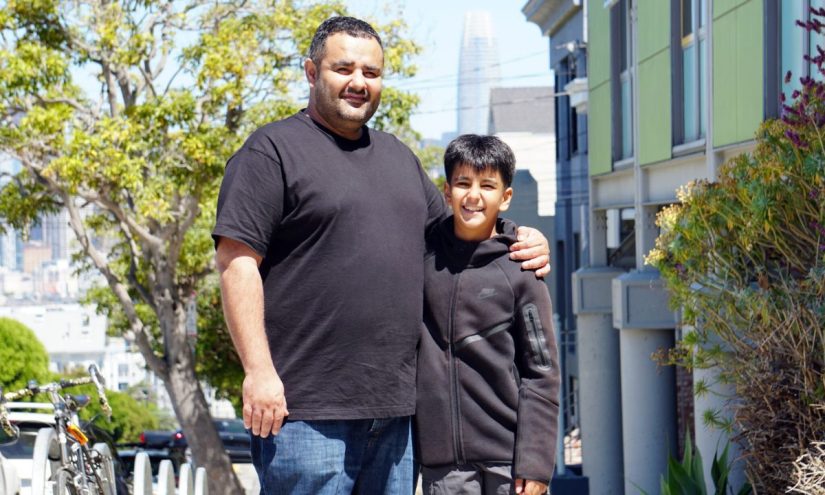
    In San Francisco, Mawan Omar, the parent of a sixth grader, told EdSource he intends to opt his son out of LGBTQ+ materials because the teaching contradicts his family’s Muslim faith.  

    Omar said his son, Hezma, objected on his own to an LGBTQ+ lesson in elementary school because it was contrary to what he had learned from the Holy Quran. “He just didn’t want to be around it because he knows our religion,” Omar said. After what he described as a dispute with the school’s principal, it was agreed informally that Hezma would be allowed to leave any classes involving similar materials.  

    Now, Alito’s decision, Omar said, is gratifying. “We knew all along we were right.”

    But Lebsack, who focuses on transgender issues and has formed an interfaith coalition primarily around them, said Alito’s decision isn’t enough.

    “I think Mahmoud versus Taylor is throwing us crumbs,” she said in an interview. “I mean, I’m grateful for it, but it needs to go much further than that.”

    Lebsack, a special education teacher and former Orange County probation officer, claimed the California Department of Education is ripe to be sued under the First and 14th amendments for “compelling public school students to accept and affirm extremist ideologies of unlimited gender identities” and for “bringing extremist forced teachings into K-12 public education.”

    Asked to respond to Lebsack’s assertion, a spokesperson for the state Education Department directed a reporter to guidance posted online about Alito’s decision. It states, in part, “The California Department of Education and California law continue to promote a safe, fair, and welcoming learning environment in all schools. It is important to note that Mahmoud does not invalidate or preempt California’s strong protections for LGBTQ+ youth from discrimination, harassment, and bullying.” 

    The goal: Banning books?

    Other conservatives said they see a path where Alito’s decision could lead to the removal of books and teaching they oppose by overwhelming schools with opt-outs to the point where the best option is to remove the materials.

    “If there are so many people who want to opt out of this curriculum, maybe we should stop teaching it,” said Julie Hamill, an attorney and president of the California Justice Center. School leaders, she said, should be reflecting on whether they are “doing something wrong as a district and educational entity. Those are questions that are not being asked right now. It’s very obvious that’s what needs to happen.”

    Sonja Shaw, a Chino Valley Unified School District board member running for state superintendent of public instruction in next year’s election, said she wants opt-outs to “overtax the system to where they just give up, and they stop teaching this stuff.”

    If so many opt-outs were filed that books are removed from curricula, that would help, said Burt of the California Family Council, which has urged parents to flood districts with opt-outs. “We’re advocating for good books in school, and we think these are bad books, so we’re not going to be sad if we see them go.”

    But an anti-censorship advocate said that would amount to book banning by a different name. 

    “I’m not at all surprised that this is their plan of attack,” Tasslyn Magnusson, senior adviser to the Freedom to Read team at PEN America, an anti-censorship group, said of conservative activists. “These are books about families. These are books about how we experience the world, and they’re beautiful and well written,” she said. “Remember that it’s important for kids to have a variety of materials in front of them that resonate with their lives and their experiences.”

    Another impact of the opt-outs will be how LGBTQ+ students and students from families with LGBTQ+ members will react when classmates leave and when teaching materials reflecting their lives are presented.

    That could make “a child feel they’re not only different, but that they’re not accepted or that they should be ashamed of the family that they have,” said Jorge Reyes Salinas,  a spokesperson for Equality California, a civil rights group. Although the opt-outs promise to be disruptive, he said, they won’t end the state’s use of an inclusive curriculum. “We’re talking about a very small population of parents that are ignorant and full of hate.”

    The presidents of California’s two largest teachers unions both said educators are not going to fold under pressure created by the high court’s decision.

    “The role of the public school is to help students develop the critical thinking skills and knowledge necessary to engage in a pluralistic democracy,” said Jeff Freitas, president of the California Federation of Teachers. “We cannot have individuals dictating what is the good of the public. It’s also important that our public schools avoid over-compliance and refuse to capitulate to the weaponization of this decision.”

    David Goldberg, president of the California Teachers Association, said that teachers “will obviously follow the law, but we want to make it clear to our members that there are other laws in California around kids’ ability to learn about their own identity, cultures, or all kinds of identities. We’re going to still honor kids’ ability to learn about their own identity and all kinds of identities.”

    Goldberg also said it would be a mistake for school administrators to place the burden of opt-outs on teachers. “Teachers are overwhelmed already, just getting through the curriculum,” he said. Opt-outs are “a compliance thing that districts are going to need to figure out.”

    The Scopes Monkey Trial

    The country has a long history of science clashing with religion.

    Driver, the Yale law professor, noted that in a 1987 decision, the U.S. Court of Appeals for the Sixth Circuit overturned a lower court that ruled fundamentalist Christians could remove their children from public school lessons that depicted women working outside the home, which they argued conflicted with their religious beliefs. 

    Now, following Alito’s decision in the Maryland case, the losing argument in that case could be successful, Driver said. “It seems to me the Mahmoud versus Taylor decision empowered these sorts of objections to potentially carry the day.”

    Alito’s decision also came 100 years after the landmark court case on the teaching of evolution in public schools — the epic clash of science versus religion known as the Scopes Monkey Trial that pitted legendary lawyers Clarence Darrow and William Jennings Bryan against each other. 

    Jennings, hired to prosecute a high school biology teacher, John Scopes, for teaching evolution against state law, won. But Tennessee’s Supreme Court later overturned Scopes’ conviction, ruling that a state law banning the teaching of evolution in public schools was unconstitutional.

    But it didn’t end the debate over teaching science in the face of religious beliefs, said Pepperdine University law and history professor Edward Larson, author of a Pulitzer Prize-winning book on the trial. When it ended, “school districts all over the country and some states banned the teaching of the theory of human evolution,” he said.

    Even when religious objections were later banned, “a series of state laws and local actions calling for balanced treatment of either teaching creation science, along with evolution, or later intelligent design” followed, Larson said. Several states, including Alabama, require disclaimers in biology books stating evolution “is just a theory,” he said.

    “The issue of evolution in public schools remains a flash point,” Larson said. “It has been for a hundred years, it still is today.”

    As the Alito decision plays out in the coming years, Larson said, “Schools may want to force people to provide all sorts of evidence” to prove their sincerely held religious beliefs. “But I’m thinking that most won’t feel it’s worth their time to get too engaged,” he added. 

    “That’s just inviting trouble.” 


    Get stories like these delivered straight to your inbox. Sign up for The 74 Newsletter

    Source link

  • Can your religion put your nationality at risk?

    Can your religion put your nationality at risk?

    Standing on the charred remains of his hut in a village near Assam’s Morigaon district in South India, Shafik Ahmed clutched a worn folder of papers: land deeds, ration cards and a laminated voter ID, all declaring the 68-year-old bicycle repairman an Indian citizen.

    None of it mattered when bulldozers rolled into his neighbourhood in June 2025, demolishing 17 homes, all belonging to Bengali-speaking Muslims.

    “I was born here, voted here, paid taxes here,” Ahmed said. “Still, they told me I am a foreigner. They dumped us near the border like we are cattle.”

    Ahmed is among the hundreds of Muslims who say they were pushed across India’s eastern border into Bangladesh in recent months, as part of what human rights lawyers say is a rapidly intensifying campaign of ethnic targeting in Assam, a region famous across the world for the quality of tea it produces. 

    The drive has escalated in the run-up to the 2026 state elections, with Chief Minister Himanta Biswa Sarma branding undocumented Muslims as “infiltrators” and vowing to “protect the culture of Assam.”

    Islamophobia is a global concern.

    The expulsions, many executed without due legal process, have sparked concern far beyond India’s borders. As the United Nations warns of a global surge in anti-Muslim bigotry, activists say Assam’s campaign fits a broader pattern of Islamophobia playing out across continents.

    “They call it pushback,” Ahmed said. “We call it expulsion.”

    Across Assam, particularly in Muslim-majority districts like Dhubri, Barpeta and Goalpara, families wake up to midnight police knocks, arbitrary detentions and the looming threat of forced deportation.

    Rubina Khatun, 53, said she was taken without explanation from her home In May 2025, driven 200km to the Matia detention centre and later left in the no-man’s land near the India-Bangladesh border along with other women and children.

    “The soldiers shouted at us: ‘You’re not Indian anymore. Go to your country’,” she said. “But I have never been to Bangladesh. We spent hours in the swamp. No food, no water. It felt like we were being erased.”

    Applying old laws to new intolerance

    Human rights lawyer Hameed Laskar, who represents several families appealing the orders by the Foreigners Tribunals, says the government is misusing a 1950 law meant for undocumented immigrants.

    “These people have lived in Assam for generations,” Laskar said. “Some even appear on the National Register of Citizens. But a misspelled name or a missing land receipt from 1970 is enough to be declared a foreigner. It’s not legal enforcement. It’s engineered exclusion.”

    The targeting of Muslims in Assam is not new. But since the conservative Bharatiya Janata Party came to power in India in 2014, the rhetoric has hardened and the policies have sharpened.

    In 2019, the national registry process excluded nearly 2 million people, most of them Muslims. That has left families in limbo. While Hindus excluded from the list can claim citizenship under India’s 2019 Citizenship Amendment Act, there is no such provision for Muslims.

    The wife of Parvez Alam, a schoolteacher in the city of Barpeta, Aswas recently declared a foreigner despite having a birth certificate and electoral record.

    “Muslims now need 20 documents to prove their Indian-ness. Hindus only need to declare it,” Alam said. 

    Ping-ponging people across borders

    According to a June statement from Chief Minister Sarma in the state assembly, more than 300 “illegal Bangladeshis” have been expelled since May. Local media and community groups put the number closer to 500, including at least 120 women.

    But the Bangladeshi government has rejected many of these returnees, saying they have no proof of origin. Several have been stranded in border areas, caught in a bureaucratic tug-of-war.

    In one incident that drew widespread attention, 60-year-old Salim Uddin, a retired truck driver from Golaghat, was found wandering along the India-Bangladesh border after his family saw a viral video showing him being handed over to Bangladesh’s border guards.

    His son, Rashid, later confirmed that Uddin had served in the Assam Police for nearly three decades.

    “How can the son of a state police officer be declared Bangladeshi?” Rashid asked. “Had my grandfather been alive, it would have broken his heart.”

    A pattern of prejudice

    The Assam government has denied that the crackdown is communal, insisting it targets only “illegal foreigners.” But the pattern tells a different story. A recent report by a coalition of civil society groups found that over 95% of those detained or expelled this year were Bengali-speaking Muslims.

    The fear gripping Assam’s Muslims mirrors rising Islamophobia globally. From bans on hijabs in French schools to mosque attacks in the United Kingdom, Muslims across continents are facing what the United Nations calls a “widening wave of intolerance.”

    On March 15, UN Secretary-General António Guterres marked the International Day to Combat Islamophobia by warning of a disturbing rise in anti-Muslim bigotry. “This is part of a wider scourge of extremist ideologies and attacks on religious groups,” Guterres said in a video address. “Governments must foster social cohesion and protect religious freedom.”

    He called on online platforms to curb hate speech, and on leaders to avoid rhetoric that demonizes communities. Muslim civil rights groups in Europe and North America have echoed those concerns.

    A spread of intolerance across the globe

    A recent report by the Council on American-Islamic Relations documented a record 8,658 anti-Muslim incidents in 2024 alone.

    In the UK, advocacy group Tell MAMA has reported a 30% increase in Islamophobic hate crimes since October 2023, including attacks on mosques, verbal abuse and discrimination in housing and employment.

    Dr. Arshiya Khan, a political sociologist based in London, said these patterns are not isolated. “They’re interlinked,” Khan said. “What starts as state policy in one country often emboldens vigilante behaviour in others.”

    In Assam’s tea belt, the fear is palpable. In several villages, Muslim residents say they have stopped going to police stations or even hospitals, afraid they might be detained. In one case, a 27-year-old man who went to register a land dispute at a local police station was declared a foreigner after a routine ID check.

    “We don’t know who is next,” said Shahina Begum, a mother of three. “They say we don’t belong here. But where do we go?”

    Fighting back

    At least four petitions have been filed in the Assam High Court since June by families who say their relatives disappeared after being taken by police. Most had no ongoing legal cases against them.

    “They’re being disappeared without a trace,” said Laskar. “This is not law enforcement, it’s ethnic cleansing in slow motion.”

    Back in Morigaon, Shafik Ahmed said he has no plans to leave, even as bulldozers return to neighbouring villages.

    “This land is all I know. If they push me out again, I’ll come back again,” he said, eyes fixed on the debris of his former home.

    But for those like Rubina Khatun the trauma is lasting. “We’re citizens,” she said. “We have documents. We were born here. But in their eyes, we will never be Indian enough.”

    As global attention briefly turns to Assam, with international bodies urging India to uphold human rights, residents say they don’t expect justice, only survival.

    “Every day we live feels like another test to prove we exist,” Ahmed said.


    Questions to consider

    1. Why do Muslim citizens of Assam India believe that their government treats them differently than non-Muslims? 

    2. Should religion be a factor in determining whether someone should get national citizenship?

    3. Should a government be concerned about the religions of its citizens? 


    Source link

  • 5 ways to infuse AI into your classroom this school year

    5 ways to infuse AI into your classroom this school year

    Key points:

    As artificial intelligence (AI) continues to reshape the educational landscape, teachers have a unique opportunity to model how to use it responsibly, creatively, and strategically.

    Rather than viewing AI as a threat or distraction, we can reframe it as a tool for empowerment and efficiency–one that allows us to meet student needs in more personalized, inclusive, and imaginative ways. Whether you’re an AI beginner or already experimenting with generative tools, here are five ways to infuse AI into your classroom this school year:

    1. Co-plan lessons with an AI assistant

    AI platforms like ChatGPT, Eduaide.ai, and MagicSchool.ai can generate lesson frameworks aligned to standards, differentiate tasks for diverse learners, and offer fresh ideas for student engagement. Teachers can even co-create activities with students by prompting AI together in real time.

    Try this: Ask your AI assistant to create a standards-aligned lesson that includes a formative check and a scaffold for ELLs–then adjust to your style and class needs.

    2. Personalize feedback without the time drain

    AI can streamline your feedback process by suggesting draft comments on student work based on rubrics you provide. This is particularly helpful for writing-intensive courses or project-based learning.

    Ethical reminder: Always review and personalize AI-generated feedback to maintain professional judgment and student trust.

    3. Support multilingual learners in real time

    AI tools like Google Translate, Microsoft Immersive Reader, and Read&Write can help bridge language gaps by offering simplified texts, translated materials, and visual vocabulary support.

    Even better: Teach students to use these tools independently to foster agency and access.

    4. Teach AI literacy as a 21st-century skill

    Students are already using AI–let’s teach them to use it well. Dedicate time to discuss how AI works, how to prompt effectively, and how to critically evaluate its outputs for bias, credibility, and accuracy.

    Try this mini-lesson: “3 Prompts, 3 Results.” Have students input the same research question into three AI tools and compare the results for depth, accuracy, and tone.

    5. Automate the tedious–refocus on relationships

    From generating rubrics and newsletters to drafting permission slips and analyzing formative assessment data, AI can reduce the clerical load. This frees up your most valuable resource: time.

    Pro tip: Use AI to pre-write behavior plans, follow-up emails, or even lesson exit ticket summaries.

    The future of AI

    AI won’t replace teachers–but teachers who learn how to use AI thoughtfully may find themselves with more energy, better tools, and deeper student engagement than ever before. As the school year begins, let’s lead by example and embrace AI not as a shortcut, but as a catalyst for growth.

    Latest posts by eSchool Media Contributors (see all)


    Source link

  • 100 Ways the Trump Administration Has Undermined the Environment, Human Rights, World and Domestic Peace, Labor, and Knowledge

    100 Ways the Trump Administration Has Undermined the Environment, Human Rights, World and Domestic Peace, Labor, and Knowledge

    The Trump administration, since returning to power in 2025, has escalated attacks on the foundations of democracy, the environment, world peace, human rights, and intellectual inquiry. While the administration has marketed itself as “America First,” its policies have more often meant profits for the ultra-wealthy, repression for the working majority, and escalating dangers for the planet.

    Below is a running list of 100 of the most dangerous actions and policies—a record of how quickly a government can dismantle hard-won protections for people, peace, and the planet.


    I. Attacks on the Environment

    1. Withdrawing from the Paris Climate Agreement—again.

    2. Dismantling the EPA’s authority to regulate greenhouse gases.

    3. Opening federal lands and national parks to oil, gas, and mining leases.

    4. Gutting protections for endangered species.

    5. Allowing coal companies to dump mining waste in rivers and streams.

    6. Rolling back vehicle fuel efficiency standards.

    7. Subsidizing fossil fuel companies while defunding renewable energy programs.

    8. Suppressing climate science at federal agencies.

    9. Greenlighting pipelines that threaten Indigenous lands and water supplies.

    10. Promoting offshore drilling in fragile ecosystems.

    11. Weakening Clean Water Act enforcement.

    12. Dismantling environmental justice programs that protect poor communities.

    13. Politicizing NOAA and censoring weather/climate warnings.

    14. Undermining international climate cooperation at the UN.

    15. Allowing pesticides banned in Europe to return to U.S. farms.


    II. Undermining World Peace and Global Stability

    1. Threatening military action against Iran, Venezuela, and North Korea.

    2. Expanding the nuclear arsenal instead of pursuing arms control.

    3. Cutting funding for diplomacy and the State Department.

    4. Withdrawing from the World Health Organization (WHO).

    5. Weakening NATO alliances with inflammatory rhetoric.

    6. Escalating drone strikes and loosening rules of engagement.

    7. Providing cover for authoritarian leaders worldwide.

    8. Walking away from peace negotiations in the Middle East.

    9. Blocking humanitarian aid to Gaza, Yemen, and other war-torn areas.

    10. Expanding weapons sales to Saudi Arabia despite human rights abuses.

    11. Using tariffs and sanctions as blunt instruments against allies.

    12. Politicizing intelligence briefings to justify military adventurism.

    13. Abandoning refugee protections and asylum agreements.

    14. Treating climate refugees as security threats.

    15. Reducing U.S. participation in the United Nations.


    III. Attacks on Human Rights and the Rule of Law

    1. Expanding family separation policies at the border.

    2. Targeting asylum seekers for indefinite detention.

    3. Militarizing immigration enforcement with National Guard troops.

    4. Attacking reproductive rights and defunding women’s health programs.

    5. Rolling back LGBTQ+ protections in schools and workplaces.

    6. Reinstating bans on transgender service members in the military.

    7. Undermining voting rights through purges and voter ID laws.

    8. Packing the courts with extremist judges hostile to civil rights.

    9. Weaponizing the Justice Department against political opponents.

    10. Expanding surveillance powers with little oversight.

    11. Encouraging police crackdowns on protests.

    12. Expanding use of federal troops in U.S. cities.

    13. Weakening consent decrees against abusive police departments.

    14. Refusing to investigate hate crimes tied to far-right violence.

    15. Deporting long-term immigrants with no criminal record.


    IV. Attacks on Domestic Peace and Tranquility

    1. Encouraging militias and extremist groups with dog whistles.

    2. Using inflammatory rhetoric that stokes racial and religious hatred.

    3. Equating journalists with “enemies of the people.”

    4. Cutting funds for community-based violence prevention.

    5. Politicizing natural disaster relief.

    6. Treating peaceful protests as national security threats.

    7. Expanding federal use of facial recognition surveillance.

    8. Undermining local control with federal overreach.

    9. Stigmatizing entire religious and ethnic groups.

    10. Promoting conspiracy theories from the presidential podium.

    11. Encouraging violent crackdowns on labor strikes.

    12. Undermining pandemic preparedness and response.

    13. Allowing corporations to sidestep workplace safety rules.

    14. Shutting down diversity and inclusion training across agencies.

    15. Promoting vigilante violence through online platforms.


    V. Attacks on Labor Rights and the Working Class

    1. Weakening the Department of Labor’s enforcement of wage theft.

    2. Blocking attempts to raise the federal minimum wage.

    3. Undermining collective bargaining rights for federal workers.

    4. Supporting right-to-work laws across states.

    5. Allowing employers to misclassify gig workers as “independent contractors.”

    6. Blocking new OSHA safety standards.

    7. Expanding exemptions for overtime pay.

    8. Weakening rules on child labor in agriculture.

    9. Cutting unemployment benefits during economic downturns.

    10. Favoring union-busting corporations in federal contracts.

    11. Rolling back protections for striking workers.

    12. Encouraging outsourcing of jobs overseas.

    13. Weakening enforcement of anti-discrimination laws in workplaces.

    14. Cutting funding for worker retraining programs.

    15. Promoting unpaid internships as a “pathway” to jobs.


    VI. Attacks on Intellectualism and Knowledge

    1. Defunding the Department of Education in favor of privatization.

    2. Attacking public universities as “woke indoctrination centers.”

    3. Promoting for-profit colleges with predatory practices.

    4. Restricting student loan forgiveness programs.

    5. Undermining Title IX protections for sexual harassment.

    6. Defunding libraries and public broadcasting.

    7. Politicizing scientific research grants.

    8. Firing federal scientists who contradict administration narratives.

    9. Suppressing research on gun violence.

    10. Censoring federal climate and environmental data.

    11. Promoting creationism and Christian nationalism in schools.

    12. Expanding surveillance of student activists.

    13. Encouraging book bans in schools and libraries.

    14. Undermining accreditation standards for higher education.

    15. Attacking historians who challenge nationalist myths.

    16. Cutting humanities funding in favor of military research.

    17. Encouraging political litmus tests for professors.

    18. Treating journalists as combatants in a “culture war.”

    19. Promoting AI-driven “robocolleges” with no faculty oversight.

    20. Gutting federal student aid programs.

    21. Allowing corporate donors to dictate university policy.

    22. Discouraging international students from studying in the U.S.

    23. Criminalizing whistleblowers who reveal government misconduct.

    24. Promoting conspiracy theories over peer-reviewed science.

    25. Normalizing ignorance as a political strategy.        

    Source link

  • The latest LLE guidance: What do we need for it to succeed?

    The latest LLE guidance: What do we need for it to succeed?

    On 9 July 2025, the Department for Education released updated guidance on the Lifelong Learning Entitlement (LLE), launching a flexible, unified student finance system for post-18 learners in England.

    This means that from September 2026, learners can apply for funding to begin modules and courses from January 2027, with access to up to £38,140 of tuition loan finance and maintenance support for in-person studies. Crucially, the LLE supports modular study for specific courses, allowing learners to access 30-credit modules that form part of, or can stack towards, full qualifications.

    This announcement comes just months after HEPI and Instructure jointly published a Policy Note calling for a coherent lifelong learning strategy that unites the LLE with the upcoming Growth and Skills Levy, avoiding fragmentation between further and higher education. HEPI and Instructure’s analysis highlights the importance of:

    • A user‑friendly, low‑burden loan application process for modular study
    • A regulatory approach that supports modular learning without excessive bureaucracy
    • Enabling employer-funded pathways alongside individual loans 
    • Increased awarding of qualifications at Levels 4/5 as solid progression markers 

    So does the latest iteration of the LLE deliver on its potential to close skills gaps, improve employment opportunities and social mobility and welcome a broader range of learners into education? 

    What works, what doesn’t, and who is responsible? 

    Let’s start by acknowledging where the LLE has got it right. Unlike with previous higher education loans, learners can fund individual 30‑credit modules throughout their lives, rather than for a one-off qualification. This allows for flexibility to pursue new learning opportunities which align with career aspirations, upskilling requirements on both the learner and employer’s behalf, as well the learner’s personal circumstances. However, the LLE in its current form is still quite restrictive, and Instructure would like to make these recommendations to the following stakeholders.

    The DfE should widen loan eligibility 

    In reality, the range of modules eligible for LLE funding is still quite limited.  Funded modules must comply with a select list of priority skills areas outlined by the Government, offer at least 30 credits (roughly 300 hours of study) and form part of an established parent course. What’s more, modules from institutions that are rated ‘good’ or ‘outstanding’ by Ofsted or have a Gold or Silver TEF award, will have an easier time getting approved for LLE funding – those outside of this criteria will have to submit more evidence.

    However, the skills most in demand by employers, such as Generative AI development, Environmental Social and Governance (ESG) and green skills, are by nature, newer skill areas. In their infancy, these skills may not have have many, if any, available 30-credit modules which form part of an established parent course, and are offered by an institution that’s been highly-rated by TEF or Ofsted.

    Therefore we recommend the DfE considers funding modules which are smaller units of study, such as 15-20 credit microcredentials. These credentials could be offered by learning providers which may not have achieved industry accolades just yet but do have credibility upskilling learners in emerging skills areas.

    Lastly, while online modules are tuition-eligible, maintenance loans are not. We recommend that the Government extend maintenance support to fully online learners to improve access and social mobility.

    EdTech companies and learning providers need to be ‘credit-aware’

    In order to help become eligible for the LLE, we urge learning providers to design modular content intentionally, ensuring it is credit-bearing and responsive to labour market needs.

    Furthermore, EdTech should support flexible and credential-rich delivery. Virtual Learning Environment (VLE) platforms specifically should facilitate diverse delivery models, including asynchronous and hybrid formats, and support digital credentials and e-portfolio pathways.

    In short, the latest LLE guidance sets the foundation for modular pathways and stackable credentials in selected subject areas – a more viable option for many learners who are at varying stages of their learning journey. However, the LLE must be aligned with effective funding and regulation, coupled with coordinated action from providers, employers, and edtech partners – if this crucial policy is to meet its full potential.

    Instructure is a partner of HEPI and works with UK universities to pioneer flexible, modular and digital-first lifelong learning pathways.

    Source link

  • College president fears that federal education cuts will derail the promise of student parents, student military veterans and first-gen students

    College president fears that federal education cuts will derail the promise of student parents, student military veterans and first-gen students

    As a college president, I see the promise of higher education fulfilled every day. Many students at my institution, Whittier College, are the first in their families to attend a university. Some are parents or military veterans who have already served in the workforce and are returning to school to gain new skills, widen their perspectives and improve their job prospects.  

    These students are the future of our communities. We will rely on them to fill critical roles in health care, education, science, entrepreneurship and public service. They are also the students who stand to lose the most under the proposed fiscal year 2026 federal budget, and those who were already bracing for impact from the “One Big Beautiful Bill” cuts, including to the health care coverage many of them count on. 

    The drive with which these extraordinary students — both traditionally college-aged and older — pursue their degrees, often while juggling caregiving commitments or other responsibilities, never fails to inspire me.  

    Related: Interested in innovations in higher education? Subscribe to our free biweekly higher education newsletter. 

    We do not yet know the precise contours of the spending provisions Congress will consider once funding from a continuing resolution expires at the end of September. Yet we expect they will take their cues from the president’s proposed budget, which slashes support for students and parents and especially hammers those already struggling to improve their lives by earning a college degree, with cuts to education, health and housing that could take effect as early as October 1.  

    That budget would mean lowering the maximum Pell Grant award from $7,395 to $5,710, reversing a decade of progress. For the nearly half of Whittier students who received Pell Grants last year, this rollback would profoundly jeopardize their chances of finishing school. 

    So would the proposal to severely restrict Federal Work-Study, which supports a third of Whittier students according to our most recent internal analysis, and to eliminate the Supplemental Educational Opportunity Grant, which more than 16 percent of our student body relies upon. In addition, this budget would impose a cap on Direct PLUS Loans for Parents, which would impact roughly 60 percent of our parent borrowers. It would also do away with the Direct PLUS Loans for Graduates program.  

    These programs are lifelines, not just for our students but for students all across the country. They fuel social mobility and prosperity by making education a force for advancement through personal work ethic rather than a way to rack up debt. 

    If enacted, these proposed cuts would gut the support system that has enabled millions of low-income students to earn a college degree.  

    Higher education is a bridge. To cross it and achieve their full potential, students from all walks of life must have access to the support and resources colleges provide, whether through partnerships with local high schools or with professional gateway programs in engineering, accounting, business, nursing, physical therapy and more. Yet, to access these invaluable programs, they must be enrolled. How will they reach such heights if they suddenly can’t afford to advance their studies? 

    The harm I’ve described doesn’t stop with cuts to financial aid, loans and services. Proposed reductions also target research funding for NASA, NIH and the National Science Foundation. One frozen NASA grant has already led to the loss of paid student research fellowships at Whittier, a setback not just in dollars but in momentum for students building real-world skills, networks and résumés.  

    These research opportunities often enable talented first-generation students to connect their classroom learning to career pathways, opening the door to graduate school, lab technician roles and futures in STEM fields. We’ve seen how federal funding has supported student projects in everything from climate data analysis to environmental health.  

    Stripping away support for hands-on research undermines the federal government’s own calls for colleges like ours to better prepare students for the workforce by dismantling the very mechanisms that make such preparation possible. 

    Related: These federal programs help low-income students get to and through college. Trump wants to pull the funding 

    It’s particularly disheartening that these changes will disproportionately hurt those students who are working the hardest to achieve their objectives, who have done everything right and have the most to lose from this lack of investment in the future.  

    The preservation and strengthening of Pell, Work-Study, Supplemental Educational Opportunity grants and federal loan programs is not a partisan issue. It is a moral and economic imperative for a nation that has long been proud to be a land of opportunity.  

    Let’s build a system for strivers that opens doors instead of slamming them shut.  

    Let’s recommit to higher education as a public good. Today’s students are willing to work hard to deserve our continuing belief in them.  

    Kristine E. Dillon is the president of Whittier College in California. 

    Contact the opinion editor at [email protected]. 

    This story about education cuts was produced by The Hechinger Report, a nonprofit, independent news organization focused on inequality and innovation in education. Sign up for Hechinger’s weekly newsletter. 

    The Hechinger Report provides in-depth, fact-based, unbiased reporting on education that is free to all readers. But that doesn’t mean it’s free to produce. Our work keeps educators and the public informed about pressing issues at schools and on campuses throughout the country. We tell the whole story, even when the details are inconvenient. Help us keep doing that.

    Join us today.

    Source link

  • What’s coming up for HE policy in 2025–26

    What’s coming up for HE policy in 2025–26

    It was early November 2024 when Secretary of State for Education Bridget Philipson issued her edict to heads of institution in England, confirming the government’s plans to increase the undergraduate fee threshold to £9,535 from 2025–26, and setting out her five priorities for higher education.

    Ten months on and there remains not a great deal of additional flesh on those bones. The planned summer white paper on post-16 education and skills, incorporating HE reform, has been pushed to the autumn. In the interim, while the Office for Students (OfS) has stepped up its work on financial sustainability, it’s clear that the government is not minded to ride to the rescue of the sector at system level, whatever it might decide to do about financially challenged institutions.

    The Spending Review was accompanied by the announcement of a further squeeze on the Strategic Priorities Grant. The immigration white paper proposed a six per cent levy on international fees. The prospect of an ongoing annual inflationary fee threshold uplift remains unconfirmed. And the rollout of the Lifelong Learning Entitlement, while potentially paradigm-shifting in the long term, offers mostly short-term pain and expense for rather limited gains.

    This area is getting greyer

    Though ministers probably wouldn’t articulate it like this, at stake is the status of higher education as a “public realm” sector. It’s not currently politically or economically advantageous for government to be seen to take seriously the sector’s financial concerns even where there are signs of systemic weakness in the funding model. That pragmatic (or cynical, if you prefer) position is bolstered by a regulatory framework that views higher education providers primarily through the lens of service provision to students rather than as public institutions providing a range of public goods in places.

    Yet for a government that is politically and economically concerned with the provision of public goods in places, nor is it especially politically palatable to lean into the notion of independent higher education providers doing whatever they can to ensure their own success and sustainability rather than acting with reference to wider common purposes.

    There’s often a strong degree of overlap between institutional interests and the public interest – arguably one critical dimension of higher education leadership is being able to locate and occupy that common ground. Two things can be true: institutions can, and do, pursue both their own self-interest and the common good, simultaneously. And discussion of abstract concepts like public and private obviously ignores the actions and motivations of individual institutions, many of whom go to quite a lot of trouble and expense to work with and for the interests of their stakeholders.

    But at system level what you think an “HE reform package” should include depends very much on how much you think the private interests of HE institutions diverge from the wider public interest, in what areas of activity, and the extent to which you think the government can or should do something about it. And I don’t think those questions have yet been resolved in the corridors of power, where arguably the locus of responsibility for “higher education” as an object of policy remains scattered.

    It is relatively easy to point to examples of where the HE market model has created areas of concern – particularly when it comes to loss of subject diversity in particular regions or localities, or a lack of a subject offer in an area of known skills gaps, or to the rising costs to students and parents of sustaining full-time study, or to the risks to academic quality arising from particular modes of delivery or from instability in institutional finances. It’s much harder to articulate a policy settlement that articulates appropriate, measured, inexpensive and effective government intervention at system level to realign institutional and public interest where there appears to be divergence.

    In particular, when it comes to questions of “transformation” – in the sense of individual institutions changing their academic portfolio, or use of technology; in the sense of institutions joining together to create efficiencies or realise additional value from scale or coordination; and in the sense of the future overall size and shape of the sector – the role of government remains opaque. It may be possible that “transformation” will happen in response to market demand and financial pressure and be funded from private sources. It may also be possible that “transformation” will only occur with some active convening (and financing) from government. Whatever the claims made about what ought to be happening, nobody really has a firm view on how much transformation is really required, what it should look like, or whose responsibility it is to make it happen.

    It’s possibly not all that surprising, then, that what has emerged from government on higher education in the last academic year has been rather “bitty” – to use the appropriate technical term. A consultation on franchised provision here, a revision to free speech legislation there, a slide deck on preparing for the LLE over here, a cheeky new levy over there. Don’t expect a grandiose new vision for HE to emerge this year; instead turn your mind to deciding whether the sum total of all the things that will be occupying minds in the year ahead add up to something that equals a material change of state for the sector.

    It’s all coming up

    When the post-16 education and skills plus HE reform paper does show up, it will almost certainly hit some familiar notes: regional economic growth; skills; opportunity. We know there’s an appetite in government to think about “coordination” of post-16 providers in places and an aspiration to deploy a more coordinated approach to streamline everything from the regional skills offer to employer engagement.

    Policy architecture available includes the Devolution Bill, Skills England, the planned Growth and Skills Levy replacing the Apprenticeships Levy, and the Lifelong Learning Entitlement – as well as OfS’ signals on a shift to a more regional approach to widening access. There is significant support in principle for the notion of coordination for the benefit of places, but a glaring absence of ideas of how independent providers might be not only brought to the table but arrive at a consensus about who should offer what kind of education opportunity to whom.

    Also potentially in the mix for an “HE reform” package, if Bridget Phillipson’s priorities haven’t shifted in the last ten months, are academic quality, civic engagement, and efficiency. The Department for Education has not yet said what its plans are with regard to tightening up oversight of franchised provision, following its consultation earlier this year, so that may well appear also. OfS is already planning to consult on its planned new integrated quality framework in the autumn, so assuming there is effective coordination between government and the regulator there should be alignment between what the government proposes and what OfS consults on.

    One wild card to look out for is institutional governance – OfS has signalled in the past year that it has concerns about the ability of boards of governors to effectively manage financial sustainability challenges, whether that is in securing academic quality under pressure or retaining effective oversight of new partnerships and income streams, and that concern has been reinforced in communications from DfE. While it would be surprising to see government take a view on the constitution of boards or on the codes of practice they are encouraged to adhere to, it would not be entirely unexpected to see a request for OfS to further extend or strengthen regulatory oversight in this area. Elsewhere on the site, incoming Advance HE chief executive Alistair Jarvis has signalled some key priorities for development in governance within weeks of taking up the role.

    A further wild card would be something on graduate employability – previously ministers have suggested that institutions whose graduates do less well in the labour market by the current measures should cut the pay of their heads of institution. While that’s a proposal that obviously plays well for media, it doesn’t amount to a serious policy. But with (probably wildly overstated) concerns doing the rounds about graduate jobs and AI, and (much more sensible) questions about the value of graduate skills in different parts of the country feeding directly into ideas about equity of opportunity, government may well feel this is an area it wants to make a target for policymaking.

    Doing more with less

    The future of research funding seems increasingly lashed to the mast of economic growth. It is the golden thread that runs through UKRI’s latest plans, the basis of the industrial strategy, and UKRI rates financial sustainability within the research system as high risk and high likelihood.

    2025–26 is going to be about who gets paid, on what basis, and how the impact of the resulting research activity will be measured. Everyone’s favourite forever debate, the future of REF, fits neatly within this financial triangle. 2025–26 should bring certainty, if not consensus, on the shape of the next REF, even if the overall sum up for grabs is a fraction of the overall R&D budget. Given the timescales involved in REF it is likely that there will be some kind of announcement in the next few weeks on its future.

    Place is going to continue to be the primary lens through which economic growth is discussed. The Local Innovation Partnership will launch this academic year with at least £30 million for each of ten regions across the UK, including one in each of the devolved nations. The success of the industrial strategy is entirely reliant on improving productivity across the country so expect to see new funds, tweaks to existing funds, debates on devolutions deals, and a raft of place based initiatives coming from the sector.

    Once UKRI’s new mission leads are in post, along with UKRI’s new chief executive who is now in his role, the sector should have a clearer sense of how their work will align with the government’s missions. It would be refreshing if the new personnel also usher in a new era of stability across the research ecosystem. The evolving work into research evaluation may prove a useful tool in this mission.

    Of course economic growth is limited by the financial reality universities find themselves in. There is lots of concern about full economic costing (FEC) but very little action on reducing the financial burden of research. There are clear signals of reduced capital spending and following UKRI’s outgoing chief executives statement on the possibility of research consolidation it looks like frugality will continue to be a reality for many.

    Away from home this version of Horizon Europe enters its penultimate year with the UK’s entrance to the new scheme the government’s preferred option. The ongoing trampling of academic norms in America will continue to shape UK-US partnerships while the future of UK-China research partnerships will once again be at the mercy of global politics.

    At a more institutional level an outcome on the publishers agreements negotiations between the sector and five of the major publishers looks to be coming to a head. The sector currently spends £112 million annually on Jisc negotiated agreements with the five largest publishers. A decision on whether to accept or reject the publishers proposals is due imminently. If the offer is rejected there will be significant pressure to find agreement or an alternative before the end of the current deals in 2026.

    Source link

  • Sexual assault watchdog has ‘sharp’ powers – Campus Review

    Sexual assault watchdog has ‘sharp’ powers – Campus Review

    The National Student Ombudsman (NSO) said students will welcome new gender-based violence rules that obligate universities to act on sexual assault complaints that occur off campus, as well as on.

    Please login below to view content or subscribe now.

    Membership Login

    Source link

  • UA chair seeks $770m for course fee cuts – Campus Review

    UA chair seeks $770m for course fee cuts – Campus Review

    The first public speech of the new Universities Australia (UA) chair Carolyn Evans called on taxpayers to chip in $770 million a year to restructure university course fees.

    Please login below to view content or subscribe now.

    Membership Login

    Source link

  • John Dewar and Dionne Higgins – Campus Review

    John Dewar and Dionne Higgins – Campus Review

    Former Australian university leaders John Dewar and Dionne Higgins head up higher education consulting at KordaMentha.

    Please login below to view content or subscribe now.

    Membership Login

    Source link