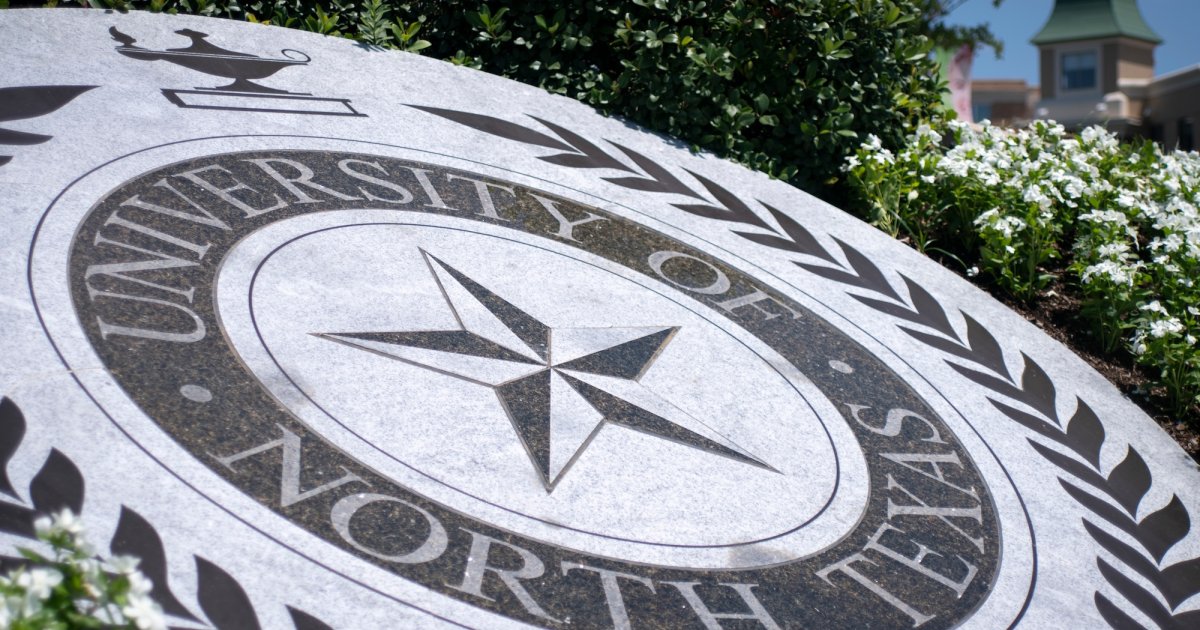
DENTON, Texas, Aug. 28, 2025 — The University of North Texas system confirmed that it has lifted its “pause” on drag performances across its campuses, in response to a demand letter from civil liberties organizations informing the school that it was violating its students’ First Amendment rights.
On March 28, UNT System Chancellor Michael Williams issued a system-wide directive announcing an immediate “pause” on drag performances on campus. Williams’ directive came days after a similar drag ban from the Texas A&M University System was blocked by a federal judge following a lawsuit from the Foundation for Individual Rights and Expression.
On Aug. 14, FIRE and the American Civil Liberties Union (ACLU) of Texas sent a letter informing Williams that his “pause” violated the Constitution for the same reasons.
“UNT cannot justify banning an entire class of protected expression from campus performance venues on the basis that such expression might cause offense,” the letter read. “In the same way that some people may not appreciate UNT allowing students, staff, or visitors to engage in prayer on campus or wear t-shirts supporting rival universities, the fear that such speech may be ‘offensive’ to some is not a constitutionally permissible reason to ban it.”
Yesterday, the UNT Office of General Counsel responded to the FIRE/ACLU-TX letter and announced that in light of a recent decision from the U.S. Court of Appeals for the Fifth Circuit blocking yet another drag ban in Texas — this time at West Texas A&M University — “the UNT System’s temporary pause on drag performances has ended.”
“If campus officials can silence expression simply because some find it ‘offensive,’ no one’s speech will be safe,” said FIRE Strategic Campaigns Counsel Amanda Nordstrom “Today it’s drag shows, but tomorrow it could be political rallies, art exhibits, or even bake sales. From West Texas to North Texas and any direction you look, the message is clear: drag is protected expression, and the show must go on.”
“UNT repealed its drag ban following public backlash and legal pressure,” said ACLU of Texas Attorney Chloe Kempf. “As we and the courts have repeatedly made clear, banning drag is plainly unconstitutional. Drag is a cherished source of joy and liberation for the LGBTQIA+ community — and this reversal ensures students can once again freely express and celebrate their identities on campus.”
The Foundation for Individual Rights and Expression (FIRE) is a nonpartisan, nonprofit organization dedicated to defending and sustaining the individual rights of all Americans to free speech and free thought—the most essential qualities of liberty. FIRE recognizes that colleges and universities play a vital role in preserving free thought within a free society. To this end, we place a special emphasis on defending the individual rights of students and faculty members on our nation’s campuses, including freedom of speech, freedom of association, due process, legal equality, religious liberty, and sanctity of conscience.
CONTACT:
Alex Griswold, Communications Campaign Manager, FIRE: 215-717-3473; [email protected]
Dinah Megibow-Taylor is a rising second-year at the University of Chicago while Eli Kronenberg is a rising junior at Northwestern University. Both are former FIRE summer interns.
How sure are you of your own consciousness? Of the accuracy of your memory? Of the solar system’s shape?
However well you think you know these things, there’s a chance you could be wrong, and learning to keep this in mind is crucial to maintaining a culture of civil discourse and free speech. How, you ask?
This year, the FIRE summer interns took a poll, rating our certainty of God’s existence on a scale of 0 to 100%, and found that our responses averaged out to 49%.
Early in our 10-week program, we had heard countless stories of previous intern classes embroiling themselves in heated political debates in the Tinker Room at the office of FIRE in Philadelphia, broadcasting their disagreements to the rest of the office. Yet from the get-go, our cohort took on a less confrontational dynamic, exemplified by one Friday when we decided to explore our religious beliefs.
As each intern expressed a level of certainty in the existence of God, something interesting happened: our conversation turned into an exercise of epistemic humility. The next Monday, one intern said she wanted to change her answer — from 100% certainty to 99%. This was a crucial reminder that even our most cherished beliefs should remain open to debate, for that simple 1% shift opened the door to a rich, good-faith ideological exchange. And it reminded us that even for basic factual matters, such as the earth being round or that one plus one makes two, there can be a dangerous element of outsourcing one’s knowledge to second-hand sources and centuries-old conclusions.
After all, no less than the math gods Alfred North Whitehead and Bertrand Russell once tried to prove that one plus one makes two — and the result, their magnum opus Principia Mathematica, ended up being 379 pages long. The point is, even seemingly self-evident truths can be painfully difficult to actually prove, and many if not most of the things we assume to be true have never gone through such a rigorous process. As Russell once put it, “In all affairs, it’s a healthy thing now and then to hang a question mark on the things you have long taken for granted.”
Similarly, in Plato’s Apology, Socrates famously declares himself wiser than a certain unnamed statesman because unlike the statesman, Socrates knew better than to be too sure of things. And, in J.S. Mill’s On Liberty, we find the line, “The beliefs which we have most warrant for, have no safeguard to rest on, but a standing invitation to the whole world to prove them unfounded.”
That’s how safeguarding a touch of uncertainty, even when it comes to your most tightly held beliefs, can help promote a culture of free speech. Because people only become censorial when they are sure of themselves. But if you keep open the possibility that you might be wrong, and that the other person might be right, you are more likely to want to hear what they have to say.
In his book Kindly Inquisitors, journalist Jonathan Rauch reminds us that nobody has perfect access to the truth. He refers to the refusal to seriously consider that you are wrong as intellectual fundamentalism. To avoid this trap, we look to FIRE President and CEO Greg Lukianoff’s summation of Mill’s argument for free speech. Mill says there are only three possibilities for any given belief, each of which lends itself to open and vigorous debate: you are totally right, you are totally wrong, you are partially right.
If you are not entirely correct, it benefits you to hear from others who may have the puzzle pieces you are missing, and if you are entirely correct, hearing from critics may sharpen your argument and help you better spread the truth.
Consider the case of Megan Phelps-Roper, who was raised in the Westboro Baptist Church, the granddaughter of the group’s founder. From the age of 5, Phelps-Roper held up crude signs declaring gay people worthy of death at the church’s notorious pickets, including at military funerals.
“I believed what I was taught with all my heart,” Phelps-Roper said in a 2017 TED talk, “and I pursued Westboro’s agenda with a special sort of zeal.”
Yet, over time, she began to interact with ideological opponents on the internet, and slowly came to question the church’s doctrine. She is now an outspoken critic, and speaks movingly about the importance of civil discourse and holding empathy for even those whose views we consider extreme. Her uplifting story demonstrates that it’s possible to be completely certain in one’s worldview, and then to have those beliefs flipped on their heads.
Ask yourself, the last time you realized you were wrong about something, did you feel that you were wrong beforehand? Probably not, or you wouldn’t have held that belief. Yet you felt sure, all the same. What this teaches us is that our feeling of certainty is an unreliable counselor at best.
One of our first tasks as interns was to familiarize ourselves with Judge Learned Hand’s “The Spirit of Liberty” speech. “The spirit of liberty is the spirit which is not too sure that it is right,” he professed. To be free is to be humble, to recognize our limitations, and to ceaselessly interrogate ourselves and each other.
This audio is auto-generated. Please let us know if you have feedback.
Dive Brief:
The Trump administration on Thursday proposed capping the length of time international students can stay in the U.S. at four years,regardless of the length of their studies, per a plan published in the Federal Register.
International student visas, known as F visas, typically allows them to stay in the U.S. for as long as it takes to finish their programs. Bachelor’s and master’s degrees are typically designed to be completed in four years or less, but many Ph.D. programs tend to run longer.
The new rule would also affect J visas, which cover certain international students, as well as short-term college instructors and researchers.If finalized, holders of both types of visas would need to apply for extensions and undergo “regular assessments” by the U.S. Department of Homeland Security to stay in the country after four years.
Dive Insight:
Restricting the flow of noncitizens into the U.S. — international students included — is not a new focus for the Trump administration.During the last year of President Donald Trump’s first term, the agencies proposed the same cap on F and J visas. The Biden administration withdrew the proposal the following year.
DHS and U.S. Immigration and Customs Enforcement argued Thursday that neither program gives federal authorities enough oversight over how long visa holders remain in the country.
In the proposed rule, the agencies alleged that the lack of a fixed end date for F and J visas incentivizes fraud, and DHS said it has identified“many examples of students and exchange visitors staying for decades.” As of April, over 2,100 international students who first entered the country between 2000 and 2010 still hold an active F visa, DHS said.
That’s a tiny share of the total number of international students the U.S. hosts. In 2023 alone, more than 1.6 million people entered the U.S. through F visas, according to DHS data. Over 500,000 people entered via J visas that year.
A DHS spokesperson on Wednesday accused international students of “posing safety risks”and “disadvantaging U.S. citizens” — and accused past administrations of allowing them to stay in the country “virtually indefinitely.”
“This new proposed rule would end that abuse once and for all by limiting the amount of time certain visa holders are allowed to remain in the U.S., easing the burden on the federal government to properly oversee foreign students and their history,” the spokesperson said in a statement.
The proposal would also prohibit graduate students on F-1 visas from transferring to other institutions or “changing educational objectives,” along with adding similar restrictions for first-year students.
Student advocates quickly panned the Trump administration’s plan, saying it would increase bureaucratic backlogs, deter international students from attending U.S. colleges and harm the country’s advancement.
Fanta Aw, CEO and executive director of NAFSA: Association of International Educators, said Wednesday that the change would also give federal agencies oversight over decisions that “have long been the domain of academia.”
“This proposal will only increase the degree of government oversight without any evidence that the changes would solve any of the real problems that exist in our outdated immigration system,” Aw said in a statement.
Aw also decried the proposal as a poorly considered draft that represents a “dangerous overreach by government into academia.”
“These changes will only serve to force aspiring students and scholars into a sea of administrative delays at best, and at worst, into unlawful presence status — leaving them vulnerable to punitive actions through no fault of their own,” she said.
Miriam Feldblum, president and CEO of the Presidents’ Alliance on Higher Education and Immigration, called the proposed rule an “unnecessary and counterproductive action.”
She emphasized the increased paperwork and bureaucratic hurdles it would require of international students.
“The rule would force them to regularly and unnecessarily submit additional applications to be able to stay in the country and fulfill requirements of their academic programs, imposing significant burdens on students, colleges and universities, and federal agencies alike,” Feldblum said in a Wednesday statement.
Both Feldblum and Aw noted that international students are already one of the most closely monitored groups in the U.S.
The DHS spokesperson on Wednesday also alleged that international students cost an “untold amount of taxpayer money.”
Yet foreign students are often a financial boon for colleges — especially tuition-dependent ones — as they are more likely than U.S. residents to pay an institution’s full sticker price.
In 2023, international college students contributed more than $50 billion to the U.S. economy, according to the U.S. Department of Commerce.
The proposed rule, announced by the Department of Homeland Security (DHS) on August 27, would upend the longstanding “duration of status” policy and enforce additional restrictions on students changing programs and institutions.
If finalised, the new rule would limit the length of time international students, professors and other visa holders can stay in the US, which DHS claims would curb “visa abuse” and increase the department’s “ability to vet and oversee these individuals”.
Trump initially put forward the proposal during his first administration, only for it to be withdrawn under Biden. In recent weeks, a rehashed version of the plans has been moving closer towards final approval.
Yesterday’s publication of the finalised proposal in the Federal Register was met with immediate denunciation by stakeholders who say it would place an undue administrative burden on students as well as representing a “dangerous government overreach”. Now the proposal is under a 30-day public comment period.
“These changes will only serve to force aspiring students and scholars into a sea of administrative delays at best, and at worst, into unlawful presence status – leaving them vulnerable to punitive actions through no fault of their own,” said NAFSA CEO Fanta Aw.
Under the rule, students could only remain in the US on a student visa for a maximum of four years and would have to apply for a DHS extension to stay longer.
The policy document reasons that 79% of students in the US are studying undergraduate or master’s degrees which are generally two or four-year programs, thus: “a four-year period of admission would not pose an undue burden to most nonimmigrant students”.
And yet, stakeholders have previously pointed out that the average time taken to complete an undergraduate degree – for both domestic and international students – exceeds four years, meaning that the majority of students would have to file for an extension to complete their studies.
Meanwhile, this reasoning does not consider postgraduate students on longer programs or the many students that go onto Optional Practical Training (OPT), who would have to apply for a visa extension as well as the work permit itself.
If finalised, master’s students would no longer be able to change their program of study, and first year students would be unable to transfer from the institution that issued their visa documents.
Alarmingly, the rule would hand power to the government to determine academic progress, with “a student’s repeated inability or unwillingness” to complete their degree, deemed an “unacceptable” reason for program extensions.
It would also limit English-language students to a visa period of less than 24 months, and the grace period for F-1 students, post-completion, would be reduced from 60 to 30 days.
Such far reaching provisions amount to “a dangerous overreach by government into academia,” said Aw, pointing out that international students and exchange visitors are already “the most closely monitored non-immigrants in the country.”
Government interference into the academic realm in this way introduces a wholly unnecessary and new level of uncertainty to international student experience
Fanta Aw, NAFSA
“For too long, past administrations have allowed foreign students and other visa holders to remain in the US virtually indefinitely, posing safety risks, costing untold amount of taxpayer dollars, and disadvantaging US citizens,” DHS said in a statement.
Framing the issue as one of national security, the department said it had identified 2,100 F-1 visa holders who arrived between 2000 and 2010 and have remained in status, becoming what DHS called “forever” students “taking advantage of US generosity”.
Putting this in perspective, commentators have highlighted that in 2023 alone there were 1.6 million F-1 visa holders in the US.
As well as imposing significant burdens on students and intruding on academic decision-making, the proposal would also place strain on federal agencies and increase the existing immigration backlog, warned Miriam Feldblum, CEO of the Presidents’ Alliance on Higher Education and Immigration.
“International students deserve assurance that their admission period to the US will conform to the requirements of their academic programs,” said Feldblum, issuing a grave warning that the rule would further deter international students and “diminish” US competitiveness.
“At a time when the US is already facing declines in international student enrolment, we must do everything we can to keep the door open to these individuals, who are essential to our future prosperity,” she continued, alluding to recent falls in US visa issuance.
Since coming to office, a barrage of hostile policies from the Trump administration have erected unprecedented barriers for students hoping to study in the US, with a near-month long visa interview suspension earlier this summer still wreaking havoc on visa appointment availability around the world.
The latest government data revealed a 30% drop in student arrivals this July, with colleges bracing for a drastic drop in international student numbers for the upcoming year. If the decline continues, experts have warned of USD $7bn in damages to the US economy.
According to Aw, the proposed rule would “certainly” deter international students further, “without any evidence that the changes would solve any of the real problems that exist in our outdated immigration system”.
Appealing to Trump’s recent remarks pushing for a more-than doubling of the Chinese student population in the US, Aw urged the government to engage with the sector to ensure the US remained the “premier destination” for global talent while keeping the country “safe and prosperous”.
We know the First Amendment protects hate speech. But has it always done so? And how have civil rights groups responded when their members are the target of hate speech?
Enjoy listening to the podcast? Donate to FIRE today and get exclusive content like member webinars, special episodes, and more. If you became a FIRE Member through a donation to FIRE at thefire.org and would like access to Substack’s paid subscriber podcast feed, please email [email protected].
A recent Lumina–Gallup poll offers a rare piece of good news: public confidence in higher education has ticked up from a recent low of 36% to 43%. While the rebound is modest, it breaks a years-long narrative of decline, and it’s worth asking: What is driving renewed trust?
Drs. Julie Posselt and Adrianna Kezar Respondents pointed to three factors: quality of education, opportunities for graduates, and innovation. In other words, the public is telling us that when we deliver tangible value—educational excellence, new opportunities, and forward-looking ideas—trust grows.
The teams in our centers work with community colleges, school districts, nonprofits, businesses, government agencies, state higher education systems, and national associations. Though we love theory work as much as the next professors, we know theory’s greatest power is realized when tested and applied in the real world, in partnership with the communities we serve.
Take the USC College Advising Corps. Through partnerships with public high schools across Los Angeles County, we place nearly 40 trained college advisers per year, most of them recent college graduates from across Southern California, into underresourced high schools. The result has been to support 10,000 high school seniors annually, with more than 88,000 first-generation, low-income, and underrepresented students helped since the program began more than a decade ago. This is the kind of scale, innovation, and equity-driven practice that the public recognizes and values.
Our work to date and going forward will be defined as much by our approach. We partner with communities, connecting research directly to policy and practice to innovate on the systems that shape student access and success, from high school through graduate education and into the workforce. This work often means capacity building, institutional improvement, and student-centered design—not in theory alone, but in practice, in partnership, and at scale.
Look around and you’ll find many more examples of people and organizations who inspire not just through individual excellence but also by deepening wells of mutual support and mutual investment. There are longstanding national examples such as Campus Compact, which brought together college presidents across the country to sign a declaration and create an organization focused on civic engagement; they have sponsored collaborative responses to crises and offer faculty development. That kind of solidarity is not typical, but to our minds it is increasingly valuable.
Benjamin Franklin warned at the signing of the Declaration of Independence, “We must all hang together, or most assuredly we shall all hang separately.”His words are as relevant to higher education today as it was to the Continental Congress. Our sector’s future depends on resisting the pull toward isolation and polarization, and instead modeling connection, mutual support, and shared purpose.
In a year certain to bring challenges, higher education must lead not from the top of the ivory tower, but from within networks of trust we build with the communities around us—of professionals and publics. For us, merging our centers is just one example of the belief that we are stronger together—intellectually, financially, and in service of the public good. We welcome connecting with you through your stories and examples of the same.
____________
Drs. Julie Posselt and Adrianna Kezar are Co-Directors of the Pullias Center for Higher Education at University of Southern California.
At ISTE this summer, I lost count of how many times I heard “AI” as the answer to every educational challenge imaginable. Student engagement? AI-powered personalization! Teacher burnout? AI lesson planning! Parent communication? AI-generated newsletters! Chronic absenteeism? AI predictive models! But after moderating a panel on improving the high school experience, which focused squarely on human-centered approaches, one district administrator approached us with gratitude: “Thank you for NOT saying AI is the solution.”
That moment crystallized something important that’s getting lost in our rush toward technological fixes: While we’re automating attendance tracking and building predictive models, we’re missing the fundamental truth that showing up to school is a human decision driven by authentic relationships.
The real problem: Students going through the motions
The scope of student disengagement is staggering. Challenge Success, affiliated with Stanford’s Graduate School of Education, analyzed data from over 270,000 high school students across 13 years and found that only 13 percent are fully engaged in their learning. Meanwhile, 45 percent are what researchers call “doing school,” going through the motions behaviorally but finding little joy or meaning in their education.
This isn’t a post-pandemic problem–it’s been consistent for over a decade. And it directly connects to attendance issues. The California Safe and Supportive Schools initiative has identified school connectedness as fundamental to attendance. When high schoolers have even one strong connection with a teacher or staff member who understands their life beyond academics, attendance improves dramatically.
The districts that are addressing this are using data to enable more meaningful adult connections, not just adding more tech. One California district saw 32 percent of at-risk students improve attendance after implementing targeted, relationship-based outreach. The key isn’t automated messages, but using data to help educators identify disengaged students early and reach out with genuine support.
This isn’t to discount the impact of technology. AI tools can make project-based learning incredibly meaningful and exciting, exactly the kind of authentic engagement that might tempt chronically absent high schoolers to return. But AI works best when it amplifies personal bonds, not seeks to replace them.
Mapping student connections
Instead of starting with AI, start with relationship mapping. Harvard’s Making Caring Common project emphasizes that “there may be nothing more important in a child’s life than a positive and trusting relationship with a caring adult.” Rather than leave these connections to chance, relationship mapping helps districts systematically identify which students lack that crucial adult bond at school.
The process is straightforward: Staff identify students who don’t have positive relationships with any school adults, then volunteers commit to building stronger connections with those students throughout the year. This combines the best of both worlds: Technology provides the insights about who needs support, and authentic relationships provide the motivation to show up.
True school-family partnerships to combat chronic absenteeism need structures that prioritize student consent and agency, provide scaffolding for underrepresented students, and feature a wide range of experiences. It requires seeing students as whole people with complex lives, not just data points in an attendance algorithm.
The choice ahead
As we head into another school year, we face a choice. We can continue chasing the shiny startups, building ever more sophisticated systems to track and predict student disengagement. Or we can remember that attendance is ultimately about whether a young person feels connected to something meaningful at school.
The most effective districts aren’t choosing between high-tech and high-touch–they’re using technology to enable more meaningful personal connections. They’re using AI to identify students who need support, then deploying caring adults to provide it. They’re automating the logistics so teachers can focus on relationships.
That ISTE administrator was right to be grateful for a non-AI solution. Because while artificial intelligence can optimize many things, it can’t replace the fundamental human need to belong, to feel seen, and to believe that showing up matters.
The solution to chronic absenteeism is in our relationships, not our servers. It’s time we started measuring and investing in both.
Dr. Kara Stern, SchoolStatus
Dr. Kara Stern is Director of Education for SchoolStatus, a portfolio of data-driven solutions that help K-12 districts improve attendance, strengthen family communication, support teacher growth, and simplify daily operations. A former teacher, principal, and head of school, she holds a Ph.D. in Teaching & Learning from NYU.
Latest posts by eSchool Media Contributors (see all)
This audio is auto-generated. Please let us know if you have feedback.
A new school year is upon us — and as with any year, the return to the classroom brings with it an array of challenges both novel and familiar.
Shifting enrollments alone present existential challenges for many school systems as declining birth rates result in lower student populations, which public schools are now in greater competition to attract and retain. Compounding those challenges are newer hurdles like artificial intelligence and a changing federal policy landscape that are impacting approaches to teaching and learning.
To help you unpack the obstacles and opportunities on the table this fall, here are four trends to watch in the 2025-26 school year.
Enrollment crucial as budgets tighten
As the new school year begins, fall enrollment numbers will be crucial for district budgets, said Marguerite Roza, a research professor and director of Georgetown University’s Edunomics Lab.
Due to federal COVID-19 emergency relief funds, many districts appeared to ignore the realities of their declining enrollment, she said. However, when relief funding dissipates and budgets tighten, districts need to keep a very close eye on their fall enrollment: Even if it’s just 1% lower or higher than forecasted, that will be “super important” for schools’ bottom lines, Roza said.
For some districts, an influx of migrant students has offset declines in non-migrant student populations, Roza said. But that kind of enrollment growth is worth keeping an eye on, she said — especially amid the Trump administration’s heightened immigration enforcement policies. Though schools cannot record a student’s immigration status, a drop in English learners could be a signal of that change, she said.
Additionally, districts should look for declines in kindergarten or at secondary grade levels, Roza said. If a district has fewer kindergarteners but strong high school enrollment, for instance, then it has a birthrate problem, she said. But if it’s a more widespread issue, it may be that people are moving out of the area.
Growing school choice policies may also have an impact on enrollment down the line, Roza said.
Some districts with significant and ongoing enrollment drops will also have to make tough decisions this school year about the future of their schools. For instance, district leaders in Atlanta, Austin and St. Louis public schools are all currently considering whether they should close or consolidate school buildings due to budget challenges and enrollment declines.
Federal policy whiplash persists
Schools continue to face the whiplash of the Trump administration’s drastic shift in and rapid enforcement of federal policies, which have included the withholding of federal funding in some cases. That’s especially true for districts’ policies related to LGBTQ+ issues as well as diversity, equity and inclusion.
Whereas the Biden administration encouraged the inclusion and protection of transgender students, for instance, the Trump administration quickly and forcefully reversed course. Federal officials have so far made an example out of multiple education agencies — including in Maine, California, Minnesota and major districts in Northern Virginia — for what it says are violations of Title IX. Those violations have included allowing transgender students to play on women’s and girls’ sports teams.
Schools have also been under the microscope for practices meant to level the playing field for Black and brown students, which the administration says are discriminatory against White and Asian students in some cases. In April, for example, the department launched an investigation into Chicago Public Schools for its “Black Students Success Plan.”
Many civil rights organizations, teacher organizations and sometimes even school districts, however, have challenged the Trump administration’s policies, which they say have been made in some cases without going through the proper legal channels and violate students’ rights. As those cases work their way through the courts, policies continue to shift. In one case, key efforts by the administration to roll back DEI measures — including a requirement from the administration that asked districts to certify they are not incorporating DEI in their schools — were blocked by a judge in August, at the launch of the 2025-26 school year.
Technology, relationships drive special ed improvements
Despite persistent special educator shortages, funding gaps and uncertainty about federal-level support to states and districts, the special education field is optimistic about the progress students with disabilities will make this school year as more attention is focused on boosting family engagement and expanding the use of technology to support students with disabilities, according to experts in the field.
Advances in technology, including artificial intelligence tools, are easing paperwork burdens for special educators. Improvements in augmentative and alternative communication and other technology are strengthening personalized learning for students with disabilities. Additionally, evidence-based practices, such as universal design for learning and positive behavioral interventions and supports, are helping schools meet individual student needs.
Relevant professional development on tech tools, however, is only one part of helping a student succeed, said Kelly Rudyk, director of pupil personnel services for New York’s North Salem Central School District, in a recent post on AASA, The School Superintendents Association’s website. Relationships between administrators and special educators, and between schools and families, are also essential, Rudyk said.
“To truly move the work forward, we need to set clear district goals in partnership with special education leaders,” Rudyk said. “These goals should: reflect instructional priorities, support the meaningful use of technology and improve outcomes for students with disabilities.”
AI spreads its footprint in schools
School leaders will enter the 2025-26 school year with encouragement from the U.S. Department of Education to use existing federal grants to integrate artificial intelligence in classrooms. Over the summer, U.S. Education Secretary Linda McMahon sent a “Dear Colleague” letter to state and district leaders informing them that they can use federal funds to bolster AI’s use in improving high-quality curriculum tools, high-impact tutoring, and college and career pathway advising.
Still, there’s little research available on the impacts AI technology has on student outcomes, particularly with increasingly popular AI tutoring tools.
AASA also expressed some concerns over the Education Department’s latest full-speed push for AI tools in schools.
In response to a proposed rule on priorities for using discretionary grant programs to support AI use in schools, which was published in the Federal Register in July, AASA submitted a comment on Aug. 20 asking for a greater focus on the educator workforce within AI initiatives. AI cannot be a “substitute,” the association said, for “the human relationships and professional expertise at the heart of student learning.”
On top of that, AASA warned against “framing AI as a silver bullet,” and that any “thoughtful national strategy must include clear guardrails, sustainable funding that does not come at the expense of other high-priority federal programs, and ongoing evaluation of what works in practice.” As school leaders approach the fourth academic year since ChatGPT launched, researchers also recommend that districts develop their own acceptable AI use policies if they haven’t already.
Meanwhile, 30 states have issued their own AI guidance for schools as of June, according to TeachAI, a national coalition focused on AI in education.
This audio is auto-generated. Please let us know if you have feedback.
This year has already brought big challenges to the higher education sector, from major shifts in federal policy to massive cuts in government research funding.
As college leaders gear up for the 2025-26 academic year, they’re staring down even more change ahead.
The U.S. Department of Education is undertaking massive regulatory changes, the Trump administration is ramping up investigations into colleges, and Republican lawmakers are continuing their crackdown on diversity, equity and inclusion.
Below, we’re rounding up six trends we’re keeping tabs on.
Trump and Republicans usher in a new era of financial retrenchment
Last year, colleges slashed spending on staff, faculty, programs and more in response to difficult enrollment realities and rising costs. The budget pressures have only intensified for many in the higher education world since President Donald Trump took office in January.
The Trump administration has targeted about $3.3 billion in grant funding for termination at public and private universities nationwide — about $206 per student — according to an analysis by the Center for American Progress.
In addition to contractions in research spending, institutions are juggling myriad changes to federal policy by Trump and congressional Republicans that could have significant effects on institutional budget planning. This includes a more fraught environment for international students, cuts to federal student lending and a higher endowment tax, to name just a few.
The Trump administration’s legal and financial warfare against Harvard University has grabbed an outsized share of headlines, and arguably for good reason. Harvard is the richest and oldest college in the U.S. If the administration succeeds in a multi-agency, omnidirectional attack on the institution, where does that leave the rest of the nation’s colleges?
Facing this question, some institutions have already made deals with the Trump administration as they attempt to maintain their federal funding and stay out of legal battles. Others are reported or confirmed to be in negotiations with the federal government. And many colleges are facing a difficult balancing act between mission and compliance.
In its attacks on colleges, the Trump administration has introduced novel and aggressive readings of civil rights laws and U.S. Supreme Court cases, as well as threatened vast sums of funding for colleges it considers out of compliance with federal statute.
For instance, the Education Department deemed the University of Pennsylvania in violation of civil rights law for prior policies allowing transgender women to play on sports teams aligning with their gender identity. Penn became one of the first colleges to strike a deal with the administration rather than risk the sort of multi-agency attack — complete with prolonged litigation — being deployed against Harvard.
Meanwhile, federal agencies suspended nearly $600 million in funding from the University of California, Los Angeles over allegations that it violated civil rights law because it didn’t do enough to respond to a pro-Palestinian protest encampment on its campus in spring 2024. Police cleared the encampment at the university’s request after less than a week.
Among other legal risks under Trump, policies meant to support transgender students or diversity programs can now potentially prompt prosecution of a college under the False Claims Act, a federal law dealing with fraud in government contracting. That’s according to a May message from Deputy Attorney General Todd Blanche introducing the Civil Rights Fraud Initiative that specifically listed colleges as potential False Claims Act targets.
New regulations coming down the pike
The Education Department has its work cut out for it over the next year. That’s because the agency must craft regulations to carry out the higher education-related provisions of the sweeping domestic policy bill passed by Republican lawmakers this summer.
They include phasing out Grad PLUS loans, which allow graduate and professional students to borrow up to the cost of their college attendance. The legislation also caps lifetime borrowing limits at $100,000 for most graduate students and $200,000 for those pursuing professional degrees, and it will consolidate a handful of repayment plans into just two options. And it opens up Pell Grants to programs as short as eight weeks.
Colleges will also face new regulations.
Under the legislation, their programs will lose federal student loan eligibility if they can’t prove their students get an earnings boost. For undergraduate programs, that means showing that at least half their graduates earn more than workers with only a high school diploma in their state.
The Education Department is devising the new regulations through a process called negotiated rulemaking. Under this process, the agency convenes representatives who will be impacted by the regulations — such as colleges, student loan borrowers and state officials — to hash out policy details.
If they agree on language, the Education Department is largely bound to adopt their rules as written for its regulatory proposal. If they don’t, however, the agency is free to come up with its own regulations.
The Education Department kicked off the process earlier this month and will hold meetings with negotiated rulemaking committees through January.
A shifting landscape for federal research funding
Legal battles over threatened federal research funding are likely to heat up in the months ahead.
Under the Trump administration, at least four major federal agencies have announced plans to cap reimbursement for indirect research costs — which support expenses like laboratory and facilities maintenance — at 15% for colleges. Many major research universities have negotiated rates hovering around 50% to 60%, meaning these policies threaten vast sums of their federal research funding.
So far, courts have blocked or paused each of the caps. The Trump administration has appealed three of the rulings, and one case is still playing out in federal district court.
Meanwhile, the Supreme Court recently dealt a major blow to research universities by pausing a lower court order that would have restored $783 million in cut funding from the National Institutes of Health under the agency’s anti-DEI policy. While the high court preserved the ruling against the anti-DEI directives, it said the plaintiffs would have to pursue their claims to restore the cut grant funding in the U.S. Court of Federal Claims, which hears monetary claims against the federal government.
Massachusetts Attorney General Andrea Campbell, who has led a coalition of states suing over the NIH cuts, indicated in a statement that the fight was not over.
“Even if accountability is delayed, we won’t stop fighting to protect this funding, our residents, and our rule of law,” Campbell said.
The battle over in-state tuition for undocumented students
At least 25 states and Washington, D.C., started the year with policies allowing eligible undocumented students to pay in-state rates at some or all of their public colleges. But since Trump began his second term, Republicans and his administration have prioritized reducing undocumented students’ access to higher education.
Florida first spurred the shift during a January special legislative session, repealing a law that made certain undocumented students eligible for in-state tuition rates at its public colleges.
Then, following an executive order from Trump, the U.S. Department of Justice sued Texas in June over its decades-old law — the first of its kind in the country — making undocumented students eligible for in-state tuition if they meet certain residency criteria and other requirements.
Despite the attack on the state statute, officials within Texas’ attorney general’s office quickly sided with the DOJ and filed a joint motion with the Trump administration to end the policy. A federal judge overseeing the case struck down the law only hours after the DOJ first filed its lawsuit.
Texas’ cooperation gave the Trump administration an early win and an example to cite as precedent as it moved on to target less amenable states.
U.S. Attorney General Pam Bondi has since filed lawsuits in rapid succession against Minnesota, Oklahoma and Kentucky over their in-state tuition policies for undocumented students. Like Texas, Oklahoma leaders partnered with the DOJ and filed a joint motion to end its policy. The request has not yet been approved by a federal judge.
Bondi argued in multiple, nearly identical statements that in-state tuition rates for undocumented students illegally provide benefits not offered to all U.S. citizens. One higher education attorney has argued that the Texas policy has the same requirements for participation for U.S. citizens and undocumented residents.
The American Civil Liberties Union of Texas and other groups have sought to intervene in the state’s case and asked a federal court to set aside the order declaring Texas’ in-state tuition policy unconstitutional. The same federal judge that struck down the law ruled against them earlier this month, though the groups have already appealed.
Enforcement of new DEI restrictions
For years, conservatives have led coordinated efforts to eliminate diversity, equity and inclusion efforts in higher education. The campaign only grew following Trump’s return to office and his administration’s push to crack down on diversity initiatives.
To comply with new federal directives and state laws, colleges have sprinted to cut programs, cancel events, restructure student services and reassign or lay off DEI-focused employees. In Ohio and Kentucky — two of the most recent states to enact DEI bans at public colleges — some higher education leaders read the writing on the wall and began cutting DEI work prior to the new laws’ passage.
Colleges are now being increasingly singled out for alleged violations of DEI bans. One method is through secretly recorded and heavily edited videos of employees. The videos, shared online and via conservative media outlets, appear to depict college officials talking about how to avoid DEI restrictions.
The dean of students at the University of North Carolina Asheville is “no longer employed” there after one such recording went viral, according to a university official. And in the same state, Western Carolina University announced it would close its Office of Intercultural Affairs, following a widely-shared video of a former employee who suggested DEI work be embedded across campus.
Two of Iowa’s three public universities — the University of Iowa and Iowa State University — are under state scrutiny after similar videos surfaced of their staff. The state attorney general is investigating the incidents at the University of Iowa at the behest of Iowa’s governor.
Two University of Iowa employees have been put on leave, with the Republican chair of the Legislature’s House higher education committee calling for them to be fired. Iowa State University told local media outlets that a video showing one of its administrators discussing DEI work appeared to be filmed a year prior to its release and featured a former employee who had not worked there since 2024.
GOP lawmakers from conservative-led states have also been calling on the Trump administration to investigate colleges over their DEI efforts.
In Texas, a Republican state representative requested the Trump administration to investigate Texas A&M University over allegations the institution “engaged in DEI courses and discriminatory ‘targeted recruiting’ practices.”
Two states over, a congressional representative from Tennessee similarly called for a federal investigation into Belmont University, alleging the private Christian college’s restructuring of its DEI office was “an intentional effort to deceive federal authorities and continue promoting discriminatory programming under a new name.”
Some colleges — particularly public ones in conservative states — are cracking down on behavior that could draw lawmaker attention.
Tarrant County College, in Texas, fired two administrators over the inclusion of DEI content in a mandatory training video, according to The Collegian, the institution’s student newspaper.
The community college also disciplined two employees over DEI-related offensives — one for conducting a workshop on “Microaggressions & Mental Health” and the other for gifting women co-workers a bouquet of flowers with a “Happy International Women’s Day” card.
This audio is auto-generated. Please let us know if you have feedback.
Dive Brief:
While nearly every state has some form of college and career readiness criteria for high school students, there are still areas for growth in how data on students’ postsecondary readiness is collected, according to a July report from All4Ed and the Urban Institute.
Though criteria vary depending on each state’s priorities and goals, 42 states currently use at least one college and career readiness indicator in their school accountability systems.
Accountability systems include both indicators and measures. The report defines indicators as offering information on a critical aspect of school performance, while measures are the data points used within an indicator to determine whether particular student inputs or outcomes were achieved.
Dive Insight:
“Forty-two states are using a college and career readiness indicator, that’s great progress,” said Anne Hyslop, All4Ed’s director of policy development and the report’s author. “All of these measures have been developed in the last decade or so.”
The report found that 39 of the 42 states with indicators include both college and career readiness measures, and 20 of these states also measure military or civic readiness.
Advanced Placement or International Baccalaureate courses and exams are the most common measures of college readiness, used by 35 states. They are followed by dual or concurrent enrollment coursework (34 states) and college admission test scores, such as the SAT and ACT (26 states).
For career readiness assessment, earning industry-recognized credentials or completing a career and technical education pathway are the most common measures. Some states also use work-based learning or internships.
Hyslop noted that not all states have a clear distinction between indicators for college, career and military readiness. Some states combine several measures into a single indicator, while others group different sets of measures into multiple indicators.
“This is where getting better transparency and data would be really helpful,” Hyslop said. “A lot of states may report readiness across all of the measures, but they don’t report how many students are ready for college, how many are ready for career, etc. They don’t report it separately.”
The report highlighted North Dakota as a good example of this distinction. The state’s indicator, Choice Ready, has a list of essential skills required of all students that align with the state’s graduation requirements. Once students have demonstrated these essential skills, they need to show readiness in two of three areas: postsecondary ready, workforce ready or military ready.
For Hyslop, improving data collection is the “lowest-hanging fruit.”
“There is so much data that is being collected on student readiness, but the way that it is reported is not necessarily leading to the maximum value from that data, because it’s not always fully disaggregated by student subgroups,” said Hyslop. “It’s just a matter of packaging it in more useful formats.”
The outlier states that do not currently have a college and career readiness indicator are Alaska, Kansas, Maine, Minnesota, Nebraska, New Jersey, Oregon and Wisconsin, according to the report. Illinois is currently in the final stages of developing its indicator.