After 7 years of service with a great team, I’ve been laid off from Duke, like many of my colleagues.
I’m taking some time to consider what I want to do next. This includes any of my areas of expertise, from learning design and libraries to visual art and journalism. I’m also keeping my eye out for roles that combine my experience in new ways.
If you have 5 minutes, could you please share this post, connect me with someone you think I should talk to, or share any relevant job openings?
I’m looking for hybrid roles in the Triad and Triangle of NC and remote roles anywhere (willing to travel some, too).
I saw Heather’s post, read all the supportive comments the post generated and had two questions: 1) Which university or organization will be smart and lucky enough to recruit Heather? 2) Would Heather be willing to share her story in this space for this community?
On my second question, Heather graciously agreed to participate in this Q&A.
Q: Tell us about your professional and educational background. What are the projects, initiatives and services that you have contributed to and led? What are your superpowers that potential employers should know about?
A: I’m an art major who worked in journalism for five years after college, doing writing and editing. Then I pursued my master’s in library and information studies and worked for several years as an academic librarian focused on teaching and learning. I moved into instructional design for online learning at UNC Chapel Hill and then worked at Duke University for seven years, most recently as a senior learning experience designer.
My recent accomplishments include:
Establishing digital education strategies with five professional schools and developing certificate programs in UAS (Drones) Applications and Operations in Environmental Science, Church Administration and Human Resources, and Healthcare Leadership for Climate Science.
Leading continuous improvement initiatives to develop new or updated workflows, create standard operating procedures and update team roles and responsibilities.
Mentoring and coaching newer designers in project leadership and advanced learning design skills, like creating assessments and drafting course content.
Developing team AI guidelines that set expectations for how generative AI is used in course development work.
My superpowers are empathy, strategy and creativity. I excel at building relationships, collaborating and coaching, whether that be to design an online course for the first time or to grow as a professional. I think analytically and strategically about work processes, projects and goals. I generate a lot of ideas, and I enjoy figuring out how to take an idea or vision and implement it successfully.
Q: In thinking about your next role, what is the organizational culture and institutional priorities that you are looking for in determining the fit with your strengths and values?
A: As I look for roles, I keep going back to the idea of work being human-centered. Does the organization value its people and its impact more than its profits? Does it genuinely want to improve educational access for everyone? How has it shown that it keeps humans centered in discussions of technology and AI? Further, is it continuing to prioritize equity and inclusivity, and does it ask, “Who needs a seat at the table?” when embarking on new projects and initiatives?
Like people, organizations are works in progress—ultimately, what I care about is follow-through. Do you set human-centered intentions and see them through? I want a workplace where leaders embrace empathy and difficult conversations while encouraging healthy collaboration and boundaries. Finally, I want a workplace where workers have agency to think deeply and creatively.
Q: From your experience navigating the fallout of the federal attack on higher education, what advice do you have for all of us also dealing with job uncertainty and professional stress?
A: I’ve been asking everyone else this question! What I’ve learned so far is that we are a community of educators that is much bigger than any particular institution or organization. How can we help each other and continue to do the important work we care about?
I wasn’t expecting the outpouring of support I received, and it reminded me that it’s okay to reach out and ask for help. It also strengthened my resolve to help others when I can.
Finally, remember that you are much more than your role and your organization–you can figure it out, and you contain multitudes that may end up surprising you.
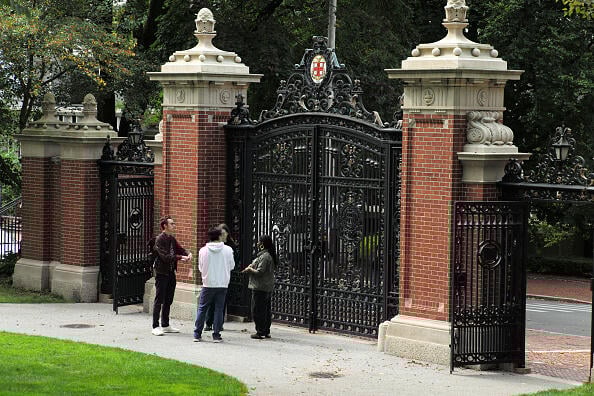
A law firm representing anti–wind energy groups is demanding that Brown University researchers retract findings linking those groups to the fossil fuel industry, The New York Times reported Monday.
The move comes weeks after Brown reached an agreement with the Trump administration. The government restored $510 million in frozen federal research grants after the university agreed to certain demands, including adopting the Trump administration’s definitions of male and female and turning over admissions data.
The Trump administration has halted or canceled thousands of other research grants across the country, including many focused on climate change.
Marzulla Law LLC characterized the research published by Brown’s Climate and Development Lab as “false and injurious” in an Aug. 11 letter to Brown’s general counsel. It threatened to file complaints with Brown’s public and private funders, including the Energy Department, the National Science Foundation and the Mellon Foundation.
A university spokesperson did not comment specifically on the law firm’s demands but told the Times that it’s committed to maintaining academic freedom.
Brown researchers who authored a case study about Marzulla Law have written that the firm has “a history of advancing anti-environmental lawsuits and significant ties with the fossil fuel industry.” Researchers have also published findings accusing one of the firm’s clients—the nonprofit Green Oceans, which is trying to shut down the construction of a nearly complete $4 billion wind farm off the coast of Rhode Island—of being part of “a fossil-fuel-funded disinformation network.”
On Friday, the Trump administration, which opposes the wind energy industry, halted the wind farm project without citing specific reasons.
I have been denied tenure at my former R-1 institution. Twice. And after being assured yearly, in writing, that I was making appropriate or exceptional progress toward a positive decision based on departmental criteria and standards. Most of you can imagine, and some of you know, how that felt. The inconsistency seemed misleading and a breakdown of the promotion and tenure process, similar to articles in Inside Higher Ed by Colleen Flaherty and in TheChronicle of Higher Education by Michael W. Kraus, Megan Zahneis and Chelsea Long.
I fought the first decision through formal institutional channels and won, and my institution did a re-review of my dossier from the ground up. In April of this year, I was told that I’d been denied a second time, and I was dismissed at the end of May. However, I could contest the decision processes as a nonemployee. I’m fighting the denial decision (again), and the hearings will begin in the fall.
My area of specialization is program evaluation, with a focus on graduate education. That means I have seen the good, bad and ugly as higher education institutions discuss criteria and standards about student and faculty performance, curriculum and policy; I have a professional and personal interest in all university processes being fair and defensible for all their constituents. My experience is that the processes are not always fair, and having gone through this process before, I have some advice on the steps you should take to fight the decision. While my advice is necessarily grounded in the context of my experience and my former institution’s procedures, it can be adapted to your own.
Get angry. Talk to your family, friends, colleagues you trust and your dream team of collaborators. Rage about the process and the decision and the decision-makers and the injustice, but get the hot anger out of your system and absolutely do not hurt yourself or anyone else. Let your rage cool so you can use it as energy to fight. You are not powerless, because all university processes and assumptions can be challenged. But know that the odds are heavily stacked against you.
Recognize the fundamental assumption of institutional competence. There is an assumption that the university correctly followed its policies and procedures and therefore reached a defensible decision. Without very specific performance criteria for promotion, it likely won’t matter how many dozens of works you’ve published, how many grants you’ve supported, how many students you’ve helped complete their degrees, how much your skills are in demand from other units or how you’ve (over-) satisfied the criteria against which you were supposed to be judged. The standing assumption is that the university did its due diligence.
Get help. Your institution has a vested interest in making sure its processes are defensible and that you can fight against decisions corrupted by inappropriate processes. Ask for a grievance hearing by the university’s regulatory body or a hearing panel (in my former institution, this group is housed in the University Senate). They should be able to connect you with a tenured faculty advocate to help you develop your process-based argument. To prevent further corruption in the process and avoid possibilities of retaliation, this advocate must be housed in a different college from the one in which the decisions were made.
You may have the option of using an external lawyer or union representative to argue your case, but if you bring a lawyer, the respondent will bring one, too. Do what you think is best, but know that the standard of evidence in a grievance hearing is different from that in a court of law, and will likely be closer to “likelihood of procedural issues or prejudicial influence” than to “beyond a reasonable doubt.”
Be clear about the relief you’re requesting. Even if a grievance panel rules in your favor, they may be limited in the relief they can offer. It’s unlikely that they can simply overturn the provost’s decision, but they may be able to recommend a re-review of your dossier. It may be helpful to think about the worst-case scenario—if your dossier is sent for re-review by the same people who voted against you the first time—and ask for reasonable, specific protections to make the re-review fair and balanced.
Be sure to request that the judgment includes a monitoring and compliance aspect. If the panel rules in your favor, the institution needs to ensure that the recommendations are followed. Don’t let assumptions of institutional competence prevent this from happening, and do not take on that responsibility yourself.
Use available templates. The grievance panel likely has a template to help you structure your argument. Use it faithfully, and don’t deviate from the specific information it requests. It will likely start by asking you to form the basis of your argument by quoting verbatim from your institution’s tenure code. Copy and paste this to make it easy for the panel to find information when they hear your case. The panel needs to stay within its institutional authority, and you must convince them immediately that your experience and concerns about the process are within their purview.
Read and re-read your institution’s foundational documents. There are at least three essential documents you must use to support your argument that the process was corrupted: the department or college’s faculty handbook, the regents’ or president’s statement on tenure criteria and ways of contesting decisions, and statements on employee conduct inclusive of reporting requirements for policy violations. You must show how procedural violations significantly contributed to an unjust decision. Examples of such violations could include:
Discrimination against personal beliefs and expression, or factors protected by federal/state law (e.g., equal opportunity violations, Title IX violations)
Decision-makers’ dismissal of available information about your performance
Demonstrable prejudicial mistakes of fact
Other factors that cause substantial prejudice
Other violations of university policy
After you have articulated the criteria you are using to contest the decision, you must substantiate each claim with evidence that the violation negatively influenced the final decision. The burden of proof will be on you.
Organize your evidence. Whatever evidence you present must be organized, accessible and easy for the hearing panel to review. It may be helpful—and therapeutic—to start by making a comprehensive timeline of the pertinent events that led to the decision. Include the dates and written summaries of every annual review, the steps you took to address any human resources issues, the outcomes of those steps, leadership transitions, as well as sociopolitical events that directly influenced the department and institution. Your goal is to share with the panel the entirety of your experience at the institution and make the argument that you did the best you could to address any real or perceived performance issues.
Include the official dossier that was passed through the system as evidence, and use the highlight function of the PDF software to focus on the parts that are most important for your case and that best challenge the assumption of institutional competence. Keep a running list of your documented evidence, which you’ll submit as a set of appendices, and refer to your appendices in the complaint document itself, using quotes cut and pasted directly from your primary sources.
In the document where you set out your complaint, refer to individual appendices by letter, name and page number, so readers can find information and see your evidence in the original context (e.g., “Appendix C: Committee response to factually inaccurate information introduced in faculty discussion, p. 22–24”). Copying and pasting evidence from primary sources will make it easier to reconcile page numbers in the complaint document later. This process is also helpful if you need to argue that the content of the dossier was misrepresented by decision-makers or that one or more particularly vocal individuals are waging a vendetta against you (e.g., “Appendix E: Unsolicited letter from Professor [X] that engages in conspiracy theories about you, p. 100–125”).
It is crucial to make the argument that you were treated unfairly and in violation of university policy, and that your treatment was significantly different from that of your colleagues who were under review at the same time or in the immediate past. If, for example, a decision-maker voted against your promotion because of their individual critiques of your work, and those critiques are not consistent with other levels of review or they attack the credibility of the other reviewers, you have an argument for their idiosyncratic interpretation of the promotion criteria. Put that evidence in an appendix and draw attention to it.
It is also helpful to be able to point to the research of others in your department who used the same scholarly processes but who were not critiqued similarly. This can help you argue differential application of criteria and standards of performance, or that a particular reviewer is applying the standards of research in their discipline to your own, which may be a violation of the tenets of academic freedom (talk to representatives from your institution’s academic freedom committee for more information). This comparison may be essential if you are alleging discrimination or prejudicial treatment that may be based on your personal characteristics.
Do not fear a request for summary judgment. This processual request means that the respondent in your case (usually a high-level decision-maker such as the provost or dean) is using the assumption of institutional competence to ask that the case be dismissed without a formal hearing. The respondent will argue that everything was done correctly, that the decision was justified and that you are simply angry about the decision. The request will likely be formal and the words intimidating, but that may be the point. Read every word so you can respond in writing to each argument, and prepare responses on the assumption that the issues will come up during oral arguments at the official hearing. Sometimes the request for summary judgment will be peppered with prejudicial language that helps reinforce the basis of your complaint. Use their words against them.
Prepare your witnesses. You will want to identify good witnesses who will substantiate your main points, but not people who will repeat their evidence from the same perspective; you do not want to bore the hearing panel. Let your witnesses know who your other witnesses are and you can give them a sense of the questions you will ask them during the hearing. You cannot, however, coach them on how to respond; witnesses must be able to respond to your questions honestly, and their responses must stand up under cross-examination.
Be sure to list the respondent and decision-makers on your witness list; you don’t want to miss the chance to hold them accountable for the things they’ve written and the decisions they’ve made. Don’t waste time indicting them on their leadership practices. Instead, show how their active and passive behaviors violated policy and prejudiced the review process in violation of the university’s foundational documents.
Make the most of the hearing. You may find that the hearing is a very formal process, that an external lawyer will be present for the institution (not the respondent) to ensure the process unfolds correctly and a court transcriptionist will ensure accurate recording of testimony. The witnesses may be sworn in, and you can count on them being asked questions by the complainant, respondent and the hearing panel. If possible, you should lead the questioning for your witnesses and ask your advocate to lead the questioning of the respondent and their powerful witnesses to minimize the power imbalance.
The respondent may not have many questions for you, but remember that you have the burden of proof, and they will not want to provide additional opportunities for you to substantiate your claims. If they do open additional areas of critique, be ready to call out the ones that are inconsistent with policy and processes. Expect to be physically and emotionally exhausted at the end of your hearing.
Respond to the decision. When the hearing panel’s decision arrives, expect strong emotions. You may feel vindicated and think that you’ve finally been heard or feel as if you’ve been traumatized again. Even if you win, both are fair responses. If you won on all or some of the issues you raised, you can expect the panel to propose a set of recommendations intended to address those issues, but the process is not yet over.
The panel may be empowered only to make recommendations to the university president, who has the final say on what happens. The president has the right to overrule the panel, just as they have the right to order compliance with its recommendations. You can write a formal letter to the president about the panel’s recommendations, as can the respondent. If you have concerns about the recommendations, especially if new issues came to light during the hearing, this is your one chance to make those issues known to the ultimate decision-maker.
Because the grievance hearing may have shown that the process contained problems that have not likely been institutionally addressed, emphasize monitoring and compliance with hope for reconciliation. Don’t expect the president to grant you additional protections beyond what was recommended by the panel, but if the re-review is corrupted, you have documentation showing that you were concerned about making the process fair and transparent and that you did your due diligence.
Go through the promotion and tenure review process again or leave the institution. Going for tenure again means another year of hoping for a positive decision, dreading a negative one and thinking about your next steps. This is a very difficult time, especially if the underlying issues have not been acknowledged or addressed. Do the best you can, and document everything. A counselor will be essential for processing the ongoing experience.
If your complaint exposed evidence of systematic harassment or prejudicial behavior against you, reach out to the equal opportunity or Title IX offices for support. They have the option of opening formal or informal investigations but may not be likely to do this during a tenure review or re-review because they cannot be seen as influencing the process. They may not be able to act until you have been promoted or have officially lost your job (again), at which point you might wonder why you should reach out. The answer is unsatisfying but simple: You connect with them because you need emotional support and with the hope they can eventually help address the underlying factors that corrupted the process.
If you didn’t win on the redo, you’ll need to find another job somewhere else. I hope you’ve used this last year to network and apply for opportunities as you balanced the burden of the grievance process on top of your regular commitments of teaching, research and service.
If you’re looking at going through this process, you have my sympathy, support and encouragement. Going through it has been one of the hardest experiences of my life, but I’m glad I did it, even if I cannot change my former institution; I can only hope that they will not waste my experience by ignoring the issues it exposed. I couldn’t have done it the first time without extraordinary support from people who hate injustice and fear for institutions that do not follow their own rules. As I prepare for the second round, I will continue to look to my former colleagues for support as I try to be strong for myself, my family, my (former) students and others that go through this process.
Regardless of what the future brings, I did my best to challenge prejudicial and harrowing issues in higher education by opening conversation about them and dragging trauma from the shadows into the light. No matter the ultimate decision, I can walk with my head high.
John M. LaVelle is a scholar of program evaluation specializing in the academic preparation of program evaluators. He lives in the United States with his family and is cautiously optimistic about the future.
As U.S. higher education enters one of the most perilous times in its history, an internal threat makes it even more vulnerable—the ever-widening chasm between administrators and faculty. In the last three decades, budget pressures at larger universities have led administrators to shift faculty ranks toward contingent appointments with near-poverty wages, no benefits and little opportunity for advancement.
At research universities, the remaining tenure-track faculty positions have become hypercompetitive, with faculty having to publish far more than they did in the 1980s to obtain tenure and promotion. Pressure on these faculty to obtain large grants continues to mount in a funding environment that is now uncertain and even chaotic. At other universities, faculty ranks in general have shrunk, leading to increased workloads and larger class sizes, alongside shifts to more online offerings to meet student demand.
On the administrative side, the tenure of senior leaders is also shrinking, leading to increased leadership turnover. New leaders come in with change agendas to fix some prior unaddressed issue or manage significant budget deficits or other operational inefficiencies. In this environment, faculty disillusionment is high, as is disengagement. It is all too easy for administrators to treat faculty as expendable resources, forgetting that there is a human component to leadership and fostering distrust between these two critical groups of campus leaders.
But as external threats come to campuses, a divided campus will not be well prepared to fend off attacks aimed at weakening institutional autonomy. Administrators on many campuses find themselves unable to speak openly about their objections to current federal or state policies due to institutional neutrality stances or concerns about political blowback; at the same time, we have seen faculty organizations and unions step out in front to defend academic freedom and institutional autonomy. In this context, how can these two groups come together to restore trust, re-engage all stakeholders and build productive working relationships?
We write this from the perspectives of a longtime faculty leader and faculty champion who has published on the problems of deprofessionalizing the faculty and a longtime administrator who started as a faculty member and moved up the ranks to a chancellor position by working with faculty to solve campus challenges. We have worked together over the years from our respective vantage points, publishing tools and resources that are geared toward fostering clarity, communication and collaboration in the face of a rapidly changing environment. We know that the faculty/administrative divides will not serve the academy in this current crisis. But we have seen examples of ways that both groups can come together.
Here we offer some suggestions for leaders—faculty and administrative—from our experiences working with hundreds of campuses. We call for administrators to take the first step in reaching out, repairing and rebuilding where trust and relationships have been broken. But we also call on faculty to ask what they can do in response or how they might “lead up.” If one group extends an olive branch, and if there is to be hope for a different future, the other must accept it. Both parties must also hold one another accountable as relationships are renewed, trust is rebuilt and bridges across the chasm are constructed.
Empower and support faculty leadership.Studies have shown that administrators can help support faculty in having a voice and assuming an active leadership role. Mentoring faculty on how the institution operates, sending faculty to leadership development opportunities, rewarding faculty who step into significant leadership or shared governance roles, providing summer stipends to work on projects, and offering course releases for active faculty leadership can all empower faculty to play a greater leadership role on campus.
Strengthen shared governance structures. Over the last three decades, shared governance has been hollowed out on many campuses. Rebuilding it will require examining processes, policies and structures that enable faculty to contribute meaningfully to campus decision and policymaking. A strong shared governance system is a way to ensure that external groups are less able to divide and conquer, to commandeer the curriculum, the student experience and other key areas of campus work. And ensuring that faculty have avenues to exert their leadership with governing boards can help ensure that board members hear from and understand faculty perspectives and concerns.
Clearly delineate administrative and faculty roles and responsibilities with respect to decision-making, authority and accountability. Strengthening shared governance means including faculty in more than advisory capacities when budgets, organizational structures or operations that affect them are slated for major changes. Put more decisions back in faculty hands, explain situations and ask for input, and include faculty in more important and strategic decisions on campus. Viewpoints may be at odds, and boards and administrators do have important fiduciary responsibilities, but these do not preclude engaging stakeholders in the decision-making process.
Establish and grow your own leadership programs aimed at faculty. One of the best ways to ensure that faculty can play a leadership role on campus and off is to offer an annual leadership program for faculty. Costs can be relatively low for grow-your-own programs that rely on more senior and experienced faculty to serve as facilitators and trainers. Empowering senior faculty to train newer faculty on the campus operations and broader higher education landscape can lead to more proactive succession planning for key campus committees and leadership roles.
Consider using a shared leadership approach to clearly involve multiple people and perspectives in decision-making. Beyond leadership development, consider using more formal structures associated with collaborative or shared leadership. This may help campuses create more inclusive and transparent processes for decision-making, especially when a variety of constituents are involved in or impacted by the changes.
Have regular sessions for faculty and administrators to interact outside shared governance. Occasional lemonade or iced tea gatherings, Zoom social hours, annual community forums and the like can ensure that faculty and administrators get to know each other as people, not just positions. It may also be helpful to have periodic focused workshops or retreats for faculty and administrators on key change issues. These events can be led by external expert facilitators who can help create space for difficult dialogue.
Acknowledge the wrongsand correct the course. When trust is broken, administrators should listen to concerns and be prepared to make adjustments and change course to address those concerns, and faculty should take the opportunity to collaboratively engage. That doesn’t necessarily mean going backward, but going forward in ways that involve a two-way dialogue to address concerns. For example, administrators need to be open about the need to strengthen faculty job security, pay and autonomy, while faculty need to recognize the competing pressures administrators are facing. Ensuring a strong faculty is a key component of a robust system of higher education, which is what is needed to ward off external threats. Somewhere in between lies the solution.
While these may seem like long-term strategies in the midst of a crisis, this crisis is going to last years, so investing in and empowering the faculty will pay off. Faculty have critical voices that can productively shape the change agenda, if given the opportunity to use them.
Adrianna Kezar is the Dean’s Professor of Leadership, Wilbur-Kieffer Professor of Higher Education and director of the Pullias Center for Higher Education at the University of Southern California.
Susan Elrod is the former chancellor and professor emeritus of Indiana University South Bend. She studies higher education systemic change and is actively engaged in helping campus leaders build capacity to create more strategic, scalable and sustainable change.
La joven de 18 años de Houston iba a comenzar clases este otoño en la Universidad de Texas en Tyler, donde le habían concedido una beca de 10.000 dólares al año. Esperaba que eso le permitiera alcanzar su sueño: un doctorado en Química, seguido de una carrera como profesora o investigadora.
“Y entonces se produjo el cambio en la matrícula estatal, y fue entonces cuando supe con certeza que tenía que dar un giro”, dijo Ximena. (The Hechinger Report se refiere a ella solo por su nombre de pila porque ella teme represalias por su situación migratoria).
Aunque Ximena pasó sus primeros años en el norte de México, la mayoría de sus recuerdos son de después de mudarse a Estados Unidos con su padre. Ha asistido a escuelas en Estados Unidos desde el jardín de infancia y, para ella, el 12.º grado consistió principalmente en explicar conceptos avanzados de química a sus compañeros de clase y dirigir laboratorios como asistente de enseñanza.
Pero en junio, los sueños de Ximena se vieron truncados cuando la oficina del fiscal general de Texas y la administración Trump colaboraron para poner fin a las disposiciones de una ley estatal que ofrecía a miles de estudiantes indocumentados como ella tasas de matrícula más bajas en las universidades públicas de Texas. Los funcionarios estatales y federales argumentaron con éxito ante los tribunales que la política vigente desde hacía mucho tiempo discriminaba a los ciudadanos estadounidenses de otros estados que pagaban una tasa más alta. Ese razonamiento se ha replicado ahora en demandas similares contra Kentucky, Oklahoma y Minnesota, como parte de una ofensiva más amplia contra el acceso de los inmigrantes a la educación pública.
En la UT Tyler, la matrícula y las tasas estatales para el próximo año académico ascienden a un total de 9.736 dólares, frente a los más de 25.000 dólares que pagan los estudiantes de fuera del estado. Ximena y su familia no podían permitirse el elevado coste de la matrícula, por lo que la joven se retiró. En su lugar, se matriculó en el Houston Community College, donde los costos para los estudiantes de fuera del estado son de 227 dólares por hora semestral, casi tres veces más que la tarifa para los residentes en el distrito. La escuela solo ofrece clases básicas de química de nivel universitario, por lo que, para prepararse para un doctorado o para trabajar en investigaciones especializadas, Ximena seguirá necesitando encontrar la manera de pagar una universidad de cuatro años en el futuro.
Su difícil situación es precisamente lo que los legisladores estatales de ambos partidos políticos esperaban evitar cuando aprobaron la Texas Dream Act o Ley de Sueños de Texas, una ley de 2001 que no solo abrió las puertas de la educación superior a los estudiantes indocumentados, sino que también tenía por objeto reforzar la economía y la mano de obra de Texas a largo plazo. Con esa ley, Texas se convirtió en el primero de más de dos docenas de estados en aplicar la matrícula estatal a los estudiantes indocumentados, y durante casi 24 años, esta política histórica se mantuvo intacta. Los legisladores conservadores propusieron repetidamente su derogación, pero a pesar de los años de control de un solo partido en la legislatura estatal, no hubo suficientes republicanos que apoyaran la derogación, incluso esta primavera, días antes de que la oficina del fiscal general de Texas y el Departamento de Justicia federal decidieran ponerle fin.
Ahora, a medida que se acerca el semestre de otoño, los estudiantes inmigrantes están sopesando si darse de baja de sus cursos o esperar a que se aclare cómo les afecta el acuerdo de consentimiento firmado por el estado y el Departamento de Justicia. Los defensores de los inmigrantes temen que las universidades de Texas estén excluyendo a posibles alumnos que se encuentran en situación legal y siguen reuniendo los requisitos para pagar la matrícula estatal a pesar de la sentencia judicial, incluidos los beneficiarios del programa de Acción Diferida para los Llegados en la Infancia (DACA), los solicitantes de asilo y los que tienen Estatus de Protección Temporal o TPS, porque el personal de la universidad carece de conocimientos sobre inmigración y no ha recibido directrices claras sobre quién debe pagar exactamente la matrícula más alta.
En el Austin Community College, que presta servicio a un área tan grande como el estado de Connecticut, los miembros del consejo de administración no están seguros de cómo aplicar correctamente la sentencia judicial. Mientras esperan respuestas, hasta ahora han decidido no enviar cartas a sus estudiantes solicitándoles información confidencial para determinar las tasas de matrícula.
Una valla publicitaria que promociona el Austin Community College en español se encuentra en una autopista que conduce a Lockhart, Texas. Credit: Sergio Flores for The Hechinger Report
“Esta confusión perjudicará inevitablemente a los estudiantes, porque lo que vemos es que, ante la falta de información y la presencia del miedo y la ansiedad, los estudiantes optarán por no continuar con la educación superior o se esconderán en las sombras y se sentirán como miembros marginados de la comunidad”, afirmó Manuel González, vicepresidente del consejo de administración del ACC.
Por su parte, los expertos en políticas públicas advierten de que la mano de obra de Texas podría verse afectada, ya que los jóvenes con talento, muchos de los cuales han cursado toda su educación en el sistema de escuelas públicas del estado, ya no podrán permitirse los títulos de asociado y licenciatura que les permitirían seguir carreras que ayudarían a impulsar sus economías locales. En virtud de la Ley Texas Dream, los beneficiarios estaban obligados a comprometerse a solicitar la residencia permanente legal lo antes posible, lo que les daba la oportunidad de mantener puestos de trabajo relacionados con sus títulos. Sin la condición de residentes, es probable que sigan trabajando, pero en empleos peor remunerados y menos visibles.
Relacionado: ¿Te interesa recibir más noticias sobre universidades? Suscríbete a nuestro boletín quincenal gratuito deeducación superior.
“Es una visión muy cortoplacista en lo que respecta al bienestar del estado de Texas”, afirmó Barbara Hines, antigua profesora de Derecho que ayudó a los legisladores a redactar la Ley Texas Dream.
A principios de siglo, casi dos décadas después de que los niños indocumentados obtuvieran el derecho a asistir a la escuela pública en Estados Unidos, los estudiantes inmigrantes y sus defensores seguían frustrados porque la universidad seguía estando fuera de su alcance.
Para el mayor general retirado de la Guardia Nacional del Ejército Rick Noriega, un demócrata que en ese momento formaba parte de la Legislatura de Texas, esa realidad le tocó de cerca cuando se enteró de que un joven trabajador de su distrito quería matricularse en el community college local para estudiar mecánica aeronáutica, pero no podía permitirse pagar la matrícula fuera del estado.
Noriega llamó a la oficina del rector de la escuela, que pudo proporcionar fondos para que el estudiante se inscribiera. Pero esa experiencia le llevó a preguntarse: ¿cuántos niños más de su distrito se enfrentaban a las mismas barreras para acceder a la educación superior?
Así que colaboró con un sociólogo para encuestar a los estudiantes de las escuelas secundarias locales sobre el problema, que resultó ser muy frecuente. Y el distrito de Noriega no era una excepción. En un estado que durante mucho tiempo ha tenido una de las mayores poblaciones de inmigrantes no autorizados del país, los políticos de todos los partidos conocían a electores, amigos o familiares afectados y querían ayudar. Una vez que Noriega decidió proponer la legislación, un republicano, Fred Hill, pidió ser coautor del proyecto de ley.
Para los defensores de la Ley Texas Dream, el mejor argumento a favor de la matrícula estatal para los estudiantes indocumentados era de carácter económico. Después de que el estado ya hubiera invertido en estos estudiantes durante la educación pública K-12, tenía sentido seguir desarrollándolos para que, con el tiempo, pudieran ayudar a satisfacer las necesidades de mano de obra de Texas.
“Habíamos gastado todo ese dinero en estos jóvenes, y ellos habían hecho todo lo que les pedimos —en muchos casos, eran superestrellas, los mejores de su promoción y cosas por el estilo— y luego se topaban con este obstáculo, que era la educación superior, cuyo costo era prohibitivo”, dijo Noriega.
La legislación fue aprobada fácilmente por la Cámara de Representantes de Texas, que en ese momento estaba controlada por los demócratas, pero el Senado, liderado por los republicanos, se mostró menos complaciente.
“Ni siquiera pude conseguir una audiencia. Me dijeron rotundamente: “No, esto no va a salir adelante””, afirmó Leticia Van de Putte, la entonces senadora estatal que patrocinó la legislación en su cámara.
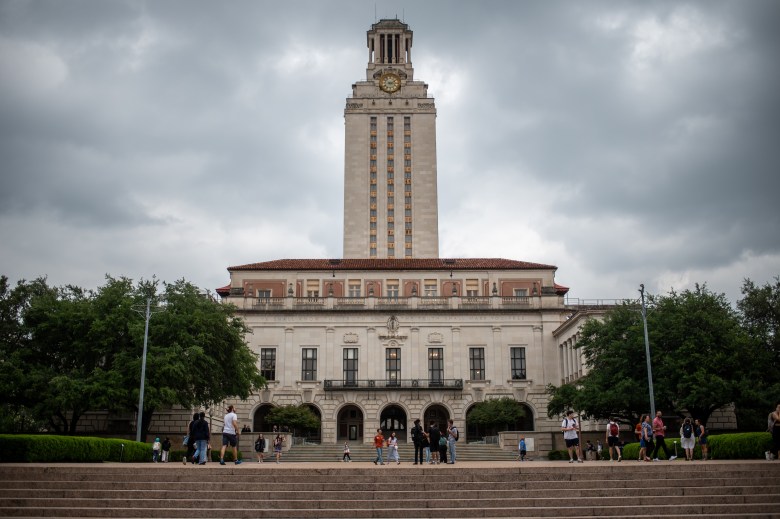
Las nubes cubren el cielo detrás de la torre de la Universidad de Texas en Austin. Credit: Sergio Flores for The Washington Post via Getty Images
Para persuadir a sus colegas republicanos, añadió varias restricciones, entre ellas la de exigir a los estudiantes indocumentados que vivieran en Texas durante tres años antes de terminar la escuela secundaria o recibir un GED. (Se estimó que tres años era el tiempo medio que tardaría una familia en pagar suficientes impuestos estatales para compensar la diferencia entre la matrícula estatal y la matrícula fuera del estado). También incluyó la cláusula que obligaba a los estudiantes indocumentados que accedían a la matrícula estatal a firmar una declaración jurada en la que se comprometían a solicitar la tarjeta de residencia tan pronto como pudieran.
Van de Putte también recurrió a los grupos empresariales de Texas para insistir en los argumentos económicos a favor del proyecto de ley. Y convenció a la comunidad empresarial para que pagara los autobuses que llevarían a pastores evangélicos conservadores latinos de Dallas, San Antonio, Houston y otras zonas del estado a Austin, para que pudieran llamar a las puertas en apoyo de la legislación y rezar con los senadores republicanos y su personal.
Después de eso, la Ley Texas Dream fue aprobada por abrumadora mayoría en el Senado estatal en mayo de 2001, y el entonces gobernador Rick Perry, republicano, la promulgó como ley al mes siguiente.
Sin embargo, en 2007, incluso cuando los defensores de los derechos de los inmigrantes, los grupos religiosos y las asociaciones empresariales formaron una coalición para defender a los inmigrantes contra las políticas estatales perjudiciales, la legislatura de Texas comenzó a presentar una serie de propuestas generalmente contrarias a los inmigrantes. En 2010, las encuestas sugerían que los tejanos se oponían de manera abrumadora a que los estudiantes indocumentados pagaran las tasas de matrícula estatales.
En 2012, un nuevo grupo de políticos de derecha fue elegido para ocupar cargos públicos, muchos de ellos opuestos filosóficamente a la ley y muy críticos al respecto. La defensa de la política por parte de Perry se volvió en su contra durante las primarias presidenciales republicanas de 2012, cuando su campaña fue objeto de críticas después de que, durante un debate, dijera a los oponentes de la igualdad en las matrículas: “No creo que tengan corazón”.
Aún así, ninguno de los muchos proyectos de ley presentados a lo largo de los años para derogar la Ley Texas Dream tuvo éxito. E incluso el gobernador Greg Abbott, un republicano partidario de la línea dura en materia de inmigración, se mostró en ocasiones ambiguo sobre la política, y su portavoz afirmó en 2013 que Abbott creía que “el objetivo” de la matrícula estatal independientemente del estatus migratorio era “noble”.
Los observadores legislativos afirman que algunos republicanos del estado siguen apoyando la política. “Es una cuestión bipartidista. Hay republicanos que apoyan la matrícula estatal”, afirmó Luis Figueroa, director de asuntos legislativos de la organización sin fines de lucro Every Texan, dedicada a la investigación y la defensa de políticas públicas. “Pero no pueden decirlo públicamente”.
Mientras tanto, a medida que el tema se volvía más controvertido políticamente en Texas, la Texas Dream Act acabó amplificando un debate más amplio que finalmente condujo a la creación del DACA, el programa de la era Obama que ha dado a algunos inmigrantes indocumentados acceso a protecciones contra la deportación y permisos de trabajo.
Incluso antes del DACA, muchos inmigrantes trabajaban, y los que siguen sin papeles a menudo siguen haciéndolo, ya sea como contratistas independientes para empleadores que hacen la vista gorda ante su estatus migratorio o creando sus propios negocios. Un estudio de mayo de 2020 reveló que los residentes no autorizados constituyen el 8,2 % de la población activa del estado y que, por cada dólar gastado en servicios públicos para ellos, el estado de Texas recuperaba 1,21 dólares en ingresos.
Pero sin el permiso legal inmediato para trabajar, los graduados universitarios indocumentados que se habían beneficiado de la Ley Dream de Texas se vieron limitados a pesar de sus títulos. A medida que la lucha por la equidad en las matrículas se extendía a otros estados, también lo hacía la lucha por una solución legal que apoyara a los estudiantes beneficiados.
Cuando estos jóvenes, cariñosamente apodados “soñadores o dreamers”, pasaron a primer plano para defenderse más públicamente, su difícil situación despertó simpatía. En 2017, el mismo año en que Trump comenzó su primer mandato, las encuestas dieron un giro y mostraron que la mayoría de los tejanos apoyaba las matrículas estatales para los estudiantes indocumentados. Más recientemente, las investigaciones han indicado una y otra vez que los estadounidenses apoyan una vía para que los residentes indocumentados traídos a Estados Unidos cuando eran niños obtengan la residencia legal.
Pero los argumentos en contra de la matrícula estatal, independientemente del estatus migratorio, también ganaron popularidad: los críticos sostenían que la política es injusta para los ciudadanos estadounidenses de otros estados que tienen que pagar tasas más altas, o que los estudiantes indocumentados están ocupando plazas en escuelas competitivas que podrían ser ocupadas por estadounidenses.
El Departamento de Justicia se apoyó en una retórica similar en la demanda que acabó con la igualdad en las matrículas en Texas, alegando que la ley estatal queda invalidada por la legislación federal de 1996 que prohíbe a los inmigrantes indocumentados acceder a la matrícula estatal basada en la residencia. Ese argumento se ha convertido en un modelo, ya que la administración Trump ha presentado demandas para desmantelar las políticas de matrícula estatal de otros estados para los residentes indocumentados.
En Kentucky, el fiscal general del estado, el republicano Russell Coleman, ha seguido los pasos de Texas y ha recomendado que el consejo estatal que supervisa la educación superior retire su normativa que permite el acceso a la matrícula estatal en lugar de luchar por defenderla en los tribunales.
Al mismo tiempo, la administración Trump ha encontrado otras formas de recortar las oportunidades de educación superior para los estudiantes indocumentados, revocando una política que les había ayudado a participar en programas de formación profesional, técnica y para adultos, e investigando a las universidades por ofrecerles becas.
En Texas, el repentino cambio de política con respecto a las matrículas estatales está causando caos. Las dos universidades más grandes del estado, Texas A&M y la Universidad de Texas, están utilizando diferentes directrices para decidir qué estudiantes deben pagar las tasas fuera del estado.
“Creo que las universidades son las que se encuentran en esta situación realmente difícil”, dijo Figueroa. “No son expertos en inmigración. Han recibido muy poca orientación sobre cómo interpretar el decreto de consentimiento”.
En medio de tanta confusión, Figueroa predijo que es probable que surjan futuras demandas. Los estudiantes y organizaciones afectados ya han presentado mociones ante los tribunales para defender tardíamente la Ley Texas Dream contra el Departamento de Justicia.
Mientras tanto, los jóvenes estudiantes se enfrentan a decisiones difíciles. Una estudiante, que pidió permanecer en el anonimato debido a su condición de inmigrante indocumentada, estaba leyendo las noticias en su teléfono antes de acostarse cuando vio un titular sobre el resultado del caso judicial del Departamento de Justicia.
“Me eché a llorar porque, como alguien que ha luchado por salir adelante en sus estudios, ahora que estoy en la educación superior, ha sido una bendición”, dijo. “Así que lo primero que pensé fue: “¿Qué voy a hacer ahora? ¿Hacia dónde va mi futuro? ¿Los planes que tenía para mí tendrán que detenerse por completo?””.
La joven, que vive en San Antonio desde que tenía 9 meses, se había matriculado en seis cursos para el otoño en la Universidad Texas A&M-San Antonio y no estaba segura de si abandonarlos. Sería su último semestre antes de obtener sus títulos en psicología y sociología, pero no podía imaginar pagar la matrícula fuera del estado.
“Estoy en el limbo”, dijo, como “muchos estudiantes en este momento”.
Comunícate con la editora Caroline Preston al 212-870-8965 o [email protected].
The Hechinger Report provides in-depth, fact-based, unbiased reporting on education that is free to all readers. But that doesn’t mean it’s free to produce. Our work keeps educators and the public informed about pressing issues at schools and on campuses throughout the country. We tell the whole story, even when the details are inconvenient. Help us keep doing that.
Assessment lies at the core of higher education. It helps focus students’ learning and helps them evidence, to themselves and to others, the progress they have made in their learning and growth.
Setting, supporting and marking assessed student work takes up a substantial proportion of academic colleagues’ effort and time.
Approaches to assessment and outcomes of assessment experiences underpin the narratives crafted by many higher education providers to showcase how they secure meaningful educational gains for their students.
It’s not just what you know
Educational gains go well beyond academic assessment, yet assessment is central to student experiences and should not be limited to academic knowledge gains. Indeed, a nuanced and insightful independent report commissioned by the Office for Students in March 2024 on how educational gains were defined and articulated in TEF 2023 submissions notes that providers rated gold for student outcomes
“make reference to enhancing student assessment practices as a vehicle for embedding identified educational gains into the curriculum, explaining that their range of assessments is designed to assess beyond subject knowledge.”
Assessments that require evidence of learning beyond subject knowledge are a particularly pertinent point to ponder, because these assessments are more likely to underpin the kind of inclusive higher education experiences that providers hope to create for their students, with inclusion understood in broad rather than narrow terms.
The link between inclusion and assessment has been problematised by scholars of higher education. A narrow view of inclusive assessment focuses on individual adjustments in response to specific student needs. Higher education providers, however, would benefit from developing a broad definition of inclusive assessment if they are intent on meaningfully defining educational gains. Such a definition will need to move beyond implementing individual adjustments on a case by case basis, to consider intersecting and diverse student backgrounds that may impact how a student engages with their learning.
Well-defined
A good definition should also be mindful of (but not constrained by) needs and priorities articulated by external bodies and employers. It should be based on a thorough understanding of how to create equitable student assessment experiences in interdisciplinary settings (being able to operate flexibly across disciplines is key to solving societal challenges). It should appreciate that bringing co and extra-curricular experiences into summative assessment does not dilute a course or programme academic core.
It should be aligned to a view of assessment for and as learning. It should value impact that goes beyond individual student achievement and is experienced more broadly in the assessment context. Importantly, it should embrace the potential of generative artificial intelligence to enhance student learning while preserving the integrity of assessment decisions and the need for students to make responsible use of generative tools during and beyond their studies.
All higher education providers are likely to be able to find at least some examples of good, broadly defined inclusive practice in their contexts – these may just need to be spotlighted for others to consider and engage with. To help with this task, providers should be exploring
· Who is included in conversations about what is assessed, when and how?
· How fully are experiences outside a more narrowly defined academic curriculum core included in summative evaluative judgements about student achievement of intended and desired outcomes?
· To what extent does the range of assessments within a course or programme include opportunities for students to have their most significant strengths developed and recognised?
Providers should develop their own narratives and frameworks of educational gains to create full inclusion in and through assessment. As they carefully implement these (implementation is key), they may also consider not just the gains that can be evidenced but also whether they could attract, welcome and evidence gains for a broader range of students than might have been included in the providers’ initial plans.
And suppose energy to rethink assessment reaches a low point. In that case, it will be useful to remember that insufficient attention to inclusion, broadly defined, when assessing learning and measuring gains can (inadvertently) create further disadvantage for individuals, as it preserves the system that created the disadvantage in the first place.
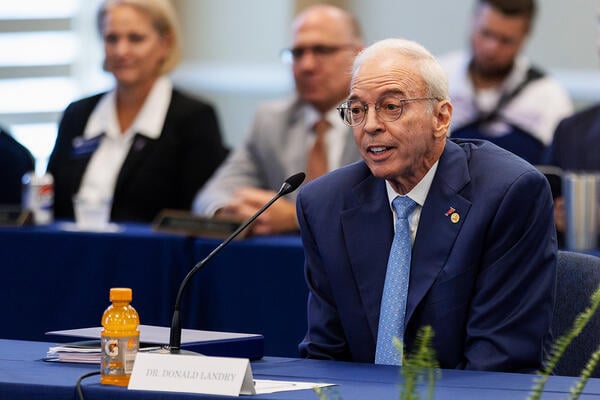
After months of uncertainty over who will lead the University of Florida, the Board of Trustees tapped Donald Landry as interim president in a unanimous vote at a meeting Monday morning.
Landry, chair emeritus of the Department of Medicine at Columbia University, will replace outgoing interim president Kent Fuchs, whose contract ends on Sept. 1. The appointment comes after the Florida Board of Governors rejected Santa Ono as UF’s next leader in June over his past support of diversity, equity and inclusion efforts, despite the university’s trustees approving the hire.
Landry, who is currently president of the American Academy of Sciences and Letters, will officially step into the job on Sept. 1, pending successful contract negotiations. Details of Landry’s contract have not been released, but Ono was set to make about $3 million annually.
The interim hire will still need to be approved by the state’s Board of Governors.
UF’s New Leader
In a public hourlong interview during Monday’s board meeting, Landry promised that UF would be “neutral” under his leadership. However, he added a caveat.
“A neutral university, paradoxically, in this nation at the moment would be a conservative university. Not espousing conservative values, certainly not indoctrinating in conservatism,” Landry said. “We’d be neutral. We wouldn’t choose sides.”
Landry also criticized Columbia faculty and administrators forfailing to respond to concerns about antisemitism amid pro-Palestinian student protests last year. Last month the university reached a settlement with the federal government that included sweeping reforms to academic programs, speech and disciplinary policies, as well as a $221 million payout.
“I saw things at Columbia that suggested an alignment between some faculty and students that I think encouraged the students to do things that were more reckless,” Landry told UF’s board.
At another point, when asked about DEI, he said when it “first emerged it was a bit vague what it actually meant” but “by the time it crystallized it was clear [DEI] had gone too far.” Landry added that he was thankful the “government has intervened and returned us to a rational meritocracy.”
Landry also cast himself as someone who resisted DEI at Columbia when it was “being implemented widely at every level, from the very top down to the smallest unit,” addingthat “the Department of Medicine never wavered in its commitment to excellence” in his time there. Landry vowed to uphold state laws barring spending on DEI at Florida’s public institutions.
A physician by training, Landry has degrees from Lafayette College, Harvard University and Columbia’s College of Physicians and Surgeons. In 2008, President George W. Bush awarded Landry the Presidential Citizens Medal for his work on stem cell research, which used embryos that did not survive in vitro fertilization. Bush lauded Landry as a man of science and faith, crediting his approach to stem cell research. Landry was also on the President’s Council on Bioethics during the Bush administration.
Landry has also brought his scientific training to bear on other political debates. In early 2024, he filed a brief in a Supreme Court case in support of former Florida attorney general Ashley Moody and Texas attorney general Ken Paxton, who were sued by a technology trade group over laws passed in both states seeking to limit content moderation on social media platforms. Landry expressed concerns about censoring alternative perspectives, arguing that “the danger of censoring scientific dissent is painfully apparent from the conduct of social media platforms during the COVID-19 crisis,” which “reinforced prevailing opinion and allied government policy by suppressing dissent on a host of scientific questions.”
SCOTUS ultimately remanded the case to the lower courts.
Landry has also praised Jay Bhattacharya, director of the National Institutes of Health and an epidemiologist who was skeptical of the dangers of COVID-19 and prevention measures such as stay-at-home orders. Last year Landry said that Bhattacharya refused “to compromise his scientific findings,” thus risking “his own personal and professional self-interest, repeatedly, without hesitation, to take a stand for the public’s right to unrestricted scientific discussion and debate.”
‘A Great Selection’
UF Board of Trustees chair Mori Hosseini emphasized Landry’s scientific background in a news release announcing the hire, stating the new interim president “has shown exceptional leadership in academia and beyond, building programs with innovation, energy and integrity.”
Chris Rufo, the conservative anti-DEI activist who helped tank Ono’s chances at the UF presidency through an online campaign highlighting his past statements, praised the hire.
“Dr. Landry is a principled leader who will reverse ideological capture and restore truth-seeking within the institution. Kudos to the UF board of trustees on a great selection,” Rufo wrote on social media.
Alan Levine, a member of the Florida Board of Governors who voted against hiring Ono, also praised the selection in a post on X, calling Landry “an excellent choice” for the UF interim presidency.
Landry is expected to serve as interim president while UF begins a national search for its next leader. The university has been without a permanent president since former Republican senator Ben Sasse of Nebraska abruptly resigned from the job shortly before a spending scandal emerged.
This audio is auto-generated. Please let us know if you have feedback.
Dive Brief:
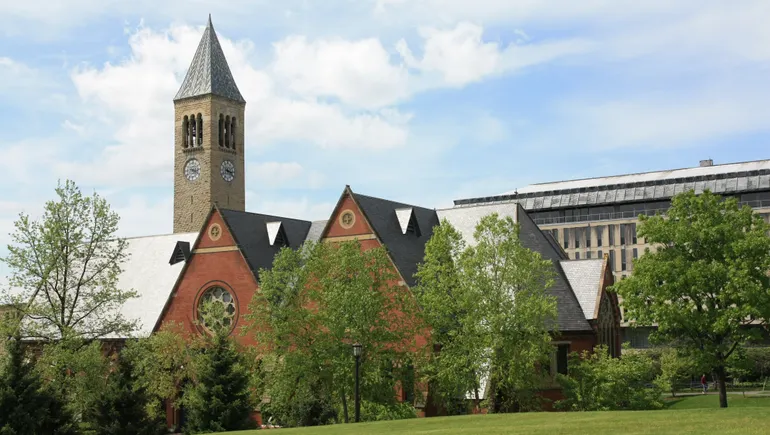
Cornell University leaders expect to begin restructuring the institution’s operations and workforce in phases beginning late this year and continuing into 2026.
In a community update Friday, senior leaders echoed a June message warning of job cuts.“Reducing costs will mean reconsidering how we handle all of our processes, from procurement to technology, and rethinking, in fundamental ways, how we allocate our resources,” they said Friday. “It will also, inevitably, mean reducing our workforce.”
The officials cited inflation, historical staff growth, contractions in federal funding, “significant legal and regulatory expenses,” and “an uncertain and unprecedented federal landscape.”
Dive Insight:
In June, the same group of Cornell leaders — President Michael Kotlikoff, Provost Kavita Bala, Chief Financial Officer Chris Cowen and Provost for Medical Affairs Robert Harrington — told the university community that disruption in the higher education world would “require financial austerity.”
“The spring semester was unlike anything ever seen in higher education, with hundreds of millions of dollars in federal research contracts at Cornell terminated or frozen, and serious threats to future research funding, federal financial aid, medical reimbursement, and research cost recovery, along with an anticipated tax on our endowment income, and rapidly escalating legal expenses,” they wrote at the time.
The June message also brought news of a hiring freeze. On Friday, the leaders said hiring restrictions would continue “indefinitely” with “rare exceptions” determined by campus committees.
Cornell was among the 60 institutions that the Trump administration warned in March could face potential sanctions over allegations related to antisemitism.
In April, the administration reportedly froze $1 billion in federal research funding for the university.Administrators said then that they hadn’t received official word from the government about the frozen funds but were hit with dozens of stop-work orders on grant projects. This summer, Bloomberg reported thatCornell was nearing a deal with the Trump administration to restore grant funding that could involve a $100 million payment.
Even before the Trump administration’s actions, Cornell faced budget pressure from rising expenses. For fiscal 2024, the Ivy League institution posted a $175.5 million operating deficit, compared to $23 million surplus the year before.
Cornell’s senior leaders said that to save costs, the university is looking to consolidate operations where it can, seeking “new efficiencies and reducing duplication of work.” And while part of the university’s tradition, its decentralized structure is also a source of significant administrative inefficiencies, they added.
“Part of our task is identifying opportunities to scale and regularize our academic support systems across units with unique characteristics and needs without compromising our institutional excellence,” they said.
That means centralizing operations that are duplicated across colleges and units, which will ultimately lead to a smaller workforce, leaders said. They didn’t note whether those losses would be primarily through layoffs, buyouts, attrition or other means.
Cornell didn’t immediately respond to a request for comment Monday.
The leaders said they expect to complete an analysis and planning process around the university’s operations this fall.
“These changes will be difficult for our community but are vital for our future,” they added, describing the steps they are taking as “necessary to ensure that Cornell pursues its academic mission sustainably for generations to come.”
Washington rejected OCR’s demand for a personal apology Monday.
Bill O’Leary/The Washington Post via Getty Images
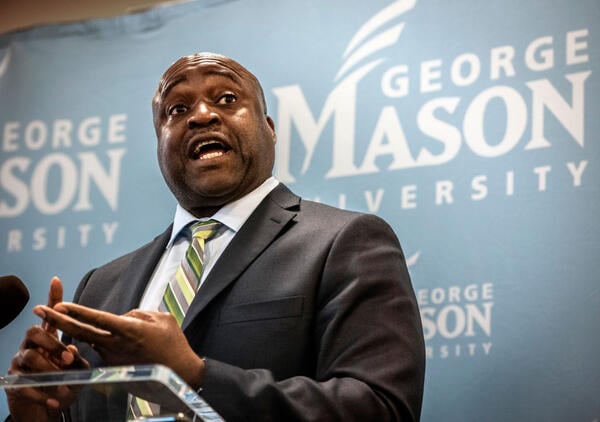
George Mason University president Gregory Washington has rejected demands by the Department of Education’s Office for Civil Rights that he apologize for alleged discriminatory hiring practices, questioning the findings of an OCR investigation that accused him of implementing “unlawful DEI policies.”
In a letter to GMU’s board Monday, Washington’s attorney, Douglas F. Gansler, alleged that OCR cut its fact-finding efforts short and only interviewed two university deans before reaching the conclusions the Department of Education published Friday. Gansler wrote that “OCR’s letter contains gross mischaracterizations of statements made by Dr. Washington and outright omissions” related to the university’s DEI practices.
Gansler also accused OCR of selectively interpreting various remarks by Washington, the first Black president in GMU’s history.
“To be clear, per OCR’s own findings, no job applicant has been discriminated against by GMU, nor has OCR attempted to name someone who has been discriminated against by GMU in any context. Therefore, it is a legal fiction for OCR to even assert or claim that there has been a Title VI or Title IX violation here,” Gansler wrote in a 10-page letter.
ED has demanded changes at GMU and a personal apology from Washington.
“In 2020, University President Gregory Washington called for expunging the so-called ‘racist vestiges’ from GMU’s campus,” Acting Assistant Secretary for Civil Rights Craig Trainor said in a statement released by the Department of Education last week. “Without a hint of self awareness, President Washington then waged a university-wide campaign to implement unlawful DEI policies that intentionally discriminate on the basis of race. You can’t make this up.”
In his letter to the board, Gansler emphasized that under Washington’s leadership, GMU has complied with executive orders that cracked down on DEI programs and practices, pointing to recent changes such as the dissolution of GMU’s DEI office and restricting the use of diversity statements in hiring.
“If the Board entertains OCR’s demand that Dr. Washington personally apologize for promoting unlawful discriminatory practices in hiring, promotion, and tenure processes, it will undermine GMU’s record of compliance. An apology will amount to an admission that the university did something unlawful, opening GMU and the Board up to legal liability for conduct that did not occur under the Board’s watch,” Gansler wrote. He added that admitting to such violations could bring about punitive action from other federal agencies, such as the Department of Justice.
Washington’s rejection of an apology and dispute over the claims made by OCR comes shortly after speculation that GMU’s Board of Visitors—which includes numerous conservative political figures and activists appointed by Republican Virginia governor Glenn Youngkin—would fire him. Instead, the board gave Washington a raise after a lengthy closed-door meeting earlier this month that brought dozens of protesters out to show their support for the besieged president.
Asked for a statement, GMU officials referred Inside Higher Ed to Gansler.
ED did not immediately respond to a request for comment from Inside Higher Ed.
This audio is auto-generated. Please let us know if you have feedback.
Dive Brief:
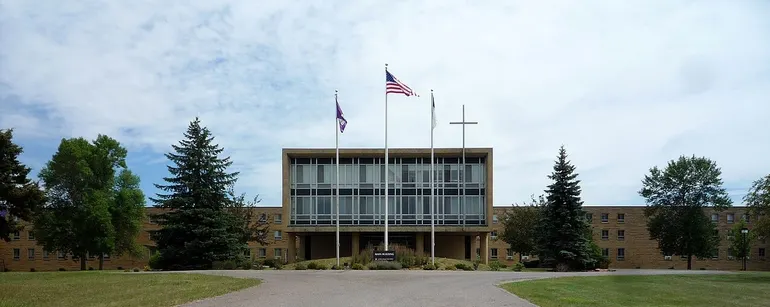
A federal judgeon Friday struck down a Minnesota lawprohibiting colleges that require high school students to sign statements of faith from participating in a state dual enrollment program.
The University of Northwesternand Crown College,two conservativeChristian institutions in Minnesota, sued the state in 2023 over the law which rendered them ineligible to participate in the Postsecondary Enrollment Options program. Both colleges require on-campus students to sign religious conduct agreements.
Siding with the colleges, U.S. District Judge Nancy Brasel ruled that Minnesota’s law infringed on their constitutional rightsby making them choose between participating in the PSEO program and practicing their religion.
Dive Insight:
Since 1985, Minnesota’s PSEO programhas allowed local high school students to earn college credit for nonsectarian coursework at participating colleges. The program is free for eligible students and reimburses collegeswith fixed paymentsper credit hour.
But a 2023 law, passed by the state’sDemocrat-controlled Legislature,prohibited colleges from participating in the program if they require faith statements or make admission decisions based on “race, creed, ethnicity, disability, gender, or sexual orientation or religious beliefs or affiliations.”
The University of Northwestern requires students and employees to sign a pledge to abstain from “same sex romantic intimacy.” And Crown’s student conduct policy does not allowinvolvement or promotion of “any sexual behavior outside the marriage of one man and one woman.”
Both institutions, joined by three parents of high school students,sued the state the same day Democratic Gov. Tim Walz signed the legislation into law.
The Minnesota Department of Education filed counterclaims, arguing that Crown and the University of Northwestern’s admissions policies for the PSEO program are unconstitutional.
Early on in the case, Brasel blocked the state from enforcing the new law, allowing the colleges to continue enrolling PSEO students and earning state funds from the program while the case proceeded. Between the 2017-18 and 2022-23 academic year, the University of Northwestern received over $33.2 million from the program, and Crown received roughly $5.8 million.
In her Friday ruling, Brasel sided with the colleges.
“If the Schools’ eligibility to participate in PSEO is conditioned on not using faith statements as an admissions requirement, their free exercise in maintaining a campus community of like‐minded believers is burdened,” said Brasel, a Trump appointee. Families also lose their right to free exercise of religion if they can’t use the public benefit at “a school of their choice of like‐minded believers,” she said.
The judge further wrote that if the state elects to fund private education, officials cannot disqualify private schools solely because they’re religious.
Brasel also dismissed the state’s counterclaims Friday.
The Minnesota Department of Education did not immediately respond to a request for comment Monday.
The leaders of Crown and the University of Northwestern — Andrew Denton and Corbin Hoornbeek, respectively — celebrated the verdict Saturday.
“This legislation has given us yet another opportunity to affirm our mission; we remain committed to equipping our students to grow intellectually and spiritually to serve effectively in their professions and give God-honoring leadership in the home, church, community, and world,” Hoornbeek said in a statement.
The same day, Denton thanked the legislators who originally opposed the ban and said Crown was grateful for the law’s reversal.
“The court made clear that Minnesota cannot single out high school students who want to attend a faith-centered institution,” he said.