Blog

  • Survey of 1500 Kids Suggests School Phone Bans Have Important but Limited Effects – The 74

    Survey of 1500 Kids Suggests School Phone Bans Have Important but Limited Effects – The 74


    Get stories like this delivered straight to your inbox. Sign up for The 74 Newsletter

    In Florida, a bill that bans cellphone use in elementary and middle schools, from bell to bell, recently sailed through the state Legislature.

    Gov. Ron DeSantis signed it into law on May 30, 2025. The same bill calls for high schools in six Florida districts to adopt the ban during the upcoming school year and produce a report on its effectiveness by Dec. 1, 2026.

    But in the debate over whether phones should be banned in K-12 schools – and if so, howstudents themselves are rarely given a voice.

    We are experts in media use and public health who surveyed 1,510 kids ages 11 to 13 in Florida in November and December 2024 to learn how they’re using digital media and the role tech plays in their lives at home and at school. Their responses were insightful – and occasionally surprising.

    Adults generally cite four reasons to ban phone use during school: to improve kids’ mental health, to strengthen academic outcomes, to reduce cyberbullying and to help limit kids’ overall screen time.

    But as our survey shows, it may be a bit much to expect a cellphone ban to accomplish all of that.

    What do kids want?

    Some of the questions in our survey shine light on kids’ feelings toward banning cellphones – even though we didn’t ask that question directly.

    We asked them if they feel relief when they’re in a situation where they can’t use their smartphone, and 31% said yes.

    Additionally, 34% of kids agreed with the statement that social media causes more harm than good.

    And kids were 1.5 to 2 times more likely to agree with those statements if they attended schools where phones are banned or confiscated for most of the school day, with use only permitted at certain times. That group covered 70% of the students we surveyed because many individual schools or school districts in Florida have already limited students’ cellphone use.

    How students use cellphones matters

    Some “power users” of cellphone apps could likely use a break from them.

    Twenty percent of children we surveyed said push notifications on their phones — that is, notifications from apps that pop up on the phone’s screen — are never turned off. These notifications are likely coming from the most popular apps kids reported using, like YouTube, TikTok and Instagram.

    This 20% of children was roughly three times more likely to report experiencing anxiety than kids who rarely or never have their notifications on.

    They were also nearly five times more likely to report earning mostly D’s and F’s in school than kids whose notifications are always or sometimes off.

    Our survey results also suggest phone bans would likely have positive effects on grades and mental health among some of the heaviest screen users. For example, 22% of kids reported using their favorite app for six or more hours per day. These students were three times more likely to report earning mostly D’s and F’s in school than kids who spend an hour or less on their favorite app each day.

    They also were six times more likely than hour-or-less users to report severe depression symptoms. These insights remained even after ruling out numerous other possible explanations for the difference — like age, household income, gender, parent’s education, race and ethnicity.

    Banning students’ access to phones at school means these kids would not receive notifications for at least that seven-hour period and have fewer hours in the day to use apps.

    Phones and mental health

    However, other data we collected suggests that bans aren’t a universal benefit for all children.

    Seventeen percent of kids who attend schools that ban or confiscate phones report severe depression symptoms, compared with just 4% among kids who keep their phones with them during the school day.

    This finding held even after we ruled out other potential explanations for what we were seeing, such as the type of school students attend and other demographic factors.

    We are not suggesting that our survey shows phone bans cause mental health problems.

    It is possible, for instance, that the schools where kids already were struggling with their mental health simply happened to be the ones that have banned phones. Also, our survey didn’t ask kids how long phones have been banned at their schools. If the bans just launched, there may be positive effects on mental health or grades yet to come.

    In order to get a better sense of the bans’ effects on mental health, we would need to examine mental health indicators before and after phone bans.

    To get a long-term view on this question, we are planning to do a nationwide survey of digital media use and mental health, starting with 11- to 13-year-olds and tracking them into adulthood.

    Even with the limitations of our data from this survey, however, we can conclude that banning phones in schools is unlikely to be an immediate solution to mental health problems of kids ages 11-13.

    Grades up, cyberbullying down

    Students at schools where phones are barred or confiscated didn’t report earning higher grades than children at schools where kids keep their phones.

    This finding held for students at both private and public schools, and even after ruling out other possible explanations like differences in gender and household income, since these factors are also known to affect grades.

    There are limits to our findings here: Grades are not a perfect measure of learning, and they’re not standardized across schools. It’s possible that kids at phone-free schools are in fact learning more than those at schools where kids carry their phones around during school hours – even if they earn the same grades.

    We asked kids how often in the past three months they’d experienced mistreatment online – like being called hurtful names or having lies or rumors spread about them. Kids at schools where phone use is limited during school hours actually reported enduring more cyberbullying than children at schools with less restrictive policies. This result persisted even after we considered smartphone ownership and numerous demographics as possible explanations.

    We are not necessarily saying that cellphone bans cause an increase in cyberbullying. What could be at play here is that at schools where cyberbullying has been particularly bad, phones have been banned or are confiscated, and online bullying still occurs.

    But based on our survey results, it does not appear that school phone bans prevent cyberbullying.

    Overall, our findings suggest that banning phones in schools may not be an easy fix for students’ mental health problems, poor academic performance or cyberbullying.

    That said, kids might benefit from phone-free schools in ways that we have not explored, like increased attention spans or reduced eyestrain.

    This article is republished from The Conversation under a Creative Commons license. Read the original article.


    Get stories like these delivered straight to your inbox. Sign up for The 74 Newsletter

    Source link

  • Assignments for Politically Disaffected Students (opinion)

    Assignments for Politically Disaffected Students (opinion)

    Joe Rogan is no fan of my work, obviously. The chart-topping conservative influencer famously insists that universities are “cult camps” where professors like me indoctrinate students with leftist ideas. Typically, I do not worry about my haters, but increasingly it seems that if I want to create a meaningful learning experience, I need to.

    I teach first-year undergraduate humanities electives. Like most universities, ours offers large-format 200-student lectures for training in academic writing and critical theory. This would be the “indoctrination” in question, as I introduce students to canonical thinkers from Karl Marx to Sylvia Wynter. These electives are degree requirements, snaring students who might intentionally avoid liberal arts in an otherwise professional degree.

    In the current political climate, many of my students come to the classroom with their minds made up based on authorities who directly undermine my scholarship and profession. Rogan is just one of many conservative anti-intellectuals who regularly attack liberal, feminist, social justice–oriented biases in university education. The result is a polarized atmosphere antithetical to learning: a tangibly mistrustful, sometimes even resentful classroom.

    Although only a small handful of students typically adhere to anti-intellectual doctrine, their small group undermines my authority with risky jokes in the classroom and intense criticism in student back channels (as reported by concerned classmates). This causes undecided students to falter in their trust of my authority, while students who do not share their views nervously censor their contributions.

    Ironically, my dissenting students often do not recognize that I am interested in their views. I am convinced that the way out of this explosive historic moment is through rigorous discussion in educational forums. Like any academic, this is why I teach: I love sincere inquiry, debate and critical engagement, and I was a rabble-rouser myself as a student. But the current classroom mood is less debate and more deadlock.

    So, I spent this year brainstorming with my students to build creative assignments to spin resentment into passion, no matter how opposite my own, welcoming self-directed research and encouraging deeply engaged reading. I offer any one of these assignments, with the goal to bring disaffected, anxious students back to a love of learning and democratized engagement. This is a work in progress, and I welcome suggestions.

    Turn Tensions Into Data: This introductory exercise eases students into an atmosphere of open collegial discussion. Surveys or anonymous polls quantify disagreements, and then we analyze the results as a class.

    Example: Class Belief Inventory—anonymously poll students on hot-button questions (e.g., “Is systemic racism a major problem?”). The objective here would be to compare the class’s responses to national survey data. Potential discussion topics: Why might differences exist? What shapes our perceptions?

    Hostile Influencers as Primary Sources: This in-class activity treats figures like Rogan or Jordan Peterson not as adversaries but as authors of texts to analyze, to disarm defensiveness and position students as critical investigators.

    Example: “Compare/contrast an episode of [X podcast] with a peer-reviewed article on the same topic. How do their arguments differ in structure, evidence and rhetoric? Whom do you find more persuasive, and why?”

    Gamifying Ideological Tensions: This class activity turns assigned readings into structured, rule-bound games where students must defend positions they don’t personally hold.

    Example: Role-Play a Summit—Students are assigned roles (e.g., Jordan Peterson, bell hooks, climate scientist, TikTok influencer) and must collaborate to solve a fictional problem (e.g., redesigning a curriculum). They must cite course readings to justify their choices.

    Therapy for Arguments: This fun early activity teaches students to diagnose weak arguments—whether from Rogan, a feminist theorist or you—using principles of logic.

    Example: Argument Autopsy—Students dissect a viral social media post, podcast clip or course reading. Identify logical fallacies, cherry-picked evidence or unstated assumptions. Reward students for critiquing all sides.

    Intellectual Sleuthing: This is a scaffolded midterm writing assignment building up to a final essay. Ask students to trace the origins of their favorite influencers’ ideas. Many anti-establishment figures borrow from (or distort) academic theories—show students how to connect the dots.

    Example: Genealogy of an Idea—Pick a claim from a podcast (e.g., “universities indoctrinate students”). Research its history: When was this idea popular in mainstream news or on social media? Are there any institutes, think tanks, influencers or politicians associated with this idea? What are the stated missions and goals of those sources? Where do they get their funding? Which academics agree or disagree, and why?

    Leverage “Forbidden Topics” as Case Studies: If students resent “liberal bias,” lean into it: make bias itself the subject of analysis. This might work as a discussion prompt for tutorials or think-pair-share group work.

    Example: “Is This Reading Biased?”—Assign a short text students might call “woke” (e.g., feminist theory) and a countertext (e.g., Peterson’s critique of postmodernism). Have students evaluate both using a rubric: What counts as bias? Is objectivity possible? How do they define “truth”?

    Choose-Your-Own-Adventure Assignments: The final essay assignment gives students agency to explore topics they care about, even if they critique my field. Clear guardrails are important here to ensure rigor.

    Example: Passion Project: Students design a research question related to the course—even if it challenges the course’s assumptions. They must engage with three or more course texts and two or more outside sources, as in favorite influencers or authorities, even those who oppose course themes.

    Red Team vs. Blue Team: For essays, students submit two versions: one arguing their personal view and one arguing the counterpoint. Grading is based on how well they engage evidence, not their stance.

    Elisha Lim is an assistant professor of the technological humanities at York University in Toronto. They used generative AI tools to assist with the editing of this piece.

    Source link

  • Judge Says Harvard Can Enroll International Students for Now

    Judge Says Harvard Can Enroll International Students for Now

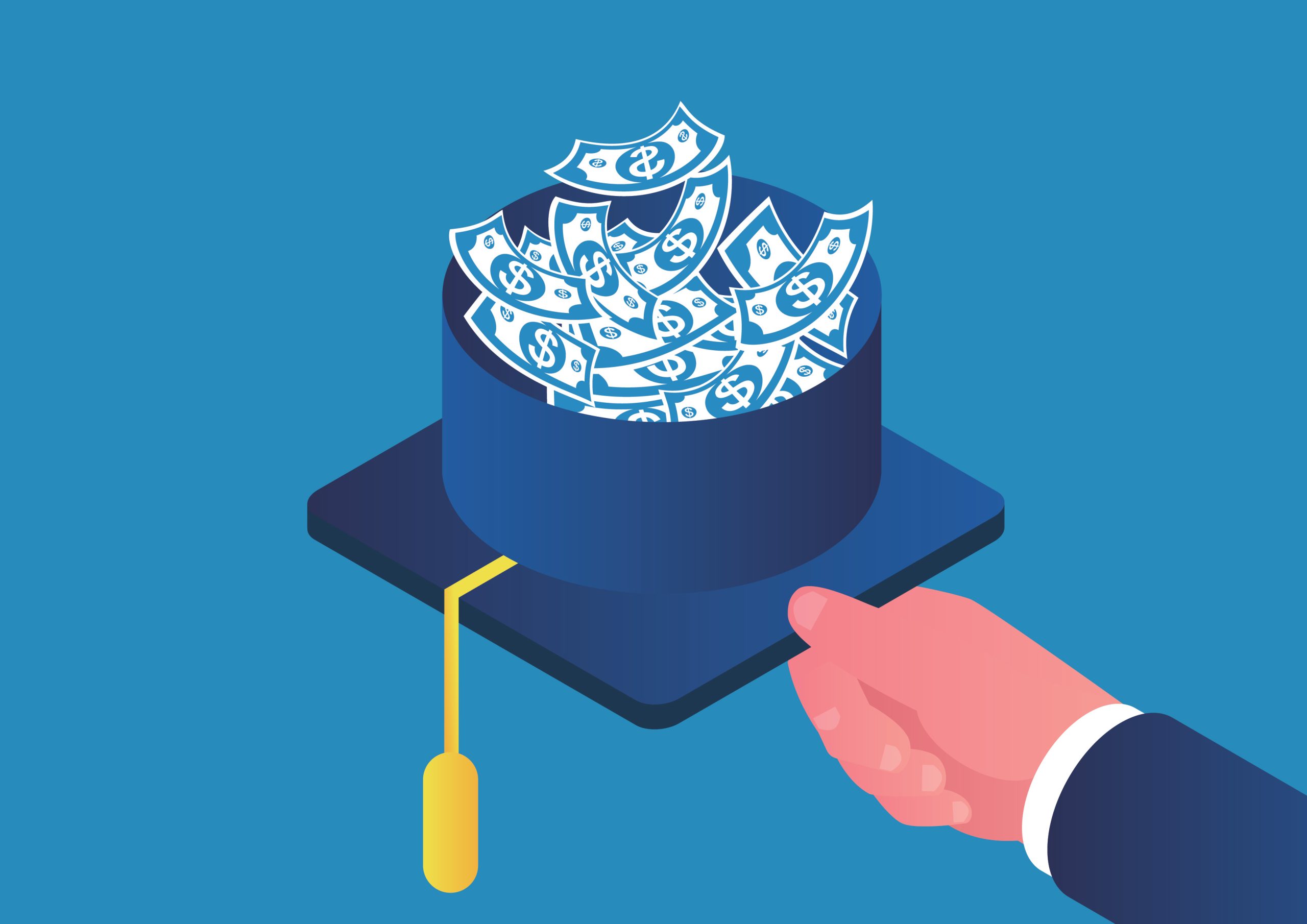
    Photo illustration by Justin Morrison/Inside Higher Ed | greenleaf123/iStock/Getty Images | APCortizasJr/iStock/Getty Images

    District Judge Allison Burroughs granted a preliminary injunction to Harvard University on Friday in its case challenging the Trump administration’s efforts to prevent the university from enrolling international students. It’s the latest development in a tit-for-tat legal battle over the ability of more than a quarter of Harvard’s students to remain enrolled. 

    The injunction prevents the Department of Homeland Security from stripping Harvard of its Student Exchange and Visitor Program certification until Burroughs issues a final ruling in the lawsuit. It does not address President Donald Trump’s executive proclamation from earlier this month banning the State Department from issuing visas to international students and researchers attending Harvard; a temporary restriction on that ban expired June 20. 

    Burroughs has not issued an injunction on the Trump administration’s second attempt to revoke Harvard’s SEVP certification, which could take effect Wednesday if she declines to take further action, as Harvard has requested. 

    Source link

  • Federal court backs teachers fired over trans protest

    Federal court backs teachers fired over trans protest

    FIRE helped secure a victory this week for two educators in Oregon when the U.S. Court of Appeals for the Ninth Circuit sent Damiano v. Grants Pass School District back down to the federal district court, as FIRE had asked it to in our amicus brief.

    When their school district passed a policy requiring teachers to address transgender students by their preferred names and pronouns, the plaintiffs, Oregon assistant principal Rachel Sager and teacher Katie Medart, started the grassroots campaign “I Resolve” to voice their opposition to the policy. Following complaints by students, parents, and community members, their local school district fired the teachers but later reinstated them to different roles. 

    The teachers sued. But the lower court ruled the school district was entitled to fire the teachers and granted summary judgment, meaning it did not see a need to go to trial.

    FIRE saw things differently. And now, so has the appellate court. Our brief to the Ninth Circuit argued that Sager and Medart’s speech on a matter of public concern — as speech on the debate around gender issues undoubtedly is — must be properly balanced against the school district’s interest in providing services to the public. FIRE wrote:

    Almost twenty years ago, this Court held “it is well-settled that a teacher’s public employment cannot be conditioned on her refraining from speaking out on school matters.” … Yet the district court here held that, under Pickering, Grants Pass School District could do exactly that. The court incorrectly concluded that the district did not violate the First Amendment by firing an assistant principal (Rachel Sager, née Damiano) and teacher (Katie Medart) for speaking out against the District’s gender identity policy … because their actions—namely, publishing an alternative model gender-identity education policy and accompanying video called “I Resolve”—allegedly caused significant community disruption.

    The lower court put too much weight on the discomfort and controversy the teachers caused with their advocacy, and too little weight on their First Amendment right to speak as private citizens on a matter of public concern.

    On top of that, the court found a genuine dispute to be resolved over whether the teachers’ advocacy actually disrupted the school’s operation. As such, the Ninth Circuit reversed the lower court’s opinion — meaning the educators’ First Amendment claim can now proceed to trial.

    With its ruling, the Ninth Circuit has sent a pointed reminder that public employees don’t surrender their constitutional rights just because they work for the government. 

    Source link

  • Temple University eyes job reductions amid $60M deficit for FY26

    Temple University eyes job reductions amid $60M deficit for FY26

    Dive Brief:

    • Temple University President John Fry this week signaled that officials expect to eliminate jobs as the public institution in Philadelphia navigates choppy fiscal waters. 
    • University leaders forecast a $60 million structural deficit for fiscal 2026, Fry said in an announcement to the Temple community. That comes after the university shrank an $85 million projected deficit to $19 million for fiscal 2025. 
    • As the university tries to close the persistent structural deficits, Temple leaders have asked vice presidents and deans to reduce their total compensation spending by 5% across units, Fry said. “Unfortunately, this will result in the elimination of some positions,” he added.

    Dive Insight:

    Over fiscal 2025, Temple shrank its deficit by tightly controlling hiring, travel and other discretionary spending. Nonetheless, long-term enrollment declines have weighed on the budget.

    “For the previous years that we had a structural deficit, university reserves were used to cover expenses, which is not a sustainable practice,” Fry said. “We must work toward achieving a structurally balanced budget where our expenses do not exceed revenues going forward.” 

    Specifically, Fry pointed to a drop of 10,000 students from fall 2017 levels, with much of that dip occurring during the pandemic. As of fall 2023, Temple’s enrollment totaled 30,205 students. 

    The declines, Fry noted, have translated into a roughly $200 million falloff in tuition revenue.

    However, Fry pointed to “positive indicators” for the class of 2029. He said Temple is on track for its second consecutive year of increases in first-year students.

    But while enrollment is still being rebuilt, state appropriations have remained flat and operating costs have increased.   

    “For this reason, fiscal year 2026 — and the next two years — will continue to be challenging until we significantly grow overall enrollment and identify new revenue sources,” Fry said. “In short, we have some difficult but necessary decisions to make over the next three fiscal years.”

    Employee compensation accounts for 62% of operating expenses, which is why university leaders are homing in on those costs. Even so, the university is planning a 1.5% increase in the budget for merit salary raises. 

    The university is also making capital investments, including building a new home for its public health college and an arts pavilion. Fry noted that these projects are funded with donations and state money. 

    Temple is far from alone in its austerity measures. 

    In recent months, both public and private universities have undertaken some combination of hiring freezes, furloughs, layoffs, tuition hikes and other measures to address funding challenges from both the state and federal level. The Trump administration, for example, has unilaterally slashed grant funding, and congressional Republicans are eyeing policy changes, such as eliminating Grad PLUS loans.

    Source link

  • Judge Orders Mahmoud Khalil to Be Released

    Judge Orders Mahmoud Khalil to Be Released

    A federal judge ordered that Mahmoud Khalil, the Columbia University graduate and student protest leader who was detained by ICE agents in March, be released from a detention center in Louisiana. News outlets reported that he walked out of the detention center around 6:40 Central time Friday evening. 

    U.S. District Judge Michael Farbiarz ruled on Friday that Khalil, a legal permanent resident who has not been accused of any crime, should be released on bail and that continuing to hold him was highly unusual and could constitute “unconstitutional” punishment for his political beliefs. The Trump administration had sought to keep Khalil imprisoned based on a minor alleged immigration infraction after another judge ruled earlier this month that it could not continue to hold him purely based on the State Department’s claim that his continued presence in the U.S. posed a foreign policy threat. 

    Khalil’s arrest made national headlines and kicked off the Trump administration’s months-long campaign of detentions, visa revocations and threats of deportation against international students.

    Source link

  • The future for teacher diversity in a world of DEI scrutiny

    The future for teacher diversity in a world of DEI scrutiny

    This audio is auto-generated. Please let us know if you have feedback.

    With diversity, equity and inclusion efforts facing scrutiny under the Trump administration, school districts and states looking to diversify their teacher workforces are in a precarious situation. 

    Nearly a month into President Donald Trump’s second term, for instance, the U.S. Department of Education slashed $600 million in “divisive” teacher training grants — specifically through the Teacher Quality Partnership Program and the Supporting Effective Educator Development Grant Program. The department said in February that those cuts were made to grants that “included teacher and staff recruiting strategies implicitly and explicitly based on race.” Advocates for the federal grants said the decision particularly impacted funding for programs aiming to improve teacher diversity in classrooms. 

    For years, there’s been a push for more policies to support the recruitment and retention of teachers of color as the nation’s K-12 public school student population grows more racially diverse and as teacher shortages persist. Advocates often point to research that shows when schools hire teachers who look like their students — particularly students of color — student achievement improves and disciplinary rates go down.

    While research from the National Council on Teacher Quality found that teacher diversity slowly grew between 2014 and 2022, those findings also suggested that teachers of color are opting out of careers in education as teacher diversity lags behind the rate of the broader workforce.  

    But with the U.S. Supreme Court’s 2023 ruling that repealed race-conscious admissions in higher education and the Trump administration’s ongoing push against DEI, some experts advise districts and states to be cautious when approaching teacher diversity efforts moving forward. On the flip side, advocates say the need for these initiatives remain. 

    A ‘scary’ time for teacher diversity initiatives

    Before Modesto City Schools began its teacher workforce diversity partnership with California State University, Stanislaus, there was a “mismatch” in representation between students of color and teachers of color in its elementary schools, said Shannon Panfilio-Padden, an associate professor at the university’s college of education. 

    During the 2021-22 school year, elementary enrollment for students of color in Modesto City Schools could range from 60% in some buildings to as much as 98% in others. That’s compared to the range of 13% to 66% among elementary teachers of color in the district, said Panfilio-Padden, who helped oversee the partnership between the district and university. “What Modesto had been working on for years was diversifying their teacher workforce, but no matter what they tried, it wasn’t working.”

    By improving collaboration and identifying workforce barriers with Modesto City Schools, CalState Stanislaus — which has a majority Hispanic student population — was able to double the number of candidates who are teachers of color, from 6 to 16, who entered the district’s classrooms between the 2021-22 and 2023-24 school years, said Panfilio-Padden. 

    The partnership was spurred through CalState’s Center for Transformational Educator Preparation Programs, which aims to boost recruitment and retention of teachers of color to serve California’s diverse student population. 

    At a time when such initiatives are being targeted at the federal level, Panfilio-Padden said “it can be scary.” But, she said, she’s dedicated to supporting her students, who are aspiring teachers from diverse backgrounds. 

    “We need teachers so desperately in California, and we need highly qualified teachers,” she said. Panfilio-Padden said the university can’t predict the amount of federal aid or state grant money that will be available to aspiring teachers, but “at the same time, when they continue to come to us with an enthusiasm to teach elementary kids, it just puts everything into perspective.” 

    Meanwhile, on the other side of the country, Massachusetts enacted the Educator Diversity Act in November 2024 as part of the state’s economic development package. The legislation looks to address barriers to recruiting and retaining educators of color by allowing multiple pathways for teacher certification, creating a statewide dashboard for tracking educator workforce diversity at the district level, and increasing uniformity in hiring practices to support candidates from underrepresented backgrounds. 

    Source link

  • RAQUEL MONROE | Diverse: Issues In Higher Education

    RAQUEL MONROE | Diverse: Issues In Higher Education

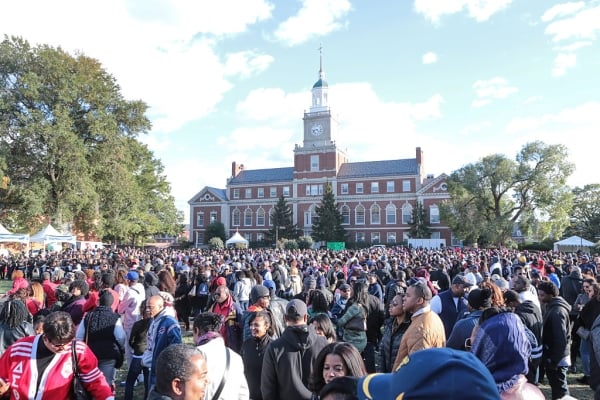
    Dr. Raquel MonroeHoward University has named Raquel Monroe dean of the Chadwick A. Boseman College of Fine Arts. In that role, she Monroe will oversee academic, performance, and research programming for visual arts and design, music, and theater arts at Howard. Monroe currently serves as a full professor and associate dean of graduate education and academic affairs at the University of Texas at Austin’s (UT Austin) College of Fine Arts. Monroe will begin her new role Aug. 4, 2025.

    Monroe is a founding board member of the Collegium for African Diaspora Dance and a member of Propelled Animals, a multimedia, interdisciplinary arts collective. Before her work at UT Austin, she was a professor in dance and an administrator at Columbia College in Chicago.

    Monroe earned bachelor’s degrees in dance and theatre and a master’s degree in communication from Arizona State University. Monroe also holds a doctorate in culture and performance from the University of California, Los Angeles.

    Source link

  • Removing Credit Transfer Barriers Key to Improving Higher Ed Completion Rates

    Removing Credit Transfer Barriers Key to Improving Higher Ed Completion Rates

    Dr. Andrew J. SeligsohnHigher education in the United States has come under increasing scrutiny — but not always for the right reasons. Critics claim that colleges and universities award degrees with little economic value, limit ideological expression on campus, and operate primarily for their own financial interests, rather than as institutions of shared public value. While much in this narrative is false, it nonetheless affects the public’s attitude toward higher education and individuals’ decisions about pursuing a postsecondary degree, which may be detrimental to their economic interest.

    When these critiques are made in bad faith, we should counter them with facts about the value of college attainment. It remains true for example, that a college degree is likely to yield a significant boost in earnings. Nonetheless, anyone who cares about higher education must also ask why these arguments resonate so deeply with the public. Where real frustrations are fueling legitimate skepticism, addressing those concerns can both improve higher education’s reputation and enhance its value for students, families, and society. Since the experiences that give rise to frustration and receptivity to attacks on higher education are personal experiences, it pays to drill down into the particulars to figure out what’s going on.

    In that spirit, Public Agenda, in partnership with Sova and the Beyond Transfer Policy Advisory Board, set out to deepen our collective understanding of learner experiences with the credit transfer process. We knew from research on enrolled students that transfer was a source of pain for many learners. But we didn’t know how many people were affected, how much it mattered to them, and how it shaped their views of higher education more broadly. With support from ECMC Foundation, we fielded a national survey of adult Americans that interrogates transfer experience and outcomes. 

    Dr. Lara CouturierDr. Lara CouturierThe findings were striking, and they should serve as a call to action for institutions of higher education. Nearly 4 in 10 respondents reported that they had tried to transfer credit toward a college degree or credential. This included credits earned at a previous college or university, as well as credits earned from nontraditional sources. In fact, more than a third attempted to transfer credits earned from workplace training, military experience, industry certification, vocational or trade school, or other prior learning. With more households feeling the cost of inflation and needing to upskill to survive in this economy, and more higher education institutions facing enrollment declines, we should be finding ways to develop more on-ramps and clear the path to a college degree.

    Unfortunately, the survey revealed that Americans who attempt to transfer encounter convoluted paths, often losing credit hours, money, and motivation along the way. One in five respondents reported having to repeat a class they had already taken because their credits didn’t transfer. Thirteen percent reported running out of financial aid as a result of having to repeat courses. And, most concerning, 16% reported that they gave up on pursuing a college degree or credential because the process of transferring was so difficult. It’s clear difficulties with transfer are not only inconveniences — they’re significant financial burdens and barriers to completion.

    We also sought to understand how these direct experiences shape individuals’ broader attitudes toward higher education. We found it profoundly troubling that 74% of respondents who had tried to transfer credit agreed with the statement that two- and four-year higher education institutions care more about making money than about educating students. In fact, respondents who had tried to transfer credit were more likely to hold this jaded view than those who had attended college but had not transferred or those who had no prior experience with higher education. So while some of the current attacks on higher education may be in bad faith, it should not be surprising that they find a receptive audience among so many Americans who recall feeling personally misled. 

    We know, then, that credit transfer needs reform — but what exactly does that look like? Public Agenda also surveyed Americans about potential interventions, and the results are promising. First, when asked what should happen to a college with a track record of not accepting many credits for transfer, Americans felt public accountability would be more helpful than heavy-handed punitive approaches. Fifty-four percent of Democrats and 47% of Republicans agreed that institutions should have to make a plan to improve credit transfer rates. Conversely, just one-third of Republicans and Democrats thought colleges should lose their funding. But what might go into a plan for improvement? Our survey found broad support among Republicans, Democrats, and independents for a variety of policies intended to make it easier for students to transfer credits. Support is notably strong for requiring that students have free and easy access to their transcripts, credentials, and degrees; requiring institutions to create public databases with transfer information; and requiring that prospective transfer students are quickly told how many credits will be accepted. 

    The benefits of a better transfer process are clear and compelling. Students would face fewer obstacles to completing their degrees, leading to higher graduation rates, better individual economic outcomes, and broader prosperity. Just as importantly, higher education would rebuild trust with the public by showing that institutions are committed to serving students—not just collecting tuition dollars. And the benefits of this renewed trust extend beyond the higher education system. The perception that public institutions don’t care about ordinary Americans is a key element of the challenge our broader democracy is facing. Since the education system is a direct way many people interact with our government, restoring confidence that higher education works for all Americans can further inspire faith in public institutions.

    If we ignore issues like the broken credit transfer system, skepticism about higher education will continue to fester. Worse, more students may give up on college altogether, missing out on opportunities for personal and professional growth—all of which ultimately erodes our democracy. Pushing back against misinformation isn’t the only way to defend higher education; we must acknowledge and address the real barriers students face. Credit transfer is an experience shared by many with cross-partisan support for reform—now is the time to act. Reforming the transfer process won’t solve every challenge facing higher education, but it’s a clear and necessary step toward improving the system for the good of both students and institutions themselves.

    Dr. Andrew J. Seligsohn is president of Public Agenda, a national research-to-action organization. Dr. Lara Couturier is a partner at Sova, a higher ed advocacy organization.

    Source link

  • Many students decide they’re not a ‘math person’ by the end of elementary school, new study shows

    Many students decide they’re not a ‘math person’ by the end of elementary school, new study shows

    This story was originally published by Chalkbeat. Sign up for their newsletters at ckbe.at/newsletters.

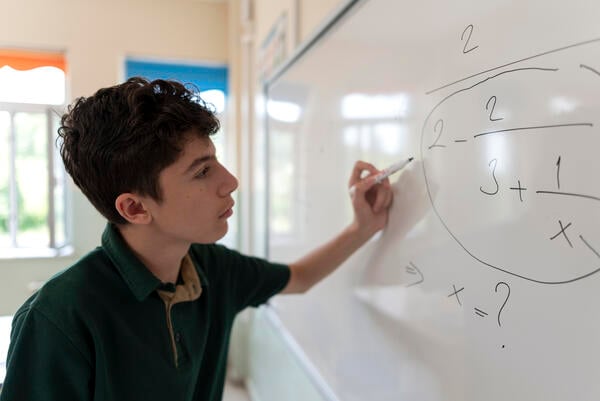
    Roughly half of middle and high schoolers report losing interest in math class at least half the time, and 1 in 10 lack interest nearly all the time during class, a new study shows.

    In addition, the students who felt the most disengaged in math class said they wanted fewer online activities and more real-world applications in their math classes.

    Those and other findings published Tuesday from the research corporation RAND highlight several ongoing challenges for instruction in math, where nationwide student achievement has yet to return to pre-pandemic levels and the gap between the highest and lowest-performing students in math has continued to grow.

    Feeling bored in math class from time to time is not an unusual experience, and feeling “math anxiety” is common. However, the RAND study notes that routine boredom is associated with lower school performance, reduced motivation, reduced effort, and increased rates of dropping out of school.

    Perhaps unsurprisingly, the study found that the students who are the most likely to maintain their interest in math comprehend math, feel supported in math, are confident in their ability to do well in math, enjoy math, believe in the need to learn math, and see themselves as a “math person.”

    Dr. Heather Schwartz, a RAND researcher and the primary investigator of the study, noted that the middle and high school years are when students end up on advanced or regular math tracks. Schwartz said that for young students determining their own sense of math ability, “Tracking programs can be a form of external messaging.”

    Nearly all the students who said they identified as a “math person” came to that conclusion before they reached high school, the RAND survey results show. A majority of those students identified that way as early as elementary school. In contrast, nearly a third of students surveyed said they never identified that way.

    “Math ability is malleable way past middle school,” Schwartz said. Yet, she noted that the survey indicates students’ perception of their own capabilities often remains static.

    The RAND study drew on data from their newly established American Youth Panel, a nationally representative survey of students ages 12-21. It used survey responses of 434 students in grades 5-12. Because this was the first survey sent to members of the panel, there is no comparable data on student math interest prior to the pandemic, so it doesn’t measure any change in student interest.

    The RAND study found that 26% percent of students in middle and high school reported losing interest during a majority of their math lessons. On the other end of the spectrum, a quarter of students said they never or almost never lost interest in math class.

    There weren’t major differences in the findings across key demographic groups: Students in middle and high school, boys and girls, and students of different races and ethnicities reported feeling bored during a majority of math class at similar rates.

    Dr. Janine Remillard, a professor at the University of Pennsylvania Graduate School of Education and expert in mathematics curriculum, said that in many math classes, “It’s usually four or five students answering all the questions, and then the kids who either don’t understand or are less interested or just take a little bit more time — they just zone out.”

    Over 50% of students who lost interest in almost all of their math classes asked for fewer online activities and more real-world problems, the RAND study shows. Schwartz hypothesizes that some online math programs represent a “modern worksheet” and emphasize solo work and repetition. Students who are bored in class instead crave face-to-face activities that focus on application, she said.

    During Remillard’s math teacher training classes, she puts students in her math teacher training class into groups to solve math problems. But she doesn’t tell them what strategy to use.

    The students are forced to work together in order to understand the process of finding an answer rather than simply repeating a given formula. All of her students typically say that if they had learned math this way, they would think of themselves as a math person, according to Remillard, who was not involved in the RAND study.

    Chalkbeat is a nonprofit news site covering educational change in public schools.

    For more news on STEM learning, visit eSN’s STEM & STEAM hub.

    Latest posts by eSchool Media Contributors (see all)

    Source link