This audio is auto-generated. Please let us know if you have feedback.
How well did you keep up with this week’s developments in K-12 education? To find out, take our five-question quiz below. Then, share your score by tagging us on social media with #K12DivePopQuiz.
This audio is auto-generated. Please let us know if you have feedback.
The American Lung Association is urging K-12 schools to prioritize indoor air quality and to test for radon, the second-leading cause of lung cancer in the U.S.
The naturally occurring, odorless, tasteless and colorless radioactive gas can accumulate indoors, entering through cracks in floors, walls and foundations. The only way to determine if a facility has elevated radon levels is through testing, according to the organization. “There is no known safe level of radon exposure,” it says.
“Radon … can accumulate inside schools without anyone knowing,” Harold Wimmer, president and CEO of the American Lung Association, said in a statement. “The good news is that testing for radon is simple and affordable — and schools can take action to fix the problem if levels are high.”
Young children are especially vulnerable to indoor air pollutants like radon because they spend more time indoors and breathe more air relative to their body size than adults, according to a working paper by the Center on the Developing Child at Harvard University.
ALA recommends short-term, charcoal-based radon test kits. In its announcement, it shares two national standards facility managers can follow:
The Radon Mitigation Standards for Schools and Large Buildings (RMS-LB 2018), released jointly by the American National Standards Institute and the American Association of Radon Scientists and Technologists. The standards address specialized techniques and quality assurance processes to mitigate radon in buildings with complicated designs and specialized airflow, which is typical of schools.
The Radon in Schools standards, developed by the U.S. Environmental Protection Agency, recommend that building operators take action if radon levels are at 4.0 picocuries per liter or higher and consider taking action if levels are as low as 2.0 pCi/L.
To assess radon levels during normal conditions, testing must take place while the building’s HVAC system is running, the ALA says in a fact sheet. For the most accurate test results, HVAC maintenance and filter changes must be current, it says.
If testing finds radon levels under 4.0 pCi/L, schools don’t need to test again for five years, according to the ALA fact sheet. But changes that affect the school HVAC system or changes to the building foundation or the surrounding soil could warrant sooner testing because those events can affect radon levels, the organization says.
Many states offer training for school facility managers on how to conduct radon testing, or schools can hire licensed professionals to conduct the tests, according to National Radon Proficiency Program information.
The EPA requires states that are receiving indoor radon grants to maintain and provide the public with a list of radon testing service providers credentialed through their own state programs or through two national radon proficiency programs.
Across the world, local news media are disappearing. In the latest development, the News Media Corporation in the United States, based in the state of Illinois, shut down 23 newspapers across six states.
This is a result of a long and gradual global disintegration of the media ecosystem. It began decades ago when corporate owners of newspapers and television and radio stations began to consolidate their outlets. Two-newspaper towns became one-newspaper towns. Then investment banks noticed how much profit these local monopolies generated from ad sales, and bought them up.
The internet came around and decimated those ad sales and the investors owning the publications stripped them down so newspapers that had teams of journalists now had just a handful. We are in the final stage where the owners are simply pulling the plug and selling off assets.
So what to do if you live in a news desert where there is no local source of news? Start your own news site. That doesn’t have to be as daunting a task as you might think. You don’t need to be the New York Times or Guardian. Start small. Here are some steps:
Get started.
Create a mission statement. What are you trying to accomplish and why are you doing it? What is your motivation and what are your long-term goals? Who are you serving and how do you plan to do that? You can change your mission over time, but having a mission statement will help guide you when you confront choices and challenges. For an example, check out News Decoder’s mission statement.
Establish a website. It can be super simple on the easiest and cheapest platform you can find: WordPress, Weebly, Squarespace — there are many. If you haven’t done this before, ask your friends and family to help you. I guarantee you have one friend or cousin or teacher who knows how to do this and can show you how (or do it for you!).
Give it a name. One of my favorite local news sites is called Redheaded Blackbelt, which Kym Kemp has been publishing near the northern tip of California for almost 20 years. She has red hair and is a black belt.
Set up a schedule you think you can handle. If you are serious about this, you should consistently post to the site even if it isn’t every day. You want to build an audience and people need to count on you for information. Also it will help keep you going if you have a set schedule to keep to. You can start with one post a week.
Start reporting.
Find something out that people would find important or interesting. It could be anything from what the local government is planning to do to the opening of a new hardware store. It could be a weird new vegetable showing up at the market. What is totally not interesting to someone in a big city might be just what people will talk about in your town. Think little!
Develop an ethics policy. This will be important if you become THE source for news in your community. People will want you to write about them, or not write about them, or write about them in a particular way. You need to be able to respond consistently so that it doesn’t look like you favor people or are biased against them. Be honest with yourself: What positions must you take? What positions won’t you take? Will you accept freebies like tickets to attend events and will you promise anything in return?
Find out more stuff. How do you do that? Every time you go out, get chatty. Here is the question you ask: What’s happening? Now, when you ask that question, most people automatically say “Nothing.” But that’s because they assume you don’t really care and you are just being polite. So part of being chatty is being nosy and a bit persistent. Observe what is happening around you and notice what seems different.
Do this enough and when people see you, you won’t even have to ask. They will suggest all kinds of stories and tell you all kinds of things happening. On the downside, be prepared for people interrupting every conversation with “now, don’t publish this …”
Note that whenever there is change, no matter how big or small, there is a story behind that change. Someone made a decision to do something. And people tend to like talking about the decisions they made or the actions they took.
Now this is important: When you are digging for news, you must tell people that you’ve got this little news site you started and that you want to post about whatever it is you are talking about with them. In a small community, it is super important not to create enemies with your news site (unless you plan to take down corrupt politicians). You want people to be excited you are writing about them.
That doesn’t mean that everything you post has to be flattering. It just means that you can’t be sneaky or spiteful or petty with your posts. Treat people with respect and they will respect you. For a local news site to survive you need the support of your local community.
Develop a growth strategy.
Generate word of mouth. Once you begin posting, tell as many people as you can about your site and what you are trying to do. Not only do you want to grow an audience, but the more people who know what you are doing, the more people will tell you stuff that you can report on. When people come to you with news, that’s a lot easier than chasing it down yourself.
Recruit help. You can be a one-person shop, but over time that would be exhausting. From day one imagine your publication five years old and then 10 years old. Then imagine yourself doing this for those 10 years. The only way the publication will endure is if you have help all along the way. Look for young people who are looking for experience and old people with too much time on their hands. Find the people you know who are really bored at whatever job they have and want to be part of something interesting and important. Keep an eye out for frustrated writers and amateur photographers, artists and data nerds.
And find those people who always attend local sporting events who can report on youth games. Just like posting about people’s pets, you will get all kinds of people flocking for news of their kid’s football or basketball games or the games of kids they know.
Think of funding sources. You might consider making your site a nonprofit. People would be more likely to offer you unpaid help that way. It would also enable you to ask for money from local funding organizations. If you think you might want to turn this venture into a business, start chatting up local businesses and seeing if they might support you by buying ads on your site. You don’t need to do any of that right away but remember, if you want the site to endure you will likely need to make some money from it to pay yourself and people who help you out on it.
Join organizations. With a news site you are both an entrepreneur and journalist, and there are organizations that will help you network and get you mentors and allies. Think about journalism organizations like the Society of Professional Journalists in the United States, the National Union of Journalists in the UK and Ireland and the Confederation of ASEAN Journalists in Southeast Asia. Also consider joining business organizations like the Chamber of Commerce or the Rotary Club.
Finally, have an exit strategy. The goal is to build a news site in a news desert so you should want it to last beyond you. There is a good chance you will grow tired of your venture at some point. Who will take it over? Might you be able to sell it at some point? It is never too early to think about these things if you want your news publication to endure. Don’t lose sight of the mission.
Questions to consider:
1. What is a “news desert”?
2. In what way would people in a small town be interested in different things than people in a big city?
3. If you were to start your own local news site, what types of stories or events would you cover?
Last week, news emerged of State Department plans to cut FY25 funding for 22 study abroad programs, rendering the programs cancelled in an unprecedented slashing of funding already approved by Congress.
“We were completely blindsided by the whole thing,” said a federal employee of the Bureau of Educational and Cultural Affairs (ECA), speaking anonymously to The PIE News.
Rather than informing ECA staff, news of the cancelled funds was sent to state department regional bureau officials, they explained, eventually spreading throughout the study abroad community over social media and by word of mouth.
“We put our heart and soul into implementing these programs… for lots of people to find out about the cuts through a list shared on LinkedIn was deeply troubling,” said the employee.
While the decision to cancel the grants came from higher up, the emails were sent by a “non-political” ECA leader. Over a week has passed and ECA staff are yet to receive any official announcement from the administration.
Upon receiving the news, the study abroad community quickly galvanised, with a campaign by the Alliance for International Exchange which has seen at least 13,500 letters sent to Congress as of August 21.
“I do think the campaigns are going to be helpful… from where I sit within the ECA, we need these campaigns, our livelihoods depend on these campaigns,” said the source.
“My fear is that there’s nothing at this point that would stop the current administration from doing this again in FY26… I would say they’re laying the groundwork for that to be possible for that to have happen again,” they added.
Currently, the cancelled funds relate to fiscal year 2025, which ends on September 30, though many of the programs are forward funded, meaning that they were waiting on the FY25 funds to support the 2026 calendar year.
“For FY25, I’m not sure how we come back from this,” said the ECA staff member. “Even if everything came back online today, we would still have a paperwork issue of trying to get everything done before the September 30 deadline.”
As such, the campaigns are fighting for the long-term survival of study abroad, amid “real fears” of programs unable to reopen in the following year.
“If we allow the Office for Management and Budget (OMB) to cut these congressionally appropriated FY25 awards, it will give them license to do it again and again, effectively eliminating exchange programs,” stated the Alliance.
Though ECA staff were not privy to high level conversations between ECA official Darren Beattie and State Department leadership, a notable difference this year was the presence of OMB, “who have never ever been involved in this process previously”, said the employee.
What’s more, experts have questioned the legality of the cuts, with stakeholders highlighting that the cancellation of funding already approved by Congress is “unconstitutional”.
This is one of the primary messages of the campaign, which the ECA source said they hoped would “set the stage” for FY26 to ensure that Congress decides.
We put our heart and soul into implementing these programs… for lots of people to find out about the cuts through a list shared on LinkedIn was deeply troubling
ECA employee
“We are letting the administration and Congress know that these programs have a valuable impact and that they could meet administrative priorities if they decided to use them the way they’re meant to be used,” they added.
After a slate of State Department layoffs last month, ECA staff are thought to be safe from job losses caused by the cuts, though staff furloughs are widely expected among program implementers, with whole organisations at risk of going under.
More broadly, employees are concerned about the “dire” consequences for US diplomacy and soft power.
“All the people that work on exchange programs that I have ever encountered had an international experience that changed our lives,” said the employee. “From a policy perspective, that’s the definition of soft power, and the consequence of not having those connections for even a year are dire.”
“I have every reason to believe that this administration is doing this with other aspects of the federal government, and we just don’t know that it’s going on.”
“ECA has this large alumni network that is passionate, and we can make our voices heard by Congress,” they said. “But my biggest fear is that if ECA doesn’t come out on top then it’s going to have a greater impact on other grants in other industries that don’t have a voice as loud as ours.”
Other than being deemed as a “lower funding priority in the current fiscal environment”, no rationale has been provided for which programs got the axe, with the ECA employee particularly surprised by the cancellation of the Young African Leaders Initiative (YALI).
Established in 2010, YALI had the support of the Trump administration, with the employee deeming it “one of the best US programs for the African continent”.
As for the remaining initiatives, including the state department’s flagship Fulbright Scholarship, nothing is off the table.
“Fulbright carries the weight of more protections than most,” said the ECA employee: “That being said, I think alumni need to pay attention. I don’t think anything is out of the realm.”
The State Department did not immediately reply to The PIE’srequest for comment.
Conversations between Egypt and Czech Republic are focused on expanding opportunities for student and faculty mobility, launching joint research initiatives, and creating frameworks for institutional partnerships between universities in both countries.
Senior officials including Ayman Ashour, Egypt’s minister of higher education and Czech Ambassador to Cairo, Ivan Jukl, gathered at the New Cairo Education Building to discuss deepening educational ties.
Ashour emphasised the importance of deepening academic and research collaboration between Egyptian and Czech institutions, noting that closer ties would help build human capacity and advance the priorities of both countries.
“We agreed on the importance of strengthening academic and research collaboration between Egyptian and Czech institutions, fostering knowledge exchange, and creating new opportunities for joint projects in priority fields that serve both nations’ development goals,” commented Ayman Ashour.
“Together, we will work towards building impactful partnerships that advance innovation, research, scholarships, and sustainable development.”
Together, we will work towards building impactful partnerships that advance innovation, research, scholarships, and sustainable development.
Ayman Ashour, minister of higher education,
In recent years, Egypt has launched new universities, welcomed international branch campuses, and developed dual-degree programs with globally ranked institutions, aiming to attract more students.
Egyptian universities are increasingly offering programs taught in multiple languages, designed to draw a more diverse pool of international students. This part of the expansion strategy and national development agenda, the minister explained, is Egypt’s ambition to establish itself as a regional hub for higher education, attracting students from across the Arab world, Africa, and the Middle East.
Jukl, meanwhile, welcomed the developments, stressing the Czech Republic’s commitment to extending its cooperation with Egypt.
He praised Egypt’s young, dynamic population and its position as a gateway to the African continent, calling these factors a strong foundation for building long-term academic and scientific partnerships.
For students, the enhanced cooperation could mean greater access to scholarships, exchange placements, and dual-degree opportunities in the coming years. Egyptian students may also see more Czech institutions participating in academic fairs and mobility schemes across the region, opening new pathways to Europe for postgraduate study and research.
Some university systems are letting their existing faculty senates lapse while others are reshaping them to comply with SB 37.
Photo illustration by Justin Morrison/Inside Higher Ed | BraunS, malerapaso and vi73777/iStock/Getty Images
The University of Texas System Board of Regents voted Thursday to disband the system’s long-standing faculty senates in compliance with Senate Bill 37, the sweeping Texas higher education law that gives university boards and presidents control over faculty governing bodies.
The UT board also voted Thursday to create faculty advisory groups, which will “perform the work of faculty governance bodies”—such as reviewing degree requirements, suggesting curricular changes, coordinating campus events and revising the faculty handbook—while keeping all decision-making power in the hands of the administration.
The University of Houston system Board of Regents did the same Thursday, voting to create faculty councils that will “provide structured, meaningful avenues for faculty to help shape academic priorities, strengthen excellence and contribute to decisions that guide our future,” a university spokesperson said in a statement.
But the groups won’t give the faculty independent representation or any real power. In accordance with SB 37, the board bylaws now state, “a faculty council is advisory only and may not be delegated the final decision-making authority on any matter.”
As of June 20, any faculty governing body in Texas—whether it’s a senate, council or advisory group—may not exceed 60 members unless otherwise decided by the board, and every college or school within the university must be represented by at least two members, SB 37 dictates. The university president will appoint at least one of the representatives from each college or school within the institution, while the faculty elects the others, meaning that as many as 30 members could be chosen by the president.
The president will also choose the presiding officer, associate presiding officer and secretary for each group. Appointees may serve for six years before taking a mandatory two-year break from the group, while faculty-elected representatives may only serve for two years before the two-year break.
While the new groups are still faculty bodies, they won’t “authentically speak with the faculty voice,” said Mark Criley, a senior program officer in the department of academic freedom, tenure and governance at the American Association of University Professors. “No matter who is selected, the process by which they’re selected matters. We learned when we’re in elementary school—the teacher didn’t appoint the class president, the principal didn’t appoint them, this was one of our first exercises in representation. You choose the people who will speak for you in an institutional body.”
Across the state, college and university system boards are taking different approaches to scrapping and reshaping their faculty senates. The Alamo Colleges District Board of Trustees voted earlier this month to consolidate the faculty senates at each of the five campuses into one group of up to 35 members. Previously, the five senates comprised 114 voting members.
While the Texas State University system board gave presidents the ability to create new faculty groups, it did not approve a new faculty governing body at its Aug. 14 meeting and will let the existing senate lapse on Sept. 1, the deadline set by SB 37. Texas A&M University regents are expected to vote on their approach to the new law at their Aug. 27 board meeting, The Austin American-Statesman reported.
Even as university governing boards design their toothless, SB 37–compliant groups, two professors at the University of Houston on Monday unveiled what they’re calling the Faux Faculty Senate. “I know that people feel that faculty senates are kind of arcane … but it’s a part of civil society,” said David Mazella, an associate professor in the English Department at the University of Houston and president-elect of the faux senate. “[SB 37] is an antidemocratic bill that essentially eliminates the faculty voice in order for the state to directly control what we do.”
The faux senate is largely symbolic; it won’t replicate any of the governing functions of the now-defunct 100-member senate, Mazella said. Instead, it will serve as an off-campus meet-up for faculty to socialize and talk about ongoing issues in Texas higher education. “Even getting to a faculty cafe is really difficult, so giving people an opportunity [to talk] that is not in a university space feels really important to us,” Mazella said.
He and his co-creator, María González, also an associate professor of English at Houston, plan to start hosting events in October, though nothing concrete has been scheduled. Without support from the university, the money to host these events will come from Mazella’s and González’s own pockets. They’re looking for a space in the Houston area that’s “not too gross, but not too expensive,” said Mazella, for their first faux senate convening.
College Possible’s latest alumni survey shows strong outcomes for participants in its coaching program, including a 93 percent five-year graduation rate for those who attended a four-year college and high rates of employment and job satisfaction.
According to the report, which is based on a survey of 1,300 of the college access nonprofit’s more than 100,000 graduates, 95 percent are employed, 83 percent are employed full-time and more than four in five respondents said they felt fulfilled by their jobs.
The salaries of College Possible graduates are also high, with half reporting salaries over $60,000. The median salary for those working in STEM fields is $101,650, while those in non-STEM careers made a median income of $46,680. Sixty-eight percent of respondents indicated they feel at least somewhat financially secure.
The report also highlights that most of College Possible’s graduates say they benefited significantly from the coaching program, with nine in 10 saying they would recommend College Possible to others and 17 percent returning to coach other students or work for the organization in another capacity.
The key changes that students expect to affect them include caps on how much students can borrow, the elimination of some income-based repayment plans and the end of Grad PLUS loans.
The poll, which surveyed 1,190 graduate and undergraduate students earlier this month, asked students about what various provisions in the One Big Beautiful Bill Act would mean for them. Many respondents (38 percent) said they would have to take out private loans to balance the effects of the law, while others (35 percent) said they may not be able to finish college at all. About a quarter said they were even considering joining the military to help pay for college.
“I wanted to go to medical school, but now I won’t,” one student wrote, according to U.S. News.
At the same time, one in five students said they were unaware of the changes to students loans, while another 39 percent said they were “fuzzy on the details” of the OBBBA. Twenty-two percent said they understood the law but not how they will personally be affected.
Some students also reported supporting the bill’s provisions; about one in five students said they approved, respectively, of loan caps for graduate students, caps for medical and law students, and the elimination of certain income-based repayment plans. Slightly fewer, 17 percent, approve of eliminating Grad PLUS loans.
About 63 percent of students said they reached out to their financial aid offices for help navigating the bill’s effects, and three-quarters of those students found their financial aid offices helpful. About half of students (51 percent) also reported that their universities had been transparent about the effects of the OBBBA.
Continuing-education programs are one way for colleges and universities to provide targeted offerings and credentialing opportunities for alumni, adults in the region lacking postsecondary education and the local workforce. They also provide flexible support offerings, recognizing the competing identities and responsibilities adult learners hold.
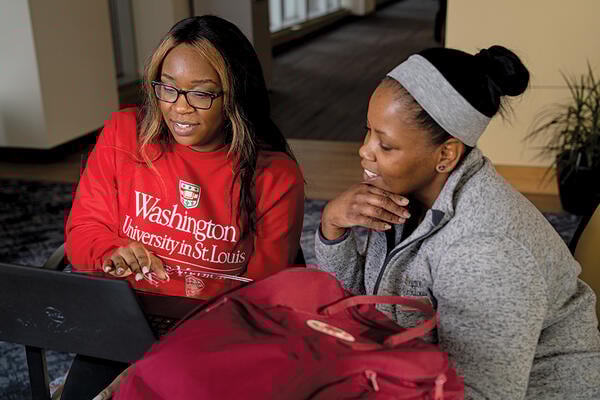
The School of Continuing and Professional Studies at Washington University in St. Louis houses certificate programs, undergraduate and graduate degrees, prison education initiatives, and lifelong learning courses for adults in retirement.
In the most recent episode of Voices of Student Success, host Ashley Mowreader speaks with Sean Armstrong, dean of the School of Continuing and Professional Studies, to talk about the program’s goals and ways the school uplifts adult learners of all types.
An edited version of the podcast appears below.
Q: Most people know WashU; it’s a pretty well-known institution in the U.S. But what is CAPS and what is the mission, and [who are] some of the students that you’re serving?
Sean Armstrong, dean of the school of continuing and professional education at Washington University in St. Louis
Washington University in St. Louis
A: Let me start with definitions. First, Washington University in St. Louis, we’ll call WashU. Continuing and Professional Studies, we’ll call CAPS. Nontraditional or adult learners, we call modern learners here—those for whom school is not their only priority. And then noncredit, we call professional credit because we don’t like “nons.” I think calling anything a “non” is just a negative, and it seems to say it doesn’t matter. So those are the terms that we use.
The program itself is an opportunity for modern learners to access Washington University in a way that they may not have been able to before. This university started out close to 100 years ago, and it was kind of a niche type of school, accessible to certain individuals but not broadly accessible. So our goal is to make this school broadly accessible. Many of our programs are based on regional workforce needs and, of course, [are for] those who find themselves in the category of some college, no degree, and they would like to return and complete their degree.
Q: Can you talk a little bit more about the students who enroll? When it comes to demographics or general trends that you see among the people who enroll in CAPS, what are those?
A: Over 80 percent of our students are employed full-time; I think over 50 percent have multiple jobs. Over 90 percent have families, whether that means they have children or they’re caring for an adult, a parent or older age demographic. I would say 80 percent of our students fall in the 25 to 49 age range. We do have some that are younger, and of course, we have some that are older, but [most] fall squarely in that range. Many of them are looking to find a way back because they want to advance or shift gears and enter another career. The bedrocks [of industry] here in St. Louis are health care, emerging technologies like data, and leadership and management.
Q: I like the focus that you placed on career. One, these students are already working—they know what it’s like to be in the workforce and be employed—compared to maybe some of our traditional undergraduate students. But two, they have a very clear career goal, and they’re looking to do something different with their lives.
I wonder if you can talk about that paradigm where it’s not that they need a job, it’s that they want a different job, or that they’re looking to do something maybe tangential or in a higher-paid role.
A: I think being aspirational doesn’t stop when you’re 22 years old. That’s why we have lifelong learning, and our role is to meet people where they are and to create pathways that lead them to their goals.
We call ourselves partners in student success. We don’t see ourselves as necessarily the educator or the school; we want to be a partner. We want to talk about what your goals are, what your motivations are, and then try to use the resources within the university and within the community to build that pathway to where you want to go.
Q: I just want to say it’s been great listening to the word choice that you all are using, like a “partner,” a “modern learner” and not using “noncredit.” Is that an institutional initiative or is that something you’re passionate about, the idea of using asset-based language?
A: I am super passionate about it. I think the institution has adopted it as well. I can’t say what the language was before I arrived, but I’ve been using a lot of it here.
A lot of it has been to change the perception of the students who enroll within CAPS and the perception of the individuals in our community who are coming to us. I don’t want anybody to be viewed in a negative light, one, and I don’t think there needs to be a comparison between learners, right? They’re all learners, they all have aspirations and we’re all here to support them. I think of all of this as “We are all in this.”
Q: Let’s talk about some of the programs. What’s the most popular degree offering that you all have, or nondegree offering?
A: The bachelor of science in integrated studies is a degree program that has many different areas of study and certificate options. That is a popular program because this is really dedicated as a some college, no degree type of program. We accept up to 85 transfer credit hours in this program, which is super generous. It’s not something I want to change, and hope I don’t have to, for various reasons, but it allows us to really be open to students.
WashU is a writing school. It is a school that wants you to be able to communicate clearly, either through writing or speaking. And so our writing and communication courses, there is an assessment that we do to see where individuals are, and then to help them build the skill to be able to be successful in our courses. So that’s a really popular one.
Our certificates, you know, I try to put my finger on which ones [are popular], because I think our certificate enrollments have doubled in the last year, and we’re trying to understand why.
Our certificates serve two purposes. One, they’re skill-based, so they’re an opportunity for someone to learn a skill within a year and then have that credential and move on. But they’re also stackable to a bachelor’s degree, so if somebody has some college, no degree, or maybe they have an A.A. [associate of arts] degree, they want to earn their certificate because they’re not feeling too confident about entering into a bachelor’s degree program, this is a really good way for them to be able to do that. We’ll begin to uncover this year as to why that’s so popular, but it’s been going gangbusters.
And then I have to tell you about our “heart” programs. We market them as our community programs, but they’re programs that are central to our heart. They’re our prison education program, our English language program, our master of arts in teaching and learning, and our OSHA Lifelong Learning Institute program.
The four of those are really community-based. Prison education, we offer face-to-face degree programs in two prisons in Missouri and re-entry support for individuals who are returning home. In our English language program, we offer opportunities for individuals who are international students to communicate clearly, present clearly. But we also had an opportunity to turn that program towards the community, for individuals who lack the English skills to be a good fit for a job—you have to communicate clearly on any job. So we had individuals who were here that had medical degrees and wanted to work in the medical field, and so we’re helping them to be able to bridge that gap.
I mentioned our master of arts in teaching and learning; teaching is just necessary. So we’re trying to do all that we can to be helpful, especially here in the St. Louis region. And then our OSHA Lifelong Learning Program offers opportunities for individuals who are over 50 to continue learning for the rest of their lives.
Q: That’s awesome. I have a personal passion for lifelong learner classes because they’re so niche and there are so many different ways to engage the community there.
You talked a little about the community engagement piece of CAPS, but I wonder if we can dig into that a bit more. You know, WashU has historically been very selective in who it admits and how it relates to the St. Louis community as a whole. How does this further that town-and-gown relationship and encourage St. Louisans to see themselves as part of WashU?
A: Our focus is on the region and on individuals who really don’t have the option of being a residential student. They have to be either part-time, some of them are three-quarter time, but they cannot live on campus. That’s not an option, because they just have other things going on. And so that’s our niche. That’s kind of the gap that we’ve been able to fill.
I am happy to say that WashU has been very supportive, very enthusiastic about that population of students. Again, we don’t compare. I think the WashU residential students are probably some of the brightest students I’ve met in my career, probably top 1 or 2 percent from around the world. And I’m not trying to say our students are not, but you know that they’re not 18, either.
They’re 30 years old with two children and other obligations. Household operations is a real thing, trying to figure out what needs to get paid and what doesn’t. That’s not to say our residential students don’t have those types of concerns, but for our [CAPS] students, it is something that can sometimes challenge how they appear in our setting.
Q: There was a study by Trellis Strategies that found a majority of community college students or those enrolled part-time were more likely to consider themselves workers who are students and not necessarily students who are workers. It sounds like that’s the population you’re talking about, where their education is important to them, but there are other things that are ranking towards the top first.
You serve a variety of adults in a variety of different contexts. What is that like for you, as the dean of a school like this, to wear all these hats and engage with all these different types of programs and support mechanisms to encourage student success?
A: I’ve always liked the full-spectrum model of adult education. We’ve seen bits and pieces—the community college, of course, has a piece. Typically, school districts will have a piece, universities will have a piece. I’ve always liked, “OK, there’s really no job too small if there’s a need in the region. So let’s attack all of it.”
I think that vision starts with me, and of course, I’m kind of the mad scientist sometimes, but the support and the passion for the individuals that I work with are really what makes this happen. It’s interesting because we were talking the other day in a leadership team meeting, and I said, “I think one of the questions I am going to ask in interviews from now on is, ‘How does it make you feel to help somebody? Does it make you feel good, or is it just you’ve checked the box?’” And I think, for the most part, in our organization, it makes people feel good to do this type of work.
Q: Absolutely. What are some of the challenges in the work that you do?
A: Time is our biggest challenge. There are things that people needed yesterday, and we’re just unable to create a program as quickly as the need arises or has arisen. There are people who are finding out about us and wish they had known about us a year ago, and so we’re behind the gun on that. But really, it’s time for us. I think we are ready to do, as I think my daughter would say, we’re ready to do the most in any given circumstance.
Q: One initiative that we didn’t talk too much about that I want to highlight is Extend(Ed) and this idea of equipping professionals to advance in their career. Can you talk a little bit about that initiative and how it works?
A: Sure. Extend(Ed) is the professional credits—the noncredit space is what it’s typically called, but we call it professional credits. I call it creative solutions for workforce needs. It’s a model that I see us offering 100-plus short-term courses or programs in within the next, I’d say, 18 months.
We’re looking at synchronous opportunities, asynchronous opportunities, and they’ll be online mostly. I think there’ll be some that’ll be based on an employer’s needs. We’re working with a few employers on creating programs that they asked for. And they’ll be co-created, which is key, because I never want somebody to leave and say, “We didn’t really get what we wanted.” It was like, “Oh, we discussed this.”
So we’ll be on-site delivering that particular program. Extend(Ed) allows us to be really creative and really responsive to the needs of industry or even community organizations. And they’re affordable. We’re trying to make them as affordable as possible.
Q: Who are the faculty in this work?
A: They’re subject-matter experts, so they are working in the field. They’re doing the work on a day-to-day basis, so they’re able to link what students are learning in the text with real life and what they’re doing at work, and I think our students really appreciate that.
We’ve had students who have enrolled with us, who were our residential students, who also appreciate the perspective of the faculty that teach for us, and also the students and their real-world experiences also. It creates a different dimension of diversity, I think, within the classroom, and maybe an elevated level of conversation when you’re talking about, “I do this on a daily basis.”
One question I like to ask students—our students in particular—is “Is there anything that you learned in the classroom last week that you were able to apply recently?” And they all say yes, and they’ll say, “this thing,” so it’s pretty cool.
Q: What’s next for CAPS? What are some of your goals for this upcoming academic year?
A: I mentioned one with Extend(Ed). I think we want to deepen partnerships. Partnerships are central to what I do. It’s in my background; a really deep knowledge of how to create partnerships has been what my career has been all about for the past 25 years, and so I want to continue to do that in St. Louis. And then we always strive to improve student success and student service. So that’s another area that we’d like to ensure that we keep top of mind.
Q: Are your student support services similar to those for residential students or how do they look different?
A: It’s slightly different. Our model is based on the coaching model, and so there is more of the directive “Here are the courses that you will need to take in order to graduate.” But where the traditional student affairs or student support for a residential student would be based on a living and learning community, ours is more based on the how-to.
Our students are more confronted with, “I don’t know if this is the right time to go back, but I need to.” And then there might be some impostor syndrome also. So we’re focused on how to be successful—What was your motivation for doing all of this?—and then reminding students of that motivation as we guide them along that path.
Q: I wonder if you have any advice or insight for others who work in this space, either in higher education broadly or in continuing education spaces, encouragement on how to do this work well or a lesson you’ve learned doing this work.
A: One lesson that I’ve learned is to talk to all of your surrounding organizations to understand what their role is in the space. When we talk about some college, no degree [students], the first thing I say is “There’s no competition among us, because that population is so large that if we ran at double our capacity, we wouldn’t be able to meet the need.” So it might be better for us to look at what we all are doing. If we want to establish swim lanes, we can. If there are ways that we can collaborate, we should. And that would be the one advice that I’d give people who are, depending on the population, some college, no degree is definitely one of those, but really to partner with one another, collaborate on student success.
I believe it to be very important for disciplinary bodies to issue statements/guidance on the use of generative AI when it comes to the production of scholarship and the work of teaching and learning.
First, we should acknowledge the limits of these kinds of documents, something the AHA committee that prepared the principles acknowledges up front at the closing of the preamble:
Given the speed at which technologies are changing, and the many local considerations to be taken into account, the AHA will not attempt to provide comprehensive or concrete directives for all instances of AI use in the classroom. Instead, we offer a set of guiding principles that have emerged from ongoing conversations within the committee, and input from AHA members via a survey and conference sessions.”
—AHA Guiding Principles for Artificial Intelligence in Education
I think this is obviously correct because teaching and learning are inherently, inevitably context-dependent, sometimes down to the smallest variables. I’ve used this example many times, but as someone who frequently taught the same course three or even four times a day, I could detect variances based on what seems like the smallest differences, including the time of day a particular section met. There is a weird (but also wonderful) human chemistry at play when we treat learning as a communal act—as I believe we should—but this means it is incredibly difficult to systematize teaching, as we have seen from generations of failed attempts to do so.
Caution over offering prescriptions is more than warranted. As someone who now spends a lot of time trying to help others think through the challenges in their particular teaching contexts, I’m up front about the fact that I have very few if any universal answers and instead offer some ways of thinking about and breaking down a problem that may pave the road to progress.
I cringe at some folks who seem to be positioning themselves as AI gurus, eager to tell us the future and, in so doing, know what we should be doing in the present. This is going to be a problem that must be continually worked.
The AHA principles start with a declaration that seeks to unify the group around a shared principle, declaring, “Historical thinking matters.”
My field is writing and English, not history, but here I think this is a misstep, one that I think is common and one that must be addressed if we’re going to have the most productive conversations possible about where generative AI has a place (or not) in our disciplines.
What is meant by “historical thinking”? From what I can tell, the document makes no specific claims as to what this entails, though it has many implied activities that presumably are component parts of historical thinking: research, analysis, synthesis, etc. …
To my mind, what is missing is the underlying values that historical thinking is meant to embody. Perhaps these are agreed upon and go without saying, but my experience in the field of writing suggests that this is unlikely. What one values about historical thinking and, perhaps most importantly, the evidence they privilege in detecting and measuring historical thinking is likely complicated and contested.
This is definitely true when it comes to writing.
One of my core beliefs about how we’ve been teaching writing is that the artifacts we ask students to produce and the way we assess them often actually prevents students from engaging in the kinds of experiences that help them learn to write.
Because of this, I put more stock in evidence of a developing writing practice than I do in judging the written artifact at the end of a writing experience. Even my use of the word “experience” signals what I think is most valuable when it comes to writing: the process over the product.
Others who put more stock in the artifacts themselves see great potential for LLM use to help students produce “better” versions of those artifacts by offering assistance in various parts of the process. This is an obviously reasonable point of view. If we have a world that judges students on outputs and these tools help them produce better outputs (and more quickly), why would we wall them off from these tools?
In contrast, I say that there is something essentially human—as I argue at book length in More Than Words—about reading and writing, so I am much more cautious about embracing this technology. I’m concerned that we may lose experiences that are actually essential not for getting through school, but for getting through life.
But this is a debate! And the answers to what the “right” approach is depend on those root values.
The AHA principles are all fair enough and generally agreeable, arguing for AI literacy, policy transparency and a valuing of historical expertise over LLM outputs. But without unpacking what we mean by “historical thinking,” and how we determine when this thinking is present, we’re stuck in cul-de-sac of uncertainty.
This is apparent in an appendix that attempts to show what an AI policy might look like, listing a task, whether AI use could be acceptable and then the conditions of acceptance. But again, the devil is in the details.
For example, “Ask generative AI to identify or summarize key points in an article before you read it” is potentially acceptable, without explicit citation.
But when? Why? What if the most important thing about a reading, as an aspect of developing their historical thinking practice, is for students to experience the disorientation of tackling a difficult text, and we desire maximum friction in the process?
Context is everything, and we can’t talk context if we don’t know what we truly value, not just at the level of a discipline, or even a course, but at the level of the experience itself. For every course-related activities, we have to ask:
What do we want students to know?
and
What do we want students to be able to do?
My answers to these questions, particularly as they pertain to writing courses, involve very little large language model use until a solid foundation in a writing practice is established. Essentially, we want students to be able to use these tools in the way we likely perceive our own abilities to use them productively without compromising our values or the quality of our work.
I’m guessing most faculty reading this trust themselves to make these judgments about when use is acceptable and under what conditions. That’s the big-picture target. What do we need to know and what do we need to be able to do to arrive at that state?
Without getting at the deepest values, we don’t really even know where to aim.