The University of Technology Sydney (UTS) has “temporarily suspended” new enrolments to more than 100 bachelor and postgraduate programs, with 400 staff jobs under threat.
Please login below to view content or subscribe now.
Membership Login


The University of Technology Sydney (UTS) has “temporarily suspended” new enrolments to more than 100 bachelor and postgraduate programs, with 400 staff jobs under threat.
Please login below to view content or subscribe now.
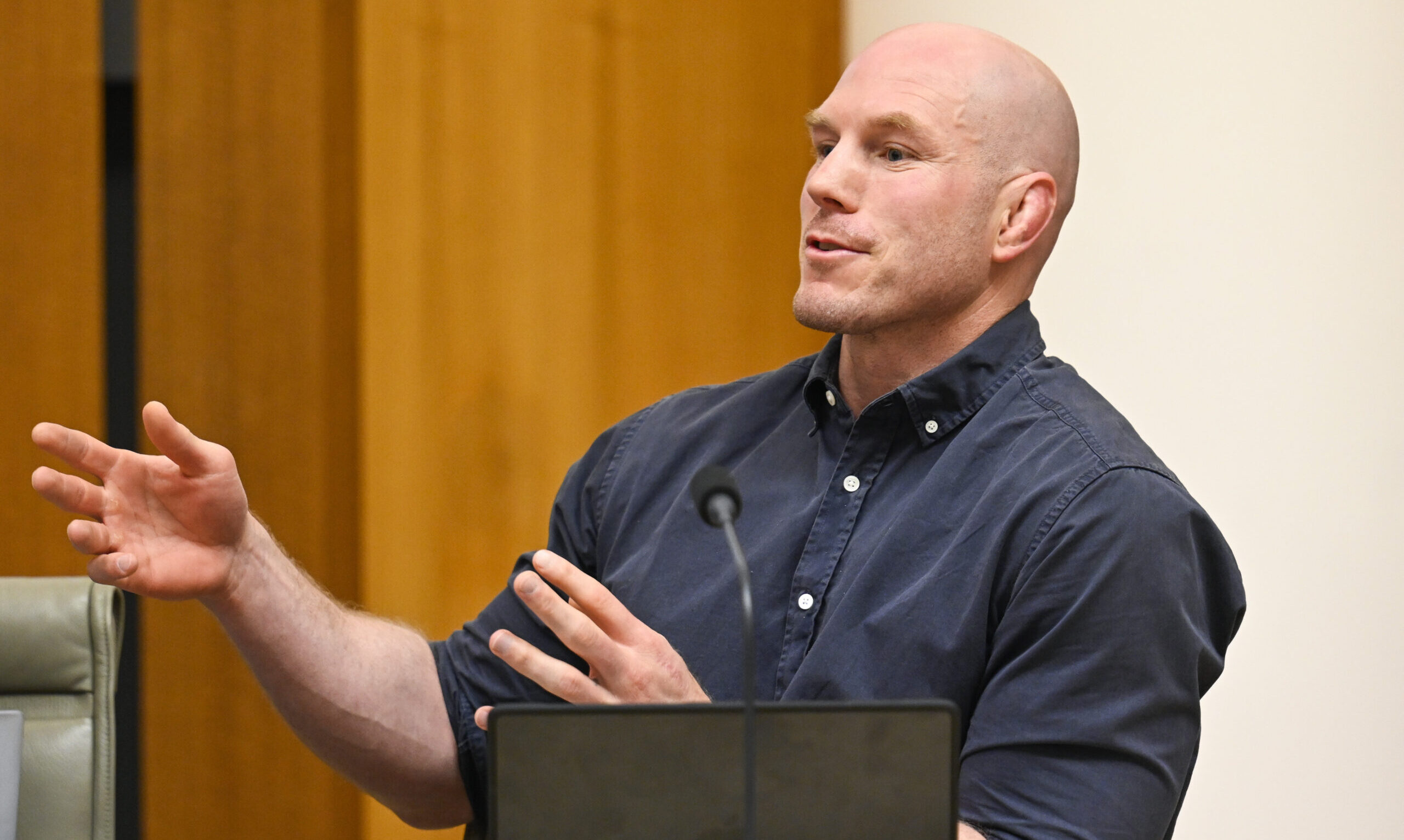
The Fair Work Ombudsman is scrutinising 28 universities in relation to wage underpayments and has recovered $218 million in unpaid wages for over 110,000 employees.
Please login below to view content or subscribe now.
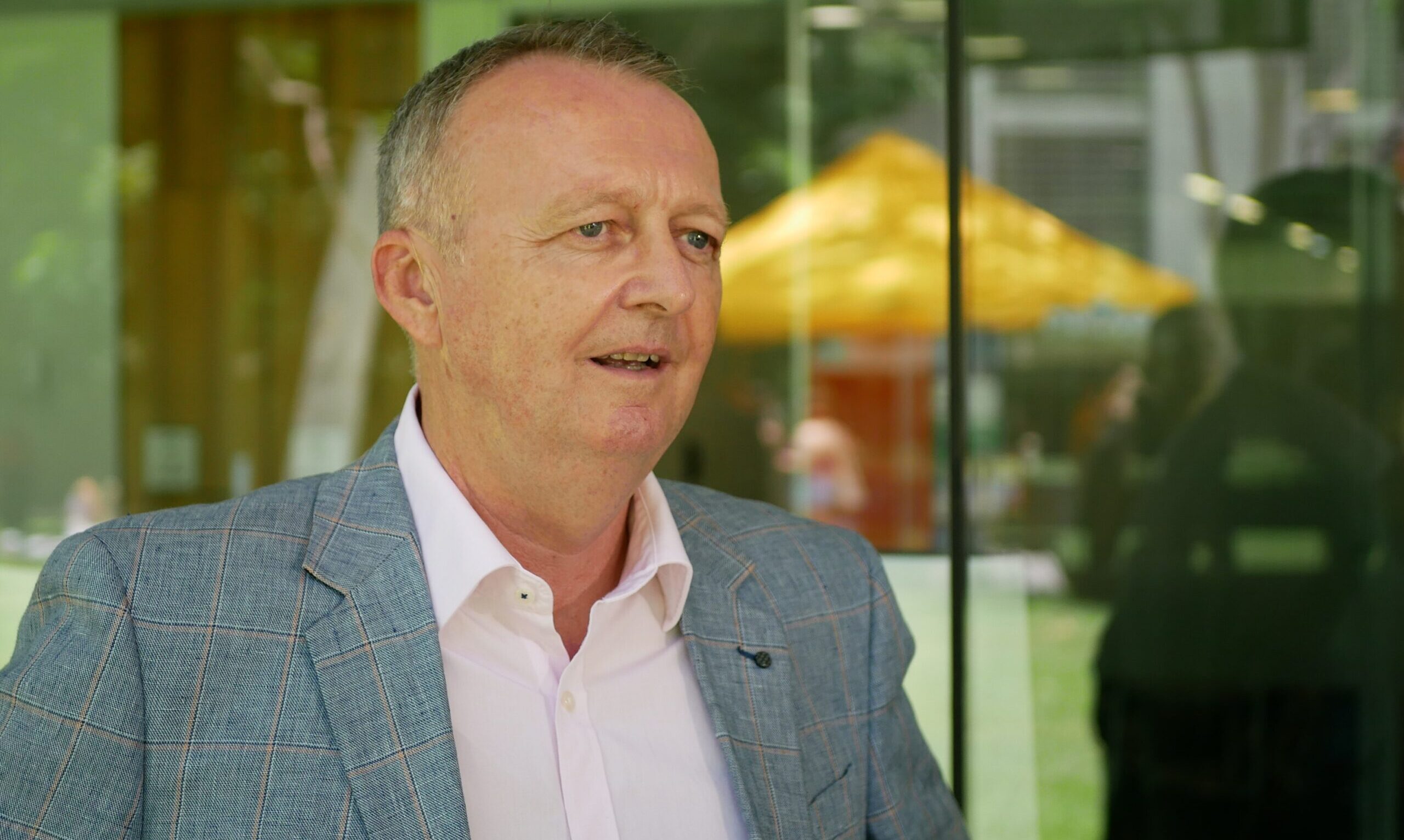
Vice-chancellor of James Cook University Simon Biggs said artificial intelligence is critical to help young people with companionship and loneliness.
Please login below to view content or subscribe now.

While Wall Street celebrates record highs, Main Street grapples with rising costs that strain household budgets. Dollar Tree, once synonymous with affordability, has seen its pricing structure evolve significantly. In 2021, the company increased its baseline price from $1 to $1.25, and by 2025, introduced items priced up to $10 in select stores.
For residents in food deserts—areas with limited access to affordable and nutritious food—stores like Dollar Tree serve as essential sources for groceries. However, these stores often stock predominantly ultra-processed foods, contributing to dietary challenges. A study by Tufts, Harvard, and the USDA found that while dollar store food purchases scored low on the Healthy Eating Index, households shopping there didn’t significantly differ in overall diet quality from those shopping primarily at grocery stores.
The expansion of dollar stores in low-income communities has been linked to exacerbating food insecurity. These stores often lack fresh produce and healthy staples, leading to diets high in processed foods. Research indicates that small food retailers are less likely than supermarkets to sell healthy staple foods, further entrenching food insecurity in these areas.
Despite the financial gains reflected in the stock market, the affordability gap widens for working-class families. Economic gains at the top do not trickle down to the communities that need them most. As investment portfolios swell, the affordability gap grows, and the promise of basic necessities remains increasingly out of reach. For working-class families and those living in under-resourced neighborhoods, the soaring market feels less like a sign of prosperity and more like a reminder of growing inequality.
In addition to rising costs, recent changes to the Supplemental Nutrition Assistance Program (SNAP) are further impacting low-income households. A new law backed by the Trump administration and signed in July 2025 is set to reduce SNAP benefits for 2.4 million Americans by expanding work requirements to additional groups, including parents of children aged 14 and up, adults aged 55–64, veterans, former foster youth, and homeless individuals. The legislation requires these groups to work, volunteer, or participate in job training for at least 80 hours per month to qualify. This expansion is expected to shift more costs to states and redistribute resources, increasing income for middle- and high-income households while reducing benefits for low-income households.
The Center on Budget and Policy Priorities (CBPP) notes that people in food-insecure households spend roughly 45% more on medical care annually than those in food-secure households. SNAP participation has been linked to improved health outcomes and reduced healthcare costs. For instance, early access to SNAP among pregnant mothers and in early childhood improved birth outcomes and long-term health as adults. Elderly SNAP participants are less likely than similar non-participants to forgo their full prescribed dosage of medicine due to cost.
The reduction or loss of SNAP benefits can lead to increased food insecurity and poorer health outcomes. A study published in Health Affairs found that the loss of SNAP benefits was associated with food insecurity and poor health in working families with young children. The study indicated that reduced benefits were associated with greater odds of fair or poor caregiver and child health.
As the affordability gap widens and access to essential resources becomes more challenging, the combination of rising costs and reduced support systems underscores the growing inequality faced by working-class families and communities in need.
Sources:
[Editor’s Note: The Higher Education Inquirer has submitted a Freedom of Information Request F-2025-02034 for any Federal Trade Commission consumer complaints against American Financial Solutions. We expect student loan relief scams to grow over the next few years as federal government oversight is reduced.]
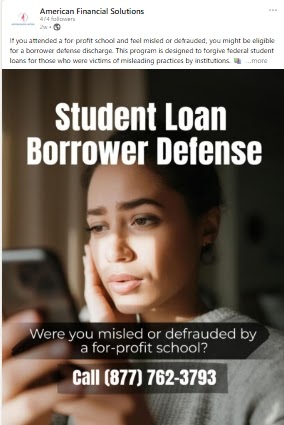
American Financial Solutions (AFS) positions itself in social media as a lifeline for student loan borrowers, offering help with programs like Borrower Defense to Repayment (BDR), PSLF, closed-school discharge, teacher loan forgiveness, and income-driven repayment. They advertise a “95 percent success rate,” more than $25 million in loans discharged, and over 10,000 clients helped. AFS promotes a three-step approach: a free consultation, documentation collection, and federal application submission—with implied guarantees of approval. They even suggest that discharges can occur in as little as 12 to 36 months.
Behind this polished marketing is a disturbing reality. When contacted directly, AFS quoted a $1,500 fee to file a Borrower Defense claim. The Department of Education provides this service for free, which makes the fee an unnecessary financial burden on people already struggling with debt. Worse still, AFS representatives falsely claimed that approval would be “guaranteed” because the borrower’s school was named in the Sweet v. Cardona settlement. That is not how the Sweet settlement worked, and no private company can guarantee outcomes in federal relief programs.
AFS also collects a troubling amount of data from borrowers. According to its own disclosures, the company asks for names, contact information, educational histories, student loan details, financial information, and documentation of borrowers’ school experiences. It also stores communications and any additional information provided. Beyond that, the company automatically harvests website usage data, including IP addresses, device and operating system information, pages visited, time spent on the site, referring websites, and even search terms. This means that vulnerable borrowers are not only charged excessive fees but also exposed to unnecessary risks regarding their personal and financial data.
While AFS presents itself as a nonprofit credit counseling agency with A+ BBB accreditation, consumer complaints suggest a lack of transparency and responsiveness. One unresolved 2024 complaint alleged billing issues, with the consumer insisting they were not liable for a debt and had no contract, while the company failed to respond. Independent review platforms show a mix of praise and criticism, with some clients reporting successful debt management experiences, but others raising questions about hidden costs, communication problems, and misleading claims.
The bigger problem is that AFS fits a well-documented pattern of predatory practices in the student loan relief industry. Over the past decade, the Federal Trade Commission (FTC) and the Consumer Financial Protection Bureau (CFPB) have repeatedly shut down companies that charged for free government services, misrepresented their powers, and lied about forgiveness guarantees. In one case, the CFPB shut down Student Aid Institute, only to see its operator resurface under a new name and steal more than $240,000 from borrowers. In another, Monster Loans and its associates were sued for defrauding over 23,000 borrowers. The FTC has also acted against multiple operations that bilked millions of dollars from borrowers by pretending to be affiliated with the Department of Education. Even Navient, a major loan servicer, agreed in 2024 to pay $120 million after deceiving borrowers about repayment options.
The risks to borrowers are increasing as federal oversight weakens. In 2025, reports revealed that the CFPB planned to scale back enforcement of student loan cases, leaving state regulators—who often lack resources—to fill the gap. Critics warned this would create “open season” for scammers. Against that backdrop, companies like AFS are free to charge high fees, collect sensitive data, and make deceptive promises while vulnerable borrowers remain unprotected.
American Financial Solutions is not a solution. It is part of the problem, a business model that profits by charging people for free services, misrepresenting the law, and exposing them to new risks. Unless stronger oversight and enforcement are restored, borrowers will continue to be victimized first by predatory schools and then by predatory “relief” companies cashing in on their desperation.
American Financial Solutions marketing claims. amerifisolutions.com
AFS data collection disclosure (website policy provided by user)
Better Business Bureau profile. bbb.org
BBB consumer complaint (2024). bbb.org
Trustpilot reviews. trustpilot.com
ConsumerAffairs reviews. consumeraffairs.com
BestCompany review. bestcompany.com
CuraDebt expert analysis. curadebt.com
Federal Trade Commission. “American Financial Benefits Center Refunds.” ftc.gov
Consumer Financial Protection Bureau. “CFPB Seeks Ban Against Operator of Student Loan Debt Relief Scam Reboot.” consumerfinance.gov
Consumer Financial Protection Bureau. “CFPB Takes Action Against Operators of an Unlawful Student Loan Debt Relief Scheme.” consumerfinance.gov
Federal Trade Commission. “FTC Acts to Stop Scheme that Bilked Millions out of Student Loan Borrowers.” ftc.gov, December 2024
Federal Trade Commission. “Student Loan Debt Relief Scam Operators Agree to be Permanently Banned.” ftc.gov, May 2025
Time Magazine. “Navient Settlement: Student Loan Borrowers to Receive Payments.” time.com, 2024
The Guardian. “Brad Lander: CFPB Cuts Create Open Season for Fraudsters.” theguardian.com, May 2025
Get stories like this delivered straight to your inbox. Sign up for The 74 Newsletter
Sitting on the Kentucky border, the Christian Academy of Indiana draws students from 56 different ZIP codes in southern Indiana. Some come from as far as 30 miles away and live in counties without private schools.
Families in those distant communities make the drive every day — sometimes carpooling — because they’re drawn to the school’s environment and extracurriculars, and especially its Christian teaching, said Lorrie Baechtel, director of admissions for the school, which is part of a three-school network in Indiana and Kentucky.
“There are lots of good public school options in Indiana. Families come to our Indiana campus more for that mission,” Baechtel said.
The school’s enrollment has boomed in the last four years, driven in part by the expansion of the Choice Scholarship, Indiana’s signature voucher program. That’s made tuition more affordable, Baechtel said. More than 1,200 students attended in 2024-2025, up from around 700 in 2021-22.
That reflects a statewide trend: Voucher use has surged in recent years as Indiana lawmakers loosened eligibility requirements. In 2026, the program will open to all families, regardless of income.
But the Christian Academy’s ability to attract students from far away tells another story too. Even as vouchers have become more accessible, Indiana’s rural students aren’t using them at the same rate as their urban and suburban peers. That’s in part because one-third of counties don’t have a private school that accepts vouchers within their borders, and distance is a factor in parents’ decisions on school choice.
The result is that students who live closer to an urban center — which typically have one or more voucher-accepting private schools — may use vouchers at rates up to 30 percentage points higher than those for students who live in a neighboring district.
That also means rural families may be at a significant disadvantage when the state opens the Choice Scholarship to all, and when private school scholarships funded by new federal tax credits also begin to roll out in 2027.
“If there are no schools there for you to attend it’s unlikely it’s going to be all that useful for you,” said Jon Valant, director of the Brown Center on Education Policy at the Brookings Institution.
More than that, public education advocates say splitting state school funding with vouchers leaves less for the rural public schools these students do attend.
“We’re making the policy choice to fund a lot more choices than we used to,” said Chris Lagoni, executive director of the Indiana Small and Rural Schools Association, which represents public schools. “We’re inviting more and more folks to Sunday dinner. It’s a little bit of a bigger meal, but a lot more guests.”
But the state’s Republican lawmakers have dismissed the fears of a hit to public rural schools as a result of vouchers, saying that rural voters support choice and parents want educational options — whether that’s private, charter, or traditional public schools.
Meanwhile, school choice advocates say the latest expansion of the Choice Scholarship, along with a growing preference for smaller learning environments and the rise of voucher-accepting online schools, could mean more private school access for rural areas in the near future.
“I think we’re best when we have a robust ecosystem of private and public options,” said Eric Oglesbee of the Drexel Fund, a nonprofit venture philanthropy organization that funds new private schools in Indiana and throughout the U.S.
Across the state, around 76,000 students received vouchers for the 2024-25 school year — an increase of about 6,000 students from the year before. The program cost the state $497 million last year, and the average voucher recipient came from a household with just over $100,000 in income.
But around one-third of Indiana counties don’t have voucher-accepting private schools within their borders, according to a Chalkbeat analysis of state data, which also shows that voucher use is lower in rural areas than urban ones.
Voucher use can shift dramatically even between nearby areas. For example, around 16% of students who reside in the Madison school district in southern Indiana use vouchers, but that rate drops to as low as 1% in nearby districts that are more rural. Similar trends hold in other areas of the state, like Indianapolis, Evansville, Fort Wayne, and South Bend.
Location matters because driving distance has been shown to be a factor in how parents choose a school.
In a 2024 survey of parent preferences by EdChoice, an Indianapolis-based group that supports vouchers, around half of parents said they would drive a max of 15 minutes for their children “to attend a better school.” Just over a quarter said they would drive no more than 20 minutes, and the final quarter said 30 minutes would be their max.
Concerns about this issue have persisted in the state for years. Alli Aldis of the advocacy group EdChoice pointed to a 2018 report from her organization that called areas of rural Indiana as “schooling deserts.” It estimated that in the 2017-18 school year, around 3% of Indiana students, many in rural counties, lived more than 30 minutes from a charter, magnet, or voucher-accepting private school.
Starting a new school anywhere, but particularly in a rural area, comes with challenges like finding a building, said Oglesbee of the Drexel Fund.
A 2023 Drexel Fund report found that facilities in the state are “inadequate to meet the needs of new entrants to the market.” Though the report notes that real estate is both affordable and available, there are no public sources of facilities funding, and surplus facilities are not available to private schools.
But new laws in Indiana have the potential to change that. House Enrolled Act 1515 established voluntary school facility pilot programs open to both public and private schools to “allow for additional flexibility and creativity in terms of what is considered a school facility,” like colocating with schools, government entities, and community organizations.
Oglesbee said the organization is fielding an explosion of interest from potential new private schools in Indiana, possibly as a latent result of the 2023 expansion to voucher eligibility, which made the program nearly universal.
Other challenges to opening a private school include hiring staff and recruiting students, which can be a particular issue in rural areas with both fewer children and licensed teachers, advocates said.
Opening a school also requires a team of people with both education and business experience, Oglesbee said. And they’re more likely to succeed if they have roots in the community they hope to serve.
“I see less of the ‘if you build it, they will come’ idea,” Oglesbee said. “A school is successful if the community asks for it.”
At a recent conservative policy conference, Indiana House Speaker Todd Huston said rural Indiana communities were “super excited” for school choice, and noted that no Republican lawmaker had been beaten in a primary for supporting the policy.
But Indiana voters haven’t voted on school vouchers, and don’t have a legal avenue to overturn the policy, said Chris Lubienski of the Center for Evaluation and Education Policy at Indiana University. Last year, voters in Kentucky and Colorado rejected ballot measures in favor of school choice, while Nebraska voters partially repealed a state-funded scholarship program.
“There’s resistance: ‘Why do I want to have my taxes fund a program I can’t use?’” Lubienski said.
In rural areas, support for school choice may actually mean support for transfers between public school districts, said Lagoni.
Ultimately, the Rural Schools Association believes any school receiving state dollars should be subject to the same expectations of transparency and accountability, Lagoni said.
Asked about concerns that rural students often have difficulty using vouchers, Huston said he expects voucher usage to continue to grow once the program becomes universal in 2026-27.
“We want to make sure our policies align with what works best for families,” Huston said.
With more school options in Indiana, downward pressure on local tax revenue, and declining population, rural public schools feel pressure to compete. Sometimes that means closing and consolidating schools.
Vigo County schools recently announced plans to close two rural elementary schools as part of a plan to renovate facilities and offer more programming. The school corporation’s enrollment has declined slightly, due in part to an overall decline in the county’s total population, said spokesperson Katie Shane.
More students who reside in the district are using vouchers, although they’re not the biggest reason for the district’s falling enrollment. While 429 students used vouchers to attend private schools last school year, an increase from 252 the year before, around 870 Vigo students transferred to another public school district in the fall of the 2024-25 school year. That reflects a statewide trend.
Without their nearest public elementary schools, students may have to travel by bus for half an hour or more to the nearest school, according to community members who have started a petition to save one of the two schools marked for closure, Hoosier Prairie Elementary School.
“Hoosier Prairie isn’t just about going to school,” said Shyann Koziatek, an educational assistant at the school who also signed the petition to stop its closure. “Kids love to learn and love the routine we have.”
Rural schools also often function as large area employers and drivers of the economy.
“Schools are often the center and identity of the community, how people view who they are,” Lubienski said. “You go and cheer on your football team, it’s where you put on your school play.”
But private schools can serve the same role, choice advocates say.
“If people have stronger educational options, more choices, that only strengthens the community,” said Aldis of EdChoice.
Chalkbeat is a nonprofit news site covering educational change in public schools. This story was originally published by Chalkbeat. Sign up for their newsletters at ckbe.at/newsletters.
Get stories like these delivered straight to your inbox. Sign up for The 74 Newsletter

Get stories like this delivered straight to your inbox. Sign up for The 74 Newsletter
In 2020, around 3,500 incoming New York City kindergartners were deemed eligible for a public school gifted-and-talented program. In 2021, that number spiked up to over 10,000.
What happened to nearly triple the number of identified “gifted” students in NYC in a single year?
The difference was the screening method. In 2020, as in the dozen years beforehand, 4-year-olds were tested using the Otis-Lennon School Ability Test and the The Naglieri Nonverbal Ability Test. Those who scored above the 97th percentile were eligible to apply to citywide “accelerated” programs. Those who scored above the 90th were eligible for districtwide “enriched” classes.
But in 2021, the process was changed. Now, instead of a test, students in public school pre-K programs qualify based on evaluations by their teachers, and there is no differentiation between those eligible for “accelerated” or “enriched” programs.
In 2022, the last year for which figures are available, 9,227 students were deemed qualified to enter the gifted-and-talented placement lottery. But for the last decade there have only been about 2,500 spots citywide. Over 6,700 “gifted” students weren’t offered a seat.
That’s a shame, because, based on their overwhelming responses to the city’s G&T recommendation questionnaires, NYC teachers believe the vast majority of their young students – a statistically impressive 85% – would thrive doing work beyond what is offered in a regular classroom.
When evaluating students for a G&T recommendation, teachers are asked, among other things, whether the child:
This video illustrates how such “gifted” characteristics can be applied to … anybody.
The Pygmalion Effect has demonstrated that when teachers are told their students are “gifted,” they treat them differently — and by the end of the year, those children are performing at a “gifted” level.
Extrapolating that 85% of incoming kindergartners to the 70,000 or so kids enrolled at every grade level in NYC, that would mean there are 59,500 “gifted” students in each academic year, for a whopping total of 773,500 “gifted” K-12 students in the New York City public school system.
And extending those calculations to the whole of the United States, then 85% of 74 million — i.e. 62,900,000 — 5- through 18-year-olds are capable of doing work above grade level. With that in mind, academic expectations could be raised across the board, and teachers would implement the new, higher standards filled with confidence that the majority of their students would rise to the occasion. NYC teachers have already said as much on their evaluations.
What would happen if NYC were to provide a G&T seat to every student whom its own teachers deemed qualified? If it were subsequently confirmed that over 773,500 students in a 930,000-plus student school system are capable of doing “advanced” work, can parents, activists and everyone invested in making education the best it can possibly be for all expect to see such higher-level curriculum extended to all students — in NYC and, eventually, across America?
As for the minority who weren’t recommended for “advanced” instruction, the combination of Pygmalion Effect and the benefits of mixed-ability classrooms should raise their proficiency, as well.
Isn’t it worth a try?
Get stories like these delivered straight to your inbox. Sign up for The 74 Newsletter
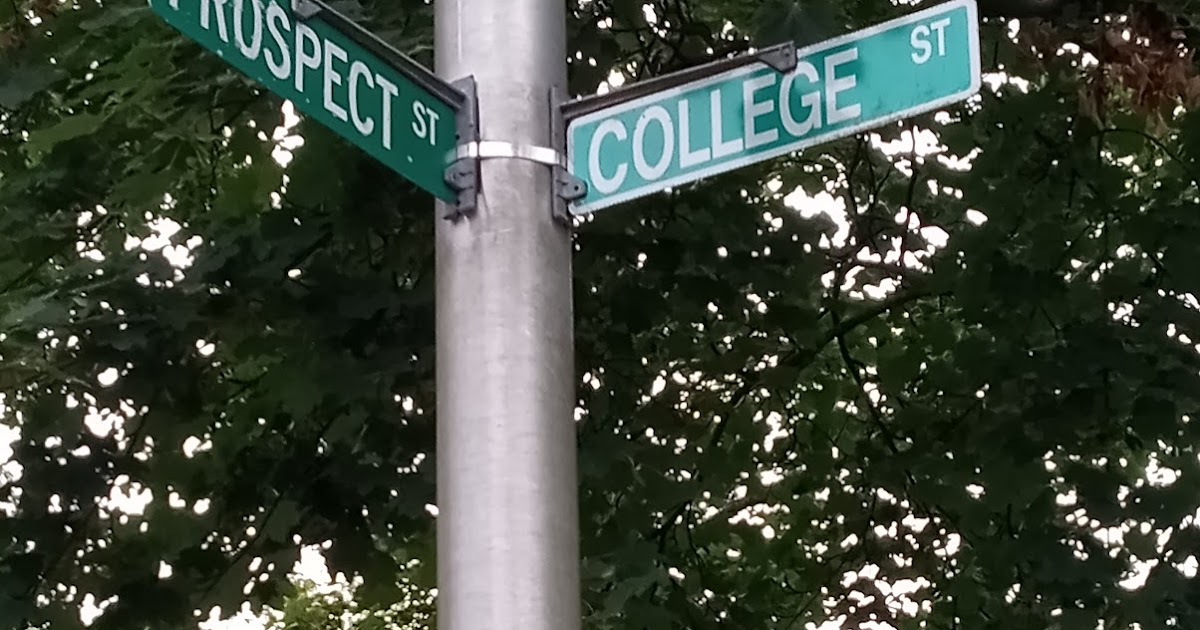
In the old American dreambook, a “college prospect” was a young person with ambition and promise—a student looking for a campus where they could grow intellectually, socially, and economically. But in today’s reality, “prospect” is an industry term, a sales category. In enrollment management suites across the country, prospective students aren’t just applicants; they’re targets.
[Image from Brown University, August 2025)
Higher education—whether elite, public, or for-profit—now runs on sophisticated marketing pipelines. The same predictive analytics used by corporations, political campaigns, and even law enforcement are deployed to track, segment, and convert students into paying customers. Colleges buy and sell student data from standardized test companies, online lead generators, and high school surveys. They follow “prospects” through their clicks, their campus visits, their FAFSA submissions—nudging them toward a deposit with personalized emails, algorithmically timed text messages, and calculated financial aid offers.
This is not about education first. It’s about yield rates, tuition revenue, and net tuition per student. For working-class families, first-generation students, and those from marginalized backgrounds, this targeting can be especially dangerous. The glossy brochures and “student success” slogans conceal the hard realities: inflated tuition, debt burdens that can last decades, and career outcomes far less rosy than advertised.
The for-profit sector perfected this playbook. Schools like Corinthian Colleges, ITT Tech, and the Art Institutes honed high-pressure recruiting scripts, built massive lead databases, and saturated social media feeds with ads promising quick career training and big paydays. When many of these institutions collapsed under federal scrutiny, their tactics didn’t disappear—they spread. Today, public universities and elite private schools use their own version of the same system, dressed up in more respectable branding.
At the top end of the prestige ladder, “targets” have a different profile. Elite schools scout “development prospects”—wealthy families whose applications are accompanied by the potential for multimillion-dollar gifts. The student is both a potential enrollee and a future donor pipeline. Recruitment here is less about financial aid and more about legacy admissions, networking dinners, and quiet tours with the president.
What all this targeting has in common is an imbalance of information. Colleges know almost everything about their prospects—income bands, likely majors, ability to pay—while students and families often have only the marketing copy and a sticker price. In this environment, independent, transparent information is a rare form of defense.
That’s where tools like TuitionFit and the CollegeViability app come in—not as recruitment aids, but as counterintelligence for families.
TuitionFit collects and shares real financial aid offers from students across the country. This allows families to see what schools are actually charging students with similar academic and financial profiles—not just the “average” cost schools advertise. By revealing the hidden discounting game, TuitionFit helps families avoid overpaying and resist the psychological pressure of “limited-time offers” from admissions officers.
The CollegeViability app compiles public financial data from the U.S. Department of Education and other sources to create an at-a-glance picture of an institution’s fiscal health. It tracks enrollment trends, tuition dependency, debt loads, and other risk factors—warning signs that a college might be on the verge of closing or slashing programs. Families who use it can see trouble coming long before the next headline about a sudden campus shutdown.
These are not small benefits. Every year, thousands of students are lured into institutions that overpromise and underdeliver. Some are blindsided by mid-program closures. Others graduate into underemployment with six figures of debt. Without tools like TuitionFit and CollegeViability, many would walk into these situations blind.
The troubling truth is that higher education’s recruitment machine treats students the same way a corporate sales funnel treats customers—and sometimes the way a military intelligence operation treats enemy assets. Prospects are acquired, qualified, engaged, and converted. They are ranked by “propensity to enroll,” courted by carefully timed contact, and celebrated in quarterly revenue reports.
The people making the targeting decisions rarely bear the costs of a bad outcome. If a student drops out with debt and no degree, it’s a personal tragedy, not a liability on the college’s balance sheet. If a school shutters with no warning, students and their families are left scrambling while administrators move on to new posts elsewhere.
College should be more than a precision-marketed capture. It should be a transparent, good-faith exchange where both sides have access to the same essential facts. Right now, that balance doesn’t exist—and the gap is being exploited.
Families who want to survive the recruitment gauntlet must treat it for what it is: a sales process backed by data analytics, designed to maximize institutional revenue, not student outcomes. That means using every independent resource available, asking hard questions, and refusing to be rushed into decisions.
In the end, the difference between being a college prospect and a college target might be whether you’re armed with real information—or just hope.
Sources:
The Century Foundation, College Admissions and the Business of Enrollment Management
U.S. Senate HELP Committee, For Profit Higher Education: The Failure to Safeguard the Federal Investment and Ensure Student Success
The Hechinger Report, How Colleges Use Big Data to Target Students
TuitionFit, About
CollegeViability, Institutional Health Indicators
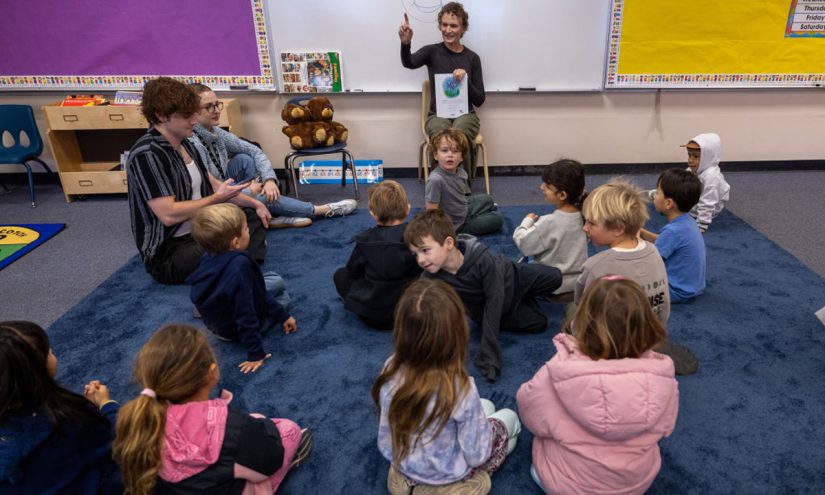
The number of vacancies is likely an undercount, because this number does not include substitutes or unqualified teachers who may have been hired to fill gaps.
Local news reports and job boards suggest that at least some Michigan districts are still struggling to fill open positions for the fall of 2025.
The teacher shortage is a nationwide problem, but it is especially acute in Michigan, where the number of teachers leaving teaching and the overall teacher shortage both exceed the national average. This shortage is particularly severe in urban and rural communities, which have the most underresourced schools, and in specialization areas such as science, mathematics and special education.
For more than two decades, my work at Michigan State University has centered on designing and leading effective teacher preparation programs. My research focuses on ways to attract people to teaching and keep them in the profession by helping them grow into effective classroom leaders.
Teacher shortages are the result of a combination of factors, especially low salaries, heavy workloads and a lack of ongoing professional support.
A report released last year, for example, found that Michigan teachers and teachers nationwide make about 20% less compared to those in other careers that also require a college education.
From my experience working with teachers and district leadership across the state, I know that beginning teachers – especially those in districts which have severe shortages – are often given the most challenging teaching loads. And in some districts, teachers have been forced to work without the benefit of any kind of planning time in their daily schedule.
The shortage was made much worse by the COVID-19 pandemic, which led many educators to leave the profession. Yet another culprit is the many teachers who, in Michigan as well as nationally, were hired during the 1960s and early ’70s, when school enrollments saw a massive increase, and who in the past decade have been retiring in large numbers.
One recent strategy to address the teacher shortage in Michigan has been to create nontraditional routes to teacher certification.
The idea is to prepare educators more quickly and inexpensively. A variety of agencies – from the Michigan Department of Education, state-level grants programs such as the Future Proud Michigan Educator program, as well as private foundations and businesses – have helped these programs along financially.
Even some school districts, including the Detroit Public Schools Community District, have adopted this strategy in order to certify teachers and fill vacant positions.
Other similar programs are the product of partnerships between Michigan’s intermediate school districts, community colleges and four-year colleges and universities. One example is Grand Valley State University’s Western Michigan Teacher Collaborative, which targets interested students of college age. Another is MSU’s Community Teacher Initiative, designed to attract students into teaching while they are still in high school.
Perhaps even more visible are national programs such as Teachers of Tomorrow and Teach for America. Candidates in such programs often work as full-time teachers while completing teacher training coursework with minimal oversight or support.
But simply “stuffing the pipeline” with new recruits is not enough to solve the teacher-shortage problem in Michigan.
The loss of teachers is significantly higher among individuals in nontraditional training programs and for teachers of color. This starts while they are preparing to be certified and continues for several years after certification.
The primary reasons for the higher attrition rates include a lack of awareness of the complexity of schools and schooling, the lack of effective mentoring during the certification period, and the absence of instructional and other professional guidance in the early years of teaching.
So how can teachers be encouraged to stay in the profession?
Here are a few of the things scholars have learned to improve outcomes in traditional and nontraditional preparation programs:
Temper expectations. Teaching is a critically important career, but leading individuals to believe that they can repair the damage done by a complex set of socioeconomic issues – including multigenerational poverty and lack of access to healthy and affordable food, housing, drinking water and health care – puts beginning teachers on a short road to early burnout and departure.
Give student teachers strong mentors. Working in schools helps student teachers deepen their knowledge not only of teaching but also of how schools, families and communities work together. But these experiences are useful only if they are overseen and supported by an experienced and caring educator and supported by the organization’s leadership.
Recognize the limits of online learning. Online teacher preparation programs are convenient and have their place but don’t provide student teachers with real-world experience and opportunities for guided discussion about what they see, hear and feel when working with students.
Respect the process of “becoming.” Professional support should not end when a new teacher is officially certified. Teachers, like other professionals such as nurses, doctors and lawyers, need time to develop skills throughout their careers.
Providing this support sends a powerful message: that teachers are valued members of the community. Knowing that helps them stay in their jobs.
This article is republished from The Conversation under a Creative Commons license. Read the original article.

School (in)Security is our biweekly briefing on the latest school safety news, vetted by Mark Keierleber. Subscribe here.
It’s another hot summer Friday and another day with news about a data breach — this one jeopardizing both student health and campus safety data.
And once again, the development is unfolding in the country’s second-largest school district.
Kokomo Solutions, which the Los Angeles district contracts with to provide telehealth services to students during the school day and to track campus safety threats, disclosed a data breach after it discovered an “unauthorized third party” on its computer network. The discovery happened in December 2024, but the notice to the California attorney general’s office wasn’t made until Aug. 5.
It’s the latest in a series of data privacy incidents affecting L.A. schools, including a high-profile 2022 ransomware attack exposing students’ sensitive mental health records and last year’s collapse of a much-lauded $6 million artificial intelligence chatbot project.
Students at the center of Trump’s D.C. police takeover: In an unprecedented federal power grab, the Trump administration’s seizure of the D.C. police department and National Guard deployment is designed to target several vulnerable groups — including kids. | NPR
A new Ohio law requires school districts to implement basic cybersecurity measures in response to heightened cyberattacks. What the law doesn’t do, however, is provide any money to carry out the new mandate. | WBNS
News in Trump’s immigration crackdown: A federal judge in Minnesota has released from immigration detention a nursing 25-year-old mother, allowing her to return to her children as her case works its way through the court. | The Minnesota Star Tribune
Get the most critical news and information about students’ rights, safety and well-being delivered straight to your inbox.
Microphone-equipped sensors installed in school bathrooms to crack down on student vaping could be hacked, researchers revealed, and turned into secret listening devices. | Wired
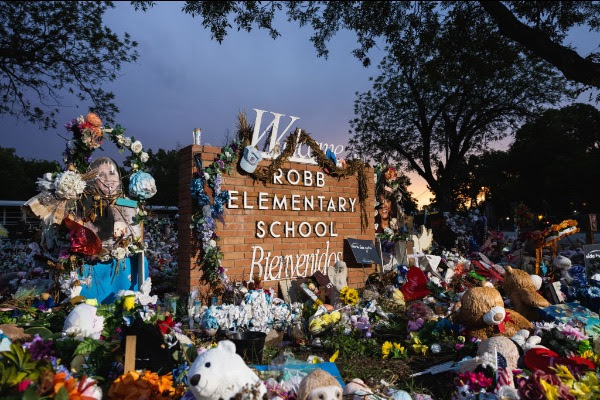
‘These are innocent children, sir’: New video of the delayed police response to the 2022 mass school shooting in Uvalde, Texas, shows the campus police chief attempting to negotiate with the gunman for more than 30 minutes. | The New York Times
Kansas schools have become the latest target in the Trump administration’s campaign against districts that permit transgender students to participate in school athletics. | KCTV
Lots of drills — little evidence: A congressionally mandated report finds that active shooter drills vary widely across the country — making it difficult to understand their effect on mental and emotional health. | National Academies of Sciences, Engineering, and Medicine
A federal judge has blocked a new Arkansas law requiring that public schools display the Ten Commandments in all classrooms. It’s the second state Ten Commandments law to be halted this year. | Axios
ICYMI: I did a deep-dive into the far-right Christian nationalists behind more than two dozen state Ten Commandments-in-schools bills nationally — each of which are inherently identical. | The 74
Is Texas up next? Civil rights groups will ask a judge on Friday to prevent a similar law from going into effect. | Houston Chronicle
Despite Court Order, Education Department’s Civil Rights Staff Still On Leave
‘So Many Threats to Kids’: ICE Fear Grips Los Angeles at Start of New School Year

Don’t sleep on this Bloomberg feature into “Doodlemania” — the billion-dollar industry for hypoallergenic (and floofy!) designer pups.
Get stories like these delivered straight to your inbox. Sign up for The 74 Newsletter
.jpg)

