This audio is auto-generated. Please let us know if you have feedback.
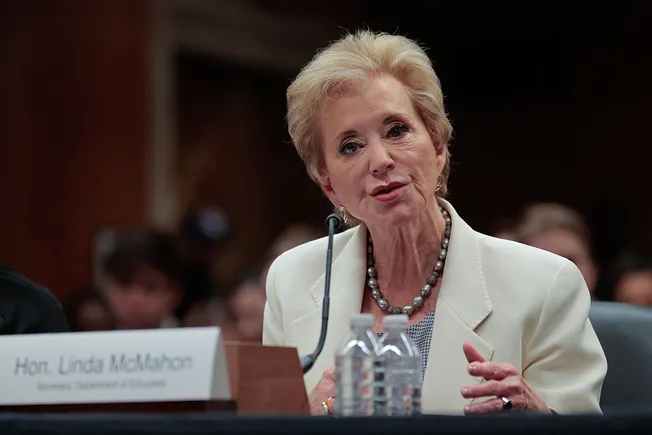
The U.S. Department of Education is proposing to abandon data collection on transgender and nonbinary students, including on whether they are victims of harassment and bullying and whether school districts have policies prohibiting those incidents, according to a Federal Register notice published this month.
The changes come as part of the Civil Rights Data Collection for the 2025-26 and 2027-28 school years, a mandated survey of all public school districts that has been administered for almost six decades. The department noted on its website that the CRDC has “captured data on students’ equal access to educational opportunities to understand and inform schools’ compliance with the civil rights laws enforced by the Department of Education’s Office for Civil Rights.”
The proposed changes to the upcoming collections also struck transgender students from the department’s definition of “rape” and “sexual assault.”
Whereas previous collections defined rape as something that could be done to “all students, regardless of sex, or sexual orientation, or gender identity,” the proposed collection says, “All students, regardless of sex, or sexual orientation can be victims of rape” — explicitly striking “gender identity” from the older definition.
The change “really sends a frankly terrible message to how schools should be responding to allegations of sexual assault and how they should be documenting that and bringing that data forward,” said Brian Dittmeier, director of LGBTQI+ equality at the National Women’s Law Center.
The department, however, maintained in an email to K-12 Dive that “the definition of rape and sexual assault remains virtually unchanged.”
“All students means all students, period,” said an Education Department spokesperson on Thursday.
The department submitted the proposed changes to the Office of Management and Budget for review on Aug. 7 and is accepting comments on the notice until Sept. 8.
The changes are being proposed to comply with the 2020 Title IX rule, which excludes LGBTQ+ students from sex-based discrimination protections. President Donald Trump’s Education Department told districts in January to follow that rule — published during his first term — as opposed to the 2024 rule finalized under the Biden administration, which protected LGBTQ+ students under the sex discrimination civil rights statute.
The Education Department is also proposing a change in its Civil Rights Data Collection to exclude transgender and nonbinary students in light of Trump’s January 2025 executive order “Defending Women from Gender Ideology Extremism and Restoring Biological Truth to the Federal Government.” That executive order directed federal agencies to only recognize two sexes, male and female, and said, “These sexes are not changeable and are grounded in fundamental and incontrovertible reality.”
The Education Department has since adopted that stance, and it has attempted to include the definitions “male” and “female” in state policies through its resolution agreements and to exclude transgender students from teams and facilities aligning with their gender identities.
The decision to now strike those students from the CRDC means the Education Department’s Office for Civil Rights — under the current administration and future ones — would have less data on how transgender and nonbinary students fared in the 2025-26 and 2027-28 school years.
“OCR uses CRDC data as OCR investigates complaints alleging discrimination to determine whether the federal civil rights laws it enforces have been violated, initiates proactive compliance reviews to identify particularly acute or nationwide civil rights compliance problems, and provides policy guidance and technical assistance to educational institutions, parents/guardians, students, and others,” a July 22 statement from the U.S. Department of Education to the Office of Budget and Management said. Other federal agencies, researchers and policymakers also use CRDC data, the department said.
Transgender and students questioning their gender identity showed higher rates of bullying and poor mental health, as well as the lowest rates of school connectedness, when compared to their cisgender peers, according to the first nationally representative survey data on transgender students released by the Centers for Disease Control and Prevention last year.
An overwhelming majority of LGBTQ+ students also said in 2024 that anti-LGBTQ+ policies had impacted their mental health, according to an annual survey released by The Trevor Project, a nonprofit that provides crisis support services for LGTBQ+ people.
“We’ll have less data to contextualize the problem and provide a clear picture to schools of what the experience of transgender and gender-nonconforming students is in school currently,” Dittmeier said. “And that will unfortunately make it more difficult to implement interventions that are needed to ensure a safe school environment for all.”
Ambow CEO Has Repeatedly Slipped Through the Fingers of Shareholders and Regulators
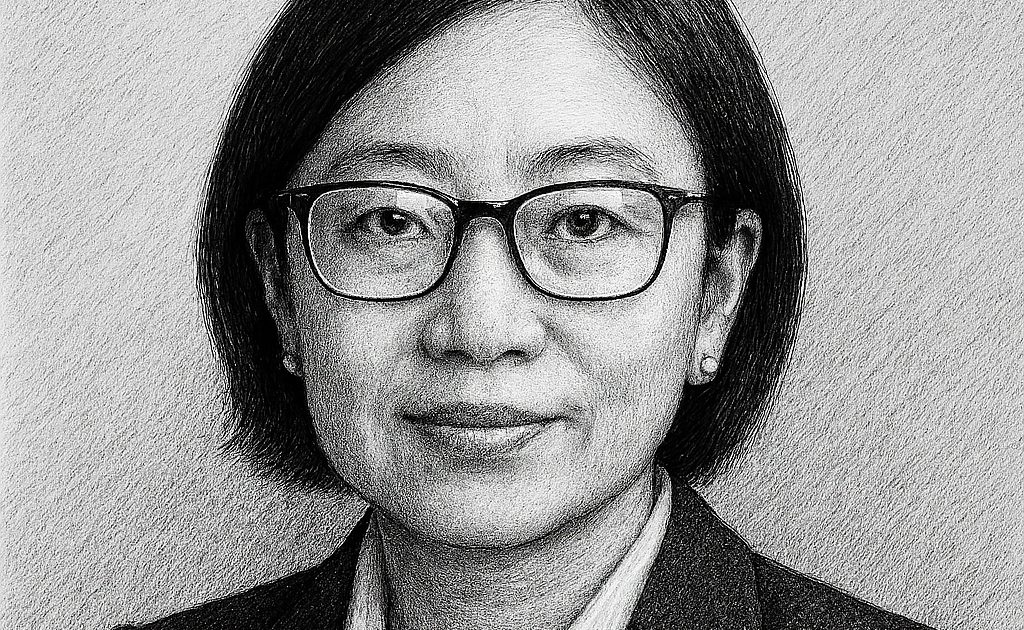
In the opaque world of for-profit higher education, few figures have evoked the mixture of fascination and alarm generated by Jin Huang, CEO—and at times interim CFO and Board Chair—of Ambow Education Holding Ltd. Huang has repeatedly navigated financial crises, regulatory scrutiny, and institutional collapse with a Houdini-like flair. Yet the institutions under her control—most notably Bay State College and NewSchool of Architecture & Design—tell a far more troubling story.
Ambow’s Financial Labyrinth
Ambow, headquartered in the Cayman Islands with historic ties to Beijing (former address: No. 11 Xinyuanli, Chaoyang District, Beijing, China), has endured years of financial instability. As early as 2010, the company pursued ambitious acquisitions in the U.S. education market, including NewSchool and eventually Bay State College, often relying on opaque financing and cross-border investments.
By 2013, allegations of sham transactions and kickbacks forced Ambow into liquidation and reorganization. Yet the company repeatedly avoided delisting and collapse. Financial reports reveal a recurring pattern: near-catastrophe followed by minimal recovery. In 2023, net revenue fell 37.8% to $9.2 million with a $4.3 million operating loss. By 2024, Ambow reported a modest $0.3 million net income, narrowly avoiding another financial crisis.
Early Years: 2010–2015
From 2010 to 2015, Ambow aggressively pursued U.S. acquisitions and technology projects while expanding its presence in China. The company leveraged offshore corporate structures and relied heavily on PRC-linked investors. Huang’s leadership style during this period prioritized expansion and publicity over sustainable governance, leaving institutions financially vulnerable.
Despite claims of educational innovation, Ambow’s track record in these years included multiple warnings from U.S. regulators and questionable accounting practices that would later contribute to shareholder lawsuits and delisting from the NYSE in 2014.
Bay State College: Closed Doors, Open Wounds
Acquired in 2017, Bay State College in Boston once enrolled over 1,200 students. By 2021, enrollment had collapsed, despite millions in federal COVID-era relief. In 2022, the Massachusetts Attorney General secured a $1.1 million settlement over misleading marketing, telemarketing violations, and inflated job-placement claims.
Accreditation probation followed, culminating in NECHE’s withdrawal of accreditation in January 2023. Eviction proceedings for over $720,000 in unpaid rent preceded the college’s permanent closure in August 2023. Bay State’s demise exemplifies the consequences of Ambow’s pattern: the CEO escapes, the institution collapses, and students and faculty are left in the lurch.
NewSchool of Architecture & Design: Stabilization in San Diego
NewSchool, Ambow’s other U.S. acquisition, has faced persistent challenges. Enrollment has dropped below 300 students, and the school remains on the U.S. Department of Education’s Heightened Cash Monitoring list. Leadership instability has been chronic: five presidents since 2020, with resignations reportedly tied to unpaid salaries and operational dysfunction.
As of 2025, lawsuits with Art Block Investors, LLC have been settled, and NewSchool is now housed in three floors of the WeWork building in downtown San Diego. Despite receiving a Notice of Concern from regional accreditor WSCUC, the college remains operational but financially precarious.
Questionable Credentials and Leadership Transparency
Huang has claimed to hold a PhD from the University of California, but investigation reveals no record of degree completion. This raises further concerns about leadership credibility and transparency. Ambow’s consolidated executive structure—Huang serving simultaneously as CEO, CFO, and Board Chair—exacerbates governance risks.
While headquartered in Cupertino, California, Ambow continues to operate with ties to Chinese interests. SEC filings from the PRC era acknowledged that the Chinese government exerted significant influence on the company’s business operations. Ambow has also expressed interest in projects in Morocco and Tunisia involving Chinese-affiliated partners.
HybriU and the EdTech Hype
In 2024, Ambow launched HybriU, a hybrid learning platform promoted at CES and the ASU+GSV conference. Marketing materials claim a 5-in-1 AI-integrated solution for teaching, learning, connectivity, recording, and management, including immersive 3D classroom projections.
Yet there is no verifiable evidence of HybriU’s use in actual classrooms. A $1.3 million licensing deal with a recently formed Singapore company, Inspiring Futures, is the only reported commercial transaction. Photos on the platform’s website have been traced to stock images, and the “OOOK” (One-on-One Knowledge) technology introduced in China in 2021 has not demonstrated measurable results in U.S. education settings.
Reports suggest that Ambow may be in preliminary talks with Colorado State University (CSU) to implement HybriU. HEI has not confirmed any formal partnership, and CSU has not publicly acknowledged engagement with the platform. Any potential relationship remains unverified, raising questions about the legitimacy and scope of Ambow’s outreach to U.S. universities.
Ambow’s 2025 press release promotes HybriU as a transformative global learning network, but HEI’s review finds no verified partnerships with accredited U.S. universities, no independent validation, and continued opacity regarding student outcomes or data security.
Financial Oversight and Auditor Concerns
Ambow commissioned a favorable report from Argus Research, but its research and development spending remains minimal—$100,000 per quarter. Prouden CPA, the current auditor based in China, is new to the company’s books and has limited experience auditing U.S. education operations. This raises questions about the reliability of Ambow’s financial reporting and governance practices.
Conclusion: The Illusion of Rescue
Jin Huang’s repeated escapes from regulatory and financial peril have earned her a reputation akin to Harry Houdini. But the cost of each act is borne not by the CEO, but by institutions, faculty, and students. Bay State College is closed. NewSchool remains operational in a WeWork facility but teeters on financial fragility. HybriU promises innovation but offers no proof.
Ambow’s trajectory demonstrates that a company can survive on hype, foreign influence, and minimal governance, while leaving the real consequences behind. Any unconfirmed talks with CSU highlight the ongoing risks for U.S. institutions considering engagement with Ambow. For regulators, students, and higher education stakeholders, Huang’s Houdini act is less a marvel than a warning.
Sources
Higher Education Inquirer. “Ambow Education Facing NYSE Delisting.” May 2022.
Higher Education Inquirer. “Ambow Education and NewSchool of Architecture and Design.” October 2023.
Higher Education Inquirer. “NewSchool of Architecture and Design Lawsuits.” March 2025.
Boston Globe. “Bay State College Faces Uncertain Future.” January 3, 2023.
Inside Higher Ed. “Two Colleges Flounder Under Opaque For-Profit Owners.” October 18, 2022.
Inside Higher Ed. “Bay State College Loses Accreditation Appeal.” March 21, 2023.
GlobeNewswire. “Ambow Education Announces Full-Year 2024 Results.” March 28, 2025.
Ambow Education Press Releases and SEC Filings
Wikipedia. “Bay State College.” Accessed August 2025.
Wikipedia. “NewSchool of Architecture and Design.” Accessed August 2025.
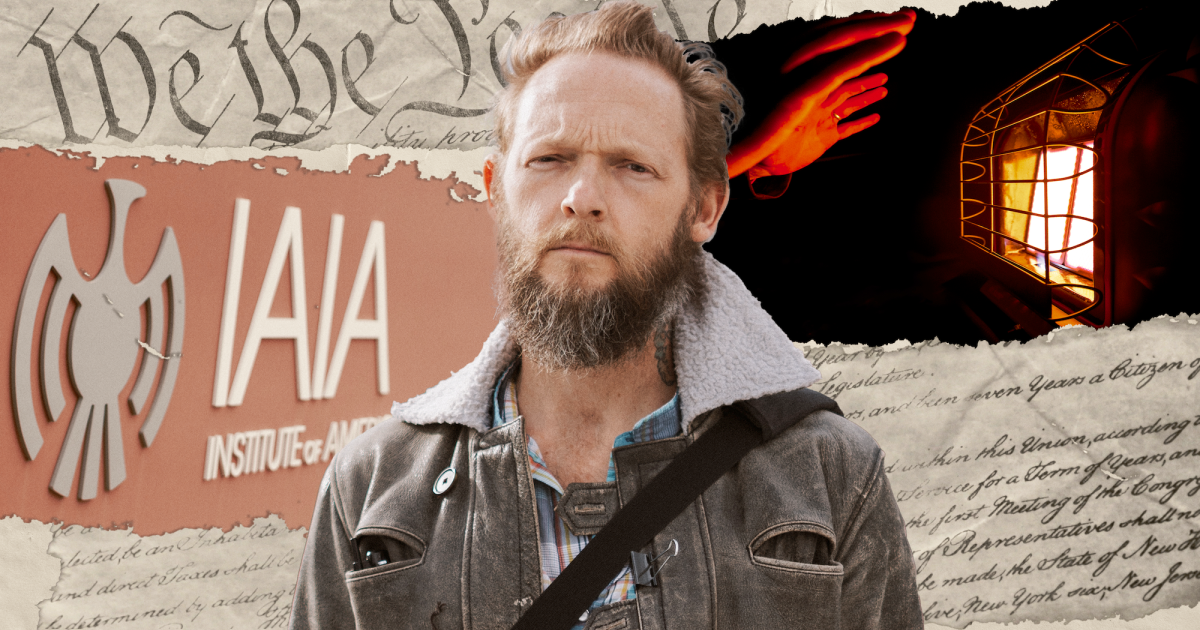
David John Baer McNicholas sleeps every night next to a bomb.
The worst thing about being homeless is the weather, he says. Santa Fe gets so cold that sometimes diesel fuel turns to gel. At those temperatures, frostbite hits in minutes.
In The Martian, Matt Damon’s character Mark Watney uses a radioactive isotope to keep his rover warm. In the Martian landscape of New Mexico’s Chihuahuan Desert, McNicholas keeps his van warm with a rusty five-gallon propane tank hissing beside his bed.
It’s not just the cold of the desert at night, either. Santa Fe is also the highest state capital in America, at 7,000 feet above sea level. That’s higher than the base lodge at most ski resorts. To stay warm, he keeps a pile of old covers and shirts in his van. A top from TJ Maxx. A blanket from a friend. An oversized green-and-black fleece from his sister who died of cancer.
But in the thick of winter, it’s nowhere near enough. So he fires up the heater hooked to the propane tank beside his bed. Burning an open flame inside a flammable structure filled with combustible fuel isn’t exactly safe, so he keeps a carbon-monoxide detector on his pillow. It’s a thin safeguard since these alarms can, and do, fail. But it’s better than nothing. To avoid freezing to death, he has to risk burning alive.
Summer brings no relief either. “The average temperature in the van during summer is about 110 degrees,” he says. “There’s only so much shade in Santa Fe, especially considering most people don’t want you parking near them.”
And if the weather doesn’t get you, there are a hundred other little things about being homeless that surely will. For one, his van is tiny, and he’s tall. Cooking involves a camp stove that makes his clothes stink of grease, increasing the risk of fire, and turning his van into a dripping sweatbox. Not to mention, the constant anxiety of knowing his belongings are not safe. Or that his home could be towed. Or having to move multiple times a day to avoid such an outcome. Or having to pee into a plastic bottle every night. Or having to find a place to dump the bottles every morning.
“I go to bed every night thinking, this could be it,” he says, reflecting on how his propane tank might blow up and kill him in his sleep. “I might not wake up.”
He adds, after a pause, “All my troubles would be over.”
The moment of truth
McNicholas is a student journalist who studies creative writing at the Institute of American Indian Arts (IAIA) in Santa Fe, and he is on track to graduate this spring with a 4.0 GPA. He often writes about life on the road. His poem “Flatbed,” which earned the 2022 Betty and Norman Lockwood Poetry Prize from the Academy of American Poets, captures a cross-country adventure he took with his father when he was 15.
In New Mexico, over half of students face food insecurity. When a whistleblower at IAIA uncovered evidence that school officials might have misused a $50,000 grant meant to support campus food pantries, McNicholas thought it was clearly newsworthy. When students claimed school officials retaliated against the whistleblower who raised the alarm, he published their allegations.
This was groundbreaking journalism. Food scarcity in Native American communities is a dire problem, so a food-pantry scandal at the nation’s top indigenous arts college is a five-alarm fire. Native Americans are twice as likely to face food insecurity compared to white Americans, and sometimes three times higher. In fact, the entire Navajo Nation, which overlaps New Mexico, is considered a food desert.
But instead of being celebrated for such journalistic work, David McNicholas was fired. Put on probation. Evicted. Homeless.
One of the two anonymous student submissions published in The Young Warrior
McNicholas’s clash with IAIA leadership began in 2024, after he published two anonymous submissions in his student-run zine The Young Warrior. One piece accused school officials of bullying a beloved student advisor, Karen Redeye, out of her job. Redeye herself later confirmed this, writing:
I resigned from IAIA due to repeated lack of support from my superiors, maltreatment and bullying from my direct supervisors. It elevated to the point of affecting me physically and my workspace did not provide me emotional safety … I loved my job but it became a hostile workplace and I could not continue on with my position.
The second piece accused Dean of Students Nena Martinez of misappropriating the $50,000 food-security grant. After publishing, McNicholas says he received a flood of thanks and support from his fellow students. Many of them, like McNicholas, depended on the food pantry for survival.
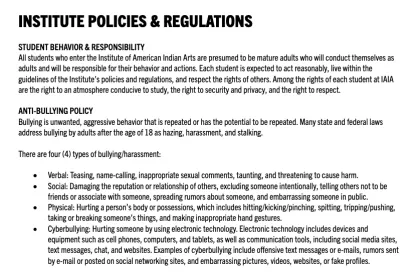
But the administration was not so grateful. They hit back hard, claiming McNicholas was “bullying” university staff. They opened a formal investigation with consequences sure to follow.
“Oh shit,” McNicholas remembers thinking at the time. “They’re going to throw everything at me.”
Learning to hide
“Wonder” by McNicholas’ mother Mary Alice Baer, depicting her son
I grew up in the 1980s near the poverty line, raised by a single mom. The McNicholas residence was a one-car garage with a few rooms tacked on the back in Newington, New Hampshire. Mom was an artist who scraped by doing cleaning jobs. She struggled with alcoholism. Dad was absent until I was 12, but sent $150 a month in child support. Mom didn’t really cook, but she could make a pot of beans. Most nights, we ate TV dinners. It was more than some folks had.
I had undiagnosed autism as a kid, so as you can imagine, school was hell. I learned to keep my mouth shut or get beaten up. Most of the torment from my peers was psychological. I was terrified and lonely. But work was different. In high school, I worked part-time at Market Basket, on the front end. Got hired as a bagger, promoted to keyholder within a day. I found it easier to talk to the cashiers and baggers my age because there, our roles were clearly defined.
Life at school was harder. Blending in became its own kind of hobby. I spent years studying people like an anthropologist, trying to fit in. And I spent years ostracized and harassed for being different. But every year, I got better at hiding myself.
I had traditional hobbies too, you know. I liked computers. I even thought I might study computer science. But I changed my mind at the close of senior year because I knew I had to study people more if I was ever going to have a normal life.
I could only take so much. I started drinking and ended up living in parking lots, storage closets, and couch-surfed for over a decade. But eventually I got sober, bought a house, even started a business. The startup life was too stressful, though. I lost everything — except my sobriety. I entered IAIA to study creative writing. I did my first two years at IAIA while living in my van. In my third year, I moved into the dorms. It was a chance at more stability. And life began to make sense.
I entered at 42, while my peers were mostly 19, so there wasn’t the same pressure to make friends. I contextualize my social life at IAIA as work. Most of my peers are half my age and I am a trusted mentor. These clearly defined roles make me comfortable. Around this time, I was diagnosed with autism, and that helped make sense of things. I also started The Young Warrior, and people liked it. I was part of a community.
When I got into trouble for publishing those pieces, I did what I always do. I tried to study my way out of the problem. I went to the archives and read about old IAIA publications. I read Dean Spade’s “Mutual Aid” and FIRE’s “Guide to Free Speech on Campus.” I studied other undergrad publications and wrote an official proposal and operations manual for what I hoped would be the new Young Warrior.
But overall, life was going well. I haven’t had a drink or drug in 13 years. IAIA has been a huge part of my continued sobriety. And my creative studies have given me the space to unpack the person I hid away so long ago.
Going public
Anticipating housing sanctions barring him from his dorm room, McNicholas left campus before they were formally applied and started living out of his van. But the school’s vicious overreaction in moving to evict him only convinced him it was trying to cover something up. In addition, McNicholas says when Dean of Students Martinez heard the allegations about school officials robbing the food pantry, she simply dismissed the need for food pantries to begin with. According to him, she said, “Students have meal plans. They don’t need food pantries.”
But that explanation didn’t sit right with McNicholas, who lives below the poverty line and depends on food pantries to survive. The situation escalated, he says, when the administration denied that the grant even existed. On March 21, 2024, after McNicholas, acting as press officer for the Associated Student Government (ASG), re-posted an image on Instagram summarizing the scandal, Provost Felipe Colón emailed ASG officers:
It has come to my attention over the last 24 hours that in response to the resignation of Student Success Adviser, Karen Redeye, several students, including members of ASG, have been involved in bullying, defamation, and possibly legally actionable slander and liable [sic] against members of the IAIA staff.
He then suggested that the ASG officers invite him to discuss “Karen’s departure, and particularly to receive information about the pantry grant fund and re-stocking process which has been repeatedly and grossly misrepresented.”
When McNicholas and other ASG members met to discuss the matter with Colón, McNicholas didn’t come empty-handed. An anonymous source had already given him a photocopy of the grant-award letter for $50,000. But when Colón denied the existence of the grant, and McNicholas brandished the proof, Colón tried to explain it away.
Not only that, but university President Robert Martin later threatened to sue them all.
McNicholas was floored. But given the school’s history, he wasn’t surprised. IAIA has a pattern of silencing critics — especially those trying to improve the school’s performance where it falls glaringly short. During a faculty meeting with the Board of Trustees in February 2022, former sculpture professor Matthew Eaton cited an academic paper by a former IAIA department head that showed a staff turnover rate of 30%. According to McNicholas, “They came down on him hard.”
Colón told Eaton he had embarrassed Martinez and demanded that Eaton write a public apology. Eaton wrote the coerced apology and quit the next day. In it, he said citing the high turnover rate was “disparaging” to Martinez as well as “a direct assault” against her.
But McNicholas’ main concern was for his fellow students. The lack of food, coupled with legal threats and the intense stress of having to deal with an administration that appeared to prey on its students rather than support them, had taken an emotional toll on him and his peers. And that toll was beginning to show.
David McNicholas on IAIA campus
One day, the ASG called yet another meeting to discuss the situation, but this time they only invited ASG members because the students feared they couldn’t trust their own advisors. When the meeting began, the ASG president showed up in tears. She had just come from a one-on-one meeting with President Martin, who had delivered shocking news — the school was seriously considering suing ASG and her over the bad publicity.
“She came to us and said, ‘They told me to fix it,’” McNicholas says. “She was in tears. And that made me mad.”
At the next ASG meeting, now that the existence of the grant was proven, Colón changed his tune. McNicholas says, “He showed up and said, ‘Oh, you know what? I did some looking, I researched it, and I think I found the grant that you guys were talking about. And I’d like to come and explain how it was spent.’”
“I was like, yeah,” says McNicholas, “I bet you do.”
McNicholas was unable to attend the meeting, but he got the sheet Colón handed out, which showed budget-to-actual figures. When pressed to release the ledger, however, Colón claimed bank statements might not go back that far. “We’re talking a year,” says McNicholas, “maybe two at most. I think he thought he could get away with that because he was in a room full of 19-year-olds. If I’d been there, I would’ve pushed back.”
In all this, what got under his skin the most, he says, was how the school treated his fellow students, such as the girl who had posted the original Instagram summary of the scandal. “I can’t stand that they did the same thing [they did to me] to a 19-year-old freshman for making an Instagram post,” he says. “They kicked that person out, kept their money, and made a 19-year-old student homeless. As far as I’m concerned, that’s unconscionable.”
IAIA’s anti-bullying policy
Meanwhile, Colón concluded his investigation, finding McNicholas guilty of violating IAIA’s highly restrictive anti-bullying policy, which broadly bans “unwanted, aggressive behavior” and includes constitutionally-protected expression as examples of prohibited conduct. That is, he accused McNicholas of bullying administrators by publishing claims that those administrators had bullied others. McNicholas later successfully appealed his ban from campus housing and recovered about $2,000 in lost fees, but much of the damage was already done. Given this victory, he could move back into housing this upcoming semester, but continues to live in his van where IAIA can’t kick him out.
The sanctions against him not only sent him back to homelessness, but cost him work too, including a federal work-study opportunity that should have been protected from administrative meddling. “I was hired to be an orientation mentor at the end of last summer,” says McNicholas. “And the day before I was going to start, I got a call from the director of that program who said, ‘Yeah, you can’t participate because you’re on institutional probation.’”
Finding himself ruthlessly targeted by the administration, McNicholas turned to the press. Teaming up with a few peers, they went to the Santa Fe Reporter, and the article that followed made an immediate impact. “When that article came out,” he says, “both the interim director and dean of students were gone within days. Like, they were gone.”
Breaking through
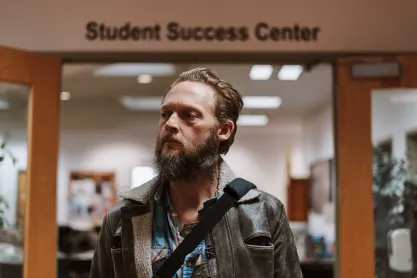
After the Santa Fe Reporter exposé and the ensuing leadership shakeup, the food pantry underwent a striking transformation. The 20-foot-long conference table in the Student Success Center, once a barren surface lined with unused cans of tomatoes, is suddenly overflowing with fresh groceries. McNicholas’s journalistic work, for which he was evicted from campus housing, has not only been vindicated, but has helped make his campus a better place.
As for himself, McNicholas is about to enter his fifth and final year at IAIA. He is applying to MFAs this fall and says he hopes all this doesn’t affect his chances. “But,” he adds, “I chose to stick up for my community — and to incur the costs of doing so.”
That said, he remains shaken by the experience. “The school administration violated my rights and treated me like a criminal, offering no meaningful due process, and protecting themselves over the community at every turn.”
Indeed, IAIA has offered little in the way of accountability. The school has refused FIRE’sdemands to clear McNicholas’s disciplinary records or those of any other student punished and threatened for speaking out, including the ASG president. It has also failed to revise its vague and censorial anti-bullying policy, still found in the publicly-available student handbook — leaving open the possibility of IAIA silencing other students the same way they did McNicholas. On top of all this, IAIA leadership has also failed to offer any legal or moral justification for its actions.
Following President Martin’s retirement this July, one can only hope that the newly minted president, Shelly C. Lowe, breaks from his administration’s legacy of censorship and authoritarianism. IAIA’s crackdown on student dissent must be challenged. Oversight from the school’s Board of Trustees and the Bureau of Indian Education is essential to help push IAIA in the right direction. Because no student should ever be left homeless for telling the truth.
Each night, McNicholas returns to his van. On cold nights, the propane tank hisses beside him, threatening him in whispers. On hot nights, he lies there sweating. But he remains unshaken. In one of his poems, McNicholas describes chopping through six feet of ice, the water “fixed like concrete,” his hands burning in the cold “with thin gloves or nothing.” It’s a searing image. McNicholas is nothing if not resilient.
“I want my uncredited legacy to be a small part of the student handbook,” he says, “enshrining the right to free speech that we all fought for.”
Dr. Toyin Alli returns to The Social Academic podcast to talk about showing up online for yourself and your business as an academic. As an entrepreneur herself, Toyin has balanced full time academic life with her business. Now, she helps academics like you create a semester-proof business that works for your full time academic life.
In this episode: finding community, video for YouTube, and running a business in 5 hours a week or less.
Bio
Dr. Toyin Alli is a math professor, business strategist, and the founder of The Academic Society, where she helps grad students with time management, productivity, self-care and grad school success strategies.
After building her own six-figure business while teaching full-time, Toyin now mentors other professors through her signature program Six Figure Professor and her community, The Secret Society of Academic Entrepreneurs.
She’s been featured on various academic podcasts and has spoken at universities across the country.
Whether she’s teaching in the classroom, facilitating a virtual workshop, or coaching behind the scenes, Dr. Toyin Alli is on a mission to help academics reclaim their time, expand their influence, and redefine success on their own terms.
Come join us at 5:30 p.m. on August 27, 2025, for an evening filled with creativity and music at Bagaduce Music in Blue Hill, Maine!
Whether you’re into making portraits, activism, listening to live music, or singing along, there’s something for everyone at this event. Get ready to be inspired and have a great time surrounded by fellow activists and art enthusiasts.
Bagaduce Music’s Bennett Konesni will bring a collection of “Songs For What Feels Important In This World,” featuring his own list of originals and classics that are great for singing along, including sea-shanties calling out tyrannical captains, meditative chants, good-food hollers, and songs for marching and organizing.
Try out your artistic talents and create a self or family portrait with guidance from AWTT founding artist Rob Shetterly
Food and shaved ice will be available for purchase. Don’t miss out on this exciting opportunity to learn more and support Americans Who Tell the Truth and Bagaduce Music, and fund exciting scholarship opportunities for both organizations!
Stakeholders warn that the funding cuts will probably result in furloughs, redundancies or – in the worst cases – organisations being forced to close.
The move comes after months of policy turmoil in the US, as the Trump administration wages war on international education.
Experts question the legality of the move as a campaign is launched to save State Department international exchange programs.
State Department regional bureaus were informed of the cuts on August 13, via internal communications stating that government officials would work with them to “pull down” the affected programs “with the least possible disruption”.
The directive explained that the programs “were lower funding priorities in the current fiscal environment, so they are being removed from FY25 Funding”, according to communications from the Bureau of Educational and Cultural Affair (ECA).
“It’s an existential crisis for these programs and possibly for ECA,” said Mark Overmann, executive director of the Alliance for International Exchange – whose members make up 13 of the impacted programs, facing cuts of $85m.
According to Overmann, the 22 programs were all due to be renewed and were expecting to receive FY25 funds before September. Now, they will no longer be allowed to go through their awards process or renewal, and thus will be terminated.
“These organisations will now suddenly lose funding they’ve long anticipated and been promised, and this will likely result in furloughs, layoffs, and even organisational closures,” warned Overmann.
“Cancelling $100 million in programs which impact 10,000 students is devastating on many levels,” Bill Gertz, chairman of American Institute for Foreign Study (AIFS) told The PIE News.
“It means students’ plans and dreams are impacted… it means layoffs and financial disruption at the many fine cultural exchange organisations,” added Gertz, who sponsors the YES Abroad program which has been cancelled.
“These folks have worked tirelessly to make the world a better place,” he said.
Typically, the State Department’s funding process would be in full swing in the spring and summer, though this year has been plagued by delays and uncertainty for program organisers and students alike.
Following the lifting of the State Department’s funding freeze this March, stakeholders have been concerned about the lack of movement on the ECA’s FY25 funding process, which has caused delays in the opening of applications and interfered with students’ plans.
According to a former staff member of the Republican Senate Foreign Relations Committee: “The variety of programs impacted are too broad to point to a single issue or justification – everything from community colleges to disability and education exchanges.”
They warned that the cuts would isolate the US in the long term, raising particular concerns about the discontinuation of the Kennedy-Lugar Youth Exchange and Study (YES) Program.
This initiative “was created after 9/11 specifically to bring young people from predominantly Muslim countries to the US to build long-standing relationships with communities and individuals who might not otherwise every get to see our nation in anything other than filtered news and anti-US social media,” they explained.
The value of study abroad for US soft power and public diplomacy was echoed by Gertz, who said the cuts came “at a time in our history when cultural understanding is needed the most”.
If OMB is allowed to cut these Congressionally appropriated FY25 awards, it will give them license to do it again and again, opening the door to effectively eliminate international exchange programs
Mark Overmann, Alliance for International Exchange
Beyond the programs, their participants, alumni and staff, the move raises alarm bells about the White House’s ability to cut congressionally appropriated grants.
Historically, Congress has approved ECA awards, but this year the Office of Management and Budget (OMB) inserted itself “irregularly” into the process to stop congressionally approved funds from being spent, said stakeholders.
According to Overmann, the move could be illegal, with Gertz also stating it was unconstitutional for OMB to override Congress in such a way.
“OMB found a way to use a small, previously arcane piece of administration process to stop ECA program awards from moving forward,” Overmann explained, leading to the defunding and termination of 22 cultural exchange programs.
“If OMB is allowed to cut these Congressionally appropriated FY25 awards, it will give them license to do it again and again, opening the door to effectively eliminate international exchange programs,” Overmann warned.
The cancellations have shocked the US study abroad community, which recently received a vote of confidence in Congress, which drastically reduced the planned cuts for study abroad in the FY2026 budget.
“We believe we have the support of the majority of Americans who have supported our efforts for decades,” said Gertz. ” We are actively engaged with Congress on the future of ECA programs.
Sector leaders have already kicked into action, warning that the elimination of funding would “greatly damage 75+ years of exchange activity and the legacy of Senator Fulbright. It would destroy many of our programs and much of our work,” said Overmann.
The Alliance today launched a campaign to save State Department international exchange programs, urging stakeholders to write to members of Congress.
The State Department has not issued a formal announcement or replied to The PIE’s requests for comment.
It appears that the following programs are impacted, though the list may not be exhaustive:
Community College Administrator Program (CCAP)
Community College Initiative Program (CCI)
Community Engagement Exchange (CEE, Leahy Initiative on Civil Society)
Council of American Overseas Research Centers
English Access Scholarship Program
English Language Fellow Program
Global Undergraduate Exchange Program
IDEAS Program
International Center for Middle Eastern-Western Dialogue (Hollings Center)
Kennedy-Lugar Youth Exchange and Study (YES) and YES Abroad Program
Leaders Lead On-Demand
Mandela Washington Fellowship for Young African Leaders
Mike Mansfield Fellowship Program
National Clearinghouse for Disability and Exchange (NCDE)
Professional Fellows Program
Survey of International Educational Exchange Activity (IEEA) in the United States
TechWomen
The J. Christopher Stevens Virtual Exchange Initiative
U.S. Congress-Korea National Assembly Exchange Program
U.S.-South Pacific Scholarship Program (USSP)
Young Southeast Asian Leaders Initiative (YSEALI) Academic Fellowship
Young Southeast Asian Leaders Initiative (YSEALI) Professional Fellowship Program (PFP)
According to UCAS data released today to coincide with A-level results day, the number of international students accepted to UK institutions has risen to 52,640 – up 2.9% on 2024 when this figure stood at 51,170.
In just a year, the number of students from China accepted into university via the UCAS system went up a whopping 13% – with a total of 12,380 acceptances.
Meanwhile, 2025 has proven to be a year of success for domestic students in the UK – with 28.3% of all grades being A or A* for students across England, Wales and Northern Ireland, according to the BBC.
Commenting on the numbers, UCAS chief executive Jo Saxton pointed out the huge achievement of this year’s students, whose education was hit hard by the Covid-19 pandemic.
“This year’s students were just thirteen when the pandemic hit, and their secondary schooling was turned upside down,” she said. “It’s great to see these applicants securing a university place in record numbers, seeking more education and investing in their futures. I am equally delighted to see how universities across the country have responded to their ambition.”
Undergraduate international students have also found success this year despite some universities prioritising domestic students due to a focus on financial stability.
According to a recent BBC article, Saxton explained that some UK universities were focussing on enrolling domestic undergraduates because of “uncertainty” around international students.
She also pointed out that some institutions could accept a greater number of domestic students this year even if they did not meet the exact conditions of their offer because offering places to UK students, as opposed to international students, was more likely to result in financial stability for the institution.
It’s great to see these applicants securing a university place in record numbers, seeking more education and investing in their futures Jo Saxton, UCAS
It comes amid a turbulent time for the international education sector in the UK – with upcoming compliance changes forcing some universities to stop recruiting for certain courses or from some countries rather than risk falling foul of tightened BCA metrics.
Many UK universities are currently facing financial difficulties, with around four in 10 universities currently at a deficit, according to a report by the Office for Students.
Of the courses chosen by students, the most popular in the UK this year were Engineering and Technology, up 12.5% from last year at 30,020 acceptances, Mathematics with 9,220 acceptances and Law with 27,150.
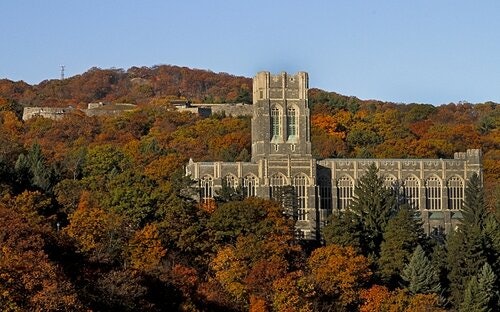
United States Military Academy at West Point Students for Fair Admissions (SFFA) announced this week that it has reached a settlement agreement with the U.S. Department of Justice that will permanently end the consideration of race and ethnicity in admissions at the United States Military Academy at West Point and the United States Air Force Academy.
The agreement, approved at the highest levels of the Department of Defense, establishes four key requirements for both academies: applying no consideration of race or ethnicity in admissions decisions, maintaining no race-based goals or quotas, shielding race and ethnicity information from admissions personnel, and training staff to adhere to merit-only standards.
The policies will take effect immediately and apply to all future admissions cycles, according to the settlement terms.
The settlement represents a significant policy reversal from the Biden administration’s previous position defending race-conscious admissions at military service academies. Earlier this year, under President Trump’s Executive Order 14185, the Department of Defense determined that race-based admissions at military academies are not justified by military necessity and do not advance national security, cohesion, or readiness.
The Department formally abandoned its earlier position that a “compelling national security interest in a diverse officer corps” justified race-based policies, marking a sharp departure from decades of military diversity initiatives.
The agreement follows SFFA’s earlier litigation against the U.S. Naval Academy, where the organization successfully challenged similar race-conscious admissions practices.
Under the settlement terms, litigation against West Point and the Air Force Academy will be dismissed with prejudice, with each side bearing its own legal costs. The agreement preserves SFFA’s right to challenge any future changes to these policies.
“This is an historic day for the principle of equal treatment under the law at our nation’s military academies,” said Edward Blum, president of SFFA. “Together with the Naval Academy case earlier this year, this agreement ensures that America’s critically important military service academies will admit future officers based solely on merit, not skin color or ancestry.”
The settlement comes amid ongoing national debates over affirmative action policies following the Supreme Court’s 2023 decision in Students for Fair Admissions v. Harvard, which effectively ended race-conscious admissions at civilian colleges and universities.
Military service academies had previously been considered potentially exempt from that ruling due to national security considerations and the unique mission of training military officers. However, the Trump administration’s policy shift has eliminated that distinction.
The agreement affects two of the nation’s most prestigious military institutions. West Point, founded in 1802, and the Air Force Academy, established in 1954, collectively graduate approximately 2,000 new military officers annually.
Imagine a prospective student asking an AI, “Which colleges offer the best online MBA for working parents?”
Instead of matching keywords, the AI delivers an answer drawn from credible, connected content that blends facts, context, and intent to guide the decision.
For higher ed leaders, this represents a major shift. Institutions that adapt will earn greater visibility in search, attract more qualified prospective students, and convert curiosity into enrollment growth. The old playbook of targeting single, high-volume keywords just isn’t enough anymore.
AI-driven search rewards comprehensive, connected, and trustworthy content ecosystems, and institutions that embrace this approach will be the ones students find first.
The AI search shift in higher ed
Traditional search engine optimization (SEO) rewarded institutions that could identify the right keywords, create targeted pages, and build backlinks. But generative AI and conversational search have changed the rules of the game.
Here’s what’s different now:
From keywords to context: AI search models don’t just match words — they interpret meaning and intent, returning results that connect related topics and concepts.
Authority signals matter more: AI favors sources that consistently provide accurate, in-depth information across multiple touchpoints.
Content is interconnected: A single page doesn’t win on its own. Its value depends on how it fits within the institution’s broader web presence.
This shift also raises the bar for internal collaboration. Marketing, enrollment, and IT can no longer work in silos. AI search success depends on shared strategy, consistent messaging, and coordinated execution.
The takeaway? Institutions need to stop thinking about SEO as an isolated marketing tactic and start treating it as part of a broader content ecosystem.
Why a content ecosystem beats keyword lists
A content ecosystem is the interconnected network of program pages, admissions information, faculty bios, student stories, news, and resources — all working together to answer your audiences’ questions.
It’s the difference between a brochure and a campus tour. A brochure offers quick facts; a tour immerses prospects in faculty, classrooms, student life, and services—building a fuller, more confident picture.
A keyword list is the brochure. A content ecosystem is the tour — immersive, connected, and designed to guide prospects from curiosity to commitment.
When built intentionally, a content ecosystem gives institutions three clear advantages in today’s AI-driven search environment:
Increased relevance
AI search tools don’t look at a single page in isolation; they interpret the relationships between topics across your domain. Internally linked, topic-rich pages show the depth of your expertise and help algorithms recommend your institution for nuanced, conversational queries.
Example: A prospective student searching “flexible RN-to-BSN options for full-time nurses” is more likely to find you if your nursing program page is connected to articles on nursing career paths, flexible modality, and student success stories.
Compounding authority that builds lasting trust
Authority isn’t built from one or two high-performing pages. It’s earned when every part of your online presence reinforces your credibility. Program descriptions, faculty bios, and testimonials must align in tone, accuracy, and quality. Outdated or inconsistent details can quickly erode the trust signals AI uses to rank content.
Conversion that’s built in
A keyword list may bring someone to your site, but a content ecosystem keeps them there and moves them closer to action. When visitors can move seamlessly from an informational blog to a program page to an application guide or chat with an advisor, conversion becomes a natural next step.
The most effective ecosystems are living assets — constantly updated, monitored, and optimized to reflect evolving programs and audience needs. For institutions looking to compete in an AI-powered search landscape, that adaptability is the real competitive advantage.
Is Your Website Built for AI Search?
Get a personalized AI Readiness Assessment that identifies gaps, surfaces opportunities, and helps build a digital content strategy that meets the moment.
How to build an AI-ready content ecosystem
At Collegis, we help institutions take a holistic approach that bridges marketing, enrollment, and IT. Here’s how we see it coming together:
1. Gather actionable data insights
Don’t just chase the most-searched terms. Look at historical enrollment, inquiry trends, and page performance to identify the queries that actually lead to applications and registrations, not just clicks.
2. Map content to the student journey
From the first touchpoint to enrollment, every content asset should serve a clear purpose:
Top of funnel: Informational articles, career outlooks, program overviews
Middle of funnel: Financial aid resources, student success stories, faculty profiles
Bottom of funnel: Application guides, event sign-ups, chat support
Linking these pieces guides prospective students through the decision process seamlessly.
3. Optimize for AI discoverability
Structured data, schema markup, and well-organized site architecture make it easier for AI tools to interpret and recommend your content. Accuracy and consistency are critical — outdated program descriptions or conflicting statistics can undermine authority signals.
4. Create continuous feedback loops
The work doesn’t stop at publishing. Monitor how content performs in both traditional and AI search, then feed those insights back into planning. AI search algorithms evolve, and so should your content strategy.
Turning visibility into meaningful enrollment growth
AI search is changing how students discover institutions, and how institutions must present themselves online. It’s no longer enough to appear in search results. You need to appear as the most authoritative, most relevant, and most trustworthy source for the questions that matter to prospective students.
By building an AI-ready content ecosystem, colleges and universities can meet this challenge head-on, earning not just visibility but the confidence and interest of future learners.
Collegis partners with colleges and universities to design content strategies that aren’t just visible, they’re built to convert and scale across the entire student lifecycle.
Ready to see how your institution stacks up in the age of AI search?
Request your AI Readiness Assessment to receive a personalized report outlining your institution’s digital strengths, content gaps, and practical next steps to boost visibility and engagement. It’s your roadmap to staying competitive in an AI-first search landscape.
Innovation Starts Here
Higher ed is evolving — don’t get left behind. Explore how Collegis can help your institution thrive.
Dr. Philip Cavalier Philip Cavalierhas been named president of Kutztown University. Cavalier most recently served as provost and senior vice chancellor for Academic Affairs at the University of Tennessee at Martin (UTM), a regional public university with more than 7,000 students in northwest Tennessee. He served as interim chancellor for five months in 2023. During his seven years at the university, he led the creation of UTM’s 2025- 30 strategic plan, and two strategic enrollment plans and developed or enhanced eight academic programs aligned with student interests and local workforce needs. Before joining UT Martin, Cavalier held several faculty and senior leadership roles in higher education, including provost at Lyon College, provost and dean of the college at Eureka College, and dean of general education at Catawba College.
Cavalier holds a doctorate in English from the State University of New York at Buffalo, a master’s degree in English from Northeastern University, Boston, Mass., and a bachelor’s degree in economics from Swarthmore College.