The Honourable Bill Shorten transitioned at the start of the year from cabinet to vice-chancellor and president of the University of Canberra.
Please login below to view content or subscribe now.
Membership Login

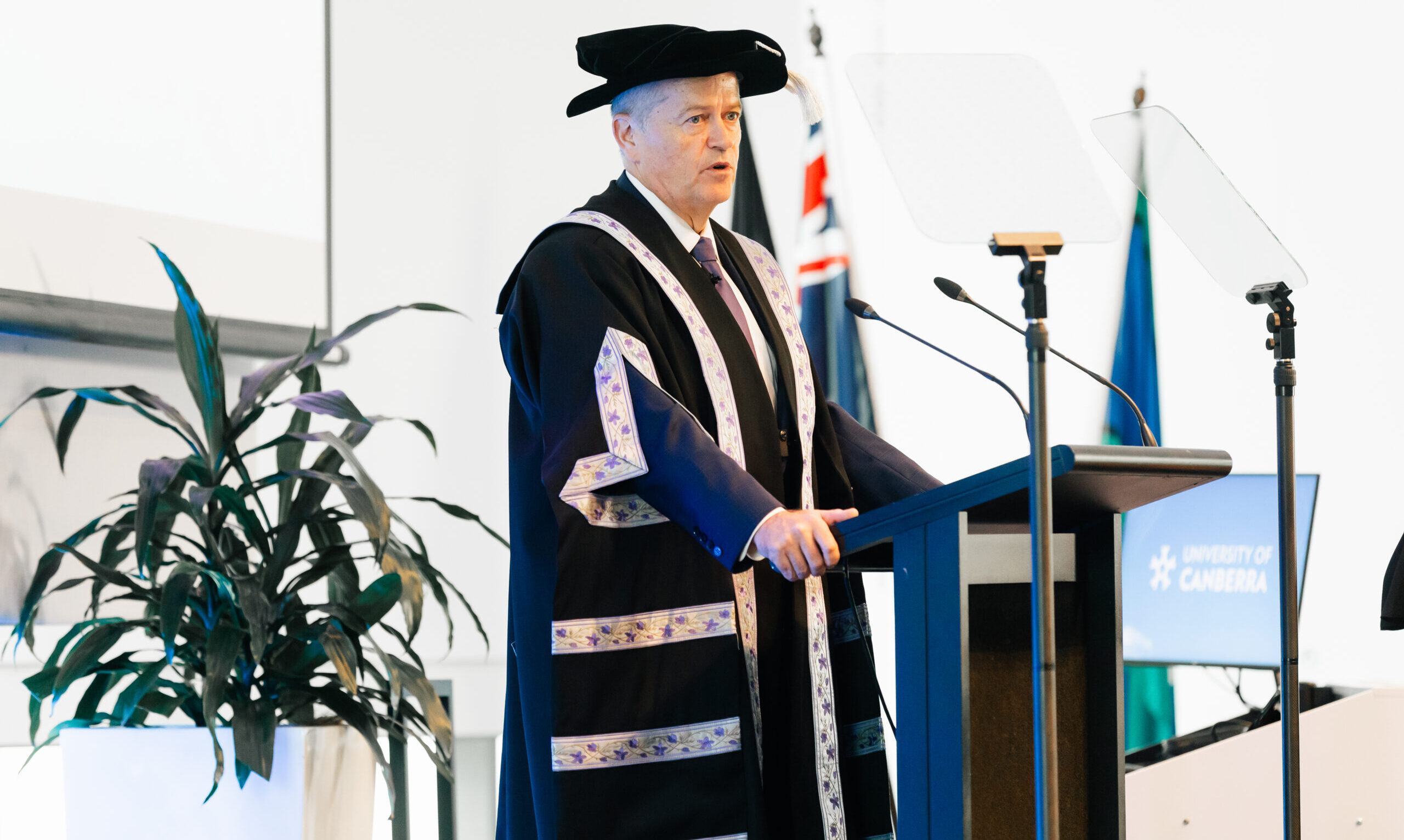
The Honourable Bill Shorten transitioned at the start of the year from cabinet to vice-chancellor and president of the University of Canberra.
Please login below to view content or subscribe now.
Get stories like this delivered straight to your inbox. Sign up for The 74 Newsletter
When children are unnecessarily removed from their homes, experts say the separation puts them at risk of chronic mental and physical ailments.
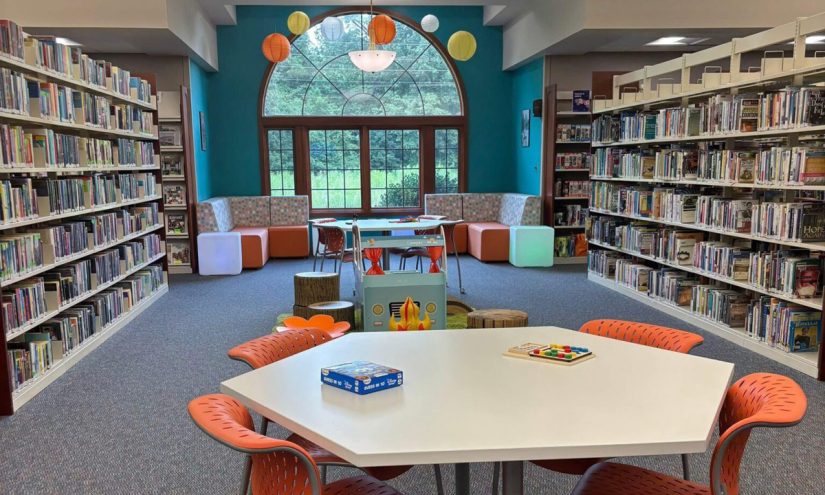
With that in mind, four Kentucky libraries are launching programs to keep families together, well resourced and educated, aided with $200,000 in grant money from the national nonprofit Youth Villages.
Libraries in Jackson, Johnson, Marshall and Spencer counties received around $45,000 each for a variety of programs to help parents meet their children’s needs.
Britany Binkowski, the executive director of the Youth Village initiative New Allies, said libraries are a “low stigma, high access point of contact for all communities” and make sense for grassroots outreach.
“They pretty consistently exist in most counties where they can be reached by lots of families, especially those in rural areas, and they’re (places) people trust to get information, to get access to resources,” she said. “They don’t carry the stigma, for example, of going to a child welfare department and asking for resources in a way that might feel very vulnerable.”
Among other things, the libraries are using the grant month to host trainings on growing food in an apartment setting, teaching parents how to deal with challenging behaviors and how to cook basic recipes, and connecting families to other community resources where they can get car seats and other necessities.
Libraries are also a more “natural” place to host visitations for parents who are working toward reunification, Binkowski said.
It’s “often not the case” that a child is removed from a home because the parents are outright bad, she said. Most of the time, parents lack the resources to properly feed, clothe or otherwise care for their children, she said. In fact, about 70% of all Child Protective Services allegations are related to neglect and poverty, the Lantern previously reported.
“We see substance use disorder and parents who are struggling with that as a significant driver of entries into foster care — not only in Kentucky, but across the country,” Binkowski said.
Other preventable issues contribute to removal, she said, like a parent not being able to buy a car seat or access safe child care.
“Things like that can cause safety issues that have to be resolved for a child to remain safe and stable,” Binkowski said.
Tammy Blackwell, an author and the director of the Marshall County Public Library, said libraries working in this space is just “logical.”
“Libraries are already reaching families and just doing a lot of good work giving families a place to be and form bonds,” she said.
Marshall County’s grant supported a renovation of the Hardin branch to create a more child-friendly space and funded an eight-week program for mothers of young children called Mom’s Night Out.
During the Mom’s Night Out program, which will start the first week in September, mothers who are referred by Court Appointed Special Advocates will gather weekly and have a meal together. During the meal, representatives from the Marshall County Extension Office and the health department will lead discussions about stress management, home upkeep and how to cook recipes with staples handed out at food distribution centers like rice and beans.
Because this is grant-funded, it’s not affected by recent changes to the Supplemental Nutrition Assistance Program (SNAP) program, Blackwell said. Congress recently passed the Big Beautiful Bill Act, which cut funding for the SNAP Education program, among other things.
The Mom’s Night Out discussions will be in a “very non-judgmental way, and not in a lecturing kind of way, but as a conversation and getting those families very comfortable in that space, very comfortable with library staff, comfortable with community partners who they may need to call on at some point,” Blackwell explained.
“We’re hoping that they build a bond with each other; other people with similar lived experiences, and to really give them a sense of community and resources in order to help the mothers thrive, so that the children may thrive,” she added. “I love that it’s ‘before there’s a problem, let’s fix it.’”
The first round of the program will only include mothers — Blackwell hopes between 12 to 15 — who have children of preschool to early elementary school age. Should it be successful and receive funding for a repeat, she’d like to expand it to fathers as well.
“There’s been some coverage of how many kids in Kentucky are in either foster or kinship care situations,” Blackwell said. “It’s a lot of kids, and that really impacts their ability to be successful in life. And anything that we can do to strengthen those families and give those kids, then we need to at least try. And I think libraries are in a perfect position to really make a difference.”
The 2024 Kids Count report, from Kentucky Youth Advocates and the Annie E. Casey Foundation, showed there were nearly 46,000 youth in foster care in the state from 2021-2023. In that same time period, the number of children leaving foster care and reunited with their families dropped to 32%. Pre-pandemic, from 2016-2018, it was 36%.
Additionally, in 2024 there were around 55,000 Kentucky children being raised with a relative in a kinship care arrangement.
The Department for Community Based Services came up with the idea to partner with libraries, Binkowski said. Lesa Dennis, the DCBS commissioner, wasn’t available for an interview but said in a statement that “by meeting families where they are, we’re building pathways to stability, resilience and well-being so no family has to face challenges alone.”
Binkowski, who previously worked as Assistant General Counsel for the Tennessee Department of Children’s Services, said that “a foster care intervention, even if necessary, is traumatizing to everyone involved.” It can damage bonds between parents and their children and upend daily routine and connections, she said.
“We have a substantial body of evidence that tells us that children do best when they are with their families of origin — when it can be safe,” she said. “We know that connections to biological family, knowing where you came from, feeling like you belong — those are really critical emotional stabilization and safety factors that support children’s growth and development.”
Experiencing brokenness in the home, abuse or neglect are Adverse Childhood Experiences, which refers to traumas or stressors in a person’s life before their 18th birthday. They include, but are not limited to, parental divorce, abuse, parental incarceration, substance use issues in the home and more. The more such experiences a person has, the more likely they are to have poor health, lower education and economic hardships. Childhood trauma also cost Kentucky around $300 million a year.
“Enough stressors on a child at early ages without protective capacities to keep them from having negative outcomes can literally take years off of their lives,” Binkowski said. “So, while we don’t want children to experience abuse and neglect … we also don’t want them unnecessarily being removed from their home if the issues are not creating those kinds of negative impacts and we can stabilize a family without requiring removal.”
Kentucky Lantern is part of States Newsroom, a nonprofit news network supported by grants and a coalition of donors as a 501c(3) public charity. Kentucky Lantern maintains editorial independence. Contact Editor Jamie Lucke for questions: [email protected].
Get stories like these delivered straight to your inbox. Sign up for The 74 Newsletter

Get stories like this delivered straight to your inbox. Sign up for The 74 Newsletter
Despite having some of the most resources and economic support, a recent national study ranked Indiana’s early education system 42nd in the country — and second-to-last when it came to accessibility.
The WalletHub story, shared earlier this week, is simply the latest confirmation for Hoosier parents that Indiana’s child care market is struggling. Experts, business leaders and politicians agree that Indiana needs more child care, but can’t seem to agree on the best way to meet the moment.
Facing budgetary pressures and depressed revenue forecasts, state leaders opted to trim funding and narrow eligibility for early learning and child care resources earlier this year. Seats for state-funded preschool, known as On My Way Pre-K, have been halved while vouchers for subsidized child care have more 21,000 children on a waitlist.
One federal program, Head Start Indiana, hopes to help close the gap left by vanishing state funding, but faces its own challenges with flat federal funding.
“We are the quietest, most successful 60-year old program in the federal government’s history,” boasted Rhett Cecil, the organization’s executive director. “… (our programs) are going to support their families and children. They’re allowing families to work or get job training or further education. And our services — that child care and early education — are free for those families.”
Just under 13,000 families in all 92 counties utilize the program, which receives roughly $181 million in federal funding annually. That budget line was briefly threatened by the Trump administration, which walked back proposed cuts in favor of flat funding — which does mean services will be lost as inflation and other costs eat into the bottom line.
The second-term president also eliminated the federal Head Start office covering Indiana back in April — though the federal Administration for Children and Families announced it would dedicate one-time funding to Head Start locations earlier this week explicitly for nutrition, but not for other programming costs.
Additional federal support could allow it to expand to meet the need following state cuts, leaders hope, and continue employing almost 4,000 Hoosiers.
“Let’s say, hypothetically, we get $100 million more dollars. How many more teachers and classrooms could be opened?” Cecil mused. “How many kids could we serve off that waitlist?”
Participating in and access to child care resources reaps benefits for young Hoosiers, such as better school readiness skills. Some national research has found that early education may also decrease future crime and could generate $7.30 for every one dollar invested.
In Indiana, the shortage of child care options costs the state an estimated $4.2 billion annually, over a quarter of which is linked to annual tax revenue lost.
The 2024 study from the Indiana Chamber of Commerce emphasized the need to free up parents, mostly women, who’ve left the workforce “as a direct result of childcare-related issues.”
“There’s some data out there that one in four Hoosier parents leave their job over child care gaps, and it really impacts talent and workforce,” said David Ober, the chamber’s vice president of taxation and public finance. “It’s hindering economic momentum in the state and so it is a huge deal for us.”
For the last few years, tackling the state’s child care crisis has been a top legislative priority for the organization, which represents the interests of thousands of Hoosier employers. Ober said the chamber is working to plan a child care summit later this year to identify potential solutions.
According to Brighter Futures Indiana, average full-time weekly care costs families $181 per week — with even higher prices for infants and toddlers. That doesn’t factor in type of care or quality, and prices vary by community.
Families can spend more on their young children’s care than on a college education — if it’s even available in their communities. Rather than pay the price, many Hoosier parents simply drop out of the workforce at the same time that employers are scrambling to hire talent.
Ober highlighted recent legislative efforts to expand child care, including one that expanded a tax credit for employers directly providing their employees with child care resources. Other bills have tweaked staffing ratios and created a pilot program for so-called microcenters.
But workforce remains a challenge, even for Head Start centers, earning its own legislative study carveout. Over 20% of Indiana’s child care workers left the field during the pandemic — a shock that “has not really fully healed,” Ober said.
“If you ask any provider in the state, workforce is the hardest problem,” Ober said. “… How do you get educators and keep them? There’s so much more work to be done there and it’s challenging.”
Traditional market forces struggle to balance affordability for parents against costs for child care, a gap sometimes covered by government subsidies.
But Ober insisted that “child care is infrastructure,” especially for the businesses reliant upon employees who are parents. Changing funding is “going to just exacerbate underlying problems,” he added.
“Those numbers are pretty stark,” Ober said. “And then when you add in changes at the state and the federal level, it creates new problems that we all have to come together and work on,” he concluded.
Indiana Capital Chronicle is part of States Newsroom, a nonprofit news network supported by grants and a coalition of donors as a 501c(3) public charity. Indiana Capital Chronicle maintains editorial independence. Contact Editor Niki Kelly for questions: [email protected].
Get stories like these delivered straight to your inbox. Sign up for The 74 Newsletter
Get stories like this delivered straight to your inbox. Sign up for The 74 Newsletter
This story was originally published by CalMatters. Sign up for their newsletters.
Funding cuts. Raids near campuses. Exclusion from programs like Head Start and career training. For months, the Trump administration has been chipping away at the rights of students without legal status in public schools.
Could the administration take away those students’ right to free public school entirely? Experts say that may be the next step.
“People have worried about this for a couple decades, but this is different,” said Patricia Gándara, education professor and co-director of the Civil Rights Project at UCLA. “Right now we have to be extremely vigilant. These people will stop at nothing.”
A 1982 U.S. Supreme Court ruling, Plyler v. Doe, guarantees all students, regardless of immigration status, the right to a free public education in K-12 schools. But last year the conservative Heritage Foundation called for the Supreme Court to overturn the ruling and for states to charge tuition to immigrant families, even if their children are U.S. citizens. The rationale is that schools spend billions of dollars educating those students — money that instead should be spent on students who, along with their parents, are native-born U.S. citizens.
Project 2025, also published by the Heritage Foundation, echoes that vision.
Such a policy would have an outsized impact in California, where nearly half of the state’s children have at least one immigrant parent, according to the Public Policy Institute of California.
“This would have tremendous negative impacts,” said Megan Hopkins, chair of the education department at UC San Diego. “For starters, we’d have a less educated, less literate populace, which would affect the economy and nearly every other aspect of life in California.”
Plyler v. Doe stemmed from a case in Texas in the early 1980s. The state had passed a law allowing schools to charge tuition to students who weren’t citizens. The Tyler Independent School District in Tyler, Texas, a small city about 100 miles southeast of Dallas, was among the districts that tried, triggering a lawsuit that eventually brought the case to the Supreme Court.
The Supreme Court ruled in favor of the plaintiffs, arguing that children who aren’t citizens are entitled to equal protection under the law. Still, the ruling was close — 5 to 4 — even though the court was more liberal than it is today.
Since then, the ruling has been mostly forgotten. But there have been occasional attempts to restrict immigrants in schools, in California and elsewhere. In 1994 California voters passed Proposition 187, which banned immigrants living illegally in the U.S. from receiving public benefits, including access to public schools. A federal court blocked it before it went into effect.
In 2011, Alabama passed a law requiring schools to collect students’ immigration status. That law was later blocked by a federal court. In 2022, Texas Gov. Greg Abbott said he’d favor revisiting Plyler v. Doe and that states should not have to pay to educate students without legal status.
Since the Heritage Foundation published its report, about a half-dozen states have attempted to pass laws that would allow schools to charge tuition to noncitizens. None passed last year, but advocates said they plan to keep trying.
They’re likely to have a sympathetic supporter in President Donald Trump, who’s so far followed many of the policies put forward by Project 2025. In the past few months, his administration has amped up immigration arrests and said it would no longer honor schools as safe havens from enforcement. It also cut (although later reinstated after states sued) funding for migrant students and barred students without legal status from Head Start, adult education and career and technical education.
The issue could land before the Supreme Court in at least two ways. A state could pass a law allowing public schools to charge tuition, leading to a lawsuit which could end up before the Supreme Court. Or Trump could issue an executive order that could also trigger a lawsuit.
Erwin Chemerinsky, dean of the UC Berkeley Law School, said some of Trump’s actions, such as barring children without legal status from Head Start, is already a violation of Plyler.
“There’s no doubt that the Trump administration has increased pressure on Plyler,” Chemerinsky said. “Certainly, what Trump is doing could lead to cases that would get to the Supreme Court. Could this court overturn Plyler? Of course they could. … all it would take is five justices wanting to overrule it.”
Even if it’s not overturned, the current policy shifts have had a chilling effect on schools and immigrant families, said Hopkins, at UC San Diego. School attendance has dropped in communities experiencing immigration crackdowns, which has caused academic repercussions for some students and widened the achievement gap between Latino students and other groups. A recent report by Policy Analysis for California Education found that Latino students and English learners fared worse in math and English in the wake of immigration arrests in their communities, and reported a significant increase in bullying at school.
Hopkins also said the policies aren’t especially effective. If the goal is to encourage immigrants to return to their home countries voluntarily, research has shown that doesn’t often happen. After Alabama passed its anti-immigrant law in 2011, many families simply moved to Mississippi.
In Monterey County, the new policies have led to widespread fear and confusion among immigrant families, said Monterey County Office of Education Superintendent Deneen Guss. Attendance has dropped not only in schools, but at community events as well.
To support families, schools have been hosting “Know Your Rights” information nights (in-person and virtually), encouraged parents to submit child care plans to schools in case a parent is arrested, given out booklets in Spanish on how to help children experiencing anxiety, and provided a wide array of legal and other resources.
But when the Trump administration announced it was barring students without legal status from Head Start, “that gave me pause,” Guss said. “That made me think they really were going after Plyler. That’s our biggest fear.”
She worries about the impact that would have on families, as well as school staff who would suddenly be responsible for checking students’ citizenship paperwork. Currently, schools don’t ask for students’ immigration status.
“Educators’ jobs are hard enough,” Guss said. “Our job is to give children the best possible education. Don’t make us become immigration officers. It’s a position we do not want.”
She’s been urging parents, and the public, to stay informed and speak out. Regardless of whether the Supreme Court overturns Plyler, anti-immigrant policies are almost certain to continue, with devastating consequences for students.
“You can’t sit back and pretend everything is going to be OK,” Guss said. “People need to ensure their voices are heard. And we have to fight for our kids.”
This article was originally published on CalMatters and was republished under the Creative Commons Attribution-NonCommercial-NoDerivatives license.
Get stories like these delivered straight to your inbox. Sign up for The 74 Newsletter

It is a year since the Labour Government was elected with a commitment to produce a post-16 skills and higher education White Paper by Summer 2025. In this article, we look at how changes in the UK’s economy and politics since July 2024 have altered what is likely to be in this policy statement and what might happen despite it.
Last September, the Minister of State for Skills, Jacqui Smith, drew attention to the enormous economic challenges and tough choices facing the Government, but stressed the administration’s commitment to a mission-led approach to create a new era of opportunity and economic growth within a fairer society for everyone. Two months later the Secretary of State for Education, Bridget Phillipson, wrote to vice chancellors outlining the Government’s expectation that universities will:
There were also subsequent calls for more effective higher education leadership, strong governance and a new business model for the sector. To support these changes, ministers provided an increase in the undergraduate home tuition fee of £285/year and an uplift to the maximum maintenance loan support of £414. For those concerned with institutional finances, this uplift in income was more than matched by higher costs due to increases in employers’ national insurance contributions, reductions in foundation year fees, withdrawal of level 7 apprenticeship funding and reduced capital allocations, among other things. To deal with these changes, most universities have sought to increase their international student recruitment and classroom-based home undergraduate students, as well as higher margin postgraduate provision. For some of the institutions denied these opportunities because of their market position the alternative has been to expand their franchise operations and transnational education and/or to reduce costs. As figure 1 illustrates, these changes in funding and activity have produced some significant changes in forecasts for the money flowing to colleges, independent training providers and universities.
Figure 1: Funding and Orientation Matrix
Looking at the balance between areas of activity which enhance prestige and those that support widening participation, when combined with those that are funded publicly or privately, reveals some big changes. The increase in undergraduate home student tuition fees has not been enough to stem the decline of overall funding from foundation years, postgraduate courses and research grants. The balance in government funding has shifted from these areas of activity towards schools, further education and apprenticeship provision. Meanwhile, although funding from private sources for international students taught in the UK and for transnational education overseas has expanded, UKRI funding for individual institutions has declined due to increases in the number of grant applications from a wider range of institutions and a larger number of researchers leading to a halving of the success rate compounded by changes to the treatment of what was and is now again EU research funding.
Despite Government Ministers’ declared ambitions for further and higher education last Autumn, the participation of students from lower socio-economic backgrounds has declined over the last three years as measured by the proportion who had previously received free school meals or were enrolled at a state school.
While further and higher education institutions are only one part of the influences on economic growth, the annual rate of change in productivity is negative at minus 0.2 per cent and GDP has declined for two months. The main contributors to this poor performance have been low levels of business investment, persistent skills shortages and low rates of innovation among domestic companies.
Meanwhile, the impact of universities and colleges on local communities has been a tale in two parts. The annual Higher Education / Business Community Interaction survey reveals small increases in business start-ups and spinouts as well as partnerships with small firms, but measures of the impact on local economies is more difficult to demonstrate. These issues are less pronounced with apprenticeship providers and further education colleges where local community engagements are key to engaging adult part-time learners.
The bright spot in recent activity has been the maintenance of high teaching standards in universities as recorded by the National Student Satisfaction Survey (NSS) and the Postgraduate Taught Experience Surveys (PTES), where between three-quarters and four-fifths of respondents are happy with their courses. More students see university education as providing value for money than do not, but there is pressure on students’ costs of living. These pressures stand behind the two-thirds of university students who indicate that they are working 10 to 15 hours per week part-time to generate the money they need to live. One fifth of students report working for more than 20 hours per week in paid employment and over a third indicate their income-generating commitments have a negative impact on their studies. There is also evidence of heightened competition for graduate jobs and a decline in the so-called ‘graduate premium’. This has doubtlessly contributed to the recent finding that 35% of graduates and 52% of postgraduates indicated that, with the benefit of hindsight, they would have made different higher education choices. There is no comparable recent education and outcome data for apprentices and further education students because the Further Education Choices Learner Satisfaction Survey was scrapped in 2020, but recent increases in the number of young people Not in Employment, Education or Training (NEET) suggests all is not well.
The Government has fared poorly in opinion polls over the last twelve months due to concern about the cost of living, immigration and the state of public services. This has prompted challenges from the political right and left. This is not confined to questions about tax, immigration and public spending, it has also extended to concerns about the role of universities and support for other forms of post-16 education. Across the voting population, recent private opinion polling has revealed that just over half of the electorate are questioning, sceptical or openly hostile to the role of universities in their communities. University research as an area of activity is poorly understood and where there is an appreciation of this activity, it is not automatically seen as meeting real-world needs. Meanwhile, among the leadership of many major civic and corporate organisations, universities are seen as profit-driven and not working in the public interest. In short, there is a lack of an emotional and relational connection between universities, local communities and national leaders.
It has been argued that university leaders need to respond to these adverse public perceptions by stating the virtues of higher education and research more clearly and advocating for universities more often. Pursuing this approach, it is argued, will open the door to greater trust, less regulation and improved funding. More recently, it has been argued that public opinion has changed to such an extent since the Covid pandemic that this approach will not work and there is now a need, quoting Robbie Burns, for university staff “to see ourselves as others see us”, before considering how best to respond. The priorities of these others are likely to become more visible over the summer months as they question the evidence of university contribution and those who champion the current arrangements in the wake of this year’s home and international student recruitment rounds.
The Autumn party conference season begins with the Liberal Democrats in Bournemouth (20 to 23 September), Labour in Liverpool (27 to 1 October), the Green Party in Bournemouth (3 to 5 October) and the Conservatives in Manchester (5 to 8 October). In today’s world of multi-party politics and jostling to define the public policy agenda, it is also important to note that the Reform Party conference will take place in Birmingham (5 to 6 September). Meanwhile, “Your Party”, the new left-wing party led by Jeremy Corbyn and Zarah Sultana, has not given a formal indication of its plans for an inaugural conference, but it seems likely that there will be events in early Autumn..
The conference season is normally a time when parties outline what is planned or hoped for in the future. Governments are not supposed to announce new initiatives outside of the House of Commons, and although they occasionally do, they are rebuked by the Speaker of the House of Commons, as the Secretary of State for Education and Chancellor of the Exchequer have found out in recent months. This year is likely to be more difficult than usual as pressures on the public purse raise questions about tax changes in the Autumn budget and raise the spectre of changes to expenditure plans to meet the Government’s spending rules and to provide for defence, health and welfare commitments.
Any post-16 education announcements are likely to be especially difficult because of the competition with other parties. The Reform party has promised to eliminate interest on student loans and to extend loan repayment periods (a graduate tax in all but name), as well as removing student loans for medical and STEM students and writing off the loans of long-serving NHS workers. There are also proposals to invest more in apprenticeships and technical education with an increase in publicly funded training courses.
Similar proposals were made by the Green Party in their 2024 General election manifesto with commitments echoing the 2019 Labour Party manifesto to scrap tuition fees, restore maintenance grants and increase investment in skills and lifelong learning. Meanwhile, for completeness, the Liberal Democrats pledged to improve financial support for disadvantaged students by reintroducing maintenance grants, in part modelled on the arrangements introduced by the Liberal Democrat minister, Kirsty Williams, while she oversaw higher education for the Welsh Government (2016-2021). These promises of increased spending on student maintenance are likely to be attractive to many young voters and particularly newly enfranchised 16–18-year-olds. These promises can also be made by parties that believe they are unlikely to find themselves in government in 2026. The problem for university leaders and staff with these proposals is that while they will help students, they won’t help institutions to pay their bills, except perhaps for students’ halls of residence.
Increased strain on university finances and growing pressure on the public purse, combined with demands for improved student maintenance funding, create a difficult context if anything unexpected goes wrong with the income and expenditure of individual institutions. These challenges have been added to by the publication of nine major Government strategy and policy papers with implications for post-16 education and training.
The five missions that the Government was elected to pursue have been added to by a plan for the NHS, an Immigration White Paper, five critical technologies, six milestones, seven chapters in the Get Britain Working white paper, the eight priority sectors in the industrial strategy white paper, the nine regions identified in the national infrastructure plan and 10 priority skills sectors identified by Skills England. All of these plans have local dimensions that are being developed with the 12 established Mayoral Strategic Authorities and 12 new regional bodies outlined in plans for devolution to 44 English regions which will combine with 38 Local Skills and Improvement Plans (LSIPs). The complexity associated with these arrangements means that there will, in practice, have to be some simplification.
It is reassuring to see this energy and commitment to change, but it is also a cause of concern that it is not clear how the various plans and governance arrangements will join up within Whitehall and across the regions. This may not be a problem in the largest city regions of Greater Manchester, Liverpool, London, North East, West Midlands and West Yorkshire. However, it is likely to be more of an issue in the less developed Mayoral regions of Cambridgeshire and Peterborough, the East Midlands, Sheffield, South Yorkshire, Tees Valle and West of England, not to mention the other 22 yet to be reorganised regions of the UK covering 50% of the population.
The challenges of developing joined-up plans are likely to become problems if the reputational and financial risks being experienced by cash-strapped colleges, independent training providers and universities materialise. Among universities 43% are currently forecasting a deficit and the most recent published figures for further education colleges in 2022/3 revealed a figure of 37%. As recent experience with the University of Dundee has illustrated, the short-term direct costs can exceed £100m, and the longer-term indirect costs are even greater. These additional costs are likely to be substantial as national regulators, regional officials and local providers wrestle with the challenge of developing the capacity, capability and courage needed to align provision with employer demand as well as student interest.
With low economic growth, high inflation and challenges to reductions in government expenditure and without additional funding for student maintenance and living expenses, it is difficult to see how universities will widen participation for students from lower socio-economic backgrounds. Without more funding for courses in the areas of skill shortage that underpin the eight industrial sectors and the requirements of the NHS and National Infrastructure Plan, it is difficult to see how local skills needs will be met and the improvements in productivity and economic growth achieved. Teaching quality might be maintained by a lower-paid and increasingly casualised workforce, but will the efficiency and effectiveness of institutions improve without support for the local coordination and rationalisation of activity?
Now that the anticipated publication of the Post-16 and Higher Education White Paper has been delayed until the Autumn it seems likely that it will be timed to coincide with the Budget in November. This Indian Summer schedule is needed to gain some certainty about the future funding position and associated changes to tax and spending decisions. So, what might be in the White paper? At present the following five strands of activity seem most likely.
Proposals for the development of regional education and skills pathways to support the introduction of the credit and modular funding arrangements that will be needed with the Lifelong Learning Entitlement in January 2027. Proposals for consultation on how institutions could be required to introduce bursary and scholarship arrangements if they fail to meet regionally agreed targets for widening participation and progression.
Proposals for consultation on how the 6% international student levy will be used to pay for the upskilling of domestic learners, rebalancing of funding towards institutions that have not recruited international students and underwriting of the costs of structural adjustments.
Outline of how Local Skills Improvement Plans will be developed by Skills England to ensure that Mayoral Strategic Authorities and other regional bodies have tools to influence education provision to respond to the 10 skills priorities and 5 critical technologies while meeting the needs of local employers and communities. This might include local independent careers, advice and guidance arrangements of the sort developed in Greater Manchester.
Announcement of the provisional findings from an internal review of the standards and regulations applied by the Office for Students including tightened controls over franchise and transnational education arrangements.
Changes to Competition and Market Authority guidance on regional institutional cooperation. The introduction of an insolvency and regime for higher education institutions to parallel arrangements for further education colleges and independent apprenticeship providers. This to include formal mechanisms for restructuring loans or similar transitional finance arrangements.
What is currently missing from these arrangements is a multi-year agreement on fees and funding or a plan for supporting English regions that are not part of the current plans for devolution. All major post-16 White papers in the past have included an explicit or tacit exchange of support for the UK economy locally and nationally with an agreement on longer-term funding and finance. To achieve this realistically in the future will require guidance on how regional and institutional leadership and governance will be aligned with national plans. The UK’s devolved governments and a few established Mayoral Strategic Authorities have mechanisms to bring colleges and universities together to discuss their plans and the opportunities for alignment. In many instances these arrangements span more than one MSA or its equivalent. Most of the other regions lack these arrangements and will need support to develop local officials, senior managers and governing bodies. Most importantly what should these groupings do if one or more institutions in their patch fail?
There is little appetite among the UK’s political parties and government departments for an independent review of higher education because of concern about the time this would take and the loss of control it would entail. However, the risks associated with current economic constraints and political polarisation pose substantial risks for local communities and regional economies in general and for the students and staff in individual institutions in particular. The summer months provide a useful time to reflect on these challenges and to consider how genuinely transformational change can be led and managed within city regions and rural combined authorities. For universities, further education providers and independent training providers and their representatives, this should involve more than improving their public affairs and relations and should consider how local and regional forms of organisation can be developed.

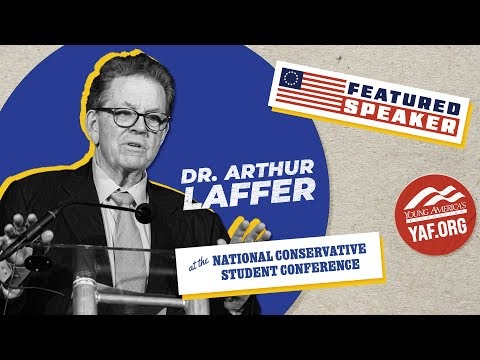
Arthur Laffer, the Reagan-era economist best known for the “Laffer Curve,” appeared recently at a Young America’s Foundation (YAF) event, still making the same tired claims that have shaped decades of economic inequality, deregulation, and magical thinking. The event, broadcast on C-SPAN, was marketed as a fresh take on conservative economics. What it delivered instead was a rerun of discredited supply-side talking points—punctuated by jokes that fell embarrassingly flat.
Laffer claimed that Donald Trump’s tariffs were a strategy to bring about more free trade in the future—a baffling contradiction to anyone who understands trade policy or the basics of coercive economic diplomacy. The idea that protectionism is a roundabout route to free markets would be laughable if it weren’t so destructive. But Laffer, like many libertarians, thrives on contradiction. The audience—young, mostly white, mostly male—nodded along as if it all made sense.
He also defended increased U.S. military spending, invoking Ronald Reagan’s 1980s arms buildup. What he didn’t mention: Reagan was in the early stages of dementia during his presidency, and his military strategy deepened the national debt, even as Laffer’s beloved tax cuts starved the government of revenue. That context never surfaced, of course.
Laffer’s appearance was followed by Linda McMahon, former WWE executive and Small Business Administration head under Trump. The tag team pairing reinforced the spectacle of right-wing economic theater disguised as intellectual discourse.
YAF, a competitor to Turning Point USA, presents itself as the more polished brand of conservative youth organizing. It’s backed by deep pockets and institutional support, but its message remains the same: glorify the market, demonize government, and elevate charisma over critical thinking. Its speakers are well-coached in rhetorical sparring, skilled in sophistry, and eager to exploit the inexperience of their college-aged audience.
Laffer fits that mold perfectly. He’s less a thought leader than a relic of failed policy, propped up by a movement that rewards ideological loyalty over intellectual honesty. His ideas can’t really be called “theories” anymore—empirical evidence has repeatedly debunked them. But among libertarians and the far right, evidence is optional, and repetition is persuasive.
Young America’s Foundation is adept at drawing youth into a worldview of individualism that rarely benefits individuals. It relies on the passion and ignorance of its followers, asking them to embrace contradictions: that tariffs bring freedom, that debt from war is freedom, that cutting taxes magically increases revenue. It’s a faith-based economics, and Laffer remains its high priest.
In the end, the only thing more stale than the Laffer Curve is the attempt to keep it alive.
Sources:
C-SPAN: Art Laffer speech at YAF
Reagan’s Alzheimer’s revelations: The New York Times
Critiques of supply-side economics: Brookings, Economic Policy Institute
YAF background: Media Matters, The Nation
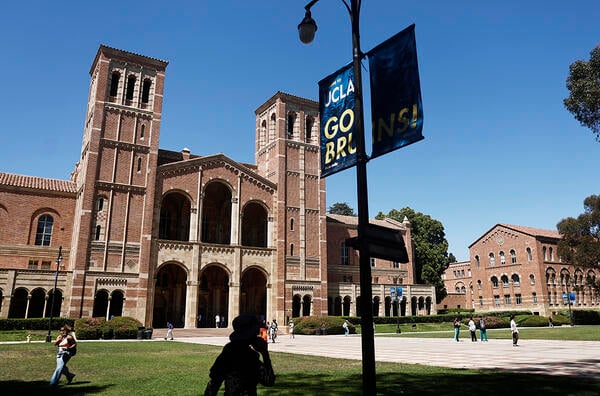
The federal government has frozen $584 million in grants and contracts at UCLA.
The Trump administration is ratcheting up pressure on the University of California, Los Angeles, and seeking a $1 billion settlement, following concessions from other institutions, CNN reported.
University of California president James B. Milliken said in a statement Friday that “a payment of this scale would completely devastate our country’s greatest public university system as well as inflict great harm on our students and all Californians.”
Demands for a settlement come as the federal government has accused UCLA of violating civil rights law by allegedly failing to protect students from antisemitism as pro-Palestinian protests surged on campus last spring. The National Science Foundation and other agencies have since suspended $584 million in federal research funding, according to UCLA chancellor Julio Frenk. The New York Times reported that the administration also wants UCLA to put $172 million in a fund for victims of civil rights violations.
UC system officials announced Wednesday they would negotiate with the federal government in the hope of reaching a “voluntary resolution agreement” over the charges.
“Our immediate goal is to see the $584 million in suspended and at-risk federal funding restored to the university as soon as possible,” Milliken wrote in a Wednesday statement, adding that cuts to federal research funding “do nothing to address antisemitism.”
UCLA was one of several institutions whose executives were hauled before Congress over the last two years to address pro-Palestinian encampments and alleged antisemitism and harassment tied to such protests.
Should UCLA reach a settlement with the Trump administration, it would be the first public university to do so but the third institution to strike a deal with the federal government over the course of several weeks. Last month, Columbia University reached an unprecedented settlement with the Trump administration, agreeing to changes to admissions and academic programs and paying $221 million to close investigations into alleged antisemitism and restore some frozen research funding. The deal will be overseen by a third-party resolution monitor.
Brown University also struck a deal with the federal government in July that did not include a payout to the Trump administration, but officials did agree to provide admissions data to the federal government and bar transgender athletes from competing, among other concessions.
Federal officials didn’t respond to a request for comment Friday.