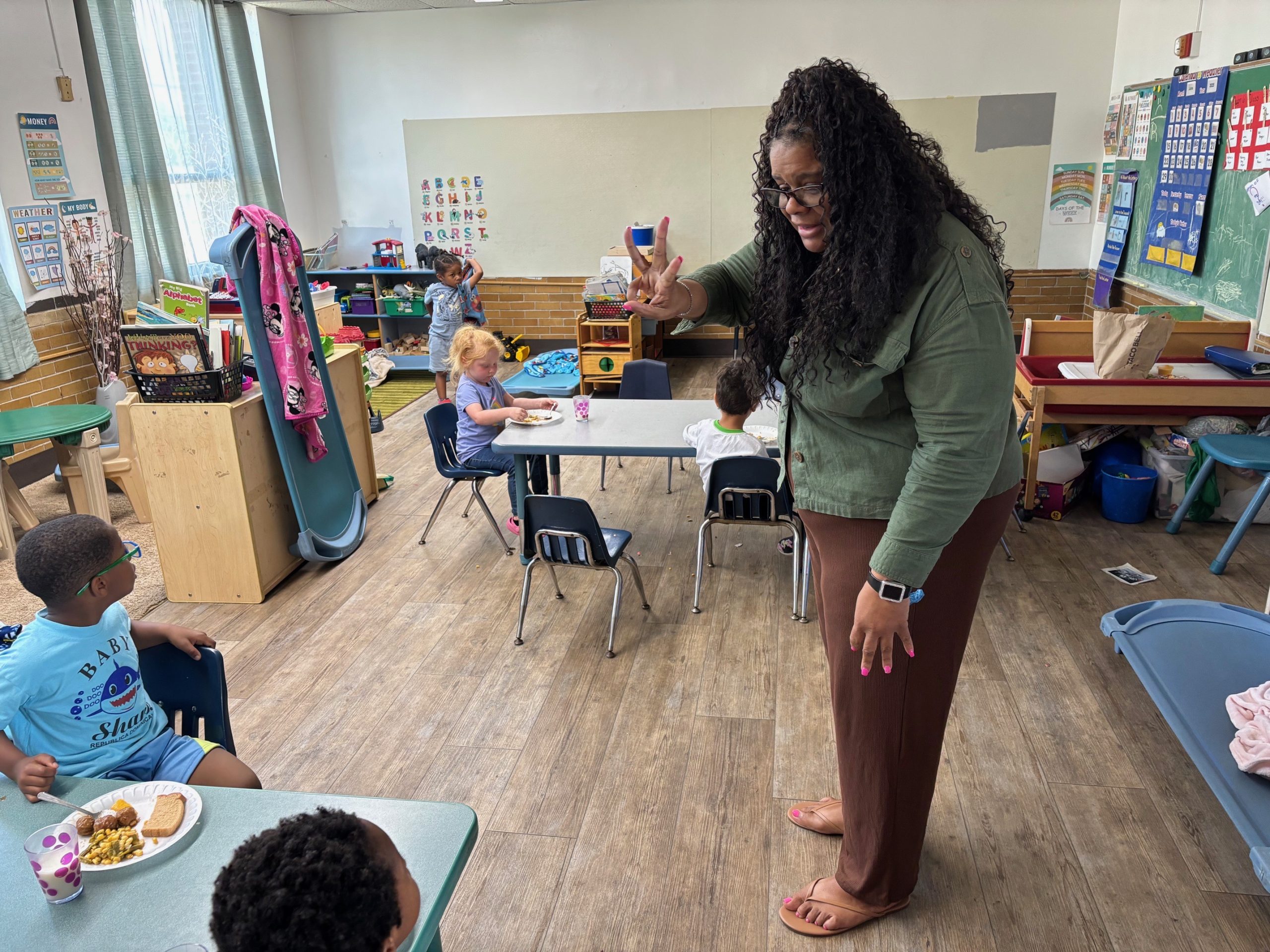
Selina Likely, a child care director in Columbus, Ohio, understands the desperation that parents feel when they can’t find a good placement for their children with disabilities. When Likely’s daughter was a child, the little girl was abruptly kicked out of her daycare center for biting, leaving her mother with little recourse.
“I was so angry and mad at the time,” said Likely, whose daughter is now an adult. “How are you going to kick out a 1-year-old?”
Thanks to a new state initiative, Likely and other child care providers like her can now receive additional training on how to support children with disabilities, who are far more likely than other children to be expelled from child care programs. Some states have similar programs, with the ultimate goal of creating more child care slots where young children with disabilities and delays can thrive.
How Hechinger inspired a bill
Earlier this year, my colleague Sarah Carr published a piece revealing that in Illinois and other states many families of premature babies are leaving the hospital with no information or guidance on critical therapies they are entitled to. In June, the Illinois Legislature passed a bill that would require hospitals to distribute detailed information on early intervention — those required therapies for babies and toddlers with disabilities and developmental delays — to most families with severely premature infants. The new law was proposed by state Rep. Janet Yang Rohr after Sarah’s story was published.
The bill, which awaits action by the governor, would also require the state’s early childhood systems to prioritize, in a public awareness campaign, the early identification of infants who automatically qualify for the therapies because of their low birth weight.
This story about children with disabilities was produced by The Hechinger Report, a nonprofit, independent news organization focused on inequality and innovation in education. Sign up for the Hechinger newsletter.
The Hechinger Report provides in-depth, fact-based, unbiased reporting on education that is free to all readers. But that doesn’t mean it’s free to produce. Our work keeps educators and the public informed about pressing issues at schools and on campuses throughout the country. We tell the whole story, even when the details are inconvenient. Help us keep doing that.
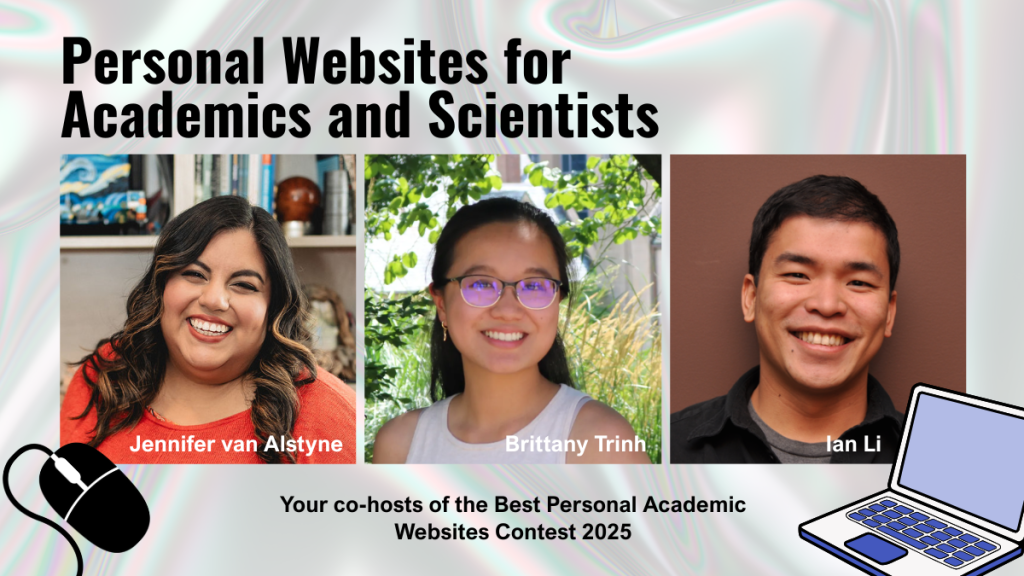
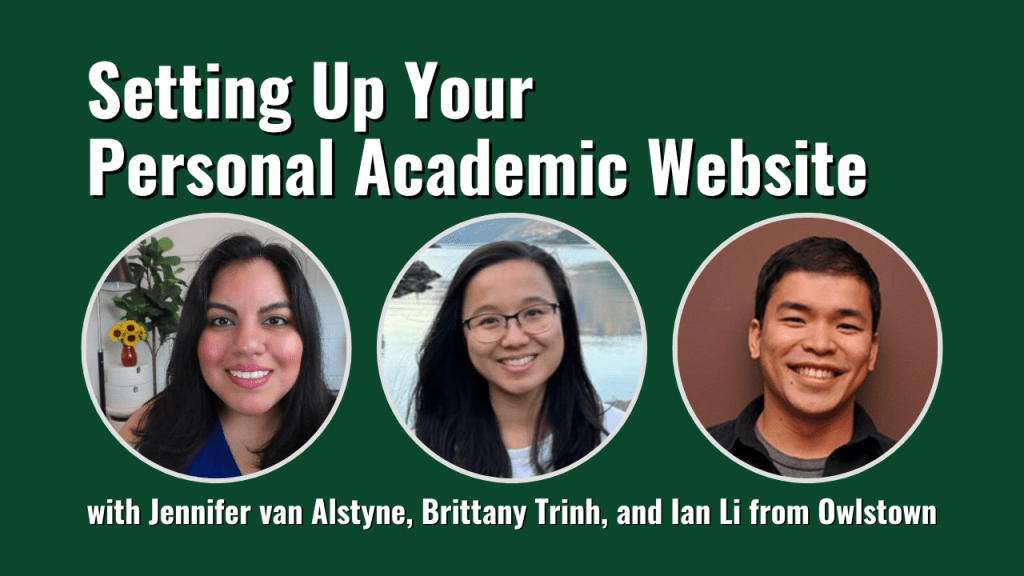
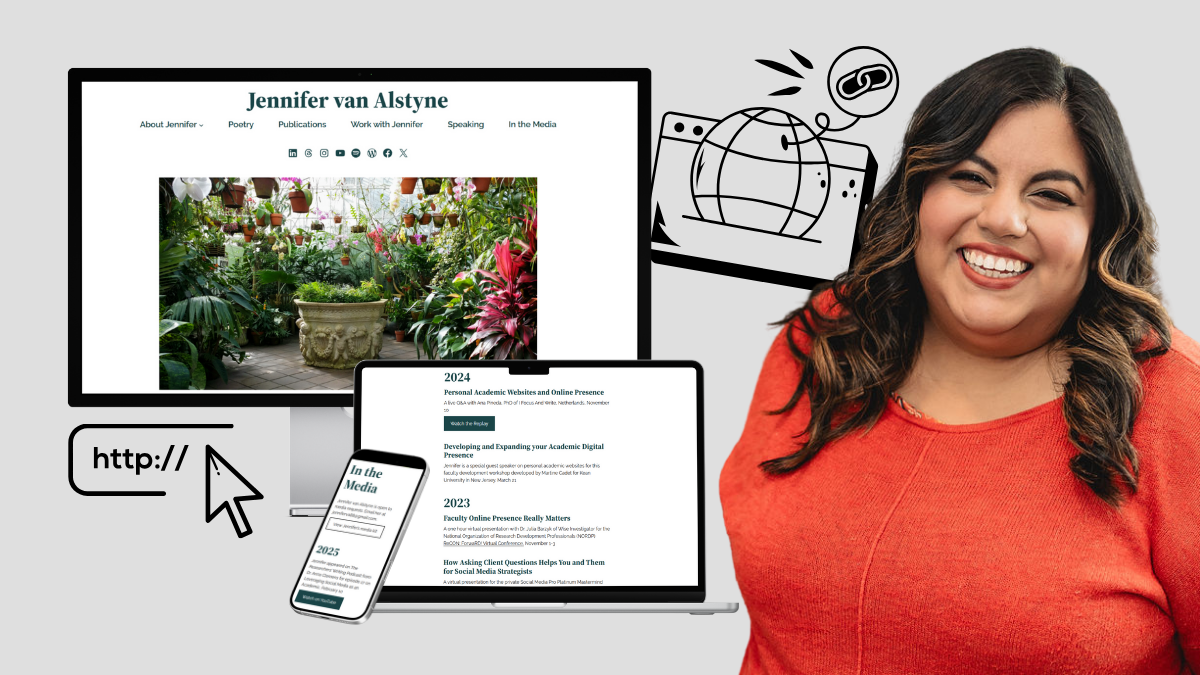
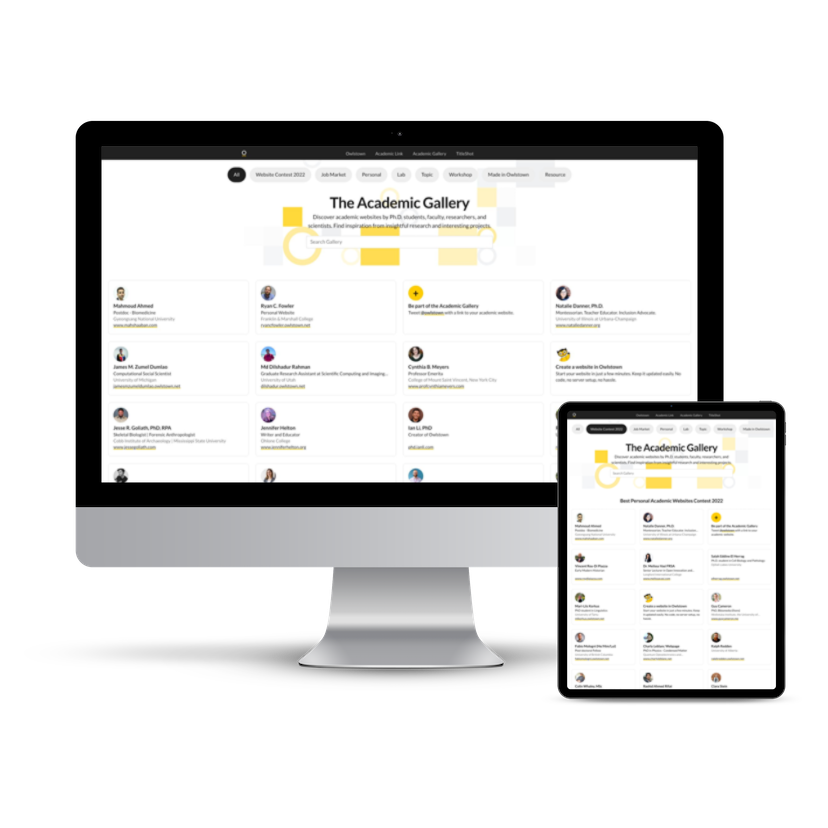
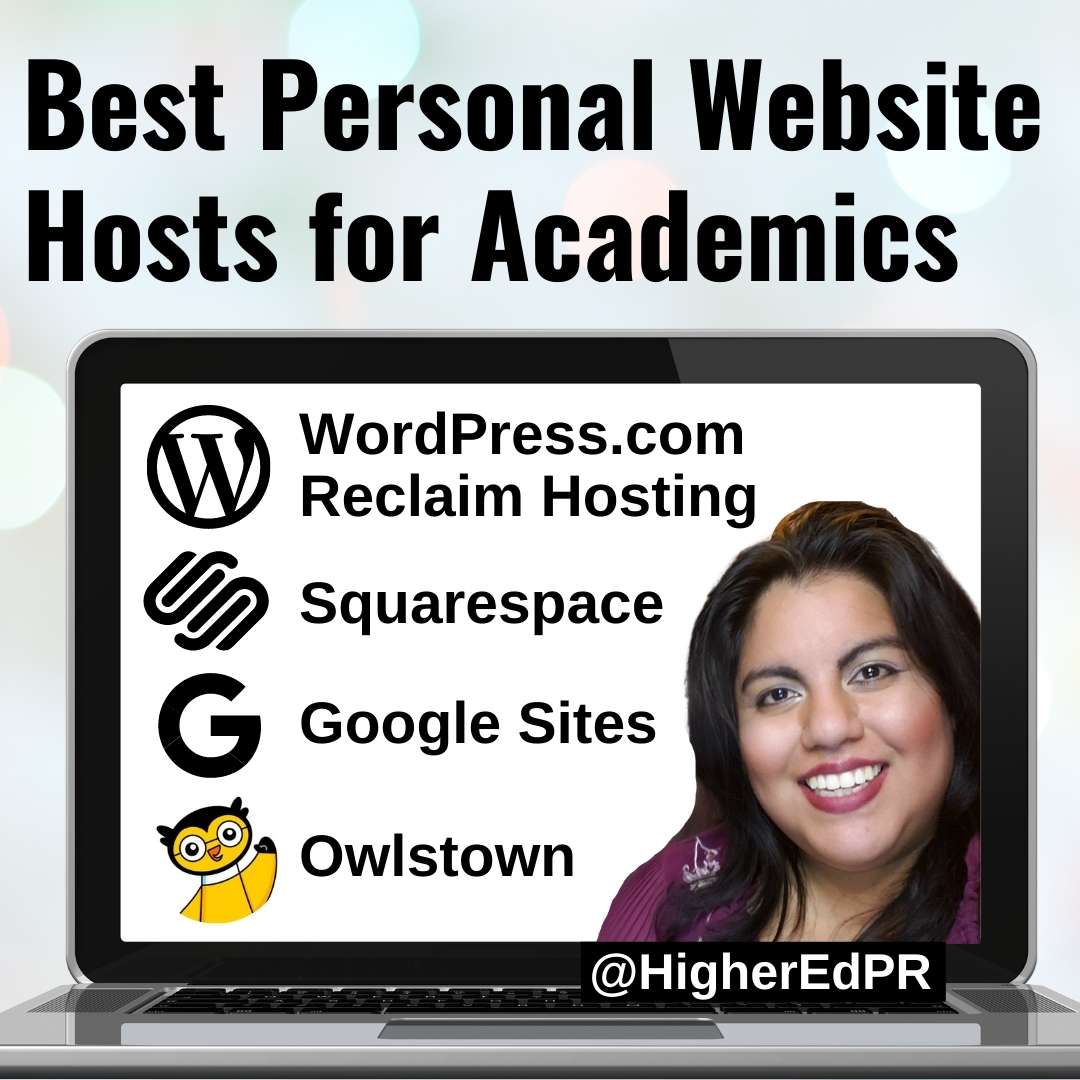
Join us for this informal chat about websites for academics in 2025. Some questions we cover:
What are your options for making your website?
What makes for the best website examples for academics?
How can I have a website fast (like today even)?
What should people prioritize when telling their story on their website?
What makes for the best portfolio websites (and what can go on them)?
Your contest co-hosts are back with another live to support your academic website project. Whether you’re a professor, researcher, scientist, postdoc, graduate student, independent scholar, you deserve space online.
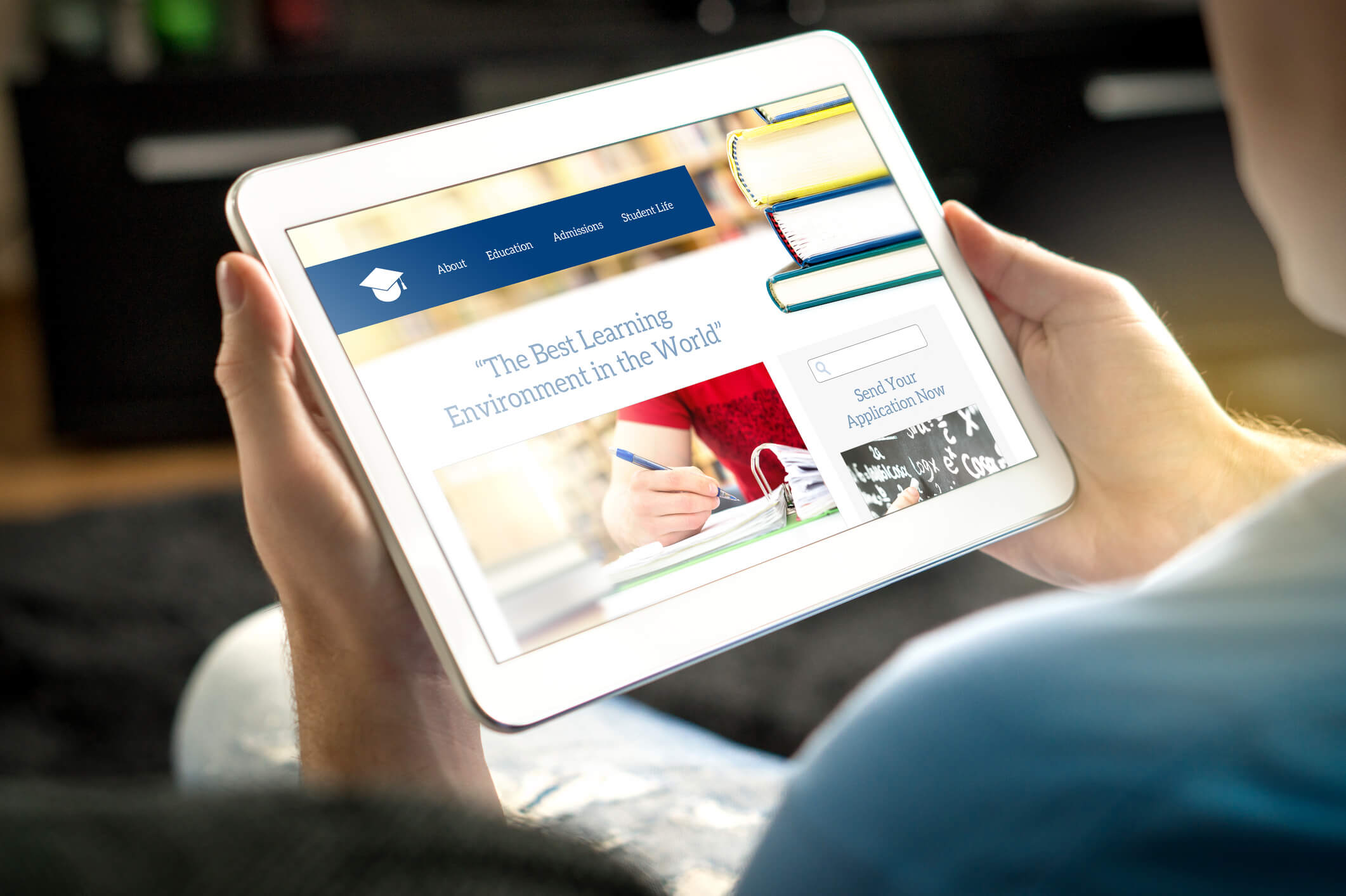
Your website is no longer just a digital brochure. It’s the heart of your institution’s marketing, recruitment, and student engagement efforts. For most prospective students, it’s the very first touchpoint, and their decision to inquire, apply, or move on often hinges on what they find there.
More than 90% of students visit a college or university website during their school search. That means your site must not only attract attention but deliver a seamless experience that inspires trust and action.
What does that look like? It’s a blend of smart navigation, compelling visuals, personalized content, and performance that works flawlessly across all devices. It’s also about serving many different audiences, students, parents, alumni, and staff, without sacrificing clarity or focus.
In this article, we break down the 7 best practicesfor higher education websites, with examples from institutions putting them into action. These proven strategies will help your school build a web presence that engages users and drives real results, from exploration to enrollment.
Struggling with enrollment?
Our expert digital marketing services can help you attract and enroll more students!
1. Ensure a Mobile-Responsive, Mobile-First Design
Smartphones are the default browsing tool for most prospective students and their parents. If your institution’s website doesn’t offer a seamless mobile experience, you’re not just frustrating users; you’re losing them.
Why is mobile responsiveness crucial for higher education websites? Most students browse on mobile devices. A mobile-responsive site ensures readability, easy navigation, and fast loading, key for user experience and search rankings. Without it, your site could rank lower on Google and lose over half of the visitors who abandon slow or poorly displayed pages.
Mobile responsiveness means your content adjusts fluidly to any screen size, from smartphones to tablets. This isn’t a nice-to-have feature; it’s a necessity. Google now uses your site’s mobile version to determine how it ranks in search results (a process known as mobile-first indexing). If your site isn’t optimized for mobile, both your visibility and your credibility take a hit.
Use a responsive design that automatically adjusts layouts for smaller screens
Collapse navigation into a clean, mobile-friendly format
Display readable text without requiring zoom
Feature buttons and links that are easy to tap
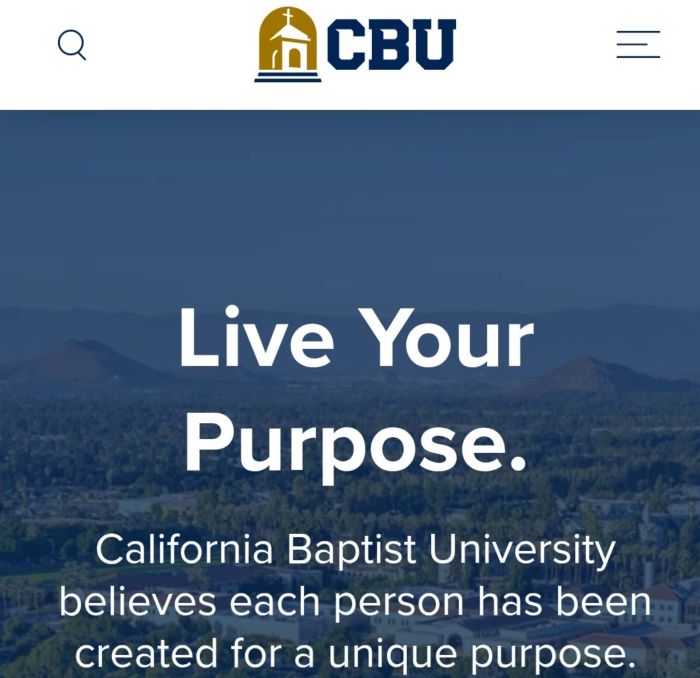
Example:California Baptist University delivers a standout mobile experience. Its responsive design stacks content cleanly for smaller screens, while large, tappable calls-to-action make it easy for prospective students to explore programs or request information. The site balances function and aesthetics, showing that CBU understands what mobile users need and delivers it.
How can improving website speed benefit my higher education institution? Faster websites reduce bounce rates and keep users engaged longer. Prospects find what they need quickly, improving their impression of your institution. Speed also boosts SEO rankings and increases the chances of conversions like form submissions or brochure downloads.
A smooth mobile journey doesn’t just meet expectations, it sends a clear message: your institution is accessible, student-focused, and ready to meet users where they are.
2. Optimize Your Site’s Speed and Performance
Speed matters. Gen Z users expect instant access, and if your pages lag, they’ll bounce, sometimes before they’ve even seen your programs.
Beyond user frustration, slow sites impact your visibility. Google uses page speed as a ranking factor, so sluggish load times can tank your SEO and conversions.
To keep your site performing at its best, follow these key practices:
Compress images and media. Use modern formats like WebP and apply compression tools to reduce file sizes without sacrificing quality.
Minify code and enable caching. Clean up your HTML, CSS, and JavaScript, and use browser caching to speed up page loads for returning visitors.
Implement a Content Delivery Network (CDN). CDNs serve content from servers closest to the user, minimizing delays caused by physical distance.
Limit heavy third-party scripts. Only use plugins and scripts that are essential—too many can drag your site’s performance down.
Test regularly. Tools like Google PageSpeed Insights, GTmetrix, or Lighthouse help you spot bottlenecks like oversized images or slow server response.
Example:University of Arkansas at Little Rock (UA Little Rock): In March 2025, UA Little Rock rolled out a major website overhaul that improved both user experience and performance speed. A key move was transitioning to modern cloud hosting, which “ensures greater reliability, multiple backups, and improved site performance,” especially during peak or emergency periods. The web team also streamlined the site’s content (trimming 8,000+ pages down by 30%) and modernized the codebase, which reduces load times by eliminating bloat.
Why this matters for higher ed: Even a one-second improvement in page load time can make a measurable difference in how long users stay and what actions they take. A fast website tells students you’re efficient, professional, and respectful of their time, a small detail that leaves a big impression.
If your site is slow, it’s time to speed things up.
3. Implement Strong SEO to Boost Search Visibility
You can have the most beautifully designed website in the world, but if prospective students can’t find it, it won’t deliver results.
That’s where search engine optimization (SEO) becomes critical. Most college students rely on search engines to explore programs, compare schools, and research next steps. If your institution doesn’t appear in those search results, you risk missing out on a massive share of qualified leads.
Think about the intent behind queries like:
“Best MBA programs in Canada”
“Colleges in Toronto for computer science”
“Online diploma in healthcare administration”
If your pages don’t show up, students won’t even know to consider you.
Here’s how to strengthen your SEO strategy and stay visible throughout the student journey:
Keyword Optimization
Start with the language students use. Research long-tail keywords that reflect real queries (e.g., “online MBA in finance” or “career college digital marketing course”). Then, use those terms naturally in your:
Program page titles and H1 headers
Metadata and image alt text
Body content and subheadings
This improves your rankings and helps students quickly identify whether your offerings match their needs.
High-Quality, Student-Centric Content
Search engines prioritize helpful content. So do students. Build rich pages and blog posts that answer common questions about admissions, tuition, career outcomes, or student life. Content that educates, informs, and reassures will keep users engaged and build trust.
Gen Z doesn’t want to dig for answers. Make them easy to find, and you’ll win the click.
On-Page SEO Basics
Each page on your site should have:
A unique meta title and description featuring relevant keywords
Structured headings (H1, H2, H3…)
Descriptive image alt text for both accessibility and SEO
These basic elements are easy to overlook, but they make a real difference in how Google interprets and ranks your content.
Technical SEO and User Experience
Your site’s infrastructure plays a big role in search visibility. Prioritize:
Mobile-friendliness (as covered in Section 1)
Fast page load times
Secure browsing (HTTPS)
Logical, crawlable URLs
Fixes for broken links and outdated pages
Google rewards user-friendly experiences. So do your prospective students.
Local and International SEO
Have a physical campus? Make sure your Google Business Profile is claimed and accurate. Serving international audiences? Offer multilingual content or geo-targeted landing pages to attract global prospects.
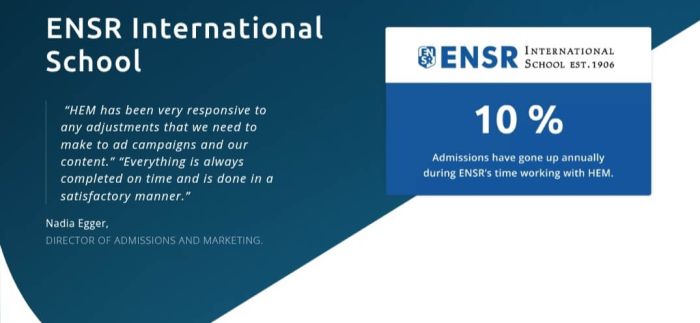
Example: When ENSR partnered with Higher Education Marketing (HEM) in 2019, the school sought to improve its online visibility and attract more qualified leads. HEM implemented a comprehensive SEO strategy that included technical website improvements, bilingual content creation, and targeted Google Ads campaigns. These efforts significantly enhanced ENSR’s search rankings and increased high-quality inquiries from families seeking international education in Switzerland.
Why this matters: SEO isn’t a quick win; it’s a long-term strategy. But done right, it builds sustained visibility across every stage of the student journey.
A prospect might first find your blog post about how to choose a business school. Weeks later, they search for [Your University] campus life. Eventually, they return to your site to click Apply Now. SEO ensures you’re present at each step.
And since over 90% of students visit your website before applying, showing up in search isn’t just a marketing boost, it’s mission-critical.
What role does SEO play in the success of a higher education website?
SEO helps your site appear in search results when students research programs. Strong SEO brings qualified traffic, builds credibility, and ensures your programs are seen, without relying solely on paid ads.
SEO brings it all together. A fast, accessible, content-rich, and mobile-optimized site naturally ranks better. That means more visibility, more engagement, and more students taking the next step with you.
4. Make Your Content Accessible and Inclusive to All Users
Accessibility is now a fundamental expectation. Your website should serve everyone, including users with visual, auditory, motor, or cognitive disabilities.
In the U.S., more than 61 million adults live with a disability, and in Canada are more than 27 million. Globally, the number reaches into the hundreds of millions. If your website isn’t accessible, you may be shutting out prospective students, parents, or staff who are eager to connect but simply can’t.
Beyond ethics, it’s also the law. New ADA Title II regulations in the U.S. now require public colleges and universities to comply with WCAG 2.1 Level AA standards. Similarly, Canada’s AODA (Accessibility for Ontarians with Disabilities Act) sets a comparable benchmark for accessibility. Failure to comply with these standards can result in lawsuits, financial penalties, loss of federal funding, and significant reputational damage.
An inclusive website is no longer optional. It’s a legal, ethical, and strategic imperative.
Best practices for accessible higher education websites:
Follow WCAG 2.1 AA guidelines. This includes alt text for images, captions or transcripts for videos, strong color contrast, and keyboard-friendly navigation.
Use semantic HTML. Headings, lists, and ARIA landmarks help users navigate with screen readers and assistive tech. Avoid flashy layouts that confuse accessibility tools.
Write descriptive link text. Replace vague links like “click here” with actionable, informative phrasing: Download the admissions brochure, for example.
Test with real users. Use accessibility checkers and consult individuals who rely on screen readers or other assistive devices; automated tools often miss real-world issues.
Why this benefits everyone: Captions aren’t just for deaf users; they help second-language learners, mobile viewers, and anyone watching a video in a noisy space. High-contrast design improves readability in bright light or on low-quality screens. And clean navigation benefits all users, whether or not they rely on assistive technology.
Accessibility makes your site better for everyone and signals your commitment to equity and inclusion.
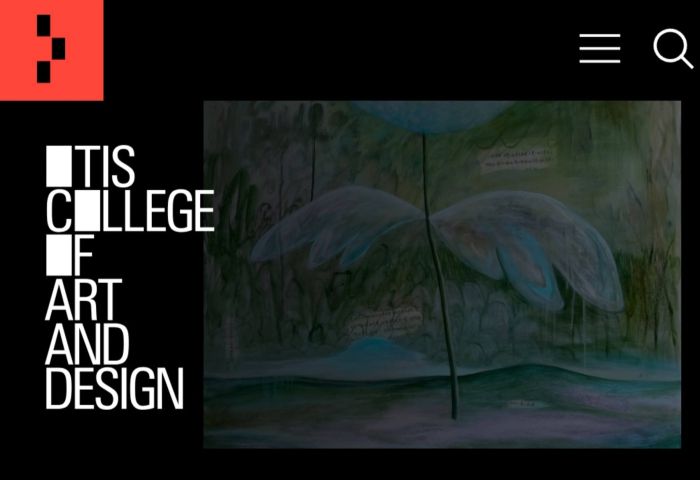
Example:Otis College of Art and Design proves that accessible websites don’t have to be boring. Their visually bold, design-forward site includes thoughtful accessibility features, like the ability to pause animated content and high-contrast elements that enhance readability. It’s proof that inclusive design and creativity can go hand in hand.
By prioritizing accessibility from the start, your institution not only meets regulatory standards, but it also opens the door to more prospects and strengthens its reputation as a place where everyone belongs.
5. Design Intuitive Navigation and User-Friendly Interfaces
Higher education websites often contain a massive amount of information, program details, admissions requirements, campus services, student life, alumni resources, and more. Without clear navigation, this wealth of content can quickly become overwhelming.
If prospective students can’t find basic information like how to apply, what programs you offer, or where to request info, they won’t stick around. They’ll simply move on to another institution that makes things easier.
Your goal? Make exploration effortless: Navigation should be clean, logical, and centered around user needs, not internal structures or department silos. Every menu, page layout, and search function should guide visitors toward their goals with clarity and speed.
Tips for intuitive higher ed site navigation:
Use simple, student-focused labels. Stick to clear menu items like “Programs,” “Admissions,” “About Us,” and “Contact.” Avoid institutional jargon. Limit top-level menu items to avoid overload, and organize deeper pages using dropdowns or mega menus.
Design for user journeys, not just departments. Group content around tasks or audience needs. Instead of listing academic departments, consider categories like Plan, Start, Succeed, or even Explore Programs and Find Support.
Create clear user paths for different audiences. Persona-based navigation (e.g., Prospective Students, Current Students, Parents, Alumni) lets visitors self-identify and jump directly to what matters to them. This reduces cognitive load and improves time-to-information.
Make CTAs impossible to miss. Buttons like Apply Now, Request Info, and Visit Campus should be visually distinct and consistently visible across key pages.
Maintain styling and structural consistency. Don’t make users relearn how to navigate with every new section. Ensure the styling, placement, and behavior of menus remain predictable and responsive for mobile users.
Example: Eastern Iowa Community Colleges: EICC structures its top-level navigation around the student journey with three clear categories: Plan, Start, and Succeed. This not only simplifies decision-making but also shows a deep understanding of student concerns. The site also includes an “I’m most concerned about…” section: addressing common hesitations head-on, with empathy and clarity.
A user-friendly website doesn’t just look polished; it feels helpful. Smart navigation says, “We understand your needs, and we’ve made it easy to find what you’re looking for.” Higher education website design can be the difference between a visitor who bounces and one who applies.
6. Provide Engaging Content and Clear Calls-To-Action
Content is what transforms a higher ed website from a digital brochure into a dynamic recruitment tool. Prospective students don’t just want information; they want answers, inspiration, and a glimpse of what their future might look like at your institution.
They’re searching for:
Program details
Admission requirements
Tuition costs
Campus life
Career outcomes
Student experiences
Your job is to deliver that content in a way that’s clear, engaging, and actionable.
Best Practices for Content That Drives Enrollment:
Showcase your academic programs clearly. Each program should have a dedicated page that covers curriculum highlights, faculty expertise, admissions requirements, and career prospects. Schools should prioritize program-level content because it’s the first place prospects look.
Use rich media to bring your campus to life. Photos, videos, virtual tours, and infographics add emotional and visual depth that text alone can’t match. Consider a homepage hero video, a student life highlight reel, or virtual walkthroughs of your campus and classrooms.
Incorporate authentic student voices. Today’s students want real stories. Feature testimonials, student spotlights, or day-in-the-life content that reflects your community’s diversity and vibrancy. Whether it’s a video diary from a nursing student or a blog from an international applicant, authenticity builds trust.
Keep your content fresh. Outdated information erodes credibility. Make it a priority to update admissions deadlines, program details, and tuition info regularly. Maintain a blog or news section to show your campus is active, but don’t let fresh content bury essential evergreen pages like Programs or How to Apply.
Guide users with clear, strategic CTAs. Every important page should ask: What’s the next step? Then answer it with a bold, well-placed button. Whether it’s “Apply Now,” “Download a Program Brochure,” or “Book a Virtual Tour,” your CTAs should stand out visually and match the context of the page.
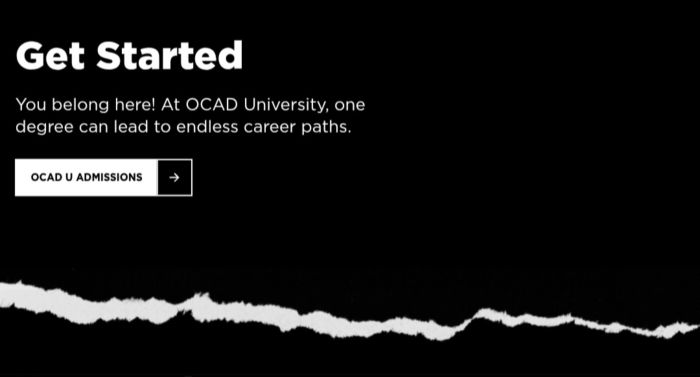
Example: OCAD University (Canada) redesigned its admissions website with a bold visual identity, simplified navigation, and CTAs tailored to the user journey, like “Get Portfolio Help” or “Start Your Application.” The results? Within weeks of launch, the site saw a 21% increase in visits and a 15% increase in applicants. The combination of user-first content and clear actions paid off.
Content also reinforces every other best practice:
Accessible content means adding alt text and transcripts.
SEO-optimized content means using keywords that align with search intent.
Fast-loading content means using lightweight visuals and optimized media.
When your content delivers real value and your calls-to-action guide users clearly, you don’t just inform; you inspire. And that’s what drives conversions.
7. Integrate With a CRM for Lead Management and Personalization
A well-designed website gets visitors. A strategically integrated website gets conversions.
One of the most powerful ways to level up your higher ed site is by connecting it to a Customer Relationship Management (CRM) system. CRMs are central hubs for capturing, organizing, and nurturing prospective students through the enrollment journey.
When your website and CRM are integrated, lead data flows automatically from inquiry forms, newsletter signups, and event registrations into a centralized system, no more manual data wrangling, missed follow-ups, or siloed information.
Why CRM Integration Matters:
Instant lead capture and time savings Every time a prospect fills out a form, to download a course brochure or RSVP to an open house, their information is logged automatically in your CRM. This eliminates the need for staff to transfer spreadsheets or copy-paste emails. The result? Less administrative busywork and fewer mistakes, giving your admissions team more time to focus on real engagement.
Faster, personalized follow-up CRM integration lets you respond in real time. Someone requests info? They get a tailored email within minutes. And your recruiters are instantly notified with the lead’s details, so they can follow up while your institution is still top of mind. Prompt follow-up, especially within 24 hours, greatly increases contact and conversion rates. A connected CRM makes that speed possible.
Personalized web experiences Advanced CRMs like HubSpot or Mautic allow you to show smart CTAs and dynamic content based on the visitor’s behavior. If someone has already attended a webinar, your site might offer “Schedule a One-on-One Consultation” instead of “Register for Info Session.” Personalization like this increases engagement and accelerates movement through the funnel.
One institution used smart CTAs to tailor messaging for return visitors. New users saw English test prep offers, while returning prospects saw “Start Your Application” prompts, resulting in higher click-through and application rates.
Full visibility into the student journey Every interaction, form fill, email open, and event attendance is tracked in the CRM. Your team gets a 360° view of each lead’s engagement, helping them tailor conversations and prioritize follow-ups. You can also track which web pages and campaigns are driving the most conversions, helping you optimize over time.
For example, CRM data may reveal that campus tour sign-ups convert at twice the rate of general inquiries. Insights like these help you double down on what works.
A seamless, consistent user experience From a student’s perspective, CRM integration reduces friction. They won’t have to fill in the same information twice. Communications feel timely and relevant. Even if a staff member changes, the CRM ensures continuity, so the conversation picks up where it left off.
Behind the scenes, your team gains confidence that every lead is being handled properly, with full history and context at their fingertips.
The tools and payoff
Higher education institutions are increasingly using education-focused CRMs like HubSpot or HEM’s Mautic CRM. These tools enable automation at every stage, from capturing leads to triggering nurture emails to customizing website CTAs.
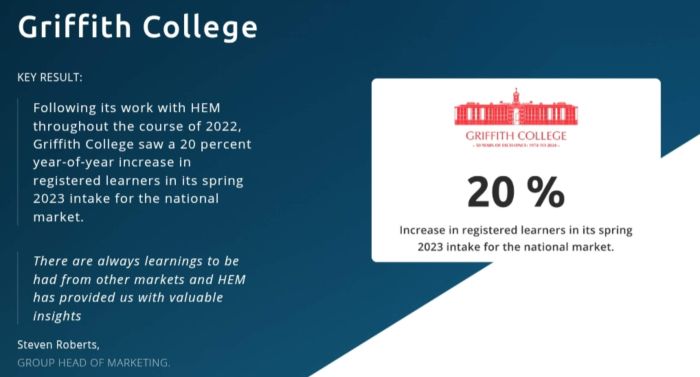
Example: Griffith College, Ireland’s largest independent college, partnered with Higher Education Marketing (HEM) to implement HubSpot CRM for more efficient lead management and personalized student recruitment. Through a comprehensive strategy that included conversion funnel audits, CRM staff training, automated workflows, and segmented lead nurturing, HEM helped Griffith streamline communications and improve follow-up with prospective students. As a result, the college achieved a 20% year-over-year increase in registered learners for its Spring 2023 intake.
CRM integration does require some technical setup and cross-department coordination. But the payoff is immense: your website becomes a two-way communication platform, collecting insights, responding to actions, and guiding visitors toward enrollment with relevance and precision.
For institutions serious about scaling recruitment and deepening personalization, connecting your CRM to your website is no longer optional. It’s a modern best practice and a clear path to smarter, more successful digital engagement.
Build a Website That Drives Enrollment
Your website isn’t just a marketing asset; it’s your institution’s top recruiter. Every click, scroll, and form fill is a chance to move a prospective student closer to enrollment.
By applying these best practices for higher education websites, from mobile-first design and fast performance to SEO, accessibility, and CRM integration, you create more than just a polished digital presence. You build a site that informs, inspires, and converts.
In a crowded higher ed market, the schools that win are the ones that treat their website like the powerful recruitment engine it is. Make yours work harder, smarter, and more strategically, starting now.
Struggling with enrollment?
Our expert digital marketing services can help you attract and enroll more students!
Frequently Asked Questions
Question: Why is mobile responsiveness crucial for higher education websites? Answer: Most students browse on mobile devices. A mobile-responsive site ensures readability, easy navigation, and fast loading, key for user experience and search rankings. Without it, your site could rank lower on Google and lose over half of the visitors who abandon slow or poorly displayed pages.
Question: How can improving website speed benefit my higher education institution? Answer: Faster websites reduce bounce rates and keep users engaged longer. Prospects find what they need quickly, improving their impression of your institution. Speed also boosts SEO rankings and increases the chances of conversions like form submissions or brochure downloads.
Question: What role does SEO play in the success of a higher education website? Answer: SEO helps your site appear in search results when students research programs. Strong SEO brings qualified traffic, builds credibility, and ensures your programs are seen, without relying solely on paid ads.
This audio is auto-generated. Please let us know if you have feedback.
Dive Brief:
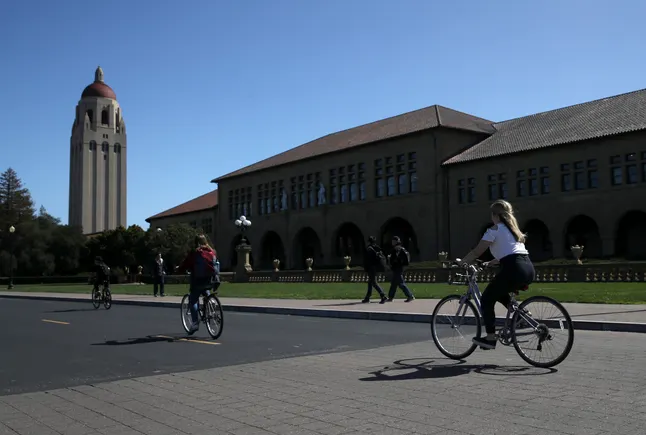
Stanford University laid off 363 staff memberslast week as part of a plan to reduce its budget by $140 million for the 2025-26 academic year.
In a July 31 message to campus, senior university leaders attributed the need for cuts to “a challenging fiscal environment shaped in large part by federal policy changes affecting higher education.”
The private California institution warned of forthcoming layoffs in June, when it extended a hiring freeze implemented in February and said it would focus capital spendingon critical projects or those with external sources of funding.
Dive Insight:
“Ongoing economic uncertainty” has created serious challenges for the higher education sector, according to Elizabeth Zacharias,Stanford’s vice president for human resources.
“At Stanford, anticipated changes in federal policy — such as reductions in federal research funding and an increase in the excise tax on investment income — are expected to have significant budgetary consequences,” Zacharias said in a July 31 filing with the California Employment Development Department.
Like many research institutions, Stanford has suffered under the tidal wave of efforts by the Trump administration to slash federal spending on research and development — despite some of those moves being blocked in court for the time being.
Changes to the endowment tax could also hit Stanford hard.
In fiscal 2024, the university had the fourth-largest endowment among U.S. colleges, valued at $37.6 billion, according to research from the National Association of College and University Business Officersand asset management firm Commonfund.
Before 2017, colleges did not pay taxes on their endowment earnings. That year, a GOP-controlled Congress enacted a 1.4% tax on private nonprofit colleges with at least $500,000 in endowment assets per student.
But President Donald Trump’s signature spending bill introduced a tiered tax based on endowment assets per student that will more than quintuple the tax for the wealthiest institutions from 1.4% to 8%.Stanford, with roughly $2.1 million in endowment assets per full-time-equivalent student, will likely pay the top rate.
These shifts, combined with rising operational costs and changes to funding sources and programs, pushed Stanford to implement layoffs, Zacharias said.
Stanford employs 18,000 staff and faculty, according to its website.
The affected employees — about 2% of its workforce — worked in departments from across the university, ranging from student support services to libraries to donor and alumni relations, according to legal filings.
In addition to 60 days oflegally mandated paid notice to impacted workers, eligible employees received severance packages and career transition services, a university spokesperson confirmed Wednesday.
Paul T. Corrigan teaches at The University of Tampa. He is currently writing a book on teaching literature. He has published on teaching and learning in TheAtlantic.com, The Chronicle of Higher Education, Inside Higher Ed, College Teaching, Pedagogy, Reader, The Teaching Professor, International Journal for the Scholarship of Teaching and Learning, and other venues. He has a PhD from the University of South Florida and a MA from North Carolina State University. More at paultcorrigan.com. Follow on Twitter at @teachingcollege.
The U.S. Department of Justice sued the state of Oklahoma Tuesday over a state law that allows undocumented students to pay in-state tuition rates. Oklahoma is now the fourth state the DOJ has sued for having such a policy.
The state’s Republican attorney general, Gentner Drummond, swiftly sided with the federal government and filed a joint motion in support of quashing the law. He said in a statement that it’s “discriminatory and unlawful” to offer noncitizens lower in-state tuition rates “that are not made available to out-of-state Americans.”
“Today marks the end of a longstanding exploitation of Oklahoma taxpayers, who for many years have subsidized colleges and universities as they provide unlawful benefits to illegal immigrants in the form of in-state tuition,” Drummond said.
Now the state and the DOJ await a ruling from the U.S. District Court for the Eastern District of Oklahoma.
Oklahoma’s quick support for the legal challenge is reminiscent of what happened in Texas when the DOJ sued the state in June: Within hours of the lawsuit, Texas sided with the Justice Department and a judge ruled in favor of a permanent injunction, ending in-state tuition for noncitizens. The DOJ then filed similar lawsuits against Kentucky and Minnesota, though those legal fights are still ongoing.
The lawsuits follow an executive order issued by President Donald Trump in April calling for a crackdown on so-called sanctuary cities and state laws unlawfully “favoring aliens over any groups of American citizens,” citing in-state tuition benefits for noncitizens as an example.
Imagine the government forcing you to label your
all-natural milk product as “imitation.”
Florida tried to make one dairy farm do just that,
sparking a First Amendment question: Where’s the line between a
business’s right to speak and protecting consumers from
deception?
In this episode, we explore how far free speech
protections go for commercial speech with:
Timestamps:
00:00 Intro
05:03 What exactly is commercial speech?
08:25 The evolution of commercial speech law
13:59 Early regulation of commercial speech
23:03 What is false or misleading commercial
speech?
26:04 Controversial regulations of non-misleading
commercial speech
On Monday, August 11th at 4 p.m. Eastern Time, Nico
will be speaking with former Treasury Secretary/Harvard University
president,
Larry Summers, and FIRE President/CEO,
Greg Lukianoff. They will discuss the Trump
administration’s campaign against elite universities, including
Harvard, what outcomes we can expect from that campaign, and what
those outcomes might mean for free speech, academic freedom, and
university independence.
Enjoy listening to the podcast? Donate to FIRE today and
get exclusive content like member webinars, special episodes, and
more. If you became a FIRE Member
through a donation to FIRE at thefire.org and would like access to
Substack’s paid subscriber podcast feed, please email [email protected].
The Office for Students’ release of data relating to Condition of Registration B3 is the centerpiece of England’s regulator’s quality assurance approach.
There’s information on three key indicators: continuation (broadly, the proportion of students who move from year one to year two), completion (pretty much the proportion who complete the course they sign up for), and progression (the proportion who end up in a “good” destination – generally high skilled employment or further study).
Why B3 data is important
The power comes from the ability to view these indicators for particular populations of students – everything from those studying a particular subject and those with a given personal characteristic, through to how a course is delivered. The thinking goes that this level of resolution allows OfS to focus in on particular problems – for example a dodgy business school (or franchise delivery operation) in an otherwise reasonable quality provider.
The theory goes that OfS uses these B3 indicators – along with other information such as notifications from the public, Reportable Event notifications from the provider itself, or (seemingly) comment pieces in the Telegraph to decide when and where to intervene in the interests of students. Most interventions are informal, and are based around discussions between the provider and OfS about the identified problem and what is being done to address it. There have been some more formal investigations too.
Of course, providers themselves will be using similar approaches to identify problems in their own provision – in larger universities this will be built into a sophisticated data-driven learner analytics approach, while some smaller providers primarily what is in use this release (and this is partly why I take the time to build interactives that I feel are more approachable and readable than the OfS versions).
Exploring B3 using Wonkhe’s interactive charts
These charts are complicated because the data itself is complicated, so I’ll go into a bit of detail about how to work them. Let’s start with the sector as a whole:
First choose your indicator:Continuation, completion, and progression.
Mode (whether students are studying full time, part time, or on an apprenticeship) and level (whether students are undergraduate, postgraduate, and so on) are linked: there are more options for full and part time study (including first degree, taught postgraduate, and PhD) and less for apprenticeships (where you can see either all undergraduates or all postgraduates).
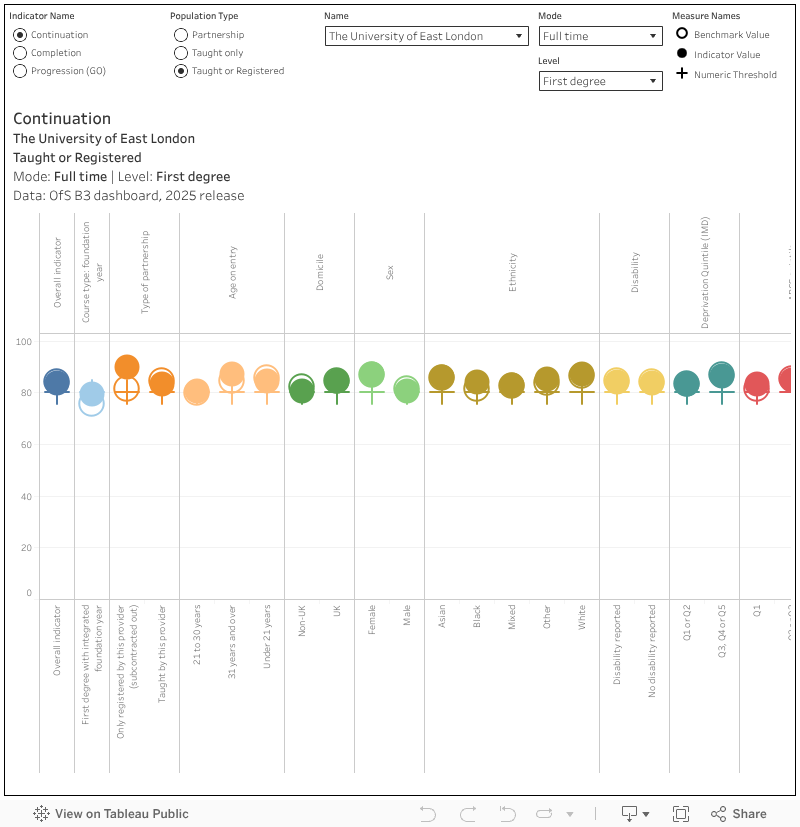
The chart shows various splits of the student population in question – the round marks show the actual value of the indicator, the crosses show the current numeric threshold (which is what OfS has told us is the point below which it would start getting stuck in to regulating).
Some of the splits are self-explanatory, others need a little unpacking. The Index of Multiple Deprivation (IMD) is a standard national measure of how socio-economically deprived a small area is – quintile 1 is the most deprived, quintile 5 is the least deprived. Associations Between Characteristics of Students (ABCs) is a proprietary measure developed by OfS which is a whole world of complexity: here all you need to know is that quintile five is more likely to have good outcomes on average, and quintile 1 are least likely to have good outcomes.
If you mouse over any of the marks you will get some more information: the year(s) of data involved in producing the indicator (by definition most of this data refers to a number of years ago and shouldn’t really be taken as an indication of a problem that is happening right now), and the proportion of the sample that is above or below the threshold. The denominator is simply the number of students involved in each split of the population.
There’s also a version of this chart that allows you to look at an individual provider: choose that via the drop down in the middle of the top row.
You’ll note you can select your population: Taught or registered includes students taught by the provider and students who are registered with a provider but taught elsewhere (subcontracted out), taught only is just those students taught by a provider (so, no subcontractual stuff), partnership includes only students where teaching is contracted out or validated (the student is both registered and taught elsewhere, but the qualification is validated by this provider)
On the chart itself, you’ll see a benchmark marked with an empty circle: this is what OfS has calculated (based on the characteristics of the students in question) the value of the indicator should be – the implications being that the difference from the benchmark is entirely the fault of the provider. In the mouse-over I’ve also added the proportion of students in the sample above and below the benchmark.
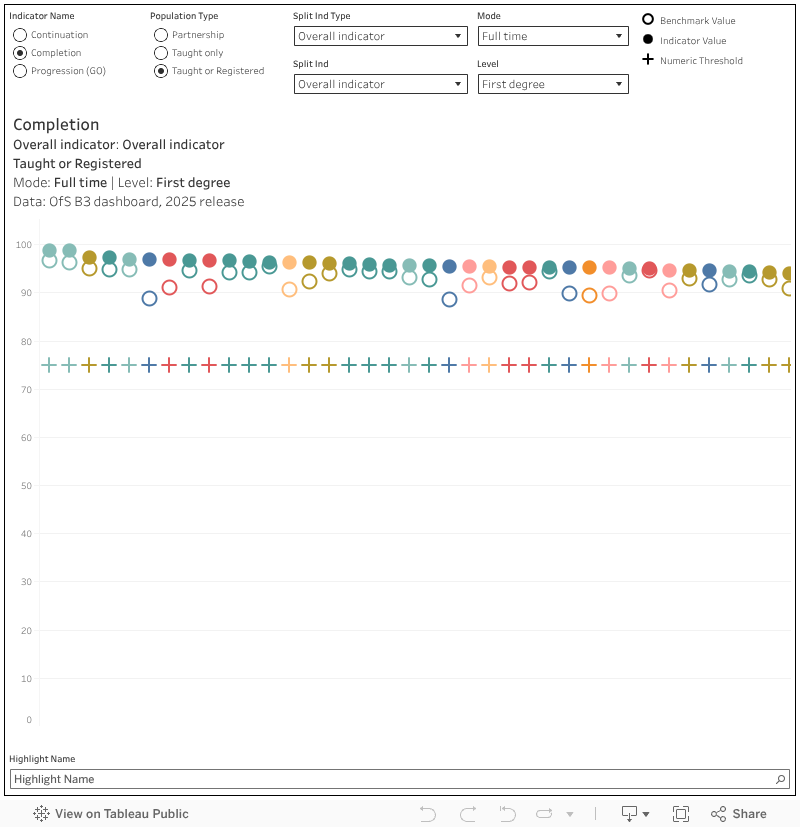
OfS take great pains to ensure that B3 measures can’t be seen as a league table, as this would make their quality assurance methodology look simplistic and context-free. Of course, I have built a league table anyway just to annoy them: the providers are sorted by the value of the indicator, with the other marks shown as above (note that not all options have a benchmark value). Here you can select a split indicator type (the group of characteristics you are interested in) and then the split indicator (specific characteristic) you want to explore using the menus in the middle of the top row – the two interact and you will need to set them both.
You can find a provider of interest using the highlighter at the bottom, or just mouse over a mark of interest to get the details on the pop-up.
With so much data going on there is bound to be something odd somewhere – I’ve tried to spot everything but if there’s something I’ve missed please let me know via an email or a comment. A couple of things you may stumble on – OfS has suppressed data relating to very small numbers of students, and if you ever see a “null” value for providers it refers to the averages for the sector as a whole.
Yes, but does it regulate?
It is still clear that white and Asian students have generally better outcomes than those from other ethnicities, that a disadvantaged background makes you less likely to do well in higher education, and that students who studied business are less likely to have a positive progression outcome than those who studied the performing arts.
You might have seen The Times running with the idea that the government is contemplating restrictions on international student visas linked to the completion rates of international students. It’s not the best idea for a number of reasons, but should it be implemented a quick look at the ranking chart (domicile; non-uk) will let you know which providers would be at risk in that situation: for first degree it’s tending towards the Million Plus end of things, for taught Masters provision we are looking at smaller non-traditional providers.
Likewise, the signs are clear that a crackdown on poorly performing validated provision is incoming – using the ranking chart again (population type: partnership, splits: type of partnerships – only validated) shows us a few places that might have completion problems when it comes to first degree provision.
If you are exploring these (and I bet you are!) you might note some surprisingly low denominator figures – surely there has been an explosion in this type of provision recently? This demonstrates the achillies heel of the B3 data: completion data relates to pre-pandemic years (2016-2019), continuation to 2019-2022. Using four years of data to find an average is useful when provision isn’t changing much – but given the growth of validation arrangements in recent years, what we see here tells us next to nothing about the sector as it currently is.
Almost to illustrate this point, the Office for Students today announced an investigation into the sub-contractual arrangement between Buckinghamshire New University and the London School of Science and Technology. You can examine these providers in B3 and if you look at the appropriate splits you can see plenty of others that might have a larger problem – but it is what is happening in 2025 that has an impact on current students.
The First Amendment trumps the statutes that the government is abusing to deport people for speech alone
This lawsuit seeks a landmark ruling that the First Amendment forbids the government from deporting lawfully present noncitizens for constitutionally protected speech
FIRE attorney: ‘In a free country, you shouldn’t have to show your papers to voice your opinion’
SAN JOSE, Calif., Aug. 6, 2025 — Today, the Foundation for Individual Rights and Expression sued Secretary of State Marco Rubio, challenging two federal immigration law provisions that give him unchecked power to revoke legal immigrants’ visas and deport them for protected speech.
“In the United States of America, no one should fear a midnight knock on the door for voicing the wrong opinion,” said FIRE attorney Conor Fitzpatrick. “Free speech isn’t a privilege the government hands out. Under our Constitution it is the inalienable right of every man, woman, and child.”
But since March, Rubio and the Trump administration have waged an assault on free speech, targeting foreign university students for deportation based on bedrock protected speech like writing op-eds and attending protests. Their attack is casting a pall of fear over millions of noncitizens, who now worry that voicing the “wrong” opinion about America or Israel will result in deportation.
Noncitizens in the United States have First Amendment rights. Despite that, Rubio is wielding two provisions of the Immigration and Nationality Act to target lawfully present noncitizens for their opinions.
The first allows the secretary of state to initiate deportation proceedings against any noncitizen for protected speech if the secretary “personally determines” the speech “compromises a compelling foreign policy interest.”
The second enables the secretary of state to revoke the visa of any noncitizen “at any time” for any reason.
As FIRE’s lawsuit explains, the provisions are unconstitutional when used to revoke a visa or deport someone for speech the First Amendment protects.
The Trump administration is proudly using the provisions to revoke the visas of and deport lawfully present noncitizens for their speech if the government deems it anti-American or anti-Israel. Rubio used the first provision to target Columbia University student Mahmoud Khalil for protected pro-Palestinian speech and the second to target Tufts University student Rümeysa Öztürk for coauthoring an op-ed.
Rubio and the Trump administration claim — as all censors do — that this time is different. They claim that this political speech comes from noncitizens, which therefore warrants setting aside America’s protection of free speech.
That’s wrong. America’s founding principle is that liberty comes not from the government, but is an inherent right of every individual. Every person — whether they’re a U.S. citizen, are visiting for the week, or are here on a student visa — has free speech rights in this country.
“Two lawful residents of the United States holding the same sign at the same protest shouldn’t be treated differently just because one’s here on a visa,” said FIRE Legal Director Will Creeley. “The First Amendment bars the government from punishing protected speech — period. In our free country, you shouldn’t have to show your papers to speak your mind.”
Plaintiffs in FIRE’s lawsuit represent the wide range of groups and individuals whose speech is threatened by the continued assault on noncitizens’ protected speech:
The Stanford Daily, the independent, student-run newspaper at Stanford University, where writers with student visas are declining assignments related to the conflict in the Middle East, worried that even reporting on the war will endanger their immigration status
Jane Doe and John Doe, two legal noncitizens with no criminal record who engaged in pro-Palestinian speech and now fear deportation and visa revocation because of their expression
“There’s real fear on campus and it reaches into the newsroom,” said Greta Reich, editor-in-chief of The Stanford Daily. “I’ve had reporters turn down assignments, request the removal of some of their articles, and even quit the paper because they fear deportation for being associated with speaking on political topics, even in a journalistic capacity. The Daily is losing the voices of a significant portion of our student population.”
There’s also historical context that should give the government pause. Congress passed the Alien and Sedition Acts 225 years ago. One of those acts allowed President John Adams to deport noncitizens if he thought they posed a “danger” to the country. It was one of the most unconstitutional laws in our nation’s history and died a quick death two years later, after the acts contributed to Adams’ resounding loss in the 1800 presidential election to Thomas Jefferson.
FIRE aims to stop the government’s use of the two provisions that stand counter to our ideals as a nation: Provisions that — in their expansive scope and unchecked authority — are more at home in countries like China and Russia than in a free America. By defeating these provisions, no administration of any party will be able to weaponize them against individuals for expression disfavored by the government.
FIRE moved for a preliminary injunction to stop the government from abusing the visa provision while the case is ongoing.
Marc Van Der Hout, Johnny Sinodis, and Oona Cahill at Van Der Hout LLP are serving as local and advisory counsel on the case.
From today’s lawsuit: “Our First Amendment stands as a bulwark against the government infringing the inalienable human rights to think and speak for yourself.”
The Foundation for Individual Rights and Expression (FIRE) is a nonpartisan, nonprofit organization dedicated to defending and sustaining the individual rights of all Americans to free speech and free thought — the most essential qualities of liberty.
CONTACT:
Daniel Burnett, Senior Director of Communications, FIRE: 215-717-3473; [email protected]
Across the country, our schools are being taxed beyond their capacity to support educational success. We’ve known for a long time that students need a three-dimensional structure of guidance and encouragement to thrive. That’s why the Multi-Tiered System of Supports (MTSS) framework was created–it’s a prevention framework for early identification of varying student needs and the responses needed to maximize academic success. In theory, an MTSS supports academic, social-emotional, and behavioral needs in equal measure. However, in practice, many schools are struggling to incorporate social-emotional and behavioral components in their MTSS–even as many of their students come to school bearing the effects of adversity, trauma, or crisis.
This imbalance is leaving millions of children behind.
Each year, at least 1 in 7 children in the United States experience abuse, violence, natural disasters, or other adverse childhood experiences (ACEs). By age 16, roughly two-thirds of children will have been exposed to at least one traumatic event. This can impair their ability to learn well and contribute to absenteeism, while secondary trauma spirals out from these students to classmates and teachers, multiplying the overall impact. Left unaddressed, the imprint of such events could warp the future of our school and public communities.
Since COVID-19, schools have reported unprecedented levels of absenteeism and student distress, and supporting trauma-exposed students without training puts more pressure on teachers, who are already burned out and leaving the profession at high rates. Therefore, it is clear to me that creating school-wide networks of trauma-informed adults is essential for fostering supportive learning and growth for students, enhancing educator capacity to nurture trauma-affected learners, and ensuring effective trauma resource management within districts.
Research has identified a supportive school community as a strong childhood protective factor against the effects of trauma. We should be hopeful about our path forward. But the vision and blueprint for this enhancement of MTSS need to come as soon as possible, and it needs to come from state-level education leaders and school district leaders.
Gaps in support and expertise
Consider this scenario: A student who recently experienced a traumatic car accident sits near a window in class, experiencing significant distress or dysregulation without outward signs. A sudden screech of tires outside activates their sympathetic nervous system (the one associated with fight or flight), and the student shuts down, withdrawing into themselves. Their teacher, unaware of the student’s trauma history and unequipped with relevant training, interprets the response as a continuation of past misbehavior or as an academic deficit.
This sort of misunderstanding takes place in a thousand places every day. I would stress that this isn’t a reflection of bad intentions, but rather a symptom of fragmented systems and knowledge. Even when trauma is recognized, lack of intentional collaboration and training often result in missed opportunities or inconsistent support, which cannot maximize recovery from trauma and may, in fact, hinder it, as research on retraumatization suggests.
There might be mismatched expectations when teachers send students to the counselor, not knowing that they themselves have a role to play in the healing. In other cases, students may be referred to a school counselor and have a productive support session–but on their way back to class, a seemingly benign statement from a third party can be misconstrued or cause dysregulation, unintentionally undoing the support they’ve received. The solution to all these problems is school-wide training on trauma-informed skills. This way, all educators and staff alike develop a shared knowledge, understanding, language, and responses as they collaborate and connect with students. With the right tools, adults on campus have better trauma-informed strategies to use in their relationships with students and in building a safe and supportive school community.
The proof is all around us
Trauma training works synergistically within MTSS: social-emotional and trauma-responsive support allows for better academic outcomes, which work to further reduce behavioral problems, and so on. At the Center for Safe & Resilient Schools and Workplaces, we see this play out often with our school district partners. For example, at Pasadena Unified School District, which was recently ravaged by the Eaton Canyon Fire, trauma-informed best practices and preparations have enabled district leaders to reopen schools with sufficient psychological understanding and interventions along with the needed material support for the 10,000 students who were affected.
A truly effective MTSS model does not treat trauma as a peripheral concern. It integrates trauma-responsive strategies into every tier of support–from universal practices, to targeted interventions, to intensive mental health services. In that environment, every adult who comes in contact with students has the training to adhere to trauma best practices.
We are at a juncture where the impact of trauma poses serious risks to the education system, but evidence-based approaches exist to solve the problem. Change from the state level down is the best way to transform school cultures quickly, and I urge state education leaders to take action. Any MTSS plan isn’t complete without a trauma-informed foundation, lens, and programming. And our students–each and every one–deserve nothing less.
Vivien Villaverde, USC Suzanne Dworak-Peck School of Social Work
Vivien Villaverde is an associate professor at the USC Suzanne Dworak-Peck School of Social Work and an EdD candidate at Rossier School of Education. She is the Co-Founder and Vice President of the Center for Safe and Resilient Schools and Workplaces. Prof. Villaverde is an approved national trainer for TISE, Psychological First Aid-TEACH, STAT, SSET, and Bounce Back. She supports various projects to build trauma-focused and multi-tiered infrastructure, has contributed to leading publications and research journals, and has delivered presentations in national and international conferences on trauma practices and evidence-based interventions, disaster preparedness and planning.
Latest posts by eSchool Media Contributors (see all)