Blog

  • How Marketers are Winning With AI-Powered Search

    How Marketers are Winning With AI-Powered Search

    Search Has Changed. Has Your Strategy?

    Paid search marketing has always played a central role in how students find and engage with colleges and universities. But how students search and what they expect from the experience has fundamentally changed. Today’s Modern Learners are digital-first and highly discerning, which raises the stakes for any higher education marketing strategy, especially when it comes to search visibility. Modern Learners are not just typing in keywords; they’re asking complex questions and increasingly expect fast, relevant answers that feel tailored to their individual goals.

    In this new reality, search is no longer just a tool; it is your institution’s reputational front door. For many students, the first impression comes from your search presence—whether your institution appears at all, and what shows up when it does. This moment shapes how they perceive your brand and can influence their decision to engage further.

    With advancements such as Google’s AI Overview and AI Mode, the line between paid and organic results is disappearing. These features pull from multiple sources to deliver a single, curated response designed to satisfy intent rather than merely match keywords. This means your search strategy can no longer operate in silos. Paid and organic efforts must work in tandem, and both need to be structured around how students actually search, not how institutions are used to marketing.

    Yet, many institutions still rely on legacy paid search strategies that are fragmented and overly focused on isolated keywords. These outdated tactics often miss the nuance of modern search behavior, leading to underperformance and missed opportunities.

    This is especially critical during a time when marketing budgets are under pressure and visibility is harder to earn. To remain competitive, higher ed marketers need to reimagine paid search not as a list of bid terms or ad placements, but as a strategic channel that influences both enrollment outcomes and institutional reputation. What’s at stake isn’t just performance. It’s how your brand is perceived in the channels that matter most.

    Intent Is the New Currency of Paid Search 

    Paid search has long been valued for its ability to deliver results quickly and cost-effectively. But in today’s environment, true efficiency means more than just driving volume through simply targeting the right keywords. Today, successful campaigns are built around understanding and aligning with the why behind a student’s search, not just the what.

    That’s where intent becomes essential. Intent reveals what a prospective student is trying to accomplish, what stage of the decision process they’re in and what they expect from their educational experiences. With today’s AI-powered platforms, marketers can now interpret and respond to this intent with greater precision than ever before.

    Modern tools like Performance Max—Google’s fully automated, goal-based ad campaign—and Broad Match—its flexible keyword matching option—draw from a range of real-time signals like device type, browsing behavior, location, and time of day. These platforms use that context to determine not just who to reach, but how and when to deliver the most relevant message.

    This shift is especially important when engaging adult and online learners. These prospective students often search in short, focused bursts across devices and platforms. Intent-based targeting helps ensure your message appears at the right moment, when a prospective student is most open to taking the next step.

    The benefit goes beyond smarter targeting. Institutions that embrace intent-based strategies often see improved efficiency, stronger lead quality and a higher return on investment. More importantly, they’re creating a search experience that meets students where they are.

    For higher education marketers, this requires a mindset shift. Paid search is no longer about chasing keywords or building lengthy lists of terms. It’s about reading behavior, responding with context and building relevance. Those who adapt to this new model will be better positioned to influence outcomes and build lasting brand reputations.

    Why Over-Segmentation Hurts AI Performance 

    Aligning with student intent requires more than new tools—it requires rethinking how campaigns are structured. That’s where over-segmentation becomes a critical barrier. Not long ago, higher education marketing professionals found success by keeping campaigns tightly focused. You’d build detailed audience segments, carefully tailor your messaging and control every aspect of targeting. It worked well in a time when more control often meant better results.

    That playbook doesn’t hold up in today’s AI-driven paid media environment. In fact, over segmentation actively holds your campaigns back.

    AI performs best when it’s given space to learn and optimize. It needs strong signals, such as first-party data, clear conversion goals and smart bidding strategies, to work effectively. Overly narrow targeting and rigid parameters create inefficiencies and limit performance.

    That’s why marketers should focus less on segmentation and more on supplying clear, meaningful data that helps AI reach the right students and drive outcomes like increased inquiries and stronger application intent. 

    At the same time, student journeys have changed. Modern Learners aren’t moving through the funnel in linear paths. Ther research process is fast-paced and shaped by real-life pressures like work schedules, finances and family responsibilities.  

    Prospective students don’t just want more content—they want information that’s relevant to their needs and arrives when it matters most. Modern paid media strategies must move beyond simple demographics to focus on behaviors, intent and how students search. 

    Transforming Strategy Into Results

    As search evolves, so too must the role of the higher ed marketer. In today’s AI-driven landscape, students are exploring their options in more nuanced ways. To keep pace, marketing strategies must shift from keyword-first thinking to approaches that prioritize context, content and the student journey. Here’s how forward-thinking teams are putting that into action:

    Smarter, Simpler Campaign Structures for Effective Paid Search Strategy

    AI works best when it has strong signals to learn from. That means it’s often more effective to group campaigns by intent rather than breaking them up by individual programs or markets. For example, grouping similar programs together can help your budget go further by focusing on where there’s actual search demand, even if it means less control over specific program-level results.

    Content That Works Harder

    When you’re working in a keywordless environment, your content does the targeting. Search platforms rely on your landing pages, headlines and descriptions to understand what you offer and who you want to reach. That’s why clear, relevant content is critical.  The schools seeing the best results are the ones creating content that aligns with what students are actually searching for. 

    Making the Most of First-Party Data 

    Performance Max campaigns are especially powerful when they’re fueled by high-quality first-party data. Feeding in enrollment signals, audience segments and behavioral insights allows AI to deliver more personalized outreach across platforms. This enhances reach and efficiency without compromising targeting precision.

    Scaling with AI Max and Broad Match 

    New tools like AI Max are opening doors to even more automation. AI Max combines broad match, keywordless targeting and AI-generated creative to help schools reach students in AI-driven placements. Paired with the right paid search strategy, Broad Match helps your content appear in the natural, conversational queries students actually use. 

    Aligning Paid and Organic Strategies  

    The strongest higher education marketing strategies bring paid search marketing and organic search marketing under one roof. When teams align on landing pages, keywords and messaging, both channels amplify each other—driving more qualified traffic, improving conversions and boosting visibility across search results. This gives AI clearer context and helps create a smoother experience for students. 

    Continuous Testing and Learning 

    AI doesn’t mean putting things on autopilot. The best results come when marketers stay involved—testing creative, improving landing pages and updating their audience signals. All of that helps the AI learn and get better over time. 

    When campaigns are built around clear intent and fueled by rich data and relevant content, AI moves beyond automation—it becomes a strategic partner. This empowers institutions to reach the right students with precision, reduce wasted spend and create meaningful connections that drive enrollment success. 

    Harness AI to Amplify Your Team’s Impact 

    AI isn’t here to replace your marketing team. Instead, it helps them work smarter and focus on what really matters. AI tools take care of the routine tasks like adjusting bids, testing creative and targeting audiences in real time. This gives your marketers more time to concentrate on strategy, keeping your brand consistent, understanding student journeys and improving conversions.

    This partnership between marketers and AI is the future of higher ed marketing. Adapting your strategy to today’s search landscape helps strengthen both your enrollment pipeline and your brand foundation.

    At EducationDynamics, we think differently about AI’s potential to power higher education marketing teams by combining creativity, data-driven insight and technology to drive meaningful growth.

    This is more than just a new way to run campaigns. It’s a shift toward meeting students more effectively—aligning enrollment and brand goals in a way that builds trust, boosts visibility and drives lasting success.

    Source link

  • 7 insights about chronic absenteeism, a new normal for American schools

    7 insights about chronic absenteeism, a new normal for American schools

    Five years after the start of the pandemic, one of the most surprising ways that school has profoundly, and perhaps permanently, changed is that students aren’t showing up. Here are some insights from a May symposium at the American Enterprise Institute where scholars shared research on the problem of widespread absenteeism.  

    1. Chronic absenteeism has come down a lot from its peak in 2021-22, but it’s still 50 percent higher than it was before the pandemic.

    Roughly speaking, the chronic absenteeism rate nearly doubled after the pandemic, from 15 percent of students in 2018-19 to a peak of almost 29 percent of students in 2021-22. This is the share of students who are missing at least 10 percent, or 18 or more days, of school a year. Chronic absenteeism has dropped by about 2 to 3 percentage points a year since then, but was still at 23.5 percent in 2023-24, according to the most recent AEI data

    Related: Our free weekly newsletter alerts you to what research says about schools and classrooms.

    Chronic absenteeism is more than 50 percent higher than it used to be. There are about 48 million public school students, from kindergarten through 12th grade. Almost 1 in 4 of them, or 11 million students, are missing a lot of school. 

    2. High-income students and high achievers are also skipping school.

    Absenteeism cuts across economic lines. Students from both low- and high-income families are often absent as are high-achieving students. Rates are the highest among students in low-income districts, where 30 percent of students are chronically absent, according to AEI data. But even in low-poverty districts, the chronic absenteeism rate has jumped more than 50 percent from about 10 percent of students to more than 15 percent of students. Similarly, more than 15 percent of students in the highest-achieving school districts (the top third) are chronically absent, up from 10 percent in pre-pandemic years.

    “Chronic absenteeism affects disadvantaged students more often, but the rise in chronic absenteeism was an unfortunate tide where all boats rose,” said Nat Malkus, deputy director of education policy studies at AEI.

    Related: The chronic absenteeism puzzle

    The data show strikingly large differences by race and ethnicity, with 36 percent of Black students, 33 percent of Hispanic students, 22 percent of white students, and 15 percent of Asian students chronically absent. But researchers said once they controlled for income, the racial differences were not so large. In other words, chronic absenteeism rates among Black and white students of the same income are not so disparate. 

    3. Moderate absenteeism is increasing.

    Everyone is missing more school, not just students who are frequently absent. Jacob Kirksey, an associate professor of education policy at Texas Tech University, tracked 8 million students in three states (Texas, North Carolina and Virginia) from 2017 to 2023. Half had “very good” absentee rates under 4 percent in 2019. By 2023, only a third of students were still going to school as regularly. Two-thirds were not.  

    “A lot of students who used to miss no school are now missing a couple days,” said Ethan Hutt, an associate professor at the University of North Carolina at Chapel Hill, who noticed the same phenomenon in the North Carolina data that he studied. “That’s just become the norm.”

    4. Many students say they skip because school is ‘boring.’

    Researchers are interviewing students and families to try to understand why so many kids are skipping school. 

    Kevin Gee, a professor of education at the University of California, Davis, analyzed surveys of elementary, middle and high school students in Rhode Island from 2016 to 2024. He found that more students are reporting missing school for traditionally common reasons: not getting enough sleep and illness. 

    After the pandemic, parents are more likely to keep their kids home from school when they get sick, but that doesn’t explain why absenteeism is this high or why physically healthy kids are also missing so much school.

    Gee found two notable post-pandemic differences among students in Rhode Island. Unfinished homework is less of a reason to skip school today than it used to be, while more elementary school students said they skipped school because “it’s boring.” 

    Researchers at the symposium debated what to do about school being boring. Some thought school lessons need to be more engaging for students who may have shorter attention spans. But others disagreed. “I think it’s OK for school to be boring,” said Liz Cohen, a research fellow at the Johns Hopkins Institute for Education Policy. “We need to adjust expectations that school should be as exciting as ‘Dora the Explorer’ all the time.”

    5. Mental health issues contribute to absenteeism.

    Morgan Polikoff, a professor of education at the University of Southern California, has also analyzed surveys and noticed a “strong connection” between mental health struggles and chronic absenteeism. It was unclear if the increase in mental illness was triggered or exacerbated by the pandemic, or if it reflects anxiety and depression issues that began before the pandemic. 

    He’s interviewing families and teenagers about why they’re absent, and he says he’s seeing high levels of “disengagement” and mental illness. Parents, he said, were often very concerned about their children’s mental health and well-being. 

    “Reading the transcripts of these parents and kids who are chronically absent is really difficult,” said Polikoff. “A lot of these kids have really severe traumas. Lots of very legitimate reasons for missing school. Really chronic disengagement. The school is not serving them well.”

    6. Showing up has become optional.

    Several researchers suggested that there have been profound cultural shifts about the importance of in-person anything. Seth Gershenson, an economist and associate professor of public affairs at American University, suggested that in-person school may seem optional to students in the same way that going to the office feels optional for adults.

    “Social norms about in-person attendance have changed, whether it’s meeting with the doctor or whatever,” said Gershenson, pointing out that even his graduate students are more likely to skip his classes. “We’re going to be absent now for reasons that would not have caused us to be absent in the past.” 

    At the same time, technology has made it easier for students to skip school and make up the work. They can download assignments on Google Classroom or another app, and schedule a video meeting with a classmate or even their teacher to go over what they missed. 

    Related: Tracking student data falls short in combating absenteeism at school

    “It is easier to be absent from school and make up for it,” said USC’s Polikoff. In his interviews, 39 of the 40 families said it was “easy” to make up for being absent. “People like that everything is available online and convenient. And also, there is absolutely no question in my mind that doing that — which is well-intentioned — makes it much easier for people to be absent.” 

    The numbers back that up. Gershenson calculated that before the pandemic, skipping 10 days of school caused a student to lose the equivalent of a month’s worth of learning. Now, the learning loss from this amount of absenteeism is about 10 percent less; instead of losing a month of school, it’s like losing 90 percent of a month. Gershenson said that’s still big enough to matter.

    And students haven’t felt the most severe consequence: failing. Indeed, even as absenteeism has surged, school grades and graduation rates have been rising. Many blame grade inflation and an effort to avoid a high school dropout epidemic.

    7. Today’s absenteeism could mean labor force problems tomorrow.

    Academic harm may not be the most significant consequence of today’s elevated levels of chronic absenteeism. Indeed, researchers calculated that returning to pre-pandemic levels of chronic absenteeism would erase only 7.5 percent of the nation’s pandemic learning losses. There are other more profound (and little understood) reasons for why students are so far behind. 

    More importantly, the experience of attending school regularly doesn’t just improve academic performance, researchers say. It also sets up good habits for the future. “Employers value regular attendance,” said Gershenson. He said employers he has talked to report having trouble finding reliable workers

    “There’s much more than test scores here,” Gershenson said. “This is a valuable personality trait. It’s part of a habit that gets formed early in school. And we’ve definitely lost some of that. And hopefully we can bring it back.”

    Next week, I’ll be writing a follow-up column about how some schools are solving the absenteeism puzzle — at least with some students — and why the old pre-pandemic playbooks for reducing absenteeism aren’t working as well anymore. 

    Contact staff writer Jill Barshay at 212-678-3595, jillbarshay.35 on Signal, or [email protected].

    This story about chronic absenteeism was written by Jill Barshay and produced by The Hechinger Report, a nonprofit, independent news organization focused on inequality and innovation in education. Sign up for Proof Points and other Hechinger newsletters.

    The Hechinger Report provides in-depth, fact-based, unbiased reporting on education that is free to all readers. But that doesn’t mean it’s free to produce. Our work keeps educators and the public informed about pressing issues at schools and on campuses throughout the country. We tell the whole story, even when the details are inconvenient. Help us keep doing that.

    Join us today.

    Source link

  • A decade waking teens up to the world around them.

    A decade waking teens up to the world around them.

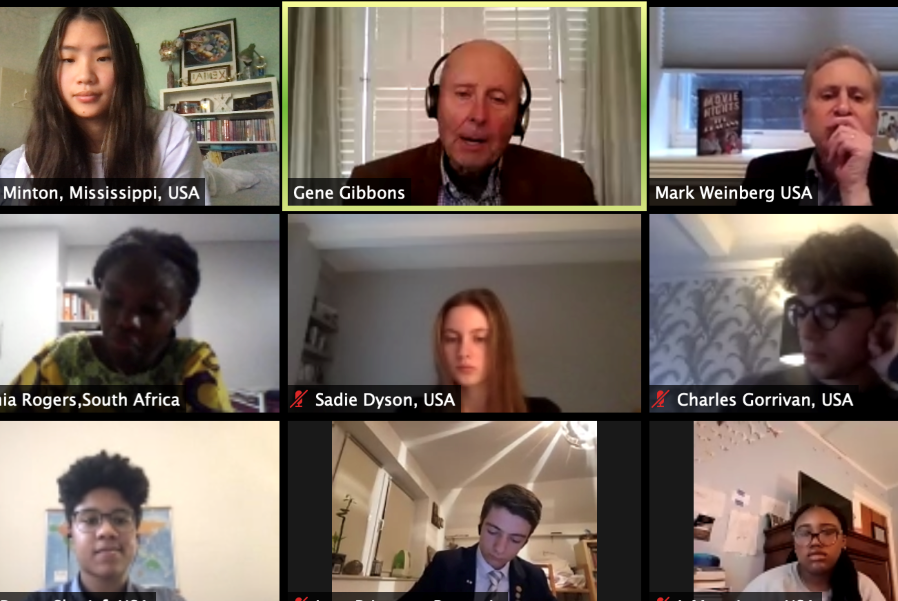
    Back in 2019, students at La Jolla Country Day School in California interviewed a citizen of Beirut who had spent years imprisoned in the Guantanamo Bay Detention Center in Cuba, through a live zoom webinar arranged by News Decoder. 

    In 2022, News Decoder brought war correspondent Bernd Debusmann into a classroom, through a live feed to the Tatnall School in the U.S. state of Delaware where students were able to ask him what it was like getting shot in the back while covering Beirut. 

    My memory of high school is the challenge I had keeping my eyes open and my head vertical. I can describe falling in love with a metallic blue Mercedes in the parking lot below the window in my trigonometry class but I can’t tell you what a cotangent is. 

    The students in math and history and language classes today will inherit not just the world we live in but the power to shape it. And the years they spend in school are supposed to prepare them for that awesome responsibility. 

    But can we keep them awake and aware after they’ve stayed up half the night binging Apple TV or playing PUBG, fueled by orange Fanta and Hot Cheetos?

    Feeding curiosity

    It is News Decoder’s deep belief that most students are curious and want to learn but that they need to connect to the material they are supposed to study.

    For 10 years we’ve helped teachers and schools engage teens through experiential learning and by connecting them with people who have been eyewitnesses to world events. At News Decoder, we bring the world into the classroom and take students out into the world around them. 

    We do this through storytelling. We don’t tell them stories, we have them tell stories to us and the world and interview people who have stories to tell. We show them the power of telling other people’s stories through journalism and in the process exploring other people’s perspectives and learning about their experiences. 

    Two ways we do this is through cross border webinars and through our signature Pitch, Report, Draft and Revise process that we call PRDR. In cross border webinars we put students from different countries and across different time zones together in live video sessions to share problems in their communities and compare the conclusions they reached after researching the same important topic. 

    This past year we did that through our monthly “Decoder Dialogues.” Students from countries including Colombia, India, Belgium, France, Rwanda and the United States shared their research and views about topics as important as the role of the press in journalism, what good and bad leadership looks like, and where responsibility for climate change lies. 

    Through the PRDR process, we encourage students to identify a problem in their community, research it, and find and interview an expert — someone who had directly experienced the problem, or someone working to solve it and then see whether and how that same problem exists in other countries and how people in those countries tackle it. 

    Building human connections across borders

    Ultimately, we guide them through the process of turning their findings into engaging stories — articles or podcasts or videos and publishing those stories to the world. 

    In a world where so many of us spend so much time looking at screens, we want students to realize that knowledge can begin online, but the most powerful information comes from finding and interviewing people who are knowledgeable and that conversation with an interesting person is so much more engaging than words on a screen. 

    Interviews are transformative. In conducting them, students find themselves at the same level as the people they interview no matter how important that person is. An insightful question asked by a 16-year-old to say, famed U.S. constitutional lawyer Floyd Abrahms, which Lucy Jaffee did back in 2020, commands respect.

    “I just loved being able to talk to people and hear their stories,” Jaffee said at the time.

    It is that love for human connection in an increasingly robotic world that News Decoder is committed to fostering. We’ve done it for 10 years and we plan to do it for another decade. 

    Source link

  • In Columbia’s Deal, More Gaslighting (opinion)

    In Columbia’s Deal, More Gaslighting (opinion)

    Columbia University president Claire Shipman would have us believe she snatched academic freedom from the flames of Trump’s higher education dumpster fire, but this is more of the same gaslighting we’ve endured for almost two years. Beginning with the first university administrator’s response to the first campus protest against the war in Gaza, university administrations everywhere repeatedly decried antisemitism while rarely naming what the students were actually calling for—namely, for the harm to the Palestinian people to stop, not for harm to come to the Jewish people.

    The words “Palestine” and “Gaza” almost never appeared in university administrators’ statements. That they also don’t appear in Shipman’s announcement of the agreement Columbia reached with the federal government to settle allegations of antisemitism is one tell that protections for academic freedom were not “carefully crafted” over the course of the negotiations but that they were abandoned instead. (For a thorough analysis of the settlement’s many failures that goes beyond the focus of this article, see “An Agreement That Settles Nothing,” by the Columbia chapter of the American Association of University Professors.)

    On CNN, Shipman claimed that the resolution “protects our academic integrity,” calling that a “red line” for Columbia. In her announcement, Shipman offers as evidence of this integrity a sentence in the settlement that reads, “No provision of this agreement, individually or taken together, shall be construed as giving the United States authority to dictate faculty hiring.” She glosses this by adding, “The federal government will not dictate … who teaches.”

    When reading the official document, one is startled, then, to find that faculty hiring is dictated by its terms:

    “13. Columbia shall, consistent with its announcement on March 21, 2025, appoint new faculty members with joint positions in both the Institute for Israel and Jewish Studies and the departments or fields of economics, political science, or SIPA [the School of International and Public Affairs].”

    The government should not be determining which programs Columbia chooses to invest in. I suspect that the slippage in Shipman’s statement from “faculty hiring” (the government cannot dictate faculty hiring) to “who teaches” (the government cannot dictate who teaches) is purposeful. She can always say that no member of the multiagency Task Force to Combat Anti-Semitism that had her by the throat will be personally reviewing candidate files, so Columbia retains control over the who of who teaches. But this is a distinction without substance when the ideological viewpoint of candidates is guaranteed in advance.

    The Institute for Israel and Jewish Studies “is dedicated to the academic study and discussion of Israel and Jewish Studies,” we learn from its webpage. “The Institute for Israel and Jewish Studies supports the State of Israel’s right to exist and to flourish,” its webpage also tells us. Can an academic department be a kind of lobbying organization at the same time? And can an academic department on Israel exclude some of the best thinking on its formation, that of anti-Zionist Jewish scholars? Isn’t this combination of the academic and the ideological a bit like the nonsensical liberal platitude calling Israel a Jewish and democratic state? The conjunction “and” does a heck of a lot of spackling work.

    By sharing the hires in the Institute for Israel and Jewish Studies as joint appointments with other departments, the work performed by phrases like “Israel’s right to exist” is amplified. In this way, the settlement seeks to multiply a particular, pro-Israel point of view in the university, potentially helping to shield Israel from criticism at the very moment it most needs to be criticized. This is not institutional neutrality. This is an intentional tilting of an already painfully tilted playing field.

    If anyone doubts that this tilt is precisely what the settlement seeks to secure, they need only consult No. 12 in the agreement, which stipulates that “the Senior Vice Provost, acting with the authority of the Office of the Provost, will conduct a thorough review of … the Center for Palestine Studies; the Institute for Israel and Jewish Studies; Middle Eastern, South Asian, and African Studies; the Middle East Institute; the Tel Aviv and Amman global hubs; the School of International and Public Affairs Middle East Policy major; and other University programs focused on the Middle East.”

    This person will “make recommendations to the President and Provost, in accordance with academic procedures, about any necessary changes, academic restructuring, or investments.” We already know which program on this list will find its fortunes soon improved. It’s not hard to imagine which ones might find themselves impoverished under the heading “necessary changes” or “academic restructuring.”

    Columbia did negotiate something wise. As Shipman wrote, “We have agreed on a robust dispute resolution process that includes a mutually agreed upon independent monitor and arbitrator as neutral third parties, rather than ceding authority to the government or a court.” Without this provision, Columbia would face a future of potentially endless arbitrary civil rights investigations.

    As more journalists report on the transformation of the federal civil service from a body of mostly nonpartisan experts into one evaluated on loyalty to the president, and as more stories expose the illegitimate tactics and methodologies used to levy accusations of antisemitism, this caveat providing for a third-party arbiter will be one that every institution will want to negotiate before discussing anything else. Columbia’s saga is, after all, only one of the first of many likely to come—last week, Brown University became the second institution to strike a deal with the Trump administration, and Harvard University is reportedly making progress toward one). After the Columbia settlement was announced, Trump posted on Truth Social, “Numerous other Higher Education Institutions that have hurt so many, and been so unfair and unjust, and have wrongly spent federal money, much of it from our government, are upcoming.”

    But this third-party provision holding out the hope that saner heads than those in the federal government will adjudicate going forward—a provision that will have to be negotiated individually by each institution—isn’t good enough, is it? Each institution, in this scenario, stanches its own bleeding, but not one of them directly challenges the federal administration’s use of antisemitism as a weapon of intimidation. It’s a rational calculation for each institution, I suppose, but a disastrous one taken as a whole.

    “For months,” Shipman says, “Columbia’s discussions with the federal government have been set up as a test of principle—a binary fight between courage and capitulation. But like most things in life, the reality is far more complex.” No doubt Shipman has in mind the real tragedies that would have resulted from a show of courage that might have cost Columbia its federal funding—critical research halted, jobs lost, students’ lives derailed, perhaps even the end of Columbia’s continued existence. The stakes were very high for Columbia, as they remain very high for all but the most financially insulated universities and colleges.

    And I suppose the compromises to academic freedom our institutions make, with no end in sight, in order to keep doors open and funds flowing might be forgivable, were it not for the 60,000 people and counting who are now dead—18,500 of them children. Were it not for the “worst-case scenario of famine” now unfolding. Were it not for the “war crimes in plain sight.”

    When the presidents of our universities and colleges compromise our academic freedom, they are doing so by playing along with a narrative of widespread antisemitism that they know is a pretext and a deflection. By going along with this narrative rather than challenging it, they co-create with the federal government a culture of fear that makes us scared to use our voices as professors to name and discuss a genocide. When we hesitate to openly address what is morally undeniable, the world begins to wobble. Yes, the reality is more complex than “a test of principle,” because we do not lose an abstract principle when we lose academic freedom; we slowly but surely lose our ability to tell right from wrong.

    Jennifer Ruth is a professor in the School of Film at Portland State University. She is co-author, with Michael Bérubé, of It’s Not Free Speech: Race, Democracy, and the Future of Academic Freedom (Johns Hopkins Press, 2022); coeditor, with Ellen Schrecker and Valerie Johnson, of The Right to Learn: Resisting the Right-Wing Attack on Academic Freedom (Beacon, 2024); and co-director, with Jan Haaken, of the film The Palestine Exception: What’s at Stake in the Campus Protests?

    Source link

  • 4 Initiatives for Graduate Student Success

    4 Initiatives for Graduate Student Success

    Ivant Weng Wai/E+/Getty Images

    Graduate student success has been a growing priority for institutions of higher education; national data points to a lower return on investment for some programs, leaving students saddled with debt. Nationally, only 58 percent of students who enter graduate programs complete their degree within six years.

    The elimination of Grad PLUS loans, included in the recently passed One Big Beautiful Bill Act, may further impede students’ ability to pay for graduate degrees, threatening enrollment and persistence in some programs.

    Graduate students can also struggle with basic needs insecurity; 12.2 percent of students pursuing a graduate degree experience food insecurity and 4.6 experience homelessness, according to the U.S. Department of Education’s National Center for Education Statistics.

    Inside Higher Ed compiled four examples of institutions that are devoting resources toward boosting graduate students’ financial and personal well-being.

    1. Texas Christian University: Suits for M.B.A. Students

    Campus leaders at Texas Christian University’s Neeley School of Business created a program to provide M.B.A. students with free professional clothes, helping low-income enrollees dress for success.

    Through a partnership with suit maker Reveal Suits, eligible students receive a custom suit with a TCU-branded lining that includes their name. Thanks to donations, they can also receive shoes and a shirt and tie if needed.

    To receive a suit, students submit an application detailing their career goals and a brief statement of financial need, which university leaders use to select recipients.

    By the Numbers

    Master’s of business administration degrees are among the most popular graduate programs in the U.S.; over 205,000 students earned an M.B.A. in 2021–22, according to data from the National Center for Education Statistics. However, affordability remains a top barrier to students looking to advance their careers.

    Nearly half of students say the cost of an M.B.A. program is one of the top barriers to their pursuit of additional education, according to the 2025 GMAC Prospective Students survey.

    The survey also found that the average candidate plans to fund their degree using more financial aid and less support from their parents, compared to pre-pandemic.

    1. Wichita State University: Mental Health Course

    To emphasize the importance of well-being to executive M.B.A. students, Wichita State University faculty designed a mandatory course that teaches wellness as a leadership skill.

    The course, Mental Wellness as a Business Strategy, launched in fall 2024 and focuses on integrating mental health initiatives into company culture as a way to gain a competitive advantage. Students learn to build psychologically safe teams, incorporate mental health policies into leadership practices and drive business success using well-being.

    1. California State University, Fullerton: Mentorship and Education

    Project upGRADS, short for Utilizing and Promoting Graduate Resources and Access for Disadvantaged Students, provides advising, mentorship and scholarships to students enrolled at CSUF. The program has supported nearly 7,000 students from all levels of higher education since 2019; Excelencia in Education recently recognized it as a model of innovative support for Latino students, according to a university press release.

    The program provides information about the benefits of graduate school, how to navigate the admissions and financial aid processes, and the advantages of participating in faculty mentorship and professional networking.

    Through Project upGRADS, graduate students can ask to be matched with a faculty member who provides support for research, career development and overcoming impostor syndrome. Students can also opt into GRAD 700, a Canvas community that offers deadlines and guidelines for thesis writing in addition to a workshop calendar and upcoming events database.

    1. Ohio State University: Mental Health Resources

    In 2024, Ohio State University bolstered on-campus and online mental health resources for graduate students.

    The university invested in training peer mental health ambassadors, providing teletherapy services and developing online mental health modules for self-paced learning and preventative care.

    Ohio State also extended on-campus services to ensure students who need after-hours care on the weekends or evenings can continue to receive support.

    If your student success program has a unique feature or twist, we’d like to know about it. Click here to submit.

    Source link

  • Don’t Wait for Permission to Write for the Public

    Don’t Wait for Permission to Write for the Public

    Welcome to the first installment of my monthly column, “The Public Scholar,” in which I invite academics and other experts to step forward—thoughtfully, clearly and with purpose—to help shape public conversations that matter. In this space, I’ll offer practical, field-tested strategies for turning academic expertise into public impact, including how to know if an idea is op-ed–worthy, how to turn a classroom anecdote into publishable prose, how to know when it’s time to query a literary agent about your book idea and more.

    I’m Susan D’Agostino, a mathematician whose stories have been published in The Atlantic, the BBC, Scientific American, The Washington Post, The Financial Times, Wired, Quanta and other leading publications. (You may recall that I wrote with some frequency about math and technology for Inside Higher Ed a couple of years ago.) My last book, How to Free Your Inner Mathematician (Oxford University Press, 2020), won the Mathematical Association of America’s Euler Book Prize for an exceptionally well-written book with a positive impact on the public’s view of math. My next book, How Math Will Save Your Life, to be published by W. W. Norton, makes the case for harnessing mathematical thinking in the face of personal and global crises.

    But none of that came easily or automatically. A decade ago, I was a tenured mathematics professor who had spent years honing proofs and lectures. Yet amid lagging public math literacy, I felt an unshakable urge to reach beyond the walls of academia and write for the public. Still, I hesitated. Was my voice or expertise welcome outside of peer-reviewed journals? Did I have the authority to write for readers I could not picture in a seminar room? Did I even know how?

    That transition—from academic to public scholar—was bumpy. I made mistakes. I received more rejections than I care to count. (Stay tuned for a future column about all those rejections!) I had to unlearn some academic habits and relearn how to communicate with clarity for broad audiences. But step by step, I found my way.

    You don’t need to leave higher ed to write for the public. And you certainly don’t need permission. Academia often trains scholars to seek approval—through grants, press offices and peer-reviewed publications. But the reality is that institutional support often follows after a scholar gains visibility. You already have the credentials to write for the public in your area of expertise. Now you need the courage and practical tips for doing so.

    Maybe you’re a historian who sees how your field illuminates today’s political divides. Or a scientist concerned about climate change, misinformation or public health. Or an artist reflecting on what the arts can—and do—offer society. Or a literary scholar exploring how stories shape our moral imaginations. Or an educator with hard-won insights into what learning looks like in today’s classrooms. If you feel the tug to engage beyond campus gates, this column is for you.

    Many academics assume that public writing takes time away from scholarship. But making your work accessible to a wide audience forces you to think harder, not less. How can you distill the central argument of your research so that an intelligent friend with no training in your field can understand? Why should they care? Honing translation skills is an art. Your goal is to show up with clarity and generosity.

    As a bonus, crafting the occasional op-ed can energize your research and teaching—not distract from it. You can clarify your ideas and receive real-time feedback on your argument and may even attract collaborators. Public writing can also be personally restorative. It reconnects you with the real-world questions that made you fall for your field. Your op-ed may even catch the eye of a literary agent or editor who’s interested in discussing book ideas. Also, your willingness to be a novice again may offer credibility among students, as that’s what many are wrestling with in your classroom.

    When I began writing in public-facing newspapers and magazines, I felt newly connected to issues that mattered beyond academia. While campus conversations are vital and intellectually rich, I found that engaging the broader public offered a different kind of clarity and urgency—to respond to a moment unfolding in real time and to make research relevant to people’s lives.

    Scholars across disciplines have watched with rising unease as the Trump administration has terminated research grants, dismissed government scientists without cause and wielded funding as a cudgel against universities. In this atmosphere, it can be tempting to self-censor or to wait for more hospitable times.

    But the cost of silence must be weighed against the consequences of inaction. Public conversations—about health care, history, science, democracy, libraries, public art and education—unfold every day, with or without scholars who can offer nuance, evidence and context.

    “Opinions are most malleable before they are fully formed,” wrote Lisa Fazio, a psychology professor at Vanderbilt whose federal grant for misinformation research was terminated. “We must not shy away from the spotlight.”

    Fazio’s warning is especially resonant now, as academics face mounting pressure from funding threats to political scrutiny. These pressures are real, and they are unevenly distributed. As University of Washington computer scientist Kate Starbird, also a target for her work on misinformation, told Science magazine, “I never had the option of keeping my head down.”

    And yet: Sharing knowledge, humanizing data and contextualizing history are profound acts of public service in consequential times. The OpEd Project puts it plainly: “If you say things of consequence, there may be consequences. The alternative is to be inconsequential.”

    Here’s some good news: Editors at newspapers and magazines want academic voices in the mix, and they’re often willing collaborators in helping your ideas rise above the noise. Editors want assurance that you are trained in your area of expertise, but they are less concerned with titles or tenure than your academic colleagues. Whether you’re a graduate student, an adjunct, new on the tenure track or a full professor, what matters is your voice, your argument and your ability to meet the moment.

    Ready to begin? Here are a few prompts to spark your first (or next) op-ed:

    • What’s one thing people misunderstand about your field, and why does it matter?
    • What recent news headline made you think, “If only they understood this about my field …?”
    • What conversation is already happening in the news, online or in your community that your research can help reframe, complicate or clarify?
    • What’s one counterintuitive idea from your work that could shift how people think?
    • Has your research or teaching ever changed how you see the world, and could it do the same for others?
    • Where is your field falling short in meeting a public need, and what would it take to change that?

    You don’t need to have all the answers. Often, a strong op-ed starts with one sharp insight, thoughtfully delivered and timed to the news cycle.

    Try drafting a few notes in your phone during your commute, between classes or even while multitasking in that faculty meeting (I won’t tell). Write as if you’re talking to a smart, curious friend. Make it clear, specific and real. Proofread like your reputation depends on it, because for the editor you’re pitching, it does. Make it short, too! Aim for 800 words max.

    And if you’d like more help along the way, sign up for my monthly newsletter. You’ll get notice of each new article in “The Public Scholar,” practical writing tips, behind-the-scenes insights from my work and inspiration from other academics finding their voice in public spaces. Your expertise is hard-won. What might happen if you shared what you know more broadly?

    Susan D’Agostino is a mathematician whose stories have been published in The Atlantic, the BBC, Scientific American, The Washington Post, Wired, The Financial Times, Quanta and other leading publications. Her last book, How to Free Your Inner Mathematician (Oxford University Press, 2020) won the Mathematical Association of America’s Euler Book Prize for an exceptionally well-written book with a positive impact on the public’s view of math. Her next book, How Math Will Save Your Life, will be published by W. W. Norton. She has been a journalism fellow at Oxford University’s Reuters Institute, Columbia University’s Graduate School of Journalism and the Mila-Quebec AI Institute. For notice of each new article in Susan’s Inside Higher Ed column, “The Public Scholar,” practical writing tips, behind-the-scenes insights from her work and inspiration from other academics finding their voice in public spaces, sign up for her free, monthly newsletter here.

    Source link

  • What to Do When Your Job Search Stalls (opinion)

    What to Do When Your Job Search Stalls (opinion)

    Graduating into a tight job market can feel very daunting. You’ve invested years into your education and training, built strong skill sets, and followed the advice given by mentors and peers to make yourself competitive. So why aren’t the offers coming?

    If you find yourself in this situation, it’s normal to feel discouraged, demoralized or unsure of what to do next. Below are some steps you can take to help jump-start your job hunt by evaluating what’s working and identifying what might need adjusting so you can move forward and maintain momentum.

    Step 1: Evaluate Your Job Search Strategy

    Before making any major changes, start by examining your current approach.

    Are you submitting lots of job applications but not hearing back? This could be a sign that your application materials need refinement. Ask yourself: Are my CV or résumé and cover letter polished and tailored to each role? Am I clearly highlighting how my skills align with the job description? If you’re unsure, reach out to a professional in your field, mentor or career coach to review these materials and provide feedback.

    Are you getting interviews but not progressing to the next round or receiving final offers? This may signal that your interview approach needs improvement. Using structured interview methods, such as the STAR method (situation, task, action, result), can help you learn how to better organize your responses to highlight your experiences in a more focused manner. Practicing with a mentor or even a peer can help you identify gaps in preparation or missteps in how you present yourself. Many universities offer free career services, including mock interviews, to their students and alumni.

    In a competitive market, job searching also requires proactive strategies beyond submitting applications. I often see job seekers hyperfixate on tweaking applications that are already strong when their time would be better spent networking. Reach out to professionals, schedule informational interviews and make connections that help you uncover hidden opportunities and potentially receive internal referrals. These conversations can also help you better understand your target roles and the broader job landscape.

    Step 2: Broaden Your Search Strategically

    If networking and refining your materials isn’t enough, it may be time to broaden the types of jobs you’re considering. This doesn’t mean giving up on your long-term career aspirations; instead it means exploring bridge or adjacent roles that can help you stay on track while you continue to grow professionally. While bridge roles may not be your first choice, they can support future career moves by helping you gain relevant work experience, build new skills and expand your professional network.

    One way to identify bridge roles is to explore LinkedIn profiles of alumni and professionals in your field. Examining the positions they held after graduating and where they are now can help expand your list of possible bridge roles. Take this a step further during informational interviews by asking professionals about their knowledge of bridge roles. For example, a person targeting a medical science liaison role might ask an MSL in an informational interview, “I have been applying to MSL roles without any success; what other roles could help me work toward this path?” They might learn of opportunities in medical communications, clinical research or technical sales, positions that develop many of the same skills valued in MSL roles and often done by professionals before landing an MSL position.

    Bridge jobs can also provide financial stability while allowing you to build your skills. For example, I work with many students who aim to move directly into industry as scientists. However, if the job search stalls, an academic postdoc can be a strategic choice, especially when it aligns with building specific skills and provides much-needed income. One graduate I advised discovered through informational interviews that he would need additional expertise in advanced sequencing techniques to be competitive for the R&D roles he was targeting. He chose to take a two-year academic postdoc with a clear plan to build those exact skills, positioning himself for a stronger transition into industry while providing financial stability for his family. A postdoc can offer time to deepen your technical expertise, build a more competitive research portfolio and prepare for roles in biotech, R&D or other sectors.

    If you pursue a postdoc as a bridge role, be transparent with the postdoc mentor about your intentions. Take the earlier example of the graduate pursuing industry R&D roles. He was clear in communicating both the specific skills he needed to gain (RNA sequencing) and the time frame he would commit (two years). That kind of clarity helps establish shared expectations and ensures the postdoc experience is mutually beneficial for both you and the lab.

    Another important strategy for broadening your job search is to reflect carefully on your needs versus preferences. Needs are the nonnegotiables, such as visa requirements, caregiving responsibilities or a two-income household situation. A person’s preferences might include living in a specific city, having a certain job title or starting at a particular salary. While all of these are important to consider, being flexible on preferences can help you uncover new possibilities. Ask yourself: Are there geographic areas I’ve ruled out that might be worth reconsidering? Could I shift my salary expectations temporarily to get a foot in the door? Widening your criteria doesn’t mean compromising your goals; it’s a strategic step in reaching them.

    Step 3: Know When to Pivot

    If you’ve been searching consistently and not gaining traction, it may be time for a bigger strategic shift. Sometimes we become so focused on our initial ideas about our career that we overlook other options that could be equally or more fulfilling. Ask yourself: Could there be paths that better match my strengths or allow me to grow in ways my original plan didn’t? Have I overlooked opportunities that may better align with my values, interests or lifestyle goals as they are now?

    In the book Designing Your Life: How to Build a Well-Lived, Joyful Life (Knopf, 2016), authors Bill Burnett and Dave Evans suggest that being stuck can be a powerful launchpad for creativity and personal growth. They encourage readers to approach career planning as a design problem that benefits from curiosity, experimentation and iteration. One recommended exercise to stimulate curiosity is to brainstorm multiple career paths for yourself. Once you have your list of possible futures, you can then explore the most promising options through research and conversations with professionals in those roles.

    If you need help identifying new directions, the individual development plan can be a useful tool. Platforms such as myIDP or ImaginePhD offer exercises and assessments to help you identify your skills, interests and values and pinpoint career paths aligned with your results. These platforms also include resources to guide you toward researching and setting goals to reach a new path.

    Importantly, pivoting doesn’t mean giving up. It means recognizing that there are many viable paths available and you may end up at a better destination than originally planned.

    Managing the Emotions of Job Searching

    Job searching can take a real emotional toll, especially when it feels like you’re doing everything right and not seeing results. Many students feel intense pressure to secure a job after graduation, and when that doesn’t happen quickly, feelings of inadequacy can creep in. These feelings can make it harder to ask for help, reach out for support or even acknowledge how difficult the process has been. When the process feels overwhelming, shift your focus to what you can control. Set small, achievable goals each week to keep your momentum going during a slow-moving search. For example, set a goal of applying to a defined number of jobs, completing a short online course to build a new skill or attending a virtual or local networking event in your field.

    One trend I’ve noticed is that some students reach a point in which they are tempted to pay someone to “fix” the problem. If you are considering investing in paid career coaching, do your homework first. This should be a thoughtful decision, not an emotional reaction driven by frustration. Some paid coaches and services are legitimately helpful, but others overpromise results and prey on frustrated job seekers. Ask about outcomes, get referrals and make sure that their services align with your goals.

    Take Your Next Steps

    After reading this, you may have several new ideas or directions you are considering. To avoid feeling overwhelmed, start by writing down one microgoal you can complete in the next few days that is simple but still meaningful. For example, you might set up a meeting with a mentor, revise a section of your résumé or research a new role. Choose something that is doable and aligned with where you want to go. Small steps like these can really jump-start your progress.

    Even if it’s not going according to your original timeline, remember that the job search is a dynamic process. By keeping an eye on your long-term goals but remaining flexible, you’ll be open to the roles and experiences that can help you get there. Most importantly, give yourself credit for working the problem, pushing forward and continuing to put yourself out there.

    Raquel Y. Salinas is the assistant dean of career and alumni engagement at the University of Texas MD Anderson Cancer Center UTHealth Houston Graduate School of Biomedical Sciences. She is a member of the Graduate Career Consortium, an organization providing an international voice for graduate-level career and professional development leaders.

    Source link

  • “Politically correct”, “druggies” and “weirdoes”: Review of ‘Storming the Ivory Tower’ by Richard Corcoran

    “Politically correct”, “druggies” and “weirdoes”: Review of ‘Storming the Ivory Tower’ by Richard Corcoran

    • This blog is a review by HEPI’s Director, Nick Hillman, of Storming the Ivory Tower: How a Florida College Became Ground Zero in the Struggle to Take Back Our Campuses

    The tone of this new book by Richard Corcoran on ‘Florida’s most left-wing public university’ is set at the very start with a tribute to the New York Times, the Washington Post and other newspapers for their ‘unshakeable commitment to ignoring any fact that does not support their predetermined narrative’. It continues into the Foreword, contributed by the US conservative Christopher Rufo, which argues for ‘institutional recapture’ and ‘reconquest’.

    The main text begins, however, with a paean to ‘liberal education’, a defining feature of western education but also a particularly good way of describing some higher education in the US. It then recounts how, in early 2023, the Republican governor of Florida, Ron DeSantis, appointed six new trustees (including Rufo) to oversee the New College of Florida, which is the smallest institution in the State University System of Florida. The institution had only a few hundred students but was also a place that the American right thought had lost its way and needed saving.

    Oversight versus autonomy

    It is easy to forget on the UK side of the Atlantic, where we tend to associate university success with university autonomy, how much power state governors have over university systems in the US. The American model is akin to letting Andy Burnham decide who should govern the various universities in Greater Manchester. Or more pertinently perhaps, given the politics of the people involved, letting Andrea Jenkyns, the Reform mayor of Lincolnshire and former Minister for Universities, choose the board members of Lincoln University and Bishop Grosseteste University (soon to be renamed Lincoln Bishop University).

    Those who choose the trustees of an institution indirectly choose who should manage that institution as it is trustees who hire and fire leaders and hold them to account.  And in the case of the New College of Florida, DeSantis’s six new trustees helped to install the author of this book, Richard Corcoran, as the institution’s President in 2023.

    Corcoran’s core argument is that the changes wrought by DeSantis were necessary to rescue a failing institution to which those students who did enrol struggled to feel a sense of belonging. Admitted students (some of whom never actually enrolled) told researchers that the New College of Florida’s social culture was ‘politically correct’ and shaped by ‘druggies’ and ‘weirdoes’. Corcoran (rightly) points out this is ‘the exact opposite’ characterisation that ‘any rational organisation would adopt if it was trying to appeal to a broad swath of students and parents.’

    At just 650 students, the New College of Florida was only around half the size the local legislature had expected and, indeed, was smaller than the average secondary school in either the UK (1,000+ pupils) or the US (c.850), rather than boasting the typical enrolment of a higher education institution. That made a quick turnaround more feasible and Corcoran claims victory near the end of the book, arguing that, ‘In a mere 10 months, New College of Florida went from one of the most progressively captured universities in the country to the freest university in the nation.’ (This claim is caveated a little though, when Corcoran takes a dig at some of New College’s longer-serving staff: ‘I still have a small handful of faculty members who believe in leftist indoctrination.’)

    DEI, gender studies and 7 October

    The story of the takeover / recovery of New College is told via chapters looking at:

    • DEI (Diversity, Equity and Inclusion), which we are told was costly and ineffectual or even counter-productive;
    • gender studies, which we are told has no place within the liberal arts; and
    • the campus battles after the 7 October attack by Hamas, which we are told exposed the power of ‘unseen, unknown, unelected people who reside in large part in and around academia.’

    The chapter on gender studies looks at the growth of the discipline and its arguably un-evidenced approach – especially towards the treatment of children with gender dysphoria. A succinct way to summarise it would be to say JK Rowling would likely approve of the chapter. But Corcoran ends with an important thought about why the way such issues are treated in academia matters: ‘The real concern is not just the suppression of free speech, but what happens in society when dialogue around important issues is summarily dismissed.’

    A later chapter focuses on the changes wrought Corcoran and his allies, such as changing curricula, adding sports and improving campus facilities. He and his team clearly have the institution’s and its students’ interests at heart. But the level of public expenditure for such a small college seems extraordinary and some of it seems to have been spent unnecessarily. For example, some neglected student dorms were renovated at large expense only to be declared still unfit for humans to live in, meaning hotel beds had to be requisitioned.

    It is striking that the reconquest of the institution was done via the actions of the state governor, the spending of considerable public money and the enforcement of strict rules. In other words, the tactics were interventionist rather than libertarian, even if the agenda was right-wing rather than left-wing. This helps explain why Corcoran is, unlike some other Republicans, opposed to abolishing the Department of Education, urging the American right to copy the left by using federal bodies to effect real change.

    The other thing that really sticks out is how big a battle was fought over a college that educates something like 0.003% of America’s college students (or 0.15% of Florida’s). In terms of size relative to the rest of the higher education sector, the New College of Florida is the US equivalent of something like the Dyson Institute here in the UK. So it is worth asking whether the campus battles are a trailblazer akin to Ronald Reagan taking on the University of California or whether they are more like the skirmishes seen here in the UK over institutions like Regent’s University London, the New College of the Humanities (now Northeastern University London) and Buckingham (where, to declare an interest, I sit on the Council). Corcoran himself seems unsure which they will turn out to be.

    I. Did. Not. Give. A. F***.

    At one point, Corcoran tells a story about his negotiations to eject a car museum which was on the New College campus and occupying much-needed space at a rent level that was far below the market value. This leads to some negative media coverage about which Corcoran writes, ‘As to the press: I. Did. Not. Give. A. F***.’ But there is an element of protesting too much here as there is page after page of settling scores and putting the record straight after numerous attacks on New College from many sides (including some parts of the media, staff and students and the Governor of another state [California]).

    While it makes sense to discuss the media attacks on the New College of Florida’s leaders in a book on the institution, the author can’t resist the temptation to broaden his text out to include earlier battles he fought with the media about COVID during his previous job as Education Commissioner of Florida, before delving even further back to recount his time as the 100th Speaker of Florida’s House of Representatives. It is all diverting and somewhat interesting as a study of state-level politics, but it is not really on what the book professes to be about.

    I don’t blame the author for responding to the attacks; educational institutions that profess to be objective can sometimes struggle to accommodate members that hold anything other than the standard left-wing views that predominate in education. But as a reader on this other side of the Atlantic, I’d have preferred more higher education strategy and less tittle-tattle. When you’re trying to work out what lessons the battles over New College might hold for higher education outside the US, the settling of old scores with various local, national and specialist media outlets is less interesting.

    Nonetheless, the book ends with a nine-point ‘roadmap’ for transformation, from ‘Leadership is everything’, through ‘Litigate, litigate, litigate’ to ‘Presidents should have CEO capabilities’. Given it is so hard to find out what a Farage Government might mean for higher education over here, then this book may provide a bigger hint than Reform’s last manifesto.

    Parting thought

    When I’ve previously posted my assessment of books that are relevant to higher education and written from a right-of-centre perspective, I’ve received pushback. My far-from-adulatory review of one of Matt Goodwin’s books, for example, won an excoriating comment from a former vice-chancellor: ‘HEPI was set up as a serious evidence based think tank. It was not set up to dabble in phoney party political “culture wars”.’

    It is hard to disagree with the general sentiment on HEPI’s purpose, but I do disagree with the notion that we should ignore books written from the right. It is important to understand the right’s approach to higher education (on both sides of the Atlantic). If you draw a thick boundary around those books that are deemed acceptable to read and review and if that line excludes books like Corcoran’s, there are two problems.

    1. First, you play into the hands of – and give succour to – those who regard higher education as both insufficiently ideologically diverse and unwilling to engage with the full range of mainstream ideas.
    2. Secondly, you fail to draw a distinction between a right-wing stance, like Corocran’s, which (whether you agree with it or not) is aimed at raising educational standards, and other right-wing educational escapades that are much less clearly about improving education.

    Having also just finished reading Trump U: The Inside Story of Trump University by Stephen Gilpin, which lays bare the horror that was ‘Trump University’ and its get-rich-quick-at-the-expense-of-the-poor schemes which have nothing to do with academia, I am reinforced in my view that we should engage with all mainstream educational ideas irrespective of whether they emerge from potentially divisive Republicans such as Corcoran or somewhere else.

    Source link

  • Child care centers often reject kids with disabilities. Ohio and other states are trying to change that

    Child care centers often reject kids with disabilities. Ohio and other states are trying to change that

    This story about children with disabilities was produced by The Hechinger Report, a nonprofit, independent news organization focused on inequality and innovation in education. Sign up for the Hechinger newsletter.

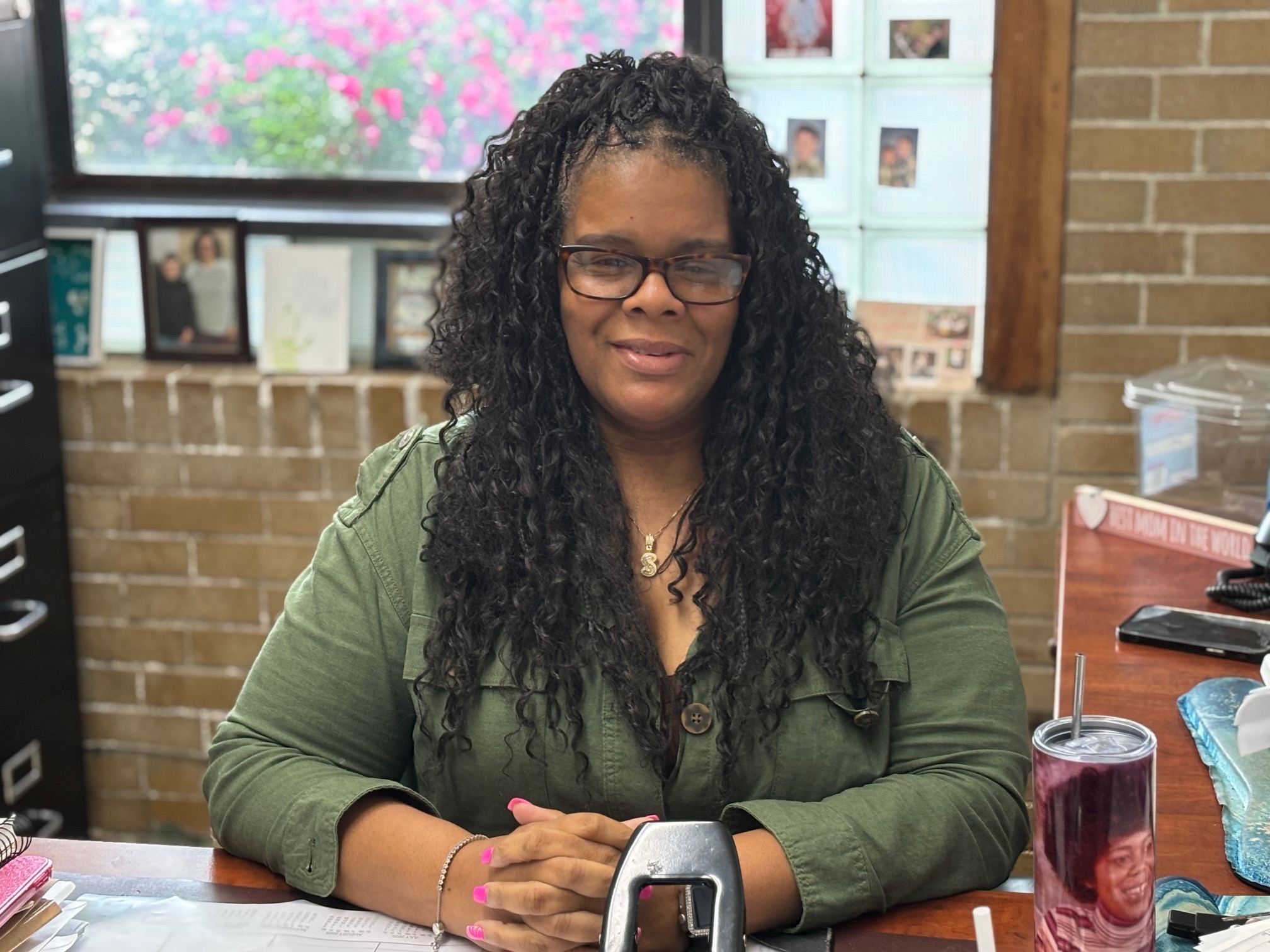
    COLUMBUS, Ohio — When Selina Likely became director of the Edwards Creative Learning Center six years ago, she knew there was one longstanding practice that she wanted to change. For as long as she had taught at the thriving child care center, it had turned away many children with disabilities such as autism and Down syndrome. The practice was even encoded in the center’s handbook as policy.

    Likely, the parent of a child with a disability, wanted to stop telling families no, but she knew that to do that she and her staff would need more support. “I said, ‘Let’s start getting training and see what we can do.’” 

    Not too long after, her effort received a big boost from a state-funded initiative in Ohio to strengthen child care teachers’ knowledge and confidence in working with young kids with disabilities and developmental delays. That program, Ohio PROMISE, offers free online training for child care workers in everything from the benefits of kids of all abilities learning and playing together to the kinds of classroom materials most helpful to have on hand. It also offers as-needed mentorship and support from trained coaches across the state.  

    Related: Young children have unique needs, and providing the right care can be a challenge. Our free early childhood education newsletter tracks the issues. 

    Child care providers across the country — including large, established centers and tiny home-based programs — struggle to meet the needs of children with disabilities, according to a 2024 report from the U.S. Government Accountability Office. More than a quarter of parents of children with disabilities said they had a lot of difficulty finding appropriate care for their kids. And even those who do find a spot regularly encounter challenges, like having their children excluded from extracurricular activities such as field trips and even academic instruction. 

    “It’s really hard to find child care for this population, we heard that loud and clear,” said Elizabeth Curda, a director on the GAO’s Education, Workforce and Income Security team and a coauthor of the report. Even the most well-resourced centers report that they struggle to meet the needs of children with disabilities, according to Curda. 

    There’s a lot of desire at the grassroots level to change that. Ohio PROMISE and a few other recent initiatives provide models for how to expand the capacity — and the will — of child care centers to serve the more than 2 million U.S. children age 5 or below who have a disability or developmental delay.

    Cards on the walls at Edwards Creative Learning Center display the signs for different letters so students — whether nonverbal or not — can all learn sign language. Credit: Sarah Carr/The Hechinger Report

    In Vermont, for instance, officials hope to soon unveil a free, on-demand training program aimed at helping child care teachers have more inclusive classrooms. And officials in Ohio’s Summit County, home to Akron, report growing interest from other counties in creating programs based on Summit’s more than decade-old model that provides in-person training for child care operators in inclusion of children with disabilities. 

    “We’re helping to create child care centers that feel they can handle whatever comes their way, especially when it comes to significant behavior concerns,” said Yolanda Mahoney, the early childhood center support supervisor for Summit County’s disabilities board.

    The federal government until recently encouraged the creation of such models. In 2023, the federal Department of Education and Department of Health and Human Services issued a joint statement urging states to take steps to support inclusion in early childhood settings, including strengthening training and accountability. 

    Also, a year-old provision of the Child Care and Development Fund, the primary federal funding source for child care, requires that states increase the availability of child care for children with disabilities as a prerequisite for receiving funds. (However, 43 states have received waivers allowing them to delay implementation of that provision.) 

    Under the current president, federal momentum on the issue has largely stalled. While the administration of President Donald Trump hasn’t directly attacked inclusion in the context of special education, the president has criticized the term more broadly — especially when it comes to diversity, equity and inclusion. That can create uncertainty and a chilling effect on advocates of inclusion efforts of all kinds.   

    Funding for some inclusion efforts is also in jeopardy. States rely on Medicaid, which faces nearly $1 trillion in cuts over the next decade, to pay for early intervention programs for children birth to age 3 with developmental delays and disabilities. Trump has also proposed eliminating Preschool Development Grants, which states such as Vermont and Illinois have used to expand support of young children with disabilities. 

    That means over the next few years, progress on inclusion in child care settings could hinge largely on state and local investment. It helps that there’s a “real desire” among providers to enroll more children with disabilities, said Kristen Jones, an assistant director on the GAO’s education, workforce and income security team, who also worked on the report. “But there’s also a concern that currently they can’t do that in a safe way” because of a lack of training and resources.

    Related: For kids with disabilities, child care options are worse than ever

    In Ohio, the idea for Ohio PROMISE came after an appeal in 2022 from Republican Gov. Mike DeWine. He reported that families were coming to him saying they couldn’t find child care for their kids with disabilities. 

    “He said, ‘Come to me with ideas to solve that problem,’” recalled Wendy Grove, a senior adviser in the Ohio Department of Children and Youth who spearheaded development of the program.

    Grove and her colleagues had already been working on a related effort. In 2020, Ohio won a federal grant that included help exploring how well — or not — children with disabilities were being included in child care and early education settings. DeWine liked the idea Grove’s team presented of morphing that work into a state-led effort to strengthen training and support for child care teachers. They also proposed more direct support to families, including the extension of child care vouchers to families with incomes above the poverty level, with a higher reimbursement rate for children with disabilities. 

    The training, which debuted about two years ago, is provided in three levels. Jada Cutchall, a preschool teacher at Imaginative Beginnings, an early learning center just outside of Toledo, recently completed the third tier, which for her included customized coaching. Cutchall’s coach helped her create communication tools for a largely nonverbal student, she said, including a board with pictures children can point to if, for example, they want to go to the bathroom or try a different playground activity. 

    As a result, Cutchall said, she has watched kids with disabilities, including those with speech impairments and autism, engage much more directly with their classmates. “They have the courage to ask their peers to play with them — or at least not distance themselves as much as they usually would,” she said. All of the children in the classroom have benefited, she added, noting that kids without disabilities have taken an interest in learning sign language, strengthening their own communication skills and fostering empathy. 

    Child care programs where one teacher and one administrator have completed some of the training earn a special designation from the state, which may eventually be tied to the opportunity to get extra funding to serve children with disabilities. In Ohio PROMISE’s first year, 1,001 child care centers — about 10 percent of the total number in Ohio — earned that designation, according to Grove.

    For the last six years, Selina Likely has overseen the Edwards Creative Learning Center, where she’s steadily tried to enroll more children with disabilities and developmental delays. Credit: Sarah Carr/The Hechinger Report

    The effort costs a little over $1 million in state dollars each year, with most of that paying for several regional support personnel who work directly with centers as mentors and advisers. Over the last two years, Ohio has seen a 38 percent increase in the number of children in publicly funded centers who qualify for the higher voucher reimbursement rate for children with disabilities, which can be double the size of the standard voucher.

    Grove hopes that ultimately the effort plays a role in narrowing a critical and stubborn gap in the state: about 27 percent of children without disabilities show readiness on state standards for kindergarten; only 14 percent of children with disabilities do. Since so few disabilities exhibited at that age are related to intellectual or cognitive functioning, “we shouldn’t see that gap,” said Grove. “There’s no real reason.”  

    One goal of the new efforts is to reduce the number of young children with disabilities who are expelled from or pushed out of care. Those children are frequently asked to leave for behaviors related to their disability, the GAO report found.

    Several years ago, a child care center in Columbus expelled Meagan Severance’s 18-month-old son for biting a staff member. The boy has several special needs, including some related to attention deficit hyperactivity disorder. Severance brought him to Edwards Creative Learning Center, where not too long after Selina Likely shifted into the role of director. The boy also bit a staff member there — not uncommon behavior for toddlers, especially those with sensory sensitivities and communication challenges. 

    Likely was determined to work with the child, not expel him. “They put in time and effort,” said Severance. “The response wasn’t, ‘He bit someone, he’s gone.’” 

    Likely empathized. Decades earlier, her own daughter had been expelled from a child care center in her hometown of Mansfield, Ohio, for biting.

    “I was so angry and mad at the time — how are you going to kick out a 1-year-old?” she said. The center director didn’t think at all about how to help her child, Likely recalled, instead asking Likely what might be happening at home to make the child want to bite. She said she got no notice or grace period to find a new placement. “That left me in a disheartened place,” she said. “I was like, ‘I still have to go to work.”

    Seventeen years old at the time, she was inspired by the injustice of the situation to quit her job in a factory and apply to be an assistant in a child care program. She’s been in the industry ever since, gradually trying to make more space for children like her daughter, who was later diagnosed with autism.  

    Meagan Severance, a parent and teacher at the Edwards center, has worked in recent years to make her classroom more inclusive for children with all different abilities. Credit: Sarah Carr/The Hechinger Report

    As director, Likely displays the nameplate “chaos coordinator” on her desk. And she’s taken the stance that the center should at least try to work with every kid. She and some of her teachers have completed the first two tiers of the Ohio PROMISE training, as well as some related sessions available from the state. Likely estimates that about 10 percent of the children in her center have a diagnosed disability or developmental delay.

    Liasun Meadows, whose son has Down syndrome, chose Edwards several years ago for her then 1-year-old over another program better known for its work with children with disabilities. She has not been disappointed.

    Parents of kids with disabilities watch their children like a hawk, she said. “There are certain things you notice that you don’t expect others to notice, but they do at Edwards. They’ve been growing and learning alongside him.”  

    Severance, whose son is now 8, works at the center these days, leading the 3-year-old room, which includes two children who are largely nonverbal. She’s made the classroom more inclusive, adding fidget toys for children with sensory issues, rearranging the classroom to create calming areas, providing communication books to nonverbal children so they can more easily express needs and wants, and teaching everyone some sign language. 

    “For a while there was segregation in the classroom” between the kids with disabilities and those without, Severance said. But that’s lessened with the changes. “Inclusion has been good for the kids who are verbal — and nonverbal,” she said.

    Related: Where do kids with disabilities go for child care?  

    As in Ohio, state officials in Vermont turned to online training to help ensure young children with disabilities aren’t denied quality care. The state should soon debut the first parts of a new training program, focusing on outreach to child care administrators and support for neurodivergent children. The state wanted to focus on center leaders first because “directors that are comfortable with inclusion lead programs that are comfortable with inclusion,” said Dawn Rouse, the director of statewide systems in Vermont’s Child Development Division.   

    One tool for supporting and calming children with sensory issues is keeping a healthy supply of fidget toys and Pop-Its on hand. Credit: Sarah Carr/The Hechinger Report

    Vermont also pumped millions of dollars into a separate program, known as the Special Accommodations Grant, that supports young children with disabilities. Since 2009 the state has set aside $300,000 a year that child care centers can tap to provide services for individual children with disabilities. It might help buy specialized equipment for a child with cerebral palsy, for instance, or be used to hire a full- or part-time aide.

    The $300,000 has been maxed out every year, Rouse said. And after the pandemic, the need — and the number of applications — surged.

    As a result, the state allocated some federal American Rescue Plan and Preschool Development Grant dollars to increase spending on the program by about sevenfold — to between $2 million and $2.5 million annually — an amount Rouse still describes as a “Band-Aid.” Without access to the grants, “we see a lot of children being asked to leave programs,” Rouse said. “That’s not good for any child, but for children with specialized developmental needs it’s particularly bad.” 

    Over time, Likely hopes, her Ohio center can play a small role in reducing that instability, although the center hasn’t yet been able to work with all such children it wants to. Likely recalls one toddler with a severe disability who climbed up anything he could. There wasn’t enough money to pay for what the child really needed: a full-time aide. “It’s hard when you know you’ve tried but still have to say no,” she said. “That breaks my heart more than anything.” 

    On one June morning, the center’s teachers acknowledged and celebrated several milestones in its work on inclusion, big and small. One child in the 3-year-old classroom with fine and gross motor challenges was drinking independently from a bottle. The preschool classroom held its first graduation ceremony, translated partly into sign language. All of the kids, no matter their challenges, were set to go on field trips to Dairy Queen and the zoo.

    Likely dreams of someday running a center where about half of the children have a disability or delay. It may be years off, she said, but as with the milestones she sees scores of children at the center reach every day, “There’s a way — if there’s a will.” 

    Sarah Carr is a fellow at New America, focused on reporting on early childhood issues. 

    Contact contributing editor Sarah Carr at [email protected].   

    This story about children with disabilities was produced by The Hechinger Report, a nonprofit, independent news organization focused on inequality and innovation in education. Sign up for the Hechinger newsletter.

    The Hechinger Report provides in-depth, fact-based, unbiased reporting on education that is free to all readers. But that doesn’t mean it’s free to produce. Our work keeps educators and the public informed about pressing issues at schools and on campuses throughout the country. We tell the whole story, even when the details are inconvenient. Help us keep doing that.

    Join us today.

    Source link