
The post Julian Hill addresses The PIE Live Asia Pacific appeared first on The PIE News.
Blog
-

Breaking the Bar: how can university graduates enter elite professions?
This blog was authored by Charlotte Gleed, who is undertaking an internship at HEPI this summer. Charlotte is a BA History Graduate from Jesus College, Oxford and holds a Graduate Diploma in Law, supported by the Exhibition Scholarship from the Honourable Society of the Inner Temple. Following this internship, Charlotte will be studying an MPhil in Education: Knowledge, Power, and Politics at Emmanuel College, Cambridge.
‘Barristers: they make coffee, don’t they?’
A family member said this to me recently. Not thinking much of it, I laughed and replied, ‘not quite, the ones who wear the wig and gown and bang the stick’. This conversation got me thinking: why is it that some professions seem so far removed from everyday life that not only does the possibility of entry appear distant, but what a person does in that profession is misunderstood? The English Bar falls in this category.
The Bar is the profession of barristers, a set of specialist legal advocates who represent parties usually in courts or tribunals. The Bar has historically been a profession preserved for the elite. The requirement of high grades from top-ranked universities, together with financial instability during legal studies and in practice, compound this assumption. However, there can be an alternative narrative. As social mobility schemes arise, universities develop closer ties with the profession, and the availability of scholarships widen, there is a real opportunity to change the composition of the Bar.
Fortunate to be a product of these changes, my journey to the Bar has highlighted three main obstacles for university graduates. First, the precarious financial situation. We are all aware that higher education of any form is expensive, even with government-backed student loans. However, further vocational study required for the Bar stretches student finances considerably. The cost of the Bar Vocational Course ranges from £12,640 to £20,220. Unless supported by family, scholarships and/or private bank loans, the costs can be both difficult to justify and even harder to deliver.
Second, it is increasingly clear that a law degree alone is no longer sufficient. For students who complete an LLB or BA Jurisprudence, competition is so fierce that postgraduate study – a master’s or equivalent – is beneficial. For students who study a non-law undergraduate degree, the Graduate Diploma in Law (GDL) is necessary. The cost of the law conversion course, ranging from £7,150 to £13,590 dependent on region and university provider, exacerbates the gap between those who can afford the additional university costs and those who cannot.
Third, the essence of the Inns of Court is strikingly akin to an Oxbridge college. Each aspiring and practising barrister across England and Wales chooses membership of one of four Inns: Middle Temple, Inner Temple, Lincoln’s Inn, and Gray’s Inn. This is both a blessing and a curse for university graduates. A blessing because its magic and mystery is something to aspire to; a curse because its majesty can be intimating and can feel exclusionary. One barristers chambers, Essex Court Chambers, have partnered with the Social Mobility Foundation to improve accessibility to the commercial Bar. This is a welcomed step. But more needs to be done.
What is the solution? Postgraduate study needs investment. The aggregate £12,000 postgraduate loan available from the government goes some way. Yet, this amount falls short of most postgraduate course fees and does not include maintenance costs. If university is to be a true social leveller, access to more advanced levels of higher education must be supported – and funded. Furthermore, the Honourable Society of the Middle Temple and Inner Temple interview all applicants for both their GDL and Bar Course scholarships. This is a start. It is advantageous to students who have not attended prestigious schools or universities with a raft of academic prizes and extra-curriculars to be seen and heard. Interviews for all scholarship candidates is one way to level the playing field. Together with links between university careers services, student societies, and mentorship schemes, this could be an era of genuine collaboration between students, universities, and professions.
Education pays. But it cannot pay if access to elite professions, and its required higher education courses, is hindered in the first place.
-

The details behind the first national school voucher program
After decades of trying, conservatives this year succeeded in creating the first national school voucher program.
The Republican megabill that President Donald Trump signed into law in July will establish new tax credit scholarships for families to use at private schools, including religious ones — a long-held goal of school privatization advocates who argue parents should get taxpayer support if they want to opt out of their neighborhood school.
Under the “big, beautiful bill,” donors can receive dollar-for-dollar tax credits of up to $1,700 for contributions to scholarship-granting nonprofits. Those groups then distribute the money to families seeking help paying for private school, tutoring and other educational expenses.
The program, while significant, is less expansive than in earlier drafts of the legislation. Previous versions gave donors larger tax credits — a match up to $5,000 or 10 percent of their income, whichever is greater — and mandated that all states participate rather than allowing them to opt in.
Related: A lot goes on in classrooms from kindergarten to high school. Keep up with our free weekly newsletter on K-12 education.
Here are 10 things to know about the program. If you have other questions or there’s more you’d like to know, write to us: [email protected].
When does it start?
Jan. 1, 2027. Families have until then to research where they might want to spend a scholarship — and if the school in mind even plans to accept one. Taxpayers who want to contribute to support the scholarships can do so beginning in late 2026.
How will the scholarships work?
The law opens the door to churches, universities, education nonprofits, rotary clubs and potentially even public schools (more on that below) to accept and distribute donations for the program. These “scholarship-granting organizations,” or SGOs, can keep up to 10 percent of the donations for administrative costs.
In some states with existing scholarship programs, families apply with a third-party contractor that works with eligible schools and selects students for awards. Other states allow religious groups and other nonprofits to create and manage their own scholarship funds. The federal bill gives states wide flexibility to make those sorts of decisions about how the program is administered, experts say.
Who’s eligible for the scholarships?
To qualify, students need to check these boxes: They must be eligible to attend a public school, their state must opt in to the program, and their families must earn no more than three times the area median income — a threshold that would include households with incomes nearing $500,000 in some parts of the United States.
Students who already attend private school qualify, since they are eligible for public school, even if they don’t attend one. The scholarships also may cover home-schoolers. (Keep reading for more on that.)
How much money will families receive?
While the bill set a $1,700 cap on how much individual donors can contribute through their taxes, it’s unclear whether it limits how much an individual student could collect in scholarships.
In theory, a student could apply for several scholarships. An SGO might also offer a scholarship that reimburses a family for all costs associated with attending their preferred school. In states that already offer similar school choice programs, a student might be able to collect scholarships from both the new program and the existing state program. Still, the average cost of private school tuition is roughly $13,000, so even students who combine several scholarships may not receive enough to cover the full cost of attending.
The Treasury Department is expected to issue regulations on the program, and we may not know these kinds of details until it does.
Related: Arizona gave families public money for private schools. Then private schools raised tuition
What can the scholarship money be used for?
Quite a lot. The legislation suggests that families could use the money not only to help pay for private school tuition, but also for room and board, services for students with disabilities, transportation, tutoring, and school supplies like books, computers and uniforms.
The rules may depend on the individual state and its definition of an “eligible school.” In some states, home schooling might qualify students for the scholarships, but in other states it might not, said Robert Enlow, president of EdChoice, a pro-school choice group.
It’s also possible that public schools could charge scholarship students — as some do with home-schoolers — for services like tutoring, special education or advanced courses.
So students can use the money at public schools? How would that work?
Yes, potentially. In some states, schools already charge activity or participation fees for non-enrolled students who want to join clubs and sports. Marguerite Roza, director of the Edunomics Lab at Georgetown University, said some states may write their own rules that allow schools to extend the menu of services they could charge for.
Meanwhile, most school districts — roughly 4 in 5 — already partner with foundations that raise money to help students with transportation, school supplies and basic needs. Both Enlow and Roza said they expected nonprofits and districts to partner on finding ways to tap the federal scholarship dollars as well.
“Imagine you could have a public school foundation going out and helping with transportation and books and computers and tutors and all sorts of stuff, right?” Enlow said. “The potential is huge.”
Will all private schools accept the scholarships?
No, private schools are not required to accept the scholarships, and many states that offer school choice don’t require private schools to participate. Private schools generally can accept or reject a student for any reason, whether they have a scholarship or not.
In Arizona, for example, the tax credit program provided scholarships to students at 348 schools last year. More than 400 private schools operated in the state as of 2022.
Related: Tracking Trump: His actions to dismantle the Education Department, and more
Which states will participate?
Roughly 21 states — including Arizona, Georgia and Montana — offer their own tax credit scholarships, according to the group EdChoice, so it’s expected they would opt into the federal program. Conservative lawmakers in North Carolina already introduced a bill to allow families there to take part in the federal scholarships.
If public schools can benefit too, even Democratic governors may consider joining the program, said Roza.
“Ultimately if the state can open this to summer camp and tutoring, obviously there would be a lot of pressure to unlock so much money with this,” she said.
How much will the scholarships cost the government?
It depends on how many taxpayers claim the credit.
While an earlier version of the bill would have capped the tax credits at $10 billion a year, the final legislation contains no such limit — so the exact amount in lost revenue won’t be known until much later. That said, an analysis by the nonpartisan Joint Committee on Taxation found that the legislation would cost the Treasury up to $4 billion per year.
Others think the cost will be higher. The Institute on Taxation and Economic Policy, a left-leaning research group, placed its projection closer to $51 billion, while Roza estimated the cost at $28 billion per year. Still, she hesitated to count that as a direct loss to K-12 funding. “It’s new money in the sense that it doesn’t go into or out of the federal pie,” Roza said.
What’s been the reaction to the plan?
Critics, including teachers unions and many education experts, have been quick to raise alarms about the voucher program, arguing that it’s a handout for wealthy families and will harm public schools by reducing funding for them.
“It’s the centerpiece of the Great American Heist — a privatization scheme wrapped in tax policy,” Denise Forte, president of the left-leaning nonprofit EdTrust, said at a hearing before the Senate Democratic Caucus in July.
Advocates for the separation of church and state worry about the program channeling money from government coffers to religious schools, while disability advocates note that private schools are not required to serve students with disabilities.
Some supporters of school vouchers, meanwhile, wish the legislation had gone further.
“This is a very positive program for taxpayers in America. You can help families get better education and claim a tax credit for it,” said EdChoice’s Enlow. “It’s going to benefit middle- and low-income families.” But he added, “It’s not as generous as we would like, which is universal.”
Others are focused now on encouraging states to participate in the program. “The fight doesn’t end with the passing of the bill,” said Sydney Altfield, national director of Teach Coalition, which advocates for Jewish schools to get access to government funding. “States must opt into the program.”
Contact staff writer Neal Morton at 212-678-8247, on Signal at nealmorton.99, or via email at [email protected].
This story about school voucher programs was produced by The Hechinger Report, a nonprofit, independent news organization focused on inequality and innovation in education. Sign up for the Hechinger newsletter.
-
How Redistricting Threatens Democracy in the 2026 US House Elections
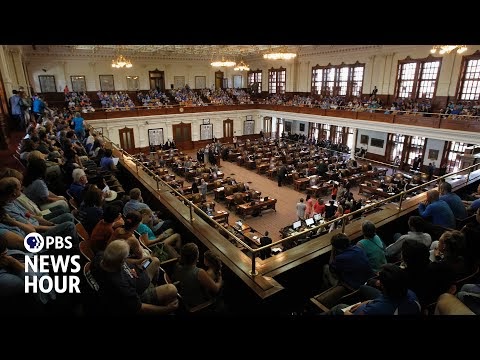
As the 2026 midterm elections approach, efforts to manipulate congressional district boundaries—under the guise of redistricting—pose a serious threat to representative democracy in the United States. These efforts are not simply a matter of partisan politics; they represent a calculated attack on the principle of one person, one vote, and on the fragile trust working Americans place in democratic institutions.
Across multiple states, redistricting maps are being drawn to favor incumbents and dominant political parties, most often through a practice known as gerrymandering. While both major parties have been guilty of gerrymandering, the recent wave of redistricting efforts has intensified in key battleground states, particularly following the 2020 Census and court rulings that rolled back federal oversight.
Some of the most blatant manipulations are unfolding in Southern and Midwestern states, where legislatures have redrawn districts to dilute the voting power of Black, Latino, and low-income communities. In states like Alabama, Georgia, Louisiana, North Carolina, and Ohio, courts have intervened—only to be ignored, delayed, or overruled by higher courts, including the U.S. Supreme Court. The result: districts that favor white conservative voters while silencing diverse urban and working-class voices.
These distortions in representation aren’t merely political—they have real consequences for education policy, healthcare, labor rights, and civil rights. When working families and students find themselves in districts designed to neutralize their votes, their needs are less likely to be met by elected officials. Funding for public education, protections for contingent workers, and relief from student loan debt are often neglected in favor of corporate interests and ideological agendas.
The U.S. Supreme Court’s 2019 Rucho v. Common Cause decision paved the way for even more aggressive gerrymandering, ruling that federal courts could not adjudicate claims of partisan gerrymandering. That decision effectively gave state legislatures a green light to draw lines with political intent, even when the result undermines basic democratic principles. And with the Voting Rights Act gutted in Shelby County v. Holder (2013), many communities of color no longer have a legal shield against discriminatory maps.
In a just system, redistricting would be handled by independent commissions. In some states, this is happening—California, Michigan, Arizona, and a handful of others have taken steps toward fairer maps. But in most of the country, the party in power controls the process and uses sophisticated data tools—often developed by private firms with little transparency—to fine-tune districts down to the household level. This isn’t democracy. It’s data-driven voter suppression.
For students, low-income voters, and working-class Americans, the implications are profound. A House of Representatives that does not reflect the electorate cannot be expected to act on behalf of its needs. Adjunct professors, student debtors, gig workers, rural teachers, and public librarians already operate on the margins. When their political voices are diluted, they are pushed even further to the periphery.
These redistricting battles also have an educational cost. In states where partisan gerrymandering has secured one-party rule, legislatures have targeted curriculum content, attacked diversity and inclusion programs, cut higher education funding, and undermined faculty tenure—all without meaningful opposition. Political disempowerment leads directly to institutional decay.
The Higher Education Inquirer calls attention to these developments not only because they distort elections, but because they warp the social and economic future of the country. The 2026 House elections may be won or lost not at the ballot box but on a redistricting map drafted behind closed doors in state capitals.
The right to vote is hollow if the outcome is predetermined. The promise of representative government collapses if districts are engineered to deny equal voice. Without public awareness and pressure, these efforts to undermine democracy will go unchecked.
It’s time to speak plainly: Unless there is a national movement to restore fairness to the process, the House of Representatives in 2026 will be even less representative of the people it claims to serve.
Sources:
-
Brennan Center for Justice. “The Redistricting Landscape, 2023–2026.”
-
ProPublica. “How Politicians Use Redistricting to Lock in Power.”
-
NPR. “Supreme Court Ruling Lets Partisan Gerrymandering Stand.”
-
Southern Coalition for Social Justice. “Voting Maps and Racial Disenfranchisement.”
-
ACLU. “Gerrymandering: How It Works and Why It Harms Democracy.”
-
U.S. Census Bureau. “Apportionment and Redistricting Data.”
-
-

Peer review is broken, and pedagogical research has a fix
An email pings into my inbox: peer reviewer comments on your submission #1234. I take a breath and click.
Three reviewers have left feedback on my beloved paper. The first reviewer is gentle, constructive, and points out areas where the work could be tightened up. One reviewer simply provides a list of typos and points out where the grammar is not technically correct. The third reviewer is vicious. I stop reading.
Later that afternoon, I sit in the annual student assessment board for my department. Over a painstaking two hours, we discuss, interrogate, and wrestle with how we, as educators, can improve our feedback practices when we mark student work. We examine the distribution of students marks closely, looking out for outliers, errors, or evidence of an ill-pitched assessment. We reflect upon how we can make our written feedback more useful. We suggest thoughtful and innovative ways to make our practice more consistent and clearer.
It then strikes me how these conversations happen in parallel – peer review sits in one corner of academia, and educational assessment and feedback sits in another. What would happen, I wonder, if we started approaching peer review as a pedagogical problem?
Peer review as pedagogy
Peer review is a high stakes context. We know that we need proper, expert scrutiny of the methodological, theoretical, and analytical claims of research to ensure the quality, credibility, and advancement of what we do and how we do it. However, we also know that there are problems with the current peer review system. As my experience attests to, issues including reviewer biases and conflicts, lack of transparency in editorial decision-making, inconsistencies in the length and depth of reviewer feedback all plague our experiences. Peer reviewers can be sharp, hostile, and unconstructive. They can focus on the wrong things, be unhelpful in their vagueness, or miss the point entirely. These problems threaten the foundations of research.
The good news is that we do not have to reinvent the wheel. For decades, people in educational research, or the scholarship of teaching and learning (SoTL), have been grappling both theoretically and empirically with the issue of giving and receiving feedback. Educational research has considered best practices in feedback presentation and content, learner and marker feedback literacies, management of socioemotional responses to feedback, and transparency of feedback expectations. The educational feedback literature is vast and innovative.
However – curiously – efforts to improve the integrity of peer review don’t typically frame this as a pedagogical problem, that can borrow insights from the educational literature. This is, I think, a woefully missed opportunity. There are at least four clear initiatives from the educational scholarship that could be a useful starting point in tightening up the rigour of peer review.
What is feedback for?
We would rarely mark student work without a clear assessment rubric and standardised assessment criteria. In other words, as educators we wouldn’t sit down to assess students work without at least first considering what we have asked them to do. What are the goalposts? What are the outcomes? What are we giving feedback for?
Rubrics and assessment criteria provide transparent guidelines on what is expected of learners, in an effort to demystify the hidden curriculum of assessment and reduce subjectivity in assessment practice. In contrast, peer reviewers are typically provided with scant information about what to assess manuscripts for, which can lead to inconsistencies between journal aims and scope, reviewer comments, and author expectations.
Imagine if we had structured journal-specific rubrics, based on specific, predefined criteria that aligned tightly with the journal’s mission and requirements. Imagine if these rubrics guided decision-making and clarified the function of feedback, rather than letting reviewers go rogue with their own understanding of what the feedback is for.
Transparent rubrics and criteria could also bolster the feedback literacy of reviewers and authors. Feedback literacy is an established educational concept, which refers to a student’s capacity to appreciate, make sense of, and act upon their written feedback. Imagine if we approached peer review as an opportunity to develop feedback literacy, and we borrowed from this literature.
Do we all agree?
Educational research clearly highlights the importance of moderation and calibration for educators to ensure consistent assessment practices. We would never allow grades to be returned to students without some kind of external scrutiny first.
Consensus calibration refers to the practice of multiple evaluators working together to ensure consistency in their feedback and to agree upon a shared understanding of relevant standards. There is a clear and robust steer from educational theory that this is a useful exercise to minimise bias and ensure consistency in feedback. This practice is not typically used in peer review.
Calibration exercises, where reviewers assess the same manuscript and have opportunity to openly discuss their evaluations, might be a valuable and evidence-based addition to the peer review process. This could be achieved in practice by more open peer review processes, where reviewers can see the comments of others and calibrate accordingly, or through a tighter steer from editors when recruiting new reviewers.
That is not to say, of course, that reviewers should all agree on the quality of a manuscript. But any effort to consolidate, triangulate, and calibrate feedback can only be useful to authors as they attempt to make sense of it.
Is this feedback timely?
Best practice in educational contexts also supports the adoption of opportunities to provide formative feedback. Formative feedback is feedback that helps learners improve as they are learning, as opposed to summative feedback whereby the merit of a final piece of work is evaluated. In educational contexts, this might look like anything from feedback on drafts through to informal check-in conversations with markers.
Applying the formative/summative distinction to peer review may be useful in helping authors improve their work in dialogue with reviewers and editors, rather than purely summative, which would merely judge whether the manuscript is fit for publication. In practice, adoption of this can be achieved through the formative feedback offered by registered reports, whereby authors receive peer review and editorial direction before data is collected or accessed, at a time where they can actually make use ot it.
Formative feedback through the adoption of registered reports can provide opportunity for specific and timely suggestions for improving the methodology or research design. By fostering a more developmental and formative approach to peer review, the process can become a tool for advancing knowledge, rather than simply a gatekeeping mechanism.
Is this feedback useful?
Finally, the educational concept of feedforward, which focuses on providing guidance for future actions rather than only critiquing past performance, needs to be applied to peer review too. By applying feedforward principles, reviewers can shift their feedback to be more forward-looking, offering tangible, discrete, and actionable suggestions that help the author improve their work in subsequent revisions.
In peer review, approaching comments with a feedforward framing may transform feedback into a constructive dialogue that motivates people to make their work better by taking actionable steps, rather than a hostile exchange built upon unclear standards and (often) mismatched expectations.
So the answers to improving some parts of the peer review process are there. We can, if we’re clever, really improve the fairness, consistency, and developmental value of reviewer comments. Structured assessment criteria, calibration, formative feedback mechanisms, and feedforward approaches are just a few strategies that can enhance the integrity of peer review. The answers are intuitive – but they are not yet standard practice in peer review because we typically don’t approach peer review as pedagogy.
There are some problems that this won’t fix. Peer review relies on the unpaid labour of time-poor academics in an increasingly precarious academia, which adds challenge to efforts to improve the integrity of the process.
However, there are steps we can take – we need to now think about how these can be achieved in practice. By clarifying the peer review practice, tightening up the rigour of feedback quality, and applying educational interventions to improve the process, this takes an important step in fixing peer review for the future of research.
-

Medr is embracing its collaborative role
“You have two ears, one mouth – use them in that proportion.”
The words of my mother seem to have gained relevance and resonance for me, as I reflect at the end of my tenure as CEO responsible for overseeing the launch of Medr, the new tertiary funding and regulatory body in Wales.
As we arrive at our first birthday as an organisation, my mother’s words ring true in the approach we have tried to nurture with partners to help tackle the challenges and embrace the opportunities facing the sector.
And this is perhaps particularly true during the well-established perfect storm of headwinds facing our higher education institutions at present, prompting understandable deliberations and concern around staffing, provision and campus restructuring.
Wonkhe readers will be well versed in the plethora of pressures facing even the most long-established and most renowned universities across the UK. Put simply, the pressures of increasing costs are currently not being met by an increase in income for too many, and our institutions in Wales are no different (further context and a Medr perspective were provided to the Senedd’s Children, Young People and Education Committee a few short weeks ago, if it’s of interest).
For the long-term viability of the post 16 sector to thrive in Wales, finding strategic, joined-up solutions is imperative. As a regulator and funder and having engaged extensively with the sector since day one, our analysis is that no institution in Wales is at immediate risk of collapse, but that medium-term outcomes do cause us concern if well thought-through changes are not made.
Beyond “competition with a smile”
What’s also clear to us in Wales is that many of these pressures are also affecting other parts of the tertiary sector – local authorities, schools, further education colleges, apprenticeship providers, adult education providers as well as universities and everything in between.
This, however, can create opportunities.
Back to the words of my mother – “two ears and one mouth” – during our first year of operation as Medr, we have had to quickly get on top of the tertiary issues in Wales. In Stephen Covey’s words, we must “seek first to understand”. We must understand the extent and context of the challenges and why certain actions are being proposed. Through a genuine commitment to engaging with a range of stakeholders and considering how we can facilitate a culture of listening, learning and collaborating across the post-16 sector, we have a great opportunity to build on the solid foundations of a shared ambition and purpose to build resilience for the future.
Being a regulator and a funder is not an end in itself. To be honest, I had underestimated the importance of our role in convening and facilitating conversations between different stakeholders whilst respecting institutional autonomy. Colleagues must be bored of me telling the story of an ex-colleague of mine who challenged me after a meeting when I talked about collaboration. He said:
Do you mean collaboration? Or are you talking about competition with a smile?
We’ve all been there! We smile and nod in a meeting when we talk about working together – and then go back to our respective ranches and nothing changes.
However, if we genuinely place learner need ahead of institutional need, we have an opportunity to create a system that is better than the sum of its parts. Don’t get me wrong, as a former CEO of a post-16 provider, I’m fully aware of the accountability to a governing body and the need to protect the viability of the organisation. But I also acknowledge that I was probably more comfortable in exploring growth and new opportunities, rather than thinking about stopping some things we did because someone else was in a better place to provide that service to our community or region. Collaboration is also not an end in itself – there is no point in collaborating if it just appeases everybody but doesn’t improve the breadth or quality of provision for learners or improves the system as a whole.
A course through the headwinds
At Medr, we have tried to live our values and engage, listen and collaborate with the sector. For example, our first strategic plan has developed considerably through consultation. We have recently launched a consultation on our draft regulatory framework, a hugely important piece of work for the sector, and we will continue to listen throughout that process.
What I hope shines through in that work, and which I equally hope isn’t lost in wider discussions around headwinds and pressures, is the positive everyday impact that all parts of the tertiary sector have on our learners and our communities. I have a huge respect for the learner focussed people who work in our wonderfully diverse post-16 sector. Developing that mutual respect amongst all parts of the sector is vital if we are to develop a better system in the future that can tackle some of the challenges, such as the numbers not in education, employment or training, and our desire to improve participation rates in higher levels of learning.
This isn’t easy. If it was, we would have solved these challenges by now. It has taken decades to create these issues and they won’t be solved overnight. And true collaboration – not competition with a smile! – takes time to build trust, requires a great deal of commitment along with a good dollop of inspiring and tenacious leadership.
Yes, it’s challenging – but therein lies opportunity for innovation. In my experience, when the going gets tough, leaders demonstrate two basic types of behaviour. They either sharpen the elbows and dig in and become even more competitive or they reach out to others and work collectively to find joined up solutions to problems. To achieve the latter, we need to look at ways we can remove the barriers to this approach. Get it right and we can build prosperous futures for our learners and the tertiary education system and for Wales.
There may often be differing views on how best to achieve outcomes but by working together to identify challenges and opportunities, consulting and engaging in solution-based conversations that benefit our learners, we can and will overcome them. Nelson Mandela said that education is “the most powerful weapon you can use to change the world” – we are fortunate in Wales to have some brilliant people coming together to try to deliver that change for good.
Indeed, the name Medr itself is not an acronym. It’s a Welsh word which roughly translated straddles ability, skill and capacity. It’s a name that acts as a reminder of what we’re here to achieve: to ensure all learners can access opportunities to learn new skills and expand their opportunities for the greater good.
And, of course, that greater good extends beyond learners and their immediate surroundings. I continue to be impressed by the work many of our universities deliver through groundbreaking research and innovation. Research Excellence Framework recently recognised 89 per cent of Welsh research as internationally excellent or world leading in its impact. Successful recent spin-outs such as Draig Therapeutics are further examples of world-class research leading to significant impacts of R&I and serve as a reminder that our universities are critical to our economy, society and culture – both now and in the future.
And we are very proud too of our commitment to the Welsh language. The legislation identifies the Coleg Cymraeg Cenedlaethol as the designated advisor to Medr on Welsh language delivery in the post-16 sector. Our two organisations have developed a strong working relationship and through engagement with the sector, we will deliver a national plan for Welsh language delivery.
Reaching out
All this can all only be successfully achieved by working together. It is easy to be a spectator sniping from the sidelines but we must focus on having the right people and systems in the arena to make positive collaborative change. Across the board we must think beyond borders – sectoral, governmental, regional, national and international – listening to and reaching out to others with similar challenges to us. I am heartened by the willingness we’ve seen across the tertiary sector to do just this.
For our part we will continue to facilitate progress by working with stakeholders to understand risks and plans, provide support and challenge based on different situations, ensure governments are well-informed and understand the challenges and opportunities as early as possible – and a whole host besides. It’s both an opportunity and a duty to bring people together and think about how we can do things differently and how we can do things better.
I’ll finish where I started, by talking about my Mam and my upbringing. Growing up in an area that would be described as “socially deprived”, and losing my Dad while still at primary school, it’s very clear to me now the difference a few key educational touchpoints made to my life. I was fortunate to have some teachers along my journey who could see something in me when I couldn’t see it myself. Medr wants to be part of ensuring that such positive educational experiences can be felt by all.
Medr is celebrating its first birthday. We are new kids on the block. And as I hand over to the excellent James Owen, Medr’s new CEO, I recognise that we have launched at a particularly challenging time for the sector.
But among all the noise around business resilience, longevity and political headwinds, it’s absolutely imperative that every conversation comes back to what is right for our learners, the ones who will determine our future successes or failures. Now the exciting bit begins. If we work together to get the system right for our learners – and that’s absolutely at the forefront of what we are trying to shape at Medr – the rest can and will stem from there.
-

Justice Department threatens federal funding for colleges over DEI policies
This audio is auto-generated. Please let us know if you have feedback.Dive Brief:
- The U.S. Department of Justice released guidance Wednesday that threatens to strip grant funding from colleges and other federally funded institutions over what the agency deems unlawful diversity, equity and inclusion practices.
- The agency’s memo targets a sweeping set of practices, including offering race-based scholarship programs, allowing transgender women to access bathrooms that correspond with their gender identity and having identity-based lounges or study spaces on campus — even if they are open to all.
- But the nine-page memo goes a step further, saying even neutral criteria — such as recruitment strategies targeting certain regions — could be deemed unlawful if the Justice Department determines they are chosen because of their demographic composition.
Dive Insight:
The Justice Department’s memo comes after a federal judge temporarily blocked similar guidance from the U.S. Department of Education that broadly targeted diversity, equity and inclusion programs at federally funded colleges and K-12 schools. The order came in response to a lawsuit that alleged the guidance “radically upends” federal antidiscrimination laws.
The guidance from the Justice Department illustrates the major shift in how the agency under President Donald Trump approaches enforcement of civil rights laws, with officials now targeting programs that were often actually launched to fight systemic discrimination.
Earlier this month, the National Urban League declared a “state of emergency” for antidiscrimination policies, calling the Trump administration’s overhaul of the Justice Department’s enforcement priorities “an existential threat” to civil rights laws, according to The Associated Press.
Like the Education Department’s blocked guidance, the Justice Department’s new memo warns that government officials could pull federal funding from institutions that don’t comply. That threat comes at the same time the agency has ramped up investigations into colleges over their diversity initiatives and their responses to antisemitism on campus.
The DOJ memo contains examples of practices it lists as “unlawful” and says could lead to federal funding being revoked, as well as a list of recommendations, which it says are not mandatory, to avoid “legal pitfalls.”
“This Department of Justice will not stand by while recipients of federal funds engage in illegal discrimination,” U.S. Attorney General Pamela Bondi said in a Wednesday statement. “This guidance will ensure we are serving the American people and not ideological agendas.”
As examples of unlawful practices, the agency highlighted race-based scholarships or programs, including mentorship programs or leadership initiatives reserved for members of certain racial groups.
The memo could upend admissions. It recommends colleges end programs “designed to achieve discriminatory outcomes” even if they have “facially neutral” criteria, such as targeting scholarships to certain regions to increase enrollment or participation among certain racial groups.
“Instead, use universally applicable criteria, such as academic merit or financial hardship, applied without regard to protected characteristics or demographic goals,” the memo said.
The memo also takes aim at what it describes as “unlawful proxies” for race and sex. As an example, the memo calls out universities that ask job applicants “to demonstrate ‘cultural competence,’ ‘lived experience,’ or ‘cross-cultural skills’ in ways that effectively evaluate candidates’ racial or ethnic backgrounds rather than objective qualifications.”
The Justice Department also flagged diversity statements — which typically ask job or graduate student candidates to explain their experience and commitment to diversity and inclusion initiatives — as potentially unlawful if they advantage “those who discuss experiences intrinsically tied to protected characteristics.” The memo said the same of asking for statements from applicants about “obstacles they have overcome,” a common essay prompt for college applications.
State lawmakers have likewise targeted diversity statements, with many outlawing public colleges from requiring them in job or admission applications.
The memo also said failing to “maintain sex-separated athletic competitions and intimate spaces” could violate federal law. The Justice Department’s examples of those violations include allowing transgender women to use bathrooms, showers, locker rooms and dormitories designated for women, as well as allowing them to compete in women’s athletic events.
And it mentions college lounges or other spaces designated for specific groups, such as a “BIPOC-only study lounge.”
“Even if access is technically open to all, the identity-based focus creates a perception of segregation and may foster a hostile environment,” the memo stated. “This extends to any resource allocation — such as study spaces, computer labs, or event venues — that segregates access based on protected characteristics, even if intended to create ‘safe spaces.’”
It also takes aim at diversity training, giving the example of requiring teachers at K-12 schools to complete a DEI training that includes statements such as “all white people are inherently privileged” or touching on “toxic masculinity.”
The memo says such trainings could violate civil rights laws “if they create a hostile environment or impose penalties for dissent in ways that result in discriminatory treatment.”
-
Linda McMahon and the College Meltdown
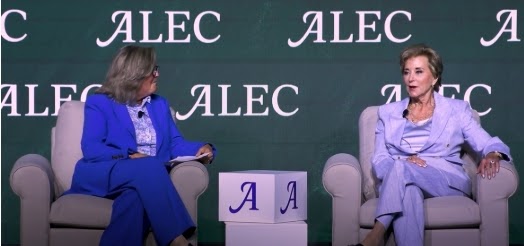
July 2025 was not simply a busy month for the U.S. Department of Education—it was a deliberate and coordinated effort to reshape higher education in line with the political goals of the Trump administration. Under the leadership of Education Secretary Linda McMahon, the Department issued a torrent of investigations, policy changes, and legal maneuvers aimed at asserting control over universities and redefining the role of postsecondary education in American life.
What emerged was not the repair of a broken system, but the acceleration of a political project: to narrow the mission of higher education, undermine its independence, and punish institutions that resist the administration’s agenda.
A Month of Directives
The month began with the Department entering a resolution agreement with the University of Pennsylvania over Title IX violations (July 1). By July 2, the administration had concluded a negotiated rulemaking session focused on reshaping the Public Service Loan Forgiveness program—signaling that student aid reforms would now be filtered through political priorities rather than bipartisan consensus.
On July 4, the One, Big, Beautiful Bill Act was signed into law. This sweeping legislation gave the administration a mandate to implement provisions on accreditation, federal aid restrictions, civil rights compliance, and so-called “viewpoint neutrality.” Within two weeks, McMahon’s team was already implementing key parts of the bill, using it to alter the rules that govern financial aid eligibility and institutional recognition.
“Civil Rights” Enforcement as a Political Strategy
Throughout the month, the Department launched a wave of investigations under Title VI and Title IX. But the choice of targets raised concerns. Rather than focus on systemic discrimination or long-standing legal violations, the Department directed its attention toward cases that aligned with conservative cultural concerns.
-
On July 8, an investigation was opened into the Connetquot Central School District after it banned a Native American logo.
-
On July 10, George Mason University became the subject of a Title VI probe.
-
On July 23, five universities were flagged for offering scholarships that allegedly favored foreign-born students.
-
By July 25, five Northern Virginia school districts were found in violation of Title IX.
Harvard, Columbia, Duke, the University of Michigan, and Brown University were all pulled into scrutiny, with Columbia agreeing to pay $200 million and submit to new data-reporting requirements. These actions may appear to be standard enforcement but taken together they reflect a pattern of choosing high-profile or politically charged institutions as symbolic examples.
The use of federal compliance tools to pressure institutions seen as ideological opponents is not unprecedented—but under McMahon, it has become routine.
Policy Realignment and Workforce Redirection
On July 10, the Department announced the termination of federal aid for undocumented students, marking a sharp reversal from past practices. Just five days later, the Department entered into a new partnership with the Department of Labor to promote workforce training, part of a longer-term effort to reorient higher education toward narrow economic outcomes rather than liberal arts or civic development.
While such initiatives are framed as “efficiency” or “innovation,” the underlying message is clear: colleges that do not align themselves with federal job-training goals or cultural expectations may find their access to funding, recognition, and legal protections limited.
Restructuring the System
The Supreme Court’s decision on July 14 to permit a reduction in federal staffing has further empowered the Department to cut or replace internal personnel. By July 24, two new negotiated rulemaking committees were established, tasked with translating the One, Big, Beautiful Bill into enforceable rules. These committees will likely define the next phase of McMahon’s agenda—on issues like accreditation, financial eligibility, foreign influence, and institutional autonomy.
At the state level, the Department approved Missouri’s new pilot assessment program on July 31, continuing a pattern of promoting alternatives to standardized federal oversight. Meanwhile, state education officials were encouraged (July 29) to request waivers from burdensome federal requirements—an invitation to bypass regulations established under previous administrations.
What This Means for Higher Education
The July timeline reflects not just a burst of administrative activity, but a broader strategy to centralize decision-making power and reshape the ideological landscape of U.S. higher education. The Department has moved away from serving as a neutral enforcer of civil rights and federal law, and toward acting as a gatekeeper for cultural and political conformity.
Colleges that emphasize diversity, global engagement, or progressive research are increasingly viewed with suspicion. Those that fail to meet the administration’s evolving definition of compliance may face costly investigations, public shaming, or the loss of federal support.
The term “College Meltdown” once referred to financial instability, enrollment declines, and the erosion of public trust. Under Linda McMahon, it now also refers to a deliberate restructuring of the postsecondary system—where ideological alignment may determine institutional survival as much as financial solvency.
Sources:
-
U.S. Department of Education, July 2025 public statements and press releases
-
One, Big, Beautiful Bill Act, signed July 4, 2025
-
Columbia University settlement, July 23, 2025
-
Supreme Court ruling on federal workforce reductions, July 14, 2025
-
Negotiated Rulemaking updates from the Office of Postsecondary Education
-
Brown University agreement with the Department of Education, July 30, 2025
-