Blog

  • The Karateka vs the Sumo Wrestler: what REF 2029 means for research leadership in UK universities

    The Karateka vs the Sumo Wrestler: what REF 2029 means for research leadership in UK universities

    This blog was kindly authored by Dr Antonios Kelarakis, Reader in Polymers and Nanomaterials, University of Lancashire

    UK universities increasingly reward size, visibility and institutional influence. Yet many of the discoveries that underpin scientific progress come from researchers whose work is slow, specialist and largely invisible – the academic karateka, whose precision contrasts sharply with the highly visible, institution-shaping sumo wrestler. With reforms to the Research Excellence Framework (REF) for 2029 confirmed in December 2025, there is now an opportunity to rebalance what we value in research leadership and to better align institutional incentives with how knowledge is actually produced.

    In today’s academic world, two very different research styles are stepping onto the mat.

    The karateka is defined by focus and precision. They dedicate themselves to mastering a single research field, refining a theory, improving a method or laying the foundations for a new diagnostic or experimental technique. Every publication is carefully considered, every contribution is incremental but cumulative. Their ambition is depth rather than scale, and they aim to reach previously inaccessible insights. These researchers often form the invisible engine of scientific progress. Their work may attract little attention beyond specialist communities, yet its influence is long-lasting and foundational.

    The sumo wrestler, by contrast, plays a broader game. Their strength lies in size, coordination and visibility. They lead large research groups, oversee multiple interdisciplinary projects and accumulate titles, affiliations and advisory roles. Their calendars are filled with conferences, policy briefings and media engagement. They shape research agendas as much as individual ideas and act as the public face of modern academia. While the karateka advances knowledge through precision, the sumo wrestler moves institutions through mass and momentum.

    A shifting balance of power

    For much of scientific history, the karateka was the primary driver of discovery. The laws of physics, advances in chemistry and the development of new materials and analytical techniques have typically emerged from decades of focused work by scholars deeply embedded in a single domain.

    In recent years, however, the balance in UK academia has tilted. Universities increasingly reward visibility, scale, collaboration and institutional contribution – metrics that naturally favour the sumo wrestler. Funding requirements emphasise partnerships, pathways to impact and the management of large consortia. Universities respond rationally by supporting researchers who can deliver coordination, profile and strategic alignment.

    The karateka, meanwhile, often struggles to justify slow, methodical work in systems dominated by short-term indicators. Their contributions are essential, but they are not always easily captured by institutional performance metrics or institutional narratives.

    Why REF matters now

    The REF has always been a powerful signal of what universities should value. Decisions taken as part of the REF 2029 reforms strengthen the emphasis on research culture, long-term contribution and the environments that sustain excellence, alongside continued recognition of impact.

    Under the revised framework, assessment is weighted across three elements: Contribution to Knowledge and Understanding (55%), Engagement and Impact (25%) and Strategy, People and Research Environment (20%), assessed at both disciplinary and institutional levels. This represents a clear shift from REF 2021, where the role of environment was more limited.

    This change matters. By strengthening the role of research environment and contribution, REF 2029 creates an opening for universities to recognise how excellence is actually sustained; through deep expertise, stable methods, supportive cultures and long-term institutional investment. Research outputs remain central, but they no longer crowd out other forms of contribution to the same extent.

    Karateka-style scholarship has often struggled to fit neatly into REF narratives. Breakthroughs take time, develop incrementally and may not translate into demonstrable impact within a single cycle. Yet many celebrated impact case studies ultimately rest on foundational research generated by specialist researchers whose work is less visible and harder to narrate.

    From critique to policy

    The reforms give universities greater scope and responsibility to act differently. REF 2029 does not dictate outcomes, but it reshapes the conditions under which institutions define excellence.

    In practical terms, universities can now use the framework to reaffirm the value of:

    • deep, specialist expertise, even when audiences are narrow
    • long-term, foundational inquiry that underpins later impact
    • precision scholarship that strengthens methods and disciplines
    • small, focused teams that are often more intellectually productive than large consortia

    REF 2029 offers a chance to rebalance the contest without lowering the bar for excellence. Protecting space for karateka-style research is not a retreat from impact; it is a precondition for it. When depth is preserved, leadership has something genuinely worth amplifying: impact that endures rather than merely dazzles.


    Source link

  • Fall 2025 enrollment increased 1% — but the devil is in the details

    Fall 2025 enrollment increased 1% — but the devil is in the details

    This audio is auto-generated. Please let us know if you have feedback.

    Dive Brief:

    • Overall college enrollment ticked up 1% in fall 2025 compared to the previous year, a gain of 187,000 students, according to the latest data from the National Student Clearinghouse Research Center. 
    • Undergraduate enrollment drove overall growth with a 1.2% year-over-year increase, as community colleges and four-year public institutions saw 3% and 1.4% bumps, respectively. In contrast, undergraduate enrollment declined 1.6% at private four-year nonprofits and 2% at four-year for-profits.
    • Other parts of the sector also dipped. Graduate enrollment sagged 0.3%, pushed by a 5.9% decline of international students in these programs, the clearinghouse found.

    Dive Insight:

    The higher education sector entered 2026 with a nervous eye on the international student pipeline, as the Trump administration continues to pursue policies limiting their ability to study at U.S. colleges.

    Polling conducted mid-fall found that most surveyed colleges reported a drop in international enrollment, particularly in graduate programs.

    The clearinghouse’s latest fall enrollment report aligns with those findings. In fall 2025, about 10,000 fewer international students enrolled in U.S. graduate programs compared to the prior year, it found. 

    The loss came after international enrollment experienced several years of strong growth, according to Matthew Holsapple, the clearinghouse’s senior director of research. 

    According to Holsapple, international enrollment has increased about 50% since fall 2020 — when the sector experienced a significant decline in these students amid the COVID-19 pandemic.

    During a Wednesday call with reporters, Holsapple described this past fall’s downturn as “a pretty meaningful shift after that long period of expansion.”

    Undergraduate international enrollment still grew in fall 2025 but at less than half the rate it did in fall 2024 — a 3.2% year-over-year increase compared to an 8.4% uptick.

    Dual enrollment students are another key group for college leaders.

    Of the fall enrollment increase at community colleges, 38.4% came from students age 17 years or younger, according to Sarah Karamarkovich, a research associate at the clearinghouse. The clearinghouse uses this age range as a proxy for dual enrollment students — those taking college classes in high school.

    The bump translates to 66,000 more students under the age of 18 who took community college classes in the fall compared to the previous year, Karamarkovich told reporters.

    Community college enrollment increased overall by about 173,000 students.

    Among different types of academic programs, shorter-term offerings such as associate degrees and certificates continued to outpace the growth in four-year degrees.

    Enrollment in associate degree programs rose 2.2% compared to fall 2024, while the number of students seeking undergraduate certificates increased 1.9%. 

    Bachelor’s degrees saw more modest year-over-year growth, of 0.9%.

    Source link

  • Connecting devolving and prioritising innovation- It’s the Northern Growth Strategy

    Connecting devolving and prioritising innovation- It’s the Northern Growth Strategy

    Of all the things I am proud of in my life I am the most proud of being Northern.

    You have not felt love until you have seen the sun rise over the Tyne Bridge. Life is rendered that bit more vibrant by a visit to Middlesbrough Institute of Modern Art. The North is the place where kindness is a professional sport. To be Northern is to be part of a collective, part of a cultural and economic history that spans from the Darlington and Stockton Railway to the Mercury Prize.

    To be Northern is to have won the lottery of life but it is to have not even been in the draw when it comes to infrastructure investment.

    Dark satanic mills

    The UK is stuck in a deep economic malaise. Productivity is low which means economic output and living standards are also flat-lining. This phenomena is even worse in the North where a vicious cycle of poor investment in innovation assets and infrastructure weakens the case for further investment in innovation assets and infrastructure which in turn further depresses productivity, growth and living standards.

    The regional imbalance in infrastructure investment is not inevitable nor as prominent a feature of many comparable economies. It is a series of deliberate policy decisions that are both structural in the hyper-centralisation of the state which allocates and reallocates its resources to London and the South East, and economically reinforcing through investment in clusters of leading assets. The results of which see UKRI invest 72 per cent more per person in the Greater South East than outside the Greater South East.

    This arrangement is also not a good deal for London. The weak economy across the rest of the country reduces the amount of cash available to invest in London’s leading research assets which in turn depresses growth in the capital, and because of the size of London’s economy, the whole of the economy. Despite the concentration of state spending Londoners also generate far more in tax receipts than London receives in state expenditure.

    The economy cannot grow without improving productivity, productivity will not grow without improving Northern economies, and Northern economies will not improve under the current approach to state spending. A problem at last recognised by the government in the launch of its Northern Growth Strategy.

    We do thing differently here

    There are three planks to the strategy. Investment in transport, business support, and a devolution agenda that combines investment in innovation assets with promises of further devolution.

    There are further plans to come but the agenda, while light, sets out some of the big opportunities that would be genuinely transformative to the North. The first is to improve the educational opportunities for the people in the North and increase the number of graduates that stay there. Unless there are going to be caps for students in the South East (unlikely) this would inevitably mean more not fewer university students. The hope is that retaining graduates, and therefore intellectual capital, would provide an economic boost. This reads more as a wish than a plan. The government has not explained how they will rebalance the economy by moving graduates without any incentives, fewer jobs in the North, and bad infrastructure.

    The wider economic plan relies on realising the benefits of key research assets aligned to the industrial strategy in things like manufacturing, digital, and clean energy. The promise is that there will be national investment in these assets, coupled with improved transport to improve the economic performance of radial cities, allied to wider transport infrastructure to improve connection between Northern cities. The plan is to use government investment to improve economic performance both with and across cities.

    Darlington and Stockton rail

    The transport announcements have captured the headlines. There is evidence in other contexts that good transport links allied to research assets induce spillover benefits The plan, finally backed by Labour’s perennial leadership candidate Andy Burnham, will see investment between Sheffield, Leeds, York, and Bradford followed by a new route between Liverpool and Manchester, and complete with new connections in the Pennines connecting the rest of the North via Darlington. Part of the case for transport investment is that improving connectivity between leading knowledge assets will support economic growth.

    Ultimately, this plan recognises two crucial points about the UK’s economy. The first is that the success of the UK’s knowledge assets is the success of the wider economy. That success is predicated on a better distribution of cash and opportunity. The second is that the North’s potential has been stymied by poor infrastructure. In addressing both the government not only confirms its ambitions for the North but further cements innovation at the heart of its economic plan.

    Source link

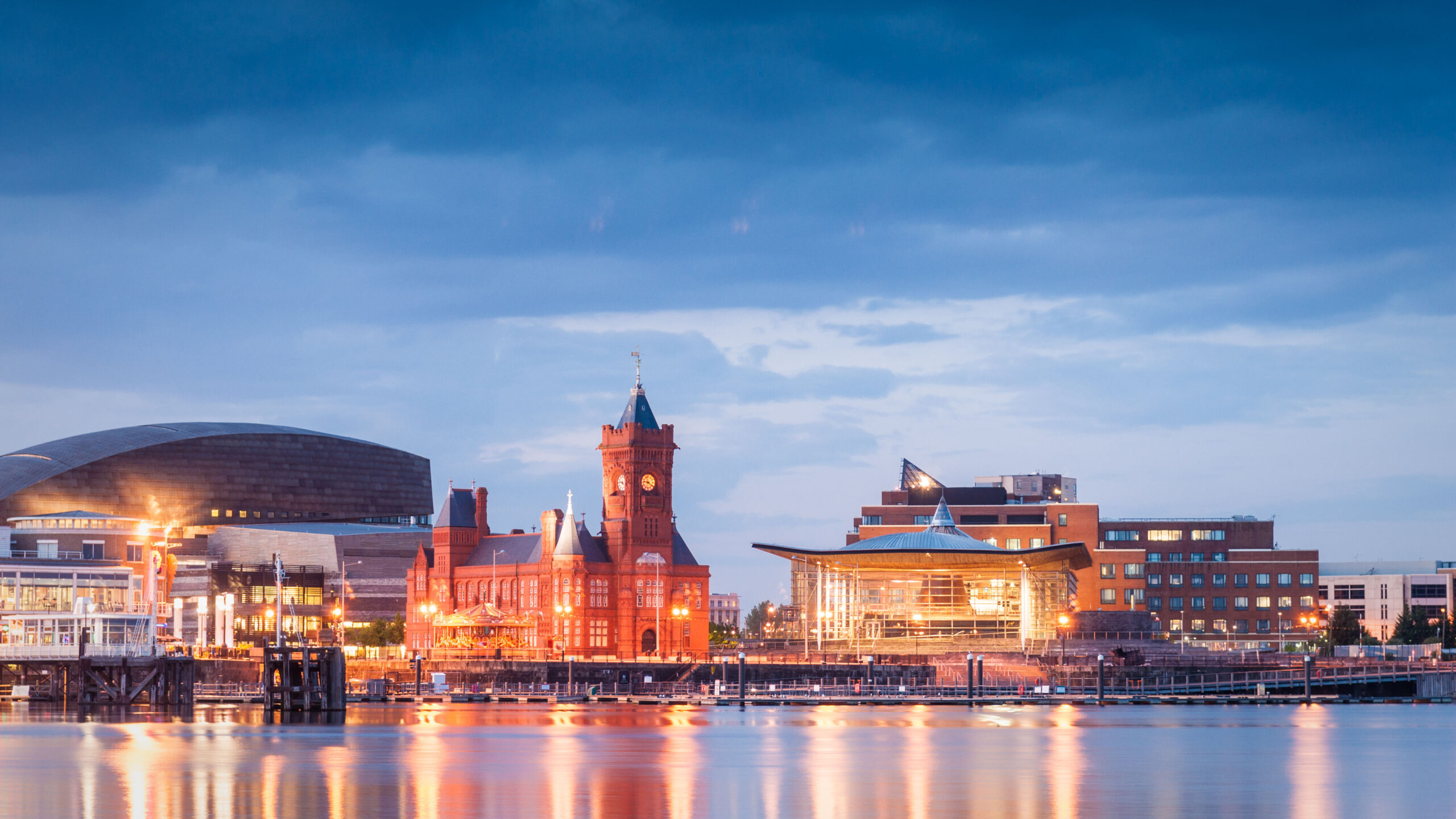
  • For a stronger, fairer Wales HE belongs in every manifesto

    For a stronger, fairer Wales HE belongs in every manifesto

    Wales stands on the cusp of significant political change. With an expanded Welsh Parliament and revised voting system, the 2026 Senedd election will mark a new chapter in Welsh democracy.

    May’s election will also be the first where 16- and 17-year-olds can cast their vote. This is a generation whose recent experience of education, and their future university and career aspirations, could be central to the choices they make at the ballot box.

    For those of us working in higher education, these changes present both a challenge and an opportunity. The new proportional voting system will likely result in a more diverse Senedd that will require greater collaboration across parties in order to be effective. For Universities Wales, this means we must continue to engage constructively with all political groups, building consensus around the vital role universities play in shaping a stronger Wales.

    A larger Senedd also means expanded committees and greater capacity for policy scrutiny. This is a welcome development that offers more space for detailed debate on the issues that matter, from economic growth and skills, to research, innovation, and community wellbeing. It also means more elected representatives who can champion higher education.

    Against this context, Universities Wales has launched a manifesto that sets out a clear vision for the future. It is a vision rooted in national renewal; one that sees universities as the essential infrastructure needed for Wales to thrive. Our message is simple: when universities succeed, Wales succeeds.

    Building jobs and skills

    In an age of rapid economic and technological change, Wales’ economy demands a flexible and highly skilled workforce. With Wales estimated to need 400,000 more graduates by 2035, universities will be central to supporting the next Welsh Government in meeting future economic needs and building a more skilled and prosperous nation.

    However, delivering on this ambition will require greater recognition of the role universities already play in delivering skills – including through the degree apprenticeships system – alongside a renewed focus on financial sustainability.

    A sustainable university sector is key to unlocking investment, productivity, and growth across Wales. Given recent challenges, an independent review of university funding and student support will be an essential step in ensuring universities can continue to deliver for Wales, now and into the future.

    Driving opportunity

    Wales’ future prosperity depends on our ability to nurture talent and equip people with the skills to thrive in a fast-moving world. Graduates are the backbone of our economy and the drivers of our future success. Put simply, there will be no growth without graduates.

    However, in Wales, we are seeing a worrying decline in the percentage of 18-year-olds choosing to go to university.

    We cannot afford to keep recycling old arguments about the value of a university education. We need to be stronger in demonstrating its essential role in shaping future prospects. If we fail, we risk leaving the next generation less qualified and with fewer pathways to success.

    Taking action to understand and reverse this trend through an independent commission on participation could unlock the potential of thousands of people, upskilling the economy and driving social mobility.

    Supporting research, innovation and local growth

    Equally as important is ensuring there is recognition and appropriate support for the full spectrum of work carried out by our universities, both here at home and through their international activities, which strengthen Wales’ global presence and influence.

    For example, while university research and innovation benefits people, business and public services across the nation and beyond, it is an area that continues to be significantly underfunded; pro-rata to population size, in 2024–25, the funding allocations made by HEFCW (now Medr) for R&I in Wales were £57m lower than those made by Research England for England, and £86m lower than in Scotland.

    Consequently, our manifesto pushes for greater investment in research, innovation and commercialisation within the current system of R&I funding. This means increases to QR funding, as well as further investment through the Research Wales Innovation Fund. This will be crucial to unlocking productivity and growth across all parts of Wales.

    We are also calling for greater support for the important work universities do within their communities to drive economic growth, attract investment, support public services, and shape the places where people live, work and thrive.

    The cliff-edge of funding caused by the loss of EU Structural Funds – which Wales particularly benefitted from – and the inadequacy of replacement funding, has had a detrimental impact on universities’ activity in this area. This is why long-term regional investment funding, channelled through the Welsh government, will be vital to supporting universities’ roles as anchor institutions, and encouraging private co-investment.

    Wales’ national renewal

    These priorities are not partisan. Every political party wants to see a thriving, prosperous Wales – and that vision depends on a strong, resilient and effective university sector. We know that the next Welsh government, whatever its composition, will face tough choices. But investing in universities is not a luxury, it is a strategic necessity that strengthens our economy, builds resilience, and transforms lives.

    As chair of Universities Wales, I believe our sector stands ready to play a central role in Wales’ future. The political system may be shifting, but our aim remains the same: to support a strong, fair, and successful Wales. This is a pivotal moment for our sector and for the nation. Now is the time to recognise the full value of Welsh universities,­ and to place them at the heart of Wales’ national renewal.

    Source link

  • New HEPI Policy Note: Are students still ‘woke’?

    New HEPI Policy Note: Are students still ‘woke’?

    Author:
    Nick Hillman OBE

    Published:

    A new HEPI Policy Note reveals striking and contradictory attitudes among today’s students towards free speech on campus.

    While support for the principle of free expression has grown stronger over the past decade, a significant minority of students also favour firm limits in practice. Most notably, 35% of full-time undergraduates say Reform UK should be banned from speaking at events held in UK universities – a higher level of support for a political ban than recorded previously for any other group.

    Drawing on data collected for HEPI by the polling company Savanta in November 2025 and building on comparable surveys from 2016 and 2022, the findings paint a complex picture. Students overwhelmingly feel able to express their own views, yet almost half believe universities are becoming less tolerant of diverse viewpoints. Support for free speech in the abstract sits alongside rising strong backing for specific restrictions.

    These results are explored in detail in Are students still ‘woke’? (HEPI Policy Note 68), written by HEPI Director Nick Hillman. The report examines how student attitudes are evolving, why apparent contradictions exist and what this means for policy, regulation and debate in higher education. Click here to read the press release and find the full report.

    Source link

  • Shape the Future or Get Left Behind: The New Reality for Higher Ed Leaders 

    Shape the Future or Get Left Behind: The New Reality for Higher Ed Leaders 

    Higher education is fundamentally rewiring in ways most legacy playbooks can’t handle.

    Declining birth rates, growing skepticism about the value of a traditional degree and the rapid acceleration of artificial intelligence have exposed the fragility of many institutional models.

    The leaders who treat this as a reset moment to rebuild for the Modern Learner will be the ones who thrive in the rewired landscape.

    On a recent episode of the Job Ready podcast, EducationDynamics’ President of Enrollment Management Services, Greg Clayton, sat down with hosts Jeff Nelder and Charlie Nguyen to unpack what it will really take for institutions to thrive in this AI-powered, skills-driven market. Explore the key takeaways from that conversation and what they mean for any institution that intends to shape the future instead of being shaped by it.

    You either evolve, or you don’t exist anymore.

    Greg Clayton, President, Enrollment Management Services

    Why Reputation and Revenue Now Drive Enrollment Growth 

    Revenue and reputation now function as the pillars of institutional viability.  

    Revenue growth is no longer just about filling seats. Institutions need diversified pathways, new program models and market strategies built around how learners actually discover, evaluate and choose programs today. 

    Reputation can no longer be reduced to prestige markers like rankings or athletics. Modern Learners quickly filter out surface-level messaging and evaluate institutions based on cost, convenience and career outcomes. Institutions that lead with tradition instead of value are losing ground. 

    Increasingly, learners also look for clear proof that an institution can deliver real job readiness and connect education to concrete career trajectories. 

    In this reality, reputation is revenue. It is earned by demonstrating academic rigor, employment relevance and a credible return on investment. Institutions that make those elements impossible to miss in the market win attention, trust and enrollment. Institutions that don’t are training Modern Learners to look elsewhere. 

    It’s not simply, ‘am I a flagship public institution with a football team’… What we’re talking about is, does the institution have a reputation for delivery of excellence that meets academic standards but also creates job readiness in the marketplace?

    Greg Clayton, President, Enrollment Management Services

    How AI Is Reshaping Discovery in Higher Education Marketing 

    Artificial intelligence is not a priority for tomorrow. It’s already here and rewriting the rules of search, discovery and decision-making.  

     Today, a large majority of .edu-oriented Google searches surface an AI overview before traditional organic results. For many prospects, the first touchpoint with an institution is now mediated by an AI-generated summary, not the homepage. 

    When institutions are not actively managing how they appear in those AI overviews, they effectively cede their first impression to an algorithm trained on everyone else’s narrative. 

    This shift  changes how institutions are discovered. Program details, brand signals and reputation markers are being interpreted and condensed by AI systems, which means fragmented or inconsistent market signals are quickly reflected in fragmented AI outputs. 

    Because AI now influences how learners search, compare and choose, institutions need a new blueprint for understanding how brand, reputation and revenue actually work together.  

     EducationDynamics’ AI visibility pyramid provides that blueprint, making one thing clear: revenue is no longer a standalone goal, but the outcome of coordinated brand amplification and reputation building. When an institution’s digital footprint and third-party credibility are reinforced through AI density—the consistency with which an institution appears in AI-generated responses—revenue follows at the top. 

    In this environment, content, PR, advertising and enrollment operations can’t operate in isolation. Disconnected efforts dilute AI visibility and waste spend. Institutions that orchestrate these functions around a unified strategy for AI discoverability will be the ones that win attention and intent. 

    How the Enrollment Cliff Is Exposing Fragile Models 

    The wave of closures and mergers over the past decade is not random. It is the predictable outcome of models built for a world that no longer exists. 

    The most vulnerable institutions tend to be heavily tuition dependent, slow to diversify revenue and reluctant to make structural changes even as market conditions shift around them. 

    Flagship publics and highly endowed privates have more buffer. Many regional and tuition-dependent institutions do not. As demographics tighten and competition increases, legacy models that once felt stable are now under significant strain

    Many of the institutions struggling most today share a common pattern: delayed pivots to online and hybrid delivery, continued reliance on tuition as the primary revenue source and limited attention to Modern Learner expectations around flexibility and cost. Those dynamics are now being tested by the market. 

    By contrast, institutions that are evolving have accepted that yesterday’s playbook is no longer sufficient. They are actively redesigning their models around revenue diversification, program-market fit and measurable outcomes. They understand that the expectations of Modern Learners have fundamentally changed and that tomorrow’s challenges will not be solved with yesterday’s solutions.  

    How Student Behavior Is Reshaping Enrollment Strategy 

    Modern Learner behavior has moved beyond traditional age-based segments. Preferences for online, hybrid and flexible formats cut across generations. Convenience, outcomes and affordability matter just as much to working adults and career switchers as they do to recent high school graduates. 

    Modern Learners are the architects of their own educational journeys. They don’t wait to be recruited and they don’t stay loyal when processes are rigid and difficult to navigate. 

    This is especially true for the roughly 43 million Americans with some college and no credential. Many institutions have struggled to reach this audience due to higher acquisition costs, limited capital or an assumption that these learners fall outside their “core” market. 

    That assumption no longer aligns with how learners actually make decisions. Strategies built for 18–22-year-old residential students do not automatically translate to working adults balancing jobs, family and study. Reaching this audience requires rethinking acquisition channels, messaging, support models and program design. 

    Institutions that are successfully engaging this segment treat education as a lifelong relationship, not a one-time transaction. They are building pathways for learners to return to upskill and reskill over time, often in partnership with employers, creating recurring value for learners and recurring revenue for the institution. 

    Attracting traditional students into your institution does not work when it comes to tapping into the 43 million [Americans with] some college, no credential. It’s two completely different things.

    Greg Clayton, President, Enrollment Management Services

    Why Employer Alignment Now Shapes Reputation and Outcomes 

    Employer partnerships remain one of the most underleveraged assets in higher education. At the same time, employers consistently report difficulty finding candidates with applied, job-ready skills, particularly as AI reshapes roles and workflows across industries. 

    That disconnect is not a minor gap. It is a credibility problem. When programs are not aligned with the roles employers are hiring for, institutions are asking students to fund an education the market does not fully value. 

    High-impact employer partnerships go far beyond tuition discounts and logo swaps. Those are table stakes. The partnerships that move the needle help define the skills and competencies programs should teach, inform curriculum refresh cycles and create structured pathways into internships, apprenticeships and full-time roles. 

    When job readiness is deliberately designed into every program — including comfort with AI tools and workflows — institutions are better able to prove their value to both learners and employers. That, in turn, strengthens reputation, improves outcomes data and creates new opportunities for sustainable revenue. 

    What Institutions Are Rebuilding to Compete  

    Across the sector, a distinct pattern is emerging among institutions that are gaining ground. They aren’t optimizing at the edges. They’re reworking the systems that drive growth. 

    These institutions treat revenue as mission fuel, not a dirty word. They understand that without sustainable margin, they can’t expand access, invest in innovation or support students at the level the market now expects. 

    They make ROI explicit — in their marketing, advising and student experience. Cost, convenience and career outcomes are addressed head-on, not buried in fine print. Modern Learners can clearly see how a program connects to specific skills, roles and advancement paths. 

    Program portfolios are tightly aligned with workforce needs. Curricula are refreshed frequently. Skills and competencies are mapped to real job requirements, not just internal assumptions. Job readiness and AI literacy are integrated into programs, not offered as optional extras. 

    Brand, marketing and enrollment are orchestrated around AI-driven discovery. These institutions understand that AI is now a primary gateway to information, so they actively manage how they show up in AI overviews and search — not just in traditional rankings and media. 

    Employer partnerships are deep and operational. Employers help shape programs, provide work-based learning, and validate the skills graduates bring to the table. B2B and workforce channels become meaningful contributors to both impact and revenue. 

    Institutions design for Modern Learners across ages and life stages. They build flexible pathways, stackable credentials and re-entry points so learners can return to upskill and reskill over time. Education becomes an ongoing relationship, not a one-time transaction. 

    The common thread is not size, sector or selectivity. It is a willingness to challenge internal inertia, reject the status quo and align every part of the institution with how learners and employers actually behave today. In this market, safety often masquerades as stability — and stagnation carries real risk. 

    The Decision Facing Higher Ed Leadership 

    Taken together, these dynamics create a defining choice for higher education leaders: optimize a fading model or rebuild for an AI-powered, skills-driven market. There is no middle ground.  

    Those that clearly communicate ROI, align programs with workforce demand, build AI into their discovery strategy and use reputation to drive growth will define what comes next.  

    At EducationDynamics, we’re partnering with leaders ready to make that shift. For a deeper look at how and where to begin, listen to Greg Clayton’s full conversation on the Job Ready podcast. 

    Source link

  • Education Department launches 18 Title IX transgender athlete investigations

    Education Department launches 18 Title IX transgender athlete investigations

    This audio is auto-generated. Please let us know if you have feedback.

    The U.S. Department of Education announced a string of Title IX investigations Wednesday into over a dozen colleges and state and local school systems with policies that allow transgender students to play on sports teams aligning with their gender identity. 

    The 18 investigations come just a day after the U.S. Supreme Court heard arguments in a case that could decide the future of transgender student athlete participation on sports teams. 

    These policies jeopardize both the safety and the equal opportunities of women in educational programs and activities,” the Education Department’s Office for Civil Rights said in a Wednesday announcement. 

    Assistant Secretary for Civil Rights Kimberly Richey said in a statement that her office is “aggressively pursuing” complaints about alleged discrimination in women’s sports, which it says is a result of transgender student participation on women’s and girls’ sports teams. 

    “We will leave no stone unturned in these investigations to uphold women’s right to equal access in education programs,” Richey said. 

    The investigations were launched into large and small public education systems and colleges, including the New York City Department of Education, Washington’s Tacoma Public Schools, and the Hawaii State Department of Education. 

    A handful of investigations were also launched into districts in California and Maine — states that have already been the target of Education Department investigations that resulted in U.S. Department of Justice referrals and threats to federal funding loss. 

    The earliest of those state investigations, which was aimed at Maine’s transgender athlete inclusion policies, put over $860 million of the state’s federal education funding on the line. 

    The Justice Department sued Maine following a Title IX investigation that said the state had discriminated against cisgender women and girls. However, as of last week, there have been no recent major developments in that case despite the lawsuit being announced last April, according to a Maine state attorney general office spokesperson. 

    On Tuesday, the Supreme Court heard arguments in West Virginia v. B.P.J and Little v. Hecox, in which justices were asked to weigh the constitutionality of state bans limiting transgender athlete participation on sports teams aligning with their gender identities and whether such bans violate Title IX. 

    While the high court’s conservative majority seemed inclined to uphold state bans, justices on both sides of the ideological spectrum questioned what their limits should be, considering the role of student age, hormone therapy and puberty blockers. 

    “I’ve been wondering what’s straightforward after all this discussion,” said Justice Neil Gorsuch in court on Tuesday. 

    The outcome of the cases could change the course of transgender students’ rights in schools, school district policies allowing or barring their participation on sports teams under Title IX, and the Education Department’s enforcement of the sex discrimination statute.

    The new investigations also come as Office for Civil Rights employees have been indefinitely reinstated to their positions after the department’s rescission of their layoff notices. The employees were laid off as part of the Trump administration’s efforts to downsize the federal government and to shutter the Education Department. 

    The civil rights employees were put on administrative leave but were in limbo as legal challenges to the layoffs worked their way through the courts and resulted in temporary blocks. However, the Education Department abandoned its efforts last month to push some of the layoffs through, which resulted in the employees’ indefinite reinstatement as of December.

    The full list of new investigations includes:

    • Jurupa School District (Calif.)
    • Placentia-Yorba School District (Calif.)
    • Santa Monica College (Calif.)
    • Santa Rosa Junior College (Calif.)
    • Waterbury Public Schools (Conn.)
    • Hawaii State Department of Education (Hawaii)
    • Regional School Unit 19 (Maine)
    • Regional School Unit 57 (Maine)
    • Foxborough Public Schools (Mass.)
    • University of Nevada, Reno (Nev.)
    • Bellmore-Merrick Central High School District (N.Y.)
    • New York City Department of Education (N.Y.)
    • Great Valley School District (Pa.)
    • Champlain Valley School District (Vt.)
    • Cheney Public Schools (Wash.)
    • Sultan School District No. 311 (Wash.)
    • Tacoma Public Schools (Wash.)
    • Vancouver Public Schools (Wash.)

    Source link

  • VICTORY: Catholic University of America reverses Reddit ban on campus Wi-Fi

    VICTORY: Catholic University of America reverses Reddit ban on campus Wi-Fi

    Less than 24 hours after a student senate resolution asking the university to unban Reddit on campus Wi-Fi, the Catholic University of America has reversed course, restoring access to the forum-based website for all students and faculty on campus.

    The university’s IT department blocked the website, citing “certain content” and “phishing and malicious links” on the site’s forums.

    University attempts to restrict access to websites are nothing new. CUA banned 200 pornographic websites in 2019 at the behest of its student government — a ban FIRE opposes because it undercuts CUA’s stated commitments to free expression and academic freedom. (Bans on pornographic speech nearly always sweep into their ambit not just “hardcore pornography” but huge amounts of clearly protected expression.) It’s hardly just porn: campus messaging apps have been a frequent target of university administrators, from Yik Yak in 2017, to Fizz and Sidechat in recent months. But at public universities — and at private universities like CUA that choose to promise their students and faculty members expressive freedom — these bans are unacceptable incursions into free speech and academic freedom.

    Furthermore, such online platform bans are increasingly futile: they generally don’t keep students from accessing information the university doesn’t want them to see. It’s far too easy to turn off Wi-Fi or to fire up a VPN that allows students to bypass college-made content controls. Imposing a ban nonetheless sends a signal: some content is too dangerous for you to see, and we’re going to decide for you what that content might be. That message is antithetical to a university where students are supposed to learn how to work with others, find resources, and access information. 

    CUA says it is in the business of encouraging its students to engage with those on campus and across the world. But once you start down the road of banning websites based on their content, you face the same slippery slope to censorship as always. If CUA must ban porn sites because of their content, well, Reddit has objectionable content too. Doesn’t it need to be banned? What about X? Facebook? There is no natural limit to this principle, only the preferences of those in power at the time. 

    The university’s restrictions have a more pernicious effect on academic freedom, too. Online social media like Reddit have provided the basis for myriad forms of faculty research. Academics have studied how Reddit’s user-driven content-moderation influences political discourse and used its subreddits as a natural experiment on online social development. In other words, put hundreds of millions of people in one place, and researchers will want to study it. 

    Banning it from the campus network would demand they get awfully creative in order to do so. Though students can easily evade the ban by switching off Wi-Fi on their phones, faculty members may have a harder time using their personal hotspots to download petabytes of Reddit data to research. The result: academic research involving Reddit is chilled.

    And a Reddit ban cannot be plausibly based on security concerns. Though CUA vaguely referenced “phishing” content on Reddit, such content is present on any site where users interact with others, and students and faculty can still access X, Instagram, and myriad other social media sites where they are subject to such content. Not to mention email, which is by far the riskiest platform for phishing.

    CUA’s policy was both underinclusive in not targeting other, equally risky social media websites and overinclusive in targeting everything on Reddit, not only content threatening university network security. Such a double-bind is something we often see at FIRE. It almost always means policymakers aren’t thinking through the ripple effects of their rules.

    A culture of free expression demands more from university rulemakers than vague explanations and underexamined repercussions.

    Students at CUA expect more, too. They spoke up, calling on the university’s IT department to investigate its content controls to ensure a ban like this does not happen again. Hopefully, this abortive effort serves as a lesson to CUA administrators: the best way to avoid backlash for censorship is to never open the door to it in the first place.


    FIRE defends the rights of students and faculty members — no matter their views — at public and private universities and colleges in the United States. If you are a student or a faculty member facing investigation or punishment for your speech, submit your case to FIRE today. If you’re faculty member at a public college or university, call the Faculty Legal Defense Fund 24-hour hotline at 254-500-FLDF (3533).

    Source link

  • California College of the Arts to close, Vanderbilt to take over campus

    California College of the Arts to close, Vanderbilt to take over campus

    This audio is auto-generated. Please let us know if you have feedback.

    Dive Brief:

    • The California College of the Arts plans to wind down after its 2026-27 academic year, ending the 120-year-old institution’s long-running effort to turn around its finances, officials announced Tuesday.
    • Vanderbilt University has agreed to acquire CCA’s campus. Vanderbilt’s plans include operating a school to be dubbed the “California College of the Arts Institute at Vanderbilt,” along with offering arts programming and maintaining elements of CCA’s legacy, such as its archives and an exhibition venue. 
    • The arts college’s leaders ultimately realized its “tuition-driven business model is not sustainable” amid demographic declines and persistent financial deficits, CCA President David Howse said in the announcement.

    Dive Insight:

    Over the past year, CCA has been in talks with possible partners as it recognized “lasting financial independence is out of reach given our current constraints,” Howse said. 

    “Throughout our conversations, Vanderbilt has been a thoughtful and responsive partner, with a team of people who clearly respect our 120-year legacy and see in it great value for future generations of students,” he added.

    Howse acknowledged that the news of CCA’s closure and Vanderbilt’s takeover of the campus might evoke “shock, frustration, and disappointment” in stakeholders. 

    Less than a year ago, Howse trumpeted an “extraordinary milestone” for the institution after raising $45 million to fund a turnaround. That donation blitz was anchored by a $22.5 million matching gift from Jensen Huang, the billionaire founder of Taiwanese technology company Nvidia, and his wife, Lori.

    But CCA was ultimately unable to raise the full amount needed to sustain itself. The year before receiving those gifts, the college’s endowment totaled just $42.6 million, most of it earmarked for student aid, according to its fiscal 2024 financials.

    Anticipating the question of why the Huangs couldn’t donate more to help the college, officials said in an FAQ that while the couple has been supportive, they “understand that CCA’s existing tuition-driven financial model is not working.”

    The college — the last private arts institution in the city after the San Francisco Art Institute closed in 2022has suffered sizable enrollment losses in recent years. Between 2019 and 2024, fall headcount dropped by roughly 30% to 1,308 students, according to federal data. That’s a problem for a college that drew just under 70% of its core revenues from tuition and fees in fiscal 2023. 

    Local media raised the possibility in 2024 that CCA could close or merge with another institution. By September of that year, the college laid off 10% of its staff and eliminated open roles as it tried to reduce a $20 million budget deficit. 

    Now it’s winding down and handing the keys over to Vanderbilt. Students on track to graduate by the end of the 2026-27 year will be able to get their degrees from the college, and CCA is working on transfer and teach-out pathways for the students who won’t be finished with their studies by then, the college said. 

    For its part, Vanderbilt plans to keep aspects of CCA’s legacy alive. The Nashville-based private institution will operate CCA’s Wattis Institute of Contemporary Arts while maintaining the arts college’s archival materials and engaging its alumni.

    CCA’s agreement with the university also “provides opportunities for both faculty and staff to apply for positions with Vanderbilt once Vanderbilt has completed an assessment of its needs,” CCA said in its FAQ. 

    The institutions didn’t disclose the financial terms of the deal. 

    The acquisition of CCA’s campus adds to Vanderbilt’s national expansion, with planned campuses in New York and Florida as well. The New York campus is set to open this fall.

    The university plans to open the San Francisco branch for the 2027-28 academic year, pending regulatory approvals, Vanderbilt said. The university expects to serve around 1,000 students, both graduate and undergraduate, at the campus.

    “San Francisco offers an extraordinary environment for learning at the intersection of innovation, creativity and technology, and it provides an unparalleled setting for Vanderbilt to shape the future of higher education,” Vanderbilt Chancellor Daniel Diermeier said in a statement Tuesday.

    CCA is one of a handful of distressed arts colleges to end operations in recent years. Perhaps the most dramatic case was the University of the Arts in Philadelphia, which shuttered suddenly in 2024 — a fate that CCA managed to avoid through its fundraising and deal with Vanderbilt.

    Source link

  • Online speech is powerful. That’s why Iran is silencing it.

    Online speech is powerful. That’s why Iran is silencing it.

    This essay was originally published in The Washington Examiner on Jan. 14, 2026.


    If the Islamic Republic of Iran has its way, the news you read and the social media you follow won’t show the truth of the shocking events happening right now within the country. A mass internet shutdown orchestrated by the government this month is threatening to silence expression from courageous Iranians, at least 12,000 of whom are now dead at the brutal hands of the state, who are fighting back against their oppressors.

    Protesters took to the streets in late December 2025, furious over out-of-control inflation, empty shelves, and the country’s dire economic situation. Protesters’ outrage is not just limited to the economy, with widespread sentiment among demonstrators against the regime and its conduct more broadly. Some of the rhetoric echoes that from the 2022 protests against the theocratic government after the death of Mahsa Amini, arrested and then killed by police for violating the country’s mandatory religious dress code for women.

    Though censorship on the part of the government has made an exact analysis of the breadth and turnout of the protests difficult, reports indicate these protests are massive — and spreading. Demonstrators took to the streets in every province, reportedly turning out in at least 185 cities.

    Earlier in the protests, authorities promised a $7 monthly payment to residents in an attempt to paper over rising dissent. That effort failed. And the authorities’ tone — and behavior — has since swiftly grown more hostile.

    Attorney General Mohammad Movahedi Azad warned that “charges against all rioters are the same,” regardless of whether they “are individuals who have helped rioters and terrorists in the destruction and damage of public security and property, or mercenaries who have taken up arms and caused fear and terror among citizens.” Judiciary chief Gholamhossein Mohseni-Ejei promised that the state’s response would be “decisive, maximum and without any legal leniency.” Supreme Leader Ayatollah Ali Khamenei has likewise made clear that he will not tolerate these challenges to his power, calling the movement terroristic and “mercenaries for foreigners.”

    Punishment for detained protesters may ultimately include the death penalty. These are not idle threats. Iran shocked the global human rights community last year with its spike in executions. By September, authorities had already executed over 1,000 people in 2025.

    Authorities’ ultimate aim is to limit what their subjects can say — and what the rest of the world can know about it.

    And protesters are already paying the price. Authorities arrested at least 10,000 demonstrators, and thousands upon thousands have lost their lives. Doctors report a gruesome scene at hospitals from security forces “shooting from rooftops and terraces” rather than “on the street where people can see and run away.” In northern Iran, a morgue and hospital were so full that the “bodies were placed on top of one another.” And another horrific relic from the Mahsa Amini protests is resurfacing: hundreds of patients in Tehran “with pellets lodged in their eyes,” intentionally blinded by authorities.

    But Iran isn’t just using brute force to escalate the crackdown on its people. It’s also deploying a repressive tactic that’s become increasingly common: suppression of the tools government critics use to broadcast their message on a mass scale. Authorities’ ultimate aim is to limit what their subjects can say — and what the rest of the world can know about it.

    Starting on Jan. 8, the Iranian government enforced a suffocating internet blackout on the country, with a shocking 90% drop in traffic within 30 minutes after the ban began. These blackouts are a favorite tool of the regime; the government enacted blackouts in 2019 and 2022, too, to limit the spread of protesters’ words and also global attention on security forces’ violence against them. But experts warn this latest one represents a “new high-water mark” of online censorship in the country in its breadth and precision.

    Iranian authorities have maintained their own internet access and ability to post on platforms such as X and Telegram while cutting off their people’s ability to do so. This suggests that the blackout is “more sweeping, but also appears to be more fine-tuned, which potentially means Tehran will be able to sustain it for longer.” In some places, authorities have even managed to inhibit access to Elon Musk’s Starlink system. Residents are experiencing a total cutoff of cellphone reception.

    Authoritarians would not work this hard to silence you if they believed you were powerless. This is always the case with censorship.

    Iran isn’t alone in using this tactic against its people. Last year marked the most severe year yet for internet shutdowns, with researchers tracking nearly 300 disruptions and blackouts in dozens of nations. India, Myanmar, Pakistan, and Russia stood among the worst offenders. “As internet access becomes consistently weaponized, restricted, and precarious, we are seeing pervasive patterns of crushing censorship and an urgent need for greater accountability,” Access Now cautioned.

    If the early days of this year are any sign of what’s to come, 2026 may prove to be yet another repressive one. “This might be for the long haul,” Doug Madory, a researcher of internet blackouts, told the Guardian regarding Iran’s censorship. “I’ve been doing this for a while, and I think it’s going to be a big one.”

    The killings, censorship, and shutdowns sweeping Iran are a tragedy and a warning bell. But they also signal a small spark of hope to the world’s oppressed: Authoritarians would not work this hard to silence you if they believed you were powerless. This is always the case with censorship. The more aggressively an authoritarian attempts to crack down, the more it advertises its weakness and its fear.

    The responsibility now rests on the rest of the world to make sure we’re doing all we can to listen — and to fight for the future of a free internet. That future hangs in the balance, with new threats every day, from every sector.

    Authoritarian regimes such as Iran, Russia, and China all exert varying degrees of vast power upon the internet, whether in outright blocks or technologically complex systems that place immense firewalls between their people and the rest of the world.

    But even freer democracies are trying their hand at alarming and illiberal tech regulation, from Australia’s privacy-threatening and speech-chilling social media age-gating to the recent, and ripe for abuse, United Nations Cybercrime Treaty, and the United Kingdom’s byzantine Online Safety Act. Indeed, because the content itself depicts violence — which is simply the nature of what Iran’s people are suffering — the Online Safety Act may even hinder U.K. citizens, young and old alike, from accessing information on the internet about what’s happening in Tehran. Censorship does not make the British safer. It just makes them ill-informed.

    Here in the United States, we are not immune from these threats either, from jawboning to unconstitutional state and federal legislation, which all too often receive support from across the political aisle. That has to change.

    As we advocate a freer future for Iran’s protesters, we also need to protect on a global scale the tools they need to share their story with the rest of the world.

    The future of freedom depends on the internet. We must start acting like it.

    Source link