Blog

  • Generative Engine Optimization & GEO Keywords

    Generative Engine Optimization & GEO Keywords

    Reading Time: 18 minutes

    Search behaviour among prospective students is evolving fast. Instead of scrolling through pages of search results, many now turn to AI-powered tools for instant, conversational answers. This shift has introduced a new layer to traditional SEO: Generative Engine Optimization (GEO).

    GEO focuses on optimizing content so that generative AI search engines like ChatGPT or Google’s AI Overview can find, interpret, and feature it in their responses. In essence, GEO ensures your institution’s information is selected, summarized, or referenced in AI-generated answers, rather than simply ranking in a list of links.

    Higher education marketers in Canada and beyond must pay attention to this trend. Recent global studies indicate that nearly two-thirds of prospective students use AI tools such as ChatGPT at some stage of their research process, with usage highest during early discovery and comparison phases. 

    These tools pull content from across the web and present synthesized answers, often eliminating the need for users to click. This “zero-click” trend reduces opportunities for organic traffic, raising the stakes for visibility within AI systems.

    This guide explores GEO’s role in education marketing, how it differs from traditional SEO, and why it matters for student recruitment in the age of AI. You’ll find practical guidance on aligning your content with generative AI, from keyword strategy to page prioritization. We’ll also look at how to measure GEO’s impact on inquiries and enrolment, and share examples from institutions leading the way.

    AI is rewriting how students discover institutions.

    Partner with HEM to stay visible in the age of generative search.

    What Is Generative Engine Optimization (GEO) in Higher Education Marketing?

    Generative Engine Optimization (GEO) is the practice of tailoring university content for AI-driven search tools like ChatGPT and Google’s AI Overview. Unlike traditional SEO, which targets search engine rankings, GEO focuses on making content readable, reliable, and retrievable by generative AI.

    In higher ed, this means structuring key program details, admissions information, and differentiators so that AI tools can easily surface and cite them in responses. GEO builds on classic SEO principles but adapts them for a zero-click, conversational environment, ensuring your institution appears in AI-generated answers to prospective student queries.

    How Is GEO Different from Traditional SEO for Universities and Colleges?

    While both SEO and GEO aim to make your institution’s content visible, their approaches diverge in method and target. Traditional SEO is designed for search engine rankings. GEO, on the other hand, prepares content for selection and citation by AI tools that deliver instant answers rather than search results.

    Let’s break it down.

    Search Results vs. AI Answers
    SEO optimizes for clicks on a search results page. GEO optimizes for inclusion in a conversational answer. Instead of showing up as a blue link, your institution may be quoted or named by the AI itself.

    Keyword Strategy
    SEO prioritizes high-volume keywords. GEO relies on semantic relevance. Instead of “MBA program Canada,” think “How long is the MBA at [University]?” or “What are the admission requirements?”

    Content Structure
    Traditional SEO values user navigation. GEO values clarity for AI parsing. Bullet points, Q&A formatting, and schema markup make it easier for AI to extract information. Summary boxes and tables work better than long paragraphs.

    Authority Signals
    E-E-A-T (Experience, Expertise, Authoritativeness, Trustworthiness) still matters. But for GEO, authority is inferred from citation style, accuracy, and consistency, not design or branding. Highlighting faculty credentials or linking to research enhances AI credibility scoring.

    Technical Approach
    Both SEO and GEO require clean, crawlable websites. But GEO adds machine-readable formatting. Schema.org markups, downloadable data files, and clean internal linking increase your chances of being selected by AI.

    Measuring Success
    SEO measures traffic, rankings, and form fills. GEO measures citations in AI responses, brand mentions, and voice assistant visibility. You might not get the click, but you still win visibility if the AI says your name.

    In practice, this means layering GEO on top of existing SEO. A strong program page might combine narrative storytelling with a quick facts section. An admissions page should include both persuasive copy and an FAQ schema.

    Bottom line: SEO helps you get found. GEO helps you get cited. And in the age of AI, both are essential to capturing attention at every stage of the student search journey.

    Why GEO Matters for Student Recruitment in the Age of AI Search

    Why is GEO important for student recruitment in the age of AI search? Generative AI search is already reshaping how prospective students discover, evaluate, and select postsecondary institutions. GEO (Generative Engine Optimization) equips institutions to remain visible and competitive in this changing environment. Here’s why it matters now more than ever:

    1. Widespread Adoption by Gen Z

    Today’s students are early adopters of generative AI. A 2024 global survey found that approximately 70% of prospective students have used AI tools like ChatGPT to search for information, and more than 60% report using chatbots during the early phases of their college research. This shift means fewer students are navigating university websites as a first step. 

    Instead, they’re posing detailed questions to AI, questions about programs, financial aid, campus life, and more. GEO ensures your institution’s information is accessible, machine-readable, and accurate in this discovery environment. Without it, you risk being excluded from the initial consideration set.

    1. The Rise of Zero-Click Search Behavior

    AI-generated responses often satisfy a query without requiring a website visit. This zero-click trend is accelerating, as nearly 60% of searches now end without a click. If a student asks, “What are the top universities in Canada for engineering?” and an AI tool responds with a synthesized answer that names three schools, those schools have won visibility without needing a traditional click-through. 

    GEO is your institution’s strategy for occupying that limited space in the answer. It’s how you shape perceptions in a search landscape where attention is won before a student reaches your homepage.

    1. AI Is Becoming a College Advisor

    Though current data shows AI has limited direct influence on final enrollment decisions, that influence is growing. As AI tools become more trusted, students will increasingly rely on them for shortlisting programs or comparing institutions. GEO ensures your content is part of those suggestions and comparisons. 

    For example, a prospective student might ask, “Which is better for computer science, [Competitor] or [Your University]?” Without well-structured, AI-optimized content, your institution may be left out or misrepresented. GEO levels the playing field, ensuring that when AI generates side-by-side evaluations, your offerings are accurate, current, and competitive.

    1. Fewer Chances to Impress

    Traditional SEO offered multiple entry points: page one, page two, featured snippets, and ads. AI-generated answers are far more concise, often limited to a single paragraph or a brief list of citations. That means your institution must compete for a narrower spotlight. 

    GEO increases your odds of selection by helping AI tools find and cite the most relevant, structured, and authoritative content. When students ask about tuition, deadlines, or international scholarships, you want the answer to come from your website, not a third-party aggregator or a competing institution.

    1. Boosting Brand Trust and Authority

    Being cited in AI responses lends credibility. Much like appearing at the top of Google results used to signal trustworthiness, consistent AI mentions confer authority. If ChatGPT, Google SGE, or Bing AI repeatedly reference your institution in educational queries, students begin to perceive your brand as reliable. 

    This builds long-term recognition, resulting in some students visiting your site simply because they’ve encountered your name often in AI responses. GEO helps position your institution as a trusted source across AI-driven search platforms, reinforcing brand equity and enhancing recruitment outcomes.

    In Summary

    GEO is rapidly becoming a critical component of modern higher education student recruitment marketing strategies. It ensures your institution is visible in the conversational, AI-driven search experiences that are now shaping student decisions. Just as universities once adjusted to mobile-first web browsing, they must now adapt to AI-first discovery. 

    GEO helps your institution appear in AI answers, influence prospective students early in their journey, and remain top of mind even when clicks don’t happen. For institutions navigating declining enrollments and intensifying competition, GEO is a forward-facing strategy that keeps you in the conversation and in the race for the next generation of learners.

    How Can a University Website Be Optimized for AI Tools like ChatGPT and Google AI Overviews?

    Optimizing a university website for generative AI search requires a blend of updated content strategy, technical precision, and practical SEO thinking. The goal is to ensure your institution’s content is not only findable but also understandable and usable by AI models such as ChatGPT or Google’s AI Overviews. Here are two key strategies to implement:

    1. Embrace a Question-First Content Strategy Using GEO Keywords

    Begin by identifying the natural-language queries prospective students are likely to ask. Instead of traditional keyword stuffing, build your content around direct, conversational questions with what we call “geo keywords.” For example: “What is the tuition for [University]’s nursing program?” “Does [University] require standardized tests?”, or “What scholarships are available for international students?”

    Structure content using Q&A formats, headings, and short paragraphs. Include these questions and their answers prominently on program, admissions, or financial aid pages. FAQ sections are particularly effective since AI tools are trained on question-based formats and favor content with semantic clarity.

    Audit your current site to uncover missing or buried answers. Use data from tools like Google Search Console or internal search analytics to surface frequent queries. Then, present responses in clear formats that both users and AI systems can digest.

    2. Create Clear, Canonical Fact Pages for Key Information

    AI tools rely on consistency. If your website offers multiple versions of key facts, such as tuition, deadlines, or admission requirements, AI may dismiss your content entirely. To avoid this, create canonical pages that serve as the single source of truth for essential topics.

    For example, maintain a central “Admissions Deadlines” page with clearly formatted lists or tables for each intake period. Similarly, your “Tuition and Fees” page should break down costs by program, year, and student type.

    Avoid duplicating this information across many pages in slightly different wording. Instead, link other content back to these canonical pages to reinforce credibility and reduce confusion for both users and AI. By prioritizing clarity, structure, and authority, your website becomes significantly more AI-compatible.

    3. Structure Your Content for AI (and Human) Readability

    Generative AI reads websites the way humans skim for quick answers, only faster and more literal. For your institution to show up in AI-generated results, your site must be structured clearly and logically. Here are six modern content strategies that improve readability for both users and machines:

    1. Put Important Information Up Front

    AI tools often extract the first one or two sentences from a page when forming answers. Lead with essential facts: program type, duration, location, or unique rankings. For example:
    A four-year BSc Nursing program ranked top 5 in Canada for clinical placements.

    Avoid burying key points deep in your content. Assume the AI won’t read past the opening paragraph, and prioritize clarity early.

    2. Use Headings, Lists, and Tables

    Break up long content blocks using headings (H2s and H3s), bullet points, and numbered lists. These structures improve scanning and help AI identify and categorize information correctly.

    Instead of a paragraph on how to apply, write:

    How to Apply:

    1. Submit your online application
    2. Pay the $100 application fee
    3. Upload transcripts and supporting documents

    For data or comparisons, use simple tables. A table of admissions stats or tuition breakdowns is easier for AI to interpret than buried prose.

    3. Standardize Terminology Across Your Site

    Inconsistent language can confuse both users and AI. Choose one label for each concept and use it site-wide. For example, if your deadline page says “Application Deadline,” don’t refer to it elsewhere as “Closing Date” or “Due Date.”

    Uniform terminology supports clearer AI parsing and reinforces credibility.

    4. Implement Schema Markup

    Schema markup is structured metadata added to your HTML that explicitly communicates the purpose of your content. It is critical to make content machine-readable.

    Use JSON-LD and schema types like:

    • FAQPage for question-answer sections
    • EducationalOccupationalProgram for program details
    • Organization for your institution’s info
    • Event for admissions deadlines or open houses

    Google and other AI systems rely heavily on this data. Schema also helps with traditional SEO by enabling rich snippets in search results.

    5. Offer Machine-Readable Data Files

    Forward-looking universities are experimenting with downloadable data files (JSON, CSV) that list key facts, such as program offerings or tuition. These can be made available through a hidden “data hub” on your site.

    AI systems may ingest this structured content directly, improving the likelihood of accurate citations. For example, the University of Florida’s digital team reported that their structured content significantly improved the accuracy of Google AI Overviews summarizing their programs.

    4. Keep Content Fresh and Consistent Across Platforms

    AI tools favor accurate and current information. Outdated or conflicting content can lead to mistrust or exclusion. Best practices include:

    • Timestamping pages with “Last updated [Month, Year]”
    • Conducting regular audits to eliminate conflicting data
    • Using canonical tags to point AI toward the primary source when duplicate content is necessary
    • Aligning off-site sources like Wikipedia or school directory listings with your website’s data

    For instance, if your homepage says 40,000 students and Wikipedia says 38,000, the AI may average the two or cite the incorrect one. Keep external sources accurate and consistent with your site.

    5. Optimize for Specific AI Platforms (ChatGPT, Google SGE, etc.)

    Each AI platform has different behaviors. Here is how to tailor your content for them:

    ChatGPT (OpenAI)

    Free ChatGPT may not browse the web, but ChatGPT Enterprise and Bing Chat do. These versions often rely on training data that includes popular and high-authority content.

    To increase visibility:

    • Publish long-form, high-quality content that gets cited by others
    • Use backlink strategies to improve domain authority
    • Create blog posts or guides that answer common student questions clearly

    Even if your content isn’t accessed in real time, if it has been crawled or cited enough, it may be paraphrased or referenced in AI answers.

    Google AI Overview (formerly SGE)

    Google’s AI Overviews (formerly Search Generative Experience, or SGE draws from top-ranking search results. So, traditional SEO performance directly influences GEO success.

    Best practices include:

    • Use concise, answer-oriented snippets early in content (e.g., “General admissions require a 75% average and two references.”)
    • Ensure pages are crawlable and not blocked by scripts or logins
    • Reinforce AI clarity with schema and consistent internal linking

    Voice Assistants (Siri, Alexa, Google Assistant)

    These tools favor featured snippets and structured content. A direct response like: “Yes, we offer a co-op program as part of our Bachelor of Computer Science” is more likely to be read aloud than a paragraph with buried details.

    Emerging Tools (Perplexity.ai, Bing Chat)

    These newer AI search tools cite sources like Wikipedia and high-authority sites. To prepare:

    • Keep your institution’s Wikipedia page accurate and updated
    • Monitor and correct public conversations (e.g., Reddit, Quora) with official clarifications on your website
    • Consider publishing myth-busting content to preempt misinformation

    Structuring your content for AI doesn’t mean abandoning human readers. In fact, the best practices that help machines, clarity, structure, and accuracy, also create better experiences for prospective students. By aligning your strategy with the expectations of both audiences, your university remains visible, credible, and competitive in the evolving search landscape.

    6. Leverage Institutional Authority and Unique Content

    Your organization holds content assets that AI deems both authoritative and distinctive, be sure to leverage them strategically. Showcase faculty research, student success outcomes, and institutional data on your site in clear, extractable formats. For instance:
    “Over 95% of our graduates secure employment within six months (2024 survey).”

    Include program differentiators, accolades, and unique offerings that set your institution apart. AI-generated comparisons often cite such features. Strengthen content credibility with E-E-A-T principles:

    • Add author bylines and bios to expert-led blog posts
    • Cite trusted third-party sources and rankings
    • Present information factually while still engaging human readers

    For example, pair promotional language (“modern dorms”) with direct answers (“First-year students are required to live on campus”). This dual-purpose approach ensures your content feeds both AI responses and prospective student curiosity.
    In short, AI rewards clear, credible, question-first content. Make sure yours leads the conversation.

    Which Higher Education Pages Should Be Prioritized for GEO?

    Not all web pages carry equal weight when it comes to generative engine optimization (GEO). To improve visibility in AI-generated search responses, universities should prioritize content that addresses high-intent queries and critical decision-making touchpoints.

    1. Academic Program Pages
      These are foundational. When users ask, “Does [University] offer a data science degree?”, AI tools pull from program pages. Each page should clearly outline program type, duration, delivery mode, concentrations, accreditations, rankings, and outcomes. Include key facts in the opening paragraph and use structured Q&A to address specifics like “Is co-op required?” or “Can I study part-time?”
    2. Admissions Pages
      AI queries often focus on application requirements. Structure admissions pages by applicant type and use clear subheadings and bullet points to list requirements, deadlines, and steps. Include canonical deadline pages with visible timestamps, and FAQ-style answers such as “What GPA is required for [University]?”
    3. Tuition, Scholarships, and Financial Aid
      Cost-related questions are among the most common. Ensure tuition and fee data are presented in clear tables, by program and student type. Scholarship and aid pages should state eligibility, values, and how to apply in plain language, e.g., “All applicants are automatically considered for entrance scholarships up to $5,000.”
    4. Program Finders and Academic Overview Pages
      Ensure your program catalog and A–Z listings are crawlable, up-to-date, and use official program names. Pages summarizing academic strengths should highlight standout offerings: “Our business school is triple-accredited and ranked top 5 in Canada.”
    5. Student Life and Support Services
      AI often fields questions like “Is housing guaranteed?” or “What mental health resources are available?” Answer these directly: “All first-year students are guaranteed on-campus housing.” Showcase specific services for key demographics (e.g., international students, veterans) with quantifiable benefits.
    6. Career Outcomes and Alumni Success
      Publish recent stats and highlight notable alumni. Statements like “93% of our grads are employed within 6 months” or “Alumni have gone on to roles at Google and Shopify” provide AI with strong content to surface in answers.

    How Can Institutions Measure the Impact of GEO on Inquiries and Enrolment?

    Measuring the impact of Generative Engine Optimization (GEO) requires a mix of analytics, qualitative monitoring, and attribution strategies. Since GEO outcomes don’t always show up in traditional SEO metrics, institutions must adopt creative, AI-aware approaches to track effectiveness.

    1. Monitor AI Referral Traffic
      Check Google Analytics 4 (GA4) or similar platforms for referral traffic from AI tools like Bing Chat or Google SGE. While not all AI sources report referrals, look for domains like bard.google.com or bing.com and configure dashboards to track them. Even small traffic volumes from these sources can indicate growing visibility.
    2. Track AI Mentions and Citations
      Manually query AI tools using prompts like “Tell me about [University]” or “How do I apply to [University]?” and log whether your institution is cited. Note if AIs reference your site, Wikipedia, or other sources. Track frequency and improvements over time, especially following content updates. Screenshots and logs can serve as powerful internal evidence.
    3. Use Multi-Touch Attribution
      Students may not click AI links, but still recall your brand. Add “How did you hear about us?” options in inquiry forms, including “ChatGPT” or “AI chatbot.” Monitor brand search volume and direct traffic following GEO updates. Qualitative survey insights and CRM notes from admissions teams can help reveal hidden AI touchpoints.
    4. Analyze GEO-Optimized Page Engagement
      Watch how the pages you optimize for GEO perform. Increased pageviews, lower bounce rates, and higher conversion (e.g., info form fills) may indicate better alignment with AI outputs and human queries alike, even if AI is only part of the traffic source.
    5. Observe Funnel Shifts and Segment Trends
      Notice any spikes in inquiries for certain programs or demographics that align with AI visibility. For example, a rise in international applications after enhanced program content could suggest AI exposure.
    6. Build a GEO Dashboard
      Create simple internal dashboards showing AI referrals, engagement trends, citation screenshots, and timelines of GEO initiatives. Correlate those with enrollment movement when possible.
    7. Test, Refine, Repeat
      Experiment continuously. A/B test content formats, restructure FAQs, and see which phrasing AI picks up. Treat AI outputs as your new SEO testbed.

    While GEO analytics are still evolving, early movers gain visibility and mindshare. Measuring what’s possible now ensures institutions are positioned to lead as AI search reshapes student discovery.

    10 Global Examples of GEO in Practice (Higher Ed Institutions)

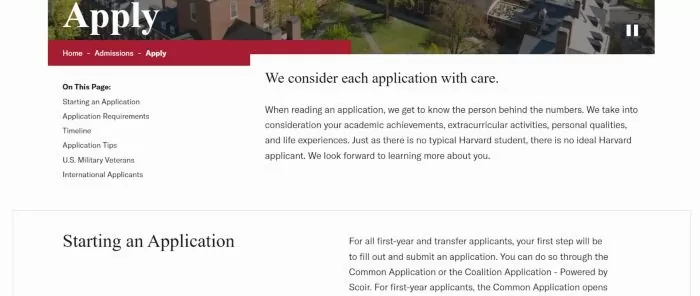
    1. Harvard University: Harvard College Admissions “Apply” Page

    Harvard’s undergraduate admissions Apply page (Harvard College) is a model of clear, structured content. The page is organized with intuitive section headings (e.g., Application Requirements, Timeline) and even an on-page table of contents for easy navigation.

    It provides a bullet-point list of all required application components (from forms and fees to test scores and recommendations), ensuring that key information is presented succinctly.
    HEM Blog Post Image 2HEM Blog Post Image 2

    Source: Harvard University

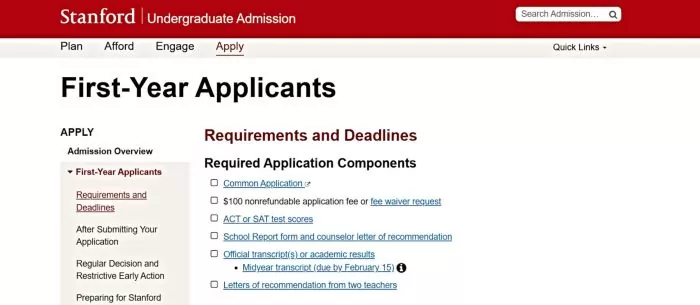
    2. Stanford University: First-Year Applicants “Requirements and Deadlines” Page

    Stanford’s first-year admission page stands out for its semantic, structured presentation of information. It opens with a clearly labeled checklist of Required Application Components, presented as bullet points (e.g., Common Application, application fee, test scores, transcripts, etc.). Following this, Stanford provides a well-organized Requirements and Deadlines table that outlines key dates for Restrictive Early Action and Regular Decision side by side.

    In this table, each milestone, from application submission deadlines (e.g., November 1 for early, January 5 for regular) to notification dates and reply deadlines, is neatly aligned, which is both user-friendly and easy for AI to parse.
    HEM Blog Post Image 3HEM Blog Post Image 3

    Source: Stanford University

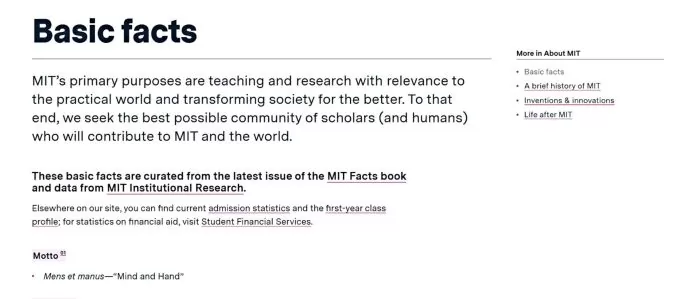
    3. Massachusetts Institute of Technology (MIT): “About MIT: Basic Facts” Page

    MIT Admissions offers an About MIT: Basic Facts page that is essentially a treasure trove of quick facts and figures presented in bullet form. This page exemplifies GEO best practices by curating the institute’s key data points (e.g., campus size, number of students, faculty count, notable honors) as concise bullet lists under intuitive subheadings.

    For instance, the page lists campus details like acreage and facilities, student demographics, and academic offerings in an extremely scannable format. Each bullet is a self-contained fact (such as “Undergraduates: 4,576” or “Campus: 168 acres in Cambridge, MA”), making it ideal for AI summarization or direct answers. Because the content is broken down into digestible nuggets, an AI-powered search can easily extract specific information (like *“How many undergraduate students does MIT have?”) from this page.
    HEM Blog Post Image 4HEM Blog Post Image 4

    Source: MIT

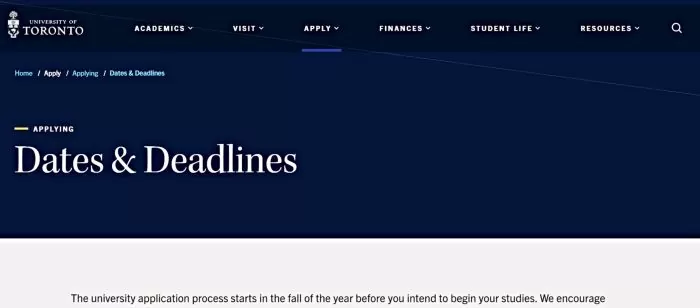
    4. University of Toronto: Undergraduate “Dates & Deadlines” Page

    The University of Toronto’s Dates & Deadlines page for future undergraduates is a great example of structured scheduling information. It presents application deadlines in a highly structured list, broken down by program/faculty and campus. The page is organized into expandable sections (for full-time, part-time, and non-degree studies), each containing tables of deadlines.

    For example, under full-time undergraduate applications, the table clearly lists each faculty or campus (Engineering, Arts & Science – St. George, U of T Mississauga, U of T Scarborough, etc.) alongside two key dates: the recommended early application date and the final deadline. This means a prospective student can quickly find, say, the deadline for Engineering (January 15) and see that applying by November 7 is recommended.

    Such a format is not only user-friendly but also easy for AI to interpret. The consistency and labeling (e.g., “Applied Science & Engineering, November 7 (recommended) / January 15 (deadline)”) ensure that an AI answer to “What’s the application deadline for U of T Engineering?” will be accurate.
    HEM Blog Post Image 5HEM Blog Post Image 5

    Source: University of Toronto

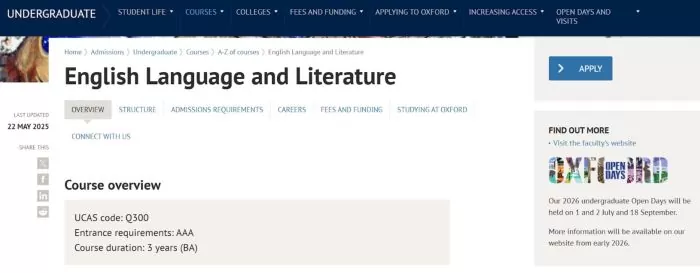
    5. University of Oxford: English Language and Literature Course Page

    Oxford’s course page for English Language and Literature showcases GEO-friendly content right at the top with a concise Overview box. This section acts as a quick-reference summary of the course, listing crucial facts in a compact form. It includes the UCAS course code (Q300), the entrance requirements (AAA at A-level), and the course duration (3 years, BA) clearly on separate lines. Immediately below, it outlines subject requirements (e.g., Required: English Literature or English Lang/Lit) and other admission details like whether there’s an admissions test or written work, all in the same straightforward list format.

    This means a prospective student (or an AI summarizing Oxford’s offerings) can get all the key info about the English course at a glance – from how long it lasts to what grades are needed.
    HEM Blog Post Image 6HEM Blog Post Image 6

    Source: Oxford University

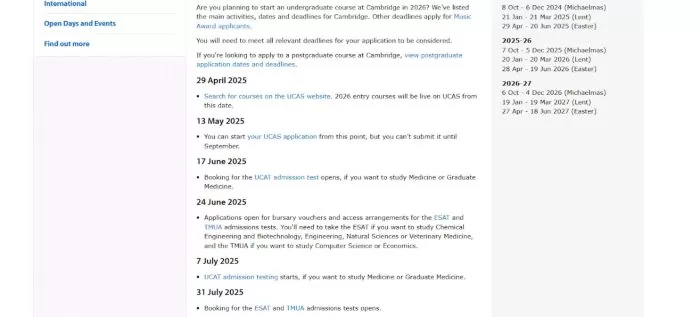
    6. University of Cambridge: Application Dates and Deadlines Page

    Cambridge’s admissions website provides a dedicated Application Dates and Deadlines page that reads like a detailed timeline of the entire admissions process. This page lays out, in chronological order, all the key steps and dates for applying to Cambridge, with each date accompanied by a short explanation of what happens or what is due.

    For example, it starts as early as the spring of the year before entry, noting when UCAS course search opens and when you can begin your UCAS application. Critically, it flags the famous 15 October UCAS deadline with emphasis: “15 October 2025 – Deadline to submit your UCAS application (6 pm UK time)”. Other entries include deadlines for supplemental forms like the My Cambridge Application (22 October), dates for admissions tests, and notes about interview invitations in November and December.
    HEM Blog Post Image 7HEM Blog Post Image 7

    Source: University of Cambridge

    Staying Discoverable in the Age of Generative Search

    Generative Engine Optimization (GEO) is rapidly shifting from trend to necessity in higher education marketing. As AI-driven platforms like ChatGPT, Google SGE, and voice assistants reshape how students seek information, institutions must adapt their content strategies accordingly. 

    By aligning with modern GEO practices, universities enhance both discoverability and user experience, meeting students where they are and ensuring their narratives are accurately represented. In today’s competitive enrolment landscape, GEO is not optional; it is foundational. The strategies outlined above provide a roadmap for sustainable visibility in the age of generative search. Continue refining your approach, and your institution will not just appear in AI responses; it will lead them. In this new era, the goal is simple: be cited, not sidelined.

    AI is rewriting how students discover institutions.

    Partner with HEM to stay visible in the age of generative search.

    FAQs

    Q: What is generative engine optimization (GEO) in higher education marketing?

    A: Generative Engine Optimization (GEO) is the practice of tailoring university content for AI-driven search tools like ChatGPT and Google’s AI Overview. Unlike traditional SEO, which targets search engine rankings, GEO focuses on making content readable, reliable, and retrievable by generative AI.

    Q: How is GEO different from traditional SEO for universities and colleges?

    A: While both SEO and GEO aim to make your institution’s content visible, their approaches diverge in method and target. Traditional SEO is designed for search engine rankings. GEO, on the other hand, prepares content for selection and citation by AI tools that deliver instant answers rather than search results.

    Q: Why is GEO important for student recruitment in the age of AI search?

    A: Generative AI search is already reshaping how prospective students discover, evaluate, and select postsecondary institutions. GEO (Generative Engine Optimization) equips institutions to remain visible and competitive in this changing environment.

    Source link

  • Decoder Replay: Isn’t all for one and one for all a good thing?

    Decoder Replay: Isn’t all for one and one for all a good thing?

    Under NATO, 32 countries have pledged to defend each other. Is the United States the glue that holds it all together?

    Source link

  • Supreme Court weighs state restrictions on transgender student athletes

    Supreme Court weighs state restrictions on transgender student athletes

    The U.S. Supreme Court heard back-to-back oral arguments Tuesday over two cases that could determine whether transgender women and girls can play on sports teams aligning with their gender identity. 

    The two lawsuits center on two states, Idaho and West Virginia, that have banned transgender women and girls from such teams. Idaho was the first state to implement such a restriction in 2020, and 26 other states have since passed similar laws. 

    The student in each lawsuit alleges that their state’s restriction violates their 14th Amendment guarantee to equal protection under the law. One of them also contends that the restriction violates Title IX, the sweeping federal law banning sex-based discrimination in federally funded colleges and K-12 schools. 

    Conservative politicians have championed these policies, including President Donald Trump. 

    Early in his second term, Trump signed an executive order that threatened to pull federal funding from and open investigations into colleges and K-12 schools that allow transgender women and girls to play on sports teams aligning with their identities.

    Comments of the Supreme Court’s conservative majority on Tuesday and their past rulings suggest that those justices may be reluctant to strike down state laws restricting transgender students’ participation in college and K-12 sports. 

    Last year, the conservative majority upheld a Tennessee law barring transgender teenagers in the state from accessing puberty blockers and hormone treatments. And Brett Kavanaugh, one of the conservative justices, voiced concerns Tuesday about allowing transgender women and girls to play on the same teams as their cisgender peers. 

    “One of the great successes in America for the last 50 years has been the growth of women and girls sports,” Kavanaugh said. 

    He added that “a variety of groups” have argued that allowing transgender women and girls to participate on such teams will reverse that success. “For the individual girl who does not make the team, or doesn’t get on the stand for the medal, or doesn’t make all-league, there’s a harm there,” Kavanaugh said. “We can’t sweep that aside.” 

    Lawyers defending the state bans made similar comments. In defense of West Virginia’s law, state Solicitor General Michael Williams argued that “biological sex matters in athletics in ways both obvious and undeniable.” 

    Allowing students to participate on teams aligning with their gender identity turns Title IX into a law “that actually denies those opportunities for girls,” Williams said. 

    Meanwhile, lawyers for the two transgender students suing over the state policies argue that the bans deny them their constitutional rights. 

    Joshua Block, a lawyer with the American Civil Liberties Union representing the student contesting the West Virginia law, argued that the 14th Amendment’s equal protection clause and Title IX are meant to “protect everyone.” 

    In that case, West Virginia v. B.P.J., Becky Pepper-Jackson, now a high school student, and her mother sued the state in 2021 over its ban on transgender girls participating in girls’ sports. 

    Pepper-Jackson has identified as a girl since 3rd grade and takes puberty blockers. She won a narrow district court injunction in July 2021 that blocked West Virginia from applying the law to her, though the judge ended up ruling in favor of the state. The 4th U.S. Circuit Court of Appeals issued a ruling in 2023 allowing her to participate in girls’ sports again.  

    Block argued that if there are no “physiological differences” between Pepper-Jackson and other girls, there is no reason to exclude her from girls’ sports teams. 

    “West Virginia’s law treats BPJ differently from other girls on the basis of sex, and it treats her worse in a way that harms her,” Block said. 

    In the other case, Little v. Hecox, Boise State University student Lindsay Hecox, a transgender woman, sued the state of Idaho in 2020 over its statute, arguing that it violated her constitutional rights by discriminating against transgender women. 

    Hecox, who receives hormone therapy to suppress testosterone and increase estrogen, scored a victory when a federal judge blocked the law in 2020. Afterward, she tried out for Boise State’s NCAA track and cross-country teams but wasn’t fast enough to make them, so she joined the university’s club soccer and running instead. 

    Source link

  • Reimagining teacher preparation to include student mental health supports

    Reimagining teacher preparation to include student mental health supports

    Key points:

    Teacher preparation programs have long emphasized curriculum, instruction, and assessment. However, they often fall short in one critical area: social-emotional and mental health needs of students.

    We work daily with students whose academic success is inseparable from their psychological well-being. Nonetheless, we witness new educators wishing they were trained in not just behavior management, but, nowadays, the non-academic needs of children. If preservice programs are going to meet the demands of today’s classrooms, they must include deeper coursework in counseling, psychology, and trauma-informed teaching practices.

    Students today are carrying heavier emotional burdens than ever before. Anxiety, bullying, depression, grief, trauma exposure (including complex trauma), and chronic stress are unfortunately quite common. The fallout rarely appears in uniform, typical, or recognizable ways. Instead, it shows up as behaviors teachers must interpret and address (i.e., withdrawal, defiance, irritability, avoidance, conflict, aggression and violence, or inconsistent work).

    Without formal training, it is easy to label these actions as simple “misbehaviors” instead of asking why. However, seasoned educators and mental health professionals know that behaviors (including misbehaviors) are a means of communication, and understanding the root cause of a student’s actions is essential to creating a supportive and effective classroom.

    Oftentimes, adults fall into a pattern of describing misbehaviors by children as “manipulative” as opposed to a need not being met. As such, adults (including educators) need to shift their mindsets. This belief is supported by research. Jean Piaget reminds us that children’s cognitive and emotional regulation skills are still developing and naturally are imperfect. Lev Vygotsky reminds us that learning and behavior are shaped by the quality of a child’s social interactions, including with the adults (such as teachers) in their lives. Abraham Maslow’s hierarchy further reinforces that psychological safety and belonging must be met before meaningful learning or self-control can occur, and teachers need to initiate psychological safety.

    Traditional classroom management training is often sparse in traditional preservice teacher training. It often emphasizes rules, procedures, and consequences. They absolutely matter, but the reality is far more nuanced. Behavior management and behavior recognition are not the same. A student who shuts down may be experiencing anxiety. A child who blurts out or becomes agitated may be reacting to trauma triggers in the environment. A student who frequently acts out may be seeking connection or stability in the only way they know how. Trauma-informed teaching (rooted in predictability, emotional safety, de-escalation, and relationship-building) is not just helpful, but is foundational in modern schools. Yet, many new teachers enter the profession with little to no formal preparation in these practices.

    The teacher shortage only heightens this need. Potential educators are often intimidated not by teaching content, but by the emotional and behavioral demands that they feel unprepared to address. Meanwhile, experienced teachers often cite burnout stemming from managing complex behaviors without adequate support. Courses focused on child development, counseling skills, and trauma-informed pedagogy would significantly improve both teacher confidence and retention. It would also be beneficial if subject-area experts (such as the counseling or clinical psychology departments of the higher education institution) taught these courses.

    Of note, we are not suggesting that teachers become counselors. School counselors, social workers, psychologists, and psychometrists play essential and irreplaceable roles. However, teachers are the first adults to observe subtle shifts in their students’ behaviors or emotional well-being. Oftentimes, traditional behavior management techniques and strategies can make matters worse in situations where trauma is the root cause of the behavior. When teachers are trained in the fundamentals of trauma-informed practice and creating emotionally safe learning environments, they can respond skillfully. They can collaborate with or refer students to clinical mental-health professionals for more intensive support.

    Teacher preparation programs must evolve to reflect the emotional realities of today’s classrooms. Embedding several clinically grounded courses in counseling, psychology, and trauma-informed teaching (taught by certified and/or practicing mental-health professionals) would transform the way novice educators understand and support their students. This would also allow for more studies and research to take place on the effectiveness of various psychologically saturated teaching practices, accounting for the ever-changing psychosocial atmosphere. Students deserve teachers who can see beyond behaviors and understand the rationale beneath it. Being aware of behavior management techniques (which is often pretty minimal as teacher-prep programs stand now) is quite different than understanding behaviors. Teachers deserve to be equipped with both academic and emotional tools to help every learner thrive.

    Latest posts by eSchool Media Contributors (see all)

    Source link

  • SHEEO Releases Annual State Priorities Survey

    SHEEO Releases Annual State Priorities Survey

    Affordability has always been a buzzword for lawmakers on Capitol Hill, but polling shows that it’s becoming increasingly popular among state higher education agencies as well.

    According to the latest annual State Priorities survey from the State Higher Education Executive Officers, college affordability jumped from the sixth-most-important policy issue among higher ed executives in 2025 to the second most this year.

    SHEEO researchers emphasized that affordability has “consistently [been] among the top priorities” for the roughly 45 state executives surveyed each year; the average score from respondents this year only increased 0.1 points on a 1-to-5 scale. Nonetheless, they agreed that the increase represents a significant and timely change—one that was likely influenced by the political climate in Washington.

    “Affordability is the key overarching issue for policymakers heading into the 2026 midterm election, and state higher education leaders are certainly not immune from pressure to lower costs,” said Tom Harnisch, SHEEO’s vice president for government relations. “So there’s going to be, I foresee, continued legislative efforts to hold the line on tuition, make increased investments in financial aid and address other areas that are related to college costs.”

    The increased focus on affordability has also been reflected in state legislation; 33 states indicated that they had instituted a tuition freeze and/or limit in at least one public higher education sector in the past five years. Another 20 have considered legislation to create or expand statewide promise programs, which provide free or significantly reduced college tuition for eligible students.

    But state systems still have work to do to address public concerns. Roughly 60 percent of all adults say cost is the biggest barrier preventing students from enrolling in or completing a postsecondary degree, according to a report from the left-leaning think tank New America.

    Other key policy issues include economic and workforce development (which held its place at No. 1), higher education’s value proposition (No. 3), and college completion/student success (No. 5), the SHEEO survey shows. A topic that had not previously been included in SHEEO surveys also gained prominence this year: state impacts from federal policy changes, which placed sixth on the list of 25 issues.

    Collectively, Harnisch said, this year’s results, and the relatively consistent results of recent years, reflect a slow but steady transition concerning who is responsible for bearing the cost of college.

    “It just shows the overarching cost shift from states to students, and associated with that cost shift is the need for students to get a job, to help pay for their education and associated student debt,” he explained. “These are all downstream effects of that.”

    SHEEO researchers also noted that while state budgets for higher ed range widely, funding has declined over all since the COVID-19 pandemic and its “record state budget surpluses.” The major funding cuts to Medicaid and the Supplemental Nutrition Assistance Program through the One Big Beautiful Bill Act will likely only make higher education budgets tighter, they added.

    “Many states with biannual budgets set them in 2025, so they will not be in budget sessions again until 2027. But those states that do have budgets in 2026 are more likely to face changes, and higher education is often most vulnerable to those changes,” Harnisch said. “So as more states have budget shortfalls, revenue growth is softening and there’s increased competition for limited state funding, states are going to be increasingly challenged on the affordability front.”

    Still, despite looming budget cuts, “unstable federal funding streams and intensifying state and federal political pressures,” SHEEO says there are reasons for optimism.

    Concerns about completion of the Free Application for Federal Student Aid dropped nine spots to the 18th-most-important issue for higher leaders this year. And despite the looming predictions of a major demographic cliff, which is slated to take effect in 2026, enrollment declines dropped from the seventh-most-important issue in 2025 to 16th most important this year.

    If anything, SHEEO hopes that enrollment will continue to climb as students pursuing eligible short-term education and training programs gain access to Pell Grants for the first time starting on July 1, under a new program called Workforce Pell.

    “[The year] 2026 holds a lot of unknowns as we look to see what state legislators will prioritize and how changes at the federal level will impact states,” Harnisch said in a news release about the report. But as “economic and workforce development continues to be top of mind, and with the implementation of Workforce Pell rolling out later this year, we’re optimistic that states will continue to make advances in addressing workforce needs.”

    Source link

  • UNC’s App Redesign Drives Student Engagement

    UNC’s App Redesign Drives Student Engagement

    What was once an underused mobile app at the University of North Carolina at Chapel Hill has been rebuilt to serve as a central hub for student information and services.

    The app, Hello Heels, was relaunched during first-year orientation last fall after undergoing a redesign following input from students through advisory boards, focus groups and surveys.

    Since the relaunch, the app now draws about 90,000 page views per week from roughly 37,000 users—up from 10,000 page views and 6,000 users before the redesign.

    Elizabeth Poindexter, executive director of communications and special projects in UNC’s Office of Student Affairs, said students rely on the app for “real-time” updates on everything from bus tracking to dining hall offerings.

    “Nothing thrills me more than running to the dining hall to grab my own lunch and seeing a student using the app or talking to their friends about it,” said Poindexter.

    She added that student feedback has allowed the app to become a multifaceted “dynamic space,” featuring modules on career services and health and wellness and an up-to-date events calendar.

    Poindexter also said the redesigned app has proven cost-effective, saving more than $40,000 in new student and family programs by eliminating the need for duplicative services. Instead of costly printed materials, the app provides real-time agenda updates and announcements.

    “The more people hear about that cost savings, the more interested in and engaged with the app they become,” said Poindexter.

    The approach: Poindexter said student input came from a diverse group, including undergraduates and graduate, transfer and international students.

    “We really had a good spread of students who are representative of the student body at large, and they had some incredible recommendations,” said Poindexter, including suggestions to “overhaul” and “refresh” the health and wellness and career services modules.

    She added that other features, such as real-time updates on recreation center occupancy, dining hall hours and integration with academic tools like Canvas, also arose directly from student feedback.

    The app includes an opt-in messaging feature that allows campus offices to send targeted updates to students who choose to receive them. Poindexter said the most popular channels come from the financial well-being center and the mental health and wellness center.

    The financial well-being center sends weekly money tips and appointment reminders, while the mental health and wellness center shares well-being messages during high-stress periods like finals, which she said students respond positively to.

    The app also gathers in-app survey responses. Of roughly 250 respondents, 98 percent said they plan to continue using Hello Heels.

    “That is why it’s been so successful,” Poindexter said. “We have student voices integrated every step of the way.”

    What’s next: Poindexter said part of the redesign involved partnering with UNC’s business school to ensure the app’s long-term sustainability and continued improvement.

    “It’s been really wonderful to see that we can have this universitywide impact and improve the student experience in how we communicate with them,” she said.

    Poindexter recommended that higher education leaders take a close look at their own media, from mobile apps to online newsletters, and use student feedback to make sure those tools are actually engaging and informing their target audience.

    “Our best advocates are our students, and they have really useful insights decision-makers should consider,” she said.

    Get more content like this directly to your inbox. Subscribe here.

    Source link

  • Calif. College of Arts to Close, Sell Campus to Vanderbilt

    Calif. College of Arts to Close, Sell Campus to Vanderbilt

    Photo illustration by Justin Morrison/Inside Higher Ed

    California College of the Arts will close by the end of the 2026–27 academic year amid enrollment declines that have rendered its business model unsustainable, officials announced.

    But the Wednesday announcement at a press conference at San Francisco’s City Hall came with surprising fanfare. Though CCA is going away, Vanderbilt University is stepping in to purchase its campus, giving the private institution in Tennessee a foothold on the West Coast.

    Following the closure, Vanderbilt will assume ownership of the campus and “establish undergraduate and graduate programming, including art and design programs,” and maintain archival materials from the college, CCA president David C. Howse wrote in an announcement.

    The move comes after recent financial struggles for CCA, which laid off 23 employees in 2024 and closed other vacant positions to address a $20 million budget gap. While the private college raised nearly $45 million recently, those funds were evidently not enough to stave off closure. 

    CCA enrolled 1,308 students in fall 2024, according to recent federal data, down from a recent high of nearly 2,000 students in fall 2016.

    Officials have not made details of the transaction publicly available.

    Vanderbilt’s takeover of the San Francisco campus is the latest national push from the university, which has pursued an ambitious growth plan in recent years. Vanderbilt is currently leasing a campus in New York City and building another in West Palm Beach, Fla., as announced in 2024.

    Vanderbilt chancellor Daniel Diermeier told Inside Higher Ed last fall that the university was exploring a site in San Francisco and noted the booming artificial intelligence scene in the city was part of the appeal for a campus there.

    While at least 16 nonprofit institutions announced closure plans last year, California College of the Arts appears to be the first to do so in 2026, coming less than two weeks into the new year.

    Source link

  • Nebraska Chancellor’s Hasty Exit Raises Questions

    Nebraska Chancellor’s Hasty Exit Raises Questions

    Weeks after pushing through deeply unpopular program cuts, University of Nebraska–Lincoln chancellor Rodney Bennett has left his role six months early—with a $1 million golden parachute.

    His exit at Nebraska has prompted faculty concerns about executive spending as questions linger about whether program cuts driven by Bennett were avoidable. NU system officials, however, have defended the cuts as necessary due to a recurring budget deficit and argued that Bennett’s exit package is what was owed to him—a mix of unpaid leave, deferred income, health-care benefits and the remainder of his contract set to expire in June.

    For Bennett, this marks the second time since 2022 that he has left a job early, departing his role as president of the University of Southern Mississippi a year ahead of schedule after nearly a decade at the helm there.

    (A UNL spokesperson said Bennett was not available for an interview with Inside Higher Ed.)

    Now UNL will soon embark on a new chancellor search as tensions simmer over recent events, though NU system President Jeffrey Gold noted a “need for healing” before that process begins.

    Contentious Cuts

    Bennett’s budget-reduction plan was unveiled to much faculty dismay in November.

    While he initially proposed cutting six programs, that was later whittled down to four: statistics, earth and atmospheric sciences, educational administration, and textiles, merchandising and fashion design. Four more programs will be “realigned” into two new schools, under the plan.

    The program eliminations will cut 51 jobs at UNL, most from the faculty ranks.

    Other actions taken include faculty buyouts, which are expected to save $5.5 million; budget reductions at four of UNL’s colleges; and the elimination of some administrative and staff roles.

    Those cuts, already unpopular, sting more now after Bennett officially stepped down Monday with an exit package of $1.1 million—prompting faculty outrage over spending priorities.

    “The university cannot credibly claim that it lacks the resources to sustain academic programs and faculty positions while simultaneously paying over a million dollars to a failed chancellor,” Sarah Zuckerman, president of the UNL chapter of the American Association of University Professors, said in a statement sent to Inside Higher Ed and other media outlets. “This payout exposes the administration’s financial crisis narrative as a matter of priorities, not necessity.”

    But Gold, NU system president since July 2024, notes the exit package will not be funded by taxpayer dollars and said the decision to leave early was “mutually discussed” with Bennett, his family and senior leadership and was made with the “best interests” of the campus in mind.

    “The separation agreement—all components of it—will not be funded either from state appropriations or tuition funds, but rather entirely through other university discretionary resources, meaning privately raised dollars,” Gold told Inside Higher Ed. “It’s always a balance, but an attempt was made, and I think in this instance, successfully, to not use the same dollars that are used to support our faculty and our staff and, most importantly, our students.”

    Many faculty members are also seething about what they see as fuzzy math to justify the cuts.

    An outside analysis, conducted by the AAUP, argued that instructional spending across the system has declined in recent years while administrative pay rises and that the cuts fell disproportionately on the academic side. The analysis also suggested that by increasing its endowment draw by 1.3 percent, bringing it up to 6 percent, UNL would have been able to avoid cuts.

    Gold said that “perhaps the campus has seen that analysis,” but he has not. He largely dismissed the notion of increasing the endowment draw, noting such a move is “at the discretion of the Board of Directors and senior leadership of the [University of Nebraska] Foundation.” Gold also underscored that two of the four program closures were supported by the Academic Planning Committee, a group of faculty, staff, students and administrators—though that fact has done little to assuage the concerns of others who have protested the cuts as needless or flawed.

    Faculty Tensions

    Faculty have also accused Bennett of steamrolling them in the process to determine the cuts. In November, UNL’s Faculty Senate voted no confidence in Bennett and urged Gold to evaluate Bennett’s “continued fitness to serve” as chancellor.

    The no-confidence resolution blasted Bennett for “failures in strategic leadership, fiscal stewardship, governance integrity, external relations, and personnel management.” Those concerns are among many complaints from faculty during Bennett’s tenure.

    Regina Werum, a UNL sociology professor and member of UNL’s AAUP chapter, told Inside Higher Ed by email that Bennett had “no rapport with faculty” and was rarely seen on campus.

    “The Chancellor’s style is best described as disengaged from and more accurately as disdainful of faculty, staff, and students. He keeps himself insulated and largely invisible on campus, making sure to be present for photo ops with superiors and dignitaries,” Werum wrote.

    A former Southern Miss official who worked with Bennett at that campus offered a similar take. Speaking anonymously, the former official said Bennett was a rare sight on campus and tended to offer scripted remarks to faculty. That official also criticized Bennett’s inexperience with teaching and research, noting he stepped into the job with a student affairs background.

    “The problem was he didn’t want you to know that he didn’t know things, and because of that, he wouldn’t ask questions,” the anonymous official said. “It was a conundrum. You would try to help him understand what was going on, but he didn’t want to admit that he didn’t understand it all.”

    Bennett also enacted program cuts at Southern Miss, axing dozens of positions.

    The former official said Bennett’s cabinet encouraged him to consider other options at Southern Miss, but he wasn’t interested in having those conversations and saw cuts as the only route to plug budget holes. The anonymous administrator also said Bennett often ignored faculty advice.

    “When he reorganized the Gulf Coast campus, he put together two large committees, 30 people each, that worked for six months coming up with recommendations,” they said. “And then when he rolled out the plan for the Gulf Coast, there was a lot of stuff in there that none of the committees had ever discussed. People felt like they wasted a lot of time on these committees, and they were designed to give him cover for the changes he was going to make anyway.”

    The former USM official believes it was an enrollment collapse at that campus, known as Southern Miss Gulf Park, that hastened Bennett’s exit from a job he had held since 2013. Bennett initially announced in January 2021 that he planned to step down when his contract ended in June 2023. However, Bennett was officially out by June 2022, with no explanation.

    Months later, a member of the Institutions of Higher Learning Board of Trustees, which oversees Southern Miss and other universities, told local media he was “embarrassed” by the enrollment collapse at the satellite campus, which plunged by more than 50 percent from 2011 to 2022.

    Despite sharp faculty criticism, Gold praised Bennett for his time as chancellor.

    “For the 18 months that I had the privilege of working with Chancellor Bennett, I really enjoyed working with him. I found him to be very thoughtful, easy to work with, a very solid human being with a very strong love of higher education, and particularly public higher education,” Gold said.

    But if Gold felt differently, he wouldn’t be able to say so.

    A nondisparagement agreement in Bennett’s separation agreement prevents certain university and system officials, including Gold and members of the Board of Regents, from making “any negative or disparaging comments or statements” about the now-former Nebraska chancellor.

    Source link

  • Morris Brown College Fires President

    Morris Brown College Fires President

    Morris Brown College

    Morris Brown College, a historically Black institution in Georgia, removed its president, effective immediately, after seven years on the job, the Board of Trustees announced Monday.

    In a news release, the board thanked Kevin James for his leadership.

    James “played a meaningful role in guiding the institution through critical seasons of growth, resilience, and transformation,” the release read. The board “wishes him well in his next chapter.”

    The board’s announcement offered no explanation for James’s termination.

    “Morris Brown College remains firmly committed to its students, its mission, and its long-term strategic vision,” Bishop Michael Mitchell, chair of the Board of Trustees, said in a statement. “This transition in leadership will help to ensure continuity as we move forward with the important work of strengthening and advancing the College.”

    Under James’s tenure, the struggling college regained accreditation after nearly 20 years without it, restoring students’ access to federal financial aid. Enrollment also grew from about 20 students to more than 540, James wrote in a Facebook post Monday.  

    He said the Board of Trustees terminated his contract, which is slated to end in 2029, “without providing specific cause or substantive explanation” after a positive annual evaluation and strong performance reviews throughout his presidency.  

    He stressed that the timing is “troubling” for the college, which faces an accreditation-reaffirmation review in just a few weeks.

    “I dedicated myself fully to the restoration and resurgence of Morris Brown College, and I stand firmly behind the progress we achieved together,” James wrote. “While I am deeply disappointed by the Board’s decision, I am grateful for the overwhelming support I have received from alumni, faculty, staff, students, and community partners. Thank you for believing in the vision and the work.”

    The board named trustee Nzinga Shaw as the college’s interim leader.

    Source link

  • Catholic Briefly Banned Popular Social Media Site Reddit

    Catholic Briefly Banned Popular Social Media Site Reddit

    Illustration by Justin Morrison/Inside Higher Ed

    Students returning to the Catholic University of America Monday were outraged to discover that the university had blocked campus internet access to the popular social media site Reddit. But by Tuesday afternoon, administrators had reversed the ban, saying it had been automatically restricted by a third-party source that controls access to pornographic sites.

    The site had been available to students at the end of last semester, according to Felipe Avila, a nursing student and a member of the student government. But when students returned from break to the Washington, D.C., campus this week, they found they could no longer access the site. No other social media sites seemed to have been affected, he said, and administrators did not notify students or faculty of the change.

    When Avila discovered Reddit had been restricted, he submitted a ticket to the university’s Technology Services Support office to ask if it was a glitch or if the site had been blocked intentionally.

    “When I checked with our security they said that it was blocked because of certain content on the platform and also because of phishing and malicious links that are on that site,” a staff member responded in an email to Avila.

    The ban wasn’t entirely out of left field: In 2019, Catholic University banned access to the 200 most popular pornography websites after the student government passed a resolution advocating for such a ban. But Reddit isn’t a pornographic site; it’s a social media site with well over 100 million daily active users who can read and post in forums called subreddits dedicated to specific topics. According to Pew Research, 48 percent of individuals aged 18 to 29 surveyed in early 2025 said they use Reddit at least occasionally.

    Reddit is one of just a few social media sites that allow users to post sexually explicit material, although it must be labeled appropriately and explicit images appear blurred until a user opts to reveal them. Other social media platforms that allow such content, such as X, which has allowed users to post sexual content since 2024, remained accessible on Catholic’s campus.

    Restriction Reversal

    After two days without answers from administrators, Avila said, the university reversed the ban, attributing the situation to an automated system that restricts access to a list of pornographic sites, university spokesperson Karna Lozoya said in an emailed statement. That list is compiled by a third-party organization, she said, which recently added Reddit.

    “The site was flagged in accord with a policy established in 2019—at the recommendation of the Student Government Association—to block access to the top pornography sites from the University network. Student leaders at the time noted their concerns about the risks of these sites, including exploitation of individuals, addiction, and security risks,” she said.

    The sites that were previously banned were “almost exclusively dedicated to serving pornography,” Lozoya noted. The university decided to reverse the ban on Reddit because its primary purpose is not to share explicit content.

    “In the interest of allowing access to its legitimate uses, access to Reddit.com has been restored to the campus network,” she wrote. “However, the University is taking this opportunity to remind students of the need for prudence, and to avoid consuming exploitative and degrading content.”

    Avila said the short-lived ban sparked outrage among students, some of whom use the platform as an academic resource. Students can join subreddits dedicated to different academic disciplines, like r/StudentNurse, a community of over 180,000, where nursing students can connect with their peers at institutions worldwide to vent or ask for advice.

    Dominic Coletti, a program officer with the free speech advocacy organization the Foundation for Individual Rights and Expression, warned that preventing students and faculty from accessing certain sites infringes on freedom of expression and academic freedom.

    “We’re concerned about this censorship for two reasons: First, Catholic promises its students free speech. That should include the ability to communicate anonymously with others at the university and in their community about what’s happening. That includes not-safe-for-work content, to be sure, but it also includes a wide swath of discussions about topics core to the work of a university,” he wrote in an email to Inside Higher Ed. “Catholic also promises its faculty academic freedom. That includes the freedom to perform research online and to teach students using online resources. Banning social-media sites like Reddit infringe on faculty members’ ability to perform that research and to use these resources in teaching.”

    “The university did not have to promise its students and faculty members these expressive freedoms,” Coletti added. “Now that it has, it must protect those freedoms.”

    Before the ban was lifted, Avila and another student senator filed a resolution calling on the university to make its standards for web filtering more transparent and asking to be notified in advance of any new bans. Even though Reddit is now accessible again, they’re planning to move forward with the resolution.

    “Reversing the ban fixes the outcome, but not the oversight. We must codify protections for student expression to ensure that academic freedom is guaranteed by policy, not just public pressure,” he wrote in an email to Inside Higher Ed. “We look forward to working with the university to see this implemented.”

    Source link