Blog

  • Rachel Toor and Gordon Gee

    Rachel Toor and Gordon Gee

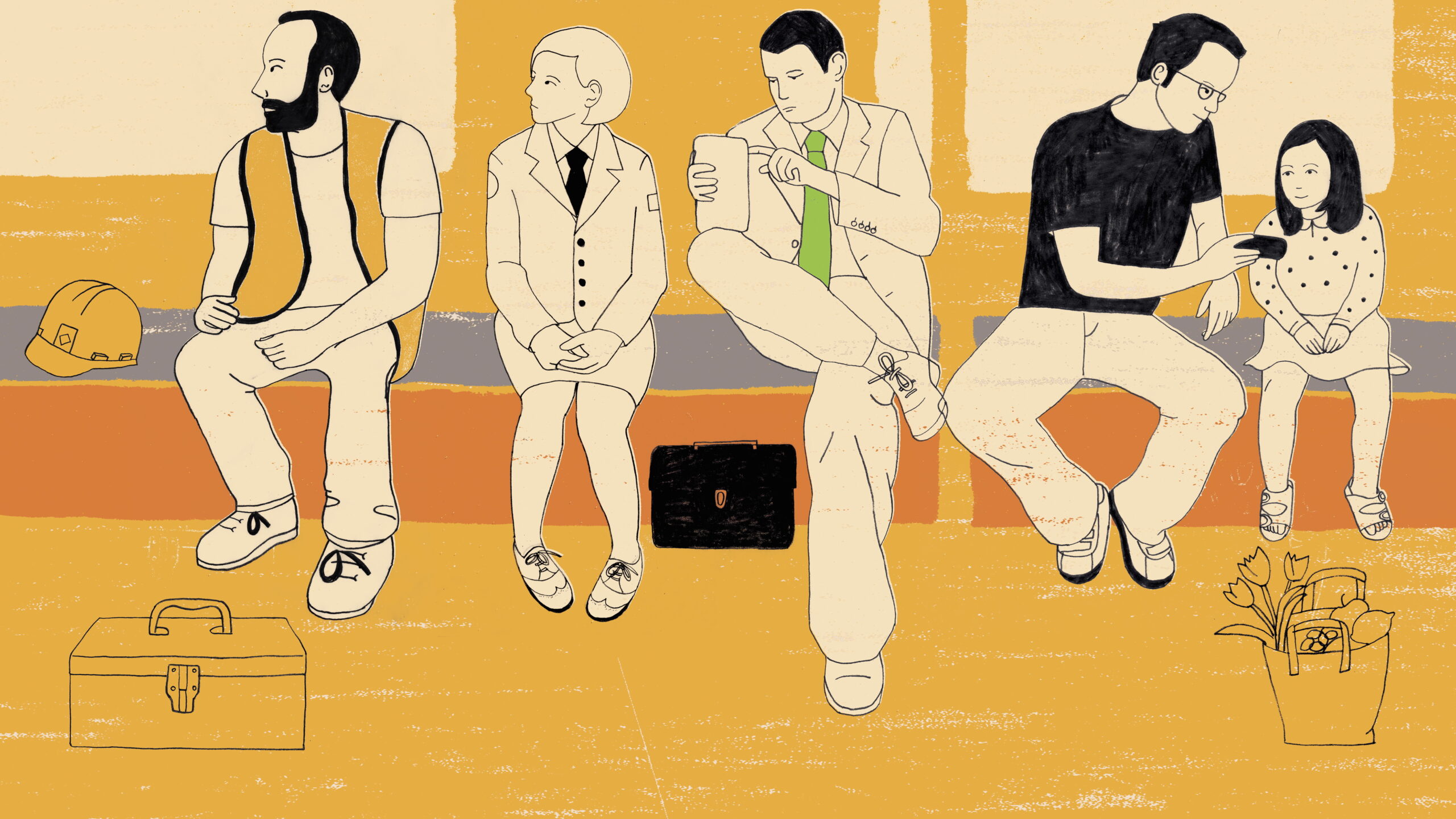
    A Jewish atheist feminist columnist/professor and a devout Mormon bow tie–clad lawyer/university president walked into a bar.

    Or at least, shared a Zoom screen to talk about higher ed. Hilarity ensued. Especially since both have the sometimes-job-ending though not career-killing trait of talking faster than they think and never, ever being able to resist a sarcastic crack.

    The Columnist didn’t get the memo about being circumspect and careful and spouted off with abandon, often finding herself surprised when people actually pay attention to what she writes and praise her for being “brave” (What are you so afraid of that you don’t feel a similar freedom? she often wonders).

    The President, on the other hand, has had the kind of career where if you asked any civilian to name a college president, they would likely mention him. They might even be able to conjure an image of a bow-tied guy, not of football player size, who nevertheless allowed himself to be carried aloft on the hands of the football fans that crammed the stadiums of the giant institutions he led.

    Lead them he did, until his Achilles’ mouth and inability to refrain from cracking a joke kept getting him fired. And then rehired. Now that he may be done presidenting, he’s working a bunch of gigs to help fix higher ed, something the Columnist is also trying to do (though from the cheap seats).

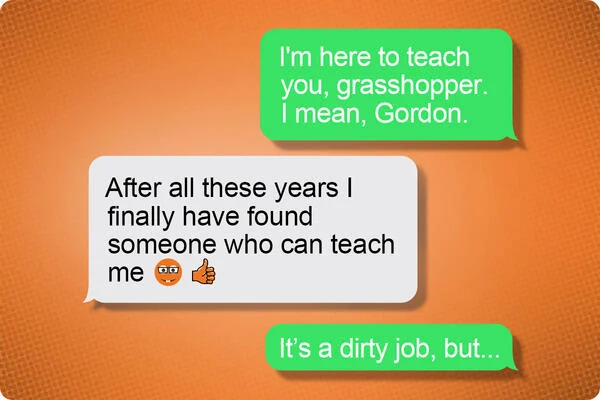
    This odd couple decided it might be fun to engage in some witty banter serious discussion (via text messages) of important issues facing an industry they both love and to which they have committed their lives.

    Columnist: You became a president my sophomore year of college. When I graduated and started working in academic publishing, I began following your career. I feel like I’ve known you for decades, Gordon.

    President: Wow!! I have been a president your whole professional life.

    Columnist: And you’ve shaped my idea—and many others’—of the American university president. You unapologetically embraced the material rewards but never came off as pretentious, and you did hard things while always seeming to be having fun and taking the work, but not yourself, too seriously.

    President: I view the presidency the same way you view being a faculty member. These are the best jobs in the country, and those who whine and complain about academic life are so out of touch with the gift we have been given. And, Rachel, that is why you and I, though from different planets, have found each other, because we both believe in the cause but do not take ourselves too seriously. The joyful odd couple indeed.

    Columnist: Oy. I think that makes me Oscar. Somewhere there must be a Greatest Hits of Gee Gaffes. What’s your favorite of the many, many dumb things you’ve said?

    President: Probably the most embarrassing and painful moment was when I was meeting with our athletic council at Ohio State and I started talking about Notre Dame joining the Big Ten again.

    Columnist: Right. IHE reported on that.

    President: That was stupid because I have great admiration for Notre Dame and Father Jenkins—the president is a dear man and great friend. Sometimes a sense of humor, which I believe is critical to leadership, can be painful. The good fathers forgave me, which made it even worse. Also, my crack about the Little Sisters of the Poor. Though I did become their single largest donor.  

    Columnist: Ah, money. Your salary has long been a topic of conversation. I’ve never aspired to an administrative post because I think I am paid handsomely for doing the best job in the world: teaching what I love. I don’t resent administrative salaries, because if someone is able to negotiate a good deal for themselves with a board, that’s who I want representing my institution. You made a lot and you were accused of lavish spending. Spill the beans, please.

    President: I was compensated very well—

    Columnist: [cough]

    President: —but in turn I raised billions for the universities I served. So, no excuses other than pride and success. Truthfully, my goal always was to make as much money as my football coach, which I never did in 45 years. One time I received a letter from a fan who berated me for my salary and then railed against me for being so parsimonious as to only pay the football coach $4 million.

    I am at that point in life where I own up to every mistake. But my irritation gets high when the “lavish spending” issue gets thrown around. It is a narrative developed by several newspaper reporters who wanted a story and decided to invent one. For example, they accused me of spending $65,000 on bow ties. I did not spend that money on bow ties but rather on bow-tie cookies that we distributed to students, families, friends and donors over a period of years.

    Columnist: Stale cookies? Nice. Speaking of pride and success, what on earth were you thinking when you took on the presidency of Brown? That move seemed to reek of the kind of arrogance you’ve accused universities of.

    President: I think the goal of many university presidents is to lead an Ivy. And I was no different. Heady stuff. But I had come from an institution of 65,000 students to one of 6,500 and soon felt like an antelope in a telephone booth. It was small and self-centered. It is undoubtedly a great university, but fit is important and I was not a good fit. What I learned was that the smaller the institution, the more politically intense it is for the president.

    Columnist: Now I’m going to have at you, buddy. Let’s talk about the University of Austin, which you’ve been associated with from the beginning. Sure, it’s in some ways an innovative answer to the structural problems in our industry, and it’s also a horrific winding back of the social progress we’ve made toward become a more democratic and egalitarian society. I mean, WTF, Gordon?

    President: In my view, there are two pathways to change the arc of U.S. higher education. The first is from the inside out, which, candidly, is like moving a graveyard. Or the other is to create a new university that can set the standard for change. That is what the University of Austin is attempting to do. By returning to the fundamentals of Western thought and focusing on a robust conversation across the intellectual spectrum, they will gain traction. It is a noble effort.

    Columnist: Gordon, you ignorant slut. Excuse me while I puke.

    President: Well, go ahead and puke. 🤓

    Columnist: We’ll come back to why you think it’s noble 🤮 to return to the times when everyone only read dead white men and were taught by bow-tied white men.

    How about a list of topics you’re now able to speak freely about? I mean, we agree on many things and disagree on others. What else can we discuss and push each other on to think harder?

    President: 1. Need to address the four tyrannies: tenure, departments, colleges and leadership gerontocracy. 2. How do we stop university faculty and others from hiding behind academic freedom and start accepting academic responsibility? 3. Exploding the myth of shared governance and creat[ing] a new model of collective responsibility that creates agility and speed by doing away with internal processes that are calculated to preserve the status quo. 4. How to create a standard of excellence in appointing members of Boards of Governors by moving it out of the political process. 5. How to make certain that the selection process of a new president produces the best candidates rather than individuals who have offended the fewest people the longest period of time.

    Columnist: All that and I can add another 15 or 20 things. Plus, we both hate the ocean, both married people younger and hotter than us (I win because Toby is 14 years my junior), and you were an Eagle Scout—

    President: Why did you marry a younger hot guy?

    Columnist: Because I’m no fool, Gramps. Anyway, and you were an Eagle Scout—

    President: I think only because I’m almost certain my dad paid off the scoutmaster to get it for me.

    Columnist: —and I was a Brownie for about a week (loved the outfit) but got fired because I refused to pledge allegiance to the flag (Vietnam).

    This will be fun. I say our next text exchange is “Majors Are Dumb.” And as we’ve already established, I’m the boss. Let’s talk and text again soon.


    Rachel Toor is a contributing editor at Inside Higher Ed and the co-founder of The Sandbox. She is also a professor of creative writing. E. Gordon Gee has served as a university president for 45 years at five different universities—two of them twice. He retired from the presidency July 15, 2025.

    Source link

  • Lessons to Prospective International Students About Policing of Black Men

    Lessons to Prospective International Students About Policing of Black Men

    Last week, I was talking with a young man, Pinot, during my time in another country. He told me that he really wants to visit America, but one thing seriously frightens him: the possibility of police officers stopping, harassing and potentially inflicting violence on him. He asked me if these situations really happen as often as it seems. Pinot is Black. That conversation made me wonder how many talented, Black prospective international students share the same fears and ultimately opt out of applying to U.S. universities.

    Yesterday, I was scrolling one of my social media timelines and saw this CBS News video of police officers in Jacksonville, Fla., terrorizing William McNeil Jr. I felt my blood pressure and anxiety rising as I watched. I had not previously seen it, but maybe Pinot had. It is plausible that others around the world have as well. Videos like these teach young people across the U.S. and abroad a set of heartbreaking, inexcusable truths about crimes committed against Black men in America.

    As was the case in last week’s conversation with Pinot, I would not be able to tell a talented young Black male prospective college applicant from Africa, Jamaica, London, Paris or anyplace else that what he has seen on television or social media are rare, isolated occurrences. I would be lying. Truth is, racial profiling and police brutality happen far too often. As I said to Pinot, “What you see and hear about this is not not true.” There is far too much evidence that it remains pervasive.

    I have often told a personal story to audiences comprised of hundreds (sometimes thousands) in the U.S. that I decided against sharing with Pinot because I did not want to deepen his fears about what could happen to him if he ever visited America. I am recapping the incident here.

    In July 2007, I became an Ivy League professor. I also purchased my first home. I was a 31-year-old Black man with a Ph.D. Three friends and I went out to a nightclub to celebrate my new job at the University of Pennsylvania and my home purchase. Bars and clubs close at 2:00 a.m. in Philadelphia. My friends and I were hanging on a corner saying our goodbyes after the nightclub closed. Several other nearby establishments also had just shut down. Hence, there were lots of people on the other three corners and along the streets.

    A cop drove past my friends and me and said something that we did not hear because it was very crowded and noisy around us. We were doing nothing wrong and therefore had no reason to believe he was talking directly to the four of us. Seconds later, he jumped out of his patrol car, put his hands on his baton and yelled to us, “I said get off the fucking corner!” We were shocked and scared. The situation also hurt and angered us, but we were collectively powerless in the moment. We put our hands up and peacefully walked away. I cried uncontrollably during my drive home.

    I mentioned that I was an Ivy League professor with a Ph.D. My three friends also worked in higher education at the time (and still do). They also are Black men. Each of them has a Ph.D. No one, regardless of educational attainment, socioeconomic status or professional accomplishments, deserves to be treated like we were that night. Nevertheless, it is noteworthy that our doctorates and university affiliations afforded us no immunity from police misconduct. To that cop, we were just four harassable Black men standing on a street corner.

    I wanted to tell Pinot that being stopped, undeservingly terrorized and potentially murdered by police officers in America for no reason would be unlikely to happen to him. But I could not. Upon reflection, I wonder how many other young Black men from other countries say “no, thanks” to visiting the U.S. or applying for admission to our universities because of the fears that Pinot articulated to me. If they saw the McNeil video and others like it on social media, YouTube or elsewhere, they would be right to doubt my or anyone else’s insistence that interactions with American law enforcement agents are generally safe for citizens, visitors or international students who are Black.

    By the way, perhaps it is good that Pinot did not ask me how the police officer who smashed McNeil’s car window, punched him in the face, threw him to the ground and attacked him was ultimately held accountable. According to an NPR article published this week, that cop was recently cleared of excessive force charges. Surely I would have lost all credibility with Pinot had I attempted to convince him that he would somehow be absolutely safe from similar acts of police brutality as a Black man in America.

    Shaun Harper is University Professor and Provost Professor of Education, Business and Public Policy at the University of Southern California, where he holds the Clifford and Betty Allen Chair in Urban Leadership. His most recent book is titled Let’s Talk About DEI: Productive Disagreements About America’s Most Polarizing Topics.

    Source link

  • The Hidden Tax Students Pay for Your AI Strategy (opinion)

    The Hidden Tax Students Pay for Your AI Strategy (opinion)

    University leaders are thinking a lot about AI. Some institutions are purchasing site licenses, others forming task forces and others are drafting policies focused on academic honesty. Meanwhile, students are quietly bearing a cost that few are tracking: between $1,200 and $1,800 over four years in AI tool subscriptions that fragmented and unenforceable institutional policies have made necessary.

    Here’s what a typical student experience looks like. Freshman fall semester: The composition professor bans ChatGPT even though the university has a site license. The biology lab recommends NotebookLM for research synthesis. The math professor encourages Wolfram|Alpha Pro Premium at $8.25 per month. Spring semester brings a different writing professor, who requires Grammarly Pro at $12 monthly, while the computer science intro professor suggests GitHub Copilot Pro for $10 monthly (though it’s worth noting here—props to GitHub Copilot—that verified students may be eligible for free access to the Pro plan). Meanwhile, the research methods professor advises students to “use AI responsibly” without defining what that means.

    As students progress, the costs compound. Statistics courses need IBM SPSS Statistics with AI features or Jupyter with premium compute, such as through a Google CoLab Pro subscription ($9.99 per month). Marketing classes require Canva Pro for design projects at $15 monthly. Capstone courses recommend Claude Pro at $20 monthly, or premium versions of research tools like Consensus or Elicit running anywhere from $10 to more than $40 per month. Different courses equal different tools, and the subscription stack grows. The money matters—$1,200 to $1,800 is significant for students already stretching every dollar. But the financial burden reveals something more troubling about how policy fragmentation or policy stall is undermining educational equity and mission. The problem runs deeper than institutional inaction.

    Without coordination, universities face two unsatisfying options. Option one: Buy nothing centrally. Students bear the full cost—potentially $4 million to $7 million in aggregate per year for a 15,000-student institution—creating massive equity gaps and graduates unprepared for AI-integrated careers. Option two: Attempt institutional licensing. But this means more than purchasing a single large language model. Writing disciplines might work with ChatGPT or Claude. But other disciplines might need GitHub Copilot, Canva Pro, AI-enhanced modeling platforms, Consensus, Elicit, AI features in SPSS or premium Jupyter compute. There are thousands of AI platforms out there.

    A truly comprehensive strategy for a large university could exceed $2 million annually—with no guarantee of faculty adoption or pedagogical integration. So even with an investment, without consensus or agreement, students might still experience this AI tax. Some institutions have the financial capacity to invest in both comprehensive licensing and faculty development. But most universities facing enrollment pressures and constrained budgets cannot afford coordinated AI strategy at this scale. The result is policy paralysis while students continue paying out of pocket. Some institutions have tried a middle path, purchasing site licenses for tools like ChatGPT Edu or Claude for Education. But without cross-functional coordination, these investments often miss their mark.

    The fundamental barrier is really a structural one. Procurement authority typically resides with the chief information officer, while pedagogical decisions belong to the provost and faculty. The information technology office selects tools based on security, scalability, cost and vendor relationships and reliability. Faculty need tools based on disciplinary fit, learning outcomes and individual professional preparation. These criteria rarely align. If an institution does purchase something, it may sit underutilized while students continue paying for what they actually need or what faculty require or prefer.

    This creates the unintentional equity crisis: Two students in the same capstone course may face dramatically different access. Student A, working 20 hours weekly and Pell Grant eligible, cannot afford premium subscriptions. She uses free versions with severe limitations and usage caps—and when those caps hit midassignment, her work stalls. Student B, with family financial support, maintains premium subscriptions for every required tool with unlimited usage and priority access. Student B’s AI-enhanced work earns higher grades not because of deeper learning, but because of subscription access. Academic advantages compound over time and may continue past college and into the career.

    Universities have created an unintentional AI tax here on students that exacerbates grade inflation, does not ensure learning of content and is costing students. Universities have always operated on a principle of equal access to essential learning resources. AI has become essential to academic work, yet access remains unequal.

    The academic commons is breaking down. The coordination gap is structural—and fixable. Technology teams focus on infrastructure and security. Academic affairs manages curriculum and pedagogy. Student success addresses traditional access barriers. Financial aid handles emergency requests for support case by case. In practice, the CIO and provost rarely will coordinate at the operational level, where these decisions actually get made.

    The employability implications compound the equity concerns. One survey found that 26 percent of hiring managers now consider AI fluency a baseline requirement, with 35 percent actively looking for AI experience on résumés. Students graduating without systematic AI literacy preparation face workforce disadvantages that mirror the educational inequities they experienced, disadvantages that may extend into career outcomes and lifetime earnings.

    The real question isn’t “What should we buy?” Instead, universities need to ask themselves, “What is AI fluency and how do we know if students are getting it?” Then, “How do we make strategic decisions about what gets institutional investment—not just licenses but also faculty buy-in and development—versus what students purchase?” That requires executive-level strategic coordination that bridges IT and academic affairs, something most universities lack.

    The conversations are happening in separate silos when they need to converge. Until they do, universities will continue creating hidden taxes for students while wondering why AI investments aren’t delivering promised educational transformation. Students caught in this gap might not even be aware it is happening and not have the language or platform to name it.

    Higher education’s democratic mission requires equal access to essential learning tools. AI has become essential. Access remains unequal. Costs are passed to the students. The longer institutions delay action, the wider these gaps grow.

    Kenneth Sumner is founder and principal of Beacon Higher Education, which provides AI governance consulting for colleges and universities. He previously served as provost at Manhattan University and has held associate provost and dean roles at Montclair State University. He holds advanced AI strategy and design and innovation certifications from the Wharton School at the University of Pennsylvania and Stanford University School of Business.

    Source link

  • Student renters deserve more support

    Student renters deserve more support

    Author:
    Graham Hayward

    Published:

    Join HEPI for a webinar on Thursday 29 January from 1.30pm to 2.30pm examining the findings of Student Working Lives (HEPI Report 195), a landmark study on how paid work is reshaping the student experience in UK higher education amid rising living costs and inadequate maintenance support. View our speakers and sign up here.

    This blog was kindly authored by Graham Hayward, Managing Director, Housing Hand.

    Much support is (quite rightly) given to young people in relation to choosing the right course at the right university. They are supported with reams of information on how to settle in at university, how to study independently, where to turn for advice on their course and how to develop essential life skills such as self-care and self-sufficiency. Universities also do much to support young people as they get used to living in halls during their first year. However, those who look to the wider private rented sector for accommodation in their second year often feel quite overwhelmed by the experience, finding a sudden dearth of information, not just from universities, but from the entire rental housing sector.

    Diving into the details

    Housing Hand surveyed over 1,700 private renters in early 2025, including 932 student renters. A staggering 76% of those student renters reported negative feelings about finding their first property. 24% felt overwhelmed, 20% uncertain, 19% anxious, 8% scared and 5% out of their depth. Concerns ranged from an inability to find a suitable or affordable property to not being accepted by the landlord if they did manage to find one. Just 6% reported feeling excited about finding their first property, and 6% happy.

    Going away to university can have a hugely positive impact on young people as they grow their independence, acquire essential life skills and develop a plentiful social life, as well as further their education. However, while universities provide a range of support for young people, they can’t (and shouldn’t) be expected to do it all. Our research suggests that the information provided to young people currently, by both the education and housing sectors, isn’t hitting the mark in terms of preparing students for renting.

    Students told us they typically get information on how to manage housing-related finances from family (37%), websites (29%), friends (15%) and social media (9%). 82% of the renters we surveyed wished there had been more financial education in school.

    Students feel the strain

    Finding suitable accommodation for university, as well as the pressure of being accepted by the landlord is, in the words of one student survey respondent, “exhausting”. It’s a challenge that many students face as they approach their second year of study – a far cry from the protection that living in university halls affords during their first year typically. It signals that there is much more that partnerships across the higher education and rental sectors could do to prepare young people for the experience of finding a first home.

    Doing so would not only support them to enjoy the process more, due to their increased confidence, but could also reduce the potential for student renters to make costly mistakes. Our research found that only 30% of student renters knew about deposit-less rental schemes, while just 47% knew about deposit protection schemes. We also found that 38% of students didn’t know what a guarantor was at the point they were asked to provide one.

    Students’ lack of rental sector experience puts them at a disadvantage compared to other renters and can result in them feeling overwhelmed. It is exacerbated by the fact that many of their parents also lack recent knowledge or experience of today’s rental market. This makes the process of finding a rental home stressful and can result in some student renters missing out on the property they want.

    Solving students’ rental stresses

    The passing of the Renters’ Rights Act, which marks the biggest shakeup to the rental sector in a generation, presents the ideal opportunity to address students’ knowledge gap. With both renters and accommodation providers needing to understand the changes that the Act is introducing, there is an opportunity to communicate clearly and effectively.

    The rental sector has the chance to work with educational establishments to help achieve this, ensuring the newest generation of renters has all the knowledge needed to move ahead with confidence. Preparing young people to rent a home shouldn’t be yet another burden for universities to carry; instead, the rental and education sectors must work in partnership to ensure they provide information in an easily digestible format to help empower young people from the very outset of their rental journey. Together, we have an opportunity to educate and empower, delivering a game-changing experience for young renters.

    Source link

  • Supporting Students Through Feedback: Approaches for Faculty – Faculty Focus

    Supporting Students Through Feedback: Approaches for Faculty – Faculty Focus

    Source link

  • What the Employment Rights Act 2025 means for higher education

    What the Employment Rights Act 2025 means for higher education

    After months of parliamentary back-and-forth, the Bill finally made it onto the statute books just before Christmas. For universities, the implications are wide-ranging, and the clock is ticking on compliance.

    The Act is the centrepiece of the government’s “Plan to Make Work Pay”, promising a shake-up of employment rights, union access, and labour market enforcement. For the sector, where workforce structures and contractual arrangements are particularly complex, these reforms need to be considered carefully. In this article, we have focused on a rundown of five things universities need to know now.

    Unfair dismissal: the bar just got lower and compensation higher. From 2027, staff will only need six months’ service (down from two years) to claim unfair dismissal and the maximum cap on compensation is going. That means universities could face much bigger payouts if things go wrong. Universities should review probation policies, equip managers to proactively manage performance during probation and avoid extended probation periods, where possible, to reduce the legal risk.

    Zero-hours and casual contracts: new rules, new risk. Think visiting lecturers, exam invigilators, and a lot of student-facing roles. The Act introduces rights to request guaranteed hours, proper notice of shifts, and compensation for cancellations. If you rely heavily on a casual workforce, generally or in certain areas, now’s the time to audit those contracts and review use, although these measures won’t be brought into effect until 2027.

    Trade union access: expect more structured dialogue. With effect from 18 February 2026, the Act lowers the threshold for a valid industrial action ballot and shortens the notice period unions must give before taking action (14 to 10 days). It also extends the mandate for action from 6 to 12 months. This means it will be easier and quicker for unions to secure a mandate for strikes or other industrial action. Universities should expect a more agile approach from unions and be ready to respond to potential disruption with robust contingency planning and clear communication. It may be prudent to review recognition agreements, including the dispute resolution procedures, to seek to mitigate any negative impact.

    Sexual harassment: from October 2026, the Act will require universities to take “all” reasonable steps, not just “reasonable steps”, to prevent sexual harassment of staff, with regulations to follow on what this means in practice. At the same time, employers will become liable for harassment of staff by third parties (such as students, visitors, or contractors) across all protected characteristics, unless they can show they took all reasonable steps to prevent it.

    Disclosures of sexual harassment will be explicitly protected under whistleblowing law, and most confidentiality clauses (NDAs) that seek to prevent staff from raising or disclosing allegations of discrimination or harassment will be void. For universities, these changes raise the bar for prevention, policy, and training and align closely with the Office for Students’ E6 condition of registration, which already requires robust systems to prevent and respond to harassment and sexual misconduct affecting students.

    “Fire and rehire”: also from October 2026, dismissing and re-engaging staff to force through changes to pay, hours, leave, or benefits will be automatically unfair unless the university can prove it’s facing severe financial trouble. If you’re planning a restructure or harmonising terms from October onwards, you’ll also need to follow the revised statutory Code of Practice and have your business case watertight.

    If I were you

    Universities are already navigating a maze of employment models, from permanent academics, fixed-term researchers to casual student workers. These reforms demand a proactive approach to ensure legal compliance but also to maintain staff morale and institutional reputation.

    If you are a university leader, now is a good time to make it part of your new year’s resolution to audit your casual contracts – zero-hours, fixed-term, and casual roles all need additional scrutiny to ensure they meet new legal minimums. It would also be a good time to review probation and dismissal policies and manager compliance, as the shorter qualifying period and uncapped compensation change the risk calculus.

    Most institutions are in communication with their local unions, but now would be a good time to talk to your unions specifically about the changes, as early engagement can help manage expectations and smooth the path to compliance.

    While many in England may have recently reviewed institutional harassment policies as part of recent regulatory changes from the Office for Students, it is important to review sexual harassment policies and ensure managers know what is changing, how they can ensure compliance and to keep an eye out for new regulations.

    As much of the sector faces significant financial challenges, additional restructuring plans may be in play for the upcoming academic year. If this is the case, it is essential you review your plans in light of additional legislation around contract changes, particularly around “fire and rehire”. This is already somewhat of a legal minefield, but the constraints on employers will be far more stringent from October onwards.

    And, if nothing else, you and your colleagues must keep good records. Documentation is your best defence if challenged.

    Ultimately, the Employment Rights Act 2025 isn’t just another HR update and universities must not treat it as one. Instead, it marks a cultural shift towards greater job security and worker voice. For universities, the challenge is to balance compliance with the need for flexibility to meet the complex needs of an institution in an evolving sector. Get ahead of the curve, and you can turn these changes into an opportunity to strengthen staff engagement and institutional resilience.

    Key dates for your diary

    18 February 2026

    • Simplifying industrial action notices and ballot papers
    • Increasing mandate period and reducing required notice period for industrial acton
    • Protections against dismissal and detriment for taking industrial action

    6 April 2026

    • Whistleblowing protection for sexual harassment disclosures
    • Collective redundancy protective award increase from 90 days gross pay to 180 days
    • (Expected) Repeal of the 50% threshold for industrial action ballots to revert to simple majority voting

    1 October 2026

    • “All reasonable steps” to prevent sexual harassment and prevent third party harassment
    • Trade union statutory access rights

    1 January 2027

    • Six month qualifying period for unfair dismissal and removal of compensation cap

    During 2027 (exact date to be determined)

    • Zero-hours and casual contract protections (guaranteed hours, notice, compensation)

    Some provisions are subject to further regulations or transitional arrangements. Check the latest government guidance for updates.

    Source link

  • Texas just made it easier for students to report DEI, faculty senate violations

    Texas just made it easier for students to report DEI, faculty senate violations

    This audio is auto-generated. Please let us know if you have feedback.

    Dive Brief:

    • Texas officials are encouraging college students, employees and the public to report violations of the state’s ban on faculty senates and diversity, equity and inclusion in higher education.
    • The Texas Higher Education Coordinating Board’s newly created Office of the Ombudsman launched the Students First portal — separate from its existing student complaint portal — to give “the public easy access to file complaints and provide feedback” over colleges’ alleged legal violations.
    • Through Students First, college students and employees can submit formal complaints and are not required to have previously filed a complaint with the college. Members of the public can submit informal feedback.

    Dive Insight:

    The Students First portal focuses on violations of two significant Texas laws — 2023’s SB 17 and 2025′ SB 37.

    SB 17 prohibited colleges from having diversity offices or hiring employees to do DEI-focused work. It also banned mandatory DEI training for employees and students.

    While SB 17 functionally outlawed DEI at public colleges — making Texas one of the first to enact legislation growing increasingly popular in conservative states — SB 37 focused primarily on academic governance.

    The law stripped faculty senates of much of their authority and autonomy and shifted that power to political appointees. SB 37 also established the THECB’s ombudsman office. Earlier this month, Republican Gov. Greg Abbott appointed Brandon Simmons, the chair of the Texas Southern University Board of Regents, to lead the office.

    Republican state Sen. Brandon Creighton, author of SB 37, said in April that the bill is meant to affirm authority over public colleges lies with regents, not faculty. In Texas, regents are appointed by the governor.

    Prior to its passage, higher education advocates and faculty groups — including the Texas Conference of the American Association of University Professors and the Texas American Federation of Teachers — strongly opposed SB 37 and raised concerns over the erosion of academic freedom and increased political influence on college campuses.

    Creighton, who also wrote SB 17, resigned from the Legislature in October after being named the chancellor of the Texas Tech University System.

    In September, Abbott said Texas is “targeting professors who are more focused on pushing leftist ideologies rather than preparing students to lead our nation.” The following month, Texas policymakers launched new select committees in the state House and Senate and tasked them with reporting on “bias, discourse, and freedom of speech” on college campuses.

    If the ombudsman office decides to investigate a formal complaint, the affected college will be notified within five days. From there, the college has 175 days to respond to the complaint — barring an office-granted extension — and 30 days to respond to any written requests for additional information.

    If the college is found to be out of compliance, it has 180 days to resolve the issues to the ombudsman office’s satisfaction.

    The ombudsman office will “submit to the Ombudsman and State Auditor a report on the noncompliance that includes the recommendations” if it determines the college “has not resolved issues and recommendations identified in the report,” according to the Students First portal.

    Simmons said Friday that he aims to foster a “collaborative, productive partnership with our institutional leaders and students” through the new “user-friendly website and engagement on campuses across Texas.”

    Source link

  • Supreme Court Considers Laws Banning Trans Women in Sports

    Supreme Court Considers Laws Banning Trans Women in Sports

    For years, state laws prohibiting transgender girls and women from playing on sports teams matching their gender identity have proliferated, along with legal challenges to these bans.

    But now, the U.S. Supreme Court may settle what’s become a national controversy.

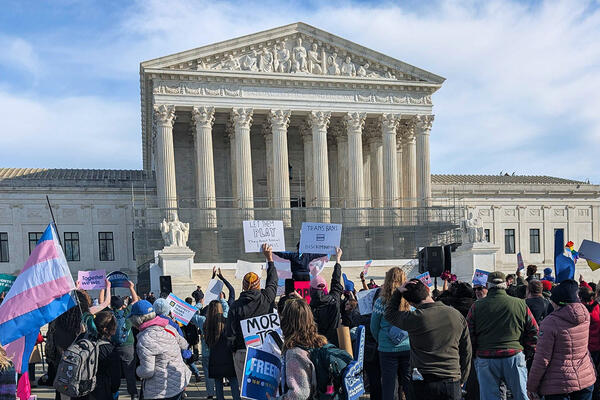
    On Tuesday, the high court considered the legality of the bans in Idaho and West Virginia.

    In more than three hours of oral arguments, the justices and attorneys debated when there should be exceptions allowed to broad legislation that discriminates against specific groups, how the presence or absence of medical testosterone regulation and biological performance advantages affect the legality of these prohibitions, whether sex should be defined as biological sex under Title IX, and what Title IX’s allowance for sex-segregated teams means if transgender women are allowed to play on women’s teams.  

    “You don’t think we should have an operating definition of sex in Title IX?” Chief Justice John Roberts said at one point to an attorney representing a trans child. 

    Lawyers representing the students who have challenged the bans said the cases were about access to athletics for a small number of transgender people, including those who are regulating their testosterone.  Kathleen R. Hartnett, an attorney challenging the Idaho ban, said her client “has suppressed her testosterone for over a year and taken estrogen,” saying the Idaho law “fails heightened scrutiny” as applied to such trans women “who have no sex-based biological advantage as compared to birth sex females.” 

    Twenty-seven states ban trans women from participating at some level of athletics, according to lawyers both defending and arguing against such prohibitions. Repeatedly Tuesday, Justice Brett Kavanaugh asked whether states that don’t have such bans are breaking the law or should be allowed discretion—suggesting he’s considering a ruling affecting more than the restrictions in Idaho and West Virginia.

    Kavanaugh asked whether states without prohibitions are violating Title IX and the Constitution’s Equal Protection Clause, and whether sex under Title IX could reasonably be interpreted to allow different states to define it differently. He said trans participation can harm girls who don’t make the cutoff for teams, but also expressed hesitancy to rule nationally, asking why the court should  “constitutionalize a rule for the whole country while there’s still … uncertainty and debate.” 

    Justice Samuel Alito didn’t ask many questions, but when he did, he homed in on how sex should be defined under Title IX. He asked how the court could determine discrimination based on sex without determining what sex means. He also asked whether female athletes who oppose transgender women on their teams should be considered “deluded” or “bigots.” 

    At one point, Justice Neil Gorsuch said that “I’ve been wondering what’s straightforward after all this discussion.” Regarding whether puberty blockers eliminate all competitive advantage, Gorsuch said there’s a “scientific dispute about the efficacy of some of these treatments.” 

    Almost a year ago, long after West Virginia and Idaho passed their laws, President Trump signed an executive order banning trans women from participating in women’s sports and threatening universities with loss of federal funding if they disobey. The next day, the NCAA announced a policy restricting “competition in women’s sports to student-athletes assigned female at birth only.” 

    The Trump administration has since pressured institutions to bar trans women. In April, for example, the Education Department’s Office for Civil Rights concluded that the University of Pennsylvania violated Title IX by allowing a trans woman to compete on a women’s sports team—presumably referring to Lia Thomas, who last competed on the swim team in 2022, in accord with NCAA policies at that time.

    Idaho and West Virginia

    The court took up two cases Tuesday, Little v. Hecox and West Virginia v. B.P.J. These suits, which center on whether anti–transgender participation laws violate Title IX and the Fourteenth Amendment’s Equal Protection Clause, have been ongoing for years. 

    In 2020, Idaho became the first state to pass a law outright banning trans girls and women from participating in school sports matching their gender identity. Lindsay Hecox is a trans woman who was nevertheless able to participate in women’s club running and club soccer at Boise State University because she sued that same year and a district court blocked enforcement of the law against her.

    In 2024, her lawyers wrote that she tried out for the university’s women’s cross-country and track teams but didn’t make it, “consistently running slower than her cisgender women competitors.” Her attorneys stress that her “circulating testosterone levels are typical of cisgender women.”

    Hecox’s attorneys had opposed the Supreme Court taking up the case, previously writing that it’s “about a four-year-old injunction against the application of [the Idaho law] with respect to one woman, which is allowing her to participate in club running and club soccer.” Then, in September 2025, her lawyers argued the case had become moot, saying Hecox dismissed her claims and “committed not to try out for or participate in any school-sponsored women’s sports covered by” the state law. 

    “In the five years since this case commenced, Ms. Hecox has faced significant challenges that have affected her both personally and academically,” including an illness and her father’s death, her lawyers wrote. They said she’s “come under negative public scrutiny from certain quarters because of this litigation, and she believes that such continued—and likely intensified—attention in the coming school year will distract her from her schoolwork and prevent her from meeting her academic and personal goals.”

    “While playing women’s sports is important to Ms. Hecox, her top priority is graduating from college and living a healthy and safe life,” they wrote. 

    But attorneys defending the Idaho law have argued not to dismiss the case—a position that may allow a national ruling from the high court. 

    Protesters gathered outside the Supreme Court on Tuesday as the justices heard arguments in two cases concerning trans athletes.

    Ryan Quinn | Inside Higher Ed

    On Tuesday, Alan M. Hurst, Idaho’s solicitor general, argued that the case wasn’t moot, saying Hecox’s plans about whether to play sports have changed before and may change again. Justice Sonia Sotomayor challenged this, saying Hurst was asking the court to “force an unwilling plaintiff … to continue prosecuting this case.”  Justice Ketanji Brown Jackson said “it’s a little odd that a defendant would not want a case dismissed.” 

    Hurst argued that Idaho’s law wasn’t about excluding transgender people, saying the Legislature there instead “wanted to keep women’s sports women-only.” He also said testosterone doesn’t reliably suppress performance. 

    “Sports are assigned by sex because sex is what matters in sports,” Hurst said. 

    Justice Amy Coney Barrett asked whether Hurst was arguing to allow separation by biological sex of even 6-year-olds in sports. Hurst replied that even at that age, boys have a small advantage, but co-ed sports could be an option. 

    The West Virginia case was filed by the mother of Becky Pepper-Jackson, then a transgender sixth grader, back in 2021. Judges blocked enforcement of the Mountain State’s law against the student.   

    “In West Virginia’s telling, it passed [its law] to ‘save women’s sports’ by staving off an impending tidal wave of ‘bigger, faster, and stronger males’ from stealing championships, scholarships, and opportunities from female athletes,” the student’s lawyers wrote. “In reality, West Virginia’s law banned exactly one sixth-grade transgender girl from participating on her school’s cross-country and track-and-field teams with her friends.” 

    Her attorneys wrote that the sports she’s participated in are non-contact, and that she “has received puberty-delaying medication and gender-affirming estrogen that allowed her to undergo a hormonal puberty typical of girls, with all the physiological musculoskeletal characteristics of cisgender girls and none of the testosterone-induced characteristics of cisgender boys.” 

    They wrote that she “wants to play sports for the same reasons most kids do: to have fun and make friends as part of a team.” She’s participated in post-season shot put and discus, “where her performance is well within the range of cisgender girls her age,” they wrote.

    Lawyers defending the West Virginia law, though, wrote that “male athletes identifying as female are increasingly competing in women’s sports, erasing the opportunities Title IX ensured.” They wrote that “women and girls have lost places on sports teams, surrendered spots on championship podiums, and suffered injuries competing against bigger, faster, and stronger males.” 

    Michael R. Williams, West Virginia’s solicitor general, said the state’s law “is indifferent to gender identity because sports are indifferent to gender identity,” and said “we don’t have an actual transgender exclusion.” He also argued that Title IX defines sex as biological sex because that was the understanding at the time Congress passed it.

    Barrett suggested West Virginia’s arguments could be used by a state to argue for separate math classrooms if it produced a study saying women’s presence in calculus was holding men back. Gorsuch made similar arguments. 

    Federal Intervention

    In both cases Tuesday, the federal government defended the state laws. Hashim M. Mooppan, the U.S. principal deputy solicitor general, said Title IX regulations “say you can separate based on sex … the circulating testosterone levels are just legally irrelevant under the regulations.” He also said transgender women aren’t “being excluded from participating on the boys team.”  

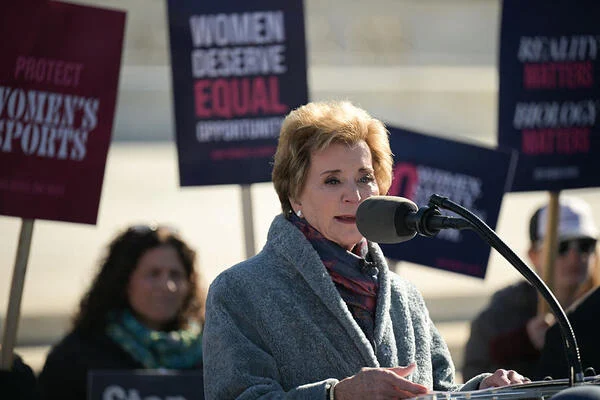
    During and after the oral arguments, hundreds of proponents for trans athletes and opponents held dueling rallies right next to each other outside the Supreme Court, each with their own sound systems and speakers. Education Secretary Linda McMahon was among those who spoke in favor of the state bans.

    US Secretary of Education Linda McMahon, wearing a coat, speaks into a microphone.

    Education Secretary Linda McMahon speaks outside the US Supreme Court as justices hear arguments in challenges to state bans on transgender athletes in women’s sports.

    Photo by Oliver Contreras / AFP via Getty Images

    In her remarks, McMahon praised a legal organization, Alliance Defending Freedom, that was defending the bans, and touted the Trump administration’s actions to “restore common sense by returning sanity to the sexes.” She also criticized the Biden administration’s regulations that declared that sex-based discrimination, which is barred under Title IX, includes discrimination based on sexual orientation or gender identity. A federal judge vacated those Title IX regulations in early 2025.

    “In just four years, the Biden Administration reversed decades of progress, twisting the law to argue that ‘sex’ is not defined by objective biological reality, but by the subjective notion of ‘gender identity,’’’ she said. (The Title IX regulations took effect in August 2024 but federal courts had already blocked them in dozens of states.) 

    McMahon added that while the Supreme Court deliberates, the administration will continue enforcing Title IX “as it was intended, rooted in biological reality to ensure fairness, safety, and equal access to education programs for women and girls across our nation.”

    “As President Trump has made clear, America is in its Golden Age, one where female students and athletes have equal access to fair and safe competitions and female-only intimate spaces, free from divisive and discriminatory ideologies,” she said.

    Source link

  • Senate advances bills rejecting Trump’s efforts to slash research funding

    Senate advances bills rejecting Trump’s efforts to slash research funding

    Dive Brief:

    • Senate lawmakers have engineered bipartisan fiscal 2026 spending proposals that would largely maintain scientific funding, defying the Trump administration’s calls for massive cuts to research. 
    • Budget bills released by Senate committees in recent days would provide $188.3 billion in total scientific research funding — 21.3% more than requested by the White House, according to an analysis published last week by the American Association for the Advancement of Science.
    • However, legislators’ proposed research funding levels would still fall 3.6% below fiscal 2025 spending. The full Senate voted on Monday to advance the bills, teeing up a final vote. Congress needs to pass a budget by Jan. 30 to avoid another shutdown.

    Dive Insight:

    Since retaking office last year, President Donald Trump and his administration have pushed to downsize and disrupt the country’s longstanding system of scientific research, which for decades has relied on a financial partnership between the federal government and scientists, many of them attached to universities. 

    Headed into 2026, the Trump administration proposed broad-based cuts to the research. In all, it asked for $155.2 billion for scientific research — a 21% drop from fiscal 2025 levels — according to AAAS. 

    That figure obscures the depth of some agencies’ requested cuts. For example, the National Science Foundation under Trump asked Congress for a $3.9 billion budget — well under half its 2025 funding levels. Instead, the Senate’s appropriations committee on Thursday released an $8.8 billion budget for the NSF to “sustain U.S. leadership in scientific discovery.” 

    The Senate’s NSF proposal included investments in quantum information, artificial intelligence, regional innovation, and “critical” research facilities. 

    The Trump-appointed head of the National Institutes of Health requested $27.9 billion, a nearly 40% decrease from 2025’s $46 billion. The agency said the shrunken budget aimed to “maximize the impact of NIH research by streamlining processes and more efficiently providing funding.” 

    The Senate Appropriations committee rejected the administration’s proposal, instead advancing a $48.7 billion budget for NIH, according to Sen. Patty Murray’s office. Murray is the top-ranking Democrat on the committee.

    The bill rejects the Trump administration’s harmful efforts to defund and dismantle critical work that HHS oversees — maintaining important funding for programs across HHS that touch the lives of nearly every American, while providing targeted increases to important bipartisan priorities,” Murray’s office said in a bill summary.

    While overall, Senate plans fall short of fiscal 2025 scientific research spending, its proposed $44.9 billion budget for basic research — which explores fundamental principles of nature and science — would tick up by 2.4% compared to last year, according to AAAS. 

    The provisional budget bill set to expire at the end of this month was a stopgap that ended the longest federal government shutdown in U.S. history.

    Source link

  • A royal Paine | The Foundation for Individual Rights and Expression

    A royal Paine | The Foundation for Individual Rights and Expression

    This essay was originally published in The Dispatch on Jan. 9, 2026.


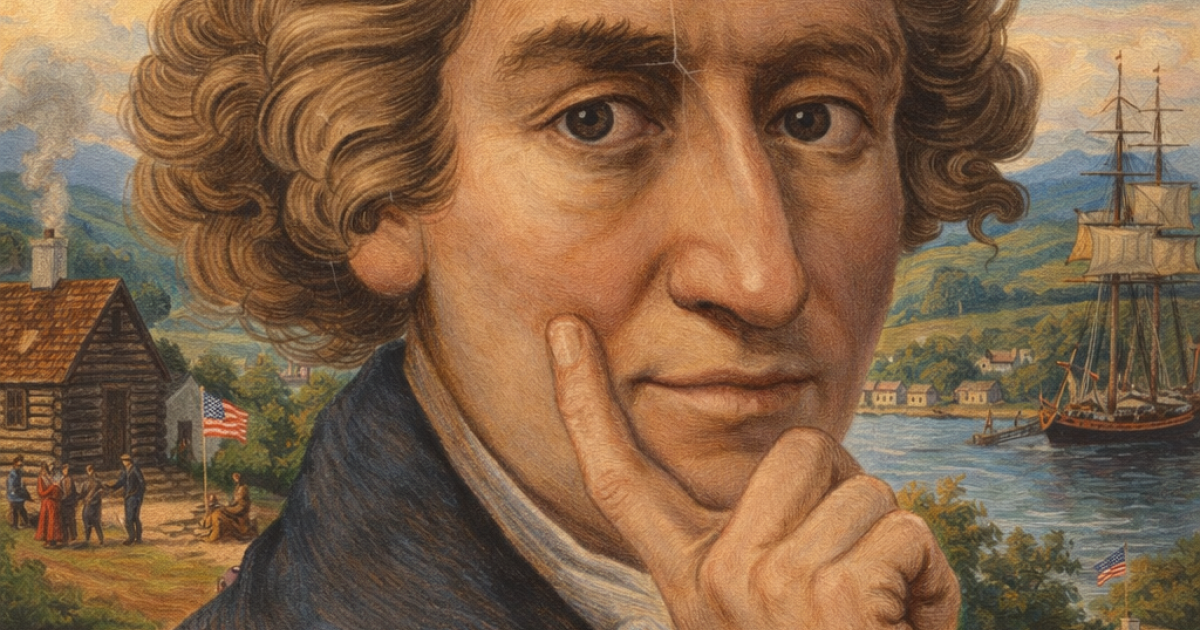
    Accounts differ, but sometime between late November and the middle of December 1774, a terribly sick man was carried off a ship in colonial Philadelphia. Riddled with typhus, the middle-aged Brit was too weak to walk after his long voyage from London. But in his pocket were life preservers, notes of introduction from none other than Philadelphia’s favorite son, Benjamin Franklin, in London lobbying on behalf of the colonies.

    The bearer Mr Thomas Pain is very well recommended to me as an ingenious worthy young man. He goes to Pennsylvania with a view of settling there . . . If you can put him in a way of obtaining employment as a clerk, or assistant tutor in a school, or assistant surveyor, (of all which I think him very capable,) so that he may procure a subsistence at least, till he can make acquaintance and obtain a knowledge of the country, you will do well.

    If the British had any idea of who this Thomas Pain would become — he wouldn’t add the “e” until later — they may never have let him set sail to the New World to begin with. In little more than a year, this impoverished 37-year-old, who had known only heartache and failure in Britain, would find his voice as a successful editor and journalist in America’s largest city. And with his newfound purpose and confidence, he would write one of the great world-changing pieces of political propaganda ever published and help birth a free and independent United States of America.


    On Jan. 10, 1776, Thomas Paine unleashed Common Sense on the colonial public. In an economical 47 pages, which he wrote in the fall of 1775, Paine’s anonymous pamphlet articulated in plain English the rising sentiment that there could be no reconciliation with the mother country. Brimming with rage after the outbreak of hostilities at Lexington and Concord — “No man was a warmer wisher for reconciliation than myself, before the fatal nineteenth of April 1775” — Paine argued for complete independence from Great Britain and attacked hereditary monarchy with a populist and democratic fire.

    King George III, according to Paine, was “an inveterate enemy of liberty” with a “thirst for arbitrary power.” But Paine didn’t just attack this king — he attacked hereditary monarchy in all its perniciousness and absurdity. He told his fellow colonists of how absolute power corrupted absolutely, tracing the rise of monarchy not to “an honorable origin,” but to one “principal ruffian of some restless gang” who made himself “chief among plunderers.” He wrote of how an accident of birth could mean a child ascending to the crown or a king “worn out with age and infirmity” remaining on the throne, exposing the public “to every miscreant, who can tamper successfully with the follies either of age or infancy.” With his acid pen, Paine appealed to the intelligence of anyone who could believe a mortal was “born to reign” and delivered one of the pithiest lines against monarchy ever: “One of the strongest natural proofs of the folly of hereditary right in kings, is, that nature disapproves it, otherwise she would not so frequently turn it into ridicule by giving mankind an ass for a lion.”

    Sometimes Paine’s arguments for independence were practical. “There is something very absurd, in supposing a continent to be perpetually governed by an island,” he wrote, noting how ridiculous it was to petition a government 3,000 miles away that didn’t know, much less care, about the colonists. Paine declared now was the time to strike. Otherwise, like cowards, colonial men would be “leaving the sword to our children.” And for those who thought reconciliation still possible, he had nothing but scorn: “But if you have, and still can shake hands with the murderers, then are you unworthy the name of husband, father, friend, or lover.”

    But Paine went farther than just arguing for independence — he wrote of a social revolution, too. “We have it in our power to begin the world over again” didn’t just mean breaking from England. It meant representative democracy. It meant the rule of law. It meant respect for common people. “Of more worth is one honest man to society and in the sight of God,” Paine wrote, “than all the crowned ruffians that ever lived.”

    Maybe Paine had the temerity to write such stirring and nakedly seditious words because he had nothing to lose — aside from his life, of course. Before coming to America, Paine was a failed corset maker and excise officer with minimal formal education whose first wife died in childbirth, along with their child. He had to sell his belongings to avoid debtor’s prison before skipping London for Philadelphia. As eminent historian of the American Revolution Bernard Bailyn wrote, “One had to be a fool or a fanatic in early January 1776 to advocate American independence.”

    Paine’s brazenness was rewarded. Common Sense immediately became a blockbuster. The first run of 1,000 pamphlets sold out in days — the author known only as an “Englishman” on its cover. After a dispute with the original publisher, Paine paid for another run of 6,000 himself, priced it to undercut the first publisher, included his responses to loyalist criticism in the new edition, and forswore all royalties, donating the proceeds to Gen. George Washington’s Continental Army. Known as the Bradford edition, the author’s name was displayed clearly: “Thomas Paine.” The now-39-year-old failure from Thetford, England, had stepped out of obscurity and into history.

    The impact of Common Sense cannot be overstated. Within three months, printers sold 120,000 copies — a runaway bestseller in a population of 2.5 million colonists. Those who could not read had it read aloud to them. It wasn’t just popular, it was persuasive — to both commoners and the colonial rebel elite. A fan from Connecticut gushed that Paine had “declared the sentiments of millions.” He continued, “The doctrine of Independence hath been in times past, greatly disgustful; we abhorred the principle. It is now become our delightful theme and commands our purest affections.” Another reader from Massachusetts declared, “Nothing else is now talked of, and I know not what can be done by Great Britain to prevent it.”

    But Paine went farther than just arguing for independence — he wrote of a social revolution, too. “We have it in our power to begin the world over again” didn’t just mean breaking from England. It meant representative democracy. It meant the rule of law. It meant respect for common people.

    Writing to Washington, Gen. Charles Lee believed it would “give the coup-de-grace to Great Britain.” Washington, in turn, would write in an April 1776 letter that the pamphlet was “working a powerful change there in the Minds of many Men” in Virginia. Maybe the best evidence of Thomas Paine’s outsized impact on the founding comes from none other than John Adams. It wouldn’t be an exaggeration to say that Paine lived rent-free in the irascible and petty Founding Father’s head. The more hierarchical-minded Adams detested Paine and his democratic principles. By the end of his life, Adams described the pamphlet as “a poor, ignorant, malicious, short-sighted, Crapulous Mass.” Yet Adams would also write, “Without the pen of Paine, the sword of Washington would have been wielded in vain.” Always worried about his legacy, an exasperated John Adams admitted to Thomas Jefferson in an 1819 letter: “History is to ascribe the American Revolution to Thomas Pain.”

    Historian Jill Lepore puts it bluntly: “Common Sense made it possible to declare independence.” Less than six months later, the Second Continental Congress officially separated from Great Britain — the road to independence paved by Paine’s pen.


    If we were to stop at Common Sense, that work alone should have cemented Paine’s place beside Washington, Jefferson, Adams, and Franklin in the nation’s true pantheon of Founding Fathers. But when American patriots needed another jolt in defense of the Cause, he wielded his pen again to save the infant nation from being strangled in its crib.

    The months after independence were a military disaster. Washington and his army were on the run, abandoning New York City and retreating across New Jersey. Morale withered. Desertions spiked. Enlistment contracts were on the verge of expiring. Congress evacuated Philadelphia for Baltimore. The stench of defeat was everywhere.

    After Congress declared independence, Paine enlisted, eventually becoming an aide to Gen. Nathanael Greene. But Paine was no military man; he was a writer and journalist. With the war almost over before it ever began, Paine started to write the first of his 13 Crisis essays — one for each colony — which were rousing defenses of the Cause to keep morale up and public opinion behind the war.

    The first American Crisis hit Philadelphia streets a week before Christmas 1776, signed “Common Sense.” Paine once again gave the work away for free to keep the costs down, with printers rushing out 18,000 copies. Washington, now camping just north of British-occupied Trenton on the Pennsylvania side of the Delaware, obtained a copy. The commander-in-chief ordered Paine’s words read to the remaining troops, freezing and ill-provisioned, as they prepared for their Christmas crossing of the river — a Hail Mary if there ever was one to save the Cause. It began:

    These are the times that try men’s souls. The summer soldier and the sunshine patriot will, in this crisis, shrink from the service of their country; but he that stands by it now, deserves the love and thanks of man and woman. Tyranny, like hell, is not easily conquered; yet we have this consolation with us, that the harder the conflict, the more glorious the triumph. What we obtain too cheap, we esteem too lightly: it is dearness only that gives every thing its value.

    On the morning of Dec. 26, the inspired Continental Army routed the Hessian mercenaries hired by the British to augment the redcoats. According to historian Harvey Kaye, author of Thomas Paine and the Promise of America, the first Crisis “served both to recruit militiamen back to their units and to persuade locals to volunteer aid and assistance.”

    Disaster averted. The war continued.


    If you walk through the visitor’s center in Washington’s Crossing, Pennsylvania, you’ll naturally be surrounded by art and exhibits celebrating the genius and heroism of Gen. Washington and his mythical nighttime crossing of the Delaware. But off in a corner next to the bathrooms, almost as an afterthought, sits a small sculpture of Thomas Paine, emblazoned with arguably his most famous line: “These are the times that try men’s souls.”

    Time hasn’t proven kind to the radical British expat. “Thomas Paine is, at best, a lesser Founder,” Lepore notes in her wry fashion. “In the comic-book version of history that serves as our national heritage, where the Founding Fathers are like the Hanna-Barbera Super Friends, Paine is Aquaman to Washington’s Superman and Jefferson’s Batman.”

    The reasons are many.

    Temperamental and argumentative in person, Paine could be difficult to like. Historians of Paine have speculated that he suffered serious bouts of depression and may have been bipolar. As Franklin’s daughter Sarah Bache would write to him in France from Philadelphia in 1781:

    There never was a man less beloved in a place than Payne is in this, having at different times disputed with everybody, the most rational thing he could have done would have been to have died the instant he had finished his Common Sense, for he ever again will have it in his power to leave the World with so much credit.

    It also didn’t help that he was a nobody before emigrating to America — flotsam and jetsam from the Old World washing on the New World’s shores. Paine was common rabble to the well-born members of America’s founding generation.

    His later writings from Europe, particularly The Rights of Man and The Age of Reason, however, would make him despised. In The Rights of Man, Paine took up the cause of the French Revolution. It was a full-throated defense of humanity’s natural rights and democratic republicanism against Edmund Burke’s conservative denunciation of the revolution in his Reflections on the Revolution in France. Then to hit the trifecta, Paine published The Age of Reason, a rationalist attack on all organized religions, punctuated by his declaration: “My own mind is my own church.” Benjamin Franklin told him not to publish it, writing, “He that spits against the wind, spits in his own face.” Paine did it anyway. Franklin was proven correct — its publication destroyed whatever reputation he had left.

    The Age of Reason would end Paine’s friendship with Samuel Adams, who asked him contemptuously: “Do you think that your pen … can unchristianize the mass of our citizens?” Even Teddy Roosevelt would get in on the hate generations later, calling Paine “a filthy little atheist.” (Paine, similar to other Founding Fathers like Jefferson, was a deist.)

    John Adams, ever ready to pounce on his enemy, summarized the elite’s disdain for Paine and all his free-thinking mischief in an 1805 letter. “For such a mongrel between pigs and puppy, begotten by a wild boar on a bitch wolf, never before in any age of the world was suffered by the poltroonery of mankind to run through such a career of mischief. Call it then the Age of Paine.”

    He didn’t mean it as a compliment.

    Paine remains in the popular wilderness 250 years after the publication of Common Sense. No monument graces his name in Washington, D.C., or Philadelphia. No movie or limited series tells his story. The writers of HBO’s John Adams leave him out entirely — the Rodney Dangerfield of the American Revolution. But if that 37-year-old immigrant never had set sail for Philadelphia in the fall of 1774, we might not be here at all.

    Source link