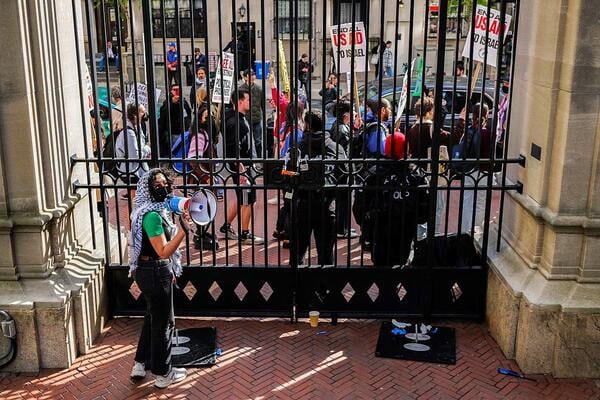
Columbia University expelled and suspended multiple students for participating in allegedly disruptive protest activity in spring 2024 and earlier this year it announced on Tuesday.
Officials made the decision on Monday, according to the university statement, saying the action is the “final set of findings” by the University Judicial Board (UJB) related to protests “from that period.”
Sanctions passed down from Columbia relate to a pro-Palestinian protest encampment last spring and a May takeover of a room in the Butler Library, according to the university statement. Columbia responded to that incident by placing 71 students on interim suspension in May.
“The sanctions issued on July 21 by the University Judicial Board were determined by a UJB panel of professors and administrators who worked diligently over the summer to offer an outcome for each individual based on the findings of their case and prior disciplinary outcomes,” Columbia officials wrote in an unsigned statement. “While the University does not release individual disciplinary results of any student, the sanctions from Butler Library include probation, suspensions (ranging from one year to three years), degree revocations, and expulsions.”
Officials added that “disruptions to academic activities” are a violation of university policies.
Though Columbia did not specify how many students were disciplined, the pro-Palestinian student group CU Apartheid Divest alleged that as many as 80 were expelled or suspended. According to CU Apartheid Divest, disciplinary letters sent to suspended students require them to submit apologies in order to return to campus in one to three years.
Student protesters accused officials of punishing students as a concession to the Trump administration, which froze hundreds of millions of dollars in federal research funding due to alleged antisemitism at Columbia tied to pro-Palestinian protests.
“The sanctions are believed to be part of a federal deal Columbia is about to announce,” the group wrote in a social media post.
Earlier this year Columbia agreed to broad demands by the federal government, including overhauling disciplinary processes. However the $400 million in frozen federal funds have not yet been restored despite those concessions.
Multiple media outlets have reported that Columbia is nearing a deal with the Trump administration to resolve complaints of antisemitism on campus. The Wall Street Journal reported that while a potential deal would likely restore federal research funds, it would also cost the university $200 million in a settlement fee.
Columbia did not respond to a request for comment from Inside Higher Ed.
University disciplinary efforts drew a tepid response from the House Education and Workforce Committee which issued a statement from Chairman Tim Walberg, a Michigan Republican.
“Columbia has more progress to make before Jewish students can truly feel safe on its campus,” he said. “The Committee’s work has underscored the depth and breadth of antisemitism at Columbia that can’t be ignored. We will continue to investigate antisemitism at Columbia and other universities and develop legislative solutions to address this persistent problem.”
While Columbia reportedly considers a deal with the Trump administration, Ivy League peer Harvard University has started a court battle to regain billions in federal research funding.
It also sued the government for attempting to block it from enrolling international students. A federal court temporarily blocked the Trump administration from choking off Harvard’s international enrollment, and the same federal judge has not yet ruled on the legality of the government’s freezing of Harvard’s grants and contracts.
However, the judge appeared skeptical of the government’s position at Monday’s hearing.
Don’t want to publish an opinion on your blog you disagree with? Too bad, the government forces you to publish it. Criticize the mayor? Go to jail — and good luck trying to sue the mayor for violating your First Amendment rights. Want to access online content legal for adults without jeopardizing your privacy and reputation? Think again, your state legislature demands you reveal your identity first.
That’s not the America I know. Nor is it one a robust First Amendment would ever allow. But those constitutional threats came up before the Supreme Court during its past two terms, thanks to state legislatures and government officials who would prefer to play thought police instead of obey the First Amendment’s commands.
For the most part, the Supreme Court did as it has for decades: It upheld the First Amendment as a mighty check on government intrusion into our thoughts, on public debate, and in the search for truth. Still, a couple of the Court’s decisions this year broke from that trend, causing First Amendment defenders everywhere to raise their collective eyebrows.
Americans’ pilgrimage to the online world has placed free speech on the internet at the forefront of the Court’s recent First Amendment decisions. And that includes a case involving our Lone Star State. Last July, in Moody v. Netchoice, the Supreme Court considered Texas and Florida laws that tried to dictate how social media companies decide what political and ideological content to allow, and how to present it.
Before the Supreme Court sent the cases back to the appeals courts for another look, it made one thing clear: The First Amendment bars the government from telling social media platforms what they can and can’t publish, just as it bars the government from telling newspaper editors what they can or can’t print. As Justice Kagan remarked, “on the spectrum of dangers to free expression, there are few greater than allowing the government to change the speech of private actors in order to achieve its own conception of speech nirvana.”
In another pair of rulings, the Supreme Court considered two instances of local officials blocking citizens from commenting on the officials’ social media pages about the government’s performance. Although the Court didn’t rule in favor of either party, it confirmed the First Amendment limits officials’ power to block Americans from commenting on social media pages an official uses to conduct government business.
With these social media decisions, the Court underscored that core First Amendment principles apply just as strongly in the digital age, helping to secure free speech online from government overreach.
On the other hand, this most recent Supreme Court term found the Court twice deferring to governmental regulations of online expression. First, in TikTok v. Garland, the Court held the federal government’s effective ban on the popular social media app TikTok does not violate the First Amendment, even as half the United States uses the platform to speak and to receive information. The Court largely yielded to the government’s asserted concerns over national security, despite, as many pointed out, Congress’s failure to provide enough evidence showing TikTok poses a national security threat. In fact, the administration’s continued unwillingness to enforce the ban punctuates how suspect Congress’s national security concerns were.
And in another decision, Free Speech Coalition v. Paxton, the Court upheld Texas’s law requiring adults to verify their age before accessing websites with sexually explicit material that is, while legal for adults, “obscene for minors.” Breaking from decades-old prior precedent that invalidated similar laws, the Court held the First Amendment doesn’t protect adults “accessing material obscene to minors” until they verify their age — even though that material enjoys full First Amendment protection.
While the Court noted the accepted practice of ID checks for sexually explicit material in the physical world, it all but skirted the unique and serious privacy implications digital ID checks impose, in a time where Americans suffer harm from regular data breaches. Those privacy scares will chill many adults from seeking speech the First Amendment protects for their use.
For all that, both the TikTok and Free Speech Coalition decisions are narrow ones. So on the whole, they should not undermine the broad protections for internet speech the Supreme Court has confirmed in prior terms. Still, any time the government censors speech on shaky evidence about national security concerns, or tries to burden adult access to protected speech in the name of childproofing the internet, it raises a First Amendment red flag that should concern us all.
Outside of the digital world, the Supreme Court handed down several decisions over the last two terms vindicating the First Amendment as a vital check on overzealous government officials abusing their power to silence opinions they don’t like. For instance, in NRA v. Vullo, the Supreme Court held officials in New York violated the First Amendment when they coerced financial services and insurers and underwriters to sever ties with the National Rifle Association — all because the state disagreed with the NRA’s constitutionally protected advocacy. That’s hugely important for freedom of speech, affirming that the government can’t strong-arm third-parties into silencing Americans because of the views they express.
Another decision centered on a San Antonio-area woman was a good step towards ensuring government critics have a robust remedy when officials wrongfully arrest them. In Gonzalez v. Trevino, the Supreme Court clarified that Sylvia Gonzalez, a long-time government critic, could sue the local officials who singled her out for arrest after she called for the city manager’s removal.
And just this May, the Supreme Court halted the Maine Legislature’s denial of State Representative Laurel Libby’s right to vote just because the legislature’s political majority took offense to the lawmaker’s First Amendment-protected social media post about a transgender athlete participating in a high school event. Not only did the majority’s act infringe Rep. Libby’s First Amendment right to comment on public issues, it also deprived her constituents of the representation our republican form of government guarantees.
At its core, the Court’s ruling in Libby v. Fecteau underscored a vital constitutional principle: Political majorities cannot censor and exclude others from the democratic process based on the views they express. That’s a first principle worth upholding, no matter where a speaker falls on the ideological spectrum.
And we should all be glad the Supreme Court upheld that principle here, in a time where protecting the uniquely American freedoms to dissent and voice our opinions without fear of the government’s strong hand is as important as ever.
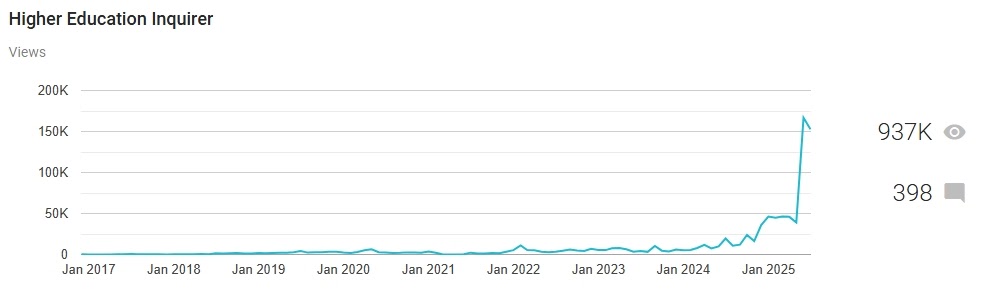
The Higher Education Inquirer (HEI) is approaching a significant milestone: nearly one million total views expected by September 2025. This achievement underscores the growing demand for investigative journalism that holds higher education institutions accountable.
HEI’s traffic growth has been steady for more than a year with an explosive rise over the last few months. In the first quarter of 2025, the site recorded about 132,000 views, showing increased interest. By June, monthly views passed 160,000. The highest single-day traffic came yesterday, July 21, 2025, with 10,391 views, breaking previous records. This peak coincided with the release of several articles on economic and social issues facing students, student loan debtors, and young workers.
Key articles included Bryan Alexander’s examination of whether higher education still makes financial sense for students. Our staff contributed reports on young workers’ declining confidence in the job market and the expanding role of fintech companies like SoFi in student loans.
One of the most significant examples of HEI’s investigative reporting has been its ongoing coverage of corruption and scandal in the Los Angeles Community College District (LACCD). In May and June 2025, HEI published detailed exposés documenting alleged fraud, retaliation against whistleblowers, grade manipulation, wage theft, and falsification of faculty credentials. These stories brought to light longstanding issues within LACCD, including actions by administrators such as Annie G. Reed, whose conduct has repeatedly raised serious concerns since at least 2016.
The impact of HEI’s coverage extended beyond readership numbers. After critical articles published by allied independent media outlets were removed from online platforms, HEI stood firm in reporting these issues, highlighting the challenges faced by whistleblowers and the vital role of independent journalism in holding institutions accountable.
In July 2025, HEI published an in-depth investigation revealing the Pentagon’s longstanding relationship with for-profit colleges, particularly through the Council of College and Military Educators (CCME). The investigation uncovered how these institutions have exploited military-connected students, veterans, and their families, benefiting from federal programs like the Post-9/11 GI Bill and Department of Defense Tuition Assistance. Despite multiple Freedom of Information Act (FOIA) requests, the Department of Defense has withheld critical documents, raising questions about transparency and accountability in military education partnerships.
Additionally, HEI’s reporting on the exploitation of veterans under the guise of service highlighted how politicians, government agencies, and nonprofits have failed to protect those who have served. The investigation revealed that instead of supporting veterans, these entities have perpetuated systems that prioritize self-interest over the well-being of veterans, leading to wasted benefits and poor educational outcomes.
Several factors explain HEI’s growth. The publication relies on original documents obtained through Freedom of Information Act requests, legal filings, and insider accounts to reveal facts often missed by mainstream media. This research appeals to readers seeking solid information.
HEI focuses on long-term issues such as adjunct faculty exploitation, college closures, student debt, and the privatization of public education, rather than fleeting news. This approach builds a loyal audience interested in ongoing analysis.
The site offers free access without paywalls or advertising, encouraging sharing and reader interaction through comments, tips, and feedback. Its presence on social media and forums like Reddit helps reach more readers organically.
Central to HEI’s mission is a commitment to transparency, accountability, and value in higher education. The publication seeks not only to reveal problems but also to hold institutions and policymakers responsible. HEI stresses that higher education must deliver real financial, social, and intellectual value and that openness is key to achieving this.
The political and economic context has also contributed to HEI’s growth. Lasting effects of Trump-era policies—such as changes in Title IX enforcement, rollbacks of diversity efforts, and disputes over federal funding—have increased public interest. HEI’s clear, evidence-based coverage helps readers understand these complex changes.
Public concerns about rising student debt, now over $1.7 trillion nationwide, and doubts about the value of college degrees have also driven readers to HEI. At the same time, debates around campus culture and diversity heighten demand for balanced reporting.
As HEI nears its million-view goal, it plans to expand investigative work, grow its viewership base, and increase community engagement through interactive features and reader participation. The publication intends to continue monitoring higher education’s power structures and highlight factors affecting students, faculty, and institutions.
In a time of declining trust in mainstream media and widespread misinformation, HEI’s growth shows a strong need for journalism that is thorough, honest, and focused on those involved in higher education.
For readers seeking clear, direct insight on changes in colleges and universities, HEI offers an essential platform—living up to its motto, “Ahead of the Learned Herd.” Its rise marks a shift toward more accountable journalism in the field.
NEW ORLEANS — Kapri Clark used the $50 to help pay for her braces. Lyrik Grant saved half of it, and used the rest for dance classes. Kevin Jackson said he squandered the cash on wings, ride shares for dates and some DJ equipment he later tossed.
For the past five years, Clark, Grant, Jackson and hundreds of high schoolers in New Orleans have shopped — or saved — as part of a project to explore what happens if you give cash directly to young people, no strings attached.
“That was the most helpful thing ever,” said Clark, now a student at the University of Louisiana at Lafayette, who said she could still use that extra cash.
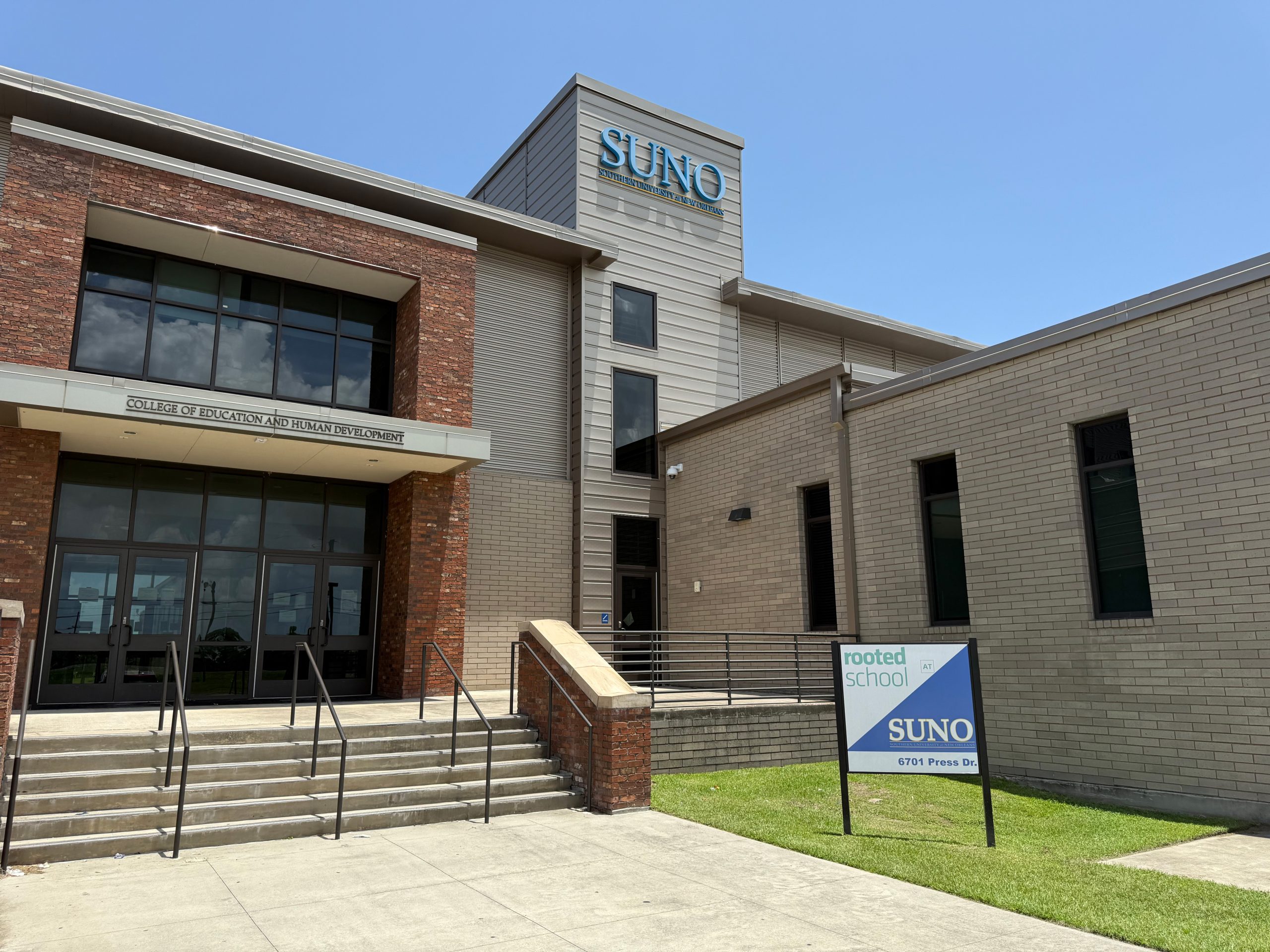
“The $50 study,” as it’s known, began at Rooted School, a local charter school, as an experiment to increase attendance. The study has since grown to eight other high schools in the city, as well as Rooted’s sister campus in Indianapolis, with students randomly selected to receive $50 every week for 40 weeks, or $2,000 total. By comparing their spending and savings habits to a larger control group, researchers wanted to figure out whether the money improved a teen’s financial capability and perception of themselves. They also wanted to know: Could the cash boost their grade-point averages and reading scores?
Now, as the experiment expands to Washington, D.C., and perhaps Texas, a final report of the $50 study suggests a little bit of spending cash can make a difference in young people’s lives.
The report, released Tuesday, shows students who received the cash payments were slightly more likely to attend school than those who didn’t. Academic performance did not differ between the groups. But financially, the extra cash helped students acquire stronger long-term planning skills and familiarity with savings accounts and other financial products. They ended the study, on average, with $300 saved away — a 15 percent savings rate, triple the national average for American adults.
“When young people are given the opportunity to manage money in low-stakes environments, they build the habits that shape long-term financial health,” said Stacia West, an associate professor at the University of Tennessee, Knoxville and co-founder of the Center for Guaranteed Income Research, which partnered with the Rooted School Foundation to run the study. “The short-term habits we’re seeing are laying the foundation for lifelong financial capability.”
Across the United States and the globe, hundreds of communities have tinkered with some form of universal basic income, or UBI, a social welfare program that provides people with regular cash payments to meet their needs. Direct cash transfer programs like the $50 study or the child tax credit for families are similar, but they often provide smaller amounts and target specific populations to boost a person’s income. Many studies have linked UBI to financial stability and better employment and health outcomes.
In the U.S. and Canada, researchers have found links between cash transfer pilots that focus on low-income families and better test scores and graduation rates for their kids. So far, though, few experiments have targeted young people or examined how the programs influence their lives specifically.
Talia Livneh, senior director of programs at the Rooted School in New Orleans, poses for a portrait on the school grounds. Credit: Daniella Zalcman for The Hechinger Report
“There’s a deep, deep distrust that we adults have of young people,” said Jonathan Johnson, CEO of the Rooted School Foundation, which operates the network’s four charter schools. “That distrust is to their detriment.”
In New Orleans, roughly 4 in 5 of Rooted students come from economically disadvantaged families, and during the pandemic, many struggled to prioritize school. Some students skipped class to provide child care for their working parents, or because they needed to work themselves, according to Johnson. With some seed funding from a local education nonprofit, Rooted started a “micropilot” to test whether cash could help students make ends meet and get themselves to school.
The original cohort included 20 students, half of whom received the $50 payment. In that micropilot, those receiving the cash saw their material wellbeing improve, meaning their family could more easily afford rent or utilities, and they gained skills around setting financial goals. Rooted added students from its Indianapolis campus and another high school in New Orleans, G.W. Carver. And for their final report released this week, researchers sifted through the spending and survey data from 170 students who received the cash payments and 210 students who did not.
The two-year report found students in the treatment group attended 1.23 more days of school, and spent close to half their funds on essentials like food and groceries. The report also noted that 70 percent of all students at the participating schools qualify for subsidized meals, suggesting “this spending may reflect efforts to meet immediate nutritional needs.” One 12th grader in a survey mentioned using the money to feed their siblings.
Kapri Clark recalled waiting every Wednesday morning for the $50 deposit to appear in her banking app. And every Wednesday afternoon, during her senior year at Carver High School, she put that money toward her $200 bill for braces she covered out of pocket.
She braided hair to cover the rest, and still books clients when she has time in between her studies to become a nurse at the Lafayette campus. Even in college, Clark can see the need for some supplemental income for herself and her peers.
“I make enough to take care of myself, but I watch every dollar,” said Clark. “There’s a lot of people struggling in life to eat, to live. Think if they got kids.”
Read Irvin, chief of staff for Collegiate Academies in New Orleans, a network of five charter high schools that includes Carver High, said the $2,000 had provided the extra incentive a few students needed to stick it out until graduation. “That’s incredibly impactful for their life trajectories,” she said.
In January 2024, the city of New Orleans invested $1 million to bankroll another extension of the study, as part of an economic mobility initiative that tapped federal Covid relief funding. During the pandemic, a skyrocketing murder rate and spike in overall crime had convinced the city to help more residents, especially young people, find stability.
“Research shows that people who are economically stable are less likely to commit crime,” said Courtney Wong, the city’s deputy director of economic development.
The city funding not only expanded the $50 study to nine high schools, it also set a longer timeline for the research: About 800 seniors who participate will have their data tracked for 18 months after their graduation.
A former high school teacher and administrator, Wong said $50 could have made a difference in the lives of many of her former students.
“This targets young people in that perfect moment,” she said. “They’re in the right spot where even a little amount of help could have big, positive impacts before issues of crime or unemployment or things like that even come up.”
Researchers also found students who received the $50 reported greater agency. They felt more control over their finances and more confidence about making long-term financial decisions. Students, according to the report, aligned their spending to future goals such as college prep classes and getting a driver’s license.
Lyrik Grant, a rising junior at Carver High School, is the second-youngest of six kids with two working parents. She could ask them for help, but the $50 allowed Grant to afford the tights and tops she needed for dance class on her own. The money helped cover a college entrance exam, which she aced, and Grant wants to learn how to drive soon.
“My first thought was: What am I going to do with all this money?” Grant said, adding that the cash helped some of her classmates find financial stability. “Children don’t always want to spend their parent’s money, and some parents don’t always have money to give them.”
Still, for some students, the money wasn’t exactly life-changing. Irvin of Collegiate Academies said many used the cash to “just be teenagers.”
That was true for Kevin Jackson, a rising junior at Rooted School New Orleans.
“It’s cool to get free money,” he said. “I was spending it on the TikTok shop: posters, keyboards, lights — stuff I liked, not stuff I actually needed.”
Despite the studies that show a positive impact from UBI, many Americans appear skeptical of the idea of a federal program that gives unconditional financial support to people. Aditi Vasan, a pediatrician and researcher at PolicyLab at the Children’s Hospital of Philadelphia, said skeptics often worry about recipients using public dollars for drug use or other illicit behavior, even though the data does not support that.
Still, that fear will likely keep any large-scale cash transfer program from being adopted in the United States any time soon, she said.
“That concern exists certainly for cash transfers in general but might be particularly magnified for teens,” Vasan said. “We’ve not seen that play out in the evidence from the quality studies that have been done.”
Next year, in Washington, D.C., the nonprofit Education Forward will fund a pilot of the $50 study with 40 high schoolers. The Rooted school network resumed talks, meanwhile, to take the study to neighboring Texas, after state lawmakers earlier this year failed to pass legislation that threatened to ban local governments from adopting guaranteed income programs.
Talia Livneh, senior director of programs for the Rooted School Foundation, said the politics may need to catch up to the research.
“I don’t think what we’re doing is so radical. I believe this just works,” she said. “Kids don’t lack character. They lack cash,” Livneh added. “They deserve deep, deep trust that students and people know what’s best for them.”
It’s been four years since Vernell Cheneau III received the $50 for 40 weeks while a student at Rooted in New Orleans, and his economic life isn’t easy. He struggled for months to find part-time work in his hometown. But on a recent summer morning, the same day he finally received a job offer, Cheneau recalled what he learned from the study.
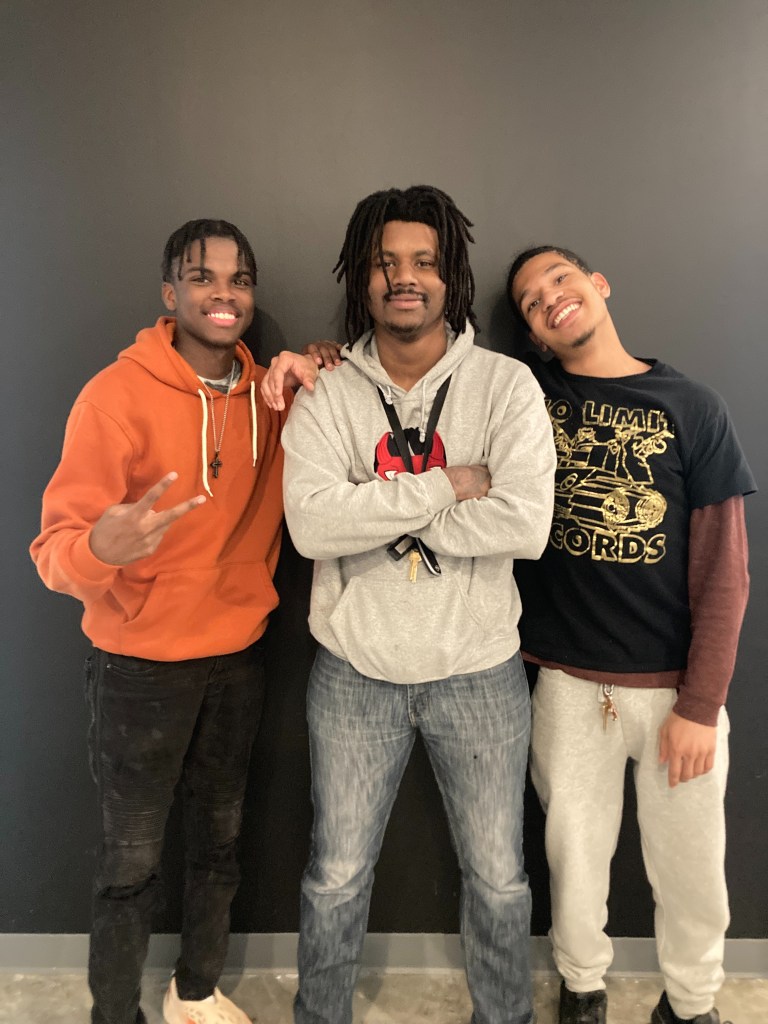
Vernell Cheneau III (left) with two other students who participated in the cash transfer program at Rooted School, in New Orleans. Credit: Courtesy of Rooted School
“You learn that money goes fast, especially if it’s free,” said Cheneau, 22.
As a student, he tried to use the money to build some credit history. Since then, he’s learned the full cost of being an adult in America: health care, fuel and maintenance for his car, getting your hair done before a new job. Cheneau has also spent that time trying to convince friends and family to support UBI.
Most oppose giving “free” money to people, he said. “How much does it cost to feed children? Get to work? We can’t just allow people to drown.”
“Everything costs something,” Cheneau added. “If you’re stuck in a rut, it’s expensive to restart. In this country, it’s expensive to be poor.”
Contact staff writer Neal Morton at 212-678-8247, on Signal at nealmorton.99, or via email at [email protected].
The Hechinger Report provides in-depth, fact-based, unbiased reporting on education that is free to all readers. But that doesn’t mean it’s free to produce. Our work keeps educators and the public informed about pressing issues at schools and on campuses throughout the country. We tell the whole story, even when the details are inconvenient. Help us keep doing that.
The rationale was straightforward. An increasingly large number of students were studying at, effectively, unregulated providers – with the connection to the lead provider achieved via an office in the registry and subject to varying (shall we say) levels of oversight in terms of quality, standards, and – frankly – probity (as we and others have extensively reported).
That consultation concluded in April, and we have heard very little about these plans since. So when, just before summer recess, the Office for Students announced its own consultation on regulating franchise provision one could be forgiven for assuming that the two approaches would somehow link together.
Information requirement
What OfS has suggested addresses the other end of the issue – while DfE wants to register delivery providers, OfS wants to put a new condition of registration (E8) onto institutions with more than 100 students taught via subcontractual arrangements. The condition is not an arduous one – it basically suggests that a lead provider should have adequate governance and oversight of risks concerning subcontractual provision, and be prepared to share key information about these arrangements (a so-called “Comprehensive source of information”, or CSol). In return OfS can demand more information (“monitoring”) and make “directions” for the lead provider to start or stop doing stuff. All this would, consultation pending, come into force in January 2026.
Now, it would be fair to wonder whether this kind of effective governance in the public interest is already covered in conditions E1 and E2, and the information end of things feels a little bit F3. It is neither unreasonable nor arduous to expect providers to have adequate governance or to publish information – though it is questionable (given the applicability of these existing registration conditions) that this will have any meaningful impact on provider activity.
In other words, if you don’t have effective arrangements in place regarding subcontractual provision, you are already in breach of condition E2 and will face consequences. Just ask Leeds Trinity University, now £115,000 poorer as a result – and, as the consultation suggests, just the tip of a very large iceberg of provision where OfS has been regulating quietly behind the scenes.
Rationale
So why the need for E8? If providers are already required to be transparent around governance arrangements and oversight, why do we need another condition to do the same thing for subcontractual relationships? And if there are additional informational needs, or a need to limit what a particular provider can do, why not do a specific condition of registration relating to subcontractual activity? Or why not wait a few weeks to see whether DfE brings the people doing the actual course delivery into its regulatory ambit? OfS says:
We consider that implementing a general ongoing condition of registration sends a clearer signal to the sector about our expectations for managing subcontractual partnerships now and in the future. Including our requirements in the regulatory framework in this way provides greater transparency for all providers and for other stakeholders.
We are, once again, in the realms of vibes-based regulation: the purpose of this requirement is to make it look like OfS is finally doing something to address the problems with subcontractual provision that have been visible to the media since at least 2014.
In the weeds
You’ll look in vain within the consultation for any mention of OfS’ own long-promised publication of definitive data on the size and shape of franchised provision – now possibly coming in the last quarter of 2025 (following a very small pilot release last year). Where this gets interesting is the methodology for calculating where or not you are over the threshold (a total of 100 – headcount – students studying via subcontractual arrangements at relevant providers) as calculated by the OfS’ own student number methodology and that would be returned via HESES. While OfS has not yet been confident enough in this data to release it in full, it is somehow content to rely on it for regulation.
The 100 isn’t an exact cut off: if you generally recruit more than 100 subcontractual students but happen not to one year, you are still in scope – likewise if you make changes to your plans so that you will recruit more than 100 (or are “materially likely” to do so) you are in scope already. Or if OfS decides you are in scope, you are in scope.
To be clear, this isn’t all such arrangements. The use of the term “relevant” excludes by definition any provision in a state-funded school, FEC, sixth form, designated institution (FHEA 1992 section 28), provider of NHS services, local authority, or police and crimes commissioner. Also exempt in your calculation are students subcontracted to any provider with degree awarding powers authorised by or under an Act of Parliament or a Royal Charter (so all taught or research DAPs, basically).
Back end
For clarity, the traditional way in which subcontractual arrangements are regulated is via the registering provider – and these OfS proposals are an attempt to bring some of what should be going on already out a bit further into the open. The existing transparency conditions of registration (F1, which operationalises section 9 of HERA) don’t cover governing (or academic quality and standards) documentation. Indeed, OfS has been historically light on governance transparency – which is why it isn’t always easy to figure out what is going on inside a given provider.
It’s not so long ago that OfS was lambasting providers for “gold plating” internal quality assurance processes in a long-sustained campaign to flush out those in the sector who cleave to the much older doctrines of the UK Quality Code. You know, nonsense like:
Providers and their partners agree proportionate arrangements for effective governance to secure the academic standards and enhance the quality of programmes and modules that are delivered in partnership with others. Organisations involved in partnership arrangements agree and communicate the mutual and specific responsibilities in relation to delivering, monitoring, evaluating, assuring and enhancing the learning experience.
A big chunk of the documentation that OfS is asking for here (in the comprehensive source of information) is basically documentary proof that a provider is compliant with principle 8 of the UK Quality code (including the QAA’s recent guidance), not that you will be thanked by the regulator for pointing this out. Perhaps some of that “gold-plating” was important after all.
But there is one place where OfS goes further: it asks for a “strategic” rationale for entering into each subcontractual arrangement. We don’t get any guidance on what a suitable rationale would be, just that it must fit with a provider’s vision and strategic intent. Case law here is going to be fascinating.
Front end
From a student protection perspective OfS would gain powers to compel those franchising out provision to make changes to the terms of these agreements or the governance or process involved in running them – in extremis the regulator could require that an arrangement ends immediately, students have their fees refunded, and the registering provider steps in to teach out the remaining student. It can also tell you to stop recruiting students onto subcontracted out courses, or limit the number of students that can be recruited.
This is a large improvement on current arrangements, which have largely been predicated on a provider having an up-to-date student protection plan and being able to deliver on it. The fee refund requirement, in particular, should make anyone that is knowingly partnering with someone offering students a sub-par experience sit up and pay attention.
It’s not perfect, however: the January DfE proposal on franchising and partnerships was interesting precisely because it broke with established practice on subcontractual arrangements – those delivering teaching would be regulated, whether or not they were awarding the degrees in question. If OfS could intervene directly with a delivery provider, surely that would be quicker than going via the registration provider – the measures in this consultation would then be usable for purely punitive reasons (and, as above, duplicate other conditions of registration)
OfS has followed the DfE lead in excluding most publicly funded provision from these regulations – it made sense to exclude schools, colleges, and the NHS from active regulation as they are already regulated elsewhere. If the purpose of these OfS proposals is to ensure that the universities that are subcontracting out do so with a level of strategic intent, it seems unlikely that someone is incapable of making a strategically poor or under-resourced commitment to work with an FEC or sixth form: surely these arrangements also deserve a level of scrutiny?
And – frankly – why shouldn’t providers involved in subcontracting be required to publish information about it (rather than hold it until OfS asks for it)? The current concerns with this style of provision have developed precisely because agreements and fee-splitting agreements can remain obscure – a bit of public accountability for these kinds of decisions would do a lot to separate out the good and valuable subcontractual arrangements from the more questionable partnerships.
The deal encompasses pathway and pre-master’s programs from the upcoming Liverpool Hope University International Study Centre, which will be based at the university’s Hope Park Campus.
Claire Ozanne, vice-chancellor and rector at Liverpool Hope University, said the new study centre will form an “exciting and important part” of the institution’s international strategy – one that would “further enhance our position as a global university and one that has an inclusive approach to education”.
“International students and the rich diversity of ideas and experiences they bring to our campuses hugely enhance the academic experience for all of our students,” she added.
Malvern International said that through the partnership, students attending the centre can expect to find a challenging curriculum, set to enhance their English language proficiency and the skills to help them successfully transition into university life.
International students and the rich diversity of ideas and experiences they bring to our campuses hugely enhance the academic experience for all of our students Claire Ozanne, Liverpool Hope University
Ashleigh Veres, senior director, university recruitment and partnerships at Malvern International, said that the deal marked “an important step forward and a proud moment for Malvern as we continue to grow and diversify our pathways division, scaling up our capabilities to deliver exceptional services that benefit both universities and students”.
She added: “We are delighted to partner with Liverpool Hope University, an institution renowned for its excellent student satisfaction and commitment to academic excellence. Together, we are dedicated to providing transformative opportunities for students while expanding the University’s global reach and impact.”
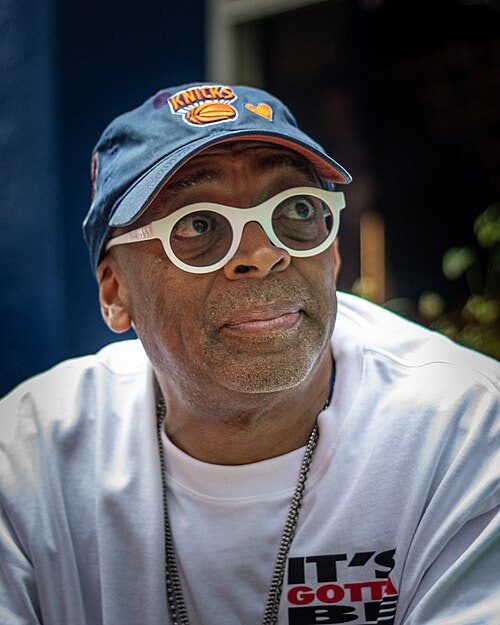
Spike LeeThe Atlanta University Center Consortium has announced the launch of Season Three of the Spike Fellows at Gersh program, continuing its partnership with Oscar-winning director Spike Lee and The Gersh Agency to create pathways for students from historically Black colleges and universities into entertainment industry careers.
Three students have been selected for this year’s cohort: Anwar Karim from Morehouse College, Denver Edmonds from Spelman College, and Miya Scaggs from Spelman College. The fellows were chosen based on grade point average, leadership experience, school involvement, creative work, and professional recommendations.
The eight-week paid fellowship places students in New York or Los Angeles, where they complete rotations across different agency departments while receiving senior-level industry mentoring and participating in curated learning experiences and volunteer service projects.
“The Spike Fellows Program continues to provide an invaluable experience and mentorship for our students who desire impact in the entertainment industry, both in front and behind the camera,” said Dr. Michael Hodge, Executive Director of the AUCC. “Each year, we see a new set of students immersed in the industry, becoming working professionals and aspiring entertainment leaders.”
The program has achieved a 100 percent employment rate for participants, with alumni securing positions at major entertainment companies including Gersh, Netflix, Warner Brothers, and Range Media. One former fellow was inspired to pursue graduate studies at the University of Southern California’s film program.
Beyond professional placement, the program provides comprehensive support for participants. A multi-year partnership with Ralph Lauren furnishes business attire for fellows, while networking opportunities include events like the inaugural Young Black Hollywood Mixer, which earned recognition from Deadline as one of the Best Red Carpet and Party Photos of 2024.
The initiative targets undergraduate students from Clark Atlanta University, Morehouse College, and Spelman College who demonstrate interest in entertainment industry careers. The program aims to address equity gaps in entertainment by creating direct pathways for talented HBCU students to access industry opportunities.
The Atlanta University Center Consortium, established in 1929, operates as a 501(c)(3) non-profit representing Clark Atlanta University, Morehouse College, Morehouse School of Medicine, and Spelman College. The organization describes itself as “the world’s oldest and largest association of historically Black colleges and universities.”
The fellowship represents part of broader industry efforts to increase diversity in entertainment, particularly in behind-the-camera roles where representation has historically lagged. By partnering with established industry figures like Lee and agencies like Gersh, the program provides students with direct access to decision-makers and career-building opportunities typically difficult to access for underrepresented groups.
The first time someone told me I was “too loud” in Latvia, I laughed. Not because it was funny, but because I genuinely hadn’t realized I was being loud. We were eating pizza one evening at Easy Wine in Riga, and despite being the only one not tipsy on the refreshments, I was still somehow the rowdiest at the table.
I shrank down an inch in my seat. The moment gave me pause. It was oddly familiar, like déjà vu. Everything around me felt almost known, just slightly askew, like it had been tilted on its axis.
The shame of taking up too much space? That I knew. But this time, it didn’t come from being Brown. It came from being American.
In the United States, my race is always top of mind. I’m a university student, and as a Government major, it’s a regular feature of my coursework. Having grown up in a nearly all-White town, I’ve been explaining my identity to others since I could talk.
With nearly two decades of practice under my belt, I’m well-versed in how my skin color and ancestry shape the world around me, and how to articulate that for others. So, the longer I spent in Riga, the more unsettled I felt by how absent race seemed from the conversation.
Conversations not had
Hours spent gazing out the windows of trolleybuses gliding through the city confirmed what I suspected: Riga is not very diverse. Among the small number of people of color I did see, most were other South Asians, like me. In the United States, race is an ever-present topic, whether it’s in political debates, academic syllabi or heated threads on X. In Latvia, it felt like race had slipped out of the cultural vocabulary altogether.
As part of my study abroad program, we often heard from expert guest lecturers. And as each one spoke, a quiet confusion grew inside me: Why is nobody talking about race? I started to feel like a foreign lunatic, playing an internal game of “spot the non-white person” on every street. But the more I searched, the more questions I had. Where was the discussion? Why wasn’t it happening?
So, I brought it up with a friend I’d made in my hostel. Arsh is an Indian student studying mechanical engineering at Riga Technical University. He had been living in the city since February. When I asked if he’d experienced discrimination as a visibly Punjabi Sikh, his answer surprised me.
“No,” he said.
And then he added something that completely shifted my perspective.
“Nobody talks.”
Silence and race
I’d known Latvians were famously quiet, but I’d never considered how that silence might shape their understanding and construction of race.
In the United States, your racial identity is often the first thing people ask about. Strangers want to know what you are and where you’re from. Race in America is personal, political and inescapable. The constant conversation can be both exhausting and empowering: it pushes systems to change, creates space for shared stories of resilience and holds people accountable.
But it also creates a kind of fatigue. As a person of color, you’re constantly on: explaining, reacting, defending. You’re visible, but often through a lens of trauma or tension.
In Latvia, it was different. What I came to think of as a kind of “quiet neutrality” reigned. People didn’t ask where I was from. They didn’t comment on my skin tone. They didn’t bring up diversity or inclusion, mainly because they weren’t speaking to me in the first place.
At first, that silence felt like relief. But eventually, it began to feel like an absence, because bias still exists, even if no one’s talking about it.
The power of passive racism
After speaking with Arsh, I turned to the Internet, searching for other South Asian perspectives on racism in Latvia. I found plenty.
One Quora user bluntly wrote, “Indians are treated like shit here in Latvia.” Another shared that she didn’t know if others felt negatively about her brown skin, but if they did, they didn’t confront her about it. A Redditor described being told to “go back to your own country.” These stories varied wildly from hate crimes to total indifference, but they painted a clear picture: racism existed here. It just didn’t look the same.
Curious to dig deeper, I reached out to Gokul from @lifeinlatviaa on Instagram. A popular Indian content creator who’s lived in Latvia for seven years, Gokul shares his takes on life in the Baltics. Many of his videos humorously cover topics of social culture, stereotypes, education and work. He also co-hosts the podcast Baltic Banter with Brigita Reisone.
When I asked Gokul about his experience, he described the racism in Latvia as mostly “passive.” Latvians, he said, are reserved. “If they don’t like something, they won’t be in your face about it,” he said.
Still, he shared more overt examples, like housing ads that openly say Indians need not call. He noted persistent stereotypes, too: that Brown people are dirty kebab shop owners or delivery drivers.
The familiarity of bias
None of this was unfamiliar to me. I’ve experienced housing discrimination. I’ve been called dirty by a White person. The common style of racism in Latvia was new to me: distant and quiet. In the United States, I once had a tween boy bike past me and mock an Indian accent — it was less traumatic than it was bizarre. There was certainly nothing subtle about it though.
Looking further, I found several reports from Latvian Public Broadcasting documenting hate crimes and prejudice against South Asians. So no, it’s not that racism doesn’t exist in Latvia. It’s that it shows up differently, and more importantly, it’s not widely discussed.
That difference matters.
Race is fluid and contextual; its meaning shifts with time, place and history. In the United States, racism is foundational. It began with colonization and slavery, extending through the systemic injustice known as Jim Crow in the 19th and 20th centuries, to modern-day Islamophobia and racial profiling by police. Racial violence and resistance are woven into the country’s DNA.
Latvia’s history tells a different story. Latvia is a nation shaped more by being colonized than by colonizing. Ethnic Latvians have fought for sovereignty under foreign rule, whether by Germans or Soviets. Today, its population is overwhelmingly White, and ethnic tensions tend to focus on Latvians and Russians, or Roma communities. Immigration is relatively new here, so the language to talk about race may simply not have developed yet.
And that brings me back to volume.
In the United States, being loud is often classed and racialized as “trashy,” especially when tied to communities of color. In Latvia, loudness is framed differently: it’s seen as a kind of cultural rudeness. It’s not about being Brown, it’s about being foreign. And because everyone is generally quieter, the social cues around race, identity and belonging shift, too.
Little things like volume, friendliness and eye contact build the scaffolding around how race is perceived in different societies. They may seem like surface-level quirks, but they shape deep-rooted assumptions.
And they remind us: racism may look different in various places, but it doesn’t disappear. It just changes form. And recognizing that change is the first step to dismantling it.
Questions to consider:
1. Why do many people outside the United States connect loudness with being American?
2. Why was the author troubled about the lack of conversation about racism in Latvia?
3. What kind of conversations do you have about race and do they make you feel more or less comfortable?
Seventeen years after Suzanne Collins first introduced us to The Hunger Games, the world is still captivated by Panem. The latest installment, Sunrise on the Reaping, dives into Haymitch’s backstory and has been called a “propulsive and heart-wrenching addition” to the series by The New York Times. For many of us, books like these aren’t just stories–they’re cultural moments.
I remember reading the original trilogy on my iPad while training for a half-marathon. Katniss’ fight against the Capitol powered me through some of my longest runs. That’s the magic of books: They meet us where we are and carry us somewhere else entirely. They become part of our personal history, woven into our memories and milestones.
But the power of books goes far beyond personal nostalgia. When a major title drops, it’s not just a release date–it’s a shared experience. Readers rush to get their hands on it. Social media lights up with reactions. Libraries field waitlists. These moments remind us why books matter. They connect us, challenge us, and inspire us.
This fall, we’re about to experience two more of these moments. On October 21, Diary of a Wimpy Kid: Partypooper hits shelves. Jeff Kinney’s beloved series has become a rite of passage for young readers, and this latest installment–centered around Greg Heffley’s attempt to throw himself the ultimate birthday bash–is already generating buzz. It’s funny, relatable, and perfectly timed for a generation that’s grown up with Greg’s awkward, hilarious adventures.
Just a few weeks later, on November 11, Dog Man: Big Jim Believes arrives. Dav Pilkey’s Dog Man series has redefined what it means to be a children’s book phenomenon. With its blend of humor, heart, and comic-style storytelling, Dog Man has helped countless kids fall in love with reading. This new title promises to be no different, offering a story about belief, friendship, and finding strength within.
These books aren’t just for kids–they’re cultural touchstones. They bring generations together. Parents read them with their children. Teachers use them to spark classroom discussions. Librarians build displays around them. And kids? They devour them and talk about them with the kind of passion usually reserved for blockbuster movies or viral games.
And yes, there’s a business side to books. Pricing, distribution, marketing strategies–they all matter. Behind every book on a shelf is a network of people working to make that moment possible. Publishers, authors, illustrators, binders, warehouse teams, sales reps, marketers, and more. It’s easy to forget that when you’re holding a finished book, but every title is the result of countless decisions, collaborations, and passions.
In a world dominated by screens, short-form content, and constant notifications, books offer something different. They ask us to slow down. To focus. To imagine. To empathize. And that’s more important than ever.
Literacy isn’t just about reading words on a page–it’s about understanding the world. It’s about critical thinking, emotional intelligence, and the ability to engage with complex ideas. Books help build those skills. They give kids the tools to navigate life, not just school.
Because in a world that’s constantly changing, books remain one of our most powerful tools for understanding it–and each other. The world needs stories. And stories need us.
A fifth-generation family member, Britten Follett is CEO at Follett Content Solutions, which has long been the No. 1 provider of content and technology solutions to school libraries at more than 70,000 schools and school districts. She has led Follett’s PreK-12 business since September 2019 and is responsible for providing leadership, strategic direction, and business development. In September 2020, Publishers Weekly named her a “PW Star Watch” honoree, one of 40 professionals singled out from the North American publishing industry.
This audio is auto-generated. Please let us know if you have feedback.
Since President Donald Trump retook office, the U.S. Department of Education has launched investigations into several high-profile colleges over their compliance with Section 117,a decades-old law that was largely ignored until 2018.
The law — part of the reauthorization of the Higher Education Actin 1986 — requires colleges that receive federal financial assistance to disclose contracts and gifts from foreign sources worth $250,000 or more in a year to the U.S. Department of Education.
In late April, Trump signed an executive order charging U.S. Education Secretary Linda McMahon to work with other executive agencies, including the U.S. Department of Justice, to open investigations and enforce Section 117.The order also explicitly ties compliance with Section 117 to eligibility for federal grant funding and directs McMahon to require colleges to disclose more specific details about their foreign gifts and contracts.
However, complying with the law is difficult and time-consuming for colleges given the challenges they face collecting the needed data and uploading it to the Education Department’s system, according to higher education experts. That means universities must take steps to ensure they are complying, such as dedicating a staff member to meet the law’s requirements, they said.
Failing to properly do so could put colleges in the crosshairs of the Trump administration and potentially cause them to miss out on federal grants, as higher education experts speculate the executive order will be used as another tool to target institutions’ funding.
“The Trump administration has it out for American higher education, particularly those they have branded elite institutions,” said Jeremy Bauer-Wolf,investigations manager on the higher education program at New America, a left-leaning think tank. “Section 117 is another cudgel for them.”
The history of Section 117
After Section 117 was enacted nearly 40 years ago over concerns about foreign donations to colleges, it was never really implemented by the Education Department and went largely ignored, said Sarah Spreitzer, vice president and chief of staff for government relations at the American Council on Education. People just stopped thinking about the issue and didn’t pay attention to it, she said.
However, concerns in Congress grew in 2018 when then-Federal Bureau of Investigations Director Christopher Wray testifiedbefore a Senate panel that China was exploiting the open research and development environment in the U.S. and universities were naive to the threat.
Proactively monitoring Section 117 and investigating disclosures was seen at the time as a way to “mitigate malign and undue foreign influence,” a Congressional Research Service report released this past February stated.
Following the hearing, the first Trump administration “really started making a show of Section 117,” said Bauer-Wolf.
Between 2019 and2021, the Trump administration opened investigations into prominent institutions such as Harvard University, Georgetown University,Cornell University, the Massachusetts Institute of Technology and Yale University. The administration was more focused on enforcing compliance through investigations than working with colleges to help them understand what the law required, said Spreitzer.
That had a “chilling impact on our institutions,” said Spreitzer. Colleges had a lot of questions about Section 117 reporting that went unanswered because they “were worried that if they called the Department of Education, they would be hit with an investigation.”
The investigations led colleges to report $6.5 billion in “previously undisclosed foreign funds,” according to Trump’s executive order.
When the Biden administration took over, Education Department officials moved enforcement of Section 117 from the Office of the General Counsel to Federal Student Aid. The Biden Education Department also closed several investigations launched under the Trump administration, and it did not open any new ones.
Trump, in his executive order, alleged the Biden administration “undid” the investigatory work completed during his first term. But those investigations had been going on for several years, so it’s unclear whether those probes should or should not have been closed, said Spreitzer.
Today’s enforcement landscape
Since retaking office, the Trump administration has opened Section 117 investigations into several colleges, including the University of Pennsylvania and the University of California, Berkeley, and it has reopened a probe into Harvard University. The Education Department said it needed to verify whether Harvard was complying with the law and with a December 2024 agreement that ended an investigation launched in February 2020 during Trump’s first term.
In the agreement, Harvard said it would submit amended disclosure reports for gifts and contracts received between 2014-2019. But when reopening the investigation, the Education Department said it believed Harvard made inaccurate disclosures, including for the amended reports.
“Unfortunately, our review indicated that Harvard has not been fully transparent or complete in its disclosures, which is both unacceptable and unlawful,” U.S. Education Secretary Linda McMahon said when announcing the latest probe in April.
As part of its new investigation, the administration asked Harvard for information regarding foreign students who were expelled, including the research they conducted, and “all temporary researchers, scholars, students and faculty who are from or affiliated with foreign governments.”
It also asked Penn, among a host of other things, for all tax records since 2017. In addition, the department requested the names of contractors or staff who assisted international students or were involved in the university’s regulatory compliance with the federal Foreign Government Talent Recruitment Program — referring to foreign governments’ initiatives to recruit science and technology students and professionals.
“They are asking broader questions that go beyond the scope of Section 117,” said Spreitzer.
The threat of penalties, meanwhile, is all too real for universities on various fronts. The Trump administration has tried to compel universities to roll back their diversity, equity and inclusion efforts and has paused or terminated federal grants to universities such as Harvard,Princeton University, Northwestern University and Cornell University as it investigates antisemitism and civil rights allegations on their campuses.
Bauer-Wolf said he fears the Section 117 executive order will be used as another “political tool, almost as a shortcut to yanking colleges’ funding.”
“It will be another avenue that the administration can claim that colleges are not following the law, when in fact, this is a law I don’t think anyone had any recognition or compliance with,” he said.
“I really think there are legitimate uses for Section 117,” said Bauer-Wolf, adding that it’s unfortunate the Trump administration and Republicans have “chosen to politicize it — instead of actually trying to find policy that could protect American interests and campuses.”
The new executive order also ties compliance with Section 117 to the False Claims Act — a federal law that penalizes people who knowingly submit false claims to the government.
It’s not clear how the Education Department will use the False Claims Act to enforce Section 117 against individual college officials or professors, said Matthew Kennison, a partner at Kelley Drye, a law firm that represents clients in government Investigations and enforcement proceedings.
But the prospect that the False Claims Act liability could be tied to Section 117 reporting “creates risks to institutions due to its ambiguity and potential broad reach,” said Anne Pifer, managing director of research at consulting firm Huron, which provides risk management and compliance services to higher ed institutions.
“While there is a high degree of uncertainty on the details of enforcement, institutions should expect increased oversight and scrutiny,” Pifer said.
Navigating the landscape
To comply with Section 117 requirements, colleges should follow the Education Department’s published guidance and other resources and, when necessary, seek more specific advice from the department, said Kennison.
But reporting foreign gifts and contracts to the federal government is difficult and time-consuming, said Spreitzer.
An FSA reporting portal allows institutions to upload their Section 117 disclosures. Yet, according to Spreitzer, there’s no way for an institution to upload a spreadsheet listing all of their gifts and contracts.
“They have to go in and enter each gift or contract individually,” said Spreitzer. “For a large institution, it can take several days.”
Then, if an institution makes a mistake, there’s no phone number to call at the Education Department, said Spreitzer. The Biden administration set up an email address, but it’s unclear if it is being closely monitored or responded to in a timely manner, she said.
“It will be another avenue that the administration can claim that colleges are not following the law.”
Jeremy Bauer-Wolf
Investigations manager, New America
An Education Department official disputed Spreitzer’s characterization. Several full-time career staffers continuously monitor the email and respond to institutions’ questions regarding Section 117 reports and reporting issues, the department official said.
Julie Hartman, an Education Department spokesperson, added in an email that the first Trump administration created the reporting portal in 2020 after years of “inadequate disclosures.” The Biden administration did not open any new Section 117 investigations, nor did it update the reporting website’s capabilities, she said.
“The Trump-McMahon Education Department is committed to reinvigorating Section 117 enforcement, including by improving the reporting portal in the coming months,” Hartman said.
A lot of large research institutions have carefully considered how to conduct their Section 117 reporting, Spreitzer said. But it requires “a whole campus effort to be aware of this requirement and to make sure you’re reporting that information twice per year,” Spreitzer said. She worries about the smaller, under-resourced institutions.
Those smaller institutions should designate a single point of contact to conduct the needed due diligence and make decisions on foreign sources that should be reported, Pifer said. And someone should be responsible for consolidating data sources and preparing and verifying the institution’s report, she said.
“Identifying a single point of conduct can minimize the need to train multiple offices on conducting complex reviews and help ensure data integrity,” Pifer said.
Such gifts or contracts are often found in university offices overseeing advancement and alumni relations, research, administration, procurement, bursars, and global affairs, Pifer added. Colleges should create a standard operating procedure or policy to identify and validate the sources of such gifts and contracts, and they should regularly review their gift acceptance and naming policies, she said.
But that work requires buy-in from the key stakeholders involved in collecting that data, she said.
“It is essential for institutions to establish sound practices and methodologies that will be robust and defensible in audits or investigations,” Pifer said.
Compliance through investigations?
The landscape for Section 117 compliance may only get tougher for colleges. The House recently passed a bill, called the Deterrent Act, that would add new reporting requirements to Section 117 and reduce the reporting threshold for foreign gifts and contracts from $250,000 to $50,000.
The bill would also require institutions to get a waiver before entering into a contract with a country “of concern,” which includes China and Russia.They would also have to report all gifts from countries of concern.
Currently before the Senate’s education committee, the bill would also introduce penalties for noncompliance, ranging from fines of $50,000 to losing federal financial aid.
Numerous higher education organizations have opposed the measure. including ACE, arguing it would significantly impede critical research activities and duplicate interagency efforts. The organizations, in a March 25 letter to House leaders, added the Education Department’s expanded data collection was “problematic” and wouldn’t ensure that “actual national security or foreign malign influence threats” are addressed.
“It is essential for institutions to establish sound practices and methodologies that will be robust and defensible in audits or investigations.”
Anne Pifer
Managing director of research, Huron
Brandy Shufutinsky, director of the education and national security program at the Foundation for Defense of Democracies, a conservative research institute, suggested that nonmonetary penalties be considered for colleges that don’t comply with Section 117.
For instance, they could be blocked from granting degrees, have their accreditation reviewed or see their nonprofit status be rolled back. Shufutinsky also recommended implementing a lower reporting threshold and being specific on which departments, professors or centers receive foreign funds and for what purpose.
Trump’s executive order on Section 117 is needed because “foreign funding in the US education system can contribute to foreign influence at those universities,” Shufutinsky said.
Still, the Trump administration’s focus on launching Section 117 investigations, instead of helping institutions with compliance, will make it harder for institutions to ask the Education Department whether they are actually reporting something correctly, said Spreitzer.
“The Trump administration seems to be again, trying to drive compliance through investigations,” said Spreitzer. “I think that chills our campuses from actually asking questions.”
Disclosure: Jeremy Bauer-Wolf was a reporter on Higher Ed Dive from 2019 to 2023.