Today’s prospective students aren’t waiting for a glossy brochure to arrive in the mail. They’re researching schools on their phones between classes, watching campus tours on YouTube, and chatting with peers online to compare experiences. They’re digital-first and impatient, and expect the same seamless experience from a college as they would from Netflix or Amazon.
To stand out in this noisy, fast-moving environment, your enrollment marketing needs to work smarter. That means shifting away from static promotions and embracing data-driven, student-centric strategies that guide each prospect from curiosity to commitment.
Here’s how you can make that happen: 10 tactics that schools across North America (and beyond) are using to win the attention, trust, and enrollment of today’s students.
Struggling with enrollment?
Our expert digital marketing services can help you attract and enroll more students!
1. Understand Your Audience (Better Than They Expect)
The best enrollment marketing strategies begin with deep audience insight. Not the surface-level kind (like age ranges or postal codes), but real, behavior-based understanding.
Instead of just collecting names at events or counting clicks on a landing page, take the time to analyze what your audience is doing. Are they spending five minutes reading your nursing program page but bouncing quickly from your homepage? Is there a spike in traffic after you post student testimonials on Instagram? These are the clues that shape smart decisions.
Tools like Google Analytics, HubSpot, or Slate reveal exactly where prospects engage and where they drop off. Segmenting audiences based on their actions, rather than assumptions, lets you personalize outreach that feels meaningful. If a student explores your hospitality program at 11:00 p.m. from another time zone, your strategy should reflect that interest and context.
Personalization builds a connection. And connection drives conversion.
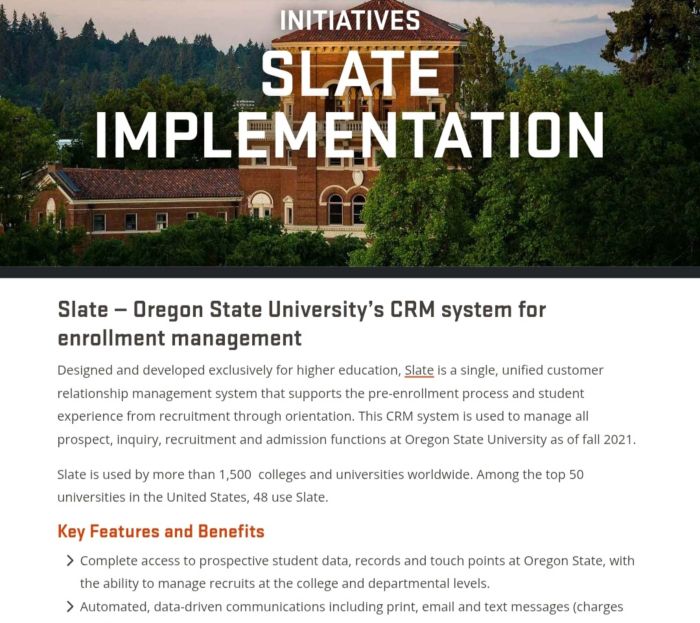
Example: Oregon State University implemented a modern CRM (Slate) to segment and personalize outreach. OSU filters prospective students by interests, major, and location to trigger automated, tailored communications (email, text, print) for each segment. With this approach, Oregon State University ensures that prospects receive information relevant to them. For example, engineering-minded students get content on OSU’s tech programs, improving engagement and application conversion.
Source: Oregon State University
2. Turn Your Website Into a Top-Performing Recruiter
Think of your website as your lead admissions counselor. It works 24/7 and never forgets a prospect’s name, if it’s built right.
A compelling site doesn’t just list programs. It creates an experience. Navigation should be intuitive, especially on mobile, where the majority of users browse. Application deadlines should never be more than one click away. Program benefits should be clear, outcomes measurable, and support services obvious.
Equally important is online visibility. Students won’t land on your site if it isn’t optimized for search. That means including the phrases they’re typing into Google: “Best business diploma in Vancouver” or “Top graphic design college Canada.” A steady stream of blog content around these themes builds your authority and search rankings over time.
Don’t underestimate local search either. Schools that claim their Google Business listing and keep it updated with reviews, photos, and FAQs tend to show up higher in local results, right when families are deciding which campuses to visit.
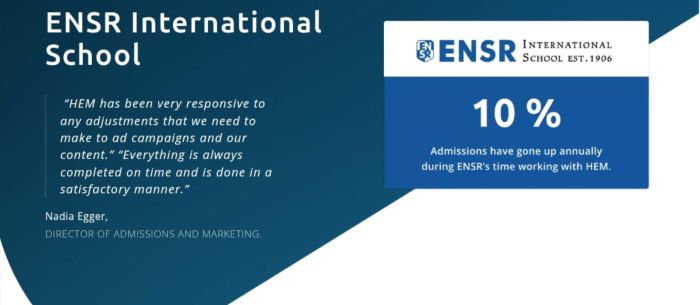
Example: ENSR partnered with HEM to revamp its website for better usability and search visibility. Targeted SEO optimizations (including multilingual content and Google Ads campaigns) were implemented to attract more qualified traffic. ENSR also improved site speed and navigation. As a result, the school saw a 10% year-over-year increase in admissions, clear evidence that an optimized, easy-to-find website translates into more student enrollments.
Source: HEM
How can schools use SEO to reach more prospective students? Schools can use SEO by optimizing their website and content with keywords students search for, like program names or “colleges near me.” Creating informative blog posts, improving site speed, and using clear navigation help boost search rankings, making it easier for prospects to find and explore the school online.
3. Meet Students Where They Scroll
Social media is no longer just a promotional tool; it’s where brand trust is built. And guess what? Students don’t want picture-perfect posts. They want a glimpse into real student life: the awkward, the inspiring, and everything in between.
How do social media platforms help attract prospective students? Social media platforms help attract prospective students by showcasing authentic campus life, student stories, and academic highlights where students already spend time. Targeted ads and engaging content build awareness, answer questions, and create emotional connections that encourage students to explore programs and take the next step toward applying.
The most effective schools blend behind-the-scenes campus life, student takeovers, and authentic voices with strategic, paid campaigns. Engagement is key. Answer comments, reply to DMs, and ask questions. Your presence shouldn’t just be felt; it should be responsive.
And when a student visits your site but doesn’t apply? A retargeting ad reminding them about a scholarship deadline can bring them back with a purpose.
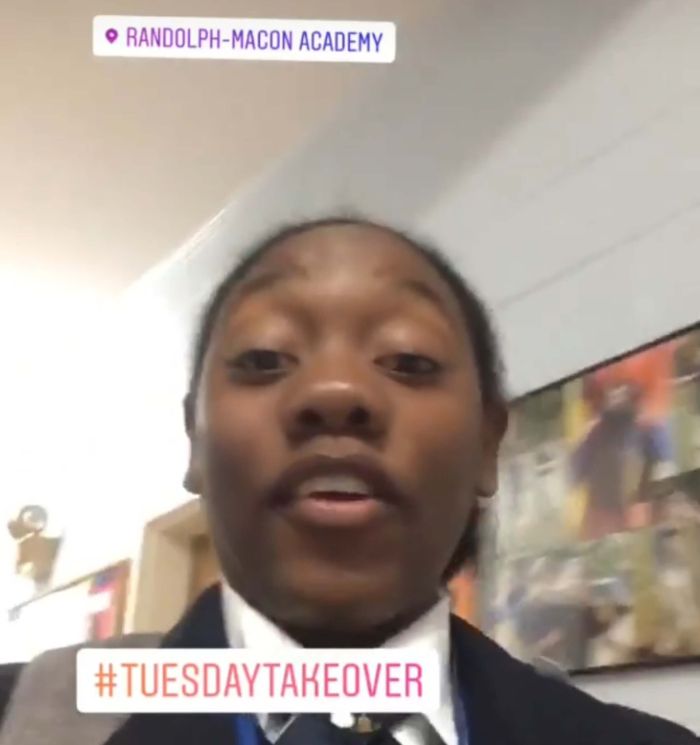
Example: Randolph-Macon Academy utilizes student-driven social media takeovers and campaigns to humanize its brand. For example, on “Takeover Tuesdays,” R-MA students run the school’s Instagram Stories, giving followers a genuine day-in-the-life look at campus life. These peer perspectives resonate with prospective students and parents. R-MA also shares posts on LinkedIn celebrating achievements (like its seniors earning $16 million+ in scholarships) to boost credibility. By strategically targeting content on platforms like Instagram, Facebook, and LinkedIn, R-MA expands its reach and builds trust with specific audiences.
Source: R-MA Instagram
4. Bring Your Campus to Their Couch
Campus visits are powerful but not always possible. Virtual tours bridge that gap beautifully when done right.
Why are virtual tours important for school admissions marketing? Virtual tours are important because they let prospective students explore campus facilities, culture, and student life from anywhere. They provide a first-hand experience that builds familiarity and trust, especially for international or remote students who can’t visit in person, helping them feel more confident about applying.
The most compelling virtual experiences go beyond slideshows or still images. They immerse visitors in 360° visuals of your labs, residences, lounges, and dining halls. Add narration, clickable maps, and interactive hotspots to create a sense of discovery.
Want to make it even more engaging? Offer live tours hosted by current students. Answer questions in real-time. Make the conversation two-way. This kind of hybrid interaction not only informs, but it also builds comfort and connection.
Gamifying the experience with small touches like hidden easter eggs or quizzes can boost session time, making students stay longer and remember more.
Example: Eastern New Mexico University: In January 2025, ENMU launched an upgraded 360-degree interactive virtual tour of its campus, in partnership with a virtual tour platform. The tour lets prospective students anywhere in the world explore campus landmarks at their own pace with panoramic views and clickable info points. New interactive stops even feature current students sharing their experiences via video, and users can access photos and descriptions of traditions at each location. This immersive virtual experience makes viewers feel “like they are on campus,” even if they cannot visit in person.

Source: ENMU
5. Let Video Carry the Message
Nothing conveys emotion, trust, and energy quite like video. That’s why it’s the top-performing format across all platforms.
Students use video to explore, compare, and decide. A 30-second clip showing campus energy can hook them, while a three-minute video of a student explaining why they chose your school can tip the scales.
The best videos aren’t always the most polished. Often, it’s the realness that lands, the quiet moment in a dorm room, a laugh during class, a genuine answer about overcoming a challenge. When current students tell their story on camera, it resonates far more than scripted promos ever could.
And don’t stop with publishing. Upload to YouTube (the second largest search engine in the world), share snippets on social media, and embed videos in your emails or on your site. It keeps your message moving, even when you’re not.
Example: The Academy of Applied Pharmaceutical Sciences regularly produces short videos featuring student success stories and hands-on training highlights. These testimonials and “day in the life” videos are shared on AAPS’s website and social channels, providing an authentic glimpse into student outcomes. AAPS also posts video content of alumni in their new careers or students in lab classes, which personalizes the school’s message.

6. Be There Instantly with Smart Chatbots
Picture this: a student is exploring your program page at 10:45 p.m. They want to know if scholarships are still open, but your office is closed.
This is where chatbots shine. When used effectively, they answer FAQs, guide students to relevant pages, and even collect lead info for follow-up, all in real time.
Today’s best bots go beyond text. They can speak multiple languages, schedule tours, and connect students with human counselors. They’re not a replacement for your staff. They’re the frontline, making sure no interest goes cold.
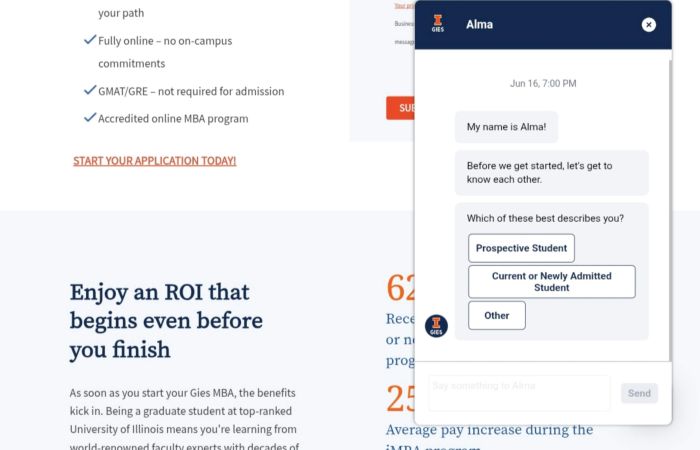
Example: The University of Illinois Gies College of Business deployed an AI chatbot named “Alma” on its online MBA program website to handle common questions and nurture leads. The chatbot was built with a no-code AI platform and programmed to answer prospective students’ free-text questions about the program, provide key information (e.g., deadlines, curriculum), and even collect contact info for follow-up.
Source: Gies College of Business
7. Let Students Do the Talking
Your school can say it’s great. But it means more when others say it for you.
Prospective students read reviews before making decisions. That’s true whether they’re buying shoes or choosing a college. A few well-placed, authentic reviews from happy students or parents can tip the scale in your favor.
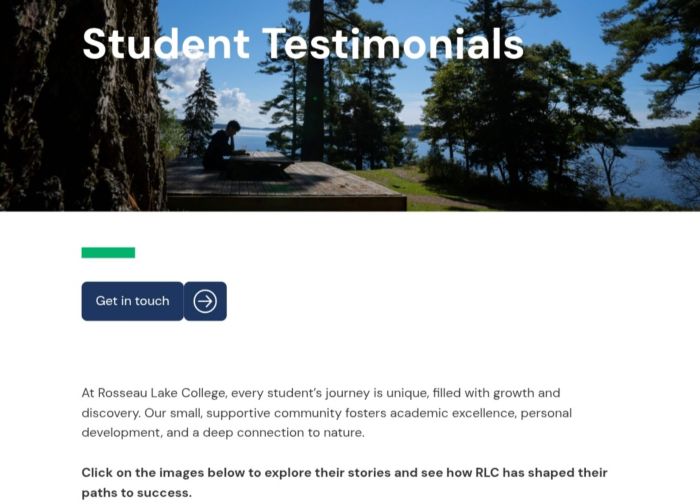
Example: Rosseau Lake College actively highlights student and parent testimonials on its official site to manage its online reputation. RLC’s admissions section features a dedicated “Student Testimonials” page with quotes, stories, and even videos from current students and recent graduates.
Source: RLC
Make it easy for your community to share their voice. Follow up after tours or events with a simple request for feedback. Prompt graduating students to reflect on their journey. And most importantly, respond graciously to both praise and criticism.
Highlight these testimonials in your marketing materials, emails, and website. Some schools even have dedicated pages that feature alumni quotes, rankings, and outcomes all in one place.
Example: Discovery Community College leverages Google reviews and social media to boost its reputation. When the college receives a glowing review online, the marketing team amplifies it; for instance, Discovery CC shared a student’s 5-star Google review on Instagram with a thank-you message.

Source: DCC Instagram
When you let your results speak for themselves, people listen.
8. Nurture With Purpose: Email and Text Messaging
Email isn’t outdated. It’s just misused.
Too often, schools blast the same generic message to every lead. But with marketing automation tools like HubSpot or Slate, you can do better. Much better.
Send personalized messages based on actual behavior. If someone downloaded a course calendar, send a follow-up series about faculty highlights, career paths, or student testimonials from that program. If a student clicked a scholarship link but didn’t apply, follow up with a helpful guide or checklist.
Text messages are the perfect complement: fast, direct, and effective. Use them for urgent nudges like deadline reminders or event RSVPs. But be respectful. Less is more when it comes to texting.
9. Host Webinars That Educate and Inspire
Done right, webinars are student recruitment gold. They let students interact with faculty, hear from alumni, and ask real questions, all from the comfort of home.
Think beyond the program overview. What are students anxious about? Admissions essays? Career prospects? Financial aid? Offer sessions that solve these problems, not just sell solutions.
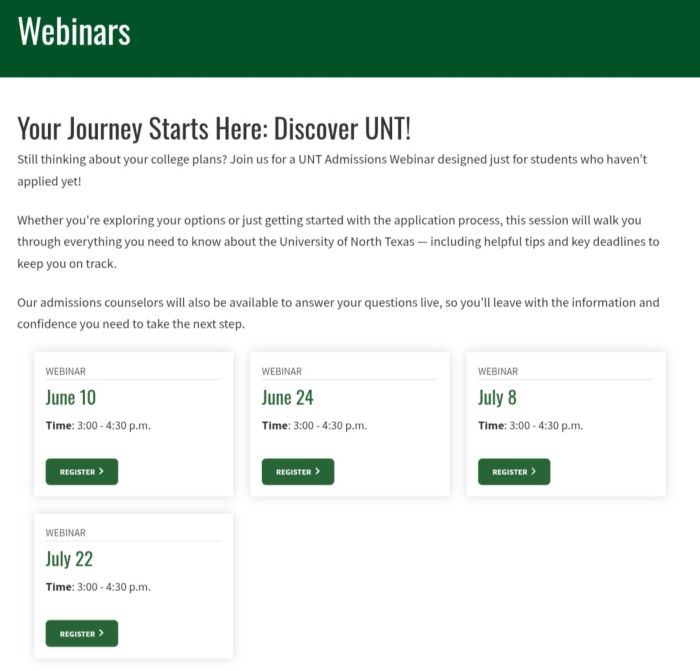
Example: The University of North Texas runs themed Admissions Webinars for targeted audiences of students who haven’t yet applied. UNT invites high schoolers to sign up for sessions like “Why UNT? & How to Apply,” where recruiters walk through programs, campus life, and the application process via Zoom.
Source: University of North Texas
Live Q&As make these events feel dynamic. A student asking a question and getting an answer in the moment, that’s engagement. That’s trust.
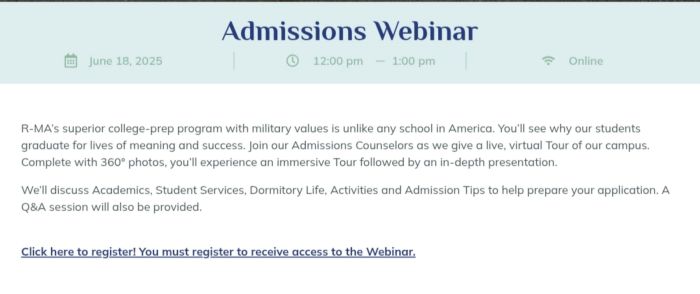
Example: Randolph-Macon Academy hosts regular live webinars for prospective families as part of its recruitment strategy. During these virtual info sessions, R-MA’s admissions counselors present an overview of the school, share up-to-date facts, and then open the floor for Q&A. They often incorporate a live virtual campus tour within the webinar. This format has been effective in converting attendees to applicants – families get to interact directly with staff and students from home, addressing any doubts in real time.
Source: R-MA
And once the event ends, the content lives on. Recordings become lead magnets. Clips fuel your social strategy. Recaps can power blog posts. Every webinar is a long-term asset when you plan it right.
10. Showcase What Comes After: Alumni Success
Prospective students are investing time and money. What they want to know is simple: “Will it pay off?”
Highlighting alumni outcomes is one of the most persuasive things you can do. Share job placement rates, grad school acceptances, average salaries, whatever metrics tell the story of success.
Even more powerful are personal stories. The alum who launched a startup. The student who landed a dream internship. The graduate who returned to school to mentor others. These aren’t just achievements, they’re proof points.
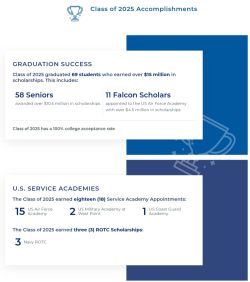
Example: Randolph-Macon Academy publicizes its alumni and student success outcomes as a core part of marketing. R-MA’s communications showcase statistics like 100% college acceptance and millions in scholarships earned by each graduating class. In 2025, R-MA proudly shared that its 69 seniors collectively secured over $10.5 million in scholarships for college. Alumni success stories (military academy appointments, leadership roles, etc.) are featured on the school blog and newsletters.
Source: R-MA
Some schools use interactive alumni maps to show where grads are working across the globe. Others run weekly spotlight stories on social or newsletters. However you do it, make sure it’s easy for prospects to imagine their own future in the successes of those who came before.
When you say, “Here’s where our grads go, and here’s how we help them get there,” the value of your school becomes real.
Enrollment Marketing Is Not About Tactics. It’s About Trust.
Each of these enrollment strategies works on its own. But when you combine them into a cohesive enrollment plan, powered by data and driven by empathy, you don’t just generate interest. You build relationships.
From a student’s first Google search to their final enrollment decision, every interaction matters. So make them count. Use tools like CRMs to track engagement. Align marketing with admissions. And most importantly, keep the student experience at the center of it all.
Because in today’s world, enrollment isn’t about volume. It’s about value. Give your prospects content that answers questions, support that feels personal, and stories that inspire. Do that, and the results will follow.
Need help building your enrollment marketing plan?
HEM offers expert services tailored to higher education institutions across Canada and beyond. Contact us today to learn more.
Struggling with enrollment?
Our expert digital marketing services can help you attract and enroll more students!
Frequently Asked Questions
Question: How do social media platforms help attract prospective students?
Answer: Social media platforms help attract prospective students by showcasing authentic campus life, student stories, and academic highlights where students already spend time. Targeted ads and engaging content build awareness, answer questions, and create emotional connections that encourage students to explore programs and take the next step toward applying.
Question: Why are virtual tours important for school admissions marketing?
Answer: Virtual tours are important because they let prospective students explore campus facilities, culture, and student life from anywhere. They provide a first-hand experience that builds familiarity and trust, especially for international or remote students who can’t visit in person, helping them feel more confident about applying.
Question: How can schools use SEO to reach more prospective students?
Answer: Schools can use SEO by optimizing their website and content with keywords students search for, like program names or “colleges near me.” Creating informative blog posts, improving site speed, and using clear navigation help boost search rankings, making it easier for prospects to find and explore the school online.