Blog

  • A Unified System for Student Athlete Supports

    A Unified System for Student Athlete Supports

    A growing number of programs in higher education focus on student athletes’ mental health, recognizing that the pressures of competing in collegiate athletics, combined with academic challenges, financial concerns and team relationships, can negatively impact student well-being.

    At the University of Richmond, the athletics department created a new program to emphasize holistic student well-being, taking into account the different dimensions of a student athlete’s identity and development.

    Spider Performance, named after the university mascot, unites various stakeholders on campus to provide a seamless experience for student athletes, ensuring they’re properly equipped to tackle challenges on the field, in the classroom and out in the world beyond college.

    “The athlete identity is a really special part of [students’ identities], but it’s not the only part, so making sure they are [considered] human beings first—even before they’re students, they’re humans first. Let’s examine and explore that identity,” said Lauren Wicklund, senior associate athletics director for leadership and student-athlete development.

    How it works: The university hosts 17 varsity sports in NCAA Division I, which include approximately 400 student athletes. Richmond has established four pillars of the student athlete experience: athletic, academic, personal and professional achievement.

    “The whole concept is to build champions for life,” said Wicklund, who oversees the program. “It’s not just about winning in sport; it’s about winning in the classroom, winning personally and then getting the skills and tools to win for the rest of your life.”

    These pillars have driven programming in the athletics department for years, but their messaging and implementation created confusion.

    Now, under Spider Performance, the contributions and collaborations of stakeholders who support student athletes are more visible and defined, clarifying the assistance given to the athletes and demonstrating the program’s value to recruits. The offices in Spider Performance include academic support, sports medicine, leadership, strength and conditioning, mental health, and well-being.

    “It’s building a team around them,” Wicklund explained. “Rather than our student athlete thinking, ‘I have to go eat here, I have to do my homework here, I have to do my workout here,’ it’s, ‘No, we want you to win at everything you do, and how you do one thing is how you do everything.’”

    Outside of the specific athletic teams, Wicklund and her staff collaborate with other campus entities including faculty members, career services and co-curricular supports.

    Preparing for launch: Richmond facilitates a four-year development model for student athletes, starting with an orientation experience for first-year students that helps them understand their strengths and temperament, up to more career-focused programming for seniors.

    Recognizing how busy students’ schedules get during their athletic season, the university has also created other high-impact learning experiences that are more flexible and adaptive. Students can engage in a career trek to meet alumni across the country, study abroad for a short period, participate in a service project or take a wellness course, all designed to fit into their already-packed schedules.

    Part of the goal is to help each student feel confident discussing their experience as an athlete and how it contributes to their long-term goals. For instance, students might feel ill-equipped for a full-time job because they never had a 12-week internship, but university staff help them translate their experiences on the field or the court into skills applicable to a workplace environment, Wicklund said.

    The university is also adapting financial literacy programming to include information on name, image and likeness rights for student athletes, covering not just budgeting, investing and financial literacy topics but also more specific information related to their teams.

    Encouraging athletes to attend extra sessions can be a challenge, but the Spider Performance team aims to help students understand the value of the program and how it applies to their daily lives. The program also requires buy-in from other role models in students’ lives, including trainers, coaches and professors.

    “We work really hard to customize fits to different programs so we’re speaking the same language as our coaches,” which helps create a unified message to students, Wicklund said.

    If your student success program has a unique feature or twist, we’d like to know about it. Click here to submit.

    Source link

  • A Setback for Maine’s Free Community College Program

    A Setback for Maine’s Free Community College Program

    The Maine Legislature’s budget-writing committee voted last week in favor of ending the state’s free college program, to the great disappointment of community college leaders.

    The move by Democrats on the Appropriations and Financial Affairs Committee contradicts Governor Janet Mills’s proposal earlier this year to make the program a permanent fixture. The free college program, which Mills initially put forward, went into effect in 2022 to support students affected by the pandemic. It originally covered two years of community college tuition for anyone who graduated high school between 2020 and 2023, after other forms of aid were applied. Though created with one-time funding, the program enjoyed strong bipartisan support and was extended in 2023 to include the Classes of 2024 and 2025. Students have a certain amount of time to enroll; for example, 2025 graduates have to start college no later than the 2027–28 academic year to take advantage of the program.

    Since the program began, Maine’s community college enrollment has surged—enrollment of all degree-seeking students in the system jumped from 11,308 in 2022 to 14,278 in 2024. A total of 17,826 students have participated in the program since it started, according to data from the Maine Community College System. Many hoped, and expected, the program would continue.

    But the Appropriations and Financial Affairs Committee’s proposal would give the community college system $20 million over two years to help current participants finish their studies before winding down the program for good, Maine Public Radio reported. The recommendation comes as Maine faces a lean budget year, with federal funding for the state hard to predict. President Donald Trump threatened to cut Maine’s federal funds after a tense exchange with Mills in February over his executive order barring transgender athletes from competing on the teams that match their gender identity.

    Maine representative Michael Brennan said at the committee meeting last week, “We’ve had to make hard decisions about what we think we can afford and not afford,” though he called the free college program “tremendously successful.”

    Senator Peggy Rotundo, co-chair of the Appropriations and Financial Affairs Committee, emphasized in a statement to Inside Higher Ed that state lawmakers are honoring their commitment to fund students who graduated in 2025 and expected to receive the program’s support. She implied the program could still be made permanent in the future.

    “When considering what comes next, our focus is on ensuring this program’s long-term sustainability,” she wrote. “The Appropriations and Financial Affairs Committee is seeking additional data and evaluation from the community college system to inform a responsible, future-focused approach. In a tough budget year, we have a duty to balance expanding opportunity with fiscal responsibility—and that means looking ahead to build a durable model that can serve Maine students for years to come.”

    The decision to nix the program isn’t set in stone—the state budget still needs to make its way through the state House and Senate and finally to the governor’s desk. But state legislators indicated they plan to wrap up the budget by today.

    David Daigler, president of the Maine Community College System, wrote a letter to the system’s Board of Trustees on Saturday expressing “deep disappointment” over the committee’s vote. He told the board it’s “highly unlikely” there will be any major changes to funding for the free college program at this point.

    “Ultimately, the committee’s vote reflects the state’s challenging financial situation, which made it hard to get support even though Free College is a very popular, effective program that directly benefits Maine families, students, and employers,” Daigler said in the letter. “You can be certain that we will build on the momentum of this program to emerge stronger, wiser, and re-dedicated to providing an affordable, accessible education to Mainers looking to improve their lives.”

    In February, Daigler and community college staff members advocated for the program before the committee. Multiple students also spoke out in support, some arguing they wouldn’t have attended college without the program.

    Brianna Michaud, a health-science student at Southern Maine Community College, told the budget-writing committee she considered not going to college because, despite her working two jobs, her family couldn’t afford it. Then she heard about the free college program.

    “As a first-generation college student who’s entirely responsible for paying off their education, the Maine free college scholarship is the reason why I’m able to put my hard work and dedication toward fulfilling my purpose in life, which is to help others,” said Michaud, who plans on becoming a pediatric occupational therapist.

    Payson Avery, a student representative at Southern Maine, said he graduated high school in 2020, during the height of the pandemic, and didn’t know what to do. He felt like his grades senior year didn’t show his potential. After two years, while working at a restaurant, he decided to take the state up on its free college offer. Now he has plans to attend the University of Maine at Farmington to major in education, he told the committee.

    “Without this program, I’m not sure I would have been able to make it to this point,” he said.

    Source link

  • Embracing Credit Mobility for Student Success

    Embracing Credit Mobility for Student Success

    Let me tell you about Andrew, a motivated student who graduated high school early with impressive dual-enrollment credits. After attending a private college for a year and taking some time to work, he rekindled his educational ambitions at a community college. With approximately 30 credits remaining for his bachelor’s degree, he applied to an R-1 university, ready to complete his journey.

    What should have been a seamless transition became an unexpected challenge. Despite submitting his transfer work in October and regularly checking in with his adviser, Andrew discovered in January—after classes had already begun—that he faced “at least three years of coursework” rather than the anticipated single year to graduation.

    This isn’t a rare occurrence or some administrative anomaly. Rather, it is the norm for individuals who aren’t pursuing a four-year degree on the traditional timeline. Higher education talks endlessly about completion and student success while maintaining systems and policies that actively undermine these goals.

    Andrew’s story represents a critical opportunity for higher education. While his family successfully advocated for a refund and found another institution that better recognized his prior learning, his experience highlights a fundamental challenge we must address collectively.

    The Scale of the Challenge

    We have 42 million Americans with some college credit but no degree. We have 200,000 military personnel transitioning to civilian life annually. We have an economy desperately needing upskilled workers. Yet higher education’s response to credit mobility remains anchored in outdated policies and processes that fail to serve today’s students, institutions or workforce needs.

    Many institutions have made meaningful progress in supporting diverse student needs through childcare services, flexible scheduling and online options. These are important steps. Now we must extend this same commitment to the academic evaluation processes that directly impact students’ time to degree and financial investment.

    The Disconnect

    Transfer articulation agreements—where they have been struck—have created valuable pathways, but their implementation often lacks the consistency and transparency students deserve. When agreements include qualifying language without firm commitments, students can’t effectively plan their educational journeys or make informed financial decisions.

    The contradiction is striking: We express concern about student debt and extended time to degree, questioning why students take 150 credits when they only need 120 to graduate. Meanwhile, our credit evaluation processes remain opaque, slow and often costly.

    The current reality—where students frequently must apply, pay deposits or even enroll before understanding how their previous academic work will be valued—creates unnecessary barriers. We can do better—and, frankly, must. It’s like buying a car and finding out the price after you’ve signed the paperwork. In what other industry would this be acceptable?

    The Opportunity

    Consider the possibilities if we fully embraced credit mobility as a cornerstone of student success:

    • Students could make informed decisions about their educational pathways before committing financially.
    • Institutions could demonstrate their commitment to affordability by recognizing prior learning.
    • Graduation rates would improve as students avoid unnecessary course repetition.
    • The workforce would benefit from skilled professionals entering more quickly.

    Addressing the Objections

    The objections to credit mobility typically fall into three categories:

    1. Faculty workload: Faculty are being asked to do more, and evaluating credits for prospective students can feel like an unnecessary burden. But what if more students could see that their learning had value, that their degree was within reach, that they didn’t have to retake classes they’ve already mastered? This shift in perspective could transform the evaluation process from a burden to an opportunity.
    2. Lost revenue: The focus on enrollments often overshadows the reality that only 50 percent of students who start college actually finish within six years. What if our goal was to expand opportunities so more students could complete their degrees? What if students were taking classes that genuinely added to their experience and built their confidence rather than repeating content they’ve already learned?
    3. Quality concerns: Quality is often cited as justification for delayed evaluation. In reality, transparent evaluation supports faculty’s desire to maintain academic standards. Clear processes allow for informed decisions and data collection that ensures the focus remains on student outcomes.

    The AI Opportunity

    The emergence of artificial intelligence presents a tremendous opportunity to enhance our credit-evaluation processes—addressing issues of time and cost while creating transparency for data analysis. A new study just released by AACRAO on the role of AI in credit mobility makes a compelling case as to why the technology could help unlock new ways of working. We can harness technology as a powerful tool to support faculty decision-making and administrative resource allocations. AI could:

    • Identify potential course equivalencies based on learning outcomes.
    • Highlight relevant information in transfer documentation.
    • Streamline evaluation processes, allowing human experts to focus on complex cases.
    • Provide leadership with insights into where credit mobility is operating effectively.
    • Identify areas needing additional resources or training.

    With proper implementation and training, AI can become a tool to achieve our goals of access and completion at scale—reducing both the cost and timeline to graduation.

    The Path Forward

    If we truly believe in access and completion, then credit mobility must become a shared priority across higher education. This means:

    • Making course information, learning outcomes and sample syllabi readily accessible.
    • Expanding recognition of diverse learning experiences, including microcredentials, corporate training, internships and apprenticeships.
    • Establishing and honoring clear timelines for credit evaluation.
    • Eliminating financial barriers to credit assessment.
    • Providing updated articulation and equivalency tables in easy-to-find locations on admissions websites.

    Andrew’s experience should be the exception, not the rule. Colleges and universities that embrace this challenge will not only better serve their students but will also position themselves for long-term sustainability in an increasingly competitive landscape. Those that resist change risk becoming irrelevant to the very students they aim to serve and perpetuating the cost and time-to-completion conundrum.

    The Call to Action

    The question before us isn’t whether credit mobility matters—it’s whether we have the collective will to make it a reality at scale, not just at a handful of institutions, but across systems and all institutions. We must recognize that our students are learning in new ways, on new timelines, and bringing knowledge that evolves faster than our curriculum. Our students deserve nothing less than our full commitment to recognizing their learning, regardless of where it occurred.

    So I’ll ask: How committed are you to credit mobility at scale? Your answer says everything about how seriously you take college completion.

    Jesse Boeding is the co-founder of Education Assessment System, an AI-powered platform mapping transfer, microcredentials and prior learning to an institution’s curriculum to enable decision-making and resourcing.

    Source link

  • Risk-Sharing: Trump’s “Big Beautiful Bill” — Implications for UK Higher Education

    Risk-Sharing: Trump’s “Big Beautiful Bill” — Implications for UK Higher Education

    • By Peter Ainsworth, a consultant and writer on higher education finance, known for advocating structural reform that aligns university incentives with real-world graduate outcomes.

    Trump’s “One Big Beautiful Bill” may sound absurd to British ears, but beneath the “very stable genius’s” promotional gloss lies a legislative change designed to reset the relationship between the US Higher Education sector and the state. The bill, which passed the U.S. House of Representatives on 22 May 2025, includes the Student Success and Taxpayer Savings Act (SSTSA) – which, if passed by the Senate, would be the world’s first statutory implementation of institutional risk-sharing in student loans.

    Historically, in both the US and UK, universities have been financially rewarded for their enrollment of students rather than for the practical benefits delivered to their customers. Success arises out of customer acquisition rather than service value-add. Students take out government-backed loans to pay tuition; institutions receive the money upfront regardless of whether or not their degrees lead to economic success. The result is a moral hazard: an incentive (payment) structure for universities that is not aligned with the employability gain that students want and taxpayers need. Systematically falling graduate premiums on both sides of the Atlantic reflect the impact of insulating universities from the employment risk their students face in a rapidly changing economy.

    The American reform seeks to realign incentives to better align risks and objectives. It introduces an Earnings-to-Price Ratio (EPR):

    EPR = (Median Value-Added Earnings) / (Median Total Price)

    Institutions with low EPRs – indicating poor graduate earnings relative to costs – will face a financial penalty in the form of an invoice from the US Treasury to cover the estimated student loan losses for the relevant cohort. If the Senate passes the reform, US universities will have a powerful incentive to transform their offer to ensure meaningful real-world earnings gains for their students.

    The SSTSA is an advance on the existing Cohort Default Rate (CDR) system, which merely threatened to deny access to federal loans to students of institutions with very high default rates. But there was no direct financial risk. Congress deemed it ineffective and so now proposes something more market-oriented.

    Meanwhile, the UK is two steps behind, only now looking to implement a version of the CDR model which the US is already moving away from. A recent Institute for Fiscal Studies (IFS) paper proposes regulating universities based on early-career graduate earnings proxies – like the CDR it is recognising the importance of career earnings outcomes but measuring them indirectly and using regulatory sanction rather than financial cost as the stick. The IFS proposes to use earnings in a three- to five-year window post-graduation to drive regulatory response. Like the CDR’s reliance on a technical definition of default, this short, near-term window will create heavily biased statistics, diminishing the value of professions with delayed earnings trajectories such as medicine and academia.

    Further, the IFS proposes to exclude from consideration graduates with very low earnings. This favours institutions whose graduates earn just below an arbitrary threshold level. They also rely on UK tax data which omits emigrants, undervaluing universities that succeed in preparing graduates for global careers.

    As Friedrich Hayek argued, complex systems cannot be centrally managed through proxies and aggregated metrics. Graduate career trajectories are dynamic, diverse, and unpredictable — precisely the kind of outcomes that defy simple measurement. Accepting that lifetime earnings are the relevant metric leads inevitably to the conclusion that no bureaucratic proxy will suffice.

    There is a cleaner alternative. Universities could be required to issue the loans themselves, something that Buckingham, for example, already does on a small scale. Where needed, to support cash flow, the government could lend to institutions rather than students. This would internalise the financial risk: institutions would have a direct, long-term stake in the earnings success of their graduates. Universities could be freed to set fees and loan terms based on the economic value they expect to deliver and would be incentivised to provide ongoing support — career services, retraining, alumni engagement — to minimise loan defaults over the full life of the loan.

    Such a model also addresses bigger challenges facing the higher education sector. Edward Peck, the new Chair of the Office for Students, recently argued that AI is making traditional assessment ineffective and universities must move from testing what students know to what they can do. Meanwhile, Diana Beech and André Spicer, writing for HEPI, have highlighted that universities now employ an average of 17.6 staff solely to handle regulatory compliance and warned that regulation is “multiplying and becoming less predictable.” In this context, risk-sharing offers a route back to institutional autonomy: tying funding to real-world success rather than the IFS’s proposal for even more bureaucratic box-ticking.

    Finally, political and fiscal realities support this innovation. A shift to institutionally issued loans would remove the student loan portfolio from the government’s balance sheet, reducing annual write-downs by around £15bn per annum – a present value of around £300bn. That would go a long way to address the various fiscal challenges faced by the Labour government. With less bureaucratic interference, more strategic freedom, and appropriate incentives, the sector should be able to make student loans pay, ensuring a sustainable and prosperous future, and letting British universities blow past their American rivals like nobody’s seen before.

    Source link

  • Talking about Palestine a “career killer“: report – Campus Review

    Talking about Palestine a “career killer“: report – Campus Review

    Over 150 students and staff from 20 separate universities claim free speech about Palestine has been restricted on campus, according to a report released on Thursday.

    Please login below to view content or subscribe now.

    Membership Login

    Source link

  • Co-creation of research agendas could strengthen policy research engagement

    Co-creation of research agendas could strengthen policy research engagement

    The University Policy Engagement Network (UPEN) recently announced that it had been successful in a UKRI bid to develop and expand UK policy to research infrastructure, facilitating connections and engagement between public and civil servants on one hand, and research organisations on the other.

    This call is a recent manifestation of a perennial and important interest in evidence-informed policymaking, and policy and research engagement. Policy engagement is also part of an increased focus on engagement with and impact of research, driven by the Research Excellence Framework.

    We recently published a journal article exploring what researchers and policymakers need to know and understand when engaging with each other, based on interviews with 11 experts working with higher education regulators, other major sectoral bodies, and higher education institutions who had extensive expertise across the UK higher education sector.

    University-based researchers and policymakers respond to different incentives in ways that are not always conducive to engagement. Interviewees described a wide range of influences on policy, including many types of research, much of which is produced outside the university sector. For some types of research, such as rapid research, researchers at higher education institutions were seen as being at a disadvantage. To address these considerations, our interviewees suggested that research co-creation – involving policymakers earlier in the process to develop research ideas and design projects – could promote engagement with policy.

    Engagement from the start

    In a typical research process, university-based researchers develop, conduct, and publish their research with a high degree of independence from the stakeholders of their research. Once the research is completed, researchers disseminate their findings, hoping to reach external stakeholders, including policymakers. In contrast, co-created research brings research stakeholders into the research process at the beginning and maintains stakeholder influence and co-creation throughout.

    When asked how researchers can increase engagement with policy, one participant said: :

    Co-designing projects with people involved in policy from the outset rather than, you know, what I often see, which is ‘we’ve done this stuff and now, who can we send it to?’ So, getting people involved from the outset and the running of it through advice.

    Because policy priorities shift and because research often takes a long time to complete, co-creation is not a perfect solution for policy research engagement. But co-creation may increase the likelihood that research findings are relevant to and usable for the specific needs of policymakers. Another benefit of co-creation is that, by taking part in the research process, policymakers are more likely to feel invested in the research and inclined to use its findings.

    Co-creation of research with policymakers requires access to and some form of relationship with relevant policymakers. While some researchers have easier access to policymakers than others, there are structures in place to facilitate the networking required to build relevant relationships, including through academic fellowship with the UK Parliament. Researchers can sometimes connect more easily to ministers and policymakers via intermediary organisations such as mission groups, representative bodies, think tanks, and professional organisations.

    Designing successful co-creation

    In a policy-research co-creation model, one of the questions that is worth asking is what is co-created: is research co-created, policy co-created, or both? For example, one participant in our study viewed researcher engagement with policymakers as policy-co-creation, rather than as research co-creation. Researchers can ask themselves: “What policy am I well-positioned to co-create based on my research?” as well as “How can my research benefit from co-creation with its stakeholders?”

    Our article highlights that one of the more frequent pathways for researchers based at universities to engage with policy is through conducting commissioned research. Commissioned research is often aligned with policy needs and facilitates co-creation. Yet independence, rigour, and criticality – markers of quality research – still need to be ensured even as part of co-created and commissioned research.

    Commissioned research was not the only type of research discussed by our participants that led to policy engagement. Interviewees provided examples of researchers with an established and rigorous body of work that answered policy-relevant questions which were successful in shaping policy. Sometimes, a body of research developed over time and over multiple studies is better suited for policy engagement. Sometimes this takes the form of a systematic review designed to bring a large body of research literature to bear on a current policy problem.

    This raises an important consideration for mechanisms that incentivise engagement: how does incentivising engagement affect the multiple priorities that researchers based at higher education institutions need to meet? The danger here is that, as more policy engagement is incentivised, researchers at higher education institutions might prioritise forms and qualities of research which lend themselves to engagement over those which higher education is uniquely placed to offer.

    As current efforts to expand UK-wide policy to research infrastructure develop, it is important to consider the multiple complexities associated with policy research engagement. In our view, for policy and research engagement to be meaningful, policy to research infrastructure needs to support high quality research, targeted engagement, and have a clear sense of what each of these means in practice.

    Source link

  • Inside Adelaide uni’s digital experience – Campus Review

    Inside Adelaide uni’s digital experience – Campus Review

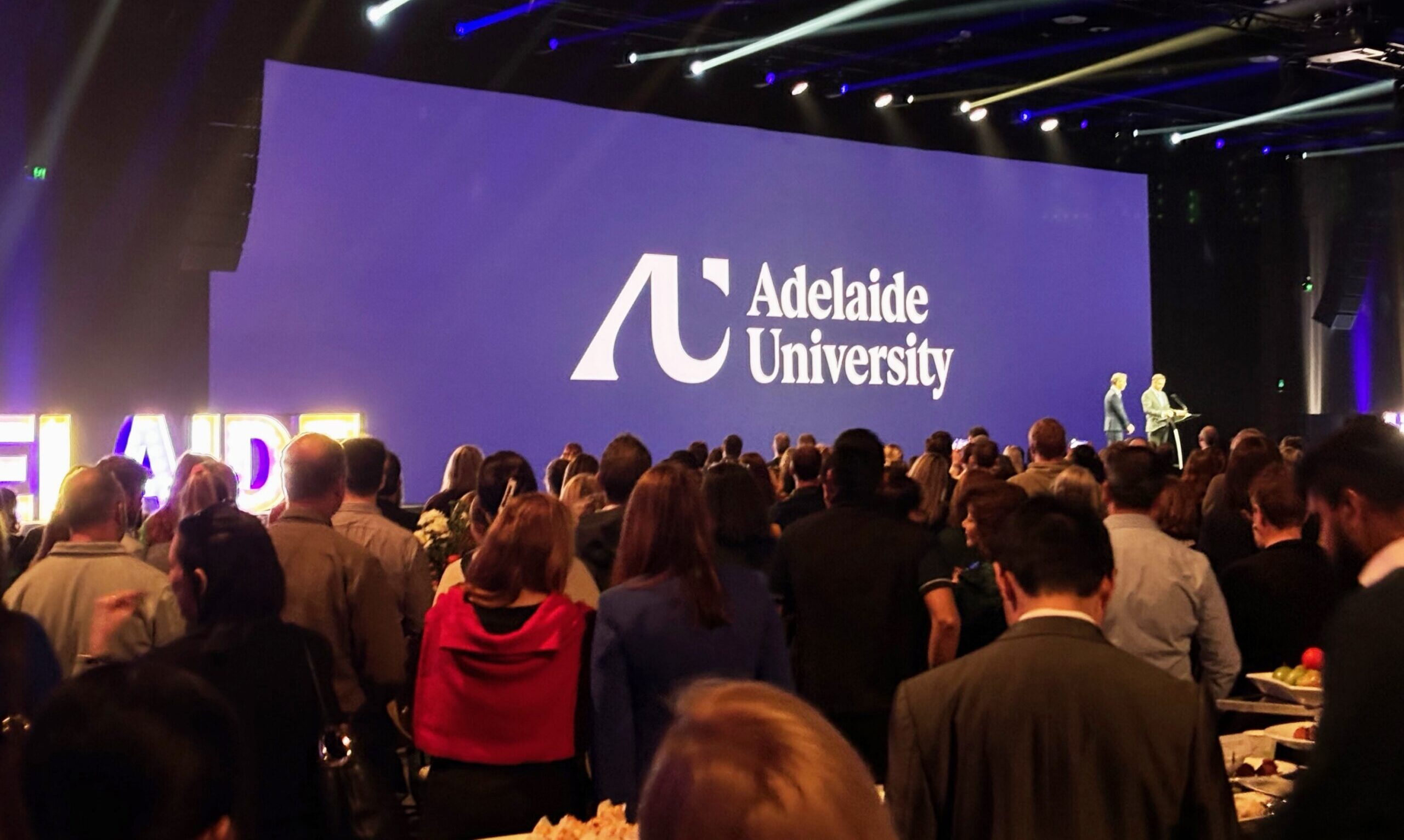
    Digital platforms are a key part of a positive student experience and will be a major focus for the new Adelaide University (AU), its digital project lead told an audience of academics on Thursday.

    Please login below to view content or subscribe now.

    Membership Login

    Source link

  • WSU wins impact rankings for fourth year – Campus Review

    WSU wins impact rankings for fourth year – Campus Review

    Western Sydney University (WSU) has ranked first in the measure of delivering community impact out of over 2000 universities globally in the Times Higher Education Impact Rankings released Wednesday.

    Please login below to view content or subscribe now.

    Membership Login

    Source link

  • NYU’s student success team talks AI – Campus Review

    NYU’s student success team talks AI – Campus Review

    John Burdick, Marni Passer Vassallo and Holly Halmo lead the New York University student success team.

    Please login below to view content or subscribe now.

    Membership Login

    Source link