You’re under increased pressure to make better, data-informed decisions. However, most colleges and universities don’t have the budget to build the kind of data team that drives strategic progress. And even if you can hire, you’re competing with other industries that pay top dollar, making it hard, if not impossible, to find the right data resource with all the skills to move your operation forward. Don’t let hiring roadblocks make you settle for siloed insights and stagnant dashboards.
How to Build a High-Impact Data Team Without the Full-Time Headcount Thursday, June 26 2:00 pm ET / 1:00 pm CT
In this webinar, Jeff Certain, VP of Solution Development and Go-to-Market, and Dan Antonson, AVP of Data and Analytics, break down how a managed services model can help you create a high-impact data team at a fraction of the cost and give you access to a robust bench of highly specialized data talent. They will also share some real-world examples of nimble, high-impact data teams in action.
You’ll walk away knowing:
Which data roles are needed for success and scale in higher ed
How to rapidly scale data operations without adding FTEs
Why managed services are a smarter investment than full-time hires
Ways to tap into cross-functional expertise on demand
How to build a future-ready data infrastructure without ballooning your org chart
Whether you’re starting from scratch or trying to scale a lean team, this session will offer practical, flexible strategies to get there faster — and more cost-effectively.
Who Should Attend:
If you are a data-minded decision-maker in higher ed or a cabinet-level leader being asked to do more with less, this webinar is for you.
Presidents and provosts
CFOs and COOs
Enrollment and marketing leaders
Expert Speakers
Jeff Certain
VP of Solution Development and Go-to-Market
Collegis Education
Dan Antonson
AVP of Data and Analytics
Collegis Education
It’s time to move past the piecemeal approach and start driving real outcomes with your data. Complete the form to reserve your spot! We look forward to seeing you on Thursday,June 26.
That was the message displayed on signs across the National Mall on June 6, where thousands of veterans rallied against sweeping federal job cuts. With the Dropkick Murphys on stage and lawmakers like Sens. Tammy Duckworth (D-IL) and Ruben Gallego (D-AZ) in the crowd, the “Unite for Veterans, Unite for America” rally marked a striking show of both unity and frustration.
While many agencies are facing delays or court injunctions, the Department of Veterans Affairs (VA) is moving forward with plans to eliminate approximately 83,000 positions, or about 15 percent of its workforce. Public attention has been understandably focused on the impact these cuts may have on veterans’ health care. But staffing losses could also disrupt access to veterans’ education benefits, just as even more veterans and service members may be turning to higher education and career training.
Among the many education and training benefits administered by the VA, the Post-9/11 GI Bill is the cornerstone of financial aid for military learners, including veterans, service members, and their families. From 2009 to 2019, the federal government budgeted nearly $100 billion for the program, with 2.7 million enlisted veterans eligible to use those benefits over the next decade. And the return on investment is clear: Veterans who use their education benefits complete college at twice the rate of other independent students—those typically supporting themselves without parental aid—according to research by the American Institutes for Research.
Despite the GI Bill’s importance, military learners often struggle to access the benefits they’ve earned. Eligibility rules can be confusing, and transferring benefits to spouses or dependents involves time-consuming red tape. Many students and the institutions that serve them rely on VA staff to interpret the rules, resolve disputes, and ensure benefits are processed on time. With fewer staff, that support system is at risk of breaking down.
This strain comes amid a broader wave of federal downsizing that is hitting the veteran community especially hard. The federal government has long been the largest employer of veterans, and the current reduction in force across the federal government is disproportionately affecting them. In just one example, the Department of Defense is reportedly cutting 50,000 to 60,000 civilian jobs, many held by veterans.
At the same time, the Army is considering reducing its active-duty force by as many as 90,000 troops, amid shrinking reenlistment options. Even senior military leadership have seen targeted cuts. The result is that more veterans and service members will be leaving military service and looking to build new careers. This in turn will increase the demand for VA education and training benefits, just as fewer staff may be available to help them access those benefits.
For decades, support for military learners has united policymakers across party lines. In a time of significant change in Washington, we need to uphold our commitments to those who have dedicated their lives and careers to serving our nation. This includes a commitment to ensuring that the VA has the staffing and resources it needs to deliver on its promise—so every veteran can access the education benefits they’ve earned.
If you have any questions or comments about this blog post, please contact us.
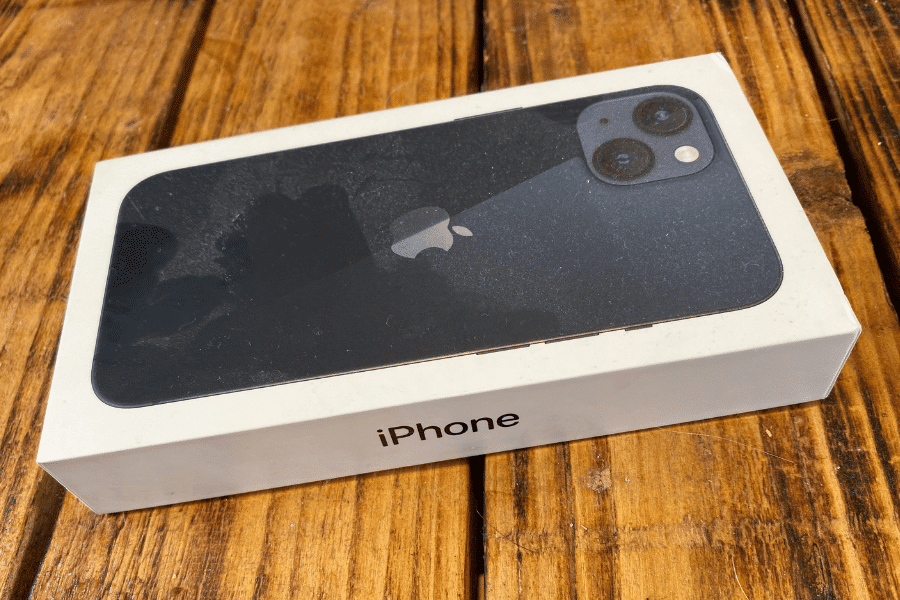
Most of us spend a good part of our lives glued to our iPhone or other similar devices. It seems as if we cannot survive without being connected to cyberspace.
It turns out that Apple, a U.S.-based company which makes the iPhone and depends on its sale, cannot survive without being connected to China, which is a key partner in the production of most every iPhone that people use. And that puts the iPhone at the center of the great power struggle underway between the United States and China.
One of the earliest insights into iPhone production came along in 2010 thanks to research by economists Yuqing Xing and Neal Detert. They lifted the veil off the mystery behind the iPhone label “Designed by Apple in California, Assembled in China”.
The iPhone model 3G was indeed designed in Cupertino, California, by Apple. But the vast majority of components were sourced from Japan, South Korea, Germany and elsewhere in the United States. All iPhone components were then shipped for assembly to Foxconn, a Taiwanese contract manufacturer based in Shenzhen, China.
Less than 4% of the iPhone manufacturing value came from the assembly in China.
Manufacturing capability
The iPhone was only first launched in 2007, and iPhones were not sold in China until late 2009. At the time, there was no production of Chinese smartphones. Since those days, the iPhone and other smartphones have become ubiquitous in modern life. Apple now sells 230 million iPhones annually, each one of which has one thousand components and about 90% of them are produced in China.
Financial Times journalist Patrick McGee, in his recent book “Apple in China“, explained how Apple began assembling iPhones in China for its cheap labour costs but that came with a different cost: China’s labour was not of high quality.
In contrast to the general impression, China does not have great vocational training systems. So Apple became China’s vocational school.
Although Apple did not own any factories, it assumed close control over the factories of Foxconn and other companies to ensure its traditional perfectionist quality control. This included sending over planeloads of high-level engineers from the United States to train Chinese workers and investing in machinery for production lines.
Further, while components from foreign companies are still used in Apple products, these companies are now increasingly based in China. Over time Chinese companies have played a growing role in the production of the iPhone and other devices. Workers from all these companies have also been trained by Apple engineers.
Over the past decade, Apple invested some $55 billion a year for staff training and machinery. Since 2008, 28 million Chinese have received training from Apple — a figure larger than the workforce of California.
Human capital
But there is more to China’s human capital than training offered by Apple. A key element has been China’s investment in human capital more generally, notably education and health.
Chinese students participating in the OECD’s Programme for International Student Assessment — from Beijing, Shanghai, Jiangsu and Zhejiang, collectively home to nearly 200 million people — have outperformed the majority of students from other education systems, including the United States.
China has also made extraordinary progress in lifting its life expectancy, which is now the same as that of the United States at 78 years, even though the gross domestic product per capita in the United States — a key measure of the economic health of a country — at $83,000, is more than six times that of China. For the first time, China has overtaken the United States in healthy life expectancy at birth, according to World Health Organization data.
Apple CEO Tim Cook has said that there is a popular conception that companies come to China because of low labour cost. Cook argues that the truth is China stopped being a low labor cost country many years ago.
He insists that Apple is motivated by the quantity and type of skill that China offers. For example, while it requires really advanced tooling engineers, Cook is not sure the United States could fill a room with such engineers, while in China you could fill multiple football fields. Such vocational expertise is now very, very deep in China.
India and the United States
U.S. President Donald Trump insists that Apple must “reshore” its production to the United States. This is not realistic. The United States does not have the capacity to produce Apple’s products at scale and at competitive cost. It most certainly does not have the same competitive cost, well-trained engineering workforce as China, which has some three million people working in Apple’s supply chain.
Under Trump 1.0, Apple made a commitment to build “three big, beautiful factories” (in Trump’s words) in the United States. But that was just hot air, as none were built. Now, Trump has threatened to impose a 25% tariff on iPhones if they are not made in the United States.
In response, Apple said that phones sold there would be labelled “Made in India” (although this is unacceptable for Trump), and has pledged to invest $500 billion in the United States. What this pledge means in reality is still unclear. Apple may ultimately need to build a token factory or two, with limited production functions, to pander to Trump.
Many commentators are suggesting India as an alternative production base for Apple. And some assembly functions are indeed being shifted to India. But these are just the very final assembly phase of production, which are sufficient to justify attaching an “Assembled in India” label.
All the pre-assembly activities remain in China. At this stage, India is not a viable option for replacing China because of deficiencies in human capital, infrastructure and logistics systems.
A close partnership
In many ways, modern China and Apple have made each other.
Technology and knowledge transfer have underpinned China’s growing contribution to the iPhone and other Apple products — as well as the Chinese smartphone brands like Huawei, Xiaomi and Oppo, which now dominate world markets. Moreover, Chinese engineers are capable of building all sorts of electronic products, some of which could be used in military conflicts.
In sum, Apple has made a major contribution to the rise of China as a technological powerhouse. China has been a key factor in the rise of Apple as one of the world’s most successful companies. Apple has a Chinese system for producing the iPhone and other products that works like a song.
No other country has the human capital, and production and logistics systems for producing Apple products at scale and at a competitive cost. Thus, Apple is in a way now trapped in China, which makes it vulnerable to coercion from China’s authoritarian government.
It should try to make greater efforts to de-risk itself from China, although that is not easy and might provoke the ire of the Chinese authorities.
Apple now finds itself caught between a rock and a hard place — meaning President Xi and President Trump.
Questions to consider:
1. Where is the iPhone made?
2. What would make a device that is made outside the United States more expensive to buy in the United States?
3. Should people be able to buy anything from anywhere without any extra costs from governments? Why?
Education Secretary Linda McMahon has repeatedly said that the February and March cancellations and firings at her department cut not only the “fat” but also into some of the “muscle” of the federal role in education. So, even as she promises to dismantle her department, she is also bringing back some people and restarting some activities. Court filings and her own congressional testimony illuminate what this means for the agency as a whole, and for education research in particular.
McMahon told a U.S. House committee last month she rehired 74 employees out of the roughly 2,000 who were laid off or agreed to separation packages. A court filing earlier this month says the agency will revive about a fifth of research and statistics contracts killed earlier this year, at least for now, though that doesn’t mean the work will look exactly as it did before.
The Trump administration disclosed in a June 5 federal court filing in Maryland that it either has or is planning to reinstate 20 of 101 terminated contracts to comply with congressional statutes. More than half of the reversals will restart 10 regional education laboratories that the Trump administration had said were engaged in “wasteful and ideologically driven spending,” but had been very popular with state education leaders. The reinstatements also include an international assessment, a study of how to help struggling readers, and Datalab, a web-based data analysis tool for the public.
Related: Our free weekly newsletter alerts you to what research says about schools and classrooms.
Even some of the promised reinstatements are uncertain because the Education Department plans to put some of them up for new bids (see table below). That process could take months and potentially result in smaller contracts with fewer studies or hours of technical assistance.
These research activities were terminated by Elon Musk’s Department of Government Efficiency (DOGE) before McMahon was confirmed by the Senate. The Education Department’s disclosure of the reinstatements occurred a week after President Donald Trump bid farewell to Musk in the Oval Office and on the same day that the Trump-Musk feud exploded on social media.
See which IES contracts have been or are slated to be restarted, or under consideration for reinstatement
Description
Status
1
Regional Education Laboratory – Mid Atlantic
Intends to seek new bids and restart contract
2
Regional Education Laboratory – Southwest
Intends to seek new bids and restart contract
3
Regional Education Laboratory – Northwest
Intends to seek new bids and restart contract
4
Regional Education Laboratory – West
Intends to seek new bids and restart contract
5
Regional Education Laboratory – Appalachia
Intends to seek new bids and restart contract
6
Regional Education Laboratory – Pacific
Intends to seek new bids and restart contract
7
Regional Education Laboratory – Central
Intends to seek new bids and restart contract
8
Regional Education Laboratory – Midwest
Intends to seek new bids and restart contract
9
Regional Education Laboratory – Southeast
Intends to seek new bids and restart contract
10
Regional Education Laboratory – Northeast and Islands
Intends to seek new bids and restart contract
11
Regional Education Laboratory – umbrella support contract
Intends to seek new bids and restart contract
12
What Works Clearinghouse (website, training reviewers, but no reviewing of education research)
Approved for reinstatement
13
Statistical standards and data confidentiality technical assistance for the National Center for Education Statistics
Reinstated
14.
Statistical and confidentiality review of electronic data files and technical reports
Approved for reinstatement
15
Datalab, a web-based data analysis tool for the public
Approved for reinstatement
16
U.S. participation in the Program for International Student Assessment (PISA), an international test overseen by the Organization for Economic Cooperation and Development (OECD)
Reinstated
17
Data quality and statistical methodology assistance
Reinstated
18
EDFacts, a collection of administrative data from school districts around the country
Reinstated
19
Demographic and geospatial estimates (e.g. school poverty and school locations) used for academic research and federal program administration
Approved for reinstatement
20
Evaluation of the Multi-tiered System of Supports in reading, an approach to help struggling students
Approved for reinstatement
21
Implementation of the Striving Readers Comprehensive Literacy Program and feasibility of conducting an impact evaluation of it.
Evaluating whether to restart
22
Policy-relevant findings for the National Evaluation of Career and Technical Education
Evaluating whether to restart
23
The National Postsecondary Student Aid Study (how students finance college, college graduation rates and workforce outcomes)
Evaluating whether to restart
24
Additional higher ed studies
Evaluating whether to restart
25
Publication assistance on educational topics and the annual report
Evaluating whether to restart
26
Conducting peer review of applications, manuscripts and grant competitions at the Institute of Education Sciences
Evaluating whether to restart
The Education Department press office said it had no comment beyond what was disclosed in the legal brief.
Education researchers, who are suing the Trump administration to restore all of its previous research and statistical activities, were not satisfied.
Elizabeth Tipton, president of the Society for Research on Educational Effectiveness (SREE) said the limited reinstatement is “upsetting.” “They’re trying to make IES as small as they possibly can,” she said, referring to the Institute of Education Sciences, the department’s research and data arm.
SREE and the American Educational Research Association (AERA) are suing McMahon and the Education Department in the Maryland case. The suit asks for a temporary reinstatement of all the contracts and the rehiring of IES employees while the courts adjudicate the broader constitutional issue of whether the Trump administration violated congressional statutes and exceeded its executive authority.
The 20 reinstatements were not ordered by the court, and in some instances, the Education Department is voluntarily restarting only a small slice of a research activity, making it impossible to produce anything meaningful for the public. For example, the department said it is reinstating a contract for operating the What Works Clearinghouse, a website that informs schools about evidence-based teaching practices. But, in the legal brief, the department disclosed that it is not planning to reinstate any of the contracts to produce new content for the site.
In the brief, the administration admitted that congressional statues mention a range of research and data collection activities. But the lawyers argued that the legislative language often uses the word may instead of must, or notes that evaluations of education programs should be done “as time and resources allow.”
“Read together, the Department has wide discretion in whether and which evaluations to undertake,” the administration lawyers wrote.
The Trump administration argued that as long as it has at least one contract in place, it is technically fulfilling a congressional mandate. For example, Congress requires that the Education Department participate in international assessments. That is why it is now restarting the contract to administer the Program for International Student Assessment (PISA), but not other international assessments that the country has participated in, such as the Trends in International Mathematics and Science Study (TIMSS).
The administration argued that researchers didn’t make a compelling case that they would be irreparably harmed if many contracts were not restarted. “There is no harm alleged from not having access to as-yet uncreated data,” the lawyers wrote.
One of the terminated contracts was supposed to help state education agencies create longitudinal data systems for tracking students from pre-K to the workforce. The department’s brief says that states, not professional associations of researchers, should sue to restore those contracts.
In six instances, the administration said it was evaluating whether to restart a study. For example, the legal brief says that because Congress requires the evaluation of literacy programs, the department is considering a reinstatement of a study of the Striving Readers Comprehensive Literacy Program. But lawyers said there was no urgency to restart it because there is no deadline for evaluations in the legislative language.
In four other instances, the Trump administration said it wasn’t feasible to restart a study, despite congressional requirements. For example, Congress mandates that the Education Department identify and evaluate promising adult education strategies. But after terminating such a study in February, the Education Department admitted that it is now too difficult to restart it. The department also said it could not easily restart two studies of math curricula in low-performing schools. One of the studies called for the math program to be implemented in the first year and studied in the second year, which made it especially difficult to restart. A fourth study the department said it could not restart would have evaluated the effectiveness of extra services to help teens with disabilities transition from high school to college or work. When DOGE pulled the plug on that study, those teens lost those services too.
The Hechinger Report provides in-depth, fact-based, unbiased reporting on education that is free to all readers. But that doesn’t mean it’s free to produce. Our work keeps educators and the public informed about pressing issues at schools and on campuses throughout the country. We tell the whole story, even when the details are inconvenient. Help us keep doing that.
The study, published by the Institue of International Education (IIE), outlines the importance of expanding international study to the US over the next five years as American universities brace for an impending domestic “enrolment cliff”.
“Attracting global talent is crucial to driving the US economy and growth, and maintaining US leadership” IIE’s head of research, evaluation and learning Mirka Martel told The PIE News.
Martel, co-author of the Outlook 2030 Brief,highlighted the unique capacity of the US to host more international students, who currently make up just 6% of the overall student population.
In comparison, international students comprise a much larger proportion of the total student body in the UK (27%), Australia (31%) and Canada (38%).
Notably, 36 US states were identified by IIE with international student populations below the 6% line, with Massachusetts, New York and Washington DC the regions with the highest proportions of international students.
Meanwhile, US universities are facing a much reported on domestic enrolment cliff, with government figures showing undergraduate enrolment declining by more than two million between 2010 and 2022.
What’s more, projections indicate that the number of high school graduates will peak in 2025 and decline by 13% by 2041, with IIE warning that US colleges and universities will be left with “empty seats” if they do not focus on international enrolments.
Despite recent reports of declining student interest in the US driven by the Trump administration’s hostile policies, IIE’s Fall 2024 Snapshotpredicted a 3% growth in international student levels in the 2024/15 academic year.
Martel said she expected this forecast to hold true, pointing to the “exciting” fall increase in undergraduate rates for the first time since Covid and the continuing increase in Optional Practical Training (OPT) stemming from rising graduate rates over the last three years.
Outside the US, the total number of globally mobile students has seen exponential growth in recent years, nearly doubling over the past decade to reach 6.9 mil in 2024.
With last year witnessing the largest growth since the pandemic, some expect global mobility to exceed 9 million by 2030, driven by the growth of youthful populations in South Asia and Sub-Saharan Africa.
This, the report says, will create “a steady pipeline of students seeking future academic study”, highlighting the case of Nigeria where the country’s universities can only admit one-third of the two million annual applicants due to capacity constraints.
Elsewhere in India, domestic institutions have significantly expanded their undergraduate studies, but “there remains a strong interest in pursuing graduate studies abroad,” according to IIE.
Attracting global talent is crucial to driving the US economy and growth
Mirka Martel, IIE
In 2023/24, the number of international students in the US reached a record level of 1.1 million, which was primarily driven by a surge in OPT rather than new enrolments.
IIE’s 2030 Outlook highlights the $50bn contribution of international students to the US in 2024, with California ($6.4bn), New York ($6.3bn) and Massachusetts ($3.9) reaping the highest economic benefits.
What’s more, last year international students created nearly 400,000 jobs in the US, with the report highlighting their role in driving innovation in key industries, as more than half of international students in the US graduate from STEM fields.
It points to Chamber of Commerce predictions of incoming labour market shortages across healthcare, computer and mathematical sciences, and business and financial operations, with international students with US training well-poised to fill the gaps.
Beyond the numbers, “[international students] are a political and economic asset for America,” states the report: broadening perspectives in the classroom and furthering business, cultural, economic and political ties after they return home.
This audio is auto-generated. Please let us know if you have feedback.
In Arkansas, a $7 million program approved last year aims to support students’ mental health by restricting their cellphone use and using telehealth to connect more students to mental health providers.
In Texas, a multiyear effort to study student mental and behavioral health yielded a host of recommendations, including putting Medicaid funds toward school-based mental health supports and better tracking of interventions.
And in West Virginia, state education leaders and partnership organizations have amassed a trove of resource documents and built out training to help schools address student mental health challenges.
All three states are working to proactively to respond to the student mental health crisis that worsened due to the COVID-19 pandemic.
All three states are also considering or expected to pass laws allowing schools to implement tougher discipline policies.
Likewise, many states are tweaking their discipline policies at the same time they are putting more resources toward supporting students’ mental well-being.
Although school discipline and mental health supports are mostly addressed at the local level, state leadership is critical for setting expectations for accountability and requiring transparency in disciplinary actions, said Richard Welsh, founding director of the School Discipline Lab, a research center that shares information about school discipline.
And states are using a variety of measures from proactively providing mental health supports to loosening restrictions for exclusionary discipline, said Welsh, who is also an associate professor of education and public policy at Vanderbilt University.
Post pandemic, “we did have an uptick in student misbehavior,” Welsh said. “But I think what also gets missing in that was we also had an uptick in student and teacher needs.”
The COVID factor
Post-COVID, schools have reported a rise in unruly behaviors, including among young students. Some of the behaviors have been violent and have even injured teachers, leading them to turn away from the profession.
Research published by the American Psychological Association last year found an increase in violence against K-12 educators over the past decade. After COVID restrictions ended in 2022, a survey of 11,814 school staff, including teachers and administrators, found that 2% to 56% of respondents reported physical violence at least once during the year, with rates varying by school staff role and aggressor.
Data also shows that student verbal abuse occurring at least once a week on average, doubled from 4.8% in the 2009-10 school year to 9.8% in 2019-20, according to APA.
Students’ mental health needs increased during and after the pandemic, according to studies. Additional research showed that teachers, administrators and other school staff lacked resources to properly address students’ needs.
Some educators, parents and advocates worry that harsher student discipline policies will undermine evidenced-based practices for decreasing challenging behaviors and keeping students in school. They are also concerned that after several years of expanding positive behavior supports and restorative practices, a focus on stricter discipline policies will disproportionately affect students of color and those with disabilities.
The legislative activity at the state level is occurring at the same time President Donald Trump is calling for “reinstating common sense” to school discipline policies. An April executive order calls for the U.S. Department of Education to issue guidance to districts and states regarding their obligations under Title VI to protect students against racial discrimination in relation to the discipline of students. Title VI of the Civil Rights Act prohibits discrimination based on race, color or national origin in federally funded programs.
The Trump administration has called for the federal government to enact policies that are “colorblind,” not favoring one race over others.
The order also directs the Education Department to submit a report by late August on the “status of discriminatory-equity-ideology-based school discipline and behavior modification techniques in American public education.”
Welsh predicts that the executive order will lead to more state activity addressing student behavior and a specific focus on the guidelines for administering punitive discipline.
Some groups are urging caution over stricter discipline policies, concerned that harsher approaches will harm students from marginalized groups. Black boys were disciplined at higher rates than boys of other races during the 2021-22 school year, according to the Civil Rights Data Collection. While Black boys represented 8% of K-12 student enrollment, they accounted for 22% of those receiving one or more out-of-school suspensions, and 21% of those who were expelled.
“Reinstating ‘common sense’ school discipline policies may have significant adverse effects on Black students, who already face disproportionate disciplinary actions in educational settings,” said the Congressional Black Caucus Foundation in an April 23 statement. “By eliminating considerations of racial disparities in discipline, the order risks exacerbating existing inequities.”
Welsh said states can address racial disparities in discipline through accountability measures and by not conflating school discipline with school safety. “When that happens, we tend to bring safety reforms as a response to student behavior,” he said.
As districts and states consider reforms to school discipline policies, leaders should view school safety and school discipline concerns as distinct issues with overlapping yet separate opportunities for improvement and interventions, said a recent National Education Policy Center report.
This includes investing in supportive measures to behavior management; providing resources to educators and interventions for students; and addressing the causes for students’ challenging behaviors and educators’ perceptions and responses to misbehavior, the report said.
State proposals
According to the National Conference of State Legislatures, 97 state bills concerning school discipline and behavioral supports have been introduced so far this year. Of those, 10 have become law as of June 13.
Some of the introduced bills harden discipline policies.
West Virginia’s Senate Bill 199, signed by Gov. Patrick Morrisey in April, allows teachers to remove from the classroom students who are threatening or intimidating other students.
“This legislation provides teachers with the tools to regain control of the classroom and ensure safe learning environments for our kids,” Morrisey said in an April 15 statement.
Texas House Bill6, which is awaiting Gov. Greg Abbott’s signature, extends in-school suspensions from a maximum of three days to the length of time administrators deem appropriate, although they would need to evaluate on the 10th day whether to extend the suspension or bring the student back. The legislation also would allow a teacher to remove a student from a classroom who “demonstrates behavior that is unruly, disruptive, or abusive toward the teacher, another adult, or another student.”
In Arkansas, HB 1062, known as the Teacher and Student Protection Act, dictates that if a student is removed from a classroom for violent behavior, that student may not re-enter a classroom that has the teacher or student who was the target for the violent behavior. The bill was signed into law in April.
However, a bill that would give teachers authority to remove a disruptive student from a classroom languished in the Montana legislature.
Other states are seeing a mix of legislation, including reforms to encourage discipline data analysis, expand behavior interventions, and provide student protections during discipline or emergency situations.
For example, HB 1248 in Colorado clarifies when physical restraint can be used and the limitations for such actions. That bill was signed into law May 24.
A bill being considered by the Illinois General Assembly, HB 3772, would limit who could determine if a preschooler can be suspended and for how long.
At the same time, a bill to prohibit corporal punishment failed in the Indiana General Assembly, while a bill to allow corporal punishment in schools lost momentum in the West Virginia Legislature, according to NCSL.
There are 23 states that permit corporal punishment in schools, a National Education Association report said last year.
The number of university civic centers established through a 2023 Ohio law in a bid to increase “intellectual diversity” at the state’s public colleges. Now, Republican lawmakers have released a budget proposal that would give the centers more influence by having their directors advise policymakers on “curriculum development and standards” at Ohio public colleges.
Some colleges and universities use therapy dogs to help students destress or address homesickness. The University of South Carolina employs shelter dogs for students to engage with as a form of exercise.
The Canine Fitness and Connection course invites about 25 students each semester to volunteer at a local animal shelter, giving them exposure to working with dogs while encouraging them to live healthy and active lives.
What’s the need: A 2023 survey by Inside Higher Ed and College Pulse found that 57 percent of students named getting more exercise as a top health-related goal, while 43 percent cited spending more time outside. About half of respondents indicated their physical health and wellness impact their ability to focus, learn and do well in school at least somewhat.
At USC, the physical activities program strives to offer unique courses that match student interests, said director Gary Nave. In the past, courses have included Zumba and Quidditch, but as trends change, student interest wanes, requiring more creative programs.
In 2022, Nave was researching physical education offerings at other universities and came across Auburn University’s Puppy Play course, which was offered from about 2014 to 2017.
“We know that interacting with animals has benefits and it makes a difference in your stress and your anxiety, and I think a lot of our physical activity classes help do that,” Nave said, so pairing the two seemed natural.
Walking clubs have also grown in popularity among young people as Gen Z seeks to both make friends and stay active.
How it works: USC partners with Final Victory Animal Rescue in West Columbia (roughly four miles from campus) to offer the course, which has two sections with a total enrollment of about 25.
Students who enroll often have some level of experience with dogs and are looking to connect with animals while living in college housing, or to learn how to better care for their pets. For others less familiar with dogs, the course is an opportunity to step out of their comfort zone.
Prior to class time, students are assigned a reading or video to watch, and the instructor delivers a brief 15-minute lecture at the start of their meeting.
The remainder of the 90-minute class is devoted to animal care, including dog walking, grooming and feeding, plus kennel cleaning.
“They do a lot of other stuff, because there’s more to taking care of a dog than just walking it,” Nave said. “If that was the case, then there’s no responsibility, everybody would want a dog, right?”
Students submit their step count to the instructor as part of their participation grade, often tracked by a pedometer app or similar smartphone or smartwatch technology.
Throughout the term, students learn about canine behavior, how to use a slip lead, the benefits of walking with dogs and the importance of community service, among other topics.
At the end of the term, students complete a project in which they take the dogs out of the shelter for a day to practice handling them on their own. After the excursion, students provide feedback to shelter staff about the dog’s temperament and behavior so staff can create the best match for the dog’s permanent home.
Students also take pictures and videos, which are shared as promotional material for the shelter, helping increase the visibility of dogs up for adoption.
Video courtesy of Tom Kelly, the University of South Carolina
The impact: Since the program launched in spring 2022, student interest has been strong, with end-of-term feedback revealing how much participants enjoyed the opportunity to work with dogs.
More Pup Perspectives
Several colleges and universities have recognized the positive impact dogs can have on student well-being and engagement.
“This semester, I was able to do something I love, while at the same time learning skills that I could apply to my everyday life,” one student wrote. “I highly, highly recommend taking this class any chance you get.”
Former students have even elected to foster or adopt animals they cared for during the course, according to the USC website.
Assignment data shows an impact on students’ physical activity as well, with participants walking an average of 2.5 miles over 90 minutes, clocking 7,000 steps during the week.
The course also connects students with a philanthropic organization and professional instructors with extensive experience raising and handling dogs, exposing them to new perspectives, Nave said.
“It’s worth experimenting to see if this class could be beneficial for your students,” Nave said.
DIY: For institutions looking to model the course, Nave advises starting with a student survey to gauge interest. “If they don’t want it, there’s no sense in offering it.” Then identify a local animal shelter willing to serve as a host and partner for the course.
Another consideration is risk management. Working with animals can pose a safety risk for students, so identifying whether the course requires a waiver or other documentation to lessen liability is key, Nave said.
Earlier this year the University of North Carolina at Chapel Hill Board of Trustees approved the design of a $228 million research facility that would expand UNC’s work on virology, vaccine development and other areas. But now that project is suddenly on hold.
UNC Chapel Hill is one of several major research universities pausing construction plans due to financial uncertainty provoked by the Trump administration’s efforts to cap federal research funding reimbursement rates.
In recent months multiple federal agencies have announced plans to cap research reimbursement rates at 15 percent. (While such rates typically hover just under 30 percent, some institutions have negotiated reimbursement rates upward of 50 percent.) Though court challenges have halted the rate cuts for now, the uncertainty has prompted some institutions to pause certain construction projects—particularly research labs and related facilities.
Institutions pausing or slowing plans to build new projects include some of the nation’s wealthiest private universities: Yale, Johns Hopkins and Washington U in St. Louis, which posted endowments of $41.4 billion, $13 billion and $11.9 billion, respectively, in the last fiscal year, according to a recent study of endowments. (UNC Chapel Hill is among the nation’s wealthiest public institutions, with a $5.7 billion endowment.)
In some cases, construction on other facilities, like a new residence hall at UNC Chapel Hill, is moving forward while projects such as research labs have been halted.
“We’re riding out a bad period,” Alexandra Daum, Yale’s associate vice president for New Haven affairs and university properties, said at a local Chamber of Commerce event earlier this month.
One of those projects is the planned conversion of a street into a pedestrian and cyclist-only plaza, which officials decided in February to delay, Daum told The New Haven Independent, another local news outlet. Yale has not identified the other nine projects it plans to put off.
Daum pointed to uncertainty about federal funding as the reason for the pause.
“Like many, Yale is tracking federal funding closely and anticipating there will be impact to projects in the planning pipeline,” Daum wrote in an email to Inside Higher Ed. “We don’t know how much of an impact federal decisions will have on these projects, so we are being prudent.”
Construction on projects already underway will reportedly continue.
Johns Hopkins University announced a similar decision in early June. Administrators wrote in a message to campus that the university has experienced “a steady stream of research grant terminations, suspensions, and delays” that created uncertainty, particularly when coupled with the proposals for lower research reimbursement rates. The rate caps could deal the university a loss of more than $300 million a year in federal research funding, officials wrote.
JHU is taking a number of measures to handle budget concerns, including a staff hiring freeze, as well as pulling back on planned construction projects.
“Prudence dictates cutting back our ambitions in the near term, and we have decided to reduce our capital construction and renovation plans by approximately 10-20%,” officials wrote. “Final decisions on these reductions will be made over the summer in consultation with the divisions, with an emphasis on continuing mission-critical projects, essential deferred maintenance, and projects that are already far along in the permitting, demolition, and construction process.”
JHU did not identify what specific projects might be pushed back.
Washington University halted construction of a new arts and sciences building in April; work was expected to begin earlier this year, according to a news release from last fall.
WashU officials also cited federal funding concerns.
“We regret that it’s necessary to take these actions, but in our current climate, it is simply not prudent to continue with these projects as scheduled,” Chancellor Andrew D. Martin said in a news release. “We are always careful stewards of the university’s resources, but at this time, given the uncertainty around federal research funding and other potential government actions, we have to take a careful look at every aspect of our operations. We hope that once we have a clearer sense of the financial picture, we may be able to revisit some of these investments.”
“Due to ongoing uncertainty surrounding federal research funding, the University has paused plans for the Translational Research Building. We are currently evaluating our research infrastructure, including our research facilities, and will continue to monitor funding trends. Scenario planning is underway to help us remain prepared for future opportunities,” a UNC Chapel Hill spokesperson told Inside Higher Ed in an emailed statement.
In neighboring Virginia, Republican governor Glenn Youngkin rejected $600 million in funding requests for 10 planned renovation and expansion projects at public universities last month, The Virginia Mercury reported. In a letter to state legislators, Youngkin cited economic uncertainty.
“I am optimistic about Virginia’s longer-term prospects for Fiscal Year 2027 and Fiscal Year 2028, and beyond, but there are some short-term risks as President Trump resets both fiscal spending in Washington and trade policies that require us to be prudent and not spend all of the projected surplus before we bank it,” Youngkin wrote to state lawmakers in May.
Some of those planned projects were research-oriented, though many were not.
The Outlook
While a few universities have publicly walked back big projects, that doesn’t appear to be happening en masse, experts say. Planned construction is still happening at many colleges.
“Projects, generally, are moving ahead. There are some larger projects that have been paused. The ones that have been stopped tend to be research-focused projects,” said Chris Purdy, director of higher education at SmithGroup, a design and planning firm that works in the sector.
Other buildings, particularly those that are student-focused or in high-growth areas such as health sciences and STEM, are also moving ahead, he noted. Purdy pointed out that research labs and related facilities are often highly specialized and therefore the most expensive to build.
“They’re primed to be under the most scrutiny just because they’re very expensive buildings,” Purdy said.
He noted that SmithGroup continues to see requests for proposals for campus construction and is optimistic that colleges won’t back off of planned projects throughout the rest of the year. But looking ahead to next summer, or fiscal year 2027, Purdy is less sure about where things will stand, noting the looming economic uncertainty for many institutions.
“At that point they’re going to have a different outlook on funding for capital projects,” Purdy said.
In one of his all-too-frequent rants on Truth Social last month, President Trump posted, “I am considering taking Three Billion Dollars of Grant Money away from a very antisemitic Harvard, and giving it to TRADE SCHOOLS all across our land.” It’s a transparent and cynical ploy: pit one segment of the education community against another—rich Harvard versus poor “trade schools”—and watch the divisions take hold. But make no mistake: This strategy only works if institutions, elite or otherwise, fall for the bait.
We’re not sure what the president means by “trade schools” but suspect he’s referring to the nation’s 1,000-plus community and technical colleges— institutions that educate about a third of all U.S. undergraduates. We’ve both spent our careers making the case for greater investment in these colleges, including through the Project on Workforce, the cross-Harvard initiative we helped found six years ago to forge better pathways between education and good jobs.
(And for the record: Trump’s accusation that Harvard is “very antisemitic” rings hollow coming from the man who hosted a Holocaust-denying white nationalist at Mar-a-Lago. It’s certainly unrecognizable to us—two Jews who, between us, have spent more than 40 years as Harvard students, staff and faculty.)
If Trump actually cared about funding “trade schools,” he would start by telling congressional leaders to strip the provision in his so-called Big Beautiful Bill that raises the credit-hour threshold for Pell Grant eligibility. Community colleges serve the bulk of low-income students, and most of them have to work while in school. This proposed change proffered by the House, which was not included in the Senate version of the reconciliation bill, could cut off aid for 400,000 students a year and force many to drop out.
But the threat isn’t just in proposed legislation: Community colleges are already the targets of Trump’s politically motivated grant cancellations. For example, just last month, his administration revoked awards from six Tech Hubs, created by bipartisan legislation to boost innovation, job creation and national security. These included projects in Alabama, where a community college would expand biotech training; in Idaho, where a community college planned to train aerospace workers; and in Vermont, where a community college was preparing a new semiconductor workforce.
And the cuts don’t stop there. If the president was really serious about supporting the U.S. skilled technical workforce, he would expand, not gut, programs like the National Science Foundation’s Advanced Technological Education initiative, which has provided $1.5 billion to more than 500 community and technical colleges to develop cutting-edge training in fields like advanced manufacturing and robotics. Instead, his budget proposes cutting NSF by 55 percent, including deep reductions to education and workforce programs. The president’s budget also proposes eliminating all Perkins Act funding for community colleges (approximately $400 million), limiting the funding to middle and high schools and thereby cutting off a key source of federal support for technical training beyond secondary school.
If by “trade schools” Trump means education for trades jobs, his hostility toward immigrants undermines the very students he claims to support. Eight percent of community college students are not U.S. citizens, with much higher shares on some campuses. They are just as vital to America’s future as the researchers in Harvard’s labs. In 2024, immigrants made up more than 30 percent of construction trades workers and 20 percent of U.S. manufacturing workers. Closing America’s doors won’t just harm colleges: It will weaken our ability to build, make and compete.
Last week, we joined more than 12,000 Harvard alumni in signing an amicus brief to pledge our commitment to defend not only Harvard but the broader higher education enterprise from the Trump administration’s bullying attacks. Over the past month, we also spoke with community college leaders from around the country whose work we profiled in our 2023 book, America’s Hidden Economic Engines. Without exception, these leaders expressed deep concern, understanding that if Harvard, with all of its resources, could be forced to bend to the will of a tyrannical government, what chance would less resourced institutions have to defend academic freedom and maintain independence from governmental intrusion?
If elite universities and community and technical colleges stand together, we can defend not just education, but democracy itself. Challenging as it will be for Harvard to weather this unprecedented assault on its independence, and that of higher education, it has no choice but to stand firm. Unlike many more vulnerable victims of Trump’s bullying—immigrants, civil servants, USAID grantees, the trans community—Harvard has the resources to fight back. Ultimately its rights, along with the rights of others targeted, will likely be vindicated by the courts. But in the interim, a lot of needless damage will be done to the lives of affected people and institutions. Most Americans may not speak often of such abstractions as academic freedom, due process and the fate of democracy. But they know a bully when they see one.
Rachel Lipson, a co-founder of the Harvard Project on Workforce, was a senior adviser on workforce at the CHIPS Program Office at the U.S. Department of Commerce. She recently returned to Harvard Kennedy School as a research fellow.
Robert Schwartz is a professor of practice emeritus at Harvard Graduate School of Education.Before joining the Harvard faculty in 1996, he had a long career in education and government.

![How to Build a High-Impact Data Team Without the Full-Time Headcount [Webinar]](https://blog.college-counseling.com/wp-content/uploads/2025/06/How-to-Build-a-High-Impact-Data-Team-Without-the-Full-Time.jpg)