Blog

  • Faculty salaries grow but still lag pre-pandemic era

    Faculty salaries grow but still lag pre-pandemic era

    This audio is auto-generated. Please let us know if you have feedback.

    Full-time faculty salaries rose for the second year in a row, even after adjusting for inflation, according to preliminary compensation data from the American Association of University Professors. 

    Fall 2024 salaries rose an average of 3.8% year over year, though inflation brought that growth down to an increase of 0.9%, according to the study.

    Even with two years of gains, faculty compensation has not fully recovered from the pandemic period, which brought a 7.5% effective drop in salaries from 2019 to 2022, AAUP said.

    Faculty’s inflation-adjusted salaries are still climbing out of their pandemic dip

    Year over year growth in nominal and real salaries from academic years 2017-18 to 2024-25.

    During an era of constrained budgets for many institutions — with job and program cuts making headlines — institutions are under a countervailing pressure to invest in their people and infrastructure after years of belt-tightening. Some colleges have given employees raises even as they make budget cuts in other areas.

    Preliminary data from AAUP’s latest faculty study shows salaries making some headway even in an era of slashed budgets. Fall’s salary increases for full-time faculty followed an inflation-adjusted 0.4% increase in 2023. 

    Those of course are averages, and figures varied across rank and job types. Associate professors’ salaries, for example, typically grew at a faster clip in the 2024-25 academic year than professors or assistant professors while lecturers’ salaries rose faster than all of those positions, with growth over 6% at the doctoral and master’s level institutions, according to AAUP’s study. 

    The survey also found continued gender disparities for professor compensation, with men earning nearly $26,000 more than women at doctoral institutions and about $8,000 more at master’s institutions. 

    College and university presidents typically made around four times or more than the average faculty member across most institution types, according to the study. 

    Part-time faculty made an average of $4,093 per class section in the 2023-24 academic year. But their compensation “varied widely” depending on where they worked, AAUP said.

    At private nonprofits, a part-time faculty member could make an average of $1,950 per section teaching at associate-granting institutions compared to $6,481 at bachelor’s-degree colleges. 

    Maximum payments could run into the tens of thousands of dollars across institution types. Meanwhile, some part-time faculty could earn as little as $700 per section teaching at a public university. 

    Just over one-third of colleges, 34.4%, made retirement plan contributions for at least some part-time faculty, and fewer than one-third, 32.5%, contributed to insurance premiums for at least some part-timers.

    The AAUP analysis is based on surveys of more than 800 U.S. institutions, with data on roughly 370,000 full-time and 90,000 part-time faculty members

    CUPA-HR also found annual salary growth across much of the sector in the 2024-25 academic year. 

    After factoring in inflation of 2.7%, salaries went up 1.2% for administrators, 1% for professional staff, 1.1% for general staff and 0.5% for nontenure-track faculty, according to CUPA-HR. Real salaries for tenure-track faculty fell 0.1%.

    As with AAUP, CUPA-HR noted that higher education salaries still fell short of pre-pandemic levels despite growth. The largest gaps are in salaries for tenure-track faculty — paid 10.2% less than in the pre-pandemic era after adjusting for inflation — and non-tenure-track teaching faculty, who are paid 7.6% less.

    Source link

  • FIRE welcomes Allison Hayward to board of directors

    FIRE welcomes Allison Hayward to board of directors

    FIRE is thrilled to announce that professor Allison Hayward has joined our board of directors.

    Allison is the former head of case selection for the Meta Oversight Board, where she played a critical role in shaping the platform’s approach to content moderation. She also previously served as a commissioner on the California Fair Political Practices Commission and co-chaired the Board of the Office of Congressional Ethics.

    “Allison brings an extraordinary depth of experience at the intersection of law, media, policy, and free expression,” said FIRE President and CEO Greg Lukianoff. “At a time when the future of open discourse is being shaped by institutions both public and private, her insight will be invaluable in guiding FIRE’s mission.”

    Additionally, Allison is the former vice president of policy at the Center for Competitive Politics (now the Institute for Free Speech).

    With a robust background in academia, Allison taught constitutional law, election law, ethics, and civil procedure as an assistant law professor at George Mason University School of Law from 2006 to 2010. She also served as counsel to Commissioner Bradley A. Smith at the Federal Election Commission.

    Allison was also an associate at the law firm Wiley, Rein & Fielding in Washington, D.C., and counsel at Bell, McAndrews, and Hiltachk in Sacramento, California.

    Allison has written widely on election law and ethics topics and has been published in a variety of law journals. Before attending law school, she served as staff in the California legislature and managed a state assembly campaign. 

    She earned her bachelor’s degree in political science and economics from Stanford University, and her J.D. from the University of California, Davis. She has clerked for Judge Danny J. Boggs of the U.S. Court of Appeals for the Sixth Circuit and as chair of the Federalist Society’s Free Speech and Election Law Practice Group.

    Allison is a member of the ABA Standing Committee on Election Law and the American Law Institute. She is also an active member of the California bar.

    Apart from law and politics, Allison is passionate about music. She sings, plays fiddle and keyboards, and sits on the board of a fiddle camp and a bluegrass festival.

    She lives in Cambria, California, with her husband Steve, who teaches at the Pepperdine School of Public Policy, and is the proud mother of two adult children.

    “One of the things I most respect about FIRE is its non-partisan mission,” said Allison. “Threats to speech are ultimately nonsectarian and what comes around certainly goes around. FIRE understands that the liberty long-game is critical to freedom and sound governance.”

    Source link

  • Stakeholders call bluff on anti-OPT bill

    Stakeholders call bluff on anti-OPT bill

    Titled H.R. 2315, the Fairness for High-Skilled Americans Act, the bill was reintroduced by Gosar, who argued that OPT “undercuts American workers” and lets “greedy businesses hire inexpensive foreign labour” without providing benefits.

    “Never authorized by Congress, OPT circumvents the H-1B visa cap set by Congress by allowing over 100,000 aliens admitted into our country on student visas to continue working in the United States for another three years after completing their academic studies,” read a statement by Gosar.

    “The OPT program completely abandons young Americans who have spent years and tens of thousands of dollars pursuing careers in science, technology, engineering, and mathematics only to be pushed out of those fields by cheap foreigners.”

    Though the legislation has been referred to the House Committee on the Judiciary, stakeholders have already shut down any possibility of it passing the US House of Representatives in the future. 

    While proposals like this tend to generate headlines, the likelihood of this bill advancing in Congress is extremely low
    John Evans, Catalyst Gem

    “While proposals like this tend to generate headlines, the likelihood of this bill advancing in Congress is extremely low,” John Evans, co-founder and CEO, Catalyst Gem, a US-based software and services company specialising in international student admissions, told The PIE News

    “The last serious attempt to eliminate OPT came in 2020 and failed in the face of overwhelming bipartisan, legal, and economic opposition. Despite significant political pressure, the program remained fully intact, without any modifications, because of its recognised value to the US economy and workforce development.”

    This isn’t Gosar’s first attempt to target the OPT program. In 2019, he introduced similar legislation and urged its termination through an executive order by President Donald Trump, who was serving his first term at the time.

    Following Gosar’s move, WashTech – a union representing STEM workers – also took legal action, suing the US government over its 1992 rule that established the 12-month OPT program and the 2016 regulation which allows eligible STEM graduates to extend OPT by 24 months.

    But the idea that OPT displaces American workers with international graduates is far from the truth, according to Evans. 

    “As of April 2025, the US had 7.6 million job openings, with high-skill sectors such as tech, healthcare, and engineering facing some of the greatest shortages,” he explained.

    “Looking ahead, the US is projected to create 1.1 million new STEM jobs over the next decade and will need a continued pipeline of talent, including OPT, to support this growth. Failure to meet this demand will weaken the US position in the global economy, particularly if the talent is directed elsewhere.”

    Despite efforts by the Trump administration, which pushed to restrict or eliminate OPT under the direction of then senior advisor to the President, Stephen Miller, the proposed changes were ultimately abandoned due to strong opposition from universities, business leaders, and other key groups.

    Since then, OPT has remained a critical part in international appeal for US education and in 2023, the number of international students participating in the program rose to 242,782 – a 22% jump from the year before. 

    This surge played a significant role in pushing the overall international student population in the country to a record 1.1 million, with OPT participants making up a substantial portion of that total.

    “I don’t see this bill going anywhere as the US needs more highly skilled workers – both American and otherwise to fuel an economy that is moving towards doing more highly skilled work in the US,” stated Mark Kopenski, president and CEO, Global Student Recruitment Advisors, a consultancy firm handling international student recruitment and enrolment strategies for educational institutions. 

    “The (Trump) administration has been bullish on creating paths to permanent residence for highly skilled and educated individuals from around the globe. This will take some time as there is a clearing out of many individuals that have come to the US illegally and without skills, financial resources and abilities that the US desires.”

    According to Kopenski, programs like the “Gold Card Visa” are designed to attract highly skilled talent and noted that some international students in the US have already acquired or are planning to acquire these visas.

    Although programs like the H-1B visa, which allows US employers to temporarily hire international workers in specialised fields, have faced scrutiny during Trump’s second term, the former president has voiced support for granting green cards to international college graduates. 

    However, no legislation has materialised to back this proposal, and instead, international graduates are encountering growing restrictions.

    Since Trump’s inauguration in January this year, hundreds of international students have been detained and seen their visas revoked on US college and university campuses, often without any prior warning. 

    As per reports, over 80 US universities have reported visas being revoked for some of their international students. 

    Last month, US Secretary of State Marco Rubio stated that over 300 student visas had been revoked due to activities deemed “against US national interest.” 

    Experts suggest the revocations may be tied to students’ involvement in pro-Palestine protests or minor legal infractions, such as speeding, with some facing deportation or being asked to leave the country.

    The move has led to condemnation from US educators, who have slammed the “alarming” and “deeply disturbing actions” of the Trump administration. 

    The move could possibly contribute to an already declining interest in studying in the US, as highlighted by a recent survey conducted by StudyPortals. 

    Evans commented: “To rebuild confidence, the US must adopt a more consistent, transparent, and student-centred approach to international admissions and immigration, like the streamlined policies seen in Canada, the UK, and Australia. This effort must be reinforced by public messaging and policies that clearly state: ‘You are welcome here, and your contributions matter.’”

    Meanwhile, Kopenski sees this as short-term declining interest, set to “correct itself as the US strengthens its attractiveness as a destination that provides the ultimate springboard to wealth and prosperity”.

    Source link

  • Doing right by the teachers who do right by the world

    Doing right by the teachers who do right by the world

    Key points:

    • Ethical PD is a call to action for all involved in teacher professional development
    • Key questions that unleash powerful PLCs
    • GenAI and cultural competency: New priorities in teacher preparation
    • For more news on teacher PD, visit eSN’s Educational Leadership hub

    Teachers are superheroes. Every day, they rise to the challenge, pouring their hearts into shaping the future. They stay late to grade papers, show up early to tutor struggling students, and spend their weekends planning lessons that inspire young minds. They do this because they believe in their mission–a mission to change lives, ignite passions, and build a better world.

    More News from eSchool News

    We are again in uncertain times. We again find ourselves dealing with sudden changes and uncertainty. We seem to be in a state of constant change and ambiguity.

    In today’s evolving educational landscape, effective student assessment goes beyond multiple-choice tests and letter grades. According to a recent study, over 60 percent of educators believe traditional assessments fail to fully measure student understanding.

    Holden, my 21-month-old, has fallen in love.  His early morning snack and “couch time” includes a dose of “Tiger!”  This is toddler for, “Mom, turn on Daniel Tiger’s Neighborhood.”

    The COVID-19 pandemic left an indelible mark on K-12 education, placing immense pressure on teachers as they adapted, literally overnight, to new methods of instruction.

    Spring brings not only showers and flowers, but it also brings the opportunity to interview for new education positions. Preparing for an interview involves several key steps that can significantly impact the outcome.

    STEM careers are on the rise. According to the U.S. Bureau of Labor Statistics, employment in STEM occupations is expected to grow by 10.4 percent from 2023 to 2033, compared to just 3.6 percent for non-STEM occupations.

    The U.S. Department of Education is giving state education agencies 10 days to certify that their schools do not engage in any practices that the administration believes illegally promote diversity, equity, and inclusion.

    COVID had already killed thousands of people in other countries and was spreading in the United States when a top federal health official said schools should prepare to offer “internet-based teleschooling” in case they had to close for a period of time.

    More than half of educators (62 percent) are already making use of AI at school, with more than one-quarter using it daily for work purposes, according to a Twinkl survey of more than 3,500 U.S. teachers.

    Many math tasks involve reading, writing, speaking, and listening. These language demands can be particularly challenging for students whose primary language is not English.

    Want to share a great resource? Let us know at [email protected].

    Source link

  • Leading (again) in uncertainty

    Leading (again) in uncertainty

    Key points:

    • Change has become the norm in our high-speed world
    • How school leaders can manage and control emotions
    • Em-pathy, not un-pathy, in school leadership
    • For more news on navigating change, visit eSN’s Educational Leadership hub

    We are again in uncertain times. We again find ourselves dealing with sudden changes and uncertainty. We seem to be in a state of constant change and ambiguity. The causes are different, but the feelings–and often our immediate reactions to these events–are the same.

    More News from eSchool News

    Teachers are superheroes. Every day, they rise to the challenge, pouring their hearts into shaping the future. They stay late to grade papers and show up early to tutor struggling students.

    In today’s evolving educational landscape, effective student assessment goes beyond multiple-choice tests and letter grades. According to a recent study, over 60 percent of educators believe traditional assessments fail to fully measure student understanding.

    Holden, my 21-month-old, has fallen in love.  His early morning snack and “couch time” includes a dose of “Tiger!”  This is toddler for, “Mom, turn on Daniel Tiger’s Neighborhood.”

    The COVID-19 pandemic left an indelible mark on K-12 education, placing immense pressure on teachers as they adapted, literally overnight, to new methods of instruction.

    Spring brings not only showers and flowers, but it also brings the opportunity to interview for new education positions. Preparing for an interview involves several key steps that can significantly impact the outcome.

    STEM careers are on the rise. According to the U.S. Bureau of Labor Statistics, employment in STEM occupations is expected to grow by 10.4 percent from 2023 to 2033, compared to just 3.6 percent for non-STEM occupations.

    The U.S. Department of Education is giving state education agencies 10 days to certify that their schools do not engage in any practices that the administration believes illegally promote diversity, equity, and inclusion.

    COVID had already killed thousands of people in other countries and was spreading in the United States when a top federal health official said schools should prepare to offer “internet-based teleschooling” in case they had to close for a period of time.

    More than half of educators (62 percent) are already making use of AI at school, with more than one-quarter using it daily for work purposes, according to a Twinkl survey of more than 3,500 U.S. teachers.

    Many math tasks involve reading, writing, speaking, and listening. These language demands can be particularly challenging for students whose primary language is not English.

    Want to share a great resource? Let us know at [email protected].

    Source link

  • Will end to federal Office of Ed Tech mean an end to equity?

    Will end to federal Office of Ed Tech mean an end to equity?

    This audio is auto-generated. Please let us know if you have feedback.

    From internet access to 1:1 devices, ed tech use in schools has grown at a rapid pace since Congress formed the Office of Educational Technology three decades ago within the U.S. Department of Education.

    But now that OET is gone, former employees fear the office’s progress to push for equitable access to technology for students and teachers nationwide will be lost — particularly as the implementation of artificial intelligence tools accelerates. 

    The Trump administration informed all seven OET employees in a March 12 email that their positions and office were being “abolished” as the Education Department announced massive layoffs across the agency. 

    Just a couple weeks later, President Donald Trump signed an executive order directing U.S. Secretary of Education Linda McMahon to “take all necessary steps to facilitate the closure” of the Education Department. The move comes as the Trump administration aims both to reduce the overall size of the federal government and to give states more authority over their education systems. 

    The Education Department did not respond to a request for comment on OET’s closure.

    When Kristina Ishmael, OET’s deputy director from October 2021 to December 2023, found out about the office’s closure, she said she felt “shock and surprise, as well as disappointment and anger.” Ishmael added that those feelings extended to the decimation of other Education Department offices as well. 

    OET’s role in guiding schools

    OET’s responsibilities over the years, among many other things, included the development of six National Educational Technology Plans between 2000 and 2024. 

    The latest plan identified three persistent barriers to equity in ed tech to be addressed by education leaders at state, district and school levels. Those barriers included inequitable implementation of ed tech in classrooms, uneven availability of ed tech professional development opportunities for teachers, and gaps in students’ access to broadband connections, devices and digital content.

    There is still a lot of work to do to address those inequities, Ishmael said. 

    Just months after ChatGPT debuted, OET began to release guidance on AI use in schools, focusing first on its impact on educators, and then on responsibilities for ed tech industry leaders and logistical concerns for school district leaders

    Beyond offering nonregulatory federal guidance, OET worked with multiple offices in the Education Department and other federal agencies. Additionally, OET acted as a point of contact for Congress to keep lawmakers informed about the state of ed tech in classrooms, according to former staff. 

    For instance, OET collaborated with the Office for Civil Rights when the Education Department released guidance last year on students’ civil rights protections regarding the use of AI tools in schools, said Anil Hurkadli, who held a one-year appointment as OET’s acting deputy director through Jan. 20. 

    “If we don’t have a really clear interpretation or articulation of how civil rights laws do indeed apply in the use of educational technology and educational settings, you create a lot of risk that districts and states are not procuring products and services in ways that are in alignment with those laws,” Hurkadli said. 

    The same issue applies to ed tech developers, Hurkadli said. If the industry creates tools without a clear understanding of civil rights laws, they also run the risk of violating students’ privacy and potentially compromising their sensitive data, he added. 

    OET served as a key convener for districts and states in the ed tech space, which also included student and teacher perspectives, Hurkadli said. For decades, the office leveraged its federal role to advocate both within the government and with external stakeholders for equitable access to ed tech in classrooms. 

    Without OET, there will be “a gaping hole in those efforts at a time when technology is accelerating at a pace where we can’t afford to lose ground,” Hurkadli said.

    Source link

  • This week in 5 numbers: McMahon defends Education Department dismantling

    This week in 5 numbers: McMahon defends Education Department dismantling

    This audio is auto-generated. Please let us know if you have feedback.

    From U.S. Education Secretary Linda McMahon’s recent comments to the Trump administration’s latest funding threat to an Ivy League institution, here are the top-line figures from some of our biggest stories of the week. 

    By the numbers


    100+

    How many union employees were recently fired from the U.S. Department of Education’s Institute of Education Sciences, the agency’s research and data arm. McMahon said Tuesday at an education and technology conference that the department is looking to revamp IES.


    9

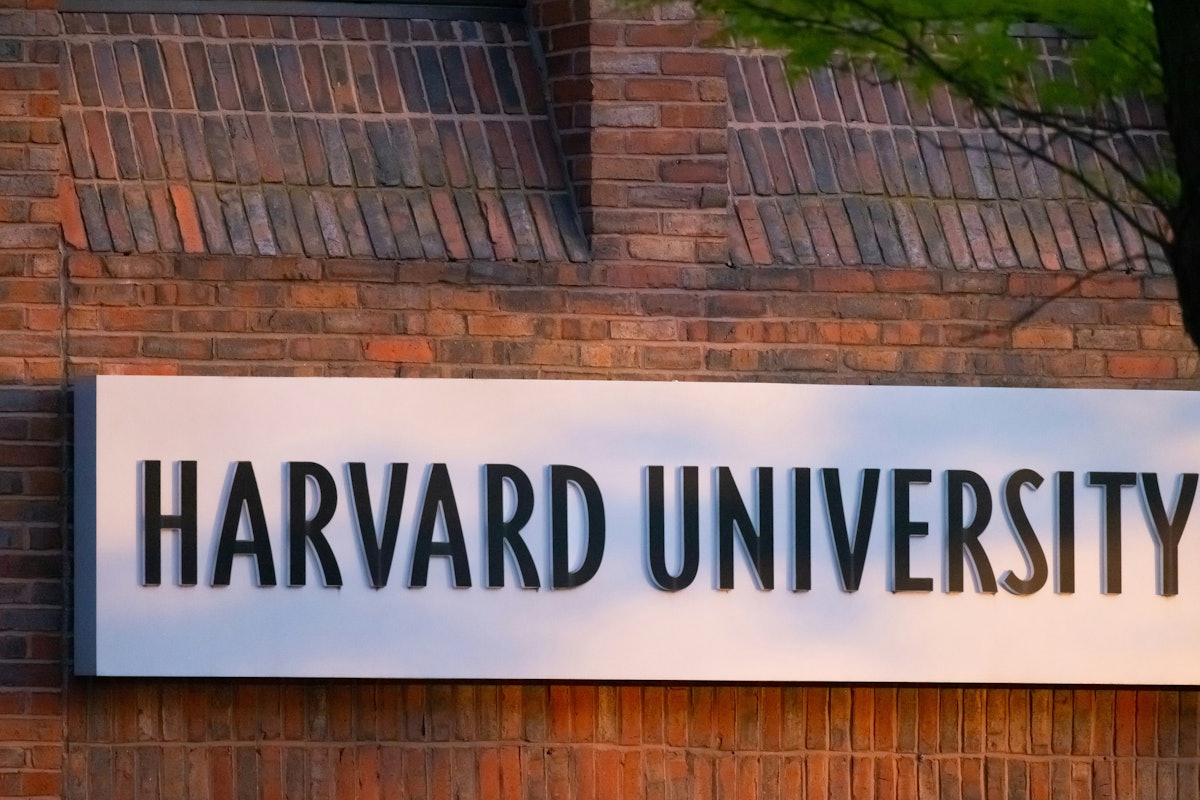
    The number of demands made by the Trump administration to Harvard University for the Ivy League institution to keep its federal funding, according to a copy of the letter. The requirements include for Harvard to review academic programs the Trump administration considers “biased” and for the university to eliminate diversity, equity and inclusion initiatives.


    15%

    The National Institutes of Health’s proposed rate cap on reimbursement for indirect research costs. However, a federal district judge permanently barred the NIH last week from implementing the policy, ruling the agency lacked the legal authority to make the change.


    3

    The number of federal lending programs the Education Department named when announcing plans to revise student aid regulations. The agency indicated it hopes to make changes to two income-driven repayment plans, as well as the Public Service Loan Forgiveness Program, which clears debts for public servants after they make a decade of qualifying payments.


    22,000

    How many students attending private nonprofit colleges who could be rendered ineligible for a popular grant program in Florida under a new legislative proposal. Florida lawmakers are mulling performance metrics — including minimum graduation rates — for institutions to be able to participate in the program.

    Source link