Blog

  • Lunchtime Reading: Will having more male teachers as role models solve ‘the boy question’?

    Lunchtime Reading: Will having more male teachers as role models solve ‘the boy question’?

    • Mark Roberts is an English teacher and Director of Research at Carrickfergus Grammar School. He is the author of several books, including Boys Don’t Try? and The Boy Question, both published by Routledge.

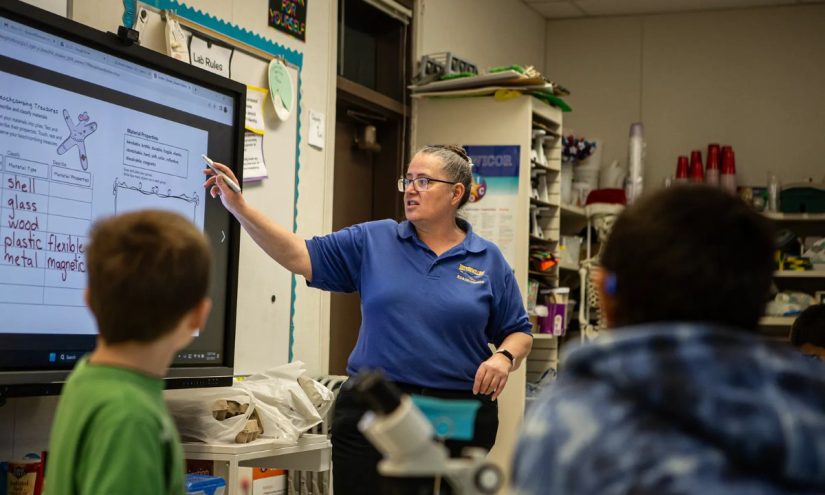
    Spurred on by the huge response to the TV series ‘Adolescence’, Bridget Phillipson MP, Secretary of State for Education, has this week called for more male teachers to act as role models for disaffected boys.

    As a teacher who has been writing about issues with boys and education for many years, I’m delighted to see an increased focus on the debate about how best to support boys in school.

    Yet, while the idea of male teachers as role models is an alluring one, the plan is deeply flawed. Even if we can persuade lots of men to take up the call to arms to rescue our boys, there’s little evidence to suggest that the plan will work.

    The case for more male teachers

    Just as we have pushed more girls into STEM professions, we should be pushing more boys into HEAL (Health, Education, Admin and Literacy) professions. As I wrote in my book The Boy Question (2021):

    Seeing more men in teaching roles, and especially in primary settings, would help change attitudes towards both education and society at large. It would probably encourage more boys to consider teaching as a possible future career  option for themselves.

    But, in the rush to save boys from Tate and his ilk, we need to ask a key question: Will more men in teaching actually make a difference? In the age of the manosphere, would more male teachers help shift boys’ attitudes? And, from the perspective of participation in higher education, would these new recruits help improve their academic outcomes?

    The problem with male teachers as role models

    Unfortunately, there are numerous problems with the role model plan:

    1. Men are reluctant to go into teaching

      Given the relatively low pay, workload expectations and lack of status, attracting men into teaching is a challenging prospect. Efforts to recruit 6500 new teachers already look dubious, with only 200 more trainee teachers signing up in 2024/25. Without a plan to tackle negative perceptions of teaching as a career prospect, the idea is doomed from the start.

      2. Nobody can agree on what a male teacher role model looks like

        Cushman (2008) surveyed 250 New Zealand primary school principals to discover what qualities they were seeking in male teachers[i]. The principals had a long list of often contradictory desirable qualities, including outstanding sporting prowess. Research by Brownhill (2014) listed 65 different role model requirements[ii]. Meeting this idealised checklist is a big ask for any individual. Pupils, parents and politicians would also have their own role model requirements. Is any one man capable of being all those things, all the time, to all stakeholders? And even if these Supermen are capable of all this, are they also equally confident talking about misogyny as talking about algebra or Shakespeare?

        3. Children very rarely view teachers as role models

        Even if teachers were willing to try and adopt the position of idealised male teacher, there’s little evidence to suggest that boys would see them as father figures. Bricheno & Thornton (2007) found that between the age of 10-16, boys named relatives as their ‘most important role models’. Compared to 32% of young people who said they looked up to a parent, a mere 2.4% of students identified a teacher as a role model. [iii]

        4. There’s little evidence to suggest boys learn better with male teachers

        One key reason given for more male role model teachers is the suggestion that disaffected boys will respond better to teachers of their own gender. But the evidence doesn’t stack up. A 2010 study by Lam et al. of nearly 5,000 Grade 4 students in Hong Kong found no evidence that boys improved their reading when taught by men[iv]. In 2008, Carrington et al. found no teacher gender effect on attainment data and pupil attitudes in British primary schools[v]. In the same year, Marsh et al. found ‘little or no evidence’ to support the idea that boys will be more motivated by male than female teachers in secondary maths, science and English classes’[vi]. I could go on. While I welcome any efforts to recruit more male teachers, we shouldn’t expect this to lead to better results for boys.

        5. It judges female teachers unfairly

        Many of the calls for more male teachers come from voices bemoaning the ‘feminisation’ of schools. Such voices believe that female teachers are incapable of providing guidance for boys and helping them become productive members of society. This deficit model is frankly insulting to the many thousands of female teachers doing a wonderful job of educating boys in often challenging circumstances.

        Rather than getting distracted by the male role model debate, we should focus on fully supporting teachers to help boys succeed academically and get the grades required to, should they wish, enter higher education. Because that, above all, will make the biggest difference to boys’ lives.


        [i] Cushman, P. (2008) ‘So what exactly do you want? What principals mean when they say ‘male role model’’, Gender and Education, 20:2, pp. 123–136.

        [ii] Brownhill, S. (2014) ‘‘Build me a male role model!’ A critical exploration of the perceived qualities/characteristics of men in the early years (0–8) in England’, Gender and Education, 26:3, pp. 246–261.

        [iii] Bricheno, P., & Thornton, M. (2007) ‘Role model, hero or champion? Children’s views concerning role models’, Educational Research, 49:4, pp. 383–396.

        [iv] Lam, Y.H., Tse, S.K., Lam, J.W.I., & Loh, K.Y.E. (2010) ‘Does the gender of the teacher matter in the teaching of reading literacy? Teacher gender and pupil attainment in reading literacy in Hong Kong’, Teaching and Teacher Education, 26, pp. 754–759.

        [v] Carrington, B., Tymms, P., & Merrell, C. (2008) ‘Role models, school improvement and the ‘gender gap’ – Do men bring out the best in boys and women the best in girls?’ British Educational Research Journal, 34, pp. 315–327.

        [vi] Marsh, H., Martin, A., & Cheng, J. (2008) ‘A multilevel perspective on gender in classroom motivation and climate: potential benefits of male teachers for boys?’ Journal of Educational Psychology, 100, pp. 78–95.

    Source link

  • Greek TNE applications surge under new law

    Greek TNE applications surge under new law

    The applications from 11 British, one French and one Cypriot institution were submitted to the Greek Ministry of Education on March 31, after regulatory reform allowing international universities to establish fully accredited branch campuses in Greece.  

    Greek education minister Sophia Zacharaki welcomed the “historic reform”, which aims to meet the growing demand from Greek students for internationally recognised and accredited university degrees.  

    “[The reform] provides new choices to Greek college students, establishes Greece as an educational destination for thousands of foreign students,” said Zacharaki.

    She added that the reform would provide the opportunity for Greek scientists working abroad to return to Greece, transforming the country into “a hub of knowledge and innovation for the greater region of southeastern Europe”.  

    As well as attracting international students, the legislation aims to meet the “ever-increasing domestic demand” for higher education, halt the emigration of Greek young people and encourage the return of Greek academics and scientists.

    In 2024, more than 40,000 Greeks studied abroad, according to the government.

    And yet, the bill was met with fierce opposition during its parliamentary debate, sparking weeks of protests from domestic students and faculty who argued the legislation would undermine Greek state universities and devalue domestic degrees.  

    It’s advocates, however, maintain that healthy competition will uplift Greece’s higher education system, attract international investment and create new jobs.  

    “The government wants to modernise the Greek higher education landscape and create two systems, one state and one non-state that will interact creatively with each other,” said Study in Greece director, Theodoros Papaioannou, when the bill was passed.  

    Pending government approval, the majority of applicants plan to launch branch campus operations in October 2025, with nine institutions already partnered with Greek private colleges that operate as affiliates of European institutions.  

    For instance, York University’s existing partner, CITY College in Thessaloniki, will transition into the University of York Europe Campus, CITY U.L.E, operating as a non-state, non-for-profit university.

    Among the other UK applicants are the University of East London, the University of Greater Manchester, the University of Derby, London Metropolitan University, the University of West London and the University of Essex.

    [The branch campus] promises to elevate the educational landscape in Greece and offer students even more pathways for success

    Constantine Arcoumanis, Metropolitan College, Greece

    UEL’s institutional partner, Metropolitan College, Greece (MC), welcomed the collaboration, highlighting the benefit of Greek students obtaining accredited degrees from leading European universities.  

    “[The branch campus] promises to elevate the educational landscape in Greece and offer students even more pathways for success,” said MC academic board chairman Constantine Arcoumanis, adding he was “excited” about the proposals.  

    To ensure accessibility for domestic students, UEL said that many of its programs would be delivered in Greek, and that students would have access to UEL’s careers services and soft skills support, as well as study abroad, cultural exchange and learning resources.  

    The University of York’s campus, with locations in Thessaloniki and Athens, plans to establish a “leading hub for computer science studies”, initially offering undergraduate and postgraduate degrees across the schools of business studies, sciences, and law and humanities.  

    In a video message, York’s vice-chancellor welcomed the Greek government’s decision and said that his branch campus aimed to “contribute to the advancement of higher education and to establish Greece as an international education hub”.

    Last month, Greek Prime Minister Kyriakos Mitsotakis spotlighted York University’s interest in expanding operations to Greece: “Ranked 146th globally in 2025, York has been recognised for its excellence in research and teaching by official British institutions,” he told Greek media.

    Since Mitsotakis came to power in 2019, Greece has pursued the internationalisation of higher education, with the Prime Minister highlighting the need to combat Greece’s “brain drain”.

    In July 2022, the government changed the constitution to allow universities to offer bachelor programs taught in English.

    Source link

  • New College Looks to Acquire A USF Campus and Art Museum

    New College Looks to Acquire A USF Campus and Art Museum

    New College of Florida could soon expand its footprint in a significant way if plans to absorb a nearby museum and local branch campus of the University of South Florida come to fruition.

    Current proposals would see New College taking over stewardship of the John and Mable Ringling Museum of Art in Sarasota and other associated properties and merging with USF Sarasota–Manatee. Such moves would nearly double New College’s acreage and triple its enrollment at a time when critics have raised questions about spending at NCF, where the cost to Florida taxpayers per student is roughly 10 times higher than any other institution in the State University System.

    The proposed expansion would continue efforts to grow NCF after state leadership tasked a new board in 2022 with shifting the small liberal arts college in a conservative direction and growing its student body, which the administration has so far aimed to do by adding athletic programs.

    But critics have raised concerns about a lack of transparency around both potential acquisitions and whether New College has the capacity to manage another campus and a sprawling art museum.

    A Contested Acquisition

    New College officials have quietly been preparing for a merger with USF Sarasota–Manatee for at least several months, according to public records obtained by WUSF, the local NPR affiliate.

    A WUSF public records request turned up a draft press release from New College announcing the merger between the two institutions as well as talking points and details on the transition.

    Details in the documents make the deal sound more like an acquisition than a merger.

    Students will have the option to transfer to another USF campus “or remain at New College,” according to the documents. Under the proposed plan, USF Sarasota–Manatee employees would possibly be reassigned to other USF campuses or “to comparable roles” at New College.

    University of South Florida Sarasota–Manatee main building.

    Alaska Miller/Wikimedia Commons

    Although it appears that New College would absorb USF Sarasota–Manatee in the merger, New College is the much smaller of the two institutions. In fall 2023, it enrolled 731 students compared to more than 2,000 at USF Sarasota–Manatee, according to details on the university website.

    “As we reimagine the future of higher education in Florida, this integration is a testament to the power of collaboration,” New College of Florida president Richard Corcoran said in the news release obtained by WUSF. “Governor [Ron] Desantis [sic] has shown exceptional leadership in enabling this bold vision, one that positions New College to advance as a model of academic excellence while fostering economic innovation and impact in the Sarasota-Manatee region.”

    The news release adds, “This collaboration is more than a merger,” casting it as “an opportunity to design a singular institution that meets the demands of the 21st century” and allows USF to focus on its mission as a research university and NCF to become the nation’s top liberal arts college.

    “The integration also addresses longstanding inefficiencies, consolidating administrative functions and aligning academic offerings. USF-SM’s programs often overlap with those offered by other public higher education institutions in Sarasota and Manatee counties, including New College and State College of Florida,” part of the draft press release from New College reads.

    New College officials did not respond to requests for comment from Inside Higher Ed.

    USF president Rhea Law is also quoted in the draft press release, stating that “by coming together, we honor the distinct institution while creating a stronger foundation for the future of both institutions and our communities.”

    But USF officials have distanced themselves from the announcement since it emerged publicly.

    “Please be aware that the documents are several months old and include a draft press release and talking points that were prepared by New College. USF did not approve the proposal or communications drafted by New College. There have been no plans made to make any such announcement,” USF spokesperson Althea Johnson wrote to Inside Higher Ed by email.

    However, Johnson noted that the two institutions have engaged in talks since last fall, when Florida Board of Governors chair Brian Lamb asked them to “identify additional synergies.”

    Asked if NCF invented quotes attributed to Law and other USF officials, Johnson reiterated, “USF did not draft or approve of the communications. They were prepared by New College.”

    Community members have also opposed the move. Last week more than a dozen former USF Sarasota–Manatee officials and community partners signed on to an open letter against the merger, calling the move “a bad deal for our students and families, employers and community.” They wrote, “There has been no community consultation on the impacts” of the proposal.

    The merger proposal would require legislative approval. Although no bill has been filed, Republican state senator Joe Gruters—whose wife works at NCF—has thrown support behind the idea in interviews. Gruters did not respond to a request for comment from Inside Higher Ed.

    Expanding Into the Arts

    While NCF quietly planned to absorb USF Sarasota–Manatee, an effort to take stewardship of the Ringling Museum, currently administered by Florida State University, was also underway.

    Art Peter Paul Rubens room at the Ringling Museum.

    Visitors view paintings in the Ringling Museum of Art’s Peter Paul Rubens room.

    Education Images/Universal Images Group/Getty Images

    When DeSantis unveiled his state budget plans in February, many observers were shocked to see a proposal for New College to take over the Ringling art museum and affiliated properties, which includes a former home of the namesake founder, and the Ringling Museum of the Circus.

    Florida State has had stewardship of the Ringling properties since 2000. FSU’s responsibilities include managing the Ringling’s endowment and employing the staff that operate the facilities, which does everything from curate collections to provide security and other functions. One recent report counted 229 employees on the FSU payroll at the Ringling.

    Many museum supporters are appalled at the idea of a New College takeover, including Nancy Parrish, a former member of its board and president of the nascent Citizens to Protect the Ringling. She argues FSU has transformed the Ringling from a property that had fallen into disrepair when it took over stewardship in 2000 to a thriving institution with annual surpluses. Parrish worries that NCF is incapable of taking on the same role and would upend that progress.

    “New College is in a costly, complicated, precarious transition. How can it possibly manage an institution larger than itself? And an institution as complicated as a museum was never in its business plan. It’s outrageous government overreach and an outrageous waste of taxpayer money, because it would take millions to replace what FSU provides the museum,” Parrish said.

    The timeline for the proposed transition from FSU to NCF by Aug. 1 is also rushed, she argues.

    Amid the uncertainty over the Ringling’s future, she said that “donors are fleeing in panic.”

    Details on how NCF would take over the operations are not laid out in the DeSantis proposal, and NCF officials did not fulfill a public records request about the transition prior to publication.

    A Feb. 19 op-ed from Corcoran in a local news outlet yielded few details.

    “This transition is not only sensible; it is a collective win. It is a win for Sarasota, reinforcing its reputation as a global leader in the arts and higher education; boosting tourism, cultural engagement and economic growth—all while preserving a historical gem,” Corcoran wrote.

    He added that NCF stewardship would both expand “research partnerships, student engagement and statewide academic initiatives in the arts and humanities” and provide “an infusion of resources” to allow it “to elevate its world-class exhibitions, research and outreach.”

    FSU did not respond to requests for comment from Inside Higher Ed.

    The Financial Picture

    New College’s potential expansion comes as it has grown in other ways since DeSantis appointed a conservative board that tapped Corcoran, a former GOP lawmaker, as president.

    Since 2022, NCF has added six intercollegiate teams and plans to field 24 altogether by 2028. Beyond the inaugural programs in sports such as basketball, baseball and soccer, New College plans to expand to tennis, golf, bass fishing and various other athletic pursuits. NCF is investing in developing its athletic facilities in addition to paying for coaches and athletic scholarships.

    New College’s strategic transformation has come with a substantial price tag for taxpayers. The state has already infused New College with millions of dollars since the change in leadership. And NCF’s leaders want more state money—at least $200 million over the next decade.

    But that spending has prompted some pushback from the DeSantis-appointed Florida Board of Governors, which oversees New College and other members of the State University System.

    FLBOG member Eric Silagy has challenged Corcoran at times on financial transparency and the high cost per student, calculating that NCF spent $91,000 per student in the 2023–24 academic year. The system average is $10,000, Silagy said at a September board meeting.

    Corcoran initially disputed that number, arguing it was $68,000 per head.

    But at a January meeting, Silagy said he had spoken with Corcoran, who now agreed that figure was between $88,000 and $91,000 per student, a figure Silagy said continues to climb. He projects that NCF could soon spend between $114,000 and $140,000 for each student.

    Concerns about fiscal management also prompted a shake-up at the New College Alumni Association last month, when then-director Ben Brown resigned in protest because of “a deteriorating institutional relationship” between the college and alumni, and concerns that Corcoran had squandered funds. Brown also wanted more transparency.

    Brown told Inside Higher Ed he is concerned about the state giving Corcoran more power.

    “There’s no ingrained alumni opposition to the idea of being part of USF or doing things jointly with USF, but the current alumni sentiment is very clear that for this administration, operating the way it is, to take responsibility for part of USF is dangerous to the state and to the taxpayers,” Brown said.

    Source link

  • FIRE Defends WVU Football Players’ Right to Dance on TikTok

    FIRE Defends WVU Football Players’ Right to Dance on TikTok

    West Virginia University’s football team is experiencing a digital Footloose: The coach has prohibited the players from dancing on TikTok. The Foundation for Individual Rights and Expression hopes to reverse the ban.

    In March, head football coach Rich Rodriguez told his players that while they could post on TikTok, they weren’t allowed to dance on the platform.

    “We have to have a hard edge … and you’re in there in your tights dancing on TikTok ain’t quite the image of our program that I want,” Rodriguez said, according to the Associated Press.

    @wvu_football ♬ original sound – WV football

    Rodriguez also said he wants the players to focus less on their individual performances and more on the team dynamic—and he believes not dancing on TikTok can help.

    FIRE responded by writing a letter last month to the university’s athletic director, Wren Baker, arguing that the ban on dancing violates the athletes’ First Amendment right to free expression.

    “WVU players don’t hand in their expressive rights when Rodriguez hands out shoulder pads at the start of training camp,” FIRE wrote in the letter. “Because student-athletes are students first, their right to free expression off the field must be commensurate to other students on campus.”

    When Baker failed to respond within a few weeks, FIRE sent another letter, which was posted on X.

    “Major NFL players like Tom Brady, Gronk [Rob Gronkowski], and the Kelce brothers maintain robust TikTok presences,” the letter read. “Coaches at public colleges can’t stop their players from posting online, because students—including athletes—have the First Amendment right to express themselves.”

    The policy isn’t written anywhere, as Front Office Sports learned after requesting a copy through the Freedom of Information Act, but FIRE claims “its existence and enforcement violates students’ expressive rights.”

    Some college athletes use their social media presences to generate revenue through name, image and likeness opportunities, and many of the top earners through NIL deals are colleges football players, though fewer of their brand opportunities are a result of social media dances.  

    An impending ban on TikTok makes the future of students in general posting on the platform less clear.


    Source link

  • Federal Government Is Now an Unreliable Partner (opinion)

    Federal Government Is Now an Unreliable Partner (opinion)

    When Linda McMahon was initially picked to be the secretary of education, I wrote a piece that detailed how comparing her to former secretary of education Betsy DeVos was likely inappropriate. I ended that piece by cautiously suggesting that McMahon would strongly align with elements of the Heritage Foundation’s Project 2025 and of the think tank she led, the America First Policy Institute. I also suggested that because the president is ambiguous in his attitudes toward following court orders, McMahon might feel emboldened to engage in similar behavior.

    Since my previous op-ed, McMahon was confirmed as secretary of education and has since shared her vision for the Department of Education in various interviews. While her focus is primarily on K-12 education issues, for higher education she has consistently emphasized that Pell Grants and loans will remain safe—a topic I will revisit later. However, the most predictable outcome has proven accurate: McMahon’s approach aligns closely with the intentions outlined by Heritage and AFPI, as ED is targeted for closure.

    One way to frame McMahon’s leadership and recent behavior as secretary is that she’s the agency’s appointed destructor (just before signing an executive order seeking the dismantlement of the department, President Trump quipped, “Hopefully she will be our last secretary of education.”) Now, ED cannot be eliminated without congressional approval. However, there are many decisions the administration can make to severely hobble the department and offices within it. Some of these decisions have already been executed.

    One of the most impactful and immediate policies that McMahon has pursued was an almost 50 percent reduction of staff at ED, from roughly 4,000 to 2,000 employees. These cuts have reduced employees at offices such as the Office of Federal Student Aid, the Institute of Education Sciences and the Office for Civil Rights. Communications from ED have suggested these cuts will not affect students’ ability to apply for and secure financial aid.

    Of the nearly 2,000 layoffs, more than 300 happened within the Federal Student Aid office—and almost immediately the Free Application for Federal Student Aid site went down for a few hours. Even with a full staff, the Biden administration had well-documented issues with keeping the FAFSA running smoothly, which led to a 9 percent decline in FAFSA submissions for first-time applicants in 2024, or about 432,000 fewer applications over all. Given the department’s reduced capabilities, I have little confidence that it can process FAFSA applications promptly.

    On March 21, President Trump announced that the Small Business Administration would take over the student loan portfolio, an interesting move given that McMahon was the SBA head during Trump’s first term. No clear explanation has been provided for why the SBA should take charge of the portfolio, and no public plan for such a transfer has been released. Additionally, the SBA intends to cut its staff nearly in half, reducing its 6,500-person workforce by about 2,700 employees, while managing this titanic task.

    Although it could be argued that the loan portfolio might be transferred out of the FSA (the “Performance-Based Organization”) based on performance, as outlined in the Higher Education Act of 1965 and the Higher Education Amendments of 1998, it remains unclear whether transferring the portfolio outside of ED is legally permissible. Additionally, the Higher Education Opportunity Act of 2008 does not appear to support moving loans or other financial aid–related processes outside of ED.

    In recent interviews, McMahon has offered no further clarification on this decision, noting that additional ED functions might also be transferred to other departments. While she proposed working with Congress to interpret the legality of these actions, she also has hinted that congressional approval may not be necessary.

    In addition to concerns surrounding financial aid, we should anticipate weaker accountability measures and diminished academic research moving forward. ED’s Institute for Education Sciences has faced significant staff cuts. Although the Integrated Postsecondary Education Data System remains active, providing essential data on enrollment, costs, financial aid and graduation rates, its future is uncertain. This data set is crucial for researchers at foundations and think tanks focused on accountability, as well as for academics studying outcomes in higher education. However, with the survey submission link recently down and limited staff to oversee the system, IPEDS may soon lack accuracy or even public accessibility. As other federal data sets also face potential risks, researchers may need to reconsider the standards for defining good work in this evolving landscape.

    Yet, the staff cuts may have been too abrupt, as ED recently asked several dozen employees to return to fulfill statutory obligations, including responsibilities related to financial aid and loans. However, uncertainty persists regarding how the administration and Secretary McMahon interpret these obligations and the level of efficiency required for their execution.

    McMahon’s influence on higher education has already extended beyond the “Sweet Chin Music” directive for ED (“Sweet Chin Music” is the finishing move of WWE legend Shawn Michaels—a super kick to the face). She seems eager to serve as a bridge for aligning higher education with conservative priorities, as demonstrated by her direct involvement with the revocation of $400 million in federal grants and contracts to Columbia University—the first test case in a broader strategy to pressure universities over allegations of campus antisemitism. Critics argue this is a pretext for advancing a conservative agenda rather than a genuine effort to protect Jewish students and employees, with similar tactics now being applied to Harvard and Princeton Universities. The administration also seems to be using a similar strategy to pressure other institutions like the University of Pennsylvania over issues related to Title IX and transgender athletes.

    To regain federal funding, Columbia was given a list of demands, which included enacting a new campuswide mask ban and placing the Middle Eastern, South Asian and African Studies Department under academic receivership—actions widely criticized as federal overreach. Though Columbia has taken multiple steps to address concerns about antisemitism, including seeking the arrest of pro-Palestinian protesters for trespassing, expelling students and temporarily revoking diplomas, the administration in effect deemed these actions insufficient.

    Though Columbia has largely complied with the administration’s demands, there is little indication that the withheld funds will be restored or to what degree. Regardless of readers’ personal views on the outcome, Columbia’s compliance demonstrates that institutions likely are increasingly susceptible to federal interventions. Looking ahead, I expect both Republican and Democratic administrations to exert distinct political pressures on institutions, significantly reshaping higher education—a shift partly influenced by McMahon’s direct role in the Columbia negotiations.

    Since the National Institutes of Health grant cancellations began, I have described federal government agencies as “unreliable partners” for higher education. The “unreliable partners” label remains fitting as McMahon continues to dismantle ED and transfer its responsibilities to other departments, which is likely to cause extreme inefficiencies. I am especially concerned about delays in FAFSA processing and whether financial aid will reach institutions and students on time next academic year—if at all. Administrators should prepare for these risks. Furthermore, as Columbia has complied with the administration’s demands, it’s possible that future financial aid may come with new conditions (e.g., mask bans on all campuses)—or be intentionally withheld until expectations are met.

    Daniel A. Collier is an assistant professor of higher and adult education at the University of Memphis. His work focuses on higher education policy, leadership and issues like student loan debt and financial aid. Connect with Daniel on Bluesky at @dcollier74.bsky.social.

    Source link

  • It’s students that suffer when those supposed to protect them fail

    It’s students that suffer when those supposed to protect them fail

    24 hours after it published its (“summary”) report into the sudden closure of the Applied Business Academy (ABA), the Office for Students (OfS) published an insight brief on protecting the interests of students when universities and colleges close.

    When the regulator works with a closing provider, it says that it works with that provider and other bodies to try to reduce the impact on students.

    OfS’ report on ABA is notably quiet on the extent to which it has been successful there – we’ve no idea how many students were real, how many of those that were have successfully switched provider, how much (if any compensation) any of the impacted students have had, and so on.

    Nor has it talked about its success or otherwise in reducing the impact on students from the closure of ALRA drama school in 2022 or Schumacher College last Autumn.

    A number of campuses have closed in recent years – no idea on that, and if your course closes (or is cut or merged in a material way) OfS doesn’t even require providers to report that in, so it would neither know nor feature it on its “current closures” webpage (that plenty of students caught up in a closure will nevertheless find if they google “closed course office for students”).

    The other gap in knowledge thus far is the sorts of things that you might assume the regulator has noticed or done or considered in the run up to a closure. The learning is valuable – and so the new brief shares both its experience of closures and “near misses”, and the experiences of some of those directly involved.

    There’s helpful material on the impact on students, communication and record management, and how providers may be affected by the closure of subcontracted or validated delivery partners – and features anonymised quotes shared by senior managers and “a student” involved in institutional closures.

    Unexpected hits you between the eyes

    The note suggests that providers consistently underestimate the challenges and “resource-intensive nature” of closure processes – one contributor says:

    The challenge is underestimating the level of work and planning that are needed in different areas. Planning prior to a crisis developing can help the situation hugely.

    Financial complexities often catch institutions unprepared, with many discovering too late how their legal structure significantly impacts rescue options. OfS says that providers need to thoroughly understand their financial position, contractual obligations, and legal options well before any crisis occurs.

    Student data management are also a problem – incomplete or inadequate student records prove nearly useless when transfers become necessary, and data sharing agreements essential for transferring information to other institutions are often neglected until closure is imminent.

    The human impact on students is underestimated. Students face difficulties processing their options without timely information, and providers fail to recognise how closure disproportionately affects those with caring responsibilities, part-time employment, disabilities, or those on placements – all groups who cannot easily relocate. Accommodation arrangements create more complications, with some students locked into tenancy contracts.

    Communication challenges see providers struggling to balance early transparency against having finalised options – it says that many fail to develop clear, student-focused comms plans, resulting in confusion and poor decision-making among those affected.

    Validated and subcontractual partnerships demand special attention – with one leader admitting:

    Our mechanisms were too slow to identify the risks for those students.

    Many have failed to identify and plan for contingencies despite retaining significant responsibility for these students. And refunds and compensation frameworks are neglected too – the one student observes:

    We were told we could claim compensation for reasonable interim costs from our institution, but without clear or prompt guidance on what this could cover, it was hard to feel confident in making decisions.

    It also says that early stakeholder engagement with agencies like UCAS or the OIA (as well as proactive communication with OfS and any other relevant regulators) is critical – delays in those its seen until crisis is imminent miss valuable opportunities for support in protecting student interests.

    The benefits of hindsight

    Despite focusing on risks to study continuation of study and provider response planning and execution, astonishingly the brief never mentions Condition C3 – the core regulation governing these areas.

    Condition C4 (an enhanced version of C3) appears occasionally, but we learn nothing about its application in the cited cases, preventing assessment of the regulatory framework’s effectiveness.

    This all matters because OfS’s fundamental purpose is to assure those enrolling into the provision it regulates of a level baseline student interest protection – not merely offering advice.

    And the reality is that the evidence it presents reveals systematic failures across C3’s key requirements. Providers here demonstrated profound gaps in risk assessment and awareness. They “were not fully aware of the risks” from delivery partner failures, with early warning mechanisms that “should have kicked in earlier”, and seem to have failed to conduct the comprehensive risk assessments across all provision types that C3 explicitly requires.

    Mitigation planning fell similarly short of regulatory expectations. Institutions underestimated “the level of work and planning needed” while failing to properly identify alternative study options. Practical considerations like accommodation concerns with “third-party landlords” were overlooked entirely. And plans weren’t “produced in collaboration with students” as both C3 and pages like this promise:

    …we expect providers to collaborate with students to review and refresh the plan on a regular basis.

    Implementation and communication failures undermined student protection. When crises occurred, protection measures weren’t activated promptly, with students reporting “it was difficult to decide what to do next without having all the information in a timely manner.”

    Compensation processes generated confusion rather than clarity. Delivery partners neglected to inform lead institutions of closure risks, while information sharing was often restricted to “a smaller group of staff,” reducing planning capacity precisely when broad engagement was needed.

    And C3’s requirements regarding diverse student needs seem to have been unaddressed too. Support for students with additional needs proved inadequate in practice, while international students faced visa vulnerabilities that should have been anticipated.

    C3 also requires plans to be “published in a clear and accessible way” and “revised regularly” – requirements evidently unmet here, with evidence suggesting some providers maintained static protection measures that proved ineffective when actually needed.

    Has anyone been held to account for those failings? And for its own part, if OfS knew that ABA was in trouble (partly via Ofsted and partly via the DfE switching off the loans tap), even if C4 wasn’t applied, was C3 compliance scrutinised? Will other providers be held to account if they fail in similar ways? We are never told.

    The more the world is changing

    The questions pile up the further into the document you get. Given the changed financial circumstances in the sector and the filing cabinet that must be full of “at enhanced risk” of financial problems, why hasn’t OfS issued revised C3 guidance? If anyone’s reading inside the regulator, based on report I’ve had a go at the redraft that former OfS chair Michael Barber promised back in 2018 (and then never delivered) here – providers wishing to sleep at night should take a look too.

    You also have to wonder if OfS has demanded C3 rewrites of providers who have featured on the front of the Sunday Times, or who have announced redundancies. If it has, there’s not much evidence – there’s clearly a wild mismatch between the often years old, “very low risks here” statements in “live” SPPs that I always look for when a redundancy round is threatened, and I have a live list of those featured on Queen Mary UCU’s “HE Shrinking” webpage whose SPPs paint a picture of financial stability and infinitesimally small course closure risk despite many now teaching them out.

    I’ve posted before about the ways in which things like “teach out” sound great in practice, but almost always go wrong – with no attempt by OfS to evaluate, partly because it usually doesn’t know about them. I’m also, to be fair, aware that in multiple cases providers have submitted revised student protection plans to the regulator, only to hear nothing back for months on end.

    Of course in theory the need for a specific and dedicated SPP may disappear in the future – OfS is consulting on replacing them with related comprehensive information. But when that might apply to existing providers is unknown – and so for the time being, OfS’ own protection promises on its own website appear to be going unmet with impunity for those not meeting them:

    Student protection plans set out what students can expect to happen should a course, campus, or institution close. The purpose of a plan is to ensure that students can continue and complete their studies, or can be compensated if this is not possible.

    As such the brief reads like a mixture between a set of case studies and “best practice”, with even less regulatory force than a set of summaries from the OIA. The difference here – as the OIA regularly itself identifies – is that the upholding of a complaint against its “Good Practice Framework” won’t be much use if the provider is in administration.

    So whether it’s holes in the wording of C3, problems in predicting what C3’s requirements might mean, a lack of enforcement over what students are being promised now, a need for C3 to be revised and updated, a need for better guidance in light of cases surrounding it, or a need for all of these lessons to be built into its new proposed C5 (and then implemented across the existing regulated sector), what OfS has done is pretty much reveal that students should have no trust in the protection arrangements currently on offer.

    And for future students, wider lessons – on the nature of what is and isn’t being funded, and whether the risks can ever be meaningfully mitigated – are entirely absent here too.

    Amidst cuts that OfS itself is encouraging, from a course or campus closure point of view, a mixture of OfS consistently failing to define “material component” in the SPP guidance, and a breath of providers either having clauses that give them too much power to vary from what was promised, or pretending their clauses allow them to merge courses or slash options when they don’t, is bad enough – as is the tactic of telling students of changes a couple of weeks before the term starts when the “offer” of “you can always break the contract on your side” is a pretty pointless one.

    But from a provider collapse perspective, it’s unforgivable. Whatever is done in the future on franchising, you’d have to assume that many of the providers already look pretty precarious now – and will be even more so if investigations (either by the government or newspapers) reveal more issues, or if OfS makes them all register (where the fit and proper person test looks interesting), or if the government bans domestic agents.

    And anyone that thinks that it’s only franchised providers that look precarious right now really ought to get their head across the risk statements in this year’s crop of annual accounts.

    Back in 2017 when DfE consulted on the Regulatory Framework on behalf of the emerging OfS back, it promised that were there to be economic changes that dramatically affected the sustainability of many providers, the regulator would work with providers to improve their student protection plans so that they remained “strong” and “deliverable” in service of the student interest.

    So far they’ve proved to be weak and undeliverable. Whether that’s DfE’s fault for not getting the powers right, OfS’ for not using them, or ministers’ fault for freezing fees, taking the cap off recruitment and letting cowboys in to trouser wads of tuition fee loan money is an issue for another day. For now, someone either needs to warn students that promises on protection are nonsense, or providers, DfE and OfS need to act now to make good on the promises of protection that they’ve made.

    Source link

  • One Step Beyond: A View from a School

    One Step Beyond: A View from a School

    • Sarra Jenkins is Director of Future Pathways at Loughborough Grammar School.

    HEPI’s recent report, One Step Beyond, offers an excellent analysis of an important topic – how ready are students for higher education? The findings are in many ways heartening, with students surveyed at university saying they wanted more PSHE (personal, social, health and economic) education around, for example, finance and life skills, more careers education and more academic skills. I say it is heartening as, while these areas are all incredibly important, they are not always areas students recognise the importance of while at school.

    Of course, each student’s experience is unique. Their needs, background, and context will shape their readiness for higher education. But what are the challenges for schools within these findings?

    Careers Education

    One Step Beyond identifies that 44% of students would have liked more support with careers pathways, and recommends a one-to-one interview at 16 with a careers expert. This recommendation is also included in the Gatsby Benchmarks, so what’s the challenge? There are two resulting issues here. Firstly, there is a dearth of careers advisers in the UK. The Labour Government pledged to recruit 1,000 new careers advisers, which would be welcomed. However, training takes time and resources, and careers advisers are poorly paid within the education sector for what is a Level 6/7 role. Therefore, schools may be forced to outsource the provision of such interviews, at a notable cost.

    The second issue is the question of whether one interview is enough. As teenagers research their possible options, differing pathways open and interests evolve. Often, when I ask students who had experienced a one-off, one-to-one interview about its usefulness, their responses were very mixed. I am fortunate in being able to meet students regularly and build up a relationship with them, which allows for deeper and more meaningful guidance. One interview is better than none, but having trusted adults who the students know can allow for more open and honest conversations.

    Life Skills

    The report also identified that students wanted more ‘life skills’. A Children’s Commissioner report into PSHE identified that a majority of 16-17-year-olds had received lessons in staying safe online, puberty, healthy eating, drugs and alcohol, emotional wellbeing, mental health, relationships and staying safe. Like the HEPI report, however, it also identified learning about finances as an area for improvement. To be clear, this is also included in the PSHE Association’s Programme of Study for Key Stage 1-5 PSHE.

    The challenge can be in delivery here. The HEPI report identifies a focus on the ‘knowledge-rich’ curriculum under Gove. This can lower the profile for lessons like PSHE, especially if schools are strapped for time. Similarly, the PSHE Association identify the importance of lessons being ‘planned and taught by trained, knowledgeable and engaged specialists’. However, teachers are trained firstly in their subject. Whilst they may be required to deliver PSHE, and hopefully supported in doing so, it may well not be an area of expertise.

    Additionally, the Govian reforms and the introduction of measures like the Progress 8, plus academic entry requirements to higher education, place a heavy emphasis on grades. This can become a focus for schools, teachers, parents and students alike. However, ‘life skills’ are not – and arguably should not be! – assessed in a similar manner. Perhaps more so than academic subjects, students are also likely to have a hugely varied background in ‘life skills’. So the need for considerable differentiation in a subject that can lack the profile it deserves can make engagement a challenge.

    Academic Skills

    The HEPI report references a high volume of assessments resulting in ‘teaching to the test’, perhaps at the expense of academic skills such as academic writing and independent inquiry. However, Leora Cruddas was right to point out in the webinar on the report that skills do not exist without knowledge domains. Indeed, even if one was doing little more than ‘teaching to the test’, to do so, a teacher would be engaging with academic skills.

    My own subject of Politics has three key assessment objectives that are assessed – knowledge and understanding, analysis and logical chains of reasoning, and evaluation and substantiated judgments. These skills are academic skills, and we use the vehicle of A Level Politics for students to engage within them. Issues can occur however when students silo this knowledge. Despite, for example, similar assessment objectives occurring in A Level English, my colleague and I routinely lament students’ ability to use their skills in an inter-disciplinary manner. This is a similar problem noted in the transition from university to work.

    If it is therefore necessary to have knowledge domains in order to be able to develop skill attributes, one way in which we can highlight this to students is by interrogating the assessment objectives. I often say to my own students, ‘I wouldn’t send you on to a rugby field without knowing the rules, why would I send you into an exam without knowing the rules?’. In this case, the rules are the assessment objectives, and I want my students not to be able to blindly carry them out, but to know what analysis or evaluation is and what it looks like in academic writing.

    This is more challenging for skills not assessed; oracy and independent study are not assessment objectives in many subjects and therefore embedding the teaching of these skills is harder. Hopefully, this is something that may be seen in the upcoming curriculum review.

    Conclusion

    The HEPI report raises many important issues; if students are to thrive in higher education, they need good advice along the way and a malleable set of skills to give them the confidence to succeed in their initial stages. Hopefully, some of these issues will be addressed in the upcoming curriculum review. Ideally however, they need to include methods of resourcing and engagement to run alongside reviewed content for the widest impact in schools.

    Source link

  • Mid-Semester Course Corrections: Using the MSF Model to Engage Students and Improve Courses – Faculty Focus

    Mid-Semester Course Corrections: Using the MSF Model to Engage Students and Improve Courses – Faculty Focus

    Source link

  • Mid-Semester Course Corrections: Using the MSF Model to Engage Students and Improve Courses – Faculty Focus

    Mid-Semester Course Corrections: Using the MSF Model to Engage Students and Improve Courses – Faculty Focus

    Source link

  • Is our North Star already outdated? – Campus Review

    Is our North Star already outdated? – Campus Review

    Two prominent student-success-driven university leaders have urged immediate action to improve student success, warning against waiting for government green-lights like the Australian Universities Accord.

    Please login below to view content or subscribe now.

    Membership Login

    Source link