The single biggest story in higher education for the first six months of this year, without a doubt, has been the Trump administration’s remarkable assault on science and universities. Arguably it’s the largest state-led assault on higher education institutions anywhere in the world since Mao and the cultural revolution.
Billions of dollars already legally allocated to institutions have been stripped from them mainly, but not exclusively through the National Science Foundation and the National Institutes of Health. Billions more are going to be cut permanently through the budget process. Individual institutions in particular, Harvard, have been threatened with a variety of punishments if they do not obey the administration’s wishes on DEI and the curriculum. International students are being deported and the government has mooted a variety of policies that would see international numbers decline sharply. Low income students are looking at major cuts to both loans and grants. And we’re only, as of this recording, 134 days into this administration’s term, still 1,327 less to go.
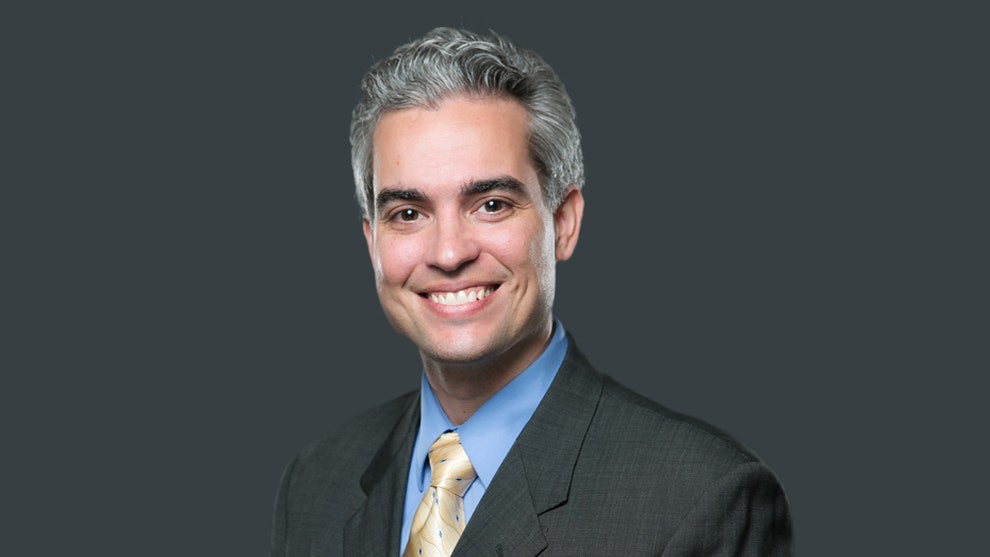
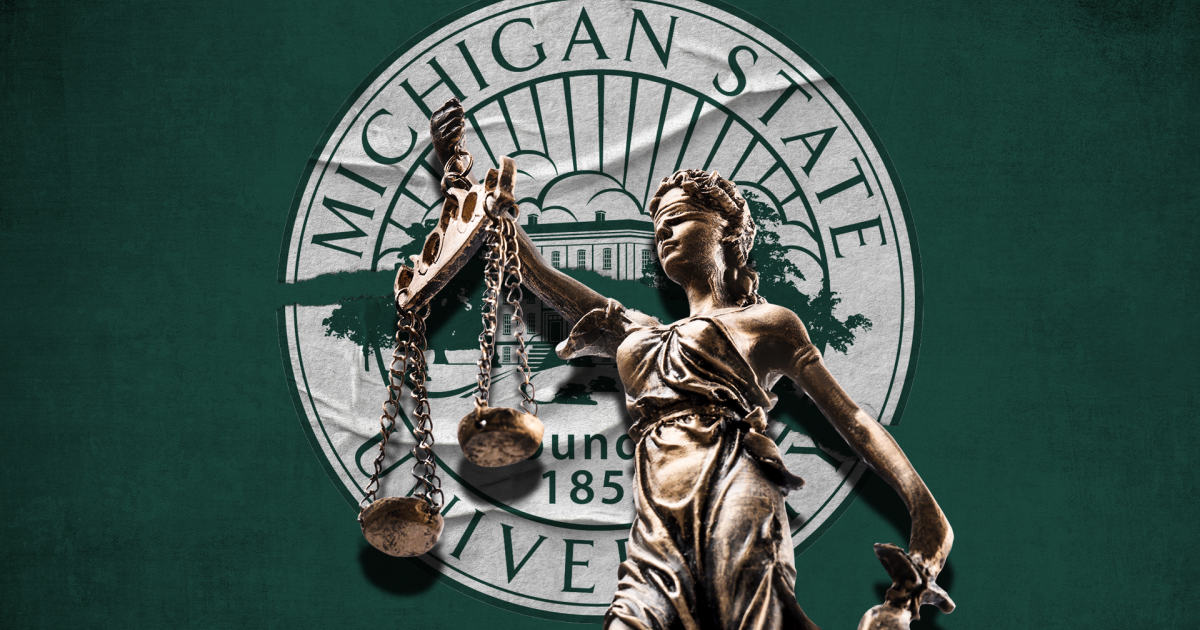
With me today is a returning guest, Brendan Cantwell, from Michigan State University. He joined our show last fall to talk about what, based on his reading of the now notorious Project 2025, a Trump administration might do to higher education. And he was mostly right. Certainly he was more perspicacious than most actual higher education leaders, and so we thought just before we break for the summer, we’d invite him back on, not just to say, I told you so, but to help us understand both the strategies and tactics that the Trump administration is using and where the conflict might be headed next.
Just one note, we recorded this on Wednesday, the 28th of May. Some things such as the state of the Trump Harvard battle have changed since then, so keep that in mind as you listen.
And now, over to Brendan.
The World of Higher Education Podcast
Episode 3.34 | Cut, Coerce, Control: What Trump Is Doing to U.S. Universities
Transcript
Alex Usher (AU): Brendan, let’s start with the big picture. We’re four months—and a week—into Trump’s presidency, with just over three and a half years to go. Let me see if I’ve got this right.
He’s attacked the major granting agencies—NIH and NSF—and reduced direct funding to individual investigators, often on DEI grounds. He’s also cut overhead payments to universities. On top of that, he’s gone after specific institutions—Columbia, Harvard, and others—trying to pull their funding in ways that, frankly, seem completely illegal. The justification has ranged from their support for EDI to questionable claims of antisemitism or collaboration with the Chinese Communist Party.
We’ve now got a budget moving through Congress that, as I understand it, takes an axe to the student loan and grant system. And just this week, the government appears to be targeting international students—starting with Harvard, and more broadly by ordering embassies to conduct social media checks before issuing student visas. Am I missing anything?
Brendan Cantwell (BC): I’m not sure—there’s just been so much. It’s hard to keep up. There have been several executive orders, including ones targeting what we call Diversity, Equity, and Inclusion programs. Others have touched on accreditation and a range of other topics.
The thing about this administration is that so much is happening so quickly, and these actions are in various stages of implementation. Some are being held up in court, and with others, it’s not even clear how they’re supposed to be implemented. The president makes a proclamation, but then there’s this uncertainty: what does it actually mean in practice?
Even for someone who spends a lot of time tracking this, it’s really difficult to stay on top of everything. But the overall thrust seems clear: the administration is using every mechanism it believes it controls—and some it probably doesn’t, legally—to pressure universities to align with the president’s agenda.
That’s not just my interpretation. It’s actually a common talking point from the administration: if universities want funding, they ought to support the president’s goals. More broadly, there’s a clear effort to weaken the sector—to undermine its role as an independent political and cultural force that could challenge the president or the party.
AU: I think Linda McMahon actually said exactly that earlier today—that universities are fine as long as they’re aligned with the president and the administration. So, I think you’ve done a good job explaining the through line across these various actions. But how coherent are those actions, really?
Is this a well-oiled plan, where they expected to be at this point by month three or four? Or is it more like the tariff policies, where the president just thinks of something new each day and rolls it out on a whim?
BC: I almost want to push back on the either/or framing. It’s definitely true that the president—and to some extent his top policy people and enforcers—are just throwing things at the wall. A lot of it is reactionary: this university defied me, so now I’m mad and I’m going to do something outrageous to show how much authority I have over them.
So yes, there’s an erratic, incoherent aspect to it. The rationale for their actions shifts constantly: one day it’s antisemitism, the next it’s about violating a Supreme Court ruling on affirmative action, then it’s about foreign collaboration. The justification just keeps changing.
But if you take a step back and look at the cumulative effect of what the administration is doing—getting universities to be more compliant, weakening their financial position, causing faculty and staff to lose their jobs—that broader objective is being advanced. And that’s exactly the kind of outcome that people like Chris Rufo, who claim to speak for the administration’s education policy, seem to be aiming for.
So no, it’s not tactically precise—it’s not some kind of meticulously calibrated battle plan. But the overall strategy of flooding the sector with challenges is definitely happening.
AU: I’ll come back to the strategy in a second, but let’s talk tactics. Do you get the sense that the Trump team is getting smarter in how it’s operating? That maybe they’ve been caught off guard a few times and are starting to adapt?
I’m just thinking about what’s happened in the last week. First, they attacked Harvard—saying, essentially, “we’re getting rid of all your international students.” Then the court pushes back. But right away, the administration has a response: the court says, “No, you can’t do that,” and they immediately pivot to pulling individual scholarships or research grants for international students—ones that hadn’t already been cut.
Then they go a step further, announcing cuts that apply not just to Harvard, but to all international students. Are they getting smarter, or not? I never had the sense this group was particularly good at learning, but maybe that’s changing?
BC: Are they getting smarter? I’m not sure. Are they more determined? Yes. And I think the voices inside the administration that might have constrained the president’s impulses back in 2016 to 2020—those are gone now. He’s unconstrained. He’s persistent. And he and his senior policy advisors genuinely believe in what they’re doing. They’re committed to the project and they’re looking for ways to push it forward.
Take the example you just mentioned: there’s an injunction—you can’t bar Harvard from enrolling international students, at least not before the courts weigh in. And the administration responds, “Fine. We’ll just create a new process to vet all international student visas.” So suddenly, they’re grinding the whole system to a halt.
They’re absolutely more willing now to use tactics that are difficult to block—tactics that escalate the situation every time someone pushes back. And they’re building out those tactics in a way that moves them closer to their goals.
That said, I don’t think their objectives are ever really precise or coherent. It’s more of a generalized impulse: they don’t like foreigners, they don’t like foreign students, they don’t like Harvard, they don’t like universities. So, they hit where it hurts—and this is one way to do it.
Now, is that smart? Maybe more effective, yes. I’m not sure it serves the country, or even the president’s long-term agenda, in any meaningful way. But it’s definitely happening.
AU: So let me turn to the Trump administration’s broader strategy. Last time you were on, we talked about Project 2025 and its implications for higher education. How closely do you think the White House’s actions over the past four months align with what was outlined in Project 2025? And by the way, this is your chance to say “I told you so.”
BC: Yeah, I love to say “I told you so”—it’s one of my character flaws.
A lot of what was in Project 2025 has now been implemented—or at least, versions of it have. Take the cap on indirect costs, for example. They’ve implemented a 15% cap, rather than the negotiated rates that were often quite a bit higher for individual campuses. Those rates sometimes raised eyebrows, especially among people unfamiliar with how the U.S. system works.
And even the rhetoric is the same. They’ve said, essentially, “Marxist foundations only pay 15%, so why should we subsidize Marxist stuff?” That language comes directly from Project 2025.
There are other examples, too. Many of the student loan reforms currently working their way through Congress have Project 2025 fingerprints on them. The executive order on DEI? Same thing. So yes, there are a lot of specific elements from the plan that are now showing up in policy.
And beyond the specifics, the overall spirit of Project 2025 is clearly visible in the administration’s posture toward higher education.
That said, there’s one key difference: Project 2025 envisioned a more active role for Congress and a more deliberative policymaking process than what we’re actually seeing. It assumed, at least implicitly, more checks on presidential power than the president has been willing to accept.
So, while many of Project 2025’s ideas have been implemented—some fully, some partially—how long they last is still an open question. And ironically, the actual execution by the administration is in many ways less constrained, and possibly less lawful, than what Project 2025 originally proposed. That’s my impression, at least—as a non-lawyer.
AU: We’ve been talking about the Trump administration. I want to shift now to the higher education sector. For most of February and part of March, the sector seemed… bewildered. Almost unable to process what was happening. It was like, “This must be a mistake—they can’t possibly mean that.”
And as a result, I think the response was pretty slow. When the administration went after Columbia, which was the first institutional target, many universities seemed to instinctively say, “Let’s stay quiet. Maybe we’ll be spared.”
You, and a few others, were pretty clear-eyed from the beginning about how this would unfold. Why didn’t university leaders see it coming? This feels like a colossal failure of imagination. What happened?
BC: Let me start by offering a partial defense of university leaders.
There are people like me—and others—who are pretty knowledgeable but also pessimistic. We say bad things are going to happen a lot, and often they don’t. During Trump’s first term, there was concern that a lot of his anti-higher-ed rhetoric would turn into policy. And in some ways, it did. But in many ways, it didn’t. Congress constrained him. The courts constrained him. Even people inside his administration held him back. And he also lost focus on higher ed.
So, I think university leaders had some reason to believe that the best strategy was to remain quiet, lobby Congress, and let the courts do their work. That approach worked last time, so it wasn’t irrational to assume it might work again. It just took them some time to adjust to the new reality.
Some of that delay is about individual cognitive response, which I’m not really qualified to speak to. But some of it is structural—university bureaucracies and associations take time to pivot. Shifting strategies isn’t easy.
So yes, it’s fair to say the sector was caught flat-footed. And yes, leaders should have had a better sense of what was coming. That’s a valid critique. But once they figured out what was happening, I think the sector showed a fair amount of agility. Associations started taking a more aggressive posture. ACE, for instance, became part of the resistance—which I wouldn’t have predicted would happen so quickly.
Universities are still trying to find their footing. And then you have Red State universities, which are really hemmed in by state legislatures. They’re facing a whole different set of challenges, apart from what’s coming out of the federal administration. Those institutions are in a very tough spot.
AU: What does it say about American higher education that Harvard has become ground zero for the resistance?
BC: Full credit to Harvard—absolutely.
Here’s my hedge: they had the benefit of seeing what happened to Columbia. That experience showed there was no good-faith negotiation to be had with this administration.
In some ways, it makes strategic sense for Trump to pick on Harvard. It’s not the most lovable institution. It’s a big, juicy target.
But at the same time, it’s also kind of foolish. Harvard has enormous resources—financial, social, institutional. They have more capacity to fight back than almost any other institution in the country.
I think they recognized what Columbia’s experience revealed: if you give in to this administration, institutional autonomy is gone—possibly for a long time.
If Harvard wants to preserve the American establishment—which it’s often accused of doing, by reproducing elite institutions and elite classes—then it has to resist Trump. That resistance is a condition of preserving the pre-Trump order.
So yes, it’s good and necessary that Harvard is doing this. But I wouldn’t interpret this as Harvard becoming some scrappy underdog street fighter. It’s simply one of the few institutions with the resources and standing to try to defend the old order.
AU: What about going forward, though? I mean, I hear more institutions—maybe not acting, but at least sounding like they understand they all have to hang together, or they’ll hang separately. But will they?
I mean, take the University of Michigan on DEI—they folded like Superman on laundry day. Part of that was probably about Santa Ono’s personal ambitions. But there are a lot of institutions, both public and private, that have already bent the knee at least once.
How do you come back from that? And can it really be done through the courts alone? Because right now, it’s all being held up by temporary restraining orders. And as you’ve said, that doesn’t provide clarity. Eventually, these cases are going to have to go up to the Supreme Court—where, incidentally, four or five justices are Harvard alums. Whatever else they believe, they might have some interest in preserving these institutions.
How do you see the resistance evolving over the next few months?
BC: I’d be disingenuous if I told you I know exactly how this is going to play out.
AU: Best guess.
BC: I think the strategy for the sector is to try to win where it can in the courts, and hope the administration abides by those rulings—which, honestly, is a real concern at this point.
And then also to behave like a school of fish: move together, so it becomes difficult to single out and take down any one institution.
The hope is that they can wait the president out—that the administration will shift its focus to something else, burn through its energy on attacks, and that most of the sector will remain intact enough to keep operating.
And then, when that moment comes, institutions can manage the fallout: the indirect consequences like how states deal with a recession if healthcare or food assistance burdens shift onto them, or the winding down of research operations as the pool of available grant funding shrinks.
I think the approach is: keep your head down, don’t explicitly cave, and hope the administration moves on. It’s probably the best available strategy right now.
But I don’t know if it will work. If the administration manages to keep its attention fixed on higher education and maintains this pace of attacks and cuts, then it’s going to be very difficult for large parts of the sector to emerge unscathed.
AU: You mentioned at the beginning of the interview an executive order related to accreditation. We haven’t talked about that yet, and I think some people see that as the sleeper issue—not necessarily for the big, wealthy private institutions, but for the vast majority of colleges and universities.
Changes to the U.S. accreditation system could have huge implications. What’s been happening on that front so far? What’s actually in that executive order, and what could these changes mean for institutional autonomy and academic freedom?
BC: Most of the executive orders from this administration, it’s not exactly clear what it does. It directs the Secretary of Education—who, by the way, has also been tasked with dismantling the Department of Education, so there’s that contradiction to hold in your mind.
AU: But she’s still the Secretary. I saw her today.
BC: Yes, she’s still there.
So, this order directs her to collaborate with new accreditors and to open up competition in accreditation. The stated goal is to “foster innovation” and “rein in the accreditation cartel”—that’s the language they use. They frame current accreditors as promoters of Marxist, DEI, anti-Semitic, or otherwise ideologically objectionable agendas. It’s a jumble of terms, but it signals their intent.
There are really two key elements here. First, increasing competition among accreditors. That means recognizing accreditors that wouldn’t have been approved under a Democratic administration—and maybe not even under many Republican ones. These would be organizations willing to give the stamp of approval to short-term or for-profit programs that don’t meet U.S. or international best practices for educational quality. If I were being snarky, I’d call them scammer programs.
Second, they could use accreditation as a way to impose standards that align with the president’s political agenda. For example, they might require changes to how campuses regulate student conduct, admissions policies, or even faculty hiring practices. They could try to use accreditation to reach into curriculum—mandating, say, a general education requirement focused on Western Civilization or other ideologically favored content.
Accreditation is the clearest vehicle they have to influence what’s taught and how institutions operate. But these kinds of changes take time and require more methodical planning—something this administration has been less consistent about, as we’ve discussed.
So, we’ll see what happens. But it’s definitely something to keep an eye on over the next couple of years. If universities are already weakened by all the other pressures—funding cuts, legal battles, political attacks—they may be less able to resist a fundamental restructuring of the accreditation system.
AU: The sector’s had a lot thrown at it over the last four months. But looking ahead—have we seen the end of all this sabotage innovation, so to speak? Is there more coming? We talked about Project 2025 a little earlier. Is there anything in there that hasn’t been used against the sector yet? What should we be even more worried about?
BC: I’m not sure there’s any one Project 2025 policy I’d point to and say, “watch out for that specifically.” But a couple of things are worth keeping an eye on.
One would be if the administration attempts to block institutions—or even groups of institutions, or the entire country—from accessing federal student financial aid. That’s Title IV under the Higher Education Act. If they were to go after Title IV the same way they’ve unilaterally blocked access to research grants or are now targeting international students, that would be hugely disruptive. It’s a big, coercive lever. They could do a lot of damage with it.
The other thing to watch is the relationship between federal and state policy. We’re already seeing red states passing legislation that mirrors or reinforces the Trump administration’s higher ed agenda. Utah, for example, just passed a bill where institutions face a big cut to their appropriations—unless they agree to evaluate and cut programs the state deems nonessential.
And even individual boards of governors, particularly in Republican-dominated states, are taking it upon themselves to implement Trump-aligned policies. I think we might be seeing that at the University of North Carolina, for instance, where no one outside of the health sciences has received tenure in the past year. We don’t know exactly what’s going on, but it certainly looks like the board is using its technical authority to enact the administration’s broader political agenda. So those are the kinds of developments to watch.
AU: Brendan, best of luck—and thanks for joining us.
BC: Thanks very much, Alex. Always a pleasure to be here.
AU: That just leaves me to thank our excellent producers—Tiffany MacLennan and Sam Pufek—and you, our viewers, listeners, and readers, for joining us. If you have any questions or comments about today’s podcast, or suggestions for future episodes, don’t hesitate to reach out at [email protected]. Run—don’t walk—to our YouTube page and subscribe. That way, you’ll never miss an episode of The World of Higher Education Podcast. Join us next week for what will be our final episode before the summer break. Our special guest? Me. Tiffany will be turning the tables and peppering me with questions about higher education in Canada and internationally during the first half of 2025. I’ll do my best to make it all sound coherent. Bye for now.
*This podcast transcript was generated using an AI transcription service with limited editing. Please forgive any errors made through this service. Please note, the views and opinions expressed in each episode are those of the individual contributors, and do not necessarily reflect those of the podcast host and team, or our sponsors.
This episode is sponsored by KnowMeQ. ArchieCPL is the first AI-enabled tool that massively streamlines credit for prior learning evaluation. Toronto based KnowMeQ makes ethical AI tools that boost and bottom line, achieving new efficiencies in higher ed and workforce upskilling.