On June 2, the Department of Labor (DOL) announced the launch of its opinion letter program across five agencies, including the Wage and Hour Division (WHD), the Occupational Safety and Health Administration (OSHA), the Employee Benefits Security Administration (EBSA), the Veterans’ Employment and Training Service (VETS) and the Mine Safety and Health Administration (MSHA).
Opinion letters are intended to provide compliance assistance to workers, employers and other stakeholders to better understand how relevant federal labor laws apply in workplace situations. They serve as each agency’s official written interpretations of federal laws and how they apply to specific circumstances presented by individuals or organizations.
The agencies listed above have published opinion letters and similar guidance in the past. Notably, WHD has issued several opinion letters regarding the application of the Fair Labor Standards Act (FLSA) and the Family and Medical Leave Act (FMLA), covering issues such as worker classification, compensable hours for telework travel time, and the intersection of paid leave under the FMLA and state and local paid leave laws. WHD has also issued several opinion letters on regular rate of pay for overtime calculations. OSHA has issued “Letters of Interpretation” that cover a range of worksite health and safety issues, and EBSA published advisory opinions and information letters regarding employer-provided health and retirement benefits plans.
To support their opinion letter program, DOL announced a new landing page that allows individuals to seek out past guidance from each agency and to submit new requests for opinion letters to the appropriate agency. CUPA-HR will monitor for relevant opinion letters released by DOL and keep members apprised of enforcement updates by the agencies.
We’re entering what would normally be the long-awaited reprieve of summer—a time to write, think, travel, to escape the demands of the academic year. But this will not be a normal summer.
Faculty may long for a break, but the government is actively operationalizing Project 2025, a blueprint for remaking every public institution, with higher education being the crown jewel of its antidemocratic agenda. At his 100-day rally in Michigan, Donald Trump declared, “We’ve just gotten started. You haven’t even seen anything yet.” Christopher Rufo, architect of the right-wing culture war, promises to plunge higher education still further into “an existential terror.”
We recommend mobilizing on two simultaneous fronts this summer: by operationalizing mutual academic defense compacts (MADCs), and through direct activism. We must forge powerful alliances for mass protest. We suggest one often-overlooked but deeply strategic constituency— veterans.
Recent opinion polls show that most Americans oppose the Trump administration’s approach to higher education. This public sentiment gives us a crucial opening—and we must seize the momentum as we move into summer.
Mobilize and Form Unlikely Alliances
Faculty can take simple, student-centered actions this summer—sharing stories of student impact over social media using #DegreesForDemocracy, or highlighting the real-world outcomes of their teaching and research with #WhatWeBuild—to demonstrate the value of higher education and help galvanize public support. Op-eds and blog posts that highlight how higher ed strengthens local communities, drives economic growth and improves American public health and well-being are also powerful tools.
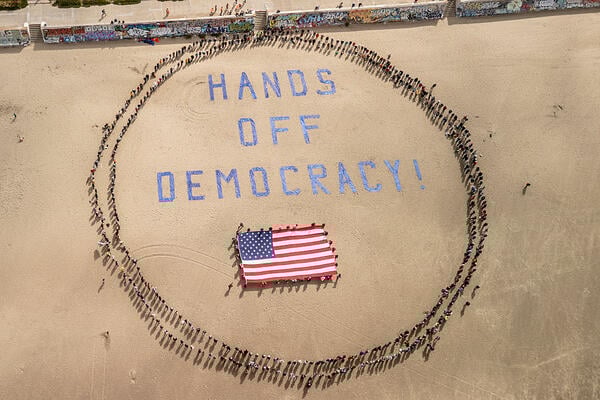
In addition, faculty must begin to mobilize on the streets for mass peaceful protest. This will require reaching beyond our usual circles and forming big-tent coalitions. Now is not the time for ideological purity or partisan hesitation. The threat we face at this point goes beyond conventional liberal-versus-conservative disagreement; it is an attack on democratic institutions, civil liberties and public education itself.
One particularly powerful, and perhaps surprising, potential partner in this moment is the veteran community. As a start, we urge faculty to consider aligning with veterans this Friday for the June 6 D-Day anniversary protest: Veterans Stand Against Fascism Nationwide at the National Mall, as well as at more than 100 other venues across the country. This is a great way for higher ed to show up in the lead-up to the June 14 No Kings Day protests.
Why Join With Veterans?
The shared legacy of the GI Bill links veterans and higher education. A public alliance with veterans has the potential to lend more political credibility to faculty and foster broader public empathy that will disrupt the Trump administration’s strategy of divide and conquer.
From Black WWII veterans who catalyzed the civil rights movement to anti–Vietnam War resistance, veterans have consistently served on the front lines of social change. Today, they are standing up to deep cuts to the Department of Veterans Affairs; the elimination of diversity, equity and inclusion initiatives; and dangerous reductions to the veteran workforce—issues that mirror the assaults on higher education.
Professors and veterans are natural allies in more ways than many realize. Since the passage of the GI Bill in 1944, millions of veterans have earned college degrees and experienced upward mobility through higher education. Veterans are a protected class under antidiscrimination law and recipients of DEI programming. The veterans’ centers and services we have created to support them are now under threat from the Trump administration’s ideological dismantling of DEI. While trust in most American institutions—including higher education—has declined, polling shows that the military remains one of the few institutions still trusted by a majority of Americans. This trust is rooted in the military’s demographic breadth: Its members come from every region, ethnicity, income bracket and political background.
In contrast, higher education suffers from an image problem—often caricatured as elite, out of touch and overly partisan. Yet many of the most trusted professionals in society—nurses, teachers, first responders, small business owners and veterans themselves—were trained and mentored in our classrooms. Building visible alliances with veterans can help reshape public perceptions of academia, challenging the dominant narratives that seek to isolate and delegitimize higher education.
Operationalize Mutual Academic Defense Compacts
While public protest builds pressure, cross-institutional coalition building creates networks for effective resistance. Faculty and university senates across the country are approving mutual academic defense compact resolutions, which call for universities to join in shared defense of any participating institution that comes under government attack. But this is just the beginning. We need more, and these resolutions need to be operationalized through the creation of MADC task forces of administrators and faculty on as many campuses as possible. Presidents and chancellors need to endorse both the compacts and the task forces.
We must use this summer to refine model MADC resolution language to align with institutional legal and financial requirements, to prepare for the passage of resolutions and creation of MADC task forces in the early fall, and to build the infrastructure that will allow these coalitions to function as coordinated networks of protection, resistance and shared strategy.
We’ve been struck by how many faculty members lack formal structures for self-governance on their campuses. Shared governance is a foundational pillar of academic freedom—though often overshadowed by the more visible right to pursue scholarship free from interference. We’re working with campuses to strengthen existing faculty governance organizations with the establishment of Stand Together groups, and where none exist, we’re helping to establish American Association of University Professors and other advocacy chapters to fill that crucial gap.
This summer, we must think strategically—and expansively. This summer calls for alliance building across our sister institutions of higher ed and across diverse nonacademic interest groups. The stakes are nothing less than the future of democracy.
Jennifer Lundquist is a professor of sociology at the University of Massachusetts Amherst.Kathy Roberts Forde is a professor of journalism at the University of Massachusetts Amherst.Together, the authors co-foundedStand Together for Higher Ed.
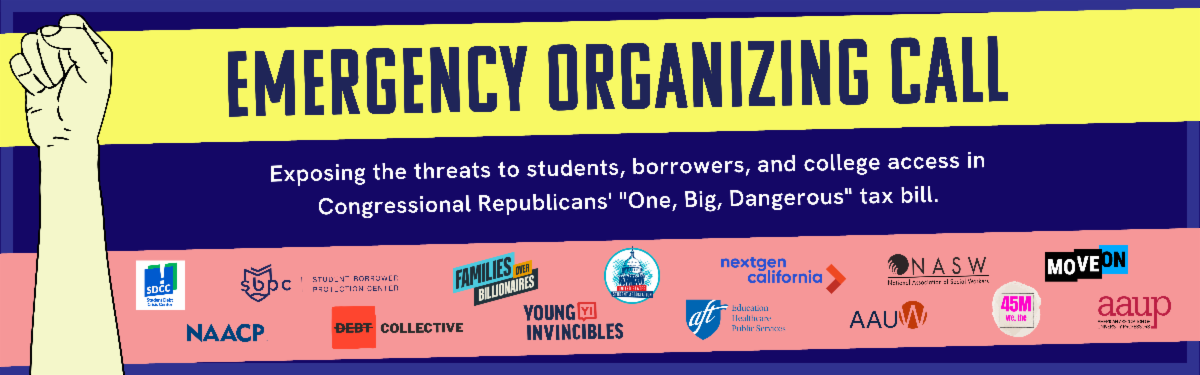
This bill threatens to gut $350 BILLION in critical education programs to deliver $4.5 TRILLION in tax cuts to billionaires. House Republicans’ plan to slash the Pell Grant and other financial aid programs and eliminate basic protections for students—this will only make college more expensive and force millions of working families with student debt further into the red.
So far, we have nearly 1,000 (!) RSVPs from all over the country planning to take part in this call. We will hear from policymakers, movement leaders, and affected students and borrowers on how this bill will harm our communities and how you can get more involved to protect students and working families—NOT billionaires.
You won’t want to miss this—make sure to RSVP below and clear your calendar for TOMORROW at 7PM ET.
In today’s world, where attention spans are short and options are endless, student recruitment has become both an art and a science. Traditional methods (college fairs, brochures, high school visits) still play a role, but they can’t carry the weight alone anymore.
Gen Z expects more. And so do their parents. They want seamless digital experiences, personalized content, and authentic connections. If your institution isn’t delivering those things, you risk losing them to one that does. So, how do you stand out?
Whether you’re just starting to rethink your campus recruitment strategy or looking for new ways to level up, these 10 cutting-edge approaches, plus one powerful bonus, are designed to help you connect more deeply with prospective students and convert that interest into action.
Struggling with enrollment?
Our expert digital marketing services can help you attract and enroll more students!
1. Hyper-Personalize the Student Experience
Here’s the truth: blanket emails and generic web content just don’t cut it anymore.
Students today expect you to know them; their interests, their goals, even where they’re browsing from. That’s where hyper-personalization comes in. Rather than treating your prospects as a monolithic group, modern recruitment strategies for colleges leverage data to deliver one-to-one digital experiences at scale.
How does that look in action?
A high school student interested in business sees a landing page tailored with content about your BComm program, student stories, and upcoming info sessions.
An international applicant is greeted with region-specific admissions guidance and video testimonials from students from their home country.
A user who clicks on a scholarship link gets a follow-up email with a financial aid breakdown.
In short, personalization isn’t a perk. It’s expected.
Example: To personalize outreach at scale, the University of Idaho (U of I) introduced AI-driven personalized videos for interested applicants. Prospects received video messages addressing them by name, hometown, and academic interest.
Source: University of Idaho YouTube
2. Make Mobile a Priority, Not an Afterthought
More than 60% of student interactions with higher education websites now happen on mobile. If your site isn’t easy to navigate on a small screen, you’re likely losing leads by the dozen, especially since 53% of users will abandon a site that takes more than 3 seconds to load.
And it’s not just about having a “responsive” website anymore.
You also need:
Mobile-optimized application forms that are quick and easy to complete
Tap-friendly buttons and layouts that don’t frustrate the user
SMS alerts for key deadlines or virtual event reminders
Even better? Google’s mobile-first indexing means this doesn’t just affect UX, it directly influences your search rankings.
So if mobile optimization isn’t baked into your campus recruitment strategies, it’s time to fix that. Fast.
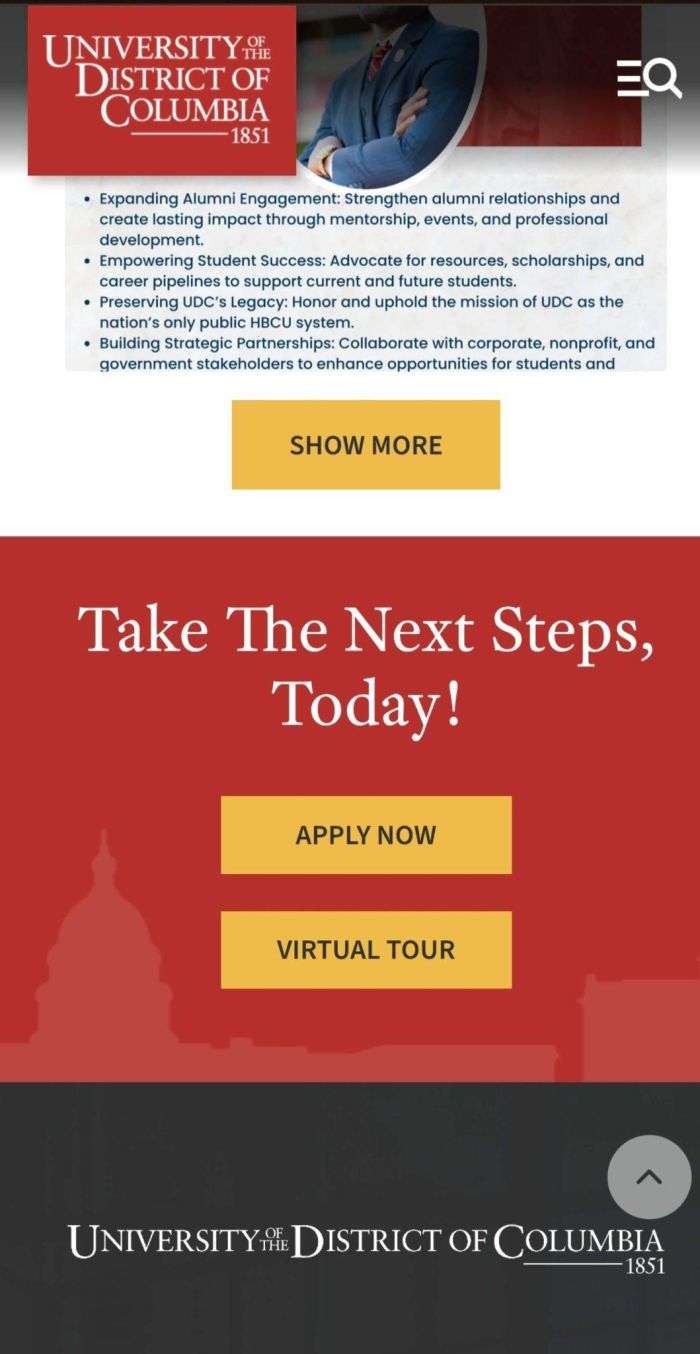
Example: University of the District of Columbia (UDC) launched a newly redesigned, mobile-first website in 2025 to enhance recruitment.
The site features a “mobile-friendly and accessible design” optimized for all devices. This responsive overhaul was part of a strategic initiative “aimed at…enhancing recruitment efforts” and making it easier for prospective students to explore academic programs. By improving navigation, search, and ensuring the site works seamlessly on phones, UDC’s digital entryway better serves today’s mobile-minded applicants.
3. Use Video to Tell Real Stories
Think about the last time you were captivated by a piece of content online. Chances are, it was a video. Video is more than just a nice-to-have. It’s one of the most effective ways to emotionally connect with prospective students and help them see themselves at your school.
Today’s students have grown up on YouTube, Instagram, and TikTok, and video content reigns supreme. Video accounts for over 80% of global internet traffic, and roughly 75% of video viewing now happens on mobile devices (aligning with Gen Z’s phone-first habits).
A recent guide on education video marketing noted that compelling videos can communicate complex ideas in seconds and resonate emotionally, which is why Gen Z “responds favorably to videos that are authentic, visually appealing, and emotionally resonant”.
Additionally, social algorithms favor video content, meaning your school’s videos are more likely to surface in feeds. With 80% of prospective students reporting that campus videos (tours, student stories, etc.) influenced their perception of a school, it’s clear that storytelling through video is no longer optional; it’s essential for recruitment success.
From quick TikToks to polished campus tours, the format you choose should match your audience and your message.
What works well?
Virtual tours for international students who can’t visit in person
Day-in-the-life vlogs from current students
Candid interviews with faculty or alumni
Instagram Reels that highlight clubs, campus life, or student events
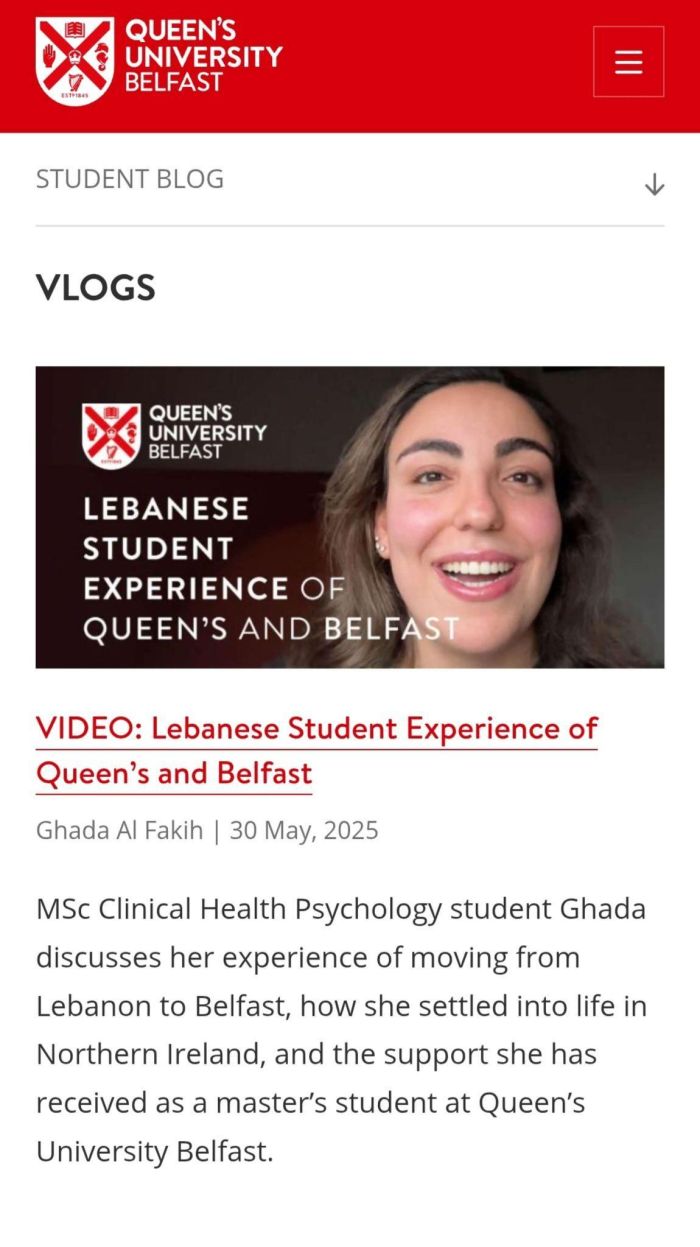
Example: Queen’s University Belfast’sofficial student blog features a dedicated “Vlogs” section where current students share their experiences via video.
These student-created videos range from day-in-the-life stories to campus tours and tips for new students. By showcasing real student life through vlogs, Queen’s gives prospective students an authentic, relatable window into the university experience.
4. Empower Student Ambassadors to Speak for You
No offense, but students trust other students more than they trust your marketing team.
That’s why student ambassadors are one of the most powerful (and underutilized) assets in your recruitment toolkit.
With just a little structure and support, they can:
Run TikTok takeovers during orientation week
Host live AMAs on Instagram about life at your school
Create vlogs or blog posts about their journeys
It’s authentic, it’s relatable, and it builds the kind of peer-driven trust that polished brochures never could. Best of all? Gen Z prefers real voices over institutional polish. So give them a platform and watch your reach expand.
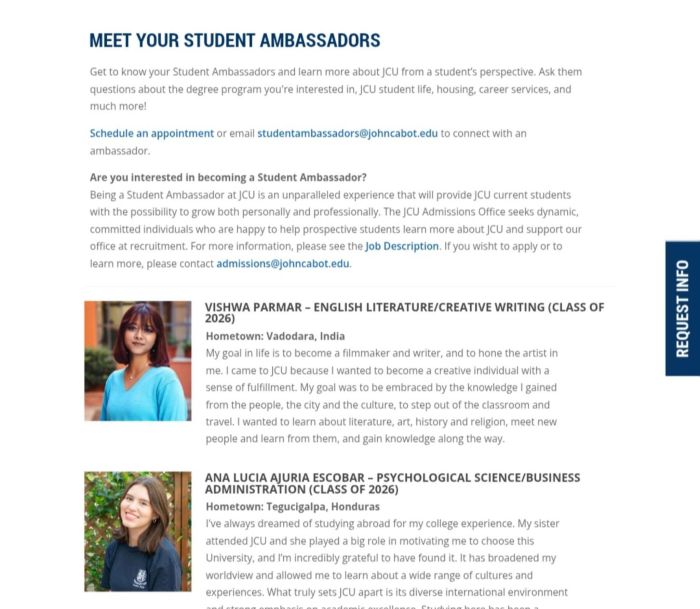
Example: John Cabot University (JCU) runs a robust Student Ambassador program that puts current students front and center in recruitment.
These ambassadors, hailing from around the world, actively engage with prospects through social media takeovers, Q&As, and one-on-one chats. JCU’s admissions website even features profiles and contact info for each student ambassador, inviting prospects to reach out directly.
5. Invest in SEO and Content That Answers Real Questions
You can’t enroll students who don’t know you exist. That’s where search engine optimization (SEO) and content marketing come in. When students start Googling “best film schools in Canada” or “how to get a student visa for the U.S.,” your institution should be right there with helpful, relevant answers.
Some essentials that build a strong foundation:
Blog posts that answer FAQs on tuition, housing, or programs
Program pages with embedded video, alumni outcomes, and clear CTAs
Long-tail keywords like “how to apply for nursing school in Ontario” that attract motivated searchers
Higher Education Marketing (HEM) helps clients rank on page one of Google for high-converting keywords, turning organic traffic into an ongoing stream of qualified leads.
And unlike paid ads, the impact of good SEO keeps compounding.
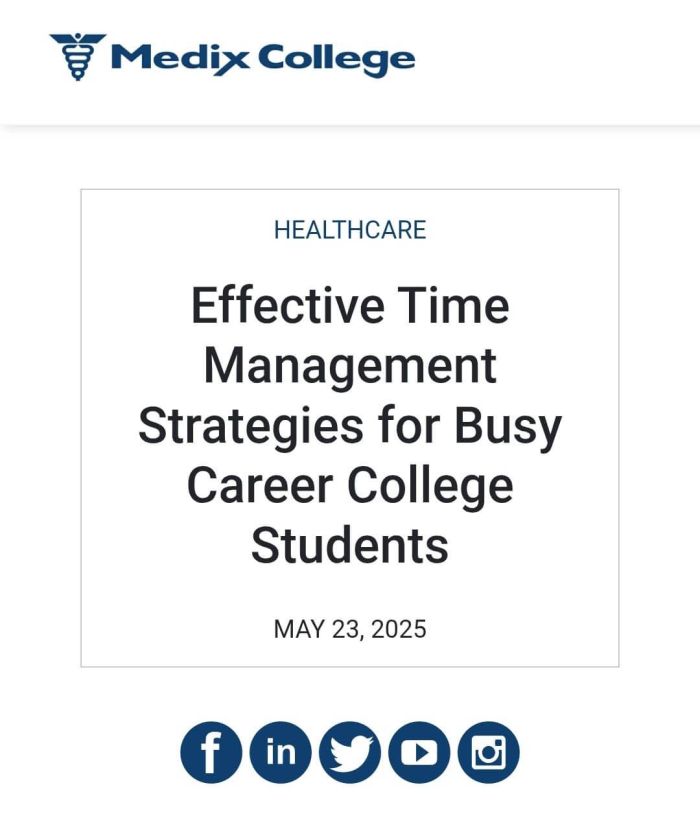
Example: Medix College attracts prospects by publishing a steady stream of useful, SEO-optimized content related to its healthcare programs. Its official blog functions as a hub of career tips, industry trends, and program insights tailored to prospective students.
By answering common career questions and highlighting emerging fields, Medix organically improves its search visibility. This content marketing strategy attracts web traffic from interested learners and establishes Medix as an authoritative, student-centric institution, leading to more inquiries and applications driven by informative content, rather than just ads.
6. Use CRM and Data Tools to Nurture Leads at Scale
Managing hundreds or thousands of prospective students without a proper system in place is a recipe for missed opportunities.
A CRM (Customer Relationship Management system) does more than just store contact info. It helps you track where students are in the funnel, personalize your outreach, and automate time-consuming tasks like follow-up emails or event reminders.
With the right CRM, you can:
Score leads based on engagement levels
Trigger personalized email or SMS messages based on behavior
Track ROI on every campaign or event
HEM’s CRM solutions are built specifically for higher ed, so you can identify, engage, and convert prospects without the guesswork.
Example: IH Dublin implemented a customized CRM (Mautic by HEM) to automate and personalize its student recruitment communications, using market segmentation to ensure each prospective student receives course information tailored to their specific needs. This strategic CRM implementation streamlined lead management by automatically capturing inquiries and communications, saving staff countless hours and allowing them to focus on high-quality, individualized interactions with students.
By integrating web inquiry forms, social media, and email campaign data into one system, the school gained a comprehensive view of each prospect and leveraged these analytics insights to refine outreach strategies, improving the effectiveness of communications and boosting student recruitment conversions.
7. Strengthen Relationships with High Schools and Feeder Institutions
Want to build a pipeline that pays off year after year? Start earlier. By investing in relationships with guidance counselors, feeder schools, and partner institutions, you plant the seeds of trust long before application season.
What helps?
Hosting “College Nights” or virtual info sessions
Offering classroom-ready materials that educators can share
Regular check-ins with guidance counselors to keep your school top of mind
This long-game strategy ensures your name is the first one students hear when they start exploring their options.
Example: Formed by the merger of Bloomsburg, Lock Haven, and Mansfield Universities, CommonwealthU has aggressively built feeder relationships in its region. In October 2022, it signed Local Scholar Agreements with 14 high school districts (expanding to 50 districts) in Pennsylvania to create a direct pipeline to its campuses. Under these agreements, any student graduating from a partner high school who meets basic criteria is guaranteed admission and up to $28,000 in scholarships to CommonwealthU.
Most application processes aren’t exactly thrilling. But what if they could be fun? That’s where gamification comes in. Adding interactive, game-like elements to your recruitment process can boost engagement and make your institution stand out. Ideas to try:
A quiz like “Which Degree Matches Your Personality?”
A digital scavenger hunt during virtual open houses
Points or prizes for completing milestones (like submitting an application or attending an event)
The result? More engagement, longer site visits, and a more memorable brand experience.
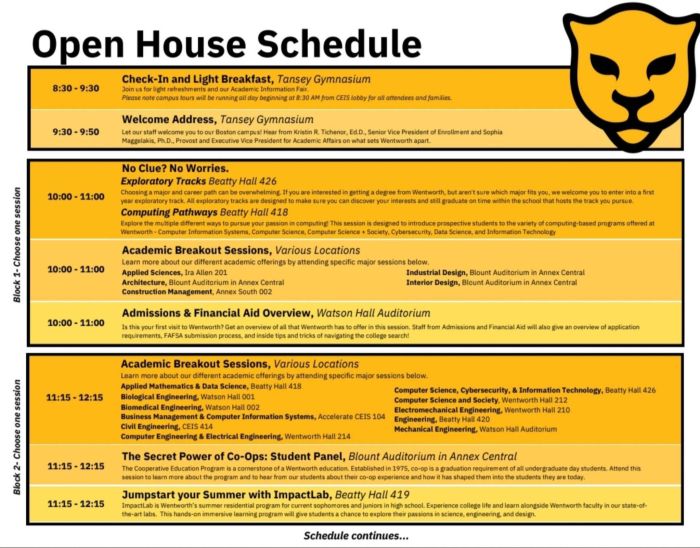
Example: To make campus visits and online events more engaging, Wentworth Institute of Technology (WIT) uses gamification elements in recruitment. For example, during a recent Open House, Wentworth organized a campus-wide scavenger hunt for visiting prospective students.
Attendees were challenged to explore campus and snap photos of specific “hidden” items or locations, then show an admissions staff member to collect a prize. This fun competition had students actively interacting with the campus environment. Wentworth also partnered with the ZeeMee app (a social platform for admitted students) to host virtual scavenger hunts and trivia nights for incoming freshmen, turning the admissions process into a game.
9. Remove Friction From the Application Process
What are the 7 steps of the recruitment process? They are planning, strategy, development, strategies, sourcing, screening, interviewing, selecting, and onboarding. Of these seven steps, the selection process is arguably the most crucial.
You’ve piqued their interest. Now don’t lose them at the finish line.
One of the biggest conversion killers? Complicated, outdated, or buggy application systems.
Here’s how to clean it up:
Make sure students can save their progress and come back later
Allow autofill using Google or LinkedIn accounts
Offer live chat support for real-time help
Automate gentle reminders for those who haven’t finished applying
The easier the process, the higher the completion rate. It’s that simple.
Example: A common trend in streamlining has been colleges joining the Common App or other unified platforms. This is because a simplified, one-stop application lowers the effort for students applying to multiple schools.
In this example, USI joins the Common Application, enabling students to apply to USI alongside multiple schools with one form. USI’s enrollment team notes that the Common App’s mobile-friendly interface and consolidation of application tasks meet students’ expectations for simplicity. Additionally, USI uses an online status portal where applicants can see missing items and upcoming steps at a glance, reducing back-and-forth emails.
10. Localize Your International Recruitment Strategy
Going global isn’t just about translation; it’s about cultural connection. To truly succeed in international markets, your recruitment approach needs to feel local, not foreign. That means:
Translating core content into key languages
Showcasing alumni from the same regions
Using familiar platforms like WeChat or WhatsApp to communicate
HEM specializes in multilingual campaigns that drive results across borders. Because when students see themselves represented, they’re more likely to say “yes.”
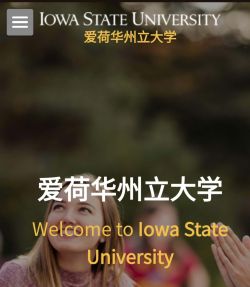
Example: To grow its Chinese student enrollment, Iowa State University invested in a heavily localized recruitment strategy for China. The university launched a fully localizedChinese-language website to engage students and parents in China on their terms. The site was hosted on a .cn domain for fast local loading and optimized for mobile, featuring ISU’s branding but with content written in Simplified Chinese.
Crucially, ISU didn’t just translate admissions info; it adapted content to address what Chinese families value (e.g., program outcomes, safety, career opportunities) and made navigation intuitive for that audience. In tandem, Iowa State ramped up its presence on Chinese social media: it ran an official WeChat account for one-to-one engagement and a verified Weibo account (China’s Twitter) for broader outreach.
BONUS: Align Marketing and Admissions
Too often, colleges treat marketing and admissions like separate silos. Be sure not to make this mistake.
Your recruitment strategy is only as strong as the connection between these two teams. When marketing generates leads but admissions isn’t looped in (or vice versa), those leads slip through the cracks. Here’s how to tighten things up:
Use shared dashboards so both teams see the same data
Hold weekly check-ins to align on goals, campaigns, and challenges
Make sure your CRM offers visibility and collaboration tools across departments
This alignment doesn’t just make your internal process smoother, it makes the entire student experience feel seamless.
Common Mistakes to Avoid
Even strong strategies can be weakened by a few missteps. Watch out for these:
Neglecting follow-up: Students expect timely responses. Delays kill momentum.
Generic messaging: One-size-fits-all language turns students off. Speak to their specific needs.
Skipping analytics: If you’re not tracking what works, how will you improve?
Fix these gaps, and your recruitment strategies for colleges will be far more effective.
HEM: Your Partner in Enrollment Success
At Higher Education Marketing, we’ve spent over a decade helping colleges and universities level up their recruitment.
We offer:
SEO and content strategy to boost visibility
CRM solutions to nurture leads efficiently
Paid ad campaigns across Google, Meta, and international platforms
Custom dashboards to track ROI and make data-informed decisions
No matter your goals, whether domestic growth, international expansion, or brand visibility. HEM is here to help you meet (and exceed) them.
Final Thoughts
The landscape of student recruitment is shifting, and fast. But that’s not something to fear. It’s an opportunity. Which is the best method for effective recruitment? A balanced mix of digital personalization and relationship-building tends to drive the best results.
By embracing data, technology, storytelling, and personalization, you can create a recruitment strategy that not only works but resonates. So here’s the real question: Are you ready to lead the way? Because the future belongs to the schools that adapt, connect, and engage with intention. Let’s build that future together.
Struggling with enrollment?
Our expert digital marketing services can help you attract and enroll more students!
Frequently Asked Questions
Question: What are the 7 steps of the recruitment process?
Answer: They are planning, strategy, development, strategies, sourcing, screening, interviewing, selecting, and onboarding.
Question: Which is the best method for effective recruitment?
Answer: A balanced mix of digital personalization and relationship-building tends to drive the best results.
Today the Foundation for Individual Rights and Expression presents a new video series — “Fire with FIRE” — featuring some of the biggest and up-and-coming names in heavy metal and punk rock.
Throughout the summer, FIRE will drop a new conversation every other week on our YouTube channel with the likes of:
Artists can be the canaries in the coalmine. Too often, they are the first to be censored, or worse — much, much worse.
In Nazi Germany, the regime destroyed and banned certain art, particularly Jewish art, and labeled it “degenerate.” Jewish artists like Charlotte Salomon — who some argue created the first graphic novel — were sent to death camps and murdered by Adolf Hitler’s thugs.
The Soviets were no better. Artists who rebelled against the confines of the state-approved artform of “Socialist Realism” were blacklisted, sent to the gulag, or executed. (After the Soviet Union’s fall, Russian dictator Vladimir Putin revived the old regime’s repression of artists, most famously targeting the punk rock and performance art collective Pussy Riot. Most members now live in exile after criticizing Russia’s brutal invasion of Ukraine.)
In 1973, the military dictatorship of Gen. Augusto Pinochet tortured and murdered Chilean artist and folk singer Víctor Jara for his music and political activism. His murderers pumped him full of bullets and then dumped his body on a public road. Message sent.
After the Islamic Revolution engulfed Iran, the ultra-religious government banned Western heavy metal and punk music. The Iranian regime has persecuted, arrested, and thrown in prison musicians daring to play such music. In 2015, for example, the members of the Iranian death metal band Confess were sentenced to years in prison and 74 lashes for blasphemy, disturbing public opinion, and anti-government propaganda. They fortunately escaped to Norway.
America isn’t immune to such crackdowns on creative expression either.
During the McCarthy era of the late 1940s into the 1950s, artists like director, actor, and writer Orson Welles; screenwriter and novelist Dalton Trumbo of “Spartacus” and “Johnny Got His Gun” fame; folk singer Pete Seeger; and many others were blacklisted because of their left-wing politics and Communist ties, real or imagined.
In the 1960s and 1970s, the FBI surveilled artists associated with the Civil Rights and antiwar movements. The bureau maintained files on John Lennon, The Monkees, and the proto-punk band MC5. Even the soul and gospel singer Aretha Franklin had a 270-page FBI file, with G-men monitoring her because of her connections to the Civil Rights movement and “Black extremists.”
During the 1980s, the Parents Music Resource Center — co-founded by future Vice President Al Gore’s wife Tipper — created a moral panic around heavy metal, punk, and pop artists like Twisted Sister, the Dead Kennedys, and Prince. The PMRC’s crusade led not only to “Parental Advisory” stickers on albums but also to what is arguably Glenn Danzig’s best composition ever, “Mother.”
Enter the “Fire with FIRE” interview series.
Every two weeks, FIRE will release conversations with six of the biggest metal and punk artists in music right now about their inspirations, their influences, and why free expression not only makes life worth living, but is also essential to a free society.
First up: Spencer Charnas of Ice Nine Kills. What a bloody mess this interview is. Our host Ryan J Downey slices into Spencer’s musical inspirations, why horror movies infest his music and art, and how Disney censored Ice Nine Kills — with Spencer getting the last howling laugh.
Like it. Share it. Tell us what you think in the YouTube comments. And let us know who you’d love us to interview in the future!
At the recent CUPA-HR Spring Conference in Seattle, artificial intelligence was a major topic of conversation, from session rooms to hallway discussions. AI has reshaped how many HR pros operate. It’s now being used as a daily tool, whether as a personal assistant for daily tasks or a strategic thought partner in decision-making.
Here’s how higher ed HR is using AI now.
Drafting communications and messaging. AI can help draft everything from emails to campus-wide communications. At her spring keynote, Jennifer Parker of the Colorado Community College System said she uses ChatGPT to rewrite her emails to be more formal in tone. She also recommends trying out AI to make internal communications more creative and tailored, like an inspiring message inviting specific groups of employees to review their benefits during open enrollment.
Making meetings more productive and presentations easier. AI is helping HR pros compile, organize and summarize their meeting notes. AI can also make checklists and to-do’s following meetings. Use AI to create slide decks and scripts for presentations.
If you’re looking to maximize your time, quickly make your longer meeting notes — like those from the recent CUPA-HR conference — into a conversational podcast using Google’s NotebookLM tool.
Helping you with internal talent development or coaching for individual career paths. AI can help you create a training or professional development program in record time, like Jennifer Parker did with her civility training program. It can also act as a career coach when used with the right prompts.
Assisting in talent acquisition. With AI, writing job descriptions has never been easier. For interviews, enter in a job description and ask AI to come up with applicable interview questions or ask for help in creating interview questions that are more neuroinclusive.
Injecting some creativity throughout the day. Members also shared imaginative uses of AI, like using Doodly to create animated whiteboards, asking ChatGPT to turn selfies into Lego minifigures, or using Canva’s AI features to make eye-catching designs.
Scaling Up
AI can do amazing things when used on a larger scale. HR pros are tackling more extensive projects with AI, often in collaboration with other departments.
Analyzing feedback and surveys. AI can process the results of open-ended survey questions and help identify themes to make surveys more effective than ever, with the partnership of survey experts and AI practitioners on campus.
See how Harvard University’s Center for Workplace Development used AI in combination with HRIS data to create a strategic needs assessment survey.
Brainstorming and researching for deeper insights. Proprietary software like Microsoft Copilot enables a deeper dive into existing institutional information and data. By uploading your institution’s mission and strategic priorities, you can accomplish any number of initiatives. Try creating recruitment materials, professional development programs, performance metrics and evaluations, or even a strategic priorities document specific to HR.
During their presentation, the talent management team at Grand Valley State University shared how they integrated AI into their process for creating core competencies. AI assisted them in brainstorming key competencies, cross-checking those competencies with their institutional values, and transforming them into action-oriented language.
Training Others on AI. Many HR leaders have been encouraging their employees to experiment with AI, including launching trainings or directing staff to existing trainings. For example, Microsoft offers general Copilot trainings and HR-specific trainings, all self-directed.
While AI adoption is picking up speed, there are certainly challenges in incorporating it into your workflow. Spring conference attendees mentioned concerns ranging from legal compliance to ensuring truth and authenticity in communication. But used with safeguards, AI has the potential to free up time and allow HR to do what it does best: the fundamentally human work of caring for the people on your campus.
Congratulations on your recent graduation! All those years of hard work have paid off and have prepared you for the journey ahead. You should be incredibly proud of what you’ve accomplished, and I hope you are excited for what lies ahead.
I remember the mix of emotions: the excitement of stepping into something new, the fear of the unknown, and the deep hope that I’d somehow make an impact. Decades later, those same emotions are still relevant. And if I could go back in time and say a few words to the Kim who stood in her graduation robe, here’s what I’d say:
1. Reject the myth of instant gratification
The highlight reels you see on social media and the stories of overnight successes will undoubtedly tempt you to look for shortcuts. Don’t take the bait.
What appears to be instantaneous success is often built on years of hidden struggle. Success isn’t viral. It’s cumulative. It’s built on tenacity, late nights, and years of quiet persistence. One of the most critical lessons I learned, and one that consistently sets individuals apart, is the unwavering commitment to hard work — especially when no one is watching.
Your degree is a fantastic achievement, but it’s just the start. To truly excel, you must show up every day, both mentally and physically. Take on the unglamorous tasks, master the fundamentals, and keep doing the work, even if you are not getting immediate recognition.
Don’t misunderstand; this isn’t about being a workaholic. It’s about understanding that competence, professional and personal growth, and lasting success are forged through consistent, dedicated effort over time. If you chase shortcuts or expect quick wins, you will ultimately be disappointed. Instead, always strive to deliver more than what’s expected.
2. Don’t just seek opportunities, create them
There are very few golden tickets in this world, and if you’re waiting for a great opportunity to land in your lap, you might find yourself waiting for a long time.
Your education has provided you with a foundation — now it’s your responsibility to build upon it.
The most significant leaps in my career often came from identifying a gap or a need and then raising my hand to fill it, even if it meant stepping outside my job description. If you uncover a problem, bring forward a solution. Take the initiative and volunteer for projects in addition to your day-to-day responsibilities. You might just discover new areas of interest or open the door to work with different teams that can ultimately propel your career forward.
3. Embrace the ‘failure as fuel’ philosophy
Coming off an academic career, the term “failure” can be triggering. As students, we often fear failure more than anything. But the truth is that you will fail, and that’s OK. In fact, it’s a given. But failure, when used as a learning opportunity, is a jumping off point — not the end point.
Every misstep, every “no,” every project that does go as planned is not a sign of your inadequacy, but a data point. Think of it as your best instructor. An experiment that reveals what doesn’t work brings you closer to the solution that does. The only real failure in life is giving up, or worse, not trying at all.
When faced with a major setback, you have a choice: Get stuck or grow stronger. Take accountability but choose growth. If you can figure out how to convert setbacks into stepping stones, it can be your most potent superpower.
4. Never stop learning
You’re just getting started, and that’s exciting! Your degree is a testament to your ability to learn. But your degree represents only a starting point. In fact, many of you won’t end or even start your careers in the exact area you studied.
The pace of change in every industry is accelerating, and skills that are valuable today might be obsolete tomorrow, so you must constantly learn and stay current with advancements. AI is a powerful example. Those who spend the time to learn how to leverage AI to work smarter will thrive. Those who do not will be passed up. This is a fact for those starting their career as well as those decades in.
One of the most powerful sources of learning in my career has come from the many informal mentors I’ve had throughout my life. Build a network of good, smart people at all stages in their careers and invest in those relationships. You can learn just as much from someone only a few steps ahead of you as from someone with decades more experience.
5. Take risks
Comfort zones are cozy, but they are also dangerously limiting. Some of the best moves I’ve ever made started as risks that scared but also exhilarated me. But they were calculated risks, well thought through, and aligned with where I knew I could make a positive impact.
Don’t leap without a plan, but don’t freeze in fear either. The magic often lives on the other side of uncertainty. For what it’s worth, the biggest regrets usually come from the risks not taken. Opportunities rarely present themselves without an element of uncertainty. Your job is to discern which uncertainties are worth embracing.
Own your future, one bold move at a time
The recent college graduates I am blessed to know are some of the brightest, hardest working, most curious, ambitious, and wonderful people (yes, Emma, I am talking about you and all your amazing friends!) You all control your destiny. Your path will not be linear, but it will be yours. Own it. Shape it. And never stop evolving.
And most importantly, remember the wise words of Ferris Bueller, “Life moves pretty fast. If you don’t stop and look around once in a while, you could miss it!”
Innovation Starts Here
Higher ed is evolving — don’t get left behind. Explore how Collegis can help your institution thrive.
As News Decoder celebrates its 10th birthday, the need for young people to appreciate different perspectives and be globally aware is more pressing than ever.
How might international student enrollment changes impact colleges and universities? This Thursday, on June 5th, from 2-3 pm ET, the Future Trends Forum is holding an interactive exercise to work through an evidence-based scenario wherein fall 2025 numbers crash. Everyone will participate by representing themselves in the roles they currently have or would like to take up, and in those positions explore the scenario.
We will develop responses to the situation in real time, which may help us think ahead for whatever form the crisis eventually takes. In this exercise, everyone gets to collaboratively explore how they might respond.
As with our first election simulation, not to mention our solarpunk, generative AI, black swan, and digital twin workshops, this one will involve participants as cocreators and investigators, exploring and determining what might come next. Consider it a trial run for a potential future.
To RSVP ahead of time, or to jump straight in at 2 pm ET this Thursday, click here:
To find more information about the Future Trends Forum, including notes and recordings of all previous sessions, click here: http://forum.futureofeducation.us/.
Keystone College has completed a merger with the Washington Institute for Education and Research, a fledgling think tank, after nearly three years of work, officials announced Monday.
Last week, Keystone’s accreditor, the Middle States Commission on Higher Education, announced that it had reviewed and signed off on the ownership change, making it official at the end of May.
The Pennsylvania Department of Education, the Pennsylvania Office of the Attorney General and the U.S. Department of Education already approved the merger.
Keystone president John F. Pullo Sr. noted the merger effort was both lengthy and challenging.
“I am pleased to report that the merger transaction between Keystone and WIER was concluded on Friday, May 30, finally joining the College with its strategic partner after nearly a three-year journey that at times threatened the future of the College,” Pullo said in a news release.
Pullo’s remarks are a likely nod to Keystone’s precarious position in recent years. Last spring, MSCHE warned that the private college was “in danger of immediate closure.” However, Pullo noted at the time that officials were in talks with “an investment partner” to help stabilize the college. (Keystone’s accreditation was also at risk last year, but it remains accredited.)
Keystone’s new owner is a largely unknown think tank based in Washington, D.C.
WIER, founded in 2023, describes its purpose on its website as “The establishment and operation of post-secondary degree-granting institutions for the instruction of students” and “Funding and supporting other post-secondary 501(c)(3) degree-granting institutions.” WIER does not list any staff members on its website except for founder and president Ahmed Alwani.
Alwani was previously president of Fairfax University of America in Northern Virginia, which quietly closed in December due to its inability to find a new accreditor after the Accrediting Council for Independent Colleges and Schools lost federal recognition, according to the FXUA website. The private, nonprofit institution, formerly known as Virginia International University, was almost shut down by state regulators in 2019 due to various issues highlighted by the State Council of Higher Education for Virginia, including a lack of academic rigor and other concerns.