Expert in student experience from the University of Queensland Kelly Matthews is guest host this week and interviews Monash University Associate Professor Tim Fawns and the University of Sydney’s Dr Stephen George-Williams.
Please login below to view content or subscribe now.
Earnings data—especially at subject level—has become key to debates about the value of higher education.
But we know far less about how graduates themselves experience their early careers. Until now, subject-level data on graduate job quality—how meaningful their work is, how well it aligns with their goals, and whether it uses their university-acquired skills—has been missing from the policy debate.
My new study (co-authored with Fiona Christie and Tracy Scurry and published in Studies in Higher Education) aims to fill this gap. Drawing on responses from the 2018-19 graduation cohort in the national Graduate Outcomes survey, we provide the first nationally representative, subject-level analysis of these subjective graduate outcomes.
What we find has important implications for how we define successful outcomes from higher education—and how we support students in making informed choices about what subject to study.
What graduates tell us
The Graduate Outcomes survey includes a set of questions—introduced by HESA in 2017—designed to capture core dimensions of graduate job quality. Respondents are asked (around 15 months after graduation) whether they:
find their work meaningful
feel it aligns with their future plans
believe they are using the skills acquired at university
Our analysis shows that most UK graduates report positive early-career experiences, regardless of subject. Across the sample, 86 per cent said their work felt meaningful, 78 per cent felt on track with their careers, and 66 per cent reported using their degree-level skills.
These patterns generally hold across disciplines, though clear differences emerge. The chart below shows the raw, unadjusted proportion of graduates who report positive outcomes. Graduates from vocational fields—such as medicine, subjects allied to medicine, veterinary science, and education—tend to report particularly strong outcomes. For instance, medicine and dentistry graduates were 12 percentage points more likely than average to say their work was meaningful, and over 30 points more likely to report using the skills they acquired at university.
However, the results also challenge the narrative that generalist or academic degrees are inherently low value. As you can see, most subject areas—including history, languages, and the creative arts, often targeted in these debates—show strong subjective outcomes across the three dimensions. Only one field, history and philosophy, fell slightly below the 50 per cent threshold on the skills utilisation measure. But even here, graduates still reported relatively high levels of meaningful work and career alignment.
Once we adjusted for background characteristics—such as social class, gender, prior attainment, and institutional differences—many of the remaining gaps between vocational and generalist subjects narrowed and were no longer statistically significant.
This chart shows the raw proportion of 2018-19 graduates who agree or strongly agree that their current work is meaningful, on track and using skills, by field of study (N = 67,722)
Employment in a highly skilled occupation—used by the Office for Students (OfS) as a key regulatory benchmark—was not a reliable predictor of positive outcomes. This finding aligns with previous HESA research and raises important questions about the appropriateness of using occupational classification as a proxy for graduate success at the subject level.
Rethinking what we measure and value
These insights arrive at a time when the OfS is placing greater emphasis on regulating equality of opportunity and ensuring the provision of “full, frank, and fair information” to students. If students are to make informed choices, they need access to subject-level data that reflects more than salary, occupational status, or postgraduate progression. Our findings suggest that subjective outcomes—how graduates feel about their work—should be part of that conversation.
For policymakers, our findings highlight the risks of relying on blunt outcome metrics—particularly earnings and occupational classifications—as indicators of course value. Our data show that graduates from a wide range of subjects—including those often labelled as “low value”—frequently go on to report meaningful work shortly after graduation that aligns with their future plans and makes use of the skills they developed at university.
And while job quality matters, universities should not be held solely accountable for outcomes shaped by employers and labour market structures. Metrics and league tables that tie institutional performance too closely to job quality risk misrepresenting what higher education can influence. A more productive step would be to expand the Graduate Outcomes survey to include a wider range of job quality indicators—such as autonomy, flexibility, and progression—offering a fuller picture of early career graduate success.
A richer understanding
Our work offers the first nationally representative, subject-level insight into how UK graduates evaluate job quality in the early stages of their careers. In doing so, it adds a missing piece to the value debate—one grounded not just in earnings or employment status, but in graduates’ own sense of meaning, purpose, and skill use.
If we are serious about understanding what graduates take from their university experience, it’s time to move beyond salary alone—and to listen more carefully to what graduates themselves are telling us.
DK notes: Though the analysis that Brophy et al have done (employing listwise deletion, examining UK domiciled first degree graduates only) enhances our understanding of undergraduate progression and goes beyond what is publicly available, I couldn’t resist plotting the HESA public data in a similar way, as it may be of interest to readers:
A series of key government announcements over the coming weeks will set the direction of travel for research and innovation for years to come. Next week’s spending review will set the financial parameters for the remainder of this Parliament – and we shouldn’t expect this outcome to maintain the status quo, given this is the first zero-based review under a Labour government for 17 years.
Accompanying this will be the industrial strategy white paper, which is likely to have a focus on driving innovation and increasing the diffusion and adoption of technologies across the economy – in which the UK’s universities will need to be key delivery partners. We can also expect more detail on the proposals in the immigration white paper, with implications for international student and staff flows to the UK.
The outcome for higher education and research remains hard to call, but the government has sent early signals that it recognises the value of investment in R&D as crucial to transforming the UK’s economy. In a volatile fiscal environment, DSIT’s R&D budget saw a real-terms increase of 8.5 per cent for 2025–26 with protection for “core research” activity within this.
Looking ahead to the spending review, the Institute for Fiscal Studies has pointed out that the fiscal envelope set by the Chancellor for capital spending – which is how R&D is classified – at the spring statement is significantly frontloaded. There is scope for increases in the early years of the spending review period and then real-terms declines from 2027–28. With such significant constraints on the public finances, it’s more essential than ever that the UK’s R&D funding system maximises efficiency and impact, making the best possible use of available resources.
International comparisons
Last month, the Russell Group published a report commissioned from PwC and funded by Wellcome which considered the experiences of countries with very different R&D funding systems, to understand what the UK might learn from our competitors.
Alongside the UK, the report examined four countries: Canada, Germany, the Netherlands and South Korea, scoring them across five assessment criteria associated with a strong R&D system: strategic alignment to government priorities; autonomy, stability and sustainability; efficiency; and leveraging external investment. It also scored the countries on two measures of output: research excellence and innovation excellence.
The analysis can help to inform government decisions about how to strike a balance between these criteria. For example, on the face of it there’s a trade-off between prioritising institutional autonomy and ensuring strategic alignment to government priorities. But PwC found that providing universities with more freedom in how they allocate their research funding – for example, through flexible funding streams like Quality-Related (QR) funding – means they can also take strategic long-term decisions, which create advantage for the UK in key research fields for the future.
Over the years, QR funding and its equivalents in the devolved nations have enabled universities to make investments which have led to innovations and discoveries such as graphene, genomics, opto-electronics, cosmology research, and new tests and treatments for everything from bowel disease to diabetes, dementia and cancer.
Conversely, aligning too closely to changing political priorities can stifle impact and leave the system vulnerable. PwC found that, at its extreme, a disproportionate reliance on mission-led or priority-driven project grant funding inhibits the ability of institutions to invest outside of government’s immediate priority areas, resulting in less long-term strategic investment.
With a stretching economic growth mission to deliver, policymakers will be reaching for interventions which encourage private investment into the economy. The PwC report found long-term, stable government incentives are crucial in leveraging industry investment in R&D, alongside supporting a culture of industry-university collaboration. This has worked well in Germany and South Korea with a mix of incentives including tax credits, grants and loans to strengthen innovation capabilities.
Getting the balance right
The UK currently lags behind global competitors on the proportion of R&D funded by the business sector, at just over 58 per cent compared to the OECD average of 65 per cent. However, when considering R&D financed by business but performed by higher education institutions, the UK performs fifth highest in the OECD – well above the average.
This demonstrates the current system is successfully leveraging private sector collaboration and investment into higher education R&D. We should now be pursuing opportunities to bolster this even further. Schemes such as the Higher Education Innovation Fund (HEIF) deliver a proven return on investment: every £1 invested in HEIF yields £14.8 in economic return at the sector-level. PwC’s report noted that HEIF has helped develop “core knowledge exchange capabilities” within UK HEIs which are crucial to building successful partnerships with industry and spinning out new companies and technologies.
In a time of global uncertainty, economic instability and rapid technological change, investments in R&D still play a key role in tackling our most complex challenges. In its forthcoming spending review – the Russell Group submission is available here – as well as in the industrial strategy white paper and in developing reforms to the visa system, the government will need to balance a number of competing but interrelated objectives. Coordination across government departments will be crucial to ensure all the incentives are pointing in the right direction and to enable sectors such as higher education to maximise the contribution they can make to delivering the government’s missions.
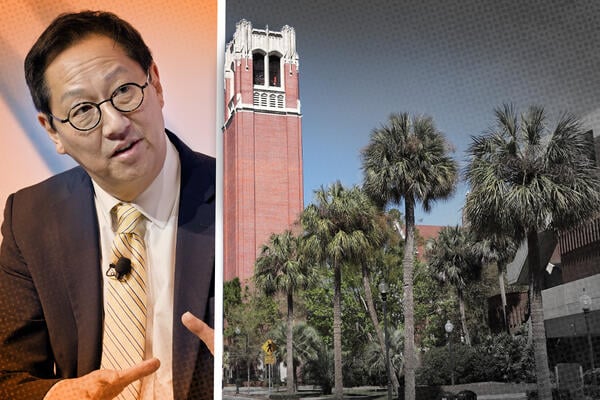
The Florida Board of Governors voted Tuesday to reject Santa Ono as the next president of the University of Florida, bowing to opposition from conservatives over his past support of diversity, equity and inclusion initiatives.
Anti-DEI activist Chris Rufo led the conservative backlash, while multiple elected officials in Florida alleged that Ono failed to protect Jewish students during his time as president of the University of Michigan.
Amid those concerns, the Board of Governors voted 10 to 6 to reject Ono for the UF job.
That process included a no vote from Paul Renner, a former Republican lawmaker in the state who had previously angled for the UF presidency, as became clear during board discussions. Throughout the meeting Renner grilled Ono on his past support for DEI, prompting fellow board members to push back, accusing him of “interrogating” Ono and questioning the fairness of his inquiries.
The vote comes after the UF Board of Trustees approved Ono’s hire last week following a public interview that focused largely on DEI. Ono distanced himself from DEI in that interview, arguing that the initiatives began with good intentions but ultimately became divisive. He said they siphoned resources away from student success efforts and stifled dialogue, which he said prompted his decision to close Michigan’s DEI office this spring. (Ono resigned from the Michigan presidency in May to pursue the UF job.)
“I am here to ensure that DEI never returns to the University of Florida,” Ono said Tuesday.
In the past, Ono had condemned systemic racism and argued for the necessity of DEI. But Tuesday—as he did in his public interview with UF’s Board of Trustees last week—Ono emphasized his ideological evolution, which ultimately failed to convince the board.
A Contentious Meeting
In the public comments portion of the meeting, both Ono’s supporters and detractors made their case.
Michael Okun, director of the Norman Fixel Institute for Neurological Diseases at UF, disputed claims that Ono failed to protect Jewish students. Okun, who is Jewish, argued Ono is an ally to the Jewish community, “and suggesting otherwise is factually incorrect and deeply harmful.”
But University of Michigan Medical School professor Joshua Rubin countered that claim, arguing that Ono had failed to stymie a culture in Michigan where antisemitism thrived. Rubin argued that Ono failed to fix problems at UM and “is complicit in that culture.”
Other speakers included Kent Fuchs, the former UF president called out of retirement to helm the university again when Ben Sasse exited the job abruptly last year. Fuchs, who is currently serving as interim president, supported Ono’s hire, telling the board the candidate was “unmatched nationally in both his credentials and his experience and his track record.”
UF Board of Trustees chair Mori Hosseini also made an impassioned plea to hire Ono.
“The bottom line is that Dr. Ono is globally recognized as one of the most respected leaders in higher education, and we are lucky to have him. Outside of Dr. Ono, there are very few people, if any, with a combination of ideological alignment in Florida and the operational experience to run a research powerhouse like you are,” Hosseini said in remarks to the Board of Governors.
He added that “the UF presidency is not a position where someone can learn on the job.”
But the Board of Governors bombarded Ono with a series of sharp questions.
Few had to do with how he would run the University of Florida; student and faculty representatives on the board asked how he would support and include their respective groups in his decision-making process, but most questions focused on DEI.
Jose Oliva, a former Republican lawmaker, told Ono his ideological shift was “nothing short of incredible.” He also asked Ono, who has a background in ophthalmology, what science his “decades-long, enthusiastic support and advocacy” for DEI initiatives was based on.
Ono argued that he was “not an expert in that area” and had not created any DEI programs; he said such efforts were already in place when he arrived at UM and his previous institutions, such as the University of British Columbia.
“Your words simply don’t support that you were just kind of sailing along,” Oliva responded.
Some trustees also pressed Ono on transgender care at University of Michigan Health, questioning whether the hospital had “cut off” the breasts or genitals of transitioning patients, particularly children.
As with many other questions, Ono demurred. In that case, he said he didn’t want to misspeak.
“I’m not an expert,” Ono said, in what became a common refrain throughout the day.
Hosseini, who was seated next to Ono and involved in the conversation at times—including when he revealed that Renner, who was one of Ono’s fiercest inquisitors of the day, had inquired about the UF job—appeared to bristle at the Board of Governors’ sharp questions for the candidate.
“You all decided today is the day you’re going to take somebody down,” Hosseini told the board.
Ono had been set to make up to $3 million a year as UF president. Now it appears Hosseini and the rest of the board will have to restart the search process.
Ono’s Opponents Celebrate
As news of Ono’s rejection spread, conservative critics took a victory lap.
“This is a massive win for conservatives—and an act of courage by the board,” Rufo posted.
Florida’s elected officials also weighed in.
“This is the right decision for @UF. UF’s students, faculty, and staff deserve a president who will stand for Florida values and against antisemitism,” Republican senator Rick Scott posted on X. (Scott had previously called for an investigation into the search that yielded Ono.)
But conservatives weren’t the only ones celebrating.
Multiple academics on BlueSky also seemed to take satisfaction in the news, with some indicating they thought Ono had done an about-face on DEI, only for the move to backfire.
“I don’t know how many times this needs to be said: there is no winning with these people. If you’re willing to sell your soul to try and appease them, then I’m sorry but you deserve whatever they do to you,” Neil Lewis Jr., a communication professor at Cornell University, wrote online.
Outside experts also noted how the Ono vote reflected the influence of state-level politics on decisions.
James Finkelstein, a professor emeritus of public policy at George Mason University who studies presidential contracts and hiring processes, told Inside Higher Ed by email that the outcome illustrated the growing complexity and politicization of picking a college leader.
“This episode is a stark reminder of how state-level politics are reshaping the presidential search process. The lesson is clear: until a contract is signed, nothing is guaranteed,” Finkelstein wrote.
Preparing for an AI-Powered Evolution in How Students Search
If you’ve ever been involved in your institution’s digital marketing efforts, you’ve undoubtedly heard of search engine optimization — otherwise known as SEO.
But after more than a decade of optimizing keywords and backlinks in content for search engines like Google and Bing, we’re now at the dawn of a new age spurred on by artificial intelligence (AI) and a new approach is required: generative engine optimization (GEO).
As prospective students turn to AI tools and large language models (LLMs) to guide their college search, traditional SEO tactics are no longer enough. Digital marketing teams must also incorporate new GEO-focused tactics into their strategies.
In an increasingly competitive and LLM-driven world, institutions must now rethink their visibility, branding, and recruitment strategies for a digital landscape that continues to evolve.
Understanding Generative Engines and Their Impact on Students’ Search Behavior
Generative engine optimization is emerging as a critical response to the way AI is reshaping how prospective students find and evaluate colleges. Unlike traditional search engines, generative engines powered by large language models deliver conversational, synthesized responses — often without requiring users to click through to a website.
This shift is impacting how institutions need to approach their digital visibility and student engagement efforts.
The Rise of LLMs
As students move away from traditional search engines toward AI search tools, LLMs and LLM-powered tools like ChatGPT, Claude, Perplexity, and Google’s Gemini and Search Generative Experience (SGE) are leading the way.
These platforms generate real-time, AI-powered answers that summarize information from across the web — often citing sources, but not always linking to them directly. Their growing popularity signals a move away from standard search engine results toward fluid, question-driven discovery.
The Impact of LLMs on Students’ Search Experiences
Prospective students are already turning to generative engines to ask nuanced questions such as, “What are the top 20 online MSW programs?” or “Which colleges have the best student support services for veterans?”
Instead of having to navigate a list of blue links, they’re receiving direct, synthesized answers to their questions. This introduces key shifts that digital marketers must consider, including:
Fewer clicks to their institution’s website
A higher priority for being cited in credible content
Reduced visibility in traditional search engine results pages (SERPs)
For colleges and universities, adapting to this new behavior is essential to staying prominent in students’ minds during their decision-making process.
SEO vs. GEO in Higher Education
Search engine optimization and generative engine optimization share a common goal: to ensure content is discoverable, relevant, and credible. Both approaches rely on strategic keyword usage, high-quality content, and data-driven refinement to increase visibility.
SEO was built for traditional search engines that return ranked lists of links. GEO is designed for AI-powered engines that synthesize information and deliver complete answers.
For universities, this change requires a new, blended approach — one that takes both SEO and GEO into account when creating admissions materials, program pages, and search rankings-focused content such as blog posts.
SEO vs. GEO: A Side-by-Side Comparison
Category
SEO (Search Engine Optimization)
GEO (Generative Engine Optimization)
Primary Goal
Ranks web pages in search engine results pages
Surfaces content in AI-generated, conversational responses
Keyword Strategy
Optimizes for exact-match and high-volume keywords
Focuses on semantic relevance and contextual cues
User Experience
Prioritizes site structure, navigation, and readability
Prioritizes clear, structured content that AI can easily parse
Tracks AI referrals, citation frequency, inclusion in LLM answers
Content Strategy
Page-level optimization for ranking
Multisource optimization for synthesis in AI-generated content
Adaptability Requirement
Evolves with search algorithm updates
Evolves with AI behavior, model updates, and platform preferences
User Search Experience
List of blue links with snippets
Zero-click answers, direct responses, and conversational recommendations
How Generative Engines Pull and Rank University Content
Generative engines like ChatGPT and Google’s SGE don’t rank web pages the same way traditional search engines do. Instead, they synthesize information from multiple sources to deliver a single, cohesive answer.
To be included in these AI-generated responses, university content needs to strike a balance between academic credibility and an accessible, student-friendly structure. AI prioritizes information that is well-organized, clearly written, and backed by authoritative sources, such as:
Research publications
Program pages
Institutional blogs
Institutions that prioritize clarity and credibility in their content are more likely to be cited and surfaced in generative search results.
Key GEO Strategies for Colleges and Universities
To stay visible in AI-driven searches, institutions need to adopt innovative content strategies tailored to how generative engines interpret and deliver information. Here are some core GEO tactics:
Showcase Faculty Within Content
Highlight faculty expertise in program pages, blog posts, and FAQs.
Link to faculty bios and published research to boost credibility.
Feature quotes, profiles, or insights to personalize academic offerings.
Ensure AI- and LLM-Friendly Structure and Markup
Use schema (structured data) markup to help AI understand the content’s context.
Organize pages with clear subheadings that mirror common student questions.
Example: “Is an Online EdD Respected?”
Boldface key points and use callout boxes to surface important information.
Design site architecture for easy crawling and content parsing.
Create Concise and Clear Content
Use conversational, student-centered language.
Write in short, scannable paragraphs with clear takeaways.
Address common and next-level questions.
Examples: “How long does it take to complete this degree?” and “What can I do with my degree after graduation?”
Use Content Formats That Perform Well in GEO
Incorporate career outcome and salary tables.
Include degree comparisons.
Example: “MBA vs. MPA”
Use visuals and guides that explain steps for processes such as admissions, licensure, and the student journey.
Build Brand Authority and Trust
Invest in public relations campaigns to generate credible mentions and citations.
Maintain consistent messaging across the web, social media, and paid media.
Grow visibility through strategic content distribution and strong social media channels.
Measuring GEO Performance in Enrollment Marketing
As with every digital marketing initiative, it’s not enough to just roll out a GEO strategy — institutions need to measure its success. Here’s how it’s done in the GEO world:
Create LLM-Focused Dashboards via GA4 and Looker Studio
Institutions can build LLM-focused dashboards using Google Analytics 4 (GA4) and Looker Studio by creating filters for platforms like ChatGPT, Perplexity, Microsoft Copilot, Google Gemini, and Claude.
Google currently doesn’t provide direct data for AI Overview referrals, and they have been neutral in response to questions on if they will ever release AI Overview data.
While LLMs are still evolving, isolating referral traffic from these tools can provide institutions with early insight into how students are discovering their content through AI.
Use Attribution Models for AI-Influenced Student Journeys
To fully understand how GEO affects students’ enrollment behavior, marketers need to evolve their attribution models, or how enrollment conversions are attributed to different channels. AI-generated responses often play a role at the top of the enrollment funnel, influencing students before they ever land on a university’s website.
Measuring that influence through multitouch attribution and long-view funnel analysis will become increasingly important as AI tools reshape how students explore, compare, and commit to higher education programs.
Challenges and Ethical Considerations
As generative engines continue to shape how students discover universities, inherent challenges will likely arise.
AI tools can misrepresent data or present outdated information, raising concerns about their accuracy and whether they can be trusted. There’s also the risk that well-resourced, elite institutions may disproportionately dominate generative search results, reinforcing existing inequities. Lack of transparency in how algorithms surface and prioritize content makes it difficult for institutions to ensure they are receiving fair and accountable representation.
Future Trends in Higher Education GEO
When it comes to emerging digital marketing techniques like GEO, early investments can help institutions stay ahead of the curve.
Multimodal Optimization for Virtual Campus Tours and Visual Content
As generative engines evolve, optimizing for multimodal content — such as images, video, and virtual tours — will become increasingly important.
This goes beyond traditional desktop experiences. In Meta’s first quarter 2025 earnings call, Mark Zuckerberg predicted that smart glasses will eventually replace smartphones, describing them as ideal for AI and the metaverse.
With Meta already partnering with Ray-Ban on AI-integrated eyewear, higher ed marketers need to start preparing content that’s not just LLM-friendly but also immersive, interactive, and wearable-ready.
AI-Driven Personalization for Students
Rather than relying on static rankings or one-size-fits-all search experiences, AI is ushering in a wave of hyperpersonalization. Prospective students may soon interact with personalized advisors, see school rankings tailored to their goals, and receive customized digital content that aligns with their academic and career interests.
This shift will push institutions to deliver flexible, student-centered content that adapts to each individual’s intent and pathway.
Search by Outcome, Not Degree
Generative tools are beginning to trace backward from desired career outcomes by identifying what roles successful professionals hold, then linking those roles to specific programs, professors, and institutions.
For colleges and universities, this means alumni outcomes, employer partnership information, and job title visibility are essential signals. Institutions that surface these elements clearly will be better positioned to show up in outcome-based searches and AI-generated guidance.
Ready to Get Ahead of the Curve?
The use of AI and large language models in search is only going to increase, fundamentally reshaping how students discover, evaluate, and engage with higher education institutions.
Developing a strong generative engine optimization strategy is essential. GEO needs to be seamlessly integrated into your existing SEO and digital marketing efforts to ensure your institution stays visible and relevant in a rapidly shifting landscape.
With generative engines evolving at an unprecedented pace, now is the time to prepare for how you’ll reach the next generation of students.
Want to talk through how GEO fits into your broader enrollment strategy? Contact Archer Education to start the conversation.
by Joseph David Blacklock, Jeanette Baird and Bjørn Stensaker
Risk-based’ models for higher education quality regulation have been increasingly popular in higher education globally. At the same time there is limited knowledge of how risk-based regulation can be implemented effectively.
Australia’s Tertiary Education Quality and Standards Agency (TEQSA) started to implement risk-based regulation in 2011, aiming at an approach balancing regulatory necessity, risk and proportionate regulation. Our recent published study analyses TEQSA’s evolution between 2011 and 2024 to contribute to an emerging body of research on the practice of risk-based regulation in higher education.
The challenges of risk-based regulation
Risk-based approaches are seen as a way to create more effective and efficient regulation, targeting resources to the areas or institutions of greatest risk. However, it is widely acknowledged that sector-specificities, political economy and social context exert a significant influence on the practice of risk-based regulation (Black and Baldwin, 2010). Choices made by the regulator also affect its stakeholders and its perceived effectiveness – consider, for example, whose ideas about risk are privileged. Balancing the expectations of these stakeholders, along with their federal mandate, has required much in the way of compromise.
The evolution of TEQSA’s approaches
Our study uses a conceptual framework suggested by Hood et al (2001) for comparative analyses of regimes of risk regulation that charts aspects respectively of context and content. With this as a starting point we end up with two theoretical constructs of ‘hyper-regulation’ and ‘dynamic regulation’ as a way to analyse the development of TEQSA over time. These opposing concepts of regulatory approach represent both theoretical and empirical executions of the risk-based model within higher education.
From extensive document analysis, independent third-party analysis, and Delphi interviews, we identify three phases to TEQSA’s approach:
2011-2013, marked by practices similar to ‘hyper-regulation’, including suspicion of institutions, burdensome requests for information and a perception that there was little ‘risk-based’ discrimination in use
2014-2018, marked by the use of more indicators of ‘dynamic regulation’, including reduced evidence requirements for low-risk providers, sensitivity to the motivational postures of providers (Braithwaite et al. 1994), and more provider self-assurance
2019-2024, marked by a broader approach to the identification of risks, greater attention to systemic risks, and more visible engagement with Federal Government policy, as well as the disruption of the pandemic.
Across these three periods, we map a series of contextual and content factors to chart those that have remained more constant and those that have varied more widely over time.
Of course, we do not suggest that TEQSA’s actions fit precisely into these timeframes, nor do we suggest that its actions have been guided by a wholly consistent regulatory philosophy in each phase. After the early and very visible adjustment of TEQSA’s approach, there has been an ongoing series of smaller changes, influenced also by the available resources, the views of successive TEQSA commissioners and the wider higher education landscape as a whole.
Lessons learned
Our analysis, building on ideas and perspectives from Hood, Rothstein and Baldwin offers a comparatively simple yet informative taxonomy for future empirical research.
TEQSA’s start-up phase, in which a hyper-regulatory approach was used, can be linked to a contextual need of the Federal Government at the time to support Australia’s international education industry, leading to the rather dominant judicial framing of its role. However, TEQSA’s initial regulatory stance failed to take account of the largely compliant regulatory posture of the universities that enrol around 90% of higher education students in Australia, and of the strength of this interest group. The new agency was understandably nervous about Government perceptions of its performance, however, a broader initial charting of stakeholder risk perspectives could have provided better guardrails. Similarly, a wider questioning of the sources of risk in TEQSA’s first and second phases could have highlighted more systemic risks.
A further lesson for new risk-based regulators is to ensure that the regulator itself has a strong understanding of risks in the sector, to guide its analyses, and can readily obtain the data to generate robust risk assessments.
Our study illustrates that risk-based regulation in practice is as negotiable as any other regulatory instrument. The ebb and flow of TEQSA’s engagement with the Federal Government and other stakeholders provides the context. As predicted by various authors, constant vigilance and regular recalibration are needed by the regulator as the external risk landscape changes and the wider interests of government and stakeholders dictate. The extent to which there is political tolerance for any ‘failure’ of a risk-based regulator is often unstated and always variable.
Joseph David Blacklock is a graduate of the University of Oslo’s Master’s of Higher Education degree, with a special interest in risk-based regulation and government instruments for managing quality within higher education.
Jeanette Baird consults on tertiary education quality assurance and strategy in Australia and internationally. She is Adjunct Professor of Higher Education at Divine Word University in Papua New Guinea and an Honorary Senior Fellow of the Centre for the Study of Higher Education at the University of Melbourne.
Bjørn Stensaker is a professor of higher education at University of Oslo, specializing in studies of policy, reform and change in higher education. He has published widely on these issues in a range of academic journals and other outlets.
Blacklock, JD, Baird, J & Stensaker, B (2025) ‘Evolutionary stages in risk-based quality regulation in Australian higher education 2011–2024’ Policy Reviews in Higher Education, 1–23.
City College of San Francisco announced last week that it had hired a new chancellor—but never voted to approve the candidate and later deleted the news release, leaving the process in limbo.
The San Francisco Chronicle reported that City College posted a news release on Tuesday announcing that it had selected Carlos O. Cortez as its next chancellor, pending approval at a Board of Trustees meeting on Thursday. However, the board spent several hours in a closed executive session before ultimately deciding not to make a decision on the candidate.
Trustees did not explain their inaction on the search, according to a review of the meeting. The board agenda shows trustees were also set to consider approval of a contract for Cortez, with an annual base salary of $350,000, but removed that action item after punting on the search.
Multiple speakers at the meeting expressed support for Cortez.
In the Tuesday news release that was later deleted, Anita Martinez, the Board of Trustees president, lauded the candidate for his “proven track record of success in academic innovation, fundraising, student success, and community engagement.”
Cortez was previously chancellor of the San Diego Community College District from July 2021 to May 2023 before he stepped down suddenly, a move he attributed to the need to take care of his ailing parents in Florida. Since then he has emerged as a finalist for six jobs at the chancellor or president level, including SFCC. Five of those jobs were in California and one was in Wisconsin.
The San Francisco Chronicle also reported that Cortez was arrested in Florida on suspicion of driving under the influence in January 2024 and later pleaded no contest to reckless driving. Cortez told the newspaper the charge was “due to a mixture of prescription medicine.”
Cortez told the San Francisco Chronicle last week that he didn’t know where his candidacy stands. He did not respond to a request for comment from Inside Higher Ed sent via LinkedIn on Monday.
City College officials also did not respond to a request for comment from Inside Higher Ed.
During my first foray into marcomm leadership, every project seemed on fire. If the project was due at 3 p.m., the first draft was ready at 2 p.m., giving little time for adjustments. I noticed this happened with almost every project. As I did some research into the production calendar, I realized there were more projects than time. That meant if one project got behind, there was a ripple effect that continued to impact more and more projects the team was working on.
An initial strategy to address this involved offloading projects that were not the best use of marcomm’s time. The second strategy looked at increasing capacity through student workers and approved freelance partners. Despite implementing both, the team still struggled to accomplish all the tasks, finding many delays in the back-and-forth process with the campus partner. As I started exploring what would help the team, the idea of cross-functional teams emerged as a viable strategy to yield better alignment with key constituents, increase efficiency and create better products.
Cross-functional teams are groups of people from various areas in an organization who work together to achieve a common goal. I have used these teams with key university partners including enrollment, advancement and athletics. Each cross-functional team has several members from the marcomm team (usually a representative from communications, marketing, creative and web) and two or three members from the other unit. Together, these groups meet regularly and work as strategic partners to meet institutional goals.
Cross-functional teams are time-consuming but can have significant impact on outcomes, culture and organizational success when done well. Below are a few benefits of utilizing cross-functional teams when working with strategic campus partners.
Moving From Service Provider to Strategic Partner
One benefit of cross-functional teams is positioning marcomm teams as a strategic partner, not just an order taker. This shift allows marcomm to more meaningfully support institutional goals. Instead of executing someone else’s strategy, these teams can apply their individual expertise while collaborating on integrated strategies that support the partner and ultimately the organization. For example, the web team member can begin approaching the project thinking about the entire digital strategy, instead of just making a website pretty. This role’s shift helps improve relationships between the teams but ultimately drives results.
Operational Efficiency Creates Wins Faster
Familiar teams work faster. Less time is required to navigate procedural and relational decisions, such as who needs to review something or what the feedback process entails. In cross-functional teams, the members become comfortable with these aspects, allowing them to begin working faster. The speed comes not only from familiarity but also from intentionality. Shared institutional knowledge of the goals and the internal processes to complete tasks results in more thoughtful responses when adjustments are needed because of changes like enrollment shifts, market changes or budget adjustments.
Consistency Builds Brand Equity
Aligned teams also create consistent work. Regular collaboration leads to consistency in voice, tone and look on projects. For example, when cross-functional teams are collaborating on the goals for a piece, there is more likely to be synergy in the tactical execution of the piece or at a least a shared understanding of the approach. When there is no alignment, the teams may agree on the goal but are less likely to agree on the strategies and tactics, resulting in disjointed messaging and less effective outcomes.
Cohesive messages also build trust and recognition with external audiences, which is critical to support for university objectives. Ultimately, consistency across teams strengthens the university’s voice in the market and amplifies the impact of every communication.
Internal Alignment Supports Goals
One of the biggest benefits of cross-functional teams is how they strengthen internal alignment within marcomm. By collaborating closely with colleagues across disciplines, the marcomm team is better equipped to align its work with the goals and priorities of campus partners. For example, telling our story takes on an enhanced meaning when it is viewed through the lens of growing enrollment or raising private institutional support. In addition, this cross-functional collaboration fosters greater accountability and trust within the marcomm unit itself. From my experience, the team often internally aligns on the approach and presents a strategic (and united) front when pitching concepts or suggesting strategy shifts.
Empowered Teams Create Elevated Outcomes
Cross-functional teams facilitate learning from all members. Hearing new perspectives from other divisions creates new understandings, both within marcomm and outside of it. For example, web team members learn about graphic design and enrollment best practices. This occurs because cross-functional teams are collaboration-based, so all team members are empowered to contribute ideas instead of only giving feedback on their traditional roles. More broadly, the entire marcomm team benefits from cross-functional teams if there’s a way to share these learnings with the full group instead of just those in a specific meeting.
Working Toward Success
When I first stepped into marcomm leadership, the team was running full speed just to keep up, racing from one fire drill to the next with little time to pause, reflect or align. What initially seemed like a time-management problem turned out to be a deeper issue of structure, communication and partnership. Through the intentional creation of cross-functional teams, we began to shift from reactive executors to proactive strategic partners.
Cross-functional teams require time investment to create shared mission, collaboration frameworks and understanding of the work at hand. However, these teams generate shared ownership and strong trust, central to ongoing collaboration, partnerships and organizational innovation. Most importantly, the outcomes are usually a more agile, aligned and high-performing organization—better equipped to meet both immediate goals and long-term strategic priorities of the institution.
Carrie Phillips, Ed.D., is chief communications and marketing officer at the University of Arkansas at Little Rock.
Networking events with alumni give students the chance to learn more about life after graduation and build career skills.
A May 2024 Student Voice survey by Inside Higher Ed and Generation Lab found that 29 percent of respondents believe their college or university should prioritize connecting students to alumni or other potential mentors. However, not every student has this opportunity before graduating; only one-third of graduates said their institution helped them to network with alumni while they were students, according to a 2024 National Alumni Career Mobility survey.
Administrators don’t always recognize this disconnect between current and former students; a 2024 survey of student success leaders found that 56 percent believe their career center effectively connects students with the institution’s alumni network.
Inside Higher Ed compiled six ways colleges and universities can invite alumni to partner with them to enhance students’ career development.
Mentorship Programming
Pairing students with graduates, particularly those in the same discipline or with similar career goals, is a common way to foster feelings of belonging among classes and with the institution.
Survey Says
A 2025 survey from Gravyty found that 80 percent of alumni engagement teams invite alumni to participate in community or networking events, but just over one-quarter ask alumni to become active volunteers. A survey of alumni also by Gravyty found that alumni who have served as mentors say they are 200 percent more likely to donate in the future.
The University of Massachusetts Dartmouth hosts a Meet and Mentor mixer to introduce current and past students, building organic relationships in an informal setting. Syracuse University extends mentorship opportunities for alumni far from campus through virtual mentorship meetings. The university has coordinated over 1,000 meetings between students and alumni mentors over the past five years.
In some cases, alumni can provide insights into evolving industries in ways that career services pros may be less equipped to.
Worcester Polytechnic Institute created a mentorship program for students interested in green or sustainable jobs and industries, in part to help them keep up with the rapid changes in the field. The program has found more mentors than mentees so far, including alumni from a variety of industries such as architecture and design, waste reduction, consulting, and energy.
Office Hours Programs
Establishing an informal space for students to meet with alumni allows them to create connections and helps students build confidence for venturing into more professional networking spaces. Clemson University’s business school invites alumni to participate in drop-in office hours to review résumés, provide career advice or engage in a casual conversation with students.
Some colleges and universities designate alumni in residence who provide one-on-one guidance, give presentations, engage in networking receptions and more, as needed. The University of Connecticut’s career center asks alumni in residence to devote at least four hours per month for virtual office hours and to participate in several career events and programs.
Job Shadows
While many students may know what field they’re interested in working in, understanding the day-to-day responsibilities of an industry professional can feel out of reach. Alumni connections can address the transition to work and help students establish work-life balance. Kalamazoo College connects students with local alumni for a short-term job shadow during spring break, showcasing local businesses and industries that hire graduates.
Grinnell College also taps alumni around the globe each spring to provide job shadows and homestays, giving soon-to-be graduates a deeper look at what their future may be after college. The visits, which can last from a day to a week, connect students to new cities, professional networks and careers.
Microinternships
Microinternships have grown as a way to engage students in project-based experiential learning connected to a potential employer. At Goucher College, microinternships also introduce students to alumni who share their career interests. The six-week virtual experiences take place across the winter break and January term, and students are paid a stipend by the university, reducing barriers for participation.
Projects vary depending on the needs of alumni, and in the past students have edited books, organized data, created presentations or conducted market research. The goal is to enable the student to walk away with a portfolio piece they can talk about in future interviews.
Early Alumni Engagement
Colleges can also help graduating students make the transition to being engaged alumni by establishing programs for recent graduates.
Boise State University created BOLD, short for Broncos of the Last Decade, an alumni group specifically for students who graduated in the past 10 years, which holds tailgate events and a champagne reception for new grads during commencement weekend. BOLD also offers discounts on football and basketball season tickets, helping alumni maintain connections to the institution even after graduation.
West Virginia University and Marshall University partnered to create a talent-development pipeline, called First Ascent, for recent graduates to reduce brain drain in the state and connect recent alumni to peers and mentors.
Financial Support
Alumni can also build institutional capacity and help sustain programs for current students through financial gifts and endowed resources. Supported through alumni donations, Brandeis University’s World of Work fellowship program provides stipends of up to $6,000 for students to participate in unpaid or underpaid experiential learning opportunities, helping build their career skills.
Many career centers are also endowed by alumni, including the University of Central Florida’s Kenneth G. Dixon Career Development Center, named for the 1975 alumnus who donated $5 million in 2024.
Do you have a career-focused intervention that might help others promote student success? Tell us about it.
We’re entering what would normally be the long-awaited reprieve of summer—a time to write, think, travel, to escape the demands of the academic year. But this will not be a normal summer.
Faculty may long for a break, but the government is actively operationalizing Project 2025, a blueprint for remaking every public institution, with higher education being the crown jewel of its antidemocratic agenda. At his 100-day rally in Michigan, Donald Trump declared, “We’ve just gotten started. You haven’t even seen anything yet.” Christopher Rufo, architect of the right-wing culture war, promises to plunge higher education still further into “an existential terror.”
We recommend mobilizing on two simultaneous fronts this summer: by operationalizing mutual academic defense compacts (MADCs), and through direct activism. We must forge powerful alliances for mass protest. We suggest one often-overlooked but deeply strategic constituency— veterans.
Recent opinion polls show that most Americans oppose the Trump administration’s approach to higher education. This public sentiment gives us a crucial opening—and we must seize the momentum as we move into summer.
Mobilize and Form Unlikely Alliances
Faculty can take simple, student-centered actions this summer—sharing stories of student impact over social media using #DegreesForDemocracy, or highlighting the real-world outcomes of their teaching and research with #WhatWeBuild—to demonstrate the value of higher education and help galvanize public support. Op-eds and blog posts that highlight how higher ed strengthens local communities, drives economic growth and improves American public health and well-being are also powerful tools.
In addition, faculty must begin to mobilize on the streets for mass peaceful protest. This will require reaching beyond our usual circles and forming big-tent coalitions. Now is not the time for ideological purity or partisan hesitation. The threat we face at this point goes beyond conventional liberal-versus-conservative disagreement; it is an attack on democratic institutions, civil liberties and public education itself.
One particularly powerful, and perhaps surprising, potential partner in this moment is the veteran community. As a start, we urge faculty to consider aligning with veterans this Friday for the June 6 D-Day anniversary protest: Veterans Stand Against Fascism Nationwide at the National Mall, as well as at more than 100 other venues across the country. This is a great way for higher ed to show up in the lead-up to the June 14 No Kings Day protests.
Why Join With Veterans?
The shared legacy of the GI Bill links veterans and higher education. A public alliance with veterans has the potential to lend more political credibility to faculty and foster broader public empathy that will disrupt the Trump administration’s strategy of divide and conquer.
From Black WWII veterans who catalyzed the civil rights movement to anti–Vietnam War resistance, veterans have consistently served on the front lines of social change. Today, they are standing up to deep budget cuts to the Department of Veterans Affairs; the elimination of diversity, equity and inclusion initiatives; and dangerous reductions to the veteran workforce—issues that mirror the assaults on higher education.
Professors and veterans are natural allies in more ways than many realize. Since the passage of the GI Bill in 1944, millions of veterans have earned college degrees and experienced upward mobility through higher education. Veterans are a protected class under antidiscrimination law and recipients of DEI programming. The veterans’ centers and services we have created to support them are now under threat from the Trump administration’s ideological dismantling of DEI. While trust in most American institutions—including higher education—has declined, polling shows that the military remains one of the few institutions still trusted by a majority of Americans. This trust is rooted in the military’s demographic breadth: Its members come from every region, ethnicity, income bracket and political background.
In contrast, higher education suffers from an image problem—often caricatured as elite, out of touch and overly partisan. Yet many of the most trusted professionals in society—nurses, teachers, first responders, small business owners and veterans themselves—were trained and mentored in our classrooms. Building visible alliances with veterans can help reshape public perceptions of academia, challenging the dominant narratives that seek to isolate and delegitimize higher education.
Operationalize Mutual Academic Defense Compacts
While public protest builds pressure, cross-institutional coalition building creates networks for effective resistance. Faculty and university senates across the country are approving mutual academic defense compact resolutions, which call for universities to join in shared defense of any participating institution that comes under government attack. But this is just the beginning. We need more, and these resolutions need to be operationalized through the creation of MADC task forces of administrators and faculty on as many campuses as possible. Presidents and chancellors need to endorse both the compacts and the task forces.
We must use this summer to refine model MADC resolution language to align with institutional legal and financial requirements, to prepare for the passage of resolutions and creation of MADC task forces in the early fall, and to build the infrastructure that will allow these coalitions to function as coordinated networks of protection, resistance and shared strategy.
We’ve been struck by how many faculty members lack formal structures for self-governance on their campuses. Shared governance is a foundational pillar of academic freedom—though often overshadowed by the more visible right to pursue scholarship free from interference. We’re working with campuses to strengthen existing faculty governance organizations with the establishment of Stand Together groups, and where none exist, we’re helping to establish American Association of University Professors and other advocacy chapters to fill that crucial gap.
This summer, we must think strategically—and expansively. This summer calls for alliance building across our sister institutions of higher ed and across diverse nonacademic interest groups. The stakes are nothing less than the future of democracy.
Jennifer Lundquist is a professor of sociology at the University of Massachusetts Amherst.Kathy Roberts Forde is a professor of journalism at the University of Massachusetts Amherst.Together, the authors co-foundedStand Together for Higher Ed.