Blog

  • Access partnerships need human relationships, not just programmes

    Access partnerships need human relationships, not just programmes

    Our schools and universities are experiencing difficult circumstances. One particularly worrying challenge – which is happening at the intersection of both – is the decline in widening participation.

    Recent research from the Education Policy Institute shows that widening participation in higher education in England has stalled.

    Despite a constant focus from the sector on the issue, young people eligible for free school meals remain half as likely to participate in higher education as their wider peer group.

    While various approaches exist nationwide, partnerships that directly connect university students with potential future applicants create unique opportunities for building social capital across communities.

    Models like this don’t just address academic attainment gaps – they forge meaningful relationships between people who might otherwise never interact, enriching both sides through expanded social networks and shared experiences.

    Our new agreement between the Tutor Trust and the University of Salford is a good example. The partnership enables Salford students to provide tutoring to local Year 6 pupils as they make the critical transition from primary to secondary school.

    The University of Salford has a strong track record of working with young people from disadvantaged backgrounds to improve access to higher education. Our latest figures show that out of our nearly 27,000 current students, 50 per cent are first in family to attend university, and 49 per cent of students identify as minoritised ethnic.

    Our new partnership represents one of several approaches universities are implementing to create authentic connections between their current students and young people in their communities.

    Similar initiatives can be found across the higher education landscape. The University of Bristol’s Bristol Scholars programme connects current students as mentors with local schools, while Kings College London’s K+ programme creates long-term engagement between undergraduates and sixth form students from underrepresented backgrounds. What unites these initiatives is their focus on genuine, sustained human connection rather than simply institutional outreach.

    We have identified five ways in which these student-centered partnerships can increase widening participation in higher education:

    Closing the attainment gap

    At the core of successful widening participation is improved academic attainment for young people from low-income households.

    Currently at the end of Key Stage 2, the attainment gap in Salford between disadvantaged young people and their more privileged peers is 12 months, and this gap increases to 21.8 months by the end of Key Stage 4. In comparison, the attainment gap at the end of secondary school in London is 10.5 months.

    There is extensive evidence that tutoring is one of the most effective interventions to accelerate academic progress. When delivered by university students, this intervention simultaneously addresses the immediate attainment gap while building aspirations through organic relationships.

    Alleviating financial pressures

    Effective student-led programs must be delivered at no cost to pupils and minimal cost to schools, ensuring no family has to choose between their child’s education and essential living costs.

    These models also typically provide fair compensation to student tutors, with rates well above minimum wage. This dual benefit addresses financial barriers on both sides – removing cost as a barrier to access for school pupils while providing meaningful income for university students who may themselves come from disadvantaged backgrounds.

    Providing authentic role models

    When tutoring is delivered by university students, they naturally become relatable role models who help inspire their tutees to consider higher education as a realistic pathway.

    Research shows that pupils with tutors from similar backgrounds demonstrate higher engagement and increased academic progress. This highlights how representation matters – for young people from low-income backgrounds to see university as a realistic option, they benefit tremendously from interacting with people from similar lived experiences who are already succeeding in higher education.

    Integrating workplace skills into the student experience

    To ensure universities attract and retain students from all backgrounds, higher education must demonstrably prepare students for future careers. Recent surveys found that 72 percent of students feel universities could do more to integrate workplace skills into the curriculum.

    Student tutors develop invaluable real-world skills through their experiences in classroom settings, including communication, leadership, and adaptability. These experiences enhance their employability while allowing them to make meaningful contributions to their local communities.

    Building cross-community social networks

    Perhaps most important is how these partnerships build social capital across traditional divides. University students expand their understanding of diverse communities and challenges, while school pupils gain connections to networks they might otherwise never access.

    This exchange creates ripple effects beyond individual participants. Family members, friends, and wider community connections all benefit from these expanded networks, gradually breaking down the invisible barriers that often separate university and non-university communities.

    Education Secretary Bridget Phillipson recently wrote to all universities asking them to expand access and outcomes for disadvantaged students, aiming to remove structural barriers and improve inclusivity. Student partnership models of this sort directly respond to this call by addressing both immediate academic needs and deeper systemic barriers.

    Developing strong, community-led partnerships that connect real students with real potential applicants has never been more important. These models don’t just increase university participation statistics – they weave new social fabrics across communities, building mutual understanding and respect. When university students work directly with younger students from their surrounding communities, both groups gain perspective, connection, and belonging.

    The most powerful widening participation initiatives recognise that sustainable change requires more than institutional programs – it requires human relationships. When we invest in models that prioritise these connections, we create pathways to higher education that are supported not just by academic readiness, but by expanded social networks and authentic community bonds too.

    It improves the life chances of young people, benefits our universities, strengthens local communities, and ultimately creates a more cohesive society.

    Source link

  • Podcast: Cuts, student suicide, widening access

    Podcast: Cuts, student suicide, widening access

    This week on the podcast we examine the government’s brutal funding cuts to universities.

    What does the £108m reduction in the Strategic Priorities Grant mean for higher education, and why are media studies and journalism courses losing their high-cost subject funding?

    Plus we discuss the independent review of student suicides, and explore new research on widening participation and regional disparities.

    With Shân Wareing, Vice Chancellor at Middlesex University, Richard Brabner, Executive Chair at the UPP Foundation, Debbie McVitty, Editor at Wonkhe and presented by Jim Dickinson, Associate Editor at Wonkhe.

    Read more

    Why not take a risk-based approach to discrimination or harassment on campus?

    Whatuni Student Choice Awards

    For those in HE cold spots, higher education isn’t presenting as a good bet

    A review of student suicides suggests that standards are now necessary

    What have coroner’s reports said about student suicide?

    A brutal budget for strategic priorities from the Department for Education

    Why are we so embarrassed about Erasmus?

    Source link

  • Trump administration revokes Harvard’s ability to enroll international students

    Trump administration revokes Harvard’s ability to enroll international students

    This audio is auto-generated. Please let us know if you have feedback.

    Dive Brief:

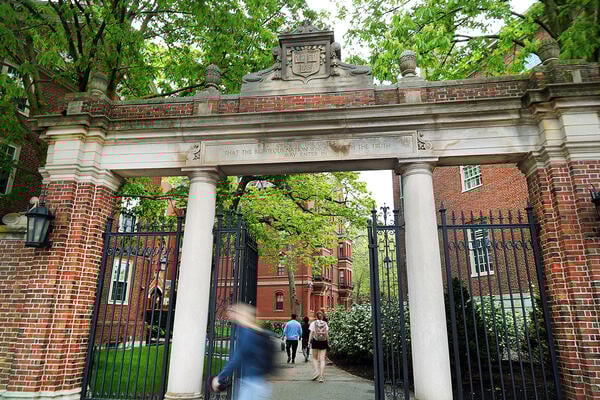
    • The U.S. Department of Homeland Security on Thursday pulled Harvard University’s authorization to enroll international students, dramatically escalating the already-tense battle between the Trump administration and the Ivy League institution. 
    • The agency accused Harvard of creating a “toxic campus climate” by accommodating “anti-American, pro-terrorist agitators.” Kristi Noem, head of the department, also accused the university of “coordinating with the Chinese Communist Party on its campus.”
    • The move, which the university on Thursday called unlawful, endangers the visas of Harvard’s international students, as they must transfer to another college or they will lose their legal status. Almost 6,800 international students attended Harvard in the 2024-25 academic year, making up 27.2% of the university’s student body, according to institutional data.

    Dive Insight:

    In April, DHS threatened to revoke Harvard’s Student and Exchange Visitor Program certification if the university did not comply with an extensive records request about its “foreign student visa holders’ illegal and violent activities” by the end of the month. International students studying in the U.S. can only attend colleges that are SEVP-approved.

    But DHS’ threat against Harvard, while substantial, was largely sidelined from public attention amid the Trump administration’s vast interruptions and cuts to the university’s federal funding. 

    That includes the Trump administration’s decision to freeze $2.2 billion of Harvard’s funding the same day the university publicly rebuked the government’s demands for academic, hiring and enrollment changes. 

    Since then, Harvard has sued the federal government over the withheld funding, arguing it is being used “as leverage to gain control of academic decisionmaking” and has “nothing at all to do with antisemitism” and compliance with civil rights laws as the Trump administration claims. 

    The university now faces another attack on its financial well-being: the loss of tuition revenue from international students.

    “It is a privilege, not a right, for universities to enroll foreign students and benefit from their higher tuition payments to help pad their multibillion-dollar endowments,” Noem said in a statement Thursday.

    In an email Thursday, a Harvard spokesperson called DHS’ actions unlawful and said the university’s international students and scholars enrich it immeasurably.

    “We are working quickly to provide guidance and support to members of our community. This retaliatory action threatens serious harm to the Harvard community and our country, and undermines Harvard’s academic and research mission,” the spokesperson said.

    Last month, Harvard’s undergraduate admissions office notified prospective international students that they may want to have a “backup plan” in place amid DHS’ threats, The Harvard Crimson reported. To that end, the university began allowing them to accept admission to both Harvard and another non-American institution.

    However, Harvard still bans international students from accepting spots at other U.S. colleges. In addition to legal reasons, the university said “the situation at Harvard might be replicated at other American universities,” according to the Crimson.

    Noam signaled her willingness to do just that.

    “Let this serve as a warning to all universities and academic institutions across the country,” she said Thursday, arguing that Harvard had “had plenty of opportunity to do the right thing” and refused.

    Free speech advocates immediately panned DHS’ decision.

    “The administration seems hellbent on employing every means at its disposal — no matter how unlawful or unconstitutional — to retaliate against Harvard and other colleges and universities for speech it doesn’t like,” the Foundation for Individual Rights and Expression said in a statement Thursday.

    FIRE also called DHS’ wide-ranging records request from Harvard “gravely alarming.” 

    “This sweeping fishing expedition reaches protected expression and must be flatly rejected,” the organization said.

    SEVP, a bureaucratic program not typically in the national limelight, gained attention as DHS under President Donald Trump abruptly canceled scores of visas held by international students studying in the U.S.

    These revocations, often enacted by the agency without warning or explanation, have prompted numerous lawsuits against DHS. 

    On April 25, the Trump administration doublebacked and reinstated the canceled visas, the exact number of which is unknown. The move came after judges in more than 50 lawsuits issued temporary injunctions against the visa cancellations, according to Politico.

    However, just days later, the Trump administration shared a policy expanding the authority of U.S. Immigration and Customs Enforcement to terminate educational visas through Student and Exchange Visitor Information System, the records management system run by SEVP.

    Under the policy, evidence of an international student’s failure to comply with the terms of their legal status — not proof or “clear and convincing evidence” — would be enough for ICE to revoke it, according to guidance issued Thursday by the law firm Hunton.

    The guidance also noted that the new policy did not address the federal government’s practice of terminating students’ visas without notifying them — meaning they may still have their legal status pulled without either them or their colleges being informed.

    Source link

  • ‘A shell of itself’: Federal judge pauses efforts to wind down Education Department

    ‘A shell of itself’: Federal judge pauses efforts to wind down Education Department

    This audio is auto-generated. Please let us know if you have feedback.

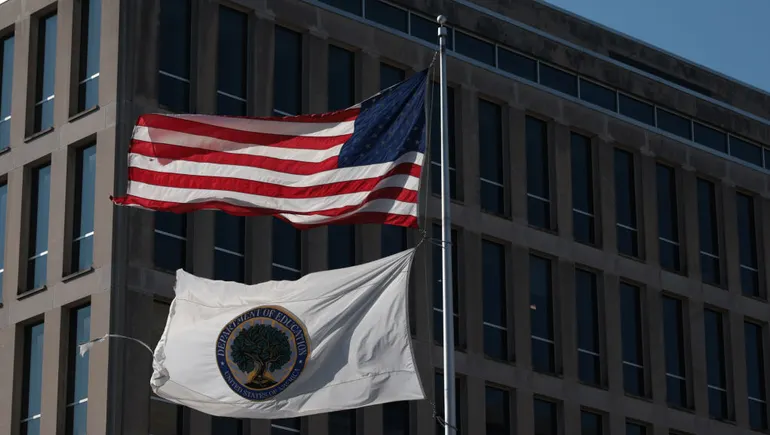
    The U.S. Department of Education is temporarily barred from carrying out an executive order to shut down the agency and must reinstate employees who were fired as part of a mass reduction in force in March, a federal judge ruled Thursday.

    In the preliminary injunction in State of New York v. McMahon, U.S. District Judge Myong Joun ordered that the department be “restored to the status quo” prior to the day President Donald Trump retook office.

    The agency’s actions since show no evidence that its workforce reductions have improved efficiency or that the agency is making progress in working with Congress to close the department, Joun said. 

    “The supporting declarations of former Department employees, educational institutions, unions, and educators paint a stark picture of the irreparable harm that will result from financial uncertainty and delay, impeded access to vital knowledge on which students and educators rely, and loss of essential services for America’s most vulnerable student populations,” his ruling stated.

    Joun also said the Education Department is prohibited from carrying out President Donald Trump’s March 21 directive to transfer management of the federal student loans portfolio and special education management and oversight out of the Education Department.

    “A department without enough employees to perform statutorily mandated functions is not a department at all,” Joun wrote. “This court cannot be asked to cover its eyes while the Department’s employees are continuously fired and units are transferred out until the Department becomes a shell of itself.”

    The preliminary injunction requires the agency to submit a report to the court within 72 hours of the order, outlining all the steps it is taking to comply, and to do so “every week thereafter until the Department is restored to the status quo prior to January 20, 2025.”

    Thursday’s ruling is a setback to the Trump administration’s goals of reducing the size and scope of the federal government. The ambitions are to give more flexibility and decision-making power to the states, supporters of the administration action said.

    Madi Biedermann, deputy assistant secretary for communications at the Education Department, said the agency will challenge the ruling “on an emergency basis.”

    “Once again, a far-left Judge has dramatically overstepped his authority, based on a complaint from biased plaintiffs, and issued an injunction against the obviously lawful efforts to make the Department of Education more efficient and functional for the American people,” Biedermann said in an emailed statement Thursday. 

    Biedermann added, “This ruling is not in the best interest of American students or families.”

    Higher education advocates, on the other hand, celebrated the ruling.

    Today, the court rightly rejected one of the administration’s very first illegal, and consequential, acts: abolishing the federal role in education,” said Randi Weingarten, president of the American Federation of Teachers, in a Thursday statement. Most Americans and states “want to keep the education department because it ensures all kids, not just some, can get a shot at a better life,” she said.

    The legal challenge began March 13, when the attorneys general in 20 states and the District of Columbia sued the Education Department to halt the mass workforce reductions announced March 11. 

    About half of the agency’s 4,133 employees were let go or accepted buy outs. Almost a third of the affected employees had worked in one of three offices within the Education Department: Federal Student Aid, the Office for Civil Rights and the Institute for Education Sciences. 

    Later that month, Trump signed an executive order at a White House ceremony that directed U.S. Education Secretary Linda McMahon to begin closing down the agency to the “maximum extent appropriate.”

    My administration will take all lawful steps to shut down the department,” Trump said at the March 20 signing ceremony. “We’re going to shut it down, and shut it down as quickly as possible.”

    McMahon, during several appearances on Capitol Hill, has acknowledged that only Congress has the authority to close the agency and said she is working with lawmakers to do so.

    Source link

  • The reconciliation bill cleared the House. Here’s how it would change higher ed.

    The reconciliation bill cleared the House. Here’s how it would change higher ed.

    This audio is auto-generated. Please let us know if you have feedback.

    House Republicans on Thursday narrowly passed a massive tax and spending bill that, if signed into law, would add new financial pressures on U.S. colleges and students while extending the tax cuts instituted in 2017. 

    Backed by President Donald Trump and dubbed the “One Big Beautiful Bill Act,” the proposal includes provisions for dramatically increasing the endowment tax, a risk-sharing policy that would put colleges on the hook for unpaid student loans, and changes to the federal student aid program that critics say would reduce access to higher education. 

    It also includes work requirements to the Medicaid health insurance program, changes to which could impact university hospitals and leave many college students without health insurance.

    The bill is headed to the Senate after it passed the House by one vote, with every Democrat and two Republicans voting against it. Three other Republicans either abstained or did not participate in the vote. 

    The Senate, held by Republicans with a 53-person majority, is widely expected to add changes to the bill.

    Since lawmakers passed the legislation as part of the reconciliation process — a rule allowing the Senate to approve spending-related policies with a simple majority — Republicans can avoid a filibuster that would take 60 votes to break.  

    In a Wednesday letter to House leaders, American Council on Education President Ted Mitchell wrote that the higher ed policy changes would have “a historic and negative impact on the ability of current and future students to access postsecondary education, as well as on colleges and universities striving to carry out their vital educational and research missions.”

    Here is a look at some of the major higher ed provisions:

    Endowment tax

    Today, the richest private colleges — the few dozen with at least 500 students and at least $500,000 endowment assets per student — pay an endowment excise tax set at 1.4%.

    Wednesday’s bill would implement a graduated rate structure, with levels starting at 1.4%, and rising to 7%, 14% and 21% depending on endowment assets per student. Under that tiered system, the wealthiest college would be taxed the same as the current corporate income rate. 

    When House Republicans advanced the endowment tax proposal earlier this month, they decried “woke, elite universities that operate more like major corporations.”

    The lowest tax bracket targets colleges whose endowments are valued between $500,000 and $749,999 per student.

    Endowment taxes would rise to 21% for the nation’s wealthiest private colleges

    Excise tax tiers for private colleges based on endowment funds per student

    Industry experts and insiders worry the tax could hurt colleges’ long-term missions and diminish the resources they rely on to recruit lower-income students. 

    In a statement Thursday, Kara Freeman, president and CEO of the National Association of College and University Business Officers, pointed to research by her organization and Commonfund finding that nearly half of endowment spending went toward student aid in fiscal 2024. 

    This scholarship tax takes funds away from students and makes it less possible for colleges to support them,” Freeman said. 

    Colleges spend the largest share of endowment funds on student financial aid

    Endowment spending distribution by function in fiscal 2024

    Financial aid changes

    The bill eliminates federal subsidized loans for undergraduates and Direct Plus loans for graduate students beginning on July 1, 2026.

    It also limits Parent Plus Loans, capping how much parents can borrow and only allowing them to take out loans if their dependent student has already taken out the maximum in unsubsidized loans. 

    The bill sets an overall lifetime student loan limit of $200,000 for any single borrower across all federal loan types.

    Additionally, it raises the course hours for the full-time student designation needed to receive the maximum Pell Grant from 24 to 30 per academic year, and it changes the formula for Pell eligibility.

    ACE’s Mitchell called the proposed changes to Pell Grants “crippling,” saying some 700,000 students could lose eligibility under the bill. 

    Regarding changes to federal student funding writ large, Mitchell described them as “deep cuts and damaging changes to important federal student aid programs” that would limit access to education. 

    The bill also cuts several student loan repayment programs, consolidating a “litany” of repayment plans into two, according to the House Committee on Education and Workforce.

    Source link

  • DHS Terminates Harvard’s SEVP Certification, Blocking Foreign Student Enrollment – CUPA-HR

    DHS Terminates Harvard’s SEVP Certification, Blocking Foreign Student Enrollment – CUPA-HR

    by CUPA-HR | May 22, 2025

    On May 22, the Department of Homeland Security (DHS) announced that it terminated Harvard University’s Student and Exchange Visitor Program (SEVP) certification. According to DHS, this action bars Harvard from enrolling foreign students and requires foreign students currently enrolled at the institution to transfer to another U.S. institution or lose legal status.

    In the announcement, DHS states that “Harvard’s leadership has created an unsafe campus environment by permitting anti-American, pro-terrorist agitators to harass and physically assault individuals, including many Jewish students, and otherwise obstruct its once-venerable learning environment.” DHS claims that many of the agitators are foreign students. The announcement also accuses Harvard’s leadership of facilitating and engaging in coordinated activity with the Chinese Communist Party.

    On April 16, DHS Secretary Kristi Noem sent a letter to Harvard requesting the university to provide records on foreign students’ illegal activity or misconduct. The letter stated that Harvard could face immediate loss of SEVP certification if it did not comply. According to the DHS announcement on the SEVP termination, Harvard did not provide “the required information requested and ignored a follow up request from the Department’s Office of General Counsel.”

    In DHS’s announcement regarding the termination of Harvard’s SEVP certification, Noem states that DHS’s decision to terminate Harvard’s SEVP certification is “holding Harvard accountable for fostering violence, antisemitism, and coordinating with the Chinese Communist Party on campus.” She further states that “it is a privilege, not a right, for universities to enroll foreign students” and to “let this serve as a warning to all universities and academic institutions across the country.”

    CUPA-HR will monitor for additional updates on this decision and other actions taken by DHS.


    Source link

  • Trump bars Harvard from enrolling international students in alarming crackdown on speech

    Trump bars Harvard from enrolling international students in alarming crackdown on speech

    Today, the Trump administration revoked Harvard University’s ability to enroll international students.

    Homeland Security Secretary Kristi Noem ordered her department to end Harvard’s Student and Exchange Visitor Program certification, citing the university’s failure to hand over the behavioral records of student visa holders.

    The Department of Homeland Security’s decision to escalate its assault against Harvard University by revoking its ability to enroll international students is retaliatory and unlawful.

    Secretary Noem’s letter warns that the Trump administration seeks to “root out the evils of anti-Americanism and antisemitism in society and campuses.” But little is more un-American than a federal bureaucrat demanding that a private university demonstrate its ideological fealty to the government under pain of punishment.

    The Department’s demand that Harvard produce audio and video footage of all protest activity involving international students over the last five years is gravely alarming. This sweeping fishing expedition reaches protected expression and must be flatly rejected.

    The Department is already arresting and seeking to deport students for engaging in protected political activity it disfavors. Were Harvard to capitulate to Secretary Noem’s unlawful demands, more students could face such consequences. The administration’s demand for a surveillance state at Harvard is anathema to American freedom. 

    The administration seems hellbent on employing every means at its disposal — no matter how unlawful or unconstitutional — to retaliate against Harvard and other colleges and universities for speech it doesn’t like. This has to stop. 

    Since 1999, FIRE has fought for free speech and academic freedom at Harvard and campuses nationwide, and we will continue to do so. We know there is work to do. Whatever Harvard’s past failings, core campus rights cannot and will not be secured by surveillance, retaliation, and censorship.

    No American should accept the federal government punishing its political opponents by demanding ideological conformity, surveilling and retaliating against protected speech, and violating the First Amendment.

    Source link

  • Trump Administration Strips Harvard’s SEVIS Certification

    Trump Administration Strips Harvard’s SEVIS Certification

    Amid an ongoing legal showdown with Harvard University, the Trump administration has carried through on a recent threat to halt the private institution’s ability to host international students.

    The move was first reported Thursday afternoon by The New York Times, then subsequently announced on social media by Secretary of Homeland Security Kristi Noem.

    “This administration is holding Harvard accountable for fostering violence, antisemitism, and coordinating with the Chinese Communist Party on its campus. It is a privilege, not a right, for universities to enroll foreign students and benefit from their higher tuition payments to help pad their multibillion-dollar endowments,” Noem wrote in the announcement. “Harvard had plenty of opportunity to do the right thing. It refused.”

    (Though much of the federal government’s recent focus on Harvard has concerned the university’s alleged failure to address antisemitism on campus, the Trump administration has also raised questions about collaboration with foreign researchers, particularly those with ties to the Chinese and Iranian governments.)

    In her statement, Noem wrote that Harvard’s Student Exchange and Visitor Information System certification was being stripped “as a result of their failure to adhere to the law,” which she said should “serve as a warning to all universities” across the U.S.

    Current international students would be required to transfer to maintain their visa status.

    Noem added that Harvard would need to turn over demanded records within 72 hours if it would “like the opportunity of regaining” SEVIS certification “before the upcoming school year.”

    A Harvard spokesperson called the action “unlawful” in an emailed statement.

    “We are fully committed to maintaining Harvard’s ability to host international students and scholars, who hail from more than 140 countries and enrich the University—and this nation—immeasurably,” the spokesperson wrote. “This retaliatory action threatens serious harm to the Harvard community and our country, and undermines Harvard’s academic and research mission.”

    Impact on Harvard

    Harvard enrolled 6,793 international students last fall, according to university data. International students have made up about a quarter of Harvard’s head count over the last decade—a population that could disappear, along with their substantial tuition dollars, if the Trump administration’s directive holds.

    Noem threatened to revoke Harvard’s SEVIS certification last month after the university pushed back on federal government demands to turn over “detailed records on Harvard’s foreign student visa holders’ illegal and violent activities by April 30.” That threat followed Harvard’s refusal to acquiesce to sweeping demands to overhaul its governance, admissions and hiring processes and more in response to allegations of antisemitic conduct. The university then sued the Trump administration over a federal funding freeze and other recent actions.

    Revoking Harvard’s SEVIS certification is the second punch the government threw at the university this week, coming after the Department of Health and Human Services announced the termination of $60 million in multiyear federal grants, which officials attributed to concerns about campus antisemitism.

    Other sources of federal funding are on hold. Altogether, the Trump administration has frozen at least $2.7 billion flowing to the private university, or about a third of Harvard’s federal funds.

    A New Political Cudgel

    The Student Exchange and Visitor Program’s process for revoking universities’ SEVIS status is usually a prolonged and complicated bureaucratic affair, typically preceded by a thorough investigation of the institution and the possibility of appeal.

    Sarah Spreitzer, vice president and chief of staff for government relations at the American Council on Education, told Inside Higher Ed that the manner in which the federal government stripped Harvard’s SEVIS certification was unprecedented.

    “In a normal world, Harvard is supposed to actually get a notice that their SEVIS certification is being revoked, and then there is an appeals process,” Spreitzer said. “It doesn’t seem that DHS is following any of the regular requirements that are included in statute for taking this action.”

    In late March, Trump officials first proposed revoking SEVIS status from institutions that they believed fostered antisemitism on campus, aiming their threats specifically at Columbia and the University of California, Los Angeles, which were home to major pro-Palestinian protests in 2024. In mid-April they threatened Harvard with decertification.

    Clay Harmon, director of AIRC: The Association of International Enrollment Management, told Inside Higher Ed in March that historically, SEVP investigations are conducted when universities are suspected of delivering less-than-bona-fide degree programs, using shady coursework as a way to essentially sell student visas to would-be immigrants who want a fast way to enter the country. 

    “It is the government’s primary way of ensuring that international student visas are not granted for diploma mills, fake institutions or institutions that are not adequately financially supported,” Harmon said. “I’ve never heard of a fully accredited, reputable institution—whether it’s Columbia or Bunker Hill Community College—being subjected to some kind of extraordinary SEVP investigation outside of the standard recertification process.”

    The initial process of certification, Harmon added, is intensive and can take institutions months or even longer to complete, which is one reason why decertification is so rare. Wielding the organization’s oversight powers as a tool for leverage in a larger political battle, he said, would be “a significant departure from past practices and established precedents.”

    “It is clear that the administration is putting forward new interpretations of laws and powers that have not been established through case law or regular practice,” Harmon said.

    In an email to Inside Higher Ed on Thursday, Harmon said the administration’s decision to use decertification against Harvard “imposes real, immediate, and significant harm on thousands of students for reasons outside their control and unrelated to their own actions.”

    “This action may have broad and long-term negative impacts—well beyond Harvard and well beyond 2025—to the educational experience and financial health of U.S. institutions,” he wrote.

    Revocation of Harvard’s SEVIS certification prompted sharp reactions online.

    Aaron Reichlin-Melnick, a senior fellow at the American Immigration Council, wrote on social media that Noem’s actions are “likely illegal” and her letter showed no evidence of Harvard’s violations.

    “Nothing in here alleges ANY specific violation of the Student and Exchange Visitor Program. Nothing. She cites no law violated, no regulation broken, no policy ignored,” Reichlin-Melnick wrote. “I don’t care what you think of Harvard; this is clear weaponization of government.”

    Will Creeley, legal director of the Foundation for Individual Rights and Expression, called the government’s revocation of Harvard’s ability to host international students “retaliatory and unlawful.”

    In a statement posted on X, he assailed the Education Department’s demands that Harvard hand over footage of international students protesting on campus.

    “This sweeping fishing expedition reaches protected expression and must be flatly rejected,” Creeley wrote. “The administration’s demand for a surveillance state at Harvard is anathema to American freedom … This has to stop.”

    But some officials in the MAGA camp celebrated the move.

    “This is a remarkable first step,” Republican senator Ashley Moody of Florida wrote on X. “I applaud the administration for taking a stand to rid our universities of malign foreign influence.”

    Source link

  • ‘A shell of itself’: Federal judge pauses efforts to wind down Education Department

    ‘A shell of itself’: Federal judge pauses efforts to wind down Education Department

    This audio is auto-generated. Please let us know if you have feedback.

    The U.S. Department of Education is temporarily barred from carrying out an executive order to shut down the agency and must reinstate employees who were fired as part of a mass reduction in force in March, a federal judge ruled Thursday.

    In the preliminary injunction in State of New York v. McMahon, U.S. District Judge Myong Joun ordered that the department be “restored to the status quo” prior to the day President Donald Trump retook office.

    The agency’s actions since show no evidence that its workforce reductions have improved efficiency or that the agency is making progress in working with Congress to close the department, Joun said. 

    “The supporting declarations of former Department employees, educational institutions, unions, and educators paint a stark picture of the irreparable harm that will result from financial uncertainty and delay, impeded access to vital knowledge on which students and educators rely, and loss of essential services for America’s most vulnerable student populations,” his ruling stated.

    Joun also said the Education Department is prohibited from carrying out President Donald Trump’s March 21 directive to transfer management of the federal student loans portfolio and special education management and oversight out of the Education Department.

    “A department without enough employees to perform statutorily mandated functions is not a department at all,” Joun wrote. “This court cannot be asked to cover its eyes while the Department’s employees are continuously fired and units are transferred out until the Department becomes a shell of itself.”

    The preliminary injunction requires the agency to submit a report to the court within 72 hours of the order, outlining all the steps it is taking to comply, and to do so “every week thereafter until the Department is restored to the status quo prior to January 20, 2025.”

    Thursday’s ruling is a setback to the Trump administration’s goals of reducing the size and scope of the federal government. The ambitions are to give more flexibility and decision-making power to the states, supporters of the administration action said.

    Madi Biedermann, deputy assistant secretary for communications at the Education Department, said the agency will challenge the ruling “on an emergency basis.”

    “Once again, a far-left Judge has dramatically overstepped his authority, based on a complaint from biased plaintiffs, and issued an injunction against the obviously lawful efforts to make the Department of Education more efficient and functional for the American people,” Biedermann said in an emailed statement Thursday. 

    Biedermann added, “This ruling is not in the best interest of American students or families.”

    Public school supporters, on the other hand, celebrated the ruling.

    Today, the court rightly rejected one of the administration’s very first illegal, and consequential, acts: abolishing the federal role in education,” said Randi Weingarten, president of the American Federation of Teachers, in a Thursday statement. Most Americans and states “want to keep the education department because it ensures all kids, not just some, can get a shot at a better life,” she said.

    The legal challenge began March 13, when the attorneys general in 20 states and the District of Columbia sued the Education Department to halt the mass workforce reductions announced March 11. 

    About half of the agency’s 4,133 employees were let go or accepted buy outs. Almost a third of the affected employees had worked in one of three offices within the Education Department: Federal Student Aid, the Office for Civil Rights and the Institute for Education Sciences. 

    Later that month, Trump signed an executive order at a White House ceremony that directed U.S. Education Secretary Linda McMahon to begin closing down the agency to the “maximum extent appropriate.”

    My administration will take all lawful steps to shut down the department,” Trump said at the March 20 signing ceremony. “We’re going to shut it down, and shut it down as quickly as possible.”

    McMahon, during several appearances on Capitol Hill, has acknowledged that only Congress has the authority to close the agency and said she is working with lawmakers to do so.

    Source link

  • Judge Orders Education Department Employees Reinstated

    Judge Orders Education Department Employees Reinstated

    Photo illustration by Justin Morrison/Inside Higher Ed | Tierney L. Cross/Getty Images | Matveev_Aleksandr and raweenuttapong/iStock/Getty Images

    A federal judge blocked the Trump administration from firing thousands of employees at the Department of Education in a decisive rebuke of this spring’s sweeping reduction in force and the executive branch’s efforts to weaken the Education Department.

    Judge Myong Joun rejected the administration’s argument that the layoffs, which affected half of the department’s workforce, were part of a “reorganization” aimed at improving efficiency and said evidence showed the administration’s “true intention is to effectively dismantle the Department without an authorizing statute.” His order also prevents the department from implementing President Donald Trump’s March directive to dismantle the agency.

    Joun of the District of Massachusetts also said the injunction to rehire the fired staffers was necessary in order to restore the department’s ability to accomplish its core functions and statutorily mandated responsibilities.

    “Not only is there no evidence that Defendants are pursuing a ‘legislative goal’ or otherwise working with Congress to reach a resolution, but there is also no evidence that the RIF has actually made the Department more efficient,” Joun wrote in his 88-page ruling. “Plaintiffs have demonstrated that the Department will not be able to carry out its statutory functions—and in some cases, is already unable to do so.”

    Reports of systemic failings and overloaded staff have streamed out of the beleaguered department ever since the March layoffs, from an untouched backlog of complaints at the Office for Civil Rights to the piling up of applications for student loan repayment and forgiveness plans.

    The injunction, handed down Thursday morning, means the administration must reinstate more than 2,000 Education Department employees and reopen regional offices that were shuttered during the reduction in force.

    The administration has already said it has issued a challenge to the ruling. Madi Biedermann, the department’s deputy assistant secretary for communication, said the administration has already appealed.

    In an email to Inside Higher Ed, Biedermann decried the decision, calling Joun a “far-left judge” who “dramatically overstepped his authority” and maintaining that the layoffs were “lawful efforts to make the Department of Education more efficient and functional.”

    “President Trump and the Senate-confirmed Secretary of Education clearly have the authority to make decisions about agency reorganization efforts, not an unelected Judge with a political axe to grind,” she wrote.

    A spokesperson for the Association of American University Professors, one of the plaintiffs in the case, wrote in a statement that they were “thrilled” with the decision.

    “Eliminating the [Education Department] would hurt everyday Americans, severely limit access to education, eviscerate funding for HBCUs and [tribal colleges and universities] while benefiting partisan politicians and private corporations,” they wrote.

    Education Secretary Linda McMahon defended the layoffs at a budget hearing just a day prior to the ruling. She said the goal was to “wind down the bureaucracy” of the department, and that while she hoped to have congressional support to dismantle it eventually, the administration did not intend to so on its own.

    Joun’s decision undercuts that defense. In the budget hearing, Rep. Rosa DeLauro, a Democrat of Connecticut, told McMahon that the cuts were “unlawful” and a usurpation of congressional authority.

    “As long as you continue to deliberately and flagrantly defy the law, you will continue to lose in court,” DeLauro said.

    The injunction is the latest in a string of court orders challenging the Trump administration’s rapid cuts to federal agencies in its first 100 days, often under the supervision of Elon Musk’s Department of Government Efficiency. DOGE was responsible for the vast majority of the Education Department layoffs, according to McMahon’s House testimony Wednesday.

    Joun’s ruling wasn’t the only one aimed at undoing the administration’s Education Department cuts. Judge Paul Friedman of the U.S. District Court for the District of Columbia also ordered that the department restore grant funding to a Southern nonprofit that has helped further school desegregation efforts since the 1960s. The grant had been defunded as part of the administration’s push to eliminate spending on diversity, equity and inclusion.

    Source link