Blog

  • Scholar-Athlete Turned NBA Coach Returns Home: Jacque Vaughn Joins Kansas Staff

    Scholar-Athlete Turned NBA Coach Returns Home: Jacque Vaughn Joins Kansas Staff

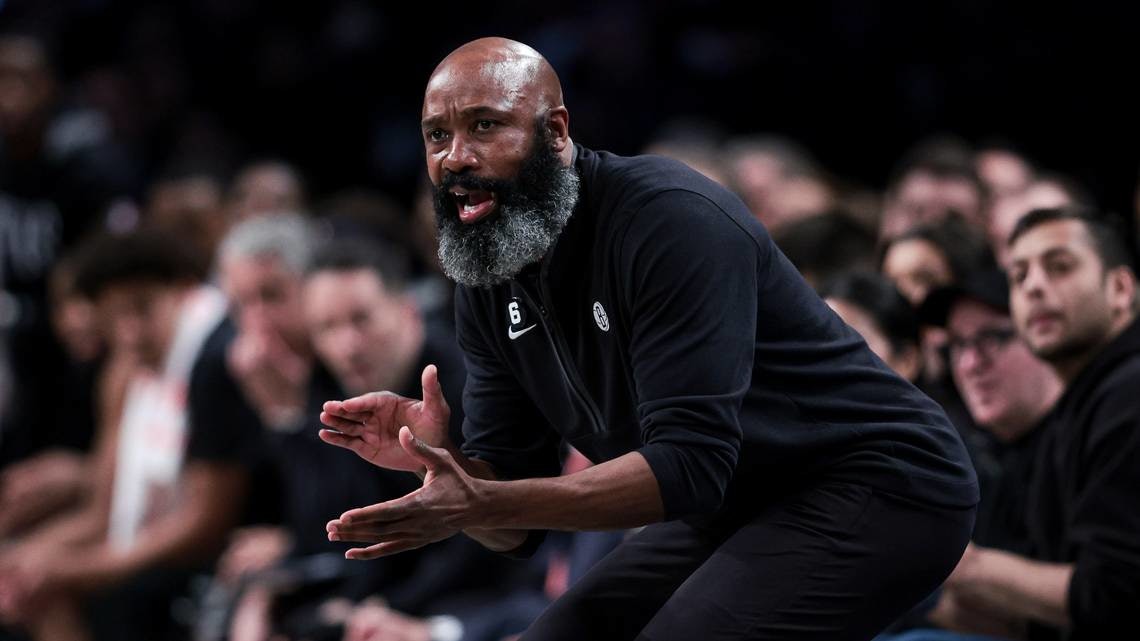
    Jacque VaughnThe University of Kansas has made a significant addition to its basketball coaching staff with the hiring of alumnus Jacque Vaughn.

    Vaughn returns to Kansas as an assistant coach under Bill Self, becoming the first former NBA head coach to join the Jayhawks’ coaching staff.

    Vaughn brings more than 15 years of NBA coaching experience, having served as head coach for both the Orlando Magic and Brooklyn Nets. During his coaching tenure, he mentored NBA All-Stars including Kevin Durant, Kyrie Irving, and Ben Simmons, as well as former Kansas players Markieff Morris and Jalen Wilson.

    “We’re very excited to welcome Jacque and Laura into the fold,” Self said. “I’ve known Jacque from a distance for several years now and have always admired how he has conducted himself professionally and how he has treated people.”

    Vaughn’s Kansas career from 1993-97 established him as one of the program’s most exceptional student-athletes. He concluded his collegiate career as the Big Eight Conference’s all-time assists leader with 804 assists, earning second-team All-American honors during his senior season under Roy Williams while maintaining extraordinary academic standards.

    His scholarly achievements were equally impressive, earning Academic All-American First Team selections in both 1996 and 1997. Most notably, Vaughn received the 1997 Academic All-American of the Year award, joining Cole Aldrich as the only Kansas players to earn this prestigious national recognition. Additionally, he was honored by Diverse with the Arthur Ashe Jr. Scholar-Athlete Award in 1996, cementing his status as a role model for student-athletes nationwide.

    Following his collegiate career, Vaughn was drafted 27th overall by the Utah Jazz in 1997 and enjoyed a 12-season NBA playing career that included stops with five teams and culminated in an NBA Championship with the San Antonio Spurs in 2007. He transitioned to coaching as an assistant with San Antonio before becoming head coach of the Orlando Magic in 2012, later leading the Brooklyn Nets to playoff appearances in 2020 and 2023.

    “I’m truly honored and overwhelmed with excitement to return to my alma mater,” Vaughn said. “I couldn’t pass up the opportunity to bring those experiences back to the school that means so much to me.”


    Vaughn replaces Norm Roberts, who recently retired, representing a powerful example of how academic excellence and athletic achievement can create pathways for continued leadership in higher education.

    Source link

  • Oklahoma religious charter remains blocked in SCOTUS split

    Oklahoma religious charter remains blocked in SCOTUS split

    This audio is auto-generated. Please let us know if you have feedback.

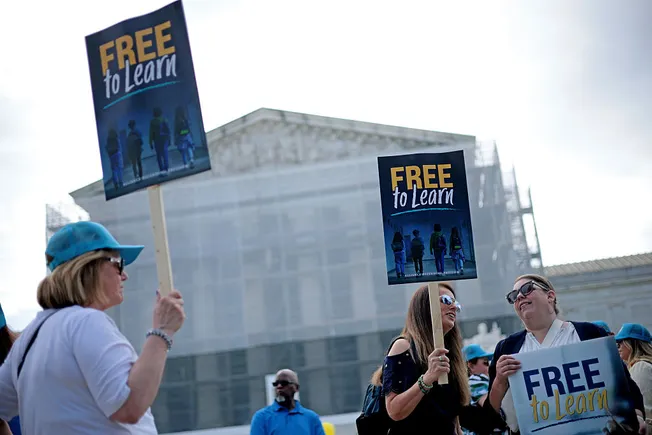
    The nation’s first religious public charter school will not be able to open its doors in Oklahoma after a 4-4 split in the U.S. Supreme Court on Thursday morning upheld the state supreme court’s ruling that blocked the school.

    The high court did not issue written opinions in the case.

    In its June 2024 ruling in St. Isidore of Seville Catholic Virtual School v. Drummond, a six-justice majority of the Oklahoma Supreme Court sided with state Attorney General Genter Drummond, writing that the virtual public charter school’s creation would violate the Oklahoma Constitution and the First Amendment’s Establishment Clause. St. Isidore was originally scheduled to open for the 2024-25 school year.

    Enforcing the St. Isidore Contract would create a slippery slope and what the framers’ warned against — the destruction of Oklahomans’ freedom to practice religion without fear of governmental intervention,” the Oklahoma court’s majority wrote in the decision.

    If the U.S. Supreme Court had ruled in favor of St. Isidore, the high-profile religious liberty case could have opened the door for a wave of other publicly funded religious schools. The split decision, however, leaves no national precedent on the question of whether religious schools can participate in public charter school programs without violating the First Amendment’s Establishment Clause.

    Justice Amy Coney Barrett recused herself from the case.

    St. Isidore is “disappointed” that the decision to block the school’s opening was upheld “without explanation” from the U.S. Supreme Court, said Archbishop of Oklahoma City Rev. Paul Coakley and Bishop of Tulsa Rev. David Konderla, in a joint statement Thursday.

    Given this latest ruling, Coakley and Konderla said they are exploring alternative options to offer a virtual Catholic education “to all persons” in Oklahoma and remain committed to parental choice in education.

    The Oklahoma Statewide Charter School Board, which initially approved St. Isidore’s contract in October 2023, will respect the Supreme Court’s authority following its split decision to uphold the Oklahoma Supreme Court’s ruling, said the board’s Executive Director Rebecca Wilkinson, in a Thursday statement.

    “The split decision of the court affirms this was indeed a complicated matter with a wide spectrum of views on the appropriate relationship between education, public funding, and religious institutions in our state and country,” Wilkinson said. “The Statewide Charter School Board remains committed to upholding our constitutional responsibilities and the highest standards of transparency and excellence. We will move forward in that vein, ensuring our policies and practices reflect both the rule of law and commitment to all students.”

    Drummond said in a Thursday statement that the Supreme Court’s decision is a “resounding victory for religious liberty and for the foundational principles that have guided our nation since its founding.”

    “I have always maintained that we must faithfully uphold the Constitution, even when it requires us to make difficult decisions,” Drummond said. “I will continue upholding the law, protecting our Christian values, and defending religious liberty — regardless of how difficult the battle may be.”

    Oklahoma Superintendent of Public Instruction Ryan Walters spoke out against the Supreme Court’s move, adding in a Thursday statement that he will always oppose “religious discrimination” and that all children in Oklahoma should be free to choose the best school to attend, whether that’s “religious or otherwise.”

    “Allowing the exclusion of religious schools from our charter school program in the name of 19th century religious bigotry is wrong,” Walters said in the statement sent by First Liberty Institute, a nonprofit law firm focused on First Amendment cases on religion.

    Still, it seems likely the issues involving the First Amendment’s religious clauses will eventually return to the U.S. Supreme Court, “perhaps in a case better suited for resolution,” said Thomas Jipping, a senior legal fellow in the Edwin Meese III Center for Legal and Judicial Studies at The Heritage Foundation, a national conservative think tank.

    While it may not be the last time the Supreme Court takes on a case over religious charter schools, “today’s outcome offers clarity for families and educators,” said Starlee Coleman, president and CEO of the National Alliance for Public Charter Schools, in a statement.

    About 8.1% of all public schools are charters. These schools serve 3.7 million enrolled students, of whom two-thirds are from low-income, Black or Latino communities, according to NAPCS.

    Source link

  • A new way of addressing the enigma of student engagement

    A new way of addressing the enigma of student engagement

    by Caroline Jones and Leonie Sweeney

    Psychosocial and Academic Trust Alienation (PATA) Theory as a Methodological Lens

    Higher education is experiencing post-pandemic challenges which have increased pressure on students in multifaceted and interconnecting ways (Jones & Bell, 2024). Existing research suggests that post-pandemic, students’ mental health and wellbeing has been significantly impacted (Chen & Lubock, 2022; Defeyter et al, 2021; Jones & Bell, 2025; McGiven & Shepherd, 2022; Nunn et al, 2021). This indicates that research into the field of higher education is needed more pro-actively than ever before, especially given the diverse student market.

    Currently there is considerable research in the form of critique of policy trends or evaluation of the effectiveness of changes in practice; however, the PATA theory lens suggests an approach to research centring on the educational psychologies and intricacies of the student and the enigma of student engagement (Buckley, 2018; Jones & Nangah, 2020: McFarlane & Thomas, 2017).

    Our recent article presents the PATA theory as a methodological lens through which higher education student behaviours, characteristics, and demographics can be researched. Furthermore, it provides an explanation of the PATA theory with specific links to student engagement. The idea of the PATA theory was first explored by Jones in 2017 and developed further in 2020 and 2021 in response to recognised issues faced relating to student engagement in widening participation student demographics. This research establishes the theory which can be applied to investigating the complexities of student demographics, with the aim being to develop knowledge and understanding of issues affecting students such as post-pandemic engagement.

    Guidelines from the QAA (2018) state that due to the demographic of the students who attend each institution, student engagement needs to be interpreted and encouraged in response to student/higher education institutional need. Therefore, student engagement can be interpreted in a variety of ways, examining the links between time, energy and other properties invested by HEIs and students with the aims of cultivating the student experience, strengthening educational outcomes, encouraging development and raising student achievement. Positive student engagement can lead to successful student outcomes, lower attrition rates and improved social mobility, demonstrating the importance of research for understanding and investing in student engagement practices.

    The PATA theory sits under the umbrella of alienation theory: it considers the individual student’s psychosocial status (self-concept/self-esteem levels) and has identified links to academic trust levels (Jones, 2021), particularly for students from the widening participation demographics or those who have experienced socio-economic disadvantage, see figure 1.

    Figure 1. PATA Theory (Jones, 2021)

    The PATA theory fits as a methodology within the realms of phenomenology as it enables researchers to present a narrative to represent the phenomena studied to extract significant statements from the data to formulate meaning. Neubauer, Witkop and Varpio (2019, p91) believe it is imperative for the researcher engaging in phenomenological research to be familiar with the philosophical ‘interpretations of human experience’, whilst Morrow, Rodriguez and King (2015, p644) advise that ‘descriptive phenomenology is especially valuable in areas where there is little existing research’. An additional crucial aspect of phenomenology is understanding that social reality has to be grounded in an individual’s encounters in authentic social situations. The focal point of the PATA theory lens research is to understand how students’ psychosocial status affects the academic trust of their higher education experiences and the relationships that arise out of the social exchanges therein, permitting researchers to construe the associations that the participants make.

    This article analyses the PATA theory potential range of research methods that can be employed and used in higher education practice and is supported by three case vignette examples with reflection points.  For example, we would usually see student disengagement relating to activities such as non-attendance, but the PATA theory shows us that the concept of student engagement is much more complex and encourages higher education institutions and professionals to view the issue in a more holistic student-centred way rather than homogenously.

    Additionally, post-Covid there has been a significant rise in the number of students presenting with mental health issues, with students struggling to attend and engage with their programmes of study. Currently, the assessment strategies used by HEIs for capturing student engagement fail accurately to measure both student engagement and sense of belonging. However, using the PATA theory as the research lens would provide a deeper insight into the post pandemic issues faced, by focussing on student alienation and the strengthening of trust between the student and the institution. HEIs could then scrutinise their existing on-campus experiences to aid the re-engagement process, and practice could be adapted to increase the student experience, such as including more pastoral 1:1 support time within the timetable.

    Some further practical illustrations of how the PATA theory might influence our understanding or make a difference in practice are:

    • To understand potential psychological barriers to student engagement based on demographics, behaviours and characteristics.
    • To identify success stories of positive engagement where good practice can be disseminated or shared to improve student outcomes.
    • To take a deep dive into higher education practices, course or programmes to find out if there are specific teaching and learning barriers affecting students.
    • Provides time and space to analyse intricate needs of specific demographics; behaviours and characteristics such as impact of low tariff on entry gaps or previous educational experiences.
    • Can lead to bespoke action to address potential equality and inclusion concerns.
    • Can be used as an early intervention tool to support students’ re-engagement potentially contributing to reduced attrition and improvements in social mobility.
    • Can be used to explore wider societal issues that affect engagement

    The PATA theory has its limitations, being a new and emerging theoretical perspective, and is very much open to academic critique. However, this concept does bring new insight to the complexities of the student community, the higher education institutional and political landscapes and could be used as a methodological lens to develop deeper knowledge and understanding of student engagement challenges. Whilst the PATA theory is a complex idea applied to a range of complex student issues, when the phenomenon is understood well, there is the potential to really make a difference to the educational outcomes for students. Furthermore, existing theories do not make connections between psychosocial status and academic trust which is where the PATA theory can contribute to a stronger understanding of the student phenomena.

    The article on which this blog is based is

    Jones, C. S., and Sweeney, L (2025) ‘The Psychosocial and Academic Trust Alienation (PATA) Theory: A new lens to research higher education student phenomena: behaviours, characteristics, and demographics’ Student Engagement in Higher Education Journal, 6(1), 79–110 https://sehej.raise-network.com/raise/article/view/1240.

    Caroline Jones is an applied social sciences teaching professional with extensive experience working in the children and young people field and lecturing/programme leading in Higher Education. Currently employed as a Tutor based within the Health and Education Faculty at Manchester Metropolitan University, having previously been a Lecturer at the University Campus Oldham and at Stockport University Centre. Also an External Examiner for Derby University/Middlesex University and a Peer Reviewer for IETI. Research interests include; leadership and management, social mobility and social policy, risk, resilience and adolescent mental health, young care leavers, widening participation and disadvantage, originator of the ‘psychosocial and academic trust alienation’ (PATA) theory.

    Email: [email protected]. LinkedIn: https://uk.linkedin.com/in/caroline-jones-1bab40b3. Twitter/X: @c_JonesSFHEA. Researchgate: https://www.researchgate.net/profile/Caroline-Jones-39?ev=hdr_xprf.

    Leonie Sweeney is a teaching professional within the Applied Social Sciences faculty at Manchester Metropolitan University, with many years of experience working within the children and young people sector. Currently employed as a Higher Education Course Leader and Lecturer, delivering Children and Young People and Early Years degree courses. Additionally, is an External Examiner for University of Chichester and University of Sunderland. Research interests include: student engagement, social mobility, widening participation.

    Email: [email protected]

    Author: SRHE News Blog

    An international learned society, concerned with supporting research and researchers into Higher Education

    Source link

  • Among explosions and gunfire, a quiet place to study

    Among explosions and gunfire, a quiet place to study

    A 2017 study found that 45% of the adult population of the Kashmir Valley — around 1.8 million people — suffer from some form of psychological distress. It reported high rates of depression, anxiety and post-traumatic stress disorder.

    The most recent India-Pakistan escalation on May 7, involving cross-border shelling, further worsened conditions, damaging homes and killing civilians in border districts like Uri, Poonch and Kupwara.

    Jan said such stories often lead her to question what went wrong in their society and why such tragedies continue to emerge from her homeland. Her parents advised her to shift to a private reading hall. She describes the atmosphere there as refreshing — a place filled with peers preparing for the same exam. The environment, she says, is motivating and focused, making it easier to concentrate and feel a sense of community.

    Spaces for students

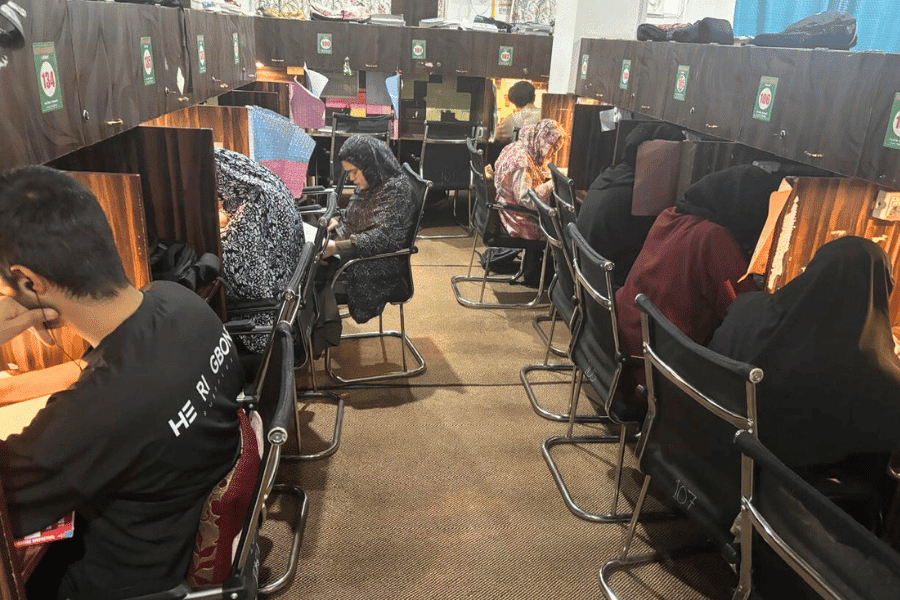
    In recent years, the trend of private reading halls has seen a sharp rise across Kashmir. More and more students now prefer these dedicated spaces over studying at home, seeking focus and stability amid the turmoil. While such reading halls were once limited to urban centres like Srinagar and semi-urban towns like Anantnag and Baramulla, they’ve now expanded into far-flung areas such as Achabal and Kupwara — regions located miles away from the city hubs.

    Muazim Altaf, a pharmacy graduate and the owner of Pulse Library in Achabal — where Jan studies — recalls how the idea for the reading hall came to him. 

    He noticed that many students from nearby villages were travelling all the way to Srinagar, which is 70 kilometres from Achabal, staying in hostels just to access reading halls and a better study environment. “That’s when I thought, why not create something similar here in Achabal?” he said.

    In October last year, he opened Pulse with the intention of offering an affordable alternative to students who couldn’t afford hostel rents in Srinagar. The initiative wasn’t purely profit-driven, he said. His goal was to support local students by providing a productive study space within their own region.

    Initially, he started with 60 study cabins, which were fully booked within days. Encouraged by the overwhelming response, he expanded the facility. “Now we have 120 cabins, all booked until June,” he said. Each student is charged a modest monthly fee of nine pounds to use the space.

    He admits he hadn’t anticipated such a strong turnout. Students aged 17 to 29 now frequent Pulse — some preparing for competitive entrance exams, while others focus on passing exams required for government jobs. 

    One trend stood out to him: nearly 60% of the students are girls.

    A hunger to learn

    In 2022, more than 250,000 people visited just 131 public libraries across Jammu and Kashmir, highlighting both a hunger for learning and the shortage of adequate study spaces. With thousands of aspirants preparing for exams, existing public libraries are overwhelmed and operate only during daytime hours, making it tough for students who need longer study sessions.

    In response, young people across the region have stepped in, launching private reading halls that offer 24/7 access. Equipped with Wi-Fi, heating, cooling, kitchen spaces and discussion zones, these modern study hubs have quickly become essential for serious exam takers in Kashmir.

    Javed Pathaan, a recent PhD graduate from Kashmir University, runs a private reading hall in Srinagar’s Rajbagh area. “Having personally gone through the rigors of competitive exam preparation, I understand how valuable these extras can be,” he said. “Students who study for long hours need occasional breaks, so we’ve created a designated space for short naps.”

    He said that young students face intense mental and physical strain while preparing for exams in a conflict-ridden region. That’s why many choose private services like his over free public libraries.

    Shazir Ahangar, who wants to pass an exam to get a government job in Kashmir, shifted to Pulse Library at Achabal after leaving the public library in Anantnag. He found the public facility overcrowded and said it was hard to concentrate there. 

    “They’re open for just eight to nine hours a day, which isn’t enough when you’re preparing for competitive exams,” he said.

    The exchange of knowledge

    One of Ahangar’s main concerns was the lack of basic facilities. The public libraries he visited didn’t offer air conditioning during summer or designated kitchens for making tea or coffee. Nor do they have discussion rooms. 

    “At Pulse, it’s more than just studying,” he added. Students engage in group discussions, exchange ideas and even enjoy small breaks together. He especially appreciated the privacy provided by individual study cabins.

    Last year, Manan Bhat, 28, from Soura area of Srinagar, secured the 88th rank in India’s civil service exam, a major feat considering that every year, more than one million people appear for India’s Civil Services Examination, but fewer than 1,000 candidates are selected.

    When he first began coming to reading halls they were often nearly empty. “Now, they’re packed with students,” he said. 

    Manan said that the biggest advantage of reading halls is the individual focus they offer, allowing students to concentrate without distractions. He also highlighted how being surrounded by peers preparing for similar exams creates a supportive environment that encourages the exchange of knowledge.

    Safe spaces to study

    Owners of reading halls often play an active role in encouraging students, staying in touch with their parents to share updates on their performance and dedication. The atmosphere in these halls is competitive, similar to coaching centres.

    Muazim Altaf said that admitting students to the reading hall comes with significant responsibility, as parents place a great deal of trust in them. 

    “We share weekly reports with parents, including details like how much time their children spend studying and whether they arrive on time,” he said. This becomes especially crucial in a region battling widespread drug addiction. Parents often urge him to keep a close watch on their children. According to Muazim, any form of indiscipline or violation of library rules results in immediate expulsion.

    In December last year, Shri B.L. Verma, the minister of state for social justice and environment, told the Indian parliament that more than 823,000 people in Jammu and Kashmir — around 8% of the region’s population — use drugs of some kind, including cannabis, opioids or sedatives.

    Basit Fayaz, who recently secured an All India Rank of 70 in the national exam that determines placement in professorships and research fellowships, believes that joining a reading hall played a crucial role in his success. He said that without the focused study environment it offered, cracking the exam — let alone making it to the top 100 — would have been nearly impossible.

    “The reading hall in Achabal [Pulse] provided exactly the kind of calm and distraction-free atmosphere I needed,” he said, adding that it helped him stay insulated from the recurring disturbances like crackdowns and gunfights that are common in Kashmir.

    Fayaz appreciated the peer group he found there. He recalled how group discussions and study sessions with fellow NEET aspirants added great value to his preparation. He added that without such spaces, constant exposure to conflict-related events often disturbs one’s mental state and heightens anxiety.

    “In situations like escalations between India and Pakistan, gunfights or political crackdowns, these spaces help us stay focused and shielded from the chaos,” Fayaz said.


    Questions to consider:

    1. What distractions from studying do so many young people in the Kashmir region face?

    2. How can political turmoil at the national level affect people who live far from city centres?

    3. How important is it for you to have a safe, quiet space to study?


    Source link

  • Incremental Change or System Overhaul? An Update on Higher Ed Reform in NZ with Roger Smyth

    Incremental Change or System Overhaul? An Update on Higher Ed Reform in NZ with Roger Smyth

    In some countries, higher education policy just seems to sit still for decades. In others, hyperactivity is a more normal state. Today we’re looking at the 2020s poster child for higher education hyperactivity. It’s not the usual suspects, the UK or Australia, it’s little New Zealand where we’re making our fourth stop on this podcast in just over two and a half years.

    When last we were in Wellington, we talked to Chris Whelan from Universities New Zealand about university underfunding the consequences of losing international students, and something called the University Advisory Group, which was supposed to set the national system on a new course along with a research advisory group who weirdly was made up of exactly the same people only following a different mandate.

    Since then, while these groups were noodling on how best to steer the system, the government made two big table flipping moves. One musing about creating a new type of institution, which was neither a university nor a college, and nobody knew what they were talking about, and the other simply deciding it wasn’t going to fund any more research in the social sciences and humanities through its research granting system. Fun times.

    Anyways, with all this excitement, we figured it was worth going back to the Tasman Sea to check in with one of our regular correspondents, Roger Smyth. He’s a former senior New Zealand public servant and now a consultant based in Canterbury. He’s got all the skinny for us. And so, over to Roger.


    The World of Higher Education Podcast
    Episode 3.32 | Incremental Change or System Overhaul? An Update on Higher Ed Reform in NZ with Roger Smyth

    Transcript

    Alex Usher (AU): Roger, the last time we did a show about New Zealand, we had Chris Whelan from Universities New Zealand on, and we talked a lot about the University Advisory Group process. How far along is that work, and what are people in the sector saying about it? What’s the view at this stage? Is there still interest and momentum behind the process, or has it stalled out a little?

    Roger Smyth (RS): Okay, so the advisory group submitted an interim report late last year, and it’s scheduled to submit its final report this month. I understand that the report has now been submitted, but nothing has been published yet. Neither the interim report nor the final report, nor any of the dozens of submissions made in response to the UAG’s questions, have been released publicly.

    In these sorts of cases, the report usually isn’t published until the government has had a chance to make its initial decisions on some of the high-level questions—and that could still be a little way off.

    Of course, as you implied, Alex, there are rumors. And in some of the face-to-face consultations, the UAG has given a bit of a steer as to where it was heading. For instance, it’s pretty clear that in their interim report, they were proposing a machinery of government change—a reorganization of some of the government agencies in higher education, such as the Tertiary Education Commission, the Ministry of Education, and the policy unit responsible for research and innovation. But we won’t know that for sure until the report comes out.

    One of the big challenges the advisory group would have faced is that the government is committed to returning to a financial surplus in the 2027–28 fiscal year. That’s a significant challenge, with major demands on the budget. So the advisory group would have been instructed to make their proposals fiscally neutral, and that’s a big constraint on what they could recommend.

    My main view on this whole process is that it was never really clear what problem the University Advisory Group was set up to solve—apart from a general instruction to look for improvement and to make the system work better. One of the most distinctive features of the New Zealand system is its homogeneity. That has a lot of positives—it means that wherever you go, you’re guaranteed a reasonable level of quality. But it also has the downside that there isn’t really any outstanding, world-leading university.

    AU: Let me stop you there, because alongside the University Advisory Group, there’s also been a commission on research—on research and science—a review going on at the same time. Why did that happen in parallel rather than together?

    RS: Yeah, I think that’s an important point. The first thing is that the two advisory groups were actually chaired by the same person—Peter Gluckman, a distinguished medical scientist and academic—and they began operating at roughly the same time.

    You can see there was a desire to think about knowledge transfer opportunities within universities and how they contribute to the broader economy and the wider science system.

    The Science Advisory Group has now completed its report. It’s been submitted, and the government has published its initial decisions. This is an area where the review proposed a very substantial overhaul of the machinery of government. They proposed creating a super ministry for higher education, science, technology, and innovation.

    The government, however, did not accept that proposal. Most governments are a bit wary of major machinery-of-government reshuffles unless there’s a very strong rationale. These kinds of changes often involve a settling-in period where the system can lose its way, as people jockey for position and the focus shifts away from the core goals the system is meant to achieve.

    Instead, the review also proposed merging the seven non-university research institutes into a single public research organization. The government opted for a partial reorganization, establishing three public research organizations—focused on the bioeconomy, earth sciences, and health and forensic science. They’re also creating a new organization to cover advanced technology fields like AI, synthetic biology, aerospace, and quantum tech. So that’s probably a reasonable foundation for advancing the science system.

    AU: But of course, before they even got to that point—before the advisory group had reported—the government unilaterally made a change to what’s called the Marsden Fund. That’s sort of like our combination of the social sciences, humanities, and natural science councils. And it effectively nuked the humanities and social sciences, as I understand it. They basically said, “We’re not going to fund those anymore.” Why did the government do that? Why undercut your own report before it even comes out?

    RS: Yeah, this was definitely a decision that caused a lot of pushback and consternation—real ill feeling in universities and across the broader community.

    Most of the government’s research funding is directed toward major national strategic priorities, so it tends to go to areas like health, the hard sciences, engineering, agriculture—things like that. The Marsden Fund was one of the few avenues where humanities researchers could secure external funding, outside of what universities provide internally.

    I think part of this decision reflects the government’s desire to place greater focus on the hard sciences. If you look at the Marsden Fund trends, the social sciences and humanities panel had been gaining a slightly larger share of the funding in recent years, which naturally came at the expense of the hard sciences. So in some sense, this was a declaration that the government wants to reorient support toward areas seen as having greater economic impact.

    That said, the main driver was probably to send a message. But in doing so, it sent a very negative signal to the humanities community. Even researchers in the now-favored areas were concerned about the loss of this funding stream—particularly given that social science research can produce huge social value.

    AU: This tension between favored STEM subjects and less-favored fields like the social sciences, humanities, and business is also playing out in discussions around the government’s funding model. My understanding is that in New Zealand, the funding model essentially funds places. So, the government allocates a certain number of places to each institution. Now we’re projecting that there will be more enrollments than there are funded places, and the government would like to provide a bit of additional funding for STEM subjects, but not for others. We’re very familiar with this in Canada—it’s exactly what’s happening in Ontario right now. I’m curious how you think that will play out in New Zealand?

    RS: Okay, well, just to give a bit of context on the financial situation of the universities: like most Anglophone countries with a heavy reliance on the international student market, COVID hit New Zealand universities hard. In 2021, the impact was cushioned by a surge in domestic enrollments. The labor market was weak due to the pandemic, so more people turned to study, and universities did okay financially.

    But in 2022, following government stimulus measures, the labor market recovered and became more robust. Domestic enrollments fell sharply, and the international student market still hadn’t bounced back. That made 2022 the worst financial year ever for the universities. Six of the eight were in deficit, and one was just breaking even.

    In 2023, when finances were still tight, there was a lot of concern about university viability. The government stepped in with a short-term funding rate boost—not an increase in the number of places, but an increase in the dollars per place.

    Then there was a small increase in funding again last year. But the broader funding review never happened. The government changed, and that process was superseded by the UAG process we discussed earlier.

    And that process, as we said, is likely to avoid anything that would seriously impact the government’s bottom line. So, the universities have been in a tough situation.

    But now, the international market is starting to recover. It’s been slower than in the other countries we compete with, but in EFTS terms—equivalent full-time students—2024 saw an 11% increase in international enrollments. It’s still below pre-pandemic levels, but the trend is positive. And that matters because each international student generates about 60% more revenue than a domestic student.

    Right now, we’re in the middle of the financial reporting season. Five of the universities have reported for 2024. One reported a small deficit on its core business, but it was much lower than expected and offset by a surplus on its wider trading operations.

    So, it’s still tough—marginal—but not as gloomy as it was a couple of years ago.

    Even though there’s still pressure, and enrollments may be shifting toward more expensive fields, financially speaking, the worst appears to be over. The system is beginning to grow again.

    And on the point about STEM versus other fields—it’s worth remembering this is a system driven by student choice. The government doesn’t have much influence over where students choose to go. So, no matter how the government might want to steer things, it can’t really control those choices under the current policy environment. So, I’d say that the universities are managing through this.

    AU: Roger, I want to get into something I read recently—there was a fascinating article where the government, or at least the minister, was musing about the idea of creating a new type of tertiary institution. Something that’s not quite a university and not quite a polytechnic.But before I ask you about that, I think we need to give our listeners a bit of background on polytechnics in New Zealand.

    Your system merged all the polytechnics into one big national institution just before COVID, right? That was Te Pūkenga. Why do that? What was the point of one national institution? It’s a big country—two islands, 15 campuses. That’s a lot to bring together. What was the thinking behind that?

    RS: These reforms had two separate sources.

    First, we talked earlier about the financial challenges in the university sector, but the polytechnics were facing a real financial crisis. They’d been growing for years and carried high fixed costs, with relatively small student numbers spread across multiple campuses.

    Between 2012 and 2019, domestic enrollments dropped by about 25%. By 2019, nearly all the polytechnics were running deficits, and the sector’s collective deficit was quite substantial. So something clearly had to be done.

    Second, the government looked at what had been done in Australia. In New South Wales, for example, they merged all the TAFE institutions into a single statewide TAFE. It worked reasonably well there, and in Queensland as well.

    So they decided to follow a similar path and merge all 16 institutions—along with all work-based training—into a single national organization. That was the rationale behind the creation of Te Pūkenga.

    AU: What about the un-merger? So, a few years later you get a new government—the National government—and they’re going to undo the whole thing. Was that because it was, as you said, a machinery-of-government issue? Or was it more about a shift in how the government views vocational education?

    RS: I think it was both.

    Let’s look at both sides. First, the merger didn’t go well. There were some good aspects to the reforms. For instance, they set up six Workforce Development Councils to set standards for training and take a forward-looking view of labor market needs in specific fields. That was a positive.

    The idea of reintegrating polytechnic and work-based training into one coherent trades training system was also a good one. But the merger was very poorly executed.

    Costs blew out, and after three years they still hadn’t settled on a functioning operating model. There was almost no progress on the actual integration of work-based and polytechnic-based training. The initial chief executive didn’t work out and had to go.

    So that was one rationale for reconsidering—or unpicking—the merger.

    But the second reason was political. The incoming minister in 2023 had previously been a very successful chief executive of one of the polytechnics that was merged into the national institution.

    She was deeply committed to undoing the merger and restoring control to regions and local communities. So, the government came in with a clear policy to do this, and she got the ministry, and things got moving quickly.

    But, of course, life’s not that simple. No one wanted to go back to a system everyone agreed had serious problems. So how do you reconcile those two positions?

    After two years of back and forth, we’re now getting close to the new model. Those six Workforce Development Councils—the best part of the previous reform—are being disbanded and replaced with smaller organizations focused mainly on setting standards.

    The polytechnics, which remained as divisions within the larger organization, have all gone through what are called ruthless efficiency reviews to determine what could be dropped or changed to make them financially viable.

    We haven’t seen the full results of those yet, but some institutions will likely be deemed viable and split off as standalone, autonomous polytechnics. These will focus partly on trade training, but also on foundation education and some degree-level programs. Those will become autonomous institutions.

    But for those polytechnics that aren’t viable in the long term, they’ll be required to join a federation anchored by the Open Polytechnic, which delivers programs online. The idea is that those institutions can draw on the federation’s expertise and infrastructure to complement their face-to-face delivery with online components.

    AU: So I don’t want to ask you what’s going to happen, but I do want to ask when it’s going to happen—because there are a whole bunch of moving parts here, and you’ve got an election coming up. Is there enough time for the government to unwind all of this before the next election? Because I know, for example, with the Universities Accord process in Australia, the report came out well before the election, and even then, they couldn’t get everything done before voting day. So, what’s the pace of decision-making here?

    RS: The first thing is that if we look at the University Advisory Group, we should see the results of that fairly soon. I’d expect it within a couple of months—possibly even sooner. It might come out all at once, or it could follow the science review model, where there were high-level interim decisions released first.

    My sense of the brief given to the UAG is that we’re not going to see truly transformational change—nothing on the scale of the three big reviews we’ve had in the past: 1961, 1989–90, and 2002–03.

    So I’d expect incremental change rather than sweeping reform. And because of that, I think the university review will largely settle before the election.

    In contrast, the un-merging of Te Pūkenga and the broader vocational education reforms will take longer.

    Under the new arrangements, there will be greater integration between workplace and institutional training. Polytechnics and private providers will be allowed to act as arrangers and supervisors of work-based training.

    But implementing that integration will take time. There’s a two-year transition period, starting in 2026—which is the election year. So the un-merging process will only be partly complete when voters go to the polls.

    That said, I think this process will continue to play out slowly over time. Hopefully, it results in something positive.

    Despite everything—despite what will have been six years of turbulence and ongoing uncertainty—I do believe the sector will move forward with reasonable operating models.

    AU: May you live in interesting times. Roger, thanks so much for joining us today.

    RS: Thank you very much, Alex.

    AU: And that just leaves me to thank our excellent producers, Tiffany MacLennan and Sam Pufek—and you, our listeners, viewers, and readers—for joining us. If you have any questions or comments about today’s episode, or suggestions for future ones, don’t hesitate to get in touch with us at [email protected]. Run—don’t walk—to our YouTube page and subscribe. That way, you’ll never miss an episode of The World of Higher Education.

    Join us next week when our guest will be David Lloyd. He’s the remarkable individual who serves as both the Vice Chancellor of the University of South Australia and the co–Vice Chancellor of the University of Adelaide. How does he manage it? Those two institutions are on the brink of what’s likely the biggest institutional shakeup in Australian higher education since the Dawkins reforms of 1988. He’ll be here to talk about the merger, how it came about, and what the future looks like. Until then—bye for now.

    *This podcast transcript was generated using an AI transcription service with limited editing. Please forgive any errors made through this service. Please note, the views and opinions expressed in each episode are those of the individual contributors, and do not necessarily reflect those of the podcast host and team, or our sponsors.

    This episode is sponsored by KnowMeQ. ArchieCPL is the first AI-enabled tool that massively streamlines credit for prior learning evaluation. Toronto based KnowMeQ makes ethical AI tools that boost and bottom line, achieving new efficiencies in higher ed and workforce upskilling. 

    Source link

  • Spring enrollment rises 3.2%, with community colleges leading the way

    Spring enrollment rises 3.2%, with community colleges leading the way

    This audio is auto-generated. Please let us know if you have feedback.

    Dive Brief:

    • College enrollment rose 3.2% year over year in spring 2025, increasing by 562,000 students and inching closer to pre-pandemic levels, according to new data from the National Student Clearinghouse Research Center
    • Total enrollment reached 18.4 million students. Undergraduate enrollment increased 3.5% to 15.3 million, while graduate enrollment rose 1.5% to 3.1 million. 
    • Community colleges again drove much of the growth in the sector, with a 5.4% increase in undergraduate enrollment at public two-year institutions. Among community colleges focused on vocations, enrollment rose 11.7%, a gain of about 91,000 students.

    Dive Insight:

    Colleges are continuing to make up ground lost during the pandemic, according to the clearinghouse’s latest report. While undergraduate enrollment this spring remained 2.4% lower than pre-pandemic levels, graduate enrollment grew 7.2% higher than in 2020. Spring enrollment at trade-focused colleges was up a whopping 20% since 2020, an increase of 871,000 students.

    Historically Black colleges and universities saw their highest upticks since the pandemic, with year-over-year growth of 4.6% for undergraduates and 7.7% for graduate students, according to the clearinghouse.

    Undergraduate enrollment grew among students in their 20s for the first time since the pandemic, with headcounts up 3.2% among students aged 21 to 24 and 5.9% for students aged 25 to 29. 

    Every kind of higher ed institution saw enrollment growth this semester, with community colleges taking center stage. 

    Public two-year institutions accounted for a little over half of the sector’s undergraduate growth in spring 2024 while making up slightly more than a third of the total undergraduate population, Doug Shapiro, executive director of the clearinghouse’s research center, noted during a media briefing Wednesday. However, community college enrollment is still “well below pre-pandemic numbers,” he noted. 

    At about 4.7 million students, public two-year college enrollment this spring is still nearly 350,000 students under its 2020 high, according to the clearinghouse report. 

    Along with two-year program enrollment increases, community colleges drove 4.8% enrollment growth in undergraduate certificate programs. 

    “Students are voting with their feet in favor of shorter-term credentials at lower costs and with more direct job-related skills,” Shapiro said.

    Four-year institutions also made progress this spring. Total spring enrollment was up 2.5% in public four-year colleges — compared to 1.7% growth in spring 2024. And private four-year nonprofits saw headcounts rise 1.4% — a slight deceleration from last spring’s 1.7% growth but still another mark of progress since the pandemic-era declines. 

    Most states in the U.S. experienced enrollment growth, with a handful of exceptions: Enrollment dropped 6.2% in Idaho, 3% in Alaska, 2% in Vermont, 1.6% in Oregon, 1% in Nebraska and 0.7% in Missouri

    The clearinghouse prefaced that the decline in Idaho, the biggest drop seen among the states, was largely driven by one college’s decision to stop reporting dual enrollment numbers, which include high school students taking college classes. 

    Earlier this year, the clearinghouse found that fall 2024 enrollment grew 4.5%, with first-year student headcounts rising 5.5% annually. 

    “College student attendance patterns this spring compared to spring 2024 are reinforcing and building on the growth that we saw in the fall,” Shapiro said Wednesday.

    Source link

  • Data breach reporting lags in education, study finds

    Data breach reporting lags in education, study finds

    This audio is auto-generated. Please let us know if you have feedback.

    Dive Brief:

    • It took the education sector 4.8 months on average to report data breaches following ransomware attacks between 2018 and 2025, according to a report released last week by Comparitech.
    • Colleges and schools had the highest average reporting time for ransomware data breaches when compared to the business, government and healthcare sectors, Comparitech found in its analysis of over 2,600 U.S. ransomware attacks. 
    • At the same time, education companies — counted separately from colleges and schools — saw even higher reporting times at 6.3 months. Waiting months to disclose a data breach is dangerous, given that stolen data can be on the dark web before victims even know a breach happened, wrote the researchers for Comparitech, a cybersecurity and online privacy product review website.

    Dive Insight:

    Delayed reporting of data breaches comes at a time when schools and ed tech companies alike are grappling with the ongoing threat of ransomware attacks.

    Illustrating the prolonged response times for ransomware breaches, the latest Comparitech report pointed to Texas’ Alvin Independent School District confirming just this month that a June 2024 data breach impacted nearly 48,000 people. The data involved names, Social Security numbers, credit and debit card numbers, financial account information, medical and health insurance information, and state-issued IDs. 

    Organizations often wait to disclose a data breach because they are unsure if data was stolen following a ransomware attack until the hacker posts the stolen information on the dark web, Comparitech said. 

    “Data theft is a common component of ransomware attacks, so it’s not unreasonable for companies to assume hackers stole data, even if there isn’t any evidence to suggest data theft at first,” researchers wrote. “The worst thing to do is to jump to the conclusion that data hasn’t been stolen.”

    The FBI also advises against paying threat actors following a ransomware attack. If organizations pay a ransom, it still doesn’t guarantee any data will be recovered, the agency’s website states, adding that ransom payments can actually encourage more attacks.

    K-12 school districts have been especially concerned about a widespread breach of student and staff data across North America following a December 2024 ransomware attack on ed tech provider PowerSchool. 

    Though PowerSchool disclosed the cybersecurity incident about a week later, the company allegedly told districts not to worry about sensitive student and staff information being exposed. Five months later, however, PowerSchool publicly confirmed that, despite paying a ransom to threat actors, multiple school districts were being extorted with the same information stolen in the December incident.

    Since then, over 100 school districts — including Tennessee’s largest school system, Memphis-Shelby County Schools — have sued PowerSchool for negligence, breach of contract and false advertising.

    Source link

  • Trends in Hiring, 2025 Graduate Readiness for the Workforce

    Trends in Hiring, 2025 Graduate Readiness for the Workforce

    SDI Productions/E+/Getty Images 

    Commencement season brings excitement to college campuses as community members look to celebrate the accomplishments of the graduating class and usher them into their next chapter of life.

    The Class of 2025, however, is gearing up to enter a challenging environment, whether that’s a competitive application cycle for gaining admission to graduate school or a tighter job market compared to previous years.

    Inside Higher Ed compiled 25 data points regarding the Class of 2025 and the workforce they will enter, including levels of career preparedness, challenges in the workplace and the value of higher education in reaching career goals.

    1. Over half of seniors feel pessimistic about starting their careers because they worry about a competitive job market and a lack of job security.
    2. Seventy-eight percent of students rank job stability as a “very important” attribute in potential employers, followed by a healthy workplace culture.
    3. Eighty-eight percent of college juniors and seniors believe their coursework is adequately preparing them for entry-level roles in their chosen fields.
    4. Eight out of 10 soon-to-be graduates plan to start work within three months of graduating.
    5. Hiring for college graduates is down 16 percent compared to last year, and 44 percent below 2022 levels.
    1. Starting salaries are up 3.8 percent year over year, outpacing inflation’s growth of 2.4 percent, as of March.
    2. Seventy-nine percent of young adults say health benefits are a “high” or “very high” priority for them when considering a job opportunity.
    3. Desired location is a top priority for 73 percent of 2025 graduates in deciding which jobs to apply for, followed by job stability (70 percent). Over two-thirds said they’re looking for a job near their family.
    4. If they choose to relocate for work, cost of living is the most pressing issue for new graduates (90 percent), followed by a diverse and tolerant community (64 percent). Ninety-eight percent of young adults say cost of living is their No. 1 money stressor, as well.
    5. Flexibility remains key for graduates, with 43 percent looking for hybrid work, defined as being on-site for two or three days a week. Forty-four percent cited the ability to work from home as an important benefit, and over half want more than two weeks of vacation or paid time off in their first year of work.
    1. Roughly half of entry-level job postings employers plan to create will be hybrid, and about 45 percent will be for fully in-person roles.
    2. Engineering students are expected to be the highest paid of all the majors pursued by the class of 2025, earning an average of $78,731 this year.
    3. Recent college graduates who participated in experiential learning while in college earn on average $59,059, compared to their peers without internships, who earn an average of $44,048.
    4. As of last fall, only half of first-generation students in the Class of 2025 had completed an internship, compared to 66 percent of their peers.
    5. About 12 percent of students have not participated in an internship and do not expect to do so before finishing their degree—lower than the average of 35 percent of workers who enter the workforce without an internship or other relevant work experience.
    1. Ninety-eight percent of employers say their organization is struggling to find talent, but nearly 90 percent say they avoid hiring recent grads—in part, as 60 percent noted, because they lack real-world experience.
    2. One-third of hiring managers say recent graduates lack a strong work ethic, and one in four say graduates are underprepared for interviews.
    3. Over half (57 percent) of HR departments expect to increase spending on training and development in the year ahead.
    4. As of March, nearly 6 percent of recent graduates (ages 22 to 27 who hold a bachelor’s degree or higher) were unemployed, compared with 2.7 percent of all college graduates. The unemployment rate for all young workers (ages 22 to 27) is approximately 7 percent.
    5. Twenty-five percent of young adults are struggling to find jobs in their intended career fields; 62 percent aren’t employed in the career they intended to pursue after graduation.
    6. Nearly 90 percent of students chose their major with a specific job or career path in mind.
    7. Finding purposeful work is critical to Gen Z’s job satisfaction, and more than half say meaningful work is important when evaluating a potential employer.
    8. One-quarter of young adults already have a side hustle, and 37 percent of Gen Z want to start a side hustle.
    9. Ninety-seven percent of human resources leaders say it’s important that new hires have a foundational understanding of business and technology, including in such areas as artificial intelligence, data analytics and IT.
    10. Gen Y and Gen Z workers are more likely than their older peers to worry they will lose their job or their job will be eliminated by generative AI.

    We bet your colleague would like this article, too. Send them this link to subscribe to our newsletter on Student Success.

    Source link

  • Pasco-Hernando Taps DeSantis Ally as Interim President

    Pasco-Hernando Taps DeSantis Ally as Interim President

    Weeks after Pasco-Hernando State College president Jesse Pisors resigned abruptly, the board named Florida Department of Juvenile Justice secretary Eric Hall interim president Tuesday.

    Republican governor Ron DeSantis appointed Hall to the department in late 2021. Prior to that role, Hall served as senior chancellor of the Florida Department of Education from early 2019 to late 2021. Before that appointment, his educational experience was largely in the K-12 space.

    Hall was a finalist in the 2023 PHSC presidential search that ended with Pisors in the top job. 

    Pisors resigned after less than 18 months as president. His departure followed the release of a critical report by Florida’s version of the Department of Government Efficiency, which indicated the college was among the worst in the state in terms of student growth and retention. Board members alleged that they had not been made aware of those numbers, despite requests.

    However, The Tampa Bay Times reported that there has been skepticism around the validity of the report, which some critics argued was a flawed analysis of PHSC’s student outcomes.

    The newspaper also noted that DeSantis appointed Hall to a government efficiency task force in late 2023, an effort that was ultimately a forebear of the state’s DOGE apparatus.

    Hall is one of multiple DeSantis allies hired to lead a public institution in Florida this year. Others include Marva Johnson, a lobbyist, hired to lead Florida A&M University last week, and former Florida lieutenant governor Jeanette Nuñez at Florida International University, as well as former state lawmaker Adam Hasner at Florida Atlantic University, both of whom were hired in February. (Nuñez was hired as an interim but has since been named sole finalist for the job.)

    Prior political hires include Ben Sasse, a former Republican U.S. senator from Nebraska, who briefly led the University of Florida before stepping down amid a spending scandal, and former state lawmaker Richard Corcoran at New College of Florida. Another former GOP lawmaker, Ray Rodrigues, was hired as chancellor of the State University System of Florida in 2022.

    Source link

  • Trump Adviser Blames “Scientific Slowdown” on DEI, Red Tape

    Trump Adviser Blames “Scientific Slowdown” on DEI, Red Tape

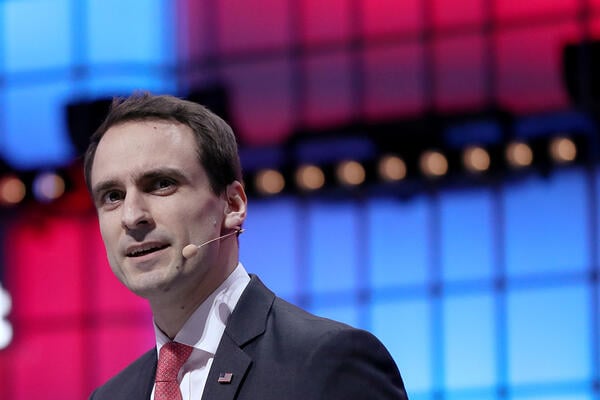
    President Donald Trump’s science adviser and director of the White House Office of Science and Technology Policy believes the recent, seismic cuts to federal research funding offer “a moment of clarity” for the scientific community to rethink its priorities, including the government’s role in supporting research.

    Michael Kratsios, who is pushing for increased private sector support of research, said that federal investment in scientific research—much of which happens at universities—has yielded “diminishing returns” over the past 45 years.

    “As in scientific inquiry, when we uncover evidence that conflicts with our existing theories, we revise our theories and conduct further experiments to better understand the truth,” Kratsios, a former tech executive with ties to tech titan and conservative activist Peter Thiel, said at a meeting of the National Academy of Sciences on Monday. “This evidence of a scientific slowdown should spur us to experiment with new systems, new models, new ways of funding, conducting and using science.”

    But some experts believe Kratsios’s comments mischaracterized trends in the nation’s academic research enterprise, which has been faced with decades of declining federal funding.

    “Kratsios may have things exactly backward. Our growth has slowed down over decades—the same decades where we have been funding science less and less as a share of GDP,” Benjamin Jones, an economics professor at Northwestern University and former senior economist for macroeconomics for the White House Council of Economic Advisers, said in an email to Inside Higher Ed. “Federally supported research is near its lowest level in the last 70 years. If the U.S. really wants to be ‘first’ in the world, the key will be how fast we advance. Cutting science is just a huge brake on our engine.”

    A wide body of literature confirms that federally funded research and development continues to produce enormous social returns. A 2024 paper from the Federal Reserve Bank of Dallas showed that rates of return on nondefense R&D spending range from 140 to 210 percent. Another report from United for Medical Research determined that for every dollar the National Institutes of Health spent on research funding in 2024, it generated $2.56 of economic activity. And yet another science policy expert has estimated that an additional dollar of government-sponsored R&D generates between $2 and $5 in public benefits via economic growth.

    But those facts were absent from Kratsios’s remarks, which accused scientists of focusing on “trying to score political points” and diversity, equity and inclusion initiatives instead of so-called gold-standard science. “Spending more money on the wrong things is far worse than spending less money on the right things,” he said. “Political biases have displaced the vital search for truth.”

    Kratsios also cited “stalled” scientific progress despite “soaring” biomedical research budgets and “stagnated” workforce training as proof that “more money has not meant more scientific discovery, and total dollars spent has not been a proxy for scientific impact.” Since 1980, he specified, “papers and patents across the sciences have become less disruptive,” and since the 1990s, “new drug approvals have flatlined or even declined.”

    The White House OSTP did not respond to Inside Higher Ed’s request for Kratsios’s sources of information, but some outside experts said those specific claims have merit, even if they lack additional context.

    A 2023 paper in Nature shows that patents and papers are indeed becoming less “disruptive” over time. But the authors themselves said the slowdown is “unlikely to be driven by changes in the quality of published science, citation practices or field-specific factors,” but rather “may reflect a fundamental shift in the nature of science and technology,” which is presenting increasingly difficult and complex problems for researchers. The authors also called on federal agencies to “invest in the riskier and longer-term individual awards that support careers and not simply specific projects.”

    (Many of the federal research grants the Trump administration has terminated in recent months supported those aims, including funding for graduate and postdoctoral students and multiyear projects that weren’t yet complete.)

    And even though new inventions may be decreasingly likely to push science and technology in new directions, as the Nature paper indicated, federally funded research has nonetheless expanded its reach to consumers since 1980—the same time frame Kratsios claims has been marked by diminishing returns that warrant an overhaul of federal research policy.

    Prior to the 1980s, the government owned the intellectual property of any discoveries made using federal research dollars. The policy gave universities little incentive to find practical uses for inventions, and fewer than 5 percent of the 28,000 patents held by federal agencies had been licensed for use, according to the U.S. Government Accountability Office.

    That changed when Congress passed the Bayh-Dole Act in 1980, allowing universities, not-for-profit corporations and small businesses to patent and commercialize federally funded inventions. Universities began transferring inventions to industry partners for commercialization. Between 1996 and 2020, academic technology transfers in the U.S. contributed $1.9 trillion in gross industrial output, supported 6.5 million jobs and resulted in more than 126,000 patents awarded to research institutions, according to data from the Association of University Technology Managers (AUTM).

    As for Kratsios’s claim that drug approvals have “flatlined,” Matt Clancy, a senior research fellow at Open Philanthropy, said that’s a matter of interpretation. “If you think it means discovery is dead and not happening, that’s clearly false,” he said, noting that while drugs had been getting steadily more expensive to develop in the late 20th and early 21st centuries, costs have started falling over the past decade. “If you think it means the rate of discovery has not increased in proportion to the increase in spending, I think that is correct.”

    ‘The Enemy of Good Science’

    Kratsios also tied those alleged declines in innovation to the assertion that researchers have fallen victim to a misguided “professional culture” and to “social pressures.” As an example, he pointed to the scientific community’s insistence on keeping schools closed to prevent the spread of the COVID-19 virus as an example of scientists’ unwillingness to question dominant viewpoints. “Convention, dogma and intellectual fads are the enemy of good science,” he said.

    Administrative burdens have also hamstrung the scientific enterprise, he added.

    “The money that goes to basic and blue-sky science must be used for that purpose, not to feed the red tape that so often goes along with funded research,” Kratsios said. “We cannot resign our research community and the laboratory and university staff who support them to die the death of a thousand 10-minute tasks. To assist the nation’s scientists in their vocation, we will reduce administrative burdens on federally funded researchers, not bog them down in bureaucratic box checking.”

    Expanding the role of private funders is part of Kratsios’s solution.

    “In particular, in a period of fiscal constraints and geopolitical challenges, an increase in private funding can make it easier for federal grant-making agencies to refocus public funds on basic research and the national interest,” he said at the NAS meeting, which was attended by university lobbyists and senior administrators.

    “Prizes, challenges, public-private partnerships and other novel funding mechanisms can multiply the impact of targeted federal dollars. We must tie grants to clear strategic targets while still allowing for the openness of scientific exploration and so shape a general funding environment that makes clear what our national priorities are.”

    According to Kratsios, private industry is well positioned to step in. He claims the sector spends “more than three times on R&D than does the federal government,” though it’s not clear from where he drew that statistic. Data from AUTM shows that in 2023, industry expenditures made up just 6.8 percent of all research spending in the United States, compared to 56.6 percent from the federal government. (Inside Higher Ed has previously reported on the challenges of looking to private funders to meaningfully make up for the Trump administration’s current and proposed cuts to academic research.)

    Shalin Jyotishi, senior adviser for education, labor and the future of work at the left-leaning think tank New America, said that while some of the issues that Kratsios raised regarding federal science policy have merit, the administration hasn’t put forth a clear vision for reform.

    “Instead, what we are seeing is ‘creative destruction’ playing out across the federal research enterprise—without the ‘creative’ part,” he said. “It’s not too late. The administration can and should still salvage the federal research enterprise and enact reform to make it even better.”

    Source link