Blog

  • Trump Adviser Blames “Scientific Slowdown” on DEI, Red Tape

    Trump Adviser Blames “Scientific Slowdown” on DEI, Red Tape

    President Donald Trump’s science adviser and director of the White House Office of Science and Technology Policy believes the recent, seismic cuts to federal research funding offer “a moment of clarity” for the scientific community to rethink its priorities, including the government’s role in supporting research.

    Michael Kratsios, who is pushing for increased private sector support of research, said that federal investment in scientific research—much of which happens at universities—has yielded “diminishing returns” over the past 45 years.

    “As in scientific inquiry, when we uncover evidence that conflicts with our existing theories, we revise our theories and conduct further experiments to better understand the truth,” Kratsios, a former tech executive with ties to tech titan and conservative activist Peter Thiel, said at a meeting of the National Academy of Sciences on Monday. “This evidence of a scientific slowdown should spur us to experiment with new systems, new models, new ways of funding, conducting and using science.”

    But some experts believe Kratsios’s comments mischaracterized trends in the nation’s academic research enterprise, which has been faced with decades of declining federal funding.

    “Kratsios may have things exactly backward. Our growth has slowed down over decades—the same decades where we have been funding science less and less as a share of GDP,” Benjamin Jones, an economics professor at Northwestern University and former senior economist for macroeconomics for the White House Council of Economic Advisers, said in an email to Inside Higher Ed. “Federally supported research is near its lowest level in the last 70 years. If the U.S. really wants to be ‘first’ in the world, the key will be how fast we advance. Cutting science is just a huge brake on our engine.”

    A wide body of literature confirms that federally funded research and development continues to produce enormous social returns. A 2024 paper from the Federal Reserve Bank of Dallas showed that rates of return on nondefense R&D spending range from 140 to 210 percent. Another report from United for Medical Research determined that for every dollar the National Institutes of Health spent on research funding in 2024, it generated $2.56 of economic activity. And yet another science policy expert has estimated that an additional dollar of government-sponsored R&D generates between $2 and $5 in public benefits via economic growth.

    But those facts were absent from Kratsios’s remarks, which accused scientists of focusing on “trying to score political points” and diversity, equity and inclusion initiatives instead of so-called gold-standard science. “Spending more money on the wrong things is far worse than spending less money on the right things,” he said. “Political biases have displaced the vital search for truth.”

    Kratsios also cited “stalled” scientific progress despite “soaring” biomedical research budgets and “stagnated” workforce training as proof that “more money has not meant more scientific discovery, and total dollars spent has not been a proxy for scientific impact.” Since 1980, he specified, “papers and patents across the sciences have become less disruptive,” and since the 1990s, “new drug approvals have flatlined or even declined.”

    The White House OSTP did not respond to Inside Higher Ed’s request for Kratsios’s sources of information, but some outside experts said those specific claims have merit, even if they lack additional context.

    A 2023 paper in Nature shows that patents and papers are indeed becoming less “disruptive” over time. But the authors themselves said the slowdown is “unlikely to be driven by changes in the quality of published science, citation practices or field-specific factors,” but rather “may reflect a fundamental shift in the nature of science and technology,” which is presenting increasingly difficult and complex problems for researchers. The authors also called on federal agencies to “invest in the riskier and longer-term individual awards that support careers and not simply specific projects.”

    (Many of the federal research grants the Trump administration has terminated in recent months supported those aims, including funding for graduate and postdoctoral students and multiyear projects that weren’t yet complete.)

    And even though new inventions may be decreasingly likely to push science and technology in new directions, as the Nature paper indicated, federally funded research has nonetheless expanded its reach to consumers since 1980—the same time frame Kratsios claims has been marked by diminishing returns that warrant an overhaul of federal research policy.

    Prior to the 1980s, the government owned the intellectual property of any discoveries made using federal research dollars. The policy gave universities little incentive to find practical uses for inventions, and fewer than 5 percent of the 28,000 patents held by federal agencies had been licensed for use, according to the U.S. Government Accountability Office.

    That changed when Congress passed the Bayh-Dole Act in 1980, allowing universities, not-for-profit corporations and small businesses to patent and commercialize federally funded inventions. Universities began transferring inventions to industry partners for commercialization. Between 1996 and 2020, academic technology transfers in the U.S. contributed $1.9 trillion in gross industrial output, supported 6.5 million jobs and resulted in more than 126,000 patents awarded to research institutions, according to data from the Association of University Technology Managers (AUTM).

    As for Kratsios’s claim that drug approvals have “flatlined,” Matt Clancy, a senior research fellow at Open Philanthropy, said that’s a matter of interpretation. “If you think it means discovery is dead and not happening, that’s clearly false,” he said, noting that while drugs had been getting steadily more expensive to develop in the late 20th and early 21st centuries, costs have started falling over the past decade. “If you think it means the rate of discovery has not increased in proportion to the increase in spending, I think that is correct.”

    ‘The Enemy of Good Science’

    Kratsios also tied those alleged declines in innovation to the assertion that researchers have fallen victim to a misguided “professional culture” and to “social pressures.” As an example, he pointed to the scientific community’s insistence on keeping schools closed to prevent the spread of the COVID-19 virus as an example of scientists’ unwillingness to question dominant viewpoints. “Convention, dogma and intellectual fads are the enemy of good science,” he said.

    Administrative burdens have also hamstrung the scientific enterprise, he added.

    “The money that goes to basic and blue-sky science must be used for that purpose, not to feed the red tape that so often goes along with funded research,” Kratsios said. “We cannot resign our research community and the laboratory and university staff who support them to die the death of a thousand 10-minute tasks. To assist the nation’s scientists in their vocation, we will reduce administrative burdens on federally funded researchers, not bog them down in bureaucratic box checking.”

    Expanding the role of private funders is part of Kratsios’s solution.

    “In particular, in a period of fiscal constraints and geopolitical challenges, an increase in private funding can make it easier for federal grant-making agencies to refocus public funds on basic research and the national interest,” he said at the NAS meeting, which was attended by university lobbyists and senior administrators.

    “Prizes, challenges, public-private partnerships and other novel funding mechanisms can multiply the impact of targeted federal dollars. We must tie grants to clear strategic targets while still allowing for the openness of scientific exploration and so shape a general funding environment that makes clear what our national priorities are.”

    According to Kratsios, private industry is well positioned to step in. He claims the sector spends “more than three times on R&D than does the federal government,” though it’s not clear from where he drew that statistic. Data from AUTM shows that in 2023, industry expenditures made up just 6.8 percent of all research spending in the United States, compared to 56.6 percent from the federal government. (Inside Higher Ed has previously reported on the challenges of looking to private funders to meaningfully make up for the Trump administration’s current and proposed cuts to academic research.)

    Shalin Jyotishi, senior adviser for education, labor and the future of work at the left-leaning think tank New America, said that while some of the issues that Kratsios raised regarding federal science policy have merit, the administration hasn’t put forth a clear vision for reform.

    “Instead, what we are seeing is ‘creative destruction’ playing out across the federal research enterprise—without the ‘creative’ part,” he said. “It’s not too late. The administration can and should still salvage the federal research enterprise and enact reform to make it even better.”


    Source link

  • English language requirements under the microscope: Do you have what it takes to meet your university’s English language entry requirements for international students?

    English language requirements under the microscope: Do you have what it takes to meet your university’s English language entry requirements for international students?

    • By Tamsin Thomas, Senior Strategic Engagement Manager, Duolingo English Test.

    The English language proficiency of international students is once again under the microscope. Heightened scrutiny is being driven by media coverage of international admissions, including The Times and BBC Radio 4’s File on 4, as well as the new immigration white paper. The Home Office is currently tendering for an English test for immigration purposes and has also undertaken a review of university English testing arrangements.

    There are growing questions about how UK universities assess English proficiency, which tests are accepted, and what governance arrangements are in place to ensure that students have the level of English they need to succeed. These are valid and necessary discussions.

    But it’s also true that much of the debate is happening without lived experience. Most contributors to this conversation — from media commentators to admissions professionals and policymakers — have never sat a high-stakes English language test themselves, certainly not as an entry requirement for studying in another country. That gap matters.

    How Do International Students Currently Meet English Language Requirements?

    UK universities have built robust and nuanced systems for assessing English proficiency, shaped by decades of global engagement. These typically fall into three broad categories:

    • Secondary school qualifications: Many countries offer high school-level English that meets UK university entry standards. For example, iGCSEs, the IB, Hong Kong’s HKDSE, or Germany’s Abitur are often accepted without additional testing.
    • Standardised English proficiency tests: Many international students – especially those from countries where English is not the primary language of instruction – take tests like IELTS, TOEFL, or the Duolingo English Test (DET) in addition to their school diplomas.
    • Evidence of prior study in English: If a student has completed at least three years of education in English at the tertiary level, this can meet requirements under a “Medium of Instruction” policy.

    In countries like India and Nigeria, the situation is more complex. Both operate parallel education systems – some in English, others in regional languages. Students with strong English scores in the Indian Standard XII (CBSE, ISC) or the West African WAEC are often accepted without further testing. Graduates of other boards may need to take a test.

    These frameworks are diverse by design – reflecting the deep, often country-specific, relationships and expertise UK universities have developed over time.

    While the media sometimes focuses on the small minority of international students whose English may fall short, it’s worth remembering that perfection is not the benchmark. Most international students meet entry requirements – and universities have systems in place to support language development throughout the degree. After all, only a small percentage of UK students get a Grade 9 in GCSE English, and developing academic English skills is part of what universities train students to do. Language proficiency exists on a spectrum – the question isn’t whether students are fluent on entry, but whether they have the foundation to succeed.

    What Happens When a New Test Enters the Market?

    As a relatively new entrant to this space, the Duolingo English Test – now accepted by over 40 UK universities – has seen firsthand how institutions evaluate and onboard new tests.

    Typically, the process reflects a practical need to expand the range of tests, paired with a careful scrutiny process – usually via committee:

    • Recruitment teams identify a test that meets student demand or addresses market access barriers.
    • Admissions teams assess delivery method, validity, and the external evidence base.
    • English-language colleagues evaluate whether the test provides evidence that students can succeed academically on campus.
    • Compliance teams consider immigration implications and policy compatibility – is the test secure?

    Tests are often accepted provisionally, with performance tracked for one to two years, however long it takes to build up enough data to make an informed decision. Institutions benchmark outcomes against long-accepted credentials: Do the score thresholds align, and are there heightened compliance risks?

    The process is rarely quick, but it is thorough.

    What Does Good Governance Look Like?

    While most UK universities use similar criteria for test evaluation, governance structures vary. In some institutions, decisions sit with dedicated English policy working groups; in others, with international admissions committees. Sometimes responsibility is split between professional services and academics. In others, it’s entirely devolved to professional services.

    This variation isn’t necessarily a problem but it does mean there’s no single ‘sector-wide’ process for evaluating or monitoring English tests.

    As an online test provider, one gap that has always seemed under-discussed is the practical reality of actually taking a test. If you’re a student in Afghanistan, where crossing borders is difficult and test centres don’t operate, how are you supposed to prove your English proficiency? If you’re a mobility-impaired test taker in a country without inclusive building regulations, how do you sit a test at all? The global distribution of test centres is far from comprehensive.

    Join the Conversation — Enter the DET University Challenge

    Here’s the challenge: put yourself in an international student’s shoes. Could you meet your own university’s English language entry requirements?

    The DET University Challenge 2025 invites UK university staff – whether English is their first language or not – to sit an English proficiency test similar to those taken by millions of international students each year.

    The Challenge offers a practical, engaging way for staff to experience a process usually reserved for students. It’s a prompt for reflection – and yes, maybe a little fun along the way.

    At a time when English requirements are under increasing public, political, and policy scrutiny, there’s real value in taking a closer look at the systems we rely on – and at how they feel from the other side.

    So: do you have what it takes to meet your university’s English language entry requirements?

    The DET University Challenge is open until 31 May 2025 with participants able to win up to £5,000 in prize money for their university or a designated Higher Education access charity. Terms and conditions apply.

    Source link

  • Why aren’t we addressing inequity of outcomes for postgraduates?

    Why aren’t we addressing inequity of outcomes for postgraduates?

    One of the major trends in UK higher education is the increasing number of postgraduate students.

    There are now as many postgraduate taught students graduating every year as there are undergraduates.

    However, the equity of postgraduate experience and outcomes is almost completely overlooked.

    Modern postgraduates

    The postgraduate population is large and increasingly diverse. Approximately 450,000 students complete a postgraduate qualification in UK higher education institutions every year. 11 per cent of those students have declared a disability. Some 28 per cent of postgraduate taught students with a permanent UK address identify as Global Majority, while 9 per cent identify as Black and 13 per cent as Asian and those proportions are increasing year-on-year. One in three postgraduate taught students pay international fees.

    Whereas 10 years ago most international students were from the EU or China, the diversity of nationalities in postgraduate cohorts is growing. Data on the socioeconomic demographics of postgraduates is not currently available, but it is likely that the increase in students from socioeconomically deprived areas undertaking undergraduate study population is mirrored at masters level. Half of postgraduate students study their programmes on a part-time basis. Excluding those on visas that prohibit working, we can assume that a significant proportion of postgraduates are combining study with paid employment. The diversity of the postgraduate population is therefore considerable.

    Given how widespread inequity of outcomes is at undergraduate level, it would be extraordinary if the outcome gaps we see on the basis of disability, ethnicity and socioeconomic status were not replicated at postgraduate level. They may even be more acute for postgraduates given the higher costs of tuition fees and the increased academic independence required for postgraduate study. Yet there is almost no awareness or activity around equity or outcomes for this huge cohort of students.

    Lack of activity

    At undergraduate level there has been significant progress made in terms of awareness of student outcomes and inequity. Institutional committees and working groups scrutinise split metric data to assess ‘gaps’ in outcomes between demographic groups. Action plans are in place to address inequity of access, continuation, degree completion, degree class awarded and progression. Senior leadership teams monitor progress against established equity key performance indicators. Providers are even bringing in consultancy companies whose sole business is to help institutions understand the language of Access and Participation Plans. Universities are at least talking the talk around improving equity of outcomes, even if progress lags significantly behind this.

    However, none of this activity is replicated for postgraduate students. There isn’t a data dashboard of split metrics for postgraduate student outcomes. We haven’t even established the equivalent of the undergraduate degree classification awarding gap. Why isn’t there an outcome gap focussed on demographic equity of distinctions awarded for postgraduate taught students? Why aren’t we looking at completion rates for postgraduate students through the lens of disability and socioeconomic status?

    Pragmatically, the answer to this question is that the Office for Students has thus far paid little attention to postgraduate student outcomes, let alone equity of outcomes. The Teaching Excellence Framework included undergraduate courses with a postgraduate component (e.g. an integrated masters), but excluded postgraduate taught and postgraduate research provision. Access and Participation Plans are linked to the ability to charge the higher rate of undergraduate tuition fee, so again exclude postgraduate students.

    League table providers also ignore postgraduates. HESA only publish data on postgraduate qualifications awarded, and the publically available data is not broken down by demographic factors other than gender. In the contemporary higher education landscape, what gets measured gets done. If universities are not prioritising postgraduate outcomes, it is because the regulatory landscape allows them not to.

    Entry and equity

    It is also important to note that many masters programmes will now accept students with a lower second class degree. Those same students who were disadvantaged by the awarding gap at undergraduate level are now likely to be the ones struggling with the increased academic requirements at masters level. If a student never got past the hidden curriculum in three years of undergraduate study, what are their chances of overcoming it in a one year masters course?

    Postgraduate programme leaders need to be aware of these issues, and adopt parallel approaches to those managing transition into undergraduate study. They need to design activities and assessments to address disparities in entry qualifications. They need to build the confidence of students who missed out on higher undergraduate grades.

    To really focus on equity at postgraduate level, we also need to address inequity for international students. The regulatory link between APP and the home undergraduate tuition fee means students with any other fee status are excluded. This has the inevitable result that the sector barely considers inequity for international students, but is more than happy to take their fees. This is deeply uncomfortable at undergraduate level, but even more concerning at postgraduate level, where one in three students is international.

    To make change, senior institutional leaders need to see postgraduate outcomes as a priority. In the current landscape, this strategic direction needs to come from the Office for Students. The equivalent data infrastructure developed for undergraduate outcomes needs to be built for postgraduates. Future iterations of the TEF need to go beyond undergraduates and include all students.

    We cannot justify ignoring postgraduates any more. The sector has an ethical responsibility to ensure equity of outcomes for all students, not just those paying the home undergraduate tuition fee.

    Source link

  • For those in HE cold spots, higher education isn’t presenting as a good bet

    For those in HE cold spots, higher education isn’t presenting as a good bet

    Bridget Phillipson has said she wants to work with universities to widen access, and participation for those from lower income backgrounds is one of the government’s five priorities for higher education.

    But the words of a 17-year-old trainee legal assistant in Doncaster reveals how much of a challenge it will be to overcome the scepticism towards the value of a university education in a “cold spot”’ town;

    I love jobs and I can’t wait to get another job, because I just love getting paid. I want to go to uni, to live on my own and to get drunk all the time – the uni party lifestyle, right? But if I do it just for that, then I’m getting into debt. If I just go straight into work, then I don’t have anything to pay back.

    This quote underlines the findings from the opening paper of the UPP Foundation’s inquiry into widening participation, which showed how alongside gender- and class-based inequalities in rates of progression to HE, there are huge gulfs in the rate at which young people progress to university at 18 across different areas of the country. Almost 70 per cent of Wimbledon 18-year-olds go to university, compared to just 25.9 per cent of those in Houghton and Sunderland South – Bridget Phillipson’s own constituency.

    With some local authorities lacking a university and also exhibiting rates of progression to HE lower than one might expect based on young people’s academic attainment, our new paper, published today, sets out how and why these “cold spots” for progression to HE struggle to inspire young people to go to university.

    Daunted by costs

    During our research trip to Doncaster – one of England’s worst-performing local authorities for progression to university at eighteen, and a case study for cold spots as a result – the scepticism towards university that our trainee legal assistant exhibited came up time and time again. None of the eight parents in our focus group selected university as their preferred post-18 option for their children, and only one of the 16-18 year olds we spoke to in our focus group intended to apply to university. The primary objection was cost.

    Parents, young people, and adults of all ages that we spoke to in our immersive work thought that university was simply too great an expense for most people in the area to justify. Among those who had been to university, or knew those who had, it seemed that everyone had a horror story to tell about a friend or relative who had been burned by astronomical living expenses, or resented being mired in debt after doing a degree that had only passing relevance to their eventual career.

    Even when the long-run opportunities that university provides seem enticing, the mounting cost of maintaining an undergraduate degree is a daunting prospect to many. Few thought that universities, colleges or schools had done a good job of making pathways through higher education seem clear, achievable and valuable.

    Crowd in communities

    The challenge for places like Doncaster is that the opportunities that university provides are anything but obvious. Residents were at pains to stress that Doncaster is a place that feels like the economy has left it behind, with jobs few and far between and graduate careers a luxury seemingly reserved for other places.

    As one woman we spoke to put it: “The jobs in Doncaster, a lot of them you don’t require a degree for – we’re an industrial type of town.” Across our conversations in the area, it became clear that since the job market could not provide the security, stability and prospects that people wanted, family and community took on that role instead.

    In this context, then, going to university is a double-edged sword: the aspirational youngsters we spoke to were excited by the opportunities that university could provide, but they recognised that this probably meant getting out of Doncaster and staying out. To many people we spoke to, leaving home, and one’s hometown, was a hidden psychological cost heaped on top of the very real financial burden of university.

    With all this in mind, the ambivalence of cold spot residents towards university seems not reckless, but rational. If we think of university as a “bet” that people make on the understanding that the “payoff” is a higher graduate salary in the long run, then it is easy to see why those in areas with no university and few graduate jobs would be reluctant to make that sort of commitment.

    If the government wants to make good on its commitment to widen university participation, it will require a multifaceted approach that crowds in whole communities, not just bright teenagers with good prospects. They will need to work with schools, colleges, universities and local employers to make the value of university clear across generations. Cold spots can make university feel like a reckless gamble – it’s up to the government to make it a good bet.

    This article is published in association with the UPP Foundation.

    Source link

  • LimmyTalks Talks College Preparedness – Education and Career News

    LimmyTalks Talks College Preparedness – Education and Career News

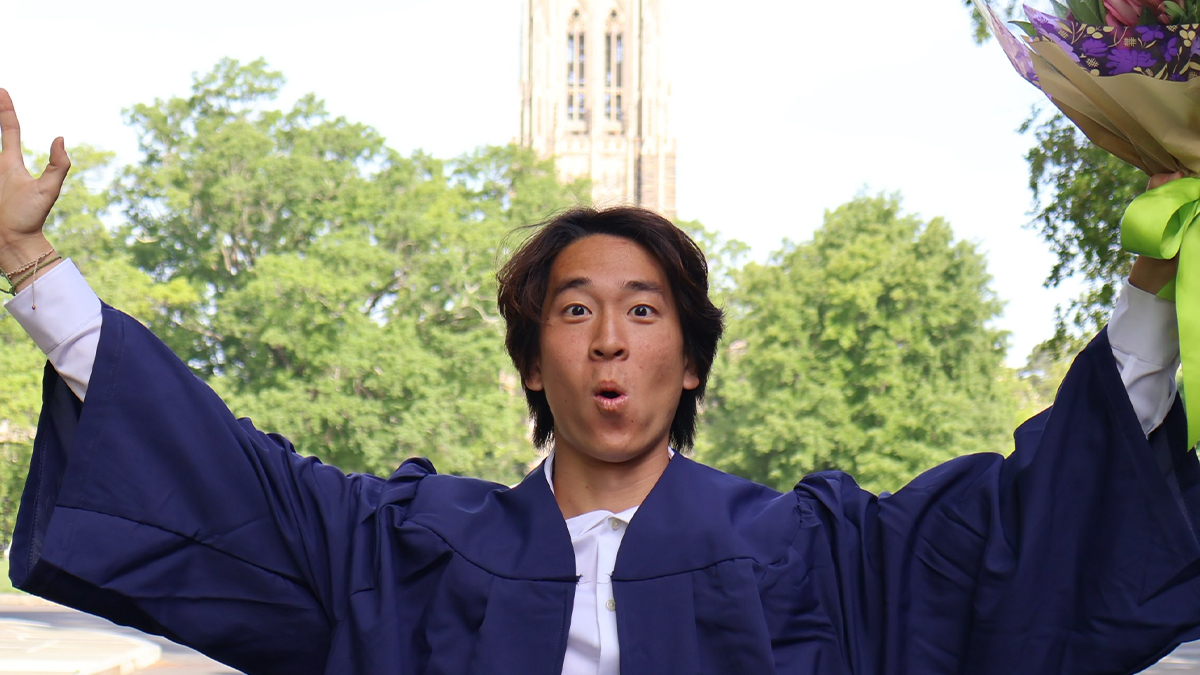
    Daniel Lim | Photo by Alina Lim

    Daniel Lim, also known as LimmyTalks online, shares his advice for college applications, finding mentors, and finding your place in the world.


    What’s one piece of advice you wish someone had told you when you were preparing for college?

    Talk to as many people as you can. I did this for the first month of college, and I probably met a couple hundred people in that month alone, going to everything I could and talking to every person on the bus and in the food court. I stopped doing that after the first month, and I wish I hadn’t — but now you know not to do what I did.

    Many students feel overwhelmed or unsure about their next steps. What’s your message to someone who doesn’t have it all figured out yet?

    There are two options: You can either work inhumanely hard at something that’s already established, or you can — and, in my opinion, should — experiment. One example of the former is basketball. If you become the best basketball player in the world, the NBA is a guaranteed job for you. Your interest in painting, poker, or the psychology behind love might not lead to a clear path for a career. However, that’s the beauty of it. Not knowing means you’re more likely to find something new to contribute to the world. Every major invention you can think of was a result of serendipitous experimentation. So, experiment with what you like! It won’t be clear immediately, but you’ll learn things that will eventually help you find the next stepping stone, then the next one, and the next one until you find yourself in a great spot — career-wise, fulfillment-wise, financially, or whatever else it is that worries you now.

    What’s one mindset shift or daily habit you think every high school or early college student should adopt starting today?

    Just stick to something. Do things. The worst thing you can do is not do anything. You learn way more from doing things than anything else. Just do stuff, don’t think too much, and dive in!

    What role do you think mentorship or guidance plays in making college feel more accessible, and how can students find that support?

    It’s immeasurable. I attribute a lot of my growth as a person to older friends I made at the tennis courts as a middle and high schooler. I also think it’s the No. 1 thing that can alter someone’s trajectory — having one person who believes in you, full stop.

    As for finding mentors, the common advice is to find a way to add value to their lives as well. The actual thing doesn’t matter much when you’re young, it’s the effort that counts. Just reach out to people who are cool to you!

    What’s your message to the student who doesn’t have straight A’s but still has big dreams?

    You’ve got this! Somebody needs to scream that in your ears until you actually believe it. Also, grades don’t mean anything if you have big dreams. They’re just one measurement — there are a billion other ways to show greatness. Your ambition is what’s truly valuable.

    What’s something you learned after high school that you wish you had known while applying to college?

    The admissions officers are not going to be impressed. You’re 17. They’re in their late 20s at the youngest — at this point in their life, they’ve seen a lot more than you. They’re looking for nice people. Don’t get me wrong, you need great grades and extracurriculars to get into a top university. However, beyond that, stress less about trying to come off as an intellectual person and just be a normal, nice human being in your essays.


    Source link

  • Meet the Students and Staff Shaping Your College Experience

    Meet the Students and Staff Shaping Your College Experience

    By knowing about and engaging with these key figures on campus, you can make the most of your college experience and set yourself up for success.

    Kate Lehman, Ph.D.

    Director, National Resource Center for the First-Year Experience and Students in Transition, University of South Carolina

    Katie Hopkins

    Associate Director for Faculty Development and Resources, University 101 Programs, University of South Carolina

    Congratulations! You’ve made it to your first day of classes! You are excited by the opportunities before you…and overwhelmed. Colleges and universities employ a host of staff and faculty whose primary role is to support your success. Part of your tuition and fees go to support these folks — you should use them! Meet the 10 people you need to maximize your college experience.

    Faculty, instructors, and teaching assistants (TAs)

    You’re surely familiar with the folks teaching your courses. Use office hours to get to know your instructors. Ask them how they got into their fields and why they love their work. You might be interested in a similar topic, land yourself a research opportunity, or find yourself a new mentor!

    Academic advisers

    Course registration should not be the last time you speak with your academic advisor! Academic advisers help anytime you are thinking about your course of study, whether you want to drop a class, change your major, add a minor, take a summer class, or figure out how to work a study abroad program into your plan. 

    Librarians

    Librarians have magical skills to make your classwork so much easier. Okay, it’s not really magic, but they can help you find awesome sources for class papers and teach you about technical resources like citation management software to make your work a lot easier!

    Student success and academic support staff

    Is chemistry or calculus stressing you out? Your institution has a student success center or a tutoring center to help. Our advice: Get help as soon as you start feeling overwhelmed. Don’t wait until you’re really behind!

    Financial aid team

    You have probably already received your financial aid package, but life happens. If your financial situation changes, the financial aid office is your first call. They might adjust your aid package and/or connect you to additional financial resources. 

    Health center and counseling center staff

    You probably know to go to the health center if you sprain an ankle or have a sinus infection, but the medical and counseling team can help with a lot more. If you are feeling overwhelmed or are struggling, schedule an appointment to gain access to counseling sessions, support groups, and workshops to help you feel your best (all things which are included in your tuition and fees). 

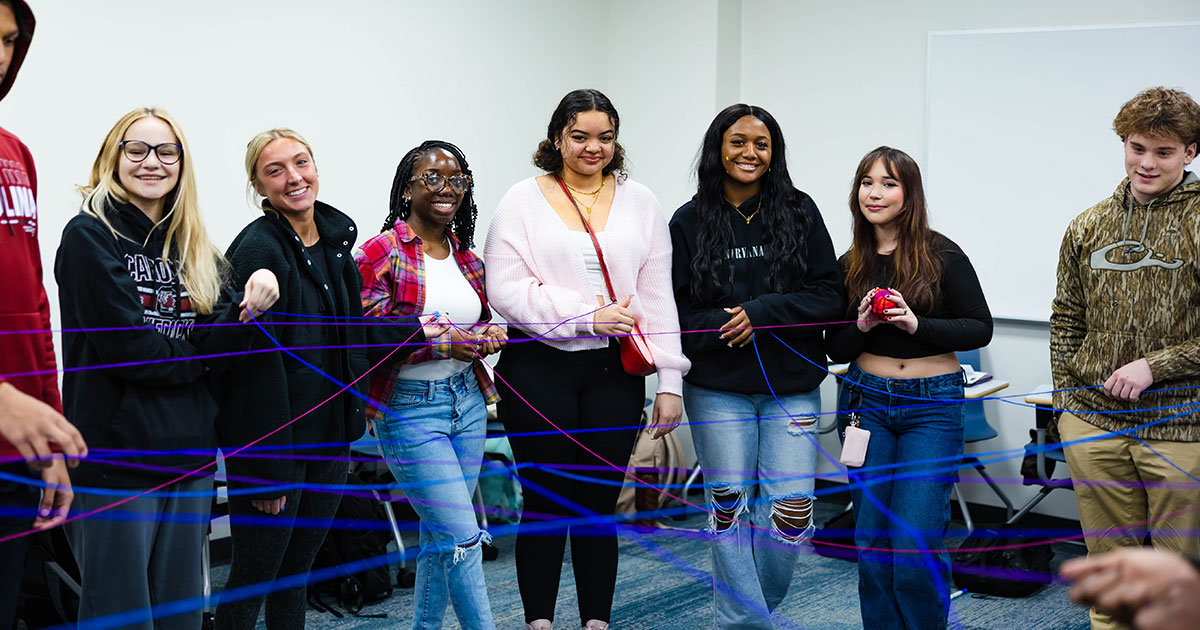
    First-year students at the University of South Carolina participate in a team-building activity in their first-year seminar course. | Photo by Logan White

    Career center staff

    Whether you have mapped out a career plan or have no clue what you want to do, your career center staff can help! It’s not just for seniors — career centers help with career exploration, internships, resume development, and interview skills. They might even be able to help you find an on-campus job so you can build career skills and start earning money while you’re a student. 

    Disability services staff

    If you received accommodations in high school, be sure to register with disability services on your campus, as those do not automatically roll over. These may be related to dietary restrictions, learning disabilities, or mental health conditions. They can work with you to ensure you have what you need to be successful! 

    Student activities and recreation services staff

    You didn’t just come to college to study and work, right? Join a student organization, attend fun events, play on an intramural sports team, or take a group exercise class! Besides having a good time, you’ll grow your leadership, teamwork, and communication skills and make friends.

    Friends and peer mentors

    Decades of research on college student success tell us that your fellow students, or your peers, are key to your success. Many of the campus offices employ student staff members, often called peer mentors. By getting involved on campus, you will make friends who support and encourage you. 

    The folks outlined here can help you get the most out of your college experience. Don’t ever hesitate to ask someone a question, introduce yourself, or try a new resource; it can only help! These amazing people will help find the opportunities that will shape your future. As you build connections with them, you will find friends and mentors to last a lifetime.

    Source link

  • Prioritizing Happiness and Self-Care for College Student Success

    Prioritizing Happiness and Self-Care for College Student Success

    Cognitive scientist and Yale psychology professor Dr. Laurie Santos shares her recommendations for creating a positive and productive mindset in college.

    Laurie Santos, Ph.D.

    Cognitive Scientist, Professor of Psychology, Yale University

    How does a student’s mental state influence their ability to learn and retain information?

    There are many studies showing that our mood affects our performance. Positive moods tend to broaden our perspectives — when we feel good, we’re able to process more possibilities, which can boost our innovation and creativity.

    How can students redefine their idea of success to prioritize both achievement and happiness?

    There’s a lot of evidence that shows that focusing on your happiness in your college years is correlated with the metrics of achievement and success students are usually striving for. One study by Diener and colleagues found that a student’s cheerfulness at age 18 even predicts their salary and job satisfaction more than 15 years later. I think students need to recognize that our happiness matters for future success more than we expect.

    If a student feels stuck in a negative mindset about school, what’s one small change they can make today to start shifting that?

    I think the most important change is for students to recognize that they have some agency over their mindset. There are things they can do to think differently about school and any other situation.

    If you could design a mental health toolkit for students heading to college, what would be in it?

    I’d give students a toolkit with strategies they can use to develop healthier behaviors and mindsets. Behaviors students can use to boost happiness include:

    • Prioritize Social Connection: One of the biggest mistakes students make is prioritizing grades and productivity over friendships. However, the research is clear: Meaningful relationships are the No. 1 predictor of happiness. So, say yes to that coffee invite, join a club, or just make small talk with a classmate — it all adds up. Even tiny interactions, like chatting with a barista, can boost your mood.
    • Embrace Time Affluence: Time affluence is the subjective sense that we have some free time. Most students today are time-famished, rushing from one task to the next. However, studies show that people who feel like they have more time are actually happier. Students need to protect their time affluence. Some strategies: Be intentional about how you spend your free moments. Instead of mindlessly scrolling on your phone, do something that genuinely recharges you — go for a walk, call a friend, or just breathe.
    • Get Moving: Studies show that exercise isn’t just good for your body — it’s huge for mental health. Research shows that cardio exercise can reduce rates of depression and anxiety. You don’t need to be a gym rat to see benefits — dancing in your dorm room, stretching, or biking to class all count.
    • Prioritize Sleep: Many parts of student life make it easy to skimp on sleep. However, sleep is one of the most important tools in our mental health kit. Aim for 7-9 hours a night, and make sure you’re practicing good sleep hygiene by keeping your phone as far away from your bed as possible (otherwise, the temptation to grab it in the middle of the night is far too high).

    There are also mindset shifts students can use to feel happier. A few important ones to keep in mind are:

    • Self-Compassion: One of the biggest traps students fall into is being their own worst critic. You bomb a test, miss a deadline, or say something awkward in class, and suddenly, your brain is in full-on self-attack mode. However, research shows that this kind of self-criticism doesn’t make us perform better — it just makes us feel worse. Research has found that people who practice self-compassion (treating themselves with kindness rather than judgment) are more resilient, more motivated, and less anxious than those who constantly beat themselves up.
    • A Mindset of Gratitude: Our brains are wired to focus on what’s wrong. However, studies show that you can train your brain to notice more of what’s good. Studies also show that people who regularly practice gratitude have higher levels of happiness, lower stress, and even better sleep. So, scribble a few things in your gratitude journal, or commit to expressing your thanks to the people around you.
    • Become More Present: College life can feel overwhelming. There’s always another assignment, another social event, or another thing to do. Your brain is constantly jumping between the past (“I should have studied more”) and the future (“What if I fail?”). However, research shows we feel best when we’re fully present in the moment. Research by Matt Killingsworth and Dan Gilbert found that people’s happiness levels drop when their minds wander — even if they’re thinking about something pleasant. Get out of your head and find ways to find the joy of the present moment.

    What’s one piece of advice you wish every college student knew about happiness and well-being before stepping on campus?

    Our happiness is much more under our control than we think. With simple changes to our behaviors and mindsets, we can all feel better.

    How can students balance academic pressures with self-care without feeling guilty about taking breaks?

    My biggest piece of advice would be that students need to remember that self-care isn’t a distraction from success — it’s actually a tool for success. A lot of students feel guilty about taking breaks because they think rest is “unproductive.” However, research tells us the opposite: When you prioritize well-being and get the rest/sleep/care you need, you actually perform better academically.

    One strategy I share with my students is to reframe breaks as a performance strategy. Instead of thinking, “I don’t deserve a break until I’ve done enough work,” flip the script and think, “Taking a break will help my mind recharge so I can do better work.” When you take a break, remind yourself: “This is not wasted time — this is me investing in my brain’s ability to learn.”

    I think this is also another spot for Kristin Neff’s strategy of self-compassion. If you’re feeling guilty about taking a break, remember that you’re only human, and all humans need breaks and rest. The next time you feel guilty for resting, literally repeat these phrases in your head: “Taking care of myself is part of being a great student,” or “I will be kinder to myself so I can show up as my best self.”

    Many students feel overwhelmed when choosing a college or major. What advice would you give them about making big life decisions?

    A lot of students stress about picking the single right college or major that will lead to a meaningful and happy career. However, the science of happiness tells us that this kind of fulfillment isn’t just about what you do or what college you end up in — it’s about how you shape your work to align with your strengths and values. This is where job crafting comes in.

    Job crafting is the idea that you can reshape how you spend your time (including at work or in your major) to make it more fulfilling. Research on job crafting by Amy Wrzesniewski shows that fulfillment isn’t just about what you do, but how you approach it. You can craft your major by focusing on courses and projects that align with your strengths, connecting with mentors and peers who inspire you, and reframing tasks to see their deeper purpose.

    Source link

  • Yara Shahidi On Learning, Growth, and Pursuing Passions

    Yara Shahidi On Learning, Growth, and Pursuing Passions

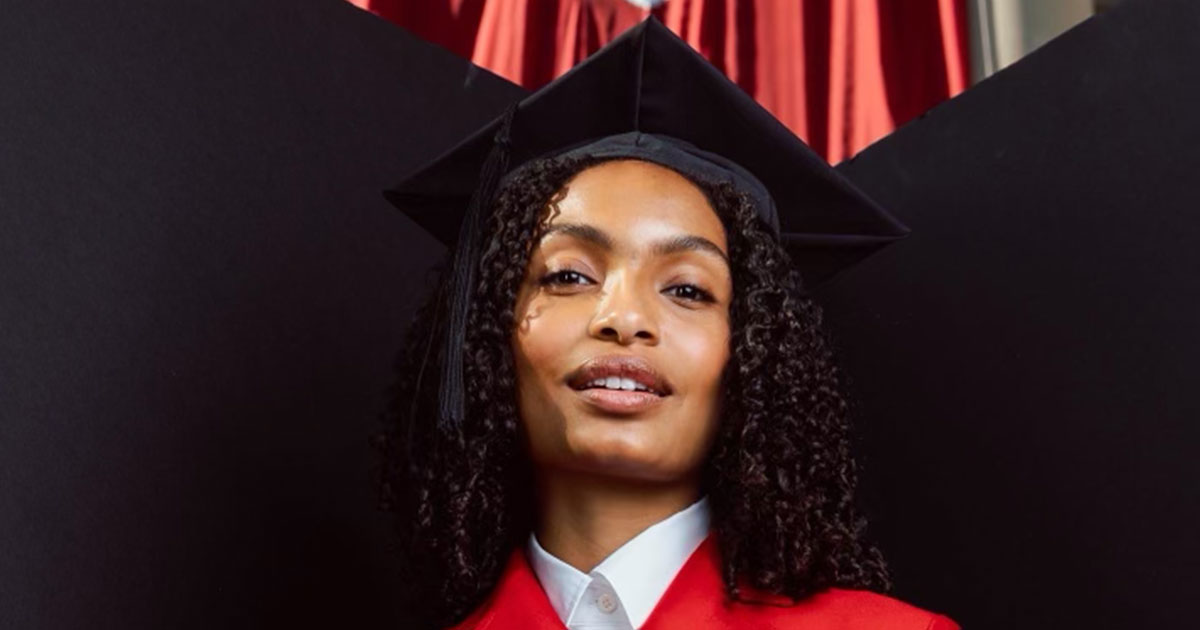
    Yara Shahidi | Photo by Paul Mardy

    Actor, producer, optimist, and agent for change Yara Shahidi, host of “The Optimist Project” on Sirius XM, shares insights from her Harvard journey, offering advice on navigating education, discovering passions, and continuing personal growth.


    You’ve been a strong advocate for education while also pursuing your degree at Harvard. What motivated you to prioritize higher education despite having so many career opportunities?

    Education has always been an integral part of my life — it was never really a question of if, but when and how. My parents instilled this idea that learning is a lifelong adventure, whether that’s in a classroom or out in the world. For college specifically, I saw it as an opportunity to explore my curiosities, grow a community, and continue to pour into my growth academically and mentally. In a world in which so much is demanded of us on a daily basis, college felt like one of the few spaces in life in which my primary job was to think and explore. From my Gen Eds about the evolution of morality and pharmaceutical pricing, to my courses on neo-colonialism and resistance movements, Harvard gave me the space to think critically, to interrogate my own beliefs, and grow.

    Many students feel pressure to choose the “right” college or career path. What advice would you give to those struggling with that decision?

    I understand that pressure. So many of us come from communities and families that have dealt with so many barriers to entry to higher education, and it feels as though we are receiving this education and degree for more than ourselves, but for everyone who has invested in us.  

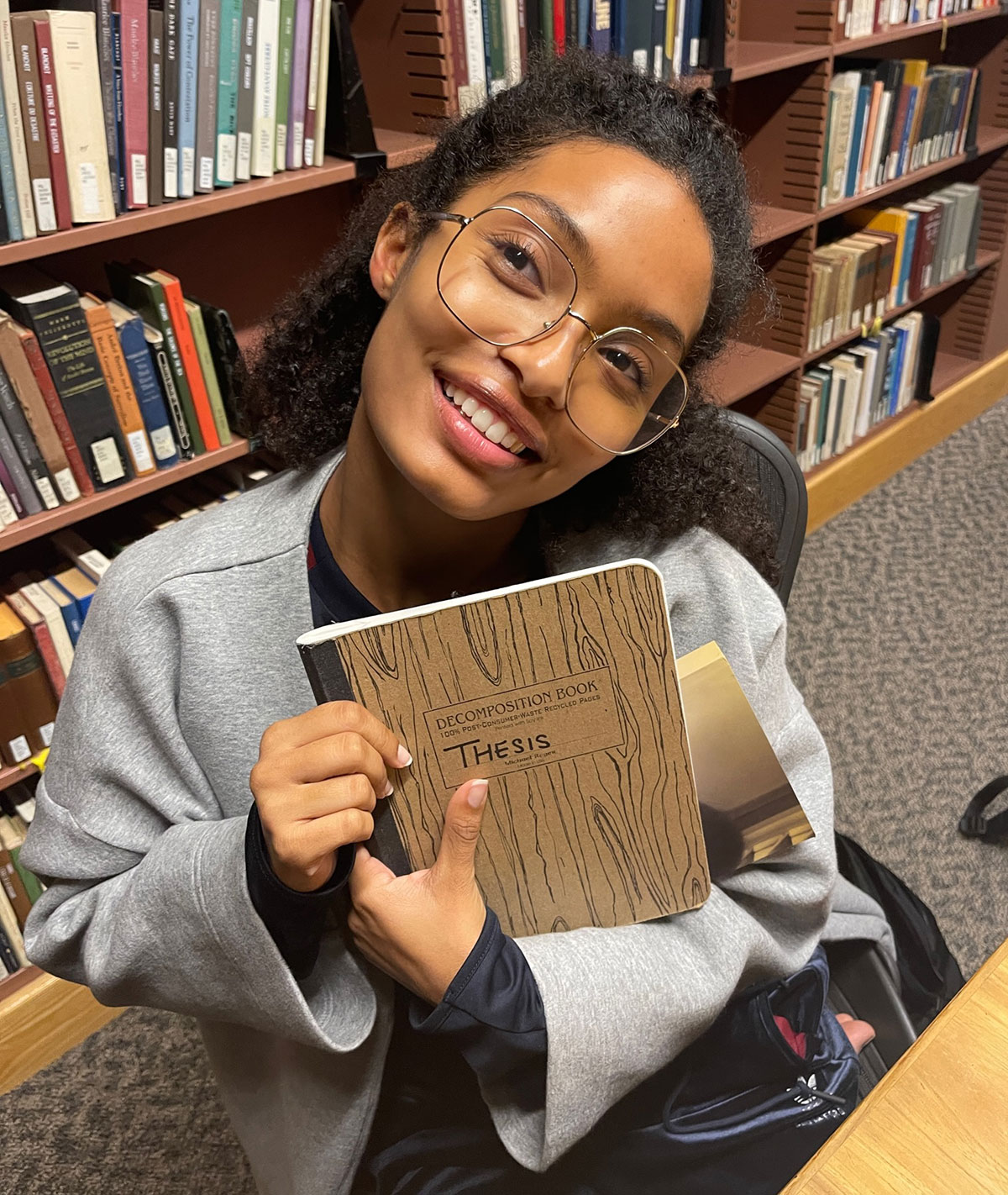
    Yara Shahidi in Harvard’s library (2021) | Photo courtesy of Yara Shahidi

    My favorite piece of advice from when I was trying to figure out my own path is when my mama told me that your degree is proof, to yourself and to the world, that you can start and complete a project. This isn’t to make light of the vastly different paths college offers to us, but to contextualize that the most valuable part of the learning experience is the life experience — learning how to listen to yourself, learning how to see things through, learning how to learn, and, when need be, learning how to pivot. In our family, we have focused on chasing our curiosities, with the belief that opportunities will blossom from the intersection of our identity and interests. 

    What are some lessons from your own education journey that you think every young person should hear?

    First: It’s OK not to have all the answers. We live in this era where everyone feels the expectation to have a five-year plan by the time they’re 17. I’m 25 and still don’t know what the next five years will hold for me. Some of the most interesting people I know have taken what many would consider unconventional paths. In fact, we are living in a time in which we are all realizing that to bring about a better world, we cannot rely on the status quo, and we will need to pursue unconventional paths. 

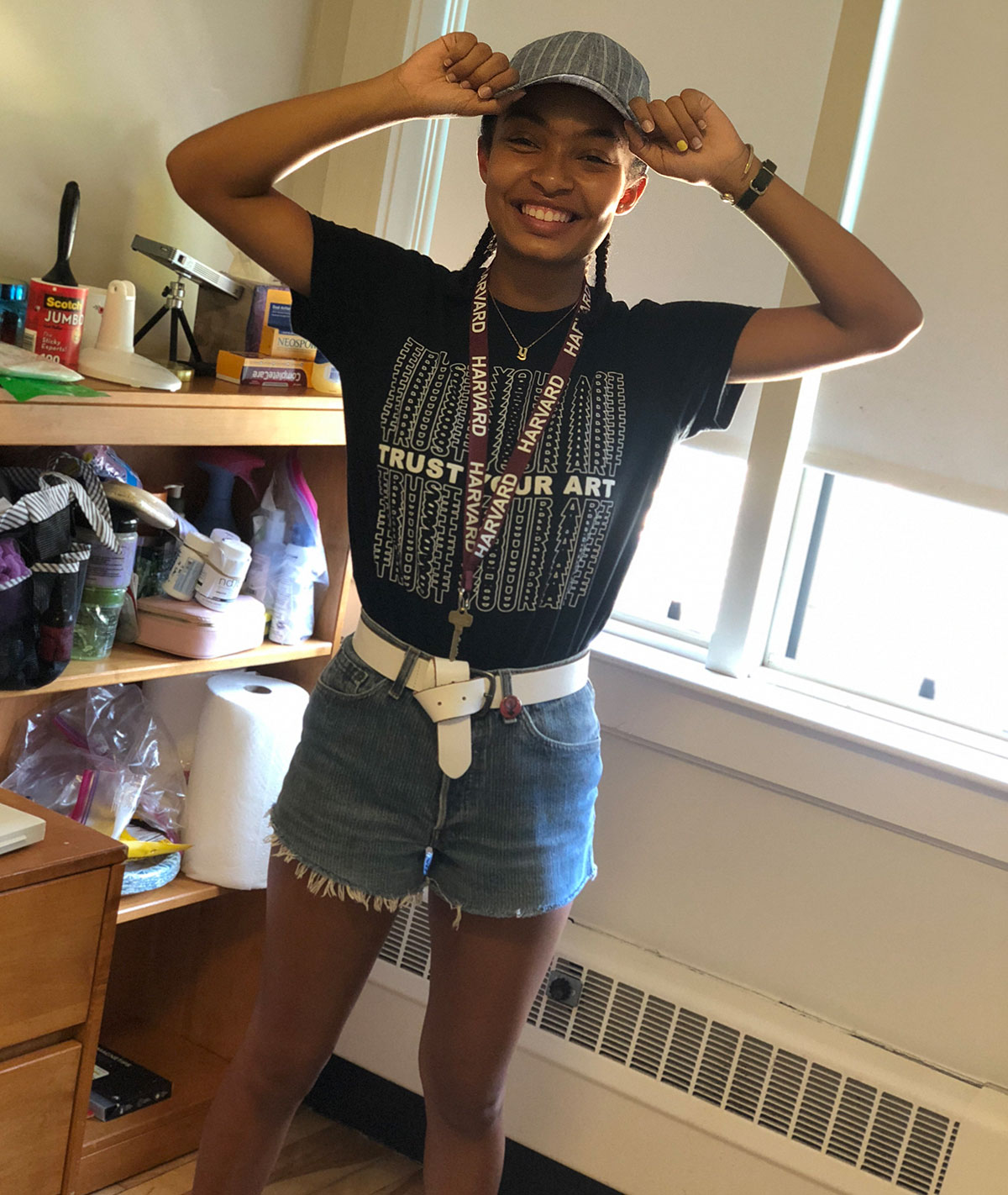
    Freshman year dorm room move-in (2018) | Photo by Afshin Shahidi

    Second: Let yourself be “bad” at things. I had to learn (and am still learning) that not every attempt of mine would be a surefire success, and that’s part of my growth process. With the very real pressure of having to be the best for doors to open, we can get consumed with looking polished and/or trying to find the “correct” way of moving. I’ve had to remind myself, we are not here to know; we are here to learn, and the best learning happens when we give ourselves permission to fumble through something new. 

    Lastly: Your education — whether it’s in school or out in the world — is for you. Honor your learning style, expand your worldview, and share your unique creativity and skills with the global community!

    You juggle so much — acting, activism, and academics. How has college helped you evolve as a person and as a leader?

    Being a student at Harvard reaffirmed the importance of being a student of life. My college experience was a practice in giving myself permission to grow. Separate from being a public figure because of my career, being a young adult in this day and age comes with some sort of public persona and a feeling of having to be certain to be taken seriously, which, in many ways, is the same as being static. Being in classrooms with people from so many different backgrounds forced me to challenge my own perspectives, deepen the reasoning for my beliefs, and grow curious about topics that had never been on my radar. Being able to balance maintaining a core set of values while engaging with new ideas has helped me maneuver my career, created a source of optimism as we look for brighter futures, and helped me in my evolution into the person I want to be. 

    Your generation is redefining success in so many ways. How do you think young people today can balance passion, purpose, and education?

    I think it’s incredible how we’re expanding the definition of success beyond traditional metrics. People want to do things that feel meaningful, and I think this generation has a beautiful sense of community where we are also invested in each other’s successes. Life seems like the group project we have to learn to love, and it’s up to us to figure out how we want to show up for the group. Our success seems to lie in embracing all of who we are, which allows us to contribute in a way that is unique to us. Allow yourself the freedom to explore different fields — be it arts, sciences, activism, or anything else that ignites your curiosity. Remember, it’s OK to have multiple passions and to pursue them in various capacities. Finding what fulfills us is the ultimate success. 


    Catch up on Yara’s podcast, “The Optimist Project,” on Sirius XM


    Source link

  • Eating Well in College: What Students and Families Need to Know

    Eating Well in College: What Students and Families Need to Know

    Food is more than just a necessity in college — it fuels academic success, well-being, and connection, making informed dining choices essential for thriving on campus.

    Robert Nelson

    President and CEO, The National Association of College & University Food Services

    Preparing for college means choosing classes, housing, and campus activities — but what about food? While dining may not always be top of mind, what students eat has a profound impact on their academic performance, health, and overall well-being. Here’s what families should consider when planning for a successful — and well-fed — college experience.

    Food and academic success

    Skipping meals may seem like a small sacrifice when juggling a packed schedule, but the effects on academic performance are significant. Studies show that students who eat regular, balanced meals — especially breakfast — perform better on tests, have stronger focus, and experience lower stress and anxiety.

    Meal plans exist for a reason: They provide consistency, affordability, and easy access to nourishing meals that support learning, brain function, and students’ mental and physical health. Students should aim to create a meal schedule that aligns with their class and study habits, ensuring they have time to eat before long lectures or exams.

    Know your options 

    Many students arrive on campus with food allergies, religious or cultural dietary preferences, or health-related nutrition needs, yet they may not realize that college dining services can accommodate them. Parents and students should take the time to explore:

    • Allergen-friendly options: Many dining halls have designated stations or innovative programs for accommodating top allergens like nuts, dairy, gluten, and more.
    • Registered dietitians: Some schools offer access to nutrition experts who can help students make informed choices.
    • Cultural and religious meals: If students keep kosher, halal, or vegetarian diets, understanding what’s available ahead of time can make the transition smoother.

    Before move-in, students should visit the campus dining website, contact the dining team, and ask about meal options that fit their needs.

    Making the most of your plan

    A meal plan isn’t just about convenience — it’s also one of the most cost-effective ways to eat in college. Because of economies of scale, campus dining can offer a wide variety of meals at a lower cost than students would typically spend cooking for themselves or eating off-campus.

    Students should consider:

    • Understanding their chosen meal plan: Are there unlimited swipes? A set number per week? Can unused meals roll over? What is the deadline to adjust plans if needed? 
    • Knowing about alternative dining locations: In addition to dining halls, many campuses offer grab-and-go options, food trucks, or mobile ordering for busy days, included as part of the meal plan.
    • Making the most of cooking and nutrition programs: Some schools offer cooking classes, workshops, or healthy eating initiatives to help students develop lifelong food skills.

    Food as connection

    Beyond nutrition, food plays a vital role in helping students build relationships and feel a sense of belonging. Sitting down for a meal is one of the easiest ways for new students to make friends, unwind, and stay connected to campus life.

    While technology has changed how students engage with their world, dining halls remain one of the most valued spaces for face-to-face interaction — not just with peers, but also with staff who become familiar, welcoming faces in a student’s daily routine.

    A strong foundation 

    Students and families invest a great deal in higher education, and making informed choices about nutrition is part of that investment. Food is more than fuel; it’s a foundation for academic success, personal well-being, and lifelong habits. As students embark on this next chapter, taking the time to understand and prioritize their dining options can make all the difference.

    Source link

  • How Alex Boylan Is Empowering Student Success

    How Alex Boylan Is Empowering Student Success

    Alex Boylan | Photo courtesy of The College Tour

    Alex Boylan, the host and co-creator of “The College Tour” TV series, discusses the power of a support system and the exciting launch of The Student Registry.

    Alex Boylan has had quite a year, both professionally and personally. Alex and the award-winning series “The College Tour” have released two more successful seasons on Amazon Prime Video, bringing the total to over 180 colleges featured. More passionate than ever about helping students navigate one of life’s most transformative journeys, Alex continues to make “The College Tour” a vital resource for students and families looking to make informed decisions about higher education without the cost of travel. 

    However, Alex’s commitment to supporting students doesn’t stop there. After meeting with thousands of students over the years, one recurring theme stood out: financial anxiety. For many students, the rising costs of college — from tuition and books to living expenses — can feel overwhelming. That’s why Alex and his “The College Tour” partner, Lisa Hennessy, created The Student Registry, a new platform designed to help students not only financially plan for college but also raise the money they need to succeed.

    This has been an eventful year for you and for “The College Tour.” Can you share some of the highlights?

    Well, first and foremost, my wife and I welcomed a son in November, and that alone is such a monumental turning point. It enables you to think, feel, and even dream in ways you never saw possible. In many ways, it has helped fuel my desire to create support systems for students. This next generation deserves to be set up for success, and I want to do my part to help make that possible. I think that’s really what “The College Tour” is about.

    Was that the impetus behind creating The Student Registry?

    It’s something Lisa and I have been talking about for a while. We have registries for weddings and babies — so why not for college? Starting college is one of the biggest and most expensive milestones in life. Students deserve the same kind of support and celebration.

    How does The Student Registry work?

    The Student Registry, powered by “The College Tour,” is a game-changer. It allows students to create a personalized registry where friends, family, and even their community can contribute toward essential college expenses — whether that’s tuition, dorm supplies, books, or travel costs. It’s designed to give students the head start they need to focus on their education without the looming stress of financial uncertainty. It’s about showing students that they have a network of people rooting for them and invested in their success.

    Why do you think support systems are so vital to college students?

    Having a supportive network or community can make all the difference. I’m always blown away by how many of today’s campuses have these built-in networks that help students find internships and jobs. Some will even go so far as to give students free, unworn dress clothes for job interviews, so they can not only look professional but — more importantly — also feel confident. Whether it’s a school counselor, friend, parent, or even a TV show, every bit of caring matters. I was so fortunate to have amazing mentors along the way, and I’m trying to pass that forward. Growing up can be daunting, and it’s important for students to realize they aren’t alone in the process.

    You started your career by winning the CBS TV series “The Amazing Race.” Would you have ever guessed this is where life would take you?

    Great question! It may sound crazy, but it doesn’t surprise me at all. I have an adventurous spirit; that’s what helped me win the show. It’s also what fueled my career as a travel host. I’ve filmed in over 60 countries, but honestly, college is one huge adventure, so it totally makes sense. I have the best job. I get to travel all around the country and meet with incredible students from all different kinds of institutions, and as I get older and settle into family life, it’s so exciting to hear about their journeys and watch as they set out on their own adventures. It’s a very full-circle feeling.

    Source link