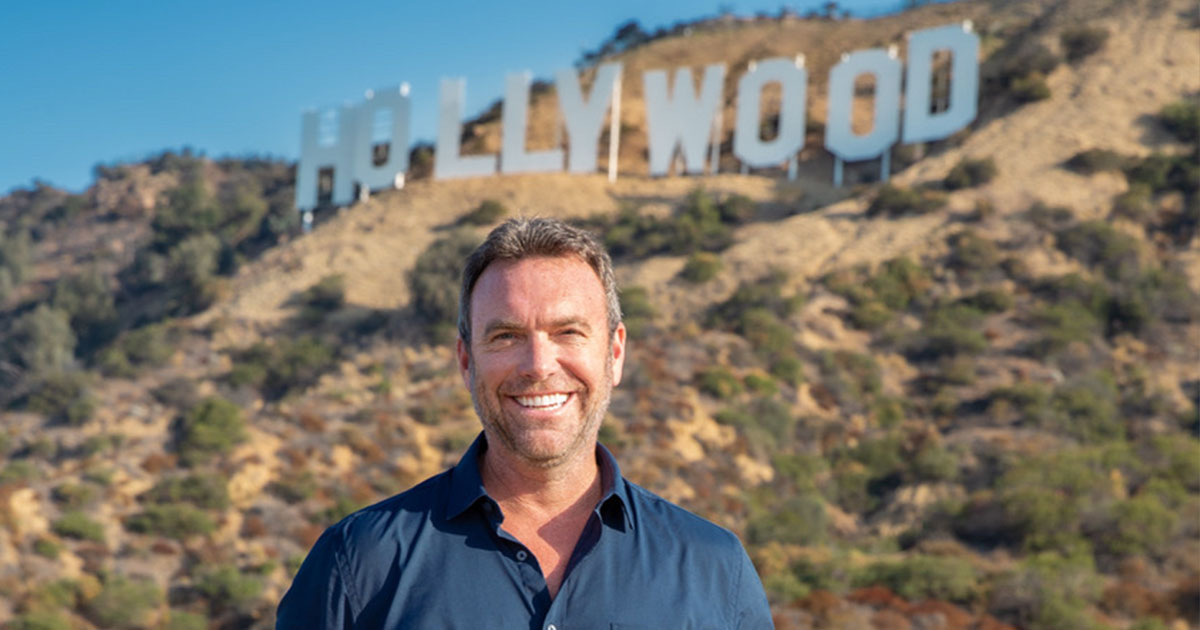
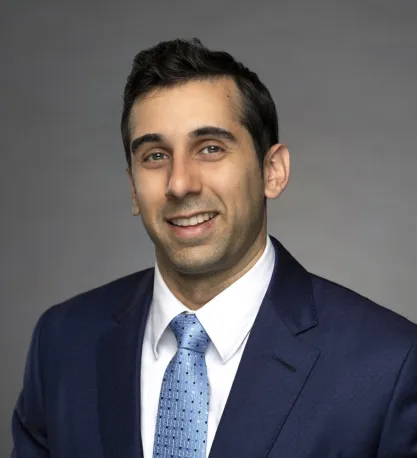
Alex Boylan, the host and co-creator of “The College Tour” TV series, discusses the power of a support system and the exciting launch of The Student Registry.
Alex Boylan has had quite a year, both professionally and personally. Alex and the award-winning series “The College Tour” have released two more successful seasons on Amazon Prime Video, bringing the total to over 180 colleges featured. More passionate than ever about helping students navigate one of life’s most transformative journeys, Alex continues to make “The College Tour” a vital resource for students and families looking to make informed decisions about higher education without the cost of travel.
However, Alex’s commitment to supporting students doesn’t stop there. After meeting with thousands of students over the years, one recurring theme stood out: financial anxiety. For many students, the rising costs of college — from tuition and books to living expenses — can feel overwhelming. That’s why Alex and his “The College Tour” partner, Lisa Hennessy, created The Student Registry, a new platform designed to help students not only financially plan for college but also raise the money they need to succeed.
This has been an eventful year for you and for “The College Tour.” Can you share some of the highlights?
Well, first and foremost, my wife and I welcomed a son in November, and that alone is such a monumental turning point. It enables you to think, feel, and even dream in ways you never saw possible. In many ways, it has helped fuel my desire to create support systems for students. This next generation deserves to be set up for success, and I want to do my part to help make that possible. I think that’s really what “The College Tour” is about.
Was that the impetus behind creating The Student Registry?
It’s something Lisa and I have been talking about for a while. We have registries for weddings and babies — so why not for college? Starting college is one of the biggest and most expensive milestones in life. Students deserve the same kind of support and celebration.
How does The Student Registry work?
The Student Registry, powered by “The College Tour,” is a game-changer. It allows students to create a personalized registry where friends, family, and even their community can contribute toward essential college expenses — whether that’s tuition, dorm supplies, books, or travel costs. It’s designed to give students the head start they need to focus on their education without the looming stress of financial uncertainty. It’s about showing students that they have a network of people rooting for them and invested in their success.
Why do you think support systems are so vital to college students?
Having a supportive network or community can make all the difference. I’m always blown away by how many of today’s campuses have these built-in networks that help students find internships and jobs. Some will even go so far as to give students free, unworn dress clothes for job interviews, so they can not only look professional but — more importantly — also feel confident. Whether it’s a school counselor, friend, parent, or even a TV show, every bit of caring matters. I was so fortunate to have amazing mentors along the way, and I’m trying to pass that forward. Growing up can be daunting, and it’s important for students to realize they aren’t alone in the process.
You started your career by winning the CBS TV series “The Amazing Race.” Would you have ever guessed this is where life would take you?
Great question! It may sound crazy, but it doesn’t surprise me at all. I have an adventurous spirit; that’s what helped me win the show. It’s also what fueled my career as a travel host. I’ve filmed in over 60 countries, but honestly, college is one huge adventure, so it totally makes sense. I have the best job. I get to travel all around the country and meet with incredible students from all different kinds of institutions, and as I get older and settle into family life, it’s so exciting to hear about their journeys and watch as they set out on their own adventures. It’s a very full-circle feeling.
Mia Aston, whose popular YouTube channel details her daily life as an NYU film student, shares her best advice for college preparedness, career development, and financial literacy.
What advice do you have for students trying to find the right balance between passion and practicality in their college and career choices?
Finding a balance between passion and practicality is actually something that I still struggle with today. Amidst the competitive job hunt with graduation approaching this May, I am often questioning why I have led myself more with my heart rather than my head. Many college students choose a major strictly based on how much money they will make or what their working hours will look like. That feels practical. As a film student, I was so in love with storytelling that I dove straight into New York University, blinded by passion. I think any art student has to be somewhat delusional in that sense, but at the end of the day, it comes down to your priorities in life. I would try and figure out what you need to both sustain yourself and be happy. Is a corporate job with a steady income more important to you than an exciting job that initially might not pay the bills? Are you willing to work multiple jobs? Do you have the financial support to even start your career on a lower-paying salary? Can you pursue a more practical career path and still nurture your passions as hobbies?
The best advice I can give is to be honest with yourself. You will always have to make sacrifices. Personally, I cannot imagine doing a job that I am not passionate about. I probably will struggle immediately after graduation, but I would be miserable if I did not let myself work in a creative field. This is the unsettling sacrifice, or rather gamble, that I am making.
How can students make the most of their college experience — both inside and outside the classroom — to set themselves up for success?
The best way to make the most of your college experience is to be proactive in learning and pursuing new opportunities. I always feel the most enriched when I am allowing myself to try new things and remain curious about my major. Attend school events, open lectures, galleries, film screenings, office hours, resume clinics, and more. The community around you can be inspiring and informative as well. There is such an endless array of resources available to you as a student. Take advantage of everything.
Networking is obviously also essential for your professional success. However, I have found that networking is the most enriching when you don’t approach it as a tool to meet an employer, but as an opportunity to learn from someone who has made it to a position that you hope to be in one day. Utilizing college as a learning experience outside of just the classroom can only help you.
What’s one piece of advice you wish you had received when you were preparing for college?
In the same way that I followed my heart into a film degree, I often let my enthusiasm lead me astray. When I started college, I wanted to be a part of so many different school clubs and work opportunities that I ended up spreading myself too thin. I wish someone had told me to commit to one or two clubs or jobs and let the rest go. I ultimately realized it’s better to give your best efforts to one thing rather than do a half job at seven different things.
What are the biggest challenges you faced when navigating both academic and creative fields, and how can you overcome them?
The biggest challenge I faced when navigating academic and creative fields was time management. The workflow and obligations of my academic and film classes can be extremely different. Managing your time in college is tricky regardless of your major, but when you have to write, shoot, and direct a short film on the same day that you have a research paper due for another course, it can be a little overwhelming. I overcame this by being diligent about my due dates and learning from trial and error. At the end of the day, my work will get done because it has to and because I will not let myself turn it in late. Additionally, managing my time between the two realms of academia and art becomes easier after every project I complete. As you learn more about your creative process and how long you need for each stage of production, you can begin to map out your workload schedule ahead of time. Sometimes I will start writing a paper over a month in advance because I already know that production for a film will be intense and demanding by the time that the paper’s due date rolls around. I am basically always trying to predict the future.
What role do financial literacy and budgeting play in college preparedness, and what resources would you recommend for students?
Financial literacy and budgeting play a huge role in college preparedness, but it looks different for everybody. There are so many factors to consider, and it is important to understand what your financial situation requires. NYU’s tuition is very expensive. In regard to my financial standing, I got lucky during my admissions process and was offered a full-ride scholarship from Tisch based on the portfolio I submitted. Therefore, I am able to cover my additional financial responsibilities through YouTube and freelance film jobs. When browsing through potential schools, I would research scholarships and apply to any offered by the college and external organizations. If you need to make money while you are a student, see if you can get an on-campus job. These jobs are great because they should be more flexible with your class schedule and coursework demands. Some of my friends are resident assistants at dorms. They are compensated through university housing and meal plans. I have other friends who work one or two service jobs to pay their bills. There are a variety of ways that you can navigate financial literacy as a student, depending on what you need. One piece of advice I would recommend is understanding what those budgetary restrictions look like for you and honoring them, even though students around you may have different spending habits. Be honest with yourself about the best way to responsibly manage your own money.
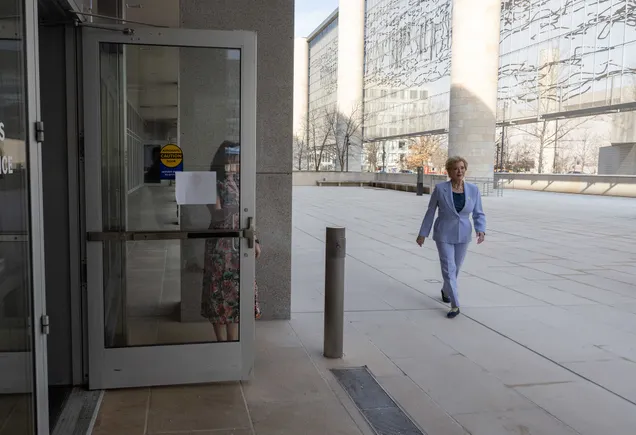
During a hearing Wednesday, U.S. Education Secretary Linda McMahon defended the Trump administration’s proposal to heavily cut funding for the U.S. Department of Education during the 2026 fiscal year, arguing the reductions were a key step toward winding down the agency.
“We seek to shrink federal bureaucracy, save taxpayer money and empower states who best know their local needs to manage education in this country,” McMahon said before lawmakers on the House Committee on Appropriations’s education subcommittee.
President Donald Trump’s budget request, released at the beginning of the month, would slash funding to the Education Department by 15.3%, or about $12 billion.
The plan calls for eliminating two federal programs aimed at improving college access for disadvantaged and low-income students — TRIO and Gear Up — as well as shifting the responsibility of the Federal Work-Study program to the states. And it would eliminate funding for Supplemental Educational Opportunity Grants, which provide need-based aid to undergraduate students.
It also would reduce funding for the already-diminished Office for Civil Rights, which investigates harassment and discrimination on college campuses and in K-12 schools, by about $49 million, a 35% cut from the previous year.
Democrats, however, slammed the budget, arguing the cuts would undermine student success and restrict pathways to higher education.
“Your visions for students aspiring to access and pay for college is particularly grim,” Rep. Rosa DeLauro, the top Democrat on the appropriations committee, said during the hearing. “Some families do not need financial assistance to go to college, but that’s not true for the rest.”
‘You will not have the partnership of Congress’
Trump signed an executive order in March directing McMahon to “take all necessary steps to facilitate the closure of the Department of Education.”
His administration has shared plans to move its key functions to other agencies. In one instance, Trump suggested that operating the student loan portfolio should be the responsibility of the newly-downsized Small Business Administration.
Some Republicans on the panel voiced support for this plan Wednesday. Rep. Jake Ellzey, from Texas, suggested the U.S. Department of Health and Human Services could take over mental health support provided by the Education Department. He also proposed that the U.S. Department of Justice could oversee civil rights matters — an option McMahon floated during her confirmation hearing in February.
On Wednesday, McMahon described the Education Department as a federal funding “pass-through mechanism” and said other agencies could take over the job of distributing allocations from Congress.
“Whether the channels of that funding are through HHS, or whether they’re funneled through the DOJ, or whether they’re funneled through the Treasury or SBA or other departments, the work is going to continue to get done,” McMahon said.
However, Democrats indicated they would not support those efforts.
“You will not have the partnership of Congress in your efforts to destroy the Department of Education,” DeLauro said. “Not on our watch.”
DeLauro also slammed McMahon over recent cuts to the Education Department, which has eliminated about half of its staff and canceled hundreds of millions of dollars worth of grants.
“By recklessly incapacitating the department you lead, you are usurping Congress’ authority and infringing on Congress’ power of the purse,” she said.
Democrats also took issue with the budget’s proposal to shift the responsibility of funding programs to states.
Along with Federal Work-Study, the 2026 proposal would cut funding for other higher education programs, including the Strengthening Institutions Program, which provides grants to help colleges become more financially stable, improve their academic quality and ability to serve low-income students.
On the K-12 side, the budget proposal maintains funding for two major programs intended to support low-income students and those with disabilities. It also proposes combining 18 undisclosed grant programs into a single $2 billion block grant to states. However, the change comes with a $4.5 billion cut to those unnamed programs — an amount DeLauro said states couldn’t cover.
Rep. Madeleine Dean, a Democrat from Pennsylvania, echoed those comments, arguing that her home state couldn’t pick up the tab on programs the Education Department would no longer support.
“That’s called shift and shaft,” Dean said.
Support for TRIO and Gear Up
During the hearing, DeLauro took issue with the Trump administration’s rationale for cutting $1.6 billion allocated to the TRIO and Gear Up programs — the full amount they were allocated in fiscal 2024. In the budget proposal, the administration wrote that “access to college is not the obstacle it was for students of limited means” and said higher education institutions should use their own funding to recruit students.
Yet children of well-off families are much more likely to attend college. Among children of the highest-income families, 92% attended college, compared with 49% of children from the lowest-income families, according to a 2020 Brookings Institution report.
DeLauro asked McMahon what evidence the administration had to back its claim in the budget request.
“Simply because we have more programs reaching into the communities,” McMahon replied, adding that schools are picking up their recruiting efforts, though she did not list examples. “And if they’re not, they should be. Because it is, I believe, up to schools also to be reaching into their communities.”
At least one Republican, Idaho Rep. Mike Simpson, also took issue with proposed cuts to TRIO and Gear Up, noting that the Trump administration’s budget request described them “a relic of the past when financial incentives were needed to motivate” colleges to reach out and increase access to low-income students.
In contrast, Simpson argued the programs are highly effective at supporting low-income and minority communities, and he asked McMahon how the Education Department arrived at eliminating their funding.
“The need for TRIO I don’t think is nearly as strong because there are outreaches from colleges now into local communities, and there should be more of the universities and secondary education levels reaching into those communities,” McMahon replied. “They should be talking to them about college.”
There’s some very weird, strange and dangerous shit going on out there right now. In America, they are persecuting people for using their right to free speech and voicing their dissent. This is happening now. — Bruce Springsteen (May 14)
Was “the Boss” being partisan there? Donald Trump thought so:
“This dried out ‘prune’ of a rocker (his skin is all atrophied!) ought to KEEP HIS MOUTH SHUT until he gets back into the Country, that’s just ‘standard fare.’ Then we’ll all see how it goes for him!”
Just goes to show that there are two sides, both of them “partisan.” The singer has his partisan views, and so does the suppressor. We just need to chill, get along, and hear both sides. Ah yes, a Kumbaya embrace — yuck!
The ‘Big Chill’
Do you remember those “nonpartisan” folks who were so outraged by what was going on in the cancel culture world of college campuses? How they lamented the way the censorial mindset was choking the First Amendment? Oh, those First Amendment champions were so incensed.
And fair enough, things were wildly out of control and those liberals responsible for supporting or allowing such censorship had to be called out. Again, fair enough. Of course, those who tolerated college censorship (dare I say “liberals”?) are now livid by what is going on. Rightfully so.
But where are those guardians of free speech (dare I say “conservatives”) now? When never a day goes by when the Trump administration does not abridge the First Amendment with wild abandon?
Censorship is censorship!
Given where we are today, I’m tired of such rhetorical gaming. Censorship is censorship, period! The hell with the thinking that one must walk on “nonpartisan” eggshells before speaking too loudly or too often against censorship when it is as constant as it is today under this administration.
Take heed: It was not partisan to boldly condemn John Adams or Woodrow Wilson or Joseph McCarthy for their crusades of suppression. And it was not partisan to call out their supporters who sat silently in the face of such tyranny. In such a world, there are not “two sides” such that the likes of Bill Maher could dine with “nonpartisan” delight with a “measured” opponent of free expression.
Seven free expression groups speak out — Yes!
Thus, I was delighted to learn that seven groups had written an open letter to “universities, media organizations, law firms, and businesses” to stand up against the “Trump administration’s multi-front assault on First Amendment freedoms.”
Before I say more, let me quote from the timely and important open letter that these seven groups just released. First this: “In little more than 100 days, President Trump and the agencies under his control have threatened First Amendment rights through a breathtaking array of actions.”
After that introduction, they listed an indictment of free speech abridgments, and in a style reminiscent of the indictment in the Declaration of Independence, they have delineated specific things the administration has done (I have added bullets to their text):
They have sought to control speech and association by imposing unconstitutional conditions on a wide range of federal grantees and contractors.
They have sanctioned lawyers for their representation of people whom the president views as political enemies.
They have arrested, detained, and threatened to deport international students — including lawful permanent residents — solely because of their participation in lawful political protest.
They have purged crucial datasets from government websites, gutted agency offices responsible for compliance with the Freedom of Information Act, and imposed new and indefensible restraints on public employees’ right to speak on matters of public concern.
They have invoked civil rights laws to justify extensive and unwarranted intrusions into universities’ autonomy and academic freedom.
Resurrecting a policy introduced during President Trump’s first term, they have barred legal scholars from providing information and expertise to the International Criminal Court.
They have banned the Associated Press from the White House press pool because it declined to update its stylebook to refer to the Gulf of Mexico as the “Gulf of America.”
Books have been removed from U.S. military service academy libraries, and other federally operated educational institutions, because they do not conform to the administration’s ideological preferences, and federal funds are being used as a cudgel to censor curriculum and promote the administration’s viewpoints in schools.
The Federal Communications Commission has threatened to revoke the licenses of television and radio networks and stations whose reporting the administration disfavors.
As Professor Timothy Zick has so ably documented, the Trump administration’s assault on free expression is unprecedented. The following assessment from the seven groups echoes what is reliably set off in detailed form in Zick’s repository over at First Amendment Watch:
There have been other times in our nation’s history that witnessed sustained and misguided efforts to suppress speech. All of our organizations have opposed both Democratic and Republican administrations when they abridged First Amendment freedoms — as all of them, at various points, have done. But we share the view that the Trump administration’s actions, taken together, represent an extraordinary and in some ways unprecedented challenge to First Amendment rights and the values they embody [emphasis added]. These actions call for a forceful, uncompromising response. Some institutions have countered in exactly this way, to their credit.
Where the hell are other free speech groups and individuals?
Against that backdrop, I ask: where the hell are all those other groups, who when it came to campus censorship were so outspoken in defense of free expression? Why don’t they have their own open letters? Why are so many of those groups not openly endorsing the courageous assessments of those who, like Judge Michael Luttig, condemn the tyranny that is Trump? Too many conservative and liberal groups are afraid to speak out, afraid to put their names on the line.
Judge Michael Luttig
What we are witnessing today is a BIG CHILL effect of enormous magnitude. Some liberals (in law firms, universities, think tanks, and elsewhere) are afraid to speak out, lest they be attacked by one of the president’s executive orders. By the same token, some conservatives are afraid to speak out (on their blogs or elsewhere) for fear that they will lose stock in their ideological world, or fall victim to Trump’s wrath.
Bottom line: Tyranny is tyranny, and condemning it is not partisan — it’s American!
Recent samples of the BIG CHILL in suppressive operation
The decision by nine of America’s biggest law firms to “bend the knee” to President Trump drew condemnation among lawyers across the political spectrum, including from attorneys inside the firms who quit or launched resistance campaigns. Others have chosen a less career-limiting form of rebellion.
That would be offering leaks to Above the Law, a pugnacious legal industry website best known for scoops about law firm annual bonuses, snarky coverage of legal news and salacious stories of barristers behaving badly. But since March, when Mr. Trump began targeting for retribution top law firms whose clients and past work he does not like, Above the Law has become a rage read for lawyers incensed at the firms that accommodated him.
Fueled by a stream of inside-the-conference-room exclusives, Above the Law delivers a daily public spanking to what it calls “The Yellow-Bellied Nine.” Those are the elite firms that pledged a collective $1 billion in free legal work to Mr. Trump after he signed executive orders threatening to bar their lawyers from federal buildings, suspend their security clearances and cancel their government contracts.
Coming next week on FAN: Timothy Zick on institutional independence and democratic backsliding
Although the Trump Administration’s agenda regarding freedom of expression can appear chaotic, one consistent strategy has been attacking institutions that are essential to checking executive power. It is no accident that many of President Trump’s Executive Orders and the agency actions they direct have targeted the media, universities and faculty, law firms, libraries, and museums. These and other entities are sometimes referred to as “First Amendment institutions” or “knowledge institutions,” because they contribute to and facilitate public discourse and are necessary to a free and open society.
‘[Re]Distributed for Conference’ — SCOTUS mantra in some First Amendment cases
Apparently, the Justices are so overworked with all the Trump emergency appeals that they have to continue to pause on what to do with some of the First Amendment cases on their docket. For example, consider the following petitions:
Jessica Levinson on Comey, protected speech, and DOJ investigation
Professor Jessica Levinson
Questions are swirling following the launch of a federal investigation into former FBI Director James Comeyover a now-deleted social media post of seashells arranged in the numbers “8647” on the beach. (“Eighty-six” is commonly understood to mean “get rid of.” President Trump is the 45th and 47th President of the United States.) Was Comey calling for the assassination of Trump? Or was he, as he has since stated, expressing a political opinion about Trump?
If Comey’s post amounted to a siren song, beseeching others to kill the president, he can be punished for his speech. But should Comey’s post be viewed as political advocacy, which I argue it should, he is entitled to the full protection of the First Amendment.
The genuine threat is not that a president’s life is in danger, but that the Trump administration is attempting to silence the speech of political adversaries. Even if it is unlikely that Comey faces anything more than a slap on the wrist for his post, the decision to open an investigation in and of itself should be worrisome. Comey has access to the media and resources to defend himself. Not everyone does. And the prospect of chilling political speech critical of government officials should concern all of us.
Statement from the Institute for Free Speech on party coordination limits
The Institute for Free Speech commends the Department of Justice’s decision in National Republican Senatorial Committee v. FEC to acknowledge that federal limits on coordinated expenditures between political parties and their candidates violate the First Amendment. In a dramatic and unusual shift, the DOJ is now asking the Supreme Court to overturn its 2001 decision in Colorado Republican Federal Campaign Committee v. FEC (Colorado II).
“The Solicitor General’s recommendation that the Court grant the petition is a commendable move that acknowledges the First Amendment flaws in these limits,” said Institute President David Keating. “As we argued in our amicus brief, the factual basis underpinning Colorado II has been proven wrong by real-world evidence.”
The Institute’s brief demonstrated that over half the states allow unlimited party coordination, including 17 states that also restrict individual contributions—yet there is no evidence of these arrangements leading to corruption. The DOJ’s brief now acknowledges this reality, recognizing that the law represents a “prophylaxis-upon-prophylaxis approach” that fails heightened First Amendment scrutiny.
“When more than half the states manage to operate elections without restricting coordinated party expenditures and without giving rise to any relevant quid pro quo corruption, it is hard to believe that the law is ‘necessary to prevent the anticipated harm,’” noted the Institute’s brief.
The NRSC case challenges federal limits on how much political parties can spend in coordination with their candidates under 52 U.S.C. 30116(d). These restrictions severely burden the core function of political parties—to support and promote their candidates.
[ . . . ]
To read the Institute’s amicus brief in the case National Republican Senatorial Committee v. FEC, click here. To read the Solicitor General’s just-filed brief, click here. To read Institute Senior Attorney Brett Nolan’s expert analysis on the Sixth Circuit’s decision in NRSC, click here.
Claim: The ‘deluge of pornography has had a negative impact on modern society’
Christine Emba
It’s hard not to see a connection between porn-trained behaviors — the choking, slapping and spitting that have become the norm even in early sexual encounters — and young women’s distrust of young men. And in the future, porn will become only more addictive and effective as a teacher, as virtual reality makes it more immersive and artificial intelligence allows it to be customizable. (For a foretaste of where this might end up, you can read a recent essay by Aella, a researcher and sex worker, on Substack defending A.I. child porn.)
In her new book “Girl on Girl: How Pop Culture Turned a Generation of Women Against Themselves,” Sophie Gilbert critiques the mass culture of the 1990s and 2000s, noting how it was built on female objectification and hyperexposure. A generation of women, she explains, were persuaded by the ideas that bodies were commodities to be molded, surveilled, fetishized or made the butt of the joke, that sexual power, which might give some fleeting leverage, was the only power worth having. This lie curdled the emerging promise of 20th-century feminism, and as our ambitions shrank, the potential for exploitation grew.
[ . . . ]
[W]hile Ms. Gilbert is unsparing in her descriptions of pornography’s warping effect on culture and its consumers, she’s curiously reluctant to acknowledge what seems obvious: Porn hasn’t been good for us. While her descriptions of the cultural landscape imply that the mainstreaming of hard-core porn has been a bad thing, she pulls her punches.” (emphasis added)
Forthcoming scholarly essay on ‘Fascist Government Speech’
Professor G. Alex Sinha
On the day he was sworn in for a second term, President Trump issued pardons and commutations to all of his supporters who attacked the U.S. Capitol on January 6, 2021. This sweeping act of clemency gave legal effect to a longstanding grievance: Ever since the attack, which disrupted congressional certification of his 2020 election defeat, President Trump has consistently glorified the attackers and denounced their prosecutors. In defending the clemencies two days after issuing them, President Trump reiterated familiar themes — once more refusing to acknowledge that he lost the 2020 election, celebrating the patriotism of his supporters, and maligning those who pursued their accountability through what became the largest criminal investigation in U.S. history.
President Trump’s script was so familiar that it obscured a constitutional novelty. For most of the time between the January 6 attack and the subsequent clemencies, President Trump was not the president. He was a private citizen, and his speech about January 6 was protected by the First Amendment even to the extent that it was false or dangerous. But, by noon on January 20, 2025, he was once again President Trump—a government official, speaking on behalf of the government, and thus uttering government speech. Government speech is not protected by the First Amendment, but rather by an evolving set of Court-fashioned rules known collectively as the government-speech doctrine. In an instant, his comments took on an entirely new constitutional cast.
Ordinarily, this transition would be unremarkable; it occurs whenever a private citizen assumes a governmental role. But, combined with their content, President Trump’s statements — on this subject and many others — create a serious First Amendment problem. His remarks are deeply and distinctly illiberal, calibrated to undermine, falsely, the democratic legitimacy of a previous administration and to rewrite the history of an insurrectionist threat that would have allowed him to maintain power by violent and anti-democratic means. It is fascist speech, which invites wildly different constitutional analysis depending on its source.
Accordingly, this paper introduces and evaluates the concept of fascist government speech — a category we can no longer afford to ignore. Our First Amendment free-speech rights spring in substantial part from a commitment to self-governance, and the protections that follow generally extend to private fascist speech as part of a forceful commitment to free debate that courts and scholars have long believed would facilitate a robust democracy. By contrast, the basis of the government-speech doctrine is functional necessity, a recognition that our democratic self-governance would be rendered ineffective if the government could not spread its message. That backstory simply cannot justify protecting fascist government speech, which directly undermines the basis for governmental communicative prerogatives. Yet the doctrine, as constituted, ultimately does protect fascist government speech. Worse still, the doctrine operates to abrogate private free-speech claims, a result that is distinctly perverse when the abrogation functions to amplify fascist government speech. This paper therefore argues for significant revision to the government-speech doctrine to blunt the threat of fascist government speech.
2024-2025 SCOTUS term: Free expression and related cases
Cases decided
Villarreal v. Alaniz(Petition granted. Judgment vacated and case remanded for further consideration in light of Gonzalez v. Trevino, 602 U. S. ___ (2024) (per curiam))
Murphy v. Schmitt (“The petition for a writ of certiorari is granted. The judgment is vacated, and the case is remanded to the United States Court of Appeals for the Eighth Circuit for further consideration in light of Gonzalez v. Trevino, 602 U. S. ___ (2024) (per curiam).”)
TikTok Inc. and ByteDance Ltd v. Garland (9-0: The challenged provisions of the Protecting Americans from Foreign Adversary Controlled Applications Act do not violate petitioners’ First Amendment rights.)
Review granted
Pending petitions
Petitions denied
Emergency Applications
Yost v. Ohio Attorney General (Kavanaugh, J., “IT IS ORDERED that the March 14, 2025 order of the United States District Court for the Southern District of Ohio, case No. 2:24-cv-1401, is hereby stayed pending further order of the undersigned or of the Court. It is further ordered that a response to the application be filed on or before Wednesday, April 16, 2025, by 5 p.m. (EDT).”)
Free speech related
Mahmoud v. Taylor (argued April 22 / free exercise case: issue: Whether public schools burden parents’ religious exercise when they compel elementary school children to participate in instruction on gender and sexuality against their parents’ religious convictions and without notice or opportunity to opt out.)
Thompson v. United States (decided: 3-21-25/ 9-0 w special concurrences by Alito and Jackson) (interpretation of 18 U. S. C. §1014 re: “false statements”)
This article is part of First Amendment News, an editorially independent publication edited by Ronald K. L. Collins and hosted by FIRE as part of our mission to educate the public about First Amendment issues. The opinions expressed are those of the article’s author(s) and may not reflect the opinions of FIRE or Mr. Collins.
This morning I joined Amy Goodman on Democracy Now to talk about the bill that House Republican leadership worked through the night to push toward a vote on the floor.
The more Americans learn about what’s in this bill, the more outrage there will be that House members are willing to vote for cuts that will devastate communities so their billionaire donors can have a massive tax break. (That’s why they’re meeting to talk about the details in the middle of the night.)
We must sharpen our language to make clear what’s at stake in this one big, ugly, and death-dealing bill.
And we must prepare ourselves for moral action.
We are glad to announce that Indivisible, the national organization behind “No Kings Day” on June 14th, has joined our Moral Monday partners to mobilize a mass action on June 2 outside of the US Capitol. We invite you to register here if you can join us for Moral Monday on June 2.
To learn more, plan to join me and Indivisible co-founder Ezra Levin for a Substack Live on Tuesday, May 27, at 12pm ET.
I’m also looking forward to a conversation here on Substack next week with Robert Reich. We will be live Wednesday, May 28, at 5:30pm ET/2:30pm PT.
To join live conversations with us on Our Moral Moment, you just need to download the Substack app, subscribe for free, and turn out notifications. You’ll get a notice on your phone that we are going live.
Reaching today’s college and university students, most of whom belong to Generation Z, requires more than a digital presence. It requires cultural fluency, authenticity, and a deep understanding of how this generation engages with the world.
Gen Zs, typically identified as those born between 1997 and 2012, are the first true digital natives. They’ve grown up with smartphones, social media, and streaming content, not as novelties, but as fixtures of daily life. According to Pew Research, nearly 95% of teens have access to a smartphone, and more than half report being online almost constantly. These habits carry into their post-secondary years, where connectivity is an expectation, not a luxury.
But modern college and university-age students aren’t always just online. They’re also highly discerning. They value transparency, social impact, and personalization. They’re quick to recognize inauthentic messaging and even quicker to disengage from it. For colleges and universities, this creates both a challenge and an opportunity: traditional, one-dimensional advertising methods, such as flyers or general announcements, may not cut it anymore, but the right strategy can foster a lasting connection and institutional trust.
This blog post offers a comprehensive guide to understanding and effectively advertising to college students against this backdrop. From leveraging digital platforms to embracing values-driven storytelling, we’ll explore the strategies that resonate with Gen Z and how institutions can adapt to meet them with relevance and respect.
Let’s begin by exploring why this age group deserves special attention.
Why Marketing to College Students (18–24) Matters
Let’s start with a simple truth: the 18–24-year-old demographic is one of the most important audiences for higher education marketers today.
Why? Because this isn’t just the age when students choose a school. It’s when they start forming lasting opinions about the institutions they trust. The connections you build now can influence enrollment, but they also shape alumni engagement, word-of-mouth referrals, and long-term brand loyalty.
Here’s the part that matters: Gen Z is different.
They’re not just digitally connected, they’re digitally fluent. According to a study, young adults between 18 and 24 now spend an average of four hours per day online, much of it on platforms like TikTok, YouTube, and Instagram.
That means your message is competing with algorithmically curated, visually captivating, and instantly engaging content. If your campaign doesn’t speak their language, it likely won’t even register.
And here’s where it gets even more interesting: Gen Z is highly influenced by their peers. One study found that 44% of Gen Zers make purchasing or participation decisions based on influencer recommendations, not traditional ads.
What does that mean for your institution? If students don’t see your message reflected in the voices and platforms they already trust, you’re missing out. Not just on visibility, but on credibility.
We’ve already seen this in action. Consider how Lancaster University in the UK leveraged TikTok to promote its online open days. By collaborating with student ambassadors to create a series of in-feed ads, the campaign achieved over 10 million impressions and more than 90,000 clicks, significantly boosting engagement and interest in their programs.
Advertising to college students is not just about being seen. It’s about being relevant, responsive, and real. When you create campaigns that feel native to their world, not imposed on it, you don’t just attract attention. You build trust.
Where and How to Reach Students in 2025
Reaching college students today is as much about being present as it is about being present in the right places. To effectively connect with this digitally native audience, a multi-channel approach that blends online platforms with on-campus touchpoints is essential.
Where can I advertise to college students? Effective channels include social media platforms (Instagram, TikTok, YouTube, Snapchat), on-campus signage, email and SMS campaigns, and peer networks such as student clubs and organizations. Let’s explore the most impactful channels:
1. Social Media Platforms
Social media is the heartbeat of student communication. Platforms like TikTok, Instagram, Snapchat, and YouTube are where students spend a significant portion of their time. TikTok has become a vital recruiting tool, with two-thirds of teenagers using the platform, making it essential for colleges to have a presence there. Paid advertising and organic content (stories, reels, challenges) on these platforms can yield high engagement.
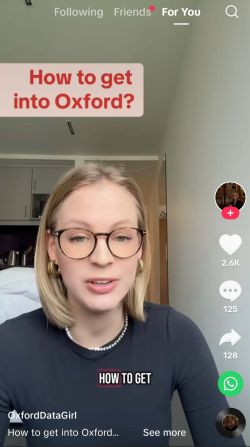
Example: Oxford University (UK) shared a series of TikTok videos featuring current students offering advice to incoming first-year “freshers,” creating authentic, peer-to-peer content that resonated strongly with its student audience.
When students are researching colleges or looking up information, they often turn to search engines and video platforms. Running targeted search ads ensures your college’s offerings appear when students are actively seeking information. On YouTube, short, engaging pre-roll ads can capture attention. Just remember to keep them concise and relevant.
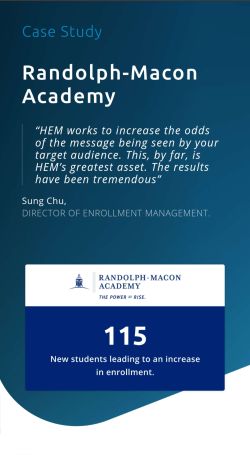
Example: Randolph-Macon Academy (R-MA) launched an aggressive Google Search ad campaign targeting families seeking strong academics during the COVID-19 pandemic. The effort paid off, R-MA saw tremendous results, enrolling 115 new students from May to August 2020 (boosting overall enrollment) and even doubling their summer school enrollment despite the disruption.
Don’t underestimate the power of physical presence when advertising at colleges. Traditional channels like campus bulletin boards, posters in dorms or the student union, campus newspaper ads, and flyers still have value, especially for promoting campus events.
Modern twists on these include digital signage (screens around campus displaying announcements) and QR codes on posters that students can scan for more info or to RSVP. Being visible where students live and study helps keep your message top-of-mind.
4. Email and Text Alerts: Direct and Personal Communication
Email remains a staple for official communication, and when crafted well, it can be an effective tool for reaching students. Concise, visually appealing newsletters about upcoming opportunities can capture attention.
Additionally, SMS/text message alerts are highly effective for timely announcements, as most students will see a text immediately. Always ensure you have permission to text students and use this channel sparingly to avoid overcommunication.
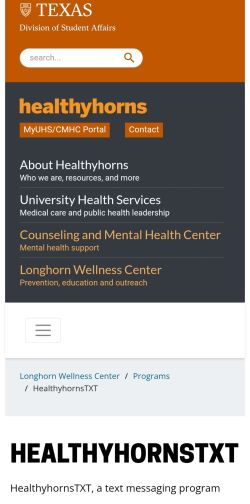
Example: The University of Texas at Austin runs a program called HealthyhornsTXT through its wellness center, sending students 2–3 text messages per week with health tips, stress-management advice, notices of campus wellness events, and motivational reminders. The messages are written in a friendly, encouraging tone by health educators (e.g., nudging students to take a stretch break or stay hydrated in the Texas heat) and often include interactive elements like a monthly giveaway to sustain engagement.
5. Student Organizations and Influencers: Leveraging Peer Networks
Peer influence is powerful. Partnering with student organizations, clubs, or Greek life groups can amplify your message. Engaging student ambassadors or micro-influencers, students with a following in specific niches, can promote your message authentically among their peers.
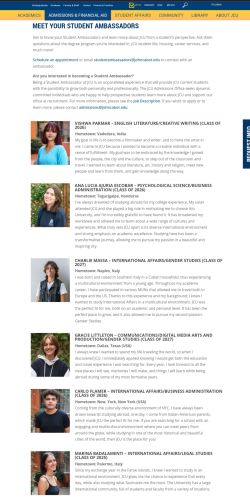
Example: John Cabot University (JCU) in Rome, Italy has a robust student ambassador program: current students are heavily involved in orientation, campus tours, event planning, and peer mentoring, serving as friendly points of contact for prospects. JCU’s website even features profiles and contact info for each ambassador, portraying an approachable, relatable face to prospective students.
By integrating these channels, your advertising efforts can effectively surround students in multiple contexts: online, in class, around campus, and on their phones. The key is to maintain cohesive messaging across platforms, ensuring that whether a student sees a flyer in the cafeteria or a story on Instagram, the campaign feels unified and relevant.
Current Trends in Digital and Social Media Marketing
To reach today’s college students effectively, your digital marketing must evolve as quickly as their online habits. Trends shift fast; what worked last semester might be outdated today. Here are the top strategies driving real engagement right now:
1. Short-Form Video & Challenges
TikTok and Instagram Reels continue to dominate student attention. Quick, relatable videos, like day-in-the-life clips or student-led challenges, are easy to share and resonate with Gen Z’s short attention span. Schools that lean into this format are seeing higher reach and better engagement.
2. Authentic Influencer Content
Students trust peers over polished promotions. That’s why institutions are turning to student ambassadors for social takeovers, Q&As, or vlog-style content. These collaborations feel more like honest advice than advertising, and they build credibility.
3. Interactive & User-Generated Campaigns
Interactive content invites students to participate rather than just consume. Polls, quizzes, and contests on social media are very effective. For example, using Instagram Stories to let students vote on a homecoming theme engages them in decision-making.
User-generated content campaigns are also trending. A classic approach is to encourage students to post with a specific hashtag (perhaps showcasing school spirit or their favourite study spot) and then reshare those posts. These social media campaign examples for students turn your audience into content creators, which increases engagement and provides authentic material to repost on official channels.
4. Personalized, Geotargeted Ads
Digital tools now allow you to tailor messages by interest, location, or academic background. For example, promoting a coding event to computer science majors or a concert to students living on campus ensures your outreach hits the right audience at the right time.
5. Ephemeral & Live Content
Instagram Stories, Snapchat updates, and livestreams offer real-time, behind-the-scenes access to campus life. Their temporary nature creates urgency, while the live format allows two-way interaction that deepens student connection.
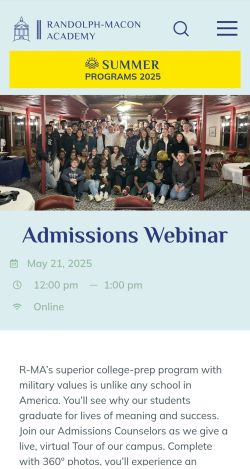
Example: Randolph-Macon Academy (RMA) hosts live virtual campus tour webinars to reach prospective families who cannot visit in person. RMA’s admissions team leads a live-streamed 360° campus tour followed by an in-depth Q&A presentation. This event is promoted through the school’s website and communications, allowing attendees worldwide to experience the campus in real time and ask questions, effectively extending the open-house experience beyond geographic limits.
Gen Z students care about social impact. Campaigns that highlight sustainability efforts, diversity, or local community involvement often outperform generic promotions, so long as the message is genuine. Authenticity matters.
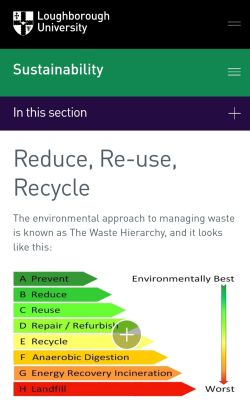
Example: Loughborough University (UK) provides a strong example with its “War on Waste” campaign – a bespoke sustainability initiative aimed at reducing waste and increasing recycling across campus buildings. Branded messaging around “Reduce, Re-use, Recycle” and visual prompts appeared throughout Loughborough’s facilities, encouraging students to adopt greener habits as part of campus life.
Staying on top of these trends ensures your message feels relevant, not recycled. Institutions that tap into these behaviours, without straying from their core identity, tend to gain more trust, attention, and traction from the student audience.
On-Campus Advertising Strategies That Still Work
While digital platforms dominate student attention, on-campus advertising still holds power, especially when promoting local events or building community awareness. The key is in making it modern, visible, and relevant. Here are five effective ways to do it:
1. Posters & Digital Billboards
Traditional posters still work, but now they come with upgrades. Many campuses feature rotating digital billboards in high-traffic spots like cafeterias or libraries. These can display videos, animations, and even repurposed TikToks. For printed posters, bold visuals and a QR code make it easy for students to scan and act instantly.
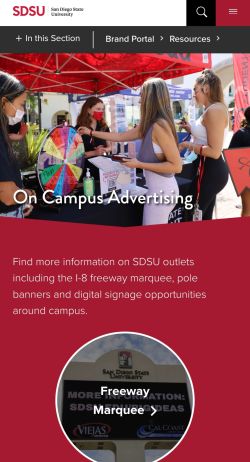
Example: San Diego State University (SDSU) employs a range of on-campus media to reach students: from digital signage screens in student centers to pole banners along walkways, and even a large marquee visible from a nearby freeway, all broadcasting campus events and messages
By strategically placing dynamic content in high-traffic areas, SDSU ensures students are constantly aware of upcoming activities and campus news.
Setting up a table in the student center or quad is a direct way to interact with students. Staff it with friendly student volunteers or staff, and have a clear call-to-action: whether it’s to promote a new program, a survey, or an event. Freebies (swag like T-shirts, stickers, snacks) are a timeless tactic; students love free stuff, and a branded item keeps your college or event in mind later. This face-to-face engagement can complement your online ads for colleges by giving a personal touch.
3. Campus Media Channels
Student-run newspapers, newsletters, and radio stations offer trusted, student-authored spaces to advertise. Sponsoring a segment or placing a well-designed ad in a campus magazine ensures your message lands where students are already tuned in.
4. Residence & Academic Buildings
Bring advertising into the spaces students frequent daily. Many residence halls allow posting on community boards or digital displays in lobbies. Similarly, academic buildings often have screens or boards for department-related notices; work with different departments to promote relevant opportunities (like a speaker event hosted by the business school should be advertised in the business building). Tailoring your message to the location can increase its relevance
5. Guerrilla Campaigns
Some of the most memorable campaign examples for students have been unconventional. Think flash mobs, chalk art on sidewalks, or pop-up experiences. A college could organize a quick flash mob dance in the dining hall to draw attention to an upcoming cultural festival, for example. Or use sidewalk chalk to create a path of clues leading to a secret prize location as part of a scavenger hunt campaign.
These fun stunts naturally get students talking (and posting on social media) because they break the monotony of campus life. Just be sure to get any necessary permissions from campus authorities beforehand.
When done right, on-campus efforts amplify your digital campaigns. If, for instance, a student sees a poster in the dorm, gets a text reminder, and then spots a student-led story on Instagram, it all clicks. That kind of message reinforcement is what turns curiosity into action.
How to Advertise Events to College Students
Promoting student events, whether it’s a club meeting or a major campus concert, requires clear, timely outreach across multiple channels. The goal isn’t just awareness; it’s attendance.
A pertinent question for education administrators then is: How can I market to 18 – 24-year-olds effectively? Utilize mobile-first, interactive, and values-aligned content. Focus on authenticity, relevance, and peer-driven engagement. Short-form video and tailored messaging yield the highest response.
Here’s how to get students to show up and spread the word.
1. Use a Multi-Channel Strategy
Start with a Facebook or event page, then promote it on Instagram, TikTok, Twitter, and email. Post countdown teasers, behind-the-scenes clips, and physical flyers across campus at least 1–2 weeks in advance. Repetition across platforms helps the message stick.
2. Lead with a Strong Hook
What makes the event worth attending? Free food? A headline performer? Networking opportunities? Whatever it is, make that the focal point on posters, email subject lines, and social captions. Students need a clear reason to care.
3. Tap Into Peer Networks
Encourage club members and student leaders to promote the event on their socials. Authentic, peer-shared content builds trust. Add a campaign hashtag and invite early adopters to post excitement-building previews like setup photos or teaser videos.
4. Leverage Campus Infrastructure
Ask professors to announce the event in relevant classes. Use the school’s app, email newsletter, events calendar, and even push notifications if available. A well-placed promo video from a student government leader can go a long way.
5. Simplify Signups
Use one-click links, QR codes on posters, and RSVP buttons that send reminders. Don’t make students dig for info; friction lowers turnout. Keep access to details and registration as effortless as possible.
On the day of the event, keep the buzz going. Add a selfie booth or branded hashtag display to encourage attendees to share their experience. When others see the fun they missed, they’ll be more inclined to show up next time. The right event marketing doesn’t just boost attendance, it builds momentum.
Creative Campaign Ideas to Spark Student Engagement in 2025
The best campaigns tap into real student life, encourage participation, and reflect your campus culture. Here are five proven and adaptable campaign ideas to consider:
1. ‘Day in the Life’ Video Series
Feature different students taking over your social channels, athletes, international students, first-years, to show authentic campus life. Promote each one in advance, save them to highlights, and repurpose the content for YouTube or digital signage. It’s both engaging and a valuable tool for prospective students.
2. Hashtag Challenge
Launch a branded hashtag (e.g., #MyCampusStory or #[Mascot]Pride) and invite students to post around a fun theme like favourite study spots or campus traditions. Offer prizes, reshare standout entries, and build a content library that feels both organic and community-driven.
3. Scavenger Hunt Campaign
Blend physical and digital by hiding QR codes or clues across campus during orientation or homecoming. Ask students to share their progress on social media using your hashtag. Offer swag for completion and a grand prize for added excitement, great for both visibility and participation.
4. Student Spotlight Series
Celebrate students with weekly features, short videos, or graphics showcasing their achievements, hobbies, or contributions to campus life. Share these across platforms to boost morale internally and show prospective students the real impact of your community.
In a nutshell, what’s the best way to promote events to college students? Use a multi-channel approach, emphasize the event’s value, and simplify registration. Build excitement through social proof, timely reminders, and on-site digital engagement strategies.
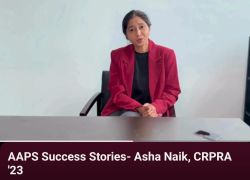
Example: The Academy of Applied Pharmaceutical Sciences (AAPS) in Toronto leverages student voices on social media by regularly sharing student and alumni success stories. This allows prospective students to envision themselves achieving similar goals, essentially seeing “people like me” thriving at the school.
Host timely, student-friendly events like a “Puppy Zone” during finals or a “Throwback Thursday” music party in the quad. Pair each with a livestream and pre-event polls or trivia to boost anticipation and extend reach to virtual audiences.
Keep it student-led, authentic, and relevant. Bring students into the planning process, they know what’s trending and what will spark interest. These ideas promote as well as create memorable experiences that students want to share.
Best Practices for Student Advertising
To ensure your marketing is both effective and respectful, consider these key principles:
Prioritize authenticity: Use real student voices and visuals. Avoid overpromising or overly polished messaging.
Optimize for mobile: Assume your content will be viewed on smartphones. Use vertical video, fast-loading pages, and concise layouts.
Maintain consistency: Align visual identity and messaging across platforms to reinforce recognition.
Respect timing: Be mindful of academic calendars and daily student rhythms. Avoid campaign launches during exam periods.
Gather feedback: Use polls or post-event surveys to measure effectiveness and refine future campaigns.
Adhere to campus policies: Ensure you comply with posting rules, privacy regulations, and student consent protocols.
Do you want to master the nuances of marketing to college students?
Contact Higher Education Marketing for more information.
Twitter: Reaching college students today requires more than visibility; it demands relevance. Learn how modern higher ed marketing leverages short-form video, student influencers, and personalized campaigns to make a lasting impact.
Facebook: Higher education advertising is evolving. Discover how to engage Gen Z through integrated campaigns that reflect their values, prioritize authenticity, and foster connection, both online and on campus.
LinkedIn: From social media to digital signage, today’s institutions are reimagining how to connect with students. Explore the most effective strategies for student-centred marketing in 2025.
Frequently Asked Questions
Question: Where can I advertise to college students?
Answer: Effective channels include social media platforms (Instagram, TikTok, YouTube, Snapchat), on-campus signage, email and SMS campaigns, and peer networks such as student clubs and organizations.
Question: How can I market to 18 – 24-year-olds effectively?
Answer: Utilize mobile-first, interactive, and values-aligned content. Focus on authenticity, relevance, and peer-driven engagement. Short-form video and tailored messaging yield the highest response.
Question: What’s the best way to promote events to college students?
Answer: Use a multi-channel approach, emphasize the event’s value, and simplify registration. Build excitement through social proof, timely reminders, and on-site digital engagement strategies.
For HR professionals in higher education, workforce planning has evolved into a strategic discipline. Filling positions is no longer enough — leaders must anticipate talent needs, support professional growth and align development opportunities with institutional goals. A well-designed needs assessment gives HR teams the insight to take action with confidence and create lasting impact.
In the CUPA-HR webinar, Survey Says! Using HR Data and AI to Maximize Analysis of Needs, presenters from Harvard University’s Center for Workplace Development shared how their team designed and executed a large-scale, data-informed, AI-supported needs assessment. The goal? To better understand learning needs and create targeted strategies for professional growth across a decentralized institution.
Here are the key takeaways from their process.
Start With a Strategic Why
Before sending a single survey question, clarify what you’re hoping to learn — and why it matters.
At Harvard, the team began their needs assessment with a clear objective to understand learning and development needs across various employee groups as part of a larger workforce strategy. This meant designing a survey aimed at uncovering more than surface-level training needs, asking instead: What do our employees really need to grow and thrive in their roles?
Their advice to other HR teams is to anchor your assessment in your institution’s strategic goals and organizational context. Let that “why” guide your survey design from the start.
Design a Survey That Reflects Your Workforce
A successful needs assessment is tailored to the specific population it serves rather than one-size-fits-all.
Harvard’s workforce includes individual contributors, supervisors and executives across many schools and units. Their team created targeted questions for each group and pre-populated some responses using data from their HRIS system to reduce survey fatigue and improve accuracy.
Make sure your questions are relevant to different audience segments, and use the data you already have to streamline the experience for respondents.
Boost Participation Through Targeted Communications
Even the best survey won’t produce results without strong participation. Driving engagement was one of the biggest challenges for Harvard, as it is for many institutions. Their team addressed this by securing leadership support, crafting targeted communications and clearly communicating the value of the survey to employees.
To boost response rates on your own campus, consider using champions across departments, timing your outreach thoughtfully and explaining how the data will be used to benefit staff.
Use AI Thoughtfully to Analyze Large Data Sets
If your survey includes open-ended responses, you’ll likely end up with more data than you can quickly process — especially if your institution is large. This is where AI can help.
Harvard’s team used a combination of AI tools to analyze thousands of comments and identify themes. But they stressed that the human element remained critical. They invested time in crafting the right prompts, testing outputs and verifying results before presenting them to stakeholders.
Their approach to AI offers an important lesson: AI can accelerate analysis and bring fresh insights, but it’s not a shortcut. You need to build a process that includes human judgment, data verification and transparency.
Integrate HR Data for Deeper Insights
One of the most impactful decisions the Harvard team made was linking survey responses to existing HR data. This allowed them to connect learning needs to specific job roles, departments and demographics — enabling more targeted follow-up and planning.
By incorporating HRIS data, they were also able to personalize survey questions and reduce respondent burden. That integration enhanced both the quality of their data and their ability to act on it.
If you’re planning a survey, consider how existing HRIS data can be used to sharpen your questions and deepen your analysis.
Turn Results Into Action
The final — and perhaps most critical — step is using what you’ve learned.
At the time of the webinar, the Harvard team was in what they described as the “where are we now” stage and had begun implementing some of the recommendations from their survey analysis. They emphasized the importance of translating results into practical strategies that support learning and development, talent mobility and organizational effectiveness.
To do the same on your campus, be sure to:
Share key findings transparently with stakeholders.
Identify priority areas for development or investment.
Use insights to shape programming, leadership development or change management strategies.
Embrace Experimentation and Continuous Learning
The Harvard team acknowledged that this process wasn’t perfect — and that was okay. They embraced experimentation, learned from trial and error, and remained open to improving their approach as they went.
Their experience is a reminder that innovation in higher ed HR — especially when integrating AI — is a journey. Don’t be afraid to pilot new tools and adjust your process.
Watch the Webinar Recording
Interested in learning more about Harvard’s process? The full webinar recording and slide deck are available here.
This post is a modified version of an article that originally appeared on the Cengage EMEA “Unstoppable Minds Blog.”
As Mental Health Awareness Month comes to a close, we’re highlighting insights from someone who’s been in students’ shoes. While studying psychology at Queen Mary University of London and serving as a Cengage EMEA Student Ambassador, Roya Mohamed shared three simple but powerful tips to help students take care of their mental health.
I remember my first year at university. All of the new friends I made, the exciting modules I took, the societies I joined, my first time living away from home, learning how to cook and how to save money. It was such an exciting time full of adventure and new beginnings. I learned so much about myself and the world of adulthood. However, I also remember the all-nighters, the breakdowns, the tears, the times I almost gave up, the sacrifices I made and the feelings of loneliness and exhaustion I had. Being a student is not easy — I would know — and the increasing academic and societal pressures cause a strain on our precious mental health. Being thrown into the deep end during my first year caused my mental health to plummet and I fell into a deep depression where I had to go to therapy. It was a bleak time in my life and for a while I didn’t know how to get out of the negative cycle I was in. But I did — hooray! There were a couple of changes I made to my daily routine that notably improved my wellbeing and stopped me from ever going back to that period of darkness. Follow these steps to start taking control of your mental health and wellbeing:
Scheduling
Not having a daily schedule can leave students feeling overwhelmed and unprepared. This can cause feelings of stress which can contribute to poor mental health. Planning time for revision, relaxation, hobbies, friends, family and sleep really helped to create a routine in my life and to avoid the anxiety I used to have about completing everything on my to-do list. However, it will take time to adapt and follow a routine. But having a structure to your life will make you feel less worried and we all know that worrying does us no good.
Positive self-talk
This is a psychological strategy that you can use to increase your self-esteem, confidence, self-love and positivity. How do you do it? The clue is in the name! This technique involves talking positively to yourself, praising your achievements no matter how big or small they are and motivating yourself with words of affirmation. Being kind to oneself is a crucial step to maintaining good mental health. For example, when I received a grade that I wasn’t happy with, I would say to myself, “Roya, that was a very difficult exam and you still scored above the class average, you should be really proud of yourself!” At first it felt weird doing this, but you begin to internalize the thoughts and quickly realize how good it makes you feel!
Sleep
We all know that students have a tricky relationship with sleep. It is recommended that university students sleep for 7-9 hours a night. This can prevent you from feeling fatigued, sleepy, having low concentration levels and becoming irritable. However, we commonly see students pulling “all-nighters” where they sleep very little — or not at all — in order to complete an academic task. I don’t recommend this at all. When it comes to revising, all-nighters are practically useless. This is because our sleep cycle at night consists of four cycles, each lasting 90 minutes. In each stage of the cycle, our body and brain rejuvenate in different ways. One area that is affected is our memory of that day. If you don’t go through the four cycles, then the hours of revision won’t be “consolidated” into your memory — moved from short term to long term memory. This causes stress and regularly losing sleep can contribute to poor mental well-being. Once I began to sleep enough, I really saw how it improved my life.
These are just some of the changes I began to make which took my mental health out of the darkness I was in and back to the bright old me!
Roya Mohamed was a former Cengage Student Ambassador studying psychology at Queen Mary University of London.
Roya shared three meaningful student mental health tips that can help improve overall well-being. If you think these tips might be impactful for your students, share this article and also check out “5 Ways I’m Building Connections With My College Peers” by Pranav Harwadekar, a junior at Texas A&M University.
The image of the suffering artist is a cliché that faculty and staff who work with students in the performing and visual arts are trying to dispel. They believe that creative inspiration doesn’t have to come at the expense of health and well-being.
“You definitely have to be able to connect on some level to that artistry. But that doesn’t mean necessarily that you have to suffer mental health issues to be able to access this,” said Frank M. Diaz, professor in the Indiana University Jacobs School of Music.
A growing awareness of young people’s mental health and the challenges depression and anxiety pose to student retention and college completion has inspired services for students of underrepresented minority backgrounds, student athletes and other populations on campuses.
More performing arts programs have also begun embracing education on emotional and physical well-being to equip students to succeed in college and beyond.
Under pressure: Performing arts students, like many college attendees, face academic pressures—as well as financial responsibilities to pay for college—that can put them under immense stress. A 2024 survey by Inside Higher Ed and Generation Lab found that just under half of respondents indicated their top stressor while enrolled was balancing academics with personal, family or financial responsibilities.
Performers also juggle rehearsals, whether individual training or as part of an ensemble, that can require several hours of work outside of regularly scheduled classes. Musicians are often in practice rooms for hours each day, causing them to deprioritize their well-being.
“Some of them practice for six hours,” Diaz said. “That does not include their academic courses, their music courses, their ensembles that they’re in, their lessons and their studio classes. While you pile all that on, it’s a lot.”
Young people in general are more open to talking about mental health compared to previous generations, but performing arts students often feel cultural pressures to maintain certain appearances.
“There’s a lot of stigma around the arts and mental health,” Diaz said. “Music students—we also have ballet here—don’t like to admit that they have issues. It’s seen as a weakness, so it’s been traditionally not talked about in our field.”
Additionally, the performing arts can put pressure on students’ physical health if they’re not trained or properly supported. A research study of music schools in Switzerland and the U.K. found music students had lower levels of physical and psychological health compared to the general population.
This unique combination of factors has pushed some colleges and universities to invest in specialized resources dedicated to students studying music.
Institutional change: Members of the National Association of Schools of Music, the accrediting body for most music programs, are required to provide music students with information about physical and mental health. Most institutions meet this requirement through a dedicated webpage where students can browse campus and external services. If you ask James Brody, director of the Musicians’ Wellness Program (MWP) at the University of Colorado, Boulder, College of Music, that’s just the tip of the iceberg.
Brody and his colleagues have been engaging in this work informally for over a decade. In 2020 the university rolled out an embedded counseling program, which provided the College of Music with a dedicated mental health clinician, Matthew Tomatz, to lead outreach and deliver services to music students. Tomatz, a former musician himself, receives referrals from faculty and staff to meet with students and provides regular group therapy for student musicians to engage with peers and talk about their struggles.
MWP was officially established in 2021, providing physical and social wellness education to learners across CU Boulder’s school of music to prevent and recover from injuries for long-term thriving.
Approximately 160 students participate in MWP offerings each year, and more than 130 music students accessed counseling and psychiatric services in the 2022–23 academic year, according to a university press release.
The Office of Wellness and Arts Health Initiative (OWAHI) at the Jacobs School of Music was established in 2023 as a way to increase student access to supports. The school is home to 1,600 students, making it one of the largest music schools in the U.S. The size can make music students more isolated from the larger campus community of Indiana University, because “everything [within the music school] is in one place and our students never go out and venture into this Big Ten campus that we have,” Diaz said.
Instead of making students seek out resources, the school centralized offerings into the OWAHI, creating a one-stop shop for a variety of support services that are student-centered and student-led.
Social wellness: One of the undertones of performing arts programs is competition; students fought hard to win a spot at an accredited music program, which can create feelings of rivalry and isolation from their peers.
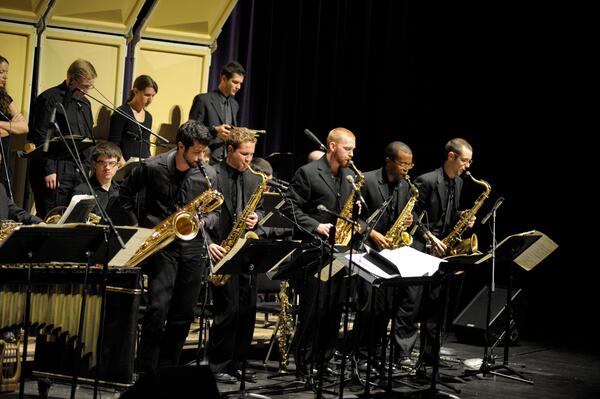
Jacobs School of Music students enjoy a holiday party thrown by the Office of Wellness and Arts Health Initiatives in partnership with the Jacobs School’s Health and Wellness Committee.
Wendi Chitwood/Indiana University
To combat this narrative, Diaz created events centered on relationships. “Our data basically indicates that people are seeking community. They don’t know how to find it; they don’t know how to build good relationships. They know they want them. So, to me, that’s the basis of everything we do.”
OWAHI offers drop-in office hours for students to get snacks, talk with their peers and engage in destressing activities, including mindfulness training, massage, games and yoga. In addition, the office partners with the School of Social Work to provide student-led wellness coaching, which both connects learners with peers and gives social work students needed supervised practicum hours.
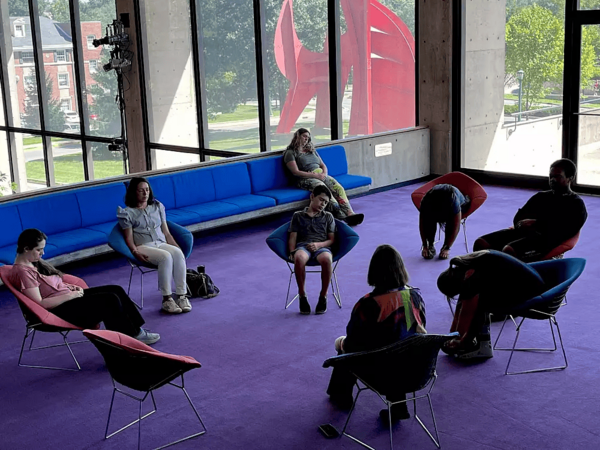
Jacobs students participate in a meditation session provided by the Office of Wellness and Arts Health Initiatives.
Jacobs School of Music/Indiana University
OWAHI offered about 70 coaching sessions in 2023–24 and an estimated 300 sessions during this academic year, which Diaz attributes to increased engagement on campus, student-led marketing and positive partnerships. Students who participate in services are also demographically representative of the school’s population, and Diaz has been pleased to see high participation rates among male students (41 percent of participants), given perceived barriers to engagement in mental health supports for men.
At New York Film Academy in Los Angeles, acting professor Victor Verhaeghe noted that his students tended to arrive with fewer socio-emotional skills, making it harder for them to engage. Verhaeghe has started using class time to lead meditation and shared affirmations, allowing students to become more vulnerable and connected to each other, as well as create self-love.
“I say, ‘Let’s start with sharing who you are; let’s open up to discussion,’” Verhaeghe said. “Some people are not ready to share, but I’ll share my story … It’s all about rewiring, it’s about changing the programming. As an artist, vulnerability is essential. You have to be able to tap into that.”
Physical wellness: Injuries among college students often come from late-night recklessness, sports, accidents or overwork. Less common is the physical strain improper musical technique can have on musicians.
“People don’t understand that musicians get injured, and the injury rate is high—as high as 80 percent of college students,” Brody of CU Boulder said.
Brody offers one-on-one consultations and lessons with students to help them recover from injury, misuse, anxiety or physical tension, helping them connect music and the body to ensure they can continue playing for many years. “I am continually amazed at how anatomically illiterate most musicians are,” he said.
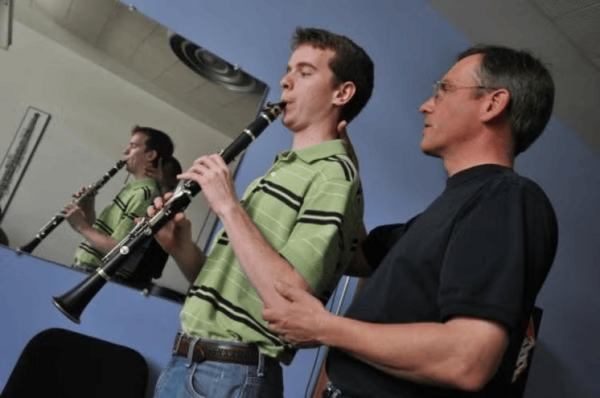
Professor James Brody, director of the Musicians Wellness Program, instructs a student musician on clarinet.
University of Colorado, Boulder
He’s passionate about physical wellness education for musicians, and admits he sometimes has to pull back from overloading students with anatomy lessons.
“Some people say, ‘No pain, no gain,’” Brody added. “I say, ‘No pain, no pain.’ It really shouldn’t hurt.”
CU Boulder music students can also receive free hearing tests, a common practice for music schools to ward against noise-induced hearing loss.
The University of North Carolina at Greensboro offers two elective courses within the school of music that connect physical health to performance, encouraging students to move strategically and reduce tension.
In the future, Brody would love to see donor support for more resources to support musician well-being, including specially designed hearing protection and vocal health support from a laryngologist.
Occupational wellness: College students in general are anxious about their careers—71 percent of students say they feel at least somewhat stressed thinking about life after college—but the performing arts has always been an especially challenging field. Recent data from the Bureau of Labor Statistics found that only about 20 percent of students with a fine arts degree actually work in arts, design, entertainment or media occupations.
“Every single student is terrified right upon getting out because of the complete unpredictable nature of this business,” Verhaeghe said.
Brody noted student musicians’ anxiety levels are high regarding their future plans, particularly due to a shrinking number of symphony orchestras and full-time opportunities. “Still, folks line up to do it,” he said. “We don’t have any lack of talent and motivation.”
In class, Verhaeghe talks about the challenging elements of being an actor, from not having work to playing demanding roles with long hours. “I think it’s important that we talk about the next phase,” he said. “I believe this is a calling to do this work, and not everybody’s called … if you really want to have a craft, then you will invest.”
Performing arts students also often live with the tension of trying to balance passion and work. Many people consider art to be a healing or soothing experience, allowing them to engage in mindfulness or relaxation. “The evidence is pretty clear that musicians and artists in general are the exception to the, ‘I do art and I feel good’ thing, like, we don’t experience that because it’s vocational,” Diaz said.
There’s one exception to this work, Diaz noted: when art becomes a service. At IU, students can participate in performances at senior centers through the Senior Outreach Program.
“Instead of going as ‘I’m going to perform this awesome thing with you,’ [it’s] ‘I’m going to connect with you, I’m going to go learn your name and learn what you like and perform for you at these senior community centers,’” Diaz said.
Faculty members agreed there’s a need to encourage students not to burn out or overexert themselves for the sake of their art, because it’s not sustainable in the long term and reduces their career potential.
“The culture is gradually changing because it has to,” Brody said. “If it doesn’t, it’s like feeding people into a wood chipper.”
The Trump administration has ended $60 million in federal grant funding for Harvard University amid an ongoing fight with the private institution over concerns about alleged campus antisemitism.
The Department of Health and Human Services announced the move late Monday night.
“HHS is taking decisive action to uphold civil rights in higher education,” the agency posted on social media. “Due to Harvard University’s continued failure to address anti-Semitic harassment and race discrimination, HHS is terminating multiple multi-year grant awards—totaling approximately $60 million over their full duration. In the Trump Administration, discrimination will not be tolerated on campus. Federal funds must support institutions that protect all students.”
HHS also linked to a report from The Daily Caller, a right-wing website, which noted that the $60 million in grants came from funding via the Centers for Disease Control and Prevention.
A CDC official, according to The Daily Caller, told the university that funding an institution that the Trump administration perceives as discriminatory would be inconsistent with the CDC’s mission. The CDC official concluded that “no corrective action is possible here.”
Harvard did not respond to a request for comment from Inside Higher Ed.
The latest move comes as the Trump administration has already pulled other grants and federal contracts and frozen more than $2.7 billion in federal funding—about a third of Harvard’s federal funds.
Harvard is also facing several investigations from the Trump administration.
The university has been locked in conflict with the federal government for months since it spurned Trump’s demands to overhaul governance, hiring, admissions and more, which prompted retaliation in the form of a funding freeze. Harvard sued the Trump administration last month, arguing that it sought to “impose unprecedented and improper control over the university.”