In January I wrote a piece asking whether America’s research universities would make it to their 100th birthday, marking their birth with the creation of the National Science Foundation in 1950—its 75th birthday was May 10. The article built on concerns that our research universities are in a precarious state, with their resources stretched thin supporting their dual missions of education and research. At the end I added a new concern: with the beginning of the Trump administration would these institutions survive the year?
In only the first 100-odd days, the precipitous cancellation of grants and freezing of research support and now the proposed slashing of the budgets of the NSF and the National Institutes of Health and dramatic increase in the tax on university endowments have made my worst fears real. Are we really trying to end the partnership that has led to the greatest period of innovation in history?
With the creation of the NSF, the government and universities established a research partnership to feed the American economy and national defense and to train the R&D labor force. The partnership was supported by funding from both sides, coupled with an unrelenting commitment to research excellence and impact. By any measure it has been wildly successful, generating new knowledge, inventions and cures and educating generations to lead our economy and society.
In 2022 alone, the 174 Carnegie R-1—very research intensive—universities filed more than 20,000 patent applications and were granted nearly 6,000. But perhaps to understand why sustaining this partnership is vital to our future we only need to recall that the mRNA vaccines that spelled the end of the COVID-19 pandemic were built on research supported over decades by the NIH.
The scale of the partnership is apparent in the data: In 2022, university research spending totaled $97.8 billion, with $54.1 billion coming from the federal government. What has not been widely acknowledged is that universities contributed $24.5 billion of this total in the form of self-supported research and cost sharing, especially supporting the misunderstood indirect costs of research. Many of these expenses are not so “indirect,” as they support specialized spaces, facilities and instruments—you cannot do research in a parking lot.
Universities invested 45 cents for each federal research dollar received— this is the financing of the partnership. It seems like a bargain for the government to contribute only 0.2 percent of GDP (or less than 1 percent of the federal budget) to fuel innovation and the labor force of the world’s largest economy. Federal support of university research has grown only 44 percent since 2010. This compares to China’s threefold growth in investment in its universities.
The Chinese investment highlights the increasing competition for research talent, and we risk falling behind. Other countries are emulating us, building research universities and trying to attract the stream of talent that has come to the U.S. to learn, work and live. Our chilling climate for immigrants is making it much easier to lure this talent abroad.
American universities have done what they can to stay in front, with their own support of research growing twice as fast as federal funding, up from 30 cents to a federal dollar in 2010. It will be difficult for universities to continue to grow this investment. Following the pandemic, inflation has taken its toll. Now the funding cuts already imposed, and the enormous ones in the administration’s proposed budget, will shift billions in research costs to universities—costs they cannot afford. The proposed 15 percent cap on indirect costs alone—spread across all federal support—could cost the R-1 universities more than $10 billion, doubling their support relative to the federal government.
The result will be catastrophic, with universities retreating from research, essentially destroying in a few months the innovation ecosystem built over three-quarters of a century. The long-term impact will be devastating for all Americans, as measured in undiscovered inventions and cures, the global competition for ideas and people, and the country’s future economic prosperity.
Our innovation ecosystem will be hamstrung by the loss of a generation or more of research talent, who are either not trained or who go elsewhere. Already our talent pipeline is being constricted by cutting in half the number of NSF fellowships awarded to the most promising scientists and engineers. Reports also are mounting of scientists moving to countries where they are warmly welcomed with substantial government support. Is this our national strategy to strengthen America’s knowledge-based economy?
We are on the verge of an innovation winter that will last decades when we can ill afford it as we respond to demands to improve health care, compete for global dominance in AI and other critical technologies, and create a secure and peaceful world. Universities do face important challenges, such as expanding access, educating more Americans to be informed and thoughtful citizens, and giving them the skills to thrive in an AI-driven world. Universities can meet these challenges if they are supported.
We must avoid the innovation winter by continuing the partnership so our research universities remain the beacons for innovation and education that they have been for three-quarters of a century. This is the only way to keep America at the forefront, not at the back of the pack.
This choice is what is at stake for all of us.
Robert A. Brown is president emeritus of Boston University.
The University of California National Center for Free Speech and Civic Engagement launched in 2017, at a time when students were shouting down conservative speakers on campus, raising questions about what role the First Amendment did—and should—play in higher education.
Just eight years later, things have only gotten more complicated—first in the aftermath of an explosive protest movement against Israel’s war in Gaza and then in the wake of the Trump administration’s censorship across all areas of academe.
Amid the chaos, the center and its fellows—researchers from a breadth of disciplines who work on projects related to open expression and civic engagement—continue to educate universities about the First Amendment and investigate the day’s most pressing free speech issues.
Its executive director, Michelle Deutchman, who worked as an attorney for the Anti-Defamation League for 14 years before joining the center, stopped by the Inside Higher Ed office in Washington, D.C., last week to discuss the federal government’s attacks on free expression in higher education. The interview has been edited for length and clarity.
1.What are your biggest concerns with regard to the Trump administration and free speech and open expression in higher ed right now?
Well, sadly, there’s kind of a long list. I think, from my vantage point, one of the greatest concerns is seeing students, and particularly international students, being, basically, taken away on what appears to be the basis of viewpoints and opinions that they might have shared, either in the form of protest or, in one case, an op-ed. That really flies in the face of exactly what the First Amendment is supposed to protect against, especially in a public institution, which is that it’s supposed to be a restraint on government. In fact, what we’re seeing right now is the government stepping over the line of what is permitted, and that is definitely creating, I think, a chilling effect, not just for international students, but for students across the board, whether they’re protesting or not.
I also think that the specter of investigations on campuses—this list of 60 campuses [being investigated for alleged antisemitism], this idea that if you’re on a campus that’s potentially going to be under investigation—might impact what you say in class, outside of class, how you teach, everything that’s fundamental to the academy.
2.What are some of the most common questions you’re getting about what is going on?
Deutchman has led UC’s National Center for Free Speech and Civic Engagement for eight years.
Laurel Hungerford
I don’t get as many questions as you would think, because I don’t give legal advice, and right now, what a lot of people want is legal advice. But I think one of the things that I’m struggling with is, how do you talk about open expression and dialogue in a moment when it’s largely being suppressed on campuses? One of the questions that people have been asking is what to say to students about the risk factors in terms of being very vocal with your opinions, and how should administrators address that—both wanting to, of course, encourage them to use their voices, but also wanting to be transparent about what the risks might be.
There’s just a lot of other, bigger questions that are just about, what does this mean in general for higher education? Is this like an existential moment? What about the coercive use of money? A lot of questions of: Can the government do that? And I think it’s a really challenging situation where the answer is: Not sure that they should be doing it, but they are. So, how do we handle that sort of in-between space while we wait for the law to catch up to what’s going on on the ground?
3.There’s been a lot of emphasis on civic dialogue education as one antidote to tensions around political speech on campus. Do you feel like this moment is sort of setting those efforts back at all?
I don’t want to say they’re setting them back. I worry a little that they might be getting set aside. And that’s a concern that I’ve had, really, since after Oct. 7, where we saw so much time and energy go into the basics about the First Amendment and about time, place and manner, and about whether or not to use law enforcement, that there became a big focus on the enforcement regulations as opposed to sort of education. I think now, so much energy is being put into how to defend higher education against this assault that I worry that efforts that focus on how we teach not just students but all members of higher education communities to engage with one another and listen to one another and build the muscle of civic dialogue—I worry that there isn’t enough bandwidth to pay attention to that, and setting it aside, I think, is to the detriment of everyone at this moment.
4. How is Trump’s cutting of grants his administration deems related to diversity, equity and/or inclusion connected to the government’s other attacks on speech?
I think that the cutting of those kinds of grants is just another attempt at government censorship of speech. Expression and speech are the cornerstones of the creation and transmission of knowledge. So, I think that it you’re stopping grants about certain topics, topics that are either being researched or topics that are being taught, that is something that falls sort of in the viewpoint discrimination area and really runs afoul of the Constitution. We’ve certainly seen some successes in court cases and injunctions, but I think part of the problem is the gap between when an executive order is signed and when an injunction happens, the chilling effect that happens across the university, and this idea that I don’t know that you can unring certain bells.
5. Though many are calling the Trump administration’s attacks unprecedented in many ways, there have been other moments in history when free speech on college campuses has been under assault. What do those moments teach us about what is happening today?
I wish I could tell you that I am a historian, but I’m a lawyer, so I don’t necessarily have that historical perspective. Certainly, I think people say that this is the greatest threat to academic freedom and to the autonomy of the university since McCarthyism. It’s hard to know how, then, to take that information and do something with it, right? I mean, the hopeful take is: Well, we made it through that, even though it was a dark time.
I mean, look, I’m a [University of California, Berkeley] Cal Bear. UC had people do loyalty oaths; it was not a good moment, and look where we are now. I think that is sort of the optimistic hope.
I think the less optimistic [perspective] is that, in some ways, what we’re experiencing is much more far-reaching, and we will just have to wait and see what happens.
A week does not pass without my hearing about the apparently sorry state of the current crop of students. They are lazy, disengaged, clueless and so on. It is the dusty trope that the old do not appreciate the young.
In a trip through the literature and news of the past, you will find Generation X described as underachieving, angry, psychologically damaged slackers who were indifferent to learning, brazenly rude, entitled, unprofessionalwhiners. Millennials were called “Generation Whine” and described as self-centered, unmotivated, disrespectful, depressed, anxious, disloyal, entitled cynics who were so overindulged and protected by their parents that they were incapable of working without constant hand holding.
If this all sounds familiar, it should. Professors now bemoan the current crop of Gen Z students who will not read, cannot handle stress, procrastinate, lack basic academic skills, refuse to engage in class, are psychologically needy and are more interested in preparation for a career than appreciating knowledge.
Meanwhile, every generation is described as being both skilled in and ruined by new technology. Boomers complained that Generation X could not write a proper formal letter and that Millennials expected email communication. Generation X now complains about Generation Z not attending to their email communication and lacking proper email etiquette. It is an ongoing cycle.
Much of the educational discourse seems to assume that each new generation of students differs from the last to such a degree that many accommodations will need to be made. Every generation is indeed affected by the events of their time. The educational disruption of the COVID-19 pandemic likely widened the already existing achievement gaps among different groups of Generation Z learners. However, learning is learning. Decades of research across multiple fields of psychology have shaped our understanding of the human mind and how we best learn. Teaching is hard work, and we make teaching harder when we remain fixated on stereotypes, tech temptations and societal trends.
Let’s refocus on what our trade is—learning. From my experience as a professor of more than 20 years specializing in educational psychology, and as a researcher and department chair, I offer these principles:
Engage in your discipline. Maintain your expertise over time and share the developments of your field. If you are bored with your discipline, it will show. And if your knowledge is out of date and students find out, you lose all credibility. As a professor, few things are as awkward as when a student shares incorrect information they learned in another course and you must contradict it with up-to-date, accurate information.
Figure out what type of teaching suits you and then master that type. If you are a lecturer, then study what makes someone the best lecturer. If you use PowerPoints, study best practices in their design. If you embrace group work, explore what types of assignments and student groupings are most effective. What pedagogy you use is less important than doing that pedagogy well. By all means, learn new techniques. But new does not always mean better, and not all techniques are going to fit with your content and style. I will be the first to admit that I am not the most dynamic speaker. I am, however, good at reading the room, pacing the delivery of knowledge and explaining ideas in many different ways. Lean into your strengths.
Create opportunities for multiple types of learning. Humans learn best by engaging different areas of their brain: their auditory and visual systems, their logic and expressive capabilities, and their abilities to apply and build personal connections to new knowledge. Research shows that students do not have unitary learning styles: However, everyone learns better when they engage multiple processing modes. You do not need to do everything all at once. But across your design of homework, class time and assessment, remember: Variety is key. My own action research in my measurement and statistics course bears this out. Concerted effort to allow students to use analytic, practical and creative means to express their knowledge resulted in a productive experience in a class that many students dreaded.
Do not let new technology pass you by. What is new in instructional technology now may become the norm tomorrow. Try new things and stay knowledgeable, but also consider how and why you would use the technology to improve teaching or other aspects of your course. For example, clickers did not work well for me, but many professors make great use of them. A useful strategy is to turn to your students and ask them how they would improve one of your assignments by integrating new technology. Guides such as the one here are available to help you make these decisions.
Express a genuine interest in your students. You are not their friend, but you can be courteous and friendly. It is good manners, after all. Be a human being. As students gather before class begins, you might consider asking how the semester is going. Perhaps reference an event that has taken place on campus. Do not be afraid to mention your own experiences if they are directly relevant to the course. There is continuing lore related to my courses that if you find a way to include cats while also demonstrating the content and skills of the course you will receive extra credit (true). Do not be afraid to be real.
Fulfilling these principles in your teaching career is not easy. It takes time, energy and a lifelong commitment to self-improvement—the same traits we wish for in our students. If you find that you are unwilling to strive to meet these principles, and then find the students are not living up to expectations, know that it is not them: It’s you.
Erin Morris Miller is an associate professor of psychology at Bridgewater College.
***HEPI and the UPP Foundation will host a free webinar on 4 June at 1pm on service learning, how universities can integrate community service with academic studies. Register for your place here.***
This HEPI blog was authored by Isabelle Bristow, Managing Director UK and Europe at Studiosity. Studiosity is AI-for-Learning, not corrections – to scale student success, empower educators, and improve retention with a proven 4.4x ROI, while ensuring integrity and reducing institutional risk.
During September 2020, Studiosity launched the Professor Tracey Bretag Prize for Academic Integrity – an annual commitment to those who are advancing the understanding and implementation of academic integrity in the higher education sector, in honour of Tracey’s work as a researcher in the field of educational integrity.
Tracey was one of the world’s leading experts on academic integrity, founding the International Journal for Educational Integrity and serving as Editor-in-Chief of the Handbook of Academic Integrity. She spoke widely and publicly on the importance of universities taking a strong stand on educating their students about academic integrity and enforcing the rules with vigour and strong sanctions.
Tracey also came to work alongside the team at Studiosity, providing advice, guidance, and sharing her research at events. When asked for her permission to create an annual Academic Integrity award named in her honour, this was Tracey’s response:
I am so deeply honoured by your suggestion that I am almost speechless. Thank you so much for coming up with such a fabulous idea, and especially for putting it in my name. … Thank you again for this incredible recognition of my very small contribution to the field of academic integrity. As I work hard every day to try to demonstrate the type of bravery I’ve always advocated, this certainly gives me a great deal of comfort.
Tracey prematurely passed away on 7 October 2020. In February 2021, she was honoured posthumously with a Career Achievement Award from the Australian Awards for University Teaching.
Entrants over time – a five-year overview
Looking at the Award’s previous entries, we can see a clear shift in how institutions approach educational integrity:
from a more broad-based education about what constitutes misconduct in 2020;
towards more specialised training of large student groups;
to a significant pivot in 2023 towards integrity projects that address the challenge of AI – specifically led by assessment redesign and the use of whole-institution frameworks.
Another change over time is certainly who and where integrity nominations are coming from – there are more dedicated institutional units for managing educational integrity now in 2025 than we saw in 2020-2021.
Tracey earned a great deal of respect globally for her evidence-based, systemic, and students-first approaches to educational integrity. It is fitting that these approaches are gaining interest and momentum in higher education at this moment. We look forward to seeing another year of evidence-based nominations, and thank our Academic Advisory Board for their time and energy once again in judging.
Feeling inspired?
As senior leadership look for ways to ethically embed generative AI within their institutions, academic integrity – the original owner of the AI acronym – is paramount. And so for this year’s prize submissions, the expectation is that the 2025 shortlist will acknowledge gen-AI as part of the challenge, show evidence of impact, and help answer the question: How can the sector keep educational integrity, humanity, and learning at the heart of the student experience?
Last year, the University of Greenwich won the UK prize for their initiative ‘Integrity Matters: Nurturing a culture of integrity through situational learning and play’. Staff there designed an interactive e-learning module (available to all education institutions under licence) designed to raise awareness of academic integrity. You can learn more here.
Sharon Perera, Head of Academic and Digital Sills who led the initiative said:
We are thrilled to have been awarded the Tracey Bretag prize for advancing best practice and the impact of academic integrity in higher education. Thank you Studiosity for championing this in the sector.
At the University of Greenwich our goal is to raise awareness of the academic conventions in research and writing and to create a culture of integrity. We are doing this through our student communities – by sharing best practice and learning about the challenges we face in the GenAI era.
Academic integrity is at greater risk than ever in the age we live in, and we need to work together to celebrate integrity and authenticity.
While sharing your initiative is for the good of the sector and a personal recognition of your tireless efforts to protect and nurture academic integrity – the prize also comprises a financial reward! You can enter this year’s prize here – nominations close 30 May. Evidence might be at the level of policy, implementation, measured student or staff participation, and/or other evidence of behaviour.
Peer-to-peer conversations can help students to make connections with each other and course content. In a course that requires out-of-class reading, that conversation is highly reliant on students doing their part and completing the assigned reading. However, in recent semesters, students engaging in focused reading in which they annotate text is dwindling. There has been a noticeable decline in students’ engagement with course materials, evidenced by reduced annotations and superficial reading habits (Deale & Hyun, 2021; Mizrachi & Salaz, 2022). It seems as if a quick scan of one of the assigned pages is the best effort. Without adequate reading, students will be reluctant, or unable, to participate in class discussions and conversations for lack of understanding and fear of not ‘measuring-up’ to peers (Severe, E., Stalnaker, J., Hubbard, A., Hafen, C. H., & Bailey, E. G., 2024). Subsequently, instructor facilitated classroom conversations intended to enhance understanding of course content may stagnate and falter. Naturally, to maximize student engagement with course content, students must have a degree of self-awareness and desire to do the work assigned to meet the goal of understanding, and mastering, course content.
The frame of content engagement can look different based on course, instructor and level of student. In this case, engagement is on the ‘micro’ level as it offers ideas on what can happen before, during, and after class (Handelsman, M. M., Briggs, W. L., Sullivan, N., & Towler, 2005). While engagement can be observed in many forms, this piece focuses on transactional engagement in which students interact with each other and with the instructor (Zepke & Leach, 2010). As instructors, we can provide the tools to help students engage with content and meaningfully participate in conversation to develop a more robust understanding of coursework.
Course Context
I teach a required, writing-intensive course for students in their junior year of their undergraduate studies. In addition to a heavy writing component, there is also a heavy reading component. While students enjoy the subject matter, they are not terribly thrilled by the amount of reading they are expected to complete. Generally, students start the semester strong, by keeping up with reading, sharing key points and participating in organic content-based conversations. By week four, they hit a wall. There is a notable drop off in the reading and conversations. In an ongoing effort to support students, I altered the clarified expectations and gave more support to students, both in class and beyond.
Choices
Students are busy with layers of competing obligations including classes, work, university organizations and athletics that may impact their time to prepare for class. They may also feel underprepared for reading focused non-fiction, informational texts that require more attention than a casual fiction novel. Being mindful of some students’ sensitivity to what they perceive as inadequate skills, the strategies listed below were shared in class. The whole group presentation and in-class practice encouraged students to try all the tools and self-determine which was most helpful for the time and abilities.
Before Class
Students were introduced to three strategies to use to capture the key points of the assigned reading. The activities provide multiple entry points that allow students to utilize the tool right away.
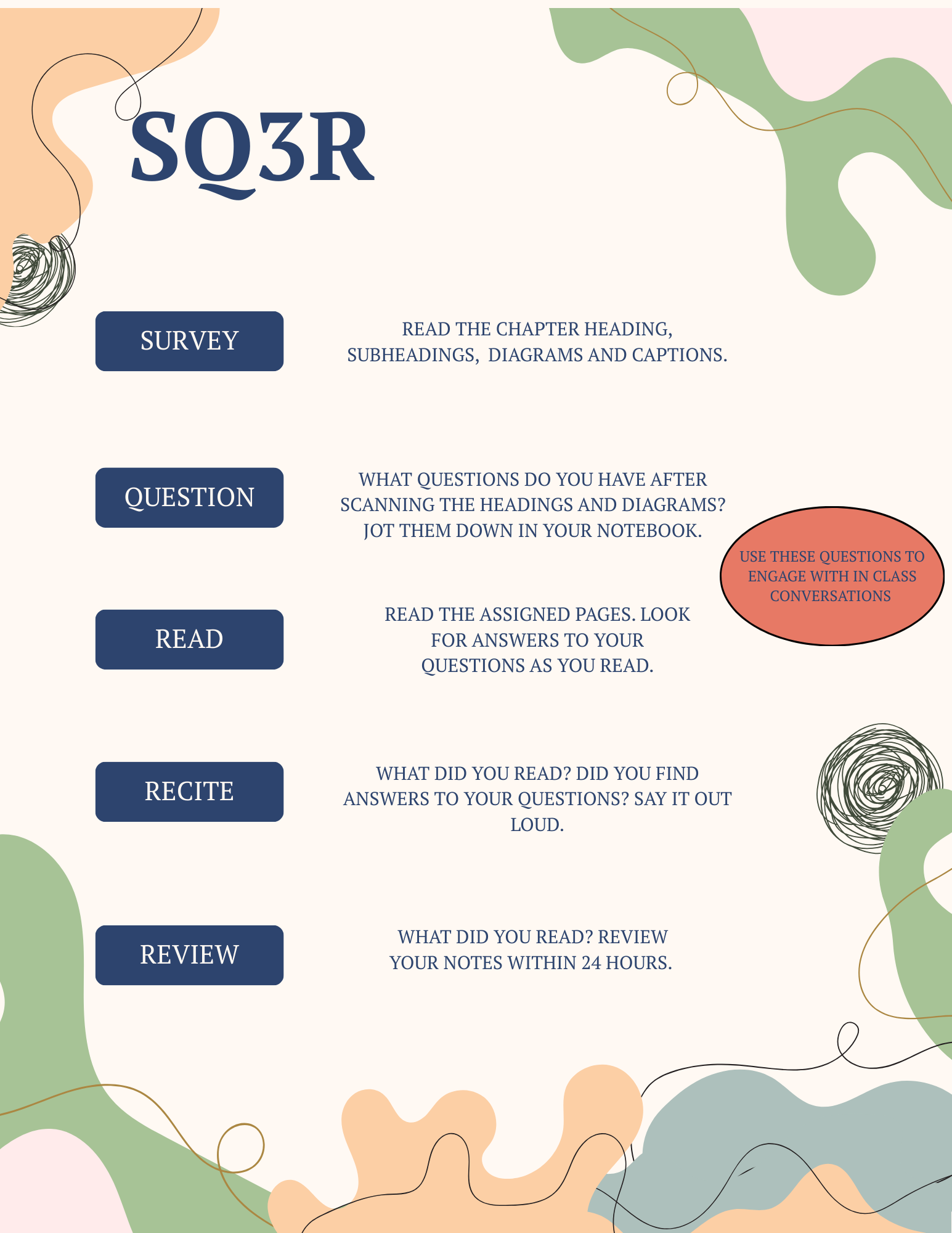
SQ3R. Although this is not a new strategy, I was surprised at how few students had experience working with it. Preparing to join classroom discussions requires intentional preparation. Some students may feel underprepared and think a simple scan of the assigned readings will enable them to join a conversation. While that may work on a superficial level, robust, and meaningful conversation requires proactive work. For students unsure of how to read for maximum understanding a review of the SQ3R strategy is helpful. After a class introduction to the strategy, all students are given a handout with the students so they can utilize as they see fit.
SQ3R
Launchpad. For some students, the formulaic nature of a guided strategy, like the SQ3R, may be too limiting. For the student that wants to prepare for in-class conversation, preparing and providing a few open-ended reading reflection questions (launchpad ideas) may be useful. The questions are intentional few in nature so students can focus on responding to one or two and reading to find solid text evidence to support responses.
Launchpad Example 1Launchpad Example 2
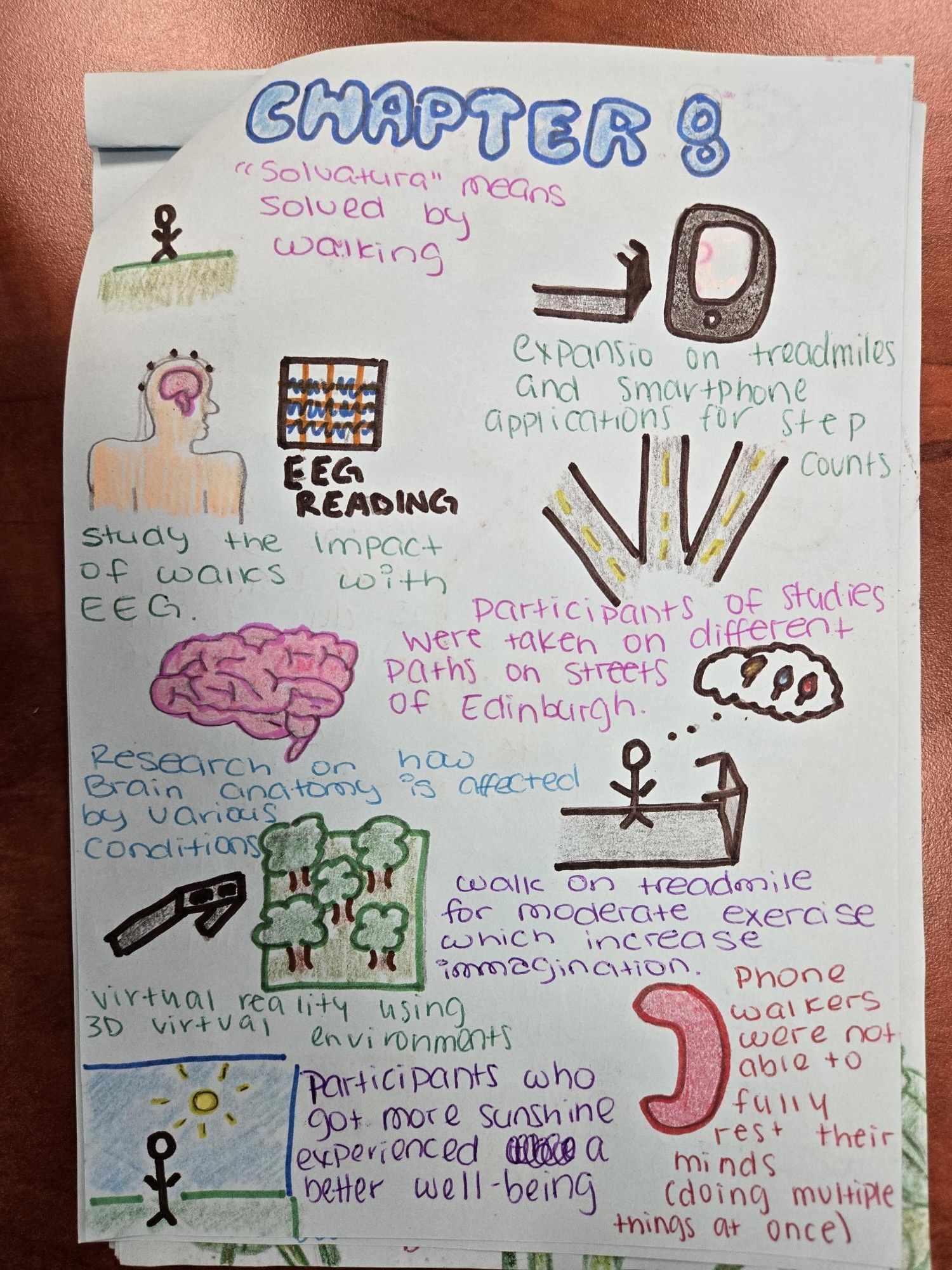
Sketchnoting. For students that best express their understanding visually, sketchnoting is a wonderful tool (Parks, 2022). Sketchnoting involves using images, words, and colors to make thinking visible on paper (or a device). When introduced in class as a worthwhile way to capture understating, students may be more likely to try the method rather than just trying to remember what they read.
Sketchnote
The First 10 Minutes of Class
Even with adequate preparation and readings, students get busy with other obligations between assigned coursework and class time. To help students feel prepared, the first 10 minutes (no more) of class is provided as a focused reflection.
Focused Reflection. During the 10-minute reflection, students may review their SQ3R notes, add to their reading reflections or sketchnotes. Students may also reread (or, for some, read) the assigned pages. For students that have done it all, they are tasked with doodle time. It’s not as unstructured as it seems.
Doodle Time. If a student is reluctant to participate in any of the focused reflections, they are given a doodle paper and three colored pencils. The expectation is to keep the pencils moving during the entire 10-minute period. Some students may start by drawing squiggles or lines, but they do transition into drawing sketches of things they’ve read. Once students believe there is no judgment on their artistic ability and that the focus time is really intended to help them think about the course content, they respond positively to the task. Some have even transitioned from doodling to sketchnoting because, as shared by one student, “it matches the way I think.”
By allowing this 10-minute period to capture thoughts, students have to ability to organize their thoughts and feel confident in their classroom conversation contributions. While it doesn’t level the field completely, and there are still students that do not read, those that do have shared they appreciate the time to refocus their attention on the coursework.
There are only two rules for focused reflection time. The rules are aimed at keeping the classroom distraction free.
No talking (to me or each other). The quiet period allows think-time for all students.
No devices. The device free period encourages students to independently think about the assigned readings without supporting- or competing- interests. Students are told candidly, I care about their input, not a generative AI summary of the reading.
Building a Safe Space for Conversations
Even with adequate preparation, sharing connections to coursework can be daunting. To support students in the process, a small to big approach is beneficial. First, students are assigned, by the instructor, into conversation corner groups. These groups are intentionally small to promote equitable opportunities to speak. With small classes, I create the groups and intentionally separate any groups of friends to provide opportunities for students to interact with others that may bring new perspectives to the conversation. For larger groups, a random group generator such as https://www.randomlists.com/team-generator can be used. After allowing small group conversation, the students are transitioned into whole group discussions in which they share understanding or respond to instructor posed questions as a group.
Getting the Conversation Going
Students may need help starting content-based conversations. Using a ‘fun’ tool engages students and allows all to have a chance to contribute.
Spinning Questions. Pickerwheel (https://pickerwheel.com) or Spin the Wheel (https://spinthewheel.io/#google_vignette) are sites that allow the instructor to enter questions into a spinning wheel. Students spin the wheel and respond to questions in small groups. Students can also create a discussion wheel in their instructor assigned small groups using the questions they created for their SQ3R notes.
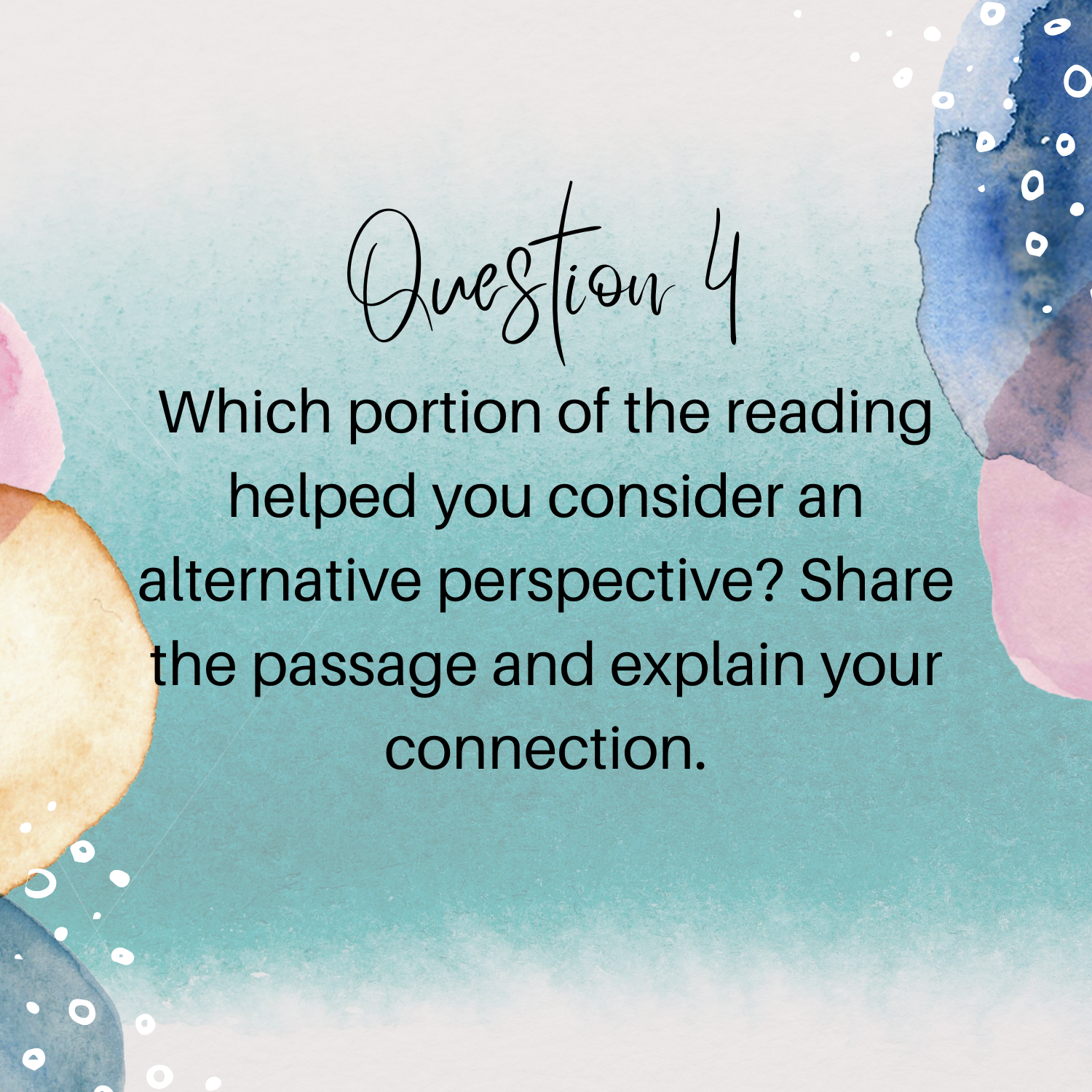
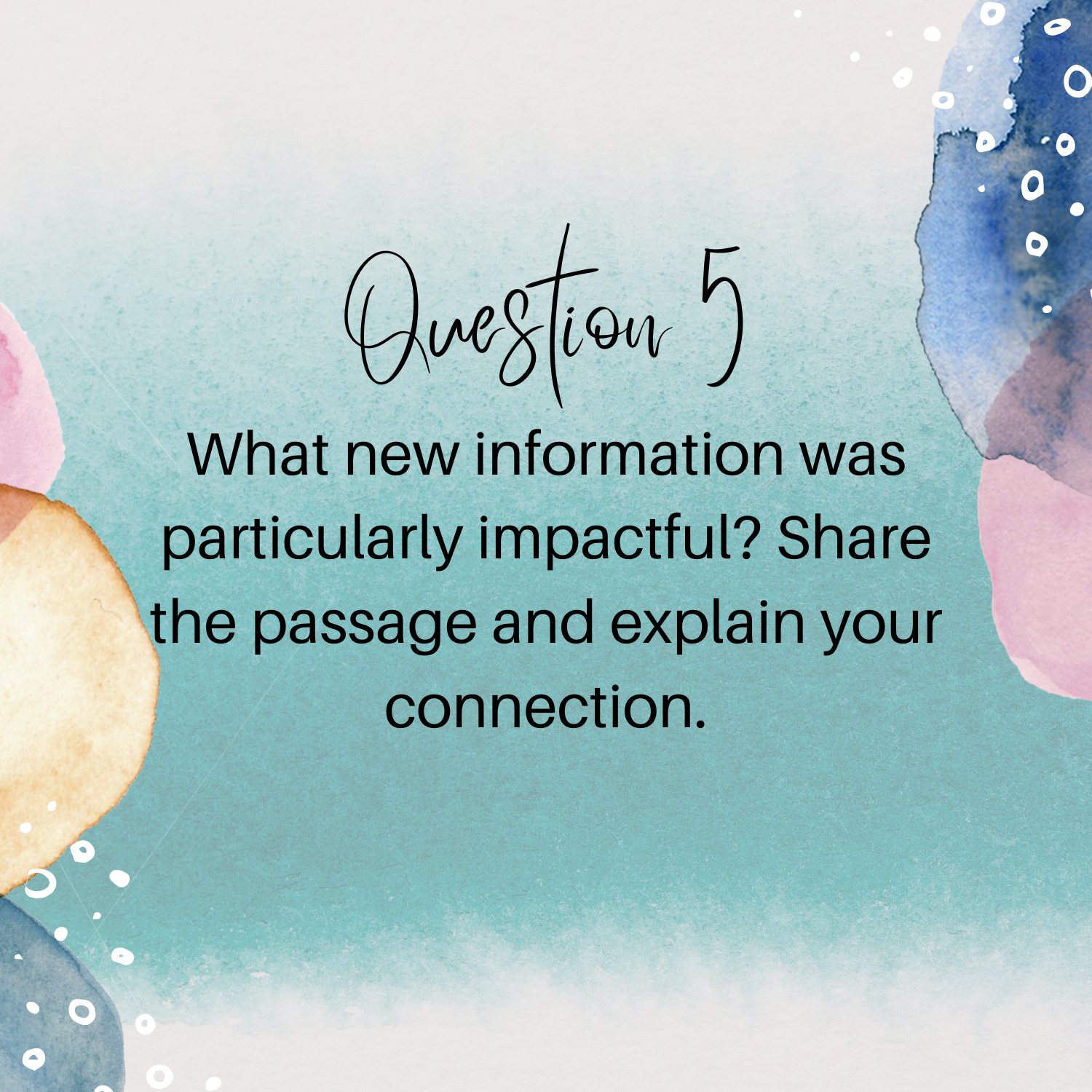
Conversation Cards. The use of Conversation Cards can help students engage in focused conversation about course content. Students can either draw random card or review all cards and choose the one that is most appealing to them.
Conversation Card Example 1Conversation Card Example 2Conversation Card Example 3Conversation Card Example 4Conversation Card Example 5
Ending Class
Ending class with an individual account of progress toward mastering course content helps students self-determine their next steps.
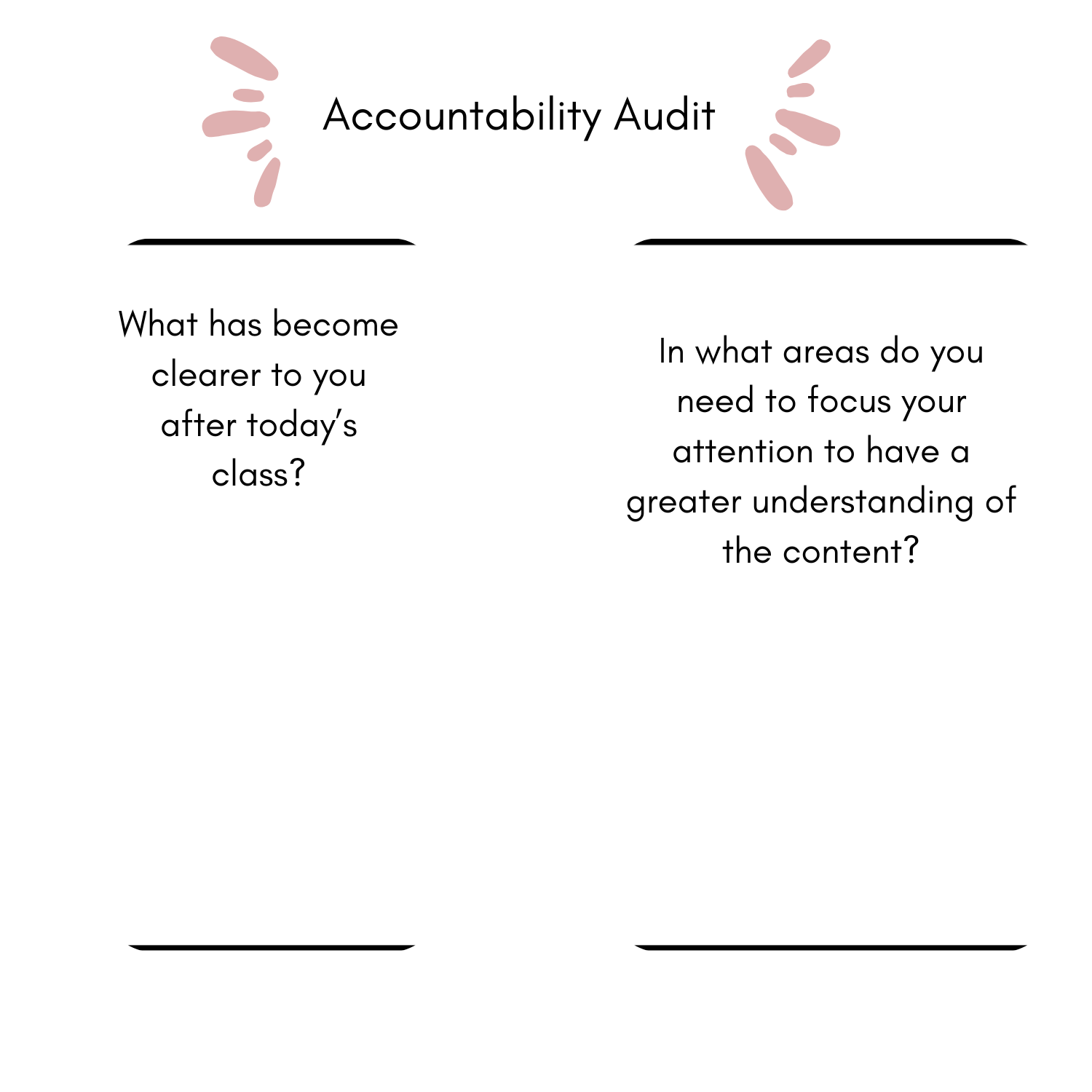
Accountability Audits. As a ticket out the door, students can complete an exit slip capturing their efforts for the day. Instructors may use the exit tickets as participation grades or as formative assessments to determine how students are understanding content. With larger courses, the instructor may elect to review a random sample of the work, telling students the work is about personal reflection and accountability. Exit slips may be handwritten or they may be done electronically.
Accountability Audit
One Last Word. Sometimes extra paper and written work just won’t work. An alternative is to ask individuals, or small groups of students, to suggest one word that sums up the main points of class. The main caveat is no word may be repeated. This one is fun, quick and pushes students to categorize their learning. Please consider a note of caution—this one can quickly turn into a small competition with individuals or groups trying to go first so “their” word is not shared by another group. Don’t worry—it’s all in good fun.
While engaging with content cannot be forced, finding tools that are interesting for students, focused enough for instructors to feel confident valuable class time is used productively and reinforces key points can make learning accessible to all.
Melissa Parks, PhD, is an associate professor of education at Stetson University in Deland, FL. Dr. Parks is an active member of the National Science Teaching Association (NSTA) and is currently a member of the NSTA Early Childhood- Elementary Science Teaching Committee. Her research interests include elementary pedagogies and environmental stewardship.
References
Deale, C. S., & Lee, S. H. (2021). To read or not to read? Exploring the reading habits of hospitality management students. Journal of Hospitality & Tourism Education, 34(1), 45–56. https://doi.org/10.1080/10963758.2020.1868317
Handelsman, M. M., Briggs, W. L., Sullivan, N., & Towler, A. (2005). A measure of college student course engagement. The Journal of Educational Research, 98(3), 184–192. https://doi.org/10.3200/JOER.98.3.184-192
Mizrachi, D., & Salaz, A. M. (2022). Reading format attitudes in the time of COVID. Journal of Academic Librarianship, 48(4), 102552. https://doi.org/10.1016/j.acalib.2022.102552
Parks, M. (2022). Drawing in college: Using sketchnoting to support student engagement. Faculty Focus. Magna Publications.
Severe, E., Stalnaker, J., Hubbard, A., Hafen, C. H., & Bailey, E. G. (2024). To participate or not to participate? A qualitative investigation of students’ complex motivations for verbal classroom participation. PloS one, 19(2), e0297771. https://doi.org/10.1371/journal.pone.0297771
Zepke, N., & Leach, L. (2010). Improving student engagement: Ten proposals for action. Active Learning in Higher Education, 11, 167-177. doi:10.1177/1469787410379680
Going to university was always my dream. I knew from a young age it was the only way to make a better life for myself. Despite growing up in foster care, I was determined to work hard to achieve that dream.
Please login below to view content or subscribe now.
University of South Australia vice-chancellor and Adelaide University co-vice-chancellor David Lloyd. Picture: Martin Ollman
University of South Australia vice-chancellor David Lloyd told a parliamentary committee meeting on Monday that 2,767 academic staff were transferred to the new Adelaide University last Saturday.
Please login below to view content or subscribe now.
The University of Tasmania’s (UTAS) move to cut its Indonesian language program amid plummeting enrolments has been described as “shortsighted” and “strategically incoherent” by a long-running provider of study tours to the Southeast Asian country.
Please login below to view content or subscribe now.
It’s natural that universities would contract. It is simply a market correction
At least, that’s what a colleague recently said to me, referencing the earlier period of—some would say unfounded—growth in the UK’s higher education sector.
But what we’re seeing now is not a neutral rebalancing of the books. It feels like a dismantling of the humanities, a retreat from the very fields of knowledge that hold the keys to our collective future.
When and where
The decisions being made about where and how to cut seem to reflect a logic of short-term profitability rather than long-term sustainability. Humanities programmes—often less lucrative than their STEM counterparts—have suffered disproportionately. Of the 400 job losses initially on the cards at Cardiff University, for example, as many as 120 were expected to be in the Arts and Humanities. Massive cuts in English, anthropology, theatre and music at Goldsmiths or philosophy, art history and music at University of Kent are only the tip of the iceberg.
And yet, this is happening at the very moment we most need the humanities. As we face accelerating climate change, biodiversity loss, and a wider crisis of sustainability, it may seem natural to double down on disciplines like climatology and engineering. Few would question their centrality to the so-called green transition. But while these fields equip us with essential tools to understand and respond to environmental degradation, they deal with symptoms rather than root causes.
Humanities in the environment
Across the UK, humanities scholars are already playing a critical—if underappreciated—role in responding to environmental breakdown. At Bath Spa University, Samantha Walton’s “Changing Practice” project highlighted how a place-based lens, informed by arts and humanities, can help people connect with and care for their local environments, potentially overcoming feelings of detachment when facing large-scale crises like climate change. Through public engagement events, the project connected creative practitioners and academics with communities experiencing disruption and change, nurturing new collaborative networks and contributing to policy discussions about the meaning, ecology, and distinctive cultural characteristics of place.
Researchers at the University of Leeds turned to British Romantic literature to explore how people have historically made sense of extreme weather, applying these insights to contemporary climate engagement. Their research informed collaborations with the Poetry Society and the Wordsworth Trust, including creative writing workshops and a youth poetry competition. These initiatives led to new learning programmes, shifts in classroom practice, and enhanced community well-being through creative expression. In drawing on the emotional and imaginative power of Romantic writing, the project showed how literature can deepen public understanding of climate crisis—not by simplifying it, but by inviting reflection, empathy, and a more expansive sense of connection.
These are not abstract contributions. They are shaping policy, influencing institutions, and broadening how we respond to crisis. Yet the structures that enable this work are being steadily dismantled.
The roots of the crisis
Our current crises stem from narrow, technocratic thinking: a mindset that externalised environmental harm, reduced nature to property, and prioritised short-term gain over long-term survival. The humanities help us challenge that logic. Cutting them is doubling down on what brought us here.
If universities are worried about low enrolments or declining interest in humanities programmes, the solution isn’t to axe them—it’s to reimagine them. It’s to find new ways of making the humanities matter to young people, and to society at large. That means reframing these disciplines not as relics of a pre-digital age, but as vital forms of inquiry and expression that help us live more fully, think more deeply, and engage more responsibly with the world.
The role of a university cannot be reduced to supplying the labour force demanded by the current market. It must be a place that helps shape what we value in the first place. That means exposing students to ways of thinking they might not have encountered before. It means helping them see the world—and themselves—differently. And it means igniting the desire to study not only what is profitable, but what is meaningful.
Pure imagination
Ultimately, the antidote to our overlapping crises is not just better data or smarter technologies—it is expansive imagination. And that imagination is cultivated not in labs or spreadsheets, but through the critical, creative, and interpretive work of the humanities. Literature, philosophy, history, and the arts help us make sense of ourselves and others. They teach us to interrogate the present, reckon with the past, and imagine futures that aren’t simply extensions of the status quo.
The humanities don’t just illuminate the blind spots of our civilisation—they challenge its assumptions, complicate its narratives, and expand the range of what we can think and feel. In a time of profound uncertainty, they offer not solutions, but orientation: a deeper sense of what is at stake, and why it matters.
To treat them as dispensable is to confuse utility with value. The humanities are not a luxury—they are where a society’s ethical and imaginative life takes shape. They won’t give us all the answers, but they keep us asking the right questions—and without that, no future worth having can be built.
Drive along any motorway in September and you will see car after car full of duvets, pots and pans, and clothes as students head off to pastures new. I remember my own experience, crossing the Severn Bridge with the bedding on the front seat of my Fiesta muffling Oasis’ Definitely Maybe.
This stereotypical view of a literal journey into higher education isn’t the case for everyone, however. In fact, far more students live at home during their studies than you may think.
The UCAS application asks students about whether they intend to live at home. In 2024, 30 per cent of UK 18-year-olds said they planned to live at home during their studies – up from 25 per cent in 2019 and just 21 per cent in 2015.
However, when we look beyond the headline numbers, over half of the most disadvantaged students (IMD Q1) live at home during their studies, compared to fewer than one in five of the least disadvantaged (IMD Q5). Regional distribution will have an impact here, particularly London.
Scottish students are more likely to live at home during their studies. On a recent visit to Edinburgh, all the students I met spoke with excitement about their plans to study at their chosen university within the city. By contrast, Welsh domiciled students are the least likely to live at home during their studies.
In London, 52 per cent of 18-year-olds progress to HE – with around half of those students staying in London, making it unsurprising that the capital sees the highest proportion of live at home students in England.
Cost of living pressures
Cost of living is undoubtedly influencing student choice. At the January equal consideration deadline, UCAS saw a 2.1 per cent increase in the number of UK 18-year-old applicants – a record high. However, regular readers of Wonkhe will know this also represents a decline in the application rate – the proportion of the 18-year-old population applying to HE, and UCAS insight increasingly points to the cost of living playing a role.
Our latest survey insight suggests that 43 per cent of pre-applicants feel they are less likely to progress to HE due to cost-of-living pressures, up from 24 per cent in 2023 – although their commitment to going to university remains high.
Financial support is also of growing importance to students when it comes to deciding where to study. While finding the perfect course content was the most important factor when shortlisting universities (49 per cent), the financial support available while studying (such as a scholarship or bursary) was a close second (46 per cent). Specific cost-of-living support offered by universities was third (34 per cent).
The availability of support with the cost of living has risen in relative importance as a factor when shortlisting universities from 12th in 2022 to 3rd in 2024 – a significant shift, which suggests a change in student mindset. There have also been large changes in rank importance of “universities that are close to home” from 9th to 4th, “universities with low-cost accommodation” from 13th to 7th and “universities I can attend but still live with my parents” from 16th to 11th.
Source: Potential applicants for 2025 entry, 1,023 UK respondents, Dec 2024–Jan 2025
It isn’t just at the point of application where we see the cost of living impacting choice. In 2024, UCAS saw 43,000 students decline the place they were holding in favour of an alternative institution or subject – making this the largest group of students using Clearing.
This is not a spur of the moment decision, with 52 per cent having already decided to do this prior to receiving their results and a further one in five considering it based on their results.
When asked what drove their decision, 23 per cent told us they had a change in personal circumstances and 17 per cent wanted to live somewhere cheaper. We also know this impacts on all cohorts of students – 19 per cent of international students that don’t accept a university offer through UCAS tell us they have found a more attractive financial offer elsewhere.
However, the primary reason that students use Decline My Place is linked to the course, with 31 per cent changing their mind about the subject they wish to study.
Support measures
It’s clear that cost of living and financial support is a key factor influencing student choice and so we must ensure this information is easily accessible and understood by students.
Students tell us they’d like more practical information about student discounts, financial support packages or bursaries/scholarships. UCAS will shortly be launching a scholarships and bursary tool to promote these opportunities to students.
Around half of offer holders in 2024 recalled receiving information about cost of living support. This presents a timely opportunity for any university staff working in marketing, recruitment or admissions to ensure information about financial support is easy to find on their website, along with information about timetabling to help students understand how they may be able to balance work and study commitments.
There will be certain groups of students that are even more acutely impacted by cost of living challenges. Last cycle saw a record number of students in receipt of Free School Meals – 19.9 per cent – enter HE. Whilst it is only a small part of the puzzle, UCAS has removed the application fee for these students.
Cost of living pressures are likely to persist, with students continuing to assess the value of HE in this context. The sector should continue to highlight the benefits of university study as a vehicle for social mobility, along with the graduate premium – the higher earnings they typically earn compared to non-graduate peers. But we also need to make it clearer how HE of all forms remains accessible – from funds for travel to open days, to in study commuter breakfasts, hardship funds, cost of living support, and high-quality careers guidance to support graduate employability.
This article is published in association with UCAS. It forms part of our ongoing series on commuter students – you can read the whole series here.