May is Mental Health Awareness Month, a time to elevate conversations around mental wellbeing and reduce the stigma that surrounds it. In recognition, we’re sharing stories directly from students who are navigating the pressures and facing the challenges of higher ed life today.
One of those students is Pranav Harwadekar, a junior at Texas A&M University. Here’s Pranav’s perspective, in his own words.
The power of connection
If there’s one thing I’ve learned as a college student, it’s that connection isn’t just helpful, it’s healing. In the middle of exam stress, academic pressure and juggling 12 open tabs of assignments (and let’s be honest, at least three of them are YouTube, Instagram and Tiktok), having people around you — friends, study partners or just someone to grab a coffee with — can make all the difference.
Connection isn’t a one-size-fits-all thing. Some people find it during big events, others in quiet moments. As a student navigating a hectic schedule full of coding projects, data analysis and meetings (shoutout to the group projects that always start at 9:00 PM), I’ve had to find creative ways to build community. And in doing so, I’ve realized it’s not just about making friends but about protecting mental health and helping others do the same.
So, here are five real ways I’ve been fostering connections with my peers, and why they’ve made college feel a little more human.
1. Group chats that turn into lifelines
Group chats usually start as the go-to place for messages like, “Wait…when is this due again?” or “Anyone understand question four?” But over time, something funny happens — they evolve. What began as an academic safety net in my computer science classes slowly morphed into a space where we actually talk. We rant when a project takes five hours longer than expected, laugh (gently) about who’s been making good use of extensions and spiral together when the exam review sheet drops and it’s 12 pages long.
Those chaotic late-night messages, the random hot takes on campus food and the “I give up, I’m switching majors” jokes? They bond us. There’s something comforting about knowing you’re not the only one losing it over a bug that shouldn’t be there.
2. Volunteering for a shared cause
One of the most meaningful ways I’ve built connections is through giving back. Whether it was organizing events with UNICEF or volunteering at Hope Health Care, I’ve learned that shared purpose creates real bonds. At Texas A&M, I joined the Engineering Honors Executive Committee. One of the events we take the most pride in is The Big Event — where over 15,000 “Aggies” step out to serve the local community in a single day of service.
There’s something powerful about rolling up your sleeves next to someone, whether you’re painting fences, planting trees or just picking up trash. You start out as strangers, but by the end, you’ve shared laughs, swapped stories and worked towards something bigger than yourselves. Service naturally opens the door to honest conversations and, often, unexpected friendships.
3. Making space for real talk
Some of the best conversations I’ve had in college didn’t happen in classrooms or club meetings. They’ve happened on the walk back from class, while sitting outside the library or in a dining hall when someone casually asked, “How’s everything going?” One time after a brutal week of exams, I admitted to a classmate that I was completely burnt out and questioning if I was even cut out for this major. Instead of brushing it off, they nodded and said, “Same.” That moment of honesty sparked a 30-minute conversation about stress, expectations and feeling like we were just trying to stay afloat.
I’ve learned that being vulnerable about things, like imposter syndrome, burnout or just needing a mental break, often gives others permission to open up too. It doesn’t always have to be deep. But carving out space for real conversations can turn casual classmates into people you genuinely trust.
Mental health isn’t just about crisis moments. It’s also about those small check-ins. A simple “How are you doing — really?” can go a long way.
4. Saying yes to the spontaneous stuff
Some of the most meaningful connections I’ve made came from saying “yes” to the random stuff: A late-night walk to the campus food truck. A last-minute invite to play spikeball on the quad. A spontaneous movie night where half of us fell asleep mid-way through.
College is full of moments that don’t feel significant at first. They become the ones you remember because they weren’t forced. They were real. It’s easy to say, “I’m too busy” or “Maybe next time.” But leaning into those little, unplanned hangouts has helped me find people who make the stress feel lighter and the experience way more fun.
Sometimes, connection starts with just showing up.
5. Celebrating the little wins together
College can feel like a never-ending cycle of deadlines, exams and late-night study sessions. It’s easy to stay stuck in survival mode — just pushing through one task after another. That’s why I’ve made it a habit to pause and celebrate the small stuff: finishing a tough project, surviving a brutal week or even just showing up when it was hard to.
Sometimes that celebration means grabbing dinner with friends, playing spikeball until the sun goes down or spontaneously turning someone’s dorm into a cricket ground. These moments might seem small, but they remind us to slow down and actually enjoy the experience. When we celebrate the little wins together, the big challenges feel a lot more manageable.
Why this matters (especially in May)
College can feel isolating at times. And Mental Health Awareness Month is a powerful reminder that we’re not meant to navigate it all alone. The truth is: connection doesn’t have to be big or complicated. It can begin with something as small as a “You good?” text, a shared laugh over a meme or sitting next to someone new in class.
When we make space for each other — through the small things — we build something bigger: resilience, community and a sense that we belong. Every time we show up for someone, or let them show up for us, we help create a more supportive and compassionate campus.
And if you’re reading this and feeling even a little disconnected — I get it. I’ve been there too. But trust me: connection often starts with a tiny step. Say yes to that invite. Send that message. Sit down at the crowded table. You might be surprised by how much better things feel when you do.
Written by Pranav Harwadekar, a junior computer science honors major at Texas A&M University.
Are your students having trouble connecting with peers in college? Share Pranav’s article for inspiration. Plus, check out an additional student’s perspective on navigating the “College Life Crisis.”
Liberty University, one of the largest Christian universities in the world, presents a striking contrast between its largely white residential campus and a more diverse, working-class population studying online. This divide highlights ongoing questions about race, access, and culture in American higher education—especially in religious institutions that promote traditional values while navigating a changing demographic and social landscape.
A Whiter Campus
As of 2021, Liberty’s Lynchburg, Virginia, residential campus remains overwhelmingly white. Seventy-four percent of students living and studying on campus are white, with only 4% identifying as Black or African American, 5% as Latino, and 2% as Asian or Pacific Islander. Less than 1% of residential students identify as Native American. In contrast to the national trend of increasing diversity on college campuses, Liberty appears to be growing whiter. In fact, the number of African American students on campus has declined in recent years, raising concerns about how welcoming the university is to students of color.
This demographic imbalance is not new. Liberty University has a long history of racial segregation and discrimination, particularly in its formative years under founder Jerry Falwell Sr., who defended segregation in the 1960s and opposed civil rights legislation. While Liberty’s public stance has changed over the decades, the legacy of those positions still casts a long shadow.
A More Diverse Virtual World
Meanwhile, Liberty University Online (LUO) paints a different picture. In 2017, only 51% of its undergraduate population identified as white, compared to 15.4% who were Black or African American. Hispanic and Latino students made up 1.7%, and students of two or more races, 2.3%. A significant 26.5% of LUO students were categorized as “race/ethnicity unknown,” potentially obscuring additional diversity. These students come from all 50 states, Washington, D.C., and 86 countries, with more than 30,000 military students and over 850 international students among them.
LUO students are also disproportionately older, more likely to be working full-time, and often seeking degrees for career advancement or personal growth rather than the traditional “college experience.” Many are first-generation college students or part of the educated working-class navigating life through faith, family, and financial constraints. In contrast to the traditional campus, LUO’s virtual classrooms are where Liberty more closely resembles the multiracial and socioeconomically diverse America it often claims to serve.
The Racial and Class Divide
This bifurcation between Liberty’s on-campus and online populations underscores a larger tension within the university: a cultural and racial divide that mirrors the broader fissures in U.S. society. The residential campus, steeped in conservative Christian traditions and a homogeneous student body, promotes a culture aligned with white evangelicalism. Meanwhile, its online division serves a more varied student population—many of whom are drawn to Liberty for its affordability, flexibility, and religious identity, but may not share in the campus culture or feel represented by its leadership and branding.
Reports of problems faced by Black students on campus—including concerns over campus climate, lack of representation among faculty, and curriculum that minimizes racial history—suggest that Liberty’s commitment to diversity is uneven at best. While the university has made modest gestures toward inclusion, critics argue that these efforts are often performative and fail to address systemic issues rooted in the institution’s founding principles.
Conclusion
Liberty University’s dual identity—as a white-dominated, conservative campus and a more diverse, online workforce training hub—raises difficult but necessary questions about race, class, and the role of religion in higher education. For an institution that claims to train “Champions for Christ,” the challenge remains whether it can reconcile these differences or if the divide will only grow starker in the years ahead.
Higher education is designed to be a space for open inquiry and disagreement, but encouraging students to engage in constructive dialogue can be a challenge.
A January survey by the American Association of Colleges and Universities found that a majority of faculty believe they should intentionally invite student perspectives from all sides of an issue, and that they encourage mutually respectful disagreement among students in their courses.
Students, however, are less likely to say that they’re exercising these muscles. A 2022 survey by the Foundation for Individual Rights and Expression found that 63 percent of students felt too intimidated to share their ideas, opinions or beliefs in class because they were different than those of their peers. About 84 percent of respondents agreed that students need to be better educated on the value of free speech and the diversity of opinion on campus.
A course at the Joan B. Kroc School of Peace Studies at the University of San Diego pushed master’s students out of their comfort zone by engaging them in challenging and vulnerable conversations. The class, Crossing the Divide, taught by Sarah Federman, associate professor of conflict resolution, took nine students on a two-week trip across the southern U.S. in May 2024, starting in California and ending in Washington, D.C. Throughout the journey, students visited historic sites, interacted with strangers, discussed polarizing topics and learned to develop empathy across differences.
In this episode of Voices of Student Success, host Ashley Mowreader spoke with Federman to learn more about her class, the trip and some of the lessons she learned about engaging students in constructive dialogue.
An edited version of the podcast appears below.
Q: We are talking today about a course that you created that is designed to help students create connections during polarizing times. I wonder if you can back us up to the genesis of this course and where the idea originally came from.
Sarah Federman, associate professor of conflict resolution at the Joan B. Kroc School of Peace Studies, University of San Diego
A: Sure. So I had been working on a book about the French National Railways, its role in the Holocaust and how it tried to make amends. I won this Amtrak writing residency—which doesn’t exist anymore, which is a big tragedy; I hope they start it again.
I got to crisscross the United States on a train while editing the book. And I didn’t really get much editing done, because it was so much fun just seeing the country, binge-watching the country, talking to strangers, getting off at the stops. And I thought, oh, man, if I ever have a chance to teach—because I didn’t have a teaching job at that point—I was like, I want to pick everybody on the train. This would be the best classroom. So that’s where the idea came from.
Q: Why a train specifically? There are a lot of ways to get across the U.S., and our rail system isn’t the best compared to some other nations. Why was it so inspiring to use the train?
A: I don’t know if you’ve noticed how loud flights are. I put in my earplugs because it’s so loud, if you even wanted to talk to somebody—and you only have the person next to you. You’re trying to decide if you want to talk to this person for six hours or not. It’s much more closed, and you can’t see much for most of the flight, so that doesn’t really allow the kind of socialization and visibility, although you do get to see below you and the sense of what you’re flying over.
The car, you just have your road buddies, so maybe you’ll talk to people at a gas station or a restaurant or an electric charging station, but you can choose not to. But people who go on the train for these longer trips have chosen it for the experience, and so there’s an openness and an adventure attitude that makes people really friendly. So that’s why train.
Our trains are not fast. We don’t have high-speed trains, so you see the country kind of slowly, which is actually really nice. You roll by towns, and you get to think about the people. In France, you know, you go by so fast you can barely see anybody you know, because your eyes are like [darting].
Q:That’s awesome. Tell me about the course design when it came to building this and mapping out, literally, where you wanted students to go.
A: I actually hired a student to help me. We spent a year and a half planning this trip, because the trains stop at weird times—like, we really wanted to go to Yuma, for example, but the train arrived there at 3 a.m.; we’re not gonna arrive at 3 a.m. So we had to pick some of [the destinations] based on when the trains left, and also what we could do in these different sites and how different they would be, one from the other, and how different they would be for the students. Like, what would be the most different we could expose you to? So those were all the things we had in mind.
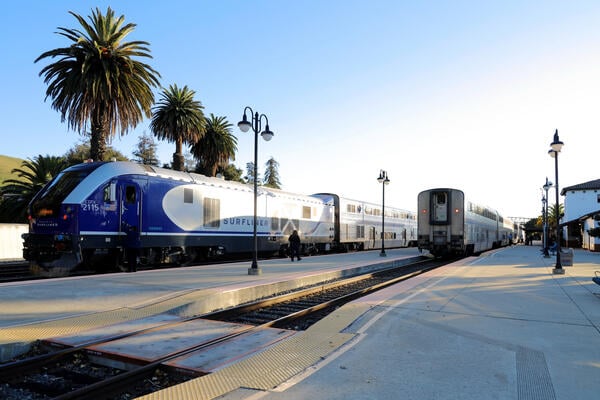
We started in San Diego, and we took a train up to Los Angeles—and that train is amazing. You just watch surfers and dolphins, all the way up to L.A., and then there were all these people on the train. So we talked to those strangers. And then L.A., Tucson, Houston, New Orleans, Birmingham, took a stop in Montgomery, and then D.C., where we ended in front of the Constitution and the Declaration of Independence [at the National Archives]. But in each of those stops, we [got] off and went to smaller places.
Q: When it came to preparing students to engage with others, what kinds of conversations were you hoping they had? Was there any sort of guidance on how to engage with other people?
A: [The students] were most nervous about talking to strangers. They’re like, “We’re gonna have to do what?” They were terrified.
I remember the first night we were in the L.A. train station getting ready for our first overnight train to Tucson, and like, that was just the nerves of, like, “Oh my god, oh my god. What are they gonna say?”
We read a really helpful book by Mónica Guzmán, [I Never Thought of It That Way] [that] talked about how to talk [and] why you want to talk across difference. It’s a cute book. It’s really accessible. There are some drawings in it and the students really connected with that.
Once they got over [the fear], it was really easy, but in a way, they almost needed the invitation to talk to strangers from me. I can tell you about some of the conversations, but that was the biggest fear.
One thing I’ll say is I knew that the strangers would enrich their lives, but I did not anticipate how much [the students] would enrich the other people on the train. I saw them lighting up other people. We’re nervous about how other people are gonna see us, but we also don’t realize the gift we are to other people.
Q: That’s really cool. I was also curious about the students. You took nine students in the spring of 2024. Were they from San Diego? Were they from everywhere? Was this a trip that was exposing them to new and different parts of the U.S.?
A: Great question, because I really was wondering that, too.
Some of the students had really traveled, but they hadn’t traveled in the U.S., in the same way, or they’d driven across maybe quickly. We had a few U.S. citizens, a Canadian, [all] different ages, like 22 to … we had some older folks.
It was a really nice mix, but again, people haven’t really seen our country in that way, or we’re just trying to get from point A to point B, we’re just trying to see what this country looks like. So I think for almost all of us [it was new]. I actually hadn’t been to half the stops.
Q: How was that for you, navigating those spaces for the first time alongside your students?
A: It was a good lesson. They were so great, so they rolled with it. But I was like, it would have been really helpful to know … I mean, they’re so competent, and we all figured things out, but I think it would have been [better] if I’d known the space better. Next time I’ll be able to get different speakers [to speak with students], knowing where we have more time, knowing distances.
But actually, I think in a way, it made me fresh, too, and it kept me open. Like, “OK, I’m the leader, in a sense, but we’re co-learning and co-creating this experience.”
Q: One of my favorite parts of student experiential learning is that reflection piece—getting students to sit down, maybe write about it or talk through those experiences. What was that reflection piece like?
A: I gave everyone a journal with a sticker for our class, and everyone had writing assignments. One student made this beautiful scrapbook; they took napkins from places and [wrote] all over.
Every morning on WhatsApp, I’d write the writing prompt of the day that would have them reflect upon where we’d been. Did they anticipate a place to be a particular way and then it wasn’t?
The most surprising outcome of the writing exercise for me was I asked them at the end to rate which cities they would want to live in, and for many students, Birmingham, Ala., ended up in the top two.
Q: Wow. Why was that?
A: I know, and you wouldn’t think that from students who are studying in San Diego on the coast. You’d think they’d want to be on the coast, maybe. But they thought [Birmingham] was super livable. They’d made all these great parks. It was affordable, it was relaxed, it had great arts, it had a university. And so they’re like, “I can live here.” And I know one of the stresses for younger people is like, “How can I afford to live in a place?” And they saw it, and they’re like, “I could live and thrive here.” And that helped me understand what was on their minds.
Q: We talk a lot about flyover states in travel, like, these are just places that you pass through. But I think having that intentionality to show students, Birmingham, Ala., actually has really cool things, and you’d never know unless you got off the train or got out of the car and looked at it. I hope it sparked a bit of adventure in these students, at least, to maybe explore areas that they wouldn’t typically.
A: I hope so, too, and really that they now are anchored in what they saw in these places, and so when they hear about them in the news, or this and that, they have their own experience as well, to anchor any other stories they’re hearing.
Q: I love that you mentioned media, or how we consume stories about places that are unfamiliar, because that was one of the goals [of the course]: to create empathy with people who might be different, demographically or in their living situation or their political views.
I know that was a big driver in this, creating conversations in a challenging time for our country. I wonder if you can talk about that growth, or that experience that you saw students having to step out of their own comfort zones and learn and empathize with others.
A: I think we wanted to get [experiences] and we will, next time, get even more experiences.
I took them to the 16th Street Baptist Church, which is the famous church where a bomb exploded during the civil rights movement and four little girls were killed. And then I was like, “Well, I think it’s Sunday, so we might as well go to church,” and some were like, “Oh my god, we’re not gonna do that,” like, terrified, “Oh my god.” This is a famous church. Let’s just, like, see what they have to offer, and see what they’re talking about.
We were so lucky. There was a really young pastor. He was like, 22, and we were sitting there in terror. And then it was like, “Oh, that was actually kind of interesting.” But that was a real out-of-your-comfort-zone [moment].
For example, there’s a lot of collective, understandable concern about climate change and the fossil fuel industry, and when you meet the people who are in the industry, they’re not evil people. Most of the people who work in it or work in offshoots of it, it’s where they grew up. This is what’s there. These are the jobs. And so you start to realize, “Oh, right, these are people who have a job or are raising a family,” and it helps to stop the deep othering. You can still be tough on the problem, but that idea of being soft on the people.
We had a guy [in the class] who was a marine. He’s a big guy, so he had the courage to go up to this other really big guy on the train. He was filled with tattoos and stuff, and they had a great conversation. The [stranger] apparently, trained with Mike Tyson or something. But he was like, “I was even nervous around this guy.”
We were really demographically different as a group. Like, we had gender differences, ethnic differences, so you got to see and be like, “Now, when you move through that space, what did you notice? What did you notice?” And that was fun, too. It wasn’t designed that way. It was just who signed up for the class, but that was fun to see. We made some surprising friends along the way.
Q: Do you have a favorite anecdote or interaction that you or a student had?
A: One of the nice things about the overnight train is that you have to eat meals with different people, with strangers. We met this couple, a doctor and her husband, and we got really chatty with them. One of the students said she spent the evening talking to this woman and just like, cried out, like all the things she’s worried about in the world. And she said, “This woman consoled me.” Her name is Consuelo. She’s like, “[Consuelo] helped me heal my heart in such a powerful way.”
And we then ran into them. We met them in Tucson, we ran into them in New Orleans on the street. We had this happy reunion, because we had all talked to them and benefited from them. And there’s some things, I don’t know if you’ve ever found this, but sometimes you can share more easily with a stranger. And so there were a lot of conversations, like the marine ended up learning how to make, like, essential oils and candles. I was like, given this little crystal from somebody. Students were up knitting with people, playing card games at night with strangers.
Of course, when there’s a lot of uncertainty, we close up, and fear makes us quiet, and then that just allows more fear, more distrust, and it’s a spiral. So we went with an intention to not do that. We wanted to enjoy each other, and we wanted to enjoy this country, and we really did. I mean, we had no problems with anybody, actually, on the whole trip. I mean, I don’t think we created any problems.
Oh, actually, we did have one sort of contentious conversation on the way to L.A. that was pretty funny …
Q: That’s pretty early in the trip to have it, too.
A: Yeah, I forget what I said, but she was, like, not having it. I think she was really against electric vehicles or something. I just didn’t expect it. So I was like, “Oh yeah, OK, yeah, no, it’s true. The batteries are a problem. I’m with you.”
Q: If you had to give advice or insight to somebody else who wants to do something similar, maybe not that long of a trip or that far across the country, but what really made the experience work? Is there anything you would do differently?
A: Great question, especially as I’m looking to plan one for next May. It definitely doesn’t have to be long, like, even a short trip—I mean, the longer trips, you have people who are touring and so they’re, like, more open—but I would have students sit next to different people and I would have the group be small enough that the students talk to different people.
I don’t know if listeners have heard of Bryan Stevenson, who wrote Just Mercy and created the Legacy of Slavery museum, but I just heard him give a talk in San Diego a couple weeks ago, and he was talking about the importance of being in proximity to the people who are having the experiences. The closer you can get students—we went to Homeboy Industries, which is the largest gang rehabilitation center in the world. It’s in L.A., and they got to talk to some of the people who were in that program, and the stories, like … I could never recreate that.
It’s doing that piece, getting them in proximity and creating opportunities for them to have one-on-one little conversations with them, like, “Hey, I had this question,” so I think that’s important.
I’m taking a bunch of students into prison in a couple weeks to also get in proximity to the people we don’t hear from. So I’d say a smaller group, be in proximity.
You can also have, like, for Homeboys, we [spoke with] somebody who was in recovery, but we also had a criminologist with us, so she could talk about the systems and he could talk about the lived experience. So it’s nice to have both.
Q: I think there can be a narrative that people writ large, but especially young people, do not want to engage with people that are different from them. And I wonder, just based on your experience with this trip, and then also some of this other work that you’re doing taking students into prisons, how we can combat that narrative and reaffirm that it is important to speak across differences, and that people are eager to learn how to do that?
A: I’m with you. I understand. I don’t love to dive right into difference. But I think the starting point is that we actually have a lot more in common than is different. Like, we focus on the difference, and that creates a lot of pain and separation.
I mean, I bet we’re all even close with people with whom we really disagree on certain things, but it just doesn’t come up, like we just talk about, you know, the Venn diagram, where we overlap, right? But there’s parts of us that don’t quite fit.
So you can always find connection really easily. You talk about the weather, you can complain about a train being late, or even something silly, and then just bond over that, and then just let it roll.
I think going headlong into difference is a hard place to start when there’s no trust in the relationship, and even when there is, you kind of want to edge your way around it. But I think we all need to learn it; I need to learn it, too. I’m better at it in some contexts than others, like when I’m surprised, like that woman [who opposed electric vehicles], I was like, “Wait, OK, hold on, I didn’t know I was gonna run into difference right here.” But it’s a practice, so I don’t know, maybe I teach what I most need to learn. So I’m learning it with the students. It’s a great process, and it’s just so great to be open about it.
But I think what we end up finding is that we have a lot more in common. Like, when you get under the top issues and, like, what do people care about? They want to feel safe. They want their families to be healthy. They want to be healthy. They want to feel prosperous. They want to enjoy what they’re doing. They want their kids to thrive. They want clean air—like, ultimately, under it all, are we really that different? I don’t know.
Q: That’s great. Higher education is doing its best to be more constructive when it comes to dialogue and embracing students with differences and teaching how to have productive conversations on campus. Because we’ve seen—I think, especially in the past year and a half—how escalations can happen on campus. So I like that this is a microcosm of, “Here’s how you take this [skill] out into the real world. Here’s how you practice. Here’s how you do it in a safe way with friends, and then go forth and do.”
A: Yeah. In class, I have students create role-plays about conflicts that they’re interested in, with lots of different perspectives. So students get to practice talking with people who have different views, but we’re all acting, and they get to try on different views. I think that’s good in the classroom, too, when you can’t get on a train right away, role-plays where students can experience difference when acting, and no one has to take responsibility for different viewpoints.
Q: It’s Jane Doe saying those things, not me, Ashley.
A: Exactly! “Jane said that, I dunno.”
Got Leads?
If you live in or have connections to places and spaces in the Southwest or Southern U.S. that hold cultural, national or personal significance that you think would be an interesting and educational stop for her class next spring, Federman said readers can email her.
Q: What’s next? You mentioned another trip coming up in May—what are you hoping and planning for?
A: Yeah! That’s gonna be the 250th anniversary of the country, so that’s going to be a very interesting time. We’ll still plan to do it in May. We’ll do a similar route, but I’m thinking of some different ways to do it that tie into those themes, glories and traumas of our 250-year history. I think that’s sort of the theme I’m gonna go with.
I definitely want to do more with talking to strangers. I want to go, if they’ll let us in, to like a pancake breakfast at a church, or some kind of county fair or a rodeo. We want to get into small-town things. We’re a small group, so we won’t be overwhelming, but just to really get a sense of a place.
Get more content like this directly to your inbox. Subscribe here.
Perhaps you just haven’t had time to keep up with the advent of agentic AI. Or you simply didn’t realize that AI is not just a fad in higher education; rather, it is our best hope to survive the pervasive budget cuts and dropping enrollments. Or, perhaps based on your look at AI tools in 2023, you found them too unreliable and subject to hallucinations to take them seriously. Here’s hoping that this summer provides you a bit of time spread across the season to catch up with the technology and begin the fall term with the knowledge and experience to make AI the best professional assistant you have ever had.
Instead of facing a stack of projects and problems alone, you will have a Ph.D.-knowledge virtual assistant working at speeds far exceeding human thought:
“According to OpenAI, o3 earned a record-breaking score on the ARC-AGI visual reasoning benchmark, reaching 87.5 percent in high-compute testing—comparable to human performance at an 85 percent threshold. The model also scored 96.7 percent on the 2024 American Invitational Mathematics Exam, missing just one question, and reached 87.7 percent on GPQA Diamond, which contains graduate-level biology, physics, and chemistry questions.”
These assistants work 24-7, without vacation or holiday breaks. At the end of long day of work, you can pose complex problems to an advanced deep research model and it will conduct research, compose a detailed report, and prepare follow-up questions while you are eating dinner (I have experienced this myself; reading the results over dessert is so much more satisfying). I have also awakened in the early hours of a Sunday morning with a great idea to pursue for work. I tapped it in directly to one of the advanced models and awakened to a 20-plus-page report complete with comprehensive citations and suggestions for further research later that morning.
AI developers have made great strides in avoiding hallucinations and off-target results. Among the improvements are the utilization of retrieval-augmented generation, a natural-language processing technique that taps an expansive database to “enhance the context and accuracy of generated text.” Those who may have stopped using AI because of errors of the past will be surprised to see the far more consistent and accurate results of today. Despite these improvements, I continue to recommend that users submit nearly identical prompts to two or three of the leading models of AI. Although my motivation for that recommendation primarily is that you are likely to gain additional, useful information from the added results.
Today, most of the leading models provide multimodel features that can input, process and output various types of data beyond text, such as images, audio and video. This enables engaging the prompter via voice communication. It supports the generation of stunning images and rather brief video segments. Google’s Notebook LM tool accepts input documents and related media about which it can create a podcast, allow listeners to ask questions and get audio responses, create crossword puzzles based on your lecture notes, and even create virtual debates.
The tools I most commonly use are those from OpenAI, particularly o3; those from Google, particularly Gemini 2.0 Flash for general work and Gemini 2.5 Pro for detailed research; and Anthropic’s Claude 3.7 Sonnet. However, there are many more models available today that may better meet your needs or preferences. One of the projects I have been pursuing lately is tracking research, new treatments and other emerging information about a particular disease. I am using Gemini 2.5 Pro and ChatGPT o3, running updates every week. The results have been comprehensive and well cited. Notably, ChatGPT o3 noticed that I had been asking for reports every Tuesday and asked if I would like it to run the same prompt every Tuesday and email the results to me. Such an action could be considered elementary agentic AI, in which the tool can analyze needs, create a plan of action and with permissions take autonomous actions:
“Agentic AI is an AI system that acts autonomously, adapts in real time, and solves multi-step problems based on context and objectives. They are built of multiple AI agents that leverage large language models (LLMs) and complex reasoning. This enables them to have enhanced decision-making abilities and natural language understanding, facilitating more effective and intuitive user interactions.”
The power of AI agents is only beginning to be realized; 2025 has been dubbed the year of the agent. It is anticipated that millions of agents will be created by the end of the year. Their potential is enormous, reaching beyond the individual to take actions on behalf of a human.
So, how can you get on top of this AI trend this summer? Prompt engineering—asking questions in proper context, detail and format—is a good place to begin. You might consider enrolling in one of the many low-cost or free prompt engineering online classes. The Google Prompting Essentials course is $49 through Coursera. It takes just a few hours, and successful completion results in a certificate. There are also a number of YouTube videos that condense the contents of the microcourse. You may want to browse the Coursera catalog section on prompt engineering, which lists scores of classes from industry leaders, commercial vendors, colleges and universities that last from a few weeks to a few months in length. Many provide professional certificates.
I suggest you begin a course—many are self-paced—or one of the informal YouTube videos, then begin using the tools at every possible opportunity. Iterative prompting is the name of the game. Try reframing the prompt, providing additional information and including examples of what you are seeking for the tool to better understand your expectations.
Use your one or two chosen tools as often as possible. Ignore non-AI search tools for a while. You will notice that AI searching gets right to the best solutions rather than first listing the responses in order of those who paid for their place in the search response, as using Google to ask a question does.
Searching topics as they arise four or five times a day, refining each of those search prompts to better understand the capabilities of each tool, and searching across a wide variety of topics and disciplines will advance your expertise and comfort with AI. By the time classes begin in the fall, you will be prepared to save much time and effort by using AI. You will also be able to integrate AI into your daily routine, become more productive and share your expertise with your colleagues and students.
This is the text of a speech delivered by Nick Hillman, HEPI’s Director, to the 16th Annual Student Housing Investment Conference.
Good morning. It is wonderful to be here, even if the outlook for our sector does not feel quite as rosy as when I have appeared here in the past – and, given the new migration white paper from the Home Office, not as rosy as it felt just a few hours ago.
The currency of policymaking is ‘killer facts’: those one-off striking statistics that act as ammunition for policymakers.
One example of a recent killer fact is the Office for Students’ announcement in November 2024 that ‘nearly three quarters (72 per cent) of higher education providers could be in deficit by 2025-26’ (1), which has certainly concentrated minds.
A second killer fact currently obsessing policymakers is 782,000 (2), which is the number for net inward migration to the UK in 2023 and which is driving the new crackdowns.
In what is left of my 15 minutes, I want to focus on a few more killer facts.
First, just in case you have not come across the organisation I lead before, the Higher Education Policy Institute or HEPI is the UK’s only specialist think tank for higher education and a registered charity. Our goal is to prompt evidence-based conversations about higher education policy through engagement, publications and events. We are funded by most universities throughout the UK and a limited number of corporations, including some of the bigger Purpose-Built Student Accommodation (PBSA) providers, such as Unite Students, UPP and iQ, and we are very grateful for that support.
The killer number I wish to provide about our own work is 10: that is how many new bits of research we have produced since 1 January 2025 (3). The reports we have covered include:
We have also published 112 blogs since 1 January, covering the full range of higher education issues. The three most well-read pieces so far this year are:
Conferences like this one are organised far in advance and the title I was given is ‘New Government Policy – what does it mean for the Sector?’ All I can say is: I wish I knew. I suspect the organisers thought we might have found out the answer to this question by now when they first scoped out the agenda late last year.
But the fact is, aside from a letter from the Secretary of State for Education, the Rt Hon. Bridget Phillipson, to vice-chancellors from November last year, which chastised universities for not doing more on economic growth, access, teaching quality, efficiency and civic engagement, we are still waiting for a hint on what this Government’s legacy on higher education will be. So far, we have had more higher education policy from the Home Office and Ministry of Housing, Communities and Local Government than we have from the Department for Education.
I keep reading the administration is in its early days and needs time to find its feet, but it is now 10 months in. It took Tony Blair just two months after the 1997 election to announce the (re)introduction of tuition fees and it took the Coalition just six months after the 2010 election to announce the tripling of fees to £9,000.
We have long ago missed the boat for making significant changes to fees and funding for 2025/26 and we will soon miss the boat for making changes for 2026/27, by which point we will be halfway through this Parliament.
One of the reasons for the lack of clarity over government policy is that the shadow ministers who were responsible for the Labour Party’s approach to higher education and research in Opposition prior to the election did not end up in charge of those areas in government, so there was a new broom. This sort of sweeping out is now entirely normal. Which takes me to my next killer fact: in my 11 years leading HEPI, there have been 11 Ministers for Universities and 11 Secretaries of State for Education (4).
The biggest challenge facing institutions currently is obviously the financial one. Since the brave decision to raise the full-time undergraduate fee cap to £9,000 from 2012, inflation has been eating away at the sum so it is now less than two-thirds of what it was, in real terms: according to Mark Corver of DataHE, the current fee cap of £9,250 is actually worth just £5,714 in 2012/13 terms (5). That is the same level as when John Major felt it necessary to set up the Dearing review, with the agreement of Tony Blair in Opposition.
Mark Corver also points out in his recent fascinating LinkedIn post that an international student at a higher-tariff provider is now worth £69,000 (6) more to their university over the lifetime of a three-year course than a home student, as a result of the much higher international student fees. One possible response to that is to beat up on universities, as the Minister for Universities did earlier this week in a piece on the Telegraph website, for feathering their own nests. Another is to recognise that universities have not let their charitable status hold them back in becoming a vitally important UK export sector from which we all benefit – and also that it is our leading universities’ entrepreneurial spirit which has created the cross-subsidies that keep UK universities at the top of the international league tables, which ministers generally like to celebrate.
And despite all the accusations and denials, we should be honest that university staff would have to be super human not to take those stark numbers into account when deciding how many of their places will be reserved for people from other countries and how many for home students.
When I have spoken at this and similar events in the past, I have usually been optimistic on future student numbers. There are still some grounds for optimism in relation to both home and international students. For example, we have had decades of growth in UK higher education and the number of UK school leavers grows in each year of this decade.
We used to predict that English universities alone would need another 350,000 places for home students by 2035 (7) – and many more still if the opportunity to reach higher education were spread more equally throughout society. However, we are more pessimistic now because, while demand for higher education went up during COVID, it has slipped back in recent times.
In relation to international students, last week’s report from the Office for Students notes:
‘The reported non-UK student recruitment in 2023-24 was 15.5 per cent lower than last year’s forecast, largely because of a reduction in recruitment from January 2024 onwards [when the rules on dependants were tightened up]. This reduction is forecast to continue in 2024-25 with a small overall decrease in student numbers, meaning that entrant numbers are now projected to be 21 per cent lower than previous forecasts.’
Yesterday’s migration white paper was accompanied by a Technical Annex, which estimated the policy changes the Government has proposed will reduce incoming international students by getting on for 40,000.
In relation to home students, the Office for Students’ report notes:
‘In 2023-24, UK entrants were reported at broadly the same level as the previous year, but 10.8 per cent lower than forecast.’
When it comes to the future, the OfS chastise regulated providers for being over-ambitious and model some alternative options, which suggest ‘providers would face significant financial challenges in all scenarios.’
No one knows with complete certainty why demand is now so flat, but – when focusing in on home students – it seems to me the most likely causes are:
First, the cost-of-living affecting students, whose maintenance packages have not kept up with anything like the true cost of being a student – my killer facts on this are that 57% of full-time undergraduates now do paid work during term time (8) (according to the 2024 HEPI / Advance HE Student Academic Experience Survey) and also that, according to our calculations, students need £18k per year to live with dignity (9), which is significantly above the maximum maintenance loan – this number was calculated for second and third-years in houses of multiple occupation, but I can announced today that we are now working on a second iteration of the Student Minimum Income Standard with Technology1 and the University of Loughborough looking at first-year students in PBSA.
The second factor that I think is dampening demand is the negative rhetoric about higher education emanating from all sorts of places. In the last few days, we even have had two Labour MPs for northern seats say they are relaxed about the prospect of universities disappearing – one of them, Dan Carden, wrote in the Daily Mail that he ‘would close half our universities and turn them into vocational colleges.’ With friends like that, who needs enemies?
Before I sit down, I want to make just one more point. I was asked in the rubric for today to mention degree apprenticeships. So let me say that there is a whole lot of nonsense talked about them, especially to young people. They are amazing when they work out, such as when the apprentice knows exactly what profession they want to enter and to work in for the foreseeable future. I am proud to have a relative doing one. But despite all the promises, especially from the previous Government, degree apprenticeships barely exist for young people just out of school. Only 5% of Level 6 entrants are on degree apprenticeships (10) and the majority of them are 25 or over – just 13% were aged 18 in 2022/23. Moreover, many of those who do start a Level 6 apprenticeship do not complete the course. So for a conference like this one in 2025, degree apprenticeships remain something of a red herring.
This year’s Eurovision host city is Basel in Switzerland (“tiny but shiny”), which is also home to the country’s biggest and best Fasnacht.
Every year at the start of lent, the German-speaking regions hold a huge carnival with elaborate parades, artistic masks, and costumes, along with Guggenmusik – brass bands playing loud, off-beat music.
It’s the world’s only major carnival with Protestant rather than Catholic roots – so there’s all sorts of weird rules – picking up confetti from the ground is frowned upon, you must be a member of a registered “clique” to participate in costume, and masked participants have to remain completely anonymous during the parade.
It’s more focused on satire and social commentary than pure revelry, and naturally universities and their students have historically played a big role in that – faculties host workshops where students craft “Zeedel” (satirical verses distributed during Fasnacht) that cleverly comment on academic life or current events.
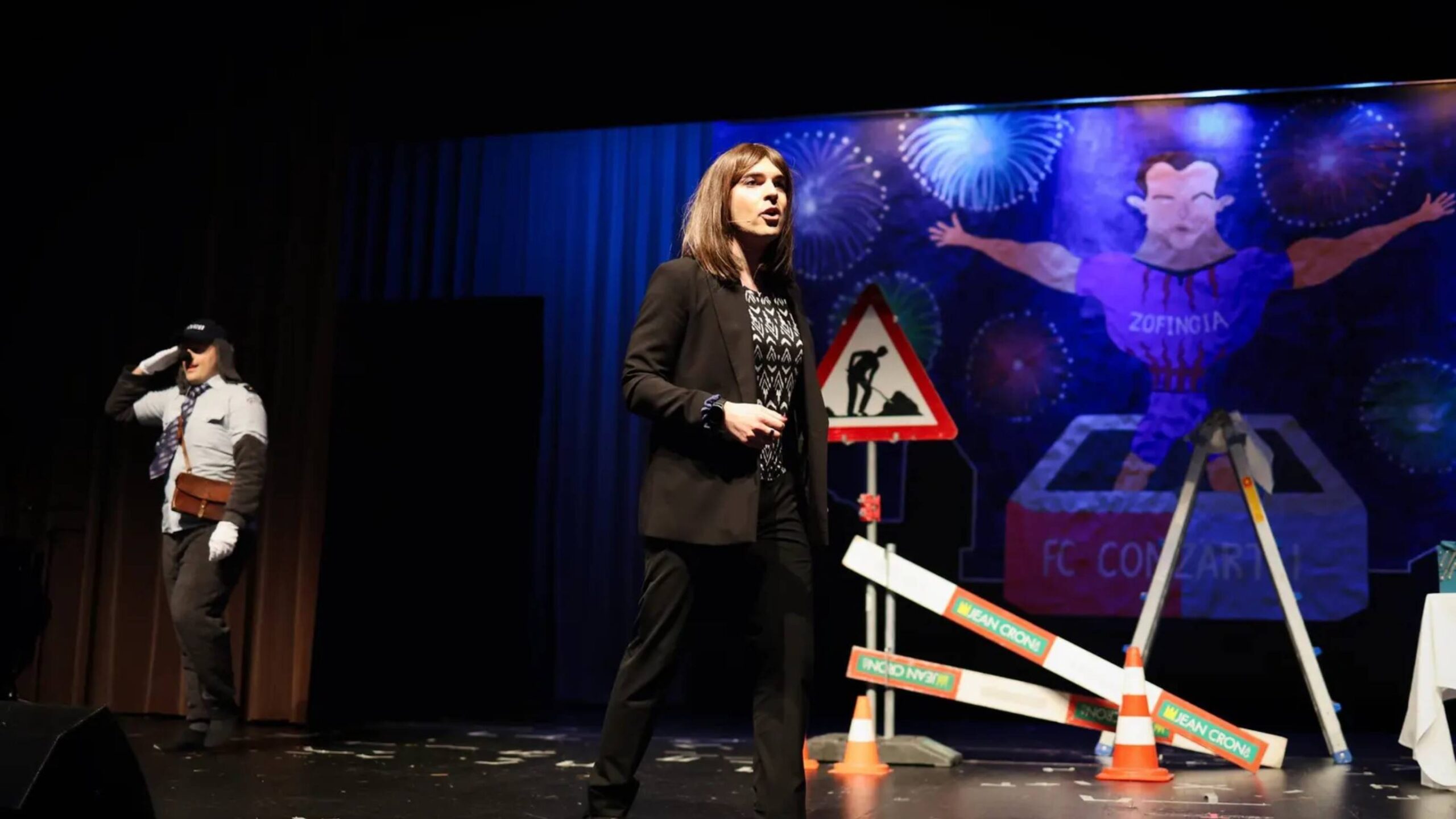
Some of the old student fraternities like Zofingia organise events like the Zofingerconzärtli, a big pre-Fasnacht performance featuring satire on key figures – this year there a parody of the University of Basel’s Rector Andrea Schenker-Wicki, with a cracking line about overstaying students who’ve “occupied study places for years and now even buildings”.
Drink a sip of beer as punishment
Zofingia has a problem, mind – its membership is male only, and last year the University of Lausanne and the Swiss Federal Institute of Technology Lausanne (EPFL) derecognised it as a result. The case escalated to the Swiss Federal Supreme Court – which ultimately ruled that public universities have the right to revoke recognition of associations that don’t align with gender equality principles:
“It is undoubtedly very valuable and can represent an advantage for one’s future professional network. If female students are denied access to this network solely because of their gender, they do not have the same opportunities as male students.
A few years ago, the Antifa student group in Basel attempted to prevent Zofinga students from making a public appearance at the Dies academicus (a big day when regular classes are suspended to allow for academic and cultural activities, and awards) on the basis of their discriminatory practices – activists pelted them with water balloons.
Having been the object of some of Zofingia’s Zofingerconzärtli jokes, it’s the activists that’ll be having the last light now, not leat because the University of Basel was the first in Switzerland to admit women as students in 1890 and is now under pressure to follow suit.
We noticed it and were surprised
Anyway back to this year’s Fasnacht – which starts at an ungodly 4am. This year one of the other cliques – the Central Club Basel (CCB) – created a theme for their lanterns criticizing breakdowns in communication in society and people existing in filter bubbles, all under the slogan “I won’t talk to you”.
The problem was that their 4am lantern depicted Donald Trump on a middle finger, and members wore giant middle finger masks. When videos went viral on TikTok and X (with over 23 million views), it was misinterpreted internationally as an anti-Trump protest rally in Switzerland – causing both diplomatic confusion and online outrage.
In the aftermath the clique’s leader, Andi Meier, argued they’d “hit the nail on the head” with the theme:
What’s happening now is, in fact, exactly that: A judgment is simply made and uploaded to social media without checking the facts.
Ding-a-dong every hour
Outside of carnival season, the University of Basel feels like a lot of elite-ish universities around Europe – although there are some distinctive things to note.
Its “double bell” system marks the “akademisches Viertel” (academic quarter), a centuries-old tradition dating back to the university’s 1460 founding. The first bell rings on the hour to signal the official class time, while the second bell 15 minutes later indicates when classes actually begin.
The tradition originated from practical needs – navigating between scattered medieval buildings, allowing professors preparation time, and accommodating imprecise timekeeping. Today, courses are designated as either “cum tempore” (c.t.), beginning 15 minutes after the hour, or “sine tempore” (s.t.), starting precisely on time, with most following the c.t. convention.
It offers a fascinating “try before you buy” thing. The “Course Auditing Program” allows anyone that’s interested to attend specific lectures without formal enrollment – participants pay CHF 60 per credit hour, with a strong conversion rate into actual applications, as well as a healthy level of attendance from the general public.
Just as in plenty of other European universities, there’s an Ombudsman’s Office – available to all university members for the purpose of dealing with internal university concerns and complaints. There’s also an (academic) integrity ombudsperson and a personal integrity function that attempts to set professional standards for studying and working together in a respectful and professional way.
Regular readers will know I’ve started to become obsessed with degree structures – here the finances of delivery hang together via the sort of interdisciplinary approach we’ve seen elsewhere, such that UG 180 students studying (for example) English complete 75 credits in the Wahlbereich (intra-faculty electives outside of the subject), picking and mixing their way astound core modules in other disciplines.
Students can also pick up 6 ECTS for internships, and because the university puts a high value on student participation and associative activity, those organising groups and events or sitting on university committees can earn “campus credits” worth 6 ECTS towards their actual degree, as long as they demonstrate the hours they’ve put in and the learning gained.
Pharma chameleon
The student housing association, known as “WoVe,” was founded by students in 1970 as a self-help organization to draw attention to the precarious situation students faced on the housing market at the time – today it operates thousands of bedspaces with rents as low as £350 a month – no mean feat in a city where a schnitzel and chips in the university canteen can set you back £15.
Its AI initiative is interesting too – a broad-based project aimed at addressing the challenges posed to our society by the ongoing development of artificial intelligence. New research findings are bundled and made visible, university teaching is being developed for the age of AI, and employees are being empowered to deal constructively with AI in the course of their work.
Basel is big in pharma – home to giants like Roche and Novartis – but its innovation ecosystem has only recently gained momentum despite the city’s understated culture where “billionaires cycle to bakeries.” Its new Innovation Office has dramatically increased spinout rates by benchmarking against powerhouses like Oxford and MIT – and takes just 4-6 per cent equity in spinouts with no upfront license fees, though entrepreneurs still face Switzerland’s high incorporation costs (CHF100,000).
My favourite thing, though, is the day long matriculation ceremony for new students – which along with the usual inspiring talks and introduction to the university’s history and traditions, involves students queuing up to sign an ornate matriculation book with carefully preserved pages of signatures dating back decades – all of which creates a profound sense of continuity and belonging that the Freshers Foam Party back home is never going to match.
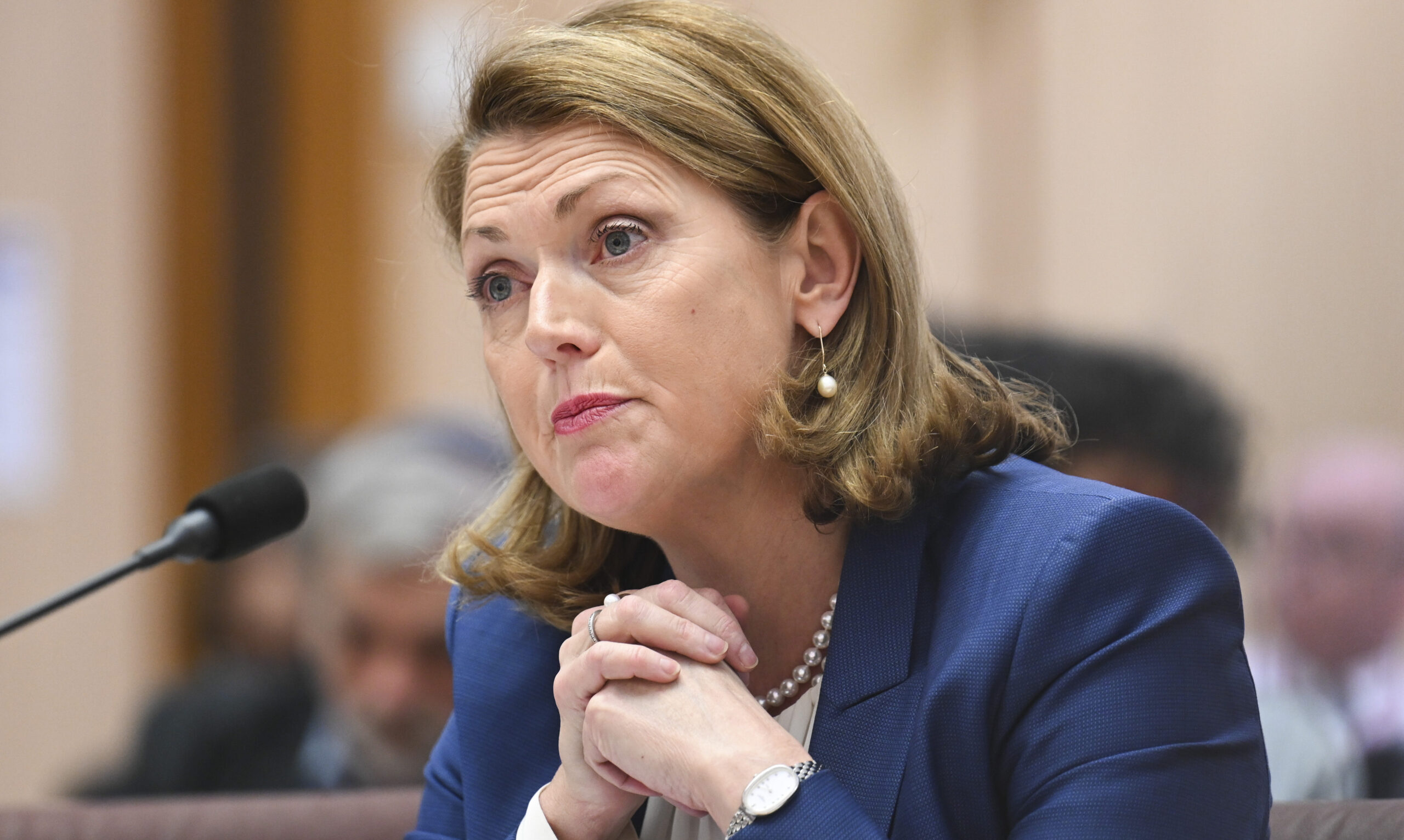
Monash University vice-chancellor Sharon Pickering appears at the second inquiry into antisemitism at universities at Parliament House in Canberra. Picture: Martin Ollman
A majority of Victorian universities posted operating losses in 2024 but continued to boost the salaries of their vice-chancellors, annual reports reveal.
Please login below to view content or subscribe now.
The University of Sydney’s (USyd) new artificial intelligence (AI) learning and assessment policy is commonsense for both teachers and students, head of the uni’s AI group has said.
Please login below to view content or subscribe now.
The new International Education Assistant Minister Julian Hill. Picture: Jason Edwards
Prime Minister Anthony Albanese has announced a new role overseeing international education with the appointment of Julian Hill as International Education Assistant Minister. Mr Hill will retain his previous Customs and Multicultural Affairs Assistant Minister role.
Please login below to view content or subscribe now.
As the National Audit Office’s (NAO) new report sets out in 2023–24 UKRI assessed close to 29,000 grant funding applications and spent £6bn on innovation grants. It featured in 105 policy papers across 13 ministerial departments in the last three years alone, and it has been seven years since the Department for Science, Innovation and Technology (DSIT) formally set out UKRI’s role and objectives.
Scale
The scale of UKRI’s work is so massive that according to its own estimates
[…] were it to receive a 2% budget increase each year for the following three financial years, its existing legal, statutory and political commitments would take up around 98% of its budget in 2025-26, 84% in 2026–27, and 74% in 2027–28. When also including investments that it considers critical, such as continuing to fund similar numbers of new doctoral students and similar levels of new curiosity-driven research, this would then take up around 103%, 101%, and 99% of its future budget, respectively, in those years
The obvious question here is if UKRI has so much to do, if it is then compelled to do even more, how can it possibly change as government introduces new priorities. Whether it is moonshots, levelling up, supporting the industrial strategy, fuelling government missions, working with devolved authorities, or whatever comes next, UKRI’s funding is so committed it has little bandwidth to put its massive resources behind emerging government strategies.
However, this assumes that UKRI has a clear idea of what it’s supposed to do in the first place.
Roughly, UKRI has a corporate strategy which then informs its funding calls which institutions then bid for and through post award work UKRI then assures that the thing it set out to do is being done in some way. The NAO found that how government communicates its priorities to UKRI is a bewildering mix of things:
ad hoc and routine meetings; board meetings; formal letters; key UK government strategies and mission statements; and spending review budgets. These are not consolidated or ranked, meaning that the government does not currently have an overall picture of what it is asking UKRI to do.
It is therefore not surprising that in UKRI’s own strategy none of its formal objectives are “specific, measurable or time-bound, making it difficult to understand what outcome UKRI is seeking to achieve.”
Priorities
To the outside observer it would seem odd that UKRI doesn’t have a single ministerial letter with a single set of priorities which it can then pursue at the expense of everything else. Instead, in reading the NAO report it seems that UKRI has become the everything box where the entire hopes of a government are pinned, whether UKRI has the resources to achieve them or not.
It’s easy to see how the research funding ecosystem becomes so complex. UKRI is an important part but it sits alongside the likes of ARIA, charitable organisations, national institutes, venture capital, businesses, and others. The bluntest assessment is that if the government is unable to specify a single set of aims for UKRI, UKRI then cannot measure outcomes as clearly as it would like – and even if it could there is little spare budget to pivot its work. The report makes clear that there is ongoing “prioritisation” to address this confusion – but this work will not conclude until after the spending review, by which point key decisions will already have been made.
It’s not that UKRI is failing – by any reasonable assessment it is powering a world-leading research ecosystem, even with some deep cultural challenges – it’s that as NAO point out it is given a lot to do without all the tools to do it, and even when it can measure its work government priorities are liable to change anyway. The one thing that good research and innovation policy needs is time. The one thing every government has is little time to get anything done.
It is even harder to assess whether its measurable things are good value on their own terms. NAO is interested in ensuring the public gets value for money in the things it funds. One of the challenges in assessing whether what UKRI does is good value for money is that outcomes from research and innovation funding are diffuse, happen on a long-time scale, and may even fail but in doing so moves the research ecosystem toward something that works in some hard to measure and adjacent way.
Value
Although not directly captured within the NAO report, assessing value for money within research and innovation also depends on which level it is assessed. For example, there may be investments in breakthrough science which return little direct economic benefits but expand the knowledge of a field in a way they one day might. There may be investments that achieve immediate economic benefits but have few long term economic benefits as new technologies become available.
It is clear that UKRI would benefit from fewer directions and fewer priorities which would allow it to use its resources more efficiently and in turn measure its impact more easily. The problem is that government policy overtakes bureaucratic needs which in turn encourages policy churn.
In lieu of being able to change the nature of politics part of the solution must lie in changing how UKRI works. The organisation is aware of this, and realises it needs a capacity which goes beyond adjusting the direction of its existing activities – rather, one that “incentivises applicants to put forward ideas that align with government objectives which can be quicker and more efficient than setting up new programmes.”
The fundamental problem for policy makers is that they have collectively turned to UKRI with an enormous list of asks without the resources to achieve them. UKRI either needs clearer direction or more resources, or both, what it does not need is more asks without clear priorities.