I swear if I was Danish or Lithuanian or Greek or something I wouldn’t have this problem.
But (no) thanks to the byzantine bureaucrats at the Brexit Broadcasting Corporation, I have somehow been rejected for media accreditation to cover the higher education aspects of the Eurovision Song Contest for the third year in a row.
It’s all the more baffling because not only did I send them some examples of the pieces I’d write (“Why Eurovision’s new voting algorithm provides inspiration for reform of income contingent student loans”, that sort of thing), I even removed my glasses for the pass photo to avoid a repeat of last year’s fracas in the Euroclub — when an ex-pat from Portugal TV demanded an interview with me in the Euroculub because he thought Ken Bruce had come to see Jedward.
Anyway, undeterred I’ll be flying off later to stay in a converted monastery in this year’s host country Switzerland, where I’ll spend the week leading a double life by pretending to be an academic during the day (so I can eat discounted Zuger Kirschtorte in a mensa) and pretending to be a fan of music at night (so I can watch Croatian entry Marko Bošnjak screaming his way through Poison Cake in a badminton arena.)
And so I thought I’d start the week by looking at where we’re at with Europe.
I place a plank on a plank and call it a boat
Back in 2020, then education secretary Gavin Williamson said that Turing, the post-Brexit successor to Erasmus+, would “expand opportunities to study abroad and see more students from all backgrounds benefit from the experience”.
But since then the living allowance rates have already been cut to the bone (£14 per day for Switzerland, which would barely buy you a Schnitzel and chips), and schools and FE colleges have had their funding capped at about 50 placements each.
The UK government can point and has pointed to increased participation in outward mobility — and a much broader range of countries being visited. But we’re missing out on the social and educational benefits of the collapse in EU inward, and under the headlines, in a huge number of cases, the outward are very short trips rather than proper study abroad.
As I often argue on our SU study tours, the danger in that approach is that you barely get beyond noticing that they call a Twix a Raider before you’re on the flight back — when it’s the longer term immersion that can bring deeper rewards.
And it may all well get worse. In case you hadn’t noticed, there’s a spending review on – and back in March The Timesreported that as well as offering up for the chop universal free meals for infants, funding for free period products and a raft of dance, music and PE schemes, secretary of state Bridget Phillipson has suggested that the Turing scheme could go altogether.
Guess which ones would win out of feeding kids, buying tampons, playing the Trombone and flying to Frankfurt for a fortnight.
That’s life, and what a miracle
The EU might yet push us in the other direction, though. There’s an EU summit on 19th May, and the slipstream of trade deals with the US and India, Keir Starmer has been rolling the pitch on a closer partnership with the EU, arguing that the British public has “moved on” from Brexit and suggesting that alignment over food standards, closer working on law enforcement and a “controlled youth mobility scheme” are all on the cards.
That may not be enough. A large group of member states were already frustrated at what intransigence from the UK in the negotiations, mainly over their demand that students using their mobility rights would get to pay the same tuition fees as UK students if they enrol into a UK university for a year or so.
Now they’re demanding a full re-join of Erasmus+, partly because back when we were still part of the scheme, the UK was the third most popular study destination behind only Spain and Germany.
In the Telegraph, Lord Frost – our lead negotiator over the eventual Brexit deal – seems to think that that would continue:
Erasmus will always be a net cost to the UK because more EU students want to come to Britain than Brits want to study in Europe. That is still the case because we have the best universities and the English language. We don’t need to pay the European Commission to get people to come here.
I might be wrong about this – I often am – but right now given the state of the UK and the way in which cuts are raining down in universities, I’d wager that spending a semester in Badajoz, Białystok or Blagoevgrad or whatever looks infinitely more attractive in 2025 than it did in 2019. They’re all more likely to be teaching in English than they were a decade ago, and there’s a much better chance that your chosen modules will actually run when you get there.
And anyway, what Frosty’s little England analysis also misses are the incalculable soft power and medium-term economic benefits that having a large number of EU students coming to the UK for a year offers. People routinely wax on about their Erasmus experience as life-changing – building friendships and connections that later end up as the sort of trading partnerships that Starmer is supposed to be rebuilding.
How much time do we have left together
It’s also worth bearing in mind how Erasmus+ has been changing. As well as the traditional study placements that most will understand, there’s a new European Student Card Initiative (ESCI) which will streamline access to libraries, transport, and cultural activities, a new app offering access to learning agreements, destination information and a digital version of the student card. The European Solidarity Corps offers young people the chance to volunteer or work in projects that benefit communities across Europe, and Blended Intensive Programmes (BIPs) that combine physical and virtual learning, and International Credit Mobility options that extend beyond Europe.
There’s also the DiscoverEU initiative, which provides free rail passes to encourage cultural exploration and connection, new Centres of Vocational Excellence (CoVEs) to drive collaboration between vocational education providers, businesses, and research centres, a Green Erasmus+ initiative, which prioritises projects with a positive environmental impact and offers support for green travel options, and Erasmus+ Teacher Academies — which are supporting the professional development of staff and promoting innovative teaching practice across Europe.
Given some of the problems with skills and teaching innovation in the system back home, and the weird reality of an impending credit-based student finance system with barely and progress on credit transfer, add all of that up and any sensible Department for Education would be as desperate to get us back into Erasmus+ and wider EU projects as DSIT was to get us back into Horizon.
Interestingly, Eurovision host country Switzerland – which has of course never been a member of the EU – used to take part in Erasmus+, but was chucked out in 2014 following a referendum that voted to limit mass immigration.
That meant that like us, Swiss universities could no longer participate fully in student exchanges and had to negotiate individual bilateral agreements with each partner university, creating no end of administrative burdens.
SEMP – The Swiss Programme for Erasmus+ – does enable exchange activities, but universities taking part have to finance 40 per cent of costs, with the remaining 60 per cent covered by the federal government.
But since 2023, Switzerland has pursued a new package with the EU, keen to re-establish relations in trade, transport, education, and research. The resultant December 2024 deal granted access to Horizon Europe, Euratom and the Digital Europe programmes earlier this year – and it’s set return to Erasmus+ in 2027 subject to parliamentary approval and a likely referendum in 2026.
(They love their referendums in Switzerland. There was even one to approve the expenditure on Eurovision in the Basel-Stadt canton – the socially conservative EDU called it a “propaganda event” labelling 2024’s event as a “celebration of evil”, while the populist Swiss People’s Party said that the money would be better donated to those seriously affected by Summer 2024’s Swiss storms than “wasted on this embarrassing rainbow event”. United by Music and all that – Yes won by 66.5 per cent to No’s 33.5 per cent.)
Sadly, with UK universities keen to see any pennies left spent on their excel sheets, and higher education stuck in an always-distracted schools department, it may not happen — and if it does, it’ll be down to EU negotiators clocking that Starmer needs a deal that can help neutralise growing youth support for populism back home.
LOS ANGELES — Scattered among the shrubs on the southern border lie belongings migrants left behind — toothbrushes, water bottles, baseball caps. Some of the owners forged north, crossing the boundary undetected. Others were apprehended or succumbed to dehydration, drowning or one of the unimaginable dangers in the harsh desert that straddles Mexico and the United States.
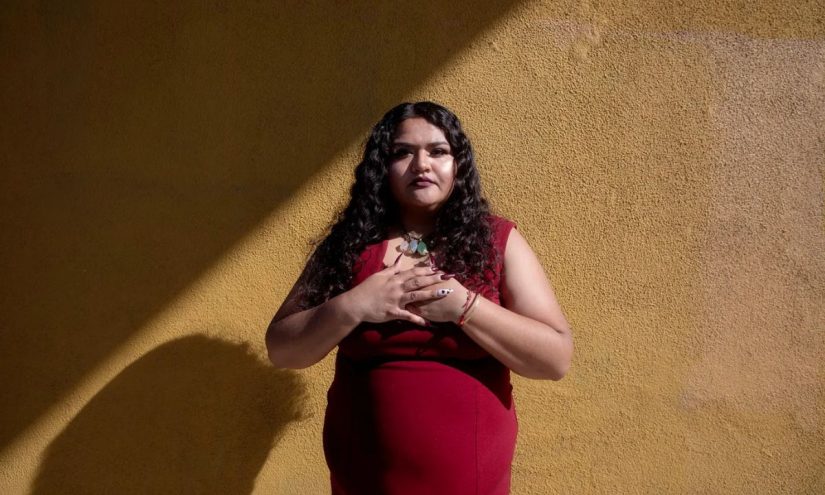
Angélica Reyes survived. At nine months old, she made the journey that could have claimed her life just as it started.
Since 1994, approximately 10,000 migrants have died in the borderlands. That year, the North American Free Trade Agreement (NAFTA) took effect. Designed to open trade between the United States, Canada and Mexico, the now-defunct policy has faced criticism for depressing Mexican wages. Their income flatlining, Reyes said, her parents left the city of Guadalajara, in the western part of Mexico, and headed with her to Los Angeles. They did not have authorization to live in the United States.
Reyes is now 32, though she remembers knowing she was undocumented as early as first grade.
“My mom was very cognizant of the discrimination and the obstacles that I would face throughout my life,” she said. “She made it clear, like, ‘You can’t mess up. You need to be twice as good to get half of the respect. You need to really prove that you earned your spot.’”
To do that, Reyes earned the good grades that set her up to become a history teacher for the Los Angeles Unified School District. She is one of about 15,000 teachers — and among the more than 835,000 undocumented people — who have received temporary permission to live, work and study in the United States through an Obama-era program known as Deferred Action for Childhood Arrivals (DACA). Women represent over half of DACA recipients, whose future in this country has been under threat by legal challenges to the program’s existence and the anti-immigration agenda of President Donald Trump.
https://datawrapper.dwcdn.net/nA5Cv/10/
If DACA ends, the goal of ongoing litigation, 700 education personnel, including teachers and teacher aides, would lose their jobs each month for two years as their work permits are revoked, according to FWD.us, an immigration reform organization. In California, the state with the most DACA recipients, 200 educators would lose their jobs monthly. In Texas, 100 would.
DACA-recipient teachers relate firsthand to the estimated 620,000 undocumented K-1 2 students, who confide in them about their experiences in immigrant families. They show youth that regardless of legal status, it’s possible to attain one’s professional goals. Many of these teachers are also activists, fighting for their students, themselves and other marginalized people. They see themselves as assets to schools.
“My immigration status inspires both my undocumented and documented students because they know all the obstacles that are faced by folks with my immigration status can be overcome,” Reyes said. “They know that if I could do it, that’s something that they could do as well.”
Without undocumented teachers, educator shortages across states could worsen. California has spent about $1.6 billion since the 2016-17 school year to tackle its teacher shortage. Still, the state issued 11 percent fewer teaching credentials between the 2021-22 and 2022-23 school years. Last year, it enacted legislation to eliminate barriers to entry, dropping a standardized test teaching candidates had to pass to demonstrate competence in math, reading and writing. But since undocumented immigrants aren’t widely perceived to be career professionals, the fact that schoolchildren nationwide depend on them has received scant attention in the broader immigration debate.
Maria Miranda, elementary vice president of the United Teachers Los Angeles (UTLA) labor union, said undocumented teachers “bring a different perspective to the table, a different skill set.”
Randi Weingarten, president of the American Federation of Teachers, the nation’s second largest teacher labor union, said DACA recipients in classrooms have strengthened the United States.
“They are role models, like all teachers, and should be treated as such, but instead, they are made to feel uncertain and fearful as their protections are challenged in court and as the Trump administration promotes mass deportations, even from sensitive locations like schools that were once considered off limits,” Weingarten said. “Immigration reform can’t be used as an excuse to rip teachers out of classrooms, where they are so desperately needed.”
Reyes at 1 year old with her father. (Angelica Reyes)
When Reyes was about to register for the SAT during her senior year in high school, one misinformed guidance counselor asked her why she planned to take the college entrance exam, insisting that higher education was off limits to undocumented students.
“I was devastated. It broke my heart,” Reyes said. “I remember crying and telling my mom, ‘I worked hard, for what?’”
Since 2001, however, California has extended access to in-state college tuition to undocumented students who have lived there long term. Unaware of this law and under the assumption that her counselor was correct, Reyes missed the deadline for the SAT and for the application to University of California schools, so she enrolled in a community college she could afford, a common path for many undocumented immigrants.
Then, in 2011, a state law was enacted that made her cry tears of gratitude: the California DREAM Act. The policy allows undocumented immigrants who entered the United States before they were 16 to obtain financial aid if they’ve earned qualifying credits at California schools. These young people have been nicknamed Dreamers after the Development, Relief, and Education for Alien Minors (DREAM) Act, a 2001 federal bill that would have given them legal status had it succeeded.
Reyes said that when she decided to apply to the University of California, Los Angeles (UCLA), a community college counselor took in her light brown skin and wavy black mane and without so much as seeing the 4.0 GPA in her transcript, told her to apply somewhere less competitive.
“I’m a competitive student!” Reyes recalled balking. “She opened my chart and she was, like, ‘Oh, you actually are.’ Her tune changed so quickly. It was really infuriating because if I had believed her, like many students believe counselors, I would have not gone to UCLA.”
In college, Reyes had to make a choice about her career path. Her research project on youth activism at Abraham Lincoln High School, where she graduated in 2010, had drawn her to education. “I realized that’s where I was needed,” she said.
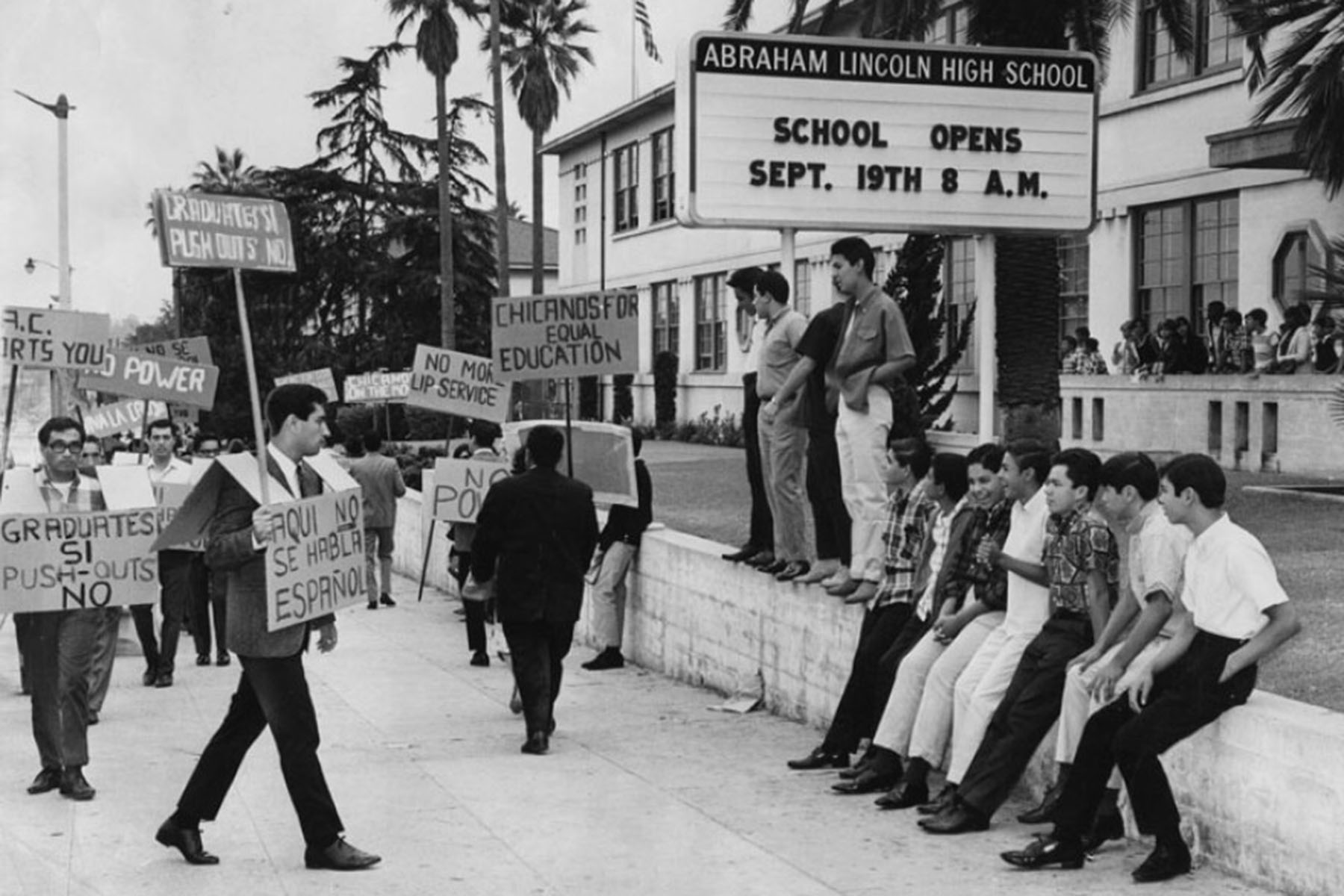
It was at Lincoln High in March 1968 that students spearheaded the protests known as the Chicano Blowouts or East Los Angeles Walkouts. With signs stating “School Not Prison” and “We Are Not Dirty Mexicans,” almost 15,000 youth from Lincoln and other schools in historically Mexican-American East L.A. walked out of classes for a week to protest their substandard education.
Chicano student walkouts in front of Abraham Lincoln High School in East Los Angeles during the 1968 blowouts. (LAPL)
Back then, students could be paddled for speaking Spanish, and with few advanced courses at Eastside schools, they were routinely steered to vocational classes like auto shop. These inequities contributed to a 60 percent dropout rate in the area. Jailed for their activism against these circumstances, the teenagers garnered community support that ushered in sweeping policy changes — bilingual instruction, ethnic studies and more Latino teachers.
Today, the carnicerías, bungalow homes and palm trees along North Broadway Avenue, leading to 93 acres of green hills, offer no hint of the past tumult, but a mural at Lincoln commemorates the walkouts of nearly six decades ago.
Through her research, which also explored youth activism of the 2010s, Reyes learned that contemporary Lincoln High students continued to have unmet needs, such as support applying for college financial aid or accessing legal services as members of immigrant households. So when Lincoln High teachers asked if she wanted to develop a space to serve students, Reyes threw herself into the effort. The Paula Crisostomo Dream Center — named after a lead activist of the Chicano Blowouts and the inspiration for the 2006 film “Walkout” — opened at Lincoln in 2015.
“We established programming for immigrant students, for immigrant parents. We did immigrant and educational history,” Reyes said. “It’s still a resource for students at Lincoln, and we’ve expanded it to several other schools.”
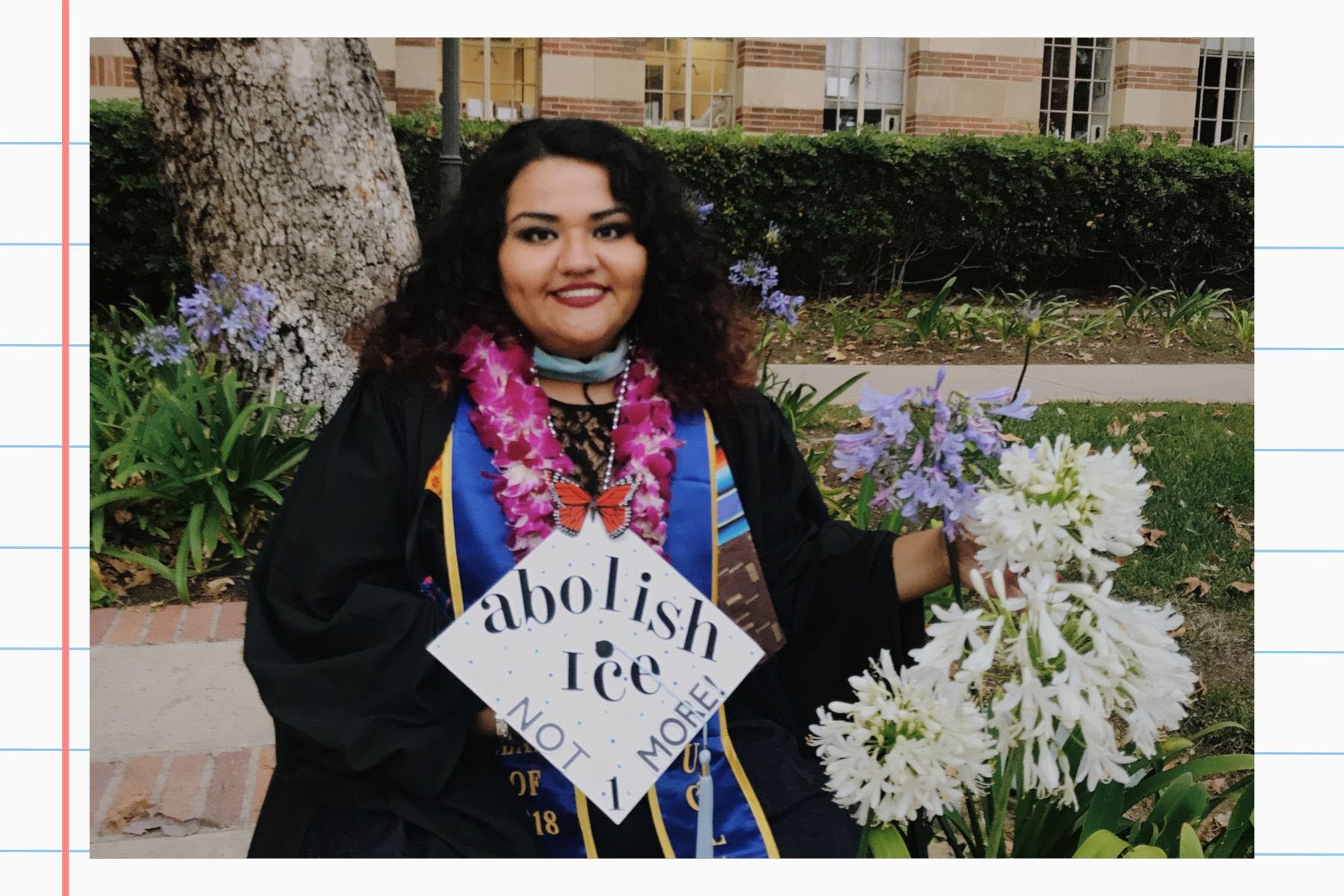
Working at the Dream Center for three years convinced her that teaching was the best way to reach undocumented and marginalized youth. Rather than dismiss them, as she had been dismissed by school counselors, she would inspire students to excel academically regardless of legal status. In 2012, four years before she graduated from UCLA with a bachelor’s degree in sociology and six years before she earned her master’s in education from the university, DACA enabled undocumented students like herself to become career professionals.
Reyes surrounded by family at her high school graduation. (Angelica Reyes)
It’s complicated: Those two words capture Reyes’ feelings about DACA. Although the program allowed her to teach, she has long viewed it as flawed, exploitative and a “constant reminder” she isn’t “fully accepted.”
DACA stems from the activism of undocumented college students frustrated that the DREAM Act failed and that their immigration status would limit their potential, said Jennifer R. Nájera, author of “Learning to Lead: Undocumented Students Mobilizing Education.” Fighting for immigrant rights, they found a purpose.
Like the DREAM Act, DACA was reserved for young people who came to the United States as children and didn’t have criminal histories. “They had to graduate from high school or college or go to the military, show ‘good moral character,’” said Nájera, an associate professor in the Department of Ethnic Studies at the University of California, Riverside. Instead of citizenship, Obama’s executive order “provided temporary relief from deportation, a two-year relief specifically, that could be renewed, and a work permit, which was a big deal.”
While DACA recipients cherished their professional opportunities, some contended that the policy cast them as second-class citizens, Nájera said.
That includes Reyes.
“I knew it was a Band-Aid,” she said. “In fact, when I first started teaching, my DACA expired because of an issue with the application. They had asked me if I was in a gang, and apparently I didn’t check off the X hard enough, so I wasn’t hired at the beginning of the year. I remember feeling this immense frustration.”
Los Angeles Unified employs about 300 DACA-recipient school personnel, according to Miranda of the UTLA labor union. As Reyes’ teaching career started, DACA weathered the first of multiple legal challenges. Trump rescinded the program during his first term, a move the Supreme Court later blocked; at the time, Reyes told her students about possibly losing her job. Since then, she has endured several other threats to DACA , though she’s now pained to tell her students that the program isn’t accepting new applicants.
DACA, she said, must be replaced with a sustainable alternative.
In a December interview, Trump said, “We’re going to have to do something with” DACA recipients. “They were brought into this country many years ago” and “in many cases, they’ve become successful.”
But that sympathy has been absent from his immigration policies since he resumed office. He has issued an executive order prohibiting undocumented college students from receiving in-state tuition. He has also lifted restrictions on immigration enforcement in “sensitive locations” such as churches, hospitals and schools, prompting parents nationwide to keep kids out of class.
A protester waves the Mexican flag during a demonstration for immigration rights outside Los Angeles City Hall on February 5, 2025. (Qian Weizhong/Getty Images)
“A lot of times, the children are U.S. citizens and the parents are concerned,” Reyes said. “But I’ve had students who shared that their parents are U.S. citizens, and they’re still scared because they know that U.S. citizens are also caught up in these raids. So, this isn’t about criminality. It’s about the targeting of Brown folks.”
Immigration and Customs Enforcement (ICE) agents and other federal authorities reportedly detained or deported at least 10 U.S. citizens, including children, in the first 100 days of Trump’s second term.
Last month, the California state superintendent presented Senate Bill 48 to limit ICE appearances at schools as absences have spiked — and schools could lose millions of dollars since their funding is tied to average daily student attendance. About half of California children belong to families that include at least one immigrant parent, while one in five live in mixed-status families with at least one undocumented parent.
“It’s very taxing emotionally for our members and our students,” Miranda said of ICE enforcement. “We have students at the elementary level who are terrified of seeing anyone in uniform. Some of them are so young that they don’t know the difference between the police and immigration. It’s a very scary moment.”
When Trump targeted DACA during his first term, Reyes warned in a Los Angeles Times opinion piece that disbanding the program could upend public education. But now she says her students deserve more than DACA’s “breadcrumbs.”
“We need to fight for something new because my kids want to be chefs and doctors and lawyers, but they’re being held back by their immigration status,” she said. “It’s excruciating in two ways: One, I want my students to have the opportunities that they deserve to serve the community. And, two, I don’t know when I’m going to be taken from them because of my own uncertainty.”
For now, she knows that her presence makes a difference at her high school. Los Angeles Unified has an immigrant student body of about 30,000 students, according to UTLA. Of those, one in four is undocumented. After Reyes shared her immigration status with students during a recent lunchtime conversation, she said a ninth grader confessed that she planned to quit school because she, too, is undocumented. Learning Reyes managed to become a teacher made the girl reconsider.
“It was really beautiful to see that, like it reignited her hope to have a bright future,” Reyes said.
Although the risks of revealing her status frighten her, her conscience compels her to, Reyes said. She quoted Mexican Revolution leader Emiliano Zapata: “It’s better to die on your feet than to live on your knees.”
Staying silent as the president attacks immigrants would make it hard for Reyes to face the youth in her life — her son, especially.
Reyes after receiving her master’s degree in education from UCLA. (Angelica Reyes)
Whenever a state turned red on Election Night, Nathan Reyes felt his anxiety shoot up. Still, he held out hope Kamala Harris would win. Then the Electoral College math made it plain: Donald Trump would be president again.
Although he’s a U.S. citizen, Nathan wondered what lay ahead for his undocumented relatives under a president promising mass deportations.
“I feel worried for them because if they get deported, what am I going to do?” he asked. “Where am I going to stay?”
So, he began to plan. He and his family would “have to pick our poison” — stay in a country hostile to their presence or self-deport together to Mexico regardless of citizenship status.
That her son, with a pile of ringlets and a round cherubic face, was even considering these options stunned Reyes. Nathan is in seventh grade.
“I was like, ‘Oh, my God, this kid is 12,’” Angélica Reyes said. “Why is he talking about this?’”
Rummaging through a bin of childhood possessions in her mother’s bedroom last year, Reyes found a poem she wrote in fourth grade about her fear of police. Her parents were street food vendors, an occupation California criminalized until 2018, so Reyes realized growing up that one brush with the law could have seen them deported.
Just as she did not have a childhood free of deportation fears, neither has her son.
Nathan, now 13, is hardly the only youth pondering the possibility of a relative’s departure, according to Lisette Sanchez, a psychologist in Long Beach, California. She said children are leaving school with “Know Your Rights” cards advising them of their civil liberties during ICE encounters, but they may not understand the information.
“They’re just feeling fear,” she said. “They’re being told something’s gonna happen. So mental health wise, you’re looking at chronic anxiety. You’re looking at hypervigilance.”
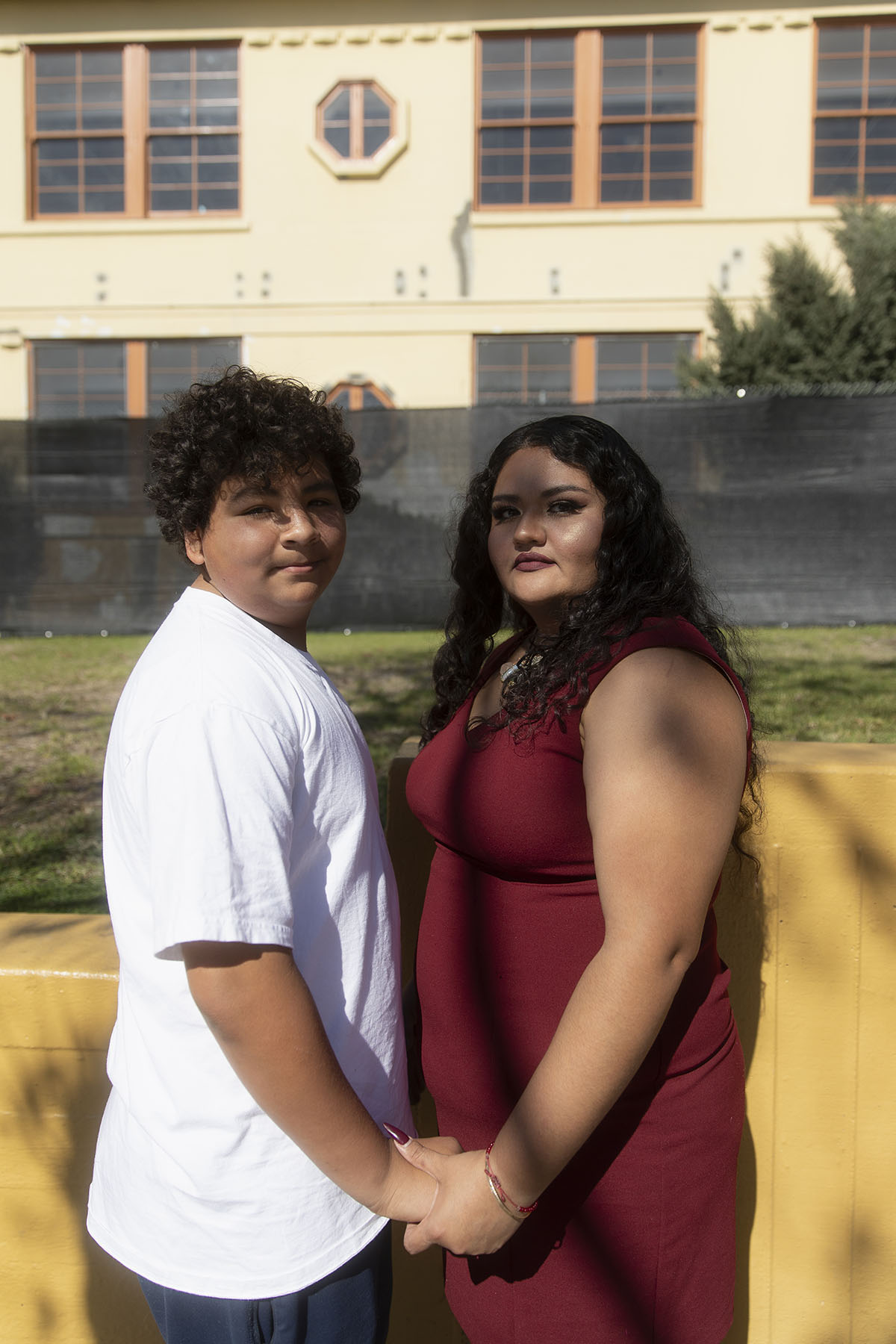
Angélica Reyes and her son Nathan Reyes in front of Abraham Lincoln High School in East Los Angeles, California, on February 9, 2025. (Zaydee Sanchez/The 19th)
To gain some sense of control, they may overconsume social media, leading to racing thoughts, rapid heart rate and sleeping difficulties.
“It’s this chronic nonstop anxiety because the state of uncertainty feels never-ending, and in many ways, it is not ending, right?” Sanchez said. “There’s different news every day.”
By speaking openly with children, parents can help them better manage stress, she said. Teachers, if they’re permitted, can broach the topic of immigration. Nathan appreciated how his Spanish teacher led a class discussion after the election.
“Sharing your feelings and emotions and finding that a lot of other people are feeling very similar can bring comfort to you,” he said.
Reyes gave birth to her son while she was in college and briefly wed to his father. She applied for legal status as an immediate family member of a U.S. citizen, her spouse. But years passed before the federal government responded to her request, she said. By then, her marriage had ended.
“I don’t think people understand how long the path to citizenship can be, what it looks like, how costly and time-intensive it is,” Sanchez said.
Reyes, who has not remarried, said being undocumented seeps into every aspect of her life, including romantic relationships. She feels obligated to tell prospective partners about her status.
“I remember to always be upfront, like, ‘Hey, I’m undocumented. I don’t want you to think I’m going to use you for papers,’” she said.
Reyes lives in one of the country’s 4.7 million mixed-status households, which include undocumented individuals and people with legal status or U.S. citizenship. If she gets deported, she has arranged for others to care for her son.
Her sister, two years younger, is a U.S. citizen. Asked if she resents that twist of fate, Reyes said, “I’m happy that she gets to be safe. I think that there’s a lot of pain and guilt for her.”
Her sister realizes, Reyes said, that her entire family could be taken away.
Reyes and her son Nathan doing a science experiment when he was little. (Angelica Reyes)
Should she be forced out of the only country she considers home, Reyes wants her son to know this: “I would never willingly leave you. I am dedicated to you. I love you, and I will always be working as hard as possible to get back to you.”
For Nathan, it is mind-boggling that anyone would want his mother out. He doesn’t understand why politicians demonize immigrants. Trump launched his first presidential campaign calling them criminals and continues to malign them.
“My mom has done a lot of good for her community,” Nathan said. “She has organized a finders keepers closet where people who don’t have some resources they need, like canned food or clothes, can take what they need.”
Just as Nathan defends her honor, Reyes vouches for her parents. Her mother is now a nail technician and her father is a food vendor. Growing up, she said, she watched them visit the sick, volunteer at churches and fundraise for the poor.
“Whenever they saw a need, they stepped up, and they didn’t wait for someone else to help,” she said.
She’s hurt when people sympathize with Dreamers while disparaging their parents, that the immigration system paints family members as saints or sinners. The DACA recipients she’s researched feel similarly, Nájera said.
“Many of the students that I interviewed were always talking about their parents,” Nájera said. “They did not want their stories to be divorced from their parents and their family stories. These families, they’re units.”
But the Dream Act caused a migrant generational divide, insinuating that those who arrived in this country as children deserve citizenship, while their parents and others who arrived as adults do not, Nájera said.
Angélica Reyes helped paint the red and yellow skulls on the mural across the street from Abraham Lincoln High School in East Los Angeles, where she graduated. (Zaydee Sanchez/The 19th)
Migration often occurs out of necessity. For example, after NAFTA took effect in 1994, U.S. agricultural exports flooded Mexico, displacing workers, according to Edward Alden, a distinguished visiting professor in the College of Business and Economics at Western Washington University. Four years earlier, over 4 million Mexican migrants were in the United States, a figure that ballooned to nearly 13 million — around 9 percent of Mexico’s population — by 2008.
Reyes said NAFTA crushed the bakery business her father’s side of the family owned because it could not compete with the U.S. companies that swooped in. Her parents migrated north to earn higher wages.
Today, economic instability is but one of the reasons that motivate migrants.
“A lot of the Venezuelans are leaving Venezuela because it’s a violent, dangerous place, and the government has destroyed the economy in different ways,” Alden said. “Same thing out of Central America. These are people who aren’t necessarily leaving for economic reasons. They’re doing it for personal safety reasons.”
Reyes said she has Central American students who fled horrors. She wants them to feel safe in the United States, and the fact Los Angeles Unified has pledged not to cooperate with immigration officials voluntarily provides some comfort. Run by a formerly undocumented superintendent, the sanctuary districtblocked Homeland Security agents from entering two schools in April.
The fear of raids on campuses has traumatized her students, Reyes said. “It’s so difficult to convince my students that they are worthy of love and that they’re worthy of respect and that they deserve civil rights.”
It is equally difficult to keep advocating for herself, she said. But as the threat of deportation looms, she has no choice but to keep fighting.
“It’s hard to know that I can’t earn citizenship and that I can’t give my kid stability or safety,” she said. “I feel like if I could earn it, I would have three citizenships. I would have put in the work.”
Dr. Vicki Patterson DavidsonCongresswoman Jasmine Crockett (D-Texas) delivered a moving speech at Tougaloo College’s commencement ceremony earlier this month. While listening to her speech, I remembered the three times someone called me the ‘N’ word – once as an elementary school student, once as a high school student, and once as a sophomore at Tougaloo College. Each time, the racial epithet was uttered by a white male.
My family was one of the first to integrate the North Pike School District in Pike County, Mississippi in the 1970s – fifteen years after Brown v. Board of Education in 1954. I knew it was ignorance that drove others to call me the ‘N’ word during the 1980s and 1990s.
My daughter experienced a similar remark while growing up in central Mississippi in the mid-2000s. A classmate told her during recess that he “did not play with Black girls.” Heartbroken, I shared two quotes and a song with her later that evening. “Nothing in the whole world is more dangerous than sincere ignorance and conscientious stupidity,” by Dr. Martin Luther King, Jr., and one by Oprah Winfrey, a native Mississippian, who told Wellesley College graduates in 1997 to “turn your wounds into wisdom.”
That evening we listened to “I’m Here” from the Broadway musical, The Color Purple – a song which resonates with so many Black girls and women across our nation. “I’m Here” would later be performed at the 2010 Kennedy Center Honors celebrating Winfrey. My daughter decided to dress like Winfrey during Black History Month that school year. My daughter had turned her wounds into wisdom.
Mirroring the courage and strength of Fannie Lou Hamer, a prominent activist who frequently visited Tougaloo College during the Civil Rights Movement, Congresswoman Crockett addressed the state of American civil rights and liberties under the Trump administration. Crockett’s commencement speech was not disturbing. Her speech, full of wisdom, rang with relevance as she stood near the historic steps of the Woodworth Chapel below the steeple bell. The cowardly threats and reactions which followed are what continue to ring with prejudice, hatred, and ignorance nearly fifty-four years after Hamer delivered her famous “Is It Too Late?” speech at Tougaloo in the summer of 1971.
Known for its educational excellence and activism in higher education, Tougaloo College is no stranger to controversy. A private, historically Black liberal arts college that has hosted and graduated prominent civil rights leaders and politicians for years, Tougaloo is the same institution that educates and prepares future physicians, scientists, lawyers, educators, and researchers who serve Mississippi and the global community.
Tougaloo College students, faculty, staff, alumni, friends, and community stand together in wisdom without fear. We are not invisible. We are not silent. We are here.
Dr. Vicki Patterson Davidson is an alumna and an Assistant Professor of Education and Chair of the Department of Education at Tougaloo College.
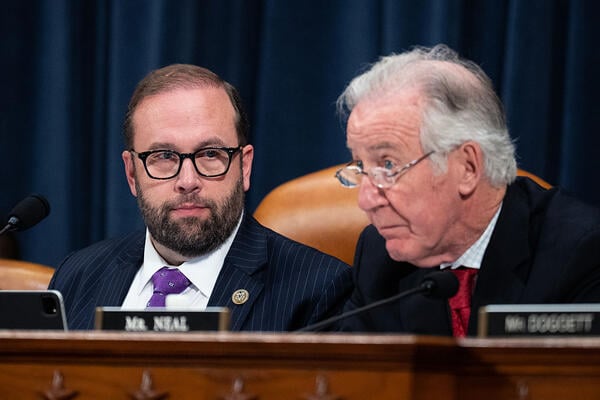
Efforts to raise endowment taxes are in motion as the House Ways and Means Committee reportedly plans to unveil changes next week that will increase rates and include more colleges.
Education leaders have worried about such a rate increase for months. Now the GOP-led committee is expected to propose raising endowment excise taxes from 1.4 percent to up to 21 percent, depending on endowment value per student, Punchbowl News, Politico and other outlets reported.
The proposed endowment tax would only apply to private institutions, as it does currently.
Under the proposed formula, institutions with endowments of $750,000 to $1.25 million per student would reportedly be hit with 7 percent excise tax. That number would climb to a 14 percent tax for colleges with endowments valued at $1.25 to $2 million per student. Colleges at the highest level with endowments of $2 million or more per student would pay 21 percent. (Currently, colleges with endowments worth $500,000 per student or more pay the 1.4 percent tax.)
The specifics of the tax increase aren’t final and could shift before the committee’s hearing Tuesday.
Republicans are preparing to move forward with endowment tax increases as part of a broader effort known as reconciliation to cut billions in federal spending and pay for President Donald Trump’s priorities. Other House committees have unveiled their proposed cuts for reconciliation, including a sweeping plan to upend the student loan system, but the Ways and Means bill is crucial to this process.
GOP motivations for the tax increase appear to be twofold in that it would help fund tax cuts and serve as a punitive measure for colleges they believe have gone “woke.” In 2023, a total of 56 universities paid roughly $380 million in endowment excise taxes.
“Seven years ago, the Trump tax cuts sparked an economic boom and provided needed relief to working families,” committee chairman Rep. Jason Smith, a Missouri Republican, said in a Friday statement. “Pro-family, pro-worker tax provisions are the heart of President Trump’s economic agenda that puts working families ahead of Washington and will create jobs, grow wages and investment, and help usher in a new golden age of prosperity. Ways and Means Republicans have spent two years preparing for this moment, and we will deliver for the American people.”
The proposal comes amid the president’s full blown attack on higher education, which has seen the federal government clamp down on research funding, go after colleges for alleged antisemitism, take aim at diversity, equity, and inclusion programs, and attempt to deport international students.
Since the 1.4 percentendowment excise tax was passed in 2017 during the first Trump administration higher education leaders have long worried that the president would raise it in his second term.
As universities increased their lobbying efforts in the early days of Trump 2.0, the potential increase to the endowment tax has been a key concern. Recent lobbying reports show that Harvard University, which has the largest endowment, recently valued at more than $53 billion, Princeton University, Northwestern University, and multiple others, have pressed Congress on the issue. (Northwestern’s chief investment officer said last week that the potential increase would be “destructive.”)
According to an analysis from James Murphy, director of career pathways and post-secondary policy at Education Reform Now, only three universities would pay the highest rate at 21 percent – Princeton, Yale University and the Massachusetts Institute of Technology. Another 10 universities, including Harvard, would get hit with the 14 percent rate.
An analysis published last month by the investment firm Hirtle Callaghan noted that recently proposed changes to the endowment excise tax would “significantly broaden the universe of colleges and universities that pay the tax from large, wealthy institutions to smaller, regional ones.” That analysis warned that such increases “threaten to do irreparable damage to many schools which are significantly weaker financially than the schools paying the current tax.”
Multiple higher education associations have previously expressed opposition to the increase.
Last fall, American Council on Education president Ted Mitchell sent a letter to Congress, co-signed by 19 other associations, calling for the repeal of the existing endowment tax, arguing that “this tax undermines the teaching and research missions of the affected institutions without doing anything to lower the cost of college, enhance access, or address student indebtedness.”
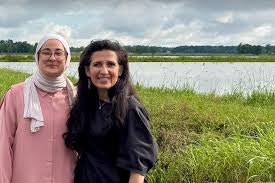
Rümeysa Öztürk with her attorneyAfter six weeks in federal detention, Tufts University doctoral student Rümeysa Öztürk was released last Friday following a federal judge’s ruling that her continued detention potentially violated her constitutional rights and could have a chilling effect on free speech across college campuses.
U.S. District Judge William K. Sessions III ordered Öztürk’s immediate release, stating she had raised “substantial claims” of both due process and First Amendment violations. The 30-year-old Turkish national, who was arrested on March 25 outside her Somerville, Massachusetts home by masked federal agents, had been detained at the South Louisiana ICE Processing Center in Basile, Louisiana—more than 1,500 miles from her university.
“Continued detention potentially chills the speech of the millions and millions of individuals in this country who are not citizens. Any one of them may now avoid exercising their First Amendment rights for fear of being whisked away to a detention center,” Judge Sessions stated during Friday’s hearing.
Öztürk’s legal team argued that her detention was directly connected to her co-authoring a campus newspaper op-ed critical of Tufts University’s response to the war in Gaza. During the hearing, Judge Sessions noted that “for multiple weeks, except for the op-ed, the government failed to produce any evidence to support Öztürk’s continued detention.”
The Trump administration had accused Öztürk of participating in activities supporting Hamas but presented no evidence of these alleged activities in court. Öztürk, who has a valid F-1 student visa, has not been charged with any crime.
Öztürk’s case is part of what appears to be a growing pattern of detentions targeting international students involved in pro-Palestinian activism. Her arrest by plainclothes officers, captured on video showing her being surrounded as she screamed in fear, sparked national outrage and campus protests.
“It’s a feeling of relief, and knowing that the case is not over, but at least she can fight the case while with her community and continuing the academic work that she loves at Tufts,” said Esha Bhandari, an attorney representing Öztürk.
The same day as Öztürk’s release, the U.S. Second Circuit Court of Appeals in New York denied an administration appeal to re-arrest Columbia University student and lawful permanent resident Mohsen Mahdawi, another case involving a student detained after pro-Palestinian advocacy.
During her six weeks in detention, Öztürk, who suffers from asthma, experienced multiple attacks without adequate medical care, according to testimony. At Friday’s hearing, she briefly had to step away due to an asthma attack while a medical expert was testifying about her condition.
Judge Sessions cited these health concerns as part of his rationale for immediate release, noting Öztürk was “suffering as a result of her incarceration” and “may very well suffer additional damage to her health.”
In his ruling, Judge Sessions ordered Öztürk’s release without travel restrictions or ICE monitoring, finding she posed “no risk of flight and no danger to the community.” Despite this clear order, her attorneys reported that ICE initially attempted to delay her release by trying to force her to wear an ankle monitor.
“Despite the 11th hour attempt to delay her freedom by trying to force her to wear an ankle monitor, Rümeysa is now free and is excited to return home, free of monitoring or restriction,” said attorney Mahsa Khanbabai.
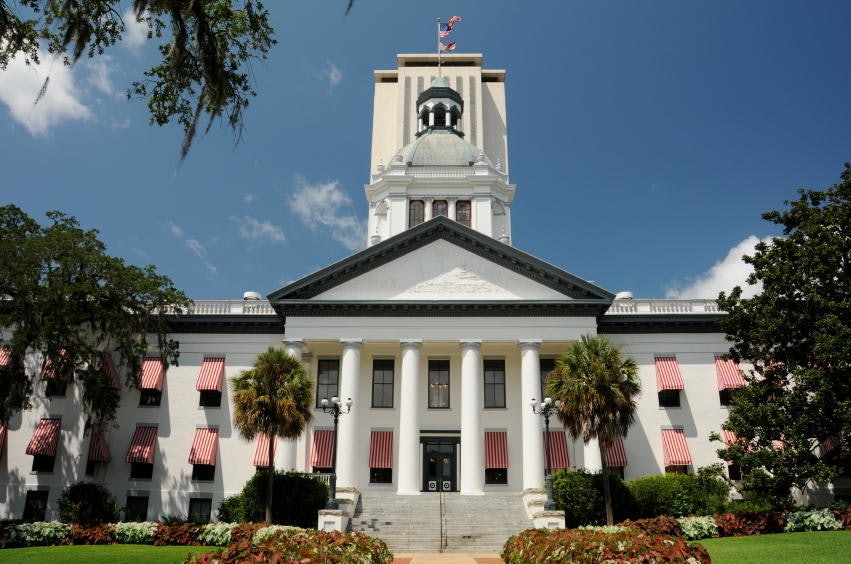
AGaby Pachecos Florida lawmakers extend their legislative session through June 6, TheDream.US is intensifying calls for a provision that would allow approximately 6,000 undocumented students currently enrolled in Florida colleges and universities to complete their education at in-state tuition rates.
The advocacy comes in response to the legislature’s earlier repeal of the in-state tuition waiver for undocumented students, which is set to take effect July 1, 2025. Without intervention, these students would face tuition increases of up to four times their current rates.
“Florida’s state lawmakers now have another month to do the right thing for Dreamers and Florida’s future: ‘grandfather in’ the 6,000 Dreamers who will be forced out of college in July and instead allow them to finish their college degrees,” said Gaby Pacheco, Miami-based President and CEO of TheDream.US, the nation’s largest college and career success program for Dreamers.
Pacheco highlighted the unfairness of changing tuition rates midstream for students who began their education under different financial expectations.
“Among TheDream.US Scholars alone, there are more than 70 students in Florida who are less than one year from completing their degrees,” she noted.
The organization has been actively mobilizing around this issue. In April, following the repeal announcement, TheDream.US organized a three-day “Freedom Ride for Tuition Fairness” journey from Miami to Tallahassee, with stops highlighting the importance of affordable higher education.
This recent campaign builds on a similar effort in 2023 that successfully delayed the passage of the in-state tuition repeal until this year. One participant in that earlier campaign was Britney, a TheDream.US Scholar who recently graduated with a business marketing degree from University of Central Florida despite the uncertainty surrounding tuition policies.
“We hope to celebrate more graduations like Britney’s after lawmakers add in new, grandfathering language in the coming weeks,” Pacheco said.
Education advocates argue that allowing current students to complete their education at promised rates represents both a moral and practical consideration. A fact sheet released by TheDream.US notes that Florida has already invested in these students’ K-12 education and partial college education, making it economically sensible to ensure they can graduate and contribute to the state’s workforce and tax base.
TheDream.US has provided more than 11,000 college scholarships to undocumented students attending nearly 80 partner colleges across 20 states and Washington, D.C. The organization recently released its 10-year impact report, “From Dreams to Destinations: A Decade of Immigrant Achievements and the Future Ahead,” documenting how increased access to higher education catalyzes social mobility and positive outcomes for Dreamers and their communities.
The Florida legislature has until June 6 to consider amendments to the in-state tuition repeal that would protect currently enrolled students.
School (in)Security is our biweekly briefing on the latest school safety news, vetted by Mark Keierleber. Subscribe here.
Tennessee state Sen. Bo Watson wants to eject undocumented students from public school classrooms. But first, he needs their data.
Watson seeks to require students statewide to submit a birth certificate or other sensitive documents to secure their seats — one of numerous efforts nationwide this year as Republican state lawmakers seek to challenge a decades-old Supreme Court precedent enshrining students’ right to a free public education regardless of their immigration status.
Some 300 demonstrators participate in a Waukegan, Illinois, rally on Feb. 1 to draw attention to an increase in Immigration and Customs Enforcement activity in the area. Privacy advocates warn student records could be used to assist deportations. (Scott Olson/Getty Images)
In my latest feature this week, I dive into why those efforts have alarmed student data privacy advocates, who warn that efforts to compile data on immigrant students could be used not just to deny them an education — it could also fall into the hands of Immigration and Customs Enforcement.
As the Trump administration ramps up deportations and tech billionaire Elon Musk’s Department of Government Efficiency reportedly works to create a “master database” of government records to zero in on migrants, data privacy experts warn that state and federal data about immigrant students could be weaponized.
In the news
Cybercriminals demanded ransom payments from school districts nationwide this week, using millions of K-12 students’ sensitive data as leverage after the files were stolen from education technology giant PowerSchool in a massive cyberattack late last year. The development undercuts PowerSchool’s decision to pay a ransom in December to keep the sensitive documents under wraps. | The 74
Gutted: Investigations at the Education Department’s civil rights office have trickled to a halt as the Trump administration installs a “shadow division” to advance cases that align with the president’s agenda. | ProPublica
Civil rights groups, students and parents have asked courts to block the Education Department’s civil rights enforcement changes under Trump, saying they fail to hold schools accountable for racial harassment and abuses against children with disabilities. | K-12 Dive
Among the thousands of cases put on the back burner is a complaint from a Texas teenager who was kneed in the face by a campus cop. | The 74
‘The hardest case for mercy’: Congratulations to Marshall Project contributor Joe Sexton, who was named a Pulitzer Prize finalist for his reporting on a legal team’s successful bid to spare the Parkland, Florida, school shooter from the death penalty. | The Marshall Project
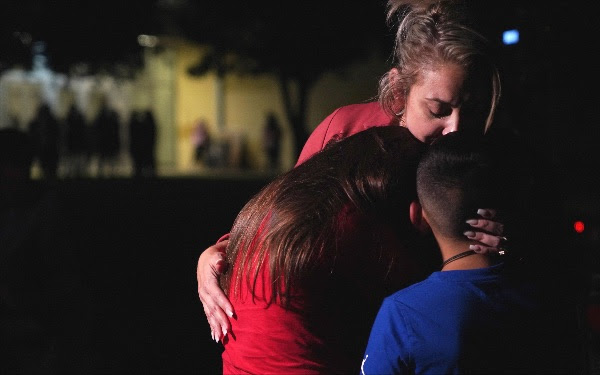
The city council in Uvalde, Texas, approved a $2 million settlement with the families of the victims in the 2022 shooting at Robb Elementary School, the first lawsuit to end with monetary payouts since 19 children and two teachers were killed. | Insurance Journal
In Michigan, a state commission created in the wake of the 2021 school shooting at Oxford High School, which resulted in the deaths of four students, issued a final report calling for additional funding to strengthen school mental health supports. | Chalkbeat
Meanwhile, at the federal level, the Education Department axed $1 billion in federal grants designed to train mental health professionals and place them in schools in a bid to thwart mass shootings. | The 74
A high school substitute teacher in Ohio was arrested on accusations she offered a student $2,000 to murder her husband. | WRIC
Connecticut schools have been forced to evacuate from fires caused by a “dangerous TikTok trend” where students stab school-issued laptops with paper clips to cause electrical short circuits. | WFSB
Eleven high school lacrosse players in upstate New York face unlawful imprisonment charges on accusations they staged a kidnapping of younger teammates who thought they were being abducted by armed assailants. | CNN
Sign-up for the School (in)Security newsletter.
Get the most critical news and information about students’ rights, safety and well-being delivered straight to your inbox.
The Future of Privacy Forum has “retired” its Student Privacy Pledge after a decade. The pledge, which was designed to ensure education technology companies were ethical stewards of students’ sensitive data, was ended due to “the changing technological and policy landscape regarding education technology.” | Future of Privacy Forum
The pledge had previously faced scrutiny over its ability to hold tech vendors accountable for violating its terms. | The 74
New kid on the block: Almost simultaneously, Common Sense Privacy launched a “privacy seal certification” to recognize vendors that are “deeply committed to privacy.” | Business Wire
Google plans to roll out an artificial intelligence chatbot for children as the tech giant seeks to attract young eyeballs to its AI products. | The New York Times
Kansas schools plan to spend state money on AI tools to spot guns despite concerns over reports of false alarms. | Beacon Media
ICYMI @The74
A new report from the Department of Health and Human Services suggests gender-affirming health care puts transgender youth at risk but the report ignores years of research indicating otherwise. (Getty Images)
Are you having trouble keeping up with the chaos of the student loan system? Don’t worry; we got you. There’s a lot going on right now and we’re here to break it all down. Here are some of the most pressing things that happened this week.
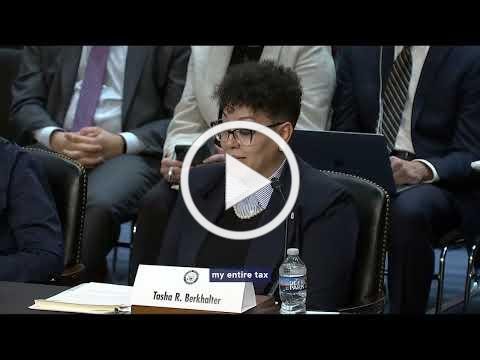
On Tuesday, Senator Patty Murray (D-WA), the Ranking Member of the U.S. Senate Appropriations Committee and senior member of the Senate Health, Education, Labor and Pensions (HELP) Committee chaired an education forum to spotlight the Trump Administration’s radical effort to dismantle the U.S. Department of Education (ED). Tasha Berkhalter, a U.S. Army veteran and student loan borrower who had her debt discharged by the Biden Administration after being defrauded by a predatory for-profit college, gave powerful testimonyat the hearing.
This audio is auto-generated. Please let us know if you have feedback.
Dive Brief:
University of Arizona released a fiscal 2026 plan that would balance its budget by reducing it 3.2% from current levels, though officials noted federal policy changes, state budgeting and enrollment could force adjustments.
The preliminary budget plan would make the deepest cuts to university support and administration, reducing those areas by 7.5% overall.Student support would be cut by 2.8%, and the aggregate budget for the university’s colleges would be reduced by 2.2%. It would also decrease facility and utility spending by 1.1%while increasing community outreach by 0.7%.
At the same time, the framework funds employee raises, faculty promotions, investments in the university’s colleges and other spending areas, officials said Thursday in a community message.
Dive Insight:
The University of Arizona has been scrambling for more than a year to put its fiscal house in order.
In early 2024, the university faced a budget shortfall reaching $177 million. The situation became so severe as to draw an open rebuke from the state’s governor, Katie Hobbs,who in a statement last February derided a “university leadership that was clueless as to their own finances.”
Since that time, then-President Robert Robbins stepped down and the university has made major cutbacks to its budget.
Helping lead that work is John Arnold, who has taken on the chief operating and financial officer roles at University of Arizona after previously serving as executive director of the state board of regents.
For fiscal 2025, the university reduced its budget by over $110 million, centralizing its fiscal planning,“rebalancing” undergraduate aid for nonresident students,delaying raises, and reorganizing administrative units including information technology, human resources and marketing.
Arnold informed the state regents in November that the university was on track to wipe the remaining $65 million deficit from its budget and end fiscal 2025 with 76 days cash on hand — well above the nine days’ worth of cash that was projected last June. The regents require state universities to have 140 days of cash on hand, a target the University of Arizona hasn’t hit since 2022.
By the fall, cuts took the university’s employee headcounts and payroll expenses back to early fiscal 2023 levels.
While making numerous reductions across the university’s operations, officials also announced salary increases and a raised minimum wage earlier this year.
Arnold and Ronald Marx, the university’s interim provost and senior vice president for academic affairs, said in their message Thursday that the new budget framework “prioritizes academic excellence, faculty and staff support, and student success across colleges.”
They added the caveat that possible changes in federal policy, state budgeting, changing demographics and enrollment could all sway the final fiscal 2026 budget.
“We are actively monitoring these developments and evaluating the financial implications of the changing external environment,” Arnold and Marx said.
Arizona lawmakers last year threw a wrench into budget plans with multimillion dollar funding reductions, which came as University of Arizona sought to reduce its deficit by tens of millions of dollars.
Title: Powering Potential: Using Data to Support Postsecondary Access, Completion, and Return on Investment Source: The Data Quality Campaign
To make decisions about when and where to pursue their next educational credential, students and their families need to be able to understand the full picture of pursuing further education. They need access to real-time program information, which includes data on enrollment and completion, program performance, financial aid availability, employment, and return on investment.
A new publication from the Data Quality Campaign highlights the current landscape and challenges of state data systems for postsecondary education and offers recommendations to align state and institutional data systems.
Key findings include:
How the existing postsecondary and workforce data landscape varies
According to the report, nearly all states have agencies that oversee postsecondary institutions and collect some student or programmatic data within postsecondary student unit record systems (PSURSs). However, the authors note that agency-specific data are often disconnected from other sectors’ data. As a result, student information cannot connect with postgraduation outcomes, as is possible with statewide longitudinal data systems.
Education and workforce data systems differ greatly across states. Sixty-eight percent of PSURSs connect to workforce data, but only 11 percent identify the industry and general occupation that individuals are employed in.
States collect a variety of postsecondary data from institutions through a variety of methods, but the report emphasizes that states identify many common uses of the data, such as in supporting workforce alignment.
Data challenges that states are facing
The report observes that federal funding for states to develop data systems has been increasingly siloed, with different grant programs focusing on the development of data systems that each have a narrow focus (e.g., workforce and K–12 data).
Education and workforce data systems identify students using different methods, making connecting individuals’ data and tracking their pathways difficult. However, the authors note that some states are making changes to improve matching accuracy.
Recommendations for states to proactively use data in cooperation with postsecondary institutions
The report recommends that states ensure data are used in collaboration with postsecondary institutions to inform policy and practice. This includes creating guided pathways and aligning institutions’ educational offerings with their states’ workforce needs. By evaluating trends in postsecondary completion, employment outcomes, and employment needs, policymakers can refine programs that guide students into pathways with high completion and high-paying careers.
Institutions collect a variety of information about students, including enrollment demographics and course grades. According to the report, given many institutions’ limitations to do robust analysis, this information should be integrated with statewide data systems.
States can use data to make the admissions and financial aid application processes easier for students and to streamline the process of enrolling in high-demand educational offerings. States and institutions can also leverage their shared data to identify students at higher risk of not completing their postsecondary program and tailor financial support, emergency aid, and academic supports to provide on-time interventions to these students.
To read the full report from the Data Quality Campaign, click here.
—Austin Freeman
If you have any questions or comments about this blog post, please contact us.