Blog

  • Johnson & Wales University to lay off 91 faculty and staff

    Johnson & Wales University to lay off 91 faculty and staff

    Dive Brief:

    • Johnson & Wales University plans to lay off 91 faculty and staff members — about 5% of its workforce — as it tries to rapidly evolve its operating model, officials said. The cuts will affect its two campuses in Providence, Rhode Island, and Charlotte, North Carolina.
    • The private nonprofit faces an operating deficit of $34 million after more than a decade of enrollment declines. “We simply cannot afford to be the size that we once were, and we believe this reduction will allow us to close a financial deficit and to move forward with a balanced budget,” Chancellor Mim Runey said Monday in a community message.
    • With its cash reserves almost depleted, the university is also delaying salary increases until later this year when officials can “evaluate what is possible,” Runey said.

    Dive Insight:

    To explain why Johnson & Wales is reducing its workforce, Runey pointed to a 54% decline in overall enrollment since fiscal 2012, with headcounts falling from a high of 17,294 to over 8,000 in recent years. 

    The chancellor attributed the shrinking student body to demographic declines, fewer international students and shifting public attitudes about higher education.

    Staffing and budgets, meanwhile, have fallen at a slower pace than enrollment, Runey said, framing the layoffs as rightsizing the university’s operations. 

    “While there is some indication that we are on the right track with enrollment, we do not believe we will return to levels of enrollment that supported a much larger organization and operating budget,” she said.

    The university has already downsized in the recent past. In 2021, Johnson & Wales shuttered its campuses in Florida and Coloradoboth of which opened to expand the university during times of growth in the higher education market

    Along with reducing expenses, the sale of those former campus buildings added to university’s endowment and reserves. Those reserves, however, have been drained to plug recent budget gaps.

    The university has also pared down the number of senior leaders by about half since 2012, Runey noted. Additionally, it has consolidated academic programs, closed others with low enrollment, reduced jobs through attrition and streamlined aspects of its operations.

    At the same time, Johnson & Wales has invested in a wide array of new programs to try to attract students. Over the past decade, some of those new offerings have “yielded great results while others less so, and some were reduced or discontinued,” Runey said. 

    She also pointed to more recently launched health and wellness programs. Those come with start-up costs such as specialized facilities, faculty and marketing efforts. 

    “These new program investments, while showing great early outcomes, have not yet had time to yield returns that would significantly improve the operational budget,” Runey said.

    That stands in contrast to more rapid enrollment growth other rounds of new programming brought the university in the past, when market conditions were better. 

    “Today we plan with the conservatism that the times demand,” the chancellor said.

    Source link

  • Podcast: Finances and cuts, VC pay

    Podcast: Finances and cuts, VC pay

    This week on the podcast we discuss “naming and shaming” over vice-chancellor pay packages when student outcomes fall short.

    Source link

  • Senate approves repeal of E-rate Wi-Fi hotspots for schools, libraries

    Senate approves repeal of E-rate Wi-Fi hotspots for schools, libraries

    Dive Brief:

    • The end of E-rate eligibility for Wi-Fi hotspots came one step closer Thursday as the Senate voted 50-38 along party lines to overturn a 2024 expansion of the program overseen by the Federal Communications Commission.
    • A similar House resolution was introduced in February to strike down the recent inclusion of Wi-Fi hotspots in the E-rate program, which has helped connect schools and libraries to affordable telecommunications services for the last 29 years.
    • School districts have shown high demand for using E-rate funds to purchase Wi-Fi hotspots during fiscal year 2025, the first year for which the devices were eligible.  

    Dive Insight:

    In fiscal year 2025, schools and districts requested a total of $27.5 million for Wi-Fi hotspots alone. The devices are often used to help students who don’t have home internet access complete homework assignments that require digital connections.

    The FCC’s decision to expand E-rate to include hotspots followed the expiration of the Emergency Connectivity Fund established by the American Rescue Plan Act of 2021. The pandemic-era fund allocated $123 million to the FCC to purchase hotspots for schools and libraries.

    Both Senate and House measures were introduced by Republicans who say the FCC’s partisan move under the Biden administration to expand the E-rate program was overreach under the federal law that defined the Universal Service Fund’s E-rate program as intentionally providing discounts for broadband services only to “school classrooms” and libraries.

    Sen. Ted Cruz, R-Texas, introduced the resolution of disapproval in January under the Congressional Review Act, which gives federal lawmakers the authority to nullify a federal regulation. Cruz said in a January statement that the FCC regulation expanding E-rate “violates federal law, creates major risks for kids’ online safety, harms parental rights, and will increase taxes on working families.”

    “Every parent of a young child or teenager either worries about, or knows first-hand, the real dangers of the internet,” Cruz said. “The government shouldn’t be complicit in harming students or impeding parents’ ability to decide what their kids see by subsidizing unsupervised access to inappropriate content.”

    Before this week’s vote, several organizations representing school superintendents, K-12 business officials, rural educators, transportation providers and educational service agencies sent a letter on May 6 to Senate Majority Leader John Thune, R-S.D., urging him to vote against the resolution.

    The letter noted that nearly 20,000 schools and libraries are applying for several hundred thousand hotspots nationwide through the E-rate program. If passed, the education groups wrote, the resolution would “prevent millions of students and library patrons” from gaining internet access. 

    “We strongly disagree with the argument that allowing students and adults to access hotspots on buses or at home opens the door to them accessing inappropriate content online,” the letter said. “The rules adopted by the FCC require that all Wi-Fi hotspots include blocking and filtering of inappropriate material. Thus, any claim that providing home Internet access through these hotspots exposes children to pornography and other inappropriate content are completely untrue.”

    Hotspots particularly benefit low-income and rural students and educators who need internet access at home to complete homework assignments, the letter said. The groups added that passing such a resolution through the Congressional Review Act will prevent the FCC from ever approving an expansion of E-rate to include hotspots again. 

    With the end of the one-time influx of federal pandemic-era funds, a Consortium for School Networking survey released earlier this week found that 14% of district ed tech leaders said initiatives to fund broadband access off school campuses were at risk of losing future sustainable funding. 

    That same CoSN survey also revealed that most school districts are deeply concerned about the future of the E-rate program as a whole, given that the U.S. Supreme Court is expected to decide in the coming months whether the program’s funding mechanism is unconstitutional. Some 74% of district respondents told CoSN that should the justices strike down E-rate in FCC v. Consumers’ Research, the decision would have “catastrophic” or “major” effects for schools.

    Source link

  • Do transgender student athletics fall under DOGE Subcommittee jurisdiction?

    Do transgender student athletics fall under DOGE Subcommittee jurisdiction?

    This audio is auto-generated. Please let us know if you have feedback.

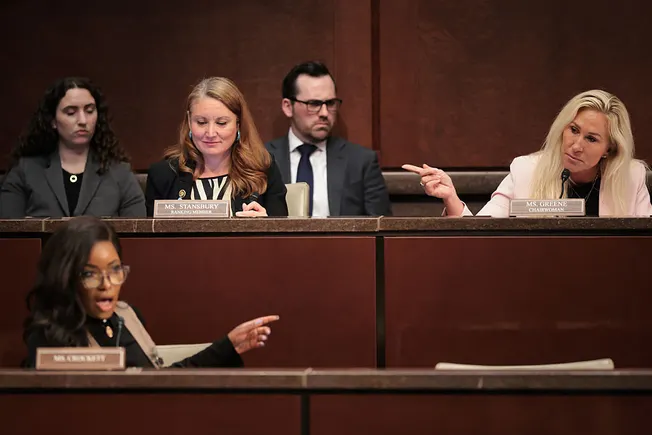
    Do transgender student athletes’ involvement in girls’ and women’s sports — an issue that has recently jeopardized schools’ federal funding — fall under government efficiency and oversight? That question starkly divided lawmakers among party lines in a nearly 4-hour hearing on Wednesday held by the Delivering on Government Efficiency Subcommittee, a newly-formed subcommittee of the House Committee on Oversight and Accountability. 

    The DOGE Subcommittee hearing — meant to discuss the politically charged issue of Title IX and transgender student rights that has taken center stage under the Trump administration — quickly deteriorated to repeated gavel-banging, a motion to adjourn the meeting, disagreement over the committee’s purpose, arguments over lawmakers’ allotted speaking times, and discussions of differences in male and female elbow-joint anatomy and muscle mass. 

    The subcommittee was created to oversee “federal civil service, including compensation, classification, and benefits; federal property disposal; government reorganizations and operations, including transparency, performance, grants management, and accounting measures generally,” according to the Committee on Oversight and Government Reform’s rule book. 

    Witnesses included two cisgender female athletes advocating for athletic teams without transgender students, the chair for the USA Fencing Board of Directors, and the CEO of National Women’s Law Center, a nonprofit organization that advocates for LGBTQ+ rights.

    Republican lawmakers, who have called for less federal oversight of education and a return of that power to the states, said the hearing was necessary because it related to Title IX, a federal law meant to prohibit sex discrimination in federally funded education programs. 

    “It’s an important issue that biological men stay out of women’s sports,” said Rep. Marjorie Taylor Greene, chair of the committee and Republican from Georgia. 

    Rep. William Timmons, R-S.C., said the hearing was meant to “shine a light not only on the integrity of women’s sports,” but also on how institutions like USA Fencing and others may be misusing their authority to “push controversial policies that violate basic human rights and disregard their Congressionally-authorized mission.”

    “This is what happens when you allow God to be pushed out of everything,” added Rep. Eli Crane, R-Ariz. 

    Democratic lawmakers at the hearing, however, said it was a waste of the subcommittee’s time and did not fall under the body’s jurisdiction, which instead includes issues like proposed cuts across the government. 

    “This subcommittee could be focusing on the layoffs that President Trump has executed: over 200,000 firings of federal employees,” said Rep. Stephen Lynch, D-Mass. “That does affect the efficiency of our government programs.” 

    Rep. Robert Garcia, D-Calif., concurred, saying the subcommittee has “never really talked about government efficiency or any serious legislative work,” and that he was “surprised that this subcommittee is not apparently in charge of policing women’s sports.” 

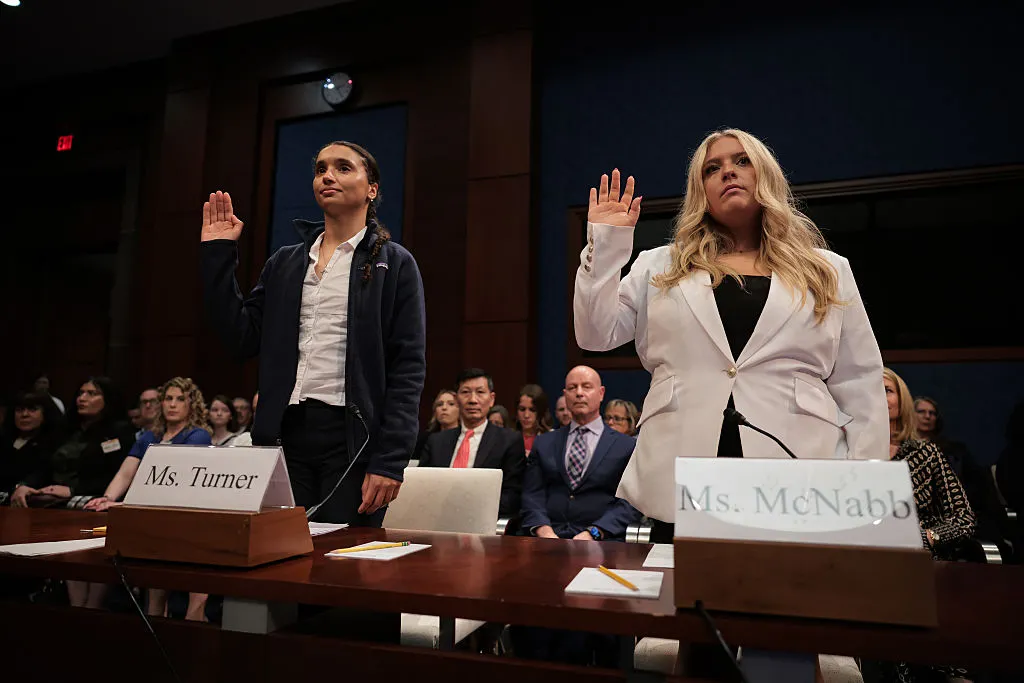
    Witnesses at a DOGE Subcommittee hearing raise their hands in oath

    Stephanie Turner, left, a fencer who refused to compete against a transgender athlete, and Payton McNabb, right, a former North Carolina high school volleyball player injured by a transgender opponent, are sworn in during the hearing held by the Delivering on Government Efficiency Subcommittee at the U.S. Capitol on May 7, 2025, in Washington, D.C.

    Kayla Bartkowski/Getty Images via Getty Images


    DOGE impacts on K-12

    The DOGE Subcommittee is among the latest in a series of efforts by the Trump administration and Republicans to cut back on what they say are instances of abuse, fraud and waste in the government. Its formation is an extension of similar efforts conducted by the Department of Government Efficiency, also referred to as DOGE. 

    Those efforts have had major implications for the K-12 sector in recent months, including gutting the Education Department by laying off more than 1,300 employees, closing or significantly reducing its offices, canceling grants entirely or retracting grant competitions, and proposing a 15% cut to the department’s funding. 

    The reduction in expenses from DOGE’s efforts is also expected to put a strain on K-12 finances, according to a Moody’s report released in April. 

    Among DOGE cuts were seven of the Education Department’s 12 local offices for the Office for Civil Rights, leaving schools with reduced oversight of civil rights compliance. Those offices were in charge of investigating allegations of Title IX violations — the subject of the hearing Wednesday — for half of states. 

    Source link

  • Indiana governor sued by state ACLU over university board control

    Indiana governor sued by state ACLU over university board control

    This audio is auto-generated. Please let us know if you have feedback.

    Dive Brief:

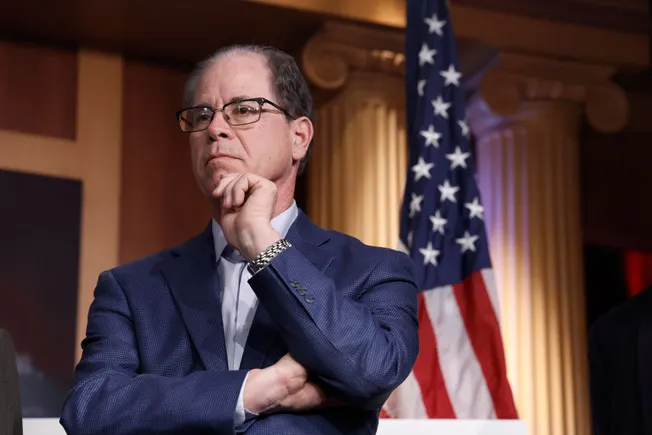
    • The American Civil Liberties Union of Indiana is suing the state’s governor, Mike Braun, over a new law giving him full control over the selection of Indiana University’s trustee board.
    • Last month, Republican lawmakers added several last-minute changes to Indiana’s budget bill that expanded the state’s control over its public colleges. Braun signed the budget into law Tuesday.
    • One provision empowers the governor to appoint all nine members of Indiana University’s board, eliminating the institution’s longstanding tradition of alumni trustee elections. That change illegally targets Indiana University and violates the state’s constitution, ACLU of Indiana’s lawsuit argues.

    Dive Insight:

    Indiana University has held alumni trustee elections since 1891, with the process codified into state law. Board members oversee everything from admissions standards to presidential appointments to faculty promotions and tenure. 

    Prior to the change in law this month, three trustees on the university’s nine-person were elected by alumni. The governor appointed the rest.

    ACLU of Indiana is suing Braun on behalf of a candidate who was vying for a board position this summer, Justin Vasel.

    “This challenge addresses a law that strikes at the heart of democratic governance at Indiana’s flagship university,” Vasel said in a statement Wednesday. “This unconstitutional legislation threatens IU’s 134-year-old tradition of alumni representation while an election for those very positions is already underway.”

    Before the change in law, the university’s over 790,000 graduates were eligible to cast a ballot, according to the university’s alumni association, making the voter pool larger than the populations of Wyoming, Vermont or Alaska.

    Six members of the university’s alumni association had announced their candidacy for trustee, and the month-long election was set to begin in June. Had it gone on as scheduled, the winner would have joined the board July 1.

    Now, Braun has the power to appoint who he wishes, so long as five trustees are university alumni and five are Indiana residents. The governor also received the power to remove any previously elected members at his discretion. 

    Braun defended the change during an April 30 press conference, citing low alumni voter turnout in the trustee elections, according to the Indiana Capital Chronicle.

    “It wasn’t representative. It enabled a clique of a few people to actually determine three board members. And I don’t think that is real representation,” the governor told reporters.

    The university’s next trustee meeting is set to take place June 12.

    The lawsuit castigated lawmakers for not following the normal legislative process when approving the change, instead relying on last-minute amendments.

    “No hearings were held concerning the proposal,” it said. “Instead the change was inserted at the eleventh hour deep within a lengthy budget bill that otherwise would have nothing to do with the election of members of the boards of trustees of Indiana’s higher education institutions.”

    Vasel and the ACLU of Indiana also questioned the constitutionality of the budget’s targeting of Indiana University’s board selection.

    The process for appointing trustees varies among the state’s other public universities. But the alumni of each institution have the ability to vote on or nominate graduates to the board, the lawsuit said. The change Braun signed into law takes that ability away from Indiana University alone.

    “Every other four-year public university in the state has a process for allowing alumni to select at least some members of the board of trustees, and there is no justification for denying that ability to the alumni of IU,” Ken Falk, legal director of ACLU of Indiana, said in a Tuesday statement.

    Indiana Republicans, who control both chambers of the Legislature and the governor’s mansion, have attempted to control other aspects of Indiana University.

    Earlier this year, the state comptroller and two lawmakers joined an event where an advocacy group questioned if the university was illegally routing state funds to the Kinsey Institute, a sexuality and gender research center housed on its Bloomington campus.

    Lt. Gov. Micah Beckwith joined the opposition of the institute and said he and Braun are committed to ensuring Indiana University “is not using taxpayer dollars to fund something that is rooted in this wickedness,” according to WFYI.

    Beckwith also threatened the university and its editorially independent student newspaper, the Indiana Daily Student, over the publication’s coverage of President Donald Trump. 

    The lieutenant governor derided a November cover story that showcased quotes critical of the president made by former Trump officials, though Beckwith misattributed the quotes as from the paper’s staff. He went on to call the story “WOKE propaganda at its finest.”

    “This type of elitist leftist propaganda needs to stop or we will be happy to stop it for them,” Beckwith said in a social media post.

    Source link

  • Ryan Lufkin, Vice President of Global Academic Strategy, Brings the Skinny

    Ryan Lufkin, Vice President of Global Academic Strategy, Brings the Skinny

    When the developers of Canvas, the world’s leading web-based learning management system (LMS) software, invite you to a party—July 22-24 this year in Spokane, WA—you might consider the offer. Expected to draw 3,000 attendees across various roles from individual educators to IT leadership, the event promises product reveals, professional development, and collaborative opportunities like Hack Night, designed to help educators and administrators demonstrate tangible value when they return to their institutions. I was able to grab Ryan Lufkin, Vice President of Global Academic Strategy at Instructure, for some pre-show scuttle butt. Have a listen and scroll down for some highlights:

    ➜InstructureCon 2025 is evolving its AI strategy beyond basic features to an “agentic approach,” leveraging partnerships with Anthropic, Microsoft, and Google to create integrated AI experiences across campus environments. Says Ryan: “That’s because our open architecture is the most well-positioned learning platform in the world to really pull in, not just those AI-powered features that we’ve developed, but we also leverage those from our partners.”

    ➜Instructure is responding to educational institutions’ budget constraints by focusing on helping customers maximize their technology investments through better data usage, adoption metrics, and optimization strategies. Says Ryan: “We really want educators and administrators to walk away with just a toolkit of how to use these products better, how to use them more deeply and tangibly show that value because we know the budgets are tight.”

    A few session highlights:  

    Transforming Student Success with Mastery Connect: A Proven Approach to Data-Driven Instruction in Richland One School District

    Get ready to discover how Richland One (R1) School District in South Carolina has been transforming student success with Mastery Connect since 2015! This digital assessment platform has empowered R1 teachers to seamlessly administer standards-based formative and summative assessments, dive into score reports, and collaborate with colleagues. MC has unlocked deeper insights into student mastery, giving teachers and teams the tools they need to drive data-driven instruction. Join us for an exciting session where R1 will share its curriculum map structure and district approach to formative assessments. Discover how to save time on data collection and analysis—whether you’re a teacher or an admin. Learn how newer features like Quick Reassess and Assessment Compare can help you work smarter, not harder! You’ll also explore how to harness real-time data to fuel impactful discussions in your Professional Learning Communities (PLCs), driving focused, results-oriented collaboration.

    Cracking the Code: Turning Data into Action with Mastery Connect

    Drowning in data but struggling to make it meaningful? Join us on a journey to transform numbers into actionable insights using Mastery Connect! In this session, we’ll share how we built educator buy-in, shifted mindsets, and empowered teachers to use data in meaningful ways. Discover practical strategies for making data analysis approachable, actionable, and impactful—without overwhelming teachers. We’ll explore real-world examples, time-saving tips, and effective ways to connect assessment data to instructional decisions. Whether you’re just getting started or looking to refine your approach, this session will equip you with insights and strategies to turn data into a catalyst for student success.

    Beyond the Classroom: Maximizing Canvas for Non-Academic Programs in Resource-Limited Environments.

    As institutions face financial and regulatory challenges, maximizing existing technology investments is essential. While Canvas is primarily used for academic courses, its capabilities extend beyond the classroom. This session explores how a small liberal arts institution has successfully repurposed Canvas for faculty onboarding, professional development, syllabus archiving, student organizations, and institutional assessment—all without additional costs. A key focus will be the development of a syllabus submission portal designed to streamline syllabus collection, ensure compliance with learning outcomes, and create a structured faculty repository. Attendees will gain practical insights into overcoming adoption challenges, achieving measurable ROI, and applying these strategies to institutions of varying sizes.

    Kevin Hogan
    Latest posts by Kevin Hogan (see all)

    Source link

  • Kenneth C. Griffin Donates $2 Million to Nonprofit Achieve Miami’s Teacher Accelerator Program to Strengthen South Florida’s Teacher Pipeline

    Kenneth C. Griffin Donates $2 Million to Nonprofit Achieve Miami’s Teacher Accelerator Program to Strengthen South Florida’s Teacher Pipeline

    Miami Achieve Miami, a nonprofit dedicated to equalizing educational opportunities for students throughout Miami-Dade County, has received $2.4 million from multiple philanthropic organizations and leaders, including a leadership gift of $2 million from Kenneth C. Griffin, founder and CEO of Citadel and founder of Griffin Catalyst. The funding, awarded over the past year, will further expand Achieve Miami’s transformative programs, reaching thousands of K-12 students through initiatives including Achieve Scholars, which prepares high schoolers for college success; Achieve Summer, a dynamic program combating learning loss through hands-on academics and enrichment; and the Teacher Accelerator Program (TAP), a groundbreaking effort to address Miami-Dade’s urgent teacher shortage.

    Kenneth C. Griffin’s $2 million leadership gift is specifically focused on supporting TAP in creating a pipeline of talent for the teaching profession through recruiting, preparing, and mentoring aspiring educators, including those who had not previously considered a career in education. This gift builds on Griffin’s $3.5 million gift to TAP in 2022, further strengthening Achieve Miami’s efforts to recruit and train qualified educators to teach in public, private and charter schools across Miami-Dade and close learning gaps in the city’s schools. Griffin has a longstanding commitment to improving education and has contributed more than $900 million to providing greater access to a high-quality education and pathways to success for students in Florida and across the country.

    Additional grants include:

    • $200,000 from the Bezos Family Foundation, which is a director’s gift supporting early and adolescent learning through grants and programs that advance the science of learning.
    • $100,000 from the Panera Bread Foundation, as part of its national initiative to support nonprofits that provide educational access to underserved youth.
    • $65,000 from Morgan Stanley, in support of Achieve Miami’s financial literacy and career readiness programs, which equip students in the organization’s Achieve Scholars program with essential money management skills for financial independence and future success. As part of its commitment, a team of Morgan Stanley employees guide students through financial literacy sessions across ten Miami-Dade County public schools, providing essential lessons on topics like budgeting, investing, entrepreneurship, savings, and credit.
    • $50,000 from City National Bank of Florida, as part of its long-term partnership with Achieve Miami in support of the Achieve Scholars program. City National Bank is planning financial literacy programming for students over the summer.

    “Every student deserves access to resources, mentors, and opportunities that can set them up for success,” said Leslie Miller Saiontz, Founder of Achieve Miami. “These generous grants, led by Ken Griffin, will enable us to expand our reach, empower more educators, and bridge opportunity gaps that are prevalent in Miami. By investing in students and teachers, we are building a stronger future for our community.”

    “Each of us has a story of how a teacher has changed our lives,” said Ken Griffin in February 2023 alongside his initial gift to Achieve Miami. “I care deeply about bringing more high-quality educators into Miami classrooms to help ensure the children of Miami will continue to enjoy the impact of life-changing teachers.”

    Despite being one of the fastest-growing states with the nation’s fourth-largest economy, Florida ranks #21 in per capita education funding. Achieve Miami’s initiatives aim to eliminate educational disparities by equipping students with the tools and support needed for success with a variety of diverse enrichment programs such as Achieve Scholars, Achieve Saturdays, and Achieve Music.

    Achieve Miami’s impact to-date includes support for over 10,000 Miami-Dade County students, college and career readiness programming for Achieve Scholars across ten high school sites, providing internet access to over 106,000 homes through Miami Connected, and the recruitment and training of nearly 200 new teachers through the Teacher Accelerator Program (TAP) since the initiative’s launch in 2023.

    ABOUT ACHIEVE MIAMI

    Achieve Miami is a nonprofit organization that is dedicated to fostering a transformational education ecosystem in Miami. Since its founding in 2015, the organization has supported over 10,000 K-12 students, bolstered programming for 60+ local schools, and engaged thousands of volunteers. Together with partners from the public and private sector, Achieve Miami designs and manages programs that bring together members from various parts of the community to extend learning opportunities for students, teachers, and community leaders. Learn more at www.achievemiami.org.

    ABOUT THE TEACHER ACCELERATOR PROGRAM

    Teacher Accelerator Program (TAP) is a non-profit organization creating a pipeline of talent for the teaching profession through recruiting, preparing, and mentoring aspiring educators. TAP’s comprehensive and streamlined program equips college students and career changers with the skills, knowledge, and certification necessary to excel in the classroom. TAP addresses the nationwide teacher shortage crisis by providing a built-in path to teaching, inspiring a new generation of educators.

    TAP participants take a one-semester course, followed by a six-week paid summer internship, earn a certificate to teach, and begin instructing in a Miami-Dade County public, private, or charter school classroom. TAP is an initiative of Achieve Miami, supported by Teach for America Miami-Dade, and is offered by the University of Miami, Florida International University and Miami-Dade College. Learn more at www.teacheraccelerator.org.

    eSchool News Staff
    Latest posts by eSchool News Staff (see all)

    Source link

  • Why I Chose University of Florida, by Santa Ono (opinion)

    Why I Chose University of Florida, by Santa Ono (opinion)

    The University of Florida is already one of the nation’s premier public universities. But it has the potential to be the very best. That belief—in UF’s momentum, its mission and its future—is what led me to pursue the extraordinary opportunity of the UF presidency.

    Santa J. Ono was recently recommended as the sole finalist for the University of Florida presidency. 

    University of Florida

    Over the past several weeks, I’ve had the chance to spend meaningful time with the university’s leadership. I believe deeply in their vision: ambitious, anchored in a culture of excellence and laser-focused on student success. The passion I’ve seen for this institution—including during my visit to campus earlier this week to meet its students, faculty and administrators—is infectious, and the alignment between the Board of Trustees, the Board of Governors, the governor and the Legislature is rare in higher education. This alignment signals seriousness of purpose, and it tells me that Florida is building something truly exceptional. I’m excited to be part of that.

    I believe in Florida’s vision for higher education. I understand its priorities, and I support them. I will execute this vision with clarity, consistency and integrity. I put my name forward for this position because I agree with the state leadership’s vision and values for public higher education. My alignment is rooted in principles—like the renewed emphasis on merit, the strengthening of civics and foundational learning, and the belief that our universities should prepare students not just for careers, but for informed citizenship in a free society.

    Public universities have a responsibility to remain grounded in academic excellence, intellectual diversity and student achievement. That means rejecting ideological capture, upholding the rule of law and creating a culture where rigorous thinking and open dialogue flourish. I share that commitment.

    Like many, I supported what I believed to be the original intent of DEI — ensuring equal opportunity and fairness for every student. That’s something on which most everyone agrees. But over time, I saw how DEI became something else—more about ideology, division and bureaucracy, not student success. That’s why, as president of the University of Michigan, I made the decision to eliminate centralized DEI offices and redirect resources toward academic support and merit-based achievement. It wasn’t universally popular, but it was necessary. I stood by it—and I’ll bring that same clarity of purpose to UF.

    The future of higher education depends on a clear mission, a culture of merit and accountability, and a deep commitment to preparing students to thrive in the real world. That means strengthening partnerships with businesses, supporting agriculture and innovation, and ensuring each student—regardless of background—has the opportunity to reach their full potential.

    I also understand the challenges of leadership in today’s academic environment. During my tenure leading other public universities, I declined to politicize the institutions or publicly oppose national political figures. I did this because I believe universities must serve as platforms for learning, not partisanship or ideological activism.

    Combating antisemitism has been a priority throughout my career. I’ve worked closely with Jewish students, faculty and community leaders to ensure that campuses are places of respect, safety and inclusion for all. I know that the University of Florida has been a national leader in this regard —setting a gold standard in standing firmly against antisemitism and hate. That standard will not change under my leadership. I will continue to ensure that UF is a place where Jewish students feel fully supported, and where all forms of hatred and discrimination are confronted clearly and without hesitation.

    Finally, peaceful protest has a place in campus life. But the University of Florida is not a place for disruption, intimidation or lawlessness. If I am approved, UF will remain a campus where all students are safe, where differing views can be heard and where the rule of law is respected.

    This is an exciting moment for Florida and for the University of Florida. I’m honored to be a part of it. And I’m ready to get to work.

    Santa J. Ono has been recommended as the sole finalist to be the 14th president of the University of Florida. He formerly served as the president of the University of Michigan.

    Source link

  • The New Pope, Leo XIV, Is a ’77 Villanova Grad

    The New Pope, Leo XIV, Is a ’77 Villanova Grad

    The Vatican announced the selection of a new pope to lead the Catholic Church on Thursday, the first to come from the United States and the first to hold a bachelor’s degree from a U.S. university.

    Pope Leo XIV, then Robert Prevost, graduated from Villanova University in 1977.

    Pope Leo XIV, born Robert Prevost, is a Chicago native who graduated from Villanova University in Philadelphia in 1977 with a bachelor of science in mathematics. In September of that year, he joined the Order of St. Augustine. He took his solemn vows in August 1981 and earned a master of divinity from the Catholic Theological Union in Chicago in 1982.

    Villanova president Peter M. Donohue said in a statement that the university celebrates the election of Pope Leo XIV.

    “I cannot help but reflect on what his Augustinian papacy will mean to our university community and our world,” Donohue said. “Known for his humility, gentle spirit, prudence and warmth, Pope Leo XIV’s leadership offers an opportunity to reaffirm our commitment to our educational mission.”

    For most of his career, Prevost served in Peru, holding roles as a parish pastor, diocesan official, seminar teacher and administrator before becoming bishop of Chiclayo in 2015. In 2023, Pope Francis appointed Prevost prefect of the Dicastery for Bishops, which increased his visibility and influence in the church, putting him on the path to the papacy.

    In addition to being the first pope from the U.S., Leo is also the first dual-citizen pope, holding citizenship in Peru. He’s also the first Augustinian friar to be elected pontiff, reflecting Villanova’s Augustinian Catholic roots.

    The last pope to take the name Leo also has ties to American higher education. Pope Leo XIII (1878–1903) gave his formal approval for the founding of the Catholic University of America in Washington, D.C., on April 10, 1887, and the university recognizes this date as Founders Day.

    Source link

  • Conservatives Clash Over Ono Hire at UF

    Conservatives Clash Over Ono Hire at UF

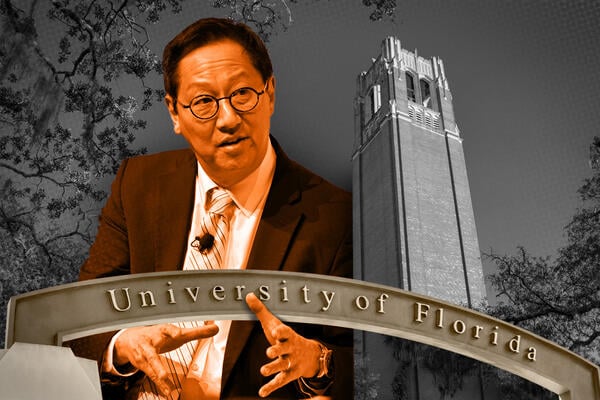
    Less than a year after former president Ben Sasse resigned abruptly, the University of Florida has gone in the opposite direction for its next presidential pick, announcing Santa Ono as the sole finalist.

    Ono, who stepped down from the University of Michigan presidency last week after less than three years on the job, brings a wealth of academic and research experience: He also served in the top jobs at the University of Cincinnati and the University of British Columbia.

    Sasse, a Republican U.S. senator from Nebraska when he was hired in late 2022, previously served as president of Midland University, a small institution in his home state. Despite a lack of experience overseeing a massive research enterprise like UF, Sasse fit a profile in demand in Florida, where GOP lawmakers have ascended to presidencies at multiple universities. But his time at UF was short-lived; after less than 18 months on the job, he stepped down amid a spending scandal. At the time, he cited his wife’s deteriorating health as his reason for leaving.

    Ideology has regularly trumped experience in recent Florida presidential hires. Multiple former lawmakers, all Republicans, are at the helm of various state institutions. They include former lieutenant governor Jeanette Nuñez at Florida International University, Adam Hasner at Florida Atlantic University and Richard Corcoran at New College of Florida, among others.

    Considering those recent hiring trends, Ono is an outlier—a traditional higher ed candidate in a state where Republican governor Ron DeSantis and the Florida Board of Governors, most of whom he appoints, have taken active roles in presidential searches.

    And while many faculty members have celebrated the selection of a candidate with strong research and leadership credentials, some conservative figures are pushing back on Ono.

    Now a public battle appears to be brewing over who will lead the University of Florida.

    Opposition Emerges

    When UF announced Ono as the sole finalist for its presidency on Sunday, many observers were shocked that he was leaving his plum job at Michigan so soon. In October, Ono signed an eight-year contract extension with a $1.3 million base salary to keep him at Michigan long term. (Though UF’s compensation package has not yet been released, Ono could earn as much as $3 million a year, according to a salary range set by trustees.)

    But almost seven months later, Ono resigned when his candidacy at UF was announced.

    Given the trend of DeSantis’s involvement in presidential searches across the state, it seems unlikely Ono would have emerged without the governor’s blessing. But other conservative figures have publicly objected to Ono’s candidacy over concerns about diversity, equity and inclusion programs at Michigan, which has been scrutinized for its significant spending on such efforts.

    Chris Rufo, a trustee at New College of Florida who has championed anti-DEI efforts nationwide, strongly opposed the pick and called for UF to reverse course on the hire. Rufo has been a regular critic of DEI at UM.

    “The finalist for the University of Florida presidency is a left-wing administrator who recently declared his support for ‘DEI 2.0’ and claimed that ‘the climate crisis is the existential challenge of our time.’ Florida deserves better than a standard-issue college president,” Rufo wrote on X.

    Congressman Byron Donalds, who represents Florida’s 19th Congressional District and is the expected front-runner to replace DeSantis as governor at the end of his term, has also voiced concerns: “Florida cannot afford to inject wokeness into our flagship university. This selection must be blocked and the search committee must start over,” Donalds wrote in a social media post.

    DeSantis Defends the Pick

    But DeSantis defended the selection in a Wednesday press conference.

    Though he said he was “not involved” with the search and had not talked to Ono, he emphasized that he has faith in UF’s trustees—most of whom he appointed—guiding the pick. He added that the expectations for higher education in Florida were clear, noting the state’s opposition to DEI and what he called a rejection of “woke indoctrination” at state institutions.

    “I don’t think that a candidate would have been selected who is not going to abide by those expectations, and I think that you will likely see that will be very clear in this instance. I will let the process play out, but we have put a real serious stake in the ground on this,” DeSantis said.

    The governor boasted that Florida “led the efforts” to take down diversity initiatives, which he said the Trump administration has since followed on a national level.

    DeSantis also noted that Ono eliminated the University of Michigan’s DEI office in recent months.

    “I don’t think that anyone would want to come to the University of Florida if your goal was to pursue a woke agenda. You’re going to run into a brick wall here in the state of Florida,” DeSantis said.

    If the governor disapproved, he could blow up the search, as he did last month when UF’s College of Liberal Arts and Sciences tried to hire a new dean. In that case, DeSantis ordered the search restarted after his office took issue with DEI statements from candidates. Allowing UF’s hiring effort to proceed seems to suggest at least tacit approval from DeSantis.

    Some members of the Florida Board of Governors have also thrown their support behind Ono, pushing back on criticism. Their support is critical, considering that board has the power to upend presidential searches, which it has done in past searches, such as at FAU in 2023.

    Florida Board of Governors member Alan Levine has taken to social media to urge fellow conservatives, including Rufo, to give Ono a chance and hear him out through the process.

    “Chris, let’s give @SantaJOno a chance to tell his whole story,” Levine wrote in response to Rufo. “He eliminated the DEI office at Michigan. He faced threats and vandalism for standing up to the pro-palestinian/anti-israel/anti-US movement on campus. There seems to be more to Dr. Ono’s actions, and we need to let him tell his story. No candidate is without things they need to explain. I’m open to giving him the chance to do that, particularly given his total body of work.”

    The University of Florida declined to comment on critiques of the candidate.

    Ono Explains

    As Ono exits Michigan, he leaves several controversies in his wake.

    The outgoing president has faced criticism for his handling of pro-Palestinian protests in the aftermath of the Oct. 7, 2023, attacks by Hamas on Israel and the brutal retaliatory offensive by the Israeli military. Several former employees alleged they were fired for engaging in pro-Palestinian protests, prompting a lawsuit against the university, Ono and others, filed earlier this month.

    Michigan has also navigated a series of athletic scandals during Ono’s tenure. Most recently, a former Michigan football coach was accused of hacking the digital accounts of more than 2,000 NCAA athletes and downloading “personal, intimate digital photographs and videos,” according to the U.S. Department of Justice. Matt Weiss, an assistant at UM from 2021 through early 2023, was charged with 14 counts of unauthorized access to computers and 10 counts of aggravated identity theft in March. The incident also prompted multiple lawsuits against the university.

    And Ono shut down Michigan’s DEI office in March, despite objections from constituents.

    But in an op-ed shared exclusively with Inside Higher Ed, Ono made no mention of the lawsuits and avoided most other controversies. Instead, he focused on the potential at the University of Florida, emphasizing his belief “in Florida’s vision for higher education” and UF’s leadership.

    “The passion I’ve seen for this institution—including during my visit to campus earlier this week to meet its students, faculty and administrators—is infectious, and the alignment between the Board of Trustees, the Board of Governors, the governor and the Legislature is rare in higher education. This alignment signals seriousness of purpose, and it tells me that Florida is building something truly exceptional. I’m excited to be part of that,” Ono wrote in the op-ed Thursday.

    Ono echoed themes championed by both DeSantis and Rufo as he argued that universities must reject “ideological capture” and renew “emphasis on merit.” He also sought to distance himself from DEI efforts.

    “Like many, I supported what I believed to be the original intent of DEI—ensuring equal opportunity and fairness for every student. That’s something on which most everyone agrees,” he wrote. “But over time, I saw how DEI became something else—more about ideology, division and bureaucracy, not student success. That’s why, as president of the University of Michigan, I made the decision to eliminate centralized DEI offices and redirect resources toward academic support and merit-based achievement. It wasn’t universally popular, but it was necessary.”

    Ono added that he would bring “that same clarity of purpose to UF.”

    Source link