Blog

  • Could “Fear Equity” Revive Campus Free Speech? (opinion)

    Could “Fear Equity” Revive Campus Free Speech? (opinion)

    For most of the past decade, many professors lived in fear of challenging progressive beliefs on elite college campuses, beliefs that, as linguist John McWhorter argues, have often attained religious status. Saying the wrong word, or liking the wrong social media post, perhaps especially if one was a vocal member of an unfashionable minority, like Jews, could evoke ostracism from peers and even Twitter mobs demanding termination, followed by star chamber hearings led by unaccountable administrators.

    This was an inevitable consequence of ever-expanding conceptualizations of what constituted “harm” and various -isms (racism, sexism, etc.). University mandates requiring investigations for accusations of “harm” or “bias” inevitably incentivized some progressives, who are overrepresented in academia, to weaponize bureaucratic procedures to denounce, demonize and punish those they saw as violating sacred values. Greg Lukianoff, the president of the Foundation for Individual Rights and Expression, reports that more professors were terminated for speech “offenses” in 2014–2023 than in the entire McCarthy era.

    The 2024 FIRE Faculty Survey found that 14 percent of the approximately 5,000 respondents reported having been disciplined or threatened with discipline by their institutions for their teaching, research or other speech. If that response generalizes to the population of American faculty, it means there have been tens of thousands of such investigations (or threats) over the last 10 years.

    The sense of fear was wildly inequitable, with far more conservatives than liberals reporting self-censoring. American universities suffered a decade of cancellations, terminations, harassment and even the odd death threat from the far left.

    Fear Equity?

    Now, thanks to the Trump administration’s—in our view questionable—policies regarding academia in general and elite institutions like Columbia and Harvard Universities in particular, policies that many plausibly view as political vengeance for leftist activism, higher education is rapidly approaching fear equity: The presidential right has joined the campus left in using intimidation to punish those whose speech they dislike. Now, everybody in academia gets to be afraid of being canceled, or at least having their grants canceled. Noncitizen students and faculty also have to fear being deported for expressing views that the Trump administration opposes. Conservative and centrist academics still have good reasons to fear their colleagues and students, as they have since 2014, but now, progressive peers have similar reasons to fear whatever comes next out of Washington.

    Is this an opportunity for free speech advocates? At first glance, it seems not. The solution to erosion of protections for heterodox free speech and academic freedom cannot possibly be vengeful restrictions on progressive speech. That is the road to expanding authoritarianism and eroding free speech environments for all, a tendency many current leaders in Washington would seemingly welcome.

    Academia’s Failure to Protect Nonprogressive Speech

    Nonetheless, academia’s record of restraining the censoriousness coming from within its ranks over the last decade has been abysmal. The American Association of University Professors, once a nonpartisan bulwark against censorship, jettisoned its principled support for free speech in focusing almost entirely on threats from the right while, in higher education, our (and AAUP’s) primary concern, most censorship came from the left. The AAUP’s recent statements endorsing the use of DEI criteria in hiring and promotions and the legitimacy of academic boycotts are seemingly designed to cement progressive orthodoxy over the professoriate.

    In just months, President Trump has demonstrated the error of AAUP’s “free speech for me but not for thee” positions, as Nat Hentoff put it in his book of that title. Of course, it remains to be seen whether the AAUP will interpret this as “time to take principled stances for speech and academic freedom for all of our faculty” rather than “Trump is evil incarnate, so we should double down on imposing progressive politics.”

    The last 10 years have been disastrous for free speech on campus. As Occidental College professor and Free Black Thought cofounder Jake Mackey recently wrote in “The last four years were the most repressive of my lifetime,” “It was fear of retaliation from the left, not from a fascist leader, that caused me to lay awake at night on more occasions than I can count, terrified that a student might have misinterpreted something I said in class and initiated a cancelation campaign against me.”

    Polling data bear this out, as Sean Stevens and his coauthors report in “Ostrich Syndrome and Campus Free Expression,” a chapter in our co-edited book, The Free Inquiry Papers (AEI Press, 2025). Conservative professors are more than twice as likely as liberal peers to report self-censoring. This is a rational response to reports showing that, within academia, “cancellation” attacks—attempts to punish faculty for their speech—are more likely to come from their left than their right. Risking one’s livelihood is not usually worth it.

    There is also evidence raising the possibility that support for censorship and for antisemitism was spread in part through shadowy foreign donations. A 2024 report, which one of us (Jussim) co-authored, found that universities underreported billions of dollars in funding from foreign sources (revealed after a Department of Education investigation). Worse, receipt of funding from authoritarian regimes and from member states of the Organization for Islamic Cooperation was statistically associated with deterioration of free speech and heightened antisemitism on campus.

    Follow-up research in progress is examining the hypothesis that this foreign financial assistance helped organize anti-Israel student groups and whole academic departments. As Lukianoff reported in “How Cancel Culture Destroys Trust in Expertise” at the recent Censorship in the Sciences conference held at the University of Southern California, protests by such groups were almost “exclusively responsible” for disruptions of campus speakers in 2024, which he called “the worst year we know of in history for campus deplatforming.” (To its credit, FIRE protects the rights of both pro- and anti-Israel speakers.)

    Notably, some campuses are far worse on free speech than others. A FIRE faculty survey released last December revealed that a remarkable 63 percent of Columbia faculty reported self-censoring at least occasionally; they identified the Israel-Hamas conflict as the most difficult issue to discuss on campus, with affirmative action second. That the far left has imposed a regime of denunciation and fear on many college campuses is beyond doubt.

    Trump’s Attacks on Free Speech and Academic Freedom

    But under President Trump, the right is making up for lost time. The Trump administration’s attempt to cut indirect costs on grants could be viewed as a genuine attempt to reduce wasted tax dollars. However, given that they have not reported any analysis of how indirects are used, many see this as a straightforward attack designed to cut academia down to size for its leftist politics. The administration has also disrupted the academic study of topics related to diversity, equity, inclusion, prejudice, inequality and oppression by defunding almost every grant to study these important issues. While faculty are not entitled to federal grant dollars and the federal government has the legitimate right to set funding priorities, the Trump administration has also attempted to ban any funding on any topic from universities that have DEI programs that the administration believes engage in discrimination. These policies will chill academic discourse.

    Furthermore, even if ultimately found to be legal (which we doubt), the Trump administration’s targeting for deportation of immigrants who have allegedly expressed support for Hamas further retards the robust exchange of ideas on campus. And these efforts are succeeding; the rapid capitulation of institutions such as Columbia to Trump’s demands has been dubbed “The Great Grovel” by Politico.

    Toward the Rediscovery of Principled Defenses of Speech and Academic Freedom

    Is it possible that the new fear equity, with both left and right afraid to speak their minds, may be a necessary precondition to pave the way for a free speech renaissance? There is historical precedent for this possibility. It would be a mirror image of the way that McCarthy-era repression set the stage for a raft of Supreme Court cases that dramatically strengthened legal protections for free speech. Yet judges cannot be everywhere and lawsuits cannot change culture.

    Now that censorship is bipartisan, both the left and right have incentives to rediscover principled defenses of free speech, including for their opponents. As James Madison counseled in Federalist Paper No. 51, the best protection of freedom is self-interest, and now, on free speech, all sides have it. Alternatively, to take a more positive view centered on political education, it may take having one’s own speech threatened, or that of one’s allies, before one fully understands the value of constitutional protections of free speech and institutional protections of academic freedom.

    An Action Agenda

    What can be done to reinvigorate a culture of free and open inquiry, debate, and speech on America’s college campuses? Quite a lot. Last year, as reported here, House Republicans passed a horribly titled (“End Woke Higher Education Act”) but conceptually sound campus free speech bill prohibiting ideological litmus tests in faculty hiring and institutional accreditation, protecting the rights of faith-based groups to determine their membership and assuring that speech limitations cannot be selectively enforced, as when conservative or pro-Israel speakers must pay “security fees” waived for liberal or pro-Palestine speakers. Just four Democrats voted yea and the then-Democratic Senate showed no interest. (In fairness to Senate Democrats, the House bill passed near the end of the congressional session.) Sponsor Burgess Owens, Republican of Utah, is expected to reintroduce the bill, and given Republican majorities in the House and Senate and Democrats’ newfound interest in free speech, its prospects for passing should be improved.

    Yet federal legislation can never solve the whole problem. Norms and social practices matter more than law with respect to creating a free speech culture on campus. What can institutions of higher education do to strengthen an intellectual culture of freewheeling discourse, inquiry and debate? First, they can adopt a formal statement of their commitment to free speech and academic freedom, such as the Chicago principles or the Princeton principles.

    Second, campuses can restrict the bureaucratic overreach of DEI bureaucracies and institutional review boards, both of which can and do threaten and erode faculty free expression. Third, the best way to limit overreach of existing bureaucratic units may sometimes be to create another bureaucratic unit explicitly designed to do so. An Office of Academic Freedom that is mandated to ensure faculty rights are not infringed by DEI units, IRBs, chairs, deans or anyone else, might go a long way toward protecting faculty.

    We would prefer deep and principled commitments to free speech and academic freedom to be the font from which such reforms spring. But if the only way we will get reforms is through fear equity, we’ll take it.


    Lee Jussim is a Distinguished Professor of psychology at Rutgers University and creator of the Unsafe Science Substack. Robert Maranto is the 21st Century Chair in Leadership in the Department of Education Reform at the University of Arkansas. Together, they were among the co-editors of The Free Inquiry Papers (AEI Press, 2025) and among the co-founders of the Society for Open Inquiry in Behavioral Science.

    Source link

  • Liberating the library to foster student belonging

    Liberating the library to foster student belonging

    • By Dr Steve Briggs, Director of Learning and Teaching Excellence, University of Bedfordshire.

    There have been growing discussions, and the emergence of corroborating evidence, related to how a sense of belonging affects not only the student experience but also attainment, retention and well-being. As per the Office for Students’ (OfS) 2025-30 vision, university environments play a critical role in the student experience and have real potential to impact on belonging. Accordingly, how environments can promote a positive student experience and foster belonging should be of utmost strategic importance to university leaders.  

    Given their central position, university library environments have a significant potential to positively (or negatively) affect students’ sense of belonging. Library spaces, learning materials (both physical and digital) and operational processes all have the potential to individually or cumulatively foster a culture of belonging.

    I propose that there are traditional assumptions and modus operandi inherent with university libraries that may inadvertently be to the detriment of student belonging. While such practices are not necessarily straightforward to change (owing to issues around security and/or cost), here I consider more radical approaches that a library might employ to foster student belonging. Across all the following options, it is imperative that students are involved in re-imagination projects through facilitating co-creation and user experience design. This will serve to ensure that changes actually reflect student needs rather than becoming well-intentioned but misguided attempts to enhance belonging.

    Minimising physical barriers. Libraries have traditionally used security gates to control access. This means that most students’ first experience of a library will be a barrier. For many, this can feel intimidating, send messages of limited trust and so potentially feel very unwelcoming. Navigating barriers may also be particularly challenging for some students with a disability. Historically, gates were seen to be an effective means of protecting valuable library collections. However, the use of radio frequency identity tags, CCTV and enhanced staff monitoring will potentially serve the same purpose. Further, gates may provide a false sense of security, given that any library that has opening windows could easily provide an alternative means for library resources to be illicitly removed. As a result of many university libraries increasingly moving to a digital-first purchasing, the size and status of physical collections is likely to progressively diminish. Where there are very high-value items, it might be more appropriate to restrict access to a dedicated section rather than the entire building. Removing gates could save money in terms of security gate management and maintenance costs; it is also in keeping with the approach being increasingly adopted by public libraries, such as Luton Central Library.

    Relational customer service. Central to belonging are positive relationships between students and university staff. This may be at odds with transactional library models that focus on efficiency and rapid issue resolution, which can lead to students feeling like a number rather than individuals. Relational customer service is based on seeking to understand individual student needs (for example, is a student an employee, parent or carer?) to tailor service delivery accordingly. In doing so, they might provide a positive (and hopefully memorable) experience. As a result, students feel more valued, fostering ongoing engagement with library services. As per the Mental Health Charter, such approaches can help to combat feelings of loneliness and isolation. How library leaders can positively disrupt any prevailing transitional approaches and move to more relational working practices should be carefully considered when planning staff development.

    Simplified navigation. Complicated library resource classification schemes may be intimidating for students and a barrier to feelings of belonging. Facilitating social annotation may serve to help students better understand and navigate a library collection. By way of an example, students might work together to annotate a journal article virtually and be encouraged to include signposts to relevant library resources. There are dedicated platforms available that facilitate social annotation, as outlined by Cornell University. Likewise, the location of physical library stock could create unanticipated issues around belonging. For example, housing certain subject collections next to social learning spaces might be more conducive to promoting belonging when associated courses have the greatest emphasis on group work. Including students in the cataloguing and organisation of library stock would serve to increase awareness of how design could better promote belonging.

    Trust-based borrowing. Members have routinely needed to check learning materials out of a library. Whilst this is necessary in order to manage a library collection, there may be situations when students are very concerned about being seen to borrow certain resources or knowing their borrowing activities are being recorded. For example, a student might want to borrow materials that allow them to explore their sexuality but conflict with their religious status. In such instances, libraries may consider removing the need to check certain stock out of the library and instead operate on a ‘trust’ basis that materials will be returned.

    Blended learning enabled. Historically, individual study carrels were synonymous with libraries. Over time, there have been reductions in carrels to accommodate social learning spaces. Given the emergence of blended learning and remote working, students are increasingly meeting remotely with lecturers and peers online outside of scheduled sessions. Practically, library users are increasingly going to need access to soundproof spaces (such as individual meeting pods) to be able to meet virtually with classmates or tutors without disturbing other library users. Such implications for redesigning library spaces have previously been explored by Research Libraries UK and will need to remain an ongoing consideration for library leaders. Without such facilities, students may feel unable to fully engage in blended learning while working in a library, in turn undermining their sense of belonging.    

    Child-friendly. Public libraries will typically arrange regular programmes of activities for children and their families, especially during school holiday periods. In contrast, universities have historically been reluctant to allow students to bring their children onto campus, including into library spaces. This presents a major barrier for those with parenting or caring responsibilities. Universities currently take quite different positions in terms of allowing children into buildings. Increasingly, institutions are starting to allow students to bring children into libraries for a short-term visit and with potentially some restricted access. In contrast, select universities, including Surrey and York, have introduced family study rooms to allow students to bring children onto campus for longer periods, but these are currently exceptions rather than the norm. Were such facilities to be staffed, this could provide work experience opportunities for students studying health and social care or primary education courses.

    Commuter-ready. Traditionally, libraries have been concerned about students eating and drinking due to the risk of damage to stock and learning spaces. More recently, this position has started to soften. In light of the growing number of commuter students, access to kitchenette facilities on campus is increasingly in high demand. While examples of such provision exist within libraries, this is yet to become a standard feature of university libraries. Similarly, commuter students will need ready access to device charging stations and safe places to store items. Given the extended opening hours offered by libraries, these would be a logical place to host such facilities.

    Wellbeing-centred. Examples of traditional university library learning spaces include quiet or silent areas, social learning zones, reading rooms, group rooms, presentation rooms and computer suites. There are examples of selected university libraries expanding the range of learning spaces to meet the wellbeing needs of users. One such example is the creation of sensory spaces, which may be restricted to students with disabilities or open to all users. A second example could be the provision of exercise equipment within libraries. Such provisions would promote positive well-being, a key condition for the belonging dimension of the ‘Live’ module of the Mental Health Charter. 

    Civic centrepiece. The Secretary of State has previously highlighted that enhancing the civic role of universities was a priority. This could involve opening up library spaces to members of the local community. In addition to civic duty, opening up libraries may also support belonging. The progressive increase in the number of students who have caring responsibilities may mean that students would feel more supported by their institution, and in turn gain a great sense of belonging, should they be able to being dependents with them to university libraries. 

    Considering the current financial challenges facing the UK higher education library sector, it is reasonable to expect that any of the aforementioned actions would need to be staggered, potentially over several years, within many institutions. Accordingly, library leaders should be developing long-term student belonging strategies with clearly identified and connected work plans to ensure that there is a belonging ‘golden thread’ that links phased library developments and, in turn, ensures a coherent future library experience.

    I would like to acknowledge discussions with Janine Bhandol, Sofia Mavrogeni (Academic Liaison Librarians at the University of Bedfordshire) and Carly Ramirez-Herelle (Head of Library Services at the University of Bedfordshire) related to library futures which helped to inform this article.  

    Source link

  • The Use of Artificial Intelligence (AI) to Generate Case Studies for the Classroom – Faculty Focus

    The Use of Artificial Intelligence (AI) to Generate Case Studies for the Classroom – Faculty Focus

    Source link

  • A Michigan research professor explains how NIH funding works − and what it means to suddenly lose a grant – Campus Review

    A Michigan research professor explains how NIH funding works − and what it means to suddenly lose a grant – Campus Review

    In its first 100 days, the Trump administration has terminated more than US$2 billion in federal grants, according to a public source database compiled by the scientific community, and it is proposing additional cuts that would reduce the $47 billion budget of the US National Institutes of Health, also known as the NIH, by nearly half.

    Please login below to view content or subscribe now.

    Membership Login

    Source link

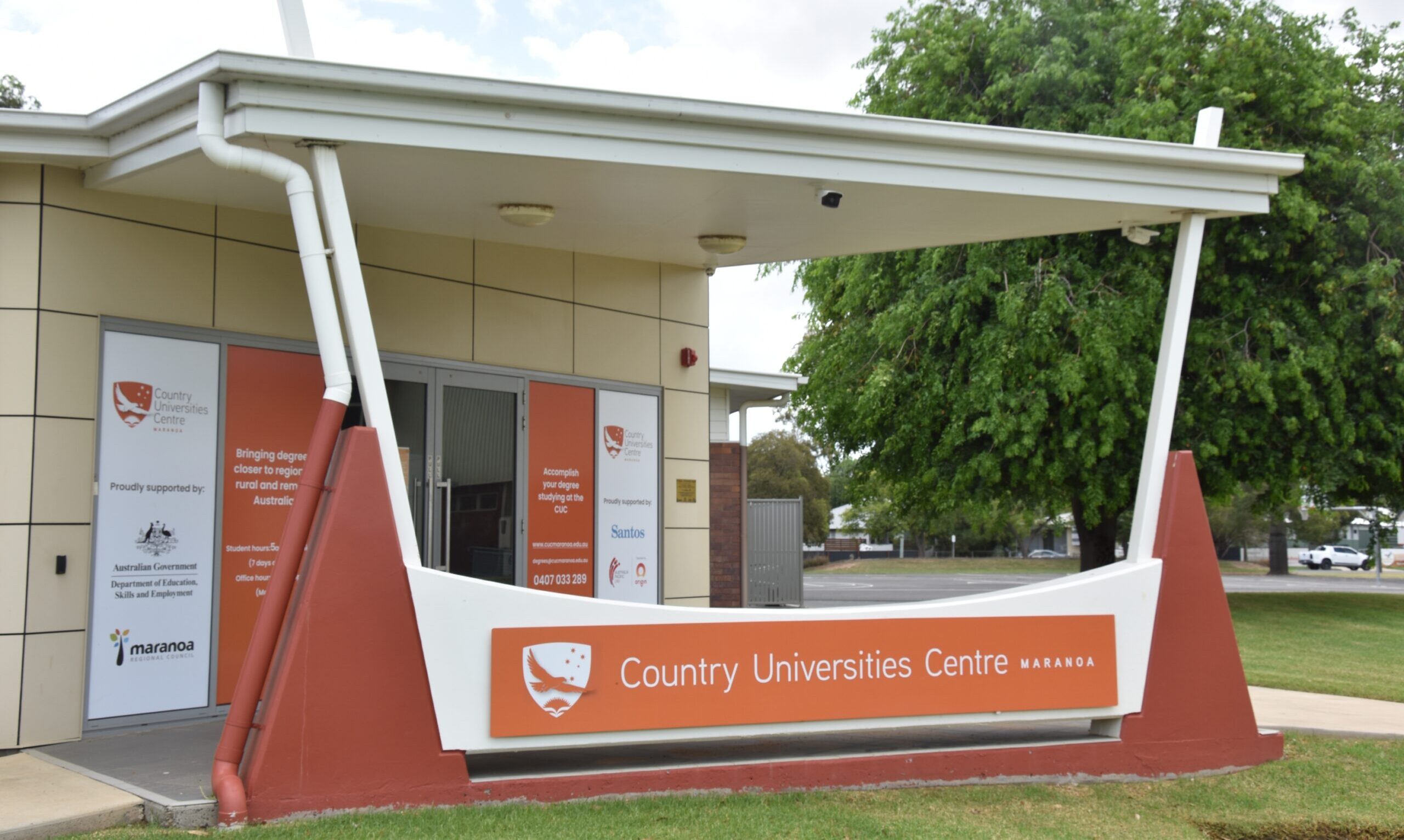
  • Unis should get behind Country University Centres and Regional Study Hubs – Campus Review

    Unis should get behind Country University Centres and Regional Study Hubs – Campus Review

    In the heart of Broken Hill, 22-year-old Hannah Maalste is pursuing a Bachelor of Health and Medical Science, a path that once seemed out of reach due to her remote location and lack of an ATAR.

    Please login below to view content or subscribe now.

    Membership Login

    Source link

  • How Labor can use its strong majority to support universities – Campus Review

    How Labor can use its strong majority to support universities – Campus Review

    The higher education sector is craving stability and investment after the policy changes, regulation warnings and instability of Labor’s last term.

    Please login below to view content or subscribe now.

    Membership Login

    Source link

  • Trump’s unprecedented assault on higher education

    Trump’s unprecedented assault on higher education

    Debates around academic freedom and freedom of speech in UK higher education have often revolved around a small number of high-profile cases involving individuals with views that can cause offense – like those of Kathleen Stock or David Miller.

    Following the recent fine levied by the Office for Students (OfS) against the University of Sussex, the regulator has written to universities to urge them to focus on these areas.

    It seems like attention will remain firmly fixed on the shades of difference in the tensions inherent in the law, institutional inclusion policies, and the various framings of academic freedom.

    These are important questions on serious issues and we collectively need to explore them in productive ways. But debating them now to the exclusion of all else – at this moment in global history – is a vast mistake with consequences that will be felt for generations.

    Those consequences will be felt not only by academics researching in controversial areas, but they will be felt by members of the public around the world.

    Trump uprising

    In the short period since Donald Trump was returned to the US presidency, we have seen an assault on the independence of the academy that is unprecedented in scale or speed.

    The Trump government opened by issuing a series of shocking demands to Columbia University while threatening $400 million in federal grants – this has now mounted to hundreds of millions more in cuts.

    What does this mean? Every grant – every grant – held by researchers at the Mailman School of Public Health has been frozen or cancelled. All of them.

    The Middle Eastern, South Asian, and African Studies department has been taken into “receivership”, which is a polite way of saying that outspoken academic departments now are to be led only by professors approved by the Trump government.

    Columbia leadership has been made to hire a private security force with arrest powers. Disciplinary matters are to be investigated and dealt with by the university’s president, attacking a principle of collective governance that has grown and developed over a millennium.

    And most shockingly, students like Mahmoud Khalil are being arrested and transported without due process on the basis of their alleged political speech and activities: without judges, lawyers, trials, or charges. There can be no more clear violation of academic freedom than this.

    While Columbia has nominally been threatened because of its approach to tackling alleged antisemitism on campus, other universities are also in serious trouble. The University of Maine system has had funding withheld because the governor of Maine has contested Trump’s anti-transgender executive orders.

    Trump’s own alma mater, the University of Pennsylvania, has been hit with threats of $175 million in cuts allegedly because they permitted a transgender woman to compete in swimming – in 2022.

    The Johns Hopkins University – one of the world’s leading universities, especially for medical research – has been hit hard by the unprecedented dismantling of USAID, with the university shedding more than 2,200 jobs around the world in the face of $800 million in cuts.

    Freedom fails

    As the weeks go by, news breaks almost daily with stories about further cuts and threats.

    We have to be clear that we are in a new world now. These attacks on the US academy will have two global effects that should be very worrying to everyone.

    First, these actions effectively dismantle the notion of academic freedom worldwide. If the wealthiest, most prestigious, and most influential universities on the planet can be cowed in two weeks, no other university will see themselves as able to resist any demand from Trump – or any other authoritarian leader.

    The current wave of demands will lead to further restrictions and policing, especially now that Trump has seen how easy it was to roll powerful institutions. Trump learned from autocrats like Orban. This is not a problem exclusive to the United States and we need to address it from a global perspective.

    Second, the chilling effect of these actions on research and teaching will have dramatic, complex, and far-reaching consequences that we will not fully understand for decades.

    Federal grant recipients have been instructed to remove mentions of words like “women”, which will have an almost-inconceivable impact on research on topics like cancer, childbirth, and domestic violence. Colleagues in the US tell me about departments in total chaos – lab cultures spoiling in refrigerators, clinical trial patients going without medication or observation, and doctoral funding wiped away mid-project.

    The impact on climate science, on public health, on any number of existential areas of research will be incalculable. These are not problems that can be solved by a future administration – even if we act right now, we will feel the damage of the Trump’s war on universities for decades to come. What may have seemed inconceivable two months ago has happened.

    There are some glimmers of resistance in the US – and there certainly are many brave colleagues and students organizing directly against Trump and the shameful collaboration of university leaders.

    In the UK, we need to learn from the failures of the US academy and understand that Trump’s authoritarianism will affect us too.

    We have to learn that we cannot trust politicians, regulators, or the state to respect the logic of academic freedom. We must protect staff and students by warning against travel to the United States. We must work together urgently to decentralize power in universities so that dictators like Trump cannot pressure individual university leaders.

    While institutional policies will not stop fascism, we must see our efforts as an attempt to delay and mitigate the impact as much as we can manage. While we should work with the government and unions, protest, write letters, and shout, we should also be clear-eyed that we cannot rely on the systems and institutions that failed to prevent the return of fascism.

    Engage in direct action. We must learn from activists and movements that have been fighting for a long time – use what power you have. Protect your most vulnerable colleagues and students. Fascism requires a politics of helplessness and fear. Respond with care and courage. Things will get worse before they get better.

    Source link

  • If it’s top down it won’t work

    If it’s top down it won’t work

    Higher education institutions are complex ecosystems where policies shape the experiences of students, academics, and administrative staff.

    However, the process of policy creation and implementation often lacks inclusivity, flexibility, and responsiveness to the rapidly evolving educational landscape.

    If institutions are to thrive in an era of digital transformation, shifting student expectations, and increasing socio-economic challenges, they must rethink how policies are designed and enacted.

    A more participatory, adaptive, and evidence-based approach is essential to creating institutional policies that truly serve the needs of all stakeholders.

    Top down without engagement

    Institutional policies often emerge from a centralised, top-down approach, where senior leadership teams develop policies without adequate engagement with those directly affected (students, faculty, and professional service staff).

    This results in policies that may be well-intended but are disconnected from on-the-ground realities. For instance, policies surrounding Technology-Enhanced Learning (TEL) frequently fail because they do not account for academic workload constraints, staff and students’ digital literacy levels, or disparities in institutional infrastructure.

    The gap between policy intentions and practical implementation then leads to confusion, resistance, and limited adoption.

    Policies should not be dictated from the top – but rather co-created with those who will implement and be impacted by them. This requires institutions to foster genuine dialogue with diverse stakeholders, ensuring that different perspectives and experiences shape decision-making.

    Adopting participatory approaches such as Change Laboratories, a method that engages stakeholders in problem-solving workshops, can provide a structured way for institutions to address contradictions and inefficiencies in their current policy frameworks.

    A recent Change Laboratory intervention at a UK research-intensive university demonstrated the benefits of participatory policy development. The initiative brought together academics, administrators, and digital learning specialists to collaboratively identify barriers to effective blended learning adoption.

    Through iterative discussions and problem-solving exercises, the group developed a Culturally Advanced Activity System (CAAS), aligning institutional policies with pedagogical realities. The process not only resulted in a more practical and effective policy framework but also increased staff engagement and willingness to adopt blended learning practices.

    The success of participatory policy-making in blended learning highlights its potential application across other areas of policy. Institutions could apply similar methodologies to enhance policies related to assessment frameworks, student support services, diversity and inclusion, and faculty development. By institutionalising collaborative problem-solving approaches, HE governance structures can become more responsive to evolving educational needs.

    Rigid policies that fail to account for evolving challenges and opportunities quickly become obsolete. HE institutions must adopt a more dynamic approach, treating policies as living documents that are regularly reviewed and updated based on data-driven insights.

    For example, instead of prescribing a one-size-fits-all approaches, institutions should allow for staff-led experimentation, followed by structured evaluations to refine policies based on what works best in different disciplines.

    An evidence-based policy culture?

    Stakeholder-led policy development is crucial to ensuring that policies are not only relevant but also widely accepted and effectively implemented. By actively involving students, faculty, and administrative staff in the policy-making process, HE institutions can create frameworks that reflect the lived experiences of their communities.

    This participatory approach fosters greater trust, encourages meaningful engagement, and enhances the practicality of policies. When stakeholders have ownership over policy development, they are more likely to support its implementation, leading to smoother transitions and sustainable institutional improvements.

    Additionally, fostering a culture of continuous professional development ensures that policy decisions align with the latest pedagogical and technological advancements.

    For HE institutions to remain relevant and responsive in the 21st century, they must overhaul how they create and implement policies. Moving away from rigid, top-down structures and embracing participatory, flexible, and evidence-driven approaches will ensure that policies are both effective and widely supported.

    Institutional leaders must prioritise stakeholder engagement, foster a culture of continuous learning, and create policies that genuinely enhance teaching, learning, and student success.

    Without these changes, HE risks stagnation in an era that demands adaptability and innovation. By embedding participatory mechanisms and evidence-based strategies in governance, HE institutions can pave the way for a more inclusive and forward-thinking educational environment.

    Source link

  • Trump administration court filing may spell end of overtime final rule

    Trump administration court filing may spell end of overtime final rule

    This audio is auto-generated. Please let us know if you have feedback.

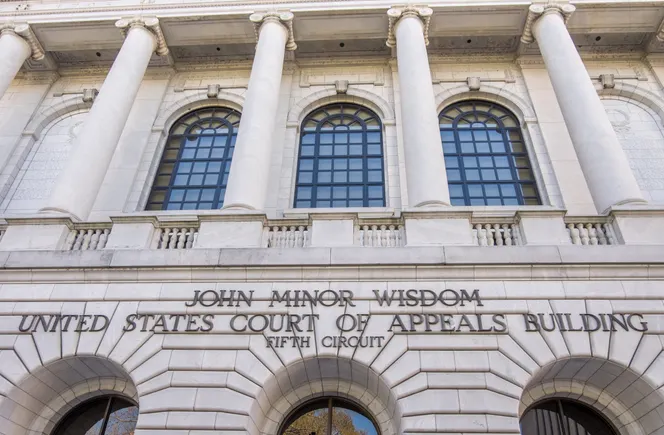
    U.S. Department of Justice attorneys asked the 5th U.S. Circuit Court of Appeals to temporarily suspend the Labor Department’s appeals in two cases challenging its 2024 Fair Labor Standards Act overtime rule, according to an April 24 court filing.

    Texas district court judges twice blocked DOL’s final rule, which increased the minimum salary threshold for overtime pay eligibility in two steps. First, a November 2024 decision sided with plaintiffs including the state of Texas and enjoined the rule nationwide. A second judgment set aside and vacated the rule in response to a lawsuit by marketing agency Flint Avenue.

    The government asked that the 5th Circuit place its appeals in abeyance “pending the agency’s reconsideration of the rule.” It said counsel for the appellees in both cases did not oppose its request.

    The Biden administration’s effort to expand overtime eligibility to millions of U.S. workers would have pushed the annual minimum threshold under the FLSA to $58,656 in 2025 with automatic, additional increases every three years beginning in July 2027. An initial increase to $43,888 per year took effect before Texas federal judges blocked it along with the rule’s other components.

    The entire policy is almost certain to be erased by the second Trump administration, according to attorneys who previously spoke to HR Dive. Prior to the Biden-era rule, DOL had last increased the overtime-pay threshold during Trump’s first administration in 2019.

    Source link

  • Brown fires new salvo in war against student journalist over list of DEI admins

    Brown fires new salvo in war against student journalist over list of DEI admins

    After news surfaced that the Trump administration plans to pull $510 million in federal funding from Brown University over its DEI programs, student journalist Alex Shieh had the chutzpah to identify administrators who appear to work in DEI through student newspaper The Brown Spectator. The university — which had already been investigating Shieh for the crime of publishing an interactive organizational chart — took aim at him again.

    Brown threatened Shieh with sanctions over his journalism, claiming the report on federal funding was “false” because the government had not yet told Brown of its plans.

    This, just weeks after Brown President Christina Paxson promisedBrown will always defend academic freedom and freedom of expression.”

    Making matters worse, this wasn’t the first time Brown came after Shieh for his journalism. On March 15, Shieh sent each of Brown’s 3,805 administrators a personalized DOGE-style email asking them what they’d done in the past week. He also asked them to explain how Brown students, who pay nearly $100,000 to attend, would be impacted if their role was cut. Ever since, Brown has had Shieh in its crosshairs.

    Tell Brown to Stop Railroading Alex Shieh

    Page (Two-Column)

    Every student deserves due process, and no student should face discipline for investigating institutional structures.


    Read More

    First, Brown launched a preliminary review into Shieh’s reporting, threatening him with a litany of charges, including one for “emotional harm” to the administrators on his email — an exceedingly broad and vague charge that runs roughshod over First Amendment principles. Brown also demanded he return “confidential information” he allegedly accessed without permission, while refusing to tell him what in his reporting was confidential.

    On April 7, just one day after he published the list of possible DEI administrators, Brown officially charged him with “misrepresentation” and “violation of operational rules.” How did he misrepresent himself? By identifying himself as a reporter in the email. Brown’s logic was that because it did not recognize The Spectator as an official student organization, anyone holding themselves out to be a journalist at The Spectator is a liar.

    The second charge was no better. The university argued Shieh had violated rules by accessing a university system and obtaining a report showing reporting relationships, both of which he was allowed to do. That report, Brown claims, included “non-public” information that no student is permitted to publish. How this should be a mystery is itself a mystery, as Google reveals org charts that are publicly available.

    FIRE wrote Brown a letter demanding it drop the misrepresentation charge and produce real evidence that Shieh accessed “non-public” information. We argued that the university’s refusal to abide by its own due process guarantees makes clear that what it really wants is to silence journalism it doesn’t like.

    In a testament to how little Brown values its own promises, the university replied that this targeted investigation into a student journalist was not a free speech issue. But despite this less-than-credible response, Brown actually did drop the misrepresentation charge. Good news, right? Not so fast.

    Rather than produce the requested evidence that Shieh had accessed private information, the university added a new charge, alleging Shieh violated its trademark policy by including the word “Brown” in the name The Brown Spectator, which he and others were helping to restart in April 2025 after it ceased publishing in 2014.

    Brown needs to cut its losses, drop the charges, and stop this chilling investigation into protected student expression.

    On May 2, FIRE wrote Brown a second letter, telling the school to knock it off.

    We explained that this new charge misrepresents trademark law and violates Brown’s free speech promises by attempting to use fair trade practices as a tool to censor non-commercial journalism about news and events taking place at Brown University. It is settled law that trademarks don’t trump the First Amendment or provide infinite control over a word (in this case, literally the word for a color), indeed, mark owners cannot stop the non-commercial use of their mark in a noncompeting industry. And nobody would mistake Shieh or The Brown Spectator for the official voice of Brown University.  

    Brown’s vendetta against Shieh has officially passed the point of Ivy League parody. Brown needs to cut its losses, drop the charges, and stop this chilling investigation into protected student expression. The university’s own promises demand it.

    Join us in calling for Brown to uphold the free press on campus.

    Source link