Blog

  • US to expand powers to terminate students’ legal status

    US to expand powers to terminate students’ legal status

    The expansion of government powers would hand Immigration and Customs Enforcement (ICE) the authority to cancel a student’s legal status if the visa they used to enter the US is revoked.  

    Previously, a visa revocation would only impact a person’s ability to return to the country but would not end their permission to stay in the US as a student. 

    The new guidelines were outlined in an ICE document shared in a court filing on April 28, according to Associated Press. 

    Attorneys for international students said in court the new reasons would allow for faster deportations and would justify many of the Trump administration’s terminations of thousands of students’ legal status on the database maintained by ICE.  

    “This just gave them carte blanche to have the State Department revoke a visa and then deport those students, even if they’ve done nothing wrong,” said immigration attorney Brad Banias, as reported in AP.  

    When approached for comment, a State Department spokesperson said it “will continue to work closely with the Department of Homeland Security to enforce zero tolerance for aliens in the United States who violate US laws, threaten public safety, or in other situations where warranted”.

    The PIE is yet to hear back from ICE.

    This just gave them carte blanche to have the State Department revoke a visa and then deport those students, even if they’ve done nothing wrong

    Brad Banias, immigration attorney

    Sector leaders welcomed last week’s news that the government was restoring students’ legal status while it developed a new framework for future terminations, though the proposed vastly expanded new powers come as another blow for international students and educators.  

    The court heard that the new policy went against “at least 15 years of SEVP guidance”, referring to the Student and Exchange Visitor Program managed by ICE. 

    However, NAFSA emphasised on May 2 that “the document cannot yet be regarded as ICE’s new official policy”.

    The document offers two new reasons for termination; non-compliance with the terms of nonimmigrant status and visa revocation by the state department.

    In the case of the former, it is not clear whether a SEVIS record termination would also result in the termination of nonimmigrant status, though it would strip students of status benefits including applying for OPT or returning to the US after travelling abroad.

    According to immigration attorneys, the new guidance could also allow for revoking student status if their names appear in a criminal database regardless of whether they were ever charged with a crime.    

    Traditionally, student visa revocations have not been common, but recently the US government began terminating students’ status either in addition to or instead of revoking their visas.   

    The Student and Exchange Visitor Information System (SEVIS) database is maintained by ICE to monitor international students’ presence in the US.  

    In the absence of disaggregated counts of visa revocation and SEVIS record termination, it remains unclear how many students will lose their status because of the new termination framework.  

    Since mid-March, sudden visa revocations by the State Department and SEVIS record terminations by ICE and DHS have caused widespread fear and uncertainty across US campuses.  

    “Exacerbating the stress was the rationale provided by the government, which ranged from wholly absent, to conflicting, to shifting, to downright baseless,” said NAFSA.  

    In March, secretary of state Marco Rubio said that his department was revoking the visas of students who took part in pro-Palestinian protests and those with criminal charges.   

    However, many students who saw their status terminated said they did not fall under those categories and argued that they were denied due process. Others said they were not aware their status had been revoked until logging onto the SEVIS database.  

    Source link

  • Eliminating grade inflation isn’t as easy as ABC

    Eliminating grade inflation isn’t as easy as ABC

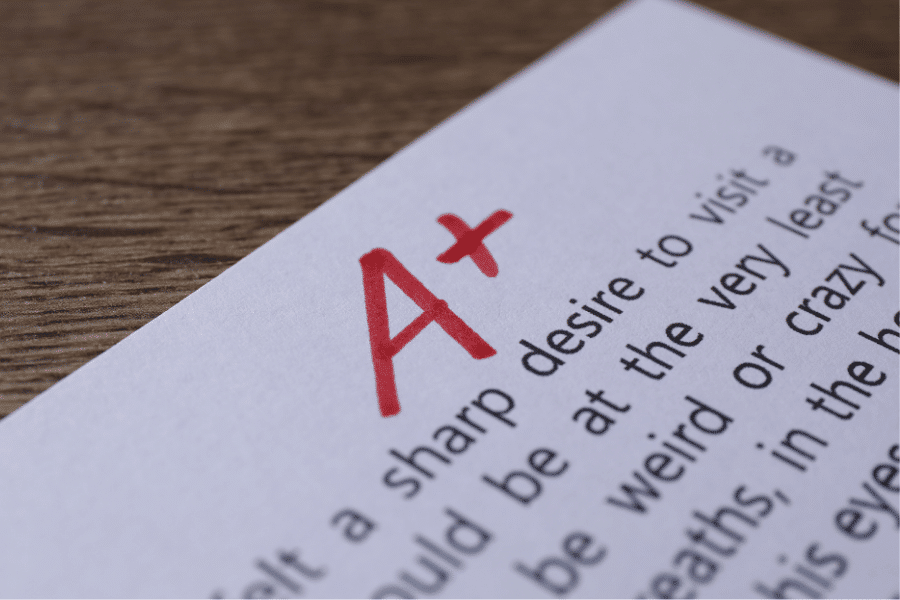
    A perfect grade point average isn’t what it used to be. As grade inflation continues worldwide, more students are earning top marks, but it isn’t always deserved. Critics argue that inflated grades make it harder to distinguish truly exceptional students, while supporters say they reduce stress and improve confidence. 

    From high schools in the United States to universities in Europe, the debate over grade inflation is shaping education systems and college admissions. But is this trend helping students succeed, or is it setting them up for failure?

    Grade inflation is the trend of rising student grades over time without a corresponding increase in academic achievement, often making higher grades less reflective of actual learning or ability. 

    High school is meant to prepare students for higher education, but with grade inflation, many students feel unprepared. 

    Take high school senior Ruby Schwelm. “As a student who has dealt with inflation, I’ve noticed I don’t receive grades and feedback that reflect my actual understanding of the content,” Schwelm said. “I feel like I’m just going through the motions of my courses, completing assignments without really engaging with the material. This makes it hard to track progress, see where I need improvement and feel prepared for college.”

    The rising GPA

    According to a study by ACT, a non-profit organization that runs one of two standardized tests used in the United States used for college admissions, the average adjusted grade point average (GPA) of students in the United States has risen from 3.17 in 2010 to 3.36 in 2021. 

    The report said that grade inflation “calls into question the degree to which we should rely on grades to measure academic achievement or predict future grades.” This shift challenges the typical role of grades as a reliable measure of knowledge, starting a debate over whether they still hold value in measuring students’ abilities.  

    Many educators believe that the shift in grading has led to a lack of rigor and academic accountability. Josh Hsu, a high school English teacher at the Tatnall School in Wilmington, Delaware where I go to high school, said that many students now equate a C with failure, despite it being historically recognized as an average grade.

    “There seems to be a threshold of how low grades will go, and that bar gets pushed higher and higher,” Hsu said.

    This trend has caused concern among educators who feel that the traditional grading system no longer differentiates students based on their academic performance. 

    “What does an A mean if everybody has an A, right?” Hsu said. 

    The psychological effects of grade inflation

    Proponents of grade inflation argue that it helps students maintain self-confidence and reduces academic stress. 

    Sara Gartland, a high school math teacher at the Tatnall School and adjunct professor at the University of Delaware School of Education, said that “there’s a lot of tension in what a grade is.” 

    She worries that students today see grades as a measure of their worth rather than as a tool for learning. Grades should function as a feedback loop between teachers and students rather than a rigid measure of success, Gartland said. 

    She also emphasized the importance of second chances. “I tend to see that really what students are looking for is, ‘Do I have a second chance if today is not my best day?’,” she said. 

    This perspective aligns with educational philosophies that prioritize mastery over memorization. Many teachers now allow students the opportunity to make corrections and retake assessments to make sure that students truly understand the material, which can also lift the burden of test stress off of students. 

    Elevated grades and equity

    While grade inflation is happening across the country, there have been concerns over whether grade inflation is proportionally impacting students of different incomes and communities. 

    Hsu said that parents of students in private schools often expect their children to earn high grades to get into a top college in return for the price of tuition. While this belief may lead people to assume that wealthier students have proportionately higher grades than lower-income students, this actually is not the case. 

    The ACT’s study shows that the average GPA of students in a household with an income of under $36,000 a year has grown much faster than the GPA of students in a household with an income of $100,000 from 2012 to 2021. This could be due to teachers inadvertently trying to give a break to students from low-income families to try and level the playing field. 

    Gartland argues that teachers should provide students with the tools they need for success and take into consideration things that may impact a student’s performance outside of the classroom. 

    “That [grade on a test] doesn’t necessarily take into consideration your drive to school that day, whether or not you forgot your lunch that day, or let’s say you had a particularly exciting life event or a particularly upsetting life event, and you didn’t get to spend the amount of time studying that other students did, all sorts of other things,” she said. 

    With this mindset in education, students are being treated with equity, allowing them the opportunity to experience the same academic success, even if there are barriers in their way. 

    Global patterns in how students are graded

    While the issue of grade inflation is often discussed in the context of schools in the United States, grade inflation is a global issue. A 2024 study, by researchers at the College of New Jersey, found that many countries, including the United Kingdom, Germany and Canada have all experienced rising average grades over time. 

    However, the extent of grade inflation varies from country to country. Australia, for example, maintains relatively strict grading standards through the use of relative grading and limited reliance on student achievement.

    This study also showed that there are many differences in grading practices from region to region. In the United States, professors were significantly more likely to use curved grading, a practice strongly associated with grade inflation. 

    In contrast, educators in Europe and the South Pacific gave lower average grades and curved fewer grades, suggesting a more conservative approach to grading. Asian countries showed grading patterns similar to the United States, with higher usage of grade curves and slightly elevated grade averages.

    These disparities have real implications. Grade inflation complicates international admissions, making it harder to fairly compare students from different educational systems. 

    It can also distort hiring practices. The international study on grade inflation found that in Sweden, students from schools with inflated grades were shown to earn up to 5% more than peers with equivalent abilities. Ultimately, when grades become inflated, they lose their value as an objective measure of performance, creating global challenges in education, employment, and equity. 

    A shift in college admissions 

    As I went through the process of applying to college, I learned from my college counselors how grade inflation has affected the college admissions process. As grade inflation rises, colleges and employers are shifting their focus away from GPAs and toward other indications of student potential. Admissions officers are increasingly looking at extracurricular activities, personal essays and recommendation letters to evaluate applicants.

    According to a report by the group FairTest, which works for equity in educational assessments, standardized tests, which once served as a counterbalance to inflated grades, are also becoming optional at many colleges and universities, further complicating the process of evaluating students.

    Hsu said he worries that without clear academic standards, the education system could lose its credibility. “If you don’t have a set of standards, then it just becomes the Wild West, and then you have everyone getting A’s and B’s and you have students with GPAs that they didn’t earn,” he said.

    Employers, too, are placing greater emphasis on internships and real-world experience rather than assuming high grades equate to a strong work ethic and mastery of material. 

    With the recent trends of grade inflation, we can expect the average GPAs of students across the country to continue to rise. Hsu worries some students have become lazier in recent years. This raises concerns about how this will impact the future of education and if students will be prepared for life post-graduation.

    “Everyone wants instant gratification now,” Hsu said. “They don’t want to work at things as hard because if they have challenges, they’re not willing to stumble through those challenges or fight through them.”


    Questions to consider:

    • What is meant by grade inflation?

    • How can student achievement be measured without letter or number grades?

    • Do you think that getting an A on an assignment should be difficult? Why?



    Source link

  • Career-connected learning builds a more employable, future-ready generation

    Career-connected learning builds a more employable, future-ready generation

    Key points:

    Abraham Maslow’s Hierarchy of Needs is a fundamental psychological theory that explains human motivation. At its base are physiological and safety needs, followed by love and belonging, esteem, and self-actualization at the peak. While this theory is universally recognized for understanding personal growth in human development, it can also be applied to an individual’s educational journey.

    Had Maslow been an educator, he might have reconsidered the foundation of our education system to one that would align student aptitudes and interests to sustain the rapidly changing workforce. Consider the phrase, “If you give a man a fish, he will be hungry tomorrow. If you teach a man to fish, he will be richer forever.” It could be applied here, too. If we pair students’ strengths and aptitudes with in-demand careers through personalized learning, we are ensuring the success of our students and tomorrow’s workforce, thus realigning motivation and fulfilling the individuals Hierarchy of Needs.

    States have begun investing in career-connected learning (CCL) to connect learning to career pathways as a means to boost employability and inevitably support businesses and the local economy.

    Students are rarely guided toward career paths that match their aptitudes (or natural talents). But if our districts began doing so, we would likely see higher levels of employment and job satisfaction, and lower economic instability and gaps in the job market. This could ultimately impact our communities and the national economy at large.

    While work is being done, there is still plenty to do as the career exposure gap grows, particularly in IT, manufacturing, finance, and more. It’s time for educational stakeholders–policy, K-12 decision makers, guidance counselors and parents alike–to rethink how we prepare young people for their futures.

    The foundation: Addressing basic needs first

    It has become ever so clear that every student, starting as early as junior high, should have the opportunity to take an aptitude assessment. Researchers have identified that students’ natural aptitudes solidify by age 14, forming the foundation for understanding what they’re inherently good at. If Maslow were designing today’s educational experience, this would be the starting point–helping students discover their strengths and setting the stage for growth.

    Students’ ability to learn, and therefore their level of education, has always shown to have direct correlations to their physical well-being and sense of security. Often, students feel discouraged and unengaged in their coursework because it doesn’t connect to their innate strengths, making it harder to feel confident in their abilities and motivated to tap into potential future pathways for employment. 

    When these foundational supports are provided, students are likely to feel ready to explore career opportunities and develop the workplace-ready skills needed in today’s economy.

    Building confidence: Belonging and self-esteem in education

    Students thrive when they feel a sense of belonging–both in the classroom and in the broader community. They also need to build self-esteem by experiencing achievement, recognition, and purpose. Connecting education with natural aptitudes and real-world career experiences can foster this sense of belonging and achievement.

    Encouraging students to participate in internships, apprenticeships, or mentorship programs can bridge the connection between their talents and real-world job opportunities. This fosters a sense of community and a personal identity tied to their future careers and success. CCL helps students understand that they have valuable contributions to make, both in school and beyond, which often leads to students taking ownership of their educational journeys.

    Path to self-actualization: Unlocking career potential

    At the pinnacle of Maslow’s hierarchy is self-actualization. Students are no longer just attending school to pass tests–they are actively seeking knowledge and skills to help them achieve their dreams. Students are often more motivated when they see the relevance of their learning, especially when they understand how it connects to their future aspirations.

    Tech solutions have helped districts provide personalized career assessments and work-based learning experiences for students, which empowers them to explore their career interests in-depth. When we offer students opportunities for hands-on exploration and real-world application, they find greater fulfillment in their educational experiences and a stronger desire to achieve higher learning goals.

    The crisis: How the current system is failing to meet Maslow’s vision

    Most high school graduates (75 percent) do not feel prepared to make college or career decisions after graduation.

    Simultaneously, 40 percent of employers stated that educational institutions do not sufficiently prepare students for their future careers, and 90 percent emphasized the need for stronger partnerships between K-12 schools and postsecondary institutions.

    Despite the clear benefits of linking education to career pathways, more often schools solely focus on academic success, neglecting the broader skills students need to thrive in the workforce. And CCL is frequently seen as a nice-to-have, rather than an essential piece of education. The growing career exposure gap is evidence of this disconnect.

    Closing this disconnect begins with helping people understand where to invest in their skills. 

    A new model: Career-connected learning as the solution

    By ensuring basic needs are met, fostering belonging and esteem, and unlocking students’ potential, we equip students with the real-world skills they need to succeed. CCL benefits every student and should be seen as an essential part of education, not just a nice-to-have.

    Personalized learning platforms, aptitude assessments, career identification, and skill-based learning tools provide the foundation for this transformation. But it’s the convergence among educators, employers, policymakers, and technology providers that will ultimately ensure that every student has the opportunity to realize their full potential. 

    My final thoughts: Maslow would remind us that education isn’t just about filling students’ heads with knowledge–it’s about inspiring them to dream, grow, and discover their limitless opportunities. This vision offers not just hope for individual students, but economic benefits for society as a whole.

    Latest posts by eSchool Media Contributors (see all)

    Source link

  • Reimagining readiness in Indiana education

    Reimagining readiness in Indiana education

    Key points:

    Across the country, education is on the brink of significant change. As schools, districts, and policymakers grapple with the realities of a rapidly evolving workforce that requires discipline-specific knowledge, high-tech know-how, and hands-on skills, there is a growing recognition that the traditional approaches to preparing students for the real world no longer suffice. 

    This shift brings uncertainty and anxiety for district leaders here in Indiana. Change can be intimidating, especially when the stakes are as high as the future success of our students. Yet, this moment also holds immense potential to redefine what it means to truly ready them for a workplace that is continually reinventing itself.

    To confront the challenges future-focused schools face, we’re sharing our approach from two distinct, but complementary, perspectives. One, from the superintendent of Eastern Hancock Schools, a small, rural district in Indiana that is deeply rooted in its community and focused on creating opportunities for students through strong local partnerships. The other, from the president and CEO of Project Lead The Way (PLTW), a national nonprofit organization that provides schools with innovative, hands-on, project-based STEM curriculum designed to develop critical skills and knowledge, while preparing students for careers beyond the classroom. 

    While we work in different contexts, our shared mission of preparing students and educators for an ever-changing world unites us. Together, we aim to highlight the excitement and possibility that change can bring when approached with readiness and purpose.

    Redefining what it means to be ready

    The jobs of tomorrow will demand far more than technical knowledge. As industries transform at warp speed, accelerated by AI, automation, and other technological advancements, many of today’s students will enter careers that don’t yet exist. 

    Preparing them for this reality requires educators to focus on more than just meeting academic benchmarks or prepping for the next standardized test. It demands fostering critical thinking, collaboration, communication skills, and, perhaps most importantly, confidence–characteristics many employers say are lacking among today’s graduates.

    At Eastern Hancock, this preparation begins by creating opportunities for students to connect their learning to real-world applications. The district’s robust work-based learning program allows juniors and seniors to spend part of their day in professional placements across industries, such as construction, healthcare, engineering, and education, where they receive hands-on training. These experiences not only provide exposure to potential careers but also help students develop soft skills, including teamwork and problem-solving, that are critical for success in any field.

    We also know that when students have earlier access to STEM learning and concepts, they are more inclined to pursue a STEM-driven career, such as computer science and engineering. Students in PLTW programs tackle meaningful problems as capable contributors, such as designing prototypes to address environmental issues, exploring biomedical innovations, and solving arising problems like cybersecurity and information safety.

    Preparation, however, is about more than providing opportunities. Many students dismiss career paths because they lack the self-assurance to see themselves thriving in those roles. Both Eastern Hancock and PLTW work to break down these barriers–helping students build self-esteem, explore new possibilities, and develop confidence in chosen fields they may have once considered out of reach.

    Empowering educators to lead with confidence

    While students are at the heart of these changes, educators are the driving force behind them. For many teachers, however, change can feel overwhelming, even threatening. Resistance to new approaches often stems from a fear of irrelevance or a lack of preparation. To truly transform education, it is essential to support teachers with the resources, tools, and confidence they need to thrive in evolving classrooms.

    PLTW’s professional development programs equip educators with training that builds their capacity to lead transformative learning experiences. Teachers leave PLTW sessions with practical strategies, a renewed sense of purpose, and the self-assurance to inspire their students through immersive classroom experiences.

    At Eastern Hancock, the promise of growth drives efforts to support educators through professional development that aligns with their goals and the district’s vision. Teachers collaborate to set meaningful objectives, fostering a culture of innovation and shared purpose. This approach ensures that educators feel prepared not only to guide students but also to grow alongside them.

    Blending a local approach and national reach illustrates how schools and organizations at every level can work together to address the shared challenge of preparing and supporting educators for the future. By empowering teachers with the tools and confidence they need, both Eastern Hancock and PLTW demonstrate how readiness can ripple outward to transform entire communities.

    Delivering on the promises of education

    Indiana’s reimagined graduation requirements offer schools the chance to redefine what it means to be truly prepared for the future. At Eastern Hancock, we’ve seen how aligned values–like those we share with PLTW–can inspire new ways of thinking about career readiness. We’re both deeply committed to ensuring students are equipped with the skills, experiences, and confidence they need to thrive in an unpredictable world.

    Change may cause anxiety, but it also creates opportunities for innovation, growth, and excitement. When educators, students, and communities embrace readiness, the future of education becomes a source of hope and possibility-for Indiana and for the nation.

    Latest posts by eSchool Media Contributors (see all)

    Source link

  • Test yourself on this week’s K-12 news

    Test yourself on this week’s K-12 news

    This audio is auto-generated. Please let us know if you have feedback.

    How well did you keep up with this week’s developments in K-12 education? To find out, take our five-question quiz below. Then, share your score by tagging us on social media with #K12DivePopQuiz.

    Source link

  • The Women of Westbury: How a district diversified leadership and strengthened schools

    The Women of Westbury: How a district diversified leadership and strengthened schools

    This audio is auto-generated. Please let us know if you have feedback.

    Tahira DuPree Chase is superintendent of Westbury Union Free School District In New York and a member of the Institute for Education Innovation. 

    Rising through the ranks to a school leadership role can be an arduous journey for even the most qualified female educators. And once we reach our final destination, we’re not always welcomed. We often face challenges our male counterparts never experience.

    Only 30% of superintendents in the U.S. are female, and less than 1.5% are Black women. Across the country, female school leaders are targeted by unwarranted criticism, experience significant gender pay gaps, and receive less coaching and support than their male colleagues. We’re also a powerful force to be reckoned with — fierce, committed and experienced — and when united, we are reshaping education to better fit our students’ diverse needs.

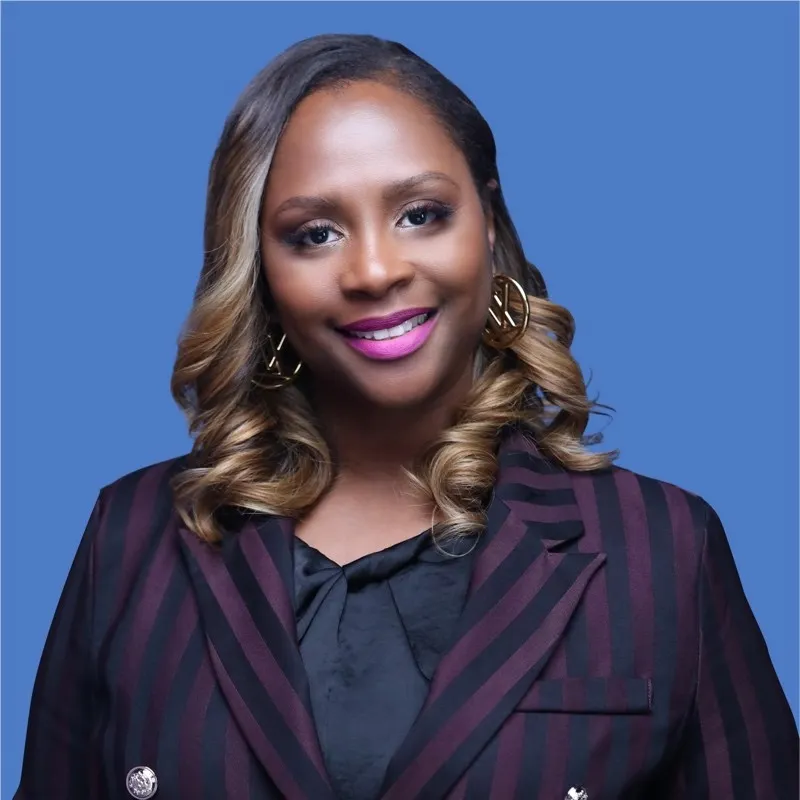
    This is a headshot of Tahira DuPree Chase, superintendent of Westbury Union Free School District In New York.

    Tahira DuPree Chase

    Permission granted by Tahira DuPree Chase


    To break down barriers, female leaders must find their own tribe of like-minded women who sit in a similar seat, both in the education field and outside of it. There are formal and informal, national, regional, and local support systems composed of incredible individuals who understand one another’s struggles. In these groups, we talk about our experiences, share ideas and uplift our fellow women.

    Here in Long Island’s Westbury Union Free School District, that collective commitment on a local level is powering our schools forward. 

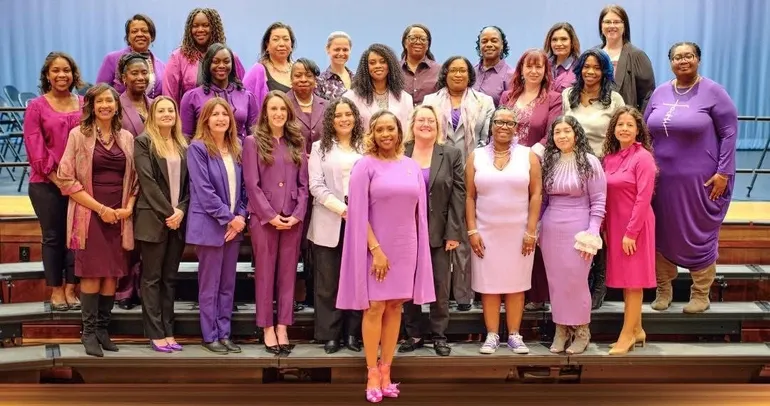
    Westbury is an anomaly in K-12 education, with women in 93% of administrative roles. Under the leadership of “The Women of Westbury,” otherwise known as “WOW,” the district’s graduation rate has skyrocketed to 90% in a district where nearly 70% of children qualify for free or reduced-price lunch. We have implemented top-tier security measures to better protect our students, improved facilities and operations, and done it all while successfully managing our schools’ finances.

    Building this team of professionals and helping them thrive hasn’t been without its challenges, but by aligning our recruitment and retention strategies with three critical guidelines, we’ve reached this incredible time in Westbury’s history.

    Hire with an open mind

    At Westbury, we knew we needed to diversify our leadership, but the goal did not dictate our hiring process. We followed a traditional interview path, and it just so happened that female applicants rose to the top. The individuals we’ve hired are credentialed, well-versed and highly qualified. These aren’t so-called “DEI hires”; they are common-sense hires.

    As a Black female leader in education, I’ve had my credentials questioned due to unconscious — and sometimes blatant — bias. I’m required to hold multiple advanced degrees and jump through endless hoops to be on the same playing field as many of my male counterparts in the hiring process. Based on my own experiences, I find it no surprise that female candidates often self-select from applying for management roles, because they believe men have an advantage or assume they lack the experience to meet every vague qualification listed in the job announcement.

    It has been disheartening to watch other women struggle with similar challenges and become disenchanted with the entire education system. That’s why Westbury has strived to create a more equitable space where all individuals are encouraged to take the next step in their careers.

    Encourage leaders to embrace their vulnerability

    Superintendents are expected to shoulder a heavy load in their role, but for female leaders, the stress can feel overwhelming. Ninety-five percent of female administrators said they struggled to find a healthy work-life balance and were forced to make personal and professional sacrifices their male colleagues did not.

    At Westbury, we stress the importance of self-care for all educators and administrators in the district by hosting wellness fairs and offering a mental health day focused solely on our team’s well-being. A board-certified psychotherapist is on staff to provide social-emotional support on both a group and individual level. In addition, we help school leaders develop their own professional support system that includes not just their fellow women, but male allies who have their best interests at heart. 

    We have found that when we provide educators the space to find that self-care sweet spot, they better maintain their focus, think more clearly, and allow ideas to flow. In turn, our schools become centers of innovation where we are improving our students’ academic experience.

    Help lift up the women behind you

    As female school leaders, we have an obligation to empower the next generation of women. Becoming a mentor to future leaders and watching them thrive is one of the greatest honors we can experience in our leadership roles. When someone trusts me to be their sounding board and values my insights, it fuels me to keep moving forward.

    Source link

  • This week in 5 numbers: Sweeping higher ed bill advances

    This week in 5 numbers: Sweeping higher ed bill advances

    The federal funding that the Trump administration suspended to University of Pennsylvania in March, citing the Ivy League institution’s participation policies for transgender athletes. The U.S. Department of Education concluded this week Penn violated Title IX, though university leaders have said the institution is complying with current law and NCAA policies.

    Source link

  • Education Department unveils guidance to make switching accreditors easier

    Education Department unveils guidance to make switching accreditors easier

    This audio is auto-generated. Please let us know if you have feedback.

    The U.S. Department of Education unveiled guidance Thursday intended to make it easier for colleges to change accreditors and lifted a pause on its review of applications for new accrediting agencies. 

    The guidance comes a week after President Donald Trump signed an executive order to reshape the accreditation system and make it easier for new agencies to come onto the scene. 

    Trump’s order also took aim at accreditor criteria related to diversity, equity and inclusion and directed U.S. Education Secretary Linda McMahon to ensure colleges prioritize “intellectual diversity” among their faculty — a mandate that raised concerns about academic freedom among some higher education experts. 

    “President Trump’s Executive Order and our actions today will ensure this Department no longer stands as a gatekeeper to block aspiring innovators from becoming new accreditors nor will this Department unnecessarily micromanage an institution’s choice of accreditor,” McMahon said in a Thursday statement. 

    The Education Department also revoked guidance issued in 2022 that outlined a more rigorous review process for colleges to switch accreditors. The Biden-era guidance said the department would review whether a college wanted to change accreditors to lessen oversight and if moving to a new agency would strengthen its institutional quality, among other factors. 

    At the time, the Biden administration said the guidance sought to ensure colleges weren’t attempting to evade oversight from their current accreditor by switching to a new one. 

    The Trump administration’s new guidance, however, says the agency will reestablish “a simple process that will remove unnecessary requirements and barriers to institutional innovation.” Under the policy, colleges must submit a two-page form to serve as documentation of their prior accreditation, as well as “materials demonstrating reasonable cause” for changing or adding an accreditor. 

    The form includes a checklist of reasons institutions may seek to switch accreditors, along with a section requiring colleges to certify that they have not had their accreditation withdrawn or faced accreditor sanctions in the past two years. Colleges must also attach their most recent letter renewing their accreditation. 

    Wesley Whistle, project director for student success and affordability at New America, a left-leaning think tank, criticized the new process, arguing that making it easier to switch accreditors could lead institutions to move to agencies with less rigorous standards. 

    “This new guidance says all they have to do is fill out this checklist and provide them [with] their most recent letter of reaffirmation,” Whistle said. “That letter could be almost a decade old.”

    Moreover, that letter wouldn’t indicate if a college is currently under investigation by its accreditor, Whistle said. 

    “Just because an institution may not be on probation today, they could still be under investigation,” Whistle added. 

    The Education Department also said it will have 30 days to approve an application to switch accreditors. If not, the change will be automatically granted unless a college failed to meet the eligibility requirements. 

    Whistle described the policy as a “30-day rubber stamp.” 

    “It’s irresponsible,” Whistle said. “There’s nearly 6,000 colleges and universities that are eligible for Title IV aid, so conducting even a modest review takes time and expertise.”

    The Trump administration’s new guidance also permits colleges to switch to new accreditors if required by state law. Other recognized reasons include seeking an accreditor that better aligns with a college’s religious mission, changing the types of academic programs offered or objecting to current accreditation standards, including DEI requirements. 

    Source link

  • What’s next for students after Trump’s visa reversals?

    What’s next for students after Trump’s visa reversals?

    One of the realities of the Trump administration is that decisions with vast domestic and global consequences can be implemented and reversed at the drop of a hat. This has been the case with international trade. President Trump has imposed steep tariffs on other countries only to relent when the market takes a turn. It’s also been the case with staffing. Trump defended national security adviser Mike Waltz when it was revealed he accidentally added a journalist to an app chat about a military strike in Yemen. Weeks later, Trump removed Waltz and gave him another job.

    This is also true for student visas. Trump has upended the academic world with his threats to Harvard and other universities, and the arrests of students for pro-Palestinian protests. Harvard was even forced to hand over information about international students to federal officials. 

    Trump has also cracked down on student visas. The Trump administration revoked more than 1,800 visas earlier this year, and many students went into hiding after the news broke. Federal officials restored roughly 1,200 visas after significant public pressure. 

    International students can expect more erratic decisions as the Trump administration moves past its first 100 days. These changes could cause significant stress and anxiety to both intentional students and administrators. I’ve designed a primer for both international students and administrators on what to expect as we move forward and how to prepare for a time when change is the only certainty.

    Unpredictability Will Become The Norm: In the past, there was a defined process for becoming an international student. Students’ expectations have been upended in just a few months. This will make life difficult for universities and their staff; many international students, particularly those interested in medicine, may choose not to come to the United States due to these changes. This will have ripple effects across the academic world; research and innovation could stall without an infusion of the best and brightest; American companies could lose a pipeline to strong potential hires, and scientific and medical breakthroughs will decline.

    International students can expect more erratic decisions as the Trump administration moves past its first 100 days

    Shaun Carver, International House, UC Berkeley

    Threats to Higher Education Will Upend Academic Life: Federal funding freezes are now a reality for higher education, particularly at schools with robust diversity, equity, and inclusion (DEI) initiatives. The administration just froze $1 billion for Cornell and $790 million for Northwestern. These support cuts will make American universities less attractive to global talent. 

    Preparing to Study in America Will Look Different: Moving to a different country has always been challenging. Students need to navigate a new culture, learn a different language, and handle tasks that are challenging for domestic students, such as finding housing and making social connections.  

    Students will now need to factor in other challenges, such as potential threats to their visa status, the risk of arrest or deportation for speaking their mind, and also distrust in a culturally divided country. International students should be aware of their legal rights before coming to the United States. Administrators should be prepared to support them and provide them with relevant legal resources.

    STEM Could Be Hit Hard: In the past, federal regulators targeted humanities departments, perceiving them as liberal. Science, technology, or medicine were seen as essential to society and global status, and were shielded from scrutiny. The Trump administration had added science and technology disciplines to its target list and reduced grants for critical research. 

    Roughly 16% of Harvard’s total revenue comes from sponsored support, including grants and federal funding. But 53% of the revenue for the School of Public Health, 35% of the revenue for the School of Medicine, and 37% of the revenue for Engineering and Applied Sciences come from federal grants. Many of the funding cuts are for STEM research programs, including those related to artificial intelligence (AI). The administration is also slashing science-related funding at other schools. In addition to possible brain drain at universities, these changes could affect America’s ability to compete, keep pace with other countries that are embracing AI, maintain its populace’s health, and more.

    The Big Picture: 

    It’s a tenuous time for both university administrators and international students. Despite these difficulties, American universities remain among the best in the world, and many have deep financial resources. Schools are getting creative; Harvard’s staff has agreed to a pay cut to support the university. 

    The best thing international students and administrators can do is ensure they are prepared, closely monitor changes and developments, and finally encourage those in power to make changes. Transparent and consistent policies, along with stronger protections, are needed now to restore confidence among international students and maintain US leadership in global education.

    Source link

  • Higher Ed After Trump’s First 100 Days: The Key Podcast

    Higher Ed After Trump’s First 100 Days: The Key Podcast

    Inside Higher Ed journalists analyze the first 100 days of the Trump administration in this week’s episode of The Key, IHE’s news and analysis podcast.  

    Editor in chief Sara Custer, along with news editor Katherine Knott and reporters Johanna Alonso and Liam Knox, discuss the major events of the last three months and the impact they have had on universities and colleges.

    The team summarizes the executive orders that will affect higher education, including one to shutter the Department of Education, another to overhaul accreditation and another to tackle alleged antisemitism. 

    The conversation also explores the new relationship the federal government has established between itself and higher education and how the administration is threatening federal research funding to set ultimatums and progress its agenda, in particular with Columbia and Harvard University.

    The group updates listeners on the latest developments with international students’ Student Exchange and Visitor Information System status reinstatements. Alonso and Knox also talk about what they learned about the administration’s targeting of international students from speaking to students, their advisers and digging through dozens of lawsuits brought against the government. 

    While what comes next is anyone’s guess. The team discusses what they’ll be watching over the next 100 days, including what Congress will be working on, the fallout from the international student crackdown and how summer might shift the vibe on campus. 

    Listen and download the episode here. 

    Source link