

It was quite the paradox really.
Sat in a glorious space in Lisbon specifically designed for groups of students to organise events where they can eat (inexpensively) and talk together, we met a Medical student leader from Portugal and a Pharmacy student leader from Moldova who were both thinking hard about their future.
The first thing we noticed was how refreshing it was to meet student leaders from healthcare backgrounds – in systems where self-governing faculty and school communities are nurtured and valued, talented students from a broad range of disciplines go on to become policy actors that can change universities, communities, countries and even continents.
Freedom of movement had allowed Valeria to pursue both a bachelor’s and master’s in Pharmacy at the University of Lisbon – something that a funding system had helped her switch to after completing a first year in Human Resources management. But given the economic situation back home, she feels real pressure to stay.
Meanwhile Sofia – in the process of combining being a city-wide student leader with completing her fifth year in medical school – was looking at salaries for doctors across the EU and the world, and was wondering whether Portugal could ever offer the career conditions that would allow her to practice comfortably.
Portugal has a particularly acute version of a problem impacting countries across Europe, including the UK – a so-called demographic winter that combines a growing proportion of pension-age people that need to be supported by the tax revenues of a shrinking number of working-age people.
Around 30 per cent of young Portuguese people now live and work abroad, representing the highest emigration rate in Europe – and Portugal’s TFR (total fertility rate), the average number of children born per woman, has remained stubbornly below the replacement level of 2.1 since the 1980s.
It all creates a hugely difficult feedback loop – fewer young workers means declining tax revenues, which constrains public investment in services that might otherwise entice them to stay, which then prompts more to leave.
That means that governments need immigration – but despite political pleas to value diversity as an extension of the European ideal, the pace and volume of that immigration, coupled with the ageing of the electorate, then emboldens far-right parties like Portugal’s Chenga! (“Enough!”) – which has gone from securing just 1.3 per cent of the vote and a single seat in the Assembly of the Republic in 2019 to just under 20 per cent of the vote and 50 seats last year.
Despite Brexit ending formal freedom of movement with the EU, we are of course experiencing our own internal migration patterns that mirror these issues. Graduates from economically disadvantaged regions consistently flow toward London and other major economic hubs, rarely returning to their hometowns. Our internal “brain drain” exacerbates demographic decline in already struggling regions, with rural areas, post-industrial towns, and coastal communities particularly affected.
The prospect of university campus closures in our demographically challenged regions threatens to accelerate this pattern – creating a parallel to Portugal’s feedback loop but on a national scale. Without coordinated government planning to create and retain talent in these areas through strategic investment, improved infrastructure, and meaningful employment opportunities, the UK risks a deepening divide between its prosperous urban centres and increasingly hollowed-out regions and towns.
To get birth rates up, back in January we’d heard how Hungary’s populist President was implementing a pronatalist strategy using education policy – offering student loan forgiveness for female graduates who have children after studies, with full debt cancellation for mothers of three+ children, as well as lifetime income tax exemptions for women with four+ children.
But even if you set aside the politics of programmes like that, the big question is whether they work. Having previously offered returning expatriates tax reductions of up to 70 per cent for five years – 90 per cent for those relocating to the economically disadvantaged south – in Italy Giorgia Meloni’s government has been forced into a dramatic retreat, citing the unsustainable €1.3 billion annual cost and limited evidence of efficacy.
It puts all Portugal’s higher education sector in real difficulty. Both student and university leaders know that modernised higher education and skills systems are central to any country’s economic future. But if the expenditure involved only ends up boosting the Netherlands’ or Germany’s economies, sustaining low fees and circa 50 per cent participation rates will get harder and harder.
Just over a year ago, the centre-right minority coalition led by Prime Minister Luís Montenegro of the Social Democratic Party (PSD) and the CDS People’s Party (CDS–PP) responded with a multi-year graduate tax holiday – workers aged 18-26 (up to 30 for master’s/PhD holders) qualify for income tax exemptions over five years, and additional benefits exist for graduates moving to rural areas through the “Incentivo à Fixação de Jovens no Interior” program, including extra tax deductions and housing support.
But the benefits are pretty small when weighed against the rising cost of living, especially in major cities – base salaries remain uncompetitive, and they don’t fix the country’s acute housing problem, which sees students, graduates and migrants fighting for substandard housing in a country whose tourism-dependant economy has tended to turn much of its cities’ property portfolio into holiday lets.
And following the collapse of the coalition earlier this year, a fresh general election is to be staged – and pretty much all of the country’s student groups have the cost and availability of housing as a top priority.
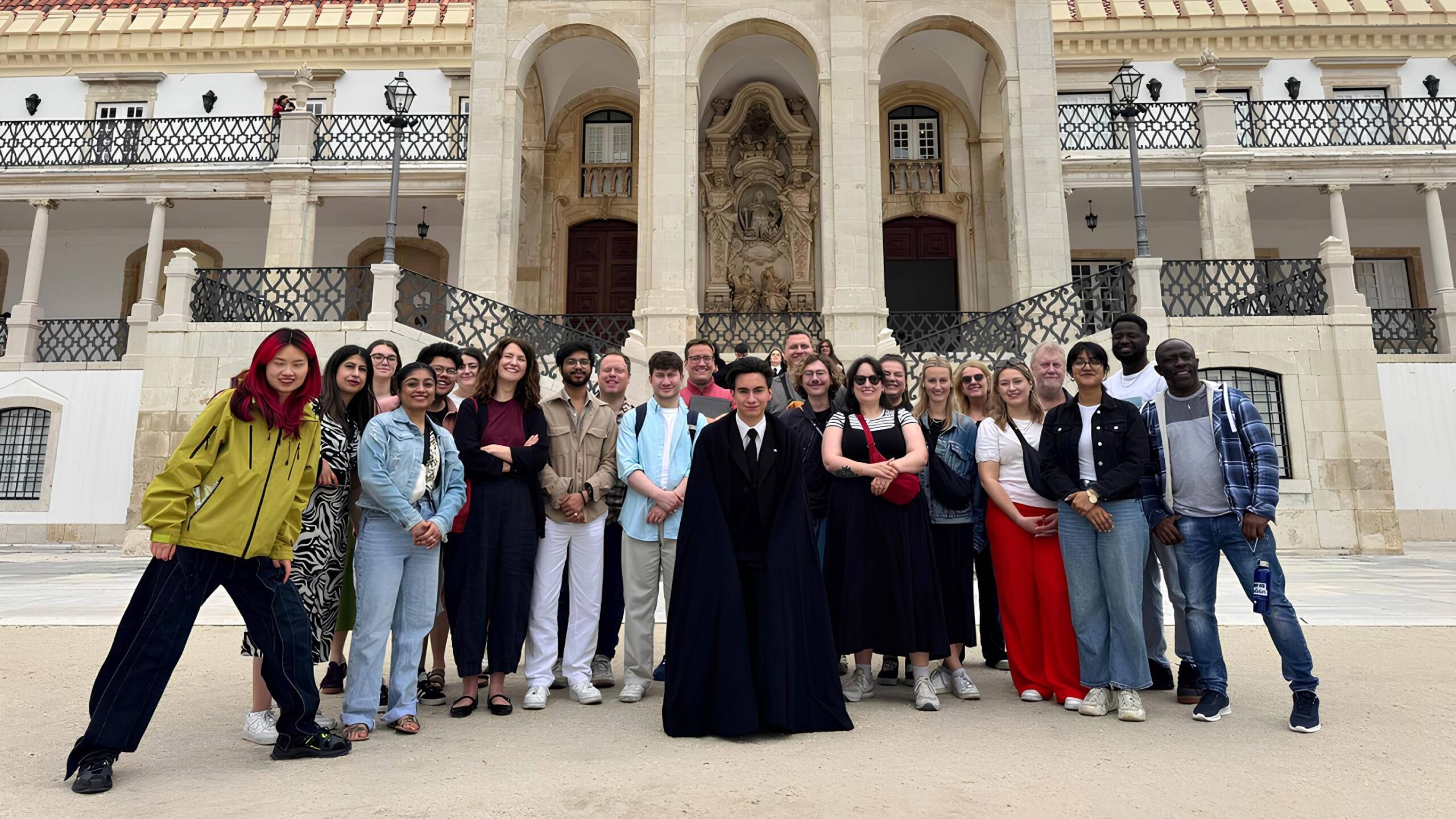
It was one of the many issues we ended up discussing on our two-day study tour to Portugal, where 30 UK student leaders (and the staff that support them) traversed Lisbon, Coimbra, Barcelos and Porto to build connections, share ideas and identify solutions to the problems besetting both students and the higher education systems in which they are partners.
So many of the issues faced by students sounded familiar – the obvious difference each time being that at least the Portuguese government is trying.
Its National Higher Education Accommodation Plan (PNAES) launched in 2022, and aims to deliver over 18,000 new student beds by 2026 with a €486 million investment. Then in September 2024, Prime Minister Luís Montenegro’s “Student Accommodation Now” emergency programme added 709 beds, and a €5.5 million credit line was established for universities to secure additional housing – all because the failure to provide housing “frustrates people’s efforts” and “stifles their ability to develop their talent”. The Prime Minister put it like this:
It is repugnant, from a civic point of view, that a student can battle for twelve years to enter higher education, only to find they cannot attend because they have nowhere to stay near the institution that accepted them.
In one of the groups I was in, one of the student leaders asked us what our own politicians had said about student housing and its role in educational opportunity, and what was in our countries’ student housing strategies. Our delegates’ faces turning blank, I had to admit that the the closest we’d got to a plan back home was former minister Robert Halfon repeatedly saying that it wasn’t his problem and was actually students’ fault:
…the government has no role in the provision of student accommodation…applicants who require student accommodation should take its availability into account when making decisions about where to study.
Housing isn’t the only thing they’ve been working on in Portugal. In 2022, the government set up an independent commission to evaluate the implementation of its Legal Framework for Higher Education Institutions (RJIES) – their equivalent to England’s Higher Education and Research Act.
Led by an 8-person panel that included two student reps, the commission’s recommendations included the creation of a single, consolidated legal instrument – a Statute for higher education students – that would define their rights and duties clearly and comprehensively, standardise protections across all institutions, and recognise the diversity of student profiles (including student workers, student parents, and students in volunteer roles).
Mental health was also prioritised – the Commission recommended strengthening support through dedicated student mental health services integrated into broader academic and social support strategies, and the revised RJIES now explicitly includes a duty for higher education institutions to contribute to student wellbeing, and specifically mentions their responsibility to guarantee mental health services. Universities will be also expected to hit psychologists:students ratios.
The Commission found that while student participation is formally recognised, in practice it can be marginal or symbolic – and recommended ensuring real, effective participation of students in institutional governance (General Councils, Academic Senates, Scientific and Pedagogical Councils), strategic planning processes, and evaluation and quality assurance activities.
The resulting arrangements will strengthen student voting power significantly – in the overhauled election process for rectors and presidents, students will hold at least 20 per cent of the weighted voting power.
And the new law explicitly details the competencies and election process for student ombudspeople – Portugal introduced university-level complaints adjudication in 2007 to tip the balance towards students, and will now mandate consistency in the role and broader student participation in their election.
Given the distance (both in time and governance) of the OIA from students and their problems, and the sorry state of independent adjudication in Scotland and NI, we really do now feel miles behind as a country on student rights protection.
After a visit to the (very) student city of Coimbra, the bus rolled into the Barcelos campus of the Polytechnic of Cávado and Ave – Portugal’s newest public higher education institution. IPCA had been formed as part of a national strategy to expand and decentralise higher education in Portugal – with regional provision aimed at driving regional development and addressing the need for skilled professionals in emerging industries.
The student leaders we met both from IPCA’s SU and FNAEESP (the National Federation of Polytechnic Higher Education Student Associations) were exercised about RJIES reform – partly because the status of polytechnics had become a key issue in the debate.
We tend to bristle at mentions of a binary divide, but Portugal maintains one – and FNAEESP reps were clear in their position, firmly favouring preservation with what they called “sharper clarification” to ensure polytechnics maintained their focus on vocational, technical education and practice-oriented research.
They also pushed for a “symmetrical structure” where both types of institutions would face equivalent requirements without compromising their distinct missions:
The polytechnic sector isn’t asking to become something it’s not… we’re asking for recognition of what we already are – institutions providing high-quality technical and professional education that drives regional development.
When we explained that our abolition of the binary had happened over thirty years ago, one of the reps perceptively asked us if that had raised the profile of the provision, or just hidden it. When we then explained the way in which large parts of the UK’s politics seem to ignore the technical and professional provision on offer in the sector – centring their critiques about “too many students at university” in assumptions about what a “university” is – we got a wry smile.
The upshots in Portugal are that the binary divide will be maintained but made more flexible, allowing polytechnics that offer doctoral programs to adopt the title “Polytechnic University” while preserving their focus on advanced technical education and applied research for regional development.
That will come with stricter requirements – including improved staff-to-student ratios (one PhD holder per 20 students instead of 30) and a broader range of degree offerings that maintain an applied, professional focus – and the updated RJIES framework will preserve the distinctive applied mission, partly to maintain public understanding and support for the investment that part of the system needs.
Even in huge universities like the University of Lisbon, the previous evening we’d seen a similar commitment to the prominent status of technical education. Opposite Team Wonkhe’s hotel was Técnico, which we’d only realised was the university’s Science and Technology faculty when leafing through a strategy brochure. The brand police would never let that happen in the UK.
Its stunning Alameda campus is located at the top of the hill overlooking Fonte Luminosa, and was designed just as António de Oliveira Salazar’s Estado Novo regime was keen to build symbols of national pride and progress.
But during the dictatorship, the SU building had become a central hub for meetings, discussions, and coordination of resistance to the authoritarian government – which forced anyone who wanted to work in academia to be vetted by the political police, who had the right to arrest anyone deemed to be against the regime.
For a long time higher education had not been an instrument for growth or for people to improve their lives and prospects, but was about maintaining the hegemony of the ruling upper class. Even when Estado Novo eventually opened up universities to a broader range of the population, centres of research were created outside the universities so that young people would not get any new ideas.
Fernando Rosas, one of the founders of the socialist party Bloco de Esquerda, recalls 4 December 1968, when students broke into a building and had a “political picnic” to protest against the terrible food in the cafeteria:
That day, I woke up politically. Until then I had not been interested in such matters. But I heard the speeches about nutrition and the colonial wars, became an activist and later one of the leaders of the student union… what we in the student union did was part of the foundation of the military movement that then led to the revolution. We trained them to be engineers but also taught them to fight for freedom.
Photos up around the building tell the tales of struggles to end daily oppression, ensure universal access to education, healthcare, and political rights, and build a fraternal, inclusive and participatory society. After the Carnation Revolution at Tecnico, students’ votes carried equal weight to teachers, with student groups collectively voting on grades despite teacher assessments being reduced to suggestions:
We gained freedom to design our own curricula and research without fear of imprisonment or censorship.
Today the demonstrations might be gone, and on Thursday’s evidence we can’t say that the food has got much better – but the spirit of democracy lives on. Reforms to the curriculum at Tecnico introduced amidst austerity (which we look at elsewhere on the site here) focus on interdisciplinarity and student choice, with student associative activity – sharing power with eachother and with the university – embedded carefully into every level of the student experience, from programme to faculty to university to city to country to continent.
At the central university level, three of Lisbon’s values are familiar – intellectual freedom and respect for ethics, societal innovation and development, and social and environmental responsibility – but when we spoke with vice-rector João Peixoto, a less familiar fourth emerged as something just as important:
Students are part of the power system – they have a say, they have votes, and we cannot ignore them…democratic participation is not just something we say; it’s something we do, every day, in every council, with every voice heard.
Students across the university have voting rights, sit on councils, shape curricula, and deliver through students’ associations a large part of what we’d give a professional services department to “provide” – not as guests or consumers, but as citizens of the university community:
Our history reminds us: students fought for democracy in Portugal, and today, they still have a seat in deciding its future.
The way that culture had paid forward into the future culture of the country was vivid in Portugal’s history. That culture’s relative weakness, dismissal and continued erosion in the UK’s system should cause us to worry a lot about our future.
Marketing messages bombard students from every direction, so capturing their attention—and inspiring them to take action—requires creative that truly stands out. That’s exactly what the RNL creative team delivers, crafting award-winning campaigns that engage, resonate, and drive results across every channel, from digital to direct mail. We work closely with our campus partners to ensure every undergraduate and graduate campaign is both strategic and impactful—proven by the many gold award-winning projects we’re celebrating this year.Here are 11 that took home gold medals—and one Best of Show—at the 40th annual Educational Advertising Awards.
Video isn’t just eye-catching—it’s a powerful SEO booster that keeps visitors on the page longer to improve search rankings. For this project, we paired SEO-optimized web copy with a compelling long-form video designed to engage skimmers and drive inquiries. Illinois College’s campus team fully embraced the collaboration, delivering stunning unique footage that brought their story to life. The result? A versatile, high-impact asset that drove a 7,000% increase in web page visits. Watch the video.
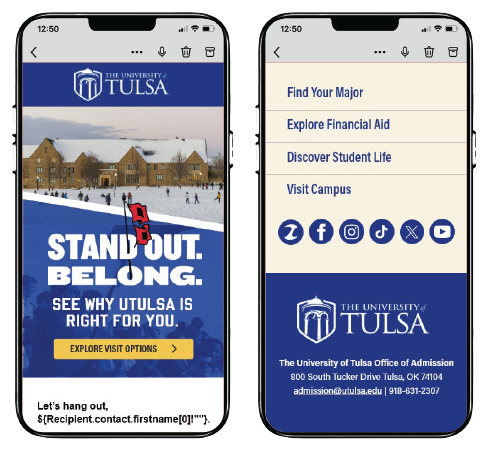
Reaching high school sophomores and juniors means meeting them where they are—in their inboxes, on their feeds, and in their hands. This multi-channel campaign reinforces the University of Tulsa’s bold message: students don’t have to choose between fitting in and standing out. Rich Art Deco design and conversational copy celebrating personal and academic uniqueness helped elevate brand nationwide while encouraging students to find their fit at UTulsa.
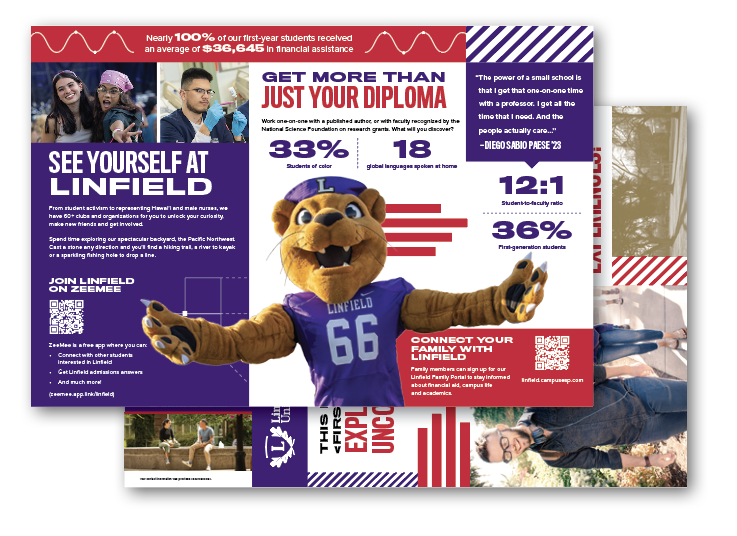
This eye-catching mailer puts Linfield’s bold purple and cardinal branding front and center, using standout stats and a dynamic design to capture attention. Featuring Mack the Wildcat, it reinforces school spirit while guiding students toward their next step—applying with confidence.
Designed to attract aspiring performers to perform, create, and wow at campuses in New York and Los Angeles, this high-energy mailer steals the spotlight with bold visuals and dynamic performance imagery. Filled with upbeat performance industry lingo, it sets the stage for students to step into their future—and apply.
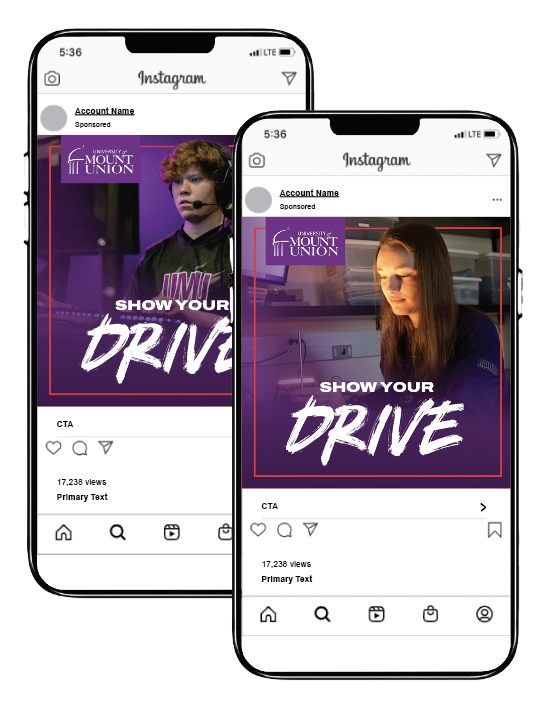
These dynamic search campaign ads put real students front and center, showcasing hands-on learning in action. With bold visuals and empowering copy, the campaign encourages prospects to show up strong, seize opportunities, and own their moment—both in college and beyond.
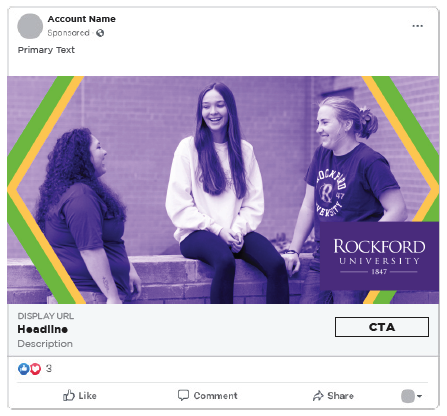
These bright branded ads grab attention alongside the question “RU Ready?”, sparking curiosity about the welcoming environment and numerous opportunities at “RockU.” The campaign is designed to stand out in feeds and aims to inspire students to see themselves on campus and take the next step toward getting there.
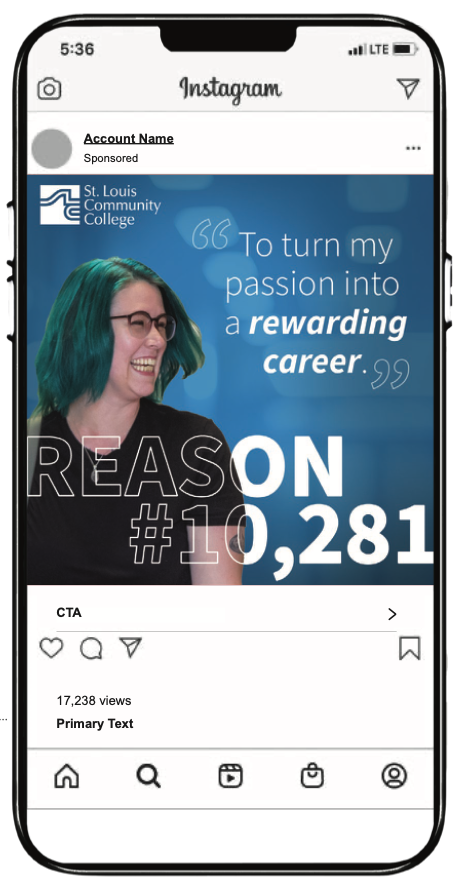
Featuring proud, hopeful, and joyful students, this campaign highlights reasons students choose STLCC to pursue their dreams. The result? Authentic, inspiring ads that encourage prospects to find their reason at STLCC.
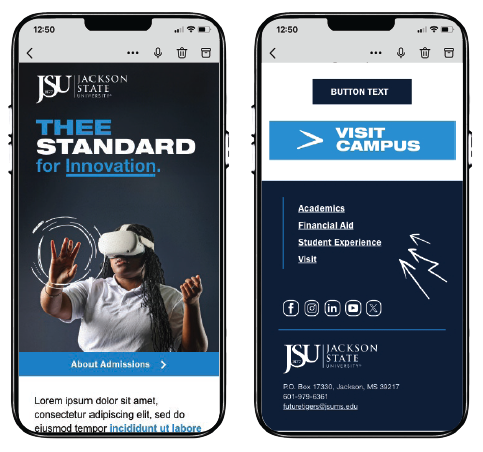
Inspired by Jackson State University’s iconic fight song, this email campaign set the tone with bold headers inviting prospects to learn more about THEE standard for research, academics, innovation, and success. Playful illustrations drawn over dynamic student portraits bring energy and spirit to every email, reinforcing why JSU is THEE place to be.
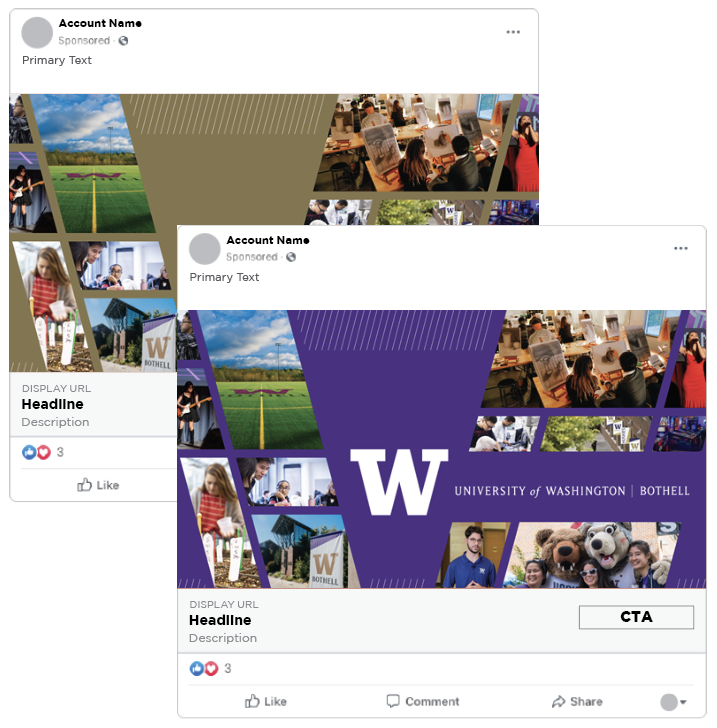
This dynamic ad brings exciting campus life to the forefront, featuring lively action shots shaped into a bold “W.” Paired with inviting copy, it highlights the University of Washington Bothell’s close-knit community where students find big opportunities, exciting challenges, and lifelong friends.
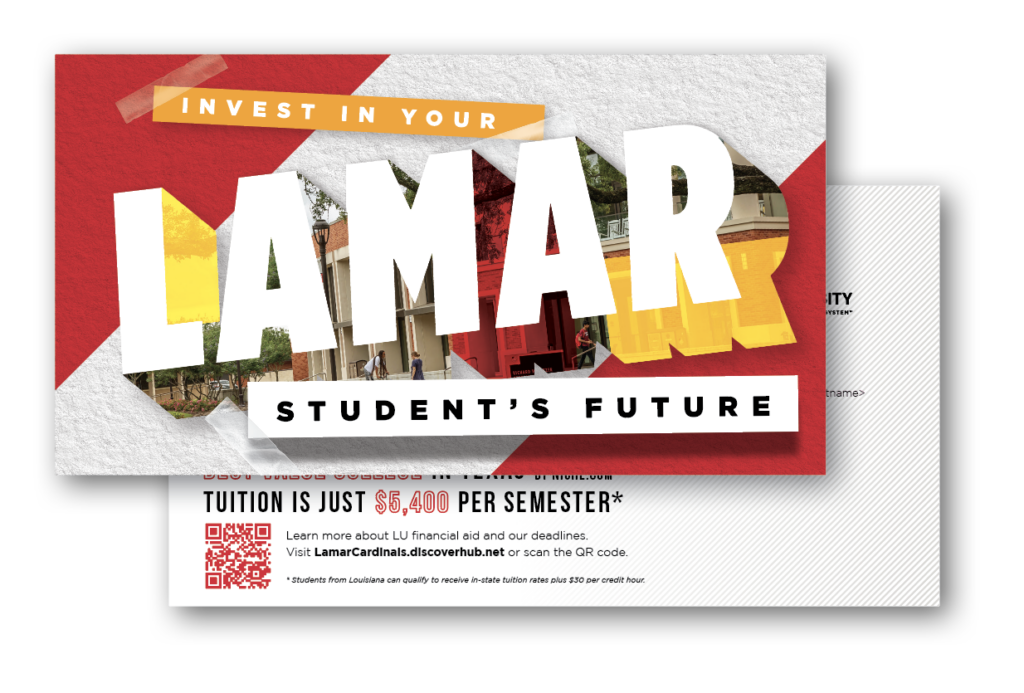
This gold award-winning postcard spoke directly to parents, highlighting the $20+ million in aid and low tuition that make Lamar University the best-value college in Texas. A clear, compelling message reassures families that a smart investment today means big opportunities for their student’s future.
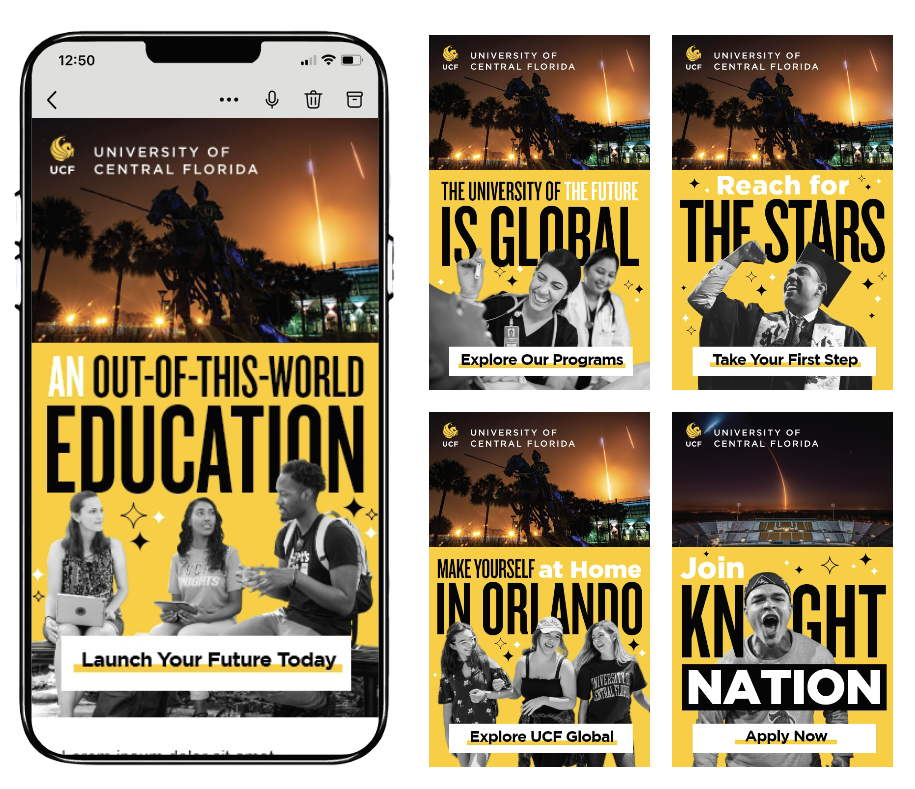
With a prime location between NASA, the Space Coast, and Orlando’s endless experiences, UCF Global offers a launchpad for limitless possibilities. This inquiry-to-application email flow features stunning nightscape imagery and star-inspired design elements reinforcing the university’s spirit of exploration and innovation.
Want to turn your marketing into an award-worthy success? RNL’s creative team brings strategic insight, compelling storytelling, and a track record of 100+ awards in five years to every campaign. Whether you’re engaging undergraduate, graduate, or online students, we’ll help you stand out and drive results. Let’s talk—schedule a complimentary consultation today.

Ever wonder if enrollment professionals and students actually speak the same language? Fresh data from RNL’s 2025 Marketing and Recruitment Practices for Undergraduate Students and the forthcoming 2025 E-Expectations reports reveal some fascinating alignments (and a few mismatches) between how we recruit and how students actually make decisions.
Remember when we thought Zoom would replace campus tours? Well, the data tell a crystal-clear story that shows the importance of face-to-face connections.:
Translation: In our AI-everything world, humans still want to talk to actual humans. Revolutionary, right?
Here’s where it gets interesting. Both students and enrollment leaders agree that digital works best when it’s personal and purposeful.
What’s working:
Breaking news: Students read your emails!
The secret sauce? Personalization that doesn’t feel like it came from a robot.
Some interesting gaps here:
Key insight: Students are more open to AI than we think—they just need to know these tools exist.
Stop choosing between high-tech and high-touch—you need both. Just make sure your human connection has a mobile-responsive website to back it up. Because some things never change, and some things really, really need to.
These results come from the 2025 Marketing and Recruitment Practices for Undergraduate Students report and from our forthcoming 2025 E-Expectations Report (coming June 2025).
We’ll also be diving into these reports and much, much more at our 2025 RNL National Conference, July 22-24 in Atlanta. Check out the program for more details on our 120 conference sessions.
Choose from more than 120 sessions across six tracks:
See the session descriptions and save big when you register early.

With eight years of experience at Ruffalo Noel Levitz working with more than 100 campuses across the country and following more than two decades leading enrollment efforts on campus, I know firsthand the challenges you face in enrollment. And in today’s environment it can feel like information overload on what you should be doing.
I recently hosted a webinar sharing insights from our 2025 Marketing and Recruiting Best Practices for Undergraduate Students study, where 114 institutions of all types completed our survey about their use and effectiveness of recruitment strategies. We covered everything from the fundamentals of outreach to the latest in AI-powered chatbots. In survey responses, we found a lot of shared experiences and opportunities for strategy enhancement. Specifically, we identified seven strategies that should form the foundation of your annual marketing and recruitment plan, as well as a few others we recommend incorporating to drive your recruitment to the next level.
In our survey, we asked about written marketing and recruitment plans. Only 29% of institutions have a fully implemented, data-driven plan. So if you’re among the 71% of institutions still working on creation of a full plan, you’re in good company—we’re all trying to navigate this evolving landscape. The encouraging part is you’re committed to improvement. We found that most institutions rate their plans as “good,” but you’re aiming for “excellent.” That drive to excel is what we’re here to support.
Through survey responses, we found some powerful strategies that are working for colleges right now. Virtually every institution that uses them rates personalized videos and video calls with students as effective, although fewer than half of you are using those outreach tactics. And implementing new AI-based digital assistants on your website will meet an expectation that students and families have to receive real-time answers to their questions 24/7 about application status, academic programs, and aid packages—but only 22% of institutions have taken this important step.
Search engine optimization (SEO) stood out as a leading strategy with 75% of institutions pursuing this and 100% of institutions rating it as effective. But we also know that most institutions don’t invest enough or broadly in SEO. Students are increasingly turning to search sites to find university sites and program information, and if you’re not in the top seven links, you’re effectively invisible. You need to incorporate into our annual plans ongoing SEO across your website to develop and maintain relevant content that speaks directly to student interest, both for traditional search engines and AI tools like ChatGPT and Gemini. You then need to track site traffic to measure ROI and so you know when it’s time to revisit those pages again. SEO is not a one-and-done process! Let’s make your website a powerful tool for student recruitment.
While the ongoing shift toward digital strategies can feel overwhelming, we’re here to support you every step of the way. We’ll help you find the right balance for your institution and your audience.

As AI continues to weave its way into our lives, it’s no surprise that high school students are increasingly turning to these tools for college planning. However, our recent study, The AI Divide in College Planning: Students Adoption, Resistance, and Impact, conducted by RNL and TeenVoice, reveals that students aren’t all the same when it comes to AI. Some love it, some are curious but cautious, and some are unsure. Our study identified “Four Faces” of AI adoption among high school students, each with distinct characteristics:
Overall, the Pioneers and Aspirers tended to be the younger high school students, while those hesitant about using AI in the college planning were more likely to be from the 2025 incoming class. A key takeaway from this study is that if you are not already thinking about how to “wow” potential students with AI tools, you need to start. Similar to how admitted student portals evolved from a novelty to a necessity, intuitive AI tools for college planning will soon become a student expectation.
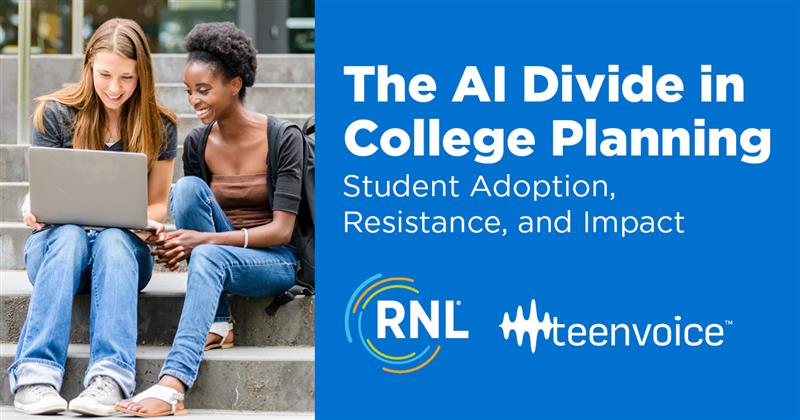
Consider the potential of AI-powered chat tools or digital assistants that provide instant application status updates, personalized program recommendations, or streamlined scholarship searches. Students expect 24/7 accessibility and seamless navigation throughout the application process and their college experience. Or use AI to add personalized videos throughout your enrollment communication plan. AI can help you identify what is important to individual students and build video content that speaks directly to them like never before.
In addition, the research clearly shows students still rely on the people in their circle they trust the most—their family, high school guidance counselors, and friends. That’s not at risk of changing anytime soon. AI is an addition, not a replacement. It gives us another way to connect, becoming more important every day. However, as more students move into the AI Pioneer group, integrating AI becomes an essential part of your recruitment mix.
Here’s the bottom line: AI isn’t some far-off idea anymore; its already changing what students expect from us. By understanding the “Four Faces of AI Adoption,” you can tailor your engagement strategies to meet students where they are. And embracing AI tools like digital assistants and personalized content creation will not only enhance your university’s appeal but also streamline the study journey and free up time for you to have more real conversations with them.
Are you ready to embrace the AI revolution in higher education? If you’re new to AI or seeking to enhance your understanding, RNL’s free online course, “AI Essentials for Higher Education Professionals,” is an excellent starting point. Equip yourself with the knowledge and skills needed to navigate this evolving landscape and ensure your institution remains at the forefront of student engagement. Start your AI education today!
Quality Teaching in Practice returns for its fourth consecutive year, as one of the leading educational research and practice conference for teachers, school leaders and policymakers.
Please login below to view content or subscribe now.
Get stories like this delivered straight to your inbox. Sign up for The 74 Newsletter
This story was originally published by Grist. Sign up for Grist’s weekly newsletter here.
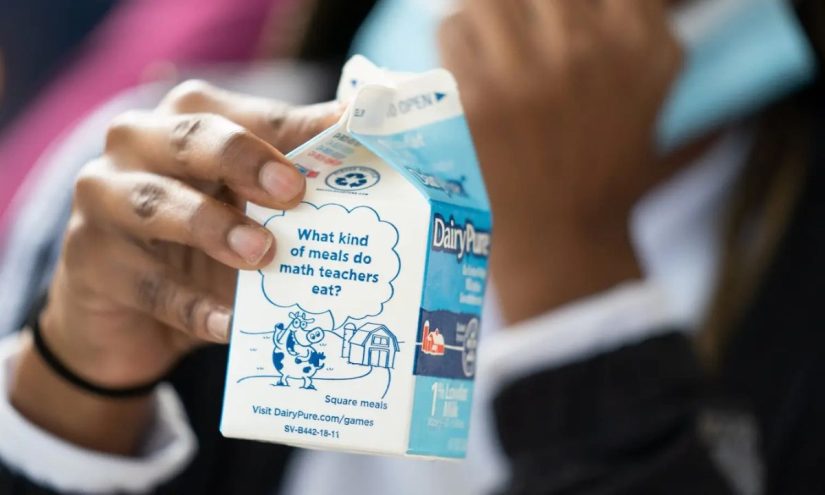
In 2010, United States lawmakers passed the Healthy, Hunger-Free Kids Act, which aimed to tackle both childhood obesity and hunger by making school meals more nutritious. Two years later, the Department of Agriculture updated its guidance for schools participating in the National School Lunch Program, or NSLP, in accordance with the law. Whereas schools could previously serve fat-free, 1 percent, 2 percent, or whole milk and be eligible for federal reimbursement, now they could only recoup meal costs if they ditched 2 percent and whole milk, which were thought to be too high in saturated fat for kids.
Representative Glenn “G.T.” Thompson has been on a mission to change that. The Republican legislator representing Pennsylvania’s 15th congressional district believes the 2010 law sparked a decline in students drinking milk across the board. “We have lost a generation of milk drinkers since whole milk was demonized and removed from schools,” he told a local agribusiness group in 2021.
Between 2019 and 2023, Thompson introduced the Whole Milk for Healthy Kids Act — a bill that would allow schools to serve whole milk again under the NSLP — three times without success.
In January of this year, he reintroduced the bill once again — and inspired a group of animal welfare, environmental, and public health organizations to push for a vegan countermeasure. This month, a bipartisan group of legislators put forward the Freedom in School Cafeterias and Lunches, or FISCAL, Act, which would expand the definition of milk under the NSLP to include plant-based options. Currently, schools participating in the NSLP can offer milk substitutions to students with a note from a parent or doctor — but the FISCAL Act is promoting a world where vegan milks are offered freely, alongside cow’s milk.
If students end up replacing their daily cow’s milk with a plant-based alternative, this has the potential to bring down food-related greenhouse gas emissions. But you won’t hear supporters of the FISCAL Act talking up the climate benefits of plant-based milk in the halls of Congress. Instead, they’re focusing on the health benefits of soy, oat, and other vegan drinks for students who can’t digest or simply don’t want cow’s milk.
“Most of this nation’s children of color are lactose intolerant, and yet our school lunch program policy makes it difficult for these kids to access a nutritious fluid beverage that doesn’t make them sick,” said Senator Cory Booker, a Democratic co-sponsor of the bill. This focus on student health — and the absence of any environmental talking points — reflect the eternally tricky politics around milk in U.S. schools, which have become even more complicated in President Donald Trump’s second term.
Milk has a relatively low carbon footprint compared to other animal proteins, like beef, pork, poultry, and cheese. But dairy production still comes with considerable climate impacts — mainly from the food grown to feed cows, as well as methane emitted via cow burps and manure. In 2020, researchers at Pennsylvania State University found that a dairy cow can release 350 pounds of methane every year through their burps — meaning, all told, dairy cows are responsible for 2.7 percent of the U.S.’s total greenhouse gases.
Nondairy milks — fortified drinks like soy, almond, oat, and rice milk — have varying impacts on the environment and climate, but all of these plant-based alternatives use less land and water than cow’s milk to produce, and result in fewer emissions.
Under the NSLP, schools cannot be reimbursed for the cost of meals unless they offer students milk. The Center for a Humane Economy, an animal welfare and environmental group backing the FISCAL Act, calls this America’s “milk mandate.” In 2023, student Marielle Williamson sued her Los Angeles high school for not allowing her to set up an informational table about plant-based milk unless she also promoted dairy. Subsidized school lunches have been described as “a guaranteed market” for farmers’ products; this is all but acknowledged when legislators like Thompson blame school lunch for the decline of the dairy industry. Indeed, in a recent Senate agricultural committee hearing over the whole milk bill, Senator Amy Klobuchar, a Democrat, said, “Not only do school meal programs reduce hunger and promote learning, they also support our local farmers and ranchers at a time when it’s probably the very worst time I’ve seen in decades” for farmers.
The animal welfare groups backing the FISCAL Act argue schools need more flexibility to meet the needs of students with lactose intolerance. Consumption of milk has fallen consistently since the 1970s, according to the U.S. Department of Agriculture’s Economic Research Service. That change is thought to be the result of shifting diets, as well as perhaps a reflection of America’s growing racial and ethnic diversity. It is estimated that half of American adults have difficulty digesting lactose, the protein found in milk and many other dairy products. These rates are higher in Black, Asian American, Hispanic, Native American, and Jewish communities.
“We’ve had so much marketing to tell us that the milk of a cow is, you know, nature’s perfect food, and it clearly is not,” said Wayne Pacelle, the head of Animal Wellness Action, an advocacy group that opposes animal cruelty and supports the FISCAL Act.
Pacelle acknowledged the climate impact of the dairy industry: “It’s just a truth that cows are big contributors to greenhouse gas emissions.” But he noted that arguments related to the climate are unlikely to sway the debate over school lunch beverages. “The Republican Congress is not really so attuned to that,” he said.
As a result, his group and the others pushing for the FISCAL Act aren’t talking much about the environmental considerations of drinking cow’s milk. This aligns with a shift happening in the broader food industry under the second Trump administration, as producers and manufacturers figure out which talking points are most appealing to leaders like Health and Human Services Secretary Robert F. Kennedy, Jr., who has called for schools to start offering whole milk again.
The Republicans pushing for whole milk in schools are talking up the health and economic benefits of whole milk, an argument that came into sharp relief during a Senate agricultural committee hearing in early April. Senator Roger Marshall of Kansas, who drank from a tall glass of milk before addressing the committee, referenced the term “Make America Healthy Again,” or MAHA, when making his case. The movement, popularized by Robert F. Kennedy Jr., taps into wellness, environmental, and food safety concerns in the general public and offers solutions based in pseudoscience and conspiracy theories. Marshall, a co-sponsor of the whole milk bill in the Senate, said MAHA is “about whole foods, and I think we could categorize whole milk as part of” that framework.
While Republicans and Democrats alike may be sidestepping the dairy industry’s environmental impact and spending more time talking about student health, there is one environmental consideration that’s caught the attention of advocates of both whole milk and plant-based milk. That’s food waste, a leading source of greenhouse gas emissions. Forty-five percent of the milk cartons offered at breakfast in schools are thrown out annually because students don’t take them. When students do grab milk at breakfast, a fourth of those cartons still wind up unopened in the trash.
Krista Byler, a food service director for the Union City Area School District in northwestern Pennsylvania, spoke at the Senate agricultural committee hearing and said serving whole milk in her schools helped milk consumption go up, ultimately reducing the amount of milk wasted.
“I hated seeing such an exorbitant amount of milk wasted daily in our small district and was hearing stories of even bigger waste ratios in larger districts,” Byler said in her written testimony.
A similar case has been made by Pacelle and other supporters of the FISCAL Act, who argue students will be more likely to drink — and finish — their beverage at school if they have the option to go plant-based.
Recently, the Whole Milk for Healthy Kids bill passed a House agriculture committee vote. If it passes a full House vote, it could then move on to the Senate. Meanwhile, the FISCAL Act is still in committee in both houses of Congress.
Pacelle said the best chance the FISCAL Act has of passing is if its provisions are included as an amendment to the whole milk bill — framing it not as a rival measure, but as a complementary effort to create more choice for students. “Moving it independently is unlikely because of the power of the dairy lobby,” said Pacelle, “and the G.T. Thompsons of the world.”
This article originally appeared in Grist at https://grist.org/food-and-agriculture/milk-school-lunch-plant-based-vegan-whole-dairy-lobby-congress/. Grist is a nonprofit, independent media organization dedicated to telling stories of climate solutions and a just future. Learn more at Grist.org.
Get stories like these delivered straight to your inbox. Sign up for The 74 Newsletter

The question of how we drive access to and participation in higher education among non-traditional groups is intimately linked to the broader question of why we are doing it.
Accordingly, there are different approaches across the UK. Whereas in the English system the focus is on outreach (partnerships between universities and schools), in Scotland and Wales there is a lot more interest in measuring and shaping university recruitment from underrepresented groups.
From a purely instrumental perspective there is clearly value in doing both. It is entirely possible that universities and schools could be doing more to encourage able young people to consider universities, and that there are barriers and complexities within the admissions and recruitment process (not to mention the financial, social, and academic challenges of being a student once you get in) that could be usefully addressed.
The politics of why different approaches have emerged in different places are fascinating. At first though, you might think that a right-of-centre approach would be tied in with the economic benefits of maximising workforce skills and a left-of-centre ideology might be considering utility beyond income generation. Or – for that matter – that the right would foster individual aspirations with the left focused on societal needs.
But it actually seems to come down to how you think people become intelligent.
In his recent book Hayek’s Bastards, Quinn Slobodian characterises the world view of what we might loosely call the postmodern right as “hard borders, hard money, and hardwired human nature”. It’s clearly a politics of status anxiety – but more specifically it has a bearing on higher education policy.
By “hardwired human nature”, Slobodian is pointing towards something that – at one outer extreme – underpins the confusing resurgence of beliefs in eugenics. These are beliefs in the primacy of nature (your genetic heritage) over nurture (the conditions under which you matured) in developing personal attributes, some of which may be described as “intelligence”. Actual scientists tend to agree that both nature and nurture are likely to have a bearing on your life chances, and empirical evidence tends to back this up. But this comes with a huge asterisk, in that it is very difficult to unpick the two experimentally or with any degree of accuracy.
If your personal viewpoint tends towards nature, it makes sense to argue that too many people are going to university in that there will be some people that will “naturally” not be able to benefit from the experience. You could point to a declining graduate premium (the “extra money” a graduate will earn over the course of their life) or a lower proportion of graduates working in “graduate jobs” if you wanted evidence that we are currently educating people to degree level who are not able to benefit from it.
That’s not to say that such evidence is compelling – a sustained and welcome rise in the value of the national minimum wage and rapid changes in the kinds of jobs graduates (and everyone else, for that matter) do offer a counternarrative that sees such “declines” as evidence of a more equitable society and the value of jobs beyond salary or personal benefit.
As a sector that is explicitly setting out to improve the skills and life chances of young people, most people working in education tend to lean towards nurture as the major contributing factor to observed intelligence. From this position stems any number of initiatives that aim to make university study accessible, livable, and achievable to people who would not have otherwise gotten involved. If anyone can benefit from university education, surely the right thing to do is to help them.
From a nature perspective this all looks very odd. Sure, there may be some people who don’t usually go to university that might benefit from such schemes – but applications are merit based anyway. You get in by getting good grades, or interviewing well, or having a good portfolio. When we start flexing these requirements, don’t we devalue the entire experience? Isn’t higher education what we need to be offering the top end of an intelligence hierarchy?
This might also have to do with the quality of our tools. How confident can we be that the tests we have are indicative either of innate talent or the potential to benefit from education? Indeed, there is cause to wonder whether intelligence itself is measurable (IQ tests being a superb measure of a person’s ability to complete IQ tests, A levels being a great indicator of how middle class your background is).
If we think our standard entry requirements are perfect, the focus should be on supporting people (both in terms of capability and aspiration) to achieve these before they apply to university. Indeed, recent English system efforts in widening participation have focused on programmes that do things like this (schools partnerships for example) rather than contextual admissions (where students from particular backgrounds are given different entry requirements reflecting their life chances thus far).
Politically, contextual admissions are controversial because of where they sit on the nature and nurture spectrum. They explicitly recognise the difficulties that some groups face in achieving the standard requirements, and modify these requirements (alongside offering additional support).
The pushback on this seems to me to be because of the perception that university education – or education at certain kinds of university – is a scarce resource (perhaps it once was, but the last few UCAS cycles suggest otherwise). If people who do not hold traditional entry qualifications are allowed to enter universities, it stands to reason that others that do hold the qualifications may not be able to.
So we are back to status anxiety, in that the perception is that some young people who would otherwise be almost guaranteed access to a prestigious university may no longer have such access, and the addition of students with other backgrounds will change the experience (in academic, or – frankly – social ways) for the traditional students that do get there.
I say “perception” because in the main the expansion of many high tariff universities has been such that the idea of anyone with the right grades being unable to get in is not the threat that it once was. Again, to be blunt, there always will be people disappointed and confused about not getting into Cambridge, Oxford, medical school, or the more selective conservatoires.
The recent Universities UK and Sutton Trust statement on contextual admissions is about clarifying and documenting practices and processes – both to help those who may benefit access what schemes exist, and to reassure those with concerns about the validity of such programmes. It won’t assuage all the concerns, but shedding light on the issue can only help. Of course, for some the mere existence of such schemes – or any suspicion that universities should be encouraged to run them – will be anathema.
The elephant in this particular room is, of course, the capacity of the economy to absorb graduates. I’ve often heard it argued that there are simply too many graduates – both in terms of how this “crowds out” the benefits of being a graduate in the job market, and in terms of whether we really need all those graduates to do the jobs they are doing.
For me, this reaches across to the hard borders end of modern right-wing political thought. If you think lots of people in online newspaper comment sections are upset about too many graduates, just ask them about how many immigrants we have! We import a vast number of graduates from overseas (and, indeed, overseas students) in order for them to take on graduate roles in the UK economy. NHS staff are the obvious example, but there are demands everywhere – from heavy engineering to biosciences, from the creative industries to staff working in professional sports.
And a highly skilled workforce is a more productive, and thus more valuable, workforce. The economics are clear.
There are wider benefits too. Graduates tend to be healthier and happier, meaning less pressure on public services. They disproportionally work in public services that benefit us all. They are more likely to develop high value innovations and scientific breakthroughs. More likely to start successful companies that employ others. They are generally paid more – so they spend more. They raise the value of property and businesses in their locality. They commit less crime.
Employers, then, are generally pretty keen on access to graduates. Policy makers, and the rest of us, probably should be too. The choice appears to be more UK people going to university or more immigration – the meaningful policy conversation becomes around what people study when they get there.

Get stories like this delivered straight to your inbox. Sign up for The 74 Newsletter
The parties in the long-running Yazzie-Martinez lawsuit over educational equity in New Mexico will meet in court next week to discuss a motion alleging the state has not complied with previous court orders, along with the plaintiffs’ request for a “remedial plan.”
The case, originally filed in 2014, led to a finding in 2018 by the late First Judicial District Court Judge Sarah Singleton, who found that the state was not providing equitable educational opportunities to Native students, English language learners, low-income students and students with disabilities. She ordered the state to take steps to address the needs of these at-risk students and ensure schools have the resources to provide them with the education they deserve.
Attorneys representing Louise Martinez and Wilhelmina Yazzie filed a joint motion of non-compliance in September 2024, arguing that the state has not made significant progress in addressing the needs of at-risk students. Specifically, in their motion, plaintiffs point to ongoing poor student performance; high turnover within the New Mexico Public Education Department; high teacher vacancy rates; and a lack of targeted funding for at-risk students.
Since Singleton’s decision, the state has increased funding for public education, but students are still being overlooked, Melissa Candelaria, education director for the NM Center on Law and Poverty, which represents the plaintiffs, told Source NM.
The motion hearing is scheduled for 9 a.m. Tuesday, April 29.
“We believe the court’s ruling should have been a wakeup call,” Candelaria said. “Our students can’t afford more bureaucratic churn and empty promises from PED. And we believe, the plaintiffs believe, the court must step in to enforce a real community-driven plan that reflects the urgency and the gravity to improve the overall state education system.”
Candelaria noted that the joint motion was not opposed by New Mexico Attorney General Raúl Torrez, who represents the state in the case. Court documents state that Torrez “agrees” that there has been “insufficient compliance.” However, private counsel for the PED did oppose the motion, particularly the plaintiff’s proposed remedial plan.
PED had not responded to a request from Source NM for comment prior to publication.
That plan, as detailed in court documents, includes nine components or goals, including: establishing a multicultural and multilingual educational framework; building an education workforce; increasing access to technology; developing methods of accountability; and strengthening the capacity of the PED.
“There’s no longer a debate that a statewide education plan is necessary. Now, the decision is who leads that development,” Candelaria said.
Candelaria also told Source the plaintiffs propose the Legislative Education Study Committee take the lead in developing the remedial plan because the department’s staff have knowledge and expertise in the area of education and have access to data. The department also has a director and permanent staff, as opposed to the PED, which has had multiple cabinet secretaries lead the department in the nearly seven years since Singleton’s decision, she noted.
“Without a plan, the efforts by the Legislature will still be piecemeal and scattershot and it’s not going to result in what we want to see in a transformed education system that’s equitable and that builds on the strengths and provides for the needs of the four student groups in the case,” Candelaria said.
The PED opposes the motion on this point, according to court documents, and argues the education department should take the lead in developing the plan. The department also says more time is needed to create and then implement the plan. Plaintiffs suggest that the five-year plan should be developed within six months of this month’s hearing.
Wilhelmina Yazzie, one of the original plaintiffs, told Source she feels “very optimistic” ahead of the motion hearing and that she hopes the judge agrees a plan is necessary. She added that the inequities in public education were emphasized during the COVID-19 pandemic.
“Especially our tribal communities who are really deeply impacted by that, and they still continue to suffer to the present time right now and just by the state not taking the action that we need them to take,” Yazzie said.
Yazzie’s son, Xavier Nez, 22, was in third grade when the lawsuit started. He is now in his third year studying at the University of New Mexico. Candelaria pointed out that since the 2018 court decision, multiple classes of students have made their way through the state’s educational system and failed to receive a comprehensive education. Yazzie’s youngest child, Kimimila Black Moon, is currently in third grade but attends private school.
“She’s not in the public school because I still haven’t seen changes,” she said.
Yazzie told Source that another goal of hers is to get out into communities throughout the state and speak with families because many parents are still unaware of the lawsuit and “they’re the ones that firsthand know what their children need, what they’re lacking, how they’re doing in school.”
Source New Mexico is part of States Newsroom, a nonprofit news network supported by grants and a coalition of donors as a 501c(3) public charity. Source New Mexico maintains editorial independence. Contact Editor Julia Goldberg for questions: [email protected].
Get stories like these delivered straight to your inbox. Sign up for The 74 Newsletter